Tag: Brexit

  • Opinion: Want to solve the shortage crisis? Pay drivers more

    Opinion: Want to solve the shortage crisis? Pay drivers more

    by Garrett Withington

    Brexit still infuses everything. For instance, in the papers, a person’s conclusion about the HGV driver shortage is seemingly an extension of how they voted in the 2016 referendum. Remainers blame the lack of European drivers coming from the continent, whereas Brexiters chalk it up to Covid-19’s interruption of the international supply chain. Unusually, however, this time they are both right.

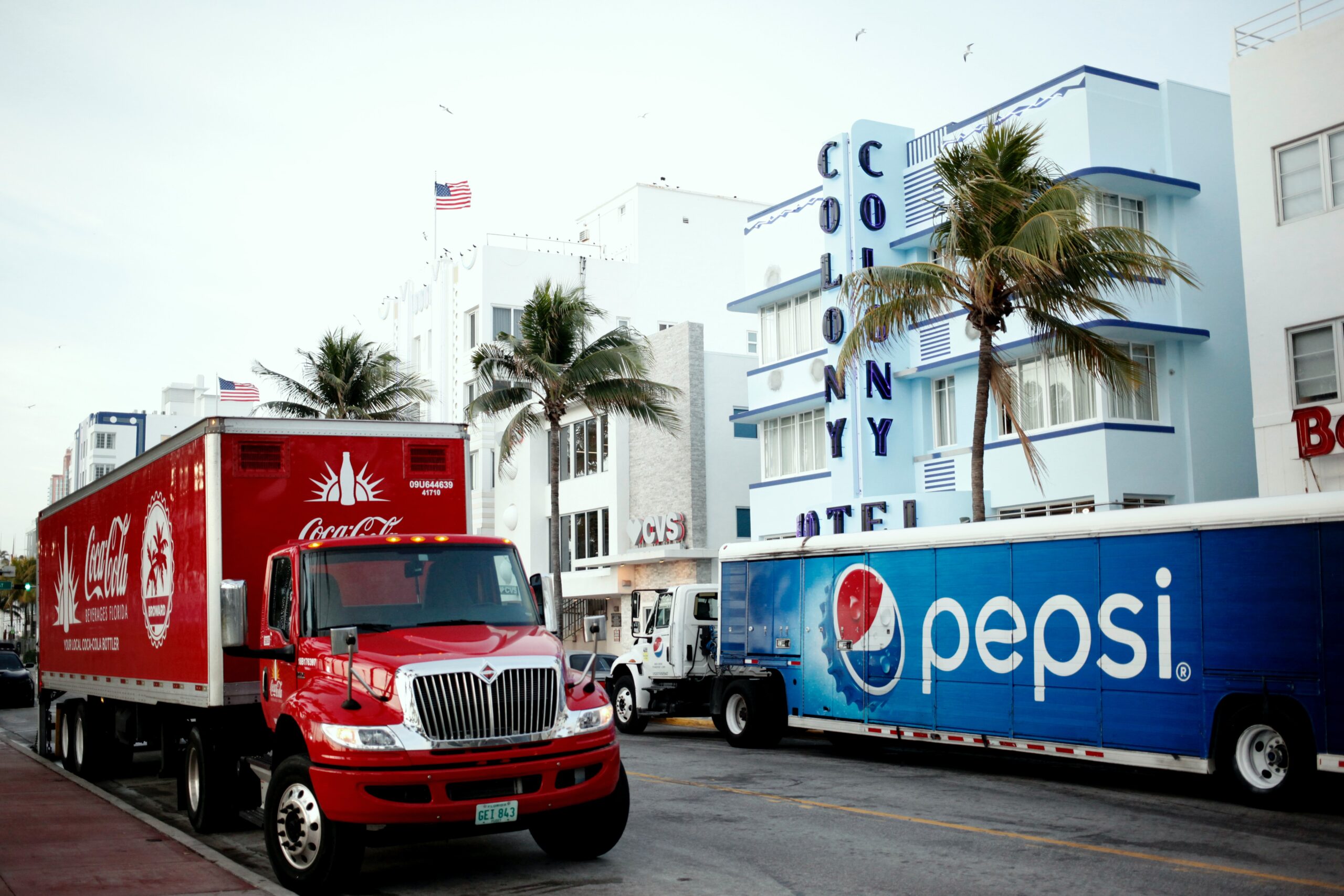
    Many headlines seemingly place the blame at the feet of Brexit, or emphasise it as the leading cause, but a quick look at driver vacancy numbers suggest the decision to leave the European Union isn’t wholly to blame. Reports show that there are around 100,000 vacancies for HGV drivers, yet only 14,000 European drivers have left the country and relocated to the UK permanently. That still means a deficit of 86,000 drivers. Few have sought to further question whether drivers are refusing to return due to the pandemic and the UK’s association with the Delta variant, instead conflating assumptions as answers.

    Seldom mentioned is that shortages have not been localised to the U.K; in fact, it’s a global phenomenon. America has reported huge shortages and the EU may face its own HGV crisis with the potential shortfall of 400,000 drivers across the block. It’s not just Nando’s that’s running out of chicken.

    In reality, the pandemic has caused chaos to the global supply chain with port closures across the world reducing shipping. Within the chaos and lockdown there has been an inability to train new drivers, with 40,000 tests having reportedly been missed. This has then been exacerbated by the exodus of European drivers who went home, either because of Brexit or because of the pandemic.

    But of course there is a third aspect to this. The driver shortage is an issue a decade old, with the discussion over what is to blame simply covering up the repeated failures of the government to find a solution. Previous concerns led to a government inquiry in 2015. That same year, there was an estimated shortage of 60,000 drivers with a possible 150,000 shortfall by 2020 if immediate action wasn’t implemented. Government action did slow the pace but ultimately a shortfall has always remained. What is less discussed has been the issues that led to the shortage which has been compounded by recent events. That issue: wages.

    To some degree, those who insisted that EU immigration depressed incomes have been vindicated. Wages have been a longstanding issue in driver retention, and many drivers point to EU immigration and their willingness to work for less as key in driving down pay. With a median gross hourly pay of £11.03 in 2016, it is easy to see why drivers do not associate the extremely unsociable working hours with fair pay, especially those who need to support a family. Enticement through better wages has been the short-term solution of some major retailers, with Tesco offering a £1,000 signing bonus and Dixons offering £1,500. Hopefully this attitude could be applied to other low paying sectors such as hospitality, who in paying a respectable wage may obtain more dedicated staff.

    The effects are beginning to be felt. Supermarkets are reducing their variety of strawberries from three to one. Meanwhile McDonalds has removed the milkshake from their stores in many locations. Instead of companies themselves looking to solve the issue, they are lobbying the government to relax immigration rules once again so they can hire cheap labour. If drivers are to be hired from outside then it should only be seen as a temporary, but the danger is that this lobbying will be successful and a short-term measure will come to be seen as a permanent solution – especially as foreign drivers are put on a shortage occupation list waving visa restrictions.

    It is this solution that Unite, the U.K’s largest union, has rallied against instead demanding higher pay for fair work. Currently HGV licence holders have power in their negotiations due to demand for drivers, but opening up the job market to foreign competition may once again reduce their bargaining power. The question going forward should be: what value do we place on jobs that are critical to our domestic life, that run in the background, and are often looked down upon as unskilled and working class? Is it not time that these jobs demand higher wages? The issue should not just be about what has impacted consumer convenience, but instead a debate about what a fair wage should be in a post-Brexit and post-Covid Britain.

    Encouraging words from the Secretary of State for Business, Kwasi Kwarteng, have encouraged firms to ‘hire British’ but future actions may make these words empty gestures. Streamlining the test to get an HGV licence will hopefully solve the structural issues that have plagued the industry for years, but as Christmas looms, shortages on shelves may look politically untenable. Whether the government will buckle, only time will tell.


  • Caroline Roberts: Only a sensible immigration policy can protect our skilled workers

    Caroline Roberts: Only a sensible immigration policy can protect our skilled workers

    My best way of illustrating to you where we are with labour and skills at the moment is to tell you about Carl. 

    We recently employed builders to undertake a kitchen extension at our home in the Midlands, and I’m happy to say they did an excellent job. We now have a large, light kitchen space which both myself and my husband love to spend time in. It was the result of hard work – and also of skill on the builders’ part.

    During the building process, I had a conversation with one of the builders. Carl told me he was heading to Scotland next to work on a house renovation. He had secured this work through his employer networks in Scotland. How had he achieved that? By having qualifications which were recognised in Scotland and therefore enabled mobility in the skills market. For his employer, the qualification gave confidence that Carl had the right skills to deliver a quality job to the expected standards.

    In what follows, I will use the term skills market rather than labour market. I prefer the first to the second even though the second is normally used by commentators in this area. That’s because I believe skills are the real currency which has value in the jobs market. Particularly in this fast moving world of work where portfolio careers and flexible working are increasingly the norm, skills are the asset which will support employment, career progression and social mobility.

    Back to Carl. Unfortunately, devolution in the UK has meant that policy on skills has diverged and whilst Carl easily attained work in Scotland with his current qualifications, as the pace of devolution builds, the predicament for people like him may get harder. Additionally, Brexit has meant that we can no longer can the overseas skills we need to service economic growth. An ONS statistical release reported in June 2018 that latest figures indicate that 10% of all workers within the construction industry are EU nationals. Within the London construction industry, this proportion increases to 33%. Much will depend on how many of the existing UK-based EU workforce chooses to stay.’ This isn’t all. It will also depend on sensible immigration policies which recognise that the UK will still need to import some skills post Brexit which it is not able to home grow. 

    Worryingly, prior to Brexit, employers across the UK were reporting significant skills shortages and gaps despite access to overseas skills. The fact is that unless we have sensible immigration policies and agreements across the UK and its governments which continue to support the free movement of skills, those challenges will only get worse.

    Arguably, devolved systems work on the assumption that labour markets are geographically static and can be served adequately by local provision. The reality, however, is that the workforce needs to be mobile to meet changing skills demands – both positive and negative – across geographies. 

    For example, the car manufacturing sector in the UK has many skills in common with the food manufacturing sector and both are reliant on the transfer of skills between the two sectors to meet changing demands. We must be able to anticipate and proactively address those changing skills needs through effective use of research and skills analysis. We also need a training and education system which prepares people for flexible, mobile careers not just for a job.

    This does not, however suggest that one size fits all. Devolution on skills and employment policy allows for local contextualisation in terms of qualifications, education and training and will be better placed to serve local skills demands. But there are skills which everyone, wherever they live, choose to work, or be compelled to work, will need and it is important that education and training provision puts these skills at the heart of its offer.

    The World Economic Forum in 2017 set out those skills which will be crucial to the careers of now and in the future. Whilst it is unclear what the jobs of future will look like, The World Economic Forum believe there are generic skills which all individuals will require. By having these skills individuals will have greater resilience and longevity in the skills market allowing for transferability and mobility. 

    So, whilst Carl is an example of how the system does work now, we cannot lose sight of the changing demands of the skills market and encourage governments to develop skill policies which are mutually beneficial for the economy, the individual and society as a whole.

    Caroline Roberts is a Finito mentor

  • Wolseley founder Jeremy King: “The British are really poor when they don’t know where they are”

    Wolseley founder Jeremy King: “The British are really poor when they don’t know where they are”

    by Jeremy King

    In many ways, the UK is now suffering from what I call a morbid culture, and there’s no doubt the pandemic has potentially drained the fun and positivity out of interaction. Despite all that, I also continue to feel we will return to an approximation of what happened before in the 50s – that whole sort of Mad Men having two or three martini lunches. We’ll congregate again.

    I’d argue that there’s a big difference between moaning and complaining. Complaining is a good thing within reason, whereas moaning is a negative and the British propensity to moan is very strong. 

    The human capacity to adapt is massive. I was talking recently to a large group of people about Brexit, a policy which I’ve been vehemently opposed to. I remember it well: it was all doom and gloom from the audience but I found myself saying that we’ll find a way through it. The British are really poor when they don’t know where they are, and that’s really been the issue with Brexit. If we don’t know what we’re up against, we as a country tend to descend into a morose state of moaning. I’d argue that there’s a big difference between moaning and complaining. Complaining is a good thing within reason, whereas moaning is a negative and the British propensity to moan is very strong. 

    Where we’re really good is when we know what we have to deal with – that whole Blitz spirit people talk about when we adapt quickly and innovate and reorganise, as with the vaccination programme. Everyone was saying at this talk that Brexit is going to be a disaster and I said to this large group, “No, we’ll get used to it.” 

    So if you’re at a hotel in London today, and there’s this massive blast half a mile away, or closer, and the windows rattle and possibly break – clearly there would be pandemonium. People would be screaming, shouting, panicking, rushing for the door. But go back 70 or 80 years in London during the war and we would all have looked out of the window, and turned to one another and said, “That was close. Let’s carry on.” You’d’ve adapted and made the most of it. 

    Pre-Covid, there was a danger we had become complacent in the restaurant business

    My mother said that to a degree the war was the happiest and most fulfilled time of her life. Adversity stimulates, and I suppose, pre-Covid, there was a danger we had become complacent in the restaurant business. But everything that’s happened has made an impact on how we go ahead, and how it is for the staff -but I have a feeling people will adapt.

    Sometimes I think of my regular customers, the amazing people I’ve met. Lucian Freud was an example – he would always dine with us at the Wolseley. Lunches tended to be near his studio at Clark’s. For dinners, he’d frequent other restaurants, or he’d stopped going because people were overfamiliar. For me, he was one of the types I like the most: he didn’t care who you were, he was interested in you as a person, and how people look. Yes, he spent a lot of time with aristocracy but he was also a very natural warm and caring person. 

    He would work of an evening and then come afterwards – often with the person who was sitting for him. As with the most prestigious tables in restaurants, it was easily protectable because you could always tell if anyone was heading towards a high profile person, and keep an eye on him and make sure he was looked after.

    We are fortunate that there is a long list of people who come very regularly to the Wolseley. We’ve had many a person who over the years we’ve seen eat a business lunch five days a week – the reason being people want the security and comfort of knowing what you want, that you’re not going to be troubled, and that things just happen. I always remember talking to Lord Norman Foster about a hotel, and asking him why he particularly liked it. He said: “After the first time I liked it, and I expressed to the staff what I liked about it. And from then on it just happened. There was no fuss, no self congratulatory acknowledgement.” I suppose a lot of us are creatures of habit. Personally, I like ritual, and I like habits. It builds a better contrast when I’m doing something completely different. 

    I feel sorry for Jamie Oliver, because he was doing it from the floor – and then the boardroom took over.

    I often wonder if we did a Venn diagram of our restaurants, how much overlap there would be between customers. The Colbert for example, in Sloane Square, is a very interesting place. It’s quite a particular crowd, and at the hub of that community. When we won the bid for that lease – the most hotly contested there’s ever been in London – we weren’t offering us much money as Richard Caring. We won it on our pitch.

    But I realised making it a sort of Wolseley-lite would be a mistake – it would be almost imperialist. It would be much better if we created a restaurant just for Chelsea. Sometimes I create an invented history for our restaurants. For Colbert, I imagined a Frenchman chased out of Paris because of an indiscretion with the owner’s daughter and setting up. He started with the bar as the first room, where he just served drinks and food. Then when the corner room became available, he took that one over, and then the next one, and did up all the rooms in a different décor. That’s why it feels so authentic. 

    Where restaurateuring goes wrong is when it’s done from a boardroom. I feel sorry for Jamie Oliver, because he was doing it from the floor – and then the boardroom took over. I feel very sorry for Pizza Express and Prezzo too: a lot of the problems they have, have been generated by the investors rather than the people running it: the need for expansion has forced them off a precipice. Pizza Express has been a dearly beloved brand and I think if it hadn’t been caught up in merger and acquisition, it would still be doing well. But then of course, we all have to adapt.

    Photo credit: By Jhsteel – Own work, CC BY-SA 3.0, https://commons.wikimedia.org/w/index.php?curid=35121735