How to Avoid a Climate Disaster: The Solutions We Have and the Breakthroughs We Need by Bill Gates, Penguin, £20.00
A climate disaster is looming and although its impact is mostly invisible in our day-to-day lives, the damage humans have done to the planet already seems dauntingly irreversible. As Bill Gates points out, “fifty-one billion is how many tons of greenhouse gases the world typically adds to the atmosphere every year” and merely aiming to reduce emissions by 2030 is not an adequate target. He explains: “The climate is like a bathtub that’s slowly filling up with water. Even if we slow the flow of water to a trickle, the tub will eventually fill up and water will come spilling out onto the floor. That’s the disaster we have to prevent.” Simply put,“if nothing else changes, the world will keep producing greenhouse gases, climate change will keep getting worse, and the impact on humans will in all likelihood be catastrophic,” Gates says. But How to Avoid a Climate Disaster focuses on the “if” as Gates considers the changes needed and sets out an optimistic road map of how we can divert a climate disaster.
By his own admission, the burger-loving billionaire founder of Microsoft is an unlikely poster boy for saving the environment. “I own big houses and fly in private planes – in fact, I took one to Paris for the climate conference,” he confesses. While Extinction Rebellion seemingly sees anti-capitalism as crucial to the cause of environmentalism with many of its followers protesting by causing disruption in London’s financial district, Bill Gates is proposing a way to reduce greenhouse gases which will be palatable to big businesses. In each chapter he considers the financial implications of his suggestions. He proposes that countries should implement what he calls “green premiums”. He explains: “Most of these zero-carbon solutions are more expensive than their fossil-fuel counterparts. In part, that’s because the prices of fossil fuels don’t reflect the environmental damage they inflict, so they seem cheaper than the alternative.These additional costs are what I call Green Premiums. During every conversation I have about climate change, Green Premiums are in the back of my mind.”
Indeed, Gates is pragmatic in his approach and is constantly aware of the feasibility of his proposals. In the chapter about eating meat for instance, he says although animal consumption causes a lot of environmental damage, it is unrealistic to stop it entirely. He looks at meat alternatives, such as Beyond Meat, a company which he has invested in. He reasons: “Artificial meats come with hefty Green Premiums, however. On average, a ground-beef substitute costs 86 percent more than the real thing. But as sales for these alternatives increase, and as more of them hit the market, I’m optimistic that they’ll eventually be cheaper than animal meat.”
Gate remains optimistic throughout the book and suggests the threat of a climate disaster provides mankind with an opportunity to be innovative. He is always looking for the silver linings. For instance, he says: “I never thought I’d find something to like about malaria. It kills 400,000 people a year, most of them children, and the Gates Foundation is part of a global push to eradicate it. So I was surprised when I learned there is actually one nice thing you can say about malaria: It helped give us air conditioning.” In the most compelling chapter, What each of us can Do, he suggests we should all be hopeful. He says: “It’s easy to feel powerless in the face of a problem as big as climate change. But you’re not powerless. And you don’t have to be a politician or a philanthropist to make a difference.” Of course, we hope he is right. Gates was a coronavirus Cassandra. In a 2015 Ted Talk he warned: “If anything kills over 10 million people in the next few decades, it’s likely to be a highly infectious virus rather than a war.” “We need preparedness,” he demanded. This time, hopefully people will listen.
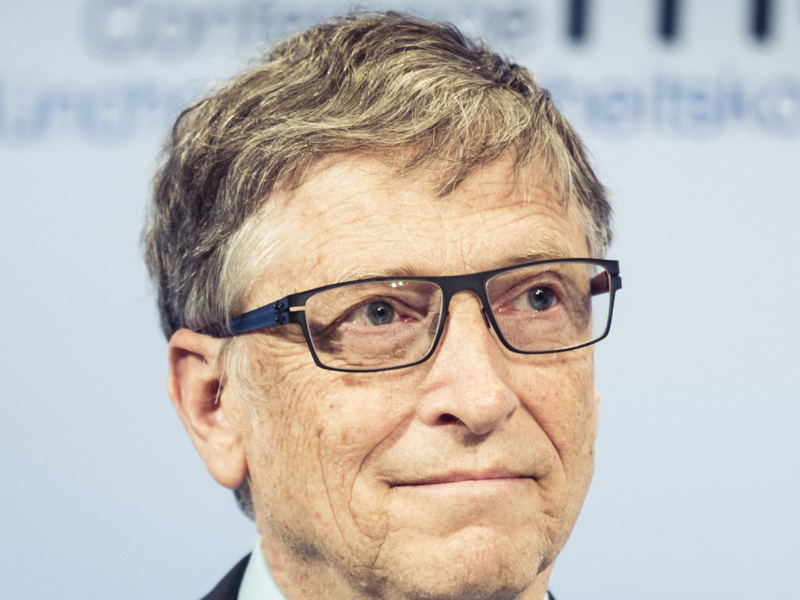
Photo credit: By Kuhlmann /MSC – https://securityconference.org/en/medialibrary/asset/bill-gates-1523-18-02-2017/, CC BY 3.0 de, https://commons.wikimedia.org/w/index.php?curid=100184908
Heroes only truly reveal themselves when faced with a villain. The world is up against a mighty enemy, Covid-19, and many people have revealed themselves as everyday heroes; from Janet next door making sourdough bread for her shielding neighbour to all the key workers who kept the country running during lockdown. Bill Gates has squared up to coronavirus with huge financial donations. As he has invested more than $350 million to fight COVID-19 will history hail the Microsoft founder as a key heroic figure in the pandemic or is his philanthropy just another sign of a world gone wrong?
Jeremy Hunt, the former secretary of state for Health, says philanthropy should not be met with cynicism: “Philanthropists should be welcomed with open arms and praised to the rafters. I really don’t understand those who criticise the generosity of others.”
While Nick Dearden, director of Global Justice Now, is more sceptical about wealthy individuals being involved in the race for a cure as vaccines should be public goods. “The answer to massive economic, healthcare or environmental problems cannot be left to some of the richest people in the world, as if we were living in the Victorian Age when social harms were seen as matters of charity and benevolence.”
With a net worth of around $120 billion, Gates is only the second richest man in the world. With an estimated net worth of $200 billion, Amazon founder Jeff Bezos comes in at number one. In contrast to Gates, and although he has pledged to invest billions into Covid initiatives, Bezos has been positioned as a coronavirus villain – Super Spreader – after hundreds of Amazon staff took strike action to protest issues around the company’s response to the pandemic, including limited sick pay
In the 1990s, few people would have elevated Gates above Bezos. Gates was fighting a series of legal battles around the monopolistic business practices of Microsoft. Former Microsoft employees described the office as a confrontational environment, with Gates being “demanding”. According to James Wallace’s Hard Drive, more than one “unlucky programmer received an email at 2:00am that began, ‘This is the stupidest piece of code ever written.’”
Then, towards the end of the decade Gates turned his attention to philanthropy. Alongside his wife Melinda, the self-proclaimed “impatient optimists” formed the Bill & Melinda Gates Foundation. It seems he turned over a new leaf but some regard the Foundation as a fig leaf, barely disguising the injustice of Gates earning more in a day than most will earn in a lifetime.
Since its inception the Bill & Melinda Gates Foundation has given more than $50 billion to charities. Its raison d’être is to “reduce inequality” but Gates admitted in an Ask Me Anything Reddit session that he often uses a private jet when reducing inequality. “It does help me do my Foundation work but again it is a very privileged thing to have,” he conceded. But aside from the occasional uncomfortable bit of irony, his philanthropy also gives him an extraordinary amount of power. Put bluntly, Bill Gates chooses who lives and who dies. He influences the success or failure of a vaccine just because people bought his computers.
But Hunt dismissed the idea that positioning philanthropists as heroes risks creating a plutocracy, saying: “A democratic society like ours has sufficient checks and balances to stop undue influence but if someone wants to pledge a fortune or a fiver to make the world a better place they should be thanked and encouraged. I spent a lot of time trying to boost philanthropy to the arts when I was Culture Secretary and was always struck by the difference in attitude between the UK and the US.
“Philanthropists in the US are seen as heroes but here in the UK our first thoughts can be negative. That’s changing but we should do more to embrace the good work that many very generous and inspirational people do.”
Philanthropist and the founder of Addison Lee, John Griffin, shares this sentiment. Finito World can exclusively reveal that Griffin has invested £12 million into building a new wing at Northwick Park hospital to help speed up the race for a cure.
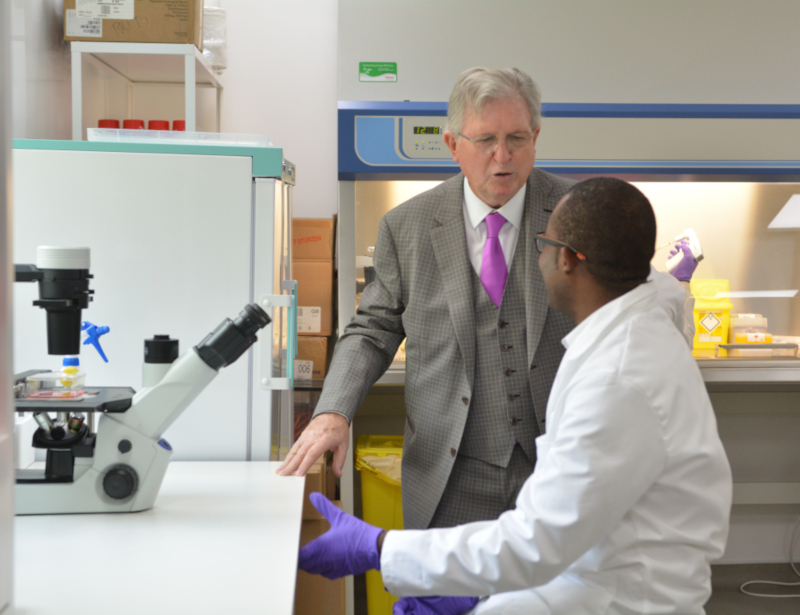
Griffin endowed The Griffin Institute with his £12 million gift to Northwick Park Hospital
Griffin has praise for Bill Gates and his commitment to finding a vaccine. “He’s a good man and he’s the right man to have in charge, he really is, I think that people who manage to achieve success should not ignore that, it’s a gift,” Griffin says.
Indeed, within a few weeks of committing their first $100 million to the fight against Covid-19, the Bill & Melinda Gates Foundation announced a $50 million commitment to fund the new ‘Therapeutics Accelerator’. Alongside MasterCard and the Wellcome Trust they have invested in a variety of treatments, including the University of Oxford and AstraZeneca vaccine which is one of the seven vaccines in the final stage of trials.
Professor Arpana Verma who is a clinical professor of Public Health and Epidemiology at University of Manchester said funding from the Gates Foundation is “key” to finding a vaccine and ensuring it is accessible.
She regards philanthropy as a necessary component in successful public health initiatives. “Public health through the centuries has been based on philanthropists. When we got the industrial revolution, we got the core epidemiologists coming in. In Greater Manchester we had Edwin Chadwick, and in Liverpool we had William Varr, and in London we had John Snow. This was the crux of things happening fast. it gets things moving. Whilst governments and even NGOs might have more of the administrative to get through, philanthropists might not have that burden.
“A lot of philanthropists are well up on the evidence so they know what things to do and can get ahead and do it,” she adds.
The Bill & Melinda Gates Foundation has been focused on combating disease for years and it has made polio eradication one of its top priorities. One of the Foundation’s first big investments was to an organisation called Gavi, the Vaccine Alliance. Since 2000, Gavi and partners have immunised more than 760 million children, saving over 13 million lives.
This knowledge of disease has made Gates a coronavirus Cassandra. In a 2015 Ted Talk he warned: “If anything kills over ten million people in the next few decades, it’s likely to be a highly infectious virus rather than a war. We need preparedness,” he demanded. Clearly, Gates’ value in the fight against Covid is not exclusively due to the amount of money he is throwing into the cause but due to his deep understanding of disease.
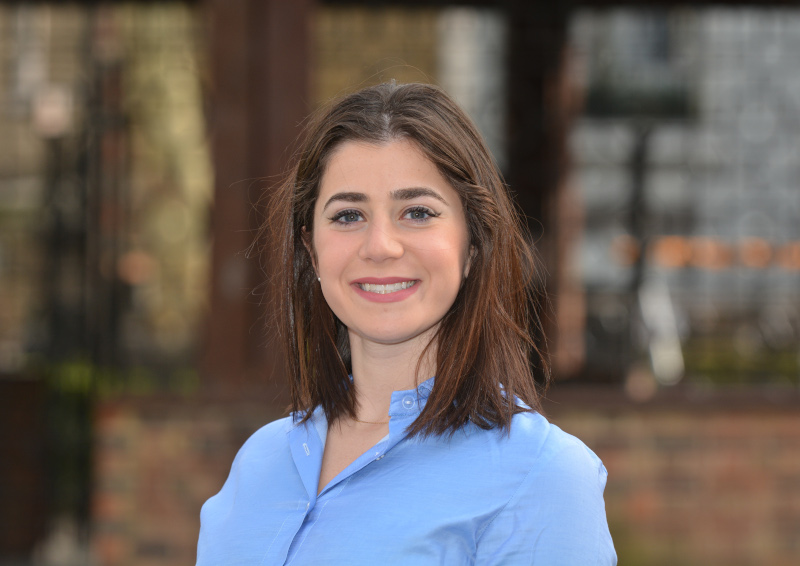
Gabi Hakim, founder of VacTrack app
He has inspired other entrepreneurs in the healthcare profession. Gabi Hakim who is the founder of a new VacTrack app which collates vaccine histories and sends reminders for follow up boosters, cites Bill Gates as an influence. “Bill Gates has always stood out as the standard to which we should all aspire. In particular, his work in both biotech and digital health through his Foundation has emphasised the fact that tackling health crises requires intervention at population scale, which aligns with our own mission of accessibility for the masses. I think personally, it’s seeing his ability persist through the bureaucracy and complexities associated with healthcare today that has motivated us.”
WIRED’s editor at large, Steven Levy, who has been conducting interviews with Gates since 1983, points out that Gates has also made a positive impact through his cajoling of other wealthy people.
He says: “I’ve met a lot of billionaires, the field I cover produces billionaires, basically he’s made it a point to stand up and argue for other very wealthy people to devote a huge portion, you know, half or more, of their fortunes to addressing issues like public health. He really is the person who speaks most of it. He’s sort of like a born-again philanthropist.”
Gates may be a born-again philanthropist but he approaches his giving with pragmatic, almost heartless logic. In the documentary, Inside Bill’s Brain: Decoding Bill Gates, Gates recalls the moment he showed his daughter a polio video. “The video ends with the girl who’s got the paralysis limping down the road with a crummy wood crutch. My daughter said to me, ‘well what did you do?’ I said well we’re going to eradicate it. She said, ‘no no, what did you do for her?’”
With a business analogy, he goes on to explain that this emotional attitude is not productive and that he believes in “optimisation”. “The emotional connection is always retail, even though, if you want to make a dent in this thing you better think wholesale, ten to the six, ten to the seven type magnitudes,” he says.
Levy believes that Gates is primarily motivated by the intellectual challenge. “It isn’t ‘I’m doing good for the world’, ‘I’ve got to do good’ it’s like ‘these are fascinating challenges that engage me intellectually and I’ve got something to offer there’. I think he finds a lot of satisfaction in pursuing it and learning about the science and speaking to scientists and adding his brain power to solving this.” In the power, money, knowledge triad, it seems for Gates, knowledge always comes out on top.
In many ways he is the archetypal nerd. He takes ‘think weeks’ where he goes off alone to a cabin in the woods and reads. When he is fascinated about a subject he reads as much as he can about it. His interest in the environment compelled him to read the rather esoteric Japan’s Dietary Transition and Its Impact by Vaclav Smil, for instance.
Levy explains that it was Melinda who forced him to channel his intellectual brilliance into philanthropy. “Really, the big impetus for him getting into philanthropy at that point in his life when he did was his wife. I do feel it was her influence that led him to step back from Microsoft maybe sooner than he thought.” Melinda’s influence has been profound and since the beginning she has inspired Bill to be better and think differently.
Melinda joined Microsoft after graduating with a degree in computer science and economics from Duke University and a master’s in business administration from the Fuqua School of Business. One evening after work, Bill asked her if she wanted to go out for dinner, in two weeks time. She declined telling him she wanted spontaneity and an hour or so later she received a phone call from him asking “is this spontaneous enough for you?”
If Bill is deserving of a hero status, Melinda is too, perhaps even more so. It was Melinda who inspired the Foundation to focus on combating disease when as a new mother she read an article that described how children were still dying from diarrhoea. Now she is using her influence to protect women from the devastation of Covid-19.
But no matter whether Gates’ philanthropy is driven by Melinda or by pure intellectual curiosity, it does not make his actions any less valuable. As Batman says, “It’s not who I am underneath, but what I do that defines me.” Heroes are also defined by their enemies.
Last month, during the week polio was eradicated from Africa, 10,000 conspiracy theorists gathered in Trafalgar Square to protest against lockdowns, masks and vaccinations. In speeches they rallied against Bill Gates.
Of course, unthinking reverence of philanthropists could lead to abuses of power, but as it stands the Foundation is contributing to developing a vaccine that could save the world and we need all the heroes we can get.
The Bill & Melinda Gates Foundation Covid-19 response
The Foundation has committed more than $350 million to support the global response to Covid-19. This includes:
$250 million to improve detection, isolation, and treatment efforts; protect at-risk populations in Africa and South Asia; accelerate the development of vaccines, drugs, and diagnostics; and minimise the social and economic impacts of the pandemic. The Foundation announced $100 million to the global response in February, and then increased this commitment by an additional $150 million in April.
$5 million to support the Covid-19 response in the Greater Seattle Area. This funding supported local public health efforts in Seattle & King County as well as six regional response funds that aim to meet the needs of those disproportionately impacted by Covid-19.
$100 million to Gavi’s new Covid-19 Vaccine Advance Market Commitment, to support its future efforts to deliver Covid-19 vaccines to lower-income countries.
In addition to the more than $350 million committed, the Foundation will also leverage a portion of its Strategic Investment Fund, which addresses market failures and helps make it attractive for private enterprise to develop affordable and accessible health products. For example, the Foundation is collaborating with Gavi and the Serum Institute of India to accelerate the manufacture and delivery of up to 100 million doses of Covid-19 vaccines for low- and middle-income countries. $150 million came from their Strategic Investment Fund.