Tag: Art

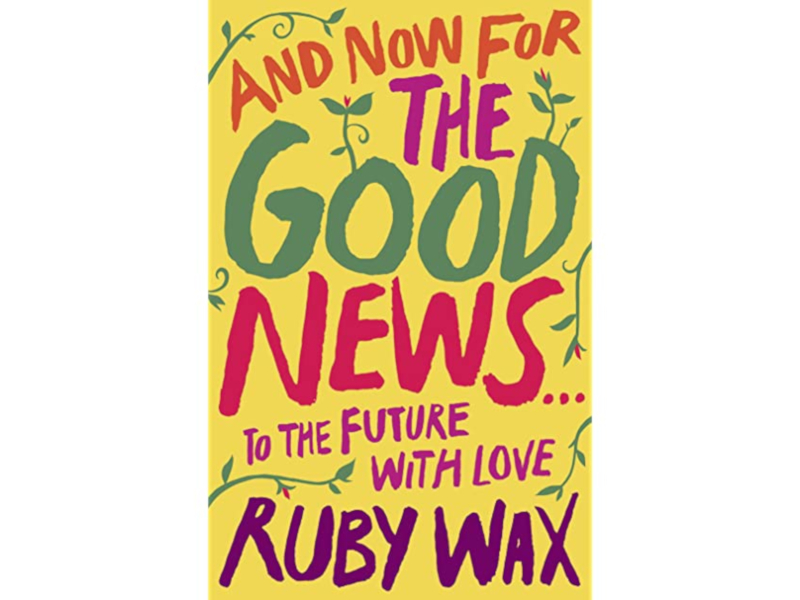
  • Review: And Now for the Good News by Ruby Wax

    Review: And Now for the Good News by Ruby Wax


    Comedian Ruby Wax gives a new meaning to the saying that bad news travels fast while good news takes the scenic route in her rambling look at the positive side of life. In her typically sardonic tone, Wax bemoans the depressing state of business, technology and the media but at the end of each chapter she reassures her readers that good news still exists. “ I had to really hunt for positive sound bites even though they should be on the front cover of every newspaper every day of the week to replace the usual photo of a beautiful woman who is either at her film premiere or dead,” she says. While her bluntness means she can talk about the bad news very convincingly, sometimes I was left wishing she would take a quicker route to the good news.

    Her chapter on business takes a while to get to the good news as the first few pages contain generalisations and personal anecdotes despite the fact she begins by saying, “I’ve never understood business”. Although her takes are comically hyperbolic, they would be better if propped up with specific examples.

    She states “Corporations run the politicians, who obey their beck and call. If an oil company wants more oil, the government will declare a war to get more,” without referencing any real world events, for instance. The good news, when it eventually arrives, is uplifting and she focusses on the outdoor clothing brand, Patagonia. For this she describes a meeting she had with the co-founder Vincent Stanley but doesn’t include any quotes from him.

    Throughout the book, there is a frustrating lack of evidence. Due to a lack of specific examples, Wax relies on cliches. When talking about social media she says, “Let’s all agree that the happier people look on Instagram photos, the more miserable they probably are inside.”

    Or, when talking about the lack of actual human connection that blights twenty first century living, she relies on anecdotal evidence: “In the old days, if you needed a plumber, a babysitter or a shoulder to cry on, there was usually someone in your building who had those skills or at least could advise someone they knew to help. Now, we have to call agencies to get someone over and then pay through the nose for their services.” Each chapter contains a ‘My Story’ section but really there need not be discreet sections as the autobiographical style dominates throughout the book.

    And now for the good news: Wax is as funny in print as she is in real life and her final chapter on positive initiatives lifts the book. Wax herself set up the frazzled cafe, which provides a talking place where people who are feeling frazzled can meet (on zoom) to share their feelings.

    Her references to initiatives such as Samos refugee camp and The Kindness Offensive are particularly insightful. While the book is unfortunately timed, “I don’t mention Covid-19 and that’s because I finished this book around the time it broke; so mea culpa,” she laments, the book concludes with a positive message about our times: “Look how quickly we can transform ourselves, almost overnight,” “compassion also spreads like a virus,” she soothes.

    And Now For The Good News: Penguin Life, £14.99


  • Review: Tomorrow will be a Good Day by Captain Sir Thomas Moore

    Review: Tomorrow will be a Good Day by Captain Sir Thomas Moore

    Reading Captain Tom’s autobiography feels a bit like watching one of those really good X Factor auditions, you know it is a bit staged and quite formulaic but it still makes you feel warm and fuzzy. The book has a wonderfully satisfying narrative arch following the extraordinary life of a seemingly ordinary man who suffers some tragedies but finishes triumphant. Although the tone is mostly gentle, Moore is surprisingly frank in its detailing of some of the sadnesses in his romantic relationships, from descriptions of the “loveless bed” in his first marriage to the death of his wife, Pamela, “to watch someone you love decline through dementia is a slow kind of torture,” he says. It also portrays Moore’s warmth and humour, for instance, on his knighthood he writes: “I joked that I hoped the Queen wasn’t too heavy-handed with the sword.” It is this collision between the ordinary and extraordinary that captured the nation’s hearts when the 100-year-old walked around his garden to raise money for the NHS and this shines through in the autobiography.

    Tomorrow Will Be A Good Day: , £20.00


  • Review: The Serendipity Mindset by Dr. Christian Busch

    Review: The Serendipity Mindset by Dr. Christian Busch

    Dr Christian Busch makes a rather lofty promise at the beginning of his book: he will reveal how to navigate “the hidden force in the world,” he says. The force is serendipity, which he defines as “unexpected good luck resulting from unplanned moments in which proactive decisions lead to positive outcomes,” phew. Busch says he hopes to “start a journey and, hopefully a movement”. As part of his thought revolution he has created a glossary of terms such as “serendipitor,” which is someone who “cultivates serendipity” and “FOMS,” which stands for “fear of missing serendipity”. The reader can even calculate their serendipity score by answering questions such as “I tend to get what I want from life.”

    The premise of the book is rather ambitious but Busch, who teaches at New York University and the London School of Economics, grounds his suggestions in academic research. For instance, he references the statistical phenomenon, the birthday paradox – the counterintuitive fact that you only need 23 people in a room for it to be likely that someone shares a birthday – to show “we often underestimate the unexpected because we think linearly – often ‘according to plan’ – rather than exponentially (or in contingencies)”.

    In order to demonstrate how people can manifest their own luck, Busch references a study in which two participants, “lucky Martin and unlucky Brenda,” were asked to buy a cup of coffee and sit down. The researchers placed a five-pound note on the pavement outside the entrance. Martin noticed the five-pound note, picked it up and sat down next to a businessman, started a conversation and made friends with him while Brenda did neither of these things and described her trip as “uneventful”.

    Busch also employs plenty of amusing anecdotes to argue his points. To show how people can create serendipity by “connecting the dots,” for instance, he references the drug Sildenafil which was supposed to help cure angina.

    Researchers discovered that it had a surprising impact on male patients: it caused erections. While some would see this as an “embarrassing side effect” it was ultimately marketed as the very successful drug, viagra.

    While Busch occasionally slips into verbose language, the book portrays a clear and helpful message: opportunities are everywhere, seize them. I wrote this review in a coffee shop. I am a typical Londoner and strive to avoid eye contact but I thought of “lucky Martin” when I overheard a man talking about a triathlon club – something I’ve been meaning to do for ages – I spoke to the stranger. With encouragement and advice from the former stranger, I have signed up for my first triathlon and I think that is testament to Dr Busch.

    The Serendipity Mindset: Penguin Life, £14.99


  • Book reviews: October 2020 round-up

    Book reviews: October 2020 round-up

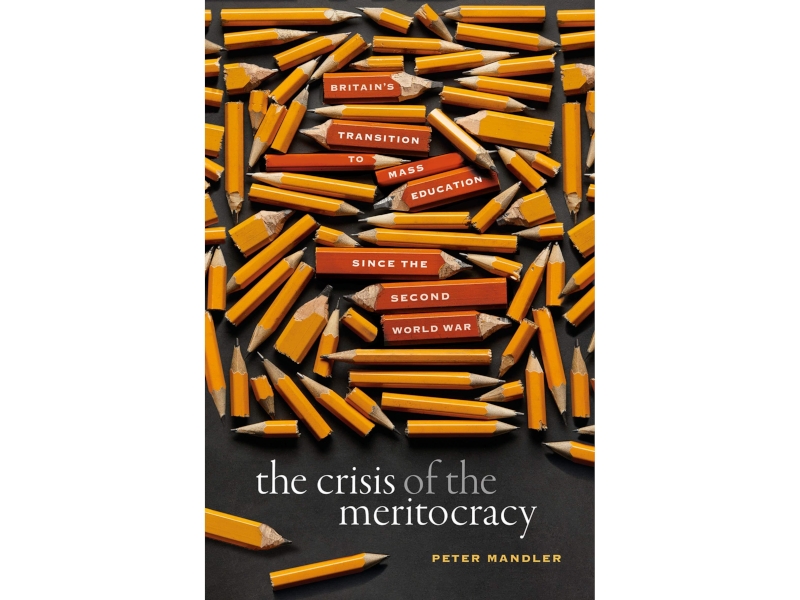
    The Crisis of the Meritocracy: Britain’s Transition to Mass Education since the Second World War by Peter Mandler

    This timely tome offers an apolitical overview of the education system and considers why so many people are attending university and the implications of this. Mandler focusses on deconstructing the legacy of the Butler Act – a piece of legislation which aimed to remove inequality from education and saw the proportion of free places at grammar schools increase by almost a third. This study is essential reading for those who want to thoroughly understand why we are still not living in a true meritocracy.

    Crisis of Meritocracy: Oxford University Press, £25.00

    What Do We Know and What Should We Do About Social Mobility? By Lee Elliot Major and Stephen Machin

    Low social mobility in Britain is an increasingly pressing issue and Professor of Social Mobility at the University of Exeter Lee Elliot Major and LSE Professor of Economics Stephen Machin consider what can be done to reverse this trend. This book documents the history of mobility since WWII and considers how family traits affect intergenerational mobility. The authors call for a shift in debates around this topic in order to establish a more just society.

    Social Mobility: SAGE Publishing, £9.99

    Is Assessment Fair? By Isabel Nisbet and Stuart Shaw

    Following the exam results debacle, fairness in educational assessment has become a major talking point. In this book Lecturer at the Faculty of Education, University of Cambridge, Isabel Nisbet and Fellow of the Chartered Institute of Educational Assessors, Stuart Shaw consider what fairness means in practice and how it can be evaluated. Drawing on international examples from the UK, US, Australia and South East Asia, this book offers a thorough commentary on fairness.

    Is Assessment fair: SAGE Publishing, £24.99

    Educating for a Characterful Society Responsibility and the Public Good By James Arthur, Julia Cleverdon, Nicky Morgan, James O’Shaughnessy, Anthony Seldon

    What is character and how can educators develop virtues such as honesty and a sense of duty? In this book, five leading figures in government and education examine the ‘character’ of the public service workers on the frontline during the pandemic and consider how the National Curriculum can develop a sense of social justice and harness the passion of young people in order to work towards a stronger society.

    Educating For a Characterful Society: Routledge, £12.99

  • Review: The Power of Learning from Dad by Dr Selva Pankaj

    Review: The Power of Learning from Dad by Dr Selva Pankaj

    While many people planned on writing a book during lockdown Dr Selva Pankaj actually did and the lessons he shares may inspire other people to achieve his level of motivation and success. The Regent Group founder reflects on the wisdom he received from his father while growing up in war-torn Sri Lanka such as “Dad said that plant springs from one seed, so every act of man or woman springs from thought” or “Dad used to say to me, ‘if you get up in the morning and find a wonderful day, be grateful for that’” or “Dad used to say in different words that you should willingly give, and sometimes giving needs to be spontaneous.” While the book bears some of the hallmarks of a self-published memoir, it can be commended for attempting to portray inspiring messages.

    Power of Learning from Dad: Regent Publishing, £10.00

  • Review: Why Can’t We All Just Get Along by Iain Dale

    Review: Why Can’t We All Just Get Along by Iain Dale


    By reflecting on Brexit, Trump and Twitter spats, Iain Dale examines why public discourse has become so angry and unproductive. Dale builds a gloriously optimistic road map to a kinder world, centred around the fundamental decencies of human nature. He even provides a simple bullet point list of suggestions from “Never post a picture of your food. No one is interested. Not even your mother” to “Whatever you do, don’t swear.” By his own admission, this is not an intellectual book and at times, like so many journalists, he spends too much time writing about Twitter storms. The richest and most illuminating anecdotes, however, come from his experiences interviewing prime ministers and, surprisingly, his relationship with his parents. This is a book about disagreements, but mostly it’s a book about hope.

    Why Can’t We All Just Get Along: HarperCollins Publishers, £12.99