Tag: Architecture

  • Photo essay: Architecture in the Time of Covid

    Photo essay: Architecture in the Time of Covid

    During the pandemic, we published Will Purcell’s fantastic photographic essay on architecture during the pandemic. With the streets full of people once again, it’s interesting to look back.


    Will Purcell  

    While it is easy to wallow in the emptiness of this pandemic there is a lot to celebrate in the architecture of the city and its surrounding suburbs. One long year ago, silent buildings were normally associated with being readied for demolition or redevelopment. Now silence can mean only one thing: the virus.

    It’s fascinating how architecture designed for people stands up when the footfall is removed. The City of London certainly looms ominously in the quiet with tall glass structures, curved and reflective, towering over the old London banking lanes and largely empty passageways.  

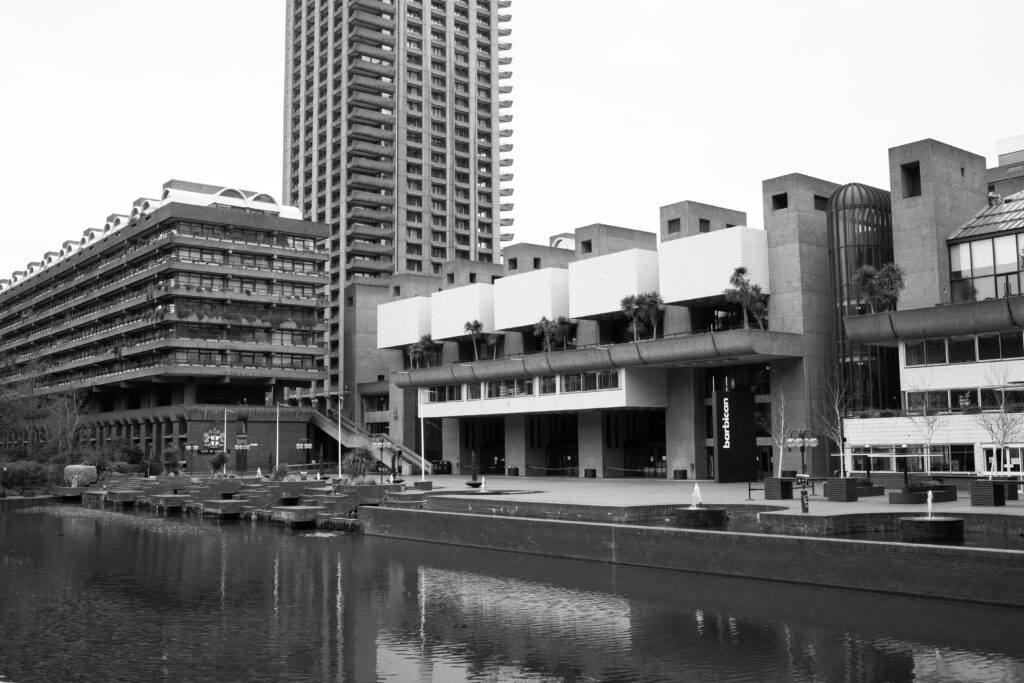
    The neighbouring Barbican with its closed theatre and eerily muted walkways with Wyndham-esque pods somehow manages to retain a sense of warmth. Although deserted, save for the odd body at a desk in an adjacent block, it keeps the interest of the observer. It is a hard development surrounded by equally gritty high rises but in its textured and rough industrial concrete balconies there remains, even with everyone tucked away and hidden, a consoling sense of presence, even warmth.  

    South of the river, the National Theatre with its Brutalist layered concrete feels more than ever cold and alone. In sunlight, filled with people and life it can really soar, but during the winter of our pandemic it can appear an inexplicable relic. It is not alone, but just like the office blocks that surround Victoria Station, and which are usually lit up and full, the glass panels lie in darkness reflecting the world outside its walls.  

    In contrast, as habits change, people work from home and exercise and socialise near to where they live. Residences that sit in the middle of the action come to the fore. The suburbs are no longer the exclusive realm of the terraced house. High-rise flats demand attention on the horizon. Floor to ceiling bedroom windows overlooking community parks  look like fixtures of the future.  

    Deprived of so many people, London becomes a myriad of lines and angles. With the softening sounds of chatter, footsteps temporarily suspended, and with the constant noise of the cars, buses and aeroplanes also reduced, it is an opportune time to explore the silent shadows of the city’s architecture and search out the little pockets of hope and colour that still exist across the boroughs waiting for the return of laughter and light switches. 

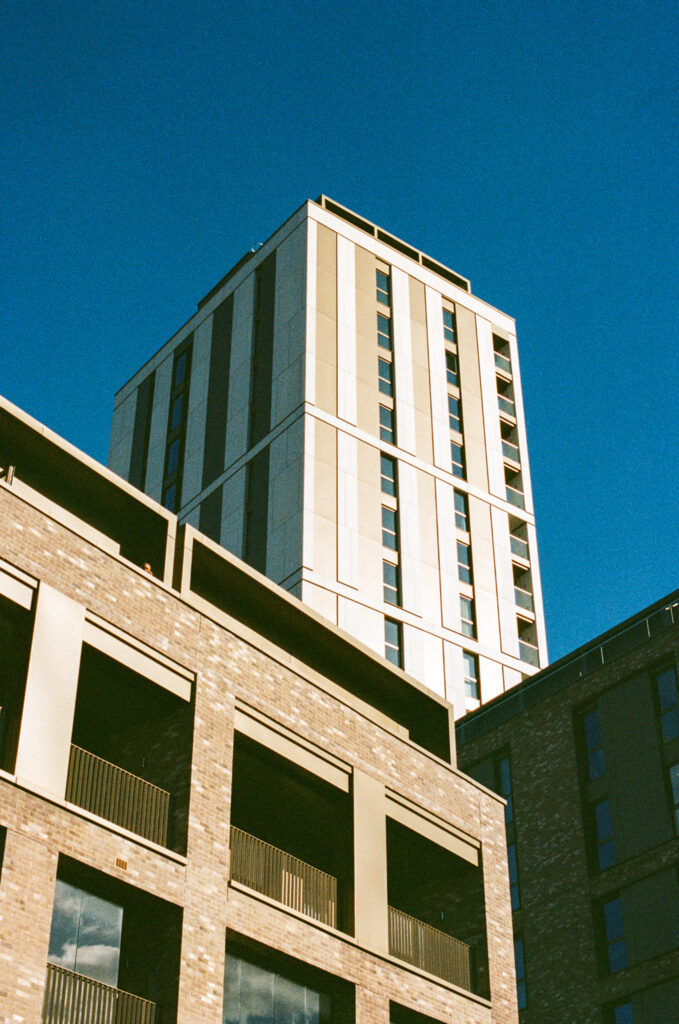
    A New Build in SW London shows that the direction of travel is most definitely up when it comes to finding space in an already overcrowded city. 
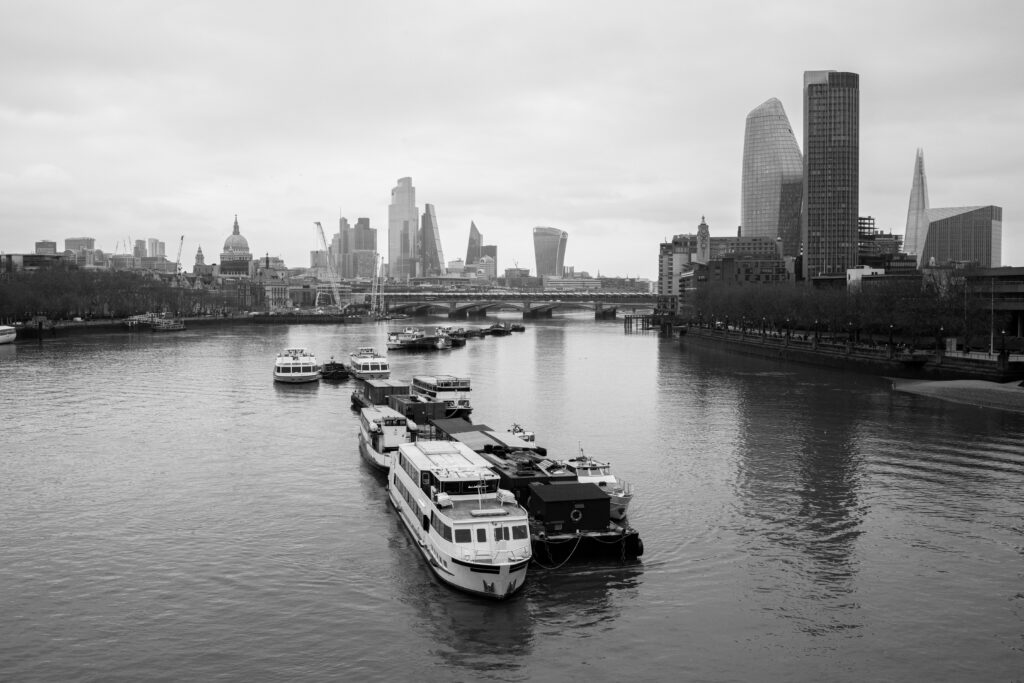
    London – all angles and shapes and static boats.
    The timeless Barbican, empty and imperious at once from both the past and the future. 
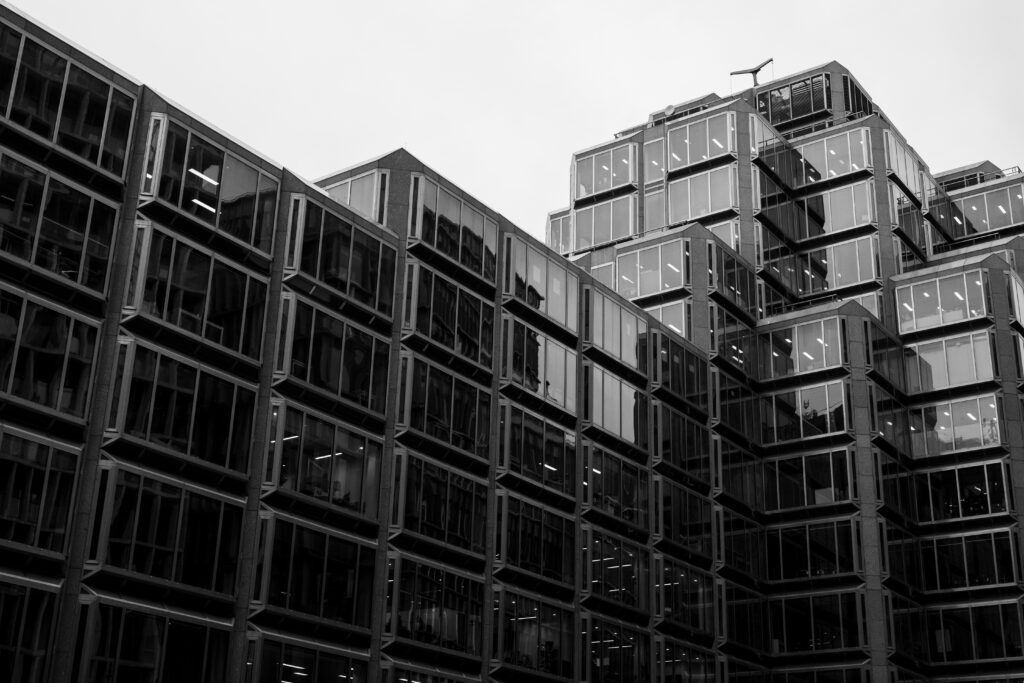
    125 Victoria Street
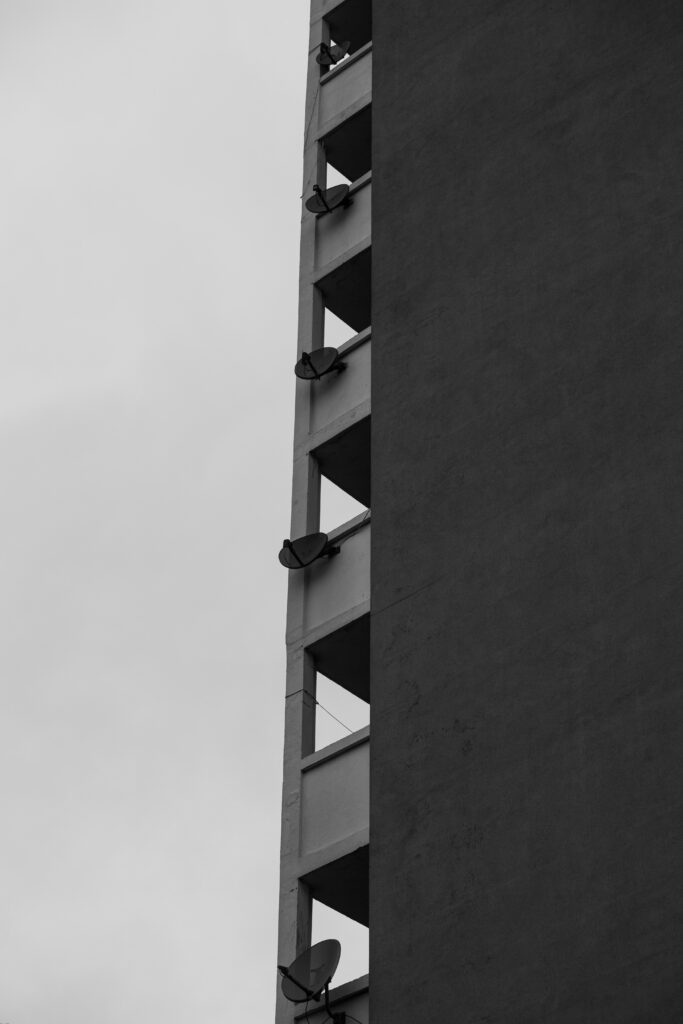
    Satelite dishes adorn a tower block in Loughborough Junction in SW London in a visual nod to the Netflix and other providers of TV that we have been at home devouring over the last year. 


  • Photo essay: The Data in Our Midst

    Iris Spark


    Very possibly, if one had to pick a word of this century so far you’d come up with ‘data’. We all receive data, examine it, worry about the data we’re not receiving, and question the data we have, wondering if its bona fide or in some way false.

    But data, by its very nature, feels invisible. It’s this which gives it its power – the sense of something both powerful and intangible.

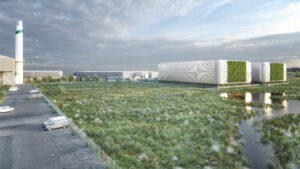
    Yet a recent exhibition at Roka in Imperial Wharf showed that this isn’t the case. In actual fact, the need to store data has created a new and varied architecture. Facts which at first seem like they might belong to the ether – such as the fact that Google processes around 5.6 billion search requests per day – turn out to have ramifications in the real world around of us.

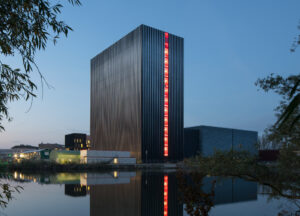
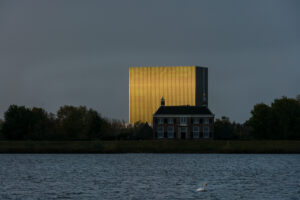
    Sometimes data centres are housed in our midst in sheds and buildings – in precisely the sort of non-descript architecture you’d expect. But sometimes they are in the world around of us – for instance, in the former department store Macy’s. This fact alone might be taken as an emblem of the way our world is going: people used to go to this place physically to buy clothes, but now it is a place committed to housing the data by which we can do so online.

    Meanwhile, former print works in Chicago, which used to produce Sears Catalogues and Yellow Pages, is now the Lakeside Technology Centre. In these instances, it can be surprising to find that the usage of a building has changed right before our eyes. The sense is then not so much of the pace of change, but of its surreptitiousness, even its secrecy.

    This new architecture can also surprise by being housed underground as is the case at Pioenen Bunker in Sweden, which formerly hosted Wikileaks and can only be accessed deep below 30 metres of granite. But if data lies beneath our feet, it also now inhabits the skies: in 2016, NASA created the New Solar System Internet to communicate with its Voyager and Mars rovers. It’s the first space-based data centre – another sign of the times.

    But if one looks at the question of the energy it takes to create the architecture which houses our data then you realise that it is in a head-on collision with the question of climate change. Put simply, these places have gigantic carbon footprints. Some architects have come up with renewable solutions. Lefdal Mine Centre, for instance, is 85 feet underground and surrounded by solid limestone. It is 100 per cent renewable and is cooled by water from nearby fjords.

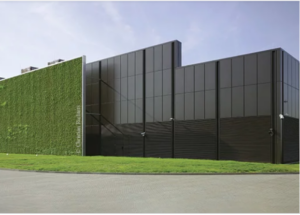
    But often in these designs, we find a knowing juxtaposition between the sheer amount of energy used to fuel our online lifestyles and prevailing climate anxiety. At Gak Chuncheon in China, trees planted on the roof reduce the amount of electricity used for air conditioning, as well as blocking the glare of the summer sun, protecting the site from heat island effect. At AM4 Equinix in Amsterdam, a moat intervenes between the public and the enormous data centre to take into account public awareness of the amount of energy these buildings use.

    This is how the world changes – almost imperceptibly, and never without anxiety or regret. It would be tempting to say that the buildings in this essay represent our future, and perhaps they do to some extent. But really they represent something much more complicated: our restless, ambitious present.


    Aecom

    AM4 Equanix


    AM4 Equanix

    Arup


    Benthem Crowell


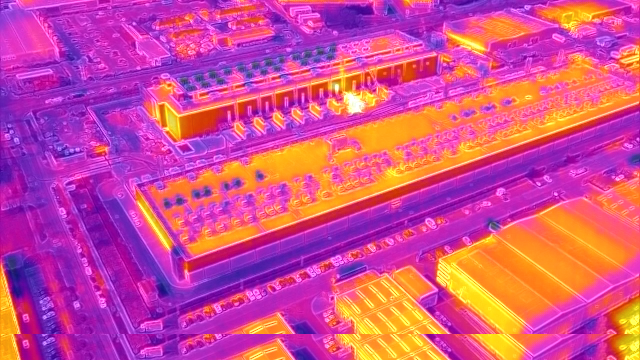
    Amazon Tallaght Aerial Thermographic

    Belvedere Data Centre, London


  • Out of office? Thomas Heatherwick on the future of the workplace

    Out of office? Thomas Heatherwick on the future of the workplace

    By George Achebe

    Will we ever return to our offices? And what will they look like if we do? George Achebe talks to renowned designer Thomas Heatherwick

    Journalists I speak to lately have begun to notice a new presence within their recordings of interviews and Zoom call presentations: birdsong. Lockdown coincided with marvellous weather; our offices became our gardens.

    And the sky on our road in Islington reverberates with the sound of spanner on metal; our friends over in Muswell Hill have replanted their garden since they spend so much time looking at it; my conveyancing lawyer tells me he may, or may not, return to the office. If so, he says, it will be used primarily as a storage space.

    There is, in other words, a unanimity about lockdown: you can be sure that your own experience can be extrapolated into the general. And yet if you ever leave your cosy home and venture to the centre of town, you’ll discover the flipside of all this neighbourliness and quiet domestic improvement.

    Soho strikes me as especially melancholy. There’s the sandwich bar I used to frequent now boarded up; a new kind of silence, not so much contemplative as eerily touristless; and with around one in ten businesses open, you have a sense that this place has insufficient residential activity to last in its current form beyond the end of furlough.

    Will these businesses return? It is dependent on what decision we make about our office arrangements. This varies from business to business of course. For a more in-depth analysis of the landscape see our exclusive employability survey which begins on page 79. But what are the implications for architects?

    Thomas Heatherwick, the famous founder of the Heatherwick Studio, explains that he has seen some positives come out of the coronavirus period: ‘The most interesting thing has been reflecting on what this means and how it’s going to change our lives. I’m wrestling with the sense that [preCovid 19] there was more and more sharing – of cars, workspaces and living spaces. The world was becoming more efficient because people were learning to live together in different ways.’

    In Heatherwick’s eyes, the pandemic represented a ‘retreat’ into the private space – a world of Victorian studies, and stockpiled toilet roll. But Heatherwick, who in person is infectiously optimistic and free-wheeling, is already solving the problem the world has set him: ‘The positive side is that people will be spending more time on their homes, and thinking on how their homes work for any situation.’ In the meantime, he says, businessowners have decisions to make about whether to redesign their office space.

    We are all aware that this is a sort of drawn-out inflection point, where the human behaviour that will dictate what solution we end up with is latent, and yet to be revealed. Furthermore, it will likely differ from country to country; sector to sector; and CEO to CEO.

    When I talk to Alan S – the CEO of a leading boutique creative agency, who also has the sound of birds in his garden – he speaks only on the condition that he remains anonymous. This is because he isn’t quite sure where his business will land and he doesn’t want to give any misleading or worrying information to his workforce.

    ‘As a small business we have always worked from a fixed office in central London and although we have let employees work from home when required we have never all worked remotely at the same time,’ he explains. ‘We did a trial run before lockdown was announced in order to iron out any issues that might possibly arise, so when lockdown happened we were as ready as possible.’ So how did it pan out? ‘The overriding response was that everyone found it productive, but missed the typical office interactions and camaraderie when seeing each other.’

    This will no doubt be a familiar experience for many. What changes has that made to Alan’s view of his existing central London office space? ‘It suddenly became a burden and we were realising that the more we worked from home, the benefits this gave to everyone [would accrue].’ And what are these? ‘Everyone would save on travel expenses and commuting time could be spent with partners and families.’ The perennial bugbear or exorbitant business rates has also been front of mind for the business. ‘The rent, rates and insurance saved by surrendering a central London office will enable us to invest in people, equipment and technology to increase our efficiency and service our clients.’

    So Alan S has to some extent made up his mind, and there are plenty of him.

    But it is by no means a unanimous view. In fact you’ll find some who argue that an imminent vaccine, most likely arriving in 2021, and distributed towards the end of that year or in 2022, will see a return to a world reminiscent of pre-Covid 19 office-centric life.

    Olly Olsen, the CEO of the Office Group, which has over 40 flexible workspaces across the UK, is one of these, although he admits it may be a way off. ‘I spoke to Network Rail, with whom I have a joint venture, and in a number of stations, footfall is down 88 percent. That’s catastrophic,’ he concedes.

    In addition, Olsen, whose livelihood is bound up in office life, also makes some admissions about the benefits of working from home. For him, they’re linked to wellness. ‘In the afternoon, I get tired with too much coffee and a big lunch and so I’ll lie down on the sofa for half an hour which is almost socially unacceptable to do in the office.’ Olsen sees it as a positive future driver of business that we’re now finding ourselves more attuned to what he calls ‘wellness fluctuations’ in each other. Workers with children are another example. ‘It used to be that if someone said “Can I make that meeting 11 instead of 10?’, you’d say: “Deal with your kids another time.” Now when a member of staff says, “I’m not feeling myself ”, I say, “Have a rest, there’s no problem. Speak to you later, speak to you next week”.

    All this is an indicator of how power has moved rapidly away from the employer towards the employee. For Olsen, it’s not that the office model needs to go; it’s that it needs to change and be adapted to reflect our new reality.

    What ramifications will this have for the buildings around us? Thomas Heatherwick agrees with Olsen, but he sees it from an architect’s perspective. For him, there has simply been too much ‘lazy place-making’, and the pre-Covid office was a case of ‘Stockholm syndrome where someone falls in love with their captor. Your employer effectively had you in a headlock.’ The new office space will have to ‘engender real loyalty’ and become a ‘temple of the real values and ethical thrust of an organisation.’

    For Heatherwick, the pre-Covid workspace ‘prioritised how [businesses] communicate to the outside world. So if you go to Canary Wharf ’ – an example perhaps of Heatherwick’s ‘lazy placemaking’ – ‘there’s a grand lobby; huge marble floors; pieces of art looking spectacular; a reception desk with great flowers, and lovely-looking people sitting looking great. But if you go inside the elevator you go up to just an ordinary place of work. The show was for the outside.’

    All this has to change now that power has moved in the direction of the employee. ‘You need to have them coming in and thinking, “Yes. I need to be here.” So the workspace will become less about being a show for the outside world. It’s about finding your voice as an organisation. The employer has to up their game which the brilliant people were starting to do anyway.’

    So how will this look? Heatherwick is a prescient artist who, it could be said, was already beginning to answer some of these questions in his previrus work. His magnificent shopping centre Coal Drop’s Yard in King’s Cross was all about creating a space which people who could internet shop in their bedrooms would still wish to visit.

    ‘Public togetherness is something which motivates me,’ he says with infectious enthusiasm. Heatherwick has always been alive to the fact that change must be built on the back of existing infrastructure: as always, the future will be built on the back of past structures. ‘We’ve got this legacy of Victorian and Georgian warehouses, which are very robust and changeable. Think how many people are living in older industrial buildings. That was the ethos which drove the Google buildings that we’ve worked on.’ Covid-19 might seem to open up onto the future, but it will also be anchored, Heatherwick argues, to what we have already.

    The first project the studio worked on for Google was the company’s offices in California. ‘Next-door to the sites we were working on there was this airship hangar – a NASA airbase,’ he recalls. ‘These are amazing spaces which are super-flexible so you can do anything you want. So our proposal to Google suggested we make really flexible space since we’re not sure whether in a decade people sitting at desks will be what we need. We’ll be manufacturing instead.’

    So in a sense the post-coronavirus requirement of flexibility might be met by the sorts of structures already around us: there shall be that element of continuity even as we change.

    But this isn’t to say Heatherwick lacks a vision of just how extraordinary the shift in architecture shall be. Round the corner from his studio in King’s Cross, Heatherwick is working on Google’s new London base: ‘It’s the biggest use of timber in a central London building. All the façades are wood.’

    What is the ethos of that building? ‘One thing we’ve spent time talking about on that is community,’ says the 50-year-old. ‘The idea that here is just a mercenary organisation doing their thing, and the employees come in eat all their food and drink their drinks, sit at their computers, and get well-paid…’

    Heatherwick trails off, then refinds his thread. ‘Given what we’re saying about really getting a deeper engagement with an organisation and it’s team: How does that really contribute to the community around? On the ground floor, you don’t just want another shop that sells ties.’

    So what would a new communityoriented architecture entail? ‘Close by King’s Cross there’s Somers Town, where there’s great deprivation and low life possibilities in terms of housing and education.’ For Heatherwick the lively pedestrianised ground floor is a way of energising the whole area.

    So while our conversation began with fears of a new individualism, perhaps we might after all find a new communitarianism emerge? Heatherwick agrees: ‘If you’re going into work two days a week you may not need to be based in London.

    Out of this may come some strong community-making away from conventional urban settings. Energy had seeped away from villages but now you could get super-villages. It’s okay to spend two hours on a train journey if you’re only doing that twice a week. I just hope we will use brownfield sites rather than consuming greenfield sites.’

    But again this seems to spell trouble for the City and, though few may lament the fact, the property development sector. Olsen admits: ‘If you ask people where they most prefer working, it’s on their own – it’s at home where it’s quiet. Not an office which is openplan with people talking, and which is smelly and so on.’

    So what’s the purpose of going to an office? Olsen is clear: ‘We’re built to connect. I can’t have guests and clients to my house and I can’t bring a team together to my home. If I do that business will fall – as it’s falling now from lack of human interactions.’

    So what kind of spaces will we see? In answering this, Olsen sounds a lot like Heatherwick: ‘It’s difficult to forecast what will happen next but I think where you choose to work will be driven by who you are and what you believe. Our places of work will become more of an extension of our social lives.

    The overwhelming impression is that we’re in a hiatus – a period of hedging, where people are living in tentative expectation of a vaccine. Olsen agrees (‘we just don’t know) but he has clarity on another point: ‘Before this happened, I would have said that all my buildings were clear, tidy, safe and healthy. Well, they’ll have to be clearer, tidier, safer, and healthier now.’

    So it seems likely we’ll be hearing the birds in the garden for a while yet. And when we get back to them, perhaps we’ll hear them in our offices too.

  • Thomas Heatherwick: ‘Before Covid, the idea of having a study sounded so Victorian’

    Thomas Heatherwick: ‘Before Covid, the idea of having a study sounded so Victorian’

    by Thomas Heatherwick

    At the Heatherwick Studio, we’re trying to be growers of more human place making: what’s crucial is the experience dimension of the person using the building. That might sound obvious, but I sensed even as a kid that we’re too often led astray by other forces and not by the needs of the person using a structure.

    Some big positives can come out of this strange and tragic situation we’ve all been living through. There’s been a chance to think from new angles. That’s partly because you need to, given the new context. But it’s also welcome: I always thought it would be very hard for me to take a sabbatical, and I envied those around me who could do that. Of course, it was a partial envy – I’m so lucky to have the diverse rollercoaster of impressions I have. My studio is about embracing change and finding ways to adjust. That’s what excites me. The most interesting thing has been reflecting on what the virus means – and how it’s going to change our lives. Before the pandemic, there was more and more sharing – cars, workspaces and living spaces were becoming more efficient because people might live together in different ways. I was saddened at the outset of coronavirus: it felt like a kind of retreat into an understandable self-preservation and selfishness.

    Before all this happened, people didn’t think they needed an office in their home – the idea of having a study sounded so Victorian. Throughout lockdown, people have been cowering in their bedrooms and trying to pretend it’s not their bedroom: so people will be making their homes better in advance of a possible second wave, and investing in any eventuality. Post-Covid homes will be better homes.

    But public togetherness is what motivates me in the different projects we work on. Take our shopping center Coal Drop’s Yard for example. What motivates me isn’t getting people to shop. What’s exciting is that it’s an excuse at a time when governments don’t invest in public place making to create an interesting space. I wish the government would do more: they had their fingers badly burned in the 1960s and 1970s by terrible architecture, and so they retreated and let the private sector come in.

    I’ve always made very tactile buildings and though obviously Covid-19 will change the extent to which we touch things, I think you also touch things with your eyes. The way light falls off a computer screen, for instance, is very dead and simplistic.

    But light falling across more complex detail and texture is something that you absorb. If you’re in the mountains you can’t touch them, but you can still feel their form.

    We’ve got 200 people here, and I’m thankful for being an older organization. Many of us have worked together for a long time, and we can sustain that over digital communication. There are unexpected benefits. The world’s been conspiring for the last two decades to get us to this point. The digital revolution has been setting us up to do this; it’s astonishing how effective we’ve managed to be at home.

    But I don’t think in aggregate its better. There’s no real substitute for being in the studio. Our studio is full of models and memorabilia: it’s our collective memory. It’s important to see your failures, your test pieces, your experiments, and your thought-triggers. We all think we have a flawless memory – but we don’t.

    We’re working with one new organization, rethinking large amounts of workspace. I think people are aware this has long ramifications for everybody. It spreads across everything. We just finished a Maggie’s cancer care center in Leeds. It’s a relatively small project but it’s trying to engage with the issues someone with a cancer diagnosis might face. How do you support that health journey? If you look at hospitals today it’s as if the emotional condition doesn’t impact their physical journey.

    Looking back at the Garden Bridge, it was a manifestation of this urge to try and make everything connect more to people. A bridge doesn’t just need to be getting from one side to the other: the middle of a bridge is one of the most incredible places you can be. Maybe one day the politics will support our intention to create a new garden for Londoners.

    Thomas Heatherwick is the founder of the Heatherwick Studio.

  • Exclusive Interview: High Line designer Piet Oudolf

    Exclusive Interview: High Line designer Piet Oudolf

    Piet Oudolf is without question the most famous landscape architect in the world. Iris Spark caught up with the plantsman.

    In every area of life, many people do very well for a period of time. A few reach the top and stay there. But there is only one area I can think of where one person has been so far above the rest for so long. That happens to be gardening. If you ask anyone in the profession who is the best they won’t have to stop and think: Piet Oudolf.

    ‘A rock star,’ says Andy Sturgeon who, with books and television behind him, has himself done passably well. And if you raise his name with anyone in the profession you’ll hear an awed silence, as if they’re turning over with amazement the famous name, and all that it means.

    Oudolf ’s importance – his supremacy even – is partly attributable to the fact that his name is synonymous with a particular movement – the so-called New Perennials – which promoted a new sustainable aesthetic in gardening during the 1970s and 80s. But he’s also a global phenomenon, and sui generis in that respect. He has made public spaces the world over – most notably the High Line and Battery Park in New York, the Lurie Garden in Chicago’s Millennium Park, and Potters Fields in London. His famous home Hummelo, which was open to the public for years until it closed in October 2018, would alone be enough to rank him as a great artist.

    So how did it all begin? The great careers can sometimes seem strangely unpromising at their outset. Oudolf recalls: ‘A long time ago in the 1970s, I turned away from my earlier job in my parents’ restaurant. I was married and didn’t want to do that for the rest of my life. I was looking for jobs and eventually came to work in a garden centre at Christmastime in the perennials department. That made me aware of plants.’

    It is a vivid image of the alert drifter, who is waiting for life to come to him – and when it does, seizes life all the more quickly for having waited. ‘I started to buy books and look at plants – that’s how it all started.’

    There were still some practical steps to be taken: ‘I went back to school to get an elementary licence to start a contract company. It was 1975 and we started small with a nursery. We began to sell perennial plants.’ Oudolf owes his stratospheric success in part to having done the hard yards in the less glamorous business of selling plants, but all along there was a radical vision: of a garden that would look good all the year round.         

    He had his share of luck. Gardening was about to take off – and particularly in the UK. ‘In 1980 we travelled to England where gardening was very fashionable with many magazines at that time. And we had the ideal plants so they soon discovered us.’

    Oudolf ’s aesthetic represented a radical move away from the twee decorative garden fashionable at the time. By 2000, the publication of his book Dream Plants for the Garden, showed how far Oudolf had come, not just as a nurseryman but as a thinker. ‘It was translated into Swedish and we had lots of conferences at Kew and elsewhere. We became a close community.’

    To what does Oudolf attribute his success? He tells me it was necessity. ‘We had no choice. We had no money.’ So Oudolf ’s relentless work ethic stems from financial need. Even now, soon to turn 76, Oudolf prefers to work in the morning in his studio, finding that late-night work will interrupt his sleep.

    In 2000 also, Oudolf won the coveted Best in Show gold medal at the Chelsea Flower Show. But even by that point, people didn’t always understand what he was doing. ‘When I travelled to England, they always called me the nursery man who made gardens, when in fact I was a designer who had a nursery. Some believed in me totally; but other didn’t trust me. It was out of their spectrum.’

    So what sustained him? Oudolf had a vision of a more durable and sustainable kind of garden: he was, in his understated way an evangelical for the ideas he was putting forward. But he also enjoyed the encouragement of a small circle. ‘It was always encouraging when I did something people liked in my circle,’ he says. ‘And people were really taking over my ideas. That was because I was one of the few people that specialised in public spaces so millions of people could see my ideas, which was very stimulating.’

    In fact, when I ask him for his regrets, that turns out to be the only one: he regrets any private work he has done as he knows it hasn’t reached the requisite audience.

    Another turning-point came in 2004, when he was phoned up by James Corner Field Operations who had won the competition to redesign the lower west side of Manhattan: the project that would become known as the High Line. ‘I don’t think even they knew what they would do with it,’ recalls Oudolf. ‘Looking back, it’s great I said ‘yes’ as I was already working on the Battery Conservancy in New York so I thought, ‘I’ll take a look’’. Before Covid-19 struck it was attracting eight million people a year. Oudolf is philosophical about its success: ‘These projects start so small that when you look back you could have said no easily with the same feeling, yes and no were on an equal balance.’

    Does he feel pressure? Quite the opposite. Instead Oudolf uses the question for a remarkable rhapsody about the effects on the soul of gardening: ‘Gardening stimulates the brain: it makes you feel happy. Gardening is a metaphor for so many things. You can find respect in it; or you can play in it. You can find yourself in it, walk into it, discover it. Every day can be different, seasons have a different but continuous journey where the garden changes as you yourself change.’

    Then he pauses, before delivering a kind of punchline: ‘But don’t forget: it’s just fun.’

    So what advice would he give to those starting out in landscape architecture? ‘You can’t do anything without knowing plants – or at least you need someone who knows them. You can’t try and find it out from a book in your office. If you keep on working on that, you’ll create benefits for later.’

    No magic then, just hard work. Today Oudolf has built a recession and virusproof business. ‘The work has changed but I get commissioned now from a distance,’ he explains. ‘I have done two projects at a distance in America, as people know me well now. My plants are quite accurate. If I were ever to slow down it would be my own decision; people want to work with me.’

    Oudolf ’s is predominantly a tale of passion and hard work. ‘I keep working because it’s my life. Every day I do something, I love to go to the office and work. It feels like I’m pensioned but I’m still at work. The clients I work for are specially aware of the time we live in and I think that’s why my planting schemes work so well because they remind you of the wildness people dream on.’

    That wildness has come back to haunt us now, but Oudolf isn’t surprised by 2020. In fact he’s taken it in his stride: it’s what he was telling us about all along.