I am a war baby, born on 5th of October 1943. Anne Frank probably died on 31st of March 1945. We shared this world for only a few months.
Whilst she was hiding away in an attic with family and friends from the Nazis, while she and they were finally being betrayed and taken away to Bergen Belsen concentration camp to be murdered in the Holocaust like millions of others, I was being looked after in my grandparents’ comfortable house in Radlett, outside London, with a garden, surrounded by family, under threat of the war of course, but I knew nothing of that. I knew nothing of the concentration camps either. I did not know about the evil that men do, that sadly does live after them, if we allow it to.
When Hitler sent over the V2 rockets to do their indiscriminate killing, I was evacuated 300 miles north, well out of range. During my early childhood, the war, the history and the myth of it, was ever present, from the bombsites we played in – playing war games mostly – from the photo of my Uncle Pieter on the mantelpiece who had been killed in the RAF in 1941, aged 21, from the soldier with one leg often begging on the street corner near my school, I thought of war as a sort of killing game.
It took me a while to realise that it wasn’t a game, that war destroyed houses, flesh and uncles. BuI I think I only began to comprehend the depth of the tragedy of it when I saw my mother crying over the death of Uncle Pieter, her beloved brother. I caught her sadness, I think, and came to miss the uncle I never knew, and so began to understand the pity of war very young.
But I must have been eleven or twelve when I first knew anything of Anne Frank or the Holocaust. My family knew about it of course, but never told me. Like millions of my generation and in the generations to follow, I learnt about it through reading Anne Frank’s Diary. Her face was on the opening page looking out at me.
She wrote directly to me, confiding in me, telling me how it was to be her, how she was enduring her imprisonment in her attic in Amsterdam, the tedium, the frustration, the dread, the anger, the memories, the friends and relations, the hope, the longing to be free again, for liberation to come. It was her living testimony. And it lives on today.
Anne Frank’s talent was brutally cut short but she remains famous as a source of inspiration to people everywhere
The last page of her diary is the last we hear of her. She is simply not there any more. We knew before we ever read it that she had died, that these were to be her last words. Once read it is never forgotten.
It was of course not written to be read by others. She did not know that this was to be her testament, the most personal insight into the life of a spirited but ordinary girl whose name and face was one day to be famous all over the world, was to represent for so many all the wickedness and the waste, horror, the tragedy, shame and pity of the Holocaust.
For ever afterwards, her life and her death has given me, us, some way of beginning to understand the Holocaust. She was the one of the 6 million we all came to know. Her short life and death remind us of man’s inhumanity to man, of the depth of cruelty and depravity we are capable of, of the power of prejudice so easily aroused to fuel hate.
But Anne also gives us hope, the hope she had, that all can be well again, if we make it well. Her words, her suffering, her death, give us the determination to right the wrongs of antisemitism and prejudice of all kinds, to create a world where kindness, empathy and understanding rule.
Because of Anne, scribbling away up in her crowded attic room, I have had her story and her fate, and the iniquitous and vile Holocaust in my head for much of my life. It’s no accident then that I have written my own stories about it, stories like The Mozart Question.
This story and so many others were, I feel sure, originally inspired in part by a family friend I had grown up with as a child and known well – Mac, we called him, Ian Mcloed. He was amongst the very first British soldiers in the Royal Army Medical Corps to enter the concentration camp at Bergen Belsen, on the 15th of April 1945, where Ann Frank had died just a week or two before. A young man, a teenager at the time, Mac witnessed the horror of Belsen with his own eyes, and suffered from the effects of that terrible experience all his life.
His life, his being there at the liberation of Bergen Belsen, was the first of many personal connections to the Holocaust that have echoed through my own life, in so many ways.
For instance, growing up I was unaware of the Jewish origins of my step family. My birth name is Bridge, my father an actor, Tony Van Bridge, but my mother left him in 1946, to marry one Jack Morpurgo, from a Jewish family that emigrated to London in the early 20th century. So aged 2, I became a Morpurgo. It is a Jewish name from northern Italy, well respected there. Many many Morpurgos I later discovered had died in the camps.
And there was the violin. Go to the Violins of Hope Museum in Tel Aviv, and you will find amongst all the violins played in the concentration camps, the Morpurgo violin. It belonged to one Galtiero Morpurgo, a survivor of the camps, who was still playing the violin until he died aged 97. His family donated his violin to the museum.
Strangely, I did not know about this Morpurgo violin when, twenty years before I wrote a story of mine I called The Mozart Question. It is to me perhaps my most important book. By this time I had of course read Primo Levi, I had known and become a good friend with Judith Kerr, fellow children’s writer, and author of Hitler Stole Pink Rabbit, based on her family’s escape from Germany in 1933.
Anne Frank in December 1941
And I had discovered that a great teacher of mine, Paul Pollock, who had taught me classics at school, had been a child on the last train of Jewish children to leave Nazi occupied Prague in 1939, one of hundreds saved from the Holocaust by the wonderful Nicholas Winton. Mr Pollock was a devoted and eccentric teacher known and much respected for his extraordinary intelligence and famous for his withering remarks, his cutting barbs.
His barber was once overheard asking him: “And how would you like your hair cut today, sir?” “In silence,” Mr Pollock replied. He died only six months ago, at over a hundred years old. And we never realised when we were boys what he had been through, how he had no family but us. They’d all gone. He was alone in the world.
I have his story and Mac’s story and others in my mind as I am talking to you today. They connect me to the Holocaust. They all lived on. But Ann Frank was the first and most important of these connections, and she did not survive.
But the diary she wrote hiding away in her attic room in Amsterdam is for so many millions around the world the first and most lasting connection to those times, to those lost millions of the Holocaust, each of whom was a living breathing precious human being, a daughter, a son, a mother, a father.
It is primarily then because of Anne’s enduring story, that I am here, honoured to be be talking to you today. Like her, I’m a storymaker too, a writer – and what books she might have written had she lived, can you imagine? I write under my given name.
I am here in part because of my Morpurgo name. And I am here because of Mac, Ian Mcloed, the medical orderly at Bergen Belsen, whose story I knew growing up; and it is because of the discovery of the story of the Morpurgo violin in Tel Aviv, and of my friendship with Paul Pollock, my teacher, and dear Judith Kerr – two of those who escaped the Holocaust and came to live and do so much good for us in their adopted country. For me all these people and all these circumstances conspired to bring me here today.
It is because of all this, because of them and all they lived through, that I know as we all do that prejudice has to be fought, that prejudice is a disease that can so easily become an epidemic of hate, a pandemic that can overwhelm us, if we ignore it or look the other way. It is a pandemic against which we have to be vigilant, and that has to be confronted. Historical awareness, and stories can help in this struggle.
I’m firmly convinced that unless we know and remain aware of where prejudice can and does lead, unless we know the history of the Holocaust, then it can happen again, again and again. And I’m also convinced that it is stories that can keep us vigilant, that all of us growing up have to be made aware, generation after generation.
That’s why I am with you here today, why I have written my stories of those times, of war and oppression, of occupation, and of the Holocaust in particular in Waiting for Anya and my story of a violin in the concentration camps, The Mozart Question, in which the power and beauty of violin music can and does overcome brutality and evil. We owe it to them, to those who died in the Holocaust, to Anne Frank, and to those who survived, to go on telling the story.
And, we owe it to them surely to do more, to seek peace and reconciliation, to create the kind of world I discovered on my visit to Israel and Gaza, ten or so years ago, with Save the Children. I was taken to a village and to a school called Neve Shalom, Oasis of Peace, Wahat A Salam, the only place, so far as I know, where Jew and Arab go to school together.
We made kites together, flew kites together, made music together. Such a place, such a spirit, such children and families, and teachers will put the world to rights. There was hope there, there was peace there. Hope springs eternal, and hope brings peace.
Let there be peace.
This speech was delivered at the Anne Frank Trust UK annual lunch and is reprinted in full with the kind permission of the trust.
After Brexit there was a certain amount of talk of a number of cities taking London’s crown as Europe’s financial centre. Several runners and riders stepped forwards, but the results sometimes seemed underwhelming. JP Morgan sent its backroom staff to Dublin; a Goldman Sachs banking chief waxed lyrical about Luxembourg; and even Paris, that city so addicted to every kind of tax, but perhaps still nursing disappointment over the location of the 2012 Olympics, saw an opportunity.
But I remember thinking Amsterdam was quite a plausible competitor. Its mercantile past stares back at us in a hundred Rembrandts. Here, after all, is where banking found its rhythm after its initial invention in Florence in the Renaissance. This is a city with form when it comes to doing its sums – except when it comes to the question of the value of tulips where they may have erred from time to time.
In fact, some of the prophecy came true. Amsterdam has seen a marked post-Brexit uptick in fintech companies: TradeWeb, MarketAxess, Klana, Azimo and CurrencyCloud all entered the market here over the past five years, or else increased their presence. Of the 200,000 people who work in finance now, around a tenth work for a fintech company. AI, tech, and life sciences are also all growing sectors in this city. Of course it helps that Amsterdam has one of the biggest airports in the world, as well as proximity to one of the world’s largest ports in the shape of Rotterdam. Dutch people are also excellent English speakers.
It turns out that Amsterdam is eager to have our wealth management clients here, but increasingly less delighted to host our stag-dos. A recent campaign by the city, warning off the Brits, was a reminder that Amsterdam doesn’t necessarily want to be a place of infinite licence after all.
In confirmation of this, the Wallen Watch now patrols the streets at night, and though it’s possible for other nationalities to misbehave here, it has long been suspected that nobody does hooliganism quite like the Brits. On the way from the Eurostar to your hotel, it is indeed a miserable sight to see the windows of – often trafficked – women; the hash bars, wreathed in smoke; and the occasional poor behaviour of tourists in the Red Light District.
It is a tonic however to observe, rising out of all the evidence of human beings in decline, the gorgeous Oude Kerk, that medieval glory dreaming on another morality than the one which has long since overtaken Amsterdam.
It’s the anything goes morality of the 1960s, of course, and it’s probably time that went into retreat. But there are signs that Amsterdam has always craved freedom. In this city, unlike in many others in Europe, there are no Roman ruins for the tourists to tick off on their itineraries, though a few artefacts have been found here and there. Like the area around Westminster, Amsterdam was always marshy terrain, and therefore an incredibly unpromising place to build a major city. The Romans understood this and the world wasn’t yet thinking in terms of canal systems.
I sometimes think that the relative absence of the ghosts of Rome has meant for a city less tethered to the deep past, which may possibly account for its undeniable mercantile and hedonistic streak. Of course, it’s possible to take these sorts of ruminations too far: the presence of a Mithraeum doesn’t quash one’s delight in the present, just as the absence of one doesn’t excuse you from Gibbon.
While the Romans didn’t take much notice of here, the Nazis did. The Anne Frank Museum has to be visited if only to see what it means to fight for a freedom we might subsequently lament for the excesses it can bring. Here you wind up narrow staircases into the very rooms where the famous diary was written. What cannot be understood is how somebody could kill a girl with a smile like hers. To consider her fate, and to know that if one had the power to do so one would reverse it in an instant, is to doubt the wisdom of a non-interventionist God. But perhaps all the intervening is done elsewhere than earth. It certainly wasn’t done in Amsterdam.
Moving here has one considerable boon secreted amid all the admin: the Netherlands boasts one of the world’s finest healthcare systems. In 2016, the country topped the Euro Health Consumer Index. The system is based on a mandatory health insurance scheme (called the basisverekering), covering everything from GP consultations, hospital care, medicine prescriptions, maternity care and ambulance services: starting at around $95 a month, it’s affordable too.
And the city itself, especially if one has experienced the eye-watering prices of Oslo and such places, has an affordable feel too: beers come in at EUR4.50; a monthly transport pass at around EUR 90; monthly gym subscription at around EUR 36. The city doesn’t seem to want to take you money quite like other less exciting places.
And if you take the plunge and come here, you’ll be connected to some of the finest museums in the world. The Rijksmuseum boasts the famous Night Watch, a picture I sometime find it hard to get too excited about – partly because it’s surrounded by so much I think better: not just the other Rembrandts, but the Vermeers and the Franz Hals. Sometimes when we try to paint our masterpiece we merely produce something gigantic; when we’re off our guard and looking at a goldfinch with unusual attention, that’s when greatness can come our way.
Of course, for a while, a little known and superficially uncharming fellow called Vincent Van Gogh lived in the general vicinity. He painted supreme pictures to everybody’s equally supreme indifference. Now, he’s booked out months in advance and if you listen hard in the Van Gogh Museum, I sometimes think you can hear his kindly laughter at what posterity has given him. It’s the sort of turnaround only human ignorance, and its eventual corrective, herd praise could have produced. But there’s no begrudging Vincent, who deserves every paragraph of praise he’s ever received, including this one.
I sometimes worry we think too much in terms of capital cities: Amsterdam is a portal just like every other major urban centre. Over the years, I’ve enjoyed a peaceful walk around Delft, whose essential peace feels unchanged since the time of Vermeer. It was once said that a great artist is news who stays news. But another possible explanation is that there is really no news: human beings continue on their endeavours just as the earth is on its ellipse.
Elsewhere there’s also the Hague, which is a good option for relocation too, with a strong political scene both domestically and internationally.
Amsterdam is beautiful and thriving. Its excesses are really a wager it has made with the desire to be exciting. The good news is that it reliably is: the occasional whiff of hash is more than offset by the wholesome scent of a thousand bakeries and the ministrations of the stroopwafel. And that you really must try, whether you decide to live and work here or not.
Ever thought you might like to live and work abroad? Patrick Crowder’s guide to the best cities to work in is designed to help
If you are like many people in the world right now, you may be in a time of flux when it comes to your career. Some were furloughed, many were let go, and others have decided to make a career shift with their eyes open to new priorities following the pandemic. Now that the UK has fully scrapped the Amber List and the world is opening back up, travel is back on the menu. So if you’re looking for a guide to working in some of the best cities across the globe, you’ve come to the right place. We cannot, of course, tell you where you want to live – much of it will come down to personal preference. What kind of work environment do you enjoy? Do you know another language, or are you willing to learn? What sector do you hope to work in? Do you like the big city life, or is being close to nature important to you? We cannot answer these questions for you, but we can provide the information needed to make an informed decision.
It is impossible to capture all of the diverse characteristics of these cities in relatively brief profiles, and that is not our aim. Rather, the main purpose to this list is to give our readers a starting point which considers specific crucial factors when considering where to work around the world. We mostly chose capital cities to profile, however there are a number of other cities which are not capitals that hold too much economic and cultural relevance to exclude. When ranking the cities, we examined five factors: Work-life balance, cost of living vs. average salary, health of the start-up ecosystem, number of major companies, and diversity of opportunities within the city. All of these come together to form a city’s score. Beijing, for example, is an excellent city for start-ups and has a wide range of major companies located there. However, the high cost of living coupled with the infamous “996” work culture brings down the city’s score. We obtained the average salaries from the online salary comparison tool Payscale, and the cost-of-living information from Numbeo’s internet database.
The written profile at the beginning of each city’s entry is written with a prospective employee in mind – someone who has never been to the city before and does not understand the expectations and culture surrounding life there. Therefore, we have also included information about the major industries of the city, expectations in the working world and cultural considerations, as well as opportunities to experience the unique architecture, art, music, nature, and cuisine each city has to offer.
Throughout our research into these cities, we have noticed a number of trends which are important to understanding the trade-offs of working in various places. In general, large cities such as New York and Beijing tend to have a high level of opportunity in a variety of sectors, but with that comes harsh competition and less of an emphasis on work-life balance. They also tend to have higher costs of living than smaller cities. On the other hand, smaller cities tend to boast a better work life balance and less competition, but often have less developed start-up ecosystems and few major companies there. Honolulu shows these characteristics, though with a population of around 900,000 it is not a truly “small” city. Honolulu also suffers from the issue of a lack of varied opportunities. Because most of the industry there is based in defence and US military bases, funding which would have been funnelled to a variety of start-ups and other industries is not available meaning that your options for employment are narrow. This is also a great example of why these rankings may not mean the same thing to everyone; if you work in defence, then Honolulu could be your number one city – but quite likely not if you don’t.
Scandinavia stood out on this list as an excellent place to work and live, with Copenhagen taking the top spot. The Scandinavian cities we have profiled all place extreme emphasis on work-life balance, have major companies in a variety of sectors, and pay well. This does, however, come at the cost of high-living costs and expensive property prices.
The vast majority of these cities excel in some aspects and leave a bit to be desired in others, which is natural considering the effects that size, location, and economy have on business. In the end, it comes down to what your priorities are, and we hope this list will help you make an informed decision on your journey through the international world of work.
Copenhagen
Copenhagen is the capital of Denmark, known for its architecture, canals, and title of “happiest city in the world”. It has a population of 602,481 people according to a 2017 count. Historically fishing was vital to the economy of the city, but now Copenhagen’s main industries are life sciences, transport, construction, and smart city development. The work culture in Denmark is known for being informal and focused on achieving a good work-life balance. There are no dress codes, and office hierarchies have been mostly replaced by democratic discourse. Skill and initiative are just as essential in Copenhagen as any other city, but you may find this informal work life to be a nice break from the ‘rat race’ of more fast-paced cities. A one-bedroom apartment in the city centre will cost £1,254 per month according to Numbeo, which means that someone making average salary can expect to put about 33% of their income towards rent. The public transport system in Copenhagen is excellent, as it is in the rest of Denmark, making owning a car unnecessary.
Minimum Wage: While there is no blanket minimum wage in Denmark, lobbying by various unions has led to an average minimum wage of £12.65 (110 Danish Krone)
Average Salary: £45,985.55 (DKK400,000) according to Payscale.
City Centre Apartment Price: £6015.51 per sq/m (DKK52,267.78) according to Numbeo.
Start-ups: Copenhagen has a healthy start-up ecosystem with opportunities in tech, real estate, and finance. According to Startup Genome, it has £471,227,945 in total early-stage funding. Non-profit funds and frequent start-up events make Copenhagen an exciting place to launch a successful start-up. Food delivery giant Just Eat got its start in the city before going worldwide.
Major Companies: Copenhagen was called the easiest place to do business in the world by Forbes in their 2021 Global Business Complexity Index, so it makes sense that many powerhouse companies have headquarters in the capital. The most valuable Copenhagen-based companies are Ørsted (utilities), Maersk Group (transportation). Carlsberg Group (beverages), Danske Bank, Lundbeck (pharmaceuticals), and ISS A/S (services), according to the 2019 Forbes list.
2. New York
New York is America’s largest city, with a population of 8,336,817 according to the 2019 US Census. Life and work in NYC is fast-paced, and ample competition brings ample opportunity. This environment can be exciting for many, but some who move to New York will find themselves slipping on the big city life if they are not accustomed to it. Home to the New York Stock Exchange (NYSE), the finance sector dominates the city, and many of the top employers are banks and tech companies. NYC property is always at a premium, and it has some of the highest property costs in the country. Average rent on an apartment in Manhattan, for instance, was £3,110.20 ($4,210) according to Rent Café’s 2020 National Rent Report. While average salaries in New York can be quite high, this is balanced by the cost of living which is equally terrific. If you plan to rent, you can expect to spend at least 30% of your income on keeping the lights on, according to that same report. Many choose to live outside the city and commute in, which is made possible by New York’s well-developed public transit systems.
Minimum Wage: £11.08 ($15)
Average Salary: £59,112.40 ($80,000) according to Payscale.
City Centre Apartment Price: £575,607.00 ($779,000) according to Zillow.com
Start-ups: New York City is well-known as being an excellent city for start-ups to flourish, particularly in the tech sector. NYC ranked second behind Silicon Valley in the 2021 Global Startup Ecosystem Report.
Major Companies: New York City is home to many international powerhouse companies, which is unsurprising considering it is also the home of the New York Stock Exchange. According to the recruitment company Zippia, the top ten largest employers with headquarters in NYC are IBM, Bank of China, Healthfield Operating Group, Deloitte, PepsiCo, JP Morgan/Chase, Citigroup, Citicorp, Moscow Cablecom, and Sheraton Hotels and Resorts. IBM tops the list at around 350,600 employees.
3. Amsterdam
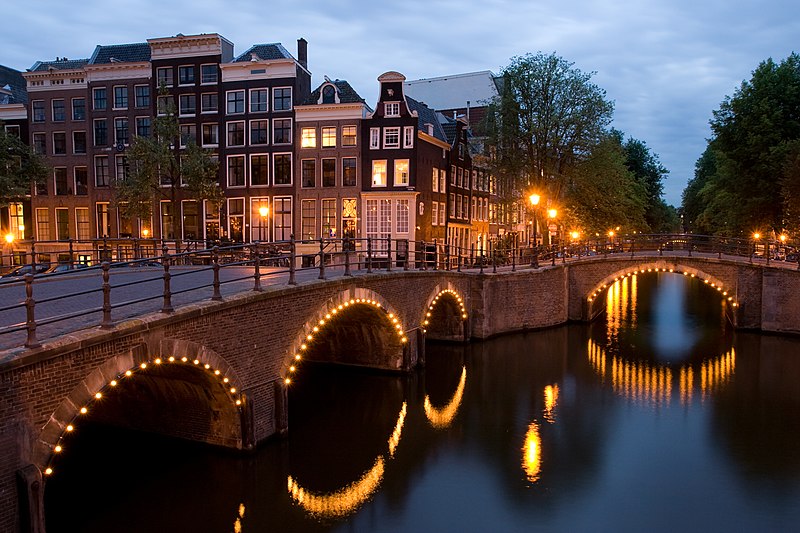
Amsterdam is the capital of the Netherlands, famous for its canals, museums, and rich art history. The capital has a population of 1,157,519 people according to World Population Review. Amsterdam’s main industries are tech, automotive, chemical, electronics, and of course, tourism. Living and working in Amsterdam will mean being part of a casual, inclusive, team-building atmosphere mostly free of the social pressures of the more traditional workplace. A one-bedroom apartment in the city centre will cost £1,306 per month, according to Numbeo, so someone making an average salary will have to put 37% of their income towards rent. Public transport in Amsterdam is famously good, as is the peoples’ penchant for riding bicycles. You will not need a car and may find two wheels to be a more comfortable option.
Minimum Wage: The Netherlands has a sliding scale of minimum wage based on age and hours worked. Someone who is 21 years old or over working full time must make at least £1,479 per month.
Average Salary: £41,528 per year (49,000 Euros) according to Payscale.
City Centre Apartment Price: £6,542 per sq/m (7,712 Euros) according to Numbeo.
Start-ups: Amsterdam is a powerhouse of start-ups, ranking 13th on the Global Startup Ecosystem Report. It has a massive £806,635,500 in early-stage funding, according to Startup Genome, with many opportunities in agricultural technology and life sciences.
Major Companies: Amsterdam has many opportunities in finance, telecommunication, and retail. According to the Forbes 2019 list, the largest companies in Amsterdam by value are ING Group (banking), Heineken, Adyen (finance), AkzoNobel (chemicals), Exor (finance), and Steinhoff International (retail).
4. Helsinki
Helsinki is the capital of and most populous city in Finland, with 1,316,757 residents as of 2021, according to World Population Review. Helsinki Port is a major trade hub which holds the title of busiest passenger port in the world. The city’s location on the tip of a peninsula also means that there are nearby beaches to enjoy, so long as you can brave the chilly climate. Helsinki’s economy is mainly based on the manufacture of electrical devices, automobiles, food, textiles, and paper, but large financial and governmental agencies also operate in the city. Work culture in Finland consists of a formal dress code and traditional hierarchies in most workplaces, but it also offers flexible working hours, straightforward communication between co-workers, and a focus on honesty and trust. A one- bedroom apartment in the centre of Helsinki will cost £859 per month according to Numbeo, so someone making average salary will have to pay about 25% of their income towards rent. You can live comfortably in Helsinki without a car, providing that you do not stray too far from the central, more populated areas. If you plan to make journeys beyond the suburbs, then a car is your best bet.
Minimum Wage: Finland has no national minimum wage, so wages are negotiated in collective bargaining agreements which employers are required to agree upon.
Average Salary: £41,430 (49,000 Euros) according to Payscale.
City Centre Apartment Price: £7,318 per sq/m (8,687 Euros) according to Numbeo.
Start-ups: Helsinki is a major hub of start-ups in the healthcare, AI, gaming, and tech industries, with £399 Million in early-stage funding, according to Startup Genome. Helsinki was also ranked within the top 10 emerging start-up ecosystems in that same report.
Major Companies: Helsinki is home to major companies in a wide range of sectors, including oil and gas, technology, manufacturing, retail, the pulp and paper, or packaging industry, and more. According to the 2019 Forbes list, the top companies in Helsinki are Kone (industrial), Sampo Group (finance), UPM (pulp and paper), Wartsila (industrial), Stora Enso (pulp and paper), and Kesko (retail).
5. London
London is the capital of the United Kingdom with 9,425,622 residents according to World Population Review. The city is the centre of UK government and trade, home to the Houses of Parliament, Buckingham Palace, and the London Stock Exchange. People who live in London enjoy countless museums, many of which are free, along with world-class theatre and music performances. London is a very multicultural city and is seen as the “melting pot” of the UK. London’s economy is mainly based on finance, but tourism, tech, and healthcare are also major industries in the city. London’s work culture can be as intense as that of New York, but things like dress codes and office hierarchies will vary widely between employers. There is a lot of competition in all fields in London, so what Frank Sinatra once said about a very different American city holds true in London – if you can make it there you’ll make it anywhere. A one-bedroom flat in the city centre will cost £1,685 per month according to Numbeo, so someone making an average salary will have to pay about 51% of their income towards rent. You will not need a car in London as the busses, trams, and tubes are efficient, and the easiest way to get around the city.
Minimum Wage: Minimum wage is based on age, with all workers over 24 making £8.91 per hour. 21–23-year-olds will make £8.36, 18-20s will make £6.56, 16-17 year-olds will make £4.62, and under-16s will make £4.30.
Average Salary: £39,000 according to Payscale.
City Centre Apartment Price: £12,189 per sq/m according to Numbeo.
Start-ups: London is a major location for start-ups, with major opportunities in tech. London ranked 2nd in the Global Startup Ecosystem Report, and has £6.3 Billion in early-stage funding, according to Startup Genome.
Major Companies: London has all sorts of major companies in a variety of sectors due to the size and diversity of the economy. According to the 2020 Forbes list, the largest London-based companies are Rio Tinto Group (mining), HSBC (banking), GlaxoSmithKline (pharmaceuticals), British American Tobacco, Diageo (beverages), BP (oil and gas), RELX (services), National Grid (utilities), Prudential Plc (insurance), London Stock Exchange, and Lloyds Banking Group.
6. Boston
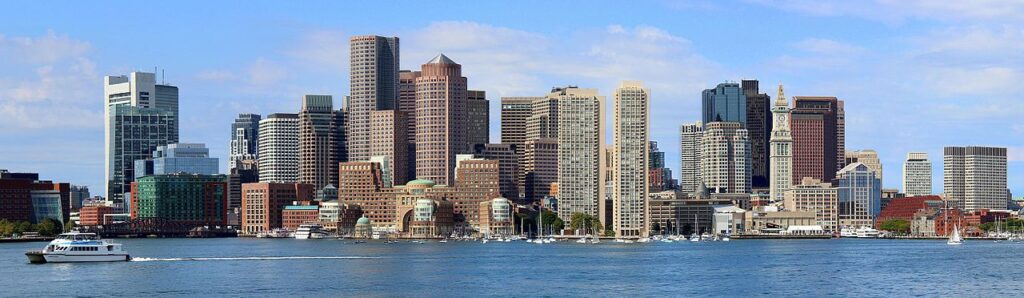
The City of Boston is the capital of and most populous city in Massachusetts, home to 4,314,893 people according to World Population Review. Boston is known for its rich American history, which can be seen on a walk down Freedom Trail. It is also home to Fenway Park, where the Boston Red Sox play America’s oldest game. If baseball doesn’t interest you, then there are also a variety of historical, scientific, and artistic museums in the city (though a game at Fenway is worth it even just for the hot dogs). The city is a major college town, with Harvard, Boston University, Berklee School of Music, Northeastern University, and 31 other educational institutions operating within its bounds. Apart from higher education, manufacturing, healthcare, and financial institutions are also key to the economy of Boston. Work culture is much the same as any large American city, except in the sense that Boston can often feel more like a town than a city. A one-bedroom apartment in Boston will cost £1,908 per month according to Numbeo, so someone making an average salary will need to pay about 39% of their income towards rent. Transport in Boston is very good within the city, and you will be able to easily navigate without a car. You will need one, however, if you would like to visit New York, or any other part of America, on anything other than a Greyhound bus or a plane.
Minimum Wage: £9.88 ($13.50)
Average Salary: £58,584 ($80,000) according to Payscale.
City Centre Apartment Price: £8,322 per sq/m ($11,366) according to Numbeo.
Start-ups: Boston ranked 5th on the Global Startup Ecosystem Report, due to its fast growth and innovation in biotech, robotics, and life sciences. Boston has £4.7 Billion in early-stage funding according to Startup Genome, with a number of accelerators and tax incentives in place.
Major Companies: Boston has a number of major companies mainly dealing with financials, tech, healthcare, and education. According to Glassdoor, the top employers in Boston are HubSpot (computers), Massachusetts Institute of Technology, Harvard University, MathWorks (computers), Boston University, Northeastern University, Fidelity Investments, and Dana-Farber Cancer Institute.
7. Tokyo
Tokyo is a modern, metropolitan city with lights and high-rises galore. It is both the capital and most populous city in Japan, home to 13,520,000 people as of 2015 according to the Japanese Statistics Bureau. Work life in Tokyo may be different to what a Londoner is used to, as more traditional hierarchies and values commonplace. Most jobs in Tokyo will require a dark suit and tie or other professional clothing, and your superiors will often expect to be referred to by their rank within the company as a sign of respect. The work culture can sometimes place work over family, with long hours and missed vacations an expectation, even if they are not technically required. Of course, start-ups can have more lax work environments, and there is a movement amongst younger people to create a less strict, lower pressure workplace. Rent on a one-bedroom apartment in the city centre will cost £964 per month, according to Numbeo, which means rent will cost someone making the average starting salary about 12% of their income. The public transport in Tokyo is modern and efficient, and any costs incurred on your commute will be covered by your workplace.
Minimum Wage: £6.19 (930 Yen)
Average Salary: £33,235.09 (5m Yen) according to Payscale.
City Centre Apartment Price: £7,449.91 per sq/m (1,120,570 Yen) in 2020, according to Statista.
Start-ups: Tokyo has a flourishing start-up community, ranking 9th in the2021 Global Start-up Ecosystem Report. It boasts £2.1bn in early stage funding, and focuses mostly on advanced manufacturing, AI, robotics, and sciences. Many foreign investors look to Tokyo as a good place to start their businesses.
Major Companies: Tokyo is home to many major companies, mainly in the automotive, banking, and manufacturing sectors. According to the 2020 Forbes list, the top ten companies based in Tokyo by value are SoftBank Group, Nippon Telegraph and Telephone, Sony, KDDI (telecommunications), Mitsubishi UFJ Financial Group, Recruit Holdings (electronics), Shin-Etsu Chemical, Honda, Sumitomo Mitsui Financial Group, and Japan Tobacco.
8. Vancouver
Vancouver is a picturesque city nestled between the North Shore mountains and the sea. It is the capital of British Columbia and has a population of 631,486 people, according to the 2016 census. Vancouver’s beauty makes it a popular place for the tourism industry, and Agriculture, Education, and Manufacturing are all major parts of the city’s economy as well. Working in Vancouver is much the same as working in other Western cities, but you may find that it’s a bit more laid back than London or New York. Hierarchies in work are not considered that important, but getting a job done right and on time is paramount. A one-bedroom apartment in the city centre will cost about £1,194 according to Numbeo, so someone making an average starting salary should expect to pay about 38% of their income towards rent. Getting around Vancouver on public transport is easy, and if you don’t plan to leave the city often, a bicycle could be the best vehicle to own. If you plan on making frequent trips outside Vancouver, you will need a car.
Minimum Wage: £8.85 (C$15.20)
Average Salary: 37,267.20 (C$64,000) according to Payscale.
City Centre Apartment Price: £6,745.27 per sq/m (C$11,538.47) according to Numbeo.
Start-ups: There are many start-up opportunities in Vancouver, which was ranked 2nd best start-up ecosystem in Canada by StartUpBlink. Start-ups in Vancouver took a hit during Covid-19, meaning that the environment could currently be undervalued when start-ups make a comeback as Canada returns to normal. Vancouver was not featured in the 2021 Global Start-up Ecosystem Report.
Major Companies: Vancouver is home to many major companies, mostly in the Tech, Education, Energy, and Manufacturing sectors. According to the 2019 Forbes list, the four biggest Vancouver-based companies by value are Lululemon Athletica, Telus (telecoms), Teck Resources (mining), and Goldcorp (mining). Microsoft, Apple, and Intel all have a major presence in Vancouver as well.
9. Oslo
Oslo is the capital city of Norway, home to the Government and Parliament of Norway, as well as the Royal Palace. It is also the largest city in the country, with a population of 1,056,180 according to World Population Review. Oslo’s main industry has always historically been oil and gas, but the service, banking, and tourism industries also thrive within the capital. Working in Oslo is comfortable – if you can handle the cold. Most businesses will not have a formal dress code, and hierarchies are not hugely important in the workplace. Punctuality is a must, however, as is at least a basic grasp of the Norwegian language. A one-bedroom apartment in the city centre will cost about £1,185 per month according to Numbeo, so someone making an average salary will have to set aside about 27% of their income for rent. You can rely on public transport within the city, and it will most likely be more comfortable to avoid driving unless you plan to commute into the city from rural areas.
Minimum Wage: There is no official minimum wage in Norway, so wages are decided through agreements between employers and unions. This can vary by sector, but workers in the hospitality industry earn a minimum of £14.48 per hour (167 Norwegian Krone).
Average Salary: £52,649 (607,000 NOK) according to Payscale.
City Centre Apartment Price: £7,808 per sq/m (89,912 NOK)
Start-ups: Oslo is the top-ranked city for start-ups in Norway, coming in at 99th globally according to Start Up Blink’s rankings. The city is home to many successful start-ups, including the browser Opera and the game-based learning programme Kahoot! Oslo received £174,393,625 in start-up funding in 2019.
Major Companies: Oslo is an innovative city which is home to many major companies. According to Glassdoor, the top employers in Oslo are Microsoft, Cisco Systems, DNB (banking), Universitetet I Oslo (university), Yara (chemical), NTNU (education), Schibsted (publishing), Accenture (consulting), and Telenor (telecommunications).
10. Paris
Paris is a city which evokes emotions of romance, hope, and idyllic metropolitan living. It is the largest city in France, with a population of around 2,140,000 in 2019 according to the National Institute of Statistics and Economic Studies. The French work culture differs from that of the UK in a few ways, including longer and more frequent breaks, with lunch often becoming a social occasion accompanied by glasses of wine. France has a long, complicated labor code, which enshrines in law an 11-hour rest period between work-days. Property prices in Paris are high, so many have taken to the suburbs which are also seeing a spike in prices. Rent for a one-bedroom apartment near the city centre can run you around £600 (695 euros) according to numbeo.com, which means that someone making an average salary will spend around 15% of it on rent. Paris boasts a solid public transport network, which means you won’t need a car to get around unless you plan frequent longer commutes.
Minimum Wage: £8.65 (10.03 euros)
Average Salary: £39,670.11(46,000 euros) according to Payscale.
City Centre Apartment Price: £408,561.48 (€473,598) according to Guy Hoquet Immobilier
Start-ups: Paris is a city of many opportunities for start-ups, especially in the healthcare, finance, and tech sectors. The city ranked 12th in the 2021 Global Start-up Ecosystem Report. Paris boasts the second highest start-up investments in Europe, netting £2.5 billion in 2020, beaten only by London which netted around £7.75 billion.
Major Companies: Paris is home to many huge international companies, including BNP Parabas, Orange, and Air France-KLM. The top ten Parisian companies include telecommunications, insurance, banking, fashion, and retail companies. In order, the largest companies with headquarters in Paris are AXA Insurance, Credit Agricole, BNP Parabas, Electricite de France, Societe Generale, Christian Dior, Finatis, Groupe BPCE, Orange, and CNP Assurances, according to the 2020 Fortune list.
11. Berlin
Berlin is the capital of Germany, famed for its art scene, nightlife, and modern urban design. It had a population of 3,645,000 when the last count was taken in 2019. In Berlin, evidence can still be seen of the second world war in the form of the Holocaust memorial, and the remains of the Berlin Wall are a reminder of the Cold War division of the city between East and West. Berlin’s work culture is characterised by bluntness, focus, and clear expectations while also maintaining a strong separation of work and home life, as well as excellent employee benefits. Dress codes are not often set in stone, but it is best to dress professionally, and a formal tone with your superiors can be a good idea when starting a new job. A one-bedroom apartment in the city centre will cost £812 per month according to Numbeo, so someone making an average starting salary can expect to pay about 22% of their income towards rent. Berlin’s public transport is unrivalled, so a car is unnecessary unless you plan on taking to the famed Autobahn.
Minimum Wage: £8.18 (9.60 Euros)
Average Salary: £42,579.80 (50,000 Euros)
City Centre Apartment Price: £5,546.70 per sq/m (6,500.93 Euros)
Start-ups: Berlin is a hot start-up ecosystem in Europe. German start-ups received £5,070,706,500 of investments in 2019 from the US alone, according to Startup Genome, and has many opportunities in Financial Tech, AI, and Software Engineering. Berlin’s open-minded, modern business approach makes it a good choice for starting a company.
Major Companies: Berlin is not the centre of business in Germany, but the capital is still home to many major companies. Deutsche Bahn, the German rail company, is the largest Berlin-based company with 22,156 employees. According to the Berlin Chamber of Commerce and Industry, the top ten largest employers in Berlin are Deutsche Bahn, Charite (health), Vivantes-Netzwerk für Gesundheit (health), Berliner Verkehrsbetriebe (traffic), Siemens (electrical engineering), Deutsche Post DHL, Daimler (automotive), Edeka (retail), Paul Gerhardt Diakonie (health), and Zalando (digital economy).
12. Manchester
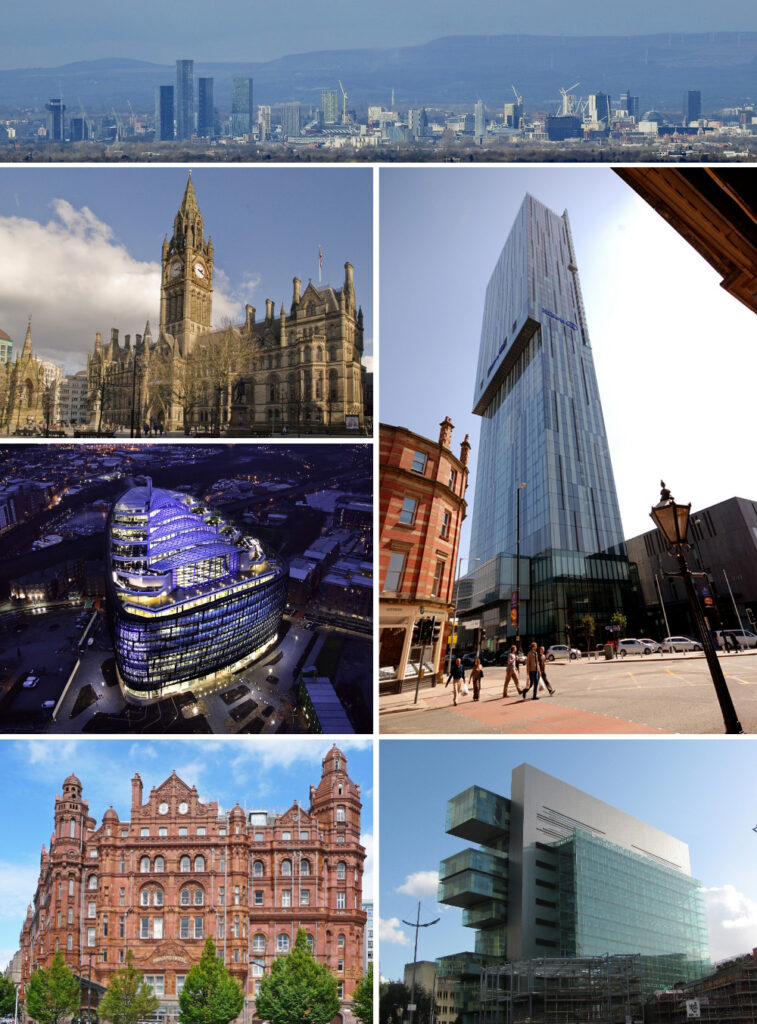
Manchester is a large city which has slowly transformed from a manufacturing-based economy to a major cultural hub, with opportunities in finance, travel, tech, and more. 2,750,120 people call Manchester home, according to World Population Review. They enjoy a city with excellent nightlife, a rich history evidenced by the surrounding architecture, and years of tradition in sport. The BBC also have a large presence in Manchester’s Media City. Manchester is certainly more laid back than London, however there is still plenty of competition and prospective employees should be looking to impress. A one-bedroom flat in the city centre will cost £863 per month according to Numbeo, so someone making an average salary will have to pay about 35% of their income towards rent. You will not need a car in Manchester, as the trains, trams, and busses will take you anywhere in the city.
Minimum Wage: Minimum wage is based on age, with all workers over 24 making £8.91 per hour. 21–23-year-olds will make £8.36, 18-20s will make £6.56, 16-17 year-olds will make £4.62, and under-16s will make £4.30.
Average Salary: £30,000 according to Payscale.
City Centre Apartment Price: £3,951 per sq/m according to Numbeo.
Start-ups: Manchester has a growing start-up ecosystem, with opportunities mainly focused on tech. The city was ranked 1st in the UK on Startup Genome’s emerging ecosystem list, and 9th worldwide.
Major Companies: Manchester has many big players infinance, healthcare, and higher education. According to Glassdoor, some of the top employers in Manchester are Capita (consulting), University of Manchester, Barclays, Deloitte (accounting), Network Rail, the NHS, and Vodafone. Unilever, Kellogg’s, and Amazon all have offices in Manchester.
13. Seoul
Seoul is the capital of South Korea, famous for its rich history mixed with modern architecture and design. 9,967,677 people live in Seoul according to World Population Review, making it the most populous city in South Korea. The economy of Seoul is largely based in manufacturing of textiles, ships, electronics, steel, and, due to the automotive giant Hyundai, cars. However, Seoul has a booming start-up scene, so finding jobs in tech is also possible in the city. The work culture in South Korea can be intense, with dress codes and office hierarchies in place. Like some other cities, there is an unwritten rule that you will need to stay after work for long hours to get the job done, so work-life balance is a difficult thing to manage in Seoul unless you are working for a start-up with more lax policies. Knowing at least some Korean will help you get by in Seoul, but it is not necessary to be a fluent speaker when considering jobs that are open to international employees. A one-bedroom apartment in the city centre will cost £652 per month according to Numbeo, so someone making an average salary will have to pay about 25% of their income towards rent. You do not strictly need a car in Seoul, and certainly not as a tourist, but you may find it convenient to own your own vehicle if you plan to settle there.
Minimum Wage: £5.75 (9,160 Won)
Average Salary: £30,759 (48,940,242 Won) according to Salary Expert. Payscale’s average salary for Seoul had a factor of ten error making its number unreasonable, so Salary Expert’s figure was used.
City Centre Apartment Price: 15,770 per sq/m (25,260,050 Won) according to Numbeo.
Start-ups: Seoul is a major start-up hub with over £1.8 Billion in early-stage funding, according to Startup Genome. Seoul ranked 16th on the Global Startup Ecosystem Report, largely due to the financial support accelerators and the South Korean government have given to bolster the AI, life sciences, and gaming sectors.
Major Companies: Seoul is home to major companies dealing with everything from construction and steel to IT and technology. According to the 2020 Forbes list, the top Seoul-based companies by value are SK Hynix (technology), LG Chem (chemicals), Hyundai Motor, LG Household and Health Care (consumer goods), Samsung SDI (automotive), Samsung C+T (construction), Hyundai Mobis (automotive parts), and SK Telecom.
14. Dallas
Dallas is a large metropolitan city famous for the Texas State Fair and its football team the Dallas Cowboys. 1,331,000 people lived in the city as of 2019, when the last count was taken. The Dallas economy is mainly based in technology, defence, transport, and financial services. Work culture in Dallas is a fairly typical 9-5 but can be more laid back than bigger cities like New York. The good weather makes it a great spot to enjoy the outdoors, with many lakes, parks, and golf courses nearby. Renting a one-bedroom apartment in the city centre will cost about £1,105 per month, according to Numbeo, so someone making an average salary will have to put about 25% of their income towards rent. You can get around downtown Dallas without a car, but beyond that you will need one to travel and work, as in most American cities.
Minimum Wage: The minimum wage in Texas is £5.32 ($7.25). However, there is a push for higher minimum wage in Texas, and Dallas County recently increased the minimum wage for construction workers employed by the city to £11 ($15).
Average Salary: £52,790 ($72,000)
City Centre Apartment Price: £2,306.65 per sq/m ($3,146.35)
Start-ups: Dallas has many start-up opportunities in healthcare technologies, AI, software design, and more. It ranked 31st on the 2021 Global Startup Ecosystem Report, scoring 10/10 for market reach and knowledge, but 1/10 for funding.
Major Companies: Dallas is a major city with some of the biggest names in retail, technology, transport, and defence. According to Destination Dallas-Fort Worth, the top ten largest employers in the area are Walmart, American Airlines, Dallas ISD (education), Texas Health Resources, Baylor Scott & White (healthcare), Bank of America, Lockheed-Martin Aeronautics, the City of Dallas, Texas Instruments, and JP Morgan Chase.
15. Geneva
Geneva is a central hub of global politics, home to the Palace of Nations, the UN headquarters. It has a population of 620,131 according to World Population Review, and it is home to the largest European alpine lake. Banking is a huge industry in Geneva, with a long history of secrecy. In the office, formal attire is the norm and traditional hierarchies are in place. Punctuality is essential. Work-life balance is seen as very important, and it is normal to do outdoor activities with your co-workers. A one-bedroom apartment in the city centre will cost around £1,568 according to Numbeo, so someone making an average salary will need to put about 24% of their income towards rent. The public transport in Geneva is excellent, and owning a car is unnecessary if you wish to remain within the city.
Minimum Wage: £19 (23 Swiss francs)
Average Salary: £77,579 (98,000 Fr.)
City Centre Apartment Price: £10,732.33 per sq/m (13,589.46 Fr.)
Start-ups: Geneva has a variety of startup opportunities in financial technology, ecommerce, and health, ranking 4th in Switzerland in a study of the ecosystem by Startup Blink. It was ranked 118th worldwide.
Major Companies: Geneva is well known for being a powerhouse of the banking industry, but there are opportunities in technology and administration as well. According to a 2017 top 500 list from Dun and Bradstreet, the largest Geneva-based companies by revenue are the commodity trading companies Vitol, Trafigura, and Cargill International SA, as well as Mercuria Energy Trading (petroleum), Gunvor (commodity trading), Mediterranean Shipping Company, Richemont (luxury goods), SGS (services), Manor (retail), Pargesa Holding, and Firmenich (pharmaceutical).
16. San Jose
San Jose is the largest city in California’s Silicon Valley, and the third largest city in California with a population of 1 million, according to World Population Review. Silicon Valley is famed for its status as an international tech hub, and many opportunities are available in both established companies and start-ups. San Jose is known for its historic district downtown, as well as its varied architecture representing many traditional and international styles. Work culture in Silicon Valley is famously intense, with many employees working 70-hour weeks or more, having little time off. Work-life balance is beginning to be a consideration, however there are still many workplaces that will expect you to be on-call, ready whatever the hour. Dress codes and office hierarchies are not a major part of work life in San Jose. A one-bedroom apartment in San Jose will cost £1,871 per month according to Numbeo, so someone making an average salary will need to pay about 30% of their income towards rent. You will need to have a car in San Jose in order to navigate Silicon Valley.
Minimum Wage: £11.31 ($15.45)
Average Salary: £75,405 ($103,000) according to Payscale.
City Centre Apartment Price: £7,727 per sq/m ($10,552) according to Numbeo.
Start-ups: San Jose is a major hub of start-ups, and Silicon Valley itself has over £16 Billion in early-stage funding, according to Startup Genome. Most opportunities are, expectedly, in computer tech, but there are myriad opportunities in financial tech, AI, pharmaceuticals, and healthcare as well. Silicon Valley ranked 1st on the Global Startup Ecosystem Report.
Major Companies: San Jose’s location in Silicon Valley makes the city a great place to find major tech companies and more.According to Glassdoor, the top companies in San Jose are Google, Apple, NVIDIA, SAP, Intuit, Microsoft, Adobe, Service Now, and LinkedIn, which all deal in computer hardware, internet networking, and software.
17. Warsaw
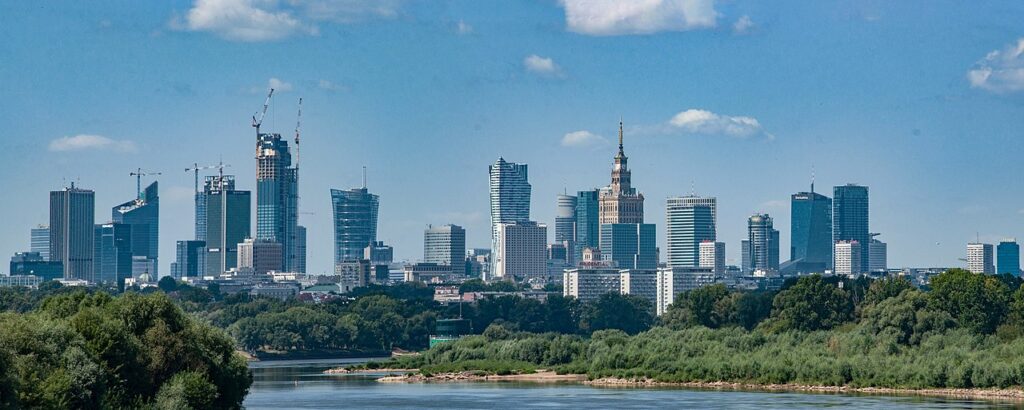
Warsaw is the historic capital of Poland, known for the Old Town, which was reconstructed after WWII, the Palace of Culture and Science, and the beautiful Vistula River which runs through the city. 1,780,620 people live there currently, according to World Population Review. The main industries of Warsaw are tourism, finance, and services, though there are emerging opportunities in tech and healthcare as well. Work culture in Warsaw is traditional in the sense that punctuality is paramount, and most business is conducted in formal attire. However, work-life balance is also valued highly in Warsaw. A one-bedroom apartment in the city centre will cost £606 per month, according to Numbeo, so someone making an average salary can expect to pay about 40% of their income towards rent. Public transport in Warsaw is good, so you will not need a car to get around unless you want to live outside the city and commute frequently.
Minimum Wage: £3.37 per hour (18.3 Polish złoty)
Average Salary: £18,403 (100,000 Polish złoty)
City Centre Apartment Price: £3,518 per sq/m (19,060 Polish złoty)
Start-ups: Warsaw’s start-up economy has grown massively in recent years, with developments being made in the tech sector. There are many start-up hubs to assist this growth, including Campus Warsaw which was opened by Google to provide education and a place to network. There are also opportunities in healthcare, AI, biotech, and more.
Known as the “Windy City”, Chicago is the capital of Illinois and one of the largest cities in the American Midwest. Chicago residents enjoy the shopping and dining along the Magnificent Mile, breeze on the shores of Lake Michigan, and old-fashioned baseball at Wrigley Field. Chicago’s economy is based on a mixture of manufacturing, financial services, and publishing, though tech and healthcare opportunities are also available. Work culture in Chicago follows the standard Western work week. Dress code and level of formality will depend on your employer, but business casual is usually a safe bet. A one-bedroom apartment in the heart of Chicago will cost £1330 per month according to Numbeo, so someone making an average salary will have to pay about 30% of their income towards rent. Chicago has good public transport within the city, but the rest of Illinois does not. If you want to leave the city without taking a Greyhound bus, you will need your own vehicle.
Minimum Wage: £10.88 ($15)
Average Salary: £52,959 ($73,000) according to Payscale.
City Centre Apartment Price: £3,587 per sq/m ($4955) according to Numbeo.
Start-ups: Chicago is a great city for start-ups, ranking 15th on the Global Startup Ecosystem Report. The city has £941 Million in early-stage funding, and has opportunities in AI, data, and financial tech, according to Startup Genome.
Major Companies: Chicago is a major hub of the American Midwest with many major companies operating there. According to Zippia, the top ten largest companies in Chicago are Walgreens (pharmacy), McDonald’s, Boeing, Caterpillar (construction equipment), Abbott Laboratories, United Airlines, Sears Holdings, Harrisburg Medical Center, Mondelez International (food production), and Veolia Environmental Services.
19. Cardiff
Cardiff is the capital city of Wales situated on the scenic Cardiff Bay. 481,082 people call Cardiff home according to World Population Review, and those that do enjoy living near the sea, visiting the many world-class museums and historic places in the city, as well as shopping in Cardiff’s various markets. The economy of Cardiff is based on finance, tourism, and media, but there are also opportunities in tech, healthcare, and government within the city. Work culture in Cardiff will be significantly more laid back than in London or New York, but dress code and office hierarchies will depend on your employer. A one-bedroom apartment in the city centre will cost £697 per month according to Numbeo, so someone making an average salary will have to pay about 30% of their income towards rent. You will not need a car in Cardiff as there is ample public transportation, but many parts of Wales are only served by infrequent busses and request-stop trains.
Minimum Wage: Minimum wage is based on age, with all workers over 24 making £8.91 per hour. 21–23-year-olds will make £8.36, 18-20s will make £6.56, 16-17 year-olds will make £4.62, and under-16s will make £4.30.
Average Salary: £28,000 according to Payscale.
City Centre Apartment Price: £2,657 per sq/m according to Numbeo.
Start-ups: Cardiff has a fast-growing start-up economy mainly focused on financial tech and AI solutions. Recently, Cardiff-based biotech and genomics start-ups received a boost from the accelerator Illumina, strengthening the sector.
Major Companies: Cardiff has a number of major companies in a variety of sectors, including education, tech, retail, and finance. According to Glassdoor, the top Cardiff-based employers are Cardiff University, Admiral Group (financial analytics), Deloitte (accounting), the NHS, Lloyd’s Banking Group, Tesco, Toolstation (retail), CarShop (automotive dealers), and Companies House.
20. Los Angeles
Los Angeles is a large, sprawling city on the coast of Southern California, with around 3,983,000 residents as of 2021, according to World Population Review. Famous for its place in the film and music industries, LA is home to Hollywood, the Sunset Strip, Universal Studios, and Capital Records. Beach-goers will enjoy the short trip to Malibu’s picturesque beaches, and art fans will appreciate the Getty Museum and the Walt Disney concert hall. Work culture in LA is much like it is anywhere in the USA, but dress codes may be less strict than New York, for example. Because LA doesn’t have a well-defined city centre, it can be difficult to meet new people and network in the city if you don’t already know people living and working there. A one-bedroom apartment in central Los Angeles will cost £1,583 per month, according to Numbeo, so someone making an average salary will need to budget about 33% of their salary for rent. While public transport does exist in Los Angeles, it is confined to a limited part of the city, and if at all possible you should own a car. Note that American streets are not often designed for walking or cycling, and while it is not impossible, LA is no exception to this.
Minimum Wage: £10.16 ($14)
Average Salary: £56,536 ($78,000) according to Payscale.
City Centre Apartment Price: £6,619 per sq/m ($9,123) according to Numbeo.
Start-ups: Los Angeles is a great city for start-ups, ranking 6th on the Global Startup Ecosystem Report 2020. The city has £3.6bn in early-stage funding, according to Startup Genome, with major opportunities in science, entertainment, and advertising.
Major Companies: Los Angeles is famous worldwide for its domination of the film and music industries, but there are many major companies from a wide variety of industries operating in the city. The largest public companies with headquarters in LA, as reported in the Los Angeles Almanac, are Walt Disney Co., CBRE Group (real estate), AECOM Technology Corp. (construction engineering), Molina Healthcare, Farmers Insurance, Edison International (utilities), and Live Nation Entertainment.
21. Tel Aviv
Minimum Wage: £6.14 (26.88 Israeli New Shekel)
Average Salary: £45,886 (INS201,000) according to Payscale.
City Centre Apartment Price: £10,568 per sq/m (INS46,292) according to Numbeo.
22. Brussels
Minimum Wage: £1,373 per month (1,625 Euros)
Average Salary: £39,695 (47,000 Euros) according to Payscale.
City Centre Apartment Price: £3,087 per sq/m (3,661 Euros) according to Numbeo.
23. Detroit
Minimum Wage: £7.14 ($9.65)
Average Salary: £53,279 ($72,000) according to Payscale.
City Centre Apartment Price: £974 per sq/m ($1,319) according to Numbeo.
24. Krakow
Minimum Wage: £3.37 per hour (18.3 Polish złoty)
Average Salary: £18,062 (97,000 Polish złoty) according to Payscale.
City Centre Apartment Price: £3,317 per sq/m (17,809 Polish złoty) according to Numbeo.
25. Frankfurt
Minimum Wage: £8.09 (9.60 Euros)
Average Salary: £48,056 (57,000 Euros) according to Payscale.
City Centre Apartment Price: £6,715 per sq/m (7,938 Euros) according to Numbeo.
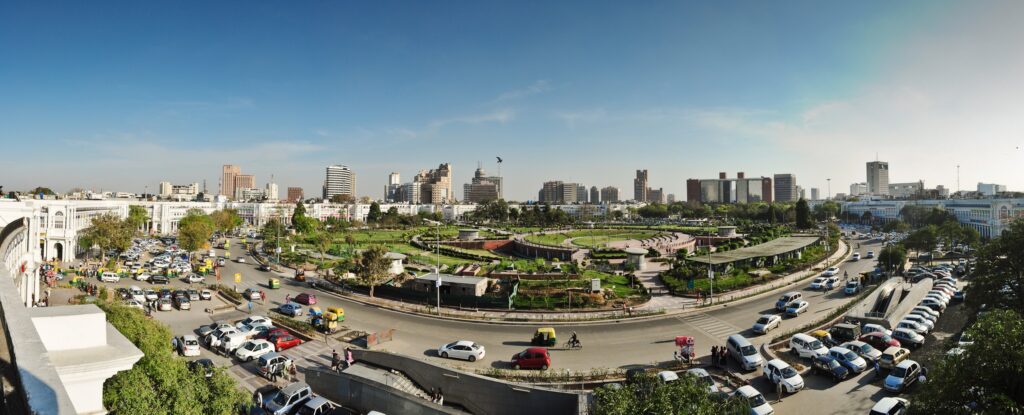
26. New Delhi
Minimum Wage: Minimum wage varies based on type of labour, so work which is considered unskilled pays a minimum of £149 per month (15,492 Rupees), while supervisorial roles which require a degree will pay a minimum of £197 per month (20,430 Rupees). The Variable Dearness Allowance has added around £5 per month to the minimum wage.
Average Salary: £4,754 (491,000 Rupees) according to Payscale.
City Centre Apartment Price: £2,206 per sq/m (228,203 Rupees) according to Numbeo.
27. Birmingham
Minimum Wage: Minimum wage is based on age, with all workers over 24 making £8.91 per hour. 21–23-year-olds will make £8.36, 18-20s will make £6.56, 16-17 year-olds will make £4.62, and under-16s will make £4.30.
Average Salary: £30,000 according to Payscale.
City Centre Apartment Price: £3,609 per sq/m according to Numbeo.
28. Madrid
Minimum Wage: £963 per month (1,125.8 Euros)
Average Salary: £32,502.64 (38,000 Euros) according to Payscale.
City Centre Apartment Price: £4,242.46 per sq/m (4,929.92 Euros) according to Numbeo.
29. Rome
Minimum Wage: While there is no minimum wage in Rome, many job salaries are controlled by unions which set wage at around £6 (7 euros).
Average Salary: £29,323.87 (34,000 euros) according to Payscale.
City Centre Apartment Price: £1,482.73 per square metre (1,719 euros).
30. Edinburgh
Minimum Wage: The minimum wage in Edinburgh is based on an age bracket system. People 23 and over qualify for the National Living Wage of £8.91. 21-22 year-olds make £8.36 an hour, 18 to 20 year-olds make £6.56, under-18s make £4.62, and apprentices must make a minimum of £4.30.
Average Salary: £31,000 according to Payscale.
City Centre Apartment Price: £3,872.51 per sq/m according to Numbeo.
31. Shanghai
Minimum Wage: £264 per month (2,280 Yuan)
Average Salary: £31,856 (275,000 Yuan) according to Payscale.
City Centre Apartment Price: £13,054 per sq/m(113,125 Yuan) according to Numbeo.
32. Bangkok
Minimum Wage: £6.80 (313 Thai Bhat)
Average Salary: £16,417 (756,000 Thai Bhat) according to Payscale.
City Centre Apartment Price: £3,693 per sq/m (170,354 That Bhat) according to Numbeo.
33. Beijing
Minimum Wage: £2.75 per hour (24 Yuan)
Average Salary: £28,157.38 (246,000 Yuan) according to Payscale.
City Centre Apartment Price: £12,988 per sq/m (113,913 Yuan) according to Numbeo.
34. Melbourne
Minimum Wage: £10.90 (AU$20.33)
Average Salary: £39,255 (AU$72,000) according to Payscale.
City Centre Apartment Price: £5,017 per sq/m (AU$9,143) according to Numbeo.
35. Ottawa
Minimum Wage: £8.42 (14.35CAD)
Average Salary: £36,358 (62,000 CAD) according to Payscale.
City Centre Apartment Price: £2,977 per sq/m (5,068 CAD) according to Numbeo.
36. Singapore
Minimum Wage: There is no minimum wage in Singapore, and salary must be negotiated with your employer.
Average Salary: £28,709.57 (53,000 Singapore Dollars) according to Payscale.
City Centre Apartment Price: £13,729.67 per sq/m (S$25,381) according to Numbeo.
37. Sydney
Minimum Wage: £10.90 (AU$20.33)
Average Salary: £40,745.50 (AU$76,000,000) according to Payscale.
City Centre Apartment Price: £755,695.03 (AU$1,410,133) according to Domain
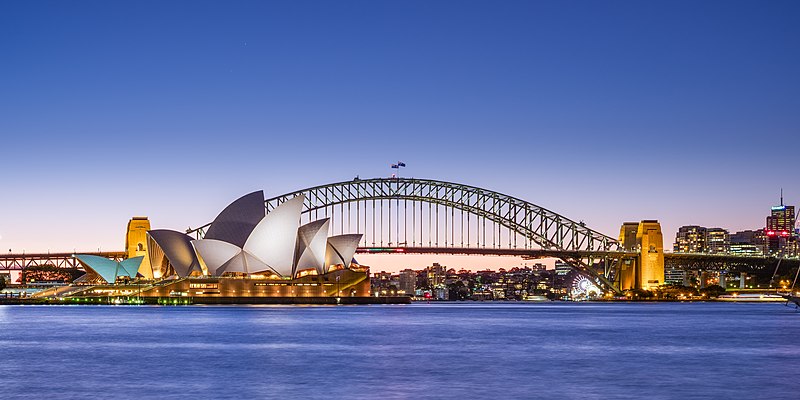
Jørn Utzon’s Sydney Opera House, and the Harbour Bridge, two of Sydney’s most famous landmarks, taken at dusk. The Sydney Opera House is one of the most iconic buildings built in the 20th century (1973) and is UNESCO’s world heritage.
38. Moscow
Minimum Wage: £207.79 per month (20,589 Russian Ruble)
Average Salary: £10,094 (RUB1,000,000) according to Payscale.
City Centre Apartment Price: £4,546.15 per sq/m (RUB448,378) according to Numbeo.
39. Milan
Minimum Wage: There is no minimum wage in Italy. Instead, pay is agreed upon sector by sector through National Collective Bargaining Agreements. On average, workers in Italy will make a minimum of £5 – £8 an hour.
Average Salary: £31,360 (37,000 Euros) according to Payscale.
City Centre Apartment Price: £6,558 per sq/m (7,730 Euros) according to Numbeo.
40. Johannesburg
Minimum Wage: £.97 (20 Rand)
Average Salary: £13,225 (R272,000) according to Payscale.
City Centre Apartment Price: £690 (R14,136) according to Numbeo.
41. Mexico City
Minimum Wage: £5.21 per day (141.70 Mexican Pesos)
Average Salary: £13,487 (MX$380,000)
City Centre Apartment Price: £1,637.70 per sq/ft (MX$46,341)
42. Reykjavik
Minimum Wage: There is no national minimum wage in Iceland, so your salary will depend on the price that your union has agreed upon. Normally, you will be paid at least £1,033.91 per month (180,000 Icelandic Króna)
Average Salary: £3,945.60 per month (687,000ISK) according to Salary Explorer.
City Centre Apartment Price: £3,796.61 Per sq/m (662,154.52ISK) according to Numbeo.
43. Dublin
Minimum Wage: £8.62 (10.20 Euros)
Average Salary: £34,639 (41,000 Euros) according to Payscale.
City Centre Apartment Price: £4,990 per sq/m (5,914 Euros) according to Numbeo.
44. Mumbai
Minimum Wage: Minimum wage will depend on what kind of job one works, and if it is classified as “skilled” or “unskilled”. Generally minimum wage is about £100 per month.
Average Salary: £5,498 per year (552,000 Rupees) according to Payscale.
City Centre Apartment Price: £5,207 per sq/m (523,361 Rupees)according to Numbeo.
45. Cairo
Minimum Wage: £93.40 per month (2,000 Egyptian Pounds)
Average Salary: £4,529 per year (E£97,000) according to Payscale.
City Centre Apartment Price: £645 per sq/ft (E£13,817) according to Numbeo.
46. Lima
Minimum Wage: £137.97 per month (750 Peruvian Nuevo Sol)
Average Salary: £7,173 (39,000 Sol) according to Payscale.
City Centre Apartment Price: £1,359 per sq/m (7,409 Sol) according to Numbeo.
47. Honolulu
Minimum Wage: £7.35 ($10.10)
Average Salary: £48,818 ($67,000) according to Payscale.
City Centre Apartment Price: £5,569 per sq/m ($7,671) according to Numbeo.
48. Cape Town
Minimum Wage: £1.07 (R21.69)
Average Salary: £11,896.65 (R242,000) according to Payscale.
City Centre Apartment Price: £1,699.92 per sq/m (R34,622.77) according to Numbeo.
49. Rio de Janeiro
Minimum Wage: £142.34 monthly (1,039 BRL)
Average Salary: £13,171.20 (96,000 BRL) according to Payscale.
City Centre Apartment Price: £1,348.59 per sq/m (9,785 BRL) according to Numbeo.
50. Dubai
Minimum Wage: There is no minimum wage for non-UAE nationals in Dubai.
Average Salary: £21,512 (109,000 UAE Dirham) according to Payscale.
City Centre Apartment Price: £2,428 per sq/m (12,294 Dirham) according to Numbeo.