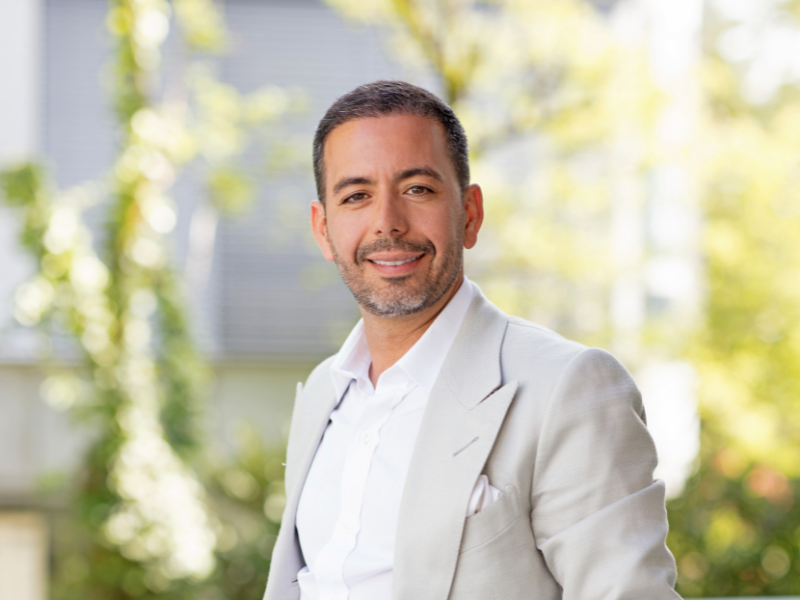
The remarkable Chairman and CEO of The Kusnacht Practice talks about the pandemic and his business philosophy
It was the French philosopher Jean-Jacques Rousseau who said that anyone peering into the heart of man would want to travel down in life, not up. In crude terms what he meant was that to be successful you have to make accommodations, and become in some way unpleasant.
I’ve often wondered whether he had it exactly wrong. He should, for instance, have talked to the immensely successful CEO and Chairman of The Kusnacht Practice Eduardo Greghi.
Brazil-born Greghi is one of those people in life who emanate goodness – and he reminds you that the kind can prosper, and that you don’t have to be Machiavellean to get on in life. He explains right from the outset his admirable business ethos, and is all bonhomie and transparent openness: “I want to display to the world, and to my clients, exactly what they will get. I only ever take money from clients if they’re benefitting from our treatment.”
The Kusnacht Practice is at the high end, but then for people whose lives have come to a very difficult crossroads, the price tag is definitely worth it. At The Kusnacht Practice, confidentiality is paramount, but Greghi gives me an example: “We had a couple come in. They’d got married and had two children straight away, one after the other. Immediately, everything changed for them. Hormones had changed, they weren’t sleeping and they’d gained weight. And what happens then? Anxiety kicks in, and then depression. As a couple you start to argue and have relationship issues – even if you’re wealthy. They came to me and said: ‘We want to reset. We need help’.”

This makes you realise what’s at stake for the families which The Kusnacht Practice treats: it’s nothing less than your whole life. At that point, the practice brings about a complete change. “They come with the children and the nannies, and we organise everything. They have individual treatments and couple treatments – whatever they need.”
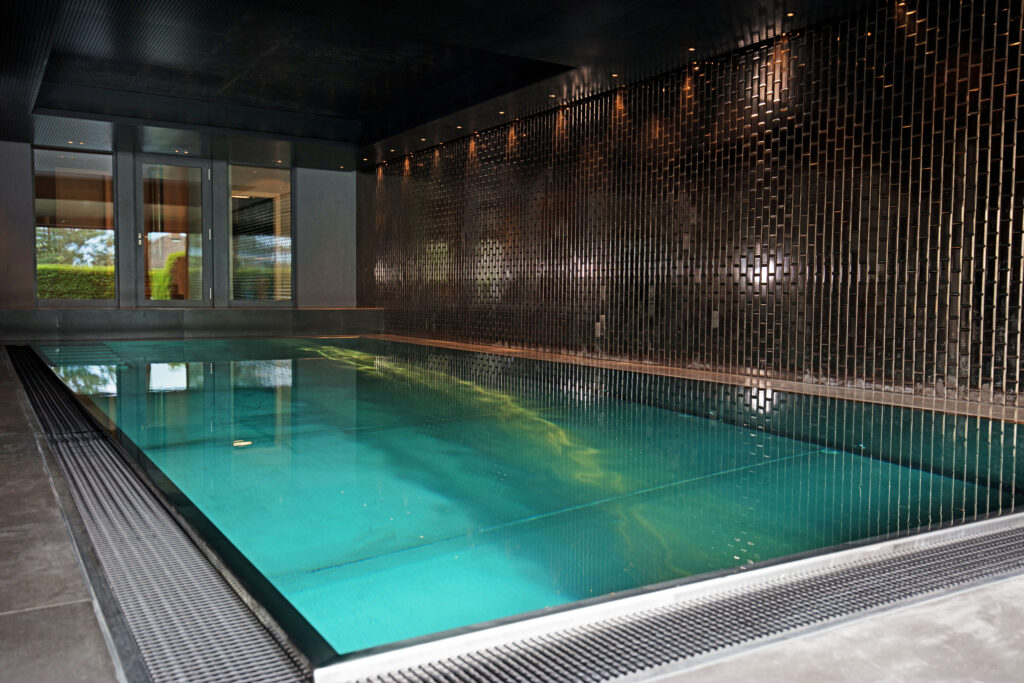
When Greghi says everything, he means it: “I reinvest continuously in the quality of the client experience. This year, I’ve added three properties that are on another level. One of them is five times bigger than our largest property before. It’s modern and beautiful and well-located.”
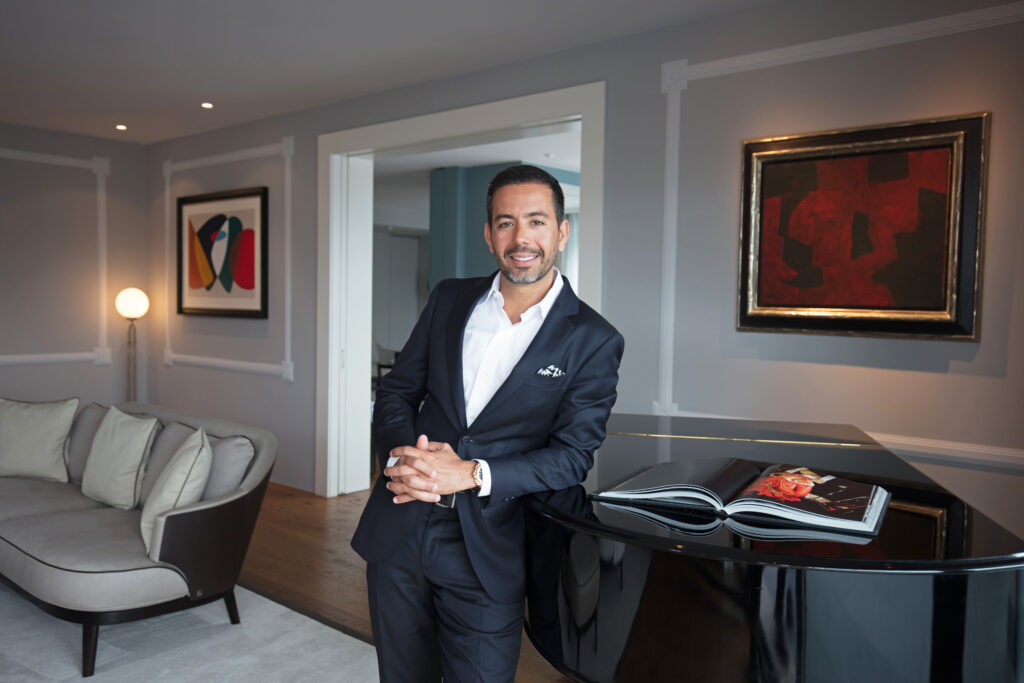
You can feel that his enthusiasm isn’t to do with any crass delight in luxury for its own sake: this is all about how a suitably comfortable environment can help the client improve and eventually recover. Greghi continues: “For this latest one, we went with an Art Deco theme, so we have 1920s furniture. We’re not just going to put Ikea furniture in the rooms and hope it’s okay.”
Of course, what the luxury environment does is to make room for the client to focus on their treatment. It’s an aspect of what really sets The Kusnacht Practice apart: Greghi’s commitment to helping each individual in a tailored way.
Prior to the March 2020 global lockdown, Greghi would travel a lot. “I had been in England and then I was coming back to Switzerland. I had plans to go to Russia, Kazakhstan and then several countries in the Middle East. These trips were all cancelled because of Covid.”
In this, you glimpse the international nature of the practice – and Greghi, who is multilingual in English, Italian, Brazilian Portuguese, German and Spanish, is the ideal front man for such an organisation. But it also takes you back in time. The Kusnacht Practice has ended up having a good pandemic, but it wasn’t clear in March 2020 how things would pan out.
Greghi takes me back to the situation, and is obviously moved by the way in which the staff pulled together. “Immediately, I decided that if I wasn’t going to be able to have clients for a few months I wouldn’t think of that as losing money. I would think of it as reinvesting. That’s what I did.”
Like many people in his position, he realised that he was responsible for the livelihoods of 100 people and their families. How did react? “My first thought was: ‘Wow, we really had a good thing going here’. I remember that time well. My brother had a business and it had to close down – and some of my entrepreneur friends, their businesses were wiped out completely.”
The injustice of the situation also hit him: “We’re not in this position out of bad management or because of lack of resilience, love, care, dedication, integrity or competence – just because of this virus.” The situation was complicated by the fact that though the businesses could offer emergency services under the new Covid regulations, a lot of the work which The Kusnacht Practice carries out doesn’t quite fall into that category. As it turned out, the team was able to secure special permissions from the government and conduct quarantined treatment as the pandemic wore on.
As things went by, Greghi showed extraordinary leadership skills: “I thought, ‘If we go down, we go down together. I’m the leader of this business, and I was really heartened by the way everybody was cracking positive jokes together – it helped keep people calm.” In addition to thinking of himself as a re-investor in his business at a difficult time, he also began telling his staff: “A good farmer doesn’t eat his seed corns”.
Greghi’s emotion is palpable and you realise that his paternalistic approach to his workforce is deeply felt. “Luckily, you know, I saved the seeds. I get emotional about it because I love this team.”
One suspects though that luck didn’t have much to do with it: Greghi had worked himself into a strong market position, and like other businesses who have done well during the pandemic, therefore had flexibility to use the time to improve The Kusnacht Practice client experience. “I told everyone that when a tsunami comes, all the plants get affected in the same way, but it’s the ones with strong roots which come back. So I brought forward renovations which we had scheduled for earlier in the year and I continued with the hiring I had planned before the pandemic.”
It’s this awareness and profound respect for other people which, I suspect, makes Greghi a cut above most business owners. “I’m the leader, you know, but I cannot achieve anything by myself,” he recalls. “But everybody rolled up their sleeves. If they had wanted to kick me, that would have been the moment, but we all stood behind each other.”
Did this whole experience deepen his connection to the under pressure CEOs who form a part of his customer base? I strongly suspect so, but Greghi gives a different answer: “I come from very humble beginnings. I grew up in a house without windows. I arrived in England in 2002 with £50 in my pocket. My family is very humble, very loving, and very hardworking. As a business-owner and as an entrepreneur, I’m used to holding risk. You have to be fearless but at the same time be loving and caring towards your team. Actually there’s only stress if you care.”
Of course, CEOs often talk up their team like this – but there can sometimes be a sense that mere lip-service is being paid. Things are different with Greghi. If you speak to some of his employees – whether it be Dean Gustar or Melissa Nobile – they display similar qualities of kindness and commitment to high quality. They have plainly been inspired by him.
Greghi, like Gustar and Nobile, exhibits a profound understanding of the condition of the wealthy. “You always have lots of things going on as a business leader,” he tells me. “You always have lots of problems to solve and decisions to make, and that causes insomnia, stress –burnout. Then some people start to self-medicate with drugs, alcohol, prescription drugs, or overeating. Then, you’ll start to have conflicts in your private life with your spouse, or with your relatives and it downward-spirals from there.”
What Greghi is describing is fast becoming the story of our times. Part of the pleasure of talking to him is to know that somewhere there are people who know how to address problems which are now so rife in our society.

At one point, he tilts his computer to show me the view out of his window, and I see a beautiful vista, including a lake, trees, and attractive houses. It immediately makes me feel calmer, as patients no doubt do when they check in.
At the centre of what the clinic offers are The Kusnacht Practice Standards, which have been so successful as to spark imitation from other competitors in the space. One of Greghi’s insights is that group therapy, though it can be successful for some, isn’t sufficiently tailored to the individual’s needs really to work in many instances. Greghi explains: “I believe that if you keep the highest levels of quality, and the best client experience, people will get the value for their treatment and they will come back when they need you or they’ll refer you further. As long as you keep these two things and you keep listening to your client, you find out what they need, and you give it to them.”
That sounds simple, but it’s hard to deliver – and in any event there’s more to it than that. Discretion is important, as are the facilities on offer, but really everything keeps coming back to his staff. “They’re extremely altruistic. We’ll talk to a client at 1am, or go to their house to help them. It’s not a job – it’s a passion, a mission, a calling.”
Given this, I’m fascinated to know about Greghi’s hiring processes. Greghi feels like a man who goes with his gut, and I can’t really imagine the sort of AI algorithm-driven processes one sometimes sees on the FTSE 100 at The Kusnacht Practice.
That turns out to be the case, and Greghi places great onus on trust, but he also emphasises the professional nature of the HR operation he’s developed, particularly in the last two years. “Nowadays, I don’t interview everybody, thanks to the growth we’ve seen,” he says. “Obviously if you need, let’s say, a chauffeur, he needs to have a driving licence. That’s going to make a lot of sense. And we have to check their background, as our clients are in sensitive situations and we don’t want anyone who could do harm, or might have a history of doing dishonest things. But beyond that basic criteria what I’m looking for is whether they have the heart, and will fit the culture. The reality is that if somebody comes here with just like a nine-to-five mentality, they will not survive.”
Greghi’s has been astonishing journey from his humble upbringing in Brazil to where he is today and he brings experience both in the property sectors (‘I love good hospitality and we’ve perfected it here’) and the financial sectors. This second thing obviously helps him, but again he is keen to stress the broader depth of talent at his business: “My finance team are a lot better than me.”
Greghi is a remarkable man, and for a while I find it difficult to pin down what makes him such an infectious personality. At one point, he says something telling: “If I was asked to clean this table, no matter whether I was being paid or not, I will do the best I can.”
There are few people I’ve met who deserve their success more. So what’s his advice to those who are struggling in today’s society? His reply has the feel of hard-earned wisdom: “I say to clients: ‘I cannot work with you if you die. You have to use everything in your control to improve. You have to look at your lifestyle. You look at your family life. Your diet’.” Then he pauses, and hits on it: “You know, you should just try and do one thing better today than you did yesterday. And also don’t do anything that will make it worse – that’s the best beginning. Then we try one little thing – maybe it’s only five minutes in a day. And then we go from there.”
With that, he’s called away. People need him – and they’re lucky to have him.
Eduardo Greghi was talking to Christopher Jackson. Go to kusnachtpractice.com
Photo credits: Johann Sauty
