Tag: a career in politics

  • Sir Bill Wiggin on a career in politics: “Don’t do it thinking you’ll come out looking like a hero.”

    Sir Bill Wiggin


    People often ask me about a career in politics. The way I describe it to people is: “Do you remember that scene in Notting Hill (1999) when Rhys Ifans opens the door in his underpants and there they all are taking his picture?” The reality is just like that, when you’re in trouble in British politics – and it’s not nice.

    That’s why British journalists are different to everybody else in the world, because they create this very difficult atmosphere for those who want to serve the British people.

    It doesn’t happen in other countries. For example, Macron refused to allow pictures of him on a jet-ski in a shop opposite his residence. That level of interference is something that we don’t have here. We don’t have a proper regulator either, and it’s really important that people know that if they’re going to get into politics.

    Of course, freedom of the press is a good thing, but you’ve got to remember that bad news is what sells. Therefore, you will not get good coverage if you’re a politician. Anyone who thinks going into politics is going to make them look like a hero is just wrong – and the higher you go up the greasy pole, the worse that becomes.

    When I was first elected, Tony Blair was Prime Minister. Blair was an extremely competent performer in the House of Commons: he didn’t always tell the truth exactly as I saw it, putting it gently. When I challenged people about it, they said, “Yeah, but everyone knew he’d just made it up, and they still voted for it.” Since then he has been vilified, and when he was knighted, it all came out again.

    But his crime seems to have been to make the Labour Party electable, which they don’t really like. After Blair, Gordon Brown came in and threw his telephones around and was also vilified. And then David Cameron won the election, and thanks to Greensill he has been vilified. Theresa May is next – so far, so good for her – although her Brexit experience was pretty ghastly. Then Boris was put through the mangle for his ‘partygate’ stuff. This was a prime minister who was dealing with a global pandemic, the departure of Britain from the European Union, and Ukraine. These were some really enormous political challenges, and he was attacked for whether or not he attended a party that Dominic Cummings put in his diary as a staff meeting. If people want a career in politics after seeing that, I think they believe it won’t happen to them. And my experience is, they’re wrong. It will.

    Every time there’s a general election, there’s a new entry of young or certainly new MPs. One by one they are picked off, and it can be something they didn’t do. It doesn’t have to be true and it doesn’t have to be fair: none of that matters. Once you’re in politics, you are not only fair game, but you’re not even protected by the truth. Your weapon is your ability to speak in the House of Commons, without fear or favour, and you cannot be sued. You can genuinely tell the truth as you see it, and there’s nothing rich people can do to stop you. That is a really powerful weapon in the fight for freedom and truth, which in the 21st century, with the extraordinary ability we have to communicate with one another, should be the highest principle.

    What you read on the internet should be telling you the truth, or it should be couched in a way that you can discount it. That’s what I think young people today should be pushing for. At the moment, we’re all trapped in the idea that if it’s on the internet, then it must be true. I tested this at a school I spoke to recently where they said I was anti-gay marriage. And I’m not! And when I told them that, their faces all seemed to say, “What? But I read it!” That is what you are up against when you put yourself forward for a career in politics.


    Sir Bill Wiggin is the MP for North Herefordshire
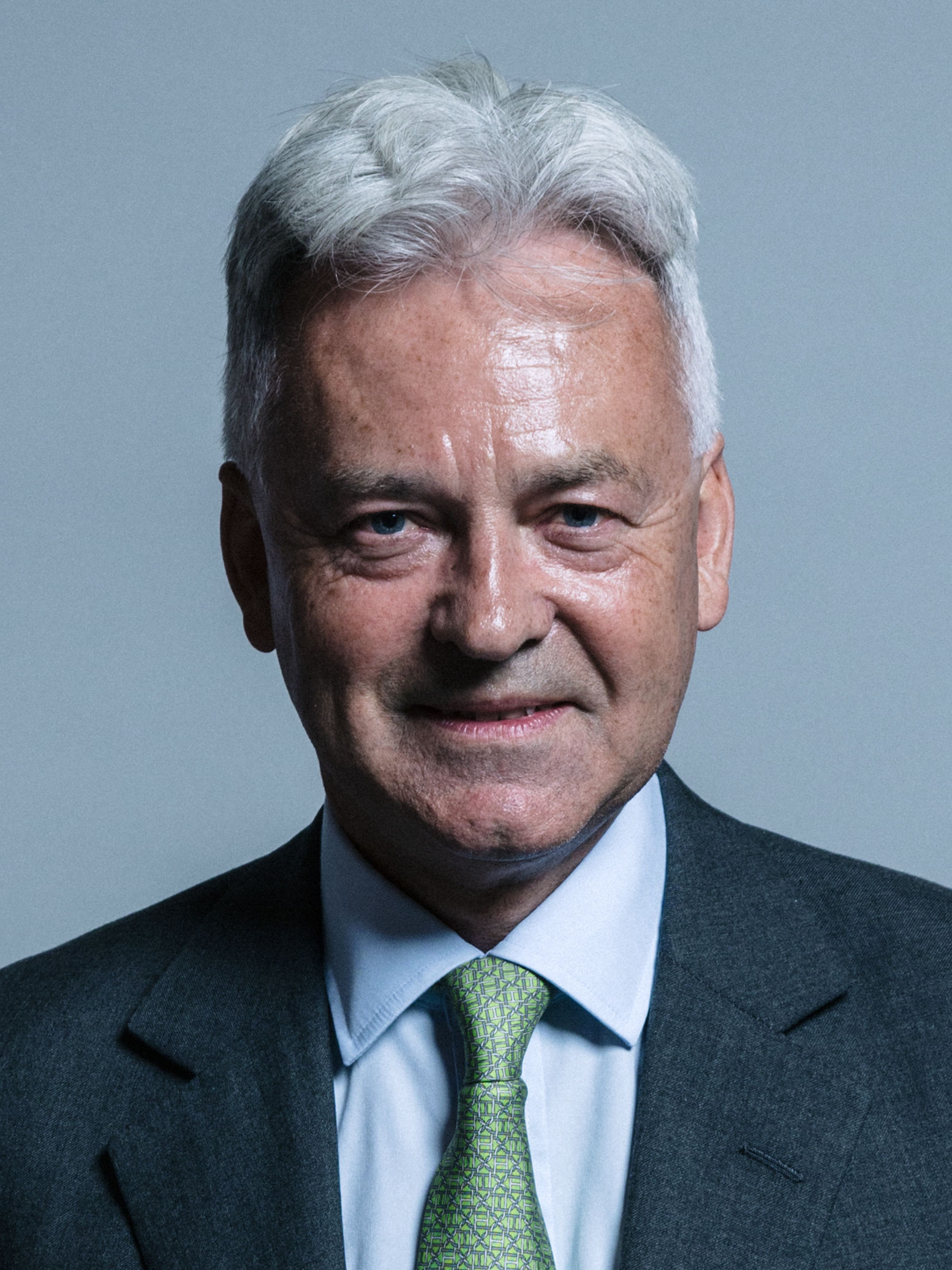
     

  • Sir Alan Duncan: “Have I Got News For You was absolutely terrifying”

    Sir Alan Duncan: “Have I Got News For You was absolutely terrifying”

    The former foreign office minister tells us about his degree and how it impacted his life in politics

    I studied PPE at Oxford, and when I’m asked what my degree taught me I always think of Harold Macmillan. Macmillan was a former prime minister, who was once Chancellor of Oxford, and he said to our College, which was St. John’s, that what freshers year taught you is when someone is talking rot. That’s always been my lodestar for what a good education means: if you know when someone’s talking rubbish, you know what’s good sense and what is not. 

    But political ambition predated my time at Oxford – I got the bug actually when I was about 12. Whether I regret that or not now is unclear, but everything I did at Oxford, and thereafter, was geared at getting into Parliament. 

    Politics and economics at Oxbridge is quite a well-trodden degree – but it’s often pointed out to me that the current prime minister wields his English language skills and classical education, and that that gives him an advantage. Well there might be truth in that, but there was an element of history in my papers too. My history tutor – who I knew for years afterwards – told me something I’ve never forgotten: “No economist ever makes a good banker. If you want to be a good banker, you have to read history.” I think there’s a lot in that, because it gives you a strategic perspective. It’s not about the numbers, and it’s not just about economic theory nationally. It’s about the ups and downs of life and societal and economic forces – and historians understand those far better than economists. 

    So in terms of my degree, I feel I learned enough – and I also learned a lot from the practical politics of the Oxford Union. This was at a time when the then Labour government under Jim Callaghan was falling to bits, and Thatcher was on the rise. So the 1979 elections slightly ate into my revision for finals – God knows how I got a degree at all. 

    It’s interesting to note that Theresa May studied geography, but I think in the end formal education isn’t what it’s all about. Whether you succeed in politics is more to do with your disposition and what you’ve done in life. The problem is I think a lot of people are going into Parliament now without any particular experience – and definitely too little international experience. 

    I was lucky to gain both in the oil industry. In that industry my best friend was Ian Taylor who died last year – and that friendship, together with the skill I’d acquired in the oil industry, did come in handy in particular when it came to getting rid of Colonel Gaddafi in Libya in 2011. Ian was buying and selling crude oil into Benghazi and we were able to go to the then prime minister David Cameron and explain that if he didn’t follow our strategy, he’d lose the war. Gaddafi was oil, and our approach helped bring him down. 

    If young politicians ask my advice about appearing on television, I say it’s the wrong question. The trouble is most politicians today don’t think about Parliament first and media second. They have it absolutely the wrong way round.

    What I think does matter about being a minister is time management. If you’re not careful, and you don’t administer your day, you can easily be organised by your private office: one of the golden rules of being a minister is always to make sure that you control the diary, rather than let the diary control you. So that means you need to look ahead, particularly for travel and set priorities – and make it clear to your private office that the priorities are as they are, that you will see some people but not others. You also need to explain that you want time to think – or time to call in one of the teams in the foreign office responsible for an area and get into an issue in more depth. So, planning, and not allowing yourself to be just told what to do as a process is the way to do it.

    The media doesn’t help any of this. Believe it or not, I’ve never been on The Andrew Marr Show, but I think Andrew has completely lost its way. The questions have become so staid and obvious, and it’s a programme whose time is up. It’s junk because Andrew keeps asking questions to which there can be no clear answer, doesn’t delve deeper and it’s all about trying to trip up the politician. It’s a dead programme. 

    I did use humour quite a lot in my career – on Have I Got News For You four times in fact. That was absolutely terrifying – they can’t prepare you for that at Oxford! 

    Photo credit: By Chris McAndrew, CC BY 3.0, https://commons.wikimedia.org/w/index.php?curid=61323695