Blog

  • Review: Tomorrow will be a Good Day by Captain Sir Thomas Moore

    Review: Tomorrow will be a Good Day by Captain Sir Thomas Moore

    Reading Captain Tom’s autobiography feels a bit like watching one of those really good X Factor auditions, you know it is a bit staged and quite formulaic but it still makes you feel warm and fuzzy. The book has a wonderfully satisfying narrative arch following the extraordinary life of a seemingly ordinary man who suffers some tragedies but finishes triumphant. Although the tone is mostly gentle, Moore is surprisingly frank in its detailing of some of the sadnesses in his romantic relationships, from descriptions of the “loveless bed” in his first marriage to the death of his wife, Pamela, “to watch someone you love decline through dementia is a slow kind of torture,” he says. It also portrays Moore’s warmth and humour, for instance, on his knighthood he writes: “I joked that I hoped the Queen wasn’t too heavy-handed with the sword.” It is this collision between the ordinary and extraordinary that captured the nation’s hearts when the 100-year-old walked around his garden to raise money for the NHS and this shines through in the autobiography.

    Tomorrow Will Be A Good Day: , £20.00


  • How the travel sector handled Covid-19

    How the travel sector handled Covid-19

    By Lana Woolf

    There is a phenomenon called Stendhalismo named after the French novelist Stendhal, which refers to the act of travelling abroad and then swooning before objects of great beauty. It was in Florence where Stendhal – born Marie-Henri Beyle – first experienced an almost hallucinatory sense of awe at the Italian experience: ‘I was in a sort of ecstasy, from the idea of being in Florence,’ he wrote, ‘close to the great men whose tombs I had seen. Absorbed in the contemplation of sublime beauty.’

    Two hundred years later, we have a new version of this phenomenon – but altered to reflect our new pandemic reality. It might be too flippant to call it Covidismo, but it can entail pausing in our UK homes and suddenly having a flashback as to all the travelling we did, which we now doubt we’ll ever do to the same extent. For those of us who were lucky enough to travel widely, a rhythm we hardly knew we had established has been suddenly suspended. Never again will the airport be quite so routine; nor shall we return home to find ourselves gearing up for the next trip with quite the same regularity.

    Time is now marked in a different way. What else to do then, but sit at home and dream – of Florence, of New York, of Kyoto, of all the places that we have been to and loved. In our best moments we can feel grateful we had what we had; but it is also possible to swoon Stendhalstyle in our kitchens and feel bereft at what have been so arbitrarily deprived of.

    Balearic Blues

    But what if travel is your livelihood? Like a career in aviation it would have seemed at the start of the year the safest of all sectors – and perhaps few countries would be safer to work in than that perennial favourite Mallorca.

    Sometimes during Covid-19 I have thought back to this island of peace and lemony light, where Robert Graves lived out his years, and where Chopin and George Sand visited. It was surreal to imagine a touristless summer there.

    Miguel Feliz is the general manager of Sant Francesc, a five-star hotel in the centre of Parma. ‘It’s been a tough and challenging year for all of us, especially those in the hospitality industry,’ he explains. ‘We are extremely lucky that Sant Francesc is a well-established, year-round property and Palma is a popular destination even in the cooler months,’ he explains, adding that he ‘remains optimistic that we will begin to see some normality from September onwards, which is just in time for my favourite month in Mallorca.’

    If the guests return – and at time of writing the government’s muchcriticised quarantine policy has made travel an anxious business – then guests will find a subtly altered hotel. ‘We have put extensive new measures in place by following the recommendations and directives from the Spanish National Health Services, as well as the World Health Organisation, in order to ensure the wellbeing of our guests and team members,’ Feliz tells me. ‘These include everything from twice-daily temperature checks for all staff as well as guests on arrival, to mandatory use of masks for our team – and masks and hand sanitizer being readily available to guests at all times. Extensive new cleaning programmes have been put in place for guest rooms and all public areas and social distancing will be encouraged wherever possible.’

    As workable as that sounds, it was also a tough time for the company in another sense when the owners had to address the question of the expected opening of a sister property Can Ferrerata in Santanyí. ‘We decided to postpone until March 2021 and take our time, in order to give it the opening it deserves.’

    This hiatus has been painful – and of course Sant Francesc is just one story among thousands globally where hotels have had to pause, pivot, or just take the financial hit. The effect on the hotel industry has been seismic, as any brief walk through central London immediately attests: one thinks of the empty forecourt of Buckingham Palace, or the nowunphotographed lions of Trafalgar Square.

    But travel is a vast industry with numerous professions attached to it, which  have experienced the knock-on effects of the virus. From aviation, hotel events, to travel PR, and travel journalism, it’s a sector full of economically significant subsets.

    I catch up with Cathy Adams, who is the travel editor at the Independent. She’s on maternity leave at the moment, and says she’s grateful to have a break from breast-feeding to share her thoughts with me. For her, travel journalism was already in a state of ruction pre-Covid. ‘Even before coronavirus swept the globe, travel journalism was changing fast,’ she tells me. ‘We were working to promote underserved destinations rather than those afflicted by overtourism; and the climate crisis had made us rethink how we spoke about travel and holidays to promote more responsible tourism. Then came coronavirus, which in many ways has accelerated the issues many travel journalists have been grappling with in recent years.’

    So is travel journalism still a career you can go into? The answer is yes, but with caveats. ‘Travel journalism, when, like travel itself, it returns to the masses, will continue to become more thoughtful: expect more coverage of British holiday spots as travel restrictions drag on and we want to inject more money into our domestic tourism market. Plus, the coronavirus has highlighted just how risky travel can be – in terms of spreading the virus, and how quickly border closures can stop travel; the world will no longer be seen as a free-for-all, and journalism will take this into account when deciding which destinations to talk about.

    And will hotels still feel able to host significant numbers of journalists in order to make sure they get their copy? Adams explains that ‘editorial will remain an important part of a destination’s marketing plans, but I imagine with the focus on fewer trips and a smaller tourism market generally, they won’t be quite the all-out affairs they once were.’

    How PR went into ER

    Every one of these hotels has its marketing budget and there are many PR firms around the world earning their crust by promoting them. One of the best of these is Perowne International run by the redoubtable Julia Perowne.

    Perowne recalls for me the bizarre events of February 2020: ‘I realised in February that the situation was getting more serious and that its impact would spread outside China. In many ways the hospitality industry was one of the first sectors impacted and sadly will likely be the last.’ It was a fast-moving situation, she says. ‘We have clients all over the world and several beautiful hotels in Italy which was impacted first in Europe. We were shocked by the speed and severity of its development there and could see quickly that this would not be contained to one country. In early March we started to analyse the situation in more detail and prior to lockdown actually went to our clients and offered them significant fee reductions to help them through this tough time.’

    Overnight, the nature of the job changed: ‘The most significant thing has been the emotional support the clients have needed rather than just the practical,’ explains Perowne. ‘This has been a devastating time for the industry – businesses that have worked so hard have been hit badly and there’s definitely been a need to help people emotionally get through this. In addition, we have needed to look ahead to the future and ensure that when we come through this, the clients are looking as desirable and as relevant as ever. The consumer’s values have changed over the last few months and we need to ensure that we are prepared for that.’

    Perowne was forced to take advantage of the furlough scheme (we’re hopefully in the process of reinstating them’), though she would have liked to have seen a different scheme in place. ‘It would have been great if the government could have subsidised salaries and allowed people to still work if they could as they did in Ireland,’ she argues. ‘We desperately needed all-hands-on-deck but simply weren’t getting the fees from the clients so we had to utilise the scheme.’

    Echoing Adams’ observations about journalism, Perowne says that Covid-19 ‘will simply accelerate the changes that were happening,’ adding that ‘we have to be compelling storytellers.’

    Tricky Calculus

    Perowne praises the agility of her clients. One of these is the Cambridge University Arms, where Ian James, the general manager, approached the crisis in a highly community-minded way. Although he closed the hotel on 22nd March ‘with heavy heart’, he explains that ‘it was also important to us to help alleviate the strain on our NHS.’

    As the city’s oldest continually operating hotel, the team was minded to take the long view. ‘The property has truly stood the test of time – living through two world wars, the fight for woman’s rights and in 1665, the University Arms temporary closed its doors due to the Bubonic Plague,’ James explains. ‘Isaac Newton had to work from home and he used this time to develop Calculus and the theory of Gravity. Therefore, we remain positive that we will soon put this latest travail behind us. As Solomon said, “This too shall pass”.

    It’s also a hotel which has been caring toward its staff and the people in the immediate locality. ‘As the hotel closed and we were heading into lock down, our main concern was the wellbeing of our team,’ he explains. ‘Our Chef Director Tristan Welch and his team coordinated care packages to keep everyone going during the difficult times of self-isolation. Our ‘Most Wanted’ packages were filled with essentials including many items that were proving difficult to come by in the supermarkets at the time. These included everything from pasta, flour and toilet paper, to oats, sugar, cereals, stock cubes, tinned goods as well as fresh fruit. In addition to this, the property has donated some key items locally to those in need. These included disposable aprons and gloves to the Papworth Trust as well as eggs, yogurt, vegetables and other food items to Cambridge Cyrenians.

    This is a sector which has experienced the severest setbacks of any. And yet it’s a hopeful sector. James is cautiously optimistic: ‘The desire people have to travel will always prevail and the industry will always need fresh talent.’

    Miguel Feliz echoes those sentiments: ‘The hospitality industry is so versatile and offers the unique opportunity to travel the world and learn about different cultures, so there is always an appetite for travel.

    Nothing will take that away from us.’ Perowne adds in respect of a career path in travel PR: ‘for those who really want to go for it, the opportunities are endless.’

    So in a sense the buoyancy of the sector comes back to Stendhalismo: a French writer broke out into a cold sweat because of the treasures of Florence, and there will always be a part of us that will long to do the same. Far-flung parts and new experiences are things we’ll always be susceptible to, and a virus will not decrease our need for adventure – indeed, in the long run it may only increase it.


  • Review: The Serendipity Mindset by Dr. Christian Busch

    Review: The Serendipity Mindset by Dr. Christian Busch

    Dr Christian Busch makes a rather lofty promise at the beginning of his book: he will reveal how to navigate “the hidden force in the world,” he says. The force is serendipity, which he defines as “unexpected good luck resulting from unplanned moments in which proactive decisions lead to positive outcomes,” phew. Busch says he hopes to “start a journey and, hopefully a movement”. As part of his thought revolution he has created a glossary of terms such as “serendipitor,” which is someone who “cultivates serendipity” and “FOMS,” which stands for “fear of missing serendipity”. The reader can even calculate their serendipity score by answering questions such as “I tend to get what I want from life.”

    The premise of the book is rather ambitious but Busch, who teaches at New York University and the London School of Economics, grounds his suggestions in academic research. For instance, he references the statistical phenomenon, the birthday paradox – the counterintuitive fact that you only need 23 people in a room for it to be likely that someone shares a birthday – to show “we often underestimate the unexpected because we think linearly – often ‘according to plan’ – rather than exponentially (or in contingencies)”.

    In order to demonstrate how people can manifest their own luck, Busch references a study in which two participants, “lucky Martin and unlucky Brenda,” were asked to buy a cup of coffee and sit down. The researchers placed a five-pound note on the pavement outside the entrance. Martin noticed the five-pound note, picked it up and sat down next to a businessman, started a conversation and made friends with him while Brenda did neither of these things and described her trip as “uneventful”.

    Busch also employs plenty of amusing anecdotes to argue his points. To show how people can create serendipity by “connecting the dots,” for instance, he references the drug Sildenafil which was supposed to help cure angina.

    Researchers discovered that it had a surprising impact on male patients: it caused erections. While some would see this as an “embarrassing side effect” it was ultimately marketed as the very successful drug, viagra.

    While Busch occasionally slips into verbose language, the book portrays a clear and helpful message: opportunities are everywhere, seize them. I wrote this review in a coffee shop. I am a typical Londoner and strive to avoid eye contact but I thought of “lucky Martin” when I overheard a man talking about a triathlon club – something I’ve been meaning to do for ages – I spoke to the stranger. With encouragement and advice from the former stranger, I have signed up for my first triathlon and I think that is testament to Dr Busch.

    The Serendipity Mindset: Penguin Life, £14.99


  • Sector Outlook: Charities

    Sector Outlook: Charities

    By Robert Golding

    If you happened to be in Essex on a summer’s day in 1995, watching Maldon Cricket Club’s ten wicket win against Bury St Edmunds, you could be forgiven for thinking that you were watching not one but two future England cricket captains opening the batting for Maldon.

    These were Alastair Cook (known to friends as Ali) and David Randall (known as Arkle).
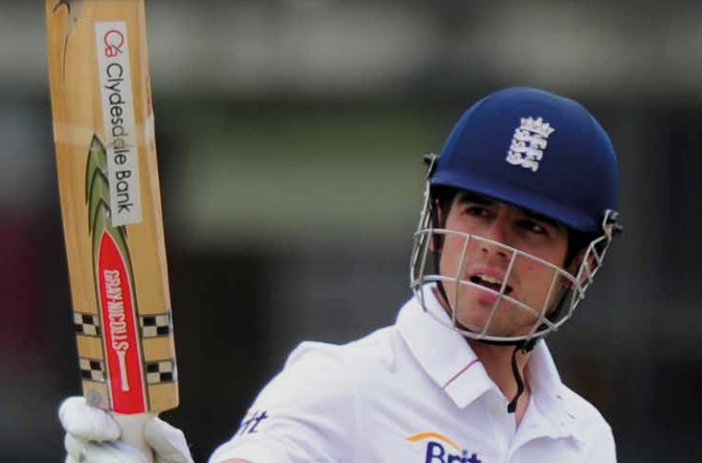


    Both were gifted batsmen; each possessed musical ability (Ali on clarinet; Arkle as a future founder member of Maldon band Soul Attraction) and Cook would later recall of his friend: ‘I will never be embarrassed to say he was the better player.’

    But in reality you would have been right about only one of them. Sir Alastair Cook, as the world knows, would go on to captain England, and score more runs (12,472) than any other England player. Arkle developed cancer and died in July 2012 at the age of 27.

    His death wasn’t the end of his story. Throughout his illness he never complained and continued to do the things he loved. Sue Randall, David’s inspirational mother, picks up the story of David’s last week: ‘David’s big wish was to go to Wimbledon. All the MacMillan Nurses and District Nurses kept telling us that it would not be safe for David to go here and there. But the lovely Willow Foundation had got him tickets.’

    How did Sue react? ‘That was the only time I got angry with anyone. When David was out with his girlfriend, I phoned the nurses and told them that if David did not go to Wimbledon, he would die disappointed and I thought that we should do everything possible to get him there. Worst-case scenario was he died on the way, but at least he would have known he had tried to get there. By that time, he only had weeks to live at best. It was a saga! But he got to Wimbledon, taken by his brother. He went on the Tuesday, was admitted to the hospice on Wed and died on the Friday.’

    It’s a story which takes us to the heart of life’s cruelty. Yet at its centre is something that seems to work against all hardship: David’s optimism, and intense love of life.

    Sue remembered the lesson her boy had taught her, and started the David Randall Foundation which aims to keep his spirit alive. The charity organises Great Days for those with life-limiting conditions. Sir Alastair is its patron. This is a charity with a message for our times that will resonate: as the world seems always to become more morbid, we need the spirit of David Randall like never before.

    An Uncharitable Virus

    We also need the charity sector like never before. Young people might perhaps wonder whether it’s a vulnerable sector, and even whether it’s as worth going into as it was pre-Covid. While it’s true that many charities find themselves financially vulnerable, and have been hastily furloughing like everyone else, in researching this piece we also had a sense of a sector determined to be upbeat where possible.

    Many, of course, were feeling acute financial pressures and it was not uncommon to find confessions that the person who would usually handle our query had just been furloughed. But for those who were still active, Finito World witnessed in some instances an admirable heightening of purpose.

    Variety – the Children’s Charity works predominantly with children with special education needs and disabilities by supplying medical equipment ranging from diabetes monitors to wheelchairs and specialist car seats.

    Dave King, the charity’s CEO, admits that events in early 2020 caught him by surprise: ‘By the time we became aware of the level of impact it would have, the virus was escalating quickly. This left us little time to get things in place before lockdown began. It was a period of confusion.’ Uncertainty is often a greater strain on a business than definitely dire circumstances. ‘Once the school closure had been announced,’ King continues, ‘we found ourselves in a better position. We were able to become more effective in our response once we had clear direction from government about the impact on children’s lives.’

    Variety began refashioning its processes. ‘One of our programmes involves grant-giving for specialist equipment for schools, and equipment for children,’ explains King. ‘We’ve managed to keep that running in spite of supply chains closing down and being temporarily suspended.’

    This is a major achievement especially as it was delivered at a time when the organisation’s income generation fell dramatically, primarily due to the loss of events revenue. ‘You can’t have a gala dinner with just a few people in the room. The atmosphere will be flat and it won’t be worth the outlay,’ King says.

    In sustaining itself, the charity was helped by its active golf society and golf memberships. These benefitted from that sport’s ability to be carried on while social distancing. ‘We’re looking at how we can maximise the use of our golf team and our society to generate income.’

    As difficult as these times are for generating revenue, there is something that can still pull in the money even over Zoom: stardom.

    Stars in their Eyes

    Variety has been fortunate in its celebrity ambassadors, with Len Goodman and Mark Ramprakash singled out by King for lending particular support to the charity.

    This opens up onto the wider question of celebrity involvement in charities. Dan Corry, the CEO of Think NPC – a charity which supports other charities – argues that while having a well-known patron doesn’t always make a difference ‘it can definitely help. Anything you can do to put yourself in the limelight, and get people to open that email, or look at that tweet.’

    Within the sector, there’s some debate over whether celebrity involvement increases the amount of money going to charities as a whole. Cory asks: ‘Does having a good celebrity or fundraising campaign raise money for your charity instead of one they would have given to? Does it just spread the money differently?’ A relevant example here would be Captain Tom Moore, who walked around his garden for NHS Charities Together. Cory says: ‘Some in the sector felt that people who would have given to a medical health charity gave to that. In aggregate, it’s hard to tell. Is it the right charity just because there’s a star celeb? It might be a rubbish charity.’

    Even so, the charities Finito World spoke with are deeply grateful for the assistance well-known names have given to their charities.

    Sue Randall says that Alastair Cook always comes through with ‘two tickets for the best seats’ at Lord’s for Great Dayers, adding that he ‘has never let us down.’ She adds: ‘Andy Murray also came up trumps for us last year. We had got a lady with cancer, some tickets for Wimbledon and on the day she was too ill to go. One of our ambassadors got in touch with Sir Andy and he sent her a personal note saying how sad he was she hadn’t been well enough to go, alongside a signed shirt. So he is now a hero to me!’
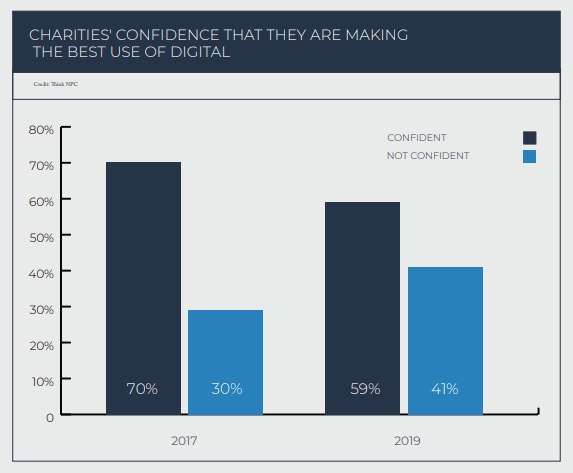
    Meanwhile, Ed Holloway, Executive Director of Digital and Services at the MS Society, recalls how the charity was able to pivot quickly during coronavirus thanks to celebrity generosity: ‘One of the first virtual fundraisers we did [after the virus hit] was the MS Society Pub Quiz, with the support of our ambassador and BBC Radio 1 DJ Scott Mills, who hosted a virtual pub quiz every Wednesday night, live from his living room. It was an incredible way to bring the community together at what was a very difficult time. Not only did we have thousands of people all playing along for a great cause, we had a lot of fun doing it. Together, we managed to raise an incredible £55,000.’

    In July, I zoom with Gruffalo and Zog illustrator Axel Scheffler who has had longstanding involvement with the National Literacy Trust (NLT), an independent charity committed to improving literacy among disadvantaged groups. When the pandemic came along, he was happy to help.

    He talks to me in his studio, with books ranged behind him, which themselves cede to a bright skylight. Softly spoken and matter-of-fact, it is clear that his charitable work is conducted out of a quiet and laudable sense of duty. ‘I have said yes to almost 95 percent of what I’ve been asked to do,’ he says, in his careful German accent. ‘There was one job where a big airline company wanted me to design some airline masks and I said no to that one. Overall, it’s a difficult situation and we do what we can. I can afford to do it, and so I do it.’

    Early on in the pandemic, Scheffler was asked by the NLT to provide illustrations to an online book Coronavirus intended to educate 5-11 year-olds about the new disease. Published by Nosy Crow, and narrated online by Hugh Bonneville, it was publisher Kate Wilson who persuaded Scheffler to make time for a breakneck production schedule. ‘Her argument was that many children are familiar with my style and work, and that was why I said, “Yes, I’ll do it.” Nosy Crow completed the project from start to finish in ten days: it was really, really fast.’

    Scheffler explains his motivation: ‘I’ve supported the NLT for a long time, and it’s brilliant what they’re doing. I think it’s sad that a nation like Britain has to have a charity to deal with these matters. It should really be up to schools to get children reading and it’s sad the government is failing the education of children in so many ways.’ It’s hard to disagree but it’s also surely this which makes the charitable sector so exciting.

    Nobody’s poor relation’

    The CEO of the NLT Jonathan Douglas argues that there’s never been a better time to go into the charitable sector: ‘Its vibrancy and its entrepreneurial ability comes from the fact that its funding base is always tenuous.’

    Paradoxically, Douglas explains, it’s been a good time for the sector, in spite of the challenges: ‘The most heartening thing without a doubt has been the organisations that have come through to support shielded people, support children to continue learning, and to support the victims of domestic abuse. All those social needs have been met by the charity sector. I don’t think the charity sector could ever have been written off as inconsequential – but after the way it has stepped up in the past three months it’s proved its mettle. We’re no longer anyone’s poor relations.’

    Over at the MS Society, Ed Holloway continues to feel the sector is attractive: ‘Like many charities we are relatively small and we ask a lot of our employees, but this gives them a chance to take on responsibility early in their careers, which stands them in good stead for the rest of their working lives. In return for their hard work and commitment, we work hard to provide a stimulating workplace where everyone can engage with our mission, know their voices are heard, and know they are making a difference to people living with MS.’

    Even so, that doesn’t mean that life is always easy. King says: ‘Most charities are operating on the frontline. The more we’ve got in the bank the less we’re helping kids.’

    Government Response

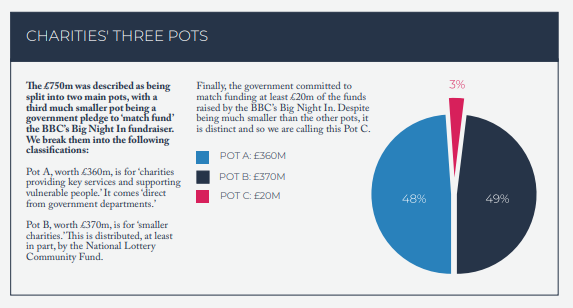
    On April 8th 2020, the Chancellor Rishi Sunak announced a £750 billion package ‘to ensure [charities] can continue their vital work during the coronavirus outbreak’. Figure A shows where the money went. Unfortunately, in many cases it didn’t go far enough.

    The picture is complicated by the fact that it is often difficult to tell what sums charities may have received from independent grant-making foundations such as the Esmée Fairburn Foundation and the Lloyds Bank Foundation. In some cases, there will have been overlap, although that can be difficult to unpick. Cory says: ‘When this crisis is over, I hope we realise that we need more data in this sector.’
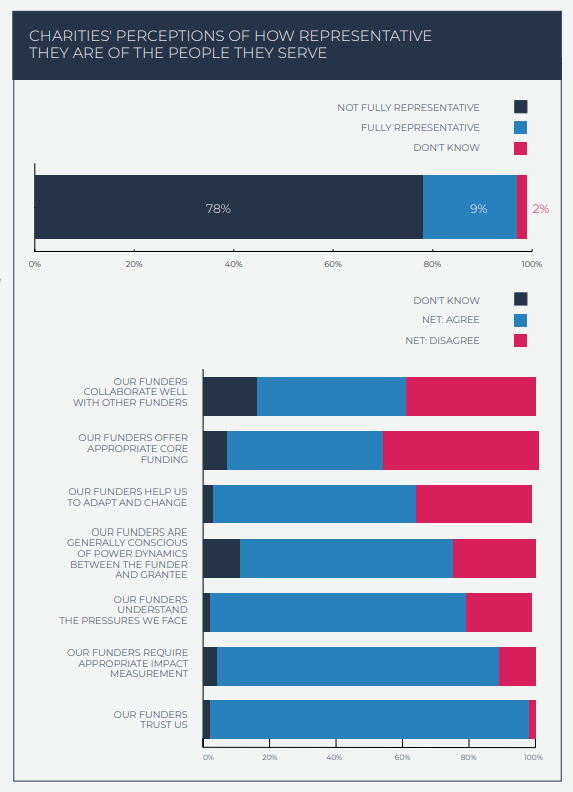
    King argues that government announcements were ‘targeted at organisations already delivering government services,’ adding, ‘we don’t receive any help whatsoever.’ A few weeks after speaking with King, Finito World heard that he too had been furloughed.

    Large charities like the Family Fund received large injections of cash; other smaller organisations did not. But even at the top end, there is pain. As Dan Cory says: ‘For the big charities, a lot of funding came from big events like the London marathon. Almost all of that has been kyboshed.’ With furlough now about to wind down, many charities including the National Trust and Cancer Research UK have already talked about redundancies. In some cases, charities that relied on gift shop income have suffered, Cory explains: ‘They have no income. People aren’t rushing to the shops. They’re usually the kind of shops we like rummaging in, but now you’re not meant to touch product.’

    ThinkNPC also argues that the Treasury’s monies – though ‘pretty generous’, according to Cory – even at the high end [of generous]’ A recent report by the organisation found that 27 of the largest service-delivery charities in the UK faced a ‘£500 million shortfall’. The report also found that ‘charities fulfilling contracts for local and national government are better insulated, whereas charities who rely on public fundraising and charity shop trading are far more exposed to more significant losses.’

    Ed Holloway told us about the gravity of the situation regarding MS: ‘The MS Society faces losing nearly a third of our income this year due to Covid-19, and yet we haven’t received any support from the Treasury’s £750 million funding package for charities.’

    What matters here is the centrality of the society’s role in the fight against an awful disease: ‘The MS Society is the UK’s leading not-for-profit funder of MS research, and every year we invest millions in new projects – so sadly MS research is one area that has been affected by this shortfall. With researchers redeployed and labs closed due to social distancing, the pandemic had already affected many of the vital projects we fund. Right now, we’re doing everything we can to keep these going, but this significant loss to our income means planned research must be postponed, and we are unable to fund promising new work that is desperately needed.’

    When we wrote to the Department for Culture, Digital Services, Media and Sport to ask whether some smaller charities were falling through the cracks, we received no reply. Cory says: ‘My guess is medium-sized charities – in the £1-5 million bracket – have been suffering a lot. For the smaller ones, it’s difficult anyway. Typically, at a small charity you have two and half people with volunteers. Quite a lot aren’t going to survive this but it’s always like this down that end of the scale.’

    As grim as this is for many, if one were minded to be optimistic about anything at the moment, it would be about those who work in this difficult but noble sector: Variety, which continues to send vital equipment to children; the NLT, which is more committed than ever before to literacy in areas that need it; the MS Society, which is still a beacon of hope for those suffering from an inexplicable disease; and the David Randall Foundation, which remains committed to making people’s last months and weeks memorable.

    In my most recent email from Sue Randall, she tells me: ‘Things are still very slow with DRF. Understandably the people we organise days out for are vulnerable and nervous about going out, but requests have started to trickle in. The trouble is you just start to think it’s okay to go out and then the government starts bringing in more restrictions, so I am not surprised at people’s reticence.’

    This is a view in miniature of the sector as a whole: a sense of duty overriding anxiety; a sector which has been knocked, which remains determined to rebound; and above all an industry with an ethos which values doing things not because they are intrinsically commercial, but because they are inherently important.

    Will it all come back? Cory is cautiously optimistic: ‘Not in the same configuration. But people’s will to do good and get involved in charities to work for them or volunteer is pretty undiminished.’ In these times, we must take the positives where we find them.

     

  • Exclusive Interview: High Line designer Piet Oudolf

    Exclusive Interview: High Line designer Piet Oudolf

    Piet Oudolf is without question the most famous landscape architect in the world. Iris Spark caught up with the plantsman.

    In every area of life, many people do very well for a period of time. A few reach the top and stay there. But there is only one area I can think of where one person has been so far above the rest for so long. That happens to be gardening. If you ask anyone in the profession who is the best they won’t have to stop and think: Piet Oudolf.

    ‘A rock star,’ says Andy Sturgeon who, with books and television behind him, has himself done passably well. And if you raise his name with anyone in the profession you’ll hear an awed silence, as if they’re turning over with amazement the famous name, and all that it means.

    Oudolf ’s importance – his supremacy even – is partly attributable to the fact that his name is synonymous with a particular movement – the so-called New Perennials – which promoted a new sustainable aesthetic in gardening during the 1970s and 80s. But he’s also a global phenomenon, and sui generis in that respect. He has made public spaces the world over – most notably the High Line and Battery Park in New York, the Lurie Garden in Chicago’s Millennium Park, and Potters Fields in London. His famous home Hummelo, which was open to the public for years until it closed in October 2018, would alone be enough to rank him as a great artist.

    So how did it all begin? The great careers can sometimes seem strangely unpromising at their outset. Oudolf recalls: ‘A long time ago in the 1970s, I turned away from my earlier job in my parents’ restaurant. I was married and didn’t want to do that for the rest of my life. I was looking for jobs and eventually came to work in a garden centre at Christmastime in the perennials department. That made me aware of plants.’

    It is a vivid image of the alert drifter, who is waiting for life to come to him – and when it does, seizes life all the more quickly for having waited. ‘I started to buy books and look at plants – that’s how it all started.’

    There were still some practical steps to be taken: ‘I went back to school to get an elementary licence to start a contract company. It was 1975 and we started small with a nursery. We began to sell perennial plants.’ Oudolf owes his stratospheric success in part to having done the hard yards in the less glamorous business of selling plants, but all along there was a radical vision: of a garden that would look good all the year round.         

    He had his share of luck. Gardening was about to take off – and particularly in the UK. ‘In 1980 we travelled to England where gardening was very fashionable with many magazines at that time. And we had the ideal plants so they soon discovered us.’

    Oudolf ’s aesthetic represented a radical move away from the twee decorative garden fashionable at the time. By 2000, the publication of his book Dream Plants for the Garden, showed how far Oudolf had come, not just as a nurseryman but as a thinker. ‘It was translated into Swedish and we had lots of conferences at Kew and elsewhere. We became a close community.’

    To what does Oudolf attribute his success? He tells me it was necessity. ‘We had no choice. We had no money.’ So Oudolf ’s relentless work ethic stems from financial need. Even now, soon to turn 76, Oudolf prefers to work in the morning in his studio, finding that late-night work will interrupt his sleep.

    In 2000 also, Oudolf won the coveted Best in Show gold medal at the Chelsea Flower Show. But even by that point, people didn’t always understand what he was doing. ‘When I travelled to England, they always called me the nursery man who made gardens, when in fact I was a designer who had a nursery. Some believed in me totally; but other didn’t trust me. It was out of their spectrum.’

    So what sustained him? Oudolf had a vision of a more durable and sustainable kind of garden: he was, in his understated way an evangelical for the ideas he was putting forward. But he also enjoyed the encouragement of a small circle. ‘It was always encouraging when I did something people liked in my circle,’ he says. ‘And people were really taking over my ideas. That was because I was one of the few people that specialised in public spaces so millions of people could see my ideas, which was very stimulating.’

    In fact, when I ask him for his regrets, that turns out to be the only one: he regrets any private work he has done as he knows it hasn’t reached the requisite audience.

    Another turning-point came in 2004, when he was phoned up by James Corner Field Operations who had won the competition to redesign the lower west side of Manhattan: the project that would become known as the High Line. ‘I don’t think even they knew what they would do with it,’ recalls Oudolf. ‘Looking back, it’s great I said ‘yes’ as I was already working on the Battery Conservancy in New York so I thought, ‘I’ll take a look’’. Before Covid-19 struck it was attracting eight million people a year. Oudolf is philosophical about its success: ‘These projects start so small that when you look back you could have said no easily with the same feeling, yes and no were on an equal balance.’

    Does he feel pressure? Quite the opposite. Instead Oudolf uses the question for a remarkable rhapsody about the effects on the soul of gardening: ‘Gardening stimulates the brain: it makes you feel happy. Gardening is a metaphor for so many things. You can find respect in it; or you can play in it. You can find yourself in it, walk into it, discover it. Every day can be different, seasons have a different but continuous journey where the garden changes as you yourself change.’

    Then he pauses, before delivering a kind of punchline: ‘But don’t forget: it’s just fun.’

    So what advice would he give to those starting out in landscape architecture? ‘You can’t do anything without knowing plants – or at least you need someone who knows them. You can’t try and find it out from a book in your office. If you keep on working on that, you’ll create benefits for later.’

    No magic then, just hard work. Today Oudolf has built a recession and virusproof business. ‘The work has changed but I get commissioned now from a distance,’ he explains. ‘I have done two projects at a distance in America, as people know me well now. My plants are quite accurate. If I were ever to slow down it would be my own decision; people want to work with me.’

    Oudolf ’s is predominantly a tale of passion and hard work. ‘I keep working because it’s my life. Every day I do something, I love to go to the office and work. It feels like I’m pensioned but I’m still at work. The clients I work for are specially aware of the time we live in and I think that’s why my planting schemes work so well because they remind you of the wildness people dream on.’

    That wildness has come back to haunt us now, but Oudolf isn’t surprised by 2020. In fact he’s taken it in his stride: it’s what he was telling us about all along.

  • Book reviews: October 2020 round-up

    Book reviews: October 2020 round-up

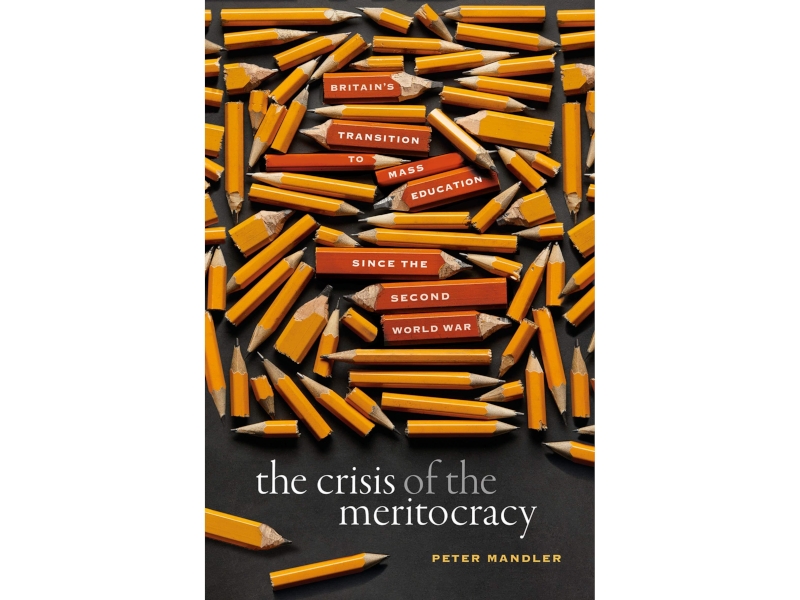
    The Crisis of the Meritocracy: Britain’s Transition to Mass Education since the Second World War by Peter Mandler

    This timely tome offers an apolitical overview of the education system and considers why so many people are attending university and the implications of this. Mandler focusses on deconstructing the legacy of the Butler Act – a piece of legislation which aimed to remove inequality from education and saw the proportion of free places at grammar schools increase by almost a third. This study is essential reading for those who want to thoroughly understand why we are still not living in a true meritocracy.

    Crisis of Meritocracy: Oxford University Press, £25.00

    What Do We Know and What Should We Do About Social Mobility? By Lee Elliot Major and Stephen Machin

    Low social mobility in Britain is an increasingly pressing issue and Professor of Social Mobility at the University of Exeter Lee Elliot Major and LSE Professor of Economics Stephen Machin consider what can be done to reverse this trend. This book documents the history of mobility since WWII and considers how family traits affect intergenerational mobility. The authors call for a shift in debates around this topic in order to establish a more just society.

    Social Mobility: SAGE Publishing, £9.99

    Is Assessment Fair? By Isabel Nisbet and Stuart Shaw

    Following the exam results debacle, fairness in educational assessment has become a major talking point. In this book Lecturer at the Faculty of Education, University of Cambridge, Isabel Nisbet and Fellow of the Chartered Institute of Educational Assessors, Stuart Shaw consider what fairness means in practice and how it can be evaluated. Drawing on international examples from the UK, US, Australia and South East Asia, this book offers a thorough commentary on fairness.

    Is Assessment fair: SAGE Publishing, £24.99

    Educating for a Characterful Society Responsibility and the Public Good By James Arthur, Julia Cleverdon, Nicky Morgan, James O’Shaughnessy, Anthony Seldon

    What is character and how can educators develop virtues such as honesty and a sense of duty? In this book, five leading figures in government and education examine the ‘character’ of the public service workers on the frontline during the pandemic and consider how the National Curriculum can develop a sense of social justice and harness the passion of young people in order to work towards a stronger society.

    Educating For a Characterful Society: Routledge, £12.99

  • The Finito World guide in How to Zoom

    The Finito World guide in How to Zoom

    How do you get the most out of the new technology? Finito World spoke to business leaders and society etiquette expert Liz Brewer to find out

    If you want to know the essence of an era, look at its new word-coinages. This year, which has been so seismic in every way, saw a wealth of new words enter the vocabulary. These include, of course: Covid-19, corona, lockdown, social distancing and flatten the curve.

    But the word ‘Zoom’ is perhaps the most commonly used of these. Like Covid-19, it is ubiquitous and liable to be used many times a day, as all our meetings accrue. But like social distancing it can be used both as a noun and as a verb: we are ‘on Zoom’ but we also ‘Zoom’.

    Perhaps of all the words in the language it most resembles ‘Google’ in the way a company name has so suddenly entered proverbial usage – and with gratifying results for founder Eric Yuan who has seen his company’s value skyrocket to near the $50 billion mark.

    This new technology isn’t going anywhere. So here in seven easy steps we explain how to make it work for you:

    Get the lighting right

    Liz Brewer is a world-renowned events organiser and expert in social etiquette who has thought long and hard about how to present herself in a call. ‘This is a visual medium so check how you appear on screen and adjust height,’ she says. ‘Position yourself so you’re seen not sitting too close, too far, high or low, with a suitable background.’ This rings true: we’ve all misjudged the lighting once in a while and found ourselves sitting in shadow like James Bond villains – but that’s not a good look for an important meeting or a job interview.

    Don’t be vain or distracted


    Brewer also argues that it’s ‘best to turn off self-view’. Vanity exists in most of us and it’s easy to spend an entire call sneaking views of yourself rather than engaging with the person in front of you. It is best not to give yourself the option of assessing the calamity of your Covid-19 haircut, or that special lockdown exhaustion etched on your features. In the same way, Brewer advocates turning off everything else on your computer: ‘You are on screen and will be observed so it’s important to close or minimise all other distractions, screen windows and silence mobiles,’ she says.

    Embrace the possibilities of the medium…

    Many of us have now seen the interiors of one another’s homes, and thus have a sense of how people live. ‘I enjoy the informality,’ says the MP Robert Halfon, and even encourages the presence of children on a call. For some that can create a sense of camaraderie that can progress an understanding of the person you’re talking with. For many the informality is to be embraced and might even create deeper relationships.

    But realise its limitations…

    When we catch up with the architect Thomas Heatherwick, he argues that the medium is unhelpful in at least one respect: ‘Video conferencing doesn’t create new relationships. You can sustain a connection, but you don’t grow a deep connection.’ And so while it’s important to embrace Zoom now, we should all have an eye to those we connected with during lockdown: make sure you meet face to face with people you felt you had a connection with once it’s safe to do so.

    If you’re a CEO, check in on your team separately

    ‘We’re all so tired with Zoom call after Zoom call,’ says Carol Leonard of the Inzito Partnership, and argues that we need to think beyond Zoom. ‘Think who might be vulnerable in your team. At Inzito, we have little informal social programmes to check in with people, and we do mindfulness virtually twice a week.’ Thomas Heatherwick agrees: ‘It’s amazing how stressful these calls are.’ So don’t think all the company’s HR needs have been taken care of by that one collective Zoom.

    Remember the emotions of your co-Zoomer

    Thomas Heatherwick realised after a while that he was tired of what he calls ‘flat half people’. He adds: ‘If we met people face to face I would never sit facing that person: it would be too confrontational. Instead I’d sit at a slight angle. Even before we’d begun talking, we’d have a sense of each other and the peripheral vision can see how confident a candidate is when they walk in.’ So though it feels like your talking to an avatar, always remember the humanity of the encounter.

    Remember to laugh

    Collective behaviour doesn’t quite happen on Zoom,’ Heatherwick observes. ‘it’s ping pong. You press a button and you’re next in the conversation. You don’t chuckle together or cringe together.’ Brewer says that it is up to the host to make sure this gap is closed. But she also recommends other things like running ‘speed tests to avoid freezing moments’ and ‘bluetooth headphones’ to ensure that the sound quality facilitates the conversation.

    And if all else fails…

    ‘Well then you can always excuse yourself,’ says Brewer. And for many of us that’s the best part of any Zoom call.

  • Review: The Power of Learning from Dad by Dr Selva Pankaj

    Review: The Power of Learning from Dad by Dr Selva Pankaj

    While many people planned on writing a book during lockdown Dr Selva Pankaj actually did and the lessons he shares may inspire other people to achieve his level of motivation and success. The Regent Group founder reflects on the wisdom he received from his father while growing up in war-torn Sri Lanka such as “Dad said that plant springs from one seed, so every act of man or woman springs from thought” or “Dad used to say to me, ‘if you get up in the morning and find a wonderful day, be grateful for that’” or “Dad used to say in different words that you should willingly give, and sometimes giving needs to be spontaneous.” While the book bears some of the hallmarks of a self-published memoir, it can be commended for attempting to portray inspiring messages.

    Power of Learning from Dad: Regent Publishing, £10.00

  • Review: Why Can’t We All Just Get Along by Iain Dale

    Review: Why Can’t We All Just Get Along by Iain Dale


    By reflecting on Brexit, Trump and Twitter spats, Iain Dale examines why public discourse has become so angry and unproductive. Dale builds a gloriously optimistic road map to a kinder world, centred around the fundamental decencies of human nature. He even provides a simple bullet point list of suggestions from “Never post a picture of your food. No one is interested. Not even your mother” to “Whatever you do, don’t swear.” By his own admission, this is not an intellectual book and at times, like so many journalists, he spends too much time writing about Twitter storms. The richest and most illuminating anecdotes, however, come from his experiences interviewing prime ministers and, surprisingly, his relationship with his parents. This is a book about disagreements, but mostly it’s a book about hope.

    Why Can’t We All Just Get Along: HarperCollins Publishers, £12.99


  • How will film survive the pandemic?

    How will film survive the pandemic?

    Emily Prescott

    It’s a not uncommon thought during these times: “Is this reality or some awful dream?” As we queue in masked silence, told to keep two metres apart over the tannoys, our lives now feel post-apocalyptic, as if a dystopia fit for the silver screen had migrated somehow into our actual lives.

    But if the pandemic is the stuff of movies, how is it impacting the way films are made and consumed? Finito World has identified the four key hurdles filmmakers are facing over the next few months. Strap yourself into your home cinema seats: it’s going to be a bumpy ride.

    “Just keep swimming”: Keeping the momentum

    Although filming has started again, many productions are still reeling from the psychological and logistical consequences of lockdown.

    Finito World spoke to James Kent whose directing credits include Testament of Youth, starring Kit Harrington, and The Aftermath, starring Keira Knightley.

    If you’re in the middle of a project and it has to be stopped, it’s a pain to remount it,’ he explains. ‘It’s very complicated to get your actors back as many of them will be booked on to other jobs. It’s definitely a bit of a logistical nightmare.”

     But in some ways making movies is always a precarious business, he adds: “Filming is all about momentum. There’s a famous saying in the industry: You’re never sure it’s happening until you’ve got your bacon butty. The bacon butty guarantees the fact that you’re filming and until that moment comes, a film cannot happen.”

    But perhaps it’s not all doom and gloom. Rebecca Johnson, who has directed an array of shows including Call the Midwife as well as her own critically acclaimed feature film, Honeytrap, says viewers might see a rise in indie films since they aren’t so vulnerable to the loss of momentum. “What’s good about indie films is they are usually shot over a short period of time. Usually about four weeks so potentially there will be a rise in these sorts of films. Cost is going to be an issue but if people really did isolate and it was just like a hermetically sealed unit that is fairly safe and easy to maintain.”

    “Houston, we have a problem”: Keeping the crew healthy

    Keeping cast and crew Covid-free presents an ongoing challenge. It was hard not to cringe while watching films in lockdown and noticing how recklessly the characters shake hands and spread their germs all over the set. So, should we expect the latest films to be sanitised and devoid of intimacy?

    Rebecca Johnson says: “For me the most concerning thing is keeping actors apart. I just don’t see how you can do that. It’s too creatively inhibiting. There’s just too much content that you wouldn’t be able to make while keeping actors at a distance.”

    James Kent worries about the costs associated with keeping people safe. He said: “If there’s an outbreak on set then your whole crew is off, there’s a whole issue about insurance and how that’s being covered. If Chris Pratt gets coronavirus when acting in Jurassic Park they won’t be able to shoot.”

    And it looks like productions won’t be getting any financial assistance if coronavirus strikes on set. Kris Barnfather from the creative insurance broker Eggar Forrester Creative is blunt: “Without meaning to sound all doom and gloom, realistically there’s just not a way forward. Insurers are explicitly writing coronavirus cover out of contracts.

    The reality does indeed sound grim. “Some people are worried about being sued if someone catches Covid-19 on set,’ Barnfather continues, ‘so we are suggesting everyone does a coronavirus risk assessment and that they make sure people understand the risks and sign documents to mark this understanding if necessary.”

    Production companies are having to be especially careful. Actor Tyler Perry who owns studios in Atlanta was one of the first people to outline, in great detail, how to start filming amid the Covid-19 outbreak. His 30-page plan titled “Camp Quarantine” reveals the steps individuals should take. It says all luggage has to be disinfected, cast and crew should isolate before filming and they will also be required to take nasal swabs.

    “Well, nobody’s perfect”: Keeping the cast looking good

    Nasal swabs hardly scream movie industry glitz and glamour. Indeed, during lockdown, viewers watched TV presenters’ faces droop from lack of botox and saw their blonde fade to grey. So will coronavirus mark an end of polished stars?

    James Kent explains: “Makeup is a real issue, particularly for period dramas. You can get away with it in a modern drama because you’ve got your own hair but with wigs or anything that involves prosthetics, it’s impossible.”

    Sandra Exelby, who has done makeup on the sets of Doctor Who, Dad’s Army, and Bugsy Malone and now chairs the National Association of Screen Make-up Artists and Hairdressers, has been coming up with solutions to keep the stars looking good.

    She explained: “We are advising all of our artists to wear appropriate PPE. This includes aprons and a visor as well as a mask. Of course, we are saying hand-washing must be regular. We are also suggesting that makeup brushes are left overnight in a UV cabinet.”

    But hairdryers are getting the cut. She explains: “Hairdryers move air around and so they increase the likelihood of infection spreading and therefore we are saying no to hairdryers.”

    “Makeup artists cannot adhere to social distancing. They are essential on set and with the right precautions risk can be minimised,” she says.

    “I’ll be back”: Keeping people in the cinema

    We’ve highlighted the hurdles and shown, for the most part, there are ways to minimise risk. So the shows will go on. But the question is, who will dare to venture to the cinema to watch them?

    Cinemas in the UK have reopened again albeit without singalong screenings and pick’n’mix. Nonetheless, the industry is on track for its worst year since 1996, with box office and advertising revenue set to be down almost £900 million.

    Rebecca Johnson admits: “I’m not sure I’m going to go to the cinema in a hurry, to be honest. Going to the cinema feels like an unnecessary risk. I’m not that scared of getting it but I will avoid it if I can.”

    James Kent is also pessimistic: “The real problem is with film: how does anyone make any money when you can only put half the amount of people in the cinema?”

    “Oscar winning films are generally skewed towards an older demographic and they are going to be the ones least wanting to go back into the cinema. Anybody over 55 is not going to be rushing back to the movie theatre.”

    Which all sounds a bit bleak. So where’s the uplifting riding-off-into-the-sunset ending? Well, University of Exeter film professor James Lyons points out that coronavirus could encourage the film industry to consider its impact on the climate.

    He said: “The film industry is a very resource-intensive enterprise in many respects, and it needs to come to terms much more seriously and urgently with its contribution to climate change.” Looking ahead, Kent is intent on identifying the positives: “This moment is one for us to all reflect on what we have taken for granted, and adapting in the months and years to come must surely involve thinking of more sustainable ways to live and work. The film industry is no exception.”

    So hopefully in the future we will view post-apocalyptic scenes exclusively on the screen.