Blog

  • The Poet at Work III: Christopher Hamilton-Emery

    The Poet at Work III: Christopher Hamilton-Emery

    Continuing our regular series, we spoke to former Salt director Christopher Hamilton-Emery about juggling life as a publisher, with his work as a poet.

    Christopher Hamilton-Emery was born in Manchester in 1963. He studied sculpture, painting and printmaking at Manchester College of Art and Design before taking a degree in graphics at Leeds Polytechnic, graduating in 1986. Emery has published three collections of poetry, as well as a writer’s guide, an anthology of art and poems, and pocket editions of Emily Brontë, Keats and Rossetti. His work has been widely published in magazines and anthologised. He lives in Cromer, North Norfolk, with his wife and children.

    Until recently, Hamilton-Emery was the director of Salt Publishing, and there is a sense in which he has given so much of his time to other authors – Luke Kennard, Xan Brooks and Sian Hughes are among those who much to thank him for – that his own work may be somewhat underestimated. Recently he left his role at Salt to start a new role as Director of Operations at Shrine of Our Lady of Walsingham in Norfolk.

    For Finito World, Hamilton-Emery has written a remarkable poem ‘And Then We’. By telling details we are transported to another time and place – a world of ‘bound flax sail cloth’, ‘would dyed with kermis’ and a ‘tangled feast of eels’. This poem asks us to wonder what deeper meaning our work has and it demands that we imagine our way back into the shared past. It could only have been written by a poet with a profound sense of meaning, and moral duty. It shows a poet at the top of his form, whose strength is to have found a new lease of life in his work.

    As ever, we print an interview with the poet after the poem itself.

    And Then We

    And then we embraced, sprawling on the green deck like scattered gulls.

    And then we knelt under bound flax sail cloth, stinking and making the day.

    And then we carried whom could not stand to the red chapel blithely.

    And then we walked through your pristine marsh without hours or love or trees.

    And then we drew about us buckram cloth and wool dyed with kermes and slept.

    And then we pierced cockleshells and yearned for a tangled feast of eels.

    And then we walked by sordid wolves and boars in corporal torment.

    And then we met with hirsute leather brigands and were lost.

    And then we starved, Lord, and knew concupiscence, gnawing your works.

    And then we heralded salt wind, seal routes and spectres and walked dully on.

    And then we saw your slipper chapel and spread our toes on a mile of stones.

    And then we wept. At the ruin of our bodies we wept. At our just ruin.

    And then we dressed and swayed, all the same, through the unifying street in a love queue.

    And then we bent and entered Nazareth to see her and to know her choice.

    And then we knew a high permanent land, our eyes fixed on accommodating angels.

    And then we fell in stone-sealed Walsingham, with our fiat ringing, unanchored, teeming.

    And then we left to see ice oak burials, flame drift farms, our backwards night talk blazing.

    And then we sailed on, working new bones, each a prayer to the star of the sea.

    Interview

    You’re rare in that you’ve managed to be both a high-functioning poet and businessman – two skills that don’t always go together in the same person! What is the relationship between poetry and work like for you? Is it antagonistic or fruitful?

    At one level work simply pays for my writing life, or at least the space to have a writing life, though this wasn’t always the case. I was an editor at Salt for over twenty years, and that was complex and at times bad for my writing. It left no room; though I didn’t realise this when I started out in 1999. Of course, I came to choose to give up a large part of my life to my authors – thousands of them over the years – but the sacrifice, if we can call it that, came to swallow up almost all of my life. There was a lot of collision between my sense of myself as a writer and my publishing activities, yet I came to be wholly subsumed into the publishing role. The switch back to being employed elsewhere has been liberating, and I’ve been able to separate out my business life from my writing life and, more broadly, my private life. I mean, I actually have a private life now! I’m only eighteen months into this new operational role but going back to being a general manager has been very rewarding. I’m fortunate to have a great boss and wonderful colleagues and the move into the Church has been personally enriching for me. So certainly very fruitful, and not antagonistic at all. In fact, I’ve never written so much. I’ve always believed that I needed to be in the world of business, I didn’t want to teach, I didn’t want to live through grants or patronage, I wanted to do something commercial and, don’t get me wrong, for years I enjoyed my private sector life. But everything comes to an end. All endings are beginnings.

    You decided to step back a bit from Salt in order to work for The Shrine of Our Lady of Walsingham. Can you talk us through your decision to move careers?

    I’ve touched on this earlier. However, the decision to leave Salt and move to work for a Shrine wasn’t prompted by some calculated sense of balancing my writing life. I was going through a profound personal realignment. I’d lived a successful and content secular life for forty years, I had a rather dim view of religion, when suddenly I was dislodged from my own convictions. This was in part a process of disbelief, disbelief in secular satisfactions. I came to doubt the limitations of my own world view. I also realised, and had in my own writings, the limits of science in dealing with human experience, I used to consider how we cannot live in a world without mystery, but I didn’t know quite what this phrase meant. As I was travelling through this accommodation of my past – I’m a cradle Catholic – within a matter of weeks, I was interviewed and employed by the Shrine. I shan’t bore you with the personal narrative and experiences that fed into this, but it was the right decision for me and, after two decades of publishing and running my own business, I decided to serve Christ.

    The government has recently said that poetry should be optional at the GCSE level – a significant demotion in its importance on the curriculum. What is your view on that and what do you feel the impact will be?

    Whether poetry is inherently part of a curriculum or not, it will survive as an art form, so I don’t worry about its relationship to fiction or drama in the framework of syllabus development. I don’t worry about poetry in terms of its share of the education establishment. But there’s a wider context to this and that’s the way kids come into contact with poetry, or orchestral music, or ballet, or opera, or theatre. In this sense, education is the gateway, the space that gives permission to children, and in this context there’s a political and egalitarian component to this debate around poetry. The children of middleclass parents, those enjoying private education, the rich, are afforded more opportunities for this kind of assimilation into culture, and without the rebalancing of access within state education, we end up with a form of cultural apartheid. I hope this makes some kind of sense – it’s not the qualifications or curriculum, it’s the introduction, the initiation to this cultural capital that I find disturbing. I also recognise that poetry is a pain in the arse, yet it’s meant to be awkward, tricksy, resistant to authority, dissonant – things that are hard to teach and accommodate, things that can’t easily be measured or controlled. Poetry provides a critical citizenship and, I think, helps form the unity of the person and offers a living communion today and indeed through history.

    Was there a particular teacher when you were younger who turned you onto poetry?

    If memory serves, Mr Deacon, a supply teacher or trainee English teacher at my grammar school in Manchester, who was so exasperated with the boys not paying attention to some prticular text he threw his book through a window, smashing it. The headmaster promptly turned up and invited him to step out of the classroom for a private word. This singular act made me realise that something could have so much meaning to someone that they would physically act upon it. It was the perfect illustration of genuine literary passion and it set me off on the lifelong task of trying to create beauty and rapture. Or, not getting ahead of myself, at the very least, poignancy. Anyway, I do hope Mr Deacon survived his spell at St Peter’s and went on to do great things in teaching.

    What’s your favourite poem(s) about the workplace?

    Naturally, Larkin springs to mind, though his signal contribution is rather around the comedy of drudgery – and the progress of working life to its eschatological conclusion. Working life needn’t be quite so dreary! Most of us meet our spouses in this space. Most of find friends through work. A few of us find meaning in it. Elizabeth Bishop’s ‘Filling Station’ recovers the tiny spiritual attendances of working life. Plath’s ‘The Applicant’ is a terrific feminist retort to Hughes’ ‘Secretary’. Gary Snyder, Philip Levine great on work.
  • What the Sturgeon-Salmond Affair has to teach

    What the Sturgeon-Salmond Affair has to teach

    Alice Wright

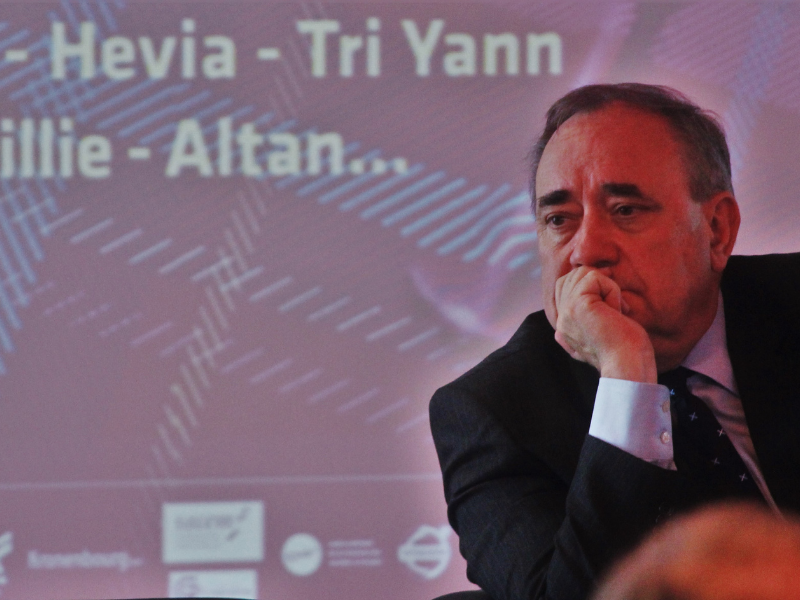
    One of the most remarkable things about the Salmond v Sturgeon split is that these two warring enemies were once close friends. Sturgeon told the Holyrood committee yesterday that “Alex Salmond has been for most of my life — since I was about 20, 21 years old — not just a very close political colleague,” but also “a friend, someone in my younger days who I looked up to and revered.” 

    The duo dominated Scottish politics for over a decade and brought Scottish independence from a fringe movement to the forefront of the devolved parliament. Now their field of gold is strewn with accusations of “conspiracies” and calls for resignation. 

    Yet, after yesterday’s commanding performance it does not seem that Sturgeon will be stepping down. The Scottish Tories also seem to have jumped the gun in calling for a vote of no confidence. This, of course, may change if Sturgeon is found to have directly broken the ministerial code by misleading parliament about when she first learned of the allegations against Salmond. That investigation is still ongoing. 

    Accusations of sexual harassment and bullying in the workplaces of our highest offices and institutions continue to come to the fore. Bullying allegations against the Duchess of Sussex have this week emerged from Kensington Palace, and again, only an inquiry will bring the true story to light.  Meanwhile, infighting has been a regular feature of the Johnson administration.

    Now an entire political movement is becoming defined by a rift in its former and current leadership that shows no signs of healing anytime soon. The questions at the centre of the case are about who, if anybody, has failed in their role as a leader.

    There are lessons in the saga for our own work lives. In the first place, we’re reminded of the great importance of trust in our careers. Here, played out for us in Holyrood, is the sense of grief that attends the breakup of friendship. It is a reminder of how much can be preserved by going into business with the right people – but also how hard it can be to tell who those people are in advance. ‘There is no art/to find the mind’s construction in the face,’ as Shakespeare has it in Macbeth.

    Sturgeon’s dignified appearance too was also a reminder that we must be careful not to rush to conclusions until we have heard all sides of a story. For years now, agree with her or not, Sturgeon has been the best player on the pitch in British politics. There is much to be learned from her presentational style: with the world watching her, she expressed herself relieved to be telling her side of things.

    But we’re also reminded of the secondary nature of gossip. For years there have been questions about how Scottish independence would work economically, and recent economic data – showing that the country has underperformed relative to the rest of the UK – has certainly added to the sense that the Scottish economy would struggle if the country were to strike out on its own.

    The nation’s finances remains worryingly tethered to the world’s oil price, and its growth has been sluggish. In that sense yesterday was a sideshow which didn’t change the fundamental questions the independence movement has to answer.

    Whether or not the vote of no confidence passes, or Sturgeon resigns – neither looking likely at the moment – there may well be a considerable drop in public trust for the country’s leadership and this will likely dent support for independence. A reputation, so the saying goes, can take 20 years to build but can be destroyed in just five minutes. 

  • Neil Carmichael: now is the time for business to ‘step up’ on behalf of young people

    Neil Carmichael: now is the time for business to ‘step up’ on behalf of young people

    Neil Carmichael


    Sustainable learning is a must have in a world battered by COVID19, where uncertainties are the norm; technology drives exponential change; society and the economy have become increasingly atomised in nature; and, international relationships are, increasingly, tense and mercantile. 

    “Sustainable” is a much-used word, sometimes with values implied or attached, but longevity, durability and resilience all included. For education, it is all about laying foundations, learning to learn, ‘making well-considered choices’, proactive learning, combining knowledge with skills and being responsive to new situations. In short, sustainable learning is a linear process, starting from as early as possible and morphing into lifelong learning with embedded and evolving skills always being at the individual’s disposal. 

    Sustainable learning today must reflect the new world – even if parts of it are inclined to go backwards – because nations are interconnected. Of course, an interconnected world does not mean everybody is connected; in England, the levels of social deprivation in some regions and within many cities are shocking and usually reflect poor economic productivity. True sustainable learning would help to tackle poverty and many of its causes.  

    Another facet of today’s world is the twin need for individuals to be ‘work ready’ and, by extension, adaptable. Business and professional organisations occasionally complain about the lack of work readiness of candidates for employment, often citing the absence of communication skills, limited ability to be creative and low levels of motivation as causes for concern.  

    There is a combination of underlying causes of the disconnect between students leaving education and the job market. The narrowness of the curriculum is often debated within this context with the funnelling down to three or four often comparable ‘A’ Levels being a common source of concern, often exacerbated by the impact of ‘unintended consequences’ as schools, fighting for position in league tables, might encourage the university route rather than vocational and training courses.  

    The lack of work experience or even familiarity with the options available hamper the student when making subject selections. The scarcity of consistent and properly resourced careers advice is notorious and, so far, not adequately addressed. This is where business must step in. 

    This author has visited the Porsche car factory in Lower Saxony. It occupies a site once used for producing huge pump engines for the Soviet Union but today there is an air of efficiency, productivity and modernity. One of the keys to the success of this factory and, indeed, the business, is the relentless focus on the importance of the employee; so much so, schools, colleges and universities are part of the supply chain. This is an example to emulate because it demonstrates the role employers must take in delivering sustainable learning. 

    Sustainable learning helps to provide the individual with the tools to develop his or her career. Knowledge is necessary but it is not sufficient; being able to apply knowledge depends on skills and these are honed both in formal learning settings but also by practice and example. We must do all we can to create the framework for young people to climb towards their goals. 

    Neil Carmichael was Member of Parliament for Stroud (2010-17), serving on the Education Select Committee throughout period and latterly as Chair, and took the Antarctic Act 2013 through Parliament. He was chair of the Pearson UK Commission on Sustainable Learning for Work, Life and a Changing Economy.  

  • Sharon Pindar: Why literacy issues matter more than ever in the age of Covid-19

    Sharon Pindar: Why literacy issues matter more than ever in the age of Covid-19

    Sharon Pindar

    As children prepare to return to school once more, the phrase ‘education recovery’ is high on the agenda. There is no doubt that children have missed out on every dimension of their education, and despite schools’ and parents’ best efforts, home schooling simply can’t replicate the classroom experience. Government is now grappling with the impact of this missed learning in years to come, potentially affecting employability prospects for a generation.

    After the lockdown in 2020, Ofsted reported that primary teachers noted children’s reading skills and confidence were particularly badly affected. However the most alarming findings showed that it was the more disadvantaged pupils, and particularly those with special educational needs and English as an additional language, who had fallen most behind. After years of determined efforts to close the attainment gap, we are now seeing that this progress has been reversed.

    A child who is falling behind with their reading will struggle in every subject at school, and beyond into adult life. England already has one of the lowest literacy rates in the developed world, with an estimated 7.1 million adults struggling with basic reading every day according to the National Literacy Trust. Poor literacy can lead to limited job prospects, with strong evidence linking poor literacy and youth unemployment. It can also lead to poor health, low self-esteem and even reduced life expectancy. Moreover, adults with weak literacy skills won’t be able to support their child’s reading, so that without support, the cycle is perpetuated.

    The reading charity Bookmark was created to address this crisis. I experienced the impact of poor literacy first-hand as a child as MY mother was unable to read, affecting the family in numerous ways. Today, Bookmark works to give children the reading skills and confidence they need for a fair chance in life, through a flexible and innovative volunteer-led programme.

    Research from the Education Endowment Foundation and others has shown the benefits of one-to-one support for children who are struggling with literacy, and Bookmark seeks to give children that support through its pool of trained and vetted volunteers. Initially these volunteers worked face to face with children in schools, but last year Bookmark developed an interactive online programme in response to the pandemic, enabling volunteers to support children from home or work, without compromising school safety measures.

    The programme has been well received by schools and Bookmark has been able to rapidly scale up to offer support nationwide, including supporting vulnerable and key worker children in school during the latest lockdown. Results have been striking; teachers have reported improvements in children’s confidence with reading as well as their attainment, with 90% saying that children enjoyed reading more after the programme. 

    This last point is critical. As the OECD has found: ‘Reading for pleasure is the most important indicator of the future success of a child and is more important than family’s socio-economic status’. Working from this evidence, Bookmark designed its reading programmes to be fun, interactive and engaging, allowing children to choose their own books alongside those set by the school.

    As the world starts to emerge from this devastating pandemic, it is clear that there are huge challenges ahead in helping children – and especially those who are already facing disadvantage – to recover their learning so that they can fulfil their potential in later life. Moreover, as a country, our economy depends on a skilled, healthy, and literate population. It is absolutely crucial that we focus on addressing literacy now, as a key step on the path back to a healthy future.  

    The writer is the founder and chair of Bookmark

    Photo credit: Aaron Burden on Unsplash

  • Mental Health focus: Dr. Triveni Joshi interview

    Mental Health focus: Dr. Triveni Joshi interview

    Concerns around the implication of prolonged lockdowns for children’s education and development have abounded over the last few months. Having recently spoken to campaign groups and other concerned stakeholders for our feature on self-employed parents, Finito World decided to follow up with Dr Triveni Joshi. 

    Dr Joshi is the Medical Director at Cygnet Joyce Parker Hospital, and a Children and Adolescent Mental Health Services (CAMHS) Consultant. Dr Joshi’s main areas of interest are neurodevelopment disorders and psychosis. She also works with young people suffering from depression anxiety and early childhood trauma. Dr Joshi has extensive experience across the NHS and independent sector, as well as experience working in Specialist ASC schools and Tier 4 service in-patient units.  

    How concerning do you find the lockdown situation for children with them being out of school and having a lack of social contact?

    There is evidence that is available suggesting there were some groups of young people who coped well for some time without much reduction in life satisfaction. However, the overwhelming evidence suggests particular groups of young people such as those with pre-existing mental health conditions, the economically disadvantaged, females and LGBTQ young people have been adversely affected in terms of their mental health and wellbeing.

    Lack of social contact, not having their outlet for continuing to be actively engaged in activities, changes in the way support could be accessed, anxiety about school work and uncertainty about what the future holds, may explain some of the reasons why young people have struggled.

    How does that lack of social stimulation affect their neurological development?

    To be honest this will need further research. I have so far not seen any evidence regarding this but it’s probably too soon to be able to draw any conclusions. 

    There is a publication titled ‘Babies in lockdown’ which was written following a survey between April and June looking at lockdown babies and the impact this may have in the long term. The conclusion from that study was that there could be severe and long-lasting effects on these babies. 

    However, we are seeing a wide range of symptoms of psychological stress due to lockdown with an increased number of young people presenting with low mood, insomnia, stress, anxiety, anger, irritability, emotional exhaustion, depression and post-traumatic stress symptoms.

    As mentioned previously, young people are not socialising as before and there is an increased use of social media which has its pros and cons. The fact that they’re not socialising as usual has an effect and using social media a lot more exposes them to false messages about lockdown and COVID-19, that might have an impact. There is a possibility of exposure to more cyber bullying and other online risks with young people spending more time on social media.

    I think the messages on social media regarding COVID-19 have been very varied and for young people who are probably already anxious, that can create a lot of anxiety, not knowing what it might mean for them or their family.

    For those young people who have anxiety disorders such as OCD, the messages of COVID-19 may have exacerbated their fear of contamination and may have increased symptoms such as hand washing and any other safety behaviours they may have.

    That is interesting you talk about the messaging, because I just read a piece a couple of days ago about how the government has bought a lot of advertising on TikTok to target young people with quite scary new adverts. What do you think about that? Is it maybe a bit harsh on young people or do you think it’s necessary to get them to comply with the rules?

    I cannot see how that will increase compliance because fear is not one of the best motivators for anyone. I think honest, transparent, consistent messaging is far more helpful.

    Scaring someone takes away from the message itself and if it’s too harsh, can have a negative impact on young people. It might increase anxieties that they already have and could disengage young people. I don’t think guilt or fear is best way of engaging young people. 

    You suggested you’re seeing many patients with anxiety around contamination. Have you seen an increase in referrals for OCD and related conditions?

    From my own experience and talking to colleagues at the London Psychiatry Clinic and in the community, there’s been an increase in a wide variety of referrals such as anxiety, low mood, depression, OCD and eating disorders. Referrals are being made from GPs and other professionals as well as schools, anxious parents and carers. 

    How do you think that we as a society, and with our health care, can help children that are suffering mentally now, and those that will continue to feel the impact when we leave lockdown?

    By staying connected. I think all of us need to be aware of the impact of lockdown and loneliness and take small steps to stay connected to young people within our circle. Give someone a call or be available in the variety of platforms that you have at your disposal. 

    If you are a parent or know other parents, be supportive of each other. It is equally important that adults take time for their own breaks and look after themselves so they can better support others. 

    It is difficult and it is stressful but we need to focus on quality time with each other and each day decide if there is a need to plan a fun activity to provide something positive to look forward to.

    If the weather allows, outdoor activities are a good way to get out of the house and get exercise, this always helps.

    As far as healthcare goes, we have to be more flexible in our working. Virtual appointments are readily available, meaning we can reach out more. There are some young people who might struggle with online appointments, so we need to ensure we also offer face-to-face appointments following safety guidelines.

    We also should be offering quality information around COVID-19 and related anxieties. 

    Websites such as Mind, YoungMinds and Children’s Society have some really good information for young people on how to cope during this time. 

    As we know, schools have already adapted their way of working to safely provide education to children. Some identified vulnerable children are also attending schools and getting the support they need.

    We also need to be prepared for when children come out of lockdown as however positive a step this is, we need to be aware that this is a change from what they have been used to which will create its own problems. We need a phased return, to be flexible and to factor in that some children may have increased anxiety returning. 

    Testing will be another thing some children will be scared of. We need to support the schools, parents and children in navigating this without disadvantaging anyone. 

    I read that some neurodivergent children have actually thrived educationally in lockdown because learning remotely really suits them. Do you think that this might actually be a bit of a turning point in understanding that different children will need to learn differently and perhaps some neurodivergent children can maybe adopt a more flexible approach?

    We do need to look at the whole of last year and have some take-aways from it. 

    We have always known that schools can be difficult for some young people and there has been a percentage of young people who have been home schooled previously and are doing well. Maybe it is time to start looking at flexible ways of learning and teaching, utilising the best of both worlds and taking into account different home circumstances. We are used to traditional ways and this may be the time to challenge those traditions and explore new ways and new methods to support young people through education. 

    As you said, when children come back after such a long period of isolation they will need to be cautiously reintroduced, what kind of behavioural symptoms do you think might occur when children go back to school?

    As mentioned previously, some young people will struggle with going back to school and they may struggle with the increase in social demands that they will be exposed to.

    While we have discussed the downsides, reintroduction to a different routine after a while is always going to be hard.

    We may see increased anxiety in facing those demands, as well as increased anxiety about catching the infection and we may see worries about what next and if this could possibly happen again. 

    One of their spokespeople for UsforThem told me last week that they’ve been speaking to school governors and headteachers that are quite worried because there’s been a significant increase in safeguarding referrals, particularly incidents of abusive trauma at home. Are you concerned that there might be a tidal wave of trauma to come from this generation of children that may have been in unstable homes?

    Yes, during lockdown there has been an increase in referrals to safeguarding. Increasing difficulties within the family, stresses around finance, increase in parental mental health problems, children not having their usual contacts or people they could talk to have probably all contributed to difficult situations at home and led to increased referrals. 

    As we come out of lockdown, we need to ensure the mental health and emotional wellbeing of children and young people is high on the agenda. We need to ensure we pre-empt and are prepared to support young people so that the long-lasting negative effects of lockdown are minimised. 

    Dr Triveni Joshi is a leading consultant psychiatrist in London who specialises in child and adolescent psychiatry. She has over 17 years worth of experience in psychiatry and over 14 years working with children and their families. Her areas of expertise include autism, mood disorders, behavioural problems, anxiety, ADHD and OCD.

    For further information:https://londonpsychiatry.clinic

  • More than just immunity: what getting the vaccine means for the young

    More than just immunity: what getting the vaccine means for the young

    Georgia Heneage

    With the spring finally upon us, it feels like there’s much to be optimistic about: the vaccine rollout is heavily underway – nearly a third of adults have already been vaccinated to date – and the arrival of warmer weather seems to have injected an ounce of energy to what has been a lethargic, heavy winter.

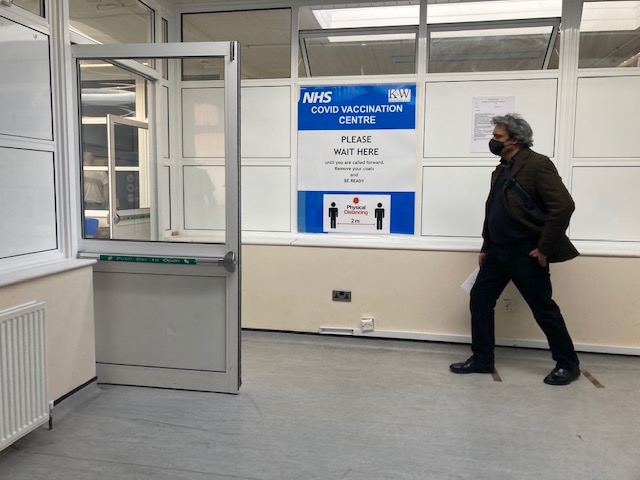
    This was certainly the flavour in the air yesterday, as I queued for a vaccine outside an old converted school in Harlesden. As high-vis staff shepherded us through a maze of empty school classrooms and into small white cubicles, where the deed was done in literally minutes, I’ve never felt more like a character in Contagion. Yet for the first time since this pandemic began, it heralded a glimmer of hope on what has been a bleak horizon.

    Being a 23-year old asthmatic, getting the vaccine so early brought with it a concoction of different emotions- excitement, trepidation, and definitely a bit of guilt. But as someone who has recently started a new job, getting the jab felt like a lot more than just immunity. Working remotely can be incredibly lonely, and most young people – me included – have felt like they’ve missed out on those fundamental face-to-face experiences which are so important in shaping your career at an early age.

    So the jab signalled the start of a new dawn, and a brighter future; it opened up the possibility of going back to the office and returning to some kind of normality – something we’ve all missed as we’ve entered the jobs world for the first time. It also gestured towards a return to some kind of social normalcy and an escape from the state of boredom, inertia and melancholy in which so many young people have found themselves this winter.

    Economists have argued for decades that confidence is a fundamental ingredient in economy growth; as people start to feel more secure in their jobs investment soars and spending increases. As Forbes journalist Tim Worstall puts it, “more economic activity is the definition of economic growth…people wandering down the street and in general thinking “Hey, yeah, I feel good!” means that the economy does in fact grow.”

    The rolling vaccine programme and the arrival of the sunshine may just give our economy the confidence booster it needs to bring us out of this winter depression.

  • Move fast and break things: Australia’s war with Facebook is a marker for the future

    Move fast and break things: Australia’s war with Facebook is a marker for the future

    Georgia Heneage

    Facebook and Google have been entangled in a lengthy battle with the Australian government over paying for news on their platforms, and this week things came to a head as Facebook decided to “re-friend” Australia and restore the stream of accredited news on the social media platform.

    The clash began when the Australian government proposed a new set of laws aimed at making the tech giants pay news organisations for stories shared on their platforms in an attempt, they said, to “level the playing field” for news publishers who’ve been overshadowed by the growing omnipotence of social media platforms.

    Whilst Google backed down and struck deals with news organisations like Murdoch’s News Corps, Facebook instead decided to block every Australian user from accessing articles, even though a third of Australians reportedly use Facebook as their primary news source.

    The move sent shockwaves through the online world; not only did it affect millions of people’s ability to access accredited, fact-checked news sources (and no doubt increased a stream of fake content online) during a pandemic and days before the vaccine rollout, but the collateral damage ensured it blocked pages of innocent public health and fire services.

    If you haven’t begun to recognise tech’s complete monopolisation over the internet then you may have been living in your own echo chamber. But this move seems to signal something far more dangerous. It suggests Facebook is beginning to wield almighty control over the way news is spread and received. In a politically divided world, that amounts to a frightening precedent.

    Was it a mere flex on the part of a the tech giant, to prove how much power it wields over government, the dissemination of news and even truth itself? The power struggle between tech tycoons like Facebook and governments suggest it might have been a calculated risk designed to show just how much control it can demand over the kind of regulations which traditional news channels are subject to. It also showed a complete disregard for the danger of the news misinformation phenomenon.

    Thankfully, the world is reacting: in December the European Commission started to introduce a plethora of regulations against big tech, in a bid to curb its overwhelming dominance. This comes in the form of two proposed new laws – the Digital Services Act and the Digital Markets Act. The first will require companies to hand over information and data to regulators about the way their algorithms work and how their ads target consumers; the second is aimed at providing smaller companies the chance to compete with the big guys.

    The EU is also starting to follow the example of Australia in making big tech pay for news; the lawmakers working on the new proposed bills have said the laws can be changed to includes aspects of Australian reforms, which could include arbitration for licensing agreements and the requirement for tech companies to reveal to publishers any changes on the way news stories are filtered on their sites. Alex Saliba, one of the MEPs working on the new laws, said Australia’s approach to the Silicon Valley giants made an important step towards righting “the acute bargaining power imbalances” between tech and publishers.

    Though Facebook has restored news content for Australians and the new law, which has been enacted by the government, has prompted other countries to follow suit, just how much bargaining influence these laws will have remains to be seen. The laws will take years to come into effect.

    Tech companies seem to operate at a pace far beyond the slow bureaucracy of governments: if the past few decades are anything to go by, they’ll have to move quickly to keep up with the constantly evolving Silicon Valley. And they’ll have to do it fast: the spread of misinformation in a politically polarised world – and even truth itself – is at stake.

  • Sarah Fletcher: our education system is ‘not fit for purpose’

    Sarah Fletcher: our education system is ‘not fit for purpose’

    Sarah Fletcher

    I would like to conjure two images for you.  The first is of an imaginary workplace of the future:  there is space for quiet working and areas for meetings and collaboration too. There are powerful computers that drive new technologies and leverage augmented reality. Technology to break down geographical divisions is on display, with digital, connected whiteboards to share ideas simply and effectively.

    Teams of people, diverse in background and skills, are working together both in person and virtually.  Refreshment is readily available to break up routines, inspire impromptu conversation, seed fresh thoughts, and allow tired brains a rest. There are deadlines to work to, but it is accepted that new ideas can be messy and that there will be risk. It is better to try something and fail early than not to try it at all is the mantra; it helps to avoid unnecessary time waste and cost. There are other rooms too – places of equal importance. They are for those with the technical, computational, or practical expertise to translate ideas into practice, to prototype, and make, iterate and refine. Entrepreneurship is encouraged and valued. Respect is the overriding concern, respect for those you work with and for the wider audience you wish to reach, respect for the environment and for society too. These are the spaces in which problems will be dissected, analysed, and solved and in which the future will be created – where head, hand and heart meet.  

    Now we see an exam room: desks separated, rigidly aligned, front-facing. Collaboration is forbidden, breaks are supervised; notes and research are left at the door. Access to the outside world has been disabled with mobile devices confiscated and turned off, watches removed. Only pens, transparent pencil cases and paper can be seen. Those with dispensation to use computers are confined to another room.  The task is strictly timed to suit a fixed approach. An “off day” is not to be countenanced and there is only one chance to get it right. The questions are the same for everyone and the answers are predetermined too, with the highest reward reserved for those who most nearly hit the mark.

    The contrast is stark. There is, of course, a place for exams. The ability to work under pressure is important. They can act as a powerful motivator and memory is a muscle we need to learn how to flex. But over the past few years, and in the name of rigour, we have added and added again to the things we must learn and assess. Rote learning has taken root, and stress levels have risen inexorably. The need for mass-produced tests and the chimeric search for “reliable” grades has driven out the open-ended questions that might invite deep thinking, support a growth mindset, and encourage fresh ideas.

    We now reward conformity and fixed thinking instead – and at a time when adaptability and initiative are so necessary in the workplace. An algorithm fixes the bell curve of achievement and condemns a third of all students to fail the most basic of requirements in English and maths, a failure that impacts significantly their life chances. The favour given to academic subjects over technical, vocational, creative, and practical skills has disempowered segments of the community and diminished opportunity in precisely those occupations that are so badly needed. The EBacc is much at fault. Its myopic focus on English, maths, science, a language and a humanity has all-but driven out the creative and performing arts, and technology has been another casualty too.

    It is time we looked again at those things we value most, the skills we wish to develop, and the knowledge we want to impart. A slimmer curriculum with more open-ended questions and variety in assessed tasks would broaden opportunity for creative, collaborative enquiry, adventure, exploration, and experimentation, and would encourage students with different skillsets to shine. Technology needs harnessing to break down societal, economic and geographic divisions. Investment needs to prioritise those at risk of falling through the cracks. Partnerships between schools, both independent and maintained, with business and industry should be developed and supported.

    Meanwhile, teacher training should be advanced to meet the new demands and career development. Adaptive testing and AI could personalise learning to support and address classroom differentiation; digital resourcefulness needs embedding as the fourth “R” in the toolbox of essential skills. The classroom of the future could be an exciting place, rigorous and demanding, collaborative, creative, curious, and individually affirming and rewarding too.If employers increasingly disregard GCSEs and even A-levels as measures of future employability, and feel the need to train new employees in the basics of collaborative and complex problem-solving skills, it is in honest recognition that our current assessment is not fit for purpose in a new and changing world.

    The writer is the High Mistress of St Paul’s Girls’ School

  • Global education faces the ‘largest disruption in modern history’

    Global education faces the ‘largest disruption in modern history’

    Johanna Mitchell

    I worked as a career civil servant in Whitehall before moving into education consultancy.  My opposite numbers at the Russian and Chinese embassies liked to speak with me about their children’s education, eager for advice on selecting schools, or universities.  I’d sit in meetings thinking, “We’re supposed to be in a bilateral discussing UK/China science policy.  But here I am explaining the British education system.” After a spell as head of a small private school run by the Lawn Tennis Association, I set up my own company.

    Education consultancy combines a love of people, travel, languages with a desire to share my education expertise.  A careers advisor may not have this as an obvious choice. I have to be a counsellor, psychologist, diplomat and problem-solver all rolled into one. There is also instinct involved. Where would the family be happiest, thrive and achieve their potential?  People need to trust you.  

    Our clients often feel beleaguered, especially during the pandemic, and need help navigating UK and global education systems.  It feels good that we are able to mitigate this stress.  It is fascinating to see what drives another person, the life path they have chosen and what led them to this place – whether it be parental influence, inherited wealth or a childhood which may have been characterised by early hardship. Our experiences are primarily formed by the culture and political situation in which we and our nearest ancestors lived. 

    For instance, I have an enduring memory of a Russian client, now a dear friend, at the Lotte in Moscow saying ‘Johanna, what is it with you British? When you’re in your 20s and 30s, you just want to have a nice life and be happy.  In Russia, we work hard in our 20s and 30s.  And if we’re miserable, so what?  But when we’re 40 and have achieved the pinnacle of financial success, only then can we relax and enjoy it.”

    Covid-19 has changed our view of global mobility. Since my business is so international in flavour, working with families based from London, to New York to Azerbaijan, I’ve had to adapt. We have three distinct client groups: London-based families; families with homes in multiple jurisdictions; and those relocating to the UK for work or education. For the two latter groups, especially, we’ve overcome fresh challenges, negotiating changing travel corridors, specific visas and a combination of online university lectures, schooling and specialist tutors.  

    Despite the pandemic, British education is still in great demand, especially for families who are able to move easily to the UK. For instance, with US schools closed for a long period in 2020, we saw a rise in relocating US families. One family moved to Kensington prior to the US election, with their four young children. As one spouse worked from home as a stock trader, the family could live anywhere with reliable internet. London, with its top schools, was an attractive proposition.  Another US couple have enrolled their daughter in a London school for a year, while they take time to enjoy the city and study for an MA in Art History at UCL. 

    With several families moving from Europe, we also trained one firm’s senior management team to recognise differences in British and French work culture. The company is delighted with their new employee, who keeps them well-stocked with French wines and cheese. Our next challenge is to support a group of families from Hong Kong who will be taking advantage of the British National (Overseas) visa to settle in the UK. They will access UK schools and universities for their children. Pastoral care and access to nature now feature highly on wish lists of relocating families.

    I’ve been consistently impressed by how well the schools and universities with which we work have adapted to organisational and economic challenges. They have embraced EdTech and adjusted to offer an inclusive community – both in person and online – to combat the social isolation experienced by both students and their parents. Parents, more than ever, are looking for a high quality mix of one-to-one tutoring and school-based learning.  

    We are living with the largest disruption to the global education system in modern history.  The pandemic has been a catalyst to education change in the UK. While we are not yet in a position to see exactly where the cards will fall, I am certain that schools and universities will continue to evolve to provide outstanding education opportunities for both UK and international students.  

  • Diary: John Bercow on Joe Wicks, The Crown and ‘fascist’ Donald Trump

    Diary: John Bercow on Joe Wicks, The Crown and ‘fascist’ Donald Trump

    The former Speaker of the House tells Finito World about his life under Covid-19 and reacts to recent political developments

    Since coronavirus struck, millions of words have rightly been written about the damage to children’s education. In particular, commentators have highlighted the stark growth of inequality between students from independent schools and those from the most disadvantaged state school families. Yet precious little has been said about the 11-plus and it is time to shine a light on the subject.

    The test has long been explosively controversial but surely it should be open to the same type of scrutiny as every public exam. This is currently not so. Over 70 different 11-plus exams are taken by over 100,000 pupils every year and the results are not recorded or linked to pupil records. This extraordinary omission in an age of transparency means that we don’t know many pupils take the test every year and how many pass; the gender, ethnic and socio-economic make-up of entrants or the proportions and profiles of pupils who access grammar schools through appeals, taking a 12-plus or succeeding in a 13-plus test.

    Crucially, education researchers cannot evaluate 11-plus results against children’s SATs and GCSE grades and young people’s A levels without study of vital 11-plus data. Inclusion of this data in the National Pupil Database is of national importance and urgently required. That is not merely my view but the view of more than 20 distinguished academics specialising in education research. Led by Dr Nuala Burgess, Chair of Comprehensive Future, they have written to Education Secretary, Gavin Williamson, urging him to publish the information without delay. Come on, Gavin, let’s see your reply and, most importantly, the missing material. After all, as your old boss, David Cameron, once said, sunshine is the best disinfectant!

    If school pupils have suffered, so too have university students. I wear two hats in the sector as Chancellor of my alma mater, Essex University, and a part-time Professor of Politics at Royal Holloway College, London University (to the enormous amusement of our children). Both universities are naturally doing all they can to adapt their teaching and learning models to mitigate the disruption to students’ keenly sought education. Yet the rupture – educational, social and cultural – is obvious and undeniable. I don’t have a solution beyond superfast roll-out of the vaccine but make no mistake: my generation were lucky. I paid no fees, had a full maintenance grant and benefited from outstanding teaching and the multiple opportunities of a great campus university. Today’s students have a raw deal by comparison.

     Since time immemorial a principal British preoccupation has been the weather. Since last March friends have been asking each other ‘how are you surviving lockdown?’ Well, I own up. Until the pandemic hit the UK, I, a disgraceful technophobe, had never heard of Zoom or Microsoft Teams. Now they have become part of my life as most of my commercial and academic work has been done by that means. Sure enough, it is good to see more of one’s own family but the inability to play or watch outdoor sport for long periods I have found severely stultifying.

    Two new routines have helped me no end. First, Joe Wicks has been a lifeline. I have never met him but he is a legend. I have been doing his 20 minute workouts five times a week since 24 March 2020. He is utterly motivational. If it had been 60 minutes or even 40, take-up would have been tiny. Twenty minutes’ exercise, with our three children or sometimes alone, but always coaxed, encouraged, willed on by Joe, has made me a lot fitter. Thanks Joe. You have worked wonders for so many people who need no equipment to follow your lead and you have supported the NHS, the country’s best-loved institution, in the process. Second, since August 2020, having never been a jogger, I have taken to jogging for 45 minutes four times a week. I am now hooked on the routine and the exposure to fresh air is both refreshing and invigorating. Where our eldest child led, I have – yes, more slowly – followed.

    Netflix has over 200 million subscribers world-wide, our household included. Yet I rarely watched any of its series. In the last eleven months, I have watched several, cherishing The Stranger, The Queen’s Gambit and, above all, The Crown. Critics have carped about the latter for historical inaccuracy – it is advertised as drama, for goodness sake – but it is brilliantly acted and a first- rate, graphic and thought-provoking introduction to post-war British history. On top of drama viewing, I have read more books than as Speaker I ever had time to do. Novels, histories and biographies have all captivated me but none has surpassed my favourite political biography, Robert Caro’s four volume biography of Lyndon Johnson, a masterpiece truly jaw-dropping in scope, analysis and page-turning interest from start to finish.

    I shall sign off with reference to a triumph and a trial. The triumph was that of American democracy in evicting the most rancid, racist and repellent occupant of the White House in my lifetime. Donald Trump has been a disgrace to his country and an embarrassment on the world stage. As Speaker, believing that he exhibited fascist tendencies, I signalled vociferous opposition in 2017 to him addressing our Parliament and was condemned by reactionaries and stuffed shirts. Nothing has happened in the last four years to change my mind on the subject but much has happened to reinforce my conviction that he had not earned the honour and should not be invited.

    Joe Biden and Kamala Harris face huge challenges but they are motivated by the spirit of public service, not the service of themselves, and they will enjoy global goodwill. The trial is the misery and privation faced yet again by the people of Burma. After more than half a century of brutal military dictatorship, Aung San Suu Kyi’s National League for Democracy won a landslide election victory in 2015. Daw Suu made big mistakes. She suffered major damage to her reputation. She should learn from the experience. That said, she won overwhelmingly again in the November 2020 election. Her detention, and the theft of the election by the military from the people, is an absolute scandal. It is time for the Biden Administration, eloquently backed by the UK, the European Union and freedom-lovers everywhere, to challenge, expose and isolate the Burmese generals until they face trial. Let them do so, answering for their thuggery to the International Criminal Court.  

    Photo credit: Ieva Ābele, Saeima