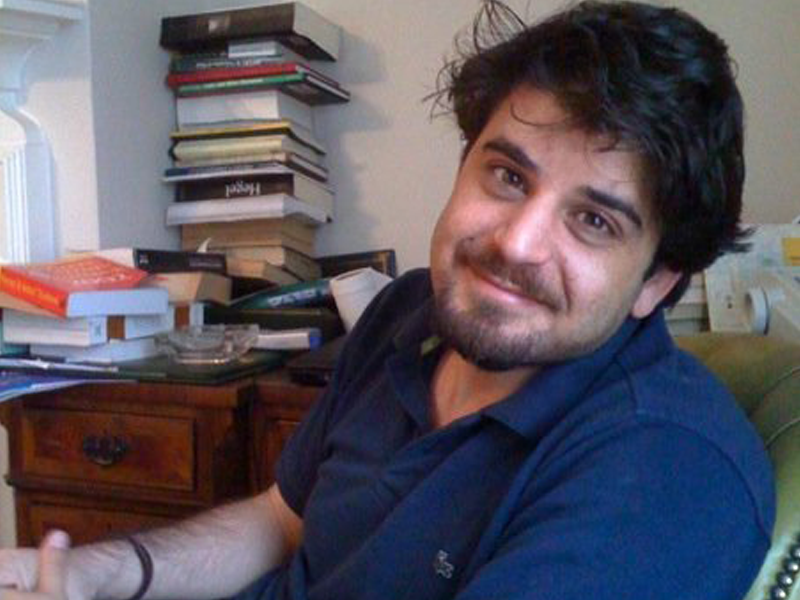
Academic, poet and essayist Omar Sabbaghairs his worries for the younger generation in Dubai
Over the course of the last year, I have felt quite fortunate to live and work in Dubai. Whether during the period between spring and summer 2020, when lockdown regulations meant you had to apply for a permit to go from one place to the next (via a user-friendly app), or whether it was the rigors of the rules about numbers permitted in cars, taxis and social gatherings, the high levels of technological efficiency proved to be a blessing here.
So Dubai has been a comparatively good place to be during lockdown. Malls, for instance, immediately set up mass temperature monitors at their entrances. The university where I teach built a new gate and passageway at its entrance for this purpose. In pandemic times, a highly monitored society, with efficient avenues for top-down governmental action, puts the ‘brotherhood’ into any pat notion of ‘Big Brother.’
Of course, Dubai – and the UAE more generally – has suffered economically, like anywhere else in the world. Things have contracted: shops for a long while curtailed their hours of availability; work hours in the second half of 2020 were shortened; and there are fewer jobs. A close relative spoke of laying-off a third of his staff, and having to halve salaries in Q3 of 2020. Another was forced to take paid leave for a month from his sales job in retail.
That said, it was announced early on that the government would take keen action to make sure the country would be protected. Tourism – an important aspect of Dubai’s economy – has also suffered, but it was clear to all that as soon as it was safe enough to reopen that was done. I myself have travelled more than three times in the last year, needing only to follow PCR-testing regulations. Returning to Dubai, it usually takes less than 24 hours for your PCR-test at the airport to ping as an SMS on your phone. The services have always been stellar here.
I have been teaching, too, since spring last year, online and at times via a new ‘Hyflex’ system, whereby students can opt during registration, to attend in person or remotely, online. For teachers like myself this involved a scramble to learn new technologies in the classroom, by which one would lecture in person but simultaneously with a camera and microphone to engage with those learning remotely. I was anxious of the burden of learning to use the technology, but the inhibition before the event turned soon to enthusiasm on my part.
Young people’s prospects here are good; this is one of the best places in the Middle East to study alongside Beirut and Cairo. The majority of students will end up in business, media, engineering and perhaps architecture or design. There is absolutely no sense of rebellion in Dubai.
That said, the students seem to have lost some of their gusto. When I see the odd stray young person on campus, he or she invariably seems to me to look lonely. It’s much easier for an academic like myself – a person who revels in a week spent on the couch reading or thinking, writing or teaching – to deal with these circumstances than for other kinds of people. It’s also much easier for a man nearing forty, too, than for someone half my age to accept the reality of the pandemic.
I dare not let my wife catch on, but being homebound suits me like pie and goes down like sugar. Bookworms or not, it’s the young I feel for. Of course, they’re getting on with their lives, and many are learning by other means. But if things are concerning in Dubai, if I look across at my native Lebanon, I am forced to imagine what absolute lockdown would be like. That country is suffering from its infrastructural weaknesses, in a country which was weakened already by internal strife and corruption.
I remain hopeful. Perhaps when things improve, and our old outdoorsy life recommences, we will have – in a manner of speaking – gone back to the future. It might even be that this hiatus will bring forth new fruits. To paraphrase that great fabulist Lawrence Durrell: in the midst of winter we can feel the inventions of spring.
Omar Sabbagh is an Associate Professor at American University in Dubai
Cryptocurrency is back in the news thanks to a recent jump in the price of Dogecoin – a currency which started as a joke.
In 2013, following the success of Bitcoin, Billy Markus and Jackson Palmer set out to create a new form of cryptocurrency based on a widely circulated internet meme featuring a picture of a Shiba Inu dog. It is now worth $34 billion (£24.6 billion).
Dogecoin owes much of its success to Elon Musk, who has called it his “favourite cryptocurrency”. Yesterday, Musk published a tweet which included a painting of a dog on a mountain at night with the caption “Doge barking at the moon”. This is in reference to the phrase “to the moon”, which is popular on internet trading forums as a way of describing the rapid price increase of a stock.
In the hours following Musk’s tweet, the price of Dogecoin jumped over 100% setting its new highest price ever.
Whether it’s Bitcoin, Litecoin, or DOGE, investors are flocking to cryptocurrency in high numbers. On Wednesday, the San Francisco cryptocurrency platform Coinbase went public, making the sale of Bitcoin and others more easy and mainstream than ever.
But if high-risk investing isn’t your cup of tea, there are other, more stable ways to make money off this phenomenon.
On the job search website Indeed, 230 jobs with the keyword “cryptocurrency” appear in London alone. These jobs come with titles such as Crypto Investment Analyst, Cryptocurrency Digital Marketing Lead, and Crypto Threat Analyst.
There are many ways into the world of crypto based on one’s expertise, but one of the most lucrative ways to break in is to understand blockchain.
A blockchain is a type of database which stores information chronologically and permanently, making it useful as a ledger of transactions which cannot be retroactively altered. Because it is stored across many servers, it is a decentralised database where no single entity holds the power to tamper with the data.
Bitcoin uses blockchain as the basis of its currency. By storing data across multiple networks, a nearly tamper-proof record of every Bitcoin transaction can exist. A modification to one server’s data can be cross-referenced with other servers to ensure accuracy and detect modifications.
According to Glassdoor, a junior blockchain developer earns £50,000 a year on average. With increased responsibility and seniority, this number can go much higher. A United States recruitment firm lists a salary of up to $175,000 (£126,673).
Even if coding isn’t your strong suit, there are jobs available in marketing, management, and communications – all related to cryptocurrency.
Dogecoin may have started as a joke, but now it most certainly isn’t. The low price compared to Bitcoin has broadened the audience of crypto, and the more people care about it, the bigger it will get.
The future of digital currency is uncertain, as are all investments. However, working in the cryptocurrency sector is already lucrative, and if the upward trend continues, its place in the world of finance could grow significantly.
Schools in Ventura County, California first closed on March 13thof last year. As the pandemic continued, the county extended that shutdown multiple times with no set end in sight. Now, many districts are seeing students return to class. For many new teachers, this will be their first time in front of a class of real life, non-virtual students.
Melissa Grennan is a 22-year-old history teacher in her first year on the job. It is apparent that she really cares for her pupils, and that she chose this job for the love of it.
“I’ve always wanted to become a teacher. I’ve liked telling people what to do since I was little,” she jokes.
Brennan now teaches US History to 16-year-olds in their Junior year at Ventura High School. She has never met any of them. A once exciting prospect, the reality of teaching in 2021 has not fitted with her expectations.
“I was really excited about the aspect of getting to know my students, which is much harder online,” she says, while sitting in the same home office where she teaches. There are Polaroid photographs hung with clothes pins on her wall, and she keeps her camera angle high to disguise the fact that she is delivering lectures from her childhood bedroom.
“I thought there was going to be a lot more interactive collaboration, and over Zoom there’s none,” Grennan continues. “We can’t require that the students turn their cameras on… we can’t even require that they attend because of equity issues. I only know what three of my students look like.”
Ventura High School is public, so the school is not allowed to require parents to spend money on educational tools. Because some families cannot afford internet, attendance cannot be made mandatory.
Getting students engaged with the material has always been difficult at the best of times. Now, with motivation at an all-time low, teachers often face black screens and muted microphones.
“I feel so bad for them,” Grennan says. “I’ve had a few students reach out to me to say, ‘I’m sorry that my grades are so low, I just have no motivation right now’, and that’s a heart-breaking email to get from a 16-year-old.”
She has attempted to make things easier on the students, but relaxed requirements are not enough to keep many of their grades afloat.
“My grading policy is pretty lax: there are no late penalties or homework. Everything I assign we do together in class,” Grennan explains. She has resorted to awarding one extra credit point for any comment a student makes in the chatroom – only one student regularly engages.
“I once was able to bring Kanye West into the conversation,” she says, laughing to herself. “One student commented, ‘I miss the old Kanye’, and I said, ‘You know what? That’s an extra credit point right there, because at least I know that you were listening!’”
New teachers report to a Cooperating Teacher (CT) who sits in on the class to keep things on track. Normally Grennan and her CT would alternate lesson plans, but with the pandemic, the CT has left her to fend mostly for herself. She has enjoyed this freedom, and often discusses current events in her online classroom.
Teaching US History today is in and of itself a challenge. Grennan had her students take a political typography quiz to provide an easier approach to the issue.
“On both sides of the spectrum, I had kids tell me that Trump was making the US a better place, and some tell me that AOC is their idol! Every one of them told me that they were going to vote in the first election they could,” she says. “I don’t share my own opinions, I mostly let them share theirs. Sometimes I do worry about turning kids away. When I say the election (of Joe Biden) was legitimate, which is a fact, I wonder how many of them just shut down.”
While juggling lesson plans and drafting emails to concerned parents, Grennan attends Cal Lutheran University, pursuing her full teaching credential and a Master’s degree. She says that she faces the same feeling of distance and lack of motivation that her students face.
“I think online learning works for some, but I don’t think it should become the norm. Even at the university level, I hate taking classes online,” Grennan says. “If I have to sit in class for three hours, I’d rather do it in a room full of people!”
Despite the grim situation, Grennan is able to see the positive side of things. “If I’m able to teach online, imagine how much easier it’ll be in-person,” she says, adding that “so many teachers have quit because of how awful this is… I guess that makes it easier to find a job!”
You may not have heard of the late Jim Haynes, but he was a pioneer in the world of hospitality. His insight was simple: we should get to meet as many people as possible. Haynes died in January 2021 and was known in his obituaries as ‘the man who invited the world over to dinner’.
He did just that. Haynes lived in Paris in the 14th arrondisement, and on Sunday evenings would have an open-door policy. Anyone could come. His death during the pandemic, saddening though it was, arguably made a kind of sense – as if a man who all along craved human interaction, should exit the world when that interaction was no longer possible.
And what of those of us left behind who might want to honour his spirit? As the Deliveroos mount, and as – to quote the restauranteur Jeremy King – we remain ‘entombed in our homes’ that seems harder and harder.
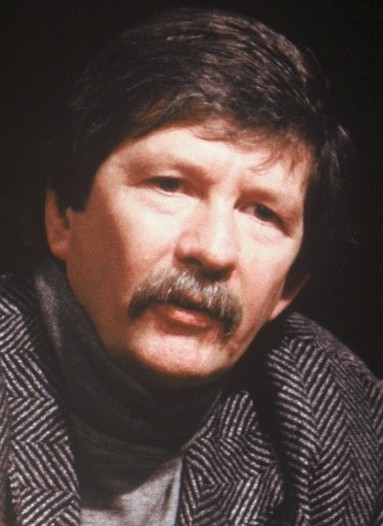
Jim Haynes (1933-21): ‘The Man who Invited the World for Dinner’. (Credit: Commons licence 3.0, attributed to Open Media Ltd.)
But I would like to present the solution in the shape of a remarkable Israeli chef, Orr Barry, who has become a phenomenon in south-east London during the pandemic.
Like all the best things from The Queen’s Gambit to the furlough scheme, Barry has operated by word of mouth. In Dulwich, if you bump into someone friendly at school pick-up or in the park, the conversation might turn to Safta Cook, the name of Barry’s highly personal delivery venture. “Did you try Orr on Friday night?” It was a safe topic of conversation. You could be reasonably sure the person you were speaking with had.
I meet Barry outside his spot on Lordship Lane, and ask him why food matters so much to him. “For me, it’s something that takes you into memories and nice moments, certain feelings like you’re trying to kind of recreate something very social.” That’s what makes Barry’s food special – the sense that he is trying to communicate to his customers something almost intangible.
Another way to put it is to say he’s cooking with love. That has to do partly with his past. Barry grew up in the centre of Israel about equidistant between Tel Aviv and Jerusalem, but his heritage mixes central European, northern African and the Middle East. That comes across in his food.
But Safta Cook was also created out of necessity. Having been furloughed from his job as a new product development chef at Gail’s, Barry realised he had to keep cooking. Moreover, he could still access interesting ingredients: “I realised there was no limitation of supply. I wanted to be open and to tell people who I am through food – it was a way of practising my heritage.”
What distinguishes a Barry meal is the eclectic playfulness of his cooking, as well as the care – the handmade menu, the personal delivery – with which it’s presented. This is also healthy food at a time when the temptation – yielded to all too often by some of us – has been to fall back on pizzas and burgers. “You don’t want to go through an entire pandemic on pizzas,” Barry commiserates.
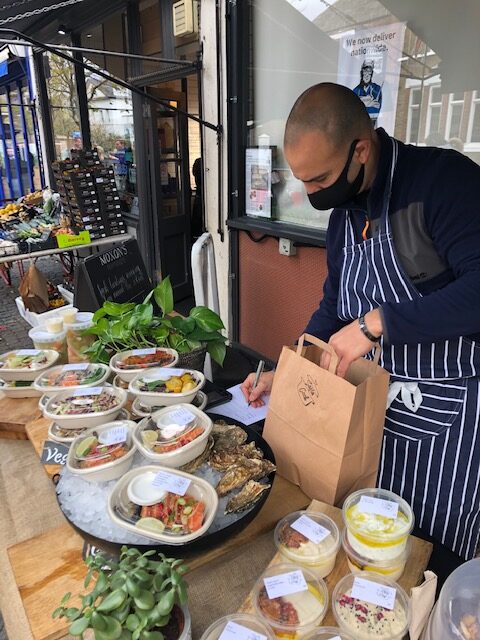
Orr Barry at his Saturday stall on Lordship Lane
But really Barry has demonstrated the possibilities of food when it comes to community. “Now when we’re walking down my street, I know all the neighbours,” he says, proudly. His is a very pandemic story – it is an example of how we might still reach one another while separated from one another.
There’s another aspect to this. Stuck in our locality, Barry invites the world into your home, just as in his different way Jim Haynes used to do. “I love to take the menu sometimes into the Jewish tradition – but sometimes you’ll find a twist of Asian food, whatever interests me at the time. I try not to repeat myself, because people want the unknown.”
We’ve learned that freedom and hope are deeply intertwined: in ordinary times, we feel optimistic about the time ahead, because it’s in our gift to make of it what we will. That’s what the pandemic has robbed us of: instead of the ramifications of freedom, we see only limits. Barry is in opposition to that.
Barry – who used to run the no.1 Trip Advisor-rated restaurant in Tel Aviv – doesn’t want to turn Safta Cook into a restaurant once the restrictions are lifted: “A restaurant is like a military regime,” he says.
The following Saturday, I show up at Barry’s Saturday morning stand, and purchase some oysters, a shucker knife, and a mix of salads and vegetables, then back home eat my best meal of the pandemic. As I imagine the food must have tasted at Haynes’ house in Paris, Barry’s tastes of that rare thing nowadays: liberty.
Gavin Williamson has been criticised over his suggestion that mobile phones should be banned in schools, but are mobiles even the problem in the first place?
The Education Secretary penned a comment for the Telegraph last week launching his Behaviour Hubs programme and calling for “firm and fair” discipline in schools. He cites a lack of discipline and focus during the lockdown and seems to fear that it will carry on through students’ return to the classroom.
Despite the fact that mobile phones are already banned in most schools across the country, Williamson laid the blame for behavioural issues on their use during school hours.
Geoff Barton, general secretary of the Association of School and College Leaders, told the Times that Williamson had “not done his homework” on pupils’ behaviour following lockdown. He stated that students are showing a “sense of calm and cooperation that is deeply impressive,” and that “behaviour has never been better.”
For better or worse, mobile phones are a part of our daily lives. We are a society on call – to friends, relatives, neighbours, spouses and – if clear boundaries are not set – to jobs that were once nine to five. Sheltering children from this reality may be the kind thing to do, but it will not prepare them for the real world.
The issue with phones and productivity is that the option for entertainment and socialisation is ever-present. The key is learning self-control. If the CEO of a company had to place their phone in a time-locked safe to get any work done, they would be seen at best as eccentric, and at worst as an internet addict.
Williamson states that phones in school act not only as a distraction, but as a “breeding ground for cyberbullying” and “anonymous Instagram accounts where students are ranked on appearance”.
Cyberbullying is an issue which must be taken seriously. According to the Office for National Statistics, almost one in five students have experienced online bullying in the form of name calling, exclusion from social activities, harmful rumours, or other bad behaviour in the past year.
According to that same survey, only 19% of online bullying took place exclusively at school. 28% occurred exclusively while the students were out of school, and 53% of students reported that it took place both at home and in school. Therefore, Williamson’s phone ban would be ineffective in stopping the sorts of social media accounts he referenced.
Leaving mobile phones aside for a moment, it would be wise to examine the reasons behind Williamson’s perceived lack of student discipline during lockdown. It seems far more likely that poor behaviour stems from the stresses of the global pandemic, online learning which leaves students unengaged and unmotivated, and the lack of socialisation with other students their own age to serve as a pressure valve for these stressors.
According to Geoff Barton, students are “relaxed and pleased to be back at school”. If this is true, it serves as proof of the toll online learning must have taken on our young people. Coming down hard on students now with new, more militant restrictions and disciplinary styles will only remind them of the reasons they shouldn’t be happy to return.
If the pandemic has shown children that in-person school is not so bad, then let’s take that as a win and try not to ruin it.
In the first of a series of articles on jobs within the religion sector, Robert Golding delves into how Anglicanism has coped during Covid-19
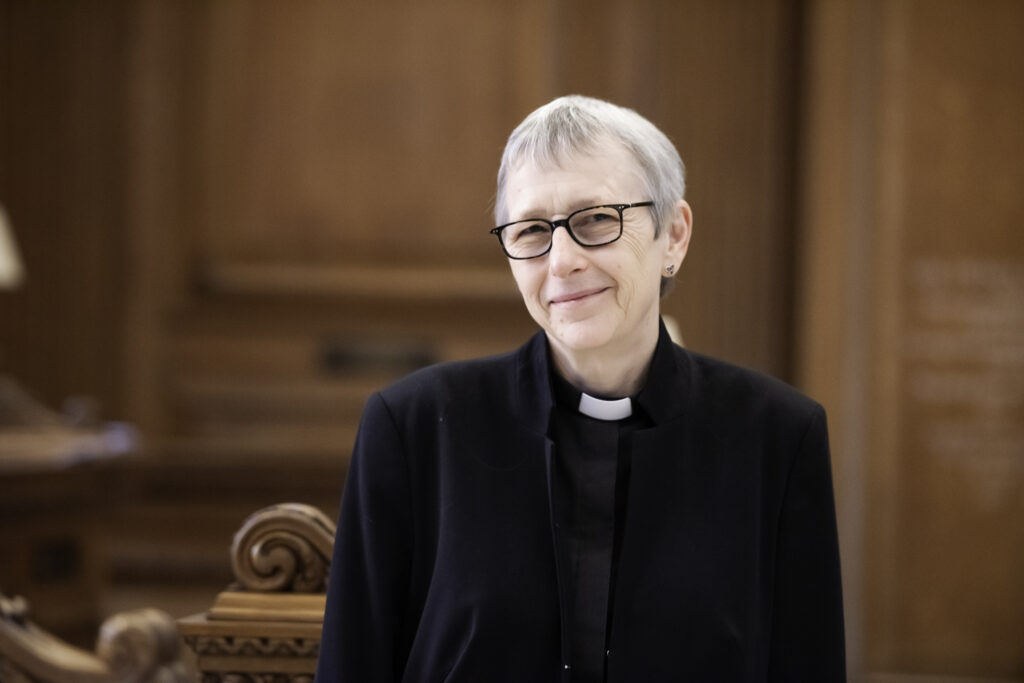
If you visit the Reverend Alison Joyce at the famous Wren church of St Bride’s just off London’s Fleet Street, there’s a decent chance that she’ll take you into the hub looking out onto Salisbury Court.
There you’ll find a stone memorial to a woman called Mary Ann Nichols, who is best known as one of Jack the Ripper’s victims. Bespectacled and intelligent – one of those Oxbridge-educated reverends who is also a theologian – Joyce points it out as I’m leaving. “It’s one of the things I’m most proud of. If you read the history books she’s a victim – but she was a member of this parish and we still owe her a duty of care.”
The plaque is moving. But you have to be here in Wren’s famous space to feel its full force. That’s true also of the memorial to journalists who have lost their lives the world over – among them James Foley and Clive James.
All our services have gone out online. Since March 2020, we’ve never missed a service. We can do that because we have an amazing choral tradition.
The Reverend Alison Joyce
“Covid has impacted on every aspect of our life as a church,” Joyce says. “The most challenging aspect has been the pastoral one. You add the Covid restrictions in a ministry where touch is very important – you need to be able to hold someone’s hand. We are a sacramental church which means things like communion are very important.”
The Biblical phrase which is most applicable to the pandemic is that which is supposed to have been uttered by Jesus upon his resurrection: ‘Noli me tangere’ – do not touch me. It’s still not clear why he says this, whether it is a warning of the physical ramifications of touching him – or as theologians might say, touching his ‘risenness’ – or whether to do so might be to incur some strange and insupportable physical sensation.
Alison Joyce has seen an increase in her international congregation at St Bride’s. Photo credit: Slater King
What’s certain is that the church has had to operate for the last year without touch. Like museums, they’ve been sent online; also like cultural institutions they’ve found a global audience which they might not have expected to encounter.
Joyce explains St Bride’s pivot to online: “All our services have gone out online. Since March 2020, we’ve never missed a service. We can do that because we have an amazing choral tradition. And of course the lovely thing about that is, we’ve got people contributing to those services internationally. There’s one woman who does readings from the States – so actually we’ve got an amazingly global congregation.”
So the Anglican church, which stretches back to the marital woes of Henry VIII, cannot avoid the need to think about tech provision. Last summer I visited St Lawrence’s in Ludlow and found myself immediately accosted by a warden extolling the virtues of the church’s new app. At St. Lawrence’s if you point at the famous misericords with your phone, you’ll see them flicker into interactive life: a medieval woman cooking, a knight galloping towards you.
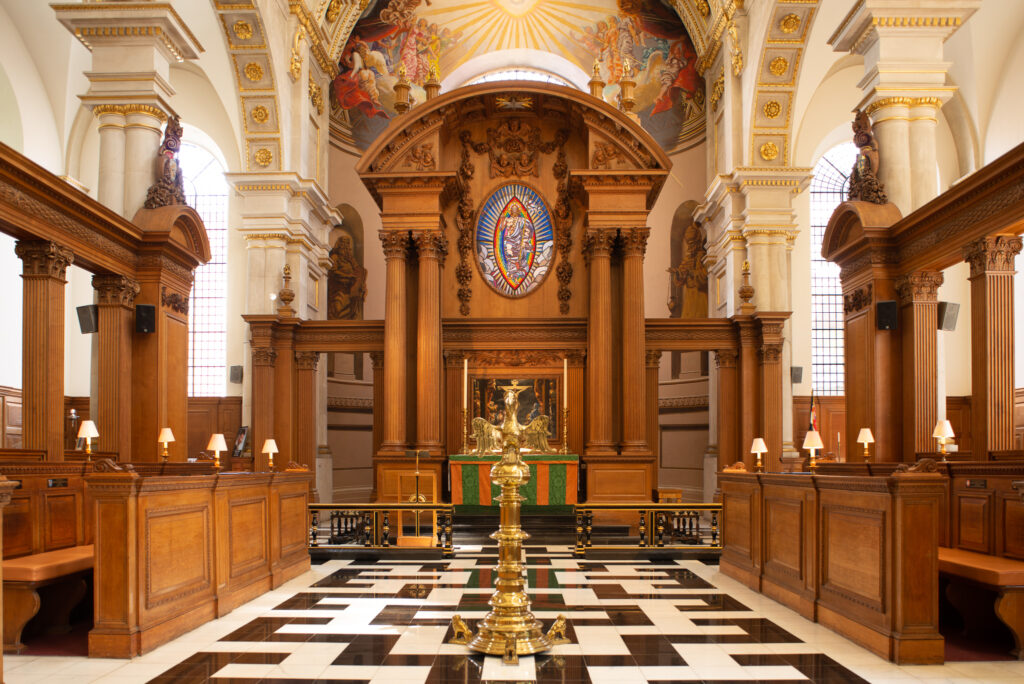
The East End of St Bride’s
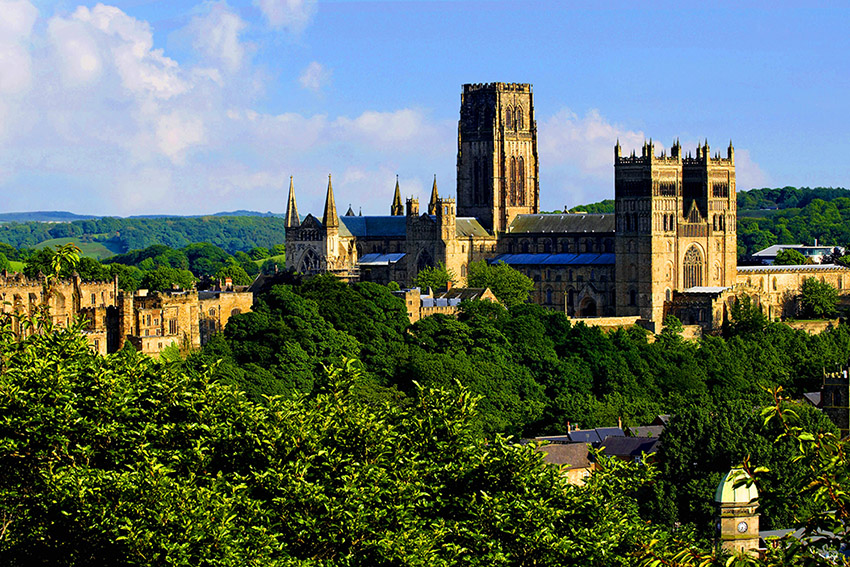
During the pandemic, I’ve often found myself wondering about those medieval structures which I most came to mind about in the days when going to them was part of a typical calendar year. Durham cathedral, my vote for the most beautiful building in Europe, where the remains of St Cuthbert are buried, at time of writing lies numerous Covid tiers away.
Interested to know how they’re doing, I catch up with Charlie Allen, the residentiary canon at the cathedral to find out how things have been. The cathedral also moved to online worship, and now has, according to Allen, “a global community of prayer of 340 members.” (It is a feature of writing about the Anglican church that the numbers discussed can seem heartbreakingly small).
That’s all well and good, but central to Christian experience for thousands of years has been the Eucharist. Allen concedes the problem: “It has been impossible to engage with the subtleties of the Eucharist in this way. The touch of a wafer and the taste of wine cannot be communicated in digital form.”
“The touch of a wafer and the taste of wine cannot be communicated in digital form”
charlie allen, residentiary canon at durham cathedral
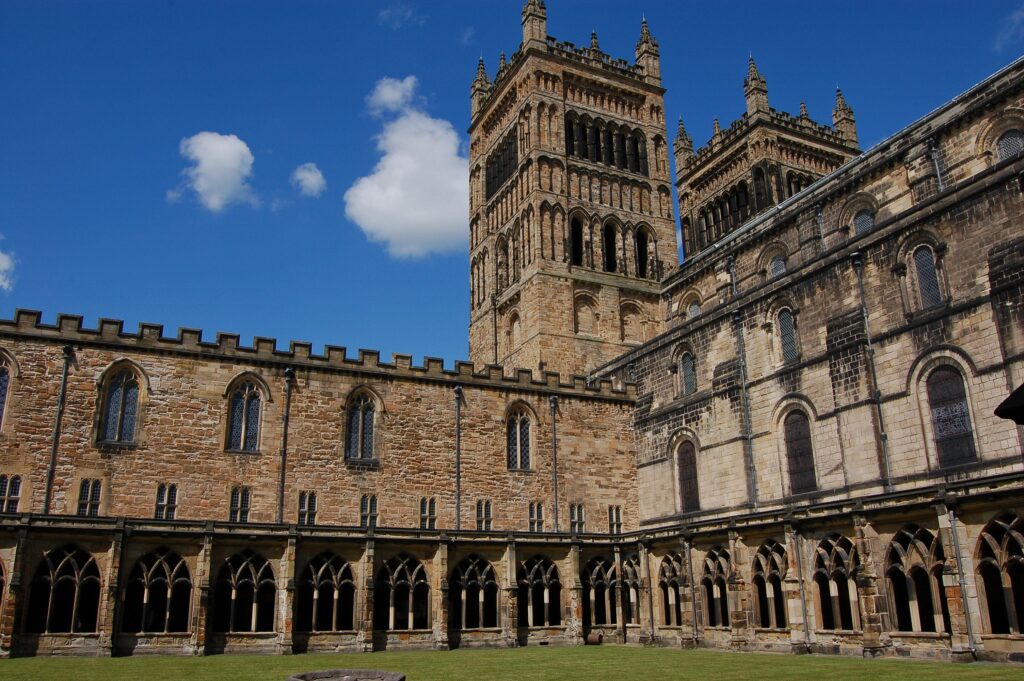
The cloister at Durham cathedral
Even here Allen remains optimistic in a way which might help us all in our strange locked down lives: “We are looking forward to being able to gather physically again, but we are also aware that having to withdraw from contact for so long has heightened our senses and given us a deeper appreciation of that which we have missed.”
It might interest readers to know how many job opportunities there are in the Church, even during an era of apparently declining belief. That’s partly because the decline takes place against a backdrop of extremely high belief: Christianity remains the religion of the nation, even if church attendance is extremely low. Locally, it’s a part of the fabric of life, even if it is beset by indifference during a time when there is so much else to claim our attention. According to the Faith Suvrey, church attendance has declined from 6,484,300 to 3,081,500 for the period between 2008-2020. And yet as the state has shrunk, the church has sometimes rushed in to fill the void.
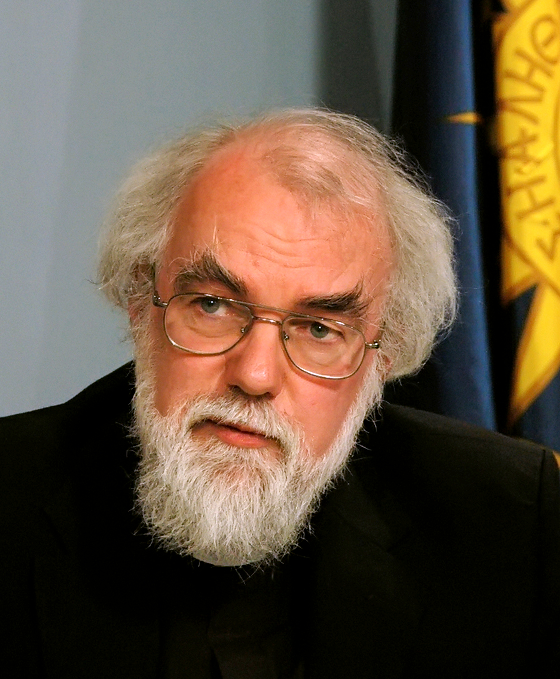
This author recently visited the home of the former Archbishop of Canterbury Rowan Williams who joked that he had ‘made it big’ in the church, while making me a Nespresso.
For instance, the Church Times still has a jobs section which shows a lively number of options for people wanting to be involved. It might even be crudely said that it’s still possible to achieve stardom of a kind. This author recently visited the home of the former Archbishop of Canterbury Rowan Williams who joked that he had ‘made it big’ in the church, while making me a Nespresso. His house was a vast receding grace-and-favour home round the corner from Magdalen College, which he would leave shortly after. Russian Christian art hung from the walls, and Williams’ study was jammed with books.
Rowan Williams alikens today’s small church attendance to the early times under St. Paul. Image credit: By Brian from Toronto, Canada – Archbishop of Canterbury, CC BY-SA 2.0
We talked about the low attendance at typical London church services, and he alikened the church today to those early services during the time of Paul of Tarsus, where meaning was arrived at not just in spite of sporadic attendance, but partly because of it.
“We have catering jobs, housekeepers and hospitality staff, education, facilities management, members and retail: there’s a considerable range of jobs for the laity”
christopher hamilton-emery
Williams’ point may ring especially true during Covid, where people are especially searching for meaning. And if it does strike a chord in students, then job opportunities are there. “As a cathedral we have a team of paid staff, and an even more extensive team of volunteers,” Allen explains. One interesting figure who recently joined the ranks of the church is the great publisher and poet Christopher Hamilton-Emery, whose brilliant poem ‘And Then We’, which we reproduce opposite, celebrates his change of career.
Hamilton-Emery explains to me how he was “dislodged from my own [secular] convictions”. His role at The Shrine of Our Lady of Walsingham is a reminder that there are many roles available outside the route of taking holy orders. “At the Shrine, we have catering jobs, housekeepers and hospitality staff, education, facilities management, membership and retail: there’s a considerable range of jobs for the laity,” Hamilton-Emery tells me. “The Church has a lot to gain from experienced general managers coming into serve – so I hope people, even people with no faith, can see that the Church has lots to offer society and can come in and help develop businesses.”
The poet Christopher Hamilton-Emery recently left Salt Publishing to take up a position at The Shrine of Our Lady of Walsingham
And what traits are required? “You don’t need to believe, but you do need to sympathise. You need empathy with the aims, you need to accept moral goodness and love (which may strike some as odd). But most of all you have to care for people and to put the human at the centre of everything you do.”
That might appeal to some at a time when we’ve seen retired GPs volunteer to administer the vaccine, as well as an increase in people applying for nursing qualifications.
Of course, the career you have will depend on the locality of the institution you end up at. Joyce’s ministry at St. Bride’s is highly unusual, with a small residential population, which in usual times would predominantly serve commuters. This segment evaporated overnight in March 2020. “We have a very different community to serve from somebody in rural Oxfordshire or a parish on the outskirts of Birmingham,” Joyce explains. “We’re also lucky because obviously it’s a famous building and we’re also famous for being a journalist church. That in itself makes it an international ministry.”
Pre-pandemic I would give out between 10-20 food parcels and fuel card top-ups per week…We are now giving out 150-200 per week
The Reverend catherine shelley
Things are somewhat different for a nearby ministry run by Rev Dr Catherine Shelley – that of St Edward’s in Mottingham, in Kent, on the borders with south-east London.
This is a more impoverished area – but also in a suburban part of London where footfall has increased during coronavirus as more people work from home. Shelley implemented an unexpectedly eclectic online programme: “Karate and taekwondo, Zumba, dance and Slimming World have all been able to go online, though personally I cannot do Zumba online!”
St Edward’s in Mottingham has a more impoverished congregation, with only a third having email access.
However, the impoverished conditions of her parishioners differentiate Mottingham from Joyce’s parish, and from the wealthier area around Durham Cathedral. “A lot of the congregation and community do not have internet access,” Shelley explains. “One third do not have email and local schools are still using booklets for remote learning as families cannot access online provision. The circulation of sheets has increased from 55 at the start of the pandemic to over 100 paper copies and we also send out over 50 by email to those who are online. Some of the increased circulation is to families we have known previously through sporting and social activities in the church hall; some of it is to families we have come to know through the ever-expanding foodbank.”
We all have a role to play in healing and recovering and seeking forgiveness. It’s a moral failure if we don’t do this within society.
christopher hamilton-emery
It’s the food bank which has really taken off. “Pre-pandemic I would give out between 10-20 food parcels and fuel card top-ups per week,” Shelley continues. “We are now giving out 150-200 parcels per week. We have also prepared regular hot meals for some who struggle to cook, collected medicines, shopped for those shielding or self-isolating, provided access to IT to support job searches, benefit applications and advice, IT access for virtual court hearings, housing support and so on… We never really know what is going to be asked next.”
It is impossible not to admire the sheer range of the church’s response – after hearing from Shelley, the church appears far from a quaint and marginalised aspect of our societal fabric. It feels integral.
Eve so, Shelley is more pessimistic than Joyce, Allen or Hamilton-Emery about the financial position of many dioceses: “There have been rumours of significant cuts in clergy posts – with some mention of a reduction of 20 percent but it is too early to say what the picture will be across the country,” she says.
How does she think it will play out? “It will vary from diocese to diocese because each diocese is a separate charity, with differing resources and priorities. It is suggested that some are in a precarious position financially so more mergers, such as happened in Wakefield, Bradford and Leeds a few years ago, appear likely.” And what’s the prognosis in London? “One thing that will make a difference is the exodus of families from London. I am aware in my own area in South East London, that some parishes are losing up to 20 families who have decided to re-locate outside London because of the possibilities of home-working or due to redundancy. That will probably have a larger impact on church and diocesan profiles and jobs than the pandemic itself.”
And if working in the church isn’t of interest, what does it have to teach us at this time? All those I spoke with for this piece felt that there was great meaning to be found in lockdown – and everyone agreed that there would be a revelatory atmosphere in the world once restriction are lifted.
Hamilton-Emery is optimistic for the future: “We all have a role to play in healing and recovering and seeking forgiveness. It’s a moral failure if we don’t do this within society. I see this as an opportunity of unity and reengagement rather than fracture and dissolution.”
Over at Durham, Allen seconds that: “The pandemic has invited each of us to face up to our own mortality, and to the mortality of those whom we love. Rather than making us morbid, my experience has been that this has given people a fresh appreciation of all that they value in life.”
That rings true. It may be that the Anglican church, far from being irrelevant, is about to find itself more relevant now that people have been given time to pause and consider the direction of their lives. Reality, it turns out, has a way of impacting on us, even if we can’t touch one another. Perhaps somewhere in there is the true meaning of that mysterious phrase: Noli Me Tangere.
And Then We
And then we embraced, sprawling on the green deck like scattered gulls.
And then we knelt under bound flax sail cloth, stinking and making the day.
And then we carried whom could not stand to the red chapel blithely.
And then we walked through your pristine marsh without hours or love or trees.
And then we drew about us buckram cloth and wool dyed with kermes and slept.
And then we pierced cockleshells and yearned for a tangled feast of eels.
And then we walked by sordid wolves and boars in corporal torment.
And then we met with hirsute leather brigands and were lost.
And then we starved, Lord, and knew concupiscence, gnawing your works.
And then we heralded salt wind, seal routes and spectres and walked dully on.
And then we saw your slipper chapel and spread our toes on a mile of stones.
And then we wept. At the ruin of our bodies we wept. At our just ruin.
And then we dressed and swayed, all the same, through the unifying street in a love queue.
And then we bent and entered Nazareth to see her and to know her choice.
And then we knew a high permanent land, our eyes fixed on accommodating angels.
And then we fell in stone-sealed Walsingham, with our fiat ringing, unanchored, teeming.
And then we left to see ice oak burials, flame drift farms, our backwards night talk blazing.
And then we sailed on, working new bones, each a prayer to the star of the sea.
The new platform Configure is changing the way office properties are marketed and promises to streamline the process of office customisation. The platform allows landlords to show potential tenants CGI images of options for furniture, flooring, wall décor, and layout, with the rent displayed in real time based on the options they choose.
Alex Morgan, founder of Configure, says the idea came to him while dreaming of driving a custom Porsche.
“One night my wife was out and the kids were asleep, and I was playing around on Porsche’s website,” Morgan recalls. “I started changing the wheels, seats, the trim, and as you make these changes the cost of the car is going up and down. And I just thought, ‘That’s what I want to do for our buildings.’”
The key to Configure, Morgan continues, is the way that it will make a property stand out. “These poor potential occupiers are going from white box to white box. I find that boring, and I develop office buildings, so I can only imagine how boring it must be for the occupiers!” Morgan says. “At the end of the day, how do you remember which is which?”
Alex Morgan
Another advantage of Configure is the quick turnaround from the time that a tenant chooses their layout and the delivery of their options. This is accomplished in only eight weeks. For reference, sourcing furniture alone can often take up to 12 weeks.
“We wanted to be able to say to our potential tenants that they can get into this space quickly,” Alex said, “Traditionally, fit outs can easily take three to four months.”
The idea has evolved since its original conception. Morgan is also the co-founder of Morgan Capital, and originally Configure was going to be exclusive to that developer. “At the outset, I thought, ‘If you want to use Configure you’ll have to use us (Morgan Capital) as a developer, but we were getting so many phone calls I realised that it deserved to stand on its own and be its own entity.”
Landlords will pay an upfront cost of £30,000 to £50,000 for the service depending on the space, which includes CGI generation, hosting of the platform, and space-specific design. They will also have the option of having a physical marketing suite, with costs ranging from £100,000 to £400,000.
For each building that uses Configure, photography, design, and pricing must be worked out to create a custom virtual environment for tenants to view. At any point a potential tenant can download lease documents, and a gauge on the left side of the screen indicates price based on the selected options.
Ben Vinten is the Head of Platform at Configure. Vinten handles design analysis, ensuring the quick turnaround time and transparent pricing. He recognises that CGI has been used for marketing by landlords before but makes sure to point out the difference in volume of materials and options.
“A typical marketing brochure may have two or three layouts and three or four CGIs,” Vinten explains. “At one building I’ve got 1,221 potential layouts, a cost plan for every single one, and however many CGIs it takes.”
Ease of customisation and viewing options is the goal of Configure, so potential tenants will be able to use the program at home in their own time. The platform also has the option enabling clients to view a physical marketing suite to use Configure; you can also see an example of what a finished product will look like.
“At our marketing suite on Pollen Street we have a wi-fi printer so tenants can walk away with something unique to them,” Vinten continues. “It’s kind of like Build-a-Bear, but it’s more than that.”
Morgan is optimistic for the future of Configure and has his eye on expanding the model. At the moment, the platform works best in smaller spaces, avoiding an overload of options.
“There comes a point where you can have so many options that it becomes very difficult to judge what to offer,” Morgan adds, “so that will be a challenge for us over the next period.”
In future, the team hopes to add a carbon emission gauge to the platform alongside the pre-existing cost display, as well as integrating a “managed element” into their service, which may include a cleaning and building maintenance package.
“It’s been really well received,” Alex says, “so I hope this will bear fruit not only for us but for the industry as a whole.”
All picture credits: Copyright Ed Hill / Morgan Capital Partners.
Covid-19 has spelled the end for many small businesses around the world. But while the vintage watch and clock market is seeing a major rise, changing times have led to a lack of young apprentices and the death of the traditional storefront.
The statistics can sometimes seem startling. Vintage watches sold at auction have frequently fetched much higher prices than their book value in recent years. In 2018, a1970s Rolex Oysterdate sold by Hanson’s Auctioneers in Derbyshire went for £51,100 – that’s a 1100% increase from the book value of £3,000-£5,000.
Paul Kembery has worked in watch and clock sales and repair for the last 30 years. His online business, Kembery Antique Clocks, sells wristwatches, long-case clocks, barometers, and other specialty antique pieces, all meticulously restored.
“The speciality within the watch and clock industry is one that continues to thrive,” Kembery says, “There is sufficient data to show that vintage watches have gone up considerably in price.”
Along with the overall upward trend, vintage watch prices have risen steeply since the beginning of lockdown. For example, an Omega Dynamic watch was worth about £516 in March 2020. According to the watch valuation site Chrono24, that same watch is worth £725 today.
The industry is thriving, but it is also changing with the times.
“Shops are definitely on a decline,” Kembery continues, “We had a shop in Bath for many years, but the way that the internet took off there really was little need in having a retail shop.”
Now, the main face-to-face business that Kembery conducts happens at antique fairs. He believes that there is no need to “trek around the country looking in all the antique shops” when it is more efficient to “go to an antique fair and see 200 stands” all at once.
According to Kembery, a number of things can motivate someone to buy a vintage time piece: “Many people buy them for their birth year. So oftentimes people will look online for a watch that corresponds. A wife or a partner may then buy that watch as a gift.”
In addition, potential buyers also seek out antique clocks with a personal connection to their family history or hometown. “If there’s an area in Leicestershire where you live, for example, and you find out that the local clockmaker was making clocks there,” Kembery adds, “what a great talking point to have bought a clock online that is from your area 250 years ago.”
Covid-19 has led to a decrease in the number of repairs Kembery sees on a weekly basis, as people are postponing having their clocks serviced. However, Kembery envisions a major uptick in repairs after the pandemic is over:“Once everything settles back down there will be the same number of people who need their watches and clocks overhauled, and there will be a higher demand for it. It turns out that many shops already have waiting lists, and those waiting lists may continue to grow.”
As mechanical timepieces have shifted from practical pieces of equipment to optional luxury items, the profession of clock and watchmaking has fallen off the radar of young career-minded people.
“There are not enough apprentices coming through,” Kembery conceded. “Long term it may be an issue that there aren’t enough youngsters in apprenticeships, or who are interested in clock and watch repairs.”
The lack of apprentices represents an opportunity for those who are interested in breaking into the industry. The National Careers Service reports that the average wage for a watch or clockmaker ranges from £20,000 to £40,000 a year, based on experience. This varies based on the particular business one works for and may not take into account money made from sales.
There are a number of ways to enter the industry. The British Horological Institute offers courses which can be taken at home with no prior experience required. Where watch and clock shops still exist, apprenticeships can sometimes be found simply by walking in and taking an interest in the work.
According to Kembery, the best apprentices are “mechanically minded” and also “curious about the way that engineering works.”
The rise of internet retail has caused a decline in the number of watch and clock shops across the country, and vintage timepieces are not as highly desired by young collectors. Despite this, the industry is still – if you’ll forgive the pun – alive and ticking.
There is a common gripe for many young people attempting to find their place in the labour market via a graduate scheme or entry-level role. The moan is that “entry-level” schemes, placements, even internships often require at least two years of prior experience.
Some ambitious aspirants may know what they want to do from the age of ten, and never waver, collecting work experience and internships as they go. However, for many others the decision comes as a trial and error process in their teenage years and early twenties. Is one more worthy of a start in a career because they chose it earlier? Is talent outweighed by experience?
Often asking for too much industry-specific experience can serve to keep elite circles tight – to the detriment of those sectors where the practice is most rife. In many cases when a candidate has required the requisite experience, it can be because the right strings have been pulled earlier in life. These opportunities are often unpaid – and we all know that only the progeny of the well-off can afford to burnish their CVs in this way.
Media and creative industries still often offer these unpaid opportunities despite repeated calls for this practice to end from social mobility tsars and charities.
It’s not just a question of connections but the practicalities. Many of these sought-after placements require living in London where rent and the cost of living is significantly higher than the rest of the country. And there’s also the question of when you’re going to find time to do holiday work. The less affluent tend to use the summer to engage in paid work. That often makes them mature candidates, with a knowledge of hard graft and the realities of the workplace – but it doesn’t always look that way on their CVs.
Increasingly, we inhabit a world of informal networks which many talented people are excluded from. But how do you prevent this from happening?
Essentially, the widespread requirement for experience has brought internships into the formal labour market. As the Chair of the Education Select Committee Robert Halfon MP has argued, the normalisation of apprenticeships may be one part of the solution. We need to forge a society where education is better tethered to employability.
But it wouldn’t remove another structural problem. A 2018 report by the Sutton Trust found that a staggering 70 per cent of internships are unpaid. To legislate against that would not in itself prevent the old boys’ network from dominating some industries, but it would at least mean that many talented people could afford to improve their CVs and not lose out unfairly.
Pleasingly, there is now a private member’s bill awaiting its second reading in the House of Commons, sponsored by Stockton North MP Alex Cunningham. This seeks to ban unpaid work experience lasting longer than four weeks, and is already the subject of lively debate. Boris Johnson has indicated that he backs the broad idea. We shall report on the ins and outs of the legislation in the coming weeks and months, but given the inequities of the current position, there can be little doubt that now is the time for the government to seize the momentum on this.
The former shadow schools minister recalls life as a teacher and thinks there might be answers for the present in the past
Whenever you ask the government about exams they say it’s the best form of assessment, but that’s a meaningless comment which stands up to no scrutiny. When I started teaching secondary school, GCSE was 100 per cent course work. The exam board would ask us to put forward ten pieces of work for each student; two of those pieces had to be done in controlled conditions, like an exam. Pupils knew that every piece of work at the start of the year mattered. It meant pupils took up-front responsibility for their own learning.
When they brought that arrangement to an end it was like attending a wake at my school: we were mourning the passing of this as we’d seen such an increase in quality. If you have an exam at the end of the year, you’re talking about memorising things rather than developing skills. I found the old way very constructive and flexible. If you have a situation where a pupil has missed a month of school or been ill, or something terrible has happened in the family, you could say, “Let’s get on with the next thing.”
I’d like to move to a system where we have greater development of skills and research. In the age of the search engine, to have assessment processes in demonstrating memory seems flawed to me.
I once taught in an adult centre reading to adults who struggled with reading. That was quite a profound experience because you were in close contact with people who throughout life had experienced that profound deprivation of not having sufficient literacy skills to make their way in the world. Today we have around seven million adults with poor literacy skills: that’s damning in a country like ours.
That’s why in 2020, as shadow schools minister, I argued against the Reception Baseline Assessment. There was evidence it was causing children distress, and taking teachers away from settling children into school-based routines and developing relationships with pupils. We’ve got a similar issue with SATs. I spoke to a mother who told me when her daughter was in Year 6, she used to cry on her way into school as she wasn’t very good at maths. That’s why a broad-based curriculum is important. These decisions taken early in children’s lives affect employment outcomes further down the line.
If you’ve ever been to adult education centres, you learn the hunger people have for learning when they’ve missed out on it. One class I once taught was called ‘Women Back to Work’. These were women who wanted to get back into the workplace, and needed a GCSE in English to do that. One knock-on effect was the impact on their children: they would bring them into the classes with them, and proudly stand in front of the class and give a talk while their child was there, looking up so proudly at what their mum was doing.
When you think of women who have come out of work to look after children and then become carers, they can often lose their confidence. Adult learning is a fantastic way to open up ideas. I worry about the long-term economic impact of children who grow up in poverty. They don’t earn much, not as many go to university and they’re less likely to have good health later in life. This government has no appreciation of the scale of the problem. It was dragged kicking and screaming on school meals by Marcus Rashford, a fact which spoke volumes.
Part of the problem is that the status of teaching is still low in relation to what it should be. At a local level, people are still immensely grateful to their local teacher so the relation between pay and status has to come from government. When I look at what primary teachers do, their skill levels are absolutely phenomenal.
The Labour Party is in a process of development of policy, and have to include our membership in that. Keir’s been leader for a year or so, and because of Covid too there hasn’t been the opportunity for meetings or conference. I think it’s too early to say, but we need to look to the past for inspiration.
In the 1970s, we had a big pay rise and there was buoyancy because we as teachers felt valued. This was before the national curriculum and we’d teach as we saw fit, with no testing regime and more creative time. I remember we used to put on school plays and when they bought in the national curriculum it killed it dead. I think that’s tragic. We need to look at that. Exams are not the answer.
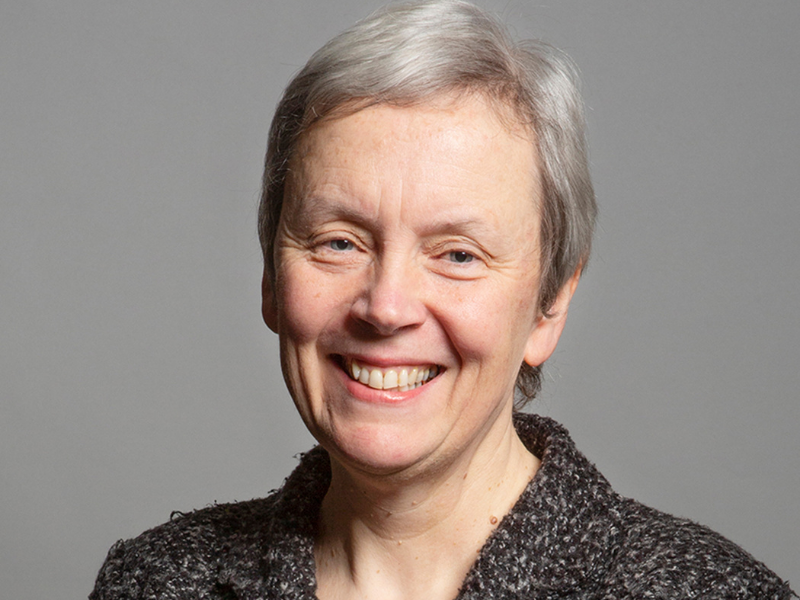
Margaret Greenwood is the Member of Parliament for Wirral West
Photo credit: David Woolfall under Creative Commons License 3.0