Blog

  • Opinion – The government needs to reconsider school funding changes

    Opinion – The government needs to reconsider school funding changes

    Patrick Crowder

    The Department for Education has decided to base pupil premium funding for vulnerable students on old numbers. Rather than counting all eligible students from January 2021, the funding will be based on information from October 2020.

    According to the government website eligible students include those on free school meals, those who are or were looked after by the local authority, and those who have a parent serving in HM Forces or who have a Ministry of Defence pension.

    The Education Recovery Package provided an average of £6,000 to primary schools across the UK to help combat Covid losses. Many schools will lose more from this miscalculation than they received from the package.

    The National Association of Head Teachers (NAHT) has criticised the move, saying almost two thirds of schools that they surveyed would be left with less funding as a result.

    NAHT general secretary Paul Whiteman said that “the government is giving with one hand while knowingly taking away with the other” while speaking at the School Leaders Summit, highlighting the vulnerable position many families have been left in due to Covid-19.

    “These figures suggest that a large number of schools in England have lost more funding due to this date change than they are being given in the government’s so-called education recovery package,” Mr. Whiteman told the conference.

    Mr. Whiteman was speaking of figures obtained by the publication Schools Week through freedom of information act requests. Those figures also show that 102,000 students have become eligible for funding between October 2020 and January 2021. The total loss is projected to be at least £94 million.

    Shadow Education Secretary Kate Green MP also criticized the move, saying that “ministers have failed to protect family finances from the impacts of the pandemic” and accusing the government of “changing the criteria and making it harder for schools to support their pupils.”

    Even if re-evaluating this change means the government must pay more in pupil premium funds this year, investment in education will lead to economic growth in years following. A study by the Knowledge, Evidence, and Learning for Development Programme (K4D) conducted across many regions and economic areas found strong evidence that education investment “provides a clear boost to economic development”. 

    Children’s Minister Vicky Ford said that the change of date is meant to give schools more certainty for the future, removing the element of short notice. As of now, the only thing that many schools are certain of is that they will not receive the funds they need to support their students.

    The decision not to use the most recent information during a time of such instability is shocking. Three months of lockdown is a long time when speaking about the financial situation of children in need, and now is not the time to abandon families affected by the pandemic. 

    Photo credit: By Andy Mabbett – Own work, CC BY-SA 4.0, https://commons.wikimedia.org/w/index.php?curid=90102031

  • New Stamp Duty calculator takes liability away from property lawyers

    New Stamp Duty calculator takes liability away from property lawyers

    Patrick Crowder

    As property lawyers and conveyancers scrambled to file Stamp Duty Land Tax (SDLT) returns before the end of the Stamp Duty holiday, many calculated the amount owed incorrectly. This has caused professional indemnity (PI) insurance premiums to rise by up to 30%.

    SDLT Compass is a new tool which aims to make calculating SDLT easier and legally safer.

    When property changes hands, a SDLT return must be filed unless the transaction is exempt or falls into one of 49 different relief categories. If a property lawyer gets this process wrong, they open themselves up to liability and increased PI insurance premiums.

    Managing Director Chris Ward explains how Compass takes legal responsibility for the calculations it provides.

    “One of the big benefits of Compass is that it shifts the PI risk away from the property lawyer or conveyancer, so personal indemnity insurance premiums will be easier to get,” Ward tells us. “Also, there are a lot of claims going on right now against law firms for getting SDLT wrong.”

    Compass began as an in-house tool for the chartered tax advisor Cornerstone. When the firm saw a need and demand on the open market, it developed Compass from that tool and fully launched on May 1st 2021.

    “We’ve had a great response. We’ve signed up our first ten clients, and we’ve had 50 free trials over the last three weeks,” Ward tells us.

    There is no subscription or license fee for Compass. Instead, there is a £50 fee per SDLT calculation. There is also a 14-day free trial to get used to the software.

    Compass users answer a questionnaire which takes most people with practice about five minutes to complete. If the program finds any potential issues, it is flagged up for manual review.

    “About 90% of property completions in this country are standard. If it’s what we call a complex or high-risk case it gets referred to a member of our tax analyst team who will give specialist advice on an agreed-fee basis,” Ward said. “That can be anything from a couple of hours’ work up to a lot more.”

    Compass is currently the only SDLT calculator which takes PI responsibility. It also considers factors which other calculators do not. “Most property lawyers go to the HMRC website and use the calculator there. The problem is that the HMRC calculator doesn’t take into account any of the 49 different reliefs, and last year they admitted that it is only an estimator, not a calculator.”

    Compass does take reliefs into account and is constantly updated as new legislation comes through. “We’ve kicked the tires a lot and tested it, throwing any new piece of legislation at it,” Ward continues. “For example, on the first of April there was a 2% SDLT surcharge for non-resident purchases in the UK. We had that in Compass within an hour.” 

    The Stamp Duty holiday was designed to mitigate the effects of the pandemic on both property buyers and the market, raising the minimum price at which it has to be paid from £125,000 to £500,000. The tax break will begin tapering off from June 30th, and it ends completely on October 1st

    Ward explains that the launch of Compass was not timed with the end of the SDLT holiday, but that it has not proved to be an issue. “There’s a big shift towards protecting law firms against SDLT wrong advice, so I think the timing is good in that respect. We’re pleased with the way it’s been taken up.”

    There are normally around 100,000 property completions a month. Because of the Stamp Duty holiday, that number has risen to around 120,000. It has been estimated that one in five SDLT payments are incorrect.

    “I think if you take into account the time and money involved in defending claims that are happening more and more against lawyers who get SDLT wrong, protecting them, reducing their risk for PI and making them compliant…” Ward says. “Once Compass is embedded in an organisation it’s going to save a lot of money and a lot of time.”

    SDLT Compass hopes to net 10% of the UK conveyancing market and perform 10,000 audits a month in two years’ time.

    Photo credit: Christian Vasile on Unsplash

  • How eBay can be more than just a side-hustle

    How eBay can be more than just a side-hustle

    Patrick Crowder

    Many people have started selling items on eBay during the pandemic, offering everything from hand-made crafts to vintage clothing. Statistics from eBay show that the number of self-made millionaires on the platform has risen by 35% over the last year alone.

    For most, eBay is a part time job. For Sam Clifford, it has been his full-time career for five years. 

    Sam began his eBay business when he was 15, selling CDs of tips and tricks for the video game FIFA at £2 each. 

    “I had always done this as a side-hustle, which is the reputation the job has,” Clifford explains. “When I was 23, I got kicked out of my other job and said, ‘Right, I’m going to do this full-time’.”

    From that point on, Sam dedicated his full attention to his online business. He mainly sells smaller wholesale items and bases his product selection on current trends and market research.

    “Ages ago a video of a woman laughing in a carpark wearing a Chewbacca mask went viral. It was just her wearing this kid’s mask, but I knew straight after that everyone would jump on eBay to get that mask,” Clifford continues. “As stupid as it was, I knew there would be a significant, instant demand for it.”

    “I could list my sock on eBay for £30, but that doesn’t mean it’s worth that

    Clifford fluctuates his prices based on demand the same way that airlines change ticket prices. He checks the prices of sold items on eBay to get a basis of what items are selling and what they are selling for. He warns against basing prices on current listings.

    “One mistake people make a lot is they’ll go on eBay and see things listed for higher prices than they’re worth,” Clifford says. “I could list my sock on eBay for £30, but that doesn’t mean it’s worth that.”

    When items are listed on eBay, an algorithm decides which listings will appear first in a search based on the rating of the seller. Clifford says that speed is the key to keeping that rating as close to five stars as possible: “You’ve got to be hot on it. When I first started I was delaying, doing it here and there, and that reflects badly on your account.”

    He also recommends posting items and answering inquiries within a day, as well as offering free first-class postage with every sale.

    Increased demand during the pandemic led to such a surge in new listings that many had to be removed to ensure security and disallow price gouging. Clifford has witnessed these effects of Covid-19 on the market first-hand, but he is not discouraged by the new competition. “The market has gotten a lot bigger, but there are a lot more buyers as well. People are sitting at home bored with nothing to do. There is more competition, but I think there are at least threefold more buyers.”

    “If your mind and your heart are in this job then you’ll succeed

    Making a full-time career through eBay is an attractive prospect, but Sam warns that the dedication it requires is not a good fit for everyone.

    “It’s freelance work. If you haven’t got the drive and motivation to do it, it’ll end up fading out in about six months,” Clifford says. “I’m big on mindset and mentality – the mind controls the body, so if your mind and your heart are in this job then you’ll succeed.”

    Clifford’s success came as a surprise to many people in his life, and he initially faced pushback. He believes that anyone with the right amount of self-motivation and passion can succeed in the job and encourages people to follow their passions.

    “People who get joy out of negativity will put you down and say it’s not a real job, but I’d rather fall on my own sword than anyone else’s,” Clifford says. “People have this stigma that what you enjoy can’t be your career, but that couldn’t be further from the truth.”

    Photo credit – By Cristiano Tomás – Own work, CC BY-SA 4.0, https://commons.wikimedia.org/w/index.php?curid=103669478

  • The inside story on how to be a spy

    The inside story on how to be a spy

    Emily Prescott

    Along the river from Westminster in Thames House more than 4,000 people are working to protect the UK against threats to national security. Members of MI5 must be discreet about their work defending the country from espionage and terrorism but former intelligence officer Annie Machon has given FinitoWorld some insider information about MI5’s recruitment process and what it is like to be a spy. 

    MI5 of course refuse to reveal exactly what goes on behind the austere stone-fronted building but they do tell people what the job does not involve. They warn spy-hopefuls to put down their martini glass and throw away the Aston Martin keys. In reality being a spy isn’t glamorous and the work is often “routine and painstaking (though vitally important),” they say.  

    Intelligence officers will be highly trained in espionage techniques. Sometimes they operate openly, declaring themselves as representatives of foreign intelligence services to their host nation, sometimes they will operate covertly under the cover of other official positions and occasionally they may operate in “deep cover” under false names and nationalities. 

    Machon, a classics graduate from Girton College, Cambridge, applied to the foreign office to become a diplomat in 1990 and then received a mysterious letter from the ministry of defence. It told her there may be other jobs she would find more interesting and it asked her to ring a number.  

    “My first instinctive response, excuse the language, was ‘oh f*** it’s MI5’ I don’t know why but I was actually quite frightened and thought, why would they want me?” She says. But when she received the letter Machon’s father, a spy geek and John LeCarre enthusiast was in the room and he encouraged her to call the number.  

    The recruitment process took ten months and she was quizzed on various matters from her sexuality to her political views. Eventually Machon was given the job and   she began working on countering Irish terrorist threats.

    The way Machon was recruited seems far more professional than the way the former head of MI5 Eliza Manningham-Buller entered MI5 in 1974  after an encounter at a drinks party. Indeed, since Machon’s job offer, MI5 have professionalised their recruitment process even further. It’s far more transparent and people can apply to work for MI5 via its website. People who reach the interview stage will be assessed with competency-based interview questions in which they will be asked for specific examples of past behaviour. If the interview goes well, there is a thorough vetting process and candidates have to complete detailed questionnaires and provide references. 

    During Machon’s final year at MI5 she was trained up as a recruiter. “It was the first year where they put open adverts into newspapers rather than the oblique ones. They had 20,000 applicants most of whom were James Bond wannabes and of course none of them got through and I think out of the 20,000 only 5 were recruited.”

    In summary she says, if you want to work for the organisation “you need good organisation, good judgement, good analysis and good team-building skills.” 

    Ever increasingly, it seems MI5 is looking to diversify its workforce. “In my day it was very white, mostly male and almost certainly Oxbridge. They understood they had this groupthink problem and also Al Qaeda had appeared over the horizon as the new big terrorist threat so they did realise they need people from more ethnically diverse backgrounds as well.”

    At the moment 43% of the workforce are women. Machon said: “In my day it was actually about 50:50 women working there but the bulk of the women who worked in the intelligence agencies at that time were working in the registry or working as secretaries.”

    “I know that over the past 15 years they’ve been targeting women, even using Mumsnet I think to try and recruit more women,” she added. 

    In December 2020 MI5 published a Gender Pay Gap report which shows the mean pay for men is 13% higher than for women.  Director Ken McCallum said: “MI5 is committed to accelerating pace to deliver a diverse and inclusive workplace, harnessing and growing the talents of all sorts of people from all sorts of backgrounds to keep the country safe.”

    Indeed, Machon praised MI5 for receiving awards from the likes of Stonewall for being one of the best LGBT employees.  She said: “This is an amazingly fast advance from my time there because when I joined you were not allowed to be homosexual because it might have been used for blackmail. That only changed in 1994 so to go from that to where we are I think is all credit to them.” 

    She speaks of the culture positively. “It was a very friendly workplace and it became so very quickly because you can’t talk about your life to anyone else so friendships and social groups and everything for very fast on the inside,” she explains. 

    But ultimately, Machon ended up on the run for a year after going to the press to expose alleged criminality within MI5. 

    It was back in August, 1997 that Machon went rogue. She and her fellow whistleblower David Shayler were concerned about how various departments within the intelligence service were operating. The pair took a number of classified documents to The Mail on Sunday. The very first story to be published alleged that the phone of the then New Labour spin doctor Peter Mandelson had been bugged for three years during the early 1970s.

    Of course Machon never returned to the organisation after that. But inspired by her time at MI5, she has been focussing her time on ethical data solutions and she urges people who are interested in protecting the country to do the same. 

    MI5 offers roles for school leavers as well as university graduates and they are interested in a diverse range of people. As Machon’s story shows, joining MI5 is never going to be an easy career path but if you are genuinely interested in keeping the country safe it could be a route to seriously consider.

  • Lloyd’s of London’s Craig Civil: “Data science is part of our daily lives”

    Lloyd’s of London’s Craig Civil: “Data science is part of our daily lives”

    Andrew Zelin

    The business world is changing all the time. To the layman, and even to many leaders, there can be a bewilderment when it comes to the latest terms: AI, crypto, blockchain. Ignorance can create a reluctance to engage. 

    A case in point is the ubiquity of the word ‘data’. We hear it all day long: ‘big data’, ‘send me the data’, and the idea of an organisation becoming more and more ‘data-centric’.

    So what does this mean? It’s simple, really. It means that organisations have increasingly come to see data as being at the core of forging strategy. Such an approach used to be the domain of the largest corporation, which were the first to employ data teams. Nowadays, as technology evolves, start-up companies build their strategy from scratch – and they do it around data. 

    That means it’s a widespread profession, with its own ‘power list’ of the 100 most influential practitioners. One such award-winner is Craig Civil, Head of Data Innovation, R&D and Analytics at Lloyd’s. Civil joins me for a Zoom call from his home in Suffolk, and is relaxed and friendly throughout. 

    As it turns out, the team Civil oversees is relatively small (‘there’s three people in my team plus me’). This size of team enables Civil to be nimble across Lloyd’s operation. “It’s a deliberately decentralised model,” Civil explains, “ensuring that we collaborate with all the data people across the organisation. We are the conduit that receives the idea. We then find the right people to partner with – whether those we actually employ or people in an external organisation.”

    Civil has had a long and varied career. His first job out of university was with the East Anglia Electricity Board in the archive department. It was an early opportunity to shine. Civil realised that there was an opportunity to move all the paper information stored for local primary care contractors – things like surgery opening times – from paper records to electronic records. By having all that information kept in, to use the data jargon, a “Structured Query Language (SQL) database”, it could be made easily available to the general public. Civil was able to overlay geographical information to illustrate where people’s nearest surgery was within certain driving distances. 

    Here we can glimpse data’s perennial relationship to transparency – and, more simply, to making things easier for people. ‘Doctors, dentists, pharmacists, opticians. They’re very location-focused, obviously,” Civil recalls. “I found myself starting to use Geographical Information Systems (GIS) more and more.”

    That made Civil a natural fit for the healthcare sector. He went on to manage a department in the NHS, before moving to US-based healthcare analytics company Health Dialog, which was seeking to enter the US. Civil recalls that period with affection: ‘There was only a handful of us to start up the organisation in a rented office in Cambridge, and it was really successful. We were doing cutting edge things in terms of how you use data analysis to create a product store for the NHS. But it was always kind of a struggle to make money, because the US model of healthcare with insurance is obviously very different to ours.” 

    In time, Health Dialog was bought by Bupa. Civil was by now very experienced and using state of the art population health algorithms and incorporating these into the world of health insurance. It was this which led him to the specialist insurance market, joining Lloyd’s of London in 2016. 

    How did he make the switch? “I felt like I’d done enough in that industry and wondered whether statistical models could be applied to a different industry,” Civil says. “I thought I’d try something completely fresh and new – and lo and behold, the opportunity at Lloyd’s popped up. I thought ‘Let’s see what happens’.”

    Over the course of Civil’s career, data science has become one of the most sought-after careers, and has changed substantially. What hasn’t changed is the need to gather data, understand what customers actually know and what the end outcome could be. 

    At the beginning of Civil’s career, his work would probably not have been labelled “data science” – it was really just “stats”.  That’s a measure of how much the sector has changed. Citing the example of the current Covid-19 vaccination programme involving the ability to target particular age groups in particular locations, Civil makes a telling remark: “Data science is so much of what we do now. It’s part of our daily lives.”

    So what are the qualities needed to succeed as a data scientist? “You need a blend of skills which complement each other,” he explains. “First you absolutely require pure technical skills such as coding in R or Python, together with an understanding of various statistical models and their pros and cons.”

    But in addition to these skills, you need something more important: “You need the mindset of continuous learning because all these technologies evolve so fast,” Civil continues. “Data scientists innovate, are able to communicate the results and present what is often really complex analysis in a way that engages an audience.” 

    That sounds a lot. Does every data scientist really need all those skills? “You can never expect every data scientist to have all of these skills, as long as the team is built of people who collectively cover all these angles. This comes about more effectively through having diversity of background and thinking within teams to encourage this. We take that aspect very seriously at Lloyd’s when building teams.”

    I get the impression that that’s partly what makes Civil so successful. Craig puts down a great deal of his success to the fact that he has had inspirational people to work with who have become his mentors. He is mindful nevertheless that some organisations are more forward-thinking than others when it comes to the notion of being “data-centric”.  

    So what’s his advice to data scientists who are struggling to gain traction with senior leadership? “It’s important to seek out across your organisation people who do similar work and have similar interests to yourself. You need to nurture them so that they eventually become your champions.” The goal, Civil says, it to build a “data community”, which becomes visible to the whole organisation: “If you do really neat and innovative work in an engaging way, people will think ‘I’d love to be part of that’.” In addition, you need to “bring your analysis to life and be succinct, and show that what you do has a positive impact on the business, such as making operational saving or reducing operational risk.”

    So what might that involve? Civil advocates creating a “data strategy navigator” and tying that to business outcomes. In doing that, it helps to look ahead by three to five years. “My approach is to take each business objective in turn and put a “data lens” over it. It’s a matter of aligning business objectives with data objectives and considering where the best ‘bang for the buck’ lies. As well as covering these operational outcomes, you should also have a longer-term objective to create a “data culture” across the organisation as we’ve done at Lloyd’s.”

    As part of its digital transformation programme, one of Civil’s key achievements at Lloyd’s is his creation of a non-technical data science course for his community and beyond, which has proved very popular across a wide range of people and roles at Lloyd’s. “It’s a non-technical course created with the Southampton Data Science Academy. It has an eight-week curriculum with up to 60 staff being trained per year in three “cohorts”.  The course enables staff to feel more comfortable in technical data conversations, to convey quantitative information in an engaging “data visualisation” and to begin to identify use cases for data science from their own team that they might not have considered previously,” Civil explains. 

    So has it been successful? “We’ve received very positive feedback from Lloyd’s course attendees and we’ve now made the course available to market colleagues as well after requests to enrol.” In addition, Civil has added a more technical data science module involving technical insights and the use of Python for a smaller subset of delegates, together with a new “AI for business” course.

    It all amounts to a vivid example of how a small core team can empower many others within a large corporation at different levels of technical involvement to enable Lloyd’s to progress on a truly “data-centric” journey.  Civil has plainly achieved much by drawing on his early career skills to understand the capabilities of data and building teams within public sector and then commercial environments, from small start-ups to large organisations.  

    It’s also a testament to his success that he has been able successfully to align business objectives to data objectives by looking at issues through a “data lens”, consider the skillset and tools needed to move businesses forward, share and disseminate his knowledge through training, enable data literacy amongst staff and be able to engage like-minded people within to make this all happen.

  • Psychologist Melissa Nobile of The Kusnacht Practice on treating young people during Covid-19

    Psychologist Melissa Nobile of The Kusnacht Practice on treating young people during Covid-19

    To mark Mental Health Week, Melissa Nobile, a Psychologist at The Kusnacht Practice, discusses her experiences of offering care to young people during the pandemic

    Mental health has become such a ubiquitous phrase in our society that it is almost verging on cliché – all the more reason, then, to explore in detail what we really mean when discuss it. The best way to do that is to talk with someone who really understands it, and deals with these issues on a daily basis. 

    Accordingly, I Zoom with Melissa Nobile, a Psychologist at The Kusnacht Practice in Switzerland. Nobile’s academic background is at the University of Geneva and the University of California in Los Angeles; she subsequently acquired additional training and clinical experience in Thailand and Europe.

    Nobile’s role at The Kusnacht Practice is particularly relevant for Finito World readers. Nobile is especially engaged in the practice’s Youth Programme, with most of her work conducted with patients between the ages of 13 and 25. 

    For parents, this has been an anxious time. It is difficult to unpick pandemic-specific behavioural changes from developments that would probably have been scheduled to happen anyway, with or without Covid-19. Does Nobile have any advice on that score? “As a parent, it’s okay to see just a little change in your child – signs might include a bit more frustration,” Nobile explains. “But if you’re getting to the point where there’s a really concerning change, then you should seek help.”

    So how do problems tend to manifest themselves? “We look for areas where day-to-day functioning has altered,” Nobile continues. “It could be that the child is suddenly really scared of going to school. At the beginning of the pandemic particularly, children were scared of losing a parent.”

    More generally, the pandemic has been an onslaught on our sense of pleasure in the world – that’s true for young people too. The death tolls reported daily on our news sources chip away at our ability to be joyful. Is there a danger that we’ve become a morbid society? 

    Nobile says that the impact of that is especially significant on those who were already vulnerable: “In those who are predisposed to struggle with anxiety that’s obviously a problem. But it hasn’t been confined to those people: it’s also something we’ve seen in CEOs and high achievers.” That’s partly due to the uncertain time scales which are at the centre of what’s been so challenging about the pandemic: “It’s stressful for everybody. Nobody likes uncertainty for too long, as we have a sense of loss of control if we’re unable to plan for the future. A lot of people end up turning off the TV as they can’t take that morbidity.”

    The danger, of course, is that a stressed-out CEO, however wealthy, is not going to be stressed out in a bubble – in the family unit, that stress is likely to be catching and affect younger members of the family. The Kusnacht Practice is careful to see the wider picture of what may be causing strain in a young person. “We’re very focussed on the stresses that CEOs are under. It’s the difficulty of having it all on your shoulders. We have to make sure that what the parents are feeling doesn’t spread into the life of the teenager.”

    The Kusnacht Practice is a pioneer in the field of ‘individualised treatment’: “Our approach is tailor-made to each young person coming in,” Nobile explains. “In group settings, the patient comes in and has to adapt to the programme and the setting. It doesn’t work for a lot of people. What we do is listen to the person coming in, and examine their specific problems – whether it be a specific symptom, or pandemic struggles, or something else altogether.”

    Crucially, this individualised approach is matched by an equally individualised family programme. “We’ll get as many people as possible on site whenever possible – siblings, parents, grandparents, even nannies. They’re going to go back home, and back into the family system, so changing someone without changing the rest of that family system usually doesn’t work.”

    Nobile reports an increase in cases where she’s needed to orchestrate a family therapy approach. “I’m doing more and more sessions where I do parental coaching around a situation. This will sound simple in theory but in truth, it’s quite complicated. In some families it’s about going back to really good communication. Uncertainty will give room for people to imagine the worst. What we need is for parents to explain as much as possible – and in words adapted to a child – what is going on. If you don’t do that, a child may construct more catastrophic scenarios than is actually the case.”

    Nobile exhibits a profound understanding of her clients: “Children or teens are antennas,” she says. “Given that, it’s important for parents to say: ‘Listen, this is a difficult time but we’re going to be okay’.”

    So what can we all do to improve our domestic lives? Nobile advises focusing on specific family rituals so that no member of the family in question is isolated. “It’s important to have that time where you still cook or go for a walk together. That will always be beneficial. I’ve had a lot of teenagers lately where they’ve found experiences in the pandemic which are very enriching. Some have come out thinking, ‘Even when things seem terrible, I’m able to cope with it and I can talk to someone’. Some have built that vital resilience.”

    Even so, the long-term picture remains uncertain, and that creates another layer of problems. “There’ll be a minority group for whom difficulties will persevere,” Nobile says. “There’s the young student who maybe acquired a gaming addiction in lockdown – that will take time to treat. Or else there’s those young people whose parents have lost their jobs at this time. In those instances, we’re discussing a more long-term impact.”

    Career issues arise again and again, according to Nobile. “During the pandemic, we had a lot of time on our hands. That creates a lot of existential questioning, perhaps among young people who were already predisposed to that anyhow.”

    Fortunately, The Kusnacht Practice has a remarkable range of resources at its disposal. Business coaches and mentors and psychotherapists are on site, and Nobile makes sure her clients are able to explore their interests with a view to shaping their future. 

    Given The Kusnacht Practice’s rarefied level of treatment, a lot of the young people Nobile sees are dealing with issues related to having successful parents. “If you have a successful parent, what does that mean for you? That’s not always easy to figure out. You might have a lot of resources, and accordingly, a huge number of choices. Paradoxically, that can make you petrified. For every door you’re able to open, you’re going to have to close so many others. That can freeze you in place.”

    So how does Nobile manage that? “That’s what psychotherapy is all about, figuring it out in the context of each person’s life story.”  

    One might think that returning to the family unit after treatment might be difficult. But Nobile gives a nuanced reply. “It’s a minority of the youth we receive who come to us because they want to. Most of the time the parents in question have been very concerned for a while. But by accepting the need to come here, they’re sending a signal: ‘Yes, I have a problem’.  And admitting the need for help is incompatible with the normal developmental process of youth who strive for independence. After a few days they however usually realise that this is quite a nice place! They can set goals, work out problems they are facing and learn new skills – and find their voice.”

    And returning to the family – is that fraught with danger? Nobile doesn’t see it that way. “We like to see it as an opportunity. Ultimately, life is not with us – it has to be back home. But once clients leave us, we provide daily support with virtual sessions with the main therapist and they can always come back for ‘recharge weeks’.”

    It has been a difficult year for many, but it creates optimism to find people like Nobile working on the front lines, committed to the healing which all of us may feel we need after the tribulations of 2020 and 2021. 

    Nobile was to talking to Christopher Jackson. Go to https://kusnachtpractice.com

  • Meggie Foster: “Don’t wait for the phone to ring. Just do it yourself”

    Meggie Foster: “Don’t wait for the phone to ring. Just do it yourself”

    Emily Prescott

    Meggie Foster has had a good pandemic. You may not recognise the name but if you have ever ventured onto Twitter or TikTok, you will know the face.

    When the virus hit, the 27-year-old trained actor was working in an office. She dreamed of performing but because London is so “bliming expensive” and the industry is “crammed full” of talent she was working a 9-5 job hoping a door into the creative industry would somehow open for her.

    Finally, furlough gave her the time to focus on her creative career and she started posting videos online featuring lip-syncs of politicians and celebrities, much to the delight of millions of people in desperate need of some whimsy.  

    One video, which has been viewed more than 1.5 million times, uses the audio clip of the home secretary’s April press briefing announcement, that there had been “300,034,974,000” coronavirus tests on one day. Foster lip-synced Priti Patel’s announcement while swigging from bottles of spirits and smoking throughout, before getting out a roll of clingfilm and attempting to use it as a facemask.  

    In another, which has received nearly 20,000 likes, Meggie lip-syncs an interview between ITV news presenter Tom Bradby and Meghan Markle in which Markle admits she struggles with life as a royal. Meggie’s Bradby plays the violin and Meghan wipes her tears with a £50 note. 

    She is in demand. Foster took a call from Robert Peston’s production company asking if she could come up with a video mocking his biggest blooper. She reenacted the awkward moment Peston appeared to say an expletive when the chancellor asked for his question during a press briefing. 

    Foster playfully presents the ridiculousness of people’s own words with her perfectly timed syncs, exaggerated facial expressions and costumes (which are often borrowed from her Dad’s wardrobe).  

    “I think it’s sort of an eye opener that you can actually do it yourself and not wait for the phone to ring. I was definitely that person to wait and see if anything would happen. I’d never sort of gone out there and done it myself and maybe that was because I was scared, ” Foster tells us.  

    Her apprehension about putting herself online is understandable, but thankfully, she has not encountered too much meanness.

    “I haven’t really got too much negativity. With acting I knew people could be quite vicious about it. Even on your looks and stuff like that, especially for a girl you’ve got a load of pressures on looks and stuff like that. I’m actually really surprised how I haven’t got comments about how I look. I am really shocked about that actually.”

    She speaks with such buoyancy and enthusiasm, it is easy to believe that she would not be too disheartened by a few nasty comments.  

    “I have got quite a thick skin, I’m quite a tough cookie when it comes to stuff like trolls. I think if you don’t want to watch them, if you don’t find them funny then just don’t watch them or don’t follow me, it’s as simple as that. I am not really bothered what people like that think. Obviously if the majority of people were saying that but they’re not. The majority of people have been overwhelmingly positive.” 

    Despite her new-found online stardom, Foster is yet to feel the full force of her fame, she tells us from her family home in Oxfordshire.  

    “A few people sort of recognised me and things like that but because we have been in lockdown I haven’t been out too much and wearing a mask around, no one can see my face anyway.

    “I feel like I am not famous because I have been stuck in my childhood bedroom, with my mum and dad sort of nagging me to pick up my clothes from the floor. So I feel like I’m back at school if anything but we will see. We will see what happens.” 

    When I first reached out to Meggie with an interview request in April, she politely declined. She later said she had taken the advice of her journalist brother and was composing herself before speaking to the media. Since then, the savvy comedian has featured in The Times and on Lorraine. Now she has an agent and is thinking about next steps. 

    “I do worry that it is getting boring. I know lip-syncing is funny but I don’t want to bore people now so I’m trying to spread my wings a bit and see whether there is any more life in other directions. Dreaming big I would love to have the Meggie show.”

    Foster, who is continuing on her upward trajectory, has some advice for budding actors and comedians.  

    “I think my main piece of advice would be: do it yourself. Don’t wait for that phone to ring you know, you can create stuff yourself if the work is not coming to you, especially now when theatres are closed. 

    “If you have got sort of, I don’t want to be cringe, but a dream or a passion or something you want to get to: you can do it. You can create your own luck.” 

  • Racing Ahead: The equestrian industry emerges from lockdown

    Racing Ahead: The equestrian industry emerges from lockdown

    by Alice Wright

    According to the British Horse Council’s Manifesto for the Horse the equestrian industry in the UK provides full-time employment to over 250,000 people and is the second largest rural employer after agriculture. It’s also a growing industry, contributing around £8 billion a year to the economy. Employment opportunities stretch far beyond riding and caring for horses. For example, the industry incorporates marketing, betting, training, retail and veterinary sectors that offer myriad opportunities to work with and for horses.       

    For those acquainted with the equine world this may appear self-evident, but for those with a budding interest or considering a career change the British Horse Society (BHS) helpfully breaks the various sectors down in their ‘career pathways’: Breeding & Stud; Business Management; Coaching; Tourism; Dental; Farriery; Journalism, PR & Photography; Mounted Forces; Nutritionist; Racing; Saddlery; Sales & Marketing; Trainer and Veterinary Medicine. I spoke to some of the various leaders of these sectors to find out more about the opportunities in their professions and where the industry is headed as restrictions are lifted.     

    A spokesperson for the British Horse Society (BHS) told me that “like with all industries affected by the pandemic, it will take time for the equine industry to get back to business as usual. With people having more spare time we saw an uptake in the number of individuals taking part in horse riding, prior to the second lockdown. This, along with people embracing the outdoors and new hobbies, is a positive sign that the industry will continue to thrive.” 

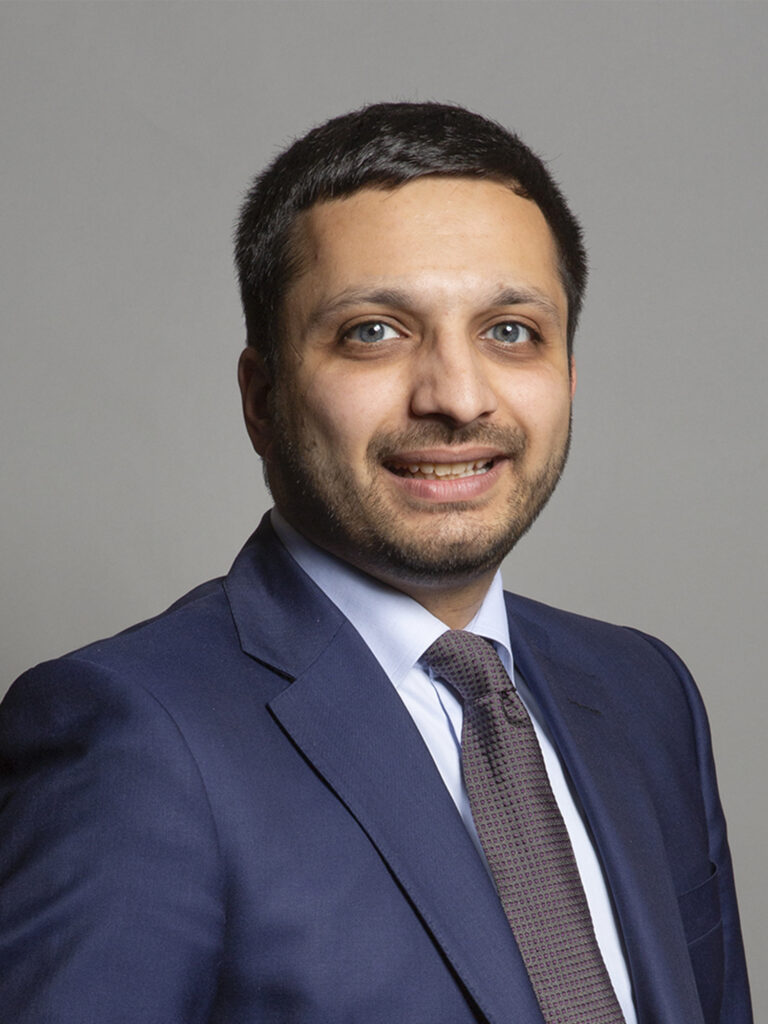
    Saqib Bhatti MBE MP is the Chair of the APPG for the Horse that, according to Bhatti acts as “a voice for the horse riding industry in the United Kingdom” to “give a unified voice to ensure industry concerns are heard in Parliament.” He tells me that recently their work has dealt with issues thrown up by the lockdown such as the operation of riding schools during restrictions and the classification of vets as key workers. 

    Indeed Bhatti’s APPG is now largely focusing on the post-Covid landscape. “We face a myriad of economic challenges and ensuring employment opportunities are available in the equestrian industry will require cooperation between industry and government.” 

    Saqib Bhatti MP chairs the APPG for Horses in Parliament

    Indeed, aspects of the equestrian industry have been hit hard by the pandemic. Last March, the iconic Cheltenham Festival was given the government green light to go ahead despite the escalating coronavirus crisis and has retrospectively been deemed a possible superspreading event. Race meets, sales and other large income generators all over the sector were closed down for months. 

    Yet, Bobby Jackson, marketing executive at Tattersalls sales in Newmarket claims that bloodstock, sales and marketing has remained relatively stable. “As our side of the industry deals directly with racehorses, COVID-19 hasn’t really affected the day-to-day care of them and therefore employment levels have remained fairly steady” he says, adding that “investment levels at the Tattersalls sales have been positive during the pandemic and would infer that employment levels should remain strong in the long term too.” 

    Claire Williams, Executive Director of the British Equestrian Trade Association (BETA) agrees, telling me that “to be honest, the trade and retail has come out of COVID quite strong. Certainly my retailers and manufacturers are coming out probably almost with higher turnovers than they were coming in [to the pandemic]. We’ve seen a real boom and equestrian sales over the last year. BETA is recognised as the official representative body for the trade sector of the equestrian industry, representing over 800 companies in retail, wholesale, manufacturing and other service agents.

    The Tattersalls sales ring at Newmarket (Edumark)

    Williams is keen to emphasise just how many opportunities there are across the industry, but particularly in the trade sector. “In terms of the trade side, you’ve got everything from saddlers, to photographers, or working for a large manufacturer. You’ve got the range of nutritionists, assisting in the development of feed or to act as advisors to the customers.” Equine nutrition is constantly responding to developing research so there are academic opportunities as well as client-facing roles. 

    “Then you’ve got business management type positions and companies, whether that be product development, market development, marketing and sales,” Williams adds. She is also enthusiastic about the creative opportunities available, such as in product design for both horses and riders, from hat silks to winter rugs.    

    There are also “a lot of PR opportunities” both in-house with large companies and dedicated specialist firms such as Mirror Me PR, as well as “opportunities for more science-oriented people.” The scientific primarily relates to veterinary medicine and pharmaceuticals but Williams also mentions that there are a great deal of R&D (research and development) opportunities with companies, such as those creating supplements.  

    Further to this there is the management and events aspect of the trade which can be a fruitful career for the self-employed as well as those that want to work at events corporations. However, events businesses have been one of the hardest hit by lockdown and restrictions on gatherings. 

    BHS’ spokesperson agrees with Williams about the abundance of employment options surrounding horses, saying that working with horses will provide “a strong foundation of skills and knowledge to support any career, or career change, in the industry. It will provide you with many transferable skills such as communication, assertiveness, organisation, time-keeping, resilience and confidence” adding that, “in any career connected to horses, from journalism and graphic design to saddlery or farriery, a foundation knowledge in complete horsemanship is recognised throughout the world as a huge advantage.” 

    The great AP McCoy riding Straw Bear to victory in 2006. Career opportunities are rife in PR, with dedicated firms such as Mirror Me Pr (Citrus Zest)

    Jackson too expresses the variety of opportunity within the marketing and sales sector of the equestrian industry. “In this side of the industry, if you want a hands-on job with horses you can do it, if you want an office job you can do it, or if you want a job combining outdoors and indoors then you can do it! There are roles for all talents.”  

    Jackson describes how the range of jobs within sales and bloodstock itself is huge. One can work on a stud farm and bring life into the world during the foaling season, or alternatively work at an auction house like Tattersalls and help fulfil people’s dreams when they sell a horse for a life-changing amount of money. “This side of the sport will give you moments that you will never forget,” he tells me.   

    Yet despite the plethora of opportunities the equine industry carries an unfortunate haze of elitism over it as a profession. It is associated with royalty and high-net worth investors, and while both hold essential roles in the sector, this perception can be an initial barrier to people considering a career in the sector. 

    The BHS told me that “there is an inaccurate perception that equestrianism is an expensive industry to get into. While it is true that owning a horse can be expensive, you do not have to own one to be able to start your career.” Jackson agrees: “The ‘sport of kings’ brings with it positive and negative connotations.” He tells me, “some people think that you need to have family in horse-racing in order to get a job in it. Incorrect.” He also stresses that his own family background is not connected to racing.  

    Williams disagrees that the industry is elitist at all. “When we look at our market research, [those with] lower to medium income levels actually comprise over half of the riders in the marketplace. It may be perceived as elitist but really I don’t believe it is otherwise we wouldn’t have 1.8 million regular riders.”    

    The winners’ enclosure at Cheltenham. Is horse-racing an elitist sport? (Winners’ enclosure; Carine 06)

    Jackson also explains that “unlike most industries, travelling the world and doing multiple jobs in your early career in order to get as much experience as possible isn’t seen as a negative in horse racing. So, by working hard, getting your hands dirty and proving your talent anybody can carve a successful career in our industry and absolutely love it.” This is a point of encouragement for those considering a career change or those yet to finalise their career choice after finishing studies.  

    Schools, colleges and further education institutions don’t tend to include opportunities to work with horses in the usual career days advertising medicine, the law and finance. Yet there are initiatives such as Racing to School which aims to educate school children on the activities and business of running racecourses. Jackson argues that such initiatives could be broadened to the bloodstock and sales side of the industry.      

    He adds that at Tattersalls, children from Newmarket Academy make an annual visit to Book 1 of the October Yearling Sale and “it would be wonderful if other schools around the country were able to do similar at stud farms, for example.”  

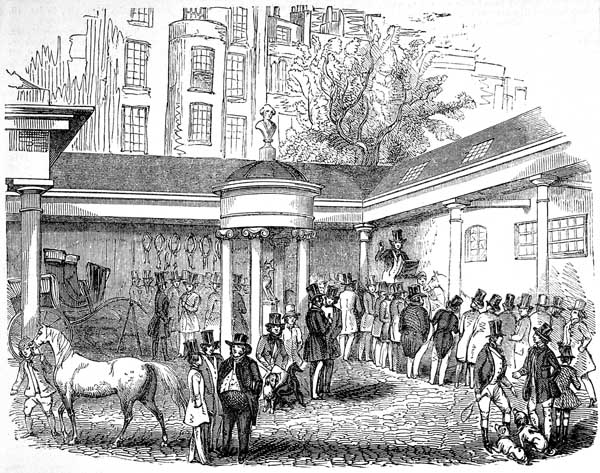
    An industry with pedigree: Tattersalls was founded in 1766

    Bhatti tells me that he agrees that there are challenges to those starting out in the equestrian industry. “The APPG has found that several employers feel that students coming out of education and moving into the sector lack some practical skills or experience and it is important to encourage as much hands-on experience as possible.” One solution he suggests is “working with schools to ensure placements in riding schools and other industry-related institutions become available for students.” A large part of the APPG’s work is with educational organisations such as the BHS to make people aware of opportunities within the industry.       

    Williams adds that “there are a lot of opportunities for young people such as apprenticeships. For example, we’ve got gateway stages with Kickstarter at the moment. I’ve got something like 40 employers with positions they’re creating specifically for young people.”    

    The equine industry seems to have remained relatively stable during restrictions, and even those elements such as racing and events that have been adversely affected are set to bounce back. Despite an air or exclusivity there is such a range of job opportunities within this industry and as Williams says “to work in the equestrian trade you don’t necessarily have to be horsey. You don’t have to have an equine degree to get a job in the equestrian trade at all. What we’re looking for is people showing that they’re capable, they can write well, they can analyse and they have the business skills that we need for business.”

    The BHS spokesperson offers equal encouragement: “the great news is that you can pick this up at any age or stage in your life – you are never too old to fulfil your passion for horses!” Jackson concludes with enthusiasm “what you will also find is that everyone is doing what they love – something I count myself very lucky to say – and this is a great leveller.”    

  • Desperate measures: how to get noticed in a crowded job market

    Desperate measures: how to get noticed in a crowded job market

    Georgia Heneage 

    If you scour the internet for ways to get yourself noticed, you’ll likely land upon generic advice about pumping up your CV, calling recruiters or improving your skill sets. 

    But the fiercer the competition, the greater the need to stand out. And sometimes, these are just not enough.  

    It turns out that’s especially so during global pandemics. The arrival of coronavirus has caused economic woe such as we’ve not seen since the Great Depression. Increasingly, employers are looking for that bit extra in their candidates. But what’s heartening is that there is an increasing number of instances where employees are providing just that. 

    Trevor Walford, a 63 year-old former butler for the royal family, had been working on a cruise ship when he was let go of following the first lockdown in March. In order to find a new job, he sent out over 700 applications. Having had no luck, he came up with the idea of standing outside the railway station in Leeds with a cardboard placard advertising that he was looking for a job. It worked. He was picked up by the executive of a restaurant group, and is now working as its training and development manager. 

    While the story of Walford is heartwarming, it’s also a sad reminder of just how competitive the job market has become. The explosion of the internet and social media has made it especially hard to stand out, and competition for entry-level jobs in particular has swelled alarmingly.  

    Amber Shrimpton, an HR consultant at Centrica energy, sees the trend of job-seeking stunts as part of a wider socio-economic context. The current economic situation, she explains, has engendered a ‘loose labour market’ where there are more people looking for jobs than employers offering them. She points out that there is a high number of applicants with university and other qualifications, meaning that jobseekers have more need to distinguish themselves. 

    “It’s the jobseekers who needs to make themselves more attractive,” Shrimpton tells Finito World. “My work in talent resourcing has shown that when you have 500 applications which look the same, having something which stands out is probably going to work in your favour.” 

    So is this trend born of desperation? “More and more jobseekers feel they have to do that extra”, continues Shrimpton. “It’s not okay anymore to just have a good degree. There has to be something else, and that’s the impetus behind it.” 

    Like marriage proposals, many eager and frustrated job seekers have resorted to unusual means of public advertisements. Liz Hickok strung up fairy lights to spell out ‘My wish- HR job’ and her LinkedIn handle, which landed her four interviews; Pasha Stocking used a billboard plastered “Hire me!: Unemployed and Seeking Employment” which gained her the media coverage to start her own PR company (which ironically specialised in helping people rent billboards). There was also high-school student Josh Butler who auctioned himself on eBay. His post went viral, landing him several interviews. He is now a successful city broker in London.  

    Even more creative examples might be cited. Lithuanian marketer Luka Yla found a job in his new home of San Francisco by dressing up as a courier to deliver a box of doughnuts to the companies he admired. The boxes carried the following inscription on the inside: “Most resumes end up in the trash. Mine—in your belly.” And, after writing a three-minute music video in place of a CV and cover letter, Alec Biedrzycki got his dream job at a marketing agency. 

    These success stories suggest that unusual methods of jobseeking may be the way forward for the millions currently facing unemployment. It might just be a question of changing one’s attitude towards what has become, in most industries, a deeply standardised and homogeneous application process.  

    When Lucy Martin, a 23 year-old graphic designer from London, first started searching for a job, she fell victim to this relentless process.  

    “I was at a point last summer when I was applying to so many jobs that I was becoming a number in the application process,” she said. “You just see thousands of people who are applying for the same job. I knew I just needed to get noticed in some way.”  

    This desire to stand out led Martin to pull a stunt in her application to the highly competitive advertising firm Saatchi & Saatchi.  

    Having got through to the second round of the application process, Martin was given a brief to come up with a design solution to the slogan “nothing is impossible” and told that she’d be notified if she’d been “picked”. Martin decided to take the second point quite literally. As well as fulfilling the brief, she headed down to her local sweet shop, bought a bag of pick ‘n mix, personalised some love hearts with her name on them, stuck a note inside saying “I hope you pick me”, and sent it on to the CEO of Saatchi. 

    “The concept was that he had no other option than to pick me- there was no one else in the bag apart from me,” says Martin, who got through to the next round and then finally got the job. “They really liked it. They thought it was really awesome” she added. 

    Part of Martin’s creative ingenuity came from her graphic design course at Edinburgh, where her tutors encouraged her to do “ridiculous things” to get noticed, and to “think outside the box”.  

    “I did this art installation where I froze flowers in ice cubes, and my tutor said I should go and give them to every single person I wanted to work for. There’s such a sense of urgency, because you’ve got a melting ice cube in front of you,” says Martin. “With any job, sending something physical is really effective, even if it’s not a creative job.” 

    It might seem like creative industries are better equipped (or more likely to be impressed by) such stunts. But across the job spectrum, people are finding they are having to think creatively when it comes to job applications.  

    Last year, Jack Nugee was working on an application – one of hundreds he’d produced that month – while listening to a cricket podcast. He decided to go off-piste and write his cover letter as a narration of an Ashes innings by Jack Leach innings, which had then acquired a kind of cult status, particularly in the cricketing world. 

    “I thought it would be interesting to try and relate my job experience to cricket, which I’m really interested in,” says Nugee. In an ‘Ode to Jack Leach’ he wrote: ‘I ask you to please engage your imagination as I attempt to equate myself to the English spin bowler Jack Leach’s innings in Headingly, highlighting, through his actions, the skillset at my disposal that align me perfectly for the account executive position.’ 

    In response to the letter, the employer said she wanted to speak to someone “weird enough to write a full page on a cricket innings, even though she’d never watched cricket in her life,” says Nugee. “She said it was the kind of thing they were looking for.” Having had no advertising experience at all, Nugee got to the final two and says “they were going purely off character based on the application.” 

    Though he didn’t get the job, Nugee’s current position was won through writing a similarly off-beat poem which begins; ‘I would like to apply for the role of Account Executive sat in the account management team/ You will find this application has a rhyming theme.’ 

    Though the need to be outlandish is more apparent now than ever, standing out doesn’t have to entail an eccentric application. It can come in the form of being proactive and presenting yourself to the bitter outside world.   

    Tibi Hodgson, a 23 year-old fashion stylist from London, never went to university and the sense that she lacked the right qualifications meant that she lacked confidence when first embarking on her job hunt.  

    Having had no experience in styling and facing rejection after rejection, Hodgson decided to contact someone she admired in the industry directly. “I said I felt an innate connection to her work and I could work for her at the drop of a hat.”  

    Hodgson says she didn’t know any of the “lingo” around styling and was launched straight into the deep end. She learnt the process just through doing it, and was soon styling high-end models like Adowa Aboah and Suki Waterhouse. 

    After her employer left for the US and Hodgson began working in a gallery, she kept an eye on her old job. “I was still being kept on the email loop and I noticed that some dresses and shoes hadn’t been returned properly,” says Hodgson. “So I volunteered to go pick them up myself. After that I just began going to different shops in Mayfair after work and seeing if there were items she needed to return, without her asking me to.” 

    Hodgson says that through doing this she made her own contacts in the industry, and this has led to other jobs. Now a seasoned stylist, Hodgson is a case in point that experience, qualifications and traditional means of job searching aren’t necessarily the be-all and end-all.  

    “I feel like with these unconventional ways it’s all about luck and for luck to happen you need exposure. So the more ways you can expose yourself, the better,” she says.  

    And, of course, the need to be outlandish applies not just to those seeking a job. The emergence of a gig economy and the sheer number of freelancers competing against each other is ensuring that freelance workers need to find alternate means to stand out from the crowd as well. 

    Rahoul Baruah, a freelance software developer from Leeds, was at a meet-up social with some fellow workers when he met a guy called Jamie who was “sort of famous in our world”. 

    Chatting over some beers, Jamie seemed excited because he’d just set up this agency called ‘Made in London’. The next day, “just for a laugh”, Baruah decided to set up a spoof of his website called ‘Maid in London’, featuring a picture of a barmaid with Jamie’s face and a link to the real company’s website. 

    The prank website ended up getting Jamie’s original company loads of business, and three months later Baruah was offered a year-long contract from them. 

    “I basically got a year’s work- which was really good pay- from just putting up a prank website,” says Baruah. “Me and my group of friends have always said that to stand out you’ve got to do stupid stuff.” 

    These stories all show that difficult economic circumstances can be traversed by imagination. You don’t always need to get noticed via outlandish means: it’s about putting yourself out there – whether that’s via personalised love-hearts, a cricket match for a cover letter or, like Baruah, just taking the time to show up. It’s about being bold and fearless in the face of the unknown.  

    “If you want something so badly, you have to make sure you respect it more than the next person,” says Hodgson. “You have to be that person who goes that extra mile.” 

  • Why homeschooling is the answer post-Covid

    Why homeschooling is the answer post-Covid

    Minerva Tutors CEO, Hugh Viney, explains why the government needs to look to a future of learning in the home 

    We’re used to seeing “homeschooling” in the news, but what isn’t commonly known is that compared to most countries around the world, the UK has very relaxed rules about educating your child at home.  

    In America, where it’s hugely popular, you might expect visits from official homeschooling inspectors to check you’re doing it right. Meanwhile, in places like Portugal or Turkey it’s banned altogether. But over here, it’s remarkably easy – you don’t have to enroll your child at school, you can teach them whatever you like, so long as you let your local council know. 

    Now, this doesn’t mean the majority of homeschooling families are throwing the national curriculum in the bin and dressing their kids in hemp. Quite the opposite. Most are in it, like any sensible parent, to ensure their child has the best opportunities in their life ahead. To do this means getting qualified. You need to take GCSEs and A Levels, study just as hard as you would do at school, sit exams as a private candidate – usually at a local “centre” – and pitch for your place at university like all the others. 

    But coronavirus changed things. If home-educating parents had used a professional homeschooling agency this year, then their child would have received their GCSE qualifications after the summer exams were cancelled. Such agencies were able to provide impartial predicted grades, which, like grades predicted by teachers at schools, the government accepted. What happened to the tens of thousands of kids who were being homeschooled by their parents or individual tutors? The government decided parents couldn’t be trusted to rate their own children, and no results were awarded. That’s a colossal shame, and highlights that the government has long had its eyes closed to alternative forms of education. 

    It’s time they woke up. Figures show that 57,132 children were registered as homeschooled children in 2018 in the UK. That’s up from 24,824 in 2013, an increase of a mighty 130%. And the numbers further increased in 2019 by 80% again. Why the increase?  

    Pre-coronavirus, there was a growing feeling among parents that school wasn’t equipping students for the modern world. Common complaints include: lack of encouragement of self-learning; a dearth of communication skills mixed with technical skills; lack of creative problem-solving; and an absence of skills that might actually be useful for the workplace, such as organising your daily to-do list or calendar. 

    Traditional, brick-and-mortar schools are also increasingly unable to meet the flexible lives led by some families who aren’t always able to reside in the same place. And with most schools unable to support children with special educational and emotional needs, it often means homeschooling is the best way to go from a mental health point of view, too. 

    Now, post-Covid, most of the UK has woken up to the fact that not only is homeschooling possible, but in some cases, it might also be preferable. Many children have thrived in lockdown. Despite some tabloid horror stories, so too have parents. Even a glimpse of a new parent-teacher model was enough to prompt 1000s of enquiries to our companies inbox.  

    The story was largely the same. Parents started seeing homeschooling as a viable alternative to school. They loved spending more time with their kids, and they wanted to know if there was a professional, regulated way to do this. Combine this with the UK becoming Zoom-qualified overnight, and our latest venture essentially founded itself. It’s an online school called Minerva’s Virtual Academy, and it teaches children (currently GCSE only) the proper curriculum through an online virtual platform, with minimal requirement for human teachers. Mentors (real humans) keep track of pupils’ progress and our students make friends with other online homeschoolers through group classes and “after-school” clubs. 

    We’re not alone. Other new companies are springing up to meet the demand. Existing solutions, such as Wolsey Hall Oxford, have been quoted as turning away a sharp rise in demand. Even Harrow School joined the party, launching an “online” version of their illustrious school a few years ago.  

    So can the government learn anything from this model? At the moment, online schools like ours are private, which means we charge fees. But this is much cheaper than hiring a personal tutor to teach your children or local councils paying for expensive tutoring companies to support homeschooled kids. It’s also a fraction of the cost of sending your kids to an actual private school.  

    The government is backing the National Tutoring Program, led by the EEF, with £150 million to provide much needed after-school tutoring to hundreds of thousands of pupils across the UK post Covid-19. This is highly commendable. But could online homeschooling also be used to empower some of the lost “Covid Generation” of pupils, taking some of the burden off the schools for the mammoth catch-up task ahead?  

    The government needs to see the bigger picture. With scalable, innovative tech platforms that teach the GCSE and A level syllabus without the need for a teacher, and dedicated one-to-one mentors that support and nurture each child and ensure they don’t fall behind, online homeschooling solutions should have a part to play in the future. If traditional schools and their teachers are going to continue to be stretched, then online homeschooling done in the right way could be a solution. We may be outliers at the moment, but innovation in education is happening. I’m calling on the government to get with the program. 

    Hugh Viney is the founder of Minerva Tutors, whose Virtual Academy designs bespoke homeschooling programs for pupils aged 6-18, either at home or online