Blog

  • Ian Botham’s unbelievable journey: Headingley 1981, Geoffrey Boycott, and transformative philanthropy

    Christopher Jackson


    In person, Ian Botham is utterly solid, calling to mind a rugby prop forward more than England’s greatest cricketing all-rounder. Botham is a famous wine enthusiast, and hunched over his lunch as if he could easily eat one’s own meal as well, it would be a lie to say one can’t see that he’s enjoyed himself from time to time.

    Botham is one of those very few sportsman whose achievements carry across the generations. Sport is really to do with the dramatic maximisation of the present moment: we are rarely quite so conscious of life as when we watch closely to see whether a ball has nicked a bat. Especially because there is so much of it, little sticks in the mind.


    1981 and All That


    Something about Botham did: it was to do with the fearlessness with which he played the game, allied always to a certain laddish humour which is still in evidence today. Especially Botham is known for the Ashes in 1981 now forever known as Botham’s Ashes, when Botham’s swashbuckling 149 not out at Headingley began an unlikely set of events. Not until 2005 would cricket come alive in this country to anything like the same extent.

    When we think back on that Test match, It should really be Bob Willis’ test, since it was Willis, who died of cancer in 2019, took 8-43 to bowl out the Australians. Willis hangs over lunch, since Botham is here to raising money for the Bob Willis Fund which raises money for better prostate cancer research.

    Botham tells a wonderful anecdote about that storied day in 1981: “Australia needed a 130 to win. The Australians were 50-1. Bob comes on, and turns to Briers [Mike Brearley, the then England captain] and he said: ‘Any chance I could have a go down the slope with the wind?’ He steamed in and took 8-53.”

    This led to an amusing administrative issue over the unexpected celebrations which Botham, as the world knows, enjoyed more than anyone. “We had this young lad – Ricci Roberts, a 140year-old: he was over from South Africa as a runner. I said to him: “Look we haven’t got any champagne, because obviously thought we weren’t going to win the game.” The Australians thought they would. I said to Ricci: “Go and knock on the Australians door, and be polite and just say: ‘Could the England boys have a couple of bottles of champagne, please?” He did exactly that, but added on the end: ‘Because you won’t be needing them’.”

    The Australians may not have reacted well. Botham continues: “Ricci came through the door horizontal. He had one bottle in each hand and he didn’t spill a drop. Ricky Ricci went on to be Ernie Els’ caddie in all Ernie Els’ major wins. That was down to what we taught him – and how Bob taught him to pour a pint.”


    The Two Geoffreys

    At Lord’s, alongside the extraordinarily likeable Geoff Miller, Botham gave a jovial tour through his career, joking that Geoff Miller was ‘the livelier of the two Geoffreys I played with’ referring to his long-running grudge against Geoffrey Boycott, who Botham famously ran out in Christchurch in 1978. On that famous occasion, Boycott was batting at his usual glacial pace when the situation required runs. Botham picks up the story: “I was asked by Bob, who was then the vice-captain, to run him out and I said: “I’m playing my fourth game and he’s playing his 94th.” Bob replied: “If you don’t do it, you won’t play your fifth.”

    It is impossible to not feel nostalgic about the fun of those times. Botham has come along way. In fact, when Botham recalls his upbringing, as is usually the case with the extraordinarily successful, his story comes into focus in all its glory and improbability: “My father was in the services in the Navy and was serving in Northern Ireland on active duty. When his wife Marie, my Mum, was due to give birth, they sent us over to Heswall in Cheshire.”


    Crunch Time

    The family then moved down to Yeovil and Botham, having shown exceptional sporting prowess, had a difficult decision to make by the age of 15. “I had to make a choice between soccer and cricket. Crystal Palace offered me an apprenticeship. I had just signed at 14 with Somerset – I registered with them and when it came to the decision, I sat down with my dad. He said: “You are by far a better cricketer”. I listened to him – for once.”

    Botham then transferred to Lords for a year and half, before being called back to Somerset at 18. It didn’t work out too badly, did it? Botham smiles: “Not too bad.”

    Botham recalls his first Test match. “The way they did it in those days – well, let’s just say it wouldn’t happen nowadays. You’re driving down a motorway. At three minutes to 12 you turn into a layby and switch the radio on and wait for the 12 O’Clock News. And the England team to play Australia is…And I thought: ‘Yes, I’m in’.”

    That sent Botham up to Trent Bridge, where another lovely anecdote occurs. “We lined up at the start of the game and it was the Queen’s Jubilee. The Queen went down the England line, and wished me luck on my debut. Then she went over to the Australia line, and came to DK Lillee [the great Australian fast-bowler].

    Dennis pulled out of his back-pocket an autograph book. “Ma’m, would you sign this?” She said: “I can’t do that now.” But clearly the Queen had remembered the encounter. Botham continues: “When Lillee got home from the tour six or seven weeks later, through the letterbox there came this envelope with the Royal seal and there was a picture of the Queen. It now sits on his mantelpiece.”


    Merv the Great

    It’s a lovely story – and the more time you spend in Botham’s spell, the more the stories keep coming. Merv Hughes also gets the Botham treatment. “In 1977-78 we toured Australia, one of my first tours. We were sponsored by a company called JVC Electronics. They decided in their infinite wisdom that on the rest day morning at about 10 o’clock – when most of us had only been in bed 10 minutes – we’d go to a shopping mall in north Melbourne to mingle. None of us were particularly excited about that prospect.”

    So what did Botham do? “I hid behind this tower. This young lad came up in a tracksuit and said: “Good day, Mr Botham. Mate, I want to be a fast bowler have you got any advice for me?” I wasn’t feeling great so I said: “Mate, don’t bother – go and play golf and tennis.”

    Fast forward to 1986: the first test at Brisbane. Botham recalls: “Merv Hughes makes his Ashes debut in that game. In Brisbane, you could see this little black line, that in about 30 minutes became a thunderstorm – hailstones the size of golf balls. Hughes bounces it in, then the gigantic hailstones. Merv wasn’t happy as I’d hit him for 22. We weren’t going to play anymore, the ground was covered with these golf balls.

    One of the lads brought me a beer. Merv comes out and I say: “Congratulations on your first Ashes.” He said: “You know we’ve met before.” I said: “No. Where?” “At the shopping centre in Melbourne.” I was that kid who came running up to you, and you told me not to be a fast-bowler but to play tennis and golf.” He said: “What do you reckon now?” I said: “I was bloody right.”


    Beneath the swagger of the public persona, there is his immense generosity as a philanthropist and his life as a family man. His grandson, James, is following in Botham’s footsteps as a sportsman. Botham speaks with evident pride: “He’s had a couple of years with injuries. His confidence is back – he played very well against South Africa at Twickenham. James was born in Cardiff and said: ‘I’m playing for Wales’. He’s got a task on his hand and we’ll see.”


    A Decisive Difference


    But it’s the philanthropy which really brings a tear to the eye. “I’m very proud of it,” says Botham. “In 1977, I was playing against the Australians and stepped on the ball and broke a couple of bones in my foot. In those days you didn’t stay with the England squad, you got sent back to your mother county. Mine was Somerset.  So I get to Musgrove Park Hospital in Taunton, the club doctor’s waiting for me. To get to the physio department you had to go past the children’s ward.”

    This turned out to be a fateful walk since it would change many peoples’ lives. “You can see children who are obviously ill – tubes sticking out, and their feet up. There were four lads sitting round the table playing on the board games. I said: “Are these guys visiting?” He said: “No, they’re seriously ill.” I said: “But they look fine.” He replied: “You’ve got eight weeks of intensive treatment to get it right for the tour. Those four lads in all probability will not be there when you finish your treatment. True enough at the end, all four of them had passed away.”

    It made a deep impact on Botham who found he couldn’t stand by and do nothing. “What the hospital used to do was give them a party, whether for one of their birthdays or for Christmas. And they were so drugged up with painkillers. As I was leaving the hospital, I said: “Is there anything we can do to help?” He said: “Well, you’ve now seen four parties. We don’t get any funding for those.” I said: “I’ll stick my hand up and pay for the parties.”


    By mid-1984, Botham wanted to do something more substantial. “I was flicking through a magazine which someone had left on the train – a colour supplement. There was an article about a certain Dr Barbara Watson, who lived on the south coast. Every summer she would get on the train and go to the most northerly part of the UK, John O’Groats and meander back. I thought: “Right, I’m going to do a sponsored walk. I’m going to do John o’Groats to Land’s End. My geography wasn’t great. 400 miles to the English border, then 600 miles to the Land’s End.”

    It was a huge learning curve for Botham who had never walked like this before, but he managed to do the walk in 33 days. “You couldn’t do PayPal: you had to physically collect. By the end of the walk we got over £1million. That was used immediately to build a research centre outside Glasgow.” Then the conglomerates came behind us. “When we started the walk, there was a 20 per cent chance of survival for kids with leukaemia – a few years ago we announced it is now 94 per cent.”

    It’s an astonishing story of how something so innocent as being good with a bat and ball and can lead with the right heart and mindset to genuinely consequential change. Botham’s is a reminder to us all to start with what we’re good at – but to keep an eye out for what we might do for others along the way.


    Lord Botham was talking at an event at Lord’s Cricket Ground in aid of https://bobwillisfund.org/


    https://www.beefysfoundation.org


    Like this? See also our other cricket articles:


    Cricket Nostalgia: Henry Blofeld on PG Wodehouse, Ian Fleming and the Remarkable Cricket of the Past

    Culture Essay: What we can all learn from cricket


  • Jon Sopel’s fascinating take on January 6th, the Starmer administration – and why he left the BBC

    Jon Sopel


    I am sometimes asked about why I left the BBC. I remember the corporation went through this spasm of asking themselves how to attract the young. If you watch the news, by and large you’re over 60. The same is true of the Today programme.

    The editor of the 6 O’Clock News was thinking about how we get more young people. Do we need younger presenters? Or do we need old people like me talking about young people’s issues? This was at a time when LPs were making a comeback. We sent a young reporter down to Oxford Street, and said to a teenager, holding up an LP: “Hello, I’m from the Six O’Clock News. Do you know what this is?” The teenager replied: “Yes, it’s an LP. What’s the Six O’Clock News?”


    Thinking back to January 2021, I can’t forget the day after the inauguration when Joe Biden was finally President. Washington DC that day was less the elegant neoclassical city that most people remember from the Capitol through to the Supreme Court and the great museums that go to down the Mall. It was a garrison town, the place was absolutely sealed off. There were rolls and rolls of barbed wire because of what had happened on January 6th. I will never forget the shock of that.


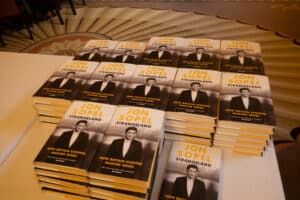
    Jon Sopel book launch in aid of Hospice UK and hosted by Finito at The East India Club, London. 17.9.2024 Photographer Sam Pearce / www.square-image.co.uk


    January 6th is also inscribed on my mind. I’ve been in situations where I’ve faced greater personal danger, when you’re in a warzone and you’ve got a flat-jacket one, and there’s incoming fire. But I’ve never seen a day more shocking than January 6th when the peaceful transfer of power hadn’t happened. I went on the 10 o’clock news and the mob still had control of Congress and Joe Biden’s victory still hadn’t been certified. That’s the starting point for my new book Strangeland: I wonder how safe our democracies are. My experiences in America made me realise that we cannot be complacent in the UK.


    Another thing happened the day after January 6th. The Capitol had been sealed off by razor wire and I went as close as I could, and went live on the 6 O’Clock News. There were lots of Trump supporters around and they heckled me throughout so that the anchor Sophie Raworth had to apologise.

    It soon morphed into a chant: “You lost, go home! You lost, go home!” I was trying to figure out what that meant. At the end of my live broadcast I said to this guy: “What on earth does this mean?” He poked me in the chest and said: “1776.” I thought: ‘Do I explain that my family was in a Polish shtetl at that stage?”


    Peter Hennessey, the great chronicler of government in the UK, talks of the good chap theory of government – you rely on people to do the right thing otherwise the system falls apart. I came back to the UK at the beginning of 2022 after eight years in America. The first election I voted in was 1979. For the next three years I knew three prime ministers: Margaret Thatcher, John Major and Tony Blair. In 2023 we had three in one year – that’s a reminder of the volatility of the times we live in. In many ways in 2016 – with Brexit and with Trump – the world jumped into the unknown.


    Jon Sopel book launch in aid of Hospice UK and hosted by Finito at The East India Club, London. 17.9.2024 Photographer Sam Pearce / www.square-image.co.uk


    It’s always seemed to me that the Labour Party finds power a really inconvenient thing to happen. They much prefer it when they’re forming Shadow Cabinets and discussing the National Executive. Then you’d get pesky people like Tony Blair who come along and remind them it is about power. The Conservative Party was always the ruthless machine of government: there is an element in which the Conservative Party is in danger of going down the Labour Party route. It was the Conservative Party membership, for instance, who gave us Liz Truss, the patron saint of our podcast The News Agents. We launched in the week she became Prime Minister – and my God, she was good for business.


    What would Britain look like if there were 10 years of Starmer? He’s done the doom and gloom, and how everything is the Conservatives’ fault. That’s fine – but so far, he’s not set out what the future is going to look like under him. Is it Rachel Reeves’ vision of the growth economy? Or is it Rayner’s vision of increasing workers’ rights. I think Starmer is an incrementalist and simply doesn’t know. If he has any sense at all he will look at the centre of political gravity in the electorate and go for growth because that’s what the country needs.


    Jon Sopel book launch in aid of Hospice UK and hosted by Finito at The East India Club, London. 17.9.2024 Photographer Sam Pearce / www.square-image.co.uk


    Hospice UK do the most amazing work. The book I’ve written Strangeland deals with the challenges facing Britain at the moment. Hospice UK do the most amazing work. Strangeland deals with some of the huge challenges facing the . Hospice care is one area where something urgent needs to be done.


    Jon Sopel was talking at a Finito event given in aid of Hospice UK. To donate, go to this link: https://www.hospiceuk.org/support-us/donate


  • Coldplay’s ‘Moon Music’: the virtues of “surmounted cliche”

    Christopher Jackson reviews the latest Coldplay release


    Every now and then I find myself considering the fine margins between major and minor success. I remember, for instance, a gig I attended at the turn of the millennium at the Nottingham Arena performed by the band Travis. In those days, like their rivals Coldplay, they could easily fill a stadium of 10,000 people. We may have turned up with a certain scepticism but ended up shouting out the lyrics to ‘Sing’, our cynical side assuaged by the fun of the evening.

    Today, rotating on Apple Music, Travis’ songs have a power of nostalgia which the songs of Oasis lack. ‘Wonderwall’ has never really gone away. Travis, by contrast, have had a quiet few decades: this fact creates the gap in our experience which can make for a genuine revisiting not quite possible with the Gallagher brothers. And Travis’ songs stand up reasonably well. ‘Why Does it Always Rain on Me?’ ‘Sing’. ‘Driftwood’. ‘Flowers in the Window’. I hope they have a comeback.

    But had you asked me in the year 2000 which band, Travis or Coldplay, would in 2025 break the record for the most consecutive gigs played at Wembley Stadium, I would have probably plumped for Travis. Coldplay at that time were mainly known for ‘Yellow’, which, lovely as it was, seemed to be a melancholic dead end. Travis’ songs seemed to have more complexity: they even sounded a bit like standards. One could imagine people covering them: there was more to explore.

    I was wrong, of course. I’m not sure if Travis can still fill Nottingham Arena, but I know that it would be too small a venue for Coldplay. When A Rush of Blood to the Head came out in 2002, I was on the frontlines of the backlash, feeling that Coldplay represented not something new and lasting, but some form of decline from the greater cleverness of Blur and Pulp, those high spots of Britpop. Coldplay, I felt confident, represented the blandification of the British scene.


    Change of Heart

    I now see I was wrong in this reasoning – and wrong perhaps precisely because I would have been reasoning and not experiencing the emotion of the music.

    All this came back to me recently when Coldplay returned to my life by a series of accidents. Our family’s enjoyment of ‘Something Like This’ in the car on holiday, led me to the Coldplay Essentials playlist on Apple, and via that to a discovery of all that Coldplay had been up to in the intervening decades since I had loftily decided that they would have no future. I note also that I never bothered between the years 2002 to 2024 to check in on whether my predictions had proven false or not.

    At least I am not alone. As I read the other reviews of Moon Music, the album recently released to an almost Swiftian excitement, I realise I am not alone in having underestimated Chris Martin and all his works.

    Almost any broadsheet review of a Coldplay album will begin with some disclaimer, making it reasonably clear that though the reviewers themselves have not written ‘The Scientist’ – or indeed any song of any description – that they are obviously above the task which has befallen to them: namely to review the latest Coldplay album.

    Usually, there will be some sniping at the lyrics, and a general keening about Chris Martin’s perennial failure to be Gerard Manley Hopkins. From here, the reviewer, having restored themselves to intellectual respectability, will then go on to relate what I suspect might be their real feelings: namely, a few carefully caveated points of praise. It turns out that one or two of the songs are actually ‘not bad’ or in fact, in some cases, surprisingly good. It is then sometimes observed that this is true of most and perhaps all Coldplay albums. The eventual rating – usually three stars – seems to conceal a certain embarrassed enthusiasm.

    If we take the typical reviewer’s estimation at face value that there are, say, two good songs on each album then it must be pointed out that this still amounts at this point to around 20 songs which even the naysayer would wish to preserve.

    What is often forgotten is that this in itself is a high number. If we look at the amount of a celebrated pop act’s catalogue which we actually want to keep it usually turns out to be very small. We would probably be content with rescuing around 10 of Fleetwood Mac’s songs, and Fleetwood Mac is an excellent band. I’ve often thought the Rolling Stones really amounts to around 20 songs (they have released hundreds). It’s only when we get into the major acts, the Beatles and Paul Simon that we top 50 songs – and only in relation to Bob Dylan that we clear 100.

    All this is to say that even if we take a negative estimate of Coldplay’s output then the band’s work is to be approached with respect and not derision.


    The Ghosts of Modernism


    Of course, one shouldn’t have to say this – and one wouldn’t have to say it at all if it weren’t for the peculiar way in which the 20th century turned out in terms of art. Really, it is an inheritance of modernism where people began to feel that things must be complicated, and even incomprehensible, to be good. This view would have surprised many artists and writers who university professors like to exalt, Shakespeare among them, who always took care to have a ghost or a murder – and ideally both – in his plays.

    What appears to have happened by 2024 is that we have realised more or less unanimously that we quite dislike modernism, and wish to keep it at a safe arm’s length. We want to enjoy life, and that for most of us, means not reading The Wasteland or listening very much at all to Schoenberg.

    This is not to say that Moon Music is full of ageless poetry: if written down, the lyrics can indeed be banal. But then this album never claims to want to be experienced in that way: it claims instead to be joyful – and joy-inducing – music. This has two ramifications at the level of the lyrics which are worth examining.


    One is the propensity for simple and grand statements which at the level of language, a child could write. In the third single of this album ‘All My Love’, the lyric reads:


    You got all my love
    Whether it rains or pours, I’m all yours
    You’ve got all my love
    Whether it rains, it remains
    You’ve got all my love


    Now, we can certainly surmise that if T.S. Eliot were writing that as poetry that he might not be top of his form, and even having rather an off day. Bob Dylan, a different kind of songwriter to Martin, especially when writing in the 1960s, would if writing this song no doubt cram in additional internal rhymes around ‘pours’ and ‘yours’ with available words being ‘floors’ ‘pause’ and ‘cause’. He would glut the listener with ideas – and with every idea crammed in one can imagine it getting significantly less likely that the song would ever be sung in a stadium. The song would become more intellectual – would become another kind of song.

    Martin doesn’t do this, and I think at this stage in his career we must give him the benefit of the doubt that he does it deliberately. To firm ourselves in this concession, let me pick almost at random an interview excerpt to show the intelligence of the man. This is Martin talking to The New Yorker in an article released to promote Moon Music:

    “I’m so open it’s ridiculous,” he said. “But, if you’re not afraid of rejection, it’s the most liberating thing in the world.” Well, sure—but who’s not afraid of rejection? “Of course,” Martin said, laughing. “To tell someone you love them, or to release an album, or to write a book, or to make a cake, or to cook your wife a meal—it’s terrifying. But if I tell this person I love them and they don’t love me back, I still gave them the gift of knowing someone loves them.” Martin noticed a slightly stricken look on my face. “I’m giving this advice to myself, too,” he added. “Don’t think I’ve got it mastered.”

    Now regardless of the ins and outs of the philosophical point here, I think most will agree this is obviously an intelligent man speaking who is probably in person wise, funny and kind. Furthermore, it seems unlikely that he should become less so when doing the thing he loves to do which is songwriting. In short, there is something forgivable about the lyrics when we consider the man.

    So given the deliberate nature of his music, what is it which Martin is trying to do with a song like ‘All My Love’? With this kind of song, everything comes down to the sincerity with which it is sung. Sometimes, reviewers will accuse Martin of issuing song lyrics which are like Instagram self-help posts. This is intended to wound him, and perhaps it does.


    Chris Martin by Roger Woolman

    However, even if this is admitted to, we have to say that there are two kinds of platitude: that which is meant sincerely and genuinely designed to help people, and that which isn’t really intended to help at all but which is really a kind of show, and therefore a sort of con.


    On Sincerity

    Having listened to Moon Music for the last few days, I don’t think it is at all the latter. I think Martin is someone who genuinely cares about his fellow human beings, and that his music is, by and large – with admitted peaks and troughs which are entirely human – a fair method of conveying what he feels about life. It was Emmanuel Swedenborg who wrote of insincere feeling that it were as if ‘a liquid were, on the surface, like water, but in its depths putrid from stagnation’. A certain kind of commercialised pop music is like this: it is, in its depths, false.

    The impression one has of Coldplay is different. Probably it wouldn’t catch so many people, and cause such widespread delight, if it weren’t.

    It was his friend Nick Cave who wrote of Chris Martin’s ‘songwriting brain’. Now that we have admitted that he has one, we can see what Martin is able to do in his songs. The interesting point about this is that the correct measure of true feeling does away with artistic doubt. Moon Music is full of what we might call surmounted cliché.

    If I sing that I feel like I’m feeling falling in love, and I have – as one might in adolescence – no real sense of what that feeling means, I will sound rather silly. I will probably not convey that feeling with sufficient experience. Almost certainly, I shall sound immature and insecure, and if the girl is rejecting me, self-pitying.


    But if I sing, as Martin does on the second track here ‘feelslikeimfallinginlove’, about falling in love with full consciousness of what that means – the fear as well as the joy, the vulnerability as well as the force of it – then the words, simple as they are, come hitched to meaning. In that scenario, the music has some sort of potential which exists completely independently of what has been written down on the page.

    Similarly, if I pray for a better world as in the third track here ‘We Pray’ and with every fibre of my being, I really do wish for peace for my fellow human beings, and feel the genuinely awful corollary of war and all its disasters as I sing it, then I am able to bypass the literary concerns of even a music journalist for The Independent around a line like “Pray that I don’t give up/pray that I do my best’.

    That journalist may write at length that I am using cliché, but will be missing the fact that in pop music, if I mean what I sing, and see the glory of peace and the horror of war in my mind’s eye as I sing it, their objections simply don’t carry. In this art form, to mean what one says is a sort of de facto defeat for the naysayer because no matter what The Independent might say, peace is really a very important thing, and praying for it is a very good thing to do.

    At a certain point, Martin realised he could do this sort of thing again and again and that people hugely needed it. He is not Dylan or Cohen, and never intended to be. Musically, his chords progressions are extremely simple, and so he is also to be differentiated from the greatest player of stadiums Freddie Mercury. Mercury’s musical vocabulary was borrowed from jazz and classical. A song like ‘All My Love’ with its straightforward chord sequence from Am to D7 to G and Em shares nothing musically with Mercury’s ‘My Melancholy Blues’ with its complex diminished chords. In fact, Mercury’s songs would generally be a bit outside Martin’s ability as a piano-player.


    Don’t Panic

    But again, in a world of difference, there is no need to fret about any of this if the music can be made to convey good things honestly. It might all be summed up by the presence of an emoji of a rainbow as a track title on Moon Music. A rainbow is a cliché of course – but I know few people who don’t pause and point when they see one in nature. A rainbow then, like peace, or love is not just a cliché. It is also a vital thing which needs to be re-experienced.

    There has been a lot made about Martin’s saying that there shall only be 12 Coldplay albums. With this being the 10th, we are therefore approaching the end of the band’s career. We should remember that it’s a career that has caused enormous amounts of pleasure to many people because of a certain fearlessness about finding ways to refresh us in relation to the obvious.

    How has he done this? I think he has done it by trusting to the origins of songs. A few years ago, Martin explained that he was going through a hard time dealing with the inheritance of an evangelical upbringing. One’s sense is that like so many in the Western world, his struggle has been with the structures of religion – what we might call its exoteric aspects. In short, many people are vexed by things like churches and prayer-books, and desire to reconnect with the wonder of ‘skies full of stars’ or ‘good feelings’.

    Music is one way in which this can be done, and it really means connecting again with the inner self – that is, the esoteric. Coldplay might seem an unlikely messenger of some sort of revolution of the inner self. One begins to say that they don’t take themselves sufficiently seriously for that to be possible – and yet, the moment one thinks in that way, one realises that this is itself what frees people up. In Coldplay, a woman dreams of ‘para-para-paradise’ – and for many this brings paradise itself nearer than a Eucharist or a monk’s chant.

    It would be a shame to miss out on all this in the mistaken belief that a song is a poem, and that a pop concert is meant to be an opera. Life isn’t like that, and I think we owe more to Chris Martin than many realise for not only knowing this but for enacting this knowledge.


    Like this article? For more music content go to:


    Essay: Paul Simon’s Strange Dreams

    Nick Cave and the Bad Seeds’ ‘Wild God’: ‘a song of planetary importance’


    ‘Steppin’ out into the dark night’: a review of Bob Dylan’s Shadow Kingdom


  • 7th October one year on: A Letter from Israel

    Christopher Jackson


    This letter is ten years late. I went to Israel for the first and so far only time in 2013, and for obvious reasons have been thinking about the country a lot since the attacks on 7th October 2023, and the events which followed. This is really a letter to Israel – a delayed epistle I’d been waiting for an excuse to write.

    I was unlucky in the lead-up to that trip: I dislocated my knee playing tennis a week before flying. I was thus forced to cut a comic figure in Jerusalem and Tel Aviv, hobbling with my grandfather’s old silver cane around the Old Town, which, as visitors will know, contains numerous steep pathways, including the famous Via Dolorosa up which Jesus is meant to have shouldered his cross. At one point, I remember an eight-year-old girl trying to steal my cane off me, leading to a scene reminiscent of the sort of thing which might happen to Larry David in Curb Your Enthusiasm, where I sought to wrest it back and found myself only just equal to the task.

    But I found I loved the country: loved its noise and its contention, and the passion for theology, philosophy and history that lay behind its disagreements. Jerusalem is a microcosm of the human story. To step into it – even casually, and unwittingly – is akin to presenting yourself to humanity for inspection. It all amounts to the strangest of looks in the mirror.

    In Jerusalem, it’s not unusual to find people coming up to you in a bar and asking some variant of the question: “Who are you?” “Where are you from?” To ask this question in any other city in the world is to issue a pleasantry; in Jerusalem it feels deeper than that, an invitation to consider your personal identity. Most people who go to Israel end up feeling that they somehow needed the experience. At times, it feels like undergoing therapy.


    It’s no coincidence that in the Gospels Jesus’ opening remarks to his disciples constitute both a salutation and a challenge: “What seek ye?” Quite a lot of the time in Jerusalem one closely neighbours the related question: “What am I seeking?”

    The answer, if we’re honest, almost always involves some sort of large noun: truth, beauty, happiness, love, God – peace. Jerusalem is a place to consider all these things, although periodically, as on October 7th 2023, it particularly evokes the question of peace. That’s because that question: “What am I seeking?” hasn’t always summoned up the same answers in the hearts of human beings.

    The large nouns mean different things to different people: for some happiness is a rave – for others it’s a church service. Peace in turn can be the means by which we gently seek to bring others into our sense of the world, or open ourselves to new avenues of being.  Alternatively, as with Hamas, peace might almost slide into its opposite: it might masquerade as the means by which we seek to still a murderous resentment which all too readily rises up in human minds.

    The founding of the state of Israel was widely deemed necessary in the aftermath of the Holocaust, but soon ran into a difficulty which now feels somewhat inevitable due to the geography of the situation. And yet if we believe at all in human freedom then we can’t quite throw up our hands and shrug that it had to be that way. We must admit that the whole question of the state of Israel foundered on human frailty.

    As a general rule, wars are what incompetent governments inflict on unsuspecting peoples. We cannot call the period from 1948 a period of model governance. On the other hand, there have been periods of statesmanship: the Oslo Accords, begun in 1995, and the Unilateral Disengagement Plan in 2005 both amounted to attempts to move towards the solution of the problem.

    As I travelled through Israel, I found myself asking how the situation has deteriorated so seriously so rapidly. The first clue is in the history itself. Everywhere else on earth, history feels asleep by comparison. Here, you feel its urgency – its pulse. To be surrounded by so much holiness is to exist in a highly alert moral condition, and this is the case if you’re only visiting. To live here must be another step up.

    Secondly, I often think of an observation once made by Daniel Barenboim the c0-founder, with Edward W. Said, of the West-Eastern Divan Orchestra. This orchestra brings together Israeli and Palestinian musicians. Barenboim was at a rehearsal and stepped out for a moment, returning to find his orchestra at loggerheads over politics. He watched them argue and reflected that both sides of the argument are of a similar temperament. It isn’t, Barenboim reflected, like a conflict between the Swedes and the Italians. This fact alone, Barenboim says, accounts for much.

    It all amounts to a charged atmosphere. There is a lovely museum Ticho House in Jerusalem which all visitors should see. It was founded by Dr Abraham Ticho, the husband of the landscape artist Anna Ticho. When Abraham, an ophthalmologist, was injured in the 1927 Palestinian Riots everybody – Jews, Christians and Palestinians – prayed for his recovery since he was the go-to man for the treatment of the common ailment trachoma.

    These riots, in which 133 Jews were killed by Arabs and 116 Arabs killed predominantly by Mandate police, were sparked by questions of access to the Western wall. It all reads like a terrible promo of the conflict we now have. The Shaw Commission, charged with looking into the matter, would find that the riots were caused by “the Arab feeling of animosity and hostility towards the Jews consequent upon the disappointment of their political and national aspirations and fear for their economic future”.

    Of course, one might have feelings of disappointment and anxiety without resorting to murder, and Ticho’s story reminds us that many didn’t have these feelings. It is worth visiting the Ticho museum to remember not just Ticho, but the people of every denomination who prayed for him because his medical skill ensured he was part of their shared interest. In Ticho’s story, we receive a tantalising glimpse of another set of possibilities for the region which sadly has never yet been taken up.

    And there is something unique about his wife Anna’s landscapes too. In these pictures, it is as if the land of Israel, like Jerusalem itself, carries a particular charge. This isn’t solely to do with politics: for Christians (and for many Muslims), these are the hills which Jesus retreated to in between sermon and miracle; for Jews, each bush can be aflame, as it was for Moses, with the suddenness of God; for Muslims, the very sky is open – filled with the idea of ascending to the Heavens. That means that Ticho can never be painting landscape in quite the same way that, say, Constable is painting landscape: she’s painting spirit.


    Injured though I was, I decided it would be worth taking a taxi out onto the West Bank. In Bethlehem, you can visit the Church of the Nativity – the supposed original of the manger which we used to recreate in our youth in rural Surrey. As we drove out, I saw the grape sellers – all Palestinians – reduced to selling grapes on the side of a dusty road, where little traffic comes. All drivers know that non-dusty grapes are available in the supermarkets of the built-up settlements nearby. It is a hopeless situation and even those broadly supportive of Israel will wonder at a lack of humanity which is so evident but whose causes are so difficult to trace.

    In Hebron, the look and feel is of a warzone without the bombs falling. Children kick bedraggled footballs against the walls of shuttered shops; Israeli tanks move through the streets, like sharks through a fish tank. Here the guidebooks point you to the Cave of the Patriarchs, considered to be the burial place of Abraham and Sarah – figures whose importance the major religions agree on.

    Here one feels one is entering something like the crux of the matter. As a Westerner, I was only able to go in through the Israeli side. There is an entrance for Muslims I didn’t see, and the interior itself is partitioned. I hobbled up towards some Israeli soldiers who seemed to be mocking my injury in Hebrew, which didn’t strike me as the most welcoming start.

    Cave of the Patriarchs

    Inside, there is a seminary where Jewish students recite passages from the Torah, and everywhere there was a hushed seriousness and, to me at least, a palpable sense of things being about to kick off. This is the hard fact about Israel: from Woody Allen to Larry David, Jerry Seinfeld and Mel Brooks, nobody has made the world laugh harder than Jewish people. But to come to this land is to feel that everything keeps coming back to a flammable seriousness.

    In that Shaw Report which I quoted a moment ago, the writers added that the cause of those 1927 riots was the Palestinian sense that Jewish settlers were ‘not only a menace to their livelihood but a possible overlord of the future.’ In 1927, some two decades before the founding of the state of Israel, this was remarkably prescient: for many Palestinians this is what did happen.

    As you climb the hill to see Herodium, Herod the Great’s palace, I had a panoramic view of the homogeneous settlements somewhat resembling the worst kind of British council housing. As I hobbled skywards, the Adhan – the Islamic call to prayer – reached me easily from the skies. Sometimes it sounded like an assertion of some kind; at others a cry for help. Looking down on those towns from the archaeological site, everything felt so terribly boxed off.

    A commitment to freedom of movement is what we still have here in Britain and in the UK: this in turn is built on trust and the notion that everyone potentially has something to contribute through hard work to the betterment of all our condition. Interestingly, if you had to pick a country in the Middle East which has some of this spirit, you’d also pick Israel, especially Tel Aviv with its superb food and Miami-like energy of expansive bustle.

    We have all seen music festivals like the one which was taking place near Re’im on Black Saturday; most of us have been to them. These festivals, very far from my cup of tea, are part of our national life, and so we might recognise ourselves in the victims of the massacres. Alarmingly, I don’t think if Hamas were exported to the UK, that they would have much hesitation in massacring Glastonbury, as appalling as that might be to contemplate.

    This, in turn, cannot help but generate some questions regarding the pro-Palestinian – and all-too-often pro-Hamas –marches on the streets of London. Firstly, how many have been to Israel? Secondly how many of them have been to Glastonbury? One suspects here a far higher percentage in answer to the second question than to the first. But if this is the case, then many are marching in favour of the very people who would murder them if they had half a chance.


    Tel Aviv skyline

    None of this means that Israel has behaved in a flawless manner. Too often, violence has met with ratcheting language, and counterproductive violence. The failure is predominantly one of political leadership: no one would accuse Benjamin Netanyahu of too much resembling Nelson Mandela. But to consider this an isolated failure on the part of Israel’s leadership, as so many do, is a dangerous fantasy. To land on a fairly obvious point: any organisation whose central text is the Protocols of the Elder Zion, as is the case with Hamas, has a fair amount to learn about peace-making.

    Some people need to be fought; there is such a thing as the legitimate causus belli. In addition, the Mandelas of this world have a far greater dose of realpolitik in their make-up than we realise when we later lionise their achievements in peace. We forget that they often pivot to resolution only after having defeated the harshness of their enemies. Hamas has never been as cuddly as the left-wing intelligentsia has liked to imagine it.

    The reality is that history – any nation’s history – is peppered with injustices of every kind. The past is in some fundamental sense unthinkable – and yet it all happened.

    The usual way in which we move beyond atrocity is by acknowledging that many evils were perpetrated by the dead. This is the basis on which we forgive and forget. In England, we no longer identify with a particular side of the War of the Roses; I am as welcome in Lancaster as I am in York. Except when a rugby match rolls round, we have also rather forgiven the Norman conquest – and anticipate, as we walk through Paris, a degree of forgetfulness regarding Agincourt. The past has to recede because it was conducted by imperfect people.

    The same is true of the founding of Israel, and in relation to recent history in the region. There are two differences. Firstly, these events are closer in time. But secondly, the fear is that they shall in same way always remain so, because they revolve around both temporal and eternal questions. For so many people, Christianity, Judaism and Islam still matter, forming part of our essential hopes beyond the life of the body. It is not just that these affections won’t go away – it’s that anyone of religious inclination would be bereft if they did.

    If you want to know what that would look like then you have Soviet Russia, and maybe the hard-left wokeness in the UK to sample: identikit moralities where power goes not to the meek, the thoughtful or even the hard-working but to the noisy and the cunning. That’s the real reason one suspects that a large chunk of the left marches against Israel: they don’t believe in any eternal dimension whatsoever and would like to delete that from their lives. Like Christopher Hitchens, they loathe religion full stop, and can’t distinguish easily between the book of Genesis and Hamas: to them, it can all be grouped under the ‘God is not great’ banner.

    This is the intractability of the crisis: it goes deep into all of us and keeps refusing to recede. Israel is a remarkably complex undertaking with a paradox at its centre. It is, in one sense, a representative of the Western way of life in the Middle East. There are few cities so Bohemian as Tel Aviv. But, at the same time, when you get right down to it, it isn’t a particularly secular country. Too much of the Bible and the Koran takes place there for that to be possible.

    These two aspects have both created enemies. The hard fundamentalist right dislikes its licence; the left dislikes the obligation it places on us to consider religion. Israel is a land of miracles and from one perspective the bar of not killing one another over a set of misunderstandings feels sufficiently low that it ought to have been achievable by now. But we have to admit that it hasn’t been and that if you ever go to Israel you’ll be visiting the saddest, but also the most necessary, place in the world. It’s not a foreign country – it’s our collective story and that’s why it will always matter.


    For other examples of our letter series try these:


    Discovering the Charm Budapest: Tom Pauk’s Letter from the Heart of Hungary

    Omar Sabbagh’s Letter from Dubai: ‘As soon as it was safe enough to reopen, that was done’


  • Theresa May’s ‘Abuse of Power’: An Insightful Memoir – A Review by Christopher Jackson

    Theresa May’s ‘Abuse of Power’: An Insightful Memoir, by Christopher Jackson


    The memoir by the departed leader has evolved a little since Winston Churchill’s confident predictions regarding his own six volume account of his own premiership, “History shall be kind to me, as I intend to write it.” No PM today would expect to have the field to themselves quite as Churchill did.

    Nevertheless, we expect to hear from our prime ministers once they leave office – nowadays, this usually occurs just after Sir Anthony Seldon has told us, with his usual authority, what really happened – warts and all. In terms of UK Prime Ministers, the worst for my money is Tony Blair’s A Journey which could certainly have done with a proper edit, and the best is arguably by the man whom he defeated in 1997, Sir John Major.

    The biggest difficulty with the genre is that what one has to say will usually in some way impact the current incumbent, and most people who have been PM have such a vivid memory of the difficulty of the job that they have no wish to make daily life any harder on their successor than it is already likely to be.

    But there are other problems: one is practical, and the other moral. Practically, the writer needs to be discreet about many decisions, often leading to a banal narrative as happened in the case of Bill Clinton who may well be accused of having written the most boring book of all time in the shape of My Life.

    Morally speaking, one must justify one’s tenure while also avoid looking too self-serving. Typically the man – or woman – of action won’t have the literary experience to walk such a tightrope.

    Theresa May has bypassed all this and written one of the best of prime ministerial memoirs. She has done so largely by taking herself out of the equation. The quality and originality of this book is somewhat unexpected: May was never known when prime minister for her fluency as a speaker.

    In fact, the office seems often to have constricted her powers of expression, and the reader will sometimes wish that if she could think and write like this, that she should have done so more freely when she was the nation’s leader. At a recent Finito event she gave a brilliant exposition of her social care policy – the very same policy which she had once struggled to elucidate on the campaign trail in 2017.

    The point about Theresa May is that she was the most moral prime minister since Gladstone. Had things gone a little differently – especially had she not called that disastrous Snap General Election in 2017 – I think she had the work ethic, the quiet vision, and the character to be a great prime minister. Her grasp of detail was second to none. Brexit wouldn’t have been done without her hard work, and I don’t know of anybody on any side of the political divide who doesn’t admire her stance on modern slavery. Which politician since Wilberforce has found an issue of such importance and done so much to raise it in the public awareness?

    This memoir then, which is both brilliantly written and full of a central truth which we need to heed, is partly a reminder of what might have been. But it’s more than that – because it tells us what we have become. The book begins with May leaving office and adjusting to life outside Number 10:

    Having more time to think about my experience enabled me to consider the themes that underpinned the issues I encountered. Because, although in some sense every problem or opportunity I dealt with was different, over time I started to understand the similarities between them and to recognise more clearly what had driven behaviours and hence outcomes.


    And what was this? It was, writes May, a fundamental misunderstanding about the very nature of power and politics. She argues powerfully throughout this book that we have lost our sense of service in relation to others; further, she states that this is especially the case when it comes to decision-makers. This insight becomes a sort of skeleton key which unlocks a huge amount of what we have seen over the past 14 years, and it is certainly not confined to the Conservatives, though I note in passing that I think Sir Keir Starmer would surely agree with its central thesis.

    What Theresa May is describing is exactly the sort of immorality pandemic which Starmer made the centre of his first speech outside 10 Downing Street on 5th June. May explains the problem in its entirety in her excellent introduction:

    By personal interest, I don’t mean personal financial interest. This is much wider than that. It is about seeking to further your own interests, protecting your position, ensuring you can’t be blamed, making yourself look good, protecting your power and in so doing keeping yourself in power.


    Theresa May has placed her finger on the problem, and she is also the right person to be sending out this message. Whatever was said about her when Prime Minister, I don’t recall anyone saying that she was out for herself.

    This is partly due to her upbringing. I have always felt a sense of sympathy towards Theresa May because of what happened to her parents, and also often wondered at her quiet strength regarding it. Her father’s death in a car accident and her mother’s death from Multiple Sclerosis at a time when there were far fewer treatments than there are today cannot help but be central biographical facts. Not only has she navigated them, but she has done so without trying to gain popularity by her having done so. This dignity is extremely rare – and was mistaken for froideur when she held the highest office in the land.

    But in Abuse of Power she writes elegantly about what growing up as the daughter of a vicar means to her:


    Perhaps the background of growing up as a vicar’s daughter is not so far removed from the requirements of being a senior politician as it might at first seem. As a child of the vicarage, you are not just yourself, and you are not just seen as representing your parents (although when your father is the local vicar, that is more significant than it is for most children). Like it or not, you are also a representative of a wider body – the Church.

    This observation enables May to make an admission that wouldn’t be so powerful had it not just been shored up with her understanding of how the world works: “There were times [when a senior politician] when I stopped myself from making a funny aside or what I thought was a humorous quip because it could have been taken out of context,” she writes.

    She did play it safe this respect – and she did so too much. I’m sure she sometimes reflects that she might have been braver in showing the electorate who she really was.

    But though it is too late for that, it’s not too late for this book. If we accept that this form of naked individualism has become a problem, then by applying that insight to the problems of the day, we can begin to see that problem’s scale. Whether she is looking at Hillsborough or Primodos, at Putin and Ukraine or at Grenfell, the idea that power has been abused is an effective microscope by which to see what has really been going on. The effect is of a light shone on public life – and therefore on us for allowing the perpetrators to be there.

    Nor is this book without answers. Towards the end of it Theresa May writes:


    I referred earlier to there being too many careerist politicians in Parliament today. I was reminded of this in a conversation I had recently with a young woman who showed an interest in politics. I said we needed more good women in Parliament, and asked if she was interested in becoming an MP. She had indeed given it some thought and was not dismissing the possibility, but she wanted to know how to become a Cabinet minister. This misses the point. The core of an MP’s job is providing service for their constituents. Anyone who doesn’t see that as good enough in itself is failing to understand the essence of our democracy.

    ‘Dismissing the possibility’ is very good – it amounts to a very telling character sketch in three words. It’s one of many insights in an important book which I hope the huge number of new MPs will read. Theresa May’s premiership has some of the hallmarks of a missed opportunity, but this book doesn’t repeat that error. It’s both a powerful indictment of our core motives as a society and, in its implications, a call to arms for us to do better. And when it comes to that, as I’m sure Sir Keir Starmer would agree, there’s no time like the present.


    For more book reviews see these links:


    Review: Matt Hancock’s Pandemic Diaries

    Book Review: Richard Osman’s The Last Devil to Die


  • Exclusive: How Stephen Fry went from Comedian to the Nation’s Mentor


    Christopher Jackson


    Growing up is necessarily a provincial experience. It has to be: such a small proportion of the world is presented to us at that time. As a result, something like the following seems to happen: we come into the realisation gradually that our family’s experience of life, while it might be informative in numerous respects, also has to be a sort of red herring: we are not them and are not meant to be. Instead our obligation is to grow in some new direction in order to be ourselves.

    What this all has to do with Stephen Fry I shall come onto in a moment. For now it is enough to say that predicament of youth can engender bafflement, even acute forms of anxiety. It was the novelist Sir Martin Amis who pointed out that nothing is so usual as what your father does for a living. He knew that from rich personal experience, his father being the equally famous novelist Sir Kingsley Amis. But many people have the opposite sense that one’s essential narrative might lie elsewhere. If this is one’s suspicion then what you badly need are clues as to what that might realistically consist of.

    For me, growing up in rural Surrey in a good-natured suburb of lawyers and accountants, the existence of a group of comedians in the 1980s came as thunderbolts. Looking back, I realise they were also signposts. The moment I saw Rowan Atkinson on our TV screens as Mr Bean, and saw my parents crying with laughter, and felt the first true belly laughs I’d known rushing through my being, I felt a new scope rush in.

    This must be a very common experience: here we are in our quotidian home, trying our best and seeking to be good; but out there, on the screen is another kind of life, which seems so hilarious, and so silly – and therefore somehow kind, and decidedly blessed. It is the world of celebrity and laughter. When we are young, it can seem like the most desirable thing in the world – full of high definition colour, and pitch perfect performance, a sort of paradise where outcome is in accordance with aim.

    Of course what happens at that time in our lives is a broad revelation – what Philip Larkin calls ‘the importance of elsewhere’.  It’s only later that you examine its particulars; how the sheer scale of possibilities relates to oneself. When I saw Rowan Atkinson terrified to dive off the top floor of a swimming board, I didn’t, as the world can now see, decide to be a slapstick comedian.

    But I think I did decide around that time not to be an accountant. This decision was further crystallised when I saw John Cleese in Fawlty Towers, the frenetic clockwork pace of that sitcom, causing an escalating delight. It was shored up further by other experiences: French and Saunders, Smith and Jones, and later Harry Enfield.

    But then there was another pair who spoke to me in a different way, and opened up, I now see, far larger possibilities: this was a pair of Cambridge graduates called Stephen Fry and Hugh Laurie. Hugh Laurie seemed to me then – and still does – just about the most gifted person on earth. He is funny. He is a brilliant actor (see especially House). He plays piano, sings, and plays guitar beautifully.

    Almost unnoticed, he is the best comic songwriter of his generation (‘I don’t care if people laugh/I’m in love with Steffi Graff’). His novel The Gun Seller is a delight. He was also responsible for A Bit of Fry and Laurie, my vote for the greatest sketch show of all time.

    It was Laurie who made me pick up guitar and piano, and later write music. But of the two it was Stephen Fry who really interested me, and who pointed a more definite way. In this country, the trajectory is told everywhere from the life of Shakespeare to the novels of Dickens: you’ve got to get from where you are to London. And it’s from London that I write this.

    What was it about Stephen Fry? It was partly because however troubled he was, he was so obviously kind – though over time I would find out that he could be rather hard on himself. But I don’t think it was primarily that. For me, it had all to do with his use of language, which came as the most wonderful and joyous surprise of my life. It seemed astonishing to me that people could speak like this, bequeath you a vocabulary as they made you laugh.

    It was a form of proclaiming of themselves before the world – they could cause laughter in you while making you more intelligent. If you were receptive to it, it had to form you; Fry and Laurie made you want to be them, because it looked like an awful lot of fun. But not just that, it made you feel that if you could enter a little into their world, that you would know some special set of secrets. That way maybe you could build a life – one that was somehow true to a high set of possibilities.

    These sorts of suspicions can only take you so far. Because pretty soon, life happens to you. As Mike Tyson beautifully put it: “Everybody has a plan until someone punches you in the face.” What happens is that life punches you in the face – and anyway, the world our heroes inhabits nowadays has so little to do with the one we end up entering. We specialise in the vanished paradise and the discarded Eden.
    Nevertheless my preparations for a world which would have gone by the time I got there were unusuall thorough. I think I must have been 11 or 12, when my younger brother Tim – who would have been nine or ten – began learning and performing Fry and Laurie sketches to family and friends and sometimes to perfect strangers in restaurants. One particular sketch which we performed entailed Stephen Fry as a pompous late night talkshow host, talking on and on in the most preposterous way: “Is our language too ironic to sustain Hitlerian styles?

    Would his language simply have run false in our ears?” My younger brother would play a baffled Hugh Laurie, who can’t understand what on earth the Stephen Fry character is saying. Amusingly, as I look back on it now, I had absolutely no idea what the language meant. This created a situation of considerable amusement when I performed before elderly relatives the following:


    Language is my mother, my brother, my father, my whore, my mistress , my niece, my check-out girl. Language is the dew on a fresh apple. Language is a creak on the stair. Language is a ray of light as you pluck from an old bookshelf, a half-forgotten book of erotic memoirs.


    I had no idea what any of it meant but I loved the music of it. It was the idea that language is a kind of music, that we can have fun with it, and play with it – and therefore, I suppose, that it has glorious function. It means that we can burst pomposity in this sketch, but of course, if you accept its use, then you must also admit that it can lead you onto new worlds. It can prise things open.

    As I continued my studies in Stephen Fry, I found in him an educator – indeed, a sort of a remote and unpaid mentor. The power of this mentorship seemed to me no less important simply because he didn’t know who I was, and would almost certainly never know. This didn’t matter one iota so long as I was receptive and so long as Fry continued to build his career around the communication of the things he loved.

    It is this love of things which I think defines Fry; it is a generosity in him which keeps spilling out. As I would go on in life, some people in the public eye would also give me great gifts. Amis, who I mentioned earlier, would give me Saul Bellow and Vladimir Nabokov; Julian Barnes, whose books I could never get on with, offered up Flaubert in almost every interview he gave; Gabriel Garcia Marquez recommended me Virginia Woolf and Juan Rulfo; John Updike showed me Henry Green and so on and so forth.

    It is perhaps the loveliest of all lessons for young people to know that in life, as in literature or art or music, there are a series of invisible threads to be grasped and which lead to pleasures you never could have imagined.

    But Fry, I think, was different to all these people. He loved things loved so much that he had to enact that love. He didn’t just tell you in no uncertain times that he loved PG Wodehouse; he played Jeeves on television. He didn’t just love the novels of Evelyn Waugh, he directed a film of Vile Bodies, replacing it with the far better title Bright Young Things. And then there was Oscar Wilde, who he rather resembles, and who he often seemed to embody in his chat show appearances, and then on film in Wilde, the role which he was born to play, and which he played beautifully.

    The world is a catty place and some would say that Fry has always been in some sense derivative. The argument runs that he has borrowed these personas and that there is accordingly some sort of gap within where the real Stephen Fry ought to be. The somewhat churlish columnist Peter Hitchens has called Fry ‘the stupid person’s idea of an intelligent person’.

    I dislike this remark not just because he repeats it in print regularly with a kind of calculated cruelty, but because it isn’t true. Fry didn’t write The Importance of Being Earnest, it’s true, but he has done more than anyone to proclaim Wilde’s genius at his having done so. I don’t think Fry, clever as he is, has ever made gigantic claims for himself; others have done so, seeing his value. In time, the nation reached something like a consensus around this. They loved to hear him talk – but I think they loved really to hear him talk about his loves.

    These seemed to have no obvious limit: in addition to Wilde, Wodehouse, and Waugh there was cricket, Paddington bear, nature, taxis, Abba, Sherlock Holmes, Ancient Greece, poetry, London, America. Really, we began to realise, he loves, or is capable of loving everything. This spirit, I note, is far closer to the Christian ideal than anything I have seen in the public domain written by Peter Hitchens.
     

    Hitchens’ remark also lacks empathy. We now know what Fry was going through, and that he has suffered all his life with bipolar disorder which can lead him into manic moodswings; he has lived all his life with suicide as a realistic possibility. Here again, he has done more than anyone to raise public awareness about this health condition in his very important documentary The Secret Life of a Manic Depressive which aired in 2016, some four years before the pandemic when mental health really began to top the agenda.

    His condition, which wasn’t widely understood at the time, was most obvious when Fry famously left the cast of the Simon Gray play Cell Mates in 1994. In the days before mobile phones, there was genuine worry about his whereabouts and the fear that something appalling might have happened to him. Gray was upset at the time that his play had been, quite literally, upstaged, and wrote about it at book length in Fat Chance (1995).

    Nowadays, I doubt Fry would get to the end of his street without his whereabouts being broadly known; in those days, when he left the play mid-run, there was a genuine fear among his friends that he had vanished for good. Today, he is one of those people so famous, that he will never again be allowed to go missing.

    If I were to compile a list of Fry’s dislikes, I feel I might reduce it to one thing: cruelty. His friend Christopher Hitchens has sometimes been called the hater par excellence, but I think Fry is a greater purveyor of dismay at human cruelty than Hitchens was, because, on the flipside, I think Fry’s kindness is more active.

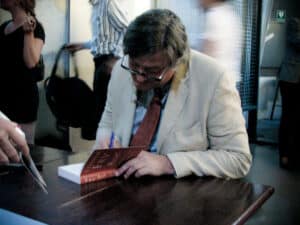
    The only kind of successful hate involves consistently pivoting to love, and my sense has always been that Fry is good at this. One early article which influenced me was his great defence of Freddie Mercury which is collected in his 1992 collection of journalism Paperweight, where – I am quoting from memory here since I can’t find the article online – he speaks of Mercury as having entertained with a ‘chutzpah bordering on genius’ and takes to task those who found his lifestyle immoral.

    Its tenor was really ‘judge not less ye be judged’ – and again, one feels that Fry is always actively generous in spirit in way which ties in with the Gospels far more than one might expect from a man who shared the stage in religion debates with Christopher Hitchens.

    His career grew in so many directions that it cannot easily be summarised. It has proceeded along novels (I especially recommend the first two The Liar (1991) and The Hippopotamus (1994), memoir (Moab is My Washpot (1997) may in fact be his best book) broadcasting (his best work here may be his brilliant hosting of the BAFTAS, which he did 12 times, finally giving up in 2018),

    TV shows (Jeeves and Wooster, Kingdom), a marvellous poetry handbook The Ode Less Travelled (2005) which was instrumental in my ever publishing any poetry myself, as well as a host of illuminating TV documentaries, TV interviews, podcasts, blogs, posts, tweets and many other things besides. Fame is difficult to quantify but by any measure Fry is among the most famous people in the UK today.

    My fame however is very easy to quantify: it is nil, and I am currently doing all I can to keep it so. However, just because I have ended up lucky enough to spend a lot of time carrying out interesting journalistic assignments, I must admit that it has involved meeting famous people of many different shapes and sizes all for the purpose of interviewing them. Some of them, from Sting and Andre Agassi to Sir David Attenborough, have been very famous indeed.

    Some like Sir Tom Stoppard, Clive James and Sir Anthony Gormley have a mystique to those who mind about literature or art. Others aren’t famous at all to almost everyone, though they might be revered in their field. Out of all the categories of people I have come to most dread, I would single out those who are just a tiny bit famous as the ones to watch: amid the dim lights of that particular inferno, ego can be at its most pronounced.

    At any rate, as you go through your journalistic career, you realise as you go on in your work that you are starting to meet your heroes. But even then, I never thought I’d meet Stephen Fry.

    What exactly is going on psychologically when we meet our heroes? Dr Paul Hokemeyer, the brilliant author of The Imposter Syndrome, tells me: “Our fascination with and attraction to heroes is primal and hard-wired into our central nervous system. This is because heroes become like celebrities who occupy elevated positions of prestige and power in our society. From an evolutionary standpoint, we are instinctively drawn to people who will take care of us and from whom we can learn vital life lessons to protect us from dangers and advance our station in life. Because this draw is so primal and integrated into our central nervous system it often overrides our critical and rational thinking.”

    In short, when you meet someone well known, we have a tendency to say stupid things. What is happening in the brain at such times? “As this relates to our neuroanatomy, being in the presence of a celebrity floods our central nervous system with a host of intoxicating hormones that override the intellectual reasoning found in our prefrontal cortex. Such disequilibrium causes us to say silly, often nonsensical things which place us further in a subordinate position to the celebrity.”

    And how does this all play out from the point of view of the celebrity. Put simply, it’s not great for them either. “ Too often, however, celebrities become exhausted from the weight of this elevated and never-ending dependency. People become only able to see them as resources to advance their station in life.

    They become like parasites sucking their life force and preventing them from finding any relational nourishment. In this regard, people become a source of danger and cause them a great deal of anxiety. This is one of the reasons why people of wealth, power and celebrity lead such isolated lives. They lack not just a circle of peers but also people who they can look to for nurturance and protection.”
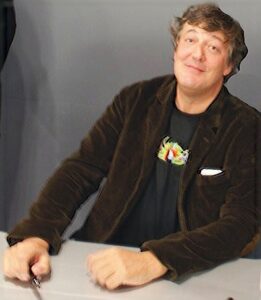
     

    What seems to happen is that a journalist – just by virtue of what he does for a living – comes into in a slightly different position when it comes to the famous. It might be that someone who isn’t battle-hardened when it comes to the sheer oddity of celebrity will meet someone, and the encounter may go badly because they will end up saying something just a bit odd in order to impress, or to draw attention to themselves. They feel the gulf between the famous person’s fame and their own obscurity too keenly and end up drawing attention to it.

    The famous person, who will be by their position, extremely experienced in this sort of mismatched encounter, will sometimes try to amend the awkwardness but at other times they won’t. This might be personal (they’re tired and/or having a bad day) or it may just be that the encounter cannot be rescued. The famous person may then resign themselves to the thought that maybe it’s just easier to spend time with other famous friends. Almost always when someone moans that so-and-so in the public eye isn’t pleasant to meet I suspect that there will be some element of this completely understandable lack of expertise which has intervened on the encounter and spoiled it.

    What’s interesting is that the way to remove the awkwardness of the encounter is not to care at all about fame, but to care about the person in front of you. This is not to say you should pretend they’re not famous as that would be to deny reality, but to treat fame as perhaps the least interesting thing about them.

    Sometimes I have seen, in the middle of an interview with someone known, the person themselves, and there one sees something deeper and truer which has nothing to do with the construct of celebrity, though it will also almost certainly give clues as to why that person was driven to become well-known and also why the public reciprocated that wish. I am not saying that I am a master of this art.

    I would not expect myself to behave with absolute equanimity if Elton John were to knock on my window as I write this, and offer up a private concert in my living-room. But it is what journalism teaches you, and it amounts to something like an inherent lesson of the profession.

    Hokemeyer explains: “What such a person is doing is modelling humanity. By pre-empting the biological calibration that occurs around the power dynamics inherent in a celebrity identity by engaging in your intellect and rational mind, a journalist is levelling the playing field. You pre-empt the hijacking of your intellect by grounding the relationship first in the prefrontal cortex and then allowing your central nervous system to catch up. For most people, the calibration of psyches occurs in reverse. The central nervous system leads. Too often the intellect never catches up and the relationship becomes fuelled by unrealistic fantasies and harmful stereotypes.”

    Quite by chance, on the 27th July 2023, I presented myself at the Oval Cricket Ground at the Micky Stewart Pavilion. I had, to put the matter as politely as possible, more or less had my fill of famous people. I am anxious here not to sound tiresomely world-weary since I have always been mindful of my luck in terms of meeting so many interesting people. However, it would be wrong to omit the fact that the encounter between famous person interviewee and non-famous interviewer is always on some level a sapping one, for the simple reason that by creating fame, and especially televisual fame, we have plainly released a set of completely crazy energies into the world.

    I wave my ticket at the security people, a piece of paper which conveys the unlikely, but true, story that today I happen to be attending the final test of the Ashes courtesy of the Duchy of Cornwall. Instead of the interrogation I half-expect, I am waved through to the Oval, scene of some of the great climaxes in Test Match history. Here in 2005, Kevin Petersen hit his magical 158, with Shane Warne bowling his heart out. It is also a place of significant goodbyes.

    Here it was that Alistair Cook scored 147 during his final innings having been short on form. Here too Don Bradman was famously bowled for a duck, when needing just four runs to end with an average above 4. Unknown to me, in a few days’ time, Stuart Broad will retire from international cricket having hit a six from his last delivery and a wicket with his last ball.

    Inside, all is cricket lore – a lesson in black-and-white pictures and old news clippings about the history of cricket. The Oval is a place where time is prised open a little, and you feel a sense of cricketing history. Perhaps it is more forceful in this respect than Lords, because the so-called Home of Cricket is always cumbrously reminding you of its importance. Here the past seeps in almost casually.

    I walk up the stairs and am asked to find my name on the guest list and sign in. As I scroll down the second page, I glimpse the names on the guest list: Sir John Major; Sir Trevor Macdonald, Chris Tremlett. My name must be on the first page, and there just down from my own, it reads: Stephen Fry.

    I am given a name tag and move through to the bar area. Now, it is important to convey a little about the Micky Stewart Pavilion. As I understand it, one of the most interesting things about becoming the Prince of Wales, and thereby coming into the possessions of the Duchy of Cornwall, is to discover all the things which one suddenly owns. One of these possessions is the Oval Cricket Ground.

    This means that if by some curious chance one is invited to the Micky Stewart Pavilion you are there to some extent because the Prince of Wales doesn’t mind you being there, or hasn’t noticed, or in my case, by a stroke of good fortune. In such places there is curious sense that everybody assumes you have some sort of validity just by being there at all.

    As I walk in Sir John Major walks by and, ever the politician, he reads my name badge and says: “Hello, Chris, it’s good to see you here.” We talk briefly about the great sadness of the weather-affected draw the week before, which certainly have meant we’d be coming into this match with the scores level at 2-2.

    I am always struck by the charm of senior politicians; I wasn’t able to vote in 1997 when Major was last on the ballot, but he has secured my vote retrospectively. We sit down for the opening session, and sit away from the bar in the stands. It only occurs to us once we have sat down that the green seats nearest the bar are for everybody to sit in. We might just as well, had we had the inclination, sat next to Sir John.

    But what is the proximity of an elderly prime minister compared to a good morning’s cricket? Australia chose to put England in, in the justified belief that overcast conditions would make the ball swing. However, England put up a spirited performance, led by a swashbuckling 85 by Harry Brook. As we head inside to the pavilion for lunch, Fry is seated next to the door and smile congenially at us – he looks like someone who, should the moment arise, wouldn’t mind a conversation.

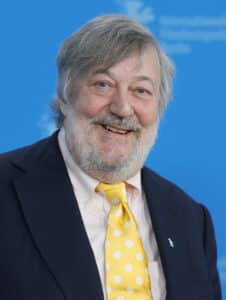
    We head inside and there is a bit of mingling before lunch. Chris Tremlett towers above the company, looking like he could still take a wicket if suddenly summoned down to the pitch. By accident I find myself chatting to Fry, and I mention to him that my grandfather had grown up in the same village as him in Booton, in Norfolk.

    “Booton!” he cries, delightedly. I can see how much he enjoys saying the word – which is, indeed, rather fun to say now I think about it.

    I add that my great-grandfather was the rector of the church there. “Oh, I remember that cold church,” he says. “Were your family the Fishers?”

    I say they were the Jackson.

    “Ah the Jacksons!” he says, cheerfully, though I suspect that he can’t remember them and they may have been before his time.

    After lunch, we head out and find Fry sitting alone on the green seats, and in a moment of curious madness, decide to sit next to him. It is worth saying at the outset that a good place to meet your hero is at the cricket: the rhythm of the match can interweave with your conversation, and it is less adversarial than the typical interview.

    Early in our discussion, we talk a bit about our favourite Australians and I mention Clive James, who Fry knew well, and who I interviewed once towards the end of Clive’s life. I mention that I liked his poetry and that I was due to talk to him about The River In the Sky, one of Clive’s last publications. “Yes, I rather like Clive’s poetry too. He was a very good poet – when he wasn’t reading the whole of Western literature.” I mention that I was invited to Clive’s house for the launch of the book when I had committed to a press trip. Fry sympathetically winces: “That’s unfortunate.”

    We then discuss Sir Tom Stoppard and I mention how kind he had been to me when we interviewed him for this magazine. I say it is often difficult to know how much one should thank someone well-known. “Oh, you always should. Christopher Hitchens always used to say that – thank your heroes.”

    Does he miss Christopher Hitchens? “Hugely.” I ask him if Hitchens would have supported Trump or Clinton in the 2016 General Election. “It’s a well-framed question,” he smiles, “as if there was one thing for sure about Christopher it’s that he absolutely loathed the Clintons. But Trump? I think that would have been a step too far.”

    He then tells me a lovely story about Tom Stoppard at a cricket match which Fry attended. The party were discussing collective nouns – a parliament of birds, a pride of lions and so on – when Harold Pinter and Stoppard walked in. Fry wondered aloud what the collective noun for playwrights would be and Stoppard immediately replied: “A snarl of playwrights.”

    We discuss Leopoldstadt, Stoppard’s most recent play, which Fry has just been to see in New York. He asks if I have seen it and I say I have only read it but that the ending affected me deeply. Fry is wistful, no doubt thinking of the extraordinarily touching end scene, which I shan’t go away here: “Yes, I wonder what it would be like only to have read it.”

    Stoppard, Fry recalls, used to play cricket for Harold Pinter’s XI. “It was called The Gaieties which has to be the worst name for an XI of all time – and not a very Pinteresque name.” I recall to him an essay in Paperweight that he had written an essay on chess and playwrights, and how the story of styles in the 20th century theatre mirrors chess-playing styles around the same period. “Well that’s just the sort of pretentious stuff I would write.”

    I have throughout a sense of Fry which is rather touching. That is, even here, when he doesn’t need to be a performer. One senses the need to be loved, and that he is therefore always moving to make life easy for you in conversation – to make sure you’re at ease.

    Down on the pitch, Stuart Board, I note is trying to anger himself into greater pace, and this prompts a discussion on the importance of anger in fast-bowling. ‘Bob Willis is the great example there – he always bowled better when angry,” says Fry. He also quotes Mike Brearley: “Anger always brings presents.”

    As we talk, Fry explains that he is trying to do more to carve out time for the cricket, and that it was part of his motivation. “I have a lot of difficulty saying no,” he says, “which is why this summer has been so lovely.” It has been a time to pause work and spend some time with friends. “Hugh loves the cricket – he came along for a day,” Fry says.

    Talking of fast-bowling greats turns us inevitably to Shane Warne. I ask him if he’s read Gideon Haigh’s great biography of Warne, and Fry is enthusiastic. Fry has also a kindly way of finishing your sentences for you as a way of making you feel you are being listened to and understand. When I begin to say there have been times when I’ve considered getting a subscription to The Australian only to read Gideon Haigh, I find that Fry has said the last five words on my behalf. Did Fry get to know Warne? “Yes, I did a bit – a lovely man.”

    But of course you realise that however many people you might have met, Fry has known everyone. It comes with his position. Since we are here thanks to the Duchy of Cornwall we briefly discuss the Prince’s disinterest in cricket as opposed to football, Fry frowns in a comic way: “Well, yes, I have known for some time that the Prince is not especially interested in cricket. Prince George though when I saw him last talked of having ‘just been in the nets’ so perhaps things will be somewhat different in the next generation.”

    It is a lovely thing to let the conversation as the cricket changes. At one point, Fry jokes about Todd Murphy, the Australian off-spinner. “Well, he’s got the off break, and then there’s also the off break. And if that doesn’t work, at least he’s got – the off break.”

    At another point, enjoying the batting, I mention John Arlott’s description of Jack Hobbs, as what having made him great was his ‘infallible sympathy with the bowled ball’. Fry repeats it: “Oh Arlott! An infallible sympathy with the bowled ball. Marvellous!”

    There is time also to reminisce. I mention how Fry and Laurie caused me such delight as a young boy, and even tell my story of reciting his work as a boy, and not knowing what the words meant. When he asks which sketches we used to recite, I tell him: “There’s this sketch where you play a pompous interviewee on late night television. “ “Sounds like me,” Fry says swiftly.

    When I recite the sketch for me, I am able after all these years to thank him for it. To my astonishment, I see he is visibly moved to have had this impact. “We didn’t know the effect back then – it was like dropping a coin into a well. Every now and then with Fry and Laurie someone would stop you in the street – but it was very occasional indeed.”

    I had heard a story of Paul McCartney, which I mention to Fry. Apparently, when he seeks to hire someone he always gets his driver to befriend someone lower down in the organisation he wants to hire, so as to be sure that they’re kind to their subordinates. “Did you ever get to know David Tang?” Fry asks and I admit I’ve never heard from him. “I loved him he was an incredibly kind man. But he could be extraordinarily rude to his subordinates. On more than one occasion he was David was so rude to his driver, that I had to get out of the car.”

    As the often continues – and it was one of those rare giddy days in Test match cricket where wickets fall at regular intervals – I also get the opportunity to thank him for The Ode Less Travelled, his poetry handbook, without which I never would have been able to publish my own poetry books. I tell him his, and I also add that the poet Alison Brackenbury is an admirer. He is thrilled by this: “Alison Brackenbury! Well, I love her poetry so that means the world to me.”

    Later I mention this to Alison and she replies: “How wonderful! We never know where our writing goes. I do think Stephen must be fantastically well-read to have found my poems. I have tried hard over the years to scatter them in the most unlikely places, but I doubt if even the amazing Mr Fry ever read the now defunct Tewkesbury Advertiser.”

    I remind Fry that he says he writes poetry in The Ode Less Travelled, and tell him I think he should publish a volume of verse. He says: “Well, I did think during lockdown that I ought to compile that and I began it, but then I stopped.” How long would it be? He smiles: “Well that would depend on triage. Most likely it will probably have to wait for my will and then everybody will say: “What on earth was he thinking?”

    The afternoon drifts on, cricket always intertwining with talk. At one point Fry jokes that we must ‘avoid clichés like the plague.” He talks of his admiration of Rowan Atkinson (‘no one else can convey a line like him’). He spends some time on cricket trivia, reminding me, for instance that Alan Knott wasn’t a wicket keeper at first but a bowler – and that being so good at the latter craft helped him become so brilliant at the former. His beloved Wodehouse gets a mention: “Wodehouse was told that he was most read in hospitals and prisons and first thought it a bad thing but then decided there could be no greater compliment to an author.”

    And now I’m afraid I must go and do a talk in central London. He turns to me and says: “You’ve made an old man very happy.”

    And then he’s off – having made me happy too. But the curious thing is I think he means it – and I wonder about the isolation celebrity must bestow. Hokemeyer tells me: “Occupying a rarefied position in the world is incredibly isolating. There are very few people who can look through the celebrity veneer and see the human being who resides below the power and sparkle that defines a celebrity identity.” Later I think back to the look Fry gave us as we walked past him – it was the look of someone who wanted conversation.

    Do we perhaps all to some extent suffer from Imposter Syndrome? Hokemeyer explains: “Many celebrities, including male celebrities such as Tom Hanks and Ben Affleck have spoken publicly about their struggles with imposter syndrome. This is because attaining the status of celebrity on the scale that they have is akin to winning the lottery. It’s nearly an impossible goal that comes to too few. Being such a rarefied existence, their central nervous system can’t quite integrate it. As such, they live in fear that they will fall from grace and become irrelevant.”

    I don’t think this will happen to Fry, but his charm seemed to be something allied to a sort of need: I don’t think it can be external approval which he is seeking, or external love even, since he has both in such abundance. It is internal, and I think fame and celebrity have a terrible way of wreaking havoc with that. Yet who could be better to watch cricket with? They say don’t meet your heroes. In general, I’d agree with that – unless your hero happens to be Stephen Fry.


    Stephen Fry Education Timeline


    24th August 1957 – Born in Hampstead, but grows up in the village of Booton, Norfolk, having moved at an early age from Chesham, Buckinghamshire, where he had attended Chesham Preparatory School.


    1964 – Attends Uppingham School in Rutland, where he joined Fircroft house and was described as a “near-asthmatic genius”.


    1973 – Expelled from Uppingham half a term into the sixth form, and is moved to Norfolk College of Arts and Technology, where fails his A-Levels, not turning up for his English and French papers.


    1977 – Despite a brief period in Pucklechurch Remand Centre after stealing a credit card from a family friend, he passes the Cambridge entrance exams, and is offered a scholarship to Queens’ College, Cambridge, for matriculation in 1978, briefly teaching at Cundall Manor School.


    1978 – At Cambridge, he joins the Footlights, where he meets Hugh Laurie and Emma Thompson among others.


    1981 – Wins the Edinburgh Perrier Award for the Cambridge Footlights revue Cellar Tapes


    1986 – The BBC commissions a sketch show that was to become A Bit of Fry & Laurie. It runs for 26 episodes across four series between 1989 and 1995. During this time, Fry stars regularly as Melchett in Blackadder.


    1995 – Fry is awarded the honorary degree of Doctor of Laws (LL.D. h.c.) by the University of Dundee.


    1999 – Awarded an Honorary Doctorate in Letters (D.Litt. h.c.) by the University of East Anglia


    2010 – Fry is made an honorary fellow of Cardiff University,[148] and on 28 January 2011, he was made an honorary Doctor of the University(D.Univ. h.c.) by the University of Sussex, in recognition for his work campaigning for people suffering from mental health problems, bipolar disorder and HIV.

    2017 – The bird louse Saepocephalum stephenfryii is named after him, in honour of his contributions to the popularization of science as host of QI.

    2021 – Fry is appointed a Grand Commander of the Order of the Phoenix by Greek president Katerina Sakellaropoulou for his contribution in enhancing knowledge about Greece in the United Kingdom and reinforcing ties between the two countries.


    For more of our cover stories, see these links:


    Exclusive: how Emma Raducanu changed the world of tennis

    Exclusive: how Elon Musk is changing the global economy?
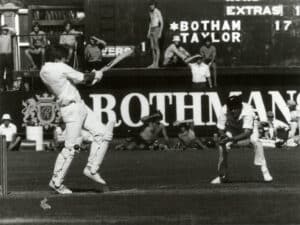
  • China’s Threat is Real, Warns Former Speaker of the House of Lords, Baroness D’Souza

    Baroness D’Souza on China: “The Threat is Real”


    There are three questions that come to mind in considering post-election Taiwan in a changing world.  These will focus on the People’s Republic of China (PRC) in relation to the Indo Pacific Region but most especially, on Taiwan itself.

    The questions are as follows:

    What does China want?
    How does it aim to achieve its goals?
    Will it succeed?

    As you will all know only too well, the West, by which I mean the UK, US and Europe, have consistently viewed the PRC through the prism of western democratic standards and an internationally accepted rules-based order. I’m not sure this is the most fruitful standard to analyse the PRC and its domestic and foreign policies if we want to understand China’s intentions.

    Looking at the various statements issued by the increasingly powerful President Xi Jinping over the last decade and more, the PRC is almost entirely focused on a Sino-centric approach – meaning that every policy, both domestic and foreign, is designed only to benefit China. Thus, Xi believes that the existing world order is biased against China and would be greatly improved if it evolved to embrace Chinese leadership – which he, and the greater majority of the population, see as an inherent force for good.

    This vision of China goes back to ancient history and aims to see China once again as the centre of civilisation, engaging with the world on its own terms, spreading knowledge and providing material benefit. Xi wishes to recreate the world order thereby righting an historic wrong and putting China’s interests and values above those of the rest of the world. The belief in the supremacy of Chinese systems and thought is in President Xi’s DNA and helps us to understand better, if not condone, some of the more aggressive actions of recent years.

    For example the ‘We Are One People’ mantra justifies the regime’s actions against the Uyghurs – with a complete disregard of the UN’s characterisation of forceful assimilation as a crime against humanity and possibly constituting genocide. This Sino-centric approach is presented to the world as altruistic, moral, and inclusive but is in fact self-centred, hierarchical, illiberal and coercive.

    So, the prevailing philosophy is the great rejuvenation of the Chinese nation and this ‘dream’ Xi has said will be achieved by 2050. Make China Great Again! The overriding condition for this rejuvenation is regime security, which Xi is taking to a new level, in order to formulate, implement and adjust Chinese foreign policy. Addressing new recruits to the People’s Liberation Army Xi has said their principal task is to enable China to ‘reclaim its place in the sun’, and this in turn entails recovering ‘lost territories’, establishing regional hegemony and furthering China’s global ambitions.

    His global ambitions are considerable. Xi argues that all countries must respect different political systems and assert that democracies are not superior to authoritarian regimes and therefore have no right to criticise the latter, especially on human rights and governance. He also aims to deter, or even defeat, the pre-eminent economic position of the USA, which would in Xi’s view substantially alter the global balance of power and establish China’s standing as a superpower. Finally, he wishes to extend the ‘soft power’ of Belt and Road initiatives especially in poorer countries, to gain leverage and control in loan repayments.

    Xi has spelt out and continues to refine an ideology to be accepted by the world. His pronouncements set out China’s direction of travel for the next decade and more, and is having a major impact on the world generally, but the Indo-Pacific region in particular.

    Again, you will be familiar with what China wishes to achieve in the short term: connect more closely with adversarial regimes such as Russia and North Korea and play an increasingly influential leadership roles in multilateral forums such as the UN, CPTTP and ASEAN.

    And then we come to Taiwan: in 2021 Xi said: ‘No one should underestimate the Chinese people’s powerful determination, will and ability to defend state sovereignty and territorial integrity.’ Recovery of Taiwan is vital for China’s geostrategic defence and offence but more than this, it is regarded as sacred territory, and this legitimises all the intimidation to which it is subjected by China.

    Mechanisms include legal, political, and psychological warfare; endless cyber-attacks, military harassment and brinkmanship, aggressive attacks in the South China sea, economic espionage, and regular spreading of disinformation. They also include isolation of Taiwan on the international front, including threatening those countries which have hitherto enjoyed diplomatic relations with Taiwan. The brutal National Security Law now being implemented in Hong Kong together with the astonishing offer of a bounty of $1 million for defectors, or promoters of freedom beyond Hong Kong, is a chilling reminder that the ‘one country, two systems’ promise is truly dead. In all these actions China is continuously testing the readiness of the International Community to hold it accountable to International Standards.

    Given the CCP appears intent on taking over Taiwan, how real is the threat, what is being done, what does the new administration in Taipei have to offer and what must it avoid? Furthermore what is the wider impact in the region and what can be done?

    The threat is real, and we are warned by serious China scholars that we should not take this lightly. Admiral Aquilino, head of the US Indo Pacific Command said at a Congressional hearing that in his view the People’s Liberation Army (PLA) would be able to attack Taiwan in 2027, even by force if necessary.

    China not only has a far-reaching strategy but tactics to which President Xi requires conformity by every citizen. The problem is that neither the US nor the UK appear, as yet, to have a strategy but have instead what some have defined as a muddled and inconsistent approach. The US policy of strategic ambiguity virtually encourages the CPP to test the West’s resolve to strenuously oppose any armed threat aimed at Taiwan. There are very few clear red lines.

    Is the future bleak for Taiwan and indeed for many other countries in the Indo-Pacific region? Would it be a good idea to wait until, as one expert has said, the Chinese Communist Party falls under the weight of its own internal contradictions? Another commentator writes that China faces a near-existential dilemma over its macroeconomic strategy due in large part to its over-reliance on property and infrastructure development.

    The accumulated debt by property developers and local government infrastructure expenditure has reached $2.5 trillion. It could take many decades to eliminate this debt. It is difficult to predict how the economy can improve dramatically in the next decade due to the possible over-production of manufactured electronic items flooding international markets. And, of course, China also faces the looming problem of an ageing population dependent on pensions, with an ever decreasing work-force.

    Let me summarise, China is intent upon usurping the supremacy of the USA and will restructure its economic policies and military strategies to control the international shipping lanes to control, and therefore influence, trade, to their own advantage. It aims to subdue neighbouring states or, as in case of the Hambantota Port in Sri Lanka, secure long leasehold on geostrategic territory.

    The economic about-turn as articulated by Premier Li Qiang focuses on economic growth underpinned by advanced manufacturing. In steering rapidly away from infrastructure development, the President has forbidden any public building in at least ten provinces. This will have consequences – particularly for employment. Let us not forget that the legitimacy and stability of the Chinese Communist Party is almost entirely dependent on a successful and growing economy.

    Given the future dangers the country faces, I have to say that I would not relish being the new President of Taiwan. Nor am I in any position to suggest a way forward. However, I note that President Lai will have greater difficulty in getting innovative laws through the legislative Yuan – given the DPP’s loss of a majority. This will be especially the case for divisive issues such as defence spending and strategy, and likely to be exploited by the PRC.

    I am perhaps better placed to suggest what a new government in the UK could do; in the wake of the Russian attack on Ukraine, we have woken up to the real danger China poses in this region. The task is to make it abundantly clear that we will take action including public and frequent condemnation of ‘grey zone’ attacks, the imposition of Magnitsky sanctions against selected Chinese officials; reducing the number of Chinese students accepted for further study in the UK; strict prohibitions on the importation of any technology capable of surveillance including electronic cars and all cellular IOT modules; establish full diplomatic relations with Taiwan.

    This would undoubtedly provoke retaliatory action from China, but would also signal to the world that the de facto independence of Taiwan must progress toward a de jure state.

    Impose strict criminal sentences on any attempts to kidnap or harm in any way – Chinese citizens, whether from Hong Kong, or defectors. Finally, as we all know that co-ordinated action is more effective and thus the UK, in its international relations, must help to build a body of consensus among nations to resist Chinese encroachment on freedoms. There will be an economic cost to all trading partners but the cost of not taking multilateral action now will be far, far greater.

    The overall message to the PRC must be first, that the world will not allow the Chinese destiny of territorial acquisition, the bullying and flouting of the existing rules-based order to prevail and that the consequences of gross intransigence will be severe. Second, a war between the West and China would be an unmitigated catastrophe affecting China as much as it would affect the entire world. This is the reason why China’s territorial ambitions must be confronted.


    This is an edited version of a talk given at the Graduate Institute of Journalism, Taiwan, Taiwan Foreign Correspondents Club in April 2024


    Go here for more from Baroness D’Souza


    Baroness D’Souza on the encroaching power of the executive

    The Baroness and the Mujahideen: the remarkable tale of Marefat school in Afghanistan

    The Baroness: Frances D’Souza on Sir Keir Starmer, Rishi Sunak and the current deluge of legislation in the House of Lords

  • From Ukraine to London: how the Finito bursary scheme helped Ukrainian refugee Valeria Mitureva

    Christopher Jackson reports on the moving success story of Valeria Mitureva from Ukraine and her experience of the Finito bursary scheme

    Very often mentoring can deal with minutiae – the creation of a LinkedIn profile, the process of CV-writing, and all the small steps which, taken together, move a job hunter into the category of employee. These things are very important, of course, but they can seem to be a long way from the daily drama of news headlines. But everything we do in this life has a historical context; we can’t escape history even if we’d sometimes like to.

    This truth was brought home to us at Finito by the arrival on our bursary scheme of refugee Valeria Mitureva from Ukraine. Valeria grew up in eastern Ukraine and says of her upbringing: “I grew up as a curious child. From early childhood I was interested in books, other countries and cultures. At school everything was interesting, so in my youth I was faced with the fact that it is very difficult to choose one thing and move in that direction.”

    Valeria’s instinct was towards broad enquiry and international travel, and in ways which she couldn’t then predict, these wishes would indeed be granted. But initially, she decided that it would be better to specialise. “I decided to enrol in a technical specialty at the university – technical information security systems,” she recalls. Characteristically, she didn’t leave it there. “I additionally studied French and English in my free time,” she recalls. This latter decision would prove useful, again in ways she couldn’t have imagined at the time.

    So what happened after university? “I accidentally got into IT in the sales field while finishing my bachelor’s degree,” she recalls. “But I was still ready to explore the world and decided to change my career to the design sphere, and I am glad to have been doing it for four years now and I see incredible opportunities for my development,” she says cheerfully.

    All this might have proceeded upon the expected track, and Mitureva would have continued her progress towards a design career within Ukraine. But, as the world knows, Vladimir Putin was gearing up for his 2022 illegal invasion of Ukraine – that appalling violation which would upend so many lives, including Valeria’s.

    Valeria recalls the terrible ructions which took place a year ago. “I did not plan to move: everything happened very tragically and quickly. A full-scale invasion of the Russian Federation into the territory of Ukraine began in February 2022. We call it full-scale, because in 2014 the Russian Federation already occupied part of the Eastern region of Ukraine, where I grew up, and where my home is.
    Therefore, for my family, this is already the second war.”

    Valeria was proactive during that terrible spring. “I read about the Homes for Ukraine program and decided to apply. I contacted my future sponsors (my British family!), packed my suitcase and all that was left of my courage and landed in Heathrow on April 30th.”

    It is impossible to imagine her emotions on being forced to leave her homeland and making the leap into the unknown. So what were Valeria’s initial impressions of the UK? “It felt as if it was my second home. The culture is familiar through books, films, music. It’s also a very friendly and open people, with incredible stories – and, of course, I was shocked in a good way by the incredible support of the British people. You have a beautiful country and incredible people.”

    When Valeria refers to her British family, she is referring to the family of Amy le Coz, the founder of Digital Media Services, who immediately took to Valeria’s infectious and optimistic spirit. “In those first few weeks when she lived with us, my husband and I were immediately very impressed and delighted with her work ethic and proactive attitude both for her job for her Ukrainian employer, as well as around the house,” Le Coz recalls. “We were both also profoundly moved by all that she had had to endure and at such a young age.”

    By good fortune, Le Coz met Finito Education Chief Executive Ronel Lehmann at The Spring Lunch which raises money for Conservative Marginal Seats and Women2Win soon after Valeria’s arrival in the country. Valeria recalls: “My sponsor met Ronel at the event, who explained to him that they were hosting a Ukrainian woman and he immediately offered his help. I was impressed with the approach, professionalism and, most importantly, the structure of the organisation. Finito has a huge team of mentors with a wide variety of expertise. It was indeed like a guiding light for me at that time.”

    Le Coz recalls that Valeria was “buzzing with excitement” upon hearing of the opportunity – and it was certainly one which she took with both hands.
    Valeria worked mainly with three mentors: “I worked with Robin Rose, Claire Messer, and Kate King. I’m grateful for their support, ideas and that they let me work it out myself, rather than tell me exactly what to do. Sometimes we would discuss my hobbies – so, for example, Robin gave me links to music events, which was helpful for a person who had just moved to a new country.”
    Mentorship is sometimes really a kind of friendship. But the pair also got down to work.

    Initially, Rose held two Zoom meetings in order to get himself up-to-speed on Valeria’s situation, and began to carve out a plan. “We needed a workable strategy to find her a role in web or graphic design at a level which matched her experience and which would provide sufficient income for her to fund an independent lifestyle,” he recalls.

    But there were initial headwinds, partly due to the uniqueness of Valeria’s situation. “Valeria had had a good education and relevant training throughout her career in Ukraine. She is personable and speaks good English,” Rose continues. “However, recruiters and HR people were unlikely properly to appreciate her potential from just seeing her CV when evaluating her documentation against other candidates particularly at junior or entry level. She had sent off over 50 applications and had had just one video interview.”

    Rose looked hard at the situation, and made the following assessment: “This shotgun approach was unlikely to return any result for the time invested and continuous rejection was likely to sap her confidence even further.” Rose saw that the starter salary jobs in the sector – typically around £20,000 per annum weren’t a fair reflection of Valeria’s experience in Ukraine: “I felt that Valeria was, in reality, better experienced and should have been competing for jobs in the £30-40K bracket. She had, however, an understandable confidence issue with this approach.”

    This meant that Valeria needed confidence training: “She needed to re-establish her belief in her own abilities. We needed to set up exploratory meetings with people working in the industry so that she could see how she would be of value. I thought that this activity in itself might lead to opportunities.” Rose also suggested that the pair conduct web research to identify at least four organisations she’d like to work with.

    In time, Rose worked closely with Valeria to make more targeted approaches, and provided her with a list of London-based creative agencies. Meanwhile, Valeria was also paired with another Finito mentor Claire Messer, who worked with her in August 2022, casting an experienced eye over her CV.

    Messer says: “I explained to Valeria that recruiters look at CVs for an average of six seconds, and so it was important to make sure we had complete clarification over what kind of visa Valeria had obtained, right down to the number of hours a week which she was able to work. I also worked on clarifying the CV, and making sure that her work experience was tailored to the companies she was applying to.”

    Valeria was beginning to realise that she didn’t want to work for a large company but for a smaller graphic design or creative agency. Claire explained to Valeria the valued of LinkedIn Premium, and showed her mentee how direct messaging of creative agency owners might be to her advantage: “I suggested that messaging owners and CEOs might have traction,” Messer recalls. “This is because some smaller agencies tend not to use recruitment companies as the fees are too high for them. I told Valeria they tend to work by word-of-mouth referrals.”

    In time, Valeria was put in contact with another Finito mentor Kate King, and this led to her first interview. “She felt that the interview went well but that the actual role was outside her technical skill,” King recalls: “It was a great practice interview and helped her to increase her confidence.”

    Her confidence had in fact been transformed and Valeria was then well-prepared when she had the interview with the design studio where she now works, as she had hoped she would: “I’m currently working as a graphic designer at a company called Spark,” she tells us. “I mostly do packaging design but also I do some motion graphics and am learning to use new software as well.”

    Most of all, she feels part of a team. “I am participating in design studio brainstorms and I learn from my experienced colleagues how to deal with nontypical issues. I am happy to have the opportunity to be involved in most of the projects the studio creates. I simply love what I’m doing now as there are a lot of training and a lot of challenges.”

    So how does Valeria see her future now? “The main task is to keep enjoying my job and do everything possible for it. I want to be a worthy professional and to be proud of my projects. For now I’m concentrating on feeling more confident in my role in the UK, studying the culture, the people and concentrating on developing as a designer.”

    For Ronel Lehmann, Chief Executive of Finito Education, this has been an important mandate: “I myself finally got to meet Valeria in person at a Women2Win Business Club dinner in Fenwick of Bond Street. The guest speakers were Gillian Keegan MP, who was at the time Minister for Care and Mental Health and Virginia Crosbie MP. It was particularly apt to be able to listen to two Parliamentarians speak about overcoming adversity. I felt that it resonated with Valeria who is simply inspirational”.

    The support which our bursary scheme has given to Valeria would have been impossible without the generosity of one donor in particular.

    We would therefore like to thank Dr Selva Pankaj, the CEO of Regent Group, who says: “As CEO of a UK education group, I fully appreciate how difficult it can be to take those first steps onto the career ladder, especially in the volatile landscape during and after the pandemic. Hopefully, by supporting this initiative, we can help more individuals find the path that is right for them.”
    That’s certainly the case with Valeria, who now has a bright future ahead of her. We will continue to help her in her career journey and report back in these pages on any developments.


    Interested in our bursary? See these other stories:


    2022 Highlights: How the Finito Bursary scheme changed my life

    Finito Bursary Candidate Nick Hennigan: “I Want to Do My Family Proud”

  • Micro expressions tell all, so learn to master them

    Mastering Micro Expressions, by Patrick Crowder


    The online casino company Jeffbet has taken their expertise in the gaming industry and applied it to the workplace. Poker is an oft-used allegory for business meetings and negotiations, and for good reason. In both scenarios, the ability to read the micro expressions of your interlocutor is essential to success.

    “Alongside poker, where it’s common for a player to deliberately hide their facial expressions, it also happens in many other scenarios, including in job interviews or business meetings. However, there is one way to read a poker face that many people aren’t aware of. The key is to look out for micro expressions, which arise subconsciously and cannot be deliberately evoked or suppressed. Micro expressions can be quite difficult to detect, as they last for just 0.5 seconds, however with some practice, you can learn how to spot them,” according to Jeffbet.

    Jeffbet lists seven of these micro expressions and their qualities: Surprise, fear, disgust, anger, happiness, sadness, and contempt.

    Surprise is characterised by the classic raising of the eyebrows, but it will not be the exaggerated look you might be used to seeing in movies. Look for subtle wrinkles on the forehead and see if their irises are fully surrounded by the whites of their eyes. Sometimes, when surprised, the jaw can open slightly.

    When someone is afraid, their eyebrows often raise and come together slightly. Do not confuse this for surprise. Here the forehead wrinkles will appear more central on the forehead, above the bridge of the nose.

    True disgust is difficult to hide, so picking up on it is fairly simple. Look for a slight narrowing of the eyes and a wrinkling of the nose. If a person is not hiding disgust well, you may also see their top lip tighten showing a small portion of their upper teeth.

    Anger can often be determined by tone and context, however you can also read someone’s face if they are attempting to conceal their rage. The eyebrows tend to move downwards and close together, leaving vertical lines above the bridge of the nose. In the upper face, anger presents as the opposite of fear. The lips may also tighten and trend downwards.

    The trick to spotting fake happiness is all in the eyes. Anyone can put on a big smile, but look for the natural wrinkling of the “crow’s feet” and the subtle ways the eyelids contract to see if the expression is genuine.

    Sadness is difficult to detect if a person is attempting to conceal it, however the lips can be an indicator. You may notice a slight frown, and the lower lip may even come out slightly in a pout. The eyes can often be a giveaway, but you will usually pick up these more subtle cues subconsciously.

    Contempt is the only asymmetrical micro expression – if one side of the mouth raises, there is a good change that the person you are talking to dislikes you or disagrees with your opinion.

    All of these tips on spotting microexpressions are a great jumping off point, but at the end of the day it comes down to feel. The human mind is great at subconsciously picking out expressions and verbal cues, so you most likely have a sense of how people feel naturally. If you would like to improve these skills, the only way to get better is to practice.


    Looking for a mentor? Scroll through our expert business mentors here and easily book a consultation today:


    Mentors


  • Meet the Mentor: Rara Plumptre, A Journey of Resilience and Kindness

    We meet Finito mentor and founder of AECS communications Rara Plumptre


    Tell us a little about your early life and education. Did you have mentors growing up who altered the way you are today?

    I was taken to South Africa on the Union Castle boat to Cape Town in the 50’s at six weeks old by my nanny; my parents were living in Durban. My early life started in a rabbit hutch as I adored animals – and still do. I loved the outside world: sun, sea and sand.

    My education didn’t start until I was five years old, where I went to a convent in Durban. Personally I wasn’t the most conforming of children – to say the least. Ten or so years later, at the age of 16, I ended my schooling with one GCSE: I had climbed out of, or been expelled, from most schools. Thankfully my education finished, much to my delight: the only thing I missed was sport. My mentor was my nanny, who for all my faults loved me and wanted me to achieve in life, and perhaps she found my truancy less troubling than my parents did.

    My first job altered my whole life: at 17 years of age I was taken on as an au pair and cook for an Italian family in Florence, which I stayed in for a year and a bit, having opened the liquidiser on gazpacho soup on my arrival: I was still picking soup off the ceiling when I left! Once I was back in England, I walked into a job with Stephen Marks, founder of French Connection. At 19, I had become a manageress of his first shop in South Molton Street.


    Knowing what you know now, what would say to your younger self about the world of work?

    I would say it’s important to stay true to yourself and to be grateful for every day. I’ve also come to learn that business never goes straight, and that it’s vital to have mentors from an early stage.

    Of course, the world has changed hugely. When I was growing up, we were more outside than in – rain or snow. We were freer and lighter with troubles, and we had less to worry about. We had a choice of one tomato, not 30 when we shopped: you could certainly say that life was much simpler – and perhaps what we need to do is cultivate that simplicity.

    When I first flew to Africa from England you couldn’t fly direct: we had to refuel in Entebbe in Uganda or Kinshasa in the Congo. My father gave us coins to buy stamps since he was a great stamp collector. When we landed in the above, we would buy the stamps we liked, and arrive in Johannesburg with them. He was thrilled to bits possibly not about seeing us – but the stamps he loved! I suppose I have wanted to preserve something of the old way of life in my own career.


    You are obviously extremely passionate about helping the next generation. Can you talk a little about your experiences of working with the young. What’s the best way to help make a difference?


    Life for the young now is very different than it was when I was brought up. We only did face-to-face interviews: nowadays online applications are the norm. I think that can be soul-destroying as often a mass of applications for a job can have not one single reply. In the future, my thinking is that as a society we need to rotate the young with mentors at a young age, bringing them up with two or three people who will help them right through their later stages of school, and build for their careers ahead. If we do that, then they will always have someone watching their back in life.


    For deeply personal reasons, homelessness is obviously of huge importance to you as an issue. Can you talk a bit about this area, and how we can all help to tackle this problem?


    The reason I became homeless was through divorce. I now work pro bono helping in that area. I arrived in London where some wonderful friends took me in. I slept for three days with the emotion of packing up a seven-bedroom house with animals which we had also to find homes for. My CV read that I had only been a mother for 20 plus years – so getting back to work was difficult, especially as I hadn’t lived in London for 28 years.

    I remember I was in Clapham, in a haze, and trying to recover from the grief of being homeless. I walked into a gift shop in Abbeville Road. I liked it there and, on and off, I spent my days in the shop because I felt safe. The owner of the shop eventually said to me: “You seem to be in my shop rather a lot, and never buy anything. Why?”

    I told her my story: I had arrived in London with five pounds in my pocket. She retorted: ‘Do you want a job?’ which I jumped at. So for £100 a weekend, I started to earn again. And the rest is history.

    Issues like homelessness and immigration remind us that the gap between rich and poor keeps getting deeper. This inevitably means that more and more people will be found on the street. Fortunately, there are wonderful charities like Under One Sky, and CEO Sleep Out in England in existence. I am passionate about helping to make a difference in people’s lives and trying to lobby the government to make a bigger difference to housing and the homeless.


    You love to make connections between people. Can you tell us a bit about how personal relationships can transform businesses and individual careers?


    Personal relationships are hugely important in transforming businesses, and networking is key to the future, as technology
    takes over our day-to-day lives. To have personal discussions is vital for the young and old. In that I personally feel that one should never stop working, if one enjoys what one is doing. The old can mentor the young through good times and bad. There is a long time to sleep one day. Why waste time with your feet up?


    I’ve noticed that kindness runs through everything you do. It seems as though success in business can sometimes be about doing the small things well. What tips would you have for young people in relation to this?


    I was taught a long time ago that adversity brings you two things, a lesson and a blessing – and they normally come in that order. Kindness and trust are invaluable: if you have people draining your energy try to ‘realign’ and find ways to create new structures of positivity. When you are drained or low, start the day with three good deeds, and in that, your day will automatically improve. Having been homeless and sofa-surfing ten years ago, my family and my friends have got me to where I am today. But most of all, every single person I have met in those years has got me to where I am today, and for that I am truly grateful.


    For more information about Rara’s work go to: http://aecs-connections.co.ukhttp://underoneskytogether.com, and http://ceosleepout.co.uk


    To learn about other mentors, try these:


    Tom Pauk: Meet the Inspirational Mentor


    Spring Roundtable with LinkedIn expert Amanda Brown