Blog

  • AI Can’t Cope with Fuzzy Logic: Roger Bootle on AI’s Limitations

    The Chair of Capital Economics dives deeper into the real implications of Artificial Intelligence

    It seems to me that the impact of Artificial Intelligence (AI) has been exaggerated in a range of ways. When it comes to the future of mentoring, surely the human aspect is what education is really about. I have benefitted from it myself on many occasions during my education and it is just irreplaceable – that certain spark of inspiration which gives you motivation and gets you to understand something.

    In my book The AI Economy, I cite a number of incidents of fuzzy logic which human beings cope with and which, to the best of my knowledge, so far artificial intelligence can’t. I am thinking of instances where something is either logically ambiguous or logically misleading. We have a way of seeing what the meaning is, but even the most sophisticated computers don’t. For instance, in the film Paddington, there’s a wonderful bit where the bear goes on the tube and he starts to get on the escalator.

    He sees a sign that says ‘Dogs Must Be Carried’ – so he races up the escalator in the wrong direction, runs out into the street and steals a dog so that he may comply with the instruction that dogs must be carried. It’s absolutely wonderful.  Human beings look at a sign like that, and they don’t need to wonder for very long about the fuzzy logic. They understand what it means: if you have got a dog it must be carried. I suspect computers are much the same.

    Another one that I like very much is the sign in a lift: “Do not use in case of fire. What it actually means is: if there is a fire do not use this. That’s not what it says. There are a whole series of cases where the human mind is not just a computer that is based on logic – and it’s very difficult to replicate that sort of thing.

    In The AI Economy, I also quote areas where this whole subject spills over into certain sorts of philosophical or even theological topics. These are notoriously difficult to get into. I have got a chapter called ‘Epilogue’ at the end where I touch on issues regarding the nature of the human mind. I refer to this great mathematical physicist who recently got the Nobel Prize Roger Penrose, who is now doing work in this area, even though he is 84. His big contention is that he thinks there is something very special about the way the human mind works which a computer can never replicate.

    Sacredness is a very important word. Penrose says that he has come to think that the universe is like a three-legged stool. One of the legs is physical reality – the sort of stuff the physicists study. The second leg is mathematical logical truths which are eternally just there. But the third leg is consciousness and he says that human beings instinctively know this – but science knows very little about this third leg and is loath to recognise its importance.

    It’s all a big challenge to the AI geeks, as I call them. It’s bad enough what they have to say about economics, but what they say about these philosophical questions is just extraordinary.  On the one hand, the AI geeks, bravely overestimate the bad side of all of this – but they also underestimate the good side for human beings when it comes to what can actually be done.

    For instance, there’s a section in the book about driverless cars. I am a sceptic on this question, but I think there are going to be more and more uses for driverless vehicles: we’ve had driverless shuttles at airports for goodness knows how long. Even so, what I have great difficulty in imagining is driverless cars in city centres without the complete remodelling of the nature of cities, though the real fanatics argue that’s exactly what should happen.

    It should be perfectly feasible to have driverless vehicles – either lorries or cars – working pretty successfully on motorways where effectively the solution might be a bit like railways – where you haven’t got rails guiding them but you have got something else essentially operating according to the same sort of principle.

    The difficulty comes with the unpredictability of what happens in urban centres: a child rushes out in front of the vehicle – a cyclist veers over some sort of dreadful weather which impedes the functioning of the vehicle. I find it very difficult to imagine a driverless vehicle being able to cope with all those things – and, indeed, the tests that have been done so far reveal that result. Given that, it’s extraordinary when you follow the predictions of the AI professionals: that we are all supposed to be driven around in driverless vehicles now for about 10 years at least.

    Of course, it has not happened and all these tests that have taken place have been in places like Arizona with clear bright days, uncrowded roads and not in London in February on a winter afternoon. I see a sort of middle of the road solution to all of this whereby there could be quite a lot of driverless vehicles in certain environments. And where it is possible, the point is that there will be huge benefits.

    Another particular example is agriculture. Where you have got this defined space of huge agricultural fields, there’s no reason why you can’t have driverless tractors and other agricultural vehicles in an area: it seems to me that would be brilliant from all sorts of points of view. In addition, having the tube network run completely without drivers would be a marvellous idea: it would mean big savings there.

    The response of the driverless vehicle enthusiasts to all this is quite interesting. First of all, they say it’s all a matter of time until we develop the software that’s going to deal with all that – and eventually, after so many failings, the current line is that they can cope but that they’ll need to remodel cities. Essentially all city centres will be redesigned so that there aren’t entry points for cyclists and children running out. In other words the roads in cities become the equivalent of the lane motorways I was talking about earlier. This is sheer madness. The whole point of the city is to have interaction between vehicles and cyclists.

    Besides, the enthusiasts underestimate the spiritual and emotional implications for human beings living in those cities when it comes to such a vast restructuring, and they also don’t seem to take into account the economic cost.  Even if all this is technically feasible, it’s beyond billions to refashion cities to make these vehicles function. Aviation is another example where the AI geeks overestimate the likely impact of technology. For example, I don’t think many passengers or would-be passengers would be prepared to get onto a plane which didn’t have a human pilot up front, even as we know most of the flying is done by computer: they will still want to feel that there is a human being there.

    Similarly, there are some examples of captainless, or pilotless boats.  Again one can imagine this working across quite small and narrowly defined stretches of water: a ferry across a fjord in Norway or something like that. I can also imagine quite a few examples of that in Britain, such as the area around Studland in Dorset. That’s had a ferry going across the mouth of Poole Harbour since I don’t know when – and to the best of my knowledge it’s still driven by a human.

    I can imagine that being done by some form of artificial intelligence – but I can’t really imagine ocean-going ships without any human beings on them even though quite a lot of the steering management of the ship is done by computer on the big cargo vessels. I think in truth, human beings will always have a need for other human beings.


  • Baroness D’Souza: seeing education “gladdens my heart”

    Baroness D’Souza

    What one doesn’t realise is how avid girls are for education. What we do at Marefat is to make sure that every now and then we have a Zoom meeting with our pupils in Afghanistan. We run empowerment sessions which are run by Aziz Royesh from Washington and the girls crowd into their rooms.

    Recently we had the girls speak about what a difference being able to access education has made to them. It was emotional and heart-warming. These are girls aged 14 and 15, and they said things like: “We thought our lives were finished and we were going to be married off.” Now they have hope – and they know that hope is tied to education.

    Our goal is to get these girls educated at secondary level and then put them up for scholarships, some of which is funded by Lord Dennis Stevenson. The goal of Marefat is to educate a whole cohort of women so that they can come back and be in the major professions: Afghanistan needs journalists, lawyers and surveyors. In fact, quite a lot of them want to do engineering too.

    Since the Taleban came back we’ve been teaching in cells – or cluster education as it’s called. That’s quite difficult – and it’s especially difficult to teach science. The girls gather at abandoned schools. It’s very cost-effective because we don’t have expensive school buildings to maintain but we do need textbooks and to pay the teachers. Our budget for the four year period is £8 million – and we need to meet salaries for teachers.

    But we keep going because education is the magic bullet of development. If you can educate girls, you get development in terms of later marriage, and fewer children. Wherever you see education beyond the primary school level of girls you see significant change in that society.

    Of course, the events of 2022 were devastating for these girls. But all is not lost. What some of these girls are doing is teaching their parents or their younger siblings how to read. If you educate a child, you educate a village.

    More broadly, if you help someone, you don’t just help that one person: you help that entire ecosystem. We should be enjoining development agencies to support those strategies which people employ in vulnerable societies at times of hardship: these are typically highly intelligent and based on attuned survival instincts.

    Often what we see in these societies is diversification of income. A woman I’m aware of makes beer, grows crops and makes baskets for the market. She sends her children off to work and builds transactional relationships with relatives in nearby towns. This creative thinking and pluckiness serves them in good stead.

    We need to have respect for what works. We understand that it’s very important in these countries to teach the practicalities of life. What first attracted me to Marefat was its vocational training: there has always been this emphasis on mechanics and electrical engineering as there were some who didn’t go onto academic careers.

    It’s important that we learn the lessons domestically. In the wider world, we should all be supportive of apprenticeships. We must ask ourselves what the point is of our children going to a minor university and doing a degree in media studies. The experience of university might be useful, and it may teach you how to think. But it’s so much better to be an apprentice.

    It really gladdens one’s heart to see children being able to take pride in creating things, and making things. We don’t have enough emphasis on this. Fashioning a ceramic pot is useful and non-useful. One thinks of the beauty of some pots – the attention to detail and the way the clay is treated. It is exciting to think about all there is to learn.

    I sometimes think about how we teach beauty. Sometimes you see something and it’s complete and beautiful: everything’s in its right place. The world isn’t like that, as we know – but my passion is to do what I can to make it better.

  • “Trump will be good for business”: Sir Martin Sorrell’s take on the 2024 US election

    “Trump will be good for business”: Sir Martin Sorrell’s take on the 2024 US election

    Sir Martin Sorrell

    There were two clear issues in the 2024 US election: firstly, as James Carville put it, it’s the economy, stupid. Secondly, it was the immigration question, though there were some signs in the exit polls that the future of democracy was also important.

    The Democrats got it wrong – and the pollsters did too. But then I think Trump, for the second time out of three, has conducted really tactically interesting campaigns. In 2016 he used a San Antonio agency called Giles-Parscale which was run by a guy Brad Parscale with only about 100 employees. It was the days of Cambridge Analytica and personalised data: they ran an extremely effective campaign in 2016.

    In 2024, the Democrats outspent the Republicans very heavily. In 2016 they had new media; in 2024, they had a “new-new” media. They only had a staff of about four people; the Democrats had about 100. It’s ironic that the Democrats are left with a bill for £20 million for three celebrity concerts which they’re unable to pay for: I think Trump has offered to pay off the debt.

    I thought Trump would win until the last few days. Then I thought the issue with the comedian Tony Hinchliffe calling Puerto Rico an ‘island of garbage’ in the warm-up at the Madison Square Garden comment – I thought that wouldn’t go down well. I also wondered whether the comments he made about Liz Cheney would have a negative impact on his prospects.

    But fundamentally, it doesn’t matter what Trump says. When he once said he could shoot somebody on Fifth Avenue and not lose any votes, he was right. In 2024, he hit the nail on the head over and again and was very disciplined, especially when he repeated the Reagan line: “Are you better off than you were five years ago?”

    He was also very disciplined on the advertising. The Democrats used the “new-old” media: Facebook and Instagram and so on.

    Nevertheless, it was a surprise that they took the seven swing states, as well as the House and the Senate: it was the scale of the victory more than the victory of itself which came as a mild surprise.

    All of this means that Trump is in a very strong position, particularly for the first two years, since there’s usually a reaction in the mid-terms. The stock markets have welcomed the win and Treasury yields have risen slightly and so there are some natural concerns now surrounding inflation. We’ll also see what the impacts of the proposed tariffs are going forwards.

    On the Democrat side, I don’t know if it would have made a difference if Biden had pulled out of the race earlier, and if the Democratic Party had had an open convention. I don’t think Tim Walz was a good pick as Vice-President – Pennsylvania governor Josh Shapiro would probably have been better, but perhaps Kamala was worried about the competitive element there. She didn’t want a strong personality.

    Going down into the results a little, the Republicans managed to engage with Latinos, with young blacks, and with less college-educated young whites. The other surprise for me was that the Roe v Wade decision and abortion was not as prominent as we expected: women didn’t react as aggressively as we thought they would do.

    Of course, Trump’s rallies and speeches were extremely dark. Kamala’s rallies were the opposite, with her smiling a lot – but there was a lack of content. That left a gap for Trump to make some shrewd moves: to take tax off Americans living abroad; and to take corporation tax down from 21 per cent to 15 per cent as well as lowering income tax. All these were far more substantive than anything the Harris campaign said.

    I saw a TikTok of a young black woman with a massive apple in her hand. She said to camera: “Do you know how much this apple costs?” It was a massive apple, about the size of a pomegranate. She said: “I thought it was one or two dollars – but it was seven dollars!”

    At the end that was the thing which swung it: the economy.

    And going forwards? Trump has put into place a Cabinet and advisors who very much represent what he was going to do.

    People say he didn’t expect to win in 2016. This time around, it’s not a surprise and he has the four years of experience. He is somewhat controversial, to put it mildly. But he has firm views.

    Whatever business said before the election, deep down they wanted Trump because he stands for low tax and low regulation. Overall, Trump is good for business and good for North America.


    Sir Martin Sorrell is the chair of S4 Capital.

  • Fatima Whitbread: sport is “psychological warfare”

    Fatima Whitbread

    Looking back I was prepared to do whatever I could to gain an edge.

    First of all, you are what you eat. For me, when I was a competing athlete I was constantly working hard in the gym – three times a day training. I wasn’t that tall: I’m five foot three and most of my competitors were six foot. The important thing was I needed to be sure I was technically very sound.

    I realised my diet had to be right – I was losing weight from the training and needed to maintain a certain weight. In the build-up to my being World Champion I was on a diet of about 8,000 calories a day. That’s a huge amount because on average women consume 3000 calories a day – but I was burning it all off. The diet I took was properly designed for me to have lots of iron: so I took in lots of offal, and had a special drink with raw eggs, banana and milk in a blender. I made sure it was all protein-based.

    It was basically body-building and sculpting: it was about eating the right kinds of food – and then in training making sure you’re the right shape to maximise performance.

    Back then we didn’t have the tools we have now. VHS was the main recorder. I would record everything I saw with regard to technique. I could analyse the footage mechanically and technically as to the different shapes and sizes of the different athletes I was competing against. I could observe their speed and velocity, their leg movement, the position of the hand, and the position javelin. It all varies from athlete to athlete.

    For me it was all about learning in that level of detail, and I suppose I was doing it way before my time. I really did my homework. When I’m passionate, I don’t hold back.

    I always saw the javelin as a weapon of war: kill or be killed. When you step into the arena, you’re going back to Greek ancient times. The need to step on the runway was about claiming my territory: if I didn’t claim that and own that, then why was I there? The idea was to be able to know everything you needed to know and have a close affinity – a sort of love affair – with your javelin. It was a passion: to become the best in the world, you need to know everything that can be known about javelin-throwing and the disciplines you engage with.

    I started as a pentathlete in the early days and trained very hard. I would sprint with Daley Thompson: as a young man, he was incredibly dedicated to his work. My mum was a javelin coach. I also did sprint training with our then golden girl Donna Hartley. It was a fantastic era for track and field, I suppose partly because it was a period when there was a lot of trouble with football and hooliganism. We became the number one sport.

    It’s mind over matter. 90 per cent of the mind application is based on preparation and training. As an athlete I understood there are two championships going on: with yourself and in the arena himself. Rory McIlroy at the 2024 US Open when he missed that crucial putt, was battling with himself. I could always sense what was going on in the arena in terms of psychological warfare: I never let that distract me. When you’re doing sport at that level you have to have tunnel vision to keep your focus on what you’re doing.

    You’ve got six throws and every throw counts. I taught myself the skill of being able to perform as well on my last throw as on my first: I might often win a championship on my last throw. Anyone can do an amazing throw – and suddenly perform out of your skin.

    The press might tell you your number one and should win. But if you think like this, and start to wonder if you’re going to get gold, silver or bronze, you’re in the wrong mindset.

    There’s always great expectation – from friends and family, from yourself and from the public. It’s fairly easy at the start of your career when nobody expects anything of you. Then the expectation and the pressure starts to creep in. The only way to cope with that is mind application and doing your preparation and being able to fall upon your experience.


    what is fatima whitbread doing now
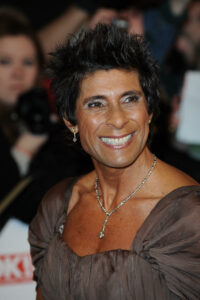
    C9MJNM FATIMA WHITBREAD 2012 NATIONAL TELEVISION AWARDS O2 ARENA LONDON ENGLAND 25 January 2012


    For information about Fatima’s work in the child social care space go to:  https://www.fatimascampaign.com/


  • Tom Pauk: Meet the Mentor

    Finito World caught up with Finito Education’s likeable and passionate senior mentor, Tom Pauk


    Tell us about your career before you joined Finito.


    After studying drama, my efforts to become an actor ended with a whimper rather than a bang, and I retrained as a solicitor. The career that followed was a “game of two halves”, half-time marked by the global financial crisis of 2007-08. In the first half, at City law firm Allen & Overy, then in-house at American bank Citigroup, I’d specialised in large cross-border lending transactions.

    In the second, I helped restructure loans borrowers had taken out in more prosperous times but were now struggling to repay. After leaving the bank in 2017, I began mentoring young men in prison, returned to Allen & Overy, now in a role mentoring lawyers in the early stages of their careers, and began writing plays. My professional life, it seems, had come full circle!


    Did you feel your education prepared you for the workplace?


    A degree in drama could not have prepared me better for the cut and thrust of commercial law, an above-all collaborative endeavour with a diverse cast list of characters, long “rehearsals” with unfeasible deadlines we somehow always managed to meet. At the conclusion of an especially high-profile deal there was the added satisfaction of reading the “reviews” in the financial press.

    The practise of law is essentially an exercise in problem-solving. In my case, a love of modern languages and playing the violin had also prepared me for the intellectual rigour of law, and I was even able to use my mother tongue Hungarian in transactions with Hungarian clients. So to anyone reading this wondering whether a knowledge of an obscure language might prove useful one day, the answer is a resounding Yes!


    Did you benefit from mentorship during your career?


    When I’d started out, mentoring was still very much in its infancy. Fortunately, I was able to benefit from the law firm equivalent, the “seat” system, under which trainee solicitors move from one department (or seat) to another every few months to build up expertise in different areas of a firm’s practise. Each seat is supervised by a senior lawyer — part mentor, supervisor and critical friend — overseeing a trainee’s professional development.

    Over the course of my training contract I was exposed to a variety of mentoring styles, which then shaped my own approach when I assumed the role. But I continue to benefit from ongoing, less formal mentoring in the shape of the extraordinary people I encounter and who inspire me with their wisdom. So in actual fact I’ve never really stopped being mentored.


    What are the most common misconceptions about a career in the law?


    I think there’s a general (mis)perception that law is a dry, bookish occupation, and that lawyers are aloof from the rest of society, be they pin-striped solicitors in their ivory towers or wigged-up barristers bowing obsequiously in courtrooms. In fact lawyers are widely dispersed throughout society, in the public sector (civil service, local authorities, regulatory bodies), in companies and banks, charities and NGOs. If you’re a young person considering a career in law you’ll be able to select from a wide range of specialisations that play to your unique skills and interests.


    Mental health is a particular passion of yours. Can you describe how your interest in that area came about?


    There were occasions, especially early on in my career, when my mental health was impacted under the pressure of work. Symptoms included poor sleep, high anxiety and irritability, and a compulsion for checking work emails 24/7. Back then, there was a stigma around discussing one’s mental health, let alone seeking help when you needed it. Worse, it was regarded as a sign of weakness, possibly even career-limiting, to self-disclose. So one’s natural instinct was simply to keep quiet and soldier on.

    Thankfully, we’ve evolved to a more enlightened view of wellbeing in the workplace, with a plethora of interventions designed to promote a healthy mind as well as body, including mental health first aiders, mindfulness, and discouraging staff from checking work emails after hours. Eight years ago, the memory of my own experience led me to train as a volunteer at a mental health charity. At The Listening Place I’ve seen vividly for myself how poor mental health can quickly escalate into crisis, and how being truly listened to can be life-saving. Literally.


    Work-life balance is something you’ve been vocal about. What are the most common pitfalls people fall into there?


    Most people understand the importance of achieving a sensible work-life balance, at least intellectually,  And it’s hard to argue against. But here’s the challenge: we’re not necessarily aware of the pendulum as it is swinging in the wrong direction. Whether it’s staying ever-later in the office, checking, or worse, responding to emails at weekends  (“because it’s already tomorrow in Tokyo”), before we know it life is work and work is life. Of course we tell ourselves that it’s only temporary, that as soon as we’ve broken the back of whatever it is we’ll take our foot off the accelerator.

    But it isn’t that simple, for we may unwittingly have recalibrated our benchmark of what a normal working day is. We’ve trapped ourselves into believing our own indispensability (“If I don’t do it no-one else will). We assume that working harder improves performance, demonstrates commitment to our employer and enhances our prospects for promotion. I’d counsel anyone reading this to challenge these assumptions and to listen out closely for the whirring of your inner pendulum!


    You obviously have a passion for mentoring. What are the most common challenges you’re seeing among your current crop of mentees?


    I’m certainly seeing the longer-term impact of the pandemic. This is the generation whose educations, family and social lives were disrupted by successive lockdowns. And I’m in awe of just how well they’d adapted to remote ways of studying and working. Another challenge is the sheer number of high-calibre applicants vying for limited places on the graduate recruitment schemes of investment banks, accountancy firms and corporations. Training contracts in City law firms are similarly over-subscribed, and with increasing candidates achieving top grades there’s now a far greater reliance on critical reasoning and situational judgement tests, presentations, written assignments and long assessment days.

    However I’m also sensing some really positive new trends, with mentees less motivated by achieving huge salaries than they are by finding a fulfilling career. And finally, one positive legacy of the pandemic: Finito mentees are often engaged in volunteering activities, whether it’s repurposing old computers and teaching older people how to use them, mentoring disadvantaged kids, or stacking boxes in foodbanks. Something, finally, to celebrate in challenging times.


    Do you vary your process for each mentee, or do you have a particular approach which you use with each candidate?


    Mentoring is a transformative tool for supporting the development of a mentee, and because no two mentees are the same the mentoring process does inevitably vary. Having said that, there are common features in my approach.  In the first place, it’s not about the mentor. Our prime responsibility as mentors is to listen attentively at all times to our mentees. Listening actively (as distinct from merely hearing) is a skill that one develops with practice.

    And it’s crucial we’re responsive to the stated needs of our mentees rather than clinging stubbornly to our own agendas. One unique aspect of mentoring is our willingness to share our own knowledge and experience to support the development of our mentees. A word of caution however, because this has nothing to do with being directive. What we’re aiming to do is empower our mentees to think and act for themselves. Finally, mentoring is a two-way street. At its most fruitful the relationship between mentor and mentee is one in which sharing and learning opportunities arise for both participants. I’m forever learning from my mentees.


    What do you know now in your career which you wish you’d known at its start?


    Hindsight being a wonderful thing of course, here’s three things I tell my mentees. Firstly, it’s important to pace yourself, especially when starting out in a new role and you’re trying to make a good impression. Keep something of yourself in reserve for when you really need it. Secondly, don’t plot out your entire career from the get-go. Life has a mischievous habit of opening new doors and leading you in new directions. And thirdly, know where you add most value, and focus your energies accordingly.


    Do you have any new challenges on the horizon?


    I’m excited to have just been appointed to the board of the Joseph Rowntree Charitable Trust, whose endowment supports people tackling the root causes of conflict and injustice. Along with my governance responsibilities, I’ll also be involved in grant-making decisions, an area entirely new to me.


  • What employability skills are important to employers?

    Finito World takes a look at what employability skills are the most important and how it can improve your career prospects


    Employability skills might seem to be a bit of a mouthful. But the world is becoming more competitive. A phrase which takes as long to say as to make a cup of coffee is becoming increasingly important.

    Why are employability skills so essential? It’s do first of all with the global economy, an inheritance of the settlement after the end of the Second World War. Borders are becoming more porous and businesses more international. The pool of talent competing for jobs has radically increased.


    The only way to meet that reality is to up your game. Gone are the days when you could stroll into Dad’s friend’s bank or law firm without an interview. Now is the time of AI interviews, and fierce competition for every role. Even roles which may not seem all that desirable are competitive.


    Tips for career employability


    So what’s necessary? First of all you need to work on your communication skills. That will be verbal and in-person, and in written communications.


    Sir Winston Churchill famously wrote of the importance of short, sharp memoranda that go to the point. The same is true when we are speaking aloud. Anyone starting out on their career would do well to learn to calibrate what they say. You need to put your hand up, but not seek to dominate.


    All that entails good listening skills, and that in turn implies teamwork. How well can you read the emotions of others? Are you able to see your way round corners? When it comes to employability skills which employers need, teamwork is important. We need to make sure we fit in.


    Most roles also entail some form of problem-solving. The world very rarely runs smoothly. Employers want to know that employees can engage in critical thinking and analyse situations. They need to work to the advantage of the overall organisation.


    Why teamwork matters


    One must become adept at not thinking primarily about oneself. You must ask yourself each day what you can do to further the good of a particular organisation.


    But no employer expects you to get everything right all the time. Setbacks and disappointments are built into business as they are into life. In a changing, rapid world mistakes happen. Employers want to see that employees have resilience and a willingness to learn.


    All of us has capacity for growth: career employability is to do with seeking to foster those capacities. You must not turn your back on any notion of self-improvement at the first crisis or letdown.


    If you can do that, you’ll be well on the way to developing leadership skills within yourself: employers often say they’re looking for self-starters. You must demonstrate over a reasonable period of time that you are able to arrive at the answer to difficult questions on your own. Then management will start to consider you for a leadership role.


    That will take time – and perhaps that will imply patience. But at the same time, it is to do with work ethic. That is an area where young people can really differentiate themselves. The famous West Coast lawyer John Quinn used to take his cohort of new arrivals down to the lake on his estate. He would say: “Swim to the other side!” The first two to enter the water would get jobs at the end of it.


    You need to be the first in that lake to succeed: if you don’t someone else will. It was said of the tennis-player Tim Henman that he wasn’t the best tennis player in his class at Reed’s School. But if the coach said: “Go and hit a ball against the ball for ten hours” would go and do it.


    Working hard


    Fostering that work ethic can lead you to surprising places. Doing things over and over again might seem boring from the outside, but commitment leads to deeper understanding.


    But none of this should be at the cost of the bigger picture. When it comes to career employability, you need to realise you’re in a globalised economy. You must also seek to understand the variety of functions which your organisation carries out.


    Above all, career employability is about never stopping learning. It is an avenue to a rich and fulfilling career, and therefore to a productive life. You might find that the employability skills important to an employer are also important to you.


    To learn how to develop your employability skills go to: https://www.finito.org.uk/


  • Finito Bursary Candidate Nick Hennigan: “I Want to Do My Family Proud”

    Christopher Jackson meets Finito bursary candidate, a young assistant to a private banker, and, explains why he’s destined for great things


    I have sometimes observed that precocity creates its own challenges: being brilliant young creates expectation and pressure. In fact, it turns out that ability without the right temperament places even greater pressure on ability itself. It’s rare for the two to go hand-in-hand because the one can sometimes clash with the other. To be very talented is usually to be told you’re talented: not everyone keeps a level head.

    Nick Hennigan, 23, who recently took part in the Finito bursary scheme, has had by any measure a difficult few years. His father took his own life at the start of the pandemic, leading to unthinkable grief and shock. But to talk to him you wouldn’t know it – and in fact he only mentions it towards the end of our conversation. “As much as it is a completely negative impact on anyone’s life – within my family it was a huge blow to us all – I now see myself as my dad’s legacy. I want to go out there and do him proud and do the rest of my family proud,” he will say.

    What was his early life like? “I was born in Aberdeen and I’m very proud of my Scottish heritage. I went to a state comprehensive and after finishing secondary school, I went to join EY on a business apprenticeship, which allows young school age children to join a Big Four firm, and train up as a chartered accountant.”

    The experience was formative but in ways Hennigan might not have been expecting: it showed him vividly what he didn’t want to do. “I was in the audit division, and I didn’t find it personally or professionally stimulating,” he says simply.

    But from there, Hennigan went on to complete his university degree in international business management at the Aberdeen Business School, before heading off to study in Canada’s Mount Royal University . “That was a fantastic experience,” he tells me. “All of this has helped shape me into looking towards a career within a company that has international presence. I suppose it gave me a deep appreciation for multi-national business. ”

    Hennigan has always had a broad range of interests, and was strong at school across the curriculum. “I always did quite well in maths subjects but then I also did biology and chemistry, as well as English and geography. I like to look at things intellectually and enjoy studying and working towards qualifications.  I would say I am numerate but I am also good with my language and the written word.”

    He says this without any air of boasting – he is stating the facts. Has this range of aptitudes made it harder for him to choose a career path? “That was the observation some of the Finito mentors would actually make once I joined the scheme,” he recalls. “They said because I excelled in different areas of business and subject areas, it was difficult to rule things out.”

    But Hennigan was already standing out from the crowd and an example of this is his excellent thesis ‘Leading into the post-Covid 19 era’. This astonishingly mature piece of work has a foreword by ITV’s Chief Executive Officer Carolyn McCall DBE, who writes in the paper: “Nick’s research is considered and thought-provoking and very much chimes with what I have long believed, that personal values and purpose play a pivotal role in the type of leader an individual will become.”

    This wasn’t the only figure that Hennigan interviewed for the paper: “I would love to one day – hopefully – become a CEO – so that’s why I chose that topic,” Hennigan recalls. “I also interviewed EasyJet’s Johan Lundgren; as well as Simon Roberts of Sainsbury’s, and Paul MacDonald, the CEO of Avon Protection, and Mark Darkworth of Schroders Personal Wealth.”

    I cannot imagine the result was ever in doubt, but Hennigan secured a first for his efforts. It is worth noting that Hennigan achieved all this despite scepticism about the ambition of his approach: “My supervisor said to me it wouldn’t be possible when I proposed it and that the CEOs wouldn’t give me the time of day. This spurred me on to go and prove her wrong: that’s part of my DNA – to overcome challenges.”

    So how did Hennigan come into contact with Finito? “It happened early in 2023,” he recalls. “I have recently joined the shadow board of UMBRA International Group. Through my work there, I got to know the CEO Kate Bright well and she very kindly introduced me to Ronel Lehmann, the CEO of Finito Education.”

    Hennigan’s main point of contact under the Bursary scheme was Claire Messer. “We got on really well, and she was great at preparing me for interviews – as was Merrill Powell who coached me in presentation, and made sure I put each point across succinctly and impactfully. Amanda Brown did my LinkedIn training and Sam Pearce did my headshots. But through all this, I had Ronel who was really my main mentor.”

    So what was Lehmann’s advice? “I had breakfast with him at a time when I had just had a few rejections and close calls, where I had got down to the final stages. Ronel told me I needed to think of three areas. So we narrowed it down to PR and recruitment – but we also spoke about private banking.”

    Hennigan was initially sceptical about this third possibility: “Given my experience with EY, I was wary about going back into finance, but private banking is very different to audit, even though it’s also underpinned by numbers. It also chimed as I have always said I want to be external-facing and deal with clients.”

    Once this strategy was deemed a major possibility, the stars began to align. Hennigan recalls: “Luckily enough, Kate Bright knows the Head of Marketing at a private bank in London and Ronel knew one of the MDs. I was able to meet with both of them on the same day back-to-back.

    The meetings weren’t for a particular role but I was able to explain my situation and set out my stall. They followed up afterwards by saying there was a potential role with us in a different team as an assistant banker. Again, I had no experience in banking and I made them very aware of that but they didn’t seem to think that was a problem: I got the job.”

    Those are the four words we most enjoy hearing at Finito. When I speak to Hennigan, he has only been in position for two and a half weeks, but his early impressions prove to be overwhelmingly positive: “I am enjoying the set-up that I’ve got,” he tells me. “It’s very fast-paced and I have got a lot to learn. It’s going to be a steep but positive learning curve.

    The good thing is I am fully supported by not only the banker that I am assisting but also the team and the other assistants that we have in the bank within the team. I am in the front office and I think it’s an amazing first job. I am not going to take it for granted. I am going to work hard.”

    Of course, it is a tragedy that Hennigan’s father isn’t around to see what a remarkable young man his son is – and is still becoming. His will always be one of those stories which, despite his remarkable nature, will contain the wish that events had been otherwise. Never once in our conversation do I see any trace of the self-pity others might feel and which would be perfectly understandable.

    Hennigan says: “I suppose it’s formed my outlook on life. It’s through adversity that you end up going on and doing great things. Finito opens doors and it encourages you – but it is down to the candidates themselves to do well.  If the candidate doesn’t want to engage in the process then they are not going to get out much. I think there is maybe a misconception with Finito: people say they will just place you into a job. No, they will support you to get yourself into that job.”

    That’s something that mentors observe on a daily basis – it’s not often, however, that a mentee speaks so eloquently about the experience of the mentor. What I think Hennigan has therefore – and I expect it to catapult him in time to the front ranks of British and maybe global business – is imaginative empathy. It is an ability to place himself in the shoes of others, and yet to retain his own remarkable steel and determination at the same time. It is the mark of someone already functioning at an extremely high level. It will do no harm that he is charming, and equally skilled at numerical and linguistic tasks.

    Usually, in an article like this, we like to thank the Bursary supporters who have helped the candidate in question. In this case, the donor has asked to remain anonymous, but has been happy to offer us these thoughts: “All it took was one brief telephone call from Ronel and I felt compelled to help. He was so emphatic in his enthusiasm for a newly presented applicant in whom he saw enormous potential but who had no possibility of funding.

    Ronel gave me the basic details and story, but was careful not to reveal too much. I did not wish for anything in return, simply the expectation of hearing some good news in due course. And indeed there has been. Nick will no doubt have a bright future and successful career, made possible by Finito’s mentoring and guidance. Maybe one serendipitous telephone call really has changed a young life.”

    This generosity is an example to us all, and Hennigan expresses to me the extent of his gratitude: “This person changed my life and I hope one day I get to meet and thank this person.” The donor should also know that to have supported Hennigan is to have backed an obvious winner. I would say: “Watch this space” – but my suspicion is you won’t have to look too hard to see the impact Hennigan will go on to make.

  • An Indelible Mark: Terence Cole: 1933-2022

    Friends and family remember the great and charismatic investor and party guru Terence Cole who touched many lives.

    Ronel Lehmann, CEO, Finito Education


    I often find myself in, and around, Marble Arch for meetings and can be seen bowing my head as a mark of respect to Terence Cole outside his Upper Berkeley Street office. It was there thanks to Liz Brewer’s introduction, that we first met.

    Terence founded MARCOL with Mark Steinberg in 1976 and together they created a multi-billion international investment group. Terence was a true visionary and a creative genius. He was not afraid of sharing his politics and utter disdain for Sadiq Khan, Mayor of London, who he hated with a vengeance for destroying the road infrastructure and transport network. He was a man who understood the importance of retail customers and championed Chelsea Harbour, following its acquisition in 2003.

    I remember our many conversations during the pandemic. He shared our passion for inspiring the next generation and adored our work helping young people to find meaningful careers. He loved this magazine and was responsible for coming up with an improved mentoring business strapline, The Employability Experts, for which we will always be grateful.

    Before he died in December 2022, he told his staff to ensure that his mobile phone was fully charged and buried with him just in case he could make a call from the other side. Whenever I meet his colleagues, we do ask each other, “Have you heard from Terence?” He must have known that he will be remembered by us all with a smile.

    He impacted many lives through his generosity of spirit and leaves an incredible legacy which his family continues, as patrons and benefactors, to many of the charities that he supported.

    Mark Steinberg, co-founder and joint CEO, MARCOL
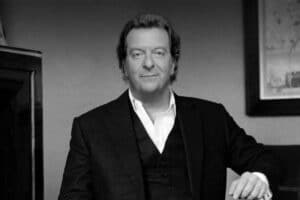


    Terence and I worked together as partners for 46 years from 1976 until he passed away. There was a substantial age difference between us – about 25 years – but that never mattered. It just worked. Having faith in each other and having trust in each other was fundamental to a relationship which lasted over 40 years, longer than most people’s marriages. When a business relationship lasts that long, you know how to finish each other’s sentences, and you know what your partner is thinking. In meetings, you intuit who should take the lead. Our roles were very merged together. I tended to deal with more of the financial side – the fundraising and the debt-raising. But strategically we worked very closely.

    In 1976, we bought a ten-year lease on a property – a stone’s throw from the offices we still have today. That was £10,000 and it was the start of MARCOL: the name was made up of part of my first name and part of his second name. We worked from his dining room table to begin with and then from a basement windowless room in South Audley Street. We had a part-time secretary coming in and working with us and we built the business up, literally from zero, working with The Portman Estate. We had no capital but we were tenacious. Soon we were working with other estates like Cadogan, Eton College and Grosvenor.

    Over 40 plus years, MARCOL grew from nothing into quite a substantial pan-European operation that wasn’t just real estate in the latter years: we went from being a small residential real estate developer to being commercial as well. In time, it grew beyond London across the UK. We went into Europe and invested in Germany, Poland, Romania, France, the Czech Republic, Hungary. Soon we were involved also in operational businesses with real estate foundations such as hotels.

    Terence was intensely private, but charismatic, a maverick, a lateral thinker. He had very strong views about how he saw things. He had very leftfield views that really added a lot of gravy and sauce to what might otherwise would have been quite straightforward. There was nothing linear about him. You’d go into a meeting with him with other people and he would come from a complete tangent, and confuse them to begin with – but by the end of it they had bought into the idea.

    Terence engendered very strong loyalty from people working with him from his staff. One of his PAs worked for him for 60 years. She also passed away last year but she worked for him way before we were together in a previous life and then left him for a few years and then she came back again. He created this very professional business but which had a family kind of atmosphere. Whether it was dealing with people’s health issues or personal issues he would always be the first to say: “We are going to send them away on holiday” or “We are going to pay their medical bills or whatever it might have been.”

    Mentorship was very important to him. Terence was a very good judge of character: when we were interviewing people for roles or looking at businesses, he had a kind of sixth sense about people and was able to take a view on whether we should take somebody on or not.

    Of course we had our ups and downs. We have been through numerous recessions: the late 70s property crash; the 1989 property crash; Lehman Brothers; Covid. He was a real personality – a bear of a man, who loved his food and loved people, loved to entertain, and loved to investigate something new.

    Claire German, CEO, Design Centre Chelsea Harbour
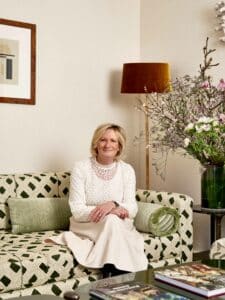
     

    It was almost as if he’d been here before. It’s been strange since Terence died, not having him involved in my life. He played such a huge role ever since I arrived here 13 years ago – and I knew him before. He was this fabulous mixture of incredible business brain and great vision, who seemed able to predict what could happen. For instance, during the pandemic he said: “Darling, this is the easy bit, the pandemic. It will be post-pandemic with everyone trying to return to normal that will be the hard bit.” He was already thinking about getting people back into the office while everyone else was getting used to lockdown.

    Terence had these intense business meetings where he would really put you through your paces. He would not suffer fools gladly: you had to know your stuff – bring in energy and have ideas. He had a twinkle in his eye; this made him quite mischievous. If a situation was getting out of hand, he would immediately see that and disarm it and then bring a lighter tone to it. He had great emotional intelligence.

    Sometimes when Terence went off on a tangent, I would start off by thinking: ‘I’m not quite sure where this is going’. But you always had to believe in the journey because you knew the journey was a very well-thought-through one and you had to trust in that.

    Every day at the Design Centre Chelsea Harbour, I can hear him in my ear. He would say: “We’ve got to stick to the concept”. He would drill that into me. The space would have to feel lively and create reasons for people to come. Right down to the food, the attention to detail was incredible. The Design Centre Chelsea Harbour is the jewel in MARCOL’s crown: they are very proud of what they achieved and rightly so and they had the vision to create this centre. It’s not just a landlord-tenant relationship: it’s bricks and mortar and beyond.

    He was also the party maestro. He wasn’t particularly easy-going about it because he would be very critical if he didn’t like something. He would say that a party had to have the right atmosphere: a heartbeat.

    It doesn’t quite seem real that he is not here. I keep expecting him to burst in at any moment asking for food. Food was always a big thing in the meetings. He would arrive; we would be in a meeting and he would always arrive after everyone else and say: “Darling, can you get me an egg sandwich?” I was learning at the feet of the master.

    Nigel Lax, Director, MARCOL
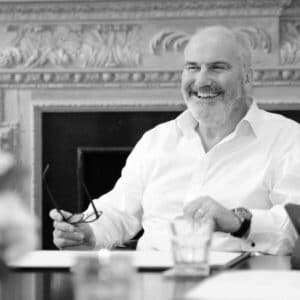
     

    I first met Terence in 1994. I was in my late 30s, and had been through a fairly institutional career.  I qualified as a chartered surveyor, and spent 10 years in private practice post-qualification in various parts of the UK. Then I came down to London to work for a developer in the late 80s. This was an inauspicious time to come to London: the developer I worked with was going down the tubes like a lot of developers at the time. I had a respite at the Halifax Building Society again very traditional financial institution – and then I met Terence.

    He came into my office on the Strand. He was always a larger-than-life character and very self-confident. He said: “I believe you have got an asset in Docklands that you are trying to sell for the Halifax. I would like to buy it.” We weren’t even marketing it at the time. Cutting a very long story short we negotiated a sale of this asset over a period of no more than probably 3 or 4 weeks. I didn’t know MARCOL from a hole in the wall. It was before the internet so you couldn’t check anybody out. There then ensued a long torturous negotiation with Terence in the Churchill Hotel where he would turn up two hours later than scheduled.

    After that he made me a job offer. I realised I didn’t want to spend the rest of my life at the Halifax. 30 years later I am effectively still working for the Cole family office and for Mark’s family office: it’s gone in a flash. Terence took you outside your comfort zone beyond the boundaries that you were comfortable with.

    That’s the best thing you can do in your career: to be tested all the time is to learn all the time. Now, in my late 60s, I am still looking for new intellectual stimulation. I have also developed other interests which I don’t think I would be doing but for Terence: he was so mind-expanding in the way he approached things.

    Nobody was a better litigator than Terence: he loved a fight. If he thought somebody was trying to get one over on him he would be tenacious. I remember we were suing a firm of valuers, a matter which gone on for probably two and a half years before Terence really got involved. We were getting to the final stretch in negotiations with the valuers’ insurers. On a Friday afternoon, we got them up to a plausible number but Terence wasn’t impressed. In meetings, he never had notes. He never wrote anything down. In this one, he got up and walked out and said: “When you see sense come back and talk to us but we are not accepting that offer.” He just walked out and nobody knew what to say. That was the end of the meeting. During the course of the weekend he got them to go up another 10 per cent on where they were on Friday afternoon. He rang me on the Tuesday and asked what I thought. I said: “I’d have been happy to take the number they offered us on Friday but clearly you have done a much better job than I’ve done.”  He replied: “I’m only doing it for you.”

    He also had this extraordinary attention to detail. My wife worked with him on one of his refurbishments which was hugely frustrating for her but she learned a huge amount. Specifically, don’t put up with second best if you know it can be done better: particularly if you are paying for something, criticise it. My wife is very like him now. We are doing a project up in Yorkshire and for the contractors it’s frustrating at first, but if they get it, people can lift their game.

    Parties were Terence’s hobby: that was what he lived for. The Coles always used to throw a party on Boxing Day. On one occasion they took a suite in the Savoy but we turned up at the allotted time and were held on the ground floor in the lobby of the hotel because the room wasn’t ready. We then discovered that 30 minutes before the party was due to start, Terence had decided he didn’t like the layout of the room so he literally got them to take the doors off the hinges so that the space flowed better.

    It was certainly never dull. MARCOL isn’t the same without him. There are youngsters in the office who will never experience that. With Terence there were no airs and graces: no aloofness. He wanted to be looked after and respected by people but at the same time he would give that respect and care back.

    Victoria Boxall-Hunt, Group Operations Director, MARCOL

     

    I shall never forget the first day I met Terence. He made me laugh so much in my interview that I snorted! It makes me go red at the thought even now – 18 years later. On my second interview, he sent his car and driver to collect me and bring me to Upper Berkeley Street to meet him and Mark. This was no ‘normal’ company and so began my journey with MARCOL, a journey that has shaped my life and given me many experiences that I would never have had. It has taught me a huge amount, introduced me to some incredible people and has tested and delighted in equal measure. There is also no doubt that we have laughed a lot and had a lot of fun over the years.

    I genuinely think they broke the mould when they made Terence Cole. He didn’t do things that people expected, in fact quite the opposite. I learned a lot from him, particularly to be patient, stay quiet, listen intently and to stand up for myself and fight my corner. He had an innate understanding of people and a way of asking questions and getting things done that astounded. What seemed utterly preposterous at the beginning of a meeting would seem totally doable (somehow) by the end. He had the most incredible way of talking people into doing things and making people think it was their idea in the first place. He helped me plan my wedding and took great interest in all things. He even said I must have his car and driver to take me to the church and that he would get a taxi.

    I have witnessed so many unbelievably kind and thoughtful gestures over the years that genuinely made a positive impact on peoples’ lives. He was driven by making a difference and an impact, which he did. I think of him often an ask myself regularly: “What would TC have done?”

    Niki Cole, Terence’s wife

    I was married to Terence for 48 years. When I met him, I was a young actress who had just done a movie in LA. I was doing publicity and was asked to go to a fabulous European men’s shop to sign autographs. I saw a big giant limousine pull up outside the shop, and Terence got out with two guys. He looked around and was soon trying on clothes. At the end of that, he said: “I’m going to take all these clothes on the condition that that lady over there delivers them to the Beverly Hills Hotel.”

    When I was informed of this proposal, I said: “I’m not doing that.” But he had this power about him and this presence. I went with the driver there, and said: “The clothes are here” and I was asked in for a drink. I stayed him with a week at which point he said: “If you play your cards right, I’m willing to marry you.”

    Terence knew it all – he had no lack of confidence in what to say or do in any situation. He was very relaxed and brought people down to earth, and attracted them: he brought them along.

    I’ll never forget the party he threw for my son Alex and his wife after they were married. The theme was Hollywood glamour. It was at a venue outside London, with 500 guests. Every single one of them had their own chauffeur and their own car and were taken to the country. The party finished at 5am. There were different-themed rooms and all sorts of music: the Royal Opera; the Black-Eyed Peas, Shirley Bassey. My son and his wife knew nothing about it. There was a Doctor Zhivago-themed room where there were ice sculptures dispensing vodka and Russian soldiers on horseback. There was another room for period films, with ladies dressed in Jane Austen-style costume. We went downstairs and there was a sheet of raining ice, and suddenly everything went ‘Boom!’ and opened like a curtain and Alex and his wife were standing there. Jools Holland sang; José Carreras sang; breakfast was served at five in the morning.

    Perhaps it could be daunting sometimes. If I said, “I’m not doing this,” he’d reply. “We are doing this – I know what’s right.” The secret to staying married to him was to know how to challenge him back.

    When he died – in London at the Cleveland Clinic, I wanted him to be buried in America. It’s the most beautiful place. On one side you have the sea, on the other are mountains. He is buried in his tuxedo jacket, his pink open-neck silk shirt, white trousers and green velvet carpet slippers. My husband danced to his own tune in life.

    Alex Cole, Terence’s son, founder of Elevate Entertainment

    My father was a man who created his own destiny: it was his way or the high way. He was a man who’d built something from the ground up in business, and didn’t apologise for it. Why should he? He could humble any mighty person – no matter how powerful you were, he could always teach you something. He had this way of speaking in a low voice, of taming people, and drawing people into his wisdom. I knew if I went into property development and private investment, I would never get close to what he was doing: I didn’t want to interfere with the master. My path in life was a little to his chagrin: “There’s no money in that,” he’d say.

    So I now produce and develop big TV shows: that’s very different to what my father did. There were things we each had to navigate in relation to each other’s choices. My father wanted me to always admire what he did, but I could never achieve what he had done in business, even though he would have liked that. For me, it would have been disrespectful to step into those shoes.

    I was going to stand on my own two feet. While he was around you knew everything was going to be fine; he was going to see to that. He needed to control the family – and not in a bad way. I felt secure in my family; you knew you could always go to this wise man for help, whether it to be personal or to do with business. If you were under his watch, you were taken care of.

    When he went we all felt lost: me, my mum, Mark. Because my sister had health challenges, I had pressure to keep the legacy of the Cole name going. That created a wonderful bond, but it also created a pressure. When my dad passed away I wanted to keep that security nearby, and have him close to me: I arranged to have him buried about 15 minutes away. He liked the sunshine of America: he liked getting out of England – he found the mentality to be: “You can’t do that”. My father would always say: “Well, I’m doing it anyway.”

    As I proceeded with my career, he really became interested in films. He decided he wanted to tell me how to produce films. He would say I should host a talk show and so on. He was proud: it was a creative job, dealing with celebrity and a bit more glamorous than property – or at least it seems that way until you’re in this world. He would say to me quietly under his breath: “You know, I’m proud of you, right?” When he gave compliments, you knew they were valuable – more so than with people who shower you with affection and praise.

    When it came to the parties, I’ve been to the Oscar’s – and they’re boring compared to what my father could produce. He planned things but never wanted to be the man of the moment when they would happen – his kick was to stand in the corner as people took the journey through the party.

    When it came to work, he never had to behave in a certain way: he was the meeting. Everyone had to pause while he did his things. But the theatrics encouraged people to want to do business with him; he wasn’t conventional. And he loved everyone: the team, the staff, the doorman. If you were part of his group, you were part of his group. It created company morale. He didn’t waste his life in any way. When he died he was 90 years’ old. His mind was strong, that mind could have gone on to 105 in the office. But his body gave up on him which makes the loss of my dad harder to stomach.


  • Opportunities in the Coffee Sector: An Interview with Dr. Claudia Araujo


    Finito World caught up with Dr. Ana Claudia Araujo of the Natural History Museum to ask her about possible careers in the coffee sector


    I was really surprised when I went to the exhibition last year to see what a big climate impact the coffee sector makes. Can you explain to our young readers why we need to take coffee seriously if we’re serious about climate change and biodiversity?

    I believe the starting point is to understand how plants work and how they interact within the ecosystem (or vegetation) to which they belong and have evolved, alongside other organisms. It is also paramount to bear in mind that living organisms are always evolving!

    Plants interact in many ways with other plants, animals, fungi and bacteria. They exchange favours in order to survive. When we extract portions of a natural ecosystem, we are not only putting at risk the future of the species directly affected, we are jeopardizing the system that they have built over millions of years, which works well because it is balanced.

    At first, we won’t notice the difference much because nature is resilient, it tries to reinvent itself, cure itself, forms a scar.  However, in nature everything is linked, like in an engine, and once we remove one key player the rest may fall apart. Imagine if you built a tower of flats and right in the middle someone decides to make an open space in their flat removing an entire wall? If several people decide to do similar thing then at some point the building will collapse.

    Humans clear vast areas of the planet for crops. In doing so it is eliminating the system that regulates the ecological functions of the area. It is not just the ‘green’ that is disappearing, it is everything else that we cannot name because we don’t see or even know it exists or how it functions and affects our ecological ‘engine’.

    We know plants purify the air while producing ‘sugars’ (energy), capturing carbon dioxide and returning oxygen. Plants also breathe and transpire. In performing these processes of photosynthesis, respiration and transpiration, plants bring water from the soil to the air, which accumulates, travels and falls as rain elsewhere. But water is becoming scarce. Forests are a mass of plants, of different sizes and shapes, each producing a network of roots that act like a sponge when it is the rainy season.

    Branches delay the fall of rain to the soil, roots above the ground trap water and roots below ground help the plant to absorb water efficiently and the excess travels to the water table. Saturated with water, plants transpire and the cycle is maintained. But in the dry season the plants have the reserve of a full water table. In this process plants help regulate the weather over the short term and the climate over the long term. Also important is the nutrient level of the soil, which comes from bark, leaves, flowers and fruits falling to the ground and being decomposed by fungi, worms and bacteria.

    Now, coffee like any other crop needs to have natural vegetation cleared to create the space for it to be grown – that is the first issue. Because it is a small tree, like other trees such as avocados and almond, coffee demands large areas of rich soil and regular rainfall. Here the issue gets worse.

    The biodiverse area that previously had many species was supplanted by a crop that demands too much of what the area can no longer provide. To start with the coffee grows well, but the more coffee we plant, the poorer the soil becomes, and the poorer the soil is, the greater the need to advance into areas where remnants of forest still stand, and thus more forest is felled. Eventually there will be nowhere suitable to plant coffee.

    What are the current obstacles to reform of the coffee sector?

    Coffee is the world’s second largest traded commodity by volume after petroleum. But the plant takes about five years to bear its first full crop of beans and will be productive for only fifteen years. Harvest is picking by hand because this is selective. Between collecting and preparing the ground coffee there is a long process: the wet method requires reliable pulping equipment and adequate supply of clean water – that is another issue; the dry method involves freshly harvested fruits being spread on clean drying yards and ridged once every hour, which takes 12–15 days under bright weather conditions – and the weather pattern is changing.

    So, the nature of this crop makes it an expensive one. It needs financial investment in certain areas to protect the industry. But the fear is that for the industry this investment will be wrongly read as ‘losing’ money, instead of investing. The price of producing coffee would be higher and will be sent straight to consumers instead of the increase being shared between producers, the industry and consumers. So, in my view, the major obstacle is changing perceptions within the industry. I might be wrong; I hope I am and find there is someone out there trying to make the necessary changes.

    What does the coffee sector need to do to change?

    Invest in creating and maintaining prime natural vegetation in an untouched state, particularly where the wild species of the genus Coffea (Rubiaceae) are found. Wild varieties can be a source of new cultivars that can produce crops quicker, demanding less resources. I am not advocating that the industry should own natural vegetation for their own advantage but support the maintenance of existent protected areas and advocate for new ones to be created.

    Support local communities alongside local scientists to supervise the collection of surplus seeds from natural vegetation and try to re-create or boost natural vegetation in areas that have long been deprived of it. Again, I am not suggesting planting coffee trees in forest remnants but rather to let the forest retake the areas of crop and try to keep both at bay.

    Invest in scientific research that focuses on alternatives, and plant conservation work such as the Plants Under Pressure program of the Natural History Museum.

    Can you talk about your research, how it came about and how it’s funded and what you hope the end results to be?

    I am a plant scientist that has dedicated most of my professional life to teaching and researching taxonomy (the science of what things are) and systematics (how they are related to one another).  I worked in universities and organizations keeping an herbarium, so for a long period my taxonomic knowledge was invested curating plants specimens. Currently, I apply this knowledge to identify plants at risk of extinction, where they are, what threatens them and what this means to the vegetation where they are found, to the local community and also the effects of climate change on such losses.

    This is to help policy makers know where, how, and when to act. I work on the Plants Under Pressure program, with a team currently comprising 11 people: four members of staff, four volunteers and three Master’s students. This program runs almost entirely on short-term grants, from research-funding bodies or from charities, and three of our four staff members are temporary researchers, including myself.

    Part of my time is dedicated to finding new funding opportunities to keep the research programme active. I am forever grateful to our volunteers that give part of their time to our research for free because they believe in what we are doing. Of course, it would be far better if we were a bigger team able to employ scientists for much longer and have more time to dedicate entirely to the work we are trying to do!

    The long-term aim of our research is to provide the scientific basis of what plants are more at risk of extinction, where and why, and what can be done to help preserve them. This information helps to inform international agreements such as the UN Convention on Biological Diversity which sets targets to achieve not only a reduction in biodiversity loss but also its restoration, something that also helps society to withstand the impact of future climate change.

    What would you advise young people who are interested in going into the coffee sector but also mindful of the environment?

    Get involved! Have an open mind. Do your research. Maintain a healthy scepticism: don’t take everything at face value. The 21st century gives the young mind the privilege of global communication, so use it wisely. Also, you may be in the crop production industry or hospitality sector or be a farmer and became a volunteer for a scientific group like ours or become a ranger in a protected area or national park that you know of.

    Give yourself the opportunity to hear what the ‘other side’ has to say, try to have empathy, listen to a different opinion – you don’t have to accept it but give yourself the opportunity to improve/boost your knowledge on the subject. Knowledge is power. When you know the different sides of the same truth you are closer to finding a reasonable solution. It is all about knowledge and compromise.


    To visit the Natural History website go to:

    https://www.nhm.ac.uk/our-science/our-work/biodiversity/plants-under-pressure.html


  • Rafael Nadal: a member of “the elite of the elite of the elite”

    Why is Rafael Nadal so important? As the great tennis-player retires, it is clear he inhabits very rare company, writes Christopher Jackson


    It is the humility of Rafael Nadal which is part of what makes him so magnificent. Retiring from professional tennis in mid-November 2024, he described himself as ‘just a kid who followed his dreams’.


    He was that, of course. But his great rival Roger Federer came closer to the mark when he wrote in his moving statement marking Nadal’s departure from the sport: “You made Spain proud. You made the whole tennis world proud.”


    In fact, Nadal – like Federer himself – comes from a very small group of sportspeople who make the whole world proud. They are a credit to their species. Part of living in an era whose defining obsession is sport is to find a dramatic increase in the type which we might call the elite of the elite of the elite.


    Why is Rafael Nadal so important?
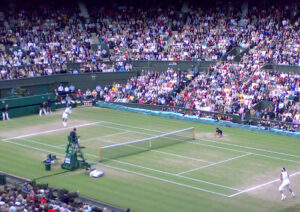
    The 2008 Wimbledon final. Federer is serving for the third set


    The group I am describing is not made up of No.1’s – though all of the people I would put forward for this category have been at one time or another the best in the world at what they do. But being no. 1 in the world doesn’t get automatically get you entry to this club. Being the best in the world here is a mere starting point to being perhaps one day somewhere near this conversation.


    Anyhow, you need to be World No. 1 for a long time to qualify. You have to be world no.1 over and over and over – but even that doesn’t get you there. Rory McIlroy has been the no.1 golfer time and again, but he isn’t in this category: he isn’t actually particularly close. The English swing bowler James Anderson is closer, but not quite there either.


    To be in the elite of the elite of the elite you need to do things nobody else can do – in fact, you need to perform at a level to which nobody else has ever performed. And you need to do it in a certain way. We can call this genius, or magic.


    In the first place, it has partly to do with ease of doing – or apparent ease. When we watch Simone Biles performing her floor routine we can see that she is doing much more than the relatively prosaic thing of winning her gold medal. She is reinventing that sport: she is qualitatively different. The same used to be true of Federer when he would waltz through a Grand Slam without dropping a set. It wasn’t just the ease with which he did this – it was the beauty with which he did it.


    Usually the elite of the elite of the elite express themselves in memorable moments – moments where time itself might seem to slow down, to expand, or to become elastic in some way. Furthermore, these moments will usually be tied to some form of necessity: they therefore represent necessity surmounted, or responded to with unusual skill and awareness.


    These are the moments which send a shiver. One thinks of Michael Phelps in the Beijing Olympics in the 100m breaststroke. Going for his seventh gold medal – to tie the Michael Spitz record which he subsequently beat – he was looking tired coming down the stretch against Milorad Cavic.


    Then something happened. Nearing the finish, Phelps summoned some last ditch strength, and rose out of the water with a sudden show of speed, to tap 0.01 seconds ahead of his rival. He rendered himself above an impossible moment.


    Tiger Woods was able to do the same. At the 2005 US Masters, Woods needed a birdie on the famous 16th hole. His drive went left down a precipitous slope. Viewers at home tend not to know how difficult the greens at Augusta National are: it’s like putting on glass.


    Woods, as every golf fan knows, lofted the ball up and it ran down the slope. It teetered on the edge of the hole then toppled in. Woods went on to win the tournament. He needed to do something nobody had ever done before and he did.


    The presence of someone who is in the elite of the elite of the elite doesn’t always need to come in moments when their backs are to the wall. It can also show itself with a certain ease of doing which can lend itself to a sort of inverse drama: it is the drama of things not being close at all.


    In this category one thinks of Usain Bolt at the 2008 Beijing Olympics already celebrating about 80 metres in as he broke the world record by a vast margin. He looked almost as if he was flying. Nobody else has ever looked like that. In Bolt’s case it was tied together with a sense of theatre which in retrospect had to do with an extra awareness about the nature of the occasion: the nature of the occasion being that he was very likely to win and so could afford to lark about a bit.


    Michael Jordan is another example. When we watch reels of him hanging in the air before dunking a ball, it really can seem as though he has a different relationship to the essential physical structures of life to everybody around him.


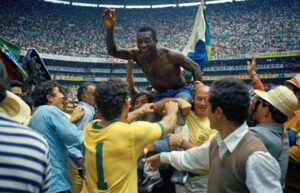
    In team sports sometimes we find a certain heightened sense of strategy and inventiveness – the ability to conduct surprising situations with a certain innate virtuosity. In this category we find the great footballer Pele. I have always been fond of the last pass that leads to Carlos Alberto’s goal against Italy in the 1970s World Cup Final.


    Pele looks like he’s playing against children. He collects the ball with his left foot, cradles it briefly, and then with a kind of infinite laziness sends it off to Carlos Alberto, who rifles into the net.


    Some of my favourite Pele moments have almost a kind of silliness to them. The attempt to score from behind the halfway line against Czechoslovakia in the group stages of the 1970 World Cup. The ball misses, but its sheer audacity opens up onto a whole realm of possibilities about how we might play football.


    Similarly, in the same tournament against Uruguay, Pele is running towards the box and the keeper coming towards him, both towards a cross coming from the left wing. Instead of trying to poke it past the keeper, Pele lets the ball go and circles back on himself while the goalkeeper flounders. That he then misses the goal doesn’t matter: he’s shown that there are another set of possibilities for the people to come after him to explore.


    Sometimes the elite of the elite of the elite can create moments which enter national folklore: inherently patriots, they can have a heightened sense of what their country requires of them. In 2008 Sachin Tendulkar, batting against England in the wake of the appalling Mumbai attacks, needed to produce a century to lift his country’s spirits, and he did. There can be something solicitous about the elite of the elite of the elite: they do what we need to them to do on our behalf.


    Clive James used to tell a story of Joe DiMaggio towards the end of his career. One of the greats of his sport, he was asked why he was warming up so hard when the game didn’t matter all that much in the context of a hugely successful career. “Because there’s a kind out there who hasn’t seen me play before,” came the reply.


    When this top flight of sportspeople are obstinate, their obstinacy can take on infinite proportions. Shane Warne, another member of the elite of the elite of the elite, was once asked who was the best batsman he’d ever bowled against. He replied: “Tendulkar first, then daylight, then Lara.” Asked why, he recalled how during one particular tour Tendulkar had found himself getting out to the cover drive. Unprepared to accept this reality, he simply cut the shot out of his repertoire all day long. Warne was shocked and delighted at the sheer determination of the man.


    Warne shows another example of the way this rarefied group can respond to circumstances. In Warne’s case, everything he did was characterised by a certain adventurous humour. During the 2006-7 Ashes, Warne was provoked by Ian Bell’s sledging to produce his highest test score. Bell, who Warne had been calling the Shermanator throughout the series, chose to answer back.


    Warne pointed his bat at Bell who was in the slips and said: “You mate, are making me concentrate.” Warne went on to score 71 from 65 balls. The implication is that he was so good he could stand in the great arenas of his sport, and not need to concentrate. But if you ever provoked him to do so, he could be as much a batsman as a bowler.


    Nadal reached these heights not because it was easy for him, but because he managed to balance extraordinary effort with profound humility. It was this which made him seem, as commentators frequently said, of another planet.


    That perhaps is what really unites these great sportspeople: they feel separate from us – they seem to resemble gifted visitors. One is sometimes left with the impression that the gulf between us and them is too great for it so be possible to learn anything from them.


    And yet at other times, it seems as though they have everything to teach. What makes it all a little easier to swallow is that time and again they teach the same sorts of things: hard work, humility, endeavour, a mysterious depth of commitment and even humour. We will need all those things in our own lives: that’s we won’t go far wrong if we make the Nadals and the Federers of this world our mentors.