Blog

  • Photo essay: Career Insights from the Wildlife Photographer of the Year Awards 2024

    Insights from the Wildlife Photographer of the Year Awards 2024, Christopher Jackson


    At Finito, it is one of the most regular things we hear on the wish list from our young candidates: I want to do something to help the planet. This is always wonderful. Very often, when the wish is first formulated, it amounts to the shape of an intention, and the candidate’s journey is to find out more about what career possibilities really lie ahead.

    These can be both exciting, and perhaps a little bewildering, in their abundance. There are people out there who work in nature documentaries, who earn their living studying lion population numbers, who work for the Natural History Museum as curators, marketers, or social media experts. There are lawyers who specialise in environmental issues, and entrepreneurs who are exploring every kind of business to tackle climate change. Our concern for the planet rightly proliferates across the whole of society.

    In a sense, this is the economy now – it might even be that there will be very few jobs soon which don’t help the planet. And yet, though it’s often important to delve deeper into the sort of thing we’d actually like to do, at Finito we have tended to find that the intention is so strong that a candidate who wants to work in this area will always find a way to succeed.

    The reason for this is because the motivation is there. And the motivation is there because the natural world is always reminding us of its beauty and its fragility.

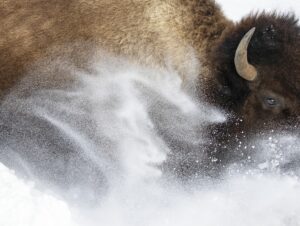
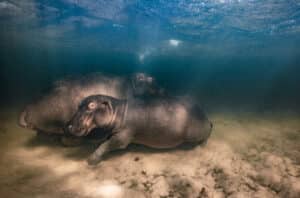
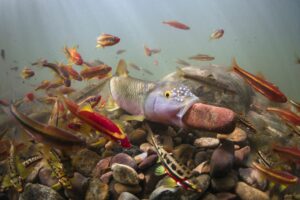
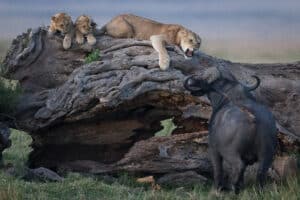
    The Wildlife Photographer of the Year, the world-famous exhibition from the Natural History Museum, has been going since 1965, and this year is returning to the Dorset Museum & Art Gallery. It consists of over 100 photographs which together form an impressive catalogue of the natural world. This is our planet, our only home. Quite frankly, it’s a knockout on every conceivable level.

    Sometimes we see nature as vaguely comical as in Zeyu Zhai’s lovely image of a sea bird scarpering across shallows with prey dangling from its beak.

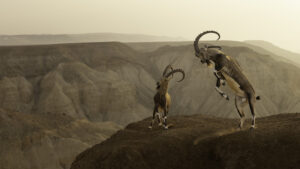
    At other times, it is full of a kind of critical dynamism: we see Max Waugh’s water buffalo, with one alert eye, splashing through water: we don’t know if it is fleeing a predator, or seeking food – but we know that his life is a struggle and that it will need that alertness every second of its life. Meanwhile Amit Ashel’s pair of fighting mountain ibexes show that a sort of balletic grace – and an astounding fearlessness regarding heights – can show itself in the fight for a mate.

    What it is doing all this for is, of course, the mystery. How do caribou know when to begin their great migration across Canada and Alaska and how do hungry wolves know they are about to embark on it? How do bears know that after hibernation there will be grass in the uplands but critical body mass to be earned from the salmon in the streams who are coming there in droves to mate? They are not told it – but they know it. Everything is in exquisite balance; it couldn’t be better.

    The glory of nature is a universal experience. Today the competition receives entries from over 90 countries. It is remarkable to consider that every second we are alive this kind of beauty is happening in every hidden square inch of the world: mountain, or ocean depth, or cave recess. If this heartening knowledge isn’t a sound basis on which to build a career, I don’t know what is. And you can also be a wildlife photographer too.

    Zeyu Zhai
    Amit Eshel
    Max Waugh


    Mike Korostelev
    Isaac Szabo
    Solvin Zanki. Two-coloured mason-bee (Osmia bicolor), the bee is building its nests in a empty snail shell. The bee provisions the snail shell with chewed balls of pollen and nectar and seals it with a layer of debris.


    Olivier Gonnet
    Alex Mustard


  • Opinion: Joe Biden and the Pitiless Society – A Powerful Reflection on Media and Morality

    Joe Biden and the Pitiless Society, Finito World


    The question of whether we should feel compassion for our politicians is a complicated one. For some in today’s media, our leaders have surrendered the right to our pity by seeking to rule over us. Journalists talk of ‘holding politicians to account’: it is as if, if they don’t, some inherent venality will suddenly emerge.

    Under such a view, without the presence of a harsh media, all politicians will immediately begin to cheat and lie. Hard-bitten journalists therefore have the opportunity to congratulate themselves, after each uncovering of political malpractice, that a form of public service has been undertaken.

    We have seen during this election cycle in the UK, with the gambling scandal, that there is never a shortage of people in public life doing silly things. Sometimes, the tone of the coverage doesn’t allow the perpetrators room to express sincere remorse: if they do express regret at their own actions, we will say that we led them unwillingly to that expression.

    Perhaps we did. But we must be careful to remind ourselves that we didn’t lead them there necessarily from a superior position. Except for the very few who on this planet may be in a place of genuine enlightenment – and how many of these really are there alive at any one time? – we are usually observing some version of human frailty which we also in some greater or lesser degree possess ourselves.

    This is even more the case when it comes to old age. ‘Ask not for whom the bell tolls, it tolls for thee,’ wrote John Donne, for whom the bell tolled, as he had predicted in 1631. His words have remained true ever since.

    The sight of Joe Biden struggling on stage last night in the First Presidential Debate was a sad one, not just because of the specifics of what he said, or failed to say – but because it is also touches the universal. One day, suddenly or slowly, we shall all find the faculties we had relied upon desert us – and few of us shall be on stage when it happens.

    It was heart-breaking to watch. Yet one notes sometimes an air of excited glee in the coverage. “Biden bombs!” ran The Daily Mail headline. “Joe-Matosed,” chipped in The Sun. This is the British media, and a degree of excitement at others’ misfortune is perhaps to be expected.

    But interestingly, those broadly on Biden’s side exhibited a similar sort of surprise at the fact that President Biden, like all the billions of people who aren’t president, is also subject to the laws of nature. Here is Chris Cillizza, a pundit on the Democrat-leaning CNN, writing on X: “He looked old. His answers trailed off repeatedly. He was hard to understand. He would stop in mid sentence and move on to something else. I NEVER thought he would be this bad. Stunning. Truly.”

    There is a note of amazement here which amounts almost to enjoyment of Biden’s predicament – as if that predicament weren’t also ours. Why did Cillizza never think this would happen? Did he think that Biden, by virtue of being president, had somehow the power to reverse the irreversible?

    Sometimes, the mockery of Biden has a sort of worship of power on its reverse side. The implication runs something like this. Doesn’t he know he’s president and that this sort of thing is unseemly? Can’t he sign some sort of executive order against his own decline?

    Our surprise at Biden’s mortality shows how disconnected modern Internet politics, and the security state, makes us from reality. Our way of life seems to sever us from compassion because the stage seems so vast and we are perennially cut off from those who take to it.

    By seeking to rule over us, Biden has signed up to scrutiny in a whole range of ways. Good journalism is to monitor public life with an air of humility, knowing that we’re seeking to ward off the sorts of faults in our politicians which we also share.

    But something changes when we get to a situation like this. It is a moment to pause, and allow ourselves the pity for someone powerful which we have almost come to think we’re disallowed.


  • Those Are My Principles: Michael Moszynski on Government’s Powerful Role in Fostering Innovation

    Michael Moszynski

    I am not a fan of Government trying to ‘pick winners’ in the economy (remember DeLorean?) but it does seem to me that some help to encourage people to start-up new enterprises is a good thing, especially when our economy was flat-lining in the aftermath of the financial crisis.

    Launching a new global ad agency, LONDON Advertising, two weeks after the collapse of Lehman Brothers in 2008, my partner and I received no financial assistance from the then Labour Government, so we had to risk our post-tax savings to fund our new enterprise.

    So, along with a number of other business people, I lobbied the Government for this to change and in 2012 was delighted to see George Osborne introduce the Seed Enterprise Investment Scheme to encourage investment in start-ups (the most risky stage of any business).  This was the most rewarding incentive for investors to put money into new companies anywhere on the planet.

    Unfortunately, Osbourne’s 2012 budget was overshadowed by the ‘Pasty Tax’ row and the SEIS announcement was not featured in the news.  I rang the Business Editor of the Times to complain and was astonished to find out that even he was not aware of it.  So, on the spot I made a proposal that my start-up firm would put up £100,000 to fund another start-up if the Times would cover the story.

    He got his Editor to agree, who then invited me to speak at The Times CEO Conference. This enabled me to persuade the Prime Minister, David Cameron, to announce it at a business event at No.10. The next day, the front page story of the Times Business Section led with “Clarion call for the next big thing comes all the way from Downing Street” with details of our a prize of £100,000 to fund a new digital agency and how people could apply for our Dragon’s Den-style competition.

    In fact over 1,400 people answered the call from over 60 countries, including Iraq, Moldovia and Vietnam.  The winners were two young UK graduates who had the idea of automatically turning tweets into video messaging, using tags linking specific words to relevant Getty stock footage.  To cut a long story short, our £100,000 SEIS investment helped the company secure £4m of investment to build and launch the product, making it the most funded tech start-up in Europe.

    We named it “Wordeo” and in its first week it secured more users than Snapchat did in its first six months.  Unfortunately, whilst hundreds of thousands of people tried Wordeo, it did not achieve ‘product market fit’ so we did not get the repeat business to fuel our ‘rocket’.

    But our initiative did help promote SEIS and the early stage investors in Wordeo benefited from up to 78% tax rebates on their losses.  Since 2012 over 53,000 new businesses have used the SEIS scheme, generating over £50b of new investment in the UK, many of which have found long-term success.

    So, whilst any dream of becoming a tech billionaire was put on ice, it was fortunate to still have the day job of running the ad agency, which we had built to become a robust business.

    The challenge running a small to medium sized business is how can the Founders be rewarded for all their investment, risk and hard work and reward their staff without selling out to a bigger company?

    Well, in 2014 the Conservative Government introduced Employment Ownership Trusts (EOT), with the objective of helping to create more employee-owned businesses.

    For the owners, it means they can take any unpaid dividends and future profits (to the value of the business) without paying any income or capital gains tax.  Plus they can continue to run the business without working for a new boss.  For the employees, there is absolutely no downside – and they even can access a tax-free bonus whilst the Founders are being paid out of the profits.

    Once the Founders have been paid, the Trust can issue the profits as dividends to the staff. Or, if the company is sold in the future, then the value is shared out between the employees. And for the business, it has a brilliant mechanism to attract and retain great staff, retain its independence and create a true legacy for its founders.

    My partner and I sold 100% of our shares to our own EOT (you can choose the amount with a minimum of 51 per cent) in 2018 and last year completed our five-year earnout period.

    We survived a terrible time under Covid when we lost 80 per cent of our revenue in one month and in our recovery plan set out financial targets which we have met and allowed us to pay all our staff a one month bonus at year end.  As I explained to our team at our end of party, if we achieve the same result over the next three years my partner and I will have had the value of our shares paid off and the value of their bonus in year three will be worth a year’s salary each.  You could describe it as the ultimate win-win.

    The third area which I believe this Government has helped successfully grow is our tech sector, which is now the third largest in the world, with our tech startups valued at £996 billion.  This is the result of the quality of our educational institutions, the ingenuity of our entrepreneurs and underpinned by the SEIS scheme. As we have seen with the recent Microsoft announcement of its £2.5 billion European AI hub in the UK, we are well placed to embrace the benefits of AI.

    I believe Rishi Sunak is correct to identify that the UK can take a leadership role in the technology which will help us grow our productivity.  Only by growing our economy will we be able to fund services to help the less fortunate in society. I am witnessing AI’s impact through my advisory role with one of the world’s most successful AI companies. This business is dramatically changing the financial performance – and significantly reducing the carbon footprint – of many of the world’s most energy-intensive businesses.

    Of note this is a US company that decided to co-locate in London. This is another win-win outcome that can in time be extended to all sorts of business activity and help not just make more profits, allowing for more investment and jobs, but also make the world a greener place.

    So in conclusion, whilst I believe Government should not be a crutch that businesses rely on to support them, I do believe Government can help create a positive environment to help unleash the country’s entrepreneurial potential.


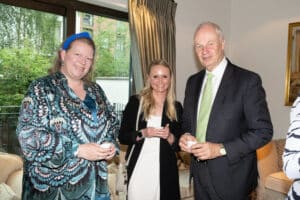
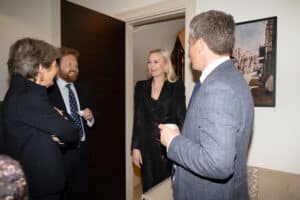
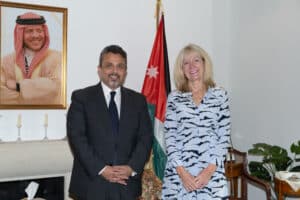
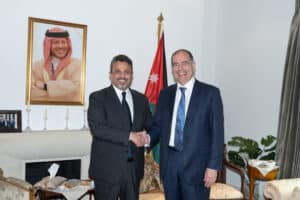
  • Event Report: London’s Luxury Elite at the Residence of the Jordanian Ambassador His Excellency Manar Dabbas – A Powerful Evening of UK-Jordan Cooperation

    Finito World reports on a remarkable evening where new opportunities opened for cooperation between the UK and Jordan


    It was the writer of the book of Hebrews who explained the importance of hospitality: “Be not forgetful to entertain strangers: for thereby some have entertained angels unawares.” This important lesson has not been lost on His Excellency Manar Dabbas, who at an event co-hosted with Finito at his residence in West London, proved himself the perfect host.

    In fact if hosting is an art, then it might be that every night masterpieces are being created at the Jordanian embassy. The event was attended by a group of exceptional individuals from the luxury sector including CEOs and leaders from brands as varied as Fabergé, Trevor Pickett, Kiki McDonough, the Design Centre Chelsea, Almacantar, D.R. Harris, Hirsh London and David Morris Jewels. Rounding off the guest list, there was Guy Martin from Carter-Ruck, Kamal Rahman from Mishcon de Reya, the CEO of Coutts, Mohammed Kamal Syed and revered aviation leader David Scowsill.


    Speaking in his spacious, immaculate home, the Ambassador began with a broad welcome, and made it clear that Jordan is very much open for investment – and eager to receive visitors: “It’s one thing to hear about Jordan while we’re sitting here in London, but it’s quite another to go and see for yourself,” he said, as everybody mentally consulted their diaries.

    However, given all that is going on in Gaza, it was necessary to reference the unfortunate situation in the region: “It is very sad to see what is going on. You have peace when you have people who understand another’s concerns. Wherever there’s a storyline on one side, there’s always a counter-narrative on the other. We used to have leaders who can understand the importance of compromise,” he explained.

    This amounted to a moving call for peace. The Ambassador spoke throughout with a genuine sense of the sadness of the situation, always with the understanding that these matters are extremely complex and require our best efforts to find ways towards resolution.

    For Dabbas, that work is going on in London. “I am focused on promoting Jordan as a business destination for different people – I am talking to Tories and the Labour think tanks, the Muslim groups and the Jewish groups. My chief concern now is that the discourse on the streets of London remains political and doesn’t become religious. Is it easy? Unfortunately it is not – but there’s still a lot we can do. There are challenges out there but also opportunities. But we’ll not see peace in the future unless we see some fundamental change.”

    His Excellency went onto say that Britain faces a stark choice when it comes to the geopolitical conflicts in the Middle-East. “You can work with us and pre-empt and avoid, or wait until it explodes in our face and then react,” he warned.

    Dabbas spoke with infectious love about Jordan, giving real insight into what makes his country so special. He discussed the tourism sector, and also surprised guests by telling us that The Martian, Aladdin and Dune were shot in Jordan – as indeed was the classic Lawrence of Arabia. “There are a lot of opportunities,” he said, as the superb Jordanian food materialised before the guests.

    “What’s missing sometimes is we’re not promoting as much of what we do in Jordan. We don’t have oil, but in a way that’s a blessing. Instead, we have top-notch human capital. When it comes to IT labour, for instance, for a lot of British companies who want to move away from the political complexities in China, Jordan is the best solution.”

    Trevor Pickett asked if Jordan was easy to partner with, and whether the country hosts trade fairs as Turkey famously does. “Craftsmanship is what Jordan is good at – you must come and visit and have fun,” His Excellency replied. “We have fairs which are not as big as the ones you might have in Turkey. Come and see for yourself: you can make your decision according to your business models.”

    The ambassador was also asked what the benefits are of doing business in his country: “Jordan is not just Jordan; it is the gateway to Iraq. If you want to sell to Iraq, you have to come to Jordan. Jordan is the most moderate and forward-thinking country in the region.”

    Mishcon de Reya partner Kemal Raman asked how the country manages to cultivate neutrality, and what can be learned from its extremely positive international reputation. “When you say Jordan, people smile – other countries, people don’t,” she observed. “I couldn’t agree more,” replied the Ambassador. “Others would pay billions of dollars for just one per cent of the respect His Majesty the King has across the world. When he speaks, everyone listens. We pride ourselves on our royal family.”


    And how is it that this reputation is so secure? “Legitimacy is an aspect of this – we don’t have struggles, we have a constitution. We are a principled country. Compared to our neighbours who have huge wealth in oil and gas, we decided our wealth should be our soft power. We have always been true to our foes and to our friends. What we say in private is the same as what we say in public.

    In America if I say I’m from Jordan they think I’m talking about Michael Jordan. If I mention King Abdullah II bin Al-Hussein they say how much they love him! You rarely see a monarch who has such a level of daily engagement with his people. This is what defines us.”

    His Excellency was also asked about the nature of the role he has. “When I first arrived here I realised I had to understand the importance of the parliamentary system. It is quite a big job in itself: you have over 600 MPs and over 800 Lords – the challenge is how do you manage to see each and every one of these? Even if I do meetings on a daily basis, I wouldn’t be able to get through them all!”

    In addition to that His Excellency engages regularly with the government: “It is challenging to be able to reach as many policy-makers as possible and explain why the Middle East is important, let alone Jordan. Then I have to engage with media and think tanks.”

    It is difficult, he says, to plan his diary. “I receive probably 20 invitations per day. That can be a little confusing – sometimes you have to do everything to decide whether it’s something you would go to for the second time or not! You have to be on top of your form to influence policy.”

    So what would His Excellency say to young people considering a career in the civil service? “I have many meetings with university students,” Dabbas explained. “I tell them that I knew I wanted to pursue politics from a very young age. I also tell them to follow their passion – but it’s always possible to have that without the capability. Sometimes it can be the other way round – you need to have both.”

    This was sound advice – and it was issued to a roomful of people who had followed theirs, and who went out into the Kensington night, happy that their own decisions in life had led them into the company of such a remarkable man.


  • Renewable Energy Tipping Point – A Powerful Shift in Investment

    Renewable Energy Investment, Dinesh Dhamija

    The world is witnessing a dramatic surge in solar energy generation, driven by falling costs and a newfound enthusiasm for renewables in China. According to the International Energy Agency (IEA), clean energy investment is expected to double that of fossil fuels in 2024. “For every dollar going to fossil fuels today, almost two dollars are invested in clean energy,” says IEA executive director Fatih Birol. The figures are staggering: $1 trillion for fossil fuels compared to $2 trillion in clean energy, which includes renewables, nuclear power, electric vehicles, power grids, energy storage, low-emission fuels, and energy efficiency improvements.

    Solar Energy Growth and the Renewable Energy Tipping Point
    The cost of solar technology has plummeted by 30 percent over the past two years, leading to a rapid expansion of solar farms across China and the United States. In the first four months of 2024 alone, the US saw nearly 8GW of new solar capacity and an additional 1.8GW from wind energy. The Federal Energy Regulatory Commission reports that more than 99 percent of new US generating capacity during this period came from renewable sources. This impressive growth underscores the Renewable Energy Tipping Point, as the global energy market pivots towards cleaner and more sustainable options.

    As renewable energy costs continue to decline, this trend is expected to accelerate. Despite efforts by the oil, gas, and coal industries to influence policymakers and argue for the continued use of hydrocarbons, the economics of power generation increasingly favor renewables. The question arises: why pay more for an energy source that harms both health and the environment?

    Global Investment and the Future of Renewable Energy
    Global investment in low-carbon electricity is forecasted to reach $900 billion in 2024, ten times higher than the investment in gas and coal power generation. In the United States, renewable energy capacity is projected to surpass natural gas by 2027. This shift will highlight whether countries are committed to outdated fossil fuel generation or are embracing more progressive energy policies that benefit their citizens.

    This transition presents a curious challenge for politicians like Donald Trump, who have historically been anti-renewables. If Trump were to be re-elected in November, he would face a burgeoning boom in clean energy generation, potentially challenging his previous stances. The broader question remains: how will political leaders worldwide respond to this unstoppable trend?

    The Irrepressible Shift Towards Renewable Energy
    The IEA notes that investment in fossil fuels remains higher than desired, with oil and gas companies allocating just 4 percent of their investment budgets to clean energy, despite their claims of being part of the solution. The agency urges governments to adhere to its target of tripling renewable energy generation by 2030. This goal, while ambitious, is crucial for mitigating climate change and ensuring a sustainable future.

    While more can always be done, the undeniable and accelerating flow of funds into renewable energy has indeed reached a tipping point. Soon, it will seem absurd to invest in anything else. This shift not only marks a significant economic change but also signals a broader societal transformation towards sustainability.

    Dinesh Dhamija, who founded and sold the online travel agency ebookers.com before serving as a Member of the European Parliament, has since established the largest solar PV and hydrogen businesses in Romania. Dhamija’s career transition from travel to renewable energy underscores the potential for innovative leaders to drive significant change in emerging industries. His latest book, The Indian Century, is now available to buy on Amazon at The Indian Century.


  • Book review: A Chilling Account in “A Very Private School” by Charles Spencer

    Finito World


    Many people who have been to boarding school will recognise the following question and answer. “When you think of the school, what’s the one word that comes to mind?” “Fear”. This establishes the theme of Charles Spencer’s book which raises many questions around privilege and trauma in our society. Spencer’s time at Maidwell Hall, where he boarded for five years in the 1970s, was truly awful, and the writer makes multiple allegations of sexual abuse about the staff there, sometimes naming them. It is extremely brave of him to speak out about his experiences. Spencer also manages to do more than simply to convey them – sometimes he is able to understand them, suggesting that this book has been the product of a considerable amount of painful reflection. “’Her control over mesmerised boys was total, for we were starved of feminine warmth, and desperate for attention and affection,” he writes of one unnamed assistant matron who seems to have treated him especially badly.  Are things any better today? One hopes so, as much of this book is alarming to read. But I don’t think boarding school, since it involves wresting children from their parents at a young age, can ever really take fear out of the equation.


  • Labour Majority in 2024: Lady May Discusses the Uncertainties, “Politics has become much more volatile”

    Labour majority isn’t a foregone conclusion, Lady Theresa May


    I am stepping down at this election and so I now don’t have the letters MP after my name. I do still think there’s a path to victory for the Conservatives for a number of reasons.

    First of all, I was elected in 1997, and so I can say with certainty that Sir Keir Starmer is not Tony Blair: the impact on the doorsteps is simply not the same. That’s the impression I get in my Maidenhead constituency, and that’s what we’re seeing in what will probably be a marginal new constituency near me.

    It’s worth remembering that Labour still has a huge mountain to climb to take the seats they need to take to get a working majority. They have to secure the largest consistent swing across the country in order to get there. In addition to that, I think politics has become more volatile. You do not get consistent swings across the country any longer; you get much more variation between seats. You might get a seat which you think is in the bag, and another which isn’t – and you might lost the first and gain the second.

    The third reason why a Labour victory isn’t certain is that if you look at General Elections in recent years, they’ve tended to be unexpected results. 2010 was unexpected, so was 2015 – 2017 was definitely unexpected, to my own cost. Even in 2019, the size of the majority was unexpected. If you look closely at 2017, the Conservative Party was over 20 points ahead in the polls and look what happened: we didn’t secure our majority.

    It seems a long time ago now, but I would also point out that the local election results earlier in the year weren’t as good for the Labour Party or the Liberal Democrats as they would have wanted them to be: examine closely the gains of the Labour Party in the local elections, and add up gains by the Greens and the independents, they almost equalled the progress made by the Labour Party.

    The social care policy was a factor in that 2017 election. This is a huge issue which the country has to address. I’ve been Conservative all my life. One of the things I’ve been brought up to believe is that when you’re able you should put something aside for a rainy day. The welfare state, when it was created, was there to support people who weren’t able to do that, and to help people at certain challenging points in their life.

    Somewhere along the line, we’ve got to the point of saying nobody should have to sell their house to pay for their care and that, whatever happens, the government will provide. But if someone is sitting on a significant asset why should the young couple down the road struggling on average earnings to keep their head above water pay for that person’s care? Politicians need to have an open and honest conversation with the public about this.

    We live in much more uncertain and unpredictable times. It’s certainly the case that security has gone up the agenda because of our continuing support for Ukraine, but the number one issue in any election is the economy. I think there’s the need in today’s world to think a little more creatively about defence. People think in terms of big bits of kit for the army; but in Ukraine we have seen that drones have been incredibly effective.

    It’s concerning that Labour has not matched the government’s defence spending plans. What happened in Afghanistan has not made life easier as it’s made that country return to its former state as a place where terrorists can be trained. What’s happening in Gaza is potentially another flash point for those who would do us harm.

    I will miss many of my colleagues – and I will remember the strange things. I remember the occasion when I was PM, when I was in Iraq. I was flying back to have dinner in Saudi Arabia and had to change before the dinner. I was being transported in an RAF Hercules, which is a troop carrier. There are no facilities on such aircraft, let alone for a woman. I said I had to change. The RAF put their heads together and took me up into the cockpit and they sat me down between the pilot and the co-pilot. They got a sheet and some gaffer tape and said: “Here you are, PM, you can change there.”


    The former prime minister was talking on 23rd May 2024, the day after the election was called, at a Finito event at the East India Club

  • What the architect Frank Lloyd Wright teaches us about adversity in our careers

    Christopher Jackson


    When we look at the famous or the successful, graciously hosting television cameras in their comfortable homes, it is easy to assume that they have found themselves inoculated from what Hamlet calls ‘the shocks and arrows of outrageous fortune’. There is the sense that all that is difficult or troubling has been brought to heel somehow.

    One early example of this genre concerns the architect Frank Lloyd Wright approached in 1953 with the reverence with which someone in medieval England might approach a King by NBC Chicago’s Hugh Downs. This interview is in many respects a ridiculous affair. Wright is treated – and clearly regards himself – as not just a great artist but a seer and a sage.

    He may well have been all those things, but he is also plainly a self-regarding one. Throughout the interview, he sits with a large book inexplicably on his lap, like some vast Bible, which the viewer is invited to assume must be a compendium of his drawings. His answers are philosophical and one can never be sure if he is definitely looking Downs in the eye – certainly the impression is that Downs has come to Parnassus to address a higher form of life.

    Many will perhaps agree with Frank Lloyd Wright’s estimation of his own abilities while thinking he could have been more modest about them. Wright is one of those few architects who we can certainly say changed architecture, though it could sometimes be a bit tiresome to hear him point this fact out so often. It suggested perhaps that he had something to hide, and I think he did: his moral self, which was, biographers agree, by turns slippery, cunning, abusive, untrustworthy and arrogant.
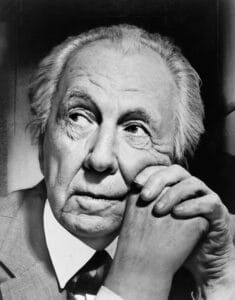
     

    This queasiness one feels about Wright is something we need to get out of the way before we discuss his genius, which is far more interesting and surprising than the news that well-known people often behave badly.

    More interesting – and it is especially worth considering for anyone who happens to YouTube the NBC Chicago interview – is Wright’s vulnerability, arising out of a lifelong familiarity with tragedy. In fact, looked at closely, Wright’s career involved a regular collision with adverse circumstances – some of them fairly typical and at least one of them unthinkable, which we shall come to in a moment. A book published in 1993 The Seven Ages of Frank Lloyd Wright, written by Dennis Hoppen, observed that Lloyd Wright had a remarkable ability to absorb reversals and over time convert them into new periods of creativity.

    It is this which makes Wright worth studying. The patrician who was never short of a word of self-praise ought not detain us. These traits probably had to do with a difficult upbringing: trauma created a sort of outer person which was secondary to the much more interesting inner creative life by which he really lived.

    In interview, we meet this outer self; in his work the far interesting central force. Regardless, his life has a fascinating rhythm to it: Hoppen’s book shows that Wright experienced surges of creativity which were routinely checked by disaster. But these disasters seem to have gone deep into him, and by some mysterious creative process, engendered over time great leaps forward in his art.

    Wright would often state that he didn’t decide to be an architect, his mother made that decision for him. She declared while Frank was still in the womb that he would grow up to create beautiful buildings and was so proactive in what was then a distant likelihood as to adorn his nursery with pictures of the great English cathedrals. Wright would later make it clear that he didn’t think anybody had taught him architecture telling Downs with his usual slightly prim arrogance:


    I’m no teacher. Never wanted to teach and don’t believe in teaching an art. Science yes, business of course..but an art cannot be taught. You can only inculcate it, you can be an exemplar, you can create an atmosphere in which it can grow. Well I suppose I, being an exemplar, could be called a teacher, in spite of myself. So go ahead, call me a teacher.


    Wright’s initial degree was in civil engineering but his ambition was to make it to Chicago; in fact, he left university just before completing his qualification. He may not have felt he needed a teacher. But a mentor, one feels, can be a quite different thing and in Louis Sullivan, of the firm Adler & Sullivan, that is what Wright found in spite of his own irascibility and the perennial failure to get on with people which would often crop up in his career.

    Though Wright would make a habit of disparaging his contemporaries, Sullivan would be remembered fondly by Wright – though by no means so fondly as to make anyone think Wright himself was anything other than number one, or in his own confident estimation, “the greatest architect who ever lived, or will live.”


    The trouble with Wright’s arrogance is that the architecture does tend rather to bear out his own high assessment of himself. Even as a young man he had already by 1900, almost single-handedly, invented prairie architecture, with a series of four houses which showed a completely undaunted sense of the possibility of American architecture, and by association American life. The European ideal, from Wright’s perspective, was all very well, but the greatness of European art had been arrived by being true to the history and values of that continent. Mightn’t something new be possible in this vast country?

    And if something was possible, then what distinguished the American case from the European? The first thing was the sheer size of the country and therefore the space assigned to each individual. Europeans, and especially British people, have long since found themselves living on top of one another. Any visitor to the towns of America feels how different the demographics are: we feel the country’s enormity, its abundance, and tied to these things, the sense that Americans can live differently, which of course means in different buildings. Prairie architecture was Wright’s first attempt to be true to what now seems to us a fairly obvious reality. Many of these houses still stand today as he always said they would.

    The great innovation here is the horizontal line which mirrors the great outstretched nature of America. For Wright, European architecture was pre-democratic or even anti-democratic and characterised by boxed rooms, which are ideal for establishing hierarchical systems. One thinks of the servants’ quarters, or the cut-off luxury of, say, the master bedroom in a typical European castle. Wright’s houses are different: the open floor plan which would go onto dominate, in another setting, office life, is really his invention.

    But these insights were built on a deeper intuition which had to do with the need to respect landscape, making Wright the purveyor of what he called organic architecture. This meant that his architecture was meant to embody the essence of the land. Most famously, he once expounded his views on hilltop or hillside architecture: “No house should ever be on a hill or on anything. It should be of the hill. Belonging to it. Hill and house should live together each the happier for the other.”

    Wright’s architecture belongs to the land – and he accentuated this idea by building often in stone and wood. The prominent central chimneys in these houses are intended to relate to the human heart – and there is perhaps the sense that Wright’s buildings correspond not only to the landscape they’re in but to human beings themselves: they are, perhaps, attempts to create functional counterparts to the American soul.
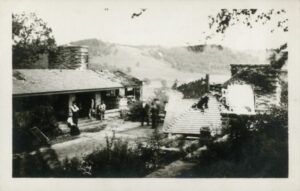
     

    It all amounted to a great vision of democracy by a man who in his life was actually rather authoritarian. It is possible to find a contradiction in his life between his sense of himself as the isolated Great Man, and his oft-stated belief that American architecture cannot thrive unless it takes into account its founding principle of democracy.

    These promising – indeed, exceptional – beginnings were soon to be upended by unthinkable tragedy. Wright, though married, had conducted a controversial affair with a married woman – and the wife of one of his clients – Mamah Borthwick. The press got wind of it all, and Wright built Taliesin in its the first incarnation in order to shield Borthwick from the press. Then on August 15, 1914, Julian Carlton, a male servant from Barbados, set fire to Taliesin, and then murdered seven people, including Borthwick and her two visiting children. It is hard to imagine what this must have been like for Frank Lloyd Wright, who happened to be away on business. But in time his reaction was remarkable:


    There is release from anguish in action. Anguish would not leave Taliesin until action for renewal began. Again, and at once, all that had been in motion before at the will of the architect was set in motion. Steadily, again, stone by stone, board by board, Taliesin the II began to rise from Taliesin the first.


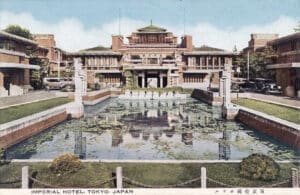
    It is a splendid lesson about how to deal with setback: creatively. As Taliesin II was rebuilt, Lloyd Wright was working on a new phase in his career, when he accepted a commission to design the Imperial Hotel in Tokyo. This looks so different as to not seem to be from the hand of the same architect, but of course it’s in a different country and Wright was committed to an architecture which, to a near obsessive degree, took into account place.

    Wright had thought through the viability of the structure – although sometimes this has been exaggerated a little. The structure did survive the Great Kantō earthquake of 1st September 1923 which and Baron Kihachiro Okura sent Wright the following telegram:


    Hotel stands undamaged as a monument of your genius hundreds of homeless provided by perfectly maintained service congratulations[.] Congratulations[.]


    Wright being Wright, he wasn’t about to keep this telegram from the press and the story did a fair amount to embellish his legend. In actual fact the central section had fallen through, and several floors bulged. It certainly wasn’t the least damaged building the earthquake.
     

    But Wright had moved onto another phase, which is sometimes characterised as ‘monumentality’. His block houses such as Ennis House fall broadly into this category. One wonders whether in their scale and grandeur they reflect a growing awareness of America’s imperial destiny: they feel like houses which belong to a powerful people, and in the wake of the First World War, where American involvement had decisively tipped the scales towards the Allies, America’s self-image had shifted. It would be the world power, and here was the architecture to prove it.

    But further disaster was round the corner, in the shape of another fire at Taliesin. On April 20th 1925, Wright noticed smoke billowing from his bedroom, and though on this occasion he was on site and able to call for help quickly, it was a night of high winds, and Taliesin II was destroyed along with much of the superb art collection which its owner had acquired while working in Japan. But again he was undaunted and took this loss as inspiration for Taliesin III which still stands today:


    And I had faith that I could build another Taliesin! A few days later clearing away the debris to reconstruct I picked up partly calcined marble heads of the Tang-dynasty, fragments of the black basalt of the splendid Wei-stone, Sung soft-clay sculpture and gorgeous Ming pottery turned to the colour of bronze by the intensity of the blaze. The sacrificial offerings to — whatever Gods may be. And I put these fragments aside to weave them into the masonry — the fabric of Taliesin III that now — already in mind—was to stand in place of Taliesin II. And I went to work.


    There is something magnificent about the simplicity of that sentence: “And I went to work”. In its confident forward movement we get very close to the essence of the man. From here, Wright would go on to his so-called ‘desert architecture’ phase – it was a difficult time for Wright personally and financially and he was forced to take on smaller projects such as Ocotilla and San Marcos in the Desert. This must have been relatively humbling, and of course the 1929 Great Depression was round the corner to humble him further.

    By 1929, he could have been forgiven for thinking he’d had a life entirely comprised of setbacks. This huge decline in productivity led to another fallow period and then a period of low cost architecture characterised by his Usonian houses – small houses very private from the front and open at the back usually aimed at the middle class. The first such house is usually considered to be the Herbert and Katherine Jacobs First House.

    Though this house, with its horizontality, and little carport, was perhaps a rather humbling project for a man to undertake who considered himself the equal, and indeed the superior, to the architects who made the Pyramids, Wright couldn’t quite refrain from couching it in the grandest terms possible: “The house of moderate cost is not only America’s major architectural problem, but the problem most difficult for her major architects.

    As for me, I would rather solve it with satisfaction to myself and Usonia than build anything I can think of at the moment.” Usonia, incidentally, was Wright’s somewhat ludicrous term for America, but these houses are extremely beautiful and subtle. They feel as though they contain an earned wisdom. Indeed, perhaps as one looks at the wonderful Usonian houses, one can reflect that humility wasn’t a bad thing for Frank Lloyd Wright to get to know a little.

    But humility wasn’t to be for the architect in the long run. The second half of his life contains fewer setbacks and much of his greatest work, especially the magnificent Fallingwater was still ahead of him, and that superb office space the Johnson Wax Headquarters, with its famous lily pad columns. Wright always said that it increased productivity.

    As impediment fell away, and a greatness exactly like the one imagined for him by his mother was assured, Lloyd Wright settled into the grand and arrogant persona which Hugh Downs would come to visit in 1953, some six years before his death. But what’s more interesting than the man at the summit he became is the way in which he surmounted so many obstacles to get there.



  • Robert Colvile Interview: Insights on Journalism Careers and the Positive Future of Media

    Finito candidate Cameron Kerr sat down with the renowned writer to ask him about his career, why he never expected to run a think tank, and the need for a career backstop for would-be journalists. 


    Cameron Kerr: Was your journalism career a goal you had planned to achieve or a role that you fell into?


    Robert Colvile: It was never something I’d thought about until university, but I volunteered to work on one of the student papers there and absolutely loved it – not just the writing, but every part of putting together a newspaper. I did consider some other options – I applied to the Civil Service, for example – but ultimately it was always the thing I wanted to make a living doing if I could.


    CK: Take us through the early days of your career, from where you first encountered opportunities in journalism, to a point in your journey where you could tell yourself or peers that you worked as a journalist for a living.


    RC: I got started at university, then tried to make as much of that opportunity as possible – for example getting accreditation to the various festivals at Edinburgh over the summer, then covering them for the paper (which also enabled me to build up a stock of interviews with some of the people performing or promoting their films and books). After university I got on to a training scheme at the Observer, so I did work experience there and at the New Statesman, while supporting myself by doing admin work as a temp.

    Then I got some extra work helping produce the paper on Saturday evenings, and uploading the print edition on to the Guardian website, and doing paid supplements on broadband take-up, and just anything I could do to get a foot in the door. But I wasn’t properly, formally a professional journalist until I parlayed all that into a job on the Telegraph’s training scheme, which was looking for sub-editors – the people who sit back in the office editing the articles, checking the facts, putting on the headlines and so on.


    CK: Is the route you took into journalism a pathway which others could follow today, and if not, how does that entry pathway look different in 2024?


    RC: The thing about journalism is that there really aren’t many formal pathways. I was lucky enough to get on to one of the Fleet Street training schemes, but the number of people they take are vanishingly small compared to the size of the sector. One of the big differences today, though, is that there are so many more opportunities to get yourself noticed by writing, tweeting, blogging, starting your own thing and getting noticed. One of the great things about journalism is that ultimately, quality really does shine through – if your writing is good, or you’re a good editor, people absolutely take notice.


    CK: What opportunities in your career do you feel you discovered, pushed for and achieved yourself?


    RC: All of them! Though in retrospect I could have done more to push myself forward while at the Telegraph – I was there for 10 years and ended up in a pretty senior position, but there were quite a few years where I was sitting there quietly chafing, for example at not being able to move full time on to the comment desk. I probably could have been bolder in agitating for a move, or trying to find opportunities elsewhere. But I’m pretty happy with how it turned out.


    CK: What opportunities in your career, if any, do you feel were fortunate enough to be given to you – by bosses, word of mouth, unexpected events of the day to cover etc.


    RC: I’ll always owe a big debt to Liz Hunt, who’s now at the Daily Mail. As Telegraph features editor she plucked me from my sub-editing job and put me in charge of the news review section of the paper – the big, chunky, attention-grabbing Saturday reads – as well as the science page.

    And then I’m pretty grateful to Maurice Saatchi, who was then the chairman of the Centre for Policy Studies, for asking me to be the Director when I was running its CapX website. But the truth about journalism is that few people have a career path plotted out – I certainly didn’t think I was going to end up running a think tank, for example. It’s very organic, about the connections you make and the reputation you build.


    CK: Are there one or two defining moments/opportunities that took your career to a whole new level – they could be expected or a total surprise.


    RC: The move from being a sub-editor to an editor was definitely a step change – after that my career started moving forward much more quickly. Getting to run CapX was similar – I was freelancing as a writer, and had had quite a few discussions with people, but wasn’t really actively looking for a full-time role. And oddly, moving into think tanks really improved my opportunities as a writer – I suddenly had not only a load more relationships in Westminster, but a massive pipeline of policy ideas that I could write about and publicise.


    CK: With all your industry experience and knowledge of the state of journalism today, is it a career you would pursue now if you were starting from scratch?


    RC: Yes, but with the caveat that you really do have to have a backstop these days in a way that you didn’t in the old days. There’s so much competition to get into journalism, and so little profit, that the salaries really aren’t very good, at least not until you get right to the top of it. I’m proud that I never got a penny of support from my parents, and got every single job on merit rather than due to connections.

    But at the same time, I knew that if it didn’t work out, I could always retrain as a lawyer or management consultant or what have you. A lot of people don’t have that safety net. And there are also always people who are prepared to work unpaid until they get hired, which is pretty tough to compete with.


    CK: What does your journalism career look like today? And do you think a regular op-ed in a major newspaper is still the desirable goal to achieve for a journalist looking toward the future of their career… or does it look different now with the presence of social media, podcasts, vlogs and straight-to-web documentaries?


    RC: My main job in journalism is as a political columnist on the Sunday Times – I also oversee the Centre for Policy Studies’ CapX site as editor-in-chief, but that’s a much more limited commitment, as we’ve got a good team who keep it running day-to-day. Having the column is still an incredible platform, and I’m very privileged to have it – but if I didn’t have the day job at the CPS then I would probably doing a lot more on top of that, whether a podcast or a Substack newsletter or what have you. Ultimately, there are all kinds of ways of reaching an audience – you just have to find the one that works for you.


    CK: Looking back at your career, from early steps to the big decisions, is there anything you would have done differently with the gift of hindsight – perhaps even advice you would give to those starting out now?


    RC: There are all kinds of things I should have done differently – mostly having a bit more confidence in myself, and in my value to my employer. But the big things would be things that I hope I got right – always try to do the best possible work, and always try to be someone other people actually want to work with.


    CK: In a world of a multitude of news outlets, podcasts, opinion columns and broadcast shows, how do journalists and the media have to evolve in order to continue their mission to inform the public and hold the powerful accountable?


    RC: In all kinds of ways! It’s pretty obvious that mass market news is breaking down into a host of niches. The audience for the BBC evening news, for example, has fallen off a cliff in the last few years. But the difference between when I was starting out and now is that the shadow of doom has been lifted – we were all convinced that the internet was going to kill newspapers stone dead, whereas today the kind of subscription models that the Times uses, or the revenue people are getting from Substack, shows that there is a future for high-quality journalism. But you always have to keep innovating.


  • Dinesh Dhamija: SunTrain, Innovative Renewable Energy Transport by Rail

    SunTrain: Innovative Renewable Energy, Dinesh Dhamija

    In 2023 Bill Gates mulled the future of renewable energy. One of the problems, he concluded, was transmitting energy from the windswept plains of Iowa, or the sunny deserts of Arizona. “You can’t exactly ship sunlight in a railcar,” he wrote.

    Electrical engineer Christopher Smith had other ideas. Inspired by train wagons full of coal traversing the Alaskan wilderness, he devised a novel business. SunTrain will transport large batteries full of solar-generated electricity on flatbed wagons, moving them from energy rich locations (windy, sunny, or with hydroelectric generation) to energy poor neighbourhoods.

    Smith is now raising finance and signing deals with utility companies, to bring his vision to life. He aims to run trains with 120 wagons, delivering electricity to power hundreds of thousands of homes. A gap in the market has emerged thanks to the glacial pace of planning consent for high voltage transmission lines. One major line in New Mexico took 17 years before it could begin construction last year. Many such lines are in development, but meanwhile, SunTrain could make use of the existing rail infrastructure, to deliver results far sooner. It would also save many hundreds of rail industry jobs.

    Just as pharmaceutical companies, tackling a major health challenge such as HIV, must experiment with multiple strategies before they find a hybrid solution, coming to grips with the climate crisis will take concerted effort along hundreds of different avenues.

    Repurposing railways is just one of the innovations that are now underway, as the world drives down its carbon emissions. A new fleet of ships, chartered by Airbus to transport aircraft parts across the Atlantic from France to Mobile, Alabama, will have a set of sails to complement its engines.

    Deploying an electric-powered suction system which boosts the power of the sails, Airbus will save up to 1,800 tons of CO2 per year compared with the existing sail-less ship. Similarly, agricultural trader Cargill chartered a Mitsubishi-owned ship in 2023 retrofitted with 37.5-metre-high sails to reduce its reliance upon fuel.

    Some will point out that using sails for getting around has been tried before. But when you see the space-age designs for the America’s Cup yachts, with their wings, hydrofoils and aerofoils, you realise that we have come a long way from the Mayflower and the Cutty Sark. For some, a massive breakthrough in nuclear fusion will be the solution to our energy and climate crisis. But this remains many years, if not decades away, according to the latest estimates.

    Shuttling batteries around by train may seem old fashioned, but it’s achievable and cheap.


    Dinesh Dhamija founded, built and sold online travel agency ebookers.com, before serving as a Member of the European Parliament. Since then, he has created the largest solar PV and hydrogen businesses in Romania. Dinesh’s latest book is The Indian Century – buy it from Amazon at https://www.amazon.co.uk/dp/1738441407/