Category: Uncategorized

  • Tim Jackson: I Learned it in a Band: How to apply transferable skills to just about anything

    Tim Jackson

    I have a theory: much of the value you bring to your work comes from elsewhere. It could be from a previous job or maybe a hobby. Personally, I learned so much about myself and how to build teams from my time in bands growing up. In this series, I will explore some lessons I learned as a professional musician and how I apply them to large transformations.

    I picked up a guitar for the first time when I was about ten years old. A friend down the road had an old classical guitar that I borrowed, and I spent hours learning how to play songs by ear. This was long before YouTube and the internet was certainly not mainstream.

    My initial progress was quite quick, but after a few weeks, I started to plateau. My parents saw enough to warrant buying me a cheap electric Stratocaster that looked like the one that Eric Clapton played, and the new sound took me to a new level, but then the dreaded plateau started to develop. I started to have lessons and –although I didn’t know it at the time – my teacher introduced me to Deliberate Practice.


    Deliberate Practice

    I’m sure you’ve heard Malcolm Gladwell’s theory that 10,000 hours, or ten years, is the magic number for greatness. The debate about nature vs nurture has been going on for centuries –I’ll delve into that another day. Deliberate practice suggests that it is not just the number of hours, but how you spend that time that makes the most difference to your ability to improve at just about anything.


    The steps to deliberate practice are as follows: to identify an area of weakness; break down what you want to accomplish; set a challenging goal for yourself; get fast feedback; repeat.

    The process is the same whether you’re learning a simple piece as a beginner or a professional musician learning to play a solo by Jimi Hendrix. The time that it takes will vary based on where you are in your musical journey. You start by taking the first few bars and slowing them down, get the first few bars under your fingers, and then gradually speed it up to the right tempo. Then simply repeat the same process with the next bit and then the next. Eventually, you will find that you can play just about anything.

    The key is to be intentional about your mindset as you practice. When playing the guitar, I’m not just thinking about the notes but also the tone and how well I’m playing them. The key is to record yourself regularly and listen with a critical ear to look for opportunities to improve.

    I started playing in bands in my late teens and went to music college. There, I met the drummer in my band, who took the process of deliberate practice to another level. We knew just how good we needed to be to be successful: the landscape was extremely competitive, and we simply wouldn’t get good gigs unless we were at the top of our game.

    As our musical aspirations grew, we devoted hours to every aspect of our playing. We wouldn’t have gotten very far if we just showed up to practice and mindlessly played our songs. Instead, we would practice everything to a metronome, ensuring that we weren’t just playing in time but that the grooves were effortless. We recorded ourselves and played the recordings to our friends and family for feedback, no matter the quality. Over time, the hard work paid off, and we developed a following and got to play some great gigs!

    How does this relate to working with teams?

    When I work with new teams, I often find they are keen to ‘do Agile’ or deliver with Agile ways of working. Many teams start to have stand-ups, demos, and retrospectives, but the mindset and discipline to look for improvements are often lacking. Sometimes, like my new electric guitar, they get a new tool, and the transparency helps them to improve. Over time, they plateau as they lose their discipline; the tickets or stories aren’t updated.

    Using the theory of Deliberate practice, we can be encouraged to make significant progress regardless of where we are in our agile journey. The mindset we need to embrace is similar to learning to play an instrument. We need a clear vision of where we’re going and what we want to achieve; we strive for greatness and set goals that will put us just outside our comfort zone.  As we progress, we need to measure our performance and be curious, looking for opportunities to improve at every turn.

    In SAFe – the leading framework for agile development – the fourth pillar of the House of Lean is Relentless Improvement. We mustn’t be complacent and be happy with the status quo, but rather be intentional about what we can to improve in anything and everything we do. There is always something that we can do to expand our knowledge and capabilities as a team.

    We need the same mindset and approach to learning our Jimi Hendrix solo, but if we only ever learn one song, we become nothing but a party trick and will never achieve greatness.

    Imagine, if you will, a team applying deliberate practice to their work. We want to create a culture within the team where they are disciplined to develop muscle memory so that they are nor just operating on a cadence but are in a groove.

    When I reflect on my days playing bands, I realise how important it is to surround yourself with people who challenge you and help you become the best version of yourself. Having a common vision of what you want to achieve and breaking it down into concrete next steps is important. It is easy to get overwhelmed if you try to boil the ocean and conquer the world all at once!

    Whether you’re working in a team or a band, it is crucial to support each other and reflect on how things are going. We are imperfect humans with more opportunities to improve than many of us care to accept. So often, when people offend or let us down, it is because they’re dealing with something. So start with a cup of tea and ask them how they’re doing.

    What experience can you take from your interests to apply to your world? How do you think you can use these principles to bring your unique take to whatever you do?

    It is not rocket science; I learned it in a band.


  • Book review: Iain Dale: The Presidents: 250 Years of American Political Leadership

    Christopher Jackson

    Why do we find ourselves so interested in Presidents? For many people the interest is really in the drama of their rise and fall. Enoch Powell’s line that all politicians end in failure remains true: every president arrives in office with such high hopes and the world remains just as fallen at the outset of their presidencies as it does at their beginnings.

    That’s always been true but it feels a more and more urgent fact – and you can trace that urgency in Iain Dale’s book The Presidents: 250 Years of American Political Leadership, which is his follow up to a similar volume of British Prime Ministers. (Dale tells us that a third book on Kings and Queens is scheduled for 2023.) As you go through this book you feel that each president is becoming more contentious as our frustration grows at the gap between what they promised and what they actually achieved.

    The idea is that each President, no matter how well-known or obscure, is the subject of an essay of around 5-10 pages. Highlights for me include George Osborne displaying a real fascination with Lyndon Johnson; an excellent – and very balanced – essay by Justin Webb about Donald J. Trump which must surely have been the hardest assignment in here; and a brilliant introduction by Mitchell Reiss on the first president George Washington, about whom I have always wanted to know more.

    In general, the essays keep an academic or journalistic distance from their subject – sometimes, as in the case of Osborne, shading into fandom. One wouldn’t want to be without Osborne’s excellent essay, not just for what it tells us about Johnson but for what it tells us about Osborne. Another standout is a highly personal account by former British ambassador to the United States Christopher Meyer about George W. Bush’s presidency. When I spoke with Dale recently he explained that it was different to the others and that as an editor he faced a decision as to whether to do anything with it to bring it in line with the rest of the book. He made the right decision.

    In this essay, we meet George W. face-to-face. Meyer writes: “He was friendly, open and unpretentious. He was smart.” Anyone who lived through the Bush years with its near-constant refrain that the President of the United States was stupid will hear the weight of that last word. This essay, and Osborne’s, will both be of assistance to future historians.

    This book can be read sequentially, of course, but many readers will find the temptation to dip in and out too much to resist. It isn’t necessarily the case that when you’ve finished reading about John Adams you immediately want to read about Thomas Jefferson; why not fast forward and get a blast of Ronald Reagan, then swoop back, having basked in Reagan’s success, to get a sense of the disastrous regime of James Buchanan.

    None of these presidents is really without relevance today – and some remain points of live controversy. Thomas Jefferson’s ownership of slaves continues to vex us, especially as he seems to have such a contemporary intelligence. Lincoln’s position as one of the greatest leaders in history is evermore assured with each passing year.

    One interesting experiment is to begin at the end and travel away from the present. In one sitting I read the following essays in this order: Biden, Trump, Obama, George W. Bush, Bill Clinton, George H.W. Bush, and Ronald Regan fetching up a few hours later at Jimmy Carter. If you travel that trajectory you can see the world regaining its innocence, and partisanship receding.

    It is a perennial fact of commentary today that presidents are always compared to their predecessors. Biden, the current incumbent, has been compared to many of these presidents at one time or other. When he was strong-arming the Senate into his infrastructure plan he was today’s Johnson; when he was doing Covid relief in his first 100 days he was FDR; and when he pulled out of Afghanistan he became Carter, whose company he has generally been keeping ever since.

    Trump meanwhile was sometimes a sort of turbo-charged Reagan to his admirers, or Andrew Johnson to his detractors. Obama meanwhile compared himself to Kennedy or Lincoln – but sometimes he also had a kind word to say about George H.W. Bush. His detractors meanwhile compared him to Carter when they weren’t comparing him to Hitler.

    And so on and so forth. So what does it all amount to? A book like this has its Shakespearean side – we see the quiddity of human material facing up to the currents of history and either succeeding or failing.

    For the most part the historians in question, as they did in the previous volume, refrain from making any real judgements as to whether their subject was actually good for the country. They instead consider whether they met their objectives without us knowing if what they actually did was really beneficial.

    This is to some extent made up for by an essay at the end of the book by Alvin S. Felzenberg called Ranking the Presidents. This, as always, turns out to be an exercise both too subjective and too objective. The criteria historians tend to select tend to be sufficiently banal so that one cannot easily object: Character, Vision, Competence, Economic Policy, Preserving and Expanding Liberty and so forth. Once you have created such broad categories your judgement is necessarily very subjective.

    For instance, in the Liberty category, Obama has a score of ‘4’, and Trump a score of ‘1’. What does Obama’s 4 refer to? It is difficult to say since certainly from 2011 onwards after losing the Senate, Obama felt obliged to rule by executive fiat which cannot really be claimed to have expanded liberty. Is his score more to do with his personal achievement of being the first black President? That was a magnificent achievement, but it is difficult to be sure what the score is referring to.

    Similarly, in respect of Trump, while his score of 1 in the same category is surely meant to (rightly) rebuke him for his role in the Capitol Riots in early 2021, the score makes me want to be pedantic and point out that lowering the corporation tax burden might also be taken as an increase in liberty if you view the previous level – 35 per cent – as having been onerous for small businesses.

    So a book like this will more often lead to entertainment rather than depth. Narrative arc tends to be incidental and 40 or so writers writing independently won’t create a compelling argument – as, for instance, Gore Vidal does in his Narratives of Empire novels – where we see both a story told and an argument emerging.

    But that doesn’t mean there isn’t a lot of fine writing here. There’s no use complaining that a book isn’t for sequential reading but for dipping into: the thing to do is to dip into it.

  • Photo essay: The Data in Our Midst

    Iris Spark


    Very possibly, if one had to pick a word of this century so far you’d come up with ‘data’. We all receive data, examine it, worry about the data we’re not receiving, and question the data we have, wondering if its bona fide or in some way false.

    But data, by its very nature, feels invisible. It’s this which gives it its power – the sense of something both powerful and intangible.

    Yet a recent exhibition at Roka in Imperial Wharf showed that this isn’t the case. In actual fact, the need to store data has created a new and varied architecture. Facts which at first seem like they might belong to the ether – such as the fact that Google processes around 5.6 billion search requests per day – turn out to have ramifications in the real world around of us.

    Sometimes data centres are housed in our midst in sheds and buildings – in precisely the sort of non-descript architecture you’d expect. But sometimes they are in the world around of us – for instance, in the former department store Macy’s. This fact alone might be taken as an emblem of the way our world is going: people used to go to this place physically to buy clothes, but now it is a place committed to housing the data by which we can do so online.

    Meanwhile, former print works in Chicago, which used to produce Sears Catalogues and Yellow Pages, is now the Lakeside Technology Centre. In these instances, it can be surprising to find that the usage of a building has changed right before our eyes. The sense is then not so much of the pace of change, but of its surreptitiousness, even its secrecy.

    This new architecture can also surprise by being housed underground as is the case at Pioenen Bunker in Sweden, which formerly hosted Wikileaks and can only be accessed deep below 30 metres of granite. But if data lies beneath our feet, it also now inhabits the skies: in 2016, NASA created the New Solar System Internet to communicate with its Voyager and Mars rovers. It’s the first space-based data centre – another sign of the times.

    But if one looks at the question of the energy it takes to create the architecture which houses our data then you realise that it is in a head-on collision with the question of climate change. Put simply, these places have gigantic carbon footprints. Some architects have come up with renewable solutions. Lefdal Mine Centre, for instance, is 85 feet underground and surrounded by solid limestone. It is 100 per cent renewable and is cooled by water from nearby fjords.

    But often in these designs, we find a knowing juxtaposition between the sheer amount of energy used to fuel our online lifestyles and prevailing climate anxiety. At Gak Chuncheon in China, trees planted on the roof reduce the amount of electricity used for air conditioning, as well as blocking the glare of the summer sun, protecting the site from heat island effect. At AM4 Equinix in Amsterdam, a moat intervenes between the public and the enormous data centre to take into account public awareness of the amount of energy these buildings use.

    This is how the world changes – almost imperceptibly, and never without anxiety or regret. It would be tempting to say that the buildings in this essay represent our future, and perhaps they do to some extent. But really they represent something much more complicated: our restless, ambitious present.


    Aecom

    AM4 Equanix


    AM4 Equanix

    Arup


    Benthem Crowell


    Amazon Tallaght Aerial Thermographic

    Belvedere Data Centre, London


  • A poem for National Poetry day by Todd Swift

    Today is National Poetry Day and so we’re honoured to publish an original poem by Canada’s greatest living poet, Dr Todd Swift. 


    When we see

    the schoolgirls of Iran
    not playing but acting
    as unafraid as any tree,
    we know that poetry
    is an idea whose time
    comes in actions
    not words alone; standing
    up for a thing taller
    than beauty, to be heard
    and seen, to fan true
    flames of history, to grow
    a garden, an arbour, green
    as every blade of grass,
    to bring far fairness to pass.

  • Queen Elizabeth II: 1926-2022

    Christopher Jackson


    In September 1928, Winston Churchill went to shoot stag and grouse with King George V at Balmoral. There he met not only the Duke of York – who would in time become King George VI – but also a certain Princess Elizabeth. He wrote back to his wife Clementine of the young girl: “She is a character. She has an air of authority and reflectiveness astonishing in an infant.”

    Here we see the very young Elizabeth playing as a girl at the place of her death nearly a century later. It is a reminder of what the death of the monarch yesterday severs us from. In time Elizabeth’s first prime minister would be Churchill himself, and, as she carried out the obligations of her long life she became more and more a link back to the past.

    Elizabeth worked with 15 prime ministers from Churchill to Liz Truss, who she asked to form a new administration as recently as Tuesday. She also knew 14 US presidents, not to mention countless other world leaders. By nature not particularly intellectual, she nevertheless was in a position to take everyone’s measure: her experience of eminent people, though it may often have come through the distorting lens of her fame, is likely unmatched in the history of the world.

    Much has been written of the symbolic value of her tenure as monarch: Elizabeth was a reminder that the great changes in society have, from a certain perspective, a trivial nature. The latest iPhone update comes into a human hand which evolved 1.8 million years ago and our brains, aided by every imaginable technology, still crave the old affections. Not only did Elizabeth know that, she devoted her life to that principle of continuity as she saw it embodied in centuries of monarchy.

    What is the idea of monarchy? Really, it is a mystical notion – perhaps our last remaining popular mysticism. To understand it properly – and therefore to comprehend what Elizabeth Windsor stood for – it is necessary to go to the Tower of London. There you will find the Crown Jewels, but also an object still more interesting: the 12th century coronation spoon which is used for anointing the sovereign during the coronation ceremony. It will be in use soon to anoint King Charles III.

    That spoon can also be seen in footage of Elizabeth’s own coronation in 1953. It links her – and us – to the deep past, tying us to people who have long since departed, the precise meaning of their lives unknown to us. At this point of Elizabeth’s own departure, we feel the weight of this history as we too rarely do in our busy and exciting lives. By being historic, she asks us to consider what that history entails – and she does this especially in death.

    A lot is being written today about her admirable sense of duty, and, of course, the facts of her life show this to have been among her prime virtues. The vast number of assignments, trips, meetings, openings, occasions and obligations which she carried out over the years are testament to a work ethic which, during the pandemic era of working from home, has gone slightly out of fashion.

    Sometimes we talk of her dedication to duty as if we might immediately emulate it. This is difficult. The Queen’s role in life unfolded according to the known rhythms of Sandringham, Windsor, Buckingham Palace, and Balmoral as she partook in the ancient life of the nation. Our own duties, without those ceremonial structures, are sometimes less evident. What exactly do we wish to do? Where do our duties lie?

    This isn’t an easy question to answer, as we see every day in the mentoring we give to people. But this doesn’t mean the life of Elizabeth II has nothing to teach us on these important questions. One of her most-quoted phrases, referring to her tendency to be out and about as monarch, is: “I have to be seen to be believed.” In this, she presents herself as a believer in a proactive form of carrying out tasks: to work hard is to make oneself ubiquitous and to give full embodiment to whatever role you are called upon to do. That degree of endeavour might apply in any role.

    Sometimes our role will involve sacrifice; all forms of activity cause some deficit elsewhere in our life. The Queen’s humour is often attested by those who knew her in private, but the public persona was reliably straight-faced, and to her critics, could seem a little dour. To suppress a twinkle is hard, but her sober approach meant that she herself was rarely the meaning of a given occasion, though she might augment it with her presence. Fame, for her, was something to be put to use, never something to revel in for its own sake.

    Elizabeth is also on record as having lamented the regularity with which people change jobs today. When she came to the throne, it was usual to spend one’s working life at the same firm, amid the same people, conducting – and honing – similar tasks. Today’s gig economy seemed flighty to her.

    The whole question of a successful career can be boiled down to deciding what you want to do and sticking at it. When I recently encountered the clockmaker Keith Scobie-Youngs, who is currently restoring Big Ben, he referred to clockmaking as ‘a narrow pond but deep’. Similarly, when I have encountered those who work in wine, or coffee, or some small but intriguing area of finance or law, I have found them to be among the happiest people with regard to their careers. Elizabeth, with her staying power, would have understood this.

    The royals also, of course, are inspiring to young people, because they are surrounded by people doing their jobs well. Walk into Berry Bros, where the Queen purchased her wine, and you’ll see that same quality and commitment to service which you’ll find if you’re ever lucky enough to meet the solicitor Mark Bridges, who for years handled her tax affairs at Farrer & Co. The Royal family has long stood for excellence, and the Queen was always at the apex of that. It is another aspect of the inspiration which attaches to her.

    Her influence is especially difficult to gauge since it was subtle and exercised behind closed doors. Among the tributes issued by former prime ministers, Sir John Major’s strikes me as the most resonant. He wrote: “I think people would have been extraordinarily surprised if they realised the depth of information the Queen had about the lives of people in every conceivable part of the United Kingdom. She was always extraordinarily well briefed. And on foreign affairs, she would always say if there was a difficulty of a foreign leader, ‘Well I met him many years ago’ or ‘I knew his father’. There was always a wise word to be had. And those meetings with the Queen were always the better part of a prime minister’s week.”

    The Queen married a constant hunger for information with a certain unobtrusive watchfulness. Her prime ministers are unanimous that this accumulated to considerable wisdom.

    There were points during her reign, especially around the time of the death of Diana, Princess of Wales, when she was written off as irrelevant, or boring or unfeeling. Sometimes the joke was on her critics who simply couldn’t discern her relevance, or see why she was interesting, or understand why dignity is always to do with what you decide not to say. ‘A bore’, wrote Proust, ‘is someone who tells you everything’. Elizabeth often said little, but only because it wasn’t her place to be voluble. One of the threads, and it is a golden one, among the memories of her, is what a good listener she was.

    And now we listen to the silence of her passing, and must seek solace in a rainbow over Windsor Castle, the words of the new King, and the words of a new Prime Minister. If there is anything to be learned, it is that some lives have a sort of grandeur and symmetry which feels important in ways we can’t quite discern.

    Elizabeth knew it was her duty to see out her Platinum Jubilee, and to see the Prime Minister on Tuesday. One can see how another winter would have been too much, and that life without Prince Philip was always likely to be hard for her. Those who die in September have known the summer, and are spared the winter.

    Yesterday in London, if I read the crowds rightly outside Buckingham Palace, there was already a sort of solemn gaiety in the air which had to do with an appreciation of a monumental life.

    Gaiety was more an aspect of Elizabeth than we might realise. I read that Sir Alan Lascelles, Elizabeth’s first private secretary, wrote in his diary in relation to Churchill’s weekly audiences with the young Queen Elizabeth: “When Winston had his weekly audience in the Bow Room at Buckingham Palace, I, having shown him in, would sit next door till he came out, when we shared whiskies and soda for half an hour. I could not hear what they were talking about, but it was, more often than not, punctuated by peals of laughter.”

    It is an image which encapsulates her life: joy in a room we can’t visit. It might also serve as an image of what one would hope for her in death. But these are uncertainties and Churchill was on another occasion more specific about the young monarch: “All the film people in all the world, if they had scoured the globe, could not have found anyone more suited to the part.”

  • In Memoriam: a new poem by Todd Swift

    In Memoriam

    The storm has taken down
    the tree, which stood
    seventy seasons by four,
    to leave the arbour restless,
    without a roof’s rising crown,
    almost without a floor,
    so skittering leaves flood
    about, revealing lost acorns;
    the forest is aghast, forlorn;
    a tossed tempest grown out;
    it is horrible emptiness.
    There is a legacy that lasts
    past loss, the quick torn apart –
    roots only deepen to be flown.


  • Kamala Harris exclusive: The Woman Who Would be King

    Patrick Crowder and Christopher Jackson look at the woman a heartbeat away from the presidency of the most powerful nation on earth – and asks what lies ahead

    If Kamala Harris’ people are worried about the perception that she has been sidelined in Joe Biden’s White House, then they’ve chosen a curious room in which to conduct an interview.

    It’s a shadowy out-of-the-way chamber which looks like it’s seldom used. Kamala Harris sits on a chair in a maroon pantsuit; beyond her, are two ship models in glass cases which are difficult to make out in the shadows. On the other side of the room, also behind her, is the obligatory but casual display of patriotism: an American flag peeping out of the dark.

    “Everyone has to get vaccinated. The vaccines are free,” she says. “They are safe and they’ll save your life. Get the booster shot. Against Omicron it almost guarantees that you are unlikely to have to go to the hospital much less – God forbid – that you die because of this virus.”

    It’s a sombre setting – appropriate perhaps for what is increasingly proving to be an unhappy historical moment. That’s the case both in respect of the current state of America with its high proportion of unvaccinated peoples and looming inflation, and in relation to Harris’ own approval ratings. At time of writing, according to an average on RealClearPolitics, these stand at 39 per cent, though they have been quite a bit lower than that.

    When Margaret Brennan, the CBS interviewer, asks her about the economy, Harris does a typical politician’s trick and reels off statistics which show the Biden administration to good advantage: “First of all, as an administration, as we look at the end of the year, there are specific facts that we are proud of on the issue of the economy.” And what are those? “We have reduced unemployment down to 4.2 per cent. The economists predicted that we wouldn’t get there for another couple of years, but here we are.” And the deficit? “We have reduced that by over $300 billion. We have created over six million jobs, so there are good things that happened – have happened – as it relates to the strength of the economy.”

    The interview continues. Is Senator Joe Manchin, who torpedoed the administration’s $3 trillion Build Back Better Plan, playing fair with Biden and Harris? “This is too big to be about any specific individual.”

    It’s a tense encounter; in everyone’s minds – and especially, you suspect, in Harris’ – is the fact that Harris has been criticised for her media performances, especially on account of her nervous laughter when she gets a difficult question. According to Freddy Gray, writing in The Spectator, “Harris’s laugh, which she deploys a lot, is widely recognised as the most irritating noise in America.”

    2CB8TXK Washinton, United States. 11th Aug, 2020. Democratic presidential candidate Joe Biden announced today that he has chosen Sen. Kamala Harris, D-Calif., as his running mate for the 2020 presidential election, both seen in this file photo during a Democratic presidential primary debate, Tuesday, August 11, 2020. Biden and Harris will face off against President Donald Trump and Vice President Mike Pence. File Photo by Richard Ellis/UPI Credit: UPI/Alamy Live News
    To Harris’ supporters there is a note of misogyny here which is both regrettable and to be expected for a political “trailblazer” who is serving not just as the first female Vice-President, but as the first Asian-American to reach that office. But to her critics, Harris does embody much that is irritating about the left: a self-righteousness allied to a thin understanding of basic economics, and even a certain ‘wokeness’.

    Which is she then? In reality, everything about the interview makes you long for more depth. We want to go back in time to learn more about her, since everything about Harris – telegenic, prepped, responsive to the zeitgeist – is suggestive of meme, a person entirely tethered to the present.

    But also we long to know what really motivates her – who she is, and above all what the administration she serves really signifies for the virus, the economy, for civil rights, and for the US-UK ‘special relationship’. Above all we want to know if we’re looking at the 47th President of the United States. For this cover story, Finito World spoke to everyone from leading opinion formers in the UK, to political insiders, and working Californians, to discover just that.

    Howard’s Way

    Born in Oakland in 1964, Harris was the daughter of Shyamala Gopalan, a biomedical scientist and Donald Harris, an economics professor. Having experienced segregation during her childhood, it was a formative moment to attend Howard University, from which she would graduate in 1986 with a degree in political science and economics. Reading her memoir The Truths We Hold, you sense it gave her confidence.

    Howard University is a historically Black college in Washington D.C. which was founded in 1867 following the American Civil War. Pertinently for Harris, who would seek an initial career in the law, its former alumni include Supreme Court Justice Thurgood Marshall, in addition to Nobel Prize-winning novelist Toni Morrison, civil rights activist Vernon Jordan, and the late actor Chadwick Boseman.

    It would prove a formative experience for the future Vice-President. Harris writes of feeling that she was in heaven when she first walked in there: “Every signal told students that we could be anything – that we were young, gifted, and black, and we shouldn’t let anything get in the way of our success.”

    Mentoring also came into her life at this point, when she took on a role working as a tour guide at the U.S. Bureau of Engraving and Printing. Harris recalls: “Once I emerged from my shift to find Ruby Dee and Ossie Davis [both famous actors] in the main area, waiting for a VIP tour after hours. They projected an aura like the luminaries they were, yet they made a special point of engaging me in conversation and telling me that it made them proud to see me as a young woman working in public service.”

    This is the Harris tone, as agreeable as it is anodyne. We can see immediately that it doesn’t seem particularly likely to bridge the divide in America which has grown over the last decade or so: her language lacks the complexity of Obama’s, the persuasiveness of Bill Clinton’s, the folksiness of George W. Bush and Joe Biden, and the sheer oddity and punch of Donald Trump’s.

    If you talk to Californians today you’ll find that Harris’ innate assumptions – that Harris’ journey is de facto good and virtuous – are echoed, showing that she at least has some support there. Talk to people in her home state, and sometimes one finds a patriotism on display difficult to distinguish from a certain piety. Kevin Buckby, a partner of Carbon Partners, tells us: “She’s our local lass from Oakland and I live about five miles from there, so I’m happy to see her success. You need a Kamala equivalent over there as an antidote to Boris.” In such remarks, one finds the validity of the Democratic project unquestioned. To her critics, these plaudits will feel all-too-easy and insufficiently earned.

    2F3FXTW 1986 ca , Washington D.C. , USA : The american politician and attorney KAMALA HARRIS ( born 20 october 1964 ) when was a child aged 22 at Howard University in Washington . From 20 january 2021 the Vice President of the United States of Democrate President of United States Joe BIDEN . She is the United States’ first female vice president, the highest-ranking female official in U.S. history, and the first African American and first Asian American vice president . Unknown photographer . – Vice Presidente alla presidenza Presidente STATI UNITI AMERICA – POLITICO – DONNA POLITICA – POLITIC – per
    Amee Parekh has recently been promoted to head of HR for Uber Freight and Finance from her previous role as head of HR for UberEats US. She, too, is not in doubt of the need for Harris, or someone Harris-like at the top of American politics: “Kamala Harris is absolutely leading the change in the political arena, because we haven’t had a female Vice-President or President ever, and she’s the first woman to make it into office.” So she sees Kamala Harris as a role model? Parekh is effusive: “Kamala Harris is a good role model. I think that change absolutely needed to happen. It needed to happen 20 years sooner, but here we are, and we’ll work with that.”

    This might be called the Kamala-Harris-as-role-model narrative. There is something to it. When Barack Obama ran for the presidency in 2008, he noted how much harder the process was for rival Hillary Clinton: “She was doing everything I was doing, but just like Ginger Rogers, it was backwards in heels.”

    The same is true for Harris. What she has achieved has been done to some extent against the grain. Harris, in this telling, is a pioneer. Her admirers would add that she’s a welcome voice calling for social justice, greater help from the federal government, fewer wars in the Middle East of an essentially unwinnable nature, a kindly border policy, and improvement in voting rights for African Americans.

    For such people, Harris comes readymade as both politician and symbol. Dana Williams, Ph.D., dean of the Graduate School at Howard and professor of English says: “It wasn’t just a situation where it’s good to have a Kamala Harris elected; it’s a situation where we absolutely needed a Kamala Harris to be elected.”

    Despite this, even her champions would probably stop short of seriously comparing her to Barack Obama, whose talents under any fair reading seem to outstrip hers. Even so, the argument runs that she is in that mould.

    The trouble is it can seem a fairly short step from there to saying, or implying, that her faults must be overlooked. Her low approval ratings as Vice-President under such a view are either unfair, and a result of sexism or racism, or they might be put down to the inherently tricky nature of the vice-presidency, an office once described by John Nance Garner, FDR’s Vice-President from 1933-1941 as “not worth a bucket of warm piss.”

    For Harris’ critics, it’s not racist to criticise her, it’s racist not to. Besides, her detractors would argue that she raises the question of racism all too readily as a rebuttal to criticism that isn’t racist at all, but entirely justified in a free country.

    A representative statement might be that of former Harris staffer Sean Clegg, as reported by The Washington Post: “I’ve never had an experience in my long history with Kamala, where I felt like she was unfair. Has she called bulls—? Yes. And does that make people uncomfortable sometimes? Yes. But if she were a man with her management style, she would have a TV show called The Apprentice.” Clegg seems to imply that Harris is taking necessary blows for all those African American women who will follow her path.

    2FP00XB United States Vice President Kamala Harris speaks at the Asian Pacific American Heritage Month Unity Summit from White House in Washington, DC on Wednesday, May 19, 2021.Credit: Jemal Countess/Pool via CNP /MediaPunch
    But nobody seriously doubts that Harris is in a difficult and sometimes frustrating job. The LBC radio presenter Iain Dale has just finished editing a marvellous collection of essays The Presidents about each occupant of the White House from Washington to Biden, and has been deeply immersed in the American political system.

    “The office of VP is quite a difficult one,” he tells me. “As most people who have been Vice-President will tell you, it has no power but it has influence, but that influence is entirely at the discretion of the president.”

    Which brings us onto the question of Harris’ relationship with President Joe Biden. Dale notes that Harris and Biden seem rather distant. He deems that a puzzling trend.

    “Some presidents really bring their Veeps in,” Dale explains. “Others seem to ignore them – which is weird when you think of it, because the job of president is all-consuming, and you get to choose your Veep – they’re not elected. You’d think if you get someone you trust you’d want them to take over some of the functions of the presidency. That happens rarely. From Eisenhower onwards, can you find a president who really trusted their Veep?”

    In the Brennan interview there’s an awkward attempt to dispel the feeling that Biden and Harris don’t get on: “In fact, the president and I joke and when I leave one of our meetings to go break a tie, he says, ‘Well, that’s going to be a winning vote.’ Whenever I vote, we win. It’s a – it’s a joke we have, but – the stakes are so high.”

    Quality Street

    For others, she’s just not up to the job. This view is best encapsulated by Dr. Randall Heather, who has been involved in British, American and Canadian politics for over 40 years. He pulls no punches whatsoever.

    First up, he wants to put Harris’ Vice-Presidency into context for a UK audience: “If you weren’t in America in 2016 during that presidential campaign, you missed two things,” he explains. “One was a matter of intensity rather than knowledge: it was how deeply upset working class white Americans were about everything. And you can’t understand the pull of Trump, unless you understand that intensity. On the other side, it’s hard to gauge how intensely disliked Hillary Clinton was.”

    The implication is that Clinton may have deserved some of this opprobrium – and that Harris does too. This, Heather explains, is something the UK just doesn’t understand. “Brits love Democratic presidents because they don’t have to live with the outcome of the decisions which are made on a lot of domestic issues.”

    But this is only the beginning. Heather continues: “There are two numbers about Kamala Harris. One is one per cent. The other is 28 per cent. The 28 per cent is her current approval rating [Harris’ approval rating has recovered a bit since we spoke with Heather]. One per cent was the support she got running when she launched her 2020 campaign when she was considered one of the top two or three potential people. She ran an awful campaign. Her team was from California, and the thing to know about California is that it’s really a different planet. It was a shambolic campaign and she crashed before she even made the primary.”

    When I ask if Harris has any positive attributes, Heather is frank: “She has none.”

    This has the virtue of clarity, but something in me wants to push against it. It seems inconceivable, even in today’s fractured America, that someone could rise so high without talent or any personal qualities.

    2FP00XB United States Vice President Kamala Harris speaks at the Asian Pacific American Heritage Month Unity Summit from White House in Washington, DC on Wednesday, May 19, 2021.Credit: Jemal Countess/Pool via CNP /MediaPunch
    The harsh assessments you hear about Harris seem to emanate out of an America so bifurcated that no nuance is possible. All the main players – Trump, Biden, Harris, Obama – are either good or evil, geniuses or idiots, heroes or villains. America is a place no longer permitted shades of grey. This seems to go against one’s day-to-day observations of human nature where human complexity comes at us from every quarter; it can’t be, surely, that the United States has successfully disinvented our right to hold more than one opinion about a person.

    This Manichean view of the world also seems unhelpful since the problems which America faces – from Afghanistan to inflation, to infrastructure, voting rights, and urban crime – are complex and probably can’t be solved if the atmosphere in which they’re discussed is reductive, and in some areas of the media, puerile.

    But equally, Heather surely has a point that Harris is struggling hugely in the office.

    Even so, the only way to see past this somewhat Manichean argument is to delve further – and especially into what actually happens when Kamala Harris has been in charge of something.

    Orders from the DA

    By 1989, Harris had graduated from University of California, Hastings College of Law, where she earned her Juris Doctor degree. During that time, the future Vice-President was the President of the Black Law Students Association. Her decision to work in the DA’s office, which by this time she had come to deem her ‘calling’, was met with incredulity by friends and family. “I had to defend my choice as one would a thesis,” she recalls in The Truths We Hold.

    Why might Harris have had such a difficult time in defending her choice of career? She herself gives the answer: “America has a deep and dark history of people using the power of the prosecutor as an instrument of injustice.”

    But Harris had found her matier. In 1990 she began working in the Alameda County District Attorney’s office. She initially specialised in child sexual assault cases, before becoming Deputy District Attorney. Then, she prosecuted various cases including sexual assault, robbery, and homicide.

    At this time, Harris was moving in exalted circles. By 1993, Willie Brown, a noted lawyer and civil rights leader, was the speaker of the California assembly and regarded as one of the State’s most influential legislators. By 1996, he had become Mayor of San Francisco, the first African-American to hold that office. Though he was still married at the time (though separated), he was known to be going out with Harris, which has incurred negative comment in some quarters, with Harris accused of sleeping her way to the top. The accusation may be a sensitive one; Brown isn’t mentioned at all in Harris’ memoir.

    By 2004, was the District Attorney in California, a post she would hold until 2011. In time it would prove a sound basis from which to launch her political career. How did she do?

    Seth Chazin has been a criminal defence lawyer in San Francisco for 35 years and serves on the board of directors of the National Association of Criminal Defence Lawyers. What are his memories of Harris’ stint as DA? “When she was District Attorney, I didn’t find her to be overly progressive in terms of policies towards criminal defendants. I didn’t see much change from prior District Attorneys.” In the context of Californian politics then, Harris has always seemed moderate – and it was partly this which informed her struggles in the 2020 primary. “She found it hard to raise money in California – that should tell you something,” says Heather. “It’s the most moneyed state in the country, and she was out-raised by Pete Buttigeig, the Mayor of the fourth largest city in Indiana.”

    So what would Chazin hope Harris could do now? Chazin is unequivocal: “She needs to push for abolition of the death penalty at the Federal level. What happened at the end of the Trump administration was horrific, they were killing one person after another.” Chazin continues: “There is a moratorium on the death penalty in California, but we need abolition. Another governor could come in with a different opinion, and the moratorium could end in a heartbeat.”

    No less a figure than Sir Richard Branson is prepared to agree with Chazin on this: “The death penalty is inhumane and barbaric, fails to deter or reduce crime and is disproportionately used against minorities and other vulnerable and marginalised groups,” he tells Finito World.

    Harris also disappointed Chazin on another front: “In terms of racial disparities, I saw no affirmative effort to handle the disparity in sentencing in drug cases, and I was dealing with a lot of drug cases at the time. Most people being prosecuted for drug offences in San Francisco were black and brown people during her tenure as District Attorney.”

    Dr Randall Heather adds: “Kamala Harris was considered overly authoritarian as Attorney-General, and this upset a lot of people on the more progressive side of the party – the group called The Squad. They do not particularly like Kamala Harris.”

    This is part of the difficulty Harris faces: she has set considerable expectations on account of the ‘historic’ nature of her election, but, like Barack Obama, she must govern -co-govern – in prose. It’s a reminder that the first generation of Black leaders had something profound to convey about equality and racial disparity which will always echo through history, and rightly so.

    After that, it was up to Barack Obama to prove that African-Americans could serve at the top of government. Harris has proven that too. But of course, there are diminishing returns here, as each glass ceiling is broken. It becomes harder to identify a moral imperative of similar force once a gigantic moral ill has been remedied. As a case in point, Kamala Harris’ portfolio of voting rights in the Biden administration has met with the intractable fact that the Democrats have neither the votes for the legislation, nor the votes to remove the Senate filibuster in order to navigate that fact.

    Harris is defiant in interview: “I think we have to continue to elevate the conversation about voting rights,” she tells Brennan. “Given the daily grind that people are facing, this may not feel like an immediate or urgent matter when in fact it is.” And yet, as important as the issue undoubtedly is, barring some sort of carve-out of the filibuster, Harris looks to be struggling to deliver.

    Allied to these problems is the enormous question of whether the fundamental economic principles which Democrats espouse – spending, essentially – really work. This brings us onto the gigantic question of inflation in relation both to the pandemic and to Biden and Harris’s flagship legislation.

    The Economy, Stupid

    Biden and Harris have so far passed two large spending bills. First up was the American Rescue Plan Act, a $1.9 trillion stimulus bill, which saw the government mailing cheques of $1,400 dollars to families affected by the virus. This was followed by the vast Infrastructure and Investment Act which came with a similar price tag of £2 trillion. This development might have been specifically designed to annoy former President Donald Trump who had wanted to sign a similar bill into law but had failed.

    These are big numbers, but the bills found controversy when leading economists, including Larry Summers, the former Secretary of State to the Treasury under Obama, wondered whether such high spending would prove inflationary. In short will this legislation work?

    If you want to know what’s actually going on in the global economy during the Biden-Harris era, you need to talk to one of the masters of it. Formerly of WPP, Sir Martin Sorrell is the longest-serving FTSE 250 CEO. He now heads up S4 Capital, his fast-growing venture which is securing impressive market share, and employs some 5,500 people across 33 countries.

    Sorrell is clear that inflation will be the main discussion in 2022: “It will be big,” he tells us. “Clients will look for price increases to cover commodity increases. But the real question is whether inflation is endemic.” And is it? “We clearly have shortages in the labour supply and supply chain disruption. A lot of companies will be looking to cover that up with price increases, and I expect inflation to be well above trend.”

    That certainly sounds like more than a bump in the road. So what does Sorrell think will happen in the crucial mid-term elections towards the end of 2022? “Biden and Harris say the mid-terms will go well for Democrats,” says Sorrell. “I don’t think that will happen. We’ll get deadlock after the midterms so all significant legislation will need to have been passed before that point.”

    That doesn’t bode well for serious action in Harris’ portfolio, especially in respect of voting rights, and it’s a reminder that there’s limited time for Biden and Harris to pass their massive spending plan Build Back Better – originally mooted as having an impossible $3 trillion figure attached to it – which so far has been held by up by conservative Democrat Senator Joe Manchin from Virginia.

    Despite the likelihood of a tough road ahead, Sorrell isn’t critical of every move that Biden and Harris have made. “The infrastructure spending was needed,” says Sorrell. “If you look at infrastructure spending as a portion of GDP, the US doesn’t feature well.”

    So does Sorrell think that inflation as a problem is one of the administration’s own creation? “If you look at these bills, they are by their nature inflationary,” Sorrell replies, adding: “Inflation is not transitory. I hesitate to say it’s endemic as that’s a bad analogy with Covid-19, but I don’t think it will soften this year. I just get the feeling from clients that where they can get price increases they will go for it.”

    That doesn’t bode well for the global economy in 2022. In addition, other commentators are prepared to add their voices to the criticisms of Bidenomics. The macroeconomist Robert Barro, the Paul M. Warburg Professor of Economics at Harvard University, is concerned about the trend of governments printing money: “Biden and Harris’ monetary policy is remarkably expansionary. It involves short term nominal interest rates of essentially zero, while continuing with the Quantitative Easing (QE) policy of buying $120 billion a month.” So what is the administration buying? “Mostly Treasury securities, but they’ve also bought some mortgage-backed securities. Corresponding to that, they’ve accumulated about $8 trillion dollars on the balance sheet of the Federal Reserve. You’re talking about a GDP of $20-21 trillion, so $8 trillion is a serious number, even though we’ve had inflation now for over 12 months they haven’t cut back on this. They should have moved a long time ago towards tapering their purchases and raising interest rates, and of course they haven’t done either of those.”

    For Barro this is out of control stuff: “Basically, the Treasury is issuing bonds to finance a lot of the expenditure – that’s the fiscal deficit part – then the Federal Reserve is turning around and buying a lot of those bonds and accumulating those on its balance sheet.” And on other side of the Fed’s balance sheet? “That’s where you would find something that looks like money, and that’s a combination of currency and reserves held by financial institutions. So those have correspondingly gone up to close to $8 trillion dollars. It’s classic inflationary finance.”

    By this reading, government policy has created a genuinely inflationary economy that can’t be attributed solely to the circumstances of the pandemic. If you want to curtail that, the only honest response is to raise interests and stop spending – two things the Biden administration seems reluctant to do.

    Vice President Kamala Harris takes her official portrait Thursday, March 4, 2021, in the South Court Auditorium in the Eisenhower Executive Office Building at the White House. (Official White House Photo by Lawrence Jackson)
    All of which makes Joe Manchin’s refusal to commit to Build Back Better look wise. When asked about this, Harris digs in: “Goldman Sachs just today said that actually, we know that Build Back Better will strengthen the economy,” she tells Brennan. “Not only is it morally right to say parents shouldn’t have to struggle to take care of their basic needs like caring for their children and their parents – and their parents and their elder relatives. But it actually makes economic sense to do that and it brings down the cost of living.”

    Yet there are no real signs that Biden or Harris take inflation seriously. Barro is particularly unconvinced by Biden’s decision to reappoint Jay Powell to be Head of the Federal Reserve: “What he really needed was a tough person oriented towards the banking system and to the idea that keeping inflation low is a major mission of the central bank. A figure like Jamie Dimon from JP Morgan would have been a remarkable signal that they’re finally getting serious. Even Larry Summers, who I disagree with on many things, we’re in agreement on this inflation problem and how it interacts with the monetary authority, so Larry Summers could have been named head of the Federal Reserve. Something like that could have been a great signal.”

    Dr Randall Heather agrees with all this, pointing out that the Producer Price Index (PPI) is now at a thirty year high. He also notes that in November, the Consumer Price Index (CPI) had risen by 6.8 per cent from the year earlier, the biggest 12-month jump in 39 years. “Despite that, the Biden administration is acting as though Covid is still going full blast and we need trillions more. The infrastructure bill you can get Republicans to support. But Build Back Better is pork-laden. There’s $400 billion for child tax credits which won’t have a lasting impact – it’s money you’ll burn through.”

    For Heather there’s a difference between government spending for a road, and government spending for a child going to nursery for a day: the day will pass; the road, if it’s built well, should still be there for future generations. Likewise, plenty of Covid cheques from both Trump and Biden simply went into people’s savings accounts: the problem is one of corporate and government debt, not personal debt. “The trouble is you can’t deal with inflation too strictly or else you crash the stock market. So they’ll have to let it run,” he explains.

    The Special Relationship

    So what does the situation in the US mean for the UK economy? In the first place, inflation seems to be catching: for instance, some energy economists argue that Biden’s climate change policies are being felt at the pump in prices in the UK.

    But in other respects, the broader outlook is one of continuity when it comes to US-UK relations. Iain Dale says: “If you look at presidencies, there’s a surprising degree of continuity between them. There are a lot of similarities, for instance, between Barack Obama’s foreign policy and Donald Trump’s – and between Donald Trump’s and Biden’s.”

    Duncan Edwards, the CEO of BritishAmerican Business, argues that there’s an inherent stability in the US-UK relationship, which neither a good nor a bad president can easily unpick. “In general, the US-UK relationship is in good shape,” Edwards tells me. “There are always bumps in the road under any administration, but there are things which connect the US and the UK – such as security and intelligence co-operation – and these things underpin the Special Relationship. The Pentagon and the Department for Defence work incredibly closely together.”

    Or as Kamala Harris said in a joint press conference with Prime Minister Boris Johnson on 21st September 2021: “The relationship between our two countries is a long and enduring one, based on shared priorities.” But since the FDR presidency, it would be difficult to find a single president or vice-president who hasn’t felt it necessary to trot out similar platitudes at some point in their tenure.

    Even so, that doesn’t stop Harris’ assessment being true. Edwards also explains the economic ties between the two nations are greater than any presidency. “The economic relationship is very strong because of the sheer scale of the trade in goods services and, of course, the huge capital that has been committed by American companies in the UK – and UK companies into the US.”

    So far, so good. But not all that’s happened under Biden and Harris has been good for UK business. For instance, Trump’s willingness to strike a trade deal – the 45th President’s Anglophilia has often been underplayed by a critical UK media – has now been replaced by Biden’s reluctance. Edwards explains: “The UK made significant progress on a trade agreement before the 2020 election, but trade agreements are not a priority of this administration, since they’re aiming for a heavy agenda domestically.”

    That’s a major shift. Edwards adds that, living in New York, he’s seen UK ministers come and go during the Biden-Harris administration – and to little avail. “We’ve had Anne-Marie Trevelyan, Penny Mordaunt and Nadine Dorries, and all these visits are about trying to move the ball on trade, and I don’t think they’re going to make much progress.”

    This reminds us of how a simplistic view of Trump – whose Scottish ancestry, and his Scottish golf courses, made him an eager partner with Britain – can lead to a simplistic view of Biden and Harris.

    Edwards continues: “Trump was much more pro-trade than Biden, but unfortunately most of the commentary on this is pretty surface. The reason why Trump was seen as anti-trade was because he condemned the behaviour of China, which doesn’t behave according to the rules – a belief which Biden shares. Trump was also critical of the EU, which is a highly protectionist organisation. If you don’t like Trump for other reasons, that was way too simplistic an analysis.”

    So for all Trump’s talk of Making America Great Again, he was far less protectionist than Biden and Harris. Edwards adds: “One of the first things Biden did was sign an Executive Order, making IT difficult for foreign companies to win government contracts in the US. By nature, the left tends to be more protectionist than the right. Their emphasis is on protecting jobs, and that’s why with the Biden administration it’s America first.”

    Madame President?

    None of this is necessarily Kamala Harris’ fault since many have noted her own powerlessness in the Biden administration. As against this, it must be said that Biden’s policies are echoed throughout Harris’ The Truths We Hold so it seems unlikely that economically she’d prove much different from Biden.

    But it will matter hugely to her personally, since by 2024, it’s likely – barring any further ‘variants of concern’ – that the state of the economy will decide her political fate at some stage.

    Some of the people we spoke with held out hope that Harris might improve if she were to make it all the way to 1600 Pennsylvania Avenue: “I don’t have any reason to predict that she would be massively different from Biden in policy,” says Robert Barro. “She hasn’t excelled as Vice-President, but I can’t tell if that’s because she’s been given opportunities and blown them or if she hasn’t been given those opportunities.” That at least seems to give her some wiggle room.

    So how will this all play out? I ask Iain Dale whether he thinks Harris will assume the presidency. “There are three ways this is going to go,” he tells me. “Either she becomes president because Biden dies or is incapacitated in some way which is entirely possible. That’s one possibility. The other is that they make it to 2024 and she runs; and then either she wins or she doesn’t. I cannot conceive Biden can run for a second term. He’d be 82. I just can’t see it.”

    And so she’ll have to fight for the nomination? “There’s no way the Democrats will let her walk into it. I suspect she wouldn’t – which would be a bit of a disaster in terms of people thinking, ‘Ah well, America’s not ready for a woman, and not ready for a black woman’. So she needs to up her game a bit over the next year – well, a lot.”

    For Sir Martin Sorrell, Harris’ weakness and the lack of ready alternatives, is a clear opening for Donald Trump to return: “I think we’ll see a Trump in 2024 – either Trump himself, or personally I wouldn’t underestimate Ivanka. Of course, it’s a puzzle. Things can change. It’s still very early on, Kamala’s ratings can change over time, but people are negative at the moment.” As a man who understands the online world extremely well, Sorrell is especially interested in the launch of Trump’s platform TRUTH which is scheduled for 24th February 2022. “It’s interesting what he’s doing – he’s creating an echo chamber. Those who wrote Trump off are going to be surprised. The trouble is we talk to one another in our own echo chamber – people on the East or the West coast. But I was talking the other day to a CEO of a leading packages company who’d just gone through the South on his motorbike. He’d been through Alabama, Kentucky and Mississippi, and everywhere there were Trump signs.”

    Former Minister of State for Universities, Science, Research and Innovation Sam Gyimah puts her chances a little higher: “She’s vice president which means if Biden isn’t running she will seek the nomination. That’s how Hillary ended up being the candidate. She will have a strong claim. But if her poll numbers are bad she might not make it through the primaries.”

    So in a sense, though she mightn’t like it, everything will depend on her own performance as vice-president – her showing, if you will, in the famous bucket of warm piss.

    Dale is among those who argue that Harris needs to grasp the nettle if she’s to stand a chance: “If you judge by the poll ratings so far, she’s performed pretty disastrously. That might be partly her fault; it might be Biden’s fault for not carving out a role for her. But if you’re VP without a job description, it’s up to you to carve out your job description yourself and I’m not sure she’s done a very good job of that.”

    So is her position salvageable? Dale thinks that she must learn not to air grievances that she has been given difficult portfolios especially when compared to Pete Buttigieg – her likely rival in 2024 – who is perceived to be having a better time as Transportation Secretary than Harris is as Veep. “If you’re seen as a whinger that’s not a good place to be,” continues Dale. “You’re there as a politician to solve difficult issues. Pete Buttigieg is the Transportation Secretary and therefore that does come within his remit. What she needs to do is knuckle down to the jobs she has been given because nobody’s going to have any sympathy for him.”

    For Heather, the signs for Harris are bad. He argues that the 44th President Barack Obama still effectively controls the party, since he is by far the best at raising money. He adds that Harris’ difficult portfolio is a reflection of the fact that the powers-that-be – all of them Obama-ites – don’t view her as presidential material. “You have to ask why she was given these things. Immigration is hard – because it’s fricking hard. Voting rights is hard because it’s the states and not the federal government which control the voting rules unless they want to overturn the constitution. She was deliberately given these things – she got two hospital passes they don’t expect her to do well on.”

    On the other hand, there are still plenty of people who wish her well, and not just Californians. A profound patriotism still exists in the American soul. John Updike’s character Rabbit Angstrom in the famous Rabbit tetralogy was always inclined to love the person who happened to be President at whatever time. There are plenty of Americans like that today who would wish Harris well were she to assume office – and would like her to do better now.

    So the stakes are high and the jury’s out. It’s only a year in from her time in the Vice-Presidency, and the clock is already ticking for her to prove she has what it takes to make it all the way to the Oval Office.


  • Portrait painter Nicky Philipps: ‘Even the most creative person can’t drum something up out of nothing’

    The great portrait-painter explains where we went wrong in modern arts education


    My decision to be an artist wasn’t really a light bulb moment because my mother, father, maternal grandmother, and paternal grandfather all painted.  It ran through the family and when we were little, my mother would make us copy Beatrix Potter figures.
    At that time, I was mad about horses and wanted to paint them all the time. I would look at Stubbs and Munnings, and experiment a lot in both watercolour and oil.
    I went one day to see the brilliant horse painter, Susan Crawford who was wonderfully encouraging and said she’d heard about the Cecil-Graves school in Florence. I was immediately interested as I was quite depressed by my experience of British art schools who had virtually stopped life drawing and offered very little structure. I feel their approach has represented an awful decline. Rather than adopting any rigorous training, my teachers used to lay out some object or other and say “express yourselves…” and just leave us to it. I gather it is much the same today.


    This kind of non existent teaching fails to realise that even the most creative and imaginative person may have difficulty drumming up something out of nothing. I suppose in retrospect they were at least facilitating us to draw and paint, but we never had access to top class materials and the whole place was grotty and altogether rather uninspiring. So I left.
    That’s when I went to Florence and it totally changed everything. Indeed, it is why I became a professional painter. I enrolled at the Studio Cecil Graves set up by two Americans who wanted to keep alive the whole tradition of classical art training. It’s interesting that amid all the decline, it should be in north America – supposedly the New World – that the sight-size technique, originating with Leonardo Da Vinci but used most prolifically by the 18th century French academy, has been preserved.

    In those days, before you went on to be an apprentice you had to train your eye. This was fundamental and it was done by making the student carry out a series of drawings of plaster casts concentrating on shapes, angles and tone, basically the grammar of drawing. This rigorous teaching was a complete revelation to me and I find it a real shame that the arts education in the UK largely does not rate it. I am constantly asked by young aspiring painters where they can actually be ‘taught’ to draw and hearing the bitterness of older people who wanted to paint for a living but without the structure to progress their ability, simply and sadly gave up.


    In Florence, the ethos was that you had to draw the plaster cast, exactly as it was. I am convinced that most people who try and are encouraged to look and look and look again would be able to draw an object better than they think. Not once have I encountered anyone who when asked to compare their drawing of an  object (a jug for instance,) to the real thing, hasn’t been able to point out where they have gone wrong. It’s not that they can’t see, it’s just that when copying, they haven’t looked hard enough.

    Of course this first stage of cast drawing is only the start and should be followed up by an intensive study of the Old Masters. This encourages an understanding of composition and colour, vital in any successful painting. They were Old Masters for a reason after all…..
    As a student in London I was never told that Monet and Renoir, and even Matisse and Picasso had actually had a classical training. The feeling was that if one restricted oneself to the ‘cage’ of academic drawing, it would compromise one’s imaginative flair and all paintings would look the same. But this seems to me to be nonsense if you compare Leonardo da Vinci and Monet, for instance.
    Reynolds wrote in his discourses to his students that it was their duty after the cast drawing tuition, to study the Old Masters and then “ to do their own thing.” That third part is what makes painters different is why we have Sargent and Seurat, Van Dyck and Van Gogh, Chardin and Chagall, Poussin and Picasso. All painters with distinctly different styles. There is really nothing wrong with training one’s eye properly, and indeed it helps one to better appreciate the world in all its glory.

    Almost as important to a young art student is the emphasis on the aesthetic. The Florentine studio was a beautiful oval room in a converted church filled with half finished marble sculptures and plaster casts. A properly paid, good-looking model with a shapely figure would be draped over a huge velvet chair with artistic lighting creating wonderful shadows. By the window would be a student holding his palette as Vermeer and Velasquez show in their self-portraits. I immediately knew I wanted to be there. The atmosphere was fabulous.
    I look back and I think how incredibly lucky I was and long to hear that similar processes are once again to be adopted for British art schools.

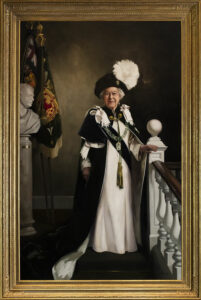
    Nicky Philipps is a portrait-painter, especially famous for her portraits of Queen Elizabeth II

  • The Great Banking Exodus – burnout in the financial sector

    Patrick Crowder

    The financial sector can be a stressful environment, and we’re seeing large numbers of industry professionals leaving the sector following the pandemic. A new study by the global digital accountancy platform LemonEdge shows that 62% of financial services and banking professionals are planning to either leave their current role or leave the industry altogether due to high pressure.

    A third of professionals surveyed say that a reduced workload is the best way to deal with burnout. 27% say that more time off work would solve the issue, and others say that they would benefit from more management support and upgraded technology.

    Gareth Hewitt, who is the Co-Founder and CEO at LemonEdge, describes how these burnout-driven departures from the industry should be taken as a warning sign.

    “An exodus of industry professionals is a sure sign that levels of burnout have reached an unacceptable scale. Any experience of burnout is serious, and with thousands of employees planning to leave the industry as a direct result of high pressure, it should be a clear warning to firms before they risk losing valuable talent,” Hewitt says.

    With 31% of financial services and banking professionals planning to leave the industry, it is easy to see why this is a problem which must be solved. About a third of professionals say that working from home has increased their burnout, and 23% say that they are concerned with their physical and/or mental health. So what’s the solution? Hewitt says the answer lies in technology, which could enable reduced workload.

    “The risk of burnout to employers is huge, and there are simple measures firms can introduce to reduce the risk of burnout, making the lives of their employees much simpler, easier, and less stressful. Firms need to be aware of the impact absenteeism and presenteeism will have on both their employees and business productivity. Just because you’re working from home, or in a hybrid model, doesn’t mean you can’t enjoy time off,” Hewitt says, “Firms need to look at their approaches to improve the lives of their staff. In this day and age, technology not only can but should provide the automation and flexibility that can contribute to reduced stress, reduced working hours, and lower risk of burnout.”

    A third of professionals surveyed say that a reduced workload is the best way to deal with burnout. 27% say that more time off work would solve the issue, and others say that they would benefit from more management support and upgraded technology.

    Credit: https://www.lemonedge.com

  • Paracelsus Recovery founder Jan Gerber: “A lot of therapy can happen making coffee in the afternoon”

    Our collective commitment to the question of mental health might be one of the main legacies of the pandemic. Though we have now largely returned to work, the scars of Covid-19 remain, and we remain aware of our psychological fragility. This is an issue which isn’t going anywhere – and that’s good news for those clinics who are there to serve high net worth individuals in this space.

    Paracelsus Recovery was founded by Jan Gerber’s family back in 2012. “My Dad’s a psychiatrist, and my Mum’s a clinical nurse specialist,” he tells me,”so we have this boutique niche rehab clinic which focuses on the world’s UHNW population, and people in public life.” The business was founded with an important insight: “We realised there was a special need for that demographic. It wasn’t being met on the confidentiality side or on the psychological side.”

    A successful person will, of course, have a unique set of experiences – and these may amount to a specific set of struggles which need to be tackled with the very best methods. Gerber explains: “We realised that mental health is not just a question of psychotherapy or psychiatry: it’s actually much more complex than that. Treating one client at a time with the price tag we have, means that there’s budget to look at an individual from a 365 degree perspective.” So what does that entail? “We look at hormone levels, gut health, biochemical markers and so on, on top of psychological assessments and so forth. We found a lot more underlying reasons which could fuel someone’s mental health or addictive behaviour: these are rarely addressed due to budget constraints.”

    So how did the pandemic affect Gerber’s client base? “A typical CEO is an outgoing person, but sometimes with certain traits such as ADHD or bipolar which may not meet all the diagnostic criteria, but will make them very successful in the first place. But it usually also means they need direct interaction with the people around them.” Prior to Covid-19, the big meetings would still happen in person (“That’s why big corporations have private jets”) but when things changed so dramatically, it often made these high fliers struggle.

    Of course, there’s also a generational aspect to the client base. “It’s common knowledge that mental health struggles – if not addressed adequately – spill down to the next generation,” he explains. “There’s probably a genetic component to that which is still being researched but there’s definitely a component which relates to how kids are raised.”

    Of course these sorts of problems can still happen even when wealthy parents have the best of intentions. “Nannies, and boarding schools and so forth – all that can create massive problems in a child’s self-esteem,” Gerber continues. “We see it also with entertainers who are so busy with their roles that they can hardly devote time to their children. We talk about neglect at one end of the socioeconomic spectrum, but there’s neglect here too: we can call it affluent neglect.”

    In Switzerland the clinic can look after children from 14 and up; in the company’s London branch, patients begin at 18. But no matter who the clinic is treating, it always tries to bring in the whole family unit to the treatment process. “Normally after a few weeks of focusing on the person and stabilising them would be the right time to bring in family members. It’s essential that the client’s journey isn’t out of sync with the rest of the family. They need to understand the journey, and their own role.”

    What really sets Paracelsus apart is its 15:1 ratio, meaning that patients have a degree of attention which will be the envy of those who know that their problems require a deeper level of treatment than is typically possible either at the NHS-funded level or even when it comes to the sort of paid care the middle class can afford.

    “There is usually a massive cost constraint on mental health disorders,” explains Gerber. “Our patients see a psychiatrist every day for a couple of hours. We have a live-in therapist – an addictions counsellor – who stays with the client in the same residence, so they’re there for 24 hours. A lot of therapy can happen making coffee in the afternoon, or standing at the kitchen table, or going out for a walk.”

    Nutritional scientists are there to monitor gut health; bio-scientists put meal plans into place for the client. Yoga teachers, personal trainers, and massage therapists come in. Dedicated housekeepers, chefs, and drivers complete the picture. All of this is orchestrated by clinical coordinators: “It’s like Swiss clockwork,” Gerber says. “In rehab that doesn’t have that kind of close attention, often problems go by unnoticed – sometimes for many days, and sometimes forever.”

    It’s an international clinic and so I take the opportunity to ask him if he sees any national trends in the world’s mental health. Gerber replies: “One difference keeps cropping up: people from the Middle East struggle more with structure than people from the West. In the west, we tend to have meals at more or less specific hours and that puts people in the Middle East at a disadvantage when it comes to mental health recovery, as structure is very important. In some countries, such as Saudi Arabia, there’s no such thing as a schedule. You can say you have a meeting at 11am and someone mightn’t show up and that’s absolutely fine and part of life. It’s not for us to judge if that’s good or bad but it’s definitely not supportive for mental health struggles.”

    I ask if the UK’s predilection for alcohol comes up in clinical practice: “Absolutely. The biggest issue I see with alcohol is this: because it’s legal and part of our social interactions, it’s considered less harmful than it actually is. I’m not saying it should be outlawed but it can be more disruptive and destructive than many illicit drugs are. When the slippery slope starts it’s really hard to identify. If you see your friends snorting cocaine, you might think there’s an issue there, but maybe not with alcohol – even though it might actually be more harmful.”

    Gerber also points out that some addictions, like food or sex addiction, can be difficult to kick because they are part of our lives. “Sugar is quite an addictive substance and it’s a tough one to kick. Sex addiction is a tough for one as you can’t cut it out forever – you need to learn to live with it healthily, and develop a healthy relationship with that activity.”

    I ask Gerber where we are at the moment with mental health and whether there’s anything more government can do on this front. “Government has a big role and it’s a very difficult job,” he says. “It’s easy to pick on all the mistakes and lack of funding and so on, and how that’s deployed because there’s never enough, but government definitely has a role in regulating certain substances. Portugal has shown that legalisation is often the right way to go – but that doesn’t mean addictive substances should be unregulated or untaxed.”

    Gerber is clearly passionate about this issue. He continues: “There’s a big role for government in awareness work and in regulating advertising. There’s also a lot of prevention work to be done at schools and with parents. We also need to consider social media and online shopping and the way they’re designed to make people hooked in ways which can be destructive to people’s mental health. But government always lags behind because it’s a bureaucratic process, and government has a lot of things on their plate.”


    Christopher Jackson is News Director at Finito World