Welcome to WordPress. This is your first post. Edit or delete it, then start writing!
Category: Uncategorized
-
Why These Employability Skills Are Key to Career Success
In today’s competitive job market, it takes more than technical expertise to stand out. While specific qualifications may get you noticed, it’s employability skills-transferable abilities like communication, problem-solving, and resilience-that truly make a difference in landing a role and thriving in it. In fact, a staggering 80% of employers report prioritising these skills over technical know-how when hiring.
With globalisation expanding job markets, businesses now look for candidates who can work effectively across cultures, adapt to changing demands, and contribute to a positive team environment. The good news? These skills can be developed. This article dives into what core career skills are, why they’re essential, and how you can hone them to boost your career prospects.
Why Professional Skills Are Essential for Career Success
They form the backbone of any successful career. These skills allow you to adapt to various work demands, engage effectively with colleagues, and find solutions in complex situations. In today’s global workforce, employers value individuals who bring more than technical expertise—they seek candidates who add value, work well within teams, and handle challenges with confidence.
Employers increasingly look for individuals who can face tough situations, collaborate effectively, and communicate across diverse settings. By developing these skills, you’ll significantly enhance your career prospects and position yourself for long-term success in a fast-evolving world.
Steps to Develop Key Employability Skills
Now that we know why employability skills matter, let’s explore practical ways to develop them:
- Communication Skills
Communication is at the heart of every successful workplace interaction. Improving both verbal and written communication helps you articulate ideas clearly, engage in discussions confidently, and present information concisely. Whether it’s through a well-crafted email or a thoughtful presentation, effective communication is about conveying your message impactfully and efficiently. - Teamwork
The ability to work well in a team is essential in nearly every role. Being a good team player involves actively listening to others, contributing ideas, and respecting diverse perspectives. Strong teamwork skills not only improve group outcomes but also enhance your reputation as a collaborative professional who can fit seamlessly into any team dynamic. - Problem-Solving
Employers highly value employees who can assess situations, think critically, and come up with creative solutions. Strengthening your problem-solving abilities can be as simple as facing challenges directly, learning from past mistakes, and maintaining an open mind when brainstorming solutions. - Resilience and Adaptability
In today’s fast-paced world, setbacks are unavoidable. Resilience—the ability to bounce back from challenges—helps you maintain productivity and positivity even when things don’t go as planned. Being adaptable means you’re able to change course when necessary, a valuable trait for today’s dynamic job landscape. - Work Ethic
Demonstrating a strong work ethic is often what sets the best employees apart. This means showing dedication, consistency, and an eagerness to go above and beyond, even in routine tasks. With these traits, you’ll build a reputation as someone who can be trusted to deliver high-quality work, even under pressure.
The Foundation of Professional Success
Communication is at the heart of workplace success. It’s more than just getting a message across; effective communication involves speaking clearly, writing concisely, and listening actively. Employers prize those who can confidently convey ideas, adapt to different audiences, and reduce misunderstandings—all key to fostering teamwork and building strong professional relationships. Whether you’re pitching an idea, responding to emails, or engaging in a meeting, strong communication skills enable you to collaborate effectively, support shared goals, and make a positive impact in any role.
The Importance of Teamwork and Collaboration in Today’s Workplaces
One skill employers often look for is teamwork. In any professional setting, your ability to collaborate, share ideas, and listen to others’ perspectives greatly impacts team success. Whether working within a department or in cross-functional teams, collaboration helps you leverage diverse strengths to reach shared goals.
Being a strong team player also means supporting colleagues, giving constructive feedback, and handling conflicts professionally. Your capacity to engage productively with others highlights your adaptability and enhances your employability.
Problem Solving for Career Growth
Problem-solving is an essential skill that can significantly impact your career development. In a world where challenges and unexpected obstacles are inevitable, the ability to approach problems with a clear mind and strategic thinking can set you apart. The most successful professionals are those who can identify the root cause of issues, develop solutions, and implement them effectively.
Effective problem-solving is not just about finding quick fixes; it’s about using creativity, logic, and resourcefulness to tackle complex situations. Whether it’s troubleshooting a technical issue, improving a process, or managing a conflict, your problem-solving skills demonstrate your value to the team and organization. By continuously honing your ability to address challenges head-on, you build a reputation as someone who can be trusted to navigate difficult situations and contribute to the long-term success of your career
Cultivating Resilience and Work Ethic for Sustainable Career Growth
Resilience and work ethic are indispensable in any career. In a fast-paced work environment, setbacks are inevitable. Resilience allows you to rebound from challenges and stay motivated despite difficulties. Strengthen resilience by setting realistic goals, celebrating small achievements, and approaching setbacks as learning experiences.
A solid work ethic complements resilience. Showing up with dedication, consistency, and a willingness to contribute beyond your job description builds a strong reputation. Over time, these qualities pave the way for leadership roles and new career opportunities.
Never Stop Learning: The Key to Long-Term Employability
Finally, the most important skill in your career development toolbox is the ability to keep learning. The world is constantly changing, and staying relevant means continuously evolving and adapting. Whether through formal education, certifications, or learning from experience, a commitment to growth keeps you ahead of the curve.
Employers value individuals who proactively seek new knowledge, demonstrating dedication to their own growth and the success of their organization. By focusing on these essential transferable skills, you can open doors to new opportunities and set yourself up for long-term success.
If you’re ready to take the next step, have a look at Finito Education. With expert guidance, tailored resources, and practical support, Finito Education is designed to help you build these vital skills and navigate the job market confidently. Invest in your future today, and make employability skills a core part of your career journey.
- Communication Skills
-
Independent Thought, Have we Lost the Habit: Long Read
Christopher Jackson looks at the question of whether we inhabit an age of consensus – and asks whether there’s anything we can do about it
Our cities are so far advanced down a misguided aesthetic that even revolutionary projects must be undertaken in bad architecture. Michaela Community School is located opposite Wembley Park tube station. Adjacent to a ring road, its surroundings feel like a testament to generations of bad urban planning linked to the demands of the car. Despite this you somehow suspect that Michaela Community is revolutionary before you’re even through the gates.
Even amid the squalor, banners proclaim central Michaela precepts: ‘Work Hard’, ‘Be Kind’, ‘Top of the Pyramid’. It also reminds you of its excellent results: “Ofsted rated Outstanding. Over 75% to Russell Group Universities including Oxbridge, LSE and Imperial.” These messages feel somehow incongruous when set alongside the mess we have made of this part of North London.
Inside the impression of difference sharpens: you know straightaway this isn’t a normal school. You are greeted by examples of the children’s excellent artwork, including portraits of David Cameron, Queen Elizabeth II and Boris Johnson. Newspaper clippings detail the visits of dignitaries and interviews with Michaela’s Headmistress Katharine Birbalsingh, Britain’s so-called ‘strictest headmistress’. Lauded by the right, and despised by the left, Birbalsingh has done a difficult, almost unprecedented, thing: she has acquired fame as a teacher.
As I am escorted up to see her, I am aware of a mood in her administrative team which doesn’t usually accompany my visits to schools. It is, in fact, the sort of awe which surrounds rock stars and Cabinet ministers. And yet the respect surrounding the headteacher has a distinctive strain often absent in those other cases: it is genuine love and respect.

In place of the usual din of schools – places which are usually full of vaguely located cries, as in a shopping centre – at Michaela there is only the hush of concentration. Famously, Birbalsingh has created a regime where there’s no talking in the corridors and students regularly submit to having their mobile phones put in storage to aid their learning.
As I walk on up to Birbalsingh’s office, I walk past a group of children moving between lessons. They remind me of contented nuns and monks shuffling through a cloisters. One looks up at me and offers a wry smile. In the context, it’s subversive – a moment of independence within a strict regime.
I will find I like the school a lot. What has been achieved here is beyond doubt. But I think afterwards about that boy with the smile. It feels emblematic of the independent streak.
Blair and his Heirs
Independent thought, it might be said, hasn’t had a particularly illustrious 25 years. It is now a quarter of a century since Tony Blair came to office and proclaimed a new dawn. You can look at Blair’s government in a number of ways. It might be considered a ratification of Thatcherism insofar as Labour altered Clause Four, making the party far friendlier to business. It can be remembered for its miserable foreign wars. It can also be seen as a period of devolution away from Westminster, with results which we’re seeing today in Scotland and Northern Ireland.
But in spite of the controversies, Blair’s electoral success was so great that, in ways we might not appreciate, we still live in the aftermath of that 1997 landslide, and his subsequent victories in 2001 and 2005.
That’s because large majorities are reflections of consensus. In 2010, David Cameron’s Coalition government adopted a strong dose of Blair’s Europhilia (with a few concessions to his backbenchers), and continued New Labourish policies when it came to the academisation of schools, international aid, civil partnerships, an interventionist foreign policy, and many other areas. The similarity between the two culminated in the spectacle of Blair and Cameron – alongside Blair’s predecessor John Major – campaigning together on the same losing side in the 2016 referendum. Furthermore, the three of them argued for the same Covid restrictions in March 2020.
This has left a gap into which some conservatives – including the likes of Peter Hitchens, Toby Young and Douglas Murray – have been arguing for things outside the Blairite consensus. For Hitchens, the Conservatives’ failure to promote a return to grammar schools is a particular point of criticism, as is the laxity of the police. For Young, lockdown was an outrage perpetrated against the great tradition of English freedom. For Murray, the Blair-Cameron axis is wrong over immigration, and was deservedly repudiated in 2016. All three of them would argue that there are far too many woke MPs, some of whom nominally belong to the Conservative Party, but who aren’t really conservatives at all.
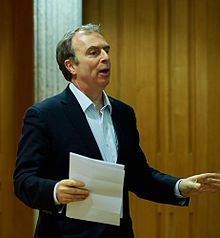
Most heretically of all, each of these thinkers would reserve the right to subject the climate change orthodoxy to proper scrutiny, if only because questioning things is in the British political tradition, not to mention the broader scientific tradition. Whether we agree with all this or not, each of these writers reads today bracingly if you grew up under the Blair consensus: they read like people thinking for themselves.
Past the Age of Consent?
Consensus is, of course, not a bad thing per se. We have, for instance, been governed by a consensus that murder is a punishable crime for millennia to no-one’s disadvantage but murderers. Likewise, our shared consensus that Shakespeare is a great playwright has preserved Shakespeare, and is another example of what might be called profitable consensus. When Tolstoy cantankerously announced towards the end of his life that Shakespeare was no good, he was thinking independently, but not particularly well. There is a distinction then to be made between useful polemic which ultimately turns out to be true, and wilful contrarianism, which causes a lot of noise and misleads a lot of people.
But despite these reservations, it must be admitted that consensus sometimes feels flabby. When too many people have arrived at the same conclusions it might be that those conclusions are dated, or have lost some spark.
So which kind is the the Blairite consensus? There are some warning signs which stretch beyond Tony Blair’s own personal unpopularity. It certainly isn’t quite as popular as its holders would wish, or suppose. This fact was made clear to Remainer voters in the 2016 election: it turned out that a surprising number of people in the country were, while being ostensibly civilised, quietly thinking the unthinkable: that the Blairite worldview might be wrong somewhere at its Europhilic core.
But what really brought the question of independent thought into sharp focus was the Covid-19 pandemic. Whether lockdown might be deemed an overreaction or a wise necessity, it forced government into our lives like it has never been before and this in turn raised considerable questions around how we receive and sift data, what is true and what is false, and above all, what our personal relationship is with the notion of government interference.
It brought to the fore the whole question of statistical modelling and for some thinkers has ramifications not just for how we tackle the spread of viral disease, but also for the broader way in which we use scientific data. “The models were completely wrong,” the economist Roger Bootle, another independent thinker of the right, tells me. “And it’s the same in relation to the climate models – although not to quite the same extent, because the most unpredictable thing about the Covid-19 models was human behaviour, and that has slightly less bearing on the climate change models.”
But the fact remains: by 2022, a generation of professionals in senior positions had come to maturity thinking and feeling roughly the same things about most things. If their worldview is wrong at all, then remarkably few ramifications have come their way: on the contrary, they have usually found their sense of consensus ratified by professional success. Lockdown caused the consensus-bearers no harm since, financially, little can. Lawyers and accountants remained for the most part in spacious housing doing jobs which it is possible, and in many cases enjoyable, to do from home. Doctors were designated key workers and spared the strains of home schooling.
Even so, there are some warning signs that what the consensus bearers have been thinking and feeling might be wrong after all. If we look at inflation or high energy prices, the dubious tactics of Extinction Rebellion, the increasing extremism of wokeism, the long waiting times on the NHS, the former Chancellor Rishi Sunak’s tax rises to pay for lockdown, and the relatively settled landscape post-Brexit, there is a sense that there might be value in listening to voices, from both left and right, that lie outside the consensus. We might not change our minds on policy but we’ll certainly learn something about how to think.
The question is not just: “Who is right on these issues?” It is also: “What does independent thought look like in this day and age? And who has a motivation to practice it?”
An Audience with Katharine the Great
To promote independent thinking, what kind of education system do we need?
For the right, Birbalsingh has arrived as a kind of saviour in this realm, seeming to embody some better method. Of course, as the writer of Ecclesiastes understood, there is nothing new under the sun: her new way of doing things is tethered to the old. Put simply, Birbalsingh argues for the importance of promoting knowledge of a shared cultural tradition in order to foster the independence of thought which might ultimately free us of what she views as the groupthink of wokeness.
When I sit down with Birbalsingh at Michaela Community, I tell her that the place reminds me of grammar schools. She doesn’t find it a helpful comparison. “There are a couple of grammar schools round here,” she admits. “But they take the top slice. Any good teacher knows that it’s really complex when teaching the bottom sets. If you’ve only got the top students, you don’t have to think about learning in the same way. When you have a great cognitive diversity you have to do more.”
In this sentence, ‘more’ means strictness and standards. I wonder aloud whether there’s any danger about the regime, and whether it might over time create conformity instead of individual inspiration? I tell the story of my old English teacher at Charterhouse, Philip Balkwill, who was famous for his eccentricity. In one English lesson, he came in, played Beethoven’s 9th symphony and then left the room without explanation.
Birbalsingh is amused, but not especially impressed: “The thing is, you can only do that kind of thing when you’ve got a selective intake. If you do that in an inner-city school, the kids will all just be laughing and jumping around and running out of the lesson. And then you say, “Well, what have you achieved?” You’ve just created chaos. The kids have just lost all respect for you and you will find it very difficult to build up your resilience again.”

Here then is one obstacle to independent thought: it can’t be something you do overnight. You’ve got to lay the groundwork with discipline first. I mention that Balkwill’s lessons for me operated on a kind of time bomb. I came to realise years later that he was talking about the porousness between disciplines and how music and literature might be interconnected.
Birbalsingh laughs: “The fact that you only realised that ten years later: that’s ridiculous. Teaching is about making things explicit. He was doing things like that for himself and so that he could say to himself: “I’m the most amazing teacher.” He liked being eccentric. In the end, how much did he really teach?”
I say that it felt like being bequeathed a certain permission to roam freely across intellectual disciplines. Birbalsingh doesn’t think that approach will generally work: “You need to realise that the kids here have no idea who Beethoven is unless we teach them that. Once I gave an assembly about Beethoven’s Fifth, as I wanted them to at least recognise the tune which you hear all the time. I was talking about how it was difficult for them growing up in a time of grime and drill.
The worst for me when I was growing up was Kylie Minogue and how everyone was scandalised by her shorts. I put a picture of Beethoven up on the slides. Later when I was having lunch with the kids, I realised they thought Kylie Minogue and Beethoven were contemporaries because I hadn’t made it clear. They don’t know that there’s music from the 16th, 17th, 18th, 19th century and how it’s changed. When they learn music here we start with A, B, C, D.”

She continues: “What you mightn’t realise is just how impoverished some children are and that’s what an inner city school is. Those antics of your teacher you described are not helpful.” I think again of the boy smiling in the corridor. I agree with Birbalsingh, and yet some small part of me wants to retain the idea of another approach. I find that Mr Balkwill’s lessons can’t be so instantly jettisoned. Something would be lost.
Uncle Toby
Sometimes of course having a good education culminating in all the expected excellent results might not be a spur towards independent thinking: in fact, it might lead you up too obvious a career ladder meaning precisely the opposite – that you never have to think for yourself at all. It used to be that a dose of failure did a little good.
I talk to that noted independent thinker Toby Young – so much a bugbear of the left, that he seems to exist in a permanent ferment of being cancelled and recovering from his latest bout of cancellation. He tells me about his somewhat chequered early education: “I initially failed all my O Levels, and went to two different comprehensives. I retook and got three Cs, which was enough to scrape into the sixth form of William Ellis. I did well enough to apply to Oxford. I didn’t meet the conditional offer, but was sent an acceptance letter by mistake. When that was pointed out to me, they then offered me a place – it was an unconventional route.”
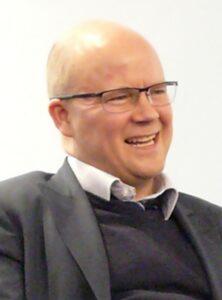
Young, who would go on to set up The Modern Review, The Spectator Online and, in 2020, The Daily Sceptic, credits the entrepreneurial side to his upbringing. “My father was one of the people behind the Open University. He created over 50 organisations of one kind or another during his life. A couple of those got torched in David Cameron’s Bonfire of the Quangoes. He was a lifelong socialist and one of this country’s first sociologists in addition to running a Research Institute in Bethnal Green, he implemented these institutions. That gave me confidence.”
Young was then exposed to the left-of-centre culture of Oxford, before relocating to America, and landing among the uber-left campus life at Harvard. This was the era when Alan Bloom published his famous Closing of the American Mind, a sort of prophetic cri de coeur about the encroachment of what we would now call ‘wokeness’ onto campuses.
Young recalls: “Within my year group at Brasenose [at Oxford] studying PPE, we had the full gamut from a Monday Club tubthumper to a member of the revolutionary Communist party and every shade in between – and there were only ten students.” And in the US? “At Harvard, there was nothing like that range of opinion even in the entire government department, which encompassed hundreds of students. The main debate was between two types of liberalisms – Nozickian and Rawlsian liberalism – that was the extent of the disagreement, and Nozickians were a real minority!”
This sounds like the sort of landscape which Katharine Birbalsingh, in her different way, is committed to pushing back at. Young agrees: “I’m a big fan of Michaela – it’s incredible. In Michael Gove’s wildest dreams I don’t think he’d’ve anticipated the free schools programme would have given birth to such a perfect embodiment of what he views a school to be.”
So is the encroachment on independent thinking less to do with some sort of Blairite inheritance, and more to do with groupthink migrating from America to this country? Young replies: “I certainly think that as British universities have admitted more American students and grown in size, they have attracted left-wing academics with a sense of social mission who want to change the world by converting and evangelising. But it’s partly a generational shift; most of these people were radicalised in the 1960s. You gradually see more of a left-wing imbalance in the professoriat.”
This mindset in turn has infiltrated, or so the argument goes, every strata of society, achieving numerous coups: it captured most of the major cultural institutions; the BBC; and even large swathes of the Conservative Party. In response to the professional calamity which can sometimes assail those who speak up against this consensus, Young founded the Free Speech Union in 2020.
I ask Young about the future of independent thought and he initially strikes a surprisingly optimistic note: “The curious thing is that even though all our main cultural institutions – the BBC, heritage institutions, performance arts companies, the National Theatre – they’ve all been captured by this rather small-minded illiberal ideological cult, at the same time you’ve had right-of-centre figures winning elections. The professions and the educated elite are beholden to this woke cult, but it hasn’t filtered down to ordinary people.”
This, in Young’s view, is a sign that most people still retain the habit of thinking independently. “There’s a disconnect,” he explains. “You see that in the way in which the trans lobby has got into trouble by trying to give trans women access to women’s changing rooms in department stores without trying to persuade the public it’s the right thing to do. That’s proved quite unpopular and authoritarian. All is not lost.”
Even so, he also issues a note of caution. “One of the reasons to be doubtful about how quickly the spirit of liberty can be restored is that it was revealed to be in a very decrepit state during the last two years. It was surprisingly easy for the government and various public health agencies, civil servants and the BBC to persuade people to exchange their liberty for safety and much more so than it would have been in the Asian flu in the 1950s. That was true not just of Britain but of most liberal democracies.”
Of course, we must be careful here not to attribute all independent thought to lockdown sceptics. For instance, the vaccines – not to mention the inventive way in which those vaccines were rolled out – arguably constitute a greater example of initiative than anything shown by those who stood from the touchlines arguing against lockdown.
But Young, Murray and Hitchens aren’t arguing against science. What they would say is that science has become dangerously allied to politics, that it is poorly reported leading to a bogus consensus (usually in the direction of the exaggeration of danger), and that an atmosphere of intolerance has grown up around some of the conclusions it has arrived at. Clinchingly, they would simply defend their right to ask questions about it.
A Question of Method
So how would Young go about teaching independent thought? “I’ve been wondering whether, under the guise of teaching schoolchildren how to debate, you could teach them some critical thinking skills,” he replies. “It’s extraordinary when you argue with young people how often they fall back on what they think of as the trump card of their own lived experience. It doesn’t matter if you present them with data that contradicts their claim.”
I ask for examples. “Let’s say you’re arguing with a young black student about whether or not Britain is an institutionally racist country,” Young says. “You could point out, for example, that more black boys go to university from underprivileged backgrounds than do white boys. Or you could cite the fact that Indians on average earn more than white Britons.
You could also point to the success of boys of African heritage at university and in the professions. There’s actually all sorts of evidence that not being born with a white skin isn’t an insurmountable handicap in this country. You could present that case as reasonably and calmly as possible but they could just say: “That’s not my experience, but you’re a white man and from my point of view, that’s bollocks.” Nearly all children nowadays fall back on this Megan Markle ‘my truth’ trump card.”
So what do we do? Young has clearly been thinking deeply about this: “It would be really helpful to teach children why that isn’t a knock-down argument, and why it isn’t a trump card. It’s also important for them to know why data is more important than anecdote and how you can merge lots of different people’s lived experience to come up with a more objective balanced view as to what the collective experience is.”
Does he think the teaching profession will be able to do this? Young isn’t sure. “Teachers these days are shy of challenging emotional impassioned teenagers – particularly if they’re members of disadvantaged groups. In taking that stance, they allow these irrational ideas to flourish.”
So would that require some kind of shift in the curriculum? “The main thing we need to do is to teach them the rudiments of how to build an argument, recognise a good from a bad argument, and teach what the most common logical fallacies are. Those analytical skills would mean you’d develop a bullshit detector.”
Avenging Angel
It’s interesting that Young’s background is predominantly entrepreneurial and I begin to wonder whether I’m really talking to a journalist or to an entrepreneur. Is there something about being an entrepreneur which fosters independent thought? To find out, I talk with James Badgett, the CEO and founder of the enormously successful Angel Investment Network. Badgett, 40, isn’t just a well-known entrepreneur in his own right, but, given the unique nature of his business, also the centrepoint of a vast amount of economic activity.
So does he feel that as an entrepreneur he’s under greater pressure to think independently? “It’s quite straightforward. When I wake in the morning, first I have to check I’m okay. Then I have to make sure my team is okay. You can’t lie to yourself as a business-owner because you’ll get found out. That means that if the government tells you to work from home, or if The Guardian tells you leaving the European Union is a disaster, or if Greta Thunberg tells you the planet is about to burn – you have a responsibility to go away and check if those things are actually going to happen.”

Badgett is known for holding unpopular opinions, but he views it as important for his many businesses to make sure he holds firm. “I think I’ve got to the point now where almost any view I hold isn’t held by the majority,” Badgett says. “I’ve grown used to people thinking I have an unusual take but I’m not going to stop saying what I think.”
Badgett’s success can partly be attributed to an ability to cut through the range of information he receives in order to decide on the right strategy for his businesses. He tells me of his dislike of corporate settings: “You just feel yourself become cretinised when you sit in these big firms.
You ask for the coffee, and sit back and feel somehow flattered to be in there – and I think that happens to a lot of people who become quite limited in their outlook. They’ve first become too comfortable. But I’ve learned that in business you’ve got to be careful not to fall for all that. You have to remain rooted – and you have to surround yourself with the right people.”
He is sceptical of anyone too who “suggests strategies which are easier to say than to do” and is always creative in the way he runs his companies. Badgett has a Nepalese office of the Angel Investment Network, and realised before the pandemic that it would be affordable for the company to have a top chef cook for his workforce and that it would also be a great boost for the company. “I went ahead and did it – though I expect the BBC would have told me it was impossible.”
Like Young, Badgett opposed lockdown in March 2020, and also counts himself a climate change sceptic. “One thing I disagree with in relation to Greta Thunberg is this elevation of the child to the level of sage. She’s still very young and her predictions are likely to be wildly inaccurate just as Dr Niall Ferguson’s were during Covid-19.”
I ask Badgett whether he thinks we need to do more in education to teach commercial acumen. “The truth is that most people walk into working life absolutely financially illiterate and what you’re seeing today is the effect of a woke university system on the workplace,” he replies. “Basically, people don’t have the skills by which to sift information or to judge what’s true and what’s false – what is theory, and what is fact. What I think does happen though is that people who run businesses become more attuned to that – again, if you don’t your business will go under.”
Whether one agrees with Badgett or not, he is a reminder that the ability to think independently as a society must be tied to a greater commercial sense.
Approaching the Source
If independent thought is under threat then there are a number of clear possible reasons for it. One is the influence of American wokeism on our university system as outlined by Young. Another might be the impact of the Blair-Cameron axis. A lack of commercial acumen is another: some have noted that epidemiologists were more likely to make gloomy predictions about coronavirus since, being in the pay of the government, they didn’t have to live with the commercial ramifications of those predications.
But most people accept that the media, and the way in which we receive our information, also impacts our ability to make up our own minds effectively on important issues.
One person well-placed to consider these matters is Sir Bill Wiggin MP, who represents North Herefordshire. He has spent 20 years in Parliament, and has had a front row seat on the way in which reality can be distorted by the media – and how this causes both misery for beleaguered MPs and confusion in the electorate who are often unable to find their way to primary source material.

After years in the public eye, Wiggin says he’s become acutely aware of what journalism is and how it should be read. “When you read the newspaper, you’ve got to be careful,” he explains. “I’ll read whatever’s lying next to me – but I don’t read it believing it to be the gospel. I’m happy to read The Sun, The Guardian or The China Daily but I’m always reading it in a certain way with the awareness that they will have an agenda.”
And what, in Wiggin’s opinion, is their agenda? “It’s quite simple really, it’s trying to outrage you or to terrify you.” So what would Wiggin’s advice be to people in respect of reading the mainstream media? “Don’t base your life on a publication: be broader than that. You need to be. And also realise that this sensationalism is driving all aspects of the media. For example, I get The Daily Express online. It has wonderful headlines: “Brexit delivers huge increases in British business.” Two days later it will say: “Brexit cuts British business”. They’re playing us! We’ve got to stop thinking that journalism is a Christian and pure-spirited thing. It’s as commercial as Star Wars.”
I mention to Wiggin that I value the way in which my history degree gave me a habit of going to the primary source in order to assess the events of the past.
Wiggin agrees but worries that these skills are being lost in the contemporary media maelstrom: “Today, The Guardian and the BBC are going to the source for you. When you watch the news tonight, you will see Vladimir Zelensky make an announcement about how Russians are losing in Ukraine, and the newsreader will say: “Now, we go to our Ukraine correspondent.” I want to hear from Zelensky not your correspondent! Then you might cut to another correspondent or expert: it was second hand when you got it from the BBC – now it’s third hand.”
The Mp also points out that we tend to practice critical thinking better in other areas of our lives: “Anyone reading this article will know that if they go to a football match, what they see is different to what they read about it afterwards: but they don’t apply those lessons to their politics. Soak it up but don’t close your mind. When you read that x is wicked or that y is good a little voice in your head should say: “Well, that’s what it says here”. You shouldn’t be prepared to die in a ditch according to what you’ve read.”
Good Humours
One notable thing is that some right wing thinkers often seem to injure their case with a certain cantankerousness which somehow makes their case less persuasive. Of course, there might be mitigating circumstances. Most of them haven’t been listened to throughout their professional lives, and must feel a sense of mounting frustration at always feeling in the right and then watching governments continually make catastrophic moves.
Although Peter Hitchens can be funny, it is probably the case that there has rarely been a less Christian-sounding Christian in the public sphere . There can sometimes be a sense of infinite probity about his public persona which feels somewhat tiring – reading him sometimes, one feels that nobody could manage long in his ideal state. One would want to be free a moment, like that boy in the Michaela Community corridor. There is a frequent note of exasperation – a sense of being almost tired of being so in the right – which makes one want to lodge objections, and which has probably led to his ideas being infrequently taken up by government.
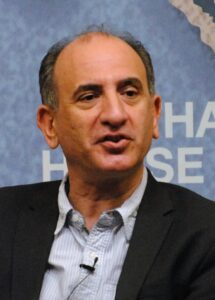
This brings me to Armando Iannucci and the importance of comedy in the realm of independent thinking. John Cleese recently observed that there is no such thing as a ‘woke joke’, but it seems to me that there are still vestiges on the left which are able to raise that profound laugh which lets you know an independent truth has been arrived at.
Iannucci has always been able to do this – most notably in The Thick of It and Veep – those superb comedies which could only have been written by a unique cast of mind. Sure enough, Iannucci has been in fine form during the pandemic having penned an epic poetic satire on the first years of the Johnson administration called Pandemonium. We need only read its opening page to know that this is a voice of the left which is hardly caught up in groupthink:
Tell, Mighty Wit, how the highest in forethought and,
That tremendous plus, The Science,
Saw off our panic and Globed vexation
Until a drape of calmness furled around the earth
And beckoned a new and greater normal into each life
For which we give plenty gratitude and pay
Willingly for the vict’ry triumph
Merited by these wisest gods.It is worth noting how the big laugh comes from the line ‘that tremendous plus, the Science’ – the same Science which is in its way is poked at, and queried, by Young, Hitchens, Badgett and others. Here it is being mocked too. Blairism itself was full of those ‘tremendous pluses’, whose validity we were never meant to query.
Pandemonium mocks Johnson, Matt Hancock, Tory donors, and Dominic Cummings. It suggests again that this era of consensus needn’t necessarily be worried at in a misanthropic spirit. It might be done with wit and laughter too. It is an enduring fact that many of the great thinkers of the 1930s – one thinks of George Bernard Shaw and Ezra Pound – fell for Stalinism and Nazism respectively. It took Charlie Chaplin and PG Wodehouse to laugh them out of town.
Iannucci doesn’t extend his mockery to the Labour Party in the poem – and perhaps it would have been a better poem if he had. Bu one leftist intellectual who is prepared to query Starmerism – currently a kind of low energy Blairism – is the philosopher and poet Tariq Ali. Ali has just published – to the right’s dismay – a book attacking the legacy of Winston Churchill called Winston Churchill: His Crimes, His Times.
For Ali, the habit of consensus thinking began further back in time during the post-War period: “I would refine the analysis slightly,” he says, when I describe the theory of the Blairite consensus. “The post-War consensus which was more or less agreed by Labour and the Tories after the Second World War, was that we have to go down the social democratic route. In Britain, this consensus was implemented and never altered in any meaningful sense, until it was broken definitively by Margaret Thatcher.”
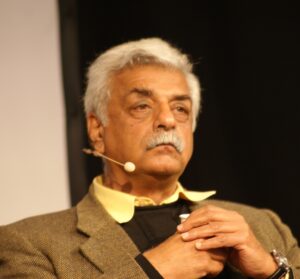
For Ali this is all bound up in the Churchill cult which began at that time, and has been continued by Johnson. Interestingly, Ali says that he prefers reading thinkers like Peter Hitchens to those on the centre right. “Obviously Peter and I won’t agree on most things but I have some respect for him. There is a degree of honesty and integrity in Peter which I don’t find in liberal writers. Look at the stand he’s taken on Julian Assange. I am amazed he’s still a columnist on The Mail on Sunday: it’s much sharper than things I read in The Guardian.”
It’s this which often marks out independent thinking: integrity and the desire to conduct our thinking for the right reasons. And what does Peter Hitchens say in return? “I think Tariq Ali is a valuable independent voice because I think freedom dies without dissent. He’s undeniably intelligent, and undeniably thoughtful. I disagree with him profoundly on many things, and have done so publicly on such matters as the nature of Fidel Castro’s Cuba.”
And what has it been like when they have sparred? “He has responded courteously, as a civilised person should, though he should have a higher opinion of The Mail on Sunday, which has a strong record of independent thinking. I think we both come from an era when an opponent was not necessarily an enemy. I also suspect him of having a sense of humour. I wouldn’t say this feeling has anything to do with my own Marxist past. Most of my former comrades dislike me personally, though I can’t be bothered to return the compliment.”
So perhaps the surest route to independent thinking is an education like that offered by Birbalsingh at Michaela Community, but with just that hint of a smile offered by that boy in the corridor, and by Philip Balkwill back at Charterhouse in the 1990s.
But we also need much more: better commercial education as suggested by the examples of Toby Young and James Badgett; a deeper awareness of the need to go to the primary source as espoused by Wiggin. We also need Tariq Ali’s perspective of the deeper past.
But it is Armando Iannucci’s ability with a joke which can sometimes seem most pertinent. It is this which verifies where we really stand on an issue, and which clears the decks and allows us to think clearly about problems.
I didn’t tell Birbalsingh about another one of Philip Balkwill’s lessons. He would show us Beyond the Fringe and the great sketch where Peter Cook plays Arthur Streeb-Greebling who has spent his life ‘underwater teaching ravens to fly’. It was the silliest thing I’d ever heard – and it made me want to watch more. ‘Is it difficult to get ravens to fly underwater?’ asks Dudley Moore. “I think here difficult is a very good word,” Cook replies.
The same is true in the realm of independent thinking – but as the problems of the world mount, and the implications of groupthink become clearer, this is increasingly a conversation we need to have as a society.
-
Diary: Ayesha Vardag on hiring, why the law on forced marriage needs to change and her new novel
Ayesha Vardag
From a legal point of view the major shift over the past few years has been no fault divorce, which I’d been campaigning for for a long time. This has crystallised what was already a shift in the zeitgeist, with people being less obnoxious and pointlessly confrontational. The tone has changed somewhat: you can see the relief on individuals’ faces when you tell them you don’t have to say anything nasty about your spouse: it’s just a very simple administrative exercise.
I’ve received my share of criticism from my peers. I find gossip and bitchiness just immensely boring and it always gives me a slightly nasty taste and nasty feeling. I’m a disruptor and so I’m sure people out there in the industry dislike me just as much as they always did. I always seem to provoke all kinds of extreme reactions among people that I didn’t know at all. On the other hand, being slightly on the outside of things helps me to be entrepreneurial.
To young female divorce lawyers, I’d say that you’re in a uniquely strong position of appealing to female clients who might be feeling suspicious of men – but also appealing to men who want their wives to be understood and want to soften their look. The men that do go into divorce law are a minority but they tend to be very successful: that’s probably because those that do so have got a real vocation. I find men really good dedicated workers and while we have a minority of men, I would very much like to redress the balance. The reality is we hire purely on quality and so we just get whatever gender mix comes in.
On hiring, there have been times when we have been just so busy that we have taken on people that were doing well somewhere else, assuming they would do well here – actually, that very often wasn’t the case because we have our own demands way of doing things. We have had some great lateral hires but mostly it hasn’t worked out. Happily, we have fantastic graduate trainees but there, I have to work hard to stop losing them; what happens is they get offered a pay bump elsewhere by headhunters. It’s a nice problem to have though as we just have to raise salaries.
There’s still more to do on the public policy front. I feel strongly we have this situation in which men tell women they are having an Islamic marriage. Women are married in order to have sex with them and then get divorced over texts. This is not something that England should be condoning as non-marriage: it is void marriage and clearly defective but void marriage carries financial relief much like valid marriage. That’s one thing I think they need to deal with: at the moment men are getting away with this with impunity.
People ask if I am a workaholic, but I would describe myself as immensely lazy: in fact I think I am more of an achievement junkie. I like to do things with the minimum of effort but I am also restlessly wanting to achieve. I am much more of a morning person than a night owl. If I have got something important to do I will set my alarm early and do it in the morning which is when I do my writing. My novel is called Pont Neuf, and I’m releasing it in instalments on Substack. It’s heavily based on lots of things I have experienced including some of the challenges growing up being ethnically unplaceable in the 70s and 80s in England and experiencing different sorts of racism. People are going nuts for it.
-
Ronel Lehmann on tackling employability nerves
Ronel Lehmann
As children, we have all experienced not being able to sleep the night before a new school term. This anxiety may repeat itself before meeting new classmates or excitement at catching up after the holidays. I remember having to address 900 pupils aged 16 years as Chairman of the School charity appeal and being terrified that the microphone would fail to work.
For many people this worry continues during exams, when moving away from home to go to university, or when starting a new job. Later in life, the same anxiety can appear when under pressure from an employer, being asked to make a presentation in front of your colleagues or pitching to win new business.
Recognising the signs and symptoms can prepare you for the unknown. Once I was pitching for an insurance professional indemnity mutual in front of 30 people when there was a 41-gun salute from The Tower of London. I never uttered a word as the Board of Directors simply renewed the contract, to much hilarity.
I often remind our student candidates that it is normal to be nervous before an interview. At their age, I was so very fortunate to shadow Esther Rantzen from her green room to live broadcast on BBC That’s Life and Hearts of Gold. The minute before she waited to walk on to receive rapturous live audience applause, you could see stage fright kick in and the shear look of terror on her face. Of course, it was all gone as quick as it arrived once the programme titles started rolling.
A candidate we had helped, found himself in the middle of an interview when the fire alarm went off. To the consternation of his prospective employer, he was a little too insistent in trying to collect his personal effects instead of simply leave the building. This didn’t augur well for his employability chances.
What are the practical steps that you can follow to tackle your employability nerves prior to an interview? Firstly, if the meeting is virtual, practice with a mentor who you don’t know so that you gain confidence in the type of questions that you might be asked. Secondly, if you are invited to an in-person meeting go and visit the office location to familiarise yourself before the interview, ensuring that you allow enough travel time to turn up at the requisite hour. Thirdly, there is a tendency to wear new clothes and shoes, make yourself comfortable and don’t dress to feel awkward. Fourthly, speak to the receptionist about what life is like in the office. You may find that your future employer might seek a second opinion about you, after you left the building.
There are many techniques which can help those who panic, including taking slow deep breathes or exhaling by screaming under a railway bridge. Whatever works for you, never drink a double tall latte before you arrive at interview. A little caffeine is good but don’t overdo it.
Ronel Lehmann is Chief Executive of Finito Education
-
Art interview: West Contemporary founder Liam West
Christopher Jackson interviews a likeable art dealer with an incredible backstory
Humility is a wonderful thing. As soon as you meet Liam West you find yourself mentally revising your idea of the art world. West, the hugely successful founder of West Contemporary, meets me at Kerridge’s Bar and Grill in the Corinthia Hotel. West is sitting quietly in a corner – with an air of humble diligence – hunched over some paperwork with a team member. You wouldn’t know that all the art on the walls is here because of his acumen and reputation – or that this is one of the leading figures in the UK art world.
So how did he become involved in the sector? “I was brought up in New Cross in South London – which is part of the Old Kent Road, the cheapest block on the monopoly board,” he recalls, with a smile. “But crucially, I was also born a couple of roads away from Goldsmiths University, where the YBAs (Young British Artists) came from. I just fell in love with that movement.”
Such is London: you might grow up feeling you have poor life chances but opportunity is always adjacent. And West is referring, of course, to that group of artists Damien Hirst, Sarah Lucas and Tracey Emin, who had nothing much to do with one another, other than being lumped together by the British press. When they came to prominence, they collided with Britpop and the outset of the Blair administration. Briefly, pre-Iraq, anything seemed possible – and it turned out that quite a lot was.
And especially for West. What was his career journey? “I ended up finishing college not knowing what I wanted to do,” he recalls. “My Dad used to be a bus driver at New Cross garage, but went on to work for the Law Society. He had someone doing CVs, so I went in. My parents never had the funding to do the university route anyhow. But my CV was done.”
This led to a bit of luck: “The lady that my dad gave my CV to for typing took it home to her husband. As it happened, he ran a fine art print company in Nunhead called Napier Jones. I got a phone call out of the blue saying they were looking for someone to come and do an apprenticeship.”
Initially, West was unsure about this development: “I wanted to continue my education, but I decided to do three months over the summer. On day one, Damien Hirst walked through the door; they were doing a limited edition litho print for him.”

That sounds like a good first day – but, as time went on, West was continually impressed by the variety of work. “It just continued. We were working with Agnew’s at Bond Street, White Cube, and all the galleries around St James’s. I fell in love with it.”
West stayed for five years moving over time to a customer-facing role. He then started his journey in to reprographics and joined a company called Icon near Borough Market in Southwark: “I kind of hit the ground running,” West recalls, “and I ended up being the MD of that company, managing over 50 staff, very quickly by the age of 23.”
It was an impressive rise. West recalls for me an important incident in the year 2000: “We had a salesman called Nick Duchamps. His great-grandfather had been Monet’s art dealer. He came flying through the door one morning and he said: ‘He’s only done it again’. I said: ‘Who?’ He said: ‘Banksy’. And I said: ‘Who’s Banksy?’”
We can catch here something of the energy an artist harnesses when they’re about to go global: sudden unanimous fascination among those who mind about the latest thing. From that time onwards, West was hooked by Banksy’s work: “I started blogging about Banksy; it became a hobby.”
West had discovered street art and its global superstar. He then went on to start a company Beautiful Crime, which in time would become dedicated to the sale of street art. How did he come up with the name? “Those words come from a French artist called Monsieur A who’d been interviewed by a high end magazine and they’d said: “Don’t you know that what you’re doing is vandalism?” He said: “No, it’s not; it’s beautiful crime.”
West would go on to co-create the world’s first online gallery for street art originals. I can’t help but ask, hoving near a possible scoop, if he knows Banksy and will consider revealing his identity? But West smiles: “I’ve been in the same room as him, but I’ve never spoken to him. I know it’s him, because I’ve been with people who actually worked for him at Pictures on walls . He was often referred to as Dave, which is not his real name. It’s quite remarkable how well he’s been protected over the years. And rightly so. I mean, he’s obviously a global phenomenon now. And pound for pound probably is the most expensive artist in the world.”
Eventually, having saved up a year’s salary from his day job, West became full time at Beautiful Crime. “Our big break came when we were asked to design the Coca-Cola bottles for the Olympics 2012 using local urban artists. They were so impressed that they asked us to design their HQ for the Olympics on the Southbank ”
Word spread and soon West could count The Royal Albert Hall, Adidas, Microsoft, All Saints, Levi’s, Peroni, and numerous others as his clients.
Was it difficult to overcome the perceived gulf between the world of street art and the commercial art sector? “It was tricky at first because street art is seen as a bit of an anarchic movement and a lot of street artists didn’t want to be involved in that world. But when the opportunity actually arose, I don’t think any of them turned it down.”
By 2013, he’d opened his first gallery in Shoreditch. “Then, in 2015, we won the commission to create a large public sculpture in marble for the Dubai Opera House. That now sits proudly on Dubai Opera House’s Plaza: everyone who goes into Dubai Opera House has to go past it. That was a huge step up but we were advised that our company name wasn’t ideal for the Middle East market. That allowed me to completely rebrand as West Contemporary.”
By 2018, he was ready for his next move – to Kerridge’s Bar and Grill at the Corinthia. “Tom opened this restaurant in 2018,” West recalls. “He said, ‘I want to build you a gallery.’ I’ve never been one for putting art in restaurants. I’ve always said if you want to buy meat, you’ll go to a butcher. So why would you buy art from a restaurant?”
What changed his mind? “Amazon shows us we’re all bereft of time. I never thought we’d come to a point where people would be buying art online for thousands but here we are. We did a show in October 2021 where we sold 24 artworks for between £18,000 and £35,000. Not one of them was to the UK. So not one of them had been seen by the purchaser in the flesh. That still astounds me.”
Meanwhile, the gallery itself has been an astonishing success. “I call it a showroom. Tom completely changed the food world by convincing Michelin that you could have a two Michelin star pub. I put a lot of trust in Tom who said: “Look, we’re going to create something new here. We’re going to call it gastro art’.”
Just as important as these successes is what West does for the artists themselves. West notes that many artists leave college uncertain about vital aspects of the art world. “They don’t teach you about art management, how to go about marketing, framing, printing, and all that goes with it . My favourite thing is to take an artist from the very beginning of their journey and help them.”
Who does he represent? West now argues that street art doesn’t really exist anymore (“Banksy is selling in the same auctions as Picasso or Warhol”), and so he’s broadened his roster. “Graffiti artists make up ten to 15 per cent of our roster of artists. But now we work with every sector: neon artists, mixed media, artists that are particularly inspired by sustainability, pencil drawing artists, sketch artists, spray can artists, painters, photographers, the whole lot. It’s a really exciting time.”

I’m keen to ask West about hot topics in the art world. What does he think of NFTs? “A complete Wild West at the moment, but I do think NFTs and blockchain are going to be game-changing for art authentication.”
He adds: “The one who’s really nailed the NFT market is Damien Hirst. And it’s quite clever what he does: with his latest collection, you can buy the physical artwork, or you can buy the NFT. But at any point, you can swap the NFT back for the original artwork. The last release he did, the NFTs outsold the actual physical artwork.”
And does he have any advice for young artists? “To be honest with you, it changes all the time. The problem is getting your name out there. There’s a lot more opportunity today. It used to be a really closed shop. Social media has completely opened that up. Bond Street galleries are signing people up who’ve made it through social media because they’ve built their own market.”
And how should young artists price their works? West explains: “Tom also had a restaurant in Manchester called the Bull and Bear. We did all the art there, and we created a Fine Art prize. We ended up choosing a young artist called Tom Yates, who’s 26 from the Manchester area. We’re going to nurture him, but we’ll start off at £150. Each costs £50 to create, so there’s a £100 profit in it – and then you build it up.”
What does the cost of living crisis mean for artists? “The problem I think young artists will have is getting materials when everything has gone through the roof. I think paper’s up 100%, as are inks. Certainly framing, wood, glass –
everything across the board is up 50-60% When you want to put on a show, the overheads for printing and framing just build up, incredibly so.”
Which means that many artists, floundering in these currents, need his help. Yet you never feel that for all his success, West is the least bit impressed with himself or arrogant. That’s the thing about success. It’s about hard work, and talent – and West has these things. But to travel so far so quickly and remain kind is the hardest thing of all. And he’s done that too.
-
Dr Susan Doering: How hard is a career transition?
Dr. Susan Doering, MA (Oxon), PCC
A career transition need not be hard.
If the transition has been forced upon us, then there will probably be negative emotions at play. But I remember one client who was made redundant when the private bank he worked for folded. He reflected that he was in the prime of his life and career, the bank had folded through no fault of his own, and he had all the right expertise and experience. We decided he should reach out discreetly and with optimism to potential employers to let them know he was available for discussions, and then he sat back and waited to be headhunted. He went swimming every morning, read the books that had been piling up on the coffee table and devoted his energy to his church community. Within 3 months he had a new position in the Treasury at the national regulatory bank.
This is a tale of positive mindset, which is the foundation for a career transition.
There are five key components to making the move successfully and fairly smoothy. If you have time to reflect and prepare with these components in mind, much else will fall better into place.
First, know what you value and what you are passionate about. What do you want to get up in the morning and do? What do you want to change about the world? Many people are moving from a corporate setting which they feel no longer matches their values and purpose in life. If you choose a career path that does, you will be more motivated to stay with it and feel more fulfilled.
Second, play to your strengths. Know what your strengths are and talk about them, aligning your passion with what you are good at. It is important to be able to articulate what value you will bring in your next career phase.
Third, get support from family and friends, and from professionals who can provide information, open doors, make connections and create contacts. These may be people in your profession, mentors, coaches, or any manner of people who can help and support you and offer the right kind of advice. A big mistake is to believe (hope) you can make a successful career move on your own. Whether you are thinking of moving within your profession/industry to the next level, or doing something different, or moving from an organisational environment to setting up on your own, you will need a lot of support.
A word about being realistic and recognising when you need support and reaching out to get it. Women, particularly, often lay themselves open to trying to do everything themselves, which only leads to frustration and sadly, failure and/or often burnout. Sometimes it’s necessary to delegate stuff.
Fourth, do your research. This is the practical, nitty gritty preparation part of a career transition – but it’s also fun! This is where you gather as much information as you can about potential work environments by web-based research and by talking to people. Social media sites such as LinkedIn are a useful resource, but nothing beats talking to real people, so go to conferences (thankfully back to in-person!), industry meetups, and all kinds of networking opportunities. Networking is a 2-way activity: you gather a lot of information and at the same time you are becoming more visible to potential employers/clients/sponsors. Then research the companies, research their track record, research how they manage their talent.
And finally, believe in yourself. We started off by asking: How hard is a career transition? Every change is a challenge, and how we react to change often goes back a long way to how we saw our parents face change. If we were taught to be cautious and wary of change, we may have adopted that mindset. But as adults we can say: “That was then, this is now. I have all the resources in me, I have done my research, I’ve got my support network. I’m moving towards my vision of where I want to be. I can do this.”

For further information go to http://www.doering-training.com
-
Legendary jeweller Elizabeth Gage on her education, work ethic and friendship with Lauren Bacall
Christopher Jackson
Even for people such as myself who wouldn’t necessarily count themselves as knowledgeable about jewellery can see that the creations of Elizabeth Gage possess an unusual degree of intricacy and beauty. Gage strikes me as a little like those high achievers whose endeavours cross over easily to the layman: non-tennis fans used to tune into Federer; non-readers got through Harry Potter; and even I, who has only ever worn a wedding-ring, can still find myself pausing at an Elizabeth Gage creation, wondering about the dedication behind such outstanding creations.
So what kind of an upbringing did she have? “I did have a creative family,” she tells us. “My mother painted and my grandmother was a painter. I therefore did not want to be a painter but rather wanted to find my own creative calling. I had always been creative as a child, making clothes for my paper dolls. I started out writing but realised that writing wasn’t for me.”
But her life was about to change “One day I went to the British Museum and that is when everything changed for me,” she recalls. “The sun was shining, and I distinctly remember the sun flooding one big square case, I looked over and saw a set of Roman rings, and the rest is history. From that moment onwards, my heart was set on making jewellery which was imbued with history, to bring the past into the present and make it wearable.”
That’s part of what sets Elizabeth Gage apart – her commitment to meaning in her work. Perhaps it’s partly this which makes me pause always at her work; I’m being asked not just to look and take delight in her works, but to think as well.
Another aspect is attention to detail, and Gage is humorous about the demands of that: “I am a patient person when it comes to achieving the piece that I have designed as I never cut corners and want to make sure that each piece is a work of art in its own right. However, once the piece is being made I am impatient to see it finished!”
Gage describes her early education: “I went to Chelsea School of Art but my experience there swiftly transitioned to Sir John Cass College, which shaped me and my career. I had been advised time and time again to pursue a career as an artist but I had other ideas.” Like many successful people, Gage picked her battles, and she knew what she had to do: “One day, at 12 ‘clock whilst everyone was out at lunch, I went into a classroom at The Sir John Cass College to find Mr Oliver. I had been told that there was no more admission of students for the Goldsmiths course but I would not take no for an answer. I told Mr Oliver that I wanted to learn how to make jewellery and asked if he could fit me into his busy class, to which he responded by making a space for me. He then taught me for eight years, a wonderful experience culminating in me asking to make something in gold, to which Mr Oliver responded “absolutely, but you must buy your own gold.”
Despite Mr Oliver’s obvious influence, Gage adds: “I never had a mentor. What guided me was my love of making things and learning about how to master the art of jewellery.” There is wisdom here: quite often, we think the responsibility for our success might lie with some third party, but it always lies within.
Gage is seems to be expert at letting the world come to her, and teach her to decide what to do next. Her first commission came from Cartier was, she says, ‘very unexpected’ and she is refreshingly matter-of-fact about the genesis of her business which will this year see its 60th anniversary. “It just happened,” she tells us. “Freshly out of school I received a commission from a friend’s father who had asked me to make rings for his daughter and his girlfriends. He had been very shrewd as, being a designer fresh out of school, I was much cheaper than an established jeweller.” So what were the joys and challenges of starting out? The joys were knowing that what I was creating, people loved. There were always challenges that cropped up but I just knew that I needed to get on and continue doing what I loved and not letting any obstacles get in my way.”
Of course, over time things have changed – not least Gage’s business has straddled the Internet revolution, a development she views very positively. “It has been wonderful in that people from every corner of the world can now see my work online and even buy online if they so wish,” she explains. “We only have our one exclusive store in Belgravia, London so having that virtual vitrine into our world and jewels is terrific.”
Gage’s success can in part be measured by the famous clients she has amassed, most famously Lauren Bacall. About Bacall, Gage says: “We worked very well together. She loved what I do and I always involved her in whatever I was doing for her. It was very easy. She once brought me a beautiful bejewelled camel which I set into a brooch.”
So what would be Gage’s advice to a young designer starting out? “Find what you love doing and that will give you direction of what you must do. It is no good just liking it, you need to really love it.”
Gage has now been decorated with an MBE (“I never thought I would ever receive something as wonderful as that”) and her goal, even at the age of 85 is “to charge onwards and constantly to be inspired”. Of course, in taking that attitude, she’s also inspired us in return. We are all the beneficiaries of the work of Elizabeth Gage.
-
Dinesh Dhamija on the ‘diaspora dividend’ of Indians living and working abroad
Dinesh Dhamija
At a time when India is breaking records for the growth of its population and economy – here’s another. There are more than 18 million people of Indian origin living outside the country, way higher than any other nation. (Russia and Mexico have 11 million each, China has 10 million.)
But so what if millions of us live elsewhere? Doesn’t it mean that conditions were so poor that we had to leave?
At a black-tie dinner in central London last week, I listened to the Industry Minister for the Indian state of Telangana, K T Rama Rao, explain how India’s economy can catch up with China’s in the next 15 years, if the country follows Telangana’s shining example as a ‘startup state’.
To an audience of 500 members of the Indian diaspora, Rao said: “If any UK entrepreneur wants to set up in India, go to Gujarat or Karnataka and then tell us what they’re offering you and we’ll meet or beat that offer.” Telangana has reaped $47 billion worth of investments across 23,000 new business approvals since 2013, including Amazon, which has its largest global campus in the capital Hyderabad, alongside Apple, Microsoft, Meta, Uber, Google and Qualcomm.
What impressed me, as much as all of these statistics, was the mob of British Indians that surrounded Rao when he’d finished speaking and then pursued him out of the hall. The balance of power has switched, from India desperately seeking inward investment, to Western investors – mainly from the diaspora – eager to get in on the act.
If you look at a list of the world’s largest and wealthiest companies, an incredible number of them in recent years have had CEOs of Indian heritage. Google, Microsoft, Pepsi, Mastercard, Diageo, Nokia, Adobe… the list goes on. It’s a 21st century phenomenon, and it’s symptomatic of a global rise in the status of Indian technocrats. In the United States, Indians’ average income is $120,000 a year, compared with $65,000 overall. They’re more often college educated, they work hard and contribute to society.
In the UK, we now have Prime Minister Rishi Sunak of Indian descent; the United States has Kamala Harris, a Vice President of Indian descent. Today, 74 per cent of British Indians own their own home, compared with 68 per cent of white British people. In education, 62 per cent of British Indian High School students get grade 5 and above in English and Maths, compared with 42 per cent of white British pupils, and 96 per cent of Indian students continue on to further education, compared with 85 per cent of white British students.
In India, people no longer talk about a ‘brain drain’ of skilled and talented people leaving the country. They talk about a ‘brain circulation’ and about the rich rewards that India now reaps from its extraordinary diaspora, with $107 billion in remittances coming back to the country in 2022, compared with $84 billion from foreign direct investment.
Uniquely in world history, a country which has lost more of its population than any other is now gladly welcoming them home.
Dinesh Dhamija founded, built and sold online travel agency ebookers, before serving as a Member of the European Parliament. His latest book, The Indian Century, will be published later this year.