Category: The World

  • Lord Loomba on his long association with Sir Richard Branson

    Lord Loomba on his long association with Sir Richard Branson

    The Patron-in Chief of the Loomba Foundation recalls a transformative meeting with Sir Richard Branson

    I first met Sir Richard Branson at the Indian High Commission in London many years ago. During that meeting Richard asked me what I did for a living. I told him I was a businessman and ran my own charity as well. 

    Richard never asked me what’s my business but enquired about the charity. I told him that my wife and I had set up the Loomba Foundation in memory of my late mother, to support and educate the children of poor widows in India. To my surprise and delight, Richard, told me that he would like to help the charity and I asked him if that was a promise. He said, “Yes”, and we shook hands on it. 

    True to his promise, I received a letter from Richard almost a year later telling me that Virgin Atlantic are starting to fly to India soon. He would like to invite me as his guest on their inaugural flight and promote the Loomba Foundation on the flight. A Loomba Foundation brochure was put on every seat and, in addition, a video was played before landing in Delhi in which Richard, himself, made an appeal to support our charity. Both, the brochure and video were produced by Virgin Atlantic with no cost to the Loomba Foundation. 

    In 2004, Richard agreed to attend and support our charity event in Delhi. The event was also attended by our President, Mrs. Cherie Blair, wife of the British Prime Minister Tony Blair and a delegation of 40 supporters of the Loomba Foundation from the UK. They all travelled to India on Virgin Atlantic with the generosity of Richard.

    At the event, which was also attended by the Indian most senior politicians and business leaders, Richard conducted our auction to raise money for the education of the children of poor widows. In addition, he pledged to educate 500 students in five Indian states for a period of five years. It was a huge support amounting to about £500,000 and I was truly touched by his generous contribution. 

    It was at this moment that I requested Richard to accept my invitation to become the “Patron-in-Chief” of the Loomba Foundation, which he very kindly accepted.

    Over the years, Richard has made an appeal on BBC Radio 4, giving much needed exposure and awareness about the charity. He has always supported our fundraising events by giving items for auction. Virgin Atlantic has raised thousands of Pounds through the “Change for Children” appeals on its flights worldwide. We are the only charity to have such three appeals.

    In 2006, the Loomba Foundation in partnership with Sir Richard Branson’s charity Virgin Unite launched a project to support 1500 HIV orphans in five Townships surrounding Johannesburg, which wasmanaged by a local charity called Great Hearts. It was a super event where my wife and I met Richard’s wife and his lovely parents. An unforgettable encounter.

    Richard is a man with vision, an entrepreneur, a successful businessman and a big-hearted philanthropist. I am hugely grateful for all his efforts, participation and contributions to help and support the work of the Loomba Foundation since 2004. We couldn’t have done it without him.   

    As patron-in-chief he is a great ambassador for the Loomba Foundation.

    Photo credit: Roger Harris

  • Opinion: It’s time to try the four-day working week

    Opinion: It’s time to try the four-day working week

    Patrick Crowder

    Nicola Sturgeon has promised a four-day work week for Scotland if the Scottish National Party is re-elected in May. This announcement came alongside promises of increased NHS funding, free dentistry, and another referendum on Scottish independence. 

    The pandemic has raised questions about the need for the traditional office, as well as concerns about a healthy work-life balance. 

    The SNP manifesto, which was published yesterday, states that “Covid-19 changed the way we work almost overnight,” and that the party wants “to do more to support people (to) achieve a healthy work-life balance.”

    According to his spokesperson, Boris Johnson currently “has no plans” to introduce a decreased work week in the UK. 

    Looking to history, the four-day week follows a trend in decreasing hours which dates back to the industrial revolution. Before the 1920s, workers often laboured for over 70 hours a week. Henry Ford’s introduction of the 40-hour, five-day work week at his factories laid the foundation for the schedule we operate on today. 

    With so many people now working from home, many have noticed that their jobs take significantly less time than their traditional hours allowed for. This does not necessarily mean that people waste time at work purposefully, but instead it could point to increased productivity in a less stressful environment.

    A 2013 Stanford study showed that productivity at a Chinese travel agency rose by 13% when employees were allowed to work from home at least one day a week. Through employee satisfaction surveys, that same study also showed that employees were happier when they worked from home. Even if Britain is not ready to take Fridays off completely, this shows that productivity can be increased with just one fewer day in the office.

    Spain recently became the latest country to trial the four-day working week. Companies which take part will operate on 32 hours a week and receive funding from the government to avoid lowering employees’ wages. If Spain’s experiment proves effective, it will force other countries to reconsider their own working practices going forward.

    Spain will spend about £44 million on the program, while the SNP promises to “establish a £10 million fund to allow companies to pilot and explore the benefits of a four-day working week.”

    The shift towards a four-day work week differs from the “compressed” work schedule already offered by some employers across the UK. Rather than decrease hours with no pay cut, a compressed schedule redistributes normal hours across fewer days. 

    A 2018 study into the causes of work impairment conducted at an Australian mining company found that stress was a major cause of lack of productivity. Out of 893 employees, 375 reported that they felt stressed at work, and over 20% of stressed employees reported that they needed to take at least one day off work in the past month. 

    Criticisms of the compressed schedule include increased stress, rushed work, and increased pressure from employers to complete the same volume of work in a shorter time period. We know that employees work more productively in lower stress environments, so it is important to make sure that efforts to free people from the five-day week are not counterproductive.

    The foundation of our working schedule has remained essentially stagnant for 100 years. As times change with automation, faster computing, and the ability to work from home, it is time to establish a new standard of work which will benefit both employer and employee.

    The success or failure of this new model will fundamentally change the way we think about work, and soon the Friday productivity slump may be a thing of the past.

    —————————————————————————————————————-

    Australian mining study: https://www.ncbi.nlm.nih.gov/pmc/articles/PMC6339264/

    Stanford work from home study: https://www.gsb.stanford.edu/faculty-research/working-papers/does-working-home-work-evidence-chinese-experiment

    Photo credit:  Krisztina Papp on Unsplash

  • Chuks Iloegbunam: Letter from Nigeria

    Chuks Iloegbunam: Letter from Nigeria

    Without a significant move by the UK government, Africa’s most populous country will implode, writes Chuks Iloegbunam 

    Thanks to social media, news of the massacre of peaceful protesters in Lekki, Lagos, rapidly spread throughout the world. How did it happen that, in apparently democratic Nigeria, soldiers opened fire on their fellow citizens peacefully protesting systemic police brutality by waving the Nigerian flag and singing the national anthem? 

    Lekki needs to be put in context. Even in colonial Nigeria, massacres were commonplace. When the civil war came in 1967, it accentuated the devaluation of human life. At the war’s end in 1970, millions lay dead, finished off by indiscriminate bombing and strafing, as well as starvation and protein malnutrition. 

    It is a country which doesn’t look after its young. Youth unemployment stands at 13.9 million according to the Nigerian National Bureau of Statistics (NBS), which also states that the Nigerian youth population eligible for work is a staggering 40 million. 

    Insecurity caused by Boko Haram terrorists, Fulani herdsmen terrorists and Niger Delta militants are often cited as reasons for this, but a sizeable portion of the unemployed are also unemployable due to the lack of basic skills. The country lacks the sort of social security taken for granted in Britain and elsewhere in Europe and North America. There are no unemployment benefits. As a matter of fact, the employed are often owed unpaid salaries for upwards of ten months, even years. 

    The government also has a history of keeping this state of affairs in position – and again it does so with violence. On February 1, 1971, Kunle Adepeju, an undergraduate of the University of Ibadan was killed during a students’ demonstration against poor catering services. The Police claimed that a stray bullet from one of its guns had felled Adepeju. The nation was scandalised. The university was shut down and a board of inquiry instituted to determine what truly happened.  

    Many other examples might be cited – from the Bakalori massacrre on 28th April 1980 to the destruction of Odi on November 20th 1999. It is a long and melancholy history of government suppression.  

    Today, Nigeria boasts about 172 tertiary institutions, annually churning out tens of thousands of young men and women with little hope of employment. Only unserious societies remain blissfully uncaring about the place and disposition of alienated youths about half of whom have been trained in the sciences and have at their fingertips the knowhow to upset the applecart. 

    Graduates with intent to do business or go into manufacturing are hampered by lack of funds. The government has not created any new industries in the last five years. It has not paid any attention to setting up new refineries. 

    The national currency, the Naira, has continued to plummet in value. There was a time when the naira was superior to both the dollar and the pound sterling. But $1 today exchanges for anything between N400 and N450. 

    The displacement of whole populations that end up across Nigerian borders, or inside Internally Displaced People’s (IDPs) camps mean a devaluation of farming, grave loss to incomes and hikes in food prices. 

    But the world is changing – and Nigeria with it.  In 2015, earthmoving equipment was used to dig mass graves into which hundreds of slain Shiites were buried. But video clips of the dastardly act are in existence. Now, nearly everyone wields the immense power that is the cell phone. For this, grotesqueries like Lekki rebuff concealment. In real time, the massacre was filmed and transmitted across the globe. Official denials that it happened have been quite thoroughly discredited through credible investigations by various standards-setting organisations, including CNN. 

    Bizarrely, the authorities are hounding those thought to have led the #endSARS demonstrations, instead of addressing their grievances. They are confiscating passports, freezing bank accounts and shoving into detention people guilty only of participating in peaceful demonstrations. In this regard, informed Nigerians cannot get over Britain’s taciturnity in relation to a country it colonised and in which it still wields incomparable influence. In fact, repeated Downing Street administrations are seen as complicit in Nigeria’s determined abysmal plunge.  

    This complicity may explain why the International Criminal Court (ICC) which indicted al-Bashir has not considered a similar action on certain Nigerians whose wantonness makes the former Sudanese dictator to look like a Sunday school teacher. That is why British opinion influencers with conscience must look beyond Whitehall and systematically mobilise voices to interrogate Nigeria before it implodes. 

    Iloegbunam is a Nigerian journalist and novelist. 

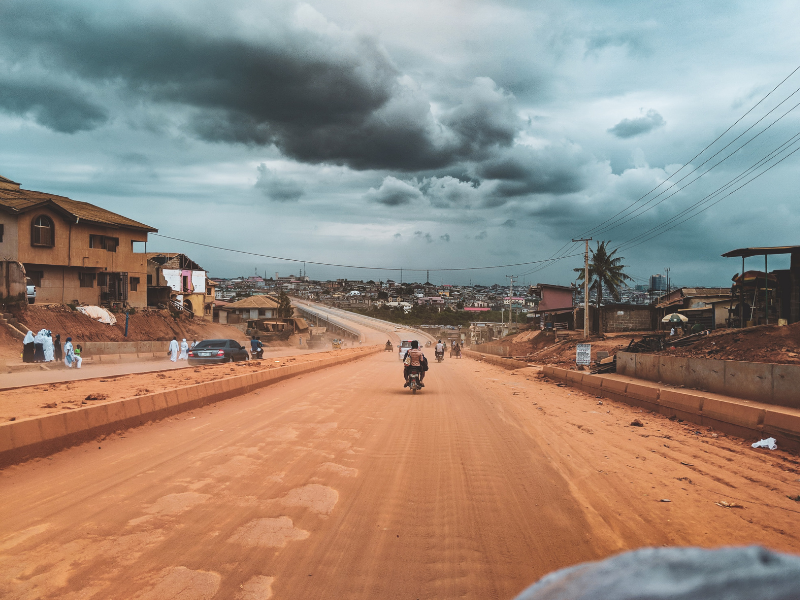
    Photo credit: Joshua Oluwagbemiga on Unsplash

  • Omar Sabbagh’s Letter from Dubai: ‘As soon as it was safe enough to reopen, that was done’

    Omar Sabbagh’s Letter from Dubai: ‘As soon as it was safe enough to reopen, that was done’

    Academic, poet and essayist Omar Sabbagh airs his worries for the younger generation in Dubai  

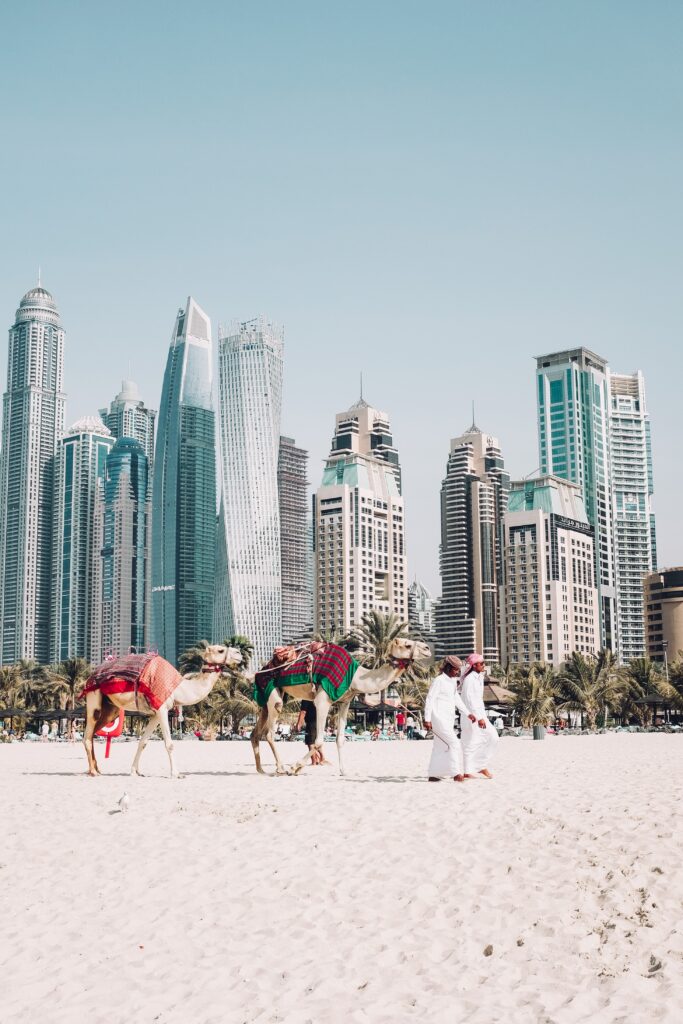
    Over the course of the last year, I have felt quite fortunate to live and work in Dubai. Whether during the period between spring and summer 2020, when lockdown regulations meant you had to apply for a permit to go from one place to the next (via a user-friendly app), or whether it was the rigors of the rules about numbers permitted in cars, taxis and social gatherings, the high levels of technological efficiency proved to be a blessing here. 

    So Dubai has been a comparatively good place to be during lockdown. Malls, for instance, immediately set up mass temperature monitors at their entrances. The university where I teach built a new gate and passageway at its entrance for this purpose. In pandemic times, a highly monitored society, with efficient avenues for top-down governmental action, puts the ‘brotherhood’ into any pat notion of ‘Big Brother.’   

    Of course, Dubai – and the UAE more generally – has suffered economically, like anywhere else in the world.  Things have contracted: shops for a long while curtailed their hours of availability; work hours in the second half of 2020 were shortened; and there are fewer jobs.  A close relative spoke of laying-off a third of his staff, and having to halve salaries in Q3 of 2020. Another was forced to take paid leave for a month from his sales job in retail.  

    That said, it was announced early on that the government would take keen action to make sure the country would be protected. Tourism – an important aspect of Dubai’s economy – has also suffered, but it was clear to all that as soon as it was safe enough to reopen that was done. I myself have travelled more than three times in the last year, needing only to follow PCR-testing regulations. Returning to Dubai, it usually takes less than 24 hours for your PCR-test at the airport to ping as an SMS on your phone. The services have always been stellar here. 

    I have been teaching, too, since spring last year, online and at times via a new ‘Hyflex’ system, whereby students can opt during registration, to attend in person or remotely, online.  For teachers like myself this involved a scramble to learn new technologies in the classroom, by which one would lecture in person but simultaneously with a camera and microphone to engage with those learning remotely. I was anxious of the burden of learning to use the technology, but the inhibition before the event turned soon to enthusiasm on my part. 

    Young people’s prospects here are good; this is one of the best places in the Middle East to study alongside Beirut and Cairo. The majority of students will end up in business, media, engineering and perhaps architecture or design. There is absolutely no sense of rebellion in Dubai. 

    That said, the students seem to have lost some of their gusto. When I see the odd stray young person on campus, he or she invariably seems to me to look lonely. It’s much easier for an academic like myself – a person who revels in a week spent on the couch reading or thinking, writing or teaching – to deal with these circumstances than for other kinds of people. It’s also much easier for a man nearing forty, too, than for someone half my age to accept the reality of the pandemic.  

    I dare not let my wife catch on, but being homebound suits me like pie and goes down like sugar.  Bookworms or not, it’s the young I feel for. Of course, they’re getting on with their lives, and many are learning by other means. But if things are concerning in Dubai, if I look across at my native Lebanon, I am forced to imagine what absolute lockdown would be like. That country is suffering from its infrastructural weaknesses, in a country which was weakened already by internal strife and corruption.  

    I remain hopeful. Perhaps when things improve, and our old outdoorsy life recommences, we will have – in a manner of speaking – gone back to the future. It might even be that this hiatus will bring forth new fruits.  To paraphrase that great fabulist Lawrence Durrell: in the midst of winter we can feel the inventions of spring. 

    Omar Sabbagh is an Associate Professor at American University in Dubai

  • The Californian teachers who have never taught in the classroom

    The Californian teachers who have never taught in the classroom

    Patrick Crowder

    Schools in Ventura County, California first closed on March 13thof last year. As the pandemic continued, the county extended that shutdown multiple times with no set end in sight. Now, many districts are seeing students return to class. For many new teachers, this will be their first time in front of a class of real life, non-virtual students.

    Melissa Grennan is a 22-year-old history teacher in her first year on the job. It is apparent that she really cares for her pupils, and that she chose this job for the love of it.

    “I’ve always wanted to become a teacher. I’ve liked telling people what to do since I was little,” she jokes.

    Brennan now teaches US History to 16-year-olds in their Junior year at Ventura High School. She has never met any of them. A once exciting prospect, the reality of teaching in 2021 has not fitted with her expectations.

    “I was really excited about the aspect of getting to know my students, which is much harder online,” she says, while sitting in the same home office where she teaches. There are Polaroid photographs hung with clothes pins on her wall, and she keeps her camera angle high to disguise the fact that she is delivering lectures from her childhood bedroom.

    “I thought there was going to be a lot more interactive collaboration, and over Zoom there’s none,” Grennan continues. “We can’t require that the students turn their cameras on… we can’t even require that they attend because of equity issues. I only know what three of my students look like.”

    Ventura High School is public, so the school is not allowed to require parents to spend money on educational tools. Because some families cannot afford internet, attendance cannot be made mandatory.

    Getting students engaged with the material has always been difficult at the best of times. Now, with motivation at an all-time low, teachers often face black screens and muted microphones.

    “I feel so bad for them,” Grennan says. “I’ve had a few students reach out to me to say, ‘I’m sorry that my grades are so low, I just have no motivation right now’, and that’s a heart-breaking email to get from a 16-year-old.”

    She has attempted to make things easier on the students, but relaxed requirements are not enough to keep many of their grades afloat. 

    “My grading policy is pretty lax: there are no late penalties or homework. Everything I assign we do together in class,” Grennan explains. She has resorted to awarding one extra credit point for any comment a student makes in the chatroom – only one student regularly engages.

    “I once was able to bring Kanye West into the conversation,” she says, laughing to herself. “One student commented, ‘I miss the old Kanye’, and I said, ‘You know what? That’s an extra credit point right there, because at least I know that you were listening!’”

    New teachers report to a Cooperating Teacher (CT) who sits in on the class to keep things on track. Normally Grennan and her CT would alternate lesson plans, but with the pandemic, the CT has left her to fend mostly for herself. She has enjoyed this freedom, and often discusses current events in her online classroom. 

    Teaching US History today is in and of itself a challenge. Grennan had her students take a political typography quiz to provide an easier approach to the issue. 

    “On both sides of the spectrum, I had kids tell me that Trump was making the US a better place, and some tell me that AOC is their idol! Every one of them told me that they were going to vote in the first election they could,” she says. “I don’t share my own opinions, I mostly let them share theirs. Sometimes I do worry about turning kids away. When I say the election (of Joe Biden) was legitimate, which is a fact, I wonder how many of them just shut down.”

    While juggling lesson plans and drafting emails to concerned parents, Grennan attends Cal Lutheran University, pursuing her full teaching credential and a Master’s degree. She says that she faces the same feeling of distance and lack of motivation that her students face.

    “I think online learning works for some, but I don’t think it should become the norm. Even at the university level, I hate taking classes online,” Grennan says. “If I have to sit in class for three hours, I’d rather do it in a room full of people!”

    Despite the grim situation, Grennan is able to see the positive side of things. “If I’m able to teach online, imagine how much easier it’ll be in-person,” she says, adding that “so many teachers have quit because of how awful this is… I guess that makes it easier to find a job!”

    Ventura High School is set to re-open in August.

    Picture credit: Thought Catalog on Unsplash