Category: Special Reports

  • Racing Ahead: The equestrian industry emerges from lockdown

    Racing Ahead: The equestrian industry emerges from lockdown

    by Alice Wright

    According to the British Horse Council’s Manifesto for the Horse the equestrian industry in the UK provides full-time employment to over 250,000 people and is the second largest rural employer after agriculture. It’s also a growing industry, contributing around £8 billion a year to the economy. Employment opportunities stretch far beyond riding and caring for horses. For example, the industry incorporates marketing, betting, training, retail and veterinary sectors that offer myriad opportunities to work with and for horses.       

    For those acquainted with the equine world this may appear self-evident, but for those with a budding interest or considering a career change the British Horse Society (BHS) helpfully breaks the various sectors down in their ‘career pathways’: Breeding & Stud; Business Management; Coaching; Tourism; Dental; Farriery; Journalism, PR & Photography; Mounted Forces; Nutritionist; Racing; Saddlery; Sales & Marketing; Trainer and Veterinary Medicine. I spoke to some of the various leaders of these sectors to find out more about the opportunities in their professions and where the industry is headed as restrictions are lifted.     

    A spokesperson for the British Horse Society (BHS) told me that “like with all industries affected by the pandemic, it will take time for the equine industry to get back to business as usual. With people having more spare time we saw an uptake in the number of individuals taking part in horse riding, prior to the second lockdown. This, along with people embracing the outdoors and new hobbies, is a positive sign that the industry will continue to thrive.” 

    Saqib Bhatti MBE MP is the Chair of the APPG for the Horse that, according to Bhatti acts as “a voice for the horse riding industry in the United Kingdom” to “give a unified voice to ensure industry concerns are heard in Parliament.” He tells me that recently their work has dealt with issues thrown up by the lockdown such as the operation of riding schools during restrictions and the classification of vets as key workers. 

    Indeed Bhatti’s APPG is now largely focusing on the post-Covid landscape. “We face a myriad of economic challenges and ensuring employment opportunities are available in the equestrian industry will require cooperation between industry and government.” 
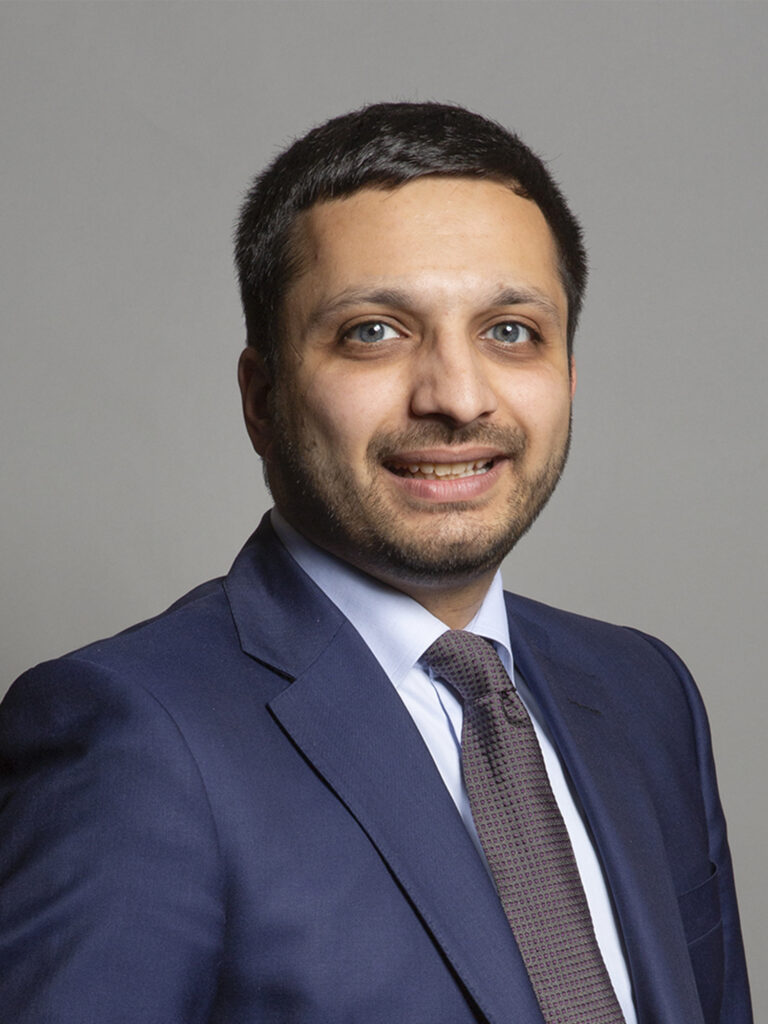
    Saqib Bhatti MP chairs the APPG for Horses in Parliament

    Indeed, aspects of the equestrian industry have been hit hard by the pandemic. Last March, the iconic Cheltenham Festival was given the government green light to go ahead despite the escalating coronavirus crisis and has retrospectively been deemed a possible superspreading event. Race meets, sales and other large income generators all over the sector were closed down for months. 

    Yet, Bobby Jackson, marketing executive at Tattersalls sales in Newmarket claims that bloodstock, sales and marketing has remained relatively stable. “As our side of the industry deals directly with racehorses, COVID-19 hasn’t really affected the day-to-day care of them and therefore employment levels have remained fairly steady” he says, adding that “investment levels at the Tattersalls sales have been positive during the pandemic and would infer that employment levels should remain strong in the long term too.” 

    Claire Williams, Executive Director of the British Equestrian Trade Association (BETA) agrees, telling me that “to be honest, the trade and retail has come out of COVID quite strong. Certainly my retailers and manufacturers are coming out probably almost with higher turnovers than they were coming in [to the pandemic]. We’ve seen a real boom and equestrian sales over the last year. BETA is recognised as the official representative body for the trade sector of the equestrian industry, representing over 800 companies in retail, wholesale, manufacturing and other service agents.
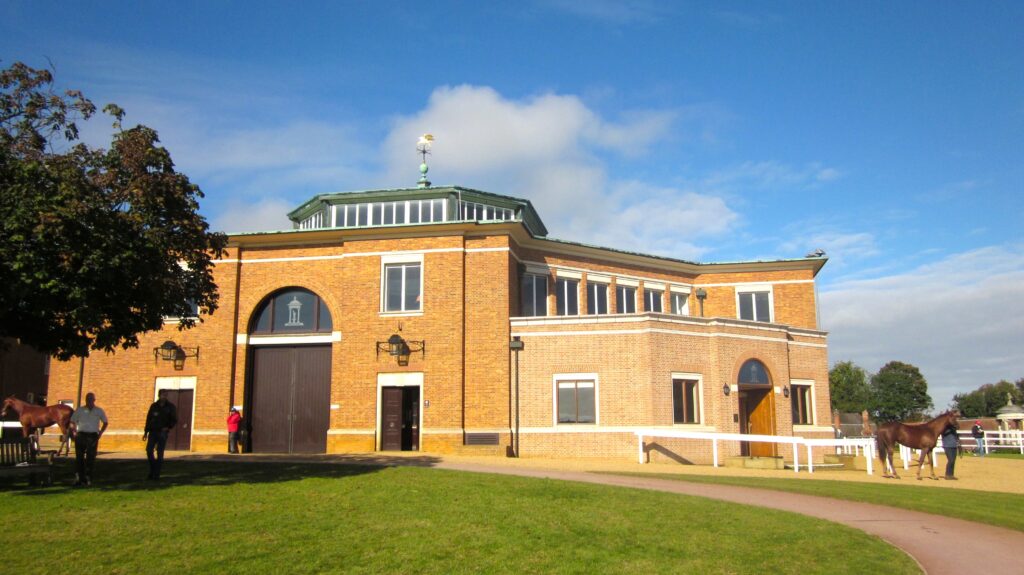
    The Tattersalls sales ring at Newmarket (Edumark)

    Williams is keen to emphasise just how many opportunities there are across the industry, but particularly in the trade sector. “In terms of the trade side, you’ve got everything from saddlers, to photographers, or working for a large manufacturer. You’ve got the range of nutritionists, assisting in the development of feed or to act as advisors to the customers.” Equine nutrition is constantly responding to developing research so there are academic opportunities as well as client-facing roles. 

    “Then you’ve got business management type positions and companies, whether that be product development, market development, marketing and sales,” Williams adds. She is also enthusiastic about the creative opportunities available, such as in product design for both horses and riders, from hat silks to winter rugs.    

    There are also “a lot of PR opportunities” both in-house with large companies and dedicated specialist firms such as Mirror Me PR, as well as “opportunities for more science-oriented people.” The scientific primarily relates to veterinary medicine and pharmaceuticals but Williams also mentions that there are a great deal of R&D (research and development) opportunities with companies, such as those creating supplements.  

    Further to this there is the management and events aspect of the trade which can be a fruitful career for the self-employed as well as those that want to work at events corporations. However, events businesses have been one of the hardest hit by lockdown and restrictions on gatherings. 

    BHS’ spokesperson agrees with Williams about the abundance of employment options surrounding horses, saying that working with horses will provide “a strong foundation of skills and knowledge to support any career, or career change, in the industry. It will provide you with many transferable skills such as communication, assertiveness, organisation, time-keeping, resilience and confidence” adding that, “in any career connected to horses, from journalism and graphic design to saddlery or farriery, a foundation knowledge in complete horsemanship is recognised throughout the world as a huge advantage.” 

    The great AP McCoy riding Straw Bear to victory in 2006. Career opportunities are rife in PR, with dedicated firms such as Mirror Me Pr (Citrus Zest)

    Jackson too expresses the variety of opportunity within the marketing and sales sector of the equestrian industry. “In this side of the industry, if you want a hands-on job with horses you can do it, if you want an office job you can do it, or if you want a job combining outdoors and indoors then you can do it! There are roles for all talents.”  

    Jackson describes how the range of jobs within sales and bloodstock itself is huge. One can work on a stud farm and bring life into the world during the foaling season, or alternatively work at an auction house like Tattersalls and help fulfil people’s dreams when they sell a horse for a life-changing amount of money. “This side of the sport will give you moments that you will never forget,” he tells me.   

    Yet despite the plethora of opportunities the equine industry carries an unfortunate haze of elitism over it as a profession. It is associated with royalty and high-net worth investors, and while both hold essential roles in the sector, this perception can be an initial barrier to people considering a career in the sector. 

    The BHS told me that “there is an inaccurate perception that equestrianism is an expensive industry to get into. While it is true that owning a horse can be expensive, you do not have to own one to be able to start your career.” Jackson agrees: “The ‘sport of kings’ brings with it positive and negative connotations.” He tells me, “some people think that you need to have family in horse-racing in order to get a job in it. Incorrect.” He also stresses that his own family background is not connected to racing.  

    Williams disagrees that the industry is elitist at all. “When we look at our market research, [those with] lower to medium income levels actually comprise over half of the riders in the marketplace. It may be perceived as elitist but really I don’t believe it is otherwise we wouldn’t have 1.8 million regular riders.”    

    The winners’ enclosure at Cheltenham. Is horse-racing an elitist sport? (Winners’ enclosure; Carine 06)

    Jackson also explains that “unlike most industries, travelling the world and doing multiple jobs in your early career in order to get as much experience as possible isn’t seen as a negative in horse racing. So, by working hard, getting your hands dirty and proving your talent anybody can carve a successful career in our industry and absolutely love it.” This is a point of encouragement for those considering a career change or those yet to finalise their career choice after finishing studies.  

    Schools, colleges and further education institutions don’t tend to include opportunities to work with horses in the usual career days advertising medicine, the law and finance. Yet there are initiatives such as Racing to School which aims to educate school children on the activities and business of running racecourses. Jackson argues that such initiatives could be broadened to the bloodstock and sales side of the industry.      

    He adds that at Tattersalls, children from Newmarket Academy make an annual visit to Book 1 of the October Yearling Sale and “it would be wonderful if other schools around the country were able to do similar at stud farms, for example.”  
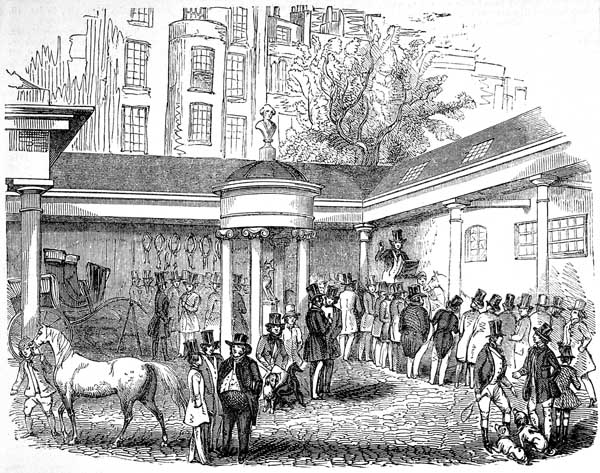
    An industry with pedigree: Tattersalls was founded in 1766

    Bhatti tells me that he agrees that there are challenges to those starting out in the equestrian industry. “The APPG has found that several employers feel that students coming out of education and moving into the sector lack some practical skills or experience and it is important to encourage as much hands-on experience as possible.” One solution he suggests is “working with schools to ensure placements in riding schools and other industry-related institutions become available for students.” A large part of the APPG’s work is with educational organisations such as the BHS to make people aware of opportunities within the industry.       

    Williams adds that “there are a lot of opportunities for young people such as apprenticeships. For example, we’ve got gateway stages with Kickstarter at the moment. I’ve got something like 40 employers with positions they’re creating specifically for young people.”    

    The equine industry seems to have remained relatively stable during restrictions, and even those elements such as racing and events that have been adversely affected are set to bounce back. Despite an air or exclusivity there is such a range of job opportunities within this industry and as Williams says “to work in the equestrian trade you don’t necessarily have to be horsey. You don’t have to have an equine degree to get a job in the equestrian trade at all. What we’re looking for is people showing that they’re capable, they can write well, they can analyse and they have the business skills that we need for business.”

    The BHS spokesperson offers equal encouragement: “the great news is that you can pick this up at any age or stage in your life – you are never too old to fulfil your passion for horses!” Jackson concludes with enthusiasm “what you will also find is that everyone is doing what they love – something I count myself very lucky to say – and this is a great leveller.”    

  • Desperate measures: how to get noticed in a crowded job market

    Desperate measures: how to get noticed in a crowded job market

    Georgia Heneage 

    If you scour the internet for ways to get yourself noticed, you’ll likely land upon generic advice about pumping up your CV, calling recruiters or improving your skill sets. 

    But the fiercer the competition, the greater the need to stand out. And sometimes, these are just not enough.  

    It turns out that’s especially so during global pandemics. The arrival of coronavirus has caused economic woe such as we’ve not seen since the Great Depression. Increasingly, employers are looking for that bit extra in their candidates. But what’s heartening is that there is an increasing number of instances where employees are providing just that. 

    Trevor Walford, a 63 year-old former butler for the royal family, had been working on a cruise ship when he was let go of following the first lockdown in March. In order to find a new job, he sent out over 700 applications. Having had no luck, he came up with the idea of standing outside the railway station in Leeds with a cardboard placard advertising that he was looking for a job. It worked. He was picked up by the executive of a restaurant group, and is now working as its training and development manager. 

    While the story of Walford is heartwarming, it’s also a sad reminder of just how competitive the job market has become. The explosion of the internet and social media has made it especially hard to stand out, and competition for entry-level jobs in particular has swelled alarmingly.  

    Amber Shrimpton, an HR consultant at Centrica energy, sees the trend of job-seeking stunts as part of a wider socio-economic context. The current economic situation, she explains, has engendered a ‘loose labour market’ where there are more people looking for jobs than employers offering them. She points out that there is a high number of applicants with university and other qualifications, meaning that jobseekers have more need to distinguish themselves. 

    “It’s the jobseekers who needs to make themselves more attractive,” Shrimpton tells Finito World. “My work in talent resourcing has shown that when you have 500 applications which look the same, having something which stands out is probably going to work in your favour.” 

    So is this trend born of desperation? “More and more jobseekers feel they have to do that extra”, continues Shrimpton. “It’s not okay anymore to just have a good degree. There has to be something else, and that’s the impetus behind it.” 

    Like marriage proposals, many eager and frustrated job seekers have resorted to unusual means of public advertisements. Liz Hickok strung up fairy lights to spell out ‘My wish- HR job’ and her LinkedIn handle, which landed her four interviews; Pasha Stocking used a billboard plastered “Hire me!: Unemployed and Seeking Employment” which gained her the media coverage to start her own PR company (which ironically specialised in helping people rent billboards). There was also high-school student Josh Butler who auctioned himself on eBay. His post went viral, landing him several interviews. He is now a successful city broker in London.  

    Even more creative examples might be cited. Lithuanian marketer Luka Yla found a job in his new home of San Francisco by dressing up as a courier to deliver a box of doughnuts to the companies he admired. The boxes carried the following inscription on the inside: “Most resumes end up in the trash. Mine—in your belly.” And, after writing a three-minute music video in place of a CV and cover letter, Alec Biedrzycki got his dream job at a marketing agency. 

    These success stories suggest that unusual methods of jobseeking may be the way forward for the millions currently facing unemployment. It might just be a question of changing one’s attitude towards what has become, in most industries, a deeply standardised and homogeneous application process.  

    When Lucy Martin, a 23 year-old graphic designer from London, first started searching for a job, she fell victim to this relentless process.  

    “I was at a point last summer when I was applying to so many jobs that I was becoming a number in the application process,” she said. “You just see thousands of people who are applying for the same job. I knew I just needed to get noticed in some way.”  

    This desire to stand out led Martin to pull a stunt in her application to the highly competitive advertising firm Saatchi & Saatchi.  

    Having got through to the second round of the application process, Martin was given a brief to come up with a design solution to the slogan “nothing is impossible” and told that she’d be notified if she’d been “picked”. Martin decided to take the second point quite literally. As well as fulfilling the brief, she headed down to her local sweet shop, bought a bag of pick ‘n mix, personalised some love hearts with her name on them, stuck a note inside saying “I hope you pick me”, and sent it on to the CEO of Saatchi. 

    “The concept was that he had no other option than to pick me- there was no one else in the bag apart from me,” says Martin, who got through to the next round and then finally got the job. “They really liked it. They thought it was really awesome” she added. 

    Part of Martin’s creative ingenuity came from her graphic design course at Edinburgh, where her tutors encouraged her to do “ridiculous things” to get noticed, and to “think outside the box”.  

    “I did this art installation where I froze flowers in ice cubes, and my tutor said I should go and give them to every single person I wanted to work for. There’s such a sense of urgency, because you’ve got a melting ice cube in front of you,” says Martin. “With any job, sending something physical is really effective, even if it’s not a creative job.” 

    It might seem like creative industries are better equipped (or more likely to be impressed by) such stunts. But across the job spectrum, people are finding they are having to think creatively when it comes to job applications.  

    Last year, Jack Nugee was working on an application – one of hundreds he’d produced that month – while listening to a cricket podcast. He decided to go off-piste and write his cover letter as a narration of an Ashes innings by Jack Leach innings, which had then acquired a kind of cult status, particularly in the cricketing world. 

    “I thought it would be interesting to try and relate my job experience to cricket, which I’m really interested in,” says Nugee. In an ‘Ode to Jack Leach’ he wrote: ‘I ask you to please engage your imagination as I attempt to equate myself to the English spin bowler Jack Leach’s innings in Headingly, highlighting, through his actions, the skillset at my disposal that align me perfectly for the account executive position.’ 

    In response to the letter, the employer said she wanted to speak to someone “weird enough to write a full page on a cricket innings, even though she’d never watched cricket in her life,” says Nugee. “She said it was the kind of thing they were looking for.” Having had no advertising experience at all, Nugee got to the final two and says “they were going purely off character based on the application.” 

    Though he didn’t get the job, Nugee’s current position was won through writing a similarly off-beat poem which begins; ‘I would like to apply for the role of Account Executive sat in the account management team/ You will find this application has a rhyming theme.’ 

    Though the need to be outlandish is more apparent now than ever, standing out doesn’t have to entail an eccentric application. It can come in the form of being proactive and presenting yourself to the bitter outside world.   

    Tibi Hodgson, a 23 year-old fashion stylist from London, never went to university and the sense that she lacked the right qualifications meant that she lacked confidence when first embarking on her job hunt.  

    Having had no experience in styling and facing rejection after rejection, Hodgson decided to contact someone she admired in the industry directly. “I said I felt an innate connection to her work and I could work for her at the drop of a hat.”  

    Hodgson says she didn’t know any of the “lingo” around styling and was launched straight into the deep end. She learnt the process just through doing it, and was soon styling high-end models like Adowa Aboah and Suki Waterhouse. 

    After her employer left for the US and Hodgson began working in a gallery, she kept an eye on her old job. “I was still being kept on the email loop and I noticed that some dresses and shoes hadn’t been returned properly,” says Hodgson. “So I volunteered to go pick them up myself. After that I just began going to different shops in Mayfair after work and seeing if there were items she needed to return, without her asking me to.” 

    Hodgson says that through doing this she made her own contacts in the industry, and this has led to other jobs. Now a seasoned stylist, Hodgson is a case in point that experience, qualifications and traditional means of job searching aren’t necessarily the be-all and end-all.  

    “I feel like with these unconventional ways it’s all about luck and for luck to happen you need exposure. So the more ways you can expose yourself, the better,” she says.  

    And, of course, the need to be outlandish applies not just to those seeking a job. The emergence of a gig economy and the sheer number of freelancers competing against each other is ensuring that freelance workers need to find alternate means to stand out from the crowd as well. 

    Rahoul Baruah, a freelance software developer from Leeds, was at a meet-up social with some fellow workers when he met a guy called Jamie who was “sort of famous in our world”. 

    Chatting over some beers, Jamie seemed excited because he’d just set up this agency called ‘Made in London’. The next day, “just for a laugh”, Baruah decided to set up a spoof of his website called ‘Maid in London’, featuring a picture of a barmaid with Jamie’s face and a link to the real company’s website. 

    The prank website ended up getting Jamie’s original company loads of business, and three months later Baruah was offered a year-long contract from them. 

    “I basically got a year’s work- which was really good pay- from just putting up a prank website,” says Baruah. “Me and my group of friends have always said that to stand out you’ve got to do stupid stuff.” 

    These stories all show that difficult economic circumstances can be traversed by imagination. You don’t always need to get noticed via outlandish means: it’s about putting yourself out there – whether that’s via personalised love-hearts, a cricket match for a cover letter or, like Baruah, just taking the time to show up. It’s about being bold and fearless in the face of the unknown.  

    “If you want something so badly, you have to make sure you respect it more than the next person,” says Hodgson. “You have to be that person who goes that extra mile.” 

  • Inside NFTs: the concept taking the art world by storm

    Inside NFTs: the concept taking the art world by storm

    Thomas Flynn

    For most people in the UK, the letters NFT used to refer to the National Film Theatre on the South Bank of the Thames. Now they stand for something entirely different — so-called Non-Fungible Tokens.

    If that term means almost nothing to you, don’t worry. You are not alone. However, you may be interested to learn that NFTs are currently taking the art world by storm (as well as the music and sports industries) and are very likely to remain an important concept in the future right across commerce and culture. 

    So let’s try and explain.

    Fungibility is a term from economics, but stay with me for a moment. A five or ten-pound note, or a dollar bill, are fungible. A painting by Banksy is non-fungible. So if I lend you a fiver, when you give it back to me a week later I won’t mind if the five-pound note you give me isn’t the same five-pound note I gave you a week ago. As long as it’s a legitimate five pound note, I’ll be happy.

    However, if I lend you my Banksy painting and a year later you give me back a different Banksy painting, I might not be too happy. That’s because unlike paper money or metal coins, paintings are Non-Fungible. 

    Three or four years ago, the only people who were familiar with Non-Fungible Tokens were people from the tech world of computers and so-called crypto-currencies (digital money). And that’s another concept that’s making a big impact. 

    In essence, a Non-Fungible Token is simply a piece of computer code — a string of alphanumeric symbols (known as a ‘hash’) of the kind that sits invisibly behind a computer image such as a JPEG, a Gif or a TIFF. 

    In the ‘real’ world, if I buy a painting at an auction or from an art gallery, I can walk away with the painting after paying for it. I now own it. Unlike a ten-pound note, that painting is a unique object that belongs to me and to me only, until I decide to sell it. 

    Yet only a few weeks ago, a JPEG of a computerised work of graphic art by an artist who goes by the name of Beeple, was sold for $69.3 million dollars at Christie’s auction house in New York. The person who bought it didn’t buy the graphic art; they bought the algorithmic code that sits behind the image on the computer. That computer code is the NFT. It means that the person who bought the NFT of Beeple’s work of art is the sole owner of it. The NFT guarantees their ownership, now and forever, or until they decide to sell it. 

    The actual computer graphic (or in the case of sports memorabilia, a baseball card, for example) is a separate thing from its NFT. You can find a JPEG of Beeple’s actual work of art on the web right now if you bother to Google it. The work is called Everydays: The First 5,000 Days. You can even download it onto your computer if you wish, but you won’t own it in any meaningful sense. The true owner of it is the person who bought the NFT of it — the computer code, or hash. In the case of the Beeple, that person happens to be Vignesh Sundaresan, a Singapore-based blockchain entrepreneur and investor who goes by the name of Metakovan (pseudonyms are all the rage in the tech world.) As it turned out, he’d been prepared to pay even more than $69.3 million, so that perhaps indicates how seriously he takes this new NFT ‘revolution’ as he calls it. 

    It doesn’t end there. Metakovan’s NFT of Beeple’s Everydays was immediately uploaded onto a computer platform called the Ethereum Blockchain. This is another tech concept that is promising to change commerce and culture in a very significant way. The Blockchain is a decentralised, distributed, peer-to-peer (person-to-person) network, a digital ledger that records transactions. It means that any data (such as NFTs, or cryptocurrencies) can be sent from one individual to anyone else in the network, bypassing intermediaries like banks.  

    Once an NFT is uploaded to the Ethereum Blockchain it cannot be changed. It contains what computer scientists call ‘metadata’ — which means that embedded in the code is everything relating to that object or work of art, including its name, its size, its owner, its ownership history, location, etc. It essentially guarantees the authenticity of the object (and in the case of the Beeple, Metakovan’s ownership of it). This means that nobody can dispute Metakovan’s ownership. If he ever decides to sell it, the new owner’s details will also be uploaded as another block on the Ethereum Blockchain. You can add blocks to the Blockchain but you can’t change blocks that have been previously uploaded. 

    If you’re still with me, let’s touch on one or two other issues here. 

    Ownership history and authenticity are two of the most important concepts in establishing the value of any work of art. The Blockchain promises to make that process easier and more transparent. It means that if an artist creates a digital work of art and ‘mints’ it onto an NFT platform (a site called Nifty Gateway is one of the most popular), it can be bought as an NFT which is then uploaded onto the Blockchain, thereby guaranteeing the work’s authenticity and the buyer’s rightful ownership of it. What’s more, if they wish, the artist can arrange for a so-called ‘smart contract’ to be written into the NFT on the Ethereum Blockchain so that if the work is ever re-sold, the artist will be guaranteed a percentage of any subsequent sale price.  

    Now, there are a few problems here that are yet to be overcome. First of all, we are already hearing of some people ‘minting’ NFTs of works of art they neither created nor own. This is a breach of copyright law. The legal world has not yet caught up with the implications of these new technological innovations. 

    Even more importantly, cryptocurrencies — such as Bitcoin and Ether — that underpin the Blockchain consume a staggering amount of energy. Every Bitcoin has to be ‘mined’ using numerous linked computers slaving away together 24/7 to ‘solve’ a complex computer algorithm. This is called ‘Proof of Work’. The ecological impact of this process is jaw-dropping. For example, according to the Cambridge Centre for Alternative Finance, the amount of electricity consumed by the Bitcoin-mining network in one year could power all the kettles used to boil water in the UK for 29 years, or satisfy the energy needs of the University of Cambridge for 748 years. That surely cannot be acceptable at a moment when global warming is at such a tipping point. 

    The inescapable irony is that many of the young digital artists now exploiting the new NFT craze are of the so-called Generation Z (who constitute a significant percentage of Greta Thunberg’s global following, for example). It’s curious that many of them appear to be turning a blind eye to the catastrophic ecological footprint created by Bitcoin mining.

    Are Non-Fungible Tokens here to stay? The answer is surely yes, in some form or another. What are the barriers to progress? Well, you may have already concluded from the above that these new concepts are a hard thing for those of us unfamiliar with computer science to wrap our brains around. But many people said that about the Internet and the World Wide Web when they emerged in the 1990s. 

    As the late American baseball star Yogi Berra memorably remarked, “Making predictions is tough, particularly about the future.”

    The writer is the co-founder of www.FlynnGiovani.com

  • Sadiq Khan exclusive: ‘My focus is on jobs, jobs, jobs’

    Sadiq Khan exclusive: ‘My focus is on jobs, jobs, jobs’

    In the next in our series on the London mayoral election, Emily Prescott interviews the current mayor Sadiq Khan about education, the economy and his regret at trusting Boris Johnson

    Sadiq Khan has a few regrets. For instance, on the London Mayoral campaign trail a few weeks ago he tried to display his skills by performing bunny hops on a bicycle borrowed from a reporter. “The bike’s too heavy, it’s a nonsense bike,” he sighed as he failed to achieve lift-off. “On reflection, it may have been a mistake,” he concedes now.  

    These lighter moments of Boris-esque buffoonery are rare for Khan, and in reality, his regrets are not so quaint — at times he cries and at times he struggles to sleep.  “Every night when I go to bed, I am always reflective on what could have gone better during the day. I don’t ever think I’ve had a perfect day,”  he tells us via email. 

    Khan, who became London’s mayor after a landslide victory over his Conservative opponent Zac Goldsmith in 2016, has had a particularly tough year.  “A big regret I have is trusting the Prime Minister last March when he said he would follow the science in tackling Covid-19. It quite quickly became clear that this was not the case and unfortunately led to many avoidable deaths,” he says. 

    Indeed, more than 14,000 people have died in London hospitals following a positive COVID test. Khan himself has lost friends to the virus, one of whom was just 53 — three years older than the mayor. 

    Throughout the pandemic, Khan has been open about his emotional struggles. He has also openly expressed frustration at being excluded from key decisions by the Government and not being invited to COBRA meetings. His relationship with the prime minister is far from harmonious and we understand he is now off the prime minister’s Christmas list. “This pandemic should have been an opportunity for the Government to see Mayors across the country as its allies rather than adversaries,” he sighs.  

    If only he had more power.  Covid-19 has meant a vast expansion of Government control and cuts to Khan’s budget. “I think Mayors across the country have far too little power compared to our global counterparts,” Khan says, and adds: “For example, the Mayors of New York and Tokyo can spend 50 percent and 70 percent of tax raised in their cities compared with the seven percent I have as Mayor of London.”

    Although London mayors have few formal powers, they have big profiles and large platforms. And Khan is determined to keep whatever power he does have so he is staring down Shaun Bailey, the Tory candidate in what Khan says is a “two-horse race” on May 6.  

    “The Conservative candidate has shown Londoners time and time again that he will not stand up for our city and that he doesn’t share our values when it comes to openness, inclusion and diversity,” he says.  

    “I respect him as an individual,” he insists, but proceeds to say: “He has said terrible things about women, working class communities and multiculturalism… I find his views divisive and offensive.” Even when he’s talking about his rival, Khan has a respectfulness — while his supporters might say this is evidence of his level-headedness, his critics might say it is evidence of his weakness.

    Those who point to Khan’s weaknesses focus on his planned pedestrianisation of Oxford Street, which was vetoed by the Conservative-run Westminster Council, then of course there’s been the severely delayed opening of Crossrail. Meanwhile, his supporters often point to his introduction of the world’s first ultra-low emission zone. A recent report, which does not include falls in pollution after the first Covid-19 lockdown, found there has been a 94 per cent reduction in the number of people living in areas with illegal levels of nitrogen dioxide since Khan became mayor. 

    But if Khan gets elected again, he has a lot to do to revitalise London post-COVID. “I’ll urgently tackle the increase in unemployment with a relentless focus on jobs, revive tourism in central London and support a safe recovery for our hospitality and creative sectors. I am pursuing a vision for a brighter future for London that will make our capital greener, fairer and safer for all, and I will always stand up for our city against the most anti-London government in living memory,” he writes, rather like a press officer.  

    He adds: “I have a plan for supporting more than 170,000 well paid, future-proof jobs in the green economy as well as generating employment by supporting businesses, helping Londoners retrain and banging the drum for investment in our city from around the world.” 

    “My focus is on jobs, jobs, jobs,” he adds, echoing Blair’s infamous “education, education, education” speech. 

    Although running the schools doesn’t fall under the Mayor’s jurisdiction, Khan has been “working hard to close the digital divide across schools in London, allocating £1.5million towards school children accessing the equipment they need to learn throughout the pandemic and beyond.”  

    “I also back making relationships education for primary pupils and relationships and sex education for secondary pupils compulsory to promote learning about positive, healthy relationships of all shapes and sizes and counter unhealthy attitudes and behaviours which can, if left unchecked, evolve into bigotry, discrimination and even violence,” he tells us. 

    While Laurence Fox told FinitoWorld, rather confusingly, that he wanted to “recolonise the curriculum,” Khan is more articulate about how he thinks history classes should deal Britain’s colonial past. He has campaigned for black history to be part of the national curriculum. He explains: “Education has an important role to play in providing a more complete picture of our history and a better understanding of the historic and institutional reasons for racial inequality in Britain.” 

    Khan still lives in Tooting where he grew up on a housing estate. He was the son of a Pakistani immigrant bus driver and a piecework seamstress. He worked as a human rights lawyer before he was elected to parliament in 2005 and became London’s first Muslim MP. He insists he is there to represent all Londoners and to tackle inequality in the capital.

    “If re-elected, I will continue to lobby the government to make these changes to the National Curriculum and give schools the tools and support they need to empower a new generation of Londoners to strive towards a fairer and more equitable city,” he concludes.

    He may have failed to achieve lift-off on the bike on Hackney Marshes, but will his message land with Londoners this time? Almost definitely, but will he be able to work with the Prime Minister and implement the changes he talks about? Now that will be harder to get off the ground. 

  • It’s the culture: why Goldman Sachs really opposes remote working

    It’s the culture: why Goldman Sachs really opposes remote working

    Alice Wright

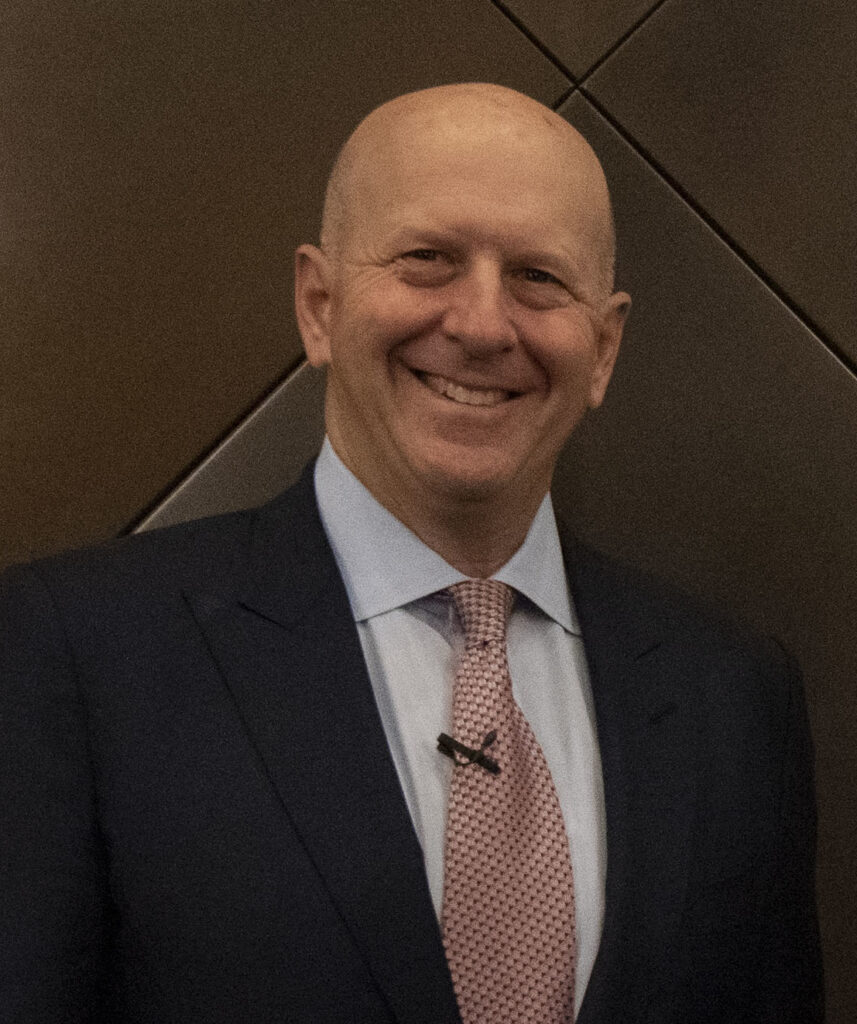
    Whenever the CEO of Goldman Sachs David Solomon speaks, markets listen. Two weeks ago, the chief executive declared that working from home will not be the new normal, but instead an “aberration” in these strange times.

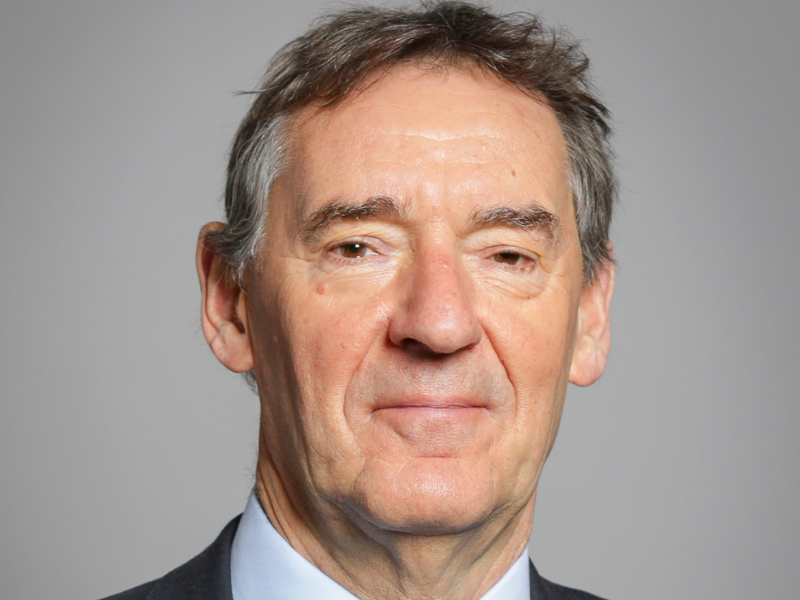
    Former chief economist at Goldman Sachs, Jim O’Neill was among those who expressed his doubts: “I would have thought virtually every major professional practices firm, whether they be finance or otherwise, is going to have some form of home-working as a result of what we’ve learned during the pandemic.” And is that the case for Goldman Sachs too? “It might be harder to keep that culture so I can see why David said that.”

    Now it emerges that there are reports that young staffers at Goldman Sachs have warned that they might quit if work conditions don’t improve. Certain eye-opening statistics emerged as a result of an internal survey among an admittedly small data sample of 13 employees (Goldman employs over 38,000 people). Even so an average working week of 95 hours, with a mere five hours of sleep per night, appears to be an increasingly unpopular status quo.

    Former Goldman Sachs chief economist, Jim O’Neill


    O’Neill continued: “Yes, I can see why David said it, but I cannot imagine Goldman will go back to the same arrangements as before. The idea that everybody has to be in the building for 15 hours a day, five days a week – I can’t see that continuing in a million years.”

    It’s worth noting that Solomon’s initial remarks were tethered to the question of the future of young people within the firm: Mr Solomon described the atmosphere at Goldman Sachs as “innovative, collaborative, apprenticeship culture” when explaining why he viewed the bank as ill-suited to home-working.

    High-profile lawyer, Mark Stephens, whose clients include James Hewitt, Julian Assange and Mike Tyson, was unimpressed by the remarks. Solomon has been “unfortunately unclear”, he told Finito World, because he did not make it explicit he was talking, “in the context of Goldman Sachs – in particular, the bearpit of traders that needs proximity and collaboration.” Stephens added that it is likely that “other businesses are going to move away from old-fashioned working and will be more flexible.” 

    Mark Stephens criticised Solomon’s remarks (photo: Neil Gavin)


    Others expressed themselves unsurprised by Solomon’s remarks. David Dwek explained that according to a recent survey of 500 respondents carried out by his firm DC Dwek Corporate Finance in collaboration with BLAS and Klapa8, ‘over 70% of senior executives are suffering the effects of Zoom or isolation fatigue related to the current situation and to the working environment.”

    It might well be that remote-working arrangements affect CEOs particularly. Marta Ra, CEO of Paracelsus Recovery, has seen an increase of referrals from stressed-out CEOs. “In situations like this, people are looking for fulfilment,” she told us. ‘The typical CEO used to have his team of people. Hierarchy was the religion and now that’s missing.”

    David Dawkins, staff writer at Forbes magazine, who has written extensively about the banking sector, was unsurprised by the comments. In his view, Solomon “understands just how valuable Goldman’s culture is. It’s part of a soft power that draws the best graduates and mid-career professionals towards it.”  

    This was a reminder that Solomon’s remarks – made at a Credit Suisse AG conference – were prompted more by a desire to return to the “culture” of banking rather than any serious practical impediment, since the company operated throughout 2020 with less than 10% of workers in the office. And the financial performance has hardly been worrying. In January 2021, the group reported net revenues of $44.56 billion and net earnings of $9.46 billion for the year ended December 31, 2020.

    To put that in context, look at the bank’s performance in 2019. Then the bank reported net revenues of $36.55 billion and net earnings of $8.47 billion for the year ended December 31, 2019. These figures would appear to suggest that the bank is well capable of functioning on a different basis.

    In spite of the controversy Solomon has presided over an impressive period of growth for the firm (Photo: (DoD photo by Lisa Ferdinando)

    But if the bank didn’t return to the old ways, something would be lost according to Dawkins: “The pedigree of its former staff, the quasi-masonic structure of its partner system, makes Goldmans an incredibly aspirational place to work. But how do they keep that culture going when staffers can’t see and feel it all around them during 12-16 hours of a working day at Goldman?”  

    But not everyone was piling in on Mr. Solomon. One data analyst, who spoke to us on condition of anonymity, concurred with Solomon’s remarks: “For me, working from home was a one-off venture. I enjoyed the journey but the office environment is a lot better. It’s all about communication; it’s much easier to communicate with your colleagues in the office. At home, you can’t catch your manager for two minutes to ask a quick but important question.”

    Solomon’s move is also in direct opposition to many other sectors, such as the tech industry, whose major firms expect working from home to be a central component of work going forwards. Microsoft, for example, is offering its staff working from home options after the pandemic, so long as employees can secure managerial approval. Giants such as Twitter and Facebook have also decided to make remote-working a permanent option. 

    Mr Solomon’s stance isn’t just about a return for the sake of pure productivity, but in consideration of the incoming graduates, around 3,000 of whom he worries will not have received the face-to face interactions and mentorship they require. 

    All of this is why Mr Solomon has been one of the most vocal private sector leaders in urging the government to ease restrictions, to allow workers back into offices. He is not alone in the banking world either: Jamie Dimon, the chief executive of Morgan Stanley, has previously stated that working from home has lowered productivity levels. 

    Working from home has been hailed as revolutionary by works who gain time from dropping the commute. A PWC survey found that around 55% of employers said they expected staff to work at home flexibly in the future after the pandemic. 

    Yet Goldman Sachs seems unlikely to partake in the revolution anytime soon – particularly, as Dawkins points out, since the firm recently built a new £1 billion pound headquarters that is “so obviously designed around keeping the staff within the GS bubble for as much of the day as possible.” Dawkins imagines “thirsty Goldman Sachs staffers staring at one another – judging, aspiring, ranking themselves alongside their peers.” 

    But for our insider data analyst the experience of returning to the office is a more benevolent one. He describes it as an educational process of “seeing the pressure” and adds that, being in that environment “puts you in the right mindset.”

    That level of animal competition is certainly hard to simulate over Zoom. But for Solomon to succeed in the post-pandemic new normal he’ll need the support of those who work for him.  

    Photo credit: Quantumquark

  • From Covid-19 to Climate Change: Employability Special Report

    From Covid-19 to Climate Change: Employability Special Report


    It’s almost a commonplace to say that this year represents an inflection point in world history.

    If someone only with experience of life pre-Covid-19 were plucked somehow out of the slipstream of time and deposited in our virusstricken era they might not immediately notice that the world had changed utterly

    But changed it has – it’s just that the scale change hasn’t yet filtered through to our collective sense of ourselves. This matters when seeking a job; how do we know how to present ourselves unless we know what employers are looking for? It also matters when running a business: amid the helter-skelter of familiarising ourselves with the furlough scheme, we might miss the wider strategic picture.

    The enormity of the ructions creates difficulty for government. The tendency – surely a correct one – is to respond to immediate crises and tensions, but the necessity of doing so will inevitably leave others to simmer.

    Happily, help is on the way. As we compiled our second issue, Finito World asked its respondents to pause and consider some questions about the state of play as Britain heads into the autumn. The response was exceptional – and fascinating.

    DOWNLOAD THE REPORT HERE (PDF) >


  • Sector Outlook: Charities

    Sector Outlook: Charities

    By Robert Golding

    If you happened to be in Essex on a summer’s day in 1995, watching Maldon Cricket Club’s ten wicket win against Bury St Edmunds, you could be forgiven for thinking that you were watching not one but two future England cricket captains opening the batting for Maldon.

    These were Alastair Cook (known to friends as Ali) and David Randall (known as Arkle).


    Both were gifted batsmen; each possessed musical ability (Ali on clarinet; Arkle as a future founder member of Maldon band Soul Attraction) and Cook would later recall of his friend: ‘I will never be embarrassed to say he was the better player.’

    But in reality you would have been right about only one of them. Sir Alastair Cook, as the world knows, would go on to captain England, and score more runs (12,472) than any other England player. Arkle developed cancer and died in July 2012 at the age of 27.

    His death wasn’t the end of his story. Throughout his illness he never complained and continued to do the things he loved. Sue Randall, David’s inspirational mother, picks up the story of David’s last week: ‘David’s big wish was to go to Wimbledon. All the MacMillan Nurses and District Nurses kept telling us that it would not be safe for David to go here and there. But the lovely Willow Foundation had got him tickets.’

    How did Sue react? ‘That was the only time I got angry with anyone. When David was out with his girlfriend, I phoned the nurses and told them that if David did not go to Wimbledon, he would die disappointed and I thought that we should do everything possible to get him there. Worst-case scenario was he died on the way, but at least he would have known he had tried to get there. By that time, he only had weeks to live at best. It was a saga! But he got to Wimbledon, taken by his brother. He went on the Tuesday, was admitted to the hospice on Wed and died on the Friday.’

    It’s a story which takes us to the heart of life’s cruelty. Yet at its centre is something that seems to work against all hardship: David’s optimism, and intense love of life.

    Sue remembered the lesson her boy had taught her, and started the David Randall Foundation which aims to keep his spirit alive. The charity organises Great Days for those with life-limiting conditions. Sir Alastair is its patron. This is a charity with a message for our times that will resonate: as the world seems always to become more morbid, we need the spirit of David Randall like never before.

    An Uncharitable Virus

    We also need the charity sector like never before. Young people might perhaps wonder whether it’s a vulnerable sector, and even whether it’s as worth going into as it was pre-Covid. While it’s true that many charities find themselves financially vulnerable, and have been hastily furloughing like everyone else, in researching this piece we also had a sense of a sector determined to be upbeat where possible.

    Many, of course, were feeling acute financial pressures and it was not uncommon to find confessions that the person who would usually handle our query had just been furloughed. But for those who were still active, Finito World witnessed in some instances an admirable heightening of purpose.

    Variety – the Children’s Charity works predominantly with children with special education needs and disabilities by supplying medical equipment ranging from diabetes monitors to wheelchairs and specialist car seats.

    Dave King, the charity’s CEO, admits that events in early 2020 caught him by surprise: ‘By the time we became aware of the level of impact it would have, the virus was escalating quickly. This left us little time to get things in place before lockdown began. It was a period of confusion.’ Uncertainty is often a greater strain on a business than definitely dire circumstances. ‘Once the school closure had been announced,’ King continues, ‘we found ourselves in a better position. We were able to become more effective in our response once we had clear direction from government about the impact on children’s lives.’

    Variety began refashioning its processes. ‘One of our programmes involves grant-giving for specialist equipment for schools, and equipment for children,’ explains King. ‘We’ve managed to keep that running in spite of supply chains closing down and being temporarily suspended.’

    This is a major achievement especially as it was delivered at a time when the organisation’s income generation fell dramatically, primarily due to the loss of events revenue. ‘You can’t have a gala dinner with just a few people in the room. The atmosphere will be flat and it won’t be worth the outlay,’ King says.

    In sustaining itself, the charity was helped by its active golf society and golf memberships. These benefitted from that sport’s ability to be carried on while social distancing. ‘We’re looking at how we can maximise the use of our golf team and our society to generate income.’

    As difficult as these times are for generating revenue, there is something that can still pull in the money even over Zoom: stardom.

    Stars in their Eyes

    Variety has been fortunate in its celebrity ambassadors, with Len Goodman and Mark Ramprakash singled out by King for lending particular support to the charity.

    This opens up onto the wider question of celebrity involvement in charities. Dan Corry, the CEO of Think NPC – a charity which supports other charities – argues that while having a well-known patron doesn’t always make a difference ‘it can definitely help. Anything you can do to put yourself in the limelight, and get people to open that email, or look at that tweet.’

    Within the sector, there’s some debate over whether celebrity involvement increases the amount of money going to charities as a whole. Cory asks: ‘Does having a good celebrity or fundraising campaign raise money for your charity instead of one they would have given to? Does it just spread the money differently?’ A relevant example here would be Captain Tom Moore, who walked around his garden for NHS Charities Together. Cory says: ‘Some in the sector felt that people who would have given to a medical health charity gave to that. In aggregate, it’s hard to tell. Is it the right charity just because there’s a star celeb? It might be a rubbish charity.’

    Even so, the charities Finito World spoke with are deeply grateful for the assistance well-known names have given to their charities.

    Sue Randall says that Alastair Cook always comes through with ‘two tickets for the best seats’ at Lord’s for Great Dayers, adding that he ‘has never let us down.’ She adds: ‘Andy Murray also came up trumps for us last year. We had got a lady with cancer, some tickets for Wimbledon and on the day she was too ill to go. One of our ambassadors got in touch with Sir Andy and he sent her a personal note saying how sad he was she hadn’t been well enough to go, alongside a signed shirt. So he is now a hero to me!’

    Meanwhile, Ed Holloway, Executive Director of Digital and Services at the MS Society, recalls how the charity was able to pivot quickly during coronavirus thanks to celebrity generosity: ‘One of the first virtual fundraisers we did [after the virus hit] was the MS Society Pub Quiz, with the support of our ambassador and BBC Radio 1 DJ Scott Mills, who hosted a virtual pub quiz every Wednesday night, live from his living room. It was an incredible way to bring the community together at what was a very difficult time. Not only did we have thousands of people all playing along for a great cause, we had a lot of fun doing it. Together, we managed to raise an incredible £55,000.’

    In July, I zoom with Gruffalo and Zog illustrator Axel Scheffler who has had longstanding involvement with the National Literacy Trust (NLT), an independent charity committed to improving literacy among disadvantaged groups. When the pandemic came along, he was happy to help.

    He talks to me in his studio, with books ranged behind him, which themselves cede to a bright skylight. Softly spoken and matter-of-fact, it is clear that his charitable work is conducted out of a quiet and laudable sense of duty. ‘I have said yes to almost 95 percent of what I’ve been asked to do,’ he says, in his careful German accent. ‘There was one job where a big airline company wanted me to design some airline masks and I said no to that one. Overall, it’s a difficult situation and we do what we can. I can afford to do it, and so I do it.’

    Early on in the pandemic, Scheffler was asked by the NLT to provide illustrations to an online book Coronavirus intended to educate 5-11 year-olds about the new disease. Published by Nosy Crow, and narrated online by Hugh Bonneville, it was publisher Kate Wilson who persuaded Scheffler to make time for a breakneck production schedule. ‘Her argument was that many children are familiar with my style and work, and that was why I said, “Yes, I’ll do it.” Nosy Crow completed the project from start to finish in ten days: it was really, really fast.’

    Scheffler explains his motivation: ‘I’ve supported the NLT for a long time, and it’s brilliant what they’re doing. I think it’s sad that a nation like Britain has to have a charity to deal with these matters. It should really be up to schools to get children reading and it’s sad the government is failing the education of children in so many ways.’ It’s hard to disagree but it’s also surely this which makes the charitable sector so exciting.

    Nobody’s poor relation’

    The CEO of the NLT Jonathan Douglas argues that there’s never been a better time to go into the charitable sector: ‘Its vibrancy and its entrepreneurial ability comes from the fact that its funding base is always tenuous.’

    Paradoxically, Douglas explains, it’s been a good time for the sector, in spite of the challenges: ‘The most heartening thing without a doubt has been the organisations that have come through to support shielded people, support children to continue learning, and to support the victims of domestic abuse. All those social needs have been met by the charity sector. I don’t think the charity sector could ever have been written off as inconsequential – but after the way it has stepped up in the past three months it’s proved its mettle. We’re no longer anyone’s poor relations.’

    Over at the MS Society, Ed Holloway continues to feel the sector is attractive: ‘Like many charities we are relatively small and we ask a lot of our employees, but this gives them a chance to take on responsibility early in their careers, which stands them in good stead for the rest of their working lives. In return for their hard work and commitment, we work hard to provide a stimulating workplace where everyone can engage with our mission, know their voices are heard, and know they are making a difference to people living with MS.’

    Even so, that doesn’t mean that life is always easy. King says: ‘Most charities are operating on the frontline. The more we’ve got in the bank the less we’re helping kids.’

    Government Response

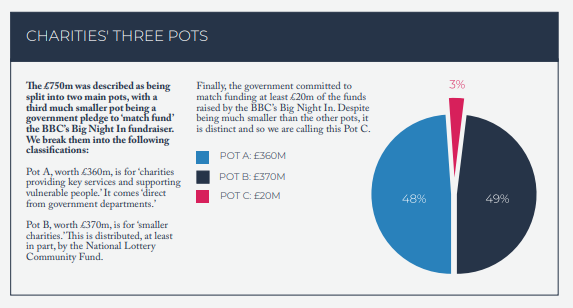
    On April 8th 2020, the Chancellor Rishi Sunak announced a £750 billion package ‘to ensure [charities] can continue their vital work during the coronavirus outbreak’. Figure A shows where the money went. Unfortunately, in many cases it didn’t go far enough.

    The picture is complicated by the fact that it is often difficult to tell what sums charities may have received from independent grant-making foundations such as the Esmée Fairburn Foundation and the Lloyds Bank Foundation. In some cases, there will have been overlap, although that can be difficult to unpick. Cory says: ‘When this crisis is over, I hope we realise that we need more data in this sector.’

    King argues that government announcements were ‘targeted at organisations already delivering government services,’ adding, ‘we don’t receive any help whatsoever.’ A few weeks after speaking with King, Finito World heard that he too had been furloughed.

    Large charities like the Family Fund received large injections of cash; other smaller organisations did not. But even at the top end, there is pain. As Dan Cory says: ‘For the big charities, a lot of funding came from big events like the London marathon. Almost all of that has been kyboshed.’ With furlough now about to wind down, many charities including the National Trust and Cancer Research UK have already talked about redundancies. In some cases, charities that relied on gift shop income have suffered, Cory explains: ‘They have no income. People aren’t rushing to the shops. They’re usually the kind of shops we like rummaging in, but now you’re not meant to touch product.’

    ThinkNPC also argues that the Treasury’s monies – though ‘pretty generous’, according to Cory – even at the high end [of generous]’ A recent report by the organisation found that 27 of the largest service-delivery charities in the UK faced a ‘£500 million shortfall’. The report also found that ‘charities fulfilling contracts for local and national government are better insulated, whereas charities who rely on public fundraising and charity shop trading are far more exposed to more significant losses.’

    Ed Holloway told us about the gravity of the situation regarding MS: ‘The MS Society faces losing nearly a third of our income this year due to Covid-19, and yet we haven’t received any support from the Treasury’s £750 million funding package for charities.’

    What matters here is the centrality of the society’s role in the fight against an awful disease: ‘The MS Society is the UK’s leading not-for-profit funder of MS research, and every year we invest millions in new projects – so sadly MS research is one area that has been affected by this shortfall. With researchers redeployed and labs closed due to social distancing, the pandemic had already affected many of the vital projects we fund. Right now, we’re doing everything we can to keep these going, but this significant loss to our income means planned research must be postponed, and we are unable to fund promising new work that is desperately needed.’

    When we wrote to the Department for Culture, Digital Services, Media and Sport to ask whether some smaller charities were falling through the cracks, we received no reply. Cory says: ‘My guess is medium-sized charities – in the £1-5 million bracket – have been suffering a lot. For the smaller ones, it’s difficult anyway. Typically, at a small charity you have two and half people with volunteers. Quite a lot aren’t going to survive this but it’s always like this down that end of the scale.’

    As grim as this is for many, if one were minded to be optimistic about anything at the moment, it would be about those who work in this difficult but noble sector: Variety, which continues to send vital equipment to children; the NLT, which is more committed than ever before to literacy in areas that need it; the MS Society, which is still a beacon of hope for those suffering from an inexplicable disease; and the David Randall Foundation, which remains committed to making people’s last months and weeks memorable.

    In my most recent email from Sue Randall, she tells me: ‘Things are still very slow with DRF. Understandably the people we organise days out for are vulnerable and nervous about going out, but requests have started to trickle in. The trouble is you just start to think it’s okay to go out and then the government starts bringing in more restrictions, so I am not surprised at people’s reticence.’

    This is a view in miniature of the sector as a whole: a sense of duty overriding anxiety; a sector which has been knocked, which remains determined to rebound; and above all an industry with an ethos which values doing things not because they are intrinsically commercial, but because they are inherently important.

    Will it all come back? Cory is cautiously optimistic: ‘Not in the same configuration. But people’s will to do good and get involved in charities to work for them or volunteer is pretty undiminished.’ In these times, we must take the positives where we find them.