Category: Opinion

  • Cricket Nostalgia: Henry Blofeld on PG Wodehouse, Ian Fleming and the Remarkable Cricket of the Past

    The great commentator Henry Blofeld permits himself a moment of cricket nostalgia about his upbringing and the cricket of his youth

    At my age, you’re permitted to look back a bit – to think of the circumstances of one’s family and the ways in which the world is changing. A bit of nostalgia never goes amiss when you’re in your eighties as I am.

    As I do this, I realise it’s the small things which tell you rather a lot. I recall that my father was a great reader aloud which is something which happens less and less today – but if you don’t do that you miss the sound of words, and it’s that which can really connect you to a writer. My father not only had a beautiful voice but was extremely articulate and was really an academic I suppose. Wodehouse was one of those authors he introduced me to between the ages of 10 and 16 – and taking those books close to my heart has shaped my life. It’s dated, of course, but it’s very funny.

    Sometimes Wodehouse seems to come near to my own life. There’s a book by Wodehouse Psmith in the City which describes an extraordinarily similar path to my early career. Wodehouse was in the City, and so was I – at a merchant bank called Robert Benson Lonsdale. I was there for three years; Wodehouse, of course, was quietly writing novels during his ordeal. But you could say that both of us were rather out of place and rather eager to leave.

    I was very lucky to get into sports-writing. One of my heroes was John Arlott, and that led me into an interest in the batsman Jack Hobbs. Arlott adored Jack Hobbs – Hobbs could be said to be the greatest batsman ever produced. He played his first test match in Melbourne in 1907, and played his last test in 1930 – the sort of longevity we’ve seen recently in the fast bowler James Anderson.

    Hobbs and Sutcliffe together were the most extraordinary pair – just as Anderson and Broad were. Hobbs and Sutcliffe even made runs on old-fashioned sticky wickets in Australia. He must have been the most supreme technician and was every bit as good in defence as Geoffrey Boycott – but in attack he lived in another world.

    I sometimes hear it said that bowlers used to appeal in somewhat meeker way in the 1940s and 50s. One hears it said that bowlers, seeing a possibility of a leg before wicket decision, would politely enquire of umpires: “How was that?” But this is sometimes exaggerated. I think of lots of photographs of cricket in the old days and they all go up like mad. It might perhaps be that distance may have learned a certain enchantment. Do people really think there was an age in life when bowlers were uncorrupted? I fear not.

    And distance lends lustre in lots of ways. WG Grace was an amazing cricketer, of course. In fact he was one of the greats – but not a great man. He comes quite badly out of the chapter in my book in 1882 when he ran out Sammy Jones when for all intents and purposes the ball was dead. That was entirely reprehensible and an appalling thing to do, and it was more appalling in 1882 than it would have been in 1982.

    Of course, in that year, Botham ran out Geoffrey Boycott – but that was done deliberately as he was sent in in Christchurch. It took Botham two balls and was one of the funniest things I’ve ever seen. He pushed it to the offside and a lot of sashaying up the pitch, and “Yes-no-wait!” After he was run out, Boycott said: “Do you know what you’ve done? You’ve ruined my average!” I can’t remember what Botham said in return, but it was something very flowery and Boycott withdrew in a sulk.

    I am sometimes asked about my surname, since it is used in the Bond novels, and I suspect Ian Fleming thought of it because of me. I knew Fleming a bit, but I didn’t exactly think much of him – and I don’t go to the Bond films to see my family name written in lights. Fleming and I were elected to Boodle’s on the same day; I had dinner with him and my first wife in Jamaica, when I was 22. I was quite young to be meeting such well-known people. I suppose that did make me more confident later on.

    And confidence would come in handy in my career. In the early days of broadcasting, doing reports of county matches, stopwatch in hand – that was a very hairy business and to do that one had to have a certain confidence.

    Sometimes one had to commentate in rather bizarre situations. I can also remember sitting on a sack of sawdust in the groundman’s office at Sydney at the back of the Noble stand without any windows at all, doing a report for Sport on Four. I can also recall doing reporting on a total eclipse of the sun from Bombay – not to mention reporting on the riots in Lahore during the 1977 Test Match. It was nothing if not varied.

    I do wonder about the future of the sport. I can see the point of One Day Cricket in the same way I can see the point of instant coffee – which I find quite undrinkable. One Day Cricket was introduced as a financial palliative, and it’s not ideal in my view. Perhaps one day we’ll have the ultimate cricket match where each side will have one ball, bowled in front of 100,000 people. I wonder what WG Grace and John Arlott would make of that – and PG Wodehouse for that matter.


  • Hard Truths About Fossil Fuels: Dinesh Dhamija’s Call to Action

    Dinesh Dhamija calls for urgent action at the upcoming UN Summit of the Future to address the devastating impact of fossil fuels on the planet.


    When the world’s political and business leaders gather in New York next month for the UN-sponsored Summit of the Future, they will have to confront an elephant in the room.

    Despite record temperatures around the world, with at least 10 countries registering 50 degrees centigrade, rampant wildfires and a mass bleaching of the Great Barrier Reef,  the Summit’s pre-announced ‘climate pact’ makes no mention of fossil fuels. This omission brought a scathing response from 77 world leaders and Nobel prize-winners: “The extraction and burning of fossil fuels is the primary cause of the climate crisis, fuelling extreme weather, fires, lethal heat, droughts and flooding that are threatening lives and livelihoods around the planet,” they wrote in a letter to the event organisers.

    “Yet this isn’t the end of the carnage – the extraction and burning of fossil fuels undermine all 17 [United Nations] Sustainable Development Goals, including jeopardising public health, fuelling conflict, exacerbating social inequalities and threatening biodiverse ecosystems worldwide.” There is a wilful blindness to the harms of fossil fuels, caused by the mutual dependence of some politicians and big oil and gas companies, and abetted by electorates who are understandably reluctant to pay now for to benefit future generations (even if those beneficiaries include their own grandchildren).

    At a time when international cooperation is at a low ebb, with geopolitical tensions and insularity replacing the globalisation of recent years, the world needs a new rationale for multinationalism. What better than something which threatens all of us, and for which there are already proven solutions: renewable energy in the form of solar, wind and new areas such as tidal power generation.

    “We call on the UN to ensure that the Pact for the Future includes robust commitments to manage and finance a fast and fair global transition away from coal, oil and gas extraction in line with the 1.5 degrees Celsius limit agreed to by nations in the Paris Agreement,” added the signatories. “If the Summit of the Future does not address the threat of fossil fuels, it will not be worthy of its name, risking undermining a once-in-a-century opportunity to restore trust in the power of international cooperation.” As the consequences of fossil fuel use grow increasingly hazardous to human life, while the remedies are increasingly affordable and accessible, we’re surely approaching a tipping point.

    Until then, it’s crucial that voices such as these 77 objectors are heard, heeded and amplified.


    Dinesh Dhamija founded, built and sold online travel agency ebookers.com, before serving as a Member of the European Parliament. Since then, he has created the largest solar PV and hydrogen businesses in Romania. Dinesh’s latest book is The Indian Century – buy it from Amazon at https://www.amazon.co.uk/dp/1738441407/

  • Vet to Scientist: Dr. Vanessa Herder’s Extraordinary Journey in Academia


    The vet who became a scientist explains why academia is a great place to work


    “Kid, do what you like. Choose what you want.” This was the career advice my parents gave me during my last year at school. Ok, then. I want to become a vet. They were delighted and my mum painted pictures in her mind of me being the local vet in a small village somewhere. All neighbours would come and bring their pets to me and she could be involved in the romantic life of the female version of James Harriot. But it turned out to be very different.

    Now as a scientist, my latest research project is studying the differences in the immune response of patients with a Covid-19-induced pneumonia. We investigated in SARS CoV-2-patients which immune response determines the disease severity. This study is a large collaborative project with scientists form the UK, Malawi, Brazil, USA, France and Switzerland and published in the journal Science Translational Medicine. How can a vet be involved in this project?

    During my vet degree I realised quite quickly that my original idea of working with horses would not be happening. During my first lecture of pathology while learning about disease mechanisms in tissues my passion for studying diseases was ignited. On that day, I knew horses will always be a hobby for me. My fascination about understanding how diseases evolve in the body grew from day to day. Studying diseases does mean to understand what health is.

    How a virus infects the host, causes damage and how the body is able to fight this infection successfully is not only interesting, it is dependent on the orchestration of so many factors. It fascinates me. I finished my first PhD studying virus infections in the brain and a second PhD followed to characterise a newly emerging virus infection in animals which caused stillbirth and brain damage in ruminants.

    As a vet, I knew how close we are to our pets or farm animals, and my research always focussed on aspects of the One-Health approach:  Diseases which are transmitted from animals to humans. To strengthen my research I decided to stop doing diagnostic and teaching vet students and started a full time post as a scientist. For years, I was studying which immune reactions determine that some hosts show a severe or lethal outcome in virus infections and why some show a mild course of disease. I developed all the tools to address this question, and worked in the high containment lab with a virus, which can only be handled under these conditions.

    Then the pandemic hit, the government stopped all our virus work. Only SARS CoV-2 from now on. The joint and focussed research activities were used to study the pathogenesis of Covid-19. I applied all the skills I developed before the pandemic, including being trained for the high containment, on the Covid-19 response to contribute as much as I could. Visualising the virus in the lung, which had never been done before, was one of my tasks, and it was a tough one. It took several months. At this time, I realised how valuable it was that the PhDs I made not only taught me science.

    Most importantly, the PhD teaches grit and endurance as well as creativity. The perseverance of starting and finishing a PhD, which lasts 4 years, requires scientific depth and dealing with all the challenges along the way. In short, you need to have a very long breath. This helped me to keep going with the initially unsuccessful virus detection attempts in the tissues. I finally made it and will never forget the sunny afternoon on a Saturday during the hard lockdown, when the virus finally was visible in the lung.

    Like all projects and publications in excellent research, the people involved are key to success. Interdependence of independent people working together is the heart of the work. Only efficient priorisation with well-developed communication and the perfect alignment of different expertise’s make it happen. As in this study: Every Co-author of this manuscript did what she or he could do best and contributed it. The efforts were organised and managed from Brazil to Malawi, Switzerland, USA and France to the UK and required a smart project management system. Science connects people, cultures and experiences and this makes academia a beautiful place.

    During my time in academia I had the pleasure to work with so many driven and smart students, which is a joyful experience and which taught me so many valuable life lessons. I am fortunate to have great mentors pushing me to do the best work, opened doors for others and myself and allowed me to see further with their experience. Thanks to the diversity of my work, I know people in so many countries of the world, who became friends and part of my life.

    Science connects the dots of knowledge and unites people. And it’s the people who drive the research to the next level. The most rewarding aspect of working in academia is to be part of the career path of the younger generation, seeing them succeed and choosing the work they want. Eventually, progressing from a job to a profession leading to a passion. Each student is a special person in my life as they trusted me with being part of their academic career and there is nothing better than meeting these people after years again and reflecting together on our journeys.

    I am not living the romantic life of the female version of James Harriot. I am living the romantic life of a scientist who can travel the world for presentations and conferences, and works with researchers in places like India, Africa, Europe, USA, China and the Middle East.  Basic research is the joy of answering questions in unknown territory combined with an unparalleled work ethic. Understanding diseases is understanding life – in animals and humans alike.


  • Baroness Anne Jenkin: ‘In 2024, Women Must Have a More Powerful Role in Every Meeting’

    Baroness Anne Jenkin

    I founded Women2Win with Theresa May in November 2015. At that stage the Conservative party had nine per cent women MPs – I spin it around the other way and say ‘91 per cent male’. The first thing was to rattle the cage and explain to the Party why it mattered.

    It was just before David Cameron became leader and he embraced it. In his first speech he said: “I want the Party to better reflect the country I seek to serve.” Now we’ve plodded onto 25 per cent. The Labour Party is at 51 per cent but they use all-women short lists.

    Besides, Labour has an easier pond to fish in. They have the trade unions and the public sector, and these structures mean that young female candidates are better supported on their journey. Labour also has a far less rigorous system of quality control in order to get on the candidates list.

    Women2Win matters because women’s life experiences are different to men’s. You have to have that different experience better reflected around the Cabinet table, as well as in Whitehall and in Westminster more broadly. I’m absolutely sure that we wouldn’t have made such a hash of education during Covid if we’d have had more women around the Cabinet table. That’s why I urge senior colleagues never to have a meeting without a woman round the table, and preferably two.

    After a recent reshuffle, a senior minister said to me: “I hope you’re pleased that there’s been an increase.” I said: “Yes, an increase of one, and the Cabinet Office has no women in it. It has nine male ministers.” They also don’t often consider the impact of appointments. I think the Foreign Office has more female ministers than men, meaning they travel a lot. But then there are no women in the Business, Energy and Industrial Strategy departments (BEIS), or in Scotland, Wales or Ireland. They need to be aware that our voices need to be heard.

    My campaign was to get more women to come forward. The sort of women who would make good Conservative MPs may be on a trajectory to become partner at a firm like PwC. They know if they work hard and do a good job that although it may be challenging, they’ve a very good chance of making partner, and being well rewarded. We’re asking them to move to a risky profession where they may not get selected or then elected – and if they get elected they may well lose their seat.

    Furthermore, no matter how hard they work, promotion isn’t dependent on ability. Not surprisingly they see sharp-elbowed men who know how to play the game differently being promoted and it gets very frustrating – and they leave. That’s not always the case, of course: the government is currently busy promoting women ahead of men, which can create frustration in the other direction. Even so, it’s not an easy path.

    My concern has always been around attracting the right people. In the main from my experience it’s about character which you can’t define easily. I regret that the party doesn’t use our best asset – our people – to show the fascinating narratives of those who do get into Parliament.

    I’m focussed on getting more to step forward, and on helping them navigate the maze that gets them into Parliament. That means assisting them with selection, and explaining how to appeal to those are going to pick you as a candidate. Then I aim to help them once they’re in the job.

    Finding MPs, however, should really be the Party’s job. Famously, Gillian Keegan, who’s now minister of state in the Department of Health with responsibility for social care, I met at the theatre. The Party needs to step up and do a focused outreach job. 

    We really work with women once they have passed the Parliamentary Assessment Centre and are on the official candidates list. We do speech practice, Q&A practice, and we have weekends away where candidates work on their CVs and other relevant skills. We have even included improv comedy sessions, as women can find humour difficult. That aspect is hard for women, who tend to take ourselves more seriously, especially if we’re entering public life. We aim to give our female candidates confidence to do the self-deprecating humour.

    Theresa May remains our patron, and she comes to things regularly. We had our 15th anniversary last year and she was our guest of honour. She’s unlikely to be mentoring people individually as she used to do. She helped that generation of Amber Rudd and Andrea Leadsom a lot. We now have quite an effective group of female Conservative MPs and Peers called the 2022 Committee – she comes to all those meetings, and has made a real difference for young women in the Party.  

  • Solar Cell Breakthrough

    Dinesh Dhamija


    In the 70 years since the invention of the silicon photovoltaic cell, its efficiency has risen enormously, and its cost plummeted.

    But now, with the arrival of a revolutionary new technology, solar energy is poised to become dramatically more efficient and cheaper. Perovskite solar cells (PSCs) are made from materials such as calcium titanium oxide which share a crystal lattice formation. What’s amazing is how they can be manufactured at low cost, with up to 45 per cent efficiency, compared with silicon cells which are expensive and only hit around 26 per cent efficiency.

    In scientific language, PSCs have a greater variable energy bandgap than silicon PV cells. In other words, they absorb more of the sun’s energy. Perovskite itself was named in 1839 after Lev Perovski, a Russian mineralogist. Yet it was only in 1999 that Japanese researchers first used the material for solar cells. In 2010, a spin-off from Oxford University Physics, Oxford PV, sought to commercialise the technology. “We have raised power conversion efficiency from around 6 per cent to 27 per cent,” said Dr Shuaifeng Hu at Oxford University Physics. “We believe that, over time, this approach could enable the photovoltaic devices to achieve far greater efficiencies, exceeding 45 per cent.”

    Besides cost and efficiency, PSCs are just one micron thick, almost 150 times thinner than a silicon wafer. This means that they can be coated onto buildings, clothes, cars, plastics or almost any surface, which would help to make solar energy by far the most popular and accessible form of renewable energy. It would also reduce the need for solar farms and panels, making solar energy an integral part of our lives.

    Next year, Oxford PV plans to produce silicon-perovskite tandem cells for high-value industries such as aerospace, followed in 2026 by products for the residential housing market, then for utilities in 2027. But first, the company – along with other PSC manufacturers – has to overcome degradation from moisture, oxygen and heat: PSCs are more sensitive than silicon panels, and to ensure that any lead used in their manufacture does not pollute the environment (or else find a way to make them lead-free).

    These are exciting times for solar energy pioneers. When you read about breakthroughs such as this, with the potential to double the power of the technology, slash its cost and potentially apply it to every building in the world, you realise what extraordinary progress could be made in just a few years.

    Dinesh Dhamija founded, built and sold online travel agency ebookers.com, before serving as a Member of the European Parliament. Since then, he has created the largest solar PV and hydrogen businesses in Romania. Dinesh’s latest book is The Indian Century – buy it from Amazon at https://www.amazon.co.uk/dp/1738441407/


  • Adam Page: ‘It’s indefensible to be involved in business and not understand finance’

    Adam Page


    This is the story of a fantastic journey.


    But first, I have to explain something. I’ve been in far more pitching sessions – either raising money myself or as a potential investor – than I can remember. I’ve met, worked with or employed innumerable consultants. I’ve watched hundreds of senior directors as they’ve sat in countless board meetings. I’ve written and read acres of financial reporting. I’ve worked with a few hundred wealth and asset management professionals. I’ve led a good few investment research teams.


    And the one question that has hung – unanswered – in the air over and over again has been this: “Why on earth is it that the majority of these people have clearly never bothered to educate themselves about the one matter that lies at the heart of all business: finance?” Why are they sitting here, so evidently naive and so clearly bewildered about even the most basic concepts that make finance tick? Are they really that unaware of how unprofessional, how much less relevant to the conversation, they appear compared to those folk in the room who have got their heads around finance?


    I’ve always believed that it’s not only indefensible to get involved with business without a sound understanding of how finance works, but that it bestows such a huge (and easy) career advantage. Moreover, it’s just not that hard to learn.


    And those are three dirty little secrets about finance. First, you’re handicapping yourself badly if you run away from it; secondly, it really quickly sets you apart from everyone else if you do understand it; and thirdly, it’s much easier to learn than most people think.


    But there’s a fourth. It’s subtler but probably even more powerful: to think of finance as simply being about accounting is to make a huge error. Accounting is one small part of finance. I’m not an accountant. I don’t have the disposition for it. But I do know finance, and to me and others like me, finance is up there with great marketing, or engineering or product design. It’s inventive. Creative. It’s future-oriented, and is all about building value, serious value, for yourself, and for the business (and about avoiding destroying value – something the financially illiterate are all too prone to do).


    So in this short series of articles, I’m going to argue that one of the most powerful things you can do – in terms of your own career development – is to take some time to learn about finance, to understand the principles and the language that preoccupy the great entrepreneurs, the great business leaders, the great consultants, in a million conversations a day, in every business environment around the world, and that by doing so you will present yourself in a whole different class from everyone else chasing the same roles, the same opportunities, and the same careers.


    Let me start off by painting a picture of my own career so far.


    How did I first get involved in finance? Pretty easy really. I was in my early-20s, drifting around a little, unsure of what to do with my life, when I had a life-changing conversation with my father. I’ll tell you his exact words at the end of this article but, broadly, he pointed out that in every domain of human endeavour, finance was involved. Made sense. So I enlisted on an evening program, two nights a week for a year in a post-graduate diploma in finance.


    At the time, I had just started working as a computer industry journalist – despite knowing nothing about the computer industry (in my first week my editor bought me the Ladybird Book Of Computing to help things along).  But just by virtue of choosing to study finance, by committing to it, my editor made me the finance editor of that publication.

    Fast forward about nine months, and I was recruited by another publishing company to be the editor of a publication that wrote about investment in technology companies. My salary doubled. Fast-forward a year from that, and I was recruited by Union Bank of Switzerland to be one of their securities analysts specializing in UK and European technology, telecoms, software, that sort of thing. My salary quadrupled.


    But then a year later I was then made head of Small Caps research which meant I could poke my nose into any industry I was curious about. And, boy, I did. I dived right in and spent time looking into a huge range of businesses and questioning the Chairmen, the CEOs, the COOs, and the CFOs about how those different industries and their companies worked. (And my salary went up about 50%.)


    I looked at computing, software, telecommunications, electronics, biotechnology, power and optical cabling, defence electronics, estate agency, open clay mining, furniture manufacture, lace manufacture, lingerie manufacture, the music industry, the funeral industry, health & medical businesses, publishing companies, and many more.


    Endlessly curious, after seven years I left the investment banking world – having also worked with UBS and Natwest Securities) and then spent a decade flying between London, Hollywood and the Cannes Film Festival, financing the film industry. That in turn led me again into the music industry, animation, digital content, television and from there into live entertainment.


    By this time I was operating in more entrepreneurial environments, too, better described as venture capital and private equity, more complex financial engineering. I got involved in financing food businesses, more in health and medical technology, restaurants, bars and clubs, into fintech, insurance, sports, and time in renewables (wind energy, solar energy, anaerobic digestion etc.), countless start-ups in countless fields, then most recently in life sciences, artificial intelligence and educational technology.


    It’s been an extraordinary journey and an incredible education. And throughout all of that, I’ve seen and been involved in some spectacular moments of artful, clever, inventive financing that have elevated ordinary businesses, that have made the difference between founders abandoning their own business or becoming spectacularly wealthy.


    And, remember, I’m not an accountant. But certainly I studied, although it was only after leaving investment banking that I studied an MSc in Finance at the London Business School.


    The point is finance has opened countless doors, created countless opportunities, shown me countless fascinating situations, and it’s been vibrant and creative and endlessly refreshing.


    So in the next few articles I’m going to show you how easy finance actually is. How it breaks down into 12 basic – and entirely common sensical concepts – that individually or in combination lie behind every aspect of finance. They just require familiarity and a confidence with the language. (Oh and some very simple arithmetic.)


    So, to come back to what my father said to me all those years ago, “Get your head around finance, son. It’s everywhere, not enough people understand it, it will open endless doors, and I guarantee that no matter where you are or who you’re with, you’ll never, ever be the dumbest guy in the room”.


    Adam Page is CEO of Adam Page Training. Go to adampagetraining.com.  

  • Oil-rich nations see the (sun)light in 2024

    Dinesh Dhamija


    For decades, oil-rich Middle Eastern nations have ignored the bounties from solar energy all around them in favour of extracting oil and gas from beneath their soil and seas. Yet as the reality of climate change and the tremendous advances in renewable energy technology take hold, the region is gearing up to become a powerhouse in a whole new way.

    Dubai’s $14 billion Mohammed bin Rashid al-Maktoum Solar Park is already operating, with a further phase in progress, including a 262m-tall tower in the desert. The emirate has pledged a further $30 billion to fund a climate investment fund, alongside its existing Masdar renewable energy investment fund.

    In Saudi Arabia, meanwhile, ACWA Power is among the world’s most important power developers in emerging markets, competing with huge infrastructure developers from Europe, the United States and Australia. It has invested more than $94 billion in projects across the Middle East, Central Asia and Africa, many of them in solar, wind and hydrogen technologies.

    Last year’s COP28 climate conference, held in Dubai, highlighted the dual role of Middle Eastern power players: they are in no hurry to decarbonise their economies, but leaders such as UAE President Mohamed bin Zayed and Saudi Crown Prince Mohamed bin Salman have long spoken of their aim to decouple their economies from oil and gas. After all, one day it will run out, and demand is already falling.

    By contrast, demand for renewable energy is increasing exponentially. Prospective solar-generated electricity in Gulf Cooperation Council countries will more than quadruple from 30 TWh this year to 130 TWh in 2030, according to the latest projections, while gas-generated electricity will level off and oil-based generation will fall by a half.

    When you consider the extraordinary transformation of Dubai from a fishing village to a megapolis in a couple of generations, attracting millions of visitors each year, along with the determination of the region’s leaders to pioneer new societies and urban communities, it’s tempting to believe that the region can become a hotbed of renewable energy production. For all their faults, I prefer the enterprise and ambition of Middle Eastern states to the lethargy and corruption of oil-rich nations like Nigeria or Venezuela, which have fallen prey to resource curse.

    The sooner the world – especially those countries like Saudi Arabia with almost nine hours of sunshine per day, all year round – recognizes that solar is the key solution to their energy needs, the sooner we will have a cleaner, more secure and less climate-threatened future.


    Dinesh Dhamija founded, built and sold online travel agency ebookers.com, before serving as a Member of the European Parliament. Since then, he has created the largest solar PV and hydrogen businesses in Romania. Dinesh’s latest book is The Indian Century – buy it from Amazon at https://www.amazon.co.uk/dp/1738441407/


  • Independent Thought, Have we Lost the Habit: Long Read

    Christopher Jackson looks at the question of whether we inhabit an age of consensus – and asks whether there’s anything we can do about it


    Our cities are so far advanced down a misguided aesthetic that even revolutionary projects must be undertaken in bad architecture. Michaela Community School is located opposite Wembley Park tube station. Adjacent to a ring road, its surroundings feel like a testament to generations of bad urban planning linked to the demands of the car. Despite this you somehow suspect that Michaela Community is revolutionary before you’re even through the gates.

    Even amid the squalor, banners proclaim central Michaela precepts: ‘Work Hard’, ‘Be Kind’, ‘Top of the Pyramid’. It also reminds you of its excellent results: “Ofsted rated Outstanding. Over 75% to Russell Group Universities including Oxbridge, LSE and Imperial.” These messages feel somehow incongruous when set alongside the mess we have made of this part of North London.

    Inside the impression of difference sharpens: you know straightaway this isn’t a normal school. You are greeted by examples of the children’s excellent artwork, including portraits of David Cameron, Queen Elizabeth II and Boris Johnson. Newspaper clippings detail the visits of dignitaries and interviews with Michaela’s Headmistress Katharine Birbalsingh, Britain’s so-called ‘strictest headmistress’. Lauded by the right, and despised by the left, Birbalsingh has done a difficult, almost unprecedented, thing: she has acquired fame as a teacher.

    As I am escorted up to see her, I am aware of a mood in her administrative team which doesn’t usually accompany my visits to schools. It is, in fact, the sort of awe which surrounds rock stars and Cabinet ministers. And yet the respect surrounding the headteacher has a distinctive strain often absent in those other cases: it is genuine love and respect.

    In place of the usual din of schools – places which are usually full of vaguely located cries, as in a shopping centre – at Michaela there is only the hush of concentration. Famously, Birbalsingh has created a regime where there’s no talking in the corridors and students regularly submit to having their mobile phones put in storage to aid their learning.

    As I walk on up to Birbalsingh’s office, I walk past a group of children moving between lessons. They remind me of contented nuns and monks shuffling through a cloisters. One looks up at me and offers a wry smile. In the context, it’s subversive – a moment of independence within a strict regime.

    I will find I like the school a lot. What has been achieved here is beyond doubt. But I think afterwards about that boy with the smile. It feels emblematic of the independent streak.


    Blair and his Heirs


    Independent thought, it might be said, hasn’t had a particularly illustrious 25 years. It is now a quarter of a century since Tony Blair came to office and proclaimed a new dawn. You can look at Blair’s government in a number of ways. It might be considered a ratification of Thatcherism insofar as Labour altered Clause Four, making the party far friendlier to business. It can be remembered for its miserable foreign wars. It can also be seen as a period of devolution away from Westminster, with results which we’re seeing today in Scotland and Northern Ireland.

    But in spite of the controversies, Blair’s electoral success was so great that, in ways we might not appreciate, we still live in the aftermath of that 1997 landslide, and his subsequent victories in 2001 and 2005.

    That’s because large majorities are reflections of consensus. In 2010, David Cameron’s Coalition government adopted a strong dose of Blair’s Europhilia (with a few concessions to his backbenchers), and continued New Labourish policies when it came to the academisation of schools, international aid, civil partnerships, an interventionist foreign policy, and many other areas. The similarity between the two culminated in the spectacle of Blair and Cameron – alongside Blair’s predecessor John Major – campaigning together on the same losing side in the 2016 referendum. Furthermore, the three of them argued for the same Covid restrictions in March 2020.

    This has left a gap into which some conservatives – including the likes of Peter Hitchens, Toby Young and Douglas Murray – have been arguing for things outside the Blairite consensus. For Hitchens, the Conservatives’ failure to promote a return to grammar schools is a particular point of criticism, as is the laxity of the police. For Young, lockdown was an outrage perpetrated against the great tradition of English freedom. For Murray, the Blair-Cameron axis is wrong over immigration, and was deservedly repudiated in 2016. All three of them would argue that there are far too many woke MPs, some of whom nominally belong to the Conservative Party, but who aren’t really conservatives at all.
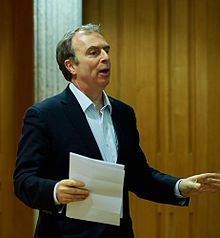
    Most heretically of all, each of these thinkers would reserve the right to subject the climate change orthodoxy to proper scrutiny, if only because questioning things is in the British political tradition, not to mention the broader scientific tradition. Whether we agree with all this or not, each of these writers reads today bracingly if you grew up under the Blair consensus: they read like people thinking for themselves.


    Past the Age of Consent?


    Consensus is, of course, not a bad thing per se. We have, for instance, been governed by a consensus that murder is a punishable crime for millennia to no-one’s disadvantage but murderers. Likewise, our shared consensus that Shakespeare is a great playwright has preserved Shakespeare, and is another example of what might be called profitable consensus. When Tolstoy cantankerously announced towards the end of his life that Shakespeare was no good, he was thinking independently, but not particularly well. There is a distinction then to be made between useful polemic which ultimately turns out to be true, and wilful contrarianism, which causes a lot of noise and misleads a lot of people.

    But despite these reservations, it must be admitted that consensus sometimes feels flabby. When too many people have arrived at the same conclusions it might be that those conclusions are dated, or have lost some spark.

    So which kind is the the Blairite consensus? There are some warning signs which stretch beyond Tony Blair’s own personal unpopularity. It certainly isn’t quite as popular as its holders would wish, or suppose. This fact was made clear to Remainer voters in the 2016 election: it turned out that a surprising number of people in the country were, while being ostensibly civilised, quietly thinking the unthinkable: that the Blairite worldview might be wrong somewhere at its Europhilic core.

    But what really brought the question of independent thought into sharp focus was the Covid-19 pandemic. Whether lockdown might be deemed an overreaction or a wise necessity, it forced government into our lives like it has never been before and this in turn raised considerable questions around how we receive and sift data, what is true and what is false, and above all, what our personal relationship is with the notion of government interference.

    It brought to the fore the whole question of statistical modelling and for some thinkers has ramifications not just for how we tackle the spread of viral disease, but also for the broader way in which we use scientific data. “The models were completely wrong,” the economist Roger Bootle, another independent thinker of the right, tells me. “And it’s the same in relation to the climate models – although not to quite the same extent, because the most unpredictable thing about the Covid-19 models was human behaviour, and that has slightly less bearing on the climate change models.”

    But the fact remains: by 2022, a generation of professionals in senior positions had come to maturity thinking and feeling roughly the same things about most things. If their worldview is wrong at all, then remarkably few ramifications have come their way: on the contrary, they have usually found their sense of consensus ratified by professional success. Lockdown caused the consensus-bearers no harm since, financially, little can. Lawyers and accountants remained for the most part in spacious housing doing jobs which it is possible, and in many cases enjoyable, to do from home. Doctors were designated key workers and spared the strains of home schooling.

    Even so, there are some warning signs that what the consensus bearers have been thinking and feeling might be wrong after all. If we look at inflation or high energy prices, the dubious tactics of Extinction Rebellion, the increasing extremism of wokeism, the long waiting times on the NHS, the former Chancellor Rishi Sunak’s tax rises to pay for lockdown, and the relatively settled landscape post-Brexit, there is a sense that there might be value in listening to voices, from both left and right, that lie outside the consensus. We might not change our minds on policy but we’ll certainly learn something about how to think.

    The question is not just: “Who is right on these issues?” It is also: “What does independent thought look like in this day and age? And who has a motivation to practice it?”


    An Audience with Katharine the Great


    To promote independent thinking, what kind of education system do we need?

    For the right, Birbalsingh has arrived as a kind of saviour in this realm, seeming to embody some better method. Of course, as the writer of Ecclesiastes understood, there is nothing new under the sun: her new way of doing things is tethered to the old. Put simply, Birbalsingh argues for the importance of promoting knowledge of a shared cultural tradition in order to foster the independence of thought which might ultimately free us of what she views as the groupthink of wokeness.

    When I sit down with Birbalsingh at Michaela Community, I tell her that the place reminds me of grammar schools. She doesn’t find it a helpful comparison. “There are a couple of grammar schools round here,” she admits. “But they take the top slice. Any good teacher knows that it’s really complex when teaching the bottom sets. If you’ve only got the top students, you don’t have to think about learning in the same way. When you have a great cognitive diversity you have to do more.”

    In this sentence, ‘more’ means strictness and standards. I wonder aloud whether there’s any danger about the regime, and whether it might over time create conformity instead of individual inspiration? I tell the story of my old English teacher at Charterhouse, Philip Balkwill, who was famous for his eccentricity. In one English lesson, he came in, played Beethoven’s 9th symphony and then left the room without explanation.

    Birbalsingh is amused, but not especially impressed: “The thing is, you can only do that kind of thing when you’ve got a selective intake. If you do that in an inner-city school, the kids will all just be laughing and jumping around and running out of the lesson. And then you say, “Well, what have you achieved?” You’ve just created chaos. The kids have just lost all respect for you and you will find it very difficult to build up your resilience again.”

    Here then is one obstacle to independent thought: it can’t be something you do overnight. You’ve got to lay the groundwork with discipline first. I mention that Balkwill’s lessons for me operated on a kind of time bomb. I came to realise years later that he was talking about the porousness between disciplines and how music and literature might be interconnected.

    Birbalsingh laughs: “The fact that you only realised that ten years later: that’s ridiculous. Teaching is about making things explicit. He was doing things like that for himself and so that he could say to himself: “I’m the most amazing teacher.” He liked being eccentric. In the end, how much did he really teach?”

    I say that it felt like being bequeathed a certain permission to roam freely across intellectual disciplines. Birbalsingh doesn’t think that approach will generally work: “You need to realise that the kids here have no idea who Beethoven is unless we teach them that. Once I gave an assembly about Beethoven’s Fifth, as I wanted them to at least recognise the tune which you hear all the time. I was talking about how it was difficult for them growing up in a time of grime and drill.

    The worst for me when I was growing up was Kylie Minogue and how everyone was scandalised by her shorts. I put a picture of Beethoven up on the slides. Later when I was having lunch with the kids, I realised they thought Kylie Minogue and Beethoven were contemporaries because I hadn’t made it clear. They don’t know that there’s music from the 16th, 17th, 18th, 19th century and how it’s changed. When they learn music here we start with A, B, C, D.”

    She continues: “What you mightn’t realise is just how impoverished some children are and that’s what an inner city school is. Those antics of your teacher you described are not helpful.” I think again of the boy smiling in the corridor. I agree with Birbalsingh, and yet some small part of me wants to retain the idea of another approach. I find that Mr Balkwill’s lessons can’t be so instantly jettisoned. Something would be lost.


    Uncle Toby


    Sometimes of course having a good education culminating in all the expected excellent results might not be a spur towards independent thinking: in fact, it might lead you up too obvious a career ladder meaning precisely the opposite – that you never have to think for yourself at all. It used to be that a dose of failure did a little good.

    I talk to that noted independent thinker Toby Young – so much a bugbear of the left, that he seems to exist in a permanent ferment of being cancelled and recovering from his latest bout of cancellation. He tells me about his somewhat chequered early education: “I initially failed all my O Levels, and went to two different comprehensives. I retook and got three Cs, which was enough to scrape into the sixth form of William Ellis. I did well enough to apply to Oxford. I didn’t meet the conditional offer, but was sent an acceptance letter by mistake. When that was pointed out to me, they then offered me a place – it was an unconventional route.”

    Young, who would go on to set up The Modern Review, The Spectator Online and, in 2020, The Daily Sceptic, credits the entrepreneurial side to his upbringing. “My father was one of the people behind the Open University. He created over 50 organisations of one kind or another during his life. A couple of those got torched in David Cameron’s Bonfire of the Quangoes. He was a lifelong socialist and one of this country’s first sociologists in addition to running a Research Institute in Bethnal Green, he implemented these institutions. That gave me confidence.”

    Young was then exposed to the left-of-centre culture of Oxford, before relocating to America, and landing among the uber-left campus life at Harvard. This was the era when Alan Bloom published his famous Closing of the American Mind, a sort of prophetic cri de coeur about the encroachment of what we would now call ‘wokeness’ onto campuses.

    Young recalls: “Within my year group at Brasenose [at Oxford] studying PPE, we had the full gamut from a Monday Club tubthumper to a member of the revolutionary Communist party and every shade in between – and there were only ten students.” And in the US? “At Harvard, there was nothing like that range of opinion even in the entire government department, which encompassed hundreds of students. The main debate was between two types of liberalisms – Nozickian and Rawlsian liberalism – that was the extent of the disagreement, and Nozickians were a real minority!”

    This sounds like the sort of landscape which Katharine Birbalsingh, in her different way, is committed to pushing back at. Young agrees: “I’m a big fan of Michaela – it’s incredible. In Michael Gove’s wildest dreams I don’t think he’d’ve anticipated the free schools programme would have given birth to such a perfect embodiment of what he views a school to be.”

    So is the encroachment on independent thinking less to do with some sort of Blairite inheritance, and more to do with groupthink migrating from America to this country? Young replies: “I certainly think that as British universities have admitted more American students and grown in size, they have attracted left-wing academics with a sense of social mission who want to change the world by converting and evangelising. But it’s partly a generational shift; most of these people were radicalised in the 1960s. You gradually see more of a left-wing imbalance in the professoriat.”

    This mindset in turn has infiltrated, or so the argument goes, every strata of society, achieving numerous coups: it captured most of the major cultural institutions; the BBC; and even large swathes of the Conservative Party. In response to the professional calamity which can sometimes assail those who speak up against this consensus, Young founded the Free Speech Union in 2020.

    I ask Young about the future of independent thought and he initially strikes a surprisingly optimistic note: “The curious thing is that even though all our main cultural institutions – the BBC, heritage institutions, performance arts companies, the National Theatre – they’ve all been captured by this rather small-minded illiberal ideological cult, at the same time you’ve had right-of-centre figures winning elections. The professions and the educated elite are beholden to this woke cult, but it hasn’t filtered down to ordinary people.”

    This, in Young’s view, is a sign that most people still retain the habit of thinking independently. “There’s a disconnect,” he explains. “You see that in the way in which the trans lobby has got into trouble by trying to give trans women access to women’s changing rooms in department stores without trying to persuade the public it’s the right thing to do. That’s proved quite unpopular and authoritarian. All is not lost.”

    Even so, he also issues a note of caution. “One of the reasons to be doubtful about how quickly the spirit of liberty can be restored is that it was revealed to be in a very decrepit state during the last two years. It was surprisingly easy for the government and various public health agencies, civil servants and the BBC to persuade people to exchange their liberty for safety and much more so than it would have been in the Asian flu in the 1950s. That was true not just of Britain but of most liberal democracies.”

    Of course, we must be careful here not to attribute all independent thought to lockdown sceptics. For instance, the vaccines – not to mention the inventive way in which those vaccines were rolled out – arguably constitute a greater example of initiative than anything shown by those who stood from the touchlines arguing against lockdown.

    But Young, Murray and Hitchens aren’t arguing against science. What they would say is that science has become dangerously allied to politics, that it is poorly reported leading to a bogus consensus (usually in the direction of the exaggeration of danger), and that an atmosphere of intolerance has grown up around some of the conclusions it has arrived at. Clinchingly, they would simply defend their right to ask questions about it.


    A Question of Method


    So how would Young go about teaching independent thought? “I’ve been wondering whether, under the guise of teaching schoolchildren how to debate, you could teach them some critical thinking skills,” he replies. “It’s extraordinary when you argue with young people how often they fall back on what they think of as the trump card of their own lived experience. It doesn’t matter if you present them with data that contradicts their claim.”

    I ask for examples. “Let’s say you’re arguing with a young black student about whether or not Britain is an institutionally racist country,” Young says. “You could point out, for example, that more black boys go to university from underprivileged backgrounds than do white boys. Or you could cite the fact that Indians on average earn more than white Britons.

    You could also point to the success of boys of African heritage at university and in the professions. There’s actually all sorts of evidence that not being born with a white skin isn’t an insurmountable handicap in this country. You could present that case as reasonably and calmly as possible but they could just say: “That’s not my experience, but you’re a white man and from my point of view, that’s bollocks.” Nearly all children nowadays fall back on this Megan Markle ‘my truth’ trump card.”

    So what do we do? Young has clearly been thinking deeply about this: “It would be really helpful to teach children why that isn’t a knock-down argument, and why it isn’t a trump card. It’s also important for them to know why data is more important than anecdote and how you can merge lots of different people’s lived experience to come up with a more objective balanced view as to what the collective experience is.”

    Does he think the teaching profession will be able to do this? Young isn’t sure. “Teachers these days are shy of challenging emotional impassioned teenagers – particularly if they’re members of disadvantaged groups. In taking that stance, they allow these irrational ideas to flourish.”

    So would that require some kind of shift in the curriculum? “The main thing we need to do is to teach them the rudiments of how to build an argument, recognise a good from a bad argument, and teach what the most common logical fallacies are. Those analytical skills would mean you’d develop a bullshit detector.”


    Avenging Angel


    It’s interesting that Young’s background is predominantly entrepreneurial and I begin to wonder whether I’m really talking to a journalist or to an entrepreneur. Is there something about being an entrepreneur which fosters independent thought? To find out, I talk with James Badgett, the CEO and founder of the enormously successful Angel Investment Network. Badgett, 40, isn’t just a well-known entrepreneur in his own right, but, given the unique nature of his business, also the centrepoint of a vast amount of economic activity.

    So does he feel that as an entrepreneur he’s under greater pressure to think independently? “It’s quite straightforward. When I wake in the morning, first I have to check I’m okay. Then I have to make sure my team is okay. You can’t lie to yourself as a business-owner because you’ll get found out. That means that if the government tells you to work from home, or if The Guardian tells you leaving the European Union is a disaster, or if Greta Thunberg tells you the planet is about to burn – you have a responsibility to go away and check if those things are actually going to happen.”

    Badgett is known for holding unpopular opinions, but he views it as important for his many businesses to make sure he holds firm. “I think I’ve got to the point now where almost any view I hold isn’t held by the majority,” Badgett says. “I’ve grown used to people thinking I have an unusual take but I’m not going to stop saying what I think.”

    Badgett’s success can partly be attributed to an ability to cut through the range of information he receives in order to decide on the right strategy for his businesses. He tells me of his dislike of corporate settings: “You just feel yourself become cretinised when you sit in these big firms.

    You ask for the coffee, and sit back and feel somehow flattered to be in there – and I think that happens to a lot of people who become quite limited in their outlook. They’ve first become too comfortable. But I’ve learned that in business you’ve got to be careful not to fall for all that. You have to remain rooted – and you have to surround yourself with the right people.”

    He is sceptical of anyone too who “suggests strategies which are easier to say than to do” and is always creative in the way he runs his companies. Badgett has a Nepalese office of the Angel Investment Network, and realised before the pandemic that it would be affordable for the company to have a top chef cook for his workforce and that it would also be a great boost for the company. “I went ahead and did it – though I expect the BBC would have told me it was impossible.”

    Like Young, Badgett opposed lockdown in March 2020, and also counts himself a climate change sceptic. “One thing I disagree with in relation to Greta Thunberg is this elevation of the child to the level of sage. She’s still very young and her predictions are likely to be wildly inaccurate just as Dr Niall Ferguson’s were during Covid-19.”

    I ask Badgett whether he thinks we need to do more in education to teach commercial acumen. “The truth is that most people walk into working life absolutely financially illiterate and what you’re seeing today is the effect of a woke university system on the workplace,” he replies. “Basically, people don’t have the skills by which to sift information or to judge what’s true and what’s false – what is theory, and what is fact. What I think does happen though is that people who run businesses become more attuned to that – again, if you don’t your business will go under.”

    Whether one agrees with Badgett or not, he is a reminder that the ability to think independently as a society must be tied to a greater commercial sense.


    Approaching the Source


    If independent thought is under threat then there are a number of clear possible reasons for it. One is the influence of American wokeism on our university system as outlined by Young. Another might be the impact of the Blair-Cameron axis. A lack of commercial acumen is another: some have noted that epidemiologists were more likely to make gloomy predictions about coronavirus since, being in the pay of the government, they didn’t have to live with the commercial ramifications of those predications.

    But most people accept that the media, and the way in which we receive our information, also impacts our ability to make up our own minds effectively on important issues.

    One person well-placed to consider these matters is Sir Bill Wiggin MP, who represents North Herefordshire. He has spent 20 years in Parliament, and has had a front row seat on the way in which reality can be distorted by the media – and how this causes both misery for beleaguered MPs and confusion in the electorate who are often unable to find their way to primary source material.

    After years in the public eye, Wiggin says he’s become acutely aware of what journalism is and how it should be read. “When you read the newspaper, you’ve got to be careful,” he explains. “I’ll read whatever’s lying next to me – but I don’t read it believing it to be the gospel. I’m happy to read The Sun, The Guardian or The China Daily but I’m always reading it in a certain way with the awareness that they will have an agenda.”

    And what, in Wiggin’s opinion, is their agenda? “It’s quite simple really, it’s trying to outrage you or to terrify you.” So what would Wiggin’s advice be to people in respect of reading the mainstream media? “Don’t base your life on a publication: be broader than that. You need to be. And also realise that this sensationalism is driving all aspects of the media. For example, I get The Daily Express online. It has wonderful headlines: “Brexit delivers huge increases in British business.” Two days later it will say: “Brexit cuts British business”. They’re playing us! We’ve got to stop thinking that journalism is a Christian and pure-spirited thing. It’s as commercial as Star Wars.”

    I mention to Wiggin that I value the way in which my history degree gave me a habit of going to the primary source in order to assess the events of the past.

    Wiggin agrees but worries that these skills are being lost in the contemporary media maelstrom: “Today, The Guardian and the BBC are going to the source for you. When you watch the news tonight, you will see Vladimir Zelensky make an announcement about how Russians are losing in Ukraine, and the newsreader will say: “Now, we go to our Ukraine correspondent.” I want to hear from Zelensky not your correspondent! Then you might cut to another correspondent or expert: it was second hand when you got it from the BBC – now it’s third hand.”

    The Mp also points out that we tend to practice critical thinking better in other areas of our lives: “Anyone reading this article will know that if they go to a football match, what they see is different to what they read about it afterwards: but they don’t apply those lessons to their politics. Soak it up but don’t close your mind. When you read that x is wicked or that y is good a little voice in your head should say: “Well, that’s what it says here”. You shouldn’t be prepared to die in a ditch according to what you’ve read.”


    Good Humours


    One notable thing is that some right wing thinkers often seem to injure their case with a certain cantankerousness which somehow makes their case less persuasive. Of course, there might be mitigating circumstances. Most of them haven’t been listened to throughout their professional lives, and must feel a sense of mounting frustration at always feeling in the right and then watching governments continually make catastrophic moves.

    Although Peter Hitchens can be funny, it is probably the case that there has rarely been a less Christian-sounding Christian in the public sphere . There can sometimes be a sense of infinite probity about his public persona which feels somewhat tiring – reading him sometimes, one feels that nobody could manage long in his ideal state. One would want to be free a moment, like that boy in the Michaela Community corridor. There is a frequent note of exasperation – a sense of being almost tired of being so in the right – which makes one want to lodge objections, and which has probably led to his ideas being infrequently taken up by government.
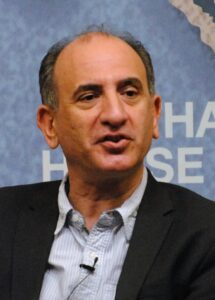
    This brings me to Armando Iannucci and the importance of comedy in the realm of independent thinking. John Cleese recently observed that there is no such thing as a ‘woke joke’, but it seems to me that there are still vestiges on the left which are able to raise that profound laugh which lets you know an independent truth has been arrived at.

    Iannucci has always been able to do this – most notably in The Thick of It and Veep – those superb comedies which could only have been written by a unique cast of mind. Sure enough, Iannucci has been in fine form during the pandemic having penned an epic poetic satire on the first years of the Johnson administration called Pandemonium. We need only read its opening page to know that this is a voice of the left which is hardly caught up in groupthink:


    Tell, Mighty Wit, how the highest in forethought and,
    That tremendous plus, The Science,
    Saw off our panic and Globed vexation
    Until a drape of calmness furled around the earth
    And beckoned a new and greater normal into each life
    For which we give plenty gratitude and pay
    Willingly for the vict’ry triumph
    Merited by these wisest gods.


    It is worth noting how the big laugh comes from the line ‘that tremendous plus, the Science’ – the same Science which is in its way is poked at, and queried, by Young, Hitchens, Badgett and others. Here it is being mocked too. Blairism itself was full of those ‘tremendous pluses’, whose validity we were never meant to query.

    Pandemonium mocks Johnson, Matt Hancock, Tory donors, and Dominic Cummings. It suggests again that this era of consensus needn’t necessarily be worried at in a misanthropic spirit. It might be done with wit and laughter too. It is an enduring fact that many of the great thinkers of the 1930s – one thinks of George Bernard Shaw and Ezra Pound – fell for Stalinism and Nazism respectively. It took Charlie Chaplin and PG Wodehouse to laugh them out of town.

    Iannucci doesn’t extend his mockery to the Labour Party in the poem – and perhaps it would have been a better poem if he had. Bu one leftist intellectual who is prepared to query Starmerism – currently a kind of low energy Blairism – is the philosopher and poet Tariq Ali. Ali has just published – to the right’s dismay – a book attacking the legacy of Winston Churchill called Winston Churchill: His Crimes, His Times.

    For Ali, the habit of consensus thinking began further back in time during the post-War period: “I would refine the analysis slightly,” he says, when I describe the theory of the Blairite consensus. “The post-War consensus which was more or less agreed by Labour and the Tories after the Second World War, was that we have to go down the social democratic route. In Britain, this consensus was implemented and never altered in any meaningful sense, until it was broken definitively by Margaret Thatcher.”
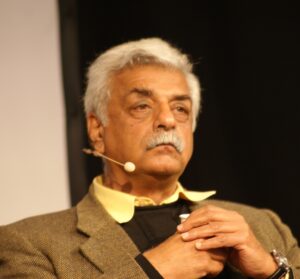
    For Ali this is all bound up in the Churchill cult which began at that time, and has been continued by Johnson. Interestingly, Ali says that he prefers reading thinkers like Peter Hitchens to those on the centre right. “Obviously Peter and I won’t agree on most things but I have some respect for him. There is a degree of honesty and integrity in Peter which I don’t find in liberal writers. Look at the stand he’s taken on Julian Assange. I am amazed he’s still a columnist on The Mail on Sunday: it’s much sharper than things I read in The Guardian.”

    It’s this which often marks out independent thinking: integrity and the desire to conduct our thinking for the right reasons. And what does Peter Hitchens say in return? “I think Tariq Ali is a valuable independent voice because I think freedom dies without dissent. He’s undeniably intelligent, and undeniably thoughtful. I disagree with him profoundly on many things, and have done so publicly on such matters as the nature of Fidel Castro’s Cuba.”

    And what has it been like when they have sparred? “He has responded courteously, as a civilised person should, though he should have a higher opinion of The Mail on Sunday, which has a strong record of independent thinking. I think we both come from an era when an opponent was not necessarily an enemy. I also suspect him of having a sense of humour.  I wouldn’t say this feeling has anything to do with my own Marxist past. Most of my former comrades dislike me personally, though I can’t be bothered to return the compliment.”

    So perhaps the surest route to independent thinking is an education like that offered by Birbalsingh at Michaela Community, but with just that hint of a smile offered by that boy in the corridor, and by Philip Balkwill back at Charterhouse in the 1990s.

    But we also need much more: better commercial education as suggested by the examples of Toby Young and James Badgett; a deeper awareness of the need to go to the primary source as espoused by Wiggin. We also need Tariq Ali’s perspective of the deeper past.

    But it is Armando Iannucci’s ability with a joke which can sometimes seem most pertinent. It is this which verifies where we really stand on an issue, and which clears the decks and allows us to think clearly about problems.

    I didn’t tell Birbalsingh about another one of Philip Balkwill’s lessons. He would show us Beyond the Fringe and the great sketch where Peter Cook plays Arthur Streeb-Greebling who has spent his life ‘underwater teaching ravens to fly’. It was the silliest thing I’d ever heard – and it made me want to watch more. ‘Is it difficult to get ravens to fly underwater?’ asks Dudley Moore. “I think here difficult is a very good word,” Cook replies.

    The same is true in the realm of independent thinking – but as the problems of the world mount, and the implications of groupthink become clearer, this is increasingly a conversation we need to have as a society.



  • Nick Cave and the Bad Seeds’ ‘Wild God’: ‘a song of planetary importance’

    Nick Cave’s Unique Journey, Christopher Jackson

    It used to seem to me that rock and roll was a young man’s game, possessing within it the iron law of inevitable decline. It went like this. After the euphoria of one’s ‘breakthrough’ there would be a period of ‘maturity’, usually conducted in one’s late 20s (a point in life when nobody can really be said to be mature).

    Around this point, various complications would arise as part of the rock star’s grim pact with the genre: drugs, band break-ups, and, in many instances, death. But as all this unravelling occurred, the fan could at least look back on that sunny time before the alcohol had really kicked in and listen to the first fine careless rapture of the early hits.

    This does, of course, happen – but it is a lie to say it has to happen. In fact, the only reason it occurs so often is because the conventions of the industry lead to self-destruction, and because fame puts the famous person in a false relation to other people, and therefore to the universe in general. Not many musicians, asleep as to the impact of all this harm, are able to go against the herd and dilute their ego sufficiently to lead a normal, productive life.

    A rock star is therefore a curious and often unhappy specimen. On the one hand they are full of marvellous inspiration, walking around in privileged access to the fine substances of music. At the same time, their lives can seem predictable, rote, and mechanistic. Though they can do something which millions would love to be able to do, and have an infinite art potentially before them to explore, they are more likely than a whole range of other people – plumbers, lawyers, accountants and so forth – to self-destruct in completely appalling ways.

    But it’s not all doom and gloom. Fortunately, several examples run in the opposite direction, and so it turns out that rock stars don’t have to die young, or decline. They can grow, mature, alter and reach enlightenment.

    So how might that happen? The first important hurdle is not to die young and if that is achieved, then it also helps if one’s initial period of great fame subsides a little. In the marvellous cases of Bob Dylan and Leonard Cohen, longevity eventually created the conditions for a productive old age. It is good when stadiums cede to arenas, and the rock star’s sense of proportion will be improved by the arrival on the planet of billions of people who have little inkling of their former importance.

    The rock star with ambitions to be fruitful beyond their fifties will also be helped by mortality, that universal corrective to pride. In the case of Dylan and Cohen, the presence of death directed them away from their celebrity back towards themselves – into that deeper sense of fragile life where art comes from. The results were astonishing: ‘Murder Most Foul’, “You Want it Darker”, “Mississippi”, “Samson in New Orleans”, “Standing in the Doorway”, to name only a few. In each of these songs, and in many others, we can feel the necessity of the creative process: the impression is of music as an expression of an entirely healthy approach to life.

    Cave has followed a similar progression to these masters, but with the release of his new song ‘Wild Gods’ it even seems to me that he is surpassing them, entering some new circle of higher life all his own.


    For those who don’t know his work, Nick Cave and his band the Bad Seeds have been around since 1983, and for many years produced intelligent albums with a post-punk sound. Right from the beginning, Cave was different to his peers. He has always admitted religious imagery to his work: ancient wisdom has long since coursed through his lyrics, meaning that the vying sounds of the contemporary city – drums and electric guitars – were always juxtaposed with an intellectual inheritance of sacred books stretching back thousands of years.

    It is not too much to say that two kinds of time have always inhabited his work: the urgency of the present moment rushing over, or contending with, the permanence of ancient thought.

    Even before his recent run of magnificent albums, his work was hugely valuable. He has always been one of a small number of songwriters who bestows immense care on his language, and who understands that songwriting is a symbiotic form whereby what is said must be profoundly intertwined with musical texture to form a viable unity.

    Cave’s fame arrived in a less intrusive fashion than Dylan’s, and maybe than Cohen’s, but a drug problem arose in the form of heroin addiction nonetheless. Fortunately the rehab which Amy Winehouse said she would never attend was attended by Cave and he has for some time been ‘clean’. All this will seem relatively predictable so far.

    But the usual and expected arc towards septuagenarian mellowness was in this case bucked by a terrible and unthinkable event: the death of his 15-year-old son Arthur on 15th July 2015 after a fatal fall off a cliff in Brighton.

    It is not surprising to find that Cave was altered irrevocably by this appalling event, as would be the case with anyone. The astonishing thing is the direction in which it altered him, and the authenticity with which he communicated his pain – and, crucially, all that he had learned from his pain. He has given bulletins from his zone of suffering via every avenue available to him: in songs of ever-increasing beauty and glory; in his online community The Red Hand Files, a project of enormous spiritual generosity; in ceramics; and in his peerless book Faith, Hope and Carnage (2022), which takes the form of a series of conversations with the journalist Sean O’Hagan.

    Nick Cave’s news is not what one might have expected: not only has Arthur’s death not been all bad, sometimes it has been the cause of immense blessings which he wouldn’t want to be without.

    The aftermath of Arthur’s death is described in hallucinatory detail in Faith, Hope and Carnage, and it would be a hard-hearted person who could read of what happened without feeling all at once a love and sympathy for Cave and his wife Susie. In time, Cave would keep going as an artist. Some of Skeleton Tree (2016) was retrospectively rewritten to take into account the loss of Arthur, but most of the album had been written beforehand.

    His first full foray into post-grief creativity came with Ghosteen (2019), which was followed by Carnage (2021), which is not a Bad Seeds album, since it is the work solely of Cave and Bad Seeds member Warren Ellis, a very important person in Nick Cave’s Unique Journey.

    It is possible now at a certain distance of time from Arthur’s death to allow oneself to feel that Cave was well-placed to make some good out of a situation which would have been a purely negative experience in those who lack his spiritual and musical resources. This is the man who said in ‘Mercy Seat’ (1988) that he wasn’t afraid to die, and who vaguely entertained the idea of an interventionist God in 2011’s ‘Into My Arms’. The words which open that song – probably still his most popular – look now as if they were written epochs ago, out of a provisional soul:

    I don’t believe in an interventionist God

    but I know darling that you do.

    What is important in these lines is the sense that the connection with the lover is so strong that her faith has to impact on him, and be shared in some way. Cave has distanced himself from this song, the main reason being that he now does believe in an interventionist God. Arthur’s death either introduced something new into the equation, or else it accelerated a process which was already under way in him.

    For Cave, as is the case for many of his contemporaries, the Bible has never been a book to be roundly mocked or cheerfully ignored: it has always been a vital part of his toolkit as a songwriter, conferring also a set of obligations on him as a man. But it is one thing to play with religious imagery, and quite another to believe that the imagery may stand for a truer reality than the one we generally appear to inhabit.

    Why did Arthur’s death make Cave reassess his attitude to religion? Surely there could be no clearer exhibition of the futility and randomness of life than this poor boy’s accidental end? Curiously, the exact opposite proved to be the case. What seems to have happened is that Arthur’s death over time simply did not present itself to Cave as conclusively bad news: in fact, it told a completely different story.

    After the terrible months which followed Arthur’s departure, the Caves became aware of Arthur as a living presence within their lives. Arthur seemed – and many grieving people find the same about their loved ones – an acutely living force. Some will simply call him mistaken in this, but the art testifies, as we shall see, to the vivid nature of this experience. If we listen to these albums, we will see why these suspicions and experiences sent Cave back towards the eternal questions in a wholly altered state.

    The profound pain of Arthur’s death triggered a mysterious metamorphosis which somehow made it impossible for Cave to sing those lines from ‘Into My Arms’. They simply weren’t true for him anymore. One way to look at life is that if we really pay attention, it has a way of continually disabusing us of pessimism: it seems too solicitous of our attention for that. We are too free, too blessed, too tangible, and just too hopeful to feel futile or accidental.

    The Cave family soon found that life has a curious way of offering up peace. True, it very often does this in the most peculiar ways – in half-seen fragments, in whispered rumours, and in fleeting correspondences. But it seems it does do this, and it certainly did so for the Caves.

    When the death of a loved one happens, our capacity for paying attention ramps up. It is perhaps rather like the experience of watching a crunch moment in a tennis match, when, knowing what’s at stake, we receive a heightened awareness of where the ball is landing in relation to the line and what strategies are really being attempted by both players.

    We know a crisis is nearing for one player, and a triumph for the other, and this focuses our attention. In our actual lives, grief cajoles out of us a new level of interest in things, because pain is such a jolting thing and we really want to know why it happened, and we really want it to go away.

    This has to be utterly crushing in the first instance; we are face-to-face with certain facts about the universe which we are completely out of tune with in the seeming comfort of our modernity. To be blindsided by our lack of belief in immortality would be shock enough in itself. But there is a parallel shock which has nothing to do with the physical facts of death: it is the sudden realisation that we have been living in misshapen ways. In Cave’s case this process would lead to the absolute transformation of his art.

    ‘Wild God’ again makes it clear that this process is of enormous creative value. It is not too much to say that in Cave the redemptive possibilities of art have now taken on stupendous proportions, giving the listener access to a world of delight amounting to revelation. As we shall see, this song has such power within it that it can instantly render us taller, and far more likely to be equal to our own situation, whatever circumstances we might find ourselves in.

    Of course, it is quite clear that the previous albums Ghosteen and Carnage are the products of the same mind and heart as the person who wrote, say, The Boatman’s Call (1997) on which album ‘Into My Arms’ appears; there is a thread of personality running through all these songs. But in truth the similarities now feel superficial: the ruction of 2015 was great and that made the subsequent flowering so extraordinary as to make one feel that Cave is now a quite different person altogether. Dante called this ‘la vita nuova’ – the new life. It is this altered state which Cave has been giving expression to over the past four or five years.

    Ghosteen was the first part of a process of reconciliation to the grief-world which Cave was so suddenly thrust into. That album may be understood as a form of waking up – of coming into fuller consciousness. To listen to these songs, which have the flavour of something completely fresh and new, is like seeing the most lovely field of flowers growing out of terrain which one had thought utterly scorched and given over to hopelessness.

    Soon the flowers grow in such abundance that one cannot seriously entertain a set of circumstances where the original devastation didn’t happen. In this instance, what happened to Arthur came to seem necessary. Its essential purpose would remain hidden (though it seems unlikely that any such purpose must include Cave’s new songs) but he was now not in doubt that Arthur’s death was asking to be understood as some form of gift – counterintuitive as that might seem.

    What has followed has been a journey with numerous staging-posts, and it would require a more detailed study than this to do justice to that journey. But Cave has given us the myth-making of ‘Spinning Song’ and the magnificent yearning of ‘Waiting for You’. He has found Arthur speaking through him in ‘Ghosteen Speaks’ assuring the mourning father of his substantiality and his generous proximity: “Look for me/I am beside you.”

    By the time of ‘Wild God’ this yearning feels as though it has in some way subsided to be replaced by an absolute joy at what each moment of life can offer. It is important to remember that this later development has also been caused by the beautiful figure of Arthur and surely continues to contain him: I am sure Cave shall never write another note of music which isn’t in some way a message to Arthur (or a message from him), and which doesn’t also relate to his other dead son Jethro who he tragically lost in 2022.

    2024 finds Cave sufficiently strong in himself to bring in a vast system of myth and thought, which is of overwhelming truth and beauty, and goes beyond his previous work. This is not in any way to denigrate those beautiful previous albums: it was all a natural process and Cave has given us a profound testament to that process – a sort of map of the grieving and hopeful heart.

    Suspicions have been crystallising in Cave these past years. In ‘Hand of God’, the opening song on Carnage, we feel as in no music I can think of since Bach, the astonishing otherness and strangeness of religious experience – the way it can arch down on you, pinning you to itself and refusing to let you go. This sense of being tied to an experience which turns out to be good for you beyond your wildest imaginings pervades that album.

    It all leads to the tremendous revelation in ‘Balcony Man’ that ‘this morning is beautiful and so are you’. What we have here is the successful arrival of the outside-inside life where the external beauty of the world is married to the inner joy of love and the world returns to a state of order which must have seemed absolutely impossible in the aftermath of Arthur’s death.

    And so to ‘Wild God’. I hope the reader will forgive a small personal anecdote in order for me to illustrate its potential power. I put this song on iTunes in my car, just before the daily struggle of getting my children’s seat belts on. This meant that in the grapple for order, the song almost entirely passed me by, and yet once it had played out, and the children were safely strapped in, I found myself pausing in complete surprise once the song was finished, open-mouthed.

    I was suddenly aware that the music had rushed in to alter me entirely even though I thought I hadn’t been paying attention. This song has enormous capacity potential to change us in ways we do not yet know.

    It begins with a shadow of itself – like a radio trying to tune up. It is as if the song begins with a floating representation of its own birth. We are then ushered into the territory of fairytale, told in Cave’s crooning tones, one of his abiding strengths, and which will always be a form of loving homage to Elvis Presley:

    Once upon a time a wild god zoomed

    All through his memory in which he was entombed

     
    It was rape and pillage in the retirement village

    But in his mind he was a man of great virtue and courage


    These confident stanzas open up onto the many ways in which we make ourselves inadequate vessels or receptacles for the true energy of life. Our own wild search for truth might land on the wrong things leading to a completely false image of ourselves: we think our happiness is to be found in power over others, in money, or in sexual conquest. When we live by these precepts, the divine – or ‘the wild god’ – has nothing to attach itself to. In this song, not only do we feel that as a lack but the ‘wild god’ does too.

    This state of affairs, where there is no reciprocity between human beings and the forces which created them, will in turn lead to the rule of ego, and all the typical tropes of unhappy humanity: a world of ‘rape and pillage’ and in the next stanza ‘a dying city’. The evidence for this state of affairs is so wide-ranging as to feel dominant nearly all of the time. Put simply, no polity on earth bears very close inspection precisely because of this constant misfiring in human beings.

    But the wild god doesn’t give up its search. In this song, it never once relents in its desire to find people with whom its energies can fuse in order for the world to fulfil its purpose. For ourselves, our own search is almost wholly blind and usually presents as chronic dissatisfaction and frustration at the incomplete state of things.

    Luckily, our own quest also has its own inviolable energy: all of us walk around knowing deep down that we can do much better with ourselves and wanting that to be so. Yet we are inadequate to the task of making ourselves suitable: and so as a general rule, nothing very interesting happens to people. We are asleep, and so we can’t fuse with the wild god. This dismays the wild god, who, according to Cave, is constant in his own desire for a better world:

    So he flew to the top of the world and looked around

    And said where are my people to bring your spirit down?

    The wild god then is a sort of stray divinity in search of activation. But in our current condition – perhaps the same condition Cave was in before Arthur’s death – we’re no good to him, and so nothing ever detonates. Instead we’re mechanistic and caught up in rote aspects of life, making a mess even of our blessings – or as Cave says in the second verse, ‘making love with a kind of efficient gloom.’ In other words, we are perpetually committing a complete inversion of our purpose: we ought to be efficiently grateful, kind, loving and honest. Instead, we use our capacities for the wrong ends: to be gloomy, sullen, acquisitive, angry, ungrateful and many other regrettable things.

    And yet according to this song, we know deep down that we’re getting it wrong, that somehow we’re in a dense confusion. We might be caught up in the most heinous disaster and we might not know how to get out of it but most of us keep getting up in the morning, refusing to give up. Funnily enough, the way out into clarity and truth turns out to be simple:

    And the people on the ground cried when does it start?

    And the wild god says it starts with the heart, with the heart, with the heart

    This is very beautiful and true: the repetition of the word ‘heart’ reminds us of the need for discipline and the virtue of repetition when it comes to improving our relationship with life. The Desert Fathers, for instance, used to repeat the same short prayer: “O God, do not leave me. I have done nothing good in your sight, but according to your goodness, let me now make a beginning of good.” I think Cave is saying that you can say this and not mean it and it won’t get you very far at all. But if you say these things ‘with a heart’ astonishing things can happen.

    This is a definite first step: the realisation that our goal is in front of us and, in fact, not intellectually complicated at all: there’s no need to turn over half a library to find it. In fact, such a plan would almost certainly make matters worse given the sort of books which are usually found in libraries nowadays. Instead, what’s required is to find the affections behind things and to unite ourselves with them in a completely reciprocal spirit.

    But this work, though it isn’t hard as to the mind, is very hard as to the will, and accordingly cannot be undertaken in the course of a spa weekend. It is endless and you have to enter into it for the long haul. What Nick Cave is proclaiming here is the difficult nature of correcting wrong life – as I take it he has been doing – and introducing instead better patterns of behaviour:

    And the people on the ground cried when does it end?

    The wild god says well it depends, but mostly never ends

     ‘Cause I’m a wild god flying and a wild god swimming

    And an old sick god dying and crying and singing

    Bring your spirit down

    At this point – Bring your spirit down – the choir joins in, and the song is completely transformed – and if you’re listening with attention, your world will be too. What has happened in the realm of this song is that there has been an infinitely delightful fusion between the wild god and the individual, whether it be us or Nick Cave. It is similar to the famous picture by Michelangelo on the Sistine Chapel ceiling, where Adam and God’s fingers touch, bequeathing a sort of Big Bang energy, mirroring the start of life itself. This instead is the creation of a new self.

    It was Emmanuel Swedenborg (1688-1772) who argued that as you get more remote from the source of creation, a sort of density arises and that it is our duty to cut through all that fog and activate our innermost being in harmony with causational love. At the same time, we might reach a lasting understanding that love is the organising principle behind life, the basis on which things exist at all.

    By this interpretation, human beings are unique because they can give back testimony of lower realms – in this song, the realms of ‘rape and pillage’. If we do this then we show ourselves to be integral to the universe since we are launching a crucial process of reconciliation which augments the overall level of love. Whether or not this is actually going on in life or not, each reader will have to decide for themselves, but something of that nature is happening in this song: from this point on, everything awakens into the most marvellous consciousness. It is not too much to say that the whole world wakes up.

    It was the 20th century Armenian philosopher and mystic G.I Gurdjeff who once observed that if 200 people were to wake up then there would be no more war. This song shows you what can happen if one person does – but I hope its implications will be broader than that and cause a chain reaction in many people who will feel immediately that a song of this power has to have some true foundation.

    It is comprehensible why a song like this should have come into being in this way. If there is any hope for humanity at this point it might well be for people with considerable audience like Cave to undergo just such a transformation as the one we can see he has undergone. This is because only celebrities can communicate in the numbers needed to remake the world.

    On the day after I first heard this song, the annual madness of the Oscars was occurring: another terrible round of backslapping whose cringeworthiness seems to increase like some graph charting doom every year. But it occurred to me that I can imagine Nick Cave attending the Oscars (perhaps he was even invited), though I find it difficult to conceive of him enjoying the experience. Even so, he comes out of that milieu of celebrity, where huge numbers of people will listen to what he has to say.

    All of which makes the last two minutes of this song potentially of planetary importance. We see how it might go if humanity really were to change and wake up, how the chain reaction might occur, and how a new understanding might move through every country and political system (the ‘flames of anarchy’ as well as the ‘sweet, sweet tears of liberty’). These astonishing moments are also a call to every listener to join Nick Cave in this journey.

    What would that entail? It would entail an end to every form of dullness and unthinking life, a new form of alertness to goodness, beauty, truth and so on. This will seem so gigantic to many as to be unfeasible, but it is also true to say that if we cease to hope for something like this to happen then the likely result is extinction for the species.

    Nick Cave is casting a very wide net here. Crucially, he tells us that it might be especially your moment to join with the wild god, ‘if you’re feeling lonely and if you’re feeling blue’. Not everyone knows as Cave does what it is like to lose a child (let alone two), and so he is talking here from knowledge of the darkness. This makes the call of this song all the more authentic.

    By the end of the song, Cave is wholly united with the ‘great, big, beautiful bird’ of the wild god. Everything foolish and wrong-headed has fallen away and Cave announces himself a wild god. He doesn’t do so with any arrogance or dogmatism. He has made this announcement to the world in the most superb and nuanced art imaginable. He is telling us that our predicament isn’t hopeless, and that there is a moment, which is now, when justice might suddenly swerve in, love rise up, and truth suddenly live in the corridors of power.

    Many people will say that none of this is likely to happen and they may be right. But such people wouldn’t have been able to imagine such a song as this, and shouldn’t have any decision-making power. In fact they don’t because they have closed themselves off to miracles, of which this song is just one of many.

    In fact, what this song shows is that we all do have that opportunity to decide a new course of action. This capacity lies lodged within us, waiting for the prompt of a voice, an utterance, a sight, or a song just like this, sent to change you while you’re ineptly strapping your children into their car seats. That’s when the world can sometimes change – just when you thought you weren’t paying attention. Fortunately someone else was – and the moment you get wind of that, things start to get interesting.

  • Essay: Notes Towards a Meaningful Career – Powerful Reflections

    Notes Towards a Meaningful Career, George Achebe


    Lately I have been thinking about something rather fundamental: the meaning of work. This is, after all, something which at Finito we seek to secure for our candidates: a meaningful career. But meaning, after centuries of philosophy, tends to have a somewhat slippery nature. Sometimes we glimpse it more vividly by its absence: ‘Well, that’s just meaningless,” we might confidently assert, implying as we do that there is some realm where meaning might reside. Sometimes, we are lucky enough to receive some clear sense of intuition: “I really must do that,” and it is an interesting question, though outside the scope of this article, as to why these prompts do seem to arrive in human beings.

    All these matter, however, become no less straightforward when we come to consider the question of meaning as it relates to careers. This is not too surprising since work is what we spent such a large part of our lives doing – so much so that the two are hard to separate.

    And yet it is a very common wish: I just want to do something that matters. Similarly when we say: this isn’t for me, what we’re typically pointing towards is the lack of perceived meaning in a particular role from our own perspective. Sometimes, this might be valid: we burn inside to paint a great picture but destiny has cruelly landed us with a data entry job. On the other hand, as we shall see, we must be careful to assign meaningless to a role without first having its explored its possibilities, and what it can teach us.

    Nevertheless, I ask the revered psychologist Dr Paul Hokemeyer what in his clinical experience constitute the most common mistakes when it comes to forging a meaningful career. “Personally and professionally, I’ve discovered one of the biggest mistakes people make regarding career choice motivations comes from the blind pursuit of power, property and prestige,” he tells me. When I ask him for examples he becomes autobiographical.

    “I found this to be the case in my own life when straight out of university, I decided to go to law school and become an attorney in America. While I actually loved the process of studying law, working as an attorney with a big American law firm was not suitable or sustainable for me in the long term. I also find this to be the case with my patients. Decisions made purely for external validation and the promise of riches tend to lead people into jobs and careers that while gratifying in the short run, are unsustainable or cause them to engage in unhealthy coping behaviours in due course.”

    This rings true. Power has, as Rishi Sunak may soon discover, a funny way of evaporating in the hands of the supposed holder: it’s like trying to grip smoke. More generally, there are people one sees, sometimes at the bar at Conference season, who seek power but if it were to be granted them, wouldn’t for an instant know what to do with it in any meaningful way. In fact, when we consider past UK Prime Ministers, the ones we think of as having the most success usually had a relatively developed sense of the potential meaning of them holding that office, and the skills with which to see it through.

    William Pitt the Younger understood that the public finances must always be on a proper footing for Britain’s prestige to remain intact – and he ensured that it was so, with considerable longevity in office as his reward. Churchill in his first term had a very clear mission – to defend the nation from Nazi Germany. But there was less purpose to his second administration other than perhaps to remain in office, and so we tend not to study it for the simple reason that there is less meaning to extract from it.

    And what of the current administration?  When I talk to the Chancellor of the Exchequer Jeremy Hunt about the meaning of the current government and whether he should be going for more attention-grabbing tax cuts, say council tax or stamp duy, he says, referencing his budget earlier in the year: “I chose national insurance because it is the tax cut which is most going to grow the economy. My cuts in National Insurance will mean that 200,000 more people will enter the workforce. There are 900,000 vacancies in the economy so these are the most pro-growth tax cuts you could have.”


    25/10/2022. London, United Kingdom,Prime Minister Rishi Sunak has appointed The Rt Hon Jeremy Hunt MP as Chancellor of the Exchequer, Picture by Rory Arnold / No 10 Downing Street

    Hunt implies that meaning within our work is simply to be found in honestly doing our work as well as possible, regardless of how one is perceived. But, of course, he can sometimes seem blithely unaware that his ability to continue to conduct the work beyond the next election is intimately bound up with precisely those external factors which he goes onto disavow: “To the argument that I could have done a tax cut which was a bit more retail, I think the electorate are alert to chancellors to try and bribe them for the election. If I’d done that I don’t think it would have worked.

    The reason people vote Conservative is because they trust us to take the difficult decisions. Sometimes there isn’t a magic bullet and you have to do the hard yards. Making sure we have economic credibility is far more important than trying to pull a rabbit out of a hat.”

    For someone like Hunt, the meaning in his work is to be found in carrying out his position responsibly, and I respect his desire to operate according to this sort of internal gauge of what is right. But what of the other potentially false motivation Hokemeyer points to: money. The Finito mentor Sophia Petrides agrees with Hokemeyer that this is a potentially dangerous motivation for a career:  “Pursuing a career path primarily for financial gain can lead to dissatisfaction if the individual does not have a genuine interest or passion for the work.

    Additionally, high-paying jobs often come with long hours, intense competition, and high levels of stress, which can negatively impact our physical and mental state.” But for Petrides, prestige and status are also potentially dangerous metrics by which to choose a path in life. “Some individuals are attracted to careers associated with high social status or prestige, such as becoming a doctor, lawyer, or CEO,” she continues. “While these professions often garner admiration and respect from others, pursuing them solely for their prestige can lead to dissatisfaction if the work itself is unfulfilling.

    Over time, this lack of gratification can result in boredom and loss of motivation, which can be detrimental to one’s performance and success in the business world. Additionally, the pressure to maintain a certain status can contribute to stress and burnout, impacting both mental and physical well-being.”

    Of course it is possible to make a lot of money, and then around that achievement to create permanent structures with which to be useful and kind, as many of our bursary donors at Finito have done. Furthermore, it may be that one is actually constructed to take an interest in economics or the markets. Warren Buffet is, for instance, someone who plainly has a fascination with the orchestral nature of markets – an orchestra which at his best he obviously found some inner meaning in conducting.

    But it must be said that the world isn’t exactly stocked with passionate bankers. There aren’t many that I’ve met who fit the caricature of the Dickensian villain; more generally the danger is that certain high-flying types, who have placed money at the centre of their being, exhibit a certain thinness. They are what TS Eliot, a banker himself, called ‘the hollow men, the stuffed men’.

    There are other mistakes which people make when it comes to finding meaningful work. Hokemeyer pinpoints another: “Another mistake is when people make career choices based on what other people, especially parents, think they should do with their lives. Typically, these parents are well meaning. They want their children to be financially secure and hold prestigious jobs. Sometimes, however, parents are more motivated by their own self-interest or narcissistic personalities. They have created a legacy business they want to see continued, or they find ego gratification from the external successes of their children.”


    Finito mentor Sophia Petrides

    Sophia Petrides agrees: “Choosing a career path based on the expectations of others rather than your own interests, while this may initially provide a sense of approval, validation, and belonging, it can lead to resentment and unhappiness if the individual feels trapped in a career that doesn’t align with their true authentic values and interests.”

    We all know the trope: the unhappy banker whose father was a happy banker. In such instances – especially common among the children of the successful – what appears to happen is that a person lacks confidence to feel that meaning might be personal to them, and not somehow an aspect of one’s identity as a family member. It can amount to a crisis of confidence at the level of the soul, and is greatly to be discouraged. Whole lives have been wasted this way. Philip Larkin wrote that it can take a lifetime to climb free of your wrong beginnings.

    Allied to this, again according to Petrides, might be another major reason for pursuing the wrong line of work: fear of failure. “When we live our lives in fear of failure and uncertainty, it can lead to avoiding risks and challenges in our careers, limiting opportunities for growth and advancement,” she tells me. “We may stop being creative and innovative, which hinders our ability to solve problems effectively. This complacency can lead to procrastination and a feeling of being stuck in our careers. In the long-term, this can result in stress, anxiety, and burnout, which have disastrous outcomes for our physical and mental health.”

    This fear of failure is almost always allied to seeking approval from a false source. Petrides argues that external validation isn’t something which we should permit to be in the equation when it comes to carving out our path in life. “Seeking external validation or approval through one’s career choices, such as wanting to impress others or prove oneself, can lead to a lack of authenticity and personal fulfilment. Relying on external validation for one’s sense of worth can make it difficult to find genuine satisfaction and purpose in the chosen career path.”

    Meaning therefore needs to begin with an inward assessment. For some people, the answer as to what really constitutes meaning for oneself will be quite obvious: I simply need to paint, or be a lawyer, or play the harp. Such people are in receipt of very clear instructions, and then it becomes a question of how to do it and this will involve study, and perhaps some form of networking. None of this is to be underestimated in today’s interconnected and highly competitive world, but the task is certainly made a lot easier when an individual is certain what they want to do.

    With this in mind, I ask Hokemeyer about the healthy motivations people assign to their careers and why some people are simply better at strategizing their lives than others? His reply is extremely interesting: “People who are successful at strategizing their careers are good at knowing what motivates them and what will hold their interest over the course of say 50 years.

    They are also able to balance this self-awareness whilst being practical about the costs of living life and putting together an investment portfolio that can sustain them if and when they want to step back from work. It’s a melange of passion and practicality. They find something they are passionate about that they can grow into a solid commercial endeavour over time. They don’t pretend that money doesn’t matter. They get paid to do the work rather than doing the work to get paid.”

    It is common to find artists particularly falling on the wrong side of this wager – they love their work but precisely because of that they somehow keep getting snookered into working for very little. It is quite common for the knowledge that one is working in an exploitative situation to chip away over time at what was once a precious inner meaning. One thinks of the musician who felt a certain fire within looking with vexation at their household bills while each Spotify play earns them around 10p in royalties. A lofty and dismissive approach to healthy finances will ultimately injure one’s sense of meaning, since the energy one needs to enact meaning will likely disappear in stress.

    Yet many fail to do this, and lots of people in fact live out their entire lives with a very limited sense of what they might have been capable of. Somehow the moment of internal reckoning is put off, and put off, until it never comes. Either a mediocre occupation is arrived at, and stuck with for financial reasons. Sometimes because of a certain unaddressed internal fear, no move is seriously made at all throughout one’s existence.

    A wealthy child may, for instance, live off their parents’ wealth, depleting that wealth in the process for future generations. Alternatively, someone may choose to live off the state. Unsure as to what move to make, they end up making none whatsoever. This is tragic because ultimately one has failed to be of use to society, and more broadly, to the universe.

    I ask Hokemeyer why it is that we often fail to examine our core reasons for doing even quite major things, such as what career path to take? Is it that we’re in some fundamental sense asleep and need to wake up? He replies: “Human beings are herd animals. This explains why large numbers of people blindly act in the same way at the same time, following others and imitating group behaviours rather than making their own autonomous decisions.  Right now there is a trend for young university students to want to major in computer science.

    This, even when they are best suited to more romantic interests such as philosophy and art history. When asked why they stay in a major that gives them no joy, these young adults will say that they want to make a ‘ton of money’ and be the next Steve Jobs. Based on this, they struggle in a hyper competitive major and waste the precious opportunity to study something in which they can excel and that will bring them joy throughout their entire lives.”

    This opportunity for joy is precious – and for many it is an all-too brief window.  It is a reminder that we must go to considerable lengths to make our own autonomous decisions and to really ask ourselves if we are acting out of the right values, and whether we are actioning our best selves.

    Tracey Jones is an advocate of mind management and she tells me that she feels the thing which we miss in our society today is ‘introspective reflection’. So what is this? “It refers to the process of looking inward, examining one’s own thoughts, feelings, and experiences in a deep, contemplative, non-judgmental manner. It involves self-examination and self-awareness, whereby individuals reflect on their values, beliefs, goals, and actions to gain insight into themselves and their lives.”

    Jones’ business, called Tracy Jones Life, is wide-ranging and is all about imbuing lives with meaning: “Navigating complexities of introspective reflection is the main part of my work, where individuals can often reach a tipping point of burnout, and struggle with diverse life transitions. Whether stemming from work-related challenges, media exposure, financial changes, selling a business, or transitioning from a specific career. Providing support during these critical moments brings me a profound sense of harmony as I impart knowledge and wisdom, empowering individuals to introspect, realign, reassess, and ultimately progress equipped with a stronger toolkit.”

    For Jones the benefits of this approach are many: “Understanding the mind in this way can indeed contribute to creating a stronger and more cohesive society and it can help individuals navigate conflicts more effectively. By understanding cognitive biases, emotional triggers, and communication patterns, people can approach disagreements with greater understanding and seek constructive solutions.”

    However, in a complex and vast system like human civilisation today, it is impossible that everybody ends up in their so-called dream job. However, for such people, there is a sort of second chance if you read a fascinating little book by a remarkable philosopher called Dr Wilson Van Dusen.

    Van Dusen has a completely different perspective. He regards human beings not so much as herd animals but as beings implicated in a broad and far-reaching pattern – and knowledge of this pattern can be activated at the level of the individual with tremendous results. He would, like most people, wish for people to be fulfilled in their work, but he points out that it is possible to maximise the meaningfulness – or as he would say the usefulness –  of every station in life. He gives, for instance, the following example:

    Two men own and operate a clothing store. Outwardly they do the same thing, sell men’s clothes. Look closer. One quickly sizes up the customer’s wants. The customer likes this color, that style. Let’s see — perhaps this is what he wants? Everyone is different, and the salesman enjoys finding and serving these differences. He is pleased to see the clothes he sold appearing here and there around town. The other clothing salesman pushes this or that, touts it as a bargain. The profit-making sale is his end, not the customer’s needs. He serves only himself. The first salesman serves himself and the other person. It is a mutual benefit.

    So the question of whether each clothing store owner really wants to be a clothing store owner isn’t paramount for Van Dusen. Their core motivation may perhaps have a bearing on their attitude to the role but the point is that once in a role you can choose to see its value or not – and choose also whether to maximise your usefulness within that position.

    Great rewards attend anybody who takes on a new role, and looks around and tries to fill it with as much creativity, empathy and other positive states as possible. Many people may read Van Dusen’s book and think: “Well, I wouldn’t mind being a clothes store owner – that’s a much better job than mine, and I don’t see how I can make the best of it.” But Van Dusen has pre-empted this response with the following example:

    I am reminded of the Zen monk whose job it was to clean toilets in a monastery. The whole purpose of life in the monastery is the enlightenment that is a seeing into God and All There Is. How does this jibe with cleaning toilets? Fortunately, he used his menial task as The Way at hand for him. At first in the cleaning he was taught much of cleaning so that he probably produced some of the cleanest toilets of all time. He was also shown much of his own nature and faults.

    Then he began seeing general principles in his work. Finally, after all this step-by-step preparation, he found the One, the design of all creation. God came forth and cleaned through his hands. His wisdom became apparent and he was elected abbot of the monastery. But he loved The Way that had opened for him, so he continued to clean the toilets.

    This might seem far-fetched, but I can attest it is certainly worth a try. You might perhaps have been putting off paring back the lavender for the past few weeks. A plant that really ought to be providing pollen for bees, and therefore, by the success of bees, improving the diet of certain bird species and so and so forth up the food chain has, under your dubious watch, ceased to do that.

    It starts to annoy you and you don’t like the feeling so you do nothing. You also might tell yourself you’re busy and don’t have the time. But what if, one day, you make the time and prune the lavender? You might be a bit surprised at how that goes. Suddenly the feeling of guilt has gone away. In a month or so, you will see bees in your garden. And Van Dusen’s point is that all jobs are crying out for use in this way.

    Interestingly, Jones also took a visit to Nepal in 2023, and there watched Buddhist monks engage in ‘Monastic Debate’. She was struck by the atmosphere at the monastery: “Monks present and defend their viewpoints, challenge each other’s assertions, ask probing questions, and engage in critical analysis. The atmosphere is one of mutual respect, seeking truth, clarifying concepts, and sharpening one’s own understanding.”

    Jones drew the following lesson: “The practice of debate also encourages active listening, empathy, and understanding of differing viewpoints. By engaging in respectful dialogue and considering diverse perspectives, monks cultivate compassion, tolerance, and open-mindedness, which are essential qualities for building strong relationships. Whilst I would watch these debates, it made me highly aware that we could learn so much from these ancient traditions.”

    She’s certainly right about that and it all amounts for a new place to look for meaning – not in some external placement or vacancy but in a place you can actually control: yourself.

    This understanding of uses, based perhaps around the sort of cultivation of compassion which Jones describes, ought to form part of any mentoring relationship. We ought to not think about we might become more successful, wealthier, and people of greater prestige: we ought to consider how we might be of use. Sophia Petrides has direct experience of this in her mentoring: “A mentoring relationship can be a powerful journey of shared exploration. Instead of solely guiding, a coach/mentor acts as a sounding board and a partner in discovery.

    We embark together on a quest to understand the client’s values, passions, and aspirations. Through open conversations, we challenge each other’s perspectives and assumptions. The client might question my experiences, prompting me to re-examine my own approach. This constant exchange fosters deeper self-awareness for both of us.”

    So it’s a collaborative searching for meaning. “Yes, and it goes beyond goal setting. It’s about uncovering the “why” behind those goals. The client’s journey of fulfilment becomes a mirror reflecting my own purpose as a mentor. As their understanding of their place in the world unfolds, it inspires me to re-evaluate my own guiding principles. In essence, the mentoring relationship becomes a transformative experience, enriching lives.”