Category: Opinion

  • Theresa May’s ‘Abuse of Power’: An Insightful Memoir – A Review by Christopher Jackson

    Theresa May’s ‘Abuse of Power’: An Insightful Memoir, by Christopher Jackson


    The memoir by the departed leader has evolved a little since Winston Churchill’s confident predictions regarding his own six volume account of his own premiership, “History shall be kind to me, as I intend to write it.” No PM today would expect to have the field to themselves quite as Churchill did.

    Nevertheless, we expect to hear from our prime ministers once they leave office – nowadays, this usually occurs just after Sir Anthony Seldon has told us, with his usual authority, what really happened – warts and all. In terms of UK Prime Ministers, the worst for my money is Tony Blair’s A Journey which could certainly have done with a proper edit, and the best is arguably by the man whom he defeated in 1997, Sir John Major.

    The biggest difficulty with the genre is that what one has to say will usually in some way impact the current incumbent, and most people who have been PM have such a vivid memory of the difficulty of the job that they have no wish to make daily life any harder on their successor than it is already likely to be.

    But there are other problems: one is practical, and the other moral. Practically, the writer needs to be discreet about many decisions, often leading to a banal narrative as happened in the case of Bill Clinton who may well be accused of having written the most boring book of all time in the shape of My Life.

    Morally speaking, one must justify one’s tenure while also avoid looking too self-serving. Typically the man – or woman – of action won’t have the literary experience to walk such a tightrope.

    Theresa May has bypassed all this and written one of the best of prime ministerial memoirs. She has done so largely by taking herself out of the equation. The quality and originality of this book is somewhat unexpected: May was never known when prime minister for her fluency as a speaker.

    In fact, the office seems often to have constricted her powers of expression, and the reader will sometimes wish that if she could think and write like this, that she should have done so more freely when she was the nation’s leader. At a recent Finito event she gave a brilliant exposition of her social care policy – the very same policy which she had once struggled to elucidate on the campaign trail in 2017.

    The point about Theresa May is that she was the most moral prime minister since Gladstone. Had things gone a little differently – especially had she not called that disastrous Snap General Election in 2017 – I think she had the work ethic, the quiet vision, and the character to be a great prime minister. Her grasp of detail was second to none. Brexit wouldn’t have been done without her hard work, and I don’t know of anybody on any side of the political divide who doesn’t admire her stance on modern slavery. Which politician since Wilberforce has found an issue of such importance and done so much to raise it in the public awareness?

    This memoir then, which is both brilliantly written and full of a central truth which we need to heed, is partly a reminder of what might have been. But it’s more than that – because it tells us what we have become. The book begins with May leaving office and adjusting to life outside Number 10:

    Having more time to think about my experience enabled me to consider the themes that underpinned the issues I encountered. Because, although in some sense every problem or opportunity I dealt with was different, over time I started to understand the similarities between them and to recognise more clearly what had driven behaviours and hence outcomes.


    And what was this? It was, writes May, a fundamental misunderstanding about the very nature of power and politics. She argues powerfully throughout this book that we have lost our sense of service in relation to others; further, she states that this is especially the case when it comes to decision-makers. This insight becomes a sort of skeleton key which unlocks a huge amount of what we have seen over the past 14 years, and it is certainly not confined to the Conservatives, though I note in passing that I think Sir Keir Starmer would surely agree with its central thesis.

    What Theresa May is describing is exactly the sort of immorality pandemic which Starmer made the centre of his first speech outside 10 Downing Street on 5th June. May explains the problem in its entirety in her excellent introduction:

    By personal interest, I don’t mean personal financial interest. This is much wider than that. It is about seeking to further your own interests, protecting your position, ensuring you can’t be blamed, making yourself look good, protecting your power and in so doing keeping yourself in power.


    Theresa May has placed her finger on the problem, and she is also the right person to be sending out this message. Whatever was said about her when Prime Minister, I don’t recall anyone saying that she was out for herself.

    This is partly due to her upbringing. I have always felt a sense of sympathy towards Theresa May because of what happened to her parents, and also often wondered at her quiet strength regarding it. Her father’s death in a car accident and her mother’s death from Multiple Sclerosis at a time when there were far fewer treatments than there are today cannot help but be central biographical facts. Not only has she navigated them, but she has done so without trying to gain popularity by her having done so. This dignity is extremely rare – and was mistaken for froideur when she held the highest office in the land.

    But in Abuse of Power she writes elegantly about what growing up as the daughter of a vicar means to her:


    Perhaps the background of growing up as a vicar’s daughter is not so far removed from the requirements of being a senior politician as it might at first seem. As a child of the vicarage, you are not just yourself, and you are not just seen as representing your parents (although when your father is the local vicar, that is more significant than it is for most children). Like it or not, you are also a representative of a wider body – the Church.

    This observation enables May to make an admission that wouldn’t be so powerful had it not just been shored up with her understanding of how the world works: “There were times [when a senior politician] when I stopped myself from making a funny aside or what I thought was a humorous quip because it could have been taken out of context,” she writes.

    She did play it safe this respect – and she did so too much. I’m sure she sometimes reflects that she might have been braver in showing the electorate who she really was.

    But though it is too late for that, it’s not too late for this book. If we accept that this form of naked individualism has become a problem, then by applying that insight to the problems of the day, we can begin to see that problem’s scale. Whether she is looking at Hillsborough or Primodos, at Putin and Ukraine or at Grenfell, the idea that power has been abused is an effective microscope by which to see what has really been going on. The effect is of a light shone on public life – and therefore on us for allowing the perpetrators to be there.

    Nor is this book without answers. Towards the end of it Theresa May writes:


    I referred earlier to there being too many careerist politicians in Parliament today. I was reminded of this in a conversation I had recently with a young woman who showed an interest in politics. I said we needed more good women in Parliament, and asked if she was interested in becoming an MP. She had indeed given it some thought and was not dismissing the possibility, but she wanted to know how to become a Cabinet minister. This misses the point. The core of an MP’s job is providing service for their constituents. Anyone who doesn’t see that as good enough in itself is failing to understand the essence of our democracy.

    ‘Dismissing the possibility’ is very good – it amounts to a very telling character sketch in three words. It’s one of many insights in an important book which I hope the huge number of new MPs will read. Theresa May’s premiership has some of the hallmarks of a missed opportunity, but this book doesn’t repeat that error. It’s both a powerful indictment of our core motives as a society and, in its implications, a call to arms for us to do better. And when it comes to that, as I’m sure Sir Keir Starmer would agree, there’s no time like the present.


    For more book reviews see these links:
     

    Review: Matt Hancock’s Pandemic Diaries

    Book Review: Richard Osman’s The Last Devil to Die


  • China’s Threat is Real, Warns Former Speaker of the House of Lords, Baroness D’Souza

    Baroness D’Souza on China: “The Threat is Real”


    There are three questions that come to mind in considering post-election Taiwan in a changing world.  These will focus on the People’s Republic of China (PRC) in relation to the Indo Pacific Region but most especially, on Taiwan itself.

    The questions are as follows:

    What does China want?
    How does it aim to achieve its goals?
    Will it succeed?

    As you will all know only too well, the West, by which I mean the UK, US and Europe, have consistently viewed the PRC through the prism of western democratic standards and an internationally accepted rules-based order. I’m not sure this is the most fruitful standard to analyse the PRC and its domestic and foreign policies if we want to understand China’s intentions.

    Looking at the various statements issued by the increasingly powerful President Xi Jinping over the last decade and more, the PRC is almost entirely focused on a Sino-centric approach – meaning that every policy, both domestic and foreign, is designed only to benefit China. Thus, Xi believes that the existing world order is biased against China and would be greatly improved if it evolved to embrace Chinese leadership – which he, and the greater majority of the population, see as an inherent force for good.

    This vision of China goes back to ancient history and aims to see China once again as the centre of civilisation, engaging with the world on its own terms, spreading knowledge and providing material benefit. Xi wishes to recreate the world order thereby righting an historic wrong and putting China’s interests and values above those of the rest of the world. The belief in the supremacy of Chinese systems and thought is in President Xi’s DNA and helps us to understand better, if not condone, some of the more aggressive actions of recent years.

    For example the ‘We Are One People’ mantra justifies the regime’s actions against the Uyghurs – with a complete disregard of the UN’s characterisation of forceful assimilation as a crime against humanity and possibly constituting genocide. This Sino-centric approach is presented to the world as altruistic, moral, and inclusive but is in fact self-centred, hierarchical, illiberal and coercive.

    So, the prevailing philosophy is the great rejuvenation of the Chinese nation and this ‘dream’ Xi has said will be achieved by 2050. Make China Great Again! The overriding condition for this rejuvenation is regime security, which Xi is taking to a new level, in order to formulate, implement and adjust Chinese foreign policy. Addressing new recruits to the People’s Liberation Army Xi has said their principal task is to enable China to ‘reclaim its place in the sun’, and this in turn entails recovering ‘lost territories’, establishing regional hegemony and furthering China’s global ambitions.

    His global ambitions are considerable. Xi argues that all countries must respect different political systems and assert that democracies are not superior to authoritarian regimes and therefore have no right to criticise the latter, especially on human rights and governance. He also aims to deter, or even defeat, the pre-eminent economic position of the USA, which would in Xi’s view substantially alter the global balance of power and establish China’s standing as a superpower. Finally, he wishes to extend the ‘soft power’ of Belt and Road initiatives especially in poorer countries, to gain leverage and control in loan repayments.

    Xi has spelt out and continues to refine an ideology to be accepted by the world. His pronouncements set out China’s direction of travel for the next decade and more, and is having a major impact on the world generally, but the Indo-Pacific region in particular.

    Again, you will be familiar with what China wishes to achieve in the short term: connect more closely with adversarial regimes such as Russia and North Korea and play an increasingly influential leadership roles in multilateral forums such as the UN, CPTTP and ASEAN.

    And then we come to Taiwan: in 2021 Xi said: ‘No one should underestimate the Chinese people’s powerful determination, will and ability to defend state sovereignty and territorial integrity.’ Recovery of Taiwan is vital for China’s geostrategic defence and offence but more than this, it is regarded as sacred territory, and this legitimises all the intimidation to which it is subjected by China.

    Mechanisms include legal, political, and psychological warfare; endless cyber-attacks, military harassment and brinkmanship, aggressive attacks in the South China sea, economic espionage, and regular spreading of disinformation. They also include isolation of Taiwan on the international front, including threatening those countries which have hitherto enjoyed diplomatic relations with Taiwan. The brutal National Security Law now being implemented in Hong Kong together with the astonishing offer of a bounty of $1 million for defectors, or promoters of freedom beyond Hong Kong, is a chilling reminder that the ‘one country, two systems’ promise is truly dead. In all these actions China is continuously testing the readiness of the International Community to hold it accountable to International Standards.

    Given the CCP appears intent on taking over Taiwan, how real is the threat, what is being done, what does the new administration in Taipei have to offer and what must it avoid? Furthermore what is the wider impact in the region and what can be done?

    The threat is real, and we are warned by serious China scholars that we should not take this lightly. Admiral Aquilino, head of the US Indo Pacific Command said at a Congressional hearing that in his view the People’s Liberation Army (PLA) would be able to attack Taiwan in 2027, even by force if necessary.

    China not only has a far-reaching strategy but tactics to which President Xi requires conformity by every citizen. The problem is that neither the US nor the UK appear, as yet, to have a strategy but have instead what some have defined as a muddled and inconsistent approach. The US policy of strategic ambiguity virtually encourages the CPP to test the West’s resolve to strenuously oppose any armed threat aimed at Taiwan. There are very few clear red lines.

    Is the future bleak for Taiwan and indeed for many other countries in the Indo-Pacific region? Would it be a good idea to wait until, as one expert has said, the Chinese Communist Party falls under the weight of its own internal contradictions? Another commentator writes that China faces a near-existential dilemma over its macroeconomic strategy due in large part to its over-reliance on property and infrastructure development.

    The accumulated debt by property developers and local government infrastructure expenditure has reached $2.5 trillion. It could take many decades to eliminate this debt. It is difficult to predict how the economy can improve dramatically in the next decade due to the possible over-production of manufactured electronic items flooding international markets. And, of course, China also faces the looming problem of an ageing population dependent on pensions, with an ever decreasing work-force.

    Let me summarise, China is intent upon usurping the supremacy of the USA and will restructure its economic policies and military strategies to control the international shipping lanes to control, and therefore influence, trade, to their own advantage. It aims to subdue neighbouring states or, as in case of the Hambantota Port in Sri Lanka, secure long leasehold on geostrategic territory.

    The economic about-turn as articulated by Premier Li Qiang focuses on economic growth underpinned by advanced manufacturing. In steering rapidly away from infrastructure development, the President has forbidden any public building in at least ten provinces. This will have consequences – particularly for employment. Let us not forget that the legitimacy and stability of the Chinese Communist Party is almost entirely dependent on a successful and growing economy.

    Given the future dangers the country faces, I have to say that I would not relish being the new President of Taiwan. Nor am I in any position to suggest a way forward. However, I note that President Lai will have greater difficulty in getting innovative laws through the legislative Yuan – given the DPP’s loss of a majority. This will be especially the case for divisive issues such as defence spending and strategy, and likely to be exploited by the PRC.

    I am perhaps better placed to suggest what a new government in the UK could do; in the wake of the Russian attack on Ukraine, we have woken up to the real danger China poses in this region. The task is to make it abundantly clear that we will take action including public and frequent condemnation of ‘grey zone’ attacks, the imposition of Magnitsky sanctions against selected Chinese officials; reducing the number of Chinese students accepted for further study in the UK; strict prohibitions on the importation of any technology capable of surveillance including electronic cars and all cellular IOT modules; establish full diplomatic relations with Taiwan.

    This would undoubtedly provoke retaliatory action from China, but would also signal to the world that the de facto independence of Taiwan must progress toward a de jure state.

    Impose strict criminal sentences on any attempts to kidnap or harm in any way – Chinese citizens, whether from Hong Kong, or defectors. Finally, as we all know that co-ordinated action is more effective and thus the UK, in its international relations, must help to build a body of consensus among nations to resist Chinese encroachment on freedoms. There will be an economic cost to all trading partners but the cost of not taking multilateral action now will be far, far greater.

    The overall message to the PRC must be first, that the world will not allow the Chinese destiny of territorial acquisition, the bullying and flouting of the existing rules-based order to prevail and that the consequences of gross intransigence will be severe. Second, a war between the West and China would be an unmitigated catastrophe affecting China as much as it would affect the entire world. This is the reason why China’s territorial ambitions must be confronted.


    This is an edited version of a talk given at the Graduate Institute of Journalism, Taiwan, Taiwan Foreign Correspondents Club in April 2024


    Go here for more from Baroness D’Souza


    Baroness D’Souza on the encroaching power of the executive

    The Baroness and the Mujahideen: the remarkable tale of Marefat school in Afghanistan

    The Baroness: Frances D’Souza on Sir Keir Starmer, Rishi Sunak and the current deluge of legislation in the House of Lords

  • Micro expressions tell all, so learn to master them

    Mastering Micro Expressions, by Patrick Crowder


    The online casino company Jeffbet has taken their expertise in the gaming industry and applied it to the workplace. Poker is an oft-used allegory for business meetings and negotiations, and for good reason. In both scenarios, the ability to read the micro expressions of your interlocutor is essential to success.

    “Alongside poker, where it’s common for a player to deliberately hide their facial expressions, it also happens in many other scenarios, including in job interviews or business meetings. However, there is one way to read a poker face that many people aren’t aware of. The key is to look out for micro expressions, which arise subconsciously and cannot be deliberately evoked or suppressed. Micro expressions can be quite difficult to detect, as they last for just 0.5 seconds, however with some practice, you can learn how to spot them,” according to Jeffbet.

    Jeffbet lists seven of these micro expressions and their qualities: Surprise, fear, disgust, anger, happiness, sadness, and contempt.

    Surprise is characterised by the classic raising of the eyebrows, but it will not be the exaggerated look you might be used to seeing in movies. Look for subtle wrinkles on the forehead and see if their irises are fully surrounded by the whites of their eyes. Sometimes, when surprised, the jaw can open slightly.

    When someone is afraid, their eyebrows often raise and come together slightly. Do not confuse this for surprise. Here the forehead wrinkles will appear more central on the forehead, above the bridge of the nose.

    True disgust is difficult to hide, so picking up on it is fairly simple. Look for a slight narrowing of the eyes and a wrinkling of the nose. If a person is not hiding disgust well, you may also see their top lip tighten showing a small portion of their upper teeth.

    Anger can often be determined by tone and context, however you can also read someone’s face if they are attempting to conceal their rage. The eyebrows tend to move downwards and close together, leaving vertical lines above the bridge of the nose. In the upper face, anger presents as the opposite of fear. The lips may also tighten and trend downwards.

    The trick to spotting fake happiness is all in the eyes. Anyone can put on a big smile, but look for the natural wrinkling of the “crow’s feet” and the subtle ways the eyelids contract to see if the expression is genuine.

    Sadness is difficult to detect if a person is attempting to conceal it, however the lips can be an indicator. You may notice a slight frown, and the lower lip may even come out slightly in a pout. The eyes can often be a giveaway, but you will usually pick up these more subtle cues subconsciously.

    Contempt is the only asymmetrical micro expression – if one side of the mouth raises, there is a good change that the person you are talking to dislikes you or disagrees with your opinion.

    All of these tips on spotting microexpressions are a great jumping off point, but at the end of the day it comes down to feel. The human mind is great at subconsciously picking out expressions and verbal cues, so you most likely have a sense of how people feel naturally. If you would like to improve these skills, the only way to get better is to practice.


    Looking for a mentor? Scroll through our expert business mentors here and easily book a consultation today:


    Mentors


  • Floating Solar – Coming Soon

    Dinesh Dhamija


    From Dutch lakes to African reservoirs, from hydropower stations to ocean bays… floating solar power installations are among the stars of future energy generation.


    A new study estimates that power from floating solar will reach 6GW within the next seven years, up from the present 3GW in Asia-Pacific alone. Researchers at Lancaster and Bangor University found that if the UK capitalised on its floating PV potential, it could produce as much as 2.7TW of electricity every year. A European Commission project, meanwhile, estimated that using just 2.3 per cent of the continent’s hydropower reservoirs for floating installations could generate an annual 42.3TWh.

    The benefits of using hydropower reservoirs include existing power transmission infrastructure, bodies of water that are suitable for PV installations, limitation of water loss from evaporation and reduction of damaging algal blooms in reservoirs. The cooling effect of water also helps to maximise PV productivity, since solar panels can lose generating power if they over-heat.

    A study conducted in 2021 on floating solar panels on a reservoir in Jordan found that they reduced evaporation by 42 per cent, while producing 425 MWh of electricity per year. In the UK alone there are around 570 reservoirs, meaning there could be a great future for the sector. “The potential gain in energy generation from FPV [Floating Photovoltaic] is clear, so we need to put research in place so this technology can be safely adopted,” said Dr Iestyn Woolway of Bangor University, who authored the report.


    This research must understand what possible negative effects could stem from FPV installations, such as reducing aquatic life in the water due to lack of sunlight. The market for solar energy is expected to grow by 43 per cent each year, to reach $24.5 billion by 2031, according to a report from the BBC. It could help developing countries to meet their entire electricity needs: the Bangor/Lancaster University report cites Papua New Guinea, Ethiopia, Rwanda, Benin and Kiribati as examples. Others could generate much of their power through FPV.

    “Solar installations are going to increase much more on water than land,” said Antonio Duarte, technical engineer at SolarisFloat, which is developing a series of projects. “Why? Because land is becoming a very precious asset.”

    Countries such as Japan and Singapore are now investing heavily in floating solar installations, in response to the rising economic benefits of the technology combined with limited land availability.

    Expect to see floating solar projects on water near you in the years to come.


    Read more by Dinesh Dhamija:


    Hard Truths About Fossil Fuels: Dinesh Dhamija’s Call to Action


    Dinesh Dhamija founded, built and sold online travel agency ebookers.com, before serving as a Member of the European Parliament. Since then, he has created the largest solar PV and hydrogen businesses in Romania. Dinesh’s latest book is The Indian Century – buy it from Amazon at https://www.amazon.co.uk/dp/1738441407/


  • Diary: Anushka Sharma on founding the London Space Network and the future of amazing careers in space

    Anushka Sharma


    I left politics in 2012 to work in the Olympics, and that was the start of my self-employment journey. Many years before, I’d done a computing degree. 2012 was the year the UK agency was formed and that began my passion for space. In 2014, I applied for NASA Social, and took myself over to America for two weeks in January 2015.

    Here were everyday people who were passionate about space, and able to engage in it. My core skill is bringing people together and that’s why five years ago I set up the London Space Network, which brings together people from every walk of life to discuss space. We now have 1500 members on our list, and events sell out within 48 hours.


    When we think about humans and navigation, and travel on earth, we’ve always used the stars to navigate but the opportunity of building a human presence on Mars and icy moons is a different thing altogether. It presents the possibility of the foundation of our human future. At the moment, only nation states through their agencies have managed to land on the surface of the moon: Japan, India, China, Soviet Union, America, and attempts from Israel and which failed. But that’s all changing and it’s now important for us to raise awareness about careers in the space sector.


    The growth of the private space sector means that a barrier has been removed and space agencies can now focus on the science. As our presence in space grows, tourism, trips to the moon, and trips round the orbit of the moon and back, will become the norm. As the cost comes down it will open up huge markets of growth. Who doesn’t want to wear a pair of trainers that have been in space or products which have orbited the moon?


    I think our space journey will be part of a much broader narrative of innovation which our children will benefit from. Take water processing as an example. If we can solve the question of clean water on earth, then why can’t we have it on the surface of the moon. The opportunities have never been more wonderful. You could do a Master’s degree in AI History of Art on galleries on the surface of the moon in 100 years’ time. This will impact every career. Human beings are curious by nature. We would be so bored if we didn’t think beyond our planet.


    As we look ahead in this sector, it’s important to fight for everyone and make sure it’s as inclusive and open for everyone as possible. Currently there’s this duality whereby the rich can access those trips to Mars. It could create planetary political differences between those who chose to go to Mars and those who stayed on Earth. These ethical implications are the reason the space community needs to be as open as possible and engage with people from every background.

    Looking ahead, I think we’ll see a lot of international collaboration deals between America, India, Japan and the European agencies. By 2040, we’ll have more of a human presence on the moon, but more of a robot presence too. We’ll also have a UK astronaut in orbit in the next ten. We’ll also make headway in going to the icy moons of Europa. In the next 100 years, we’ll certainly have a presence on the moon and on Mars and will be acquiring rare earth minerals in an asteroid mining process.


    I’d like to see a United states of Space. We already have the United Nations Office for Outer Space Affairs.. We’ll only do well if we work together. If we don’t we’ll just be transferring conflict into space. Let’s not forget that space has been used for warfare during the Russia-Ukraine conflict.  We have to think ethically about our access to space.

  • Opinion: On the Workers’ Rights Bill, it all comes down to the detail

    Workers’ Rights Bill, it all comes down to the detail. Finito World


    As the new government takes shape, we are beginning to get a sense of the direction and possible meaning of the government. One of the themes that’s already emerging is a split between Rachel Reeves‘ careful approach at the Treasury, and the more gung-ho language coming out of the Deputy PM Angela Rayner’s office.

    Once again, a General Election has proven to be of limited utility when it comes to the crucial question of what an incoming government will actually do. This is certainly the case on the mooted Workers’ Rights Bill.

    For a start, there is little clear language on the flexible working position, and much of the public discourse falsely implies that employees can’t already request flexible working. They can. In addition, employers already have several possible reasons under law to reject the request – this fact also gets very little airtime.

    So what did the Labour Manifesto say? It said that any Starmer administration would look at the possibility of enshrining in law the notion of employees being able to ask for flexible working from day one. So far, there is no indication that the Government will change the position to a four-day working week being the norm or that the reasons to refuse a request will change.  That hasn’t stopped much hyperbole around the four-day working week.


    As usual, it will all come down to the detail, and sources say that it is likely that Reeves will get her way, and that little will be done to agitate business. But in the event that the four-day week did happen, there are a range of issues which will need to be looked at including: ensuring adequate client service, adequate staff supervision, ensuring the health and safety and preventing burn out, reducing errors and managing asynchronised working.


    Where the government looks set to be more radical is on the question of unfair dismissal. If it becomes possible to claim this much earlier during the cycle of employment, then businesses may have a genuine headache when it comes to avoiding claims. It will certainly increase the pressure on businesses to have a fair reason and follow a fair process to dismiss employees. The likely result is cost to business – again, something which Reeves’ language would suggest she wouldn’t like to see.


    Melanie Stancliffe of Cripps tells us: “We expect an explosion of claims – the previous increase in the qualifying period for unfair dismissal claims shrank claims (and raised access to justice issues).” That sounds like something which may alienate the City.


    This brings us to another likely result of the legislation. “Companies need change contracts and policies when the detail is known. They will need to implement the policies, train on them, anticipate and manage claims effectively, change business practices.”


    It is early days and the detail on Workers’ Rights policy may change things. But what won’t change is that Labour is already at loggerheads as to precisely the sort of government it wants to be.


  • Opinion: Tony Blair’s Book “On Leadership” misses the critical point

    Tony Blair’s Book “On Leadership” misses the point.

    Finito World


    “The centre cannot hold/mere anarchy is loosed upon the world’. So WB Yeats wrote towards the end of his life. It doesn’t feel entirely irrelevant as a description of Starmer’s Britain.

    The early months of Labour’s time in government has seen some good ideas, the first signs of governmental infighting, some naivety and some poor decisions too.

    None of this ought to come as any surprise – and it would hardly be news at all if there wasn’t a mounting sense that the country needs leadership on a different scale to what we had under the Conservatives. Lord Darzi’s NHS report alone was enough to make people realise the scale of the inheritance Labour has – but that’s not to say there aren’t other problems. From education to housing, to transport and defence, to productivity and growth, the UK’s difficulties appear to be legion.

    But if the leadership we need isn’t yet evident in the Starmer government – and yet to materialise from an opposition still bruised by the recent general election’s thumping defeat – where is it to be found?

    Despite the fact that he left office nearly 15 years ago, there will be many who are still not ready to listen to the pronouncements of Sir Tony Blair. This is understandable when one considers the legacy of his Middle Eastern Wars, his awkwardly gilded post-premiership, not to mention the quangocracy which was certainly not curtailed by 14 years of Conservative-led government.

    And yet in a recent interview with The Observer‘s Andrew Rawnsley, designed to promote On Leadership, he did what Blair has always been good at: making an argument.

    Observing that the civil service is essentially unfixable, and that bureaucracy will have an innate tendency towards being bureaucratic, Blair offered the alternative: leadership from the centre.

    This is a very different thing to having a centralised system which we have come what may. Blair explained: “…unless you’re driving from the top, it [change] won’t happen. It won’t happen for several reasons. It won’t happen because the system won’t have a clear enough direction if it doesn’t get it from the very top. It won’t happen because too many issues require many departments to work together. And you need the centre to do that.”

    This is true, and seems all the more so from watching over a decade of prime ministers who couldn’t control the centre: May was a Remainer asked to enact Brexit; Johnson lacked discipline; Truss was never prime minister material; and Sunak could do the day-to-day, but lacked vision. Starmer is, so far, a sort of blend of May and Sunak.

    But if we accept this argument for strong leadership, it needn’t just apply to Westminster where it seems least likely to be successful. It can form a part of all our working life.

    It is a remarkable fact how little education there is in our society surrounding leadership. There is very little leadership education during our formative years: indeed, it might be argued that a samey curriculum tends to homogenise students – and this process is the opposite of generating the individuality which we associate with leadership.

    Of course, if we accept the need for leadership in our society then we might wonder how best to foster it. As Sir Terry Waite argued in a previous issue of Finito World, the study of history is important, especially if we can look at what made, say, Abraham Lincoln an effective leader and ask students to apply his essential pragmatism and patience to their own lives.

    Furthermore, this magazine applauds the work conducted by the Institution for Engineering and Technology in highlighting the importance of engineering on the curriculum; one attractive aspect of such an approach is that it engenders precisely the kind of problem-solving which makes for inventive leadership.

    In these pages too, Emma Roche has argued that an understanding of the original practical nature of ancient philosophy is of importance too when it comes to creating a generation which knows how to lead.

    But really it’s in mentorship that we are most likely to learn the skills needed: at Finito we believe that mentoring has a unique ability to create the knowledge base for effective leadership.

    The country in fact is in such a state that we are not in a position of being able to simply submit to the powers of some great man or woman – were that person to come along, which seems unlikely. In fact, in the shape of Starmer it might be that we have another underperforming PM.

    Instead, Blair’s book seems to spark off a series of thoughts which its author may not have anticipated. The new centre can’t be located in 10 Downing Street; it needs to be in each one of us.

  • Lumos Education CEO Johanna Mitchell on her early life and the incredible influence of her parents


    Johanna Mitchell


    I had no idea that I would work as an education consultant, until I was in my mid-30s, running a small school for the Lawn Tennis Association. The education part I got from my father and my sense of optimism from my great aunt, Pat.  My own experiences of education made me want to help other children. When parents ask me to find a ‘leading’ school or university for their children, I always ask what they mean. If it doesn’t cater to the specific emotional and social needs of their children, it’s leading them nowhere.

    My father was an academic.  A North Londoner, he attended Haberdashers, after failing the 11+. Prior to this, he was told by his prep school head that he would amount to nothing.  Like many young men, he started to thrive at aged 13-14 and went on to have a career in food technology. He was said to have developed the recipe for Quavers crisps whilst at Unilever.

    His colleagues described him as the Patrick Moore of the food science world. He was the archetypal mad professor and was often to be seen on stage, trying in vain to put his hands into the pockets of his inside-out lab coat.  His secretary remembers him telephoning her regularly from airports to ask: ‘where am I going?’.

    Whilst my father was secular, my Roman Catholic mother was the major force behind my schooling. My father confided that there were two things that filled him most with trepidation:  one was the nuns and the second was women, of a certain age, telling Peter Jones’ customer services that they were ‘cross’.  The head of my first secondary school, a convent, was the formidable Sister Mary Angela.

    At parents’ evenings, she would send my father into a spin. At Sister Mary Raymond’s funeral, an elderly piano-teaching nun with six fingers on one hand, Sister Mary Angela marched to the altar and slammed her coffin lid shut, exclaiming ‘thank God she’s gone!.’ It was pointless getting on the wrong side on Sister Mary Angela.

    A gentle soul, who didn’t hold with too much authority, my father sneaked a replacement tape player into my boarding house, right under the housemistress’s nose.  My old one had been confiscated for playing Pink Floyd’s The Wall loudly.  Later, at another school, I was expelled, with my friend Isobel, for posting questionable photographs on the head’s door in the middle of my night. My father was summoned and when Father President handed him a manila envelope, containing said photographs, my father took them out, examined them and burst into laughter. I loved him for that. Priests didn’t frighten him as much as nuns.  I’m not sure why. Perhaps it was the added female dimension. Or the veil.

    After this, I had to sit my A levels as an external candidate, at schools which had the same specialist papers.  Oakham School were very kind. My father decreed that I would have to self-fund part of my private tuition by working in a launderette and waitressing. I know how to operate a dry-cleaning machine and am a dab hand at silver service. It was a challenging period. Despite being predicted straight As, I lost all my university offers, and had to take up a clearing place. In my work with Lumos Education, I feel an affinity with children who have experienced ruptures in their education.

    Post university, I went to live in Paris for a few years, teaching English, working as a fille au pair and doing a postgraduate at the Sorbonne. I wanted to be an academic, like my father – maybe in English or French literature. He himself said he would have liked to have been a Bond hero. Or perhaps, a politician.  He saw both as more glamorous. His own father had overseen general election campaigns for Conservative Party central office.  So he had some understanding of politics.  His one and only student job was delivering Conservative Party campaign leaflets throughout Hampstead and Finchley. No launderettes for him!

    Back in London, I joined the civil service.  Sir Humphrey stalked the corridors of my first department. I remember one senior civil servant telling me that I could only handle confidential files if I put on the pair of white gloves which were in the cabinet, with said files.  I didn’t double check invites that had been printed for the Science Minister inviting his guests to the Zuckerman Science Lecture that year, and afterwards to a buffet supper. The letters went out inviting guests to a ‘buffer supper.’ Although this seemed quite appropriate, given some of the audience, the minister was, understandably, not happy.

    In London, I began to spend more time with my great aunt Pat, whom I hadn’t known well as a child.  She divided her time between London and Sydney, was from the Irish/Australian branch of the family and a real bon viveur. Unfailingly cheerful, she lunched most days at Frantoio on the Kings Road.  Three months pregnant with my youngest daughter, I arrived for a pre-lunch drink and she filled a half pint class with brandy .

    When I refused the drink:  ‘lily-livered all your generation are!  All vegetarian’, she said.  Once her back was turned, I tipped the brandy into a pot plant (which was conspicuously absent on my next visit).  Both Pat’s sons had pre-deceased her, but she was just incredibly resilient.  Her family history was both entrepreneurial and tragic. Her grandfather, my great, great grandfather, was Charles Yelverton O’Connor, the engineer who constructed Freemantle Harbour.  He rode into the sea and shot himself after being criticised, for his work, in the Times.  There are two statues commemorating him in Freemantle.


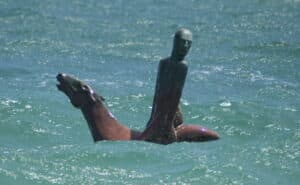
    Commemorative statue at Freemantle


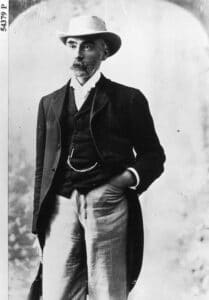
    Charles Yelverton O’Connor


    Her aunt, my great, great aunt, was Charles’ daughter, Kathleen O’Connor, the celebrated Australian impressionist artist who defied the patriarchy surrounding women artists of her time, and lived to her 90s.  Pat had some of her paintings in her Chelsea home. My husband and my daughters enjoy painting.  Pat lived until 100 and, even in her nursing home, she shared a bottle of good red with her fellow residents every night. I learned a lot from her – mainly that your glass should always be half full.

    Credit: Richard Woldendorp


    Some of my dearest friends today are from the civil service, school and university. Interestingly, in my time there, there were a lot of civil servants who had been raised in the Catholic church. Whether or not you continue the religion into adulthood, it does give you a sense of service. I love helping families to navigate global education systems which can seem incredibly complex.  Pastoral care is so much better now and we understand more about the emotional health of the child. There are still key improvements to be made in education, but it’s far cry from my experiences in the 1980s.

    My father and aunt Pat were givers. Dad loved to help others, young academics and children whom he tutored in chess. He sponsored a young girl’s education in India and, despite being an incredibly busy man, he wrote to her regularly.  He didn’t give a fig for money, rank or power.  He always said ‘be kind, for others are fighting a harder battle.’ I didn’t understand exactly what he meant then. I do now. We have a picture of Plato on our kitchen wall, with his quote below. My daughters have stuck a moustache on poor Plato. Having both studied ancient Greek, they should know the importance of this great philosopher.

    My father was also a man of his generation, without much freedom to express his emotions.  He would have had more emotional freedom now.  I remember him crying three times:  when his first marriage fell apart, when he watched a programme on Siege of Leningrad and on the day of the Brexit referendum result.

    I’ve made so many mistakes and continue to do so.  So did my father and my aunt. It’s essential to learn from them.  And to hold ourselves accountable when things go wrong. Staying in one’s integrity, and treating people well is not always easy – but it’s the most important thing. My father understood this.  With challenge comes growth.

    Ancestral lines are not just linear. Their branches grow thick and dense with our colourful ancestors whose loves, hopes and losses were not so very different from ours. When asked, most people can’t remember the names of their great grandparents. How quickly we are forgotten. A reminder to live for now and to do our best work.


  • Opinion: Energy policy will have a role to play in the 2024 US election result

    Randall Heather


    One reason why Trump’s numbers are looking good is because the Biden-Harris administration is so incredibly stupid regarding energy policy – so much so that every increase in the price of oil will be seen as a creation of the Democratic Party.

    Let’s look at what Biden and Harris have contributed to energy policy. He got rid of the Keystone Pipeline, but that oil is still coming down from Canada on trains and barges and the likelihood of a spill is multiple times that of a pipeline. Nor will they issue any new permits for oil- or gas-drilling on federal land at a time when oil prices have been going up. This means that everyone’s underinvesting in oil because it’s not politically popular.

    All of this means that not only is supply being shut down but that demand is going up and it’s hitting people’s pockets every day. Really, when you come right down to it the best thing we could do as an energy policy is to drill like hell for gas – as there’s so much of it out there. The world is a huge methane creating machine: if you displaced all the coal fire generation with natural gas then the impact on the environment would be substantial. But the green lobby go after natural gas as if it’s oil or coal. But everybody knows you have to have some sort of bridge to build a solar-based energy policy.

    The truth is we don’t have an energy crisis – we have an energy storage crisis. As things stand, we can’t take solar and wind energy and save it at grid level. The technology doesn’t enable us to store it for any length of time whatsoever – and until you solve that problem, you can’t rely on solar or wind.

    Which brings me back to the Keystone Pipeline and the question of why Biden might be struggling in those states like Pennsylvania, Wisconsin and Michigan which he needs to win to retain the presidency, if he’s well enough to contest the election. There are lots of blue collar jobs associated with the natural gas infrastructure, and if you make an intervention like the one Biden did, then any adverse fluctuation in the gas prices can be justifiably placed at your door. Added to that, there’s not much spare capacity globally – expect in states like United Arab Emirates and Saudi Arabia. But you can’t expect to switch off supply without some effect on prices, and therefore political ramifications.

    Biden is discovering this all too late. There’s the perception of a weak President – more than that there’s no real Bidenism that I can see which might amount to a core set of principles. It’s worth comparing him for instance with Bill Clinton. People forget that after Clinton came in in 1992, he immediately got cleaned out in the mid-terms, and had to work with Republicans. But he didn’t stick his head in the sand: instead he brought down the federal deficit and instituted some important welfare reforms. That led to a remarkably prosperous decade where the federal government even ran a surplus.

    That’s where Obama differed with Clinton. Clinton saw how he could make lemonade out of lemons – and it helped him in doing that, to have been the Governor of Arkansas. Obama, by unhappy contrast, had never run anything and it certainly showed. Biden suffers from the same affliction.

    What we’re witnessing with Trump’s resurgence speaks to a gap in America’s institutions: there’s no Leader of the Opposition in America. Trump has effectively been fulfilling that role by default – and you could say Nancy Pelosi did something similar from 2016-2020 during the Trump years. The system is too diffuse and lacks that gladiatorial atmosphere of parliamentary debate we see week in week out in the House of Commons.

    Politicians never debate each other except during elections and all interaction is done through the prism of the media.  No American President is called upon to do PMQs and the Cabinet meanwhile is absolutely invisible to the public. We’re paying the price of all that now – and who knows where it will end.

  • UK Climate Leadership: Government’s Opportunity to Lead on the International Stage in 2024

    Dinesh Dhamija presents the opportunities presented for the new UK Government to take a climate leadership role on the international stage.


    Marking a sharp deviation from the climate scepticism of the outgoing UK Conservative government, which disavowed environmental action, the new Labour administration has released ambitious green targets, with its eye on global leadership.

    This week the energy secretary Ed Miliband announced a £1.5 billion auction of renewable energy projects, sufficient to power 11 million homes, including 90 new solar farms with a capacity of 3.3GW and 20 new onshore windfarms. To attract bidders, the government had to face down opposition from local communities, who had hobbled the Conservatives’ renewable energy plans. Three major new solar farms have already gained approval, all of them in the east of England, in Lincolnshire, Rutland, and the Suffolk-Cambridgeshire borders.

    These projects are an initial step towards the tripling of UK solar power promised by the government, alongside its pledge to double onshore and quadruple offshore wind generating capacity. At the same time, solar-based generation across the UK is rising rapidly: it reached 2 terawatt hours per month for the first time in June 2024 and produced around 25 per cent more electricity this summer than in the same period of 2023. Rather than pandering to the oil lobby or appeasing NIMBYs, the Starmer administration hopes to show global leadership on climate action. Ed Miliband will attend Cop29 in Azerbaijan later this year, then host a 2025 conference with the International Energy Agency.

    Energy activists such as Harjeet Singh of the Fossil Fuel Non-Proliferation Treaty Initiative have urged the government to act decisively by announcing a new ‘nationally determined contribution [NDC]’ – the official term for an emissions reduction plan. “The UK has a critical opportunity to set the bar for climate leadership and equity by announcing a robust NDC,” he said.

    Climate experts point out that, with the United States in the throes of an election, and France and Germany both in political limbo, the UK can step up and demonstrate leadership. “It would be good to see the UK including its fossil fuels phase-out commitment within its NDC,” added Singh. “This would show the way for others to follow.”

    Energy secretary Ed Miliband has already visited Brazil, current president of the G20 group of developed nations and host of Cop30 in 2025. These initiatives are important for the future of renewable energy and the fight against climate change. I’m pleased to see the Labour government grasping the nettle early in its tenure, while it enjoys a large parliamentary majority and can ignore sniping from the sidelines.

    It’s too early to claim any kind of breakthrough or tipping point from this government, but it’s good to see evidence of its direction of travel towards a greater climate leadership role. Long may it continue.


    Dinesh Dhamija founded, built and sold online travel agency ebookers.com, before serving as a Member of the European Parliament. Since then, he has created the largest solar PV and hydrogen businesses in Romania. Dinesh’s latest book is The Indian Century – buy it from Amazon at https://www.amazon.co.uk/dp/1738441407/