Category: Opinion

  • The Poet at Work II: Alison Brackenbury

    The Poet at Work II: Alison Brackenbury

    As part of our regular series which looks at the relationship between poets and the workplace, Alison Brackenbury discusses her how she has managed to juggle the need to earn a living with her commitment to her art.

    Alison Brackenbury has had an unusually interesting working life. She won a scholarship to Oxford and left with a First in English. She subsequently married and moved to a small town in Gloucestershire, where she combined writing with horse-keeping, parenthood, grassroots politics and a variety of non-academic jobs. For twenty-three years, until retirement, she worked as a manual worker and bookkeeper in her husband’s family metal finishing firm.

    Her poetry shows deep respect for tradition. It has a worked-at burnish and commitment to form which reminds us of manual labour. Brackenbury is a maker, too worldy-wise not to know that a poem must reach as wide an audience as possible. There is a streak of pragmatism in her poetry, which sits alongside – and is perhaps fed by – a rare knowledge of nature.

    For Finito World, she has produced an exceptional poem ‘Metal Finishing’ which illustrates her many strengths: impeccable technique; a knowledge of the real world; the quiet humanity of her noticing. Above all, we always feel that Brackenbury, like Larkin – another poet who did actual jobs – understands that if poetry is to have any place at all in our busy lives it must be memorable.

    And that, more often than not, will mean that it will rhyme. But the point is that it is an insight that could only have been arrived at by her having once been busy herself. Brackenbury is a great advert for the idea that in order to write you first need to have done jobs.

    Metal finishing   

    Nobody worked like the West Midlanders.

    I scrambled off my bike from one sharp frost

    to find a driver dozing in his van.

    God knows when he set off from Birmingham

    to have his tooling first in Monday’s queue,

    be ‘Just in Time’, words spat by me and you

    as by steamed vats of acid or oxide

    we plated, coated, fought off rust, then dried

    laser-cut tools in our Victorian mews.

    ‘Like Dickens!’ grinned the driver while he chewed

    three o’clock lunch, then roared down our back lane.


    We quit. Accounts and knees reported pain.

    Small margins were not hard to understand,

    for decades, we wired robot parts by hand.

    There was untarnished love in this, no doubt.

    Our buildings saved us, sold, walls razed, dug out.

    Milk bottles crash. I wake. It must be four.

    I listen while the van throbs from our door.


    Notes about the poem


    Metal finishing: processes which protect metal from corrosion. I worked for 23 years in a tiny family company which spent half a century battling with rust.

    Just in Time: a production system in which manufacturers do not hold stock. Components are delivered by sub-contractors, ‘Just in Time’. It was not popular with metal finishers..


    Finito World: Metal Finishing is a wonderful poem. Whenever I read your poems I always feel: ‘This is someone who has done something else in their life other than poetry.’ Did your career empower you to write?

    Alison Brackenbury: I think that my work – especially in industry – gave me material for poems which is rather unusual in British poetry. For example, there may not have been too many poems in the Times Literary Supplement about a van driver’s narrowly averted industrial accident…

    I have always had paid jobs which had no direct connection with poetry. This did make me aware that many people are unacquainted with or even frightened of poetry. This strengthened my own desire to write poems which attempt to be as musical as possible, and relatively clear. There’s always room for a little mystery!

    Conversely, what role did your love of poetry have in giving you confidence in the workplace?

    Like many people – perhaps, especially women? – I have had to be pretty pragmatic about what I did, simply to keep the financial show on the road.

    I have had three, very varied main jobs. When I ran a technical college library, I was regarded (rather optimistically) as a source of knowledge about literature and poetry. There was (then!) just enough spare money in the budget to buy a little poetry. I was amazed and pleased to find one day that a young woman police cadet had plucked a copy of Wordsworth’s poetry from a display and was reading it aloud to some remarkably meek male colleagues… In a public sector admin. job, I again had a rather undeserved reputation as an expert on literature and language. When consulted on knotty points of grammar, I would point out blithely, that poets simply dodged such issues and wrote something quite different, invented if necessary! In my hectic industrial job, few of our sixty customers knew that I wrote. But I was sufficiently fierce about language to be unimpressed by various waves of fashionable phrases, used in larger companies. Privately, I always referred to ‘Just in Time’ as ‘Just Too Late’. Post- Brexit, I fear that this international supply system may be ‘Much Too Late’…

    The government has recently said that poetry should be optional at the GCSE level – a significant demotion in its importance on the curriculum. What is your view on that and what do you feel the impact will be?

    I have great admiration for teachers, but I’ve never taught, and my daughter is now in her thirties. So I don’t consider myself an expert on poetry in the curriculum. But I do know that many people ONLY know – and value – those poems which they encountered at school, especially if they learnt them by heart. If they don’t come across poetry which appeals to them in their curriculum, the one chance may be gone. 

    What poetry should be on the curriculum? I can only offer three observations. First, having to study one set text which is the work of a single contemporary poet may have the very unfortunate effect of turning many pupils against that poet! I’ve heard this widely reported from university lecturers, who find that most of their students are prejudiced against the major living poets on their former school curriculum. Secondly, I think that the subject matter of a poem may be more important than its period. My daughter reported from her (very mixed) comprehensive that the boys in her class were truly impressed by the poetry of the First World War. Finally, I think there is a case for studying an anthology – possibly a themed one, with poems from various periods? There’s a better chance, in that variety, that a student will find one poem whose sense speaks to them, and whose music stays in their mind.

    Was there a particular teacher when you were younger who turned you onto poetry?

    No, although I did have some very good teachers who introduced us to a range of work. I remember poetry books being available to read in the later years of primary school. I discovered much! But I could have been put off poetry for life by my first class in that small village school. Our (untrained?) infant teacher used the dullest doggerel I have ever encountered. I don’t know where she found it. I dreaded those afternoons.

    What’s your favourite poem about the workplace?

    A Psalm for the Scaffolders’, by Kim Moore. It’s a compelling – and fiercely humorous – account of a dangerous, skilful job. Technically, the poem is entrancing, with its repetitions and powerful beats: truly, a modern psalm. Kim is much younger than me, and has so far only published one collection. She is a poet to listen out for – and she had her own skilled previous career, teaching children to play the trumpet. 

    I can reveal, after hearing her read, that the man who fell thirty feet (and lived) is her father… Here are the scaffolders:

    https://www.poetryinternational.org/pi/poem/27299/auto/0/0/Kim-Moore/A-Psalm-for-the-Scaffolders/en/tile

  • Opinion: Getting rid of exams will create a generation unfit for the workplace

    Opinion: Getting rid of exams will create a generation unfit for the workplace

    Alice Wright

    Exams are never popular and are never going to be. They’re stressful and known to induce waking nightmares well into adulthood. Occasionally I’ll wake up in cold sweats thinking that I’ve missed my History A-level paper on Henry VIII’s foreign policy. There is no point in glamourising it: exams are horrible. 

    They are however, necessary. Exams are the first time you feel the reality of having your future in your hands. To be able to excel under your own steam and with those results, craft a future of your own choice. Life as we know it is pressured, and exams introduce a person to that in a controlled environment. They teach time management and stress control. 

    Yet there are a cohort of teenagers whose first experience of exams may also be their last. It is the 2003-2004 age group whose GCSEs were cancelled last year, no longer sit AS levels, and who must face their final school exams with no real preparation at all. 

    GCSEs should be considered a learning curve, a stepping stone. I am in full agreement with those that think children of that age are put under too much stress – but not with those that want them removed completely. AS levels used to represent the next step, to break the leap into higher education. Being worth half of the overall marks, they provide the opportunity to learn and improve the following year. 

    Whilst 50 per cent of this cohort will likely go on to university or college, the other 50 per cent will not, either moving into apprenticeships or the world of work. Both demographics will suffer from not having experienced the preparatory rigour of exams. 

    If the cancellation of the last two years’ worth of exams, (and potentially next summer’s too) led to a genuine overhaul of our education system where we began to cherish learning for learning’s sake instead of mass-produced league table fodder, I would understand. If we replaced these assessments with another form that delivers the same lessons in diligence without so much anxiety, I would be all for it. 

    Alas, I see no such utopia in sight. Therefore this cohort’s lost opportunities must be addressed, and plans to mitigate how this will affect their futures long term should be made now. 

    Photo credit: Studio Neat

  • Talan Skeels-Piggins: ‘Ask yourself: how many people have you helped?’

    Talan Skeels-Piggins: ‘Ask yourself: how many people have you helped?’

    I wanted to become a P.E teacher because I am passionate about sport. In a team game I always enjoy working with others and individually. I’m a bit sad that I’m no longer teaching, but life changes and we’ve got to move with it. If you’re always looking over your shoulder at what you were then you’re never looking forward at what you could be. 

    I was in the Navy as both a regular and then as a reservist. In the regulars, I was a fighter controller in the operations room. I was only in my early twenties and there was a massive amount of responsibility placed on me at that young age. When I was a divisional officer, I would mentor a group of sailors that were in my charge, helping them along with their careers. That was very rewarding. 

    I did six years as a regular and then I was a reservist. Shortly after I joined the reserves in November 2002, I was paralysed, at the beginning of March 2003, as a result of a motorcycle accident. Initially the Navy dismissed me, but I wanted to go on my own terms. I argued my case to the medical board of survey and proved that I could carry out the same requirements an able-bodied officer would have to. I did the bleep test, the mile and a half run in a race chair, the weapons handling test, the gas mask handling test and I passed each one for my age group. I did everything that would have been expected of me if I had been able-bodied.

    Then I went to the medical board of survey and put forward all the things that I could do. I accepted the considerations and understood that I would not be going to sea again, and I ended up working with NATO. 

    My case has set an important precedent in allowing disabled people to remain in the armed forces. Back in 2003, I wasn’t allowed to tell anybody the outcome as the Navy were concerned that the floodgates would open and all those that had been previously dismissed would want to return. Then there were all the injuries from Afghanistan and Iraq, and people were able to use my ruling as a precedent to continue serving in whatever shape they could. It’s great to see that the military now do not simply give up on the wealth of knowledge that these people have.   

    We learn as we go through life; some of the learning we don’t even know we’ve got. We experience things and they remain dormant inside us. After the paralysis, I was in a pretty dark place, this massive change had happened to me and when we have change happen to us, all we can see is the change. Initially, for me, it was a space I didn’t want to be in. 

    Luckily for me, I had a chat with a guy, who had also become disabled, who had come in for a regular check-up, while I was laid up in hospital. He told me about the opportunities that were still there for him. He started to list things: he still had a girlfriend; he still drove a car; he lived by himself. Then he said he had been skiing. I couldn’t believe that; I thought it was incredible. That became my little goal: to get out of hospital and to learn to ski.  I didn’t know at the time that I would become a gold medallist in the European championships.

    In order to do that, I had to accept what had happened to me. The more I looked internally, the more I realised that we have this untapped power, resilience and energy inside of us. I call it the little person inside. I believe that we all have it. I don’t have any magical ingredient. I’m not superhuman. I’m not special. We should use ourselves as our greatest source of inspiration. You don’t need to look externally for inspiration.  

    Motorcycling would become another passion. As with the Navy, I went about getting permission to race motorbikes by looking at the arguments as to why I couldn’t do it and then I would try and show what I would do to overcome that obstacle. Gradually I worked through all the different obstacles, and jumped through all the hoops that they put me in. 

    To finally do it, it was the most thrilling thing I had ever done and it then opened the pathway to others. Since that point in time there have been quite a few paralysed motorcycle racers and all they have to do now is go to a club, get their license like anyone else and they can race any capacity bike. There are no restrictions placed on them. 

    In Great Britain you are either a motorcycle racer or you’re not, and that was what I was fighting for. It is a really fabulous thing for me as a paraplegic to go and compete with able-bodied cyclists. It’s a little bit of escapism because for that moment in time I am simply a racer and I’m not being treated any differently from an able-bodied racer. I feel free from my wheelchair, my disability and the restrictions that have been placed on me due to an accident. For my own personal mental health it is vital that I get to compete against able-bodied people. 

    I set up a charity called The Bike Experience. I take disabled people and help them to learn to ride motorbikes. We’ve taught over 400 people so far. Some people come once and it’s the catalyst for them to go off and do other things, whether that be triathlons or fly planes. Some people come back and they’re able to ride on the road again. You see someone arrive nervous; when they leave they look like they can take on the world. 

    After 13 years of being paralysed, I had a conversation with myself about what it means to be a human being. I asked myself: ‘How do I validate my existence?’. The answer I came up with was: ‘How many people have you helped?’ and I realised that since I’ve been paralysed I’ve helped more people than I would have done if I had been able-bodied. So therefore, I wouldn’t change what has happened to me. That moment was when I fully accepted the change in my life.      

    It’s a very difficult time right now, and everyone is experiencing change: they’re allowed to be upset. Sometimes when you have things that affect your life it sets off these waves or these ripples in your timeline, but it’s realising that it is only temporary and the next peak is coming. Don’t feel as though you are weak for being upset. We can all grow and learn by giving something back. I think we don’t take enough time to do self-reflection. It’s amazing what you can get from it.  Everyone is an amazing person, you just have to believe in it.

    Talan Skeel-Piggins was talking to Alice Wright

    https://www.existentialbiker.com/the-bike-experience.html#
  • Sports focus: Mayweather vs Paul and the Rise of the Freak Show Fight

    Sports focus: Mayweather vs Paul and the Rise of the Freak Show Fight

    Ben Godfrey

    In the past few years we have come to accept strange as the new normal, so perhaps it should come as no surprise when we see a YouTube star booked to fight one of the greatest fighters of all time.

    There has been much talk about whether this kind of freak show is good for fight sports or not. Does it degrade the dignity of a noble and dangerous profession? Or does it draw a wider audience to the sport that might ensure bigger pay days for real fighters in real fights in the future? Probably both are somewhat true. This, however, is not what is most interesting. What is most interesting, is why so many people find these fights so compelling.

    First, let us chart the evolution of this oh-so post-post-modern spectacle. It all began with KSI vs Logan Paul in August 2018. That fight saw two YouTube stars who had been beefing online decide to settle it in the ring; they were smart enough to monetize it.

    Eddie Hearn (Matchroom Boxing) saw the money-making potential of the event and threw his promotional weight and know-how into the cauldron. A monster was born. An 8 fight event, with a host of internet stars, who are apparently followed by a horde of hundreds of millions online. Two or three events and one unconscious NBA player later, Logan Paul signed a contract to fight Floyd Mayweather Jr. (arguably the greatest defensive boxer of all time). Meanwhile Jake Paul is set to box retired MMA fighter Ben Askren.

    So, what does this tell us about humanity? Firstly, it shows that even people with little interest in fighting excellence love a good scrap. We would probably be pretty uninterested in watching two people play an unskilled tennis game, but if a fight kicks off-at a sporting event, at a pub, in a nail salon, we can’t take our eyes off it.

    Secondly, what is even more compelling than watching two strangers fight? Watching a friend fight. Internet stars make a living out of sharing with fans, posting 2, 3, 4, 5, maybe even 20 times a day; their teenage fans see these people more often than their best friends, maybe even than their mothers.

    But what makes these fights most compelling, is the collision of the fake and the real, the constructed and the chaotic, the candy-floss simulacrum and the steak-and-eggs visceral. Perhaps nothing is more symbolic of 21st century veneers of false reality than the rise of the internet star; curating and distributing a cult of personality to millions of zombie-eyed followers, all the while getting paid for sponsored content.

    Equally, perhaps nothing is more symbolic of older, simpler times, than two people agreeing to duke it out in front of a crowd until one is proclaimed the victor and the other the vanquished. Perhaps I am sentimental, but I hope that the real wins out here. Mayweather may be twice Paul’s age and half his size, but the smart money is still on him – surely, there is no possible world in which he loses? That would be like Donald Trump winning a presidential election.

  • ‘You’re on mute, sir, mute!’: the tribulations of an online vocational degree

    ‘You’re on mute, sir, mute!’: the tribulations of an online vocational degree

    Daphne Phillips 

    So far this academic year, I have been luckier than most. Since my Masters is vocational for the first term, September through to December, I was still able to have in-person teaching on most scheduled days. 

    After the loneliness and fatigue of the first lockdown the new restrictions in the late summer and autumn were comparatively airy. While any activity was still conducted by the book – including wearing masks at all times and keeping a two-metre distance from one another – in-person teaching allowed me to get to know my small cohort of 24 that would be taking the course alongside me. To sit in a room with my contemporaries during a seminar felt like finding gold dust. 

    Fast forward to 2021, however, and there are no such considerations. Like almost everyone studying anything except medicine this term, my course has been relegated to an online-only affair. The trials of this are threefold. First, like everyone we’re sick of shouting “you’re on mute, sir, mute!” at a frozen pixilation representing a lecturer. Secondly, there are facilities that need to be accessed in labs and studios that simply cannot be replicated at home in student flats.

    Thirdly, there is the unpalatable question of expense. Masters are expensive and universities – as with undergraduate programmes – understandably insist on retaining full fees. There is an undercurrent of manipulation in the discourse around the expense of education at the moment. To complain, or even question, the idea that full fees should not be demanded, leads to calls of “aren’t there more important things to worry about?” Of course, the answer to that question is always going to be, yes. But that in itself doesn’t make the concern any less legitimate. 

    Vocational masters degrees are paid for by postgraduate students and what do they get in return? Alongside academic teaching, they are paying for access to industry experts and facilities. If facilities can’t be accessed then this needs to be taken into account, as does ‘access’ provided by webinars. Often the same experts are doing similar things for the public too while stuck at home. The element of exclusivity is being eroded and students know this.  

    Furthermore, working on large-scale projects is difficult when you can’t be in the same room with your teammates. Long days and constant conversation are required to complete tasks while ensuring as little overlap in labour as possible, and to make sure that diversions from the goal are limited. There is the option of a 12+ hour continuous Zoom call but it’s hard to produce free-flowing writing when you feel watched and conversation is stilted. I miss the shared energy of a group of people sitting around the same table, papers flowing around, where a single purpose is met. 

    Even those doing non-vocational academic Masters are limited by access to resources. A friend of mine who is completing their Masters in History cannot obtain all the relevant books without full admission to libraries, nor can he complete elements of research without access to archives. 

    This is not to say that restrictions are unnecessary but financial compensation ought to be considered, as should consideration on a case-by-case basis for the limits that homeworking brings to postgraduate education. 

    Picture credit: DC John

  • Does the NUS actually represent students?

    Does the NUS actually represent students?

    by Alice Wright

    The National Union of Students (NUS), founded in 1922, is a confederate organisation of over 600 individual student unions. Overall it purports to represent seven million students. The Union is no stranger to criticism and scandal. In 2018 it faced a disastrous £3 million shortfall and its policies have long been grumbled about by many students. Yet it is the policy decisions it has made during the pandemic that have caused its most vocal criticism and concerted opposition to emerge.

    The NUS’ new leader, Larissa Kennedy, has mobilised the NUS in support of the University and College Union’s (UCU) decision to demand all higher education courses move to completely online teaching. The NUS’ latest ‘Students Deserve Better’ campaign demands “a move to online teaching as default”.  

    While Kennedy purports to represent the collective voice of students, this is not the full story. Of course, there will inevitably be a difficulties when any large organisation seeks to represent a large and diverse constituency like the UK student population. However, many students have voiced concerns in the press. As a student myself, anecdotal experience suggests that students overwhelmingly want to retain as much in-person teaching as possible. 

    But whereas the UCU is an opt-in membership for individual academic employees, the NUS works in a way less likely to enfranchise its membership. Students are represented by their own institutions’ unions, who then feed into the umbrella organisation. Look closer, and even the ‘democratic’ nature of individual student unions is open to question. The NUS website claims that voting in student elections exceeds 250,000 votes annually, but out of the total 7,000,000 students, this is only 3.5%. In spite of these numbers, the NUS is considered the voice of students, consulted by university and government officials and quoted as the leading student opinion by the press. This is misleading and fermenting a disparity between the Union and those it claims to represent.  

    It is clear that periods of time, particularly during this stringent Lockdown 3, will require students to work online, the NUS and the UCU have claimed they are following the advice of SAGE in pushing for all teaching to be moved online. Many students would have preferred to keep in-person teaching, or at least the blended approach that was promised at the beginning of the academic year during the more relaxed tier systems. 

    Not only does this represent better value for money with courses exceeding £9,250 a year, it is also a mental health touchstone. There is no comparison to being taught and engaging with your contemporaries physically present. Break-out rooms on Microsoft Teams and Zoom are painfully awkward and online lectures are less engaging. 

    There are also concerns about the precedence of the NUS’ demand for “online teaching as default” sets. If seminar leaders and lecturers are able to create online powerpoints and recorded lectures once, what is to stop the same subject matter being churned out year on year, while institutions continue to charge full fees? 

    Kennedy, who said in a Guardian interview back in August “A real worry is that we cannot trust universities to put student and staff safety first, because they are too preoccupied with their position in the market. […] They’re committing to in-person teaching, which they haven’t necessarily thought through from a safety perspective because they’re in competition with other institutions.”  

    Since students have been made into consumers, it is only right that they demand the product they have been promised and that institutions do what they can to meet that marketplace demand. 

    Photo credit: Barnyz

  • Opinion: It’s time for us all to praise the unsung heroes of the pandemic – students

    Opinion: It’s time for us all to praise the unsung heroes of the pandemic – students

    by Diana Blamires

    Students have been blamed for spreading coronavirus and pilloried for having parties during lockdown but there have not been headlines trumpeting the good they’ve been doing in the pandemic.

    Medical students and student nurses from universities across the country have been helping on the frontlines and many have now volunteered to help with the mass vaccination programme.

    Academic staff are also lending a hand. Coventry University Assistant Professor Steph Coles, a paramedic who herself was ill with coronavirus last year, started working at West Midlands Ambulance Service over Christmas as soon as the academic term ended because she wanted to support her healthcare students who had taken on roles helping the NHS.

    In Northern Ireland, medical students and nurses were fast-tracked into roles helping out with the pandemic as soon as their university courses finished. Our healthcare students are among the unsung heroes of this pandemic working long hours to play their part in saving lives.

    This is a far cry from the proliferation of headlines blaming students for spreading coronavirus and censuring those who have been arrested for holding parties. As always, the few spoil it for the many. The vast majority of students are following very strict guidelines. International students who are stranded on campus are strolling or running on their own or with one other student. Shopping trips for food are predominantly alone. The overwhelming majority of students are loyal to the communities in which they live and want to play their part by not spreading the virus.

    Contrary to headlines about isolated students with no university support, some universities have gone to great lengths to focus on the welfare of students during the pandemic. The University of Buckingham is even enabling students to take therapy dogs out for their daily exercise. A student is allowed to go for a walk with one member of the welfare team and the dogs. In normal times the university’s two black therapy cockapoos, Millie and Darcie, are available to help homesick freshers who are missing their pets, and relieve anxiety for stressed students. Walking and cuddling them calms students at exam time. Research indicates a few minutes spent petting animals, especially black dogs, helps to reduce the stress-inducing hormone cortosol.

    Furthermore, most universities are offering virtual sessions simply for students to chat and air concerns. A number of smaller ones are arranging for students to be phoned regularly. Counselling sessions are available online.

    There are the many students who have helped with Oxford University’s world-leading vaccine programme and other such research projects who have quietly played their part while the university grabs the limelight.

    Although headlines are shrieking about students paying rent while living at home a significant number of universities managed to offer face to face sessions on campus right up until the end of last term when the government announced lectures must be online only. Many universities managed one to one or very small group meetings in person. Students at universities with face-to-face and good online provision are not asking for their money back for tuition fees as they feel their university did the best it could in the circumstances.

    The estate departments of universities went to enormous lengths to ensure in-person meetings were in safe environments and cleaners were deployed to guard against the spread of coronavirus as a result of those sessions.

    Student unions also pulled out all the stops to come up with imaginative ways of enabling groups of six to meet outdoors including barbecues and outdoor workouts as well as picnics and organised walks.

    Whilst inevitably in some student cities the virus thrived when students first arrived, in the autumn many stopped the spread in their local communities thanks to huge efforts by staff and students. It is vital that we appreciate our students for the positive and vital role they are playing in this pandemic rather than simply berating them as superspreaders when the vast majority have played by the rules and had a very challenging year at university as a result.

    Photo credit: Micurs

  • A Question of Sport: is the government underestimating the loss of physical education?

    A Question of Sport: is the government underestimating the loss of physical education?

    by Alice Wright

    Many battles were won on the playing fields of Eton, and while we’ve moved past that elitist old lie, the central tenet may still be true: sports is a vital part of education in preparing children for the challenges of future life.  

    School for an entire cohort of children has been irreparably disrupted, and whilst the focus has rightfully been on what is missing in the classroom, the loss of physical education in all its sweaty variety should be cause for concern too. 

    There are many reasons for that. School sport is more than just a government-mandated bleep test, it’s a chance to learn the unquantifiable skills of teamwork, perseverance and problem-solving in a safe environment where the stakes of success and failure are low. 

    Sport is also about developing these skills into coping techniques. Navigating stressful situations in the workplace and the inevitability of friction with colleagues will not be easy for children who have not had the opportunity of honing such skills on muddy playing fields. Generation Z-oom will not always be able to simply mute those that irritate them, and there will be a reckoning for the soft skill deficit we build up with everyday that children are out of schools. 

    As well as being good for physical fitness and mental wellbeing, school sports equip children with the knowledge to take care of themselves physically and mentally in the future through knowledge and by building healthy reward pathways, self-esteem and discipline. 

    With still some way to go, schools were coming on leaps and bounds to make sports inclusive, no matter children’s gender, religion, disability or culture. Such strides will most likely be lost to the progress and attainment abyss of the last twelve months. Ofsted has little interest in sport, and its qualitative benefits do not neatly fit government box-ticking progress sheets – therefore it is being forgotten. 

    Sportsmanship may sound like an archaic principle now but there is something in the gentle aggression of a sportsperson that shows they know more than how hard to hit a ball. Joe Wicks, ‘the nation’s PE teacher’, reaches millions of living rooms across the country in his 9am ‘PE with Joe sessions’ for children and adults. Marcus Rashford, the Manchester United forward and free school meals campaigner, has steered government policy for children over the last year. It is clear both men owe more to sport than just stellar careers. They are both motivated and positive individuals with drive, as well as effective communicators, campaigners and organisers. 

    Wicks and Rashford have both spoken openly about the way in which sport can be the crucial lifeline that engages many at-risk children in school. Without it, drop-out rates could increase. This is already a serious problem. Between lockdowns the amount of children returning to school dropped significantly, with over 50% of those no longer attending ‘vanishing’ without explanation. A holistic approach to education includes sports, and the loss of it must be considered too.  

  • Opinion: Diana Blamires on the need for live learning in the home

    Opinion: Diana Blamires on the need for live learning in the home

    Diana Blamires

    The recent plummet back into homeschooling has shown that the gulf between setting homework and live classes could not be wider. In some cases, it will mean the difference between passing and failing GCSEs, or worse, a career succeeding or failing.

    Assiduous students will most likely succeed with or without live sessions, but there is a huge swathe who will lose out if there isn’t a full diet of Zoom-style live engagement every day. This is why MP and Chairman of the Education Select Commitee Robert Halfon’s decision to call for the government and Ofsted to urgently come up with detailed guidance for online provision is so well-timed.

    Boys are most vulnerable; peer pressure dictates that set work should be done as fast as possible, not as well as possible, and the rest of the day is usually spent on the playstation. Once we hit the anniversary of the first lockdown, some students will have lost almost a year of their lives to such recreations. They will have shot down their chances of success with too much time spent on the wrong kind of screen.

    What’s more, lazy students forfeit their place on the top table by pretending to do their work when in fact they are inputting random answers just to get the work done. The students whose parents have time to check that Seesaw, an online learning app, hasn’t been swapped for social media will succeed. It’s easy to look like you’re top of the class when you’re on Tik Tok.

    Social media depicts earnest children and parents at the kitchen table with laptops, but don’t be deceived: for those with challenging children the struggle is untenable. When asked to do set work, many children react with defiance. This leads to the offering of sanctions or bribes, and the defiance continues. Some children are immune to sanctions and bribes, and for a significant number of challenging children no work is done. And parents, working from home, are most likely at their wits’ end.

    This scenario is being played out in countless homes by families (or worse, single parents) every day. Some parents resort to violence or the child lashes out, and the situation escalates. Zoom work calls are abandoned and siblings are left traumatised; parents have breakdowns; children struggle with their mental health. Remote homework has the potential to morph into more serious situations and bring about new challenges for exhausted parents.

    Asking a child to attend a live lesson, however, is not often met with the same defiance. Children want to be with their friends in real time as they are desperately missing interaction. After face-to-face interactions, live lessons are the next best thing. And it is not just private schools who get a glowing report. Some state schools are offering a full timetable of live lessons, and those at the top of the class in the state sector have proved it can be done. 

    Some childrens’ futures are being needlessly thrown down the drain. It’s time to act; it doesn’t take a GCSE in computing to provide a week of live lessons, and they will change lives.

    Diana Blamires is an education PR consultant

  • Sharon Hodgson on why we need to renew our focus on the arts in education

    Sharon Hodgson on why we need to renew our focus on the arts in education

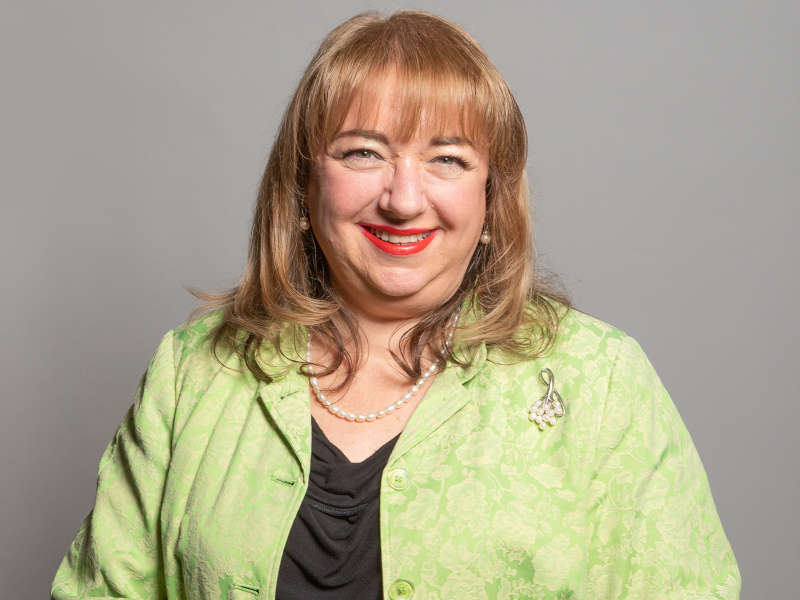
    The Shadow Minister for Veterans Sharon Hodgson explains how a broader arts-based curriculum could transform our economy.

    It was Jeremy Corbyn who first came up with the idea of an arts pupil premium that might be used to close the gap for disadvantaged children. Myself and Susan Coles – with whom I set up the All-Party Parliamentary Group on Arts Education – were excited when we heard the announcement. It seemed the right thing to do: if you grow up in households where the arts are appreciated that just happens. Usually it’s poorer households that don’t get that cultural capacity.

    School is meant to be a leveler and an equalizer. Lockdown has shown that when you take school out of the equation it really does lay bare not just the inequality in economics but cultural inequality. A whole generation of people are then going to be the best part of a year behind. Some will have had an amazing lockdown education, but overall the cultural gap will have widened.

    You hear a lot from the Conservatives about character in education, but it’s my belief that the arts are the best teacher of resilience and confidence: in the arts, you tend to try and fail before you get it right. That’s definitely what you need in an employee when they get into a workplace, no matter what work is conducted in that place. If all you’ve got is someone filled with knowledge and the ability to pass exams, then they’ve got no capacity to think outside the box.

    They’ll have no capacity for innovation or freedom of thought; they might only have been told what’s right and what’s wrong. They lack the creative freedom and too often seek instruction from their employer.

    That’s why the Chinese have started looking here for our creative education – and the same is true in Singapore and South Korea. Those countries have tended to churn out people who are good at passing exams. The irony is that just as they’re looking to learn creativity off us, we’re leaving creative learning behind in our state sector.

    What’s really required is a broad and balanced curriculum. In Wales from September 2020 there’s been a new curriculum with arts and well-being taught as a mandatory part of the curriculum. The same is true in Scotland, where the arts are also valued. What we are aiming for is for the arts to be elevated to that extent in England.

    Some people have criticized the idea of the arts pupil premium as being all about ephemeral away days – trips to the theatre and museums, and so on. There’s nothing wrong with away days, but it needn’t be only that. Imaginative teachers could use it for a whole host of things. Under Corbyn, we imagined that if we did have an arts pupil premium we might give guidance to make sure teachers understood the range of things it might be used for: it could be used to buy fantastic art materials, to recruit amazing teacher specialists, or to bring artists into the school setting.

    The argument is clear – and if anything, it’s been brought into sharper focus by the pandemic. More and more children under lockdown are having troubles with their mental health – and we know that art is able to help with that. I’m not saying that Math and English don’t give joy, but our spare time as adults is usually spent around the arts but in school that seems to have been left to one side, by people like Nick Gibb especially.

    The irony is that the creative industries are valued by the Treasury but not so much by the Department of Education. There’s no joined-up thinking across government. We’ve had five education secretaries in ten years, and unfortunately Nick Gibb has been around for a lot longer than I would have liked. I don’t wish him ill – I just wish him into another job. He doesn’t have a background in anything to do with arts and education. He has fully bought into Michael Gove’s ideological stance.

    It’s because of Gove that our APPG was formed. The EBacc has been especially problematic in terms of its unintended consequences for the arts. Gibbs came to our APPG and we told him he needed to acknowledge the effects of the EBacc. We had 80 experts in the room and Gibbs simply stated that he had an ‘alternative set of facts’.

    The trouble with academies is that they create a system of ‘postcode luck’ with regards to whether you have access to the arts. Sometimes the free school system allows schools to be innovative but at others they detract from what should be a standard. We may have to look at governance again and consider getting schools back under local authority control.