Category: Opinion

  • Leah Houston’s amazing bursary journey

    Christopher Jackson

    One sometimes hears someone called a ‘black sheep’ of a family as a pejorative term. It needn’t be like that. Most people who look inward in any concerted way find some surprising differences between their own hopes and dreams and their outward circumstances. Knowledge of this difference can open surprising inner capacities and point the way to a fruitful life. In the best cases, it is possible to strike out in a different direction from one’s family, and to feel no sense of alienation whatsoever – but instead to feel a sense of loving journey, which ultimately all members of the family will accept and profit from in understanding.

    Something like this appears to be happening to Finito candidate Leah Houston. I ask her about her upbringing: “I’m from very humble beginnings,” she tells me, her accent distinctively Northern Irish. “Education was never pushed for me. It wasn’t the world I was in. I’m the first in my close family to be interested in my studies, and then to want to pursue them, and then to go onto university at the Belfast Bible College in Dunmurry, Belfast.”

    Despite this, Houston is aware of many similarities between herself and her family. “On the other hand, working hard was pushed on me – it was a question of financial necessity. I’ve had a part time job since I was 14. After school you went to work: food had to be placed on the table somehow. In hindsight, I wouldn’t have changed a thing at all.”

    So what did her parents do for a living? “My Dad is typical Northern Irish. He is a part-time farmer and he sells animal feed from a local agricultural shop. My mum worked in office work all her life – then she had me. She felt that to stay at home was her calling, but then she started looking after other peoples’ kids and soon she had her own childminding business.” This seems to amount to a strong entrepreneurial streak in the family. Houston agrees: “You have your hands and you can do something about it – so go work,” she says, simply.

    This innate understanding of business was already becoming apparent in Houston’s choices. “Business makes sense to me,” she explains, “seeing something through from 0 to 100. You’ve got to see what you’re good at and make something of it. I studied Business through to A-Level and initially thought I would study that subject at university as well. But I had a bit of a change of heart.”

    This brings in another side of Leah – her religious belief. “I grew up in a strong Christian household,” she recalls. “It wasn’t pushy but it was fostered. So I studied religion and law at university which was a major change.” Throughout our conversation she will talk about her faith in the relaxed, confident way which people do when their beliefs are deeply embedded.

    I am interested to know how this degree was structured. She explains: “The main aspect of it was theology, but with world studies, policy and law examined. It was all to do with how one’s faith works out in the public sphere. I was focused predominantly on Christianity but I also did world religion modules.”

    This decision garnered a mixed reaction at home. “My extended family – my cousins and so on – weren’t sure. Firstly, because I’m a woman – that didn’t go down well, and led to some opposition. Some also thought I would lose my own faith, and question what I believe.” And has she? “I haven’t. Growing up in a Christian country, Christianity can be ugly because it’s political. There have been civil wars in the name of Christianity in my country. I came out the other end with a wider appreciation of all religions and the part they can play.”

    Houston loved her degree, but like most humanities degree, the gain of doing something one loves had a flipside: such courses don’t lead to such clear destinations as vocational courses. “I didn’t want to go into the Church, so in hindsight it was a much harder option. For the first few years I thought it was all amazing, but I’m not philosophical – I’m much more practical. My interest is in thinking how faith values can be implemented. During the three years of my degree, I did some time with a charity at home called the Evangelical Alliance. That organisation tries to bridge the gap between Church and politics. In hindsight, my time there planted the seed for politics and the public sphere.”

    This seed came to fruition when Houston began working for Baroness Anne Jenkin in the Houses of Parliament. “When I finished university, I thought: ‘What the heck am I going to do next?’ I came across Christian Action Research Education (CARE) a charity which seeks to facilitate getting a job as a Christian in politics in addition to offering training in thinking about politics. Anne Jenkin is extremely kind and said she’d take me for a year.”
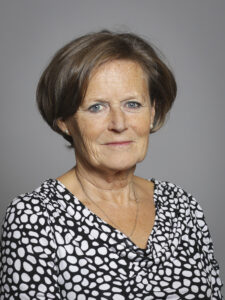
     

    Baroness Anne Jenkin has been a huge help in Leah Houston's career journey

    And what were her impressions of the role? “Anne is so hard-working – no two days are the same for Anne,” Houston recalls, laughing perhaps at the remembered bustle of it all. “I was involved in diary management, speeches and organising meetings she would host. It was general ad hoc stuff and I was an extra pair of hands.” Leah brought a very clear sense of purpose to the role. “I was there to serve Anne – to allow her to do her job better. That could be sending letters, or photocopying, or making a cup of tea. I also became immersed in the question of gender ideology, which is one of the key issues for Anne.”

    And what was the culture like in Parliament? “As a practising Christian myself, I was interested to discover the APPG, Christians in Parliament, that is a cross-party group of Christians. As long as you were a passholder you could be a part of that: MPs, kitchen staffers, it didn’t matter. It brought a sense of community, with weekly services held in the Chapel of St Mary Undercroft. Politics is so polarised and tends to be all or nothing. It is meaningful to have something that unites: at election time we prayed for whoever was in leadership.”

    Through Baroness Jenkin, Leah met Finito Education CEO Ronel who saw Leah’s potential. “Ronel is a great supporter of Anne and he took me under his wing. I was with Finito for half a year and the investment in me was incredible.”

    This is good to hear and I ask her what the impact has been. “Besides all the practical things such as the LinkedIn training, the CV writing and the mentoring, I especially value the confidence that the Finito service gives to someone in my circumstances. It was as if I was being seen for the first time. This was so encouraging for me especially given my upbringing, where my wanting to succeed was perhaps sometimes considered a bit weird. My extended family would wonder why I was in London, and why I’m in the job I’m in. This was an organisation which wanted me to succeed.”

    This process of building confidence in an individual is integral to the mentoring process. It begins from our first encounter with a new student. Houston recalls: “I remember vividly the first meeting with Ronel where I brought him my CV. When I had been in parliament I had co-founded a network for the protection of gender-critical views. I showed my leaflet to Ronel and it was an incredibly important moment, because someone was looking at my work, and taking an interest in me. It brought me an overwhelming sense of pride.”

    Mentoring is to do with becoming reoriented in one’s life by coming into one’s essential self.  Houston recalls that her being photographed by in-house photographer Sam Pearce continued this process. “I spent an afternoon with Sam and I noticed that she took the time to make me feel comfortable. She also took time to ask questions between pictures – it was not a transactional photoshoot, it was more an investment in who I was.”

    Following on from there, Leah had her LinkedIn training with Amanda Brown (‘incredibly helpful’) and then began work with her lead mentor Tom Pauk. “He was so lovely and I was telling my heart and how I feel things deeply. He said: ‘I think you need to go into the charities sphere’. I said: ‘ I think you’re correct.’ And now I’ve landed a job with a charity which is a start-up. Tom was amazing, and gave me contacts.’

    From Pauk’s perspective, Houston made an excellent impression. He recalls: “Leah struck me as a highly intelligent, articulate and values-driven young woman, seeking a position where she can employ her myriad skills to improve the lives of others, especially those of women and children.” Pauk noted early on that her priority was ‘to use her lobbying skills to help bring about changes and social impact,” adding that “she is not driven by earning a high salary, though she’ll need a sustainable one.”

    When the job came along it all happened very quickly ‘in the space of a week’. Houston brings me up to speed: “I now work for a charity called Forum which is based in London and has launched in America too now. Its purpose is to serve leaders and influencers from all sectors of society. It tries to link up like-minded people. I’m a data manager and administrator, which is important for Forum, as someone’s name in the database is like gold to the business. I’m also EA to the founder David Stroud, who is married to Baroness Stroud.”

    So how does she see the future? “I actually don’t know,” she admits. “My life these past few years has been full of uncertainty, but I can see myself settling here for a good while. It’s a start-up with huge potential for growth and now the whole past five years makes sense.”

    At the end of our interview Houston reflects a little on her journey so far. “It’s strange to be in London and not be money-driven. Wealth to me isn’t money. It’s what I had growing up: I had family and friendship and relationships and that to me is wealth. Marriage and education is wealth.” And are her family beginning to understand the nature of her journey now? “My parents have been massively supportive, but we don’t always speak a common language. My cousins have their own convictions and they don’t necessarily agree. But the relationships are there and really there’s so much love and support.”

    One is tempted to call this attitude mature except that many people live their whole lives without realising the importance of things which Leah innately understands. She also has an immense capacity for empathy and understanding. Houston is someone whose narrative is not to be judged by the usual metrics of success: money, or position or anything else – though there’s nothing to stop her acquiring these. But she is in such a strong position because she isn’t a materialist. She is someone who will make her own way – and in fact is already doing so.

    The help which Finito gave to Leah would have been impossible without the generous help of the Stewarts Foundation. The firm’s managing partner Stuart Dench says: “In a perfect world comprehensive career guidance would be available to all regardless of their background. The Stewarts Foundation is delighted to support the important work of Finito via its bursary scheme.”
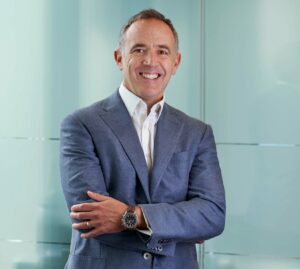
    Stuart Dench and the Stewarts Foundation has supported Leah Houston's career journey

    When it comes to someone like Leah, the importance is difficult to measure because it has to do with ineffable things like confidence, connectivity, and the unleashing of possibilities within a person who may not yet know how capable they are. In her case, it is also to do with helping someone to arrive at the realisation that the place they’re born in need not be a limiting factor. Ultimately it’s for us to make our own way – though it is right that we do so with the help of others.
  • A Question of Degree: Adam Conn

    Adam Conn


    Like many kids born in the 60s, my cousin and I were sent by our mothers for an IQ test. I remember my aunt telling me I had scored particularly high. This revelation only came twenty years later, the night before I was heading to Hong Kong. Please excuse the pun, but whether this might have changed any of my life decisions is purely academic.

    This is not an argument against undergraduate studies but my story of how I managed without, along with some of the tips and skills I learned along the way. I live in awe of my two children, who achieved Firsts in their respective degrees and are, to date, doing well. My son, admittedly, got started with Finito‘s help. Do I wish I had studied the classics? Yes, I do. Am I qualified to take on the role of a barrister? Definitely not. What I can do is provide them with the benefit of my experience and expert knowledge to help them uncover the truth.

    By this time, I had made my decision to pursue a vocational education rather than study for a degree. In my case, it was the right decision. At the time, the avuncular advice I got was that university would help me think differently. With the benefit of hindsight, continued learning throughout my career has given me so many opportunities to improve myself. I am now mentoring graduates and non-graduates alike as they navigate their careers.

    Fast-forward to August 2024. I have just turned sixty and celebrated the first forty years of my financial services career. My career has so far given me the privilege to work in London, Hong Kong, New York, and, more recently, Edinburgh. Most importantly, as a Head of Trading, I continue to enjoy taking on the challenges of enhancing what we do, at both a company and an industry level, for the benefit of the end investor.

    I started my career as an assistant to partners on the private client side of a pre-Big Bang stockbroker. I was fortunate to benefit early on from on-the-job training and coaching. As part of this training, I went to spend two weeks sitting with the firm’s trading team on the floor of the London Stock Exchange and never came back.

    The “floor” was a tough apprenticeship. It toughened me both physically and mentally. I am not sure it would necessarily stand the test of time, but it undoubtedly shaped who I am today. The motto of the London Stock Exchange, ‘Dictum Meum Pactum” (which roughly translates as ‘My word is my bond’), taught me respect, trust and the importance of best practice. Billions of pounds a day of transactions were executed by voice – and honoured. There was the LSE Code of Conduct, a collective desire to live by it, and, in instances where there was doubt, a disciplinary committee on the 23rd floor. To avoid doubt, this was something I had never had reason to attend!

    As an unauthorised dealing clerk (“Blue Button”), my daily tasks ranged from collating prices as a service to our sales desk, to getting the teas and doughnuts (and woe betides anyone who got that order wrong). There was no sense of entitlement. I knew everyone had started that way. Some years later, I remember being scoffed at on a busy day by a graduate trainee when I asked if he could get me a sandwich. I maintain that I am the better educated. “Nous” (Ancient Greek) can be learned, but not from a book.

    My career has progressed, and my horizons have broadened. I lead a diverse team of investment professionals, and since 2020, we have set up trading desks in Asia and the US. Imagine my surprise when I realised I needed to take more exams in my fifties! Within the firm, I chair our Regulatory Engagement Group, and externally, I am the chair of the Investment Association’s Equity Trading Committee.

    I often speak with regulators, politicians, and market authorities globally. I enjoy being a freethinker with a pet theme of challenging processes and procedures, especially when ‘they have always been done that way’. I am proud to be a chartered fellow of the Chartered Institute of Securities and Investment. And recently, I was delighted to be granted membership in the US-based National Organization of Investment Professionals (NOIP).

    The secret sauce of my career is the desire for continued learning. This continues to the current day. I enjoy reading this column in previous editions of the magazine, to understand different points of view. It is so important to move forward and keep building one’s knowledge – asking questions, acknowledging mistakes, learning from them and persevering. It is as much about developing networks and maintaining them, broadening one’s mindset and developing wisdom as it is about having knowledge. Philosophising certainly has its place, but a strategic leader also needs the ability to be practical and come to conclusions, not just to theorise.

    A cynic might dismiss truisms as cheesy, but who wants to be a miserable cynic, devoid of their own ideas and left to knock others? Certain phrases stick with me, such as “People want to live in a world they help build”, and two of Wayne Gretzky’s famous quotes, “Skate to where the puck is going to be, not where it has been” and “You miss 100% of the shots you don’t take”. Others keep me grounded. The cruellest, simply because it is so true, is probably, “If you want to make God laugh, show him your plans”. All we really know is that things will change. A more recent addition to my repertoire is “While AI may not take your job, someone who knows how to leverage it might”.

    Even though I started work as a school leaver, it has in no way stopped me from enjoying the wisdom of some of our finest academic institutions. Cambridge Judge Business School gave me some great opportunities (and the scarf I wear to prove it). Oddly, for someone with a trading background, its “Negotiations Lab” taught me some excellent new skills. A classic ‘you are never too old to learn’ scenario. A growth mindset, empathy, and other forms of EQ, as well as networking and influencing skills, can all be developed on the job without being influenced by so-called progressive campus politics.

    Although my story is from a different era, I still have a lot to offer. I am sure I’m not the only person who wonders if they set out today, would they even be considered for the job they do? That said, it is exciting to see more options for school leavers who, for one reason or another, do not go to university. My employer has opened its doors to “Modern Apprenticeships”, and I enjoy their enthusiasm, grounded ambition, and hard graft.

    There is much written about it, but my take on leadership is not about trying to make everybody happy. It’s about when you see something that you don’t feel is right, and then stand up against it because it’s the best thing for the group. My philosophy is to lead by intent rather than instruction. There is a great YouTube link titled “Leadership on a Submarine,” adapted from a talk by Captain David Marquet, that I wholeheartedly recommend watching.

    There are always ways to improve and expand one’s knowledge and wisdom. I believe in the value of our personal brand. Everything we say and do either enhances or negates it, and this drives me to stay at the top of my game. Undoubtedly, I will stumble, but I will always learn and carry on. I will continue with my on-the-job training, mentoring, and coaching. I enjoy leading our team and watching them flourish.

    So, what comes next for me? Looking further ahead, I want to continue using my experience and industry knowledge to ensure the industry continues to adhere to best practices. With sound experience of good market practice coupled with my global technical knowledge, I see the role of an expert witness as an ideal way for me to continue to protect the end investor.

  • Donald Trump and the death of the legacy media

    Finito World


    Whether Donald Trump wins the next US election or not, his recent podcast tour illustrates beyond reasonable doubt that the legacy media is on the way out.


    This week Trump sat down for a three hour talk with Joe Rogan, and it ought to be a clear signal to all young people thinking of working in the media not to fill out the arduous applications to CNN, Fox or the BBC, but to consider how they might be a part of a new kind of conversation.


    The conversation itself will surprise anyone who thinks they know Trump from his appearances on the mainstream media. It was the question of ‘fake news’ which defined Trump’s first run in 2016. At times, during that presidential cycle, Trump found that he was able to say outrageous things and then gaslight the media and the world that he hadn’t said them.


    But we have tended to know Trump predominantly in a network setting: we witness him in clips and the nature of a clip is to cut out other context. His speech in a short format often comes across as rambling and bizarre and there are many indefensible things that he has said and done. But many voters in 2016 were so tired of canned speech and soundbites that they saw his energy as holding a kind of promise, regardless of what he said.


    2024 seems to be a continuation of that development, but there is also an undeniably different feel to it all. This is partly due to the assassination attempts. In the first of which, Trump showed undeniable physical courage in getting up so soon after being shot.


    Something about that occasion made Rogan want to know more about him. I think it may have been a simple question of admiring his indefatigability and resilience. Rogan, like so many, was appalled by Trump’s refusal to accept defeat in 2020 – but equally appalled at the idea of his murder in broad daylight.


    Whatever one thinks of Trump, there is the possibility that we will all be enriched by these developments. The conversation between Rogan and Trump was three hours long and completely different to the typical edited 10 minutes we might get on CNN.


    The pair of them discussed everything from wrestling to energy and foreign policy, what it was like to arrive in the White House. to Vice-President Kamala Harris. This followed on from another recent conversation with Theo Von in which he movingly discussed his elder brother Fred’s alcoholism.


    The point here is not whether you like or dislike Trump. The point is whether, in advance of being asked to vote for him, you actually want to get to know him. It is to his credit that Trump chose to do these podcasts, and to Harris’ discredit that she has so far been unable to submit herself to this format.


    What we learn in such things is telling in a way the stilted mainstream interviews aren’t. For instance, we could notice that though Rogan swears regularly, Trump was always polite, but never followed him into expletives. He isn’t a people-pleaser like that.

    There was also a quick aside early on about how he felt seeing the Lincoln bedroom on his first night of his presidency – it was a big deal, Trump said, ‘if you love your country’. It was the sort of glancing aside which has to be authentic because of the format.


    Over on CNN, Harris bungled an answer on 60 minutes about Benjamin Netanyahu only for the clip to be substituted by a slightly better answer. What appears to have happened is that the first incomprehensible answer, all too typical of Harris, was accidentally put out to promote the interview, only for it to substituted by the network when the interview aired. Trump is wrong on many things, but he is right to say that this indicates media bias.


    Viewers are moving across to the independent platforms. This is welcome if we want to get to know our politicians and it is relevant to Britain too. What occurs in the US usually migrates over to the UK. This follows on from a mind-numbingly dull election in 2024 in the UK, where Sir Keir Starmer and Rishi Sunak battled it out over who could give the best 45 second answer over the future of the nation’s entire tax policy.


    The result has been a government whose plans were held to no scrutiny whatsoever with the result that months in to the administration, we have tax rises on the horizon which many would rather not have, but which probably would have been more broadly understood if our election had been fought over longer format interviews.


    It is a reminder that media careers are changing rapidly, and that Trump knows this. They are headed in the direction of authenticity and individuality against banality and the pre-prepared. If starting out in a media career today, there are vast opportunities for unique voices.


    Of course it’s competitive, because everybody can get to market – but it is a fair and sane competitiveness distinct from the competitiveness one sees in corporations: 20,000 AI-sifted applications for even menial roles.


    Things are changing: it is as if everybody is being asked to look inwards. This is a huge shift in a world where status itself had become all too dull and staid. Trump is sometimes an unlikely vehicle for these sorts of realisations: he remains boastful, egoistic and at times a bit mad. But he knows things his opponent doesn’t – and much of what he knows has to do with the future and not the past.


  • Leading nutritionist Lucy Epps: ‘We need to think about what diet can do for ourselves, the NHS, and the economy’

    Lucy Epps


    I was brought up with a really strong food ethic. My mum always worked in food, and understood its importance even before organic became trendy. She always discussed its importance for health. By my 20s, like most people, I thought I was invincible. I was working long hours in TV, often into the small hours.

    I ended up getting an autoimmune disease called Graves’ disease. With this disease, your immune system produces antibodies which attack the thyroid gland, a hugely important gland that effects practically all cells in the body. The symptoms include a very high heart rate – sometimes as high as 200 – leading to weight loss and anxiety. Sometimes my hand would shake so much I wouldn’t be able to put the phone on the receiver on my desk. I remember fearing anyone that wanted to discuss a project with me at my desk because I couldn’t point to anything on my computer screen because my hand was shaking so much.

    I didn’t understand what was going on and it was affecting my eyes –  one of them was closing and the other one was open wider than it should be. I ended up getting diagnosed via an ophthalmologist at Moorfields. I then went on the medication which suppresses you thyroid gland but obviously it doesn’t do anything to your immune system which is where the problem is. Over time I got my thyroid levels under control.

    I was feeling a lot better but always knew deep down that this was masking the actual problem. I had to re-evaluate things, and look at lifestyle. I went on sick leave, and looked into diet. I thought I knew a lot about food because of my mum, but I realised that I didn’t and there is so much science in it as well.

    My degree had been in English literature and I always thought that was how my brain worked. I didn’t think I was science-y at all. There was so much information online with all these different people telling you what to do. It was confusing so I signed up to study nutritional therapy for three and half years, which included a year of Biomedicine and clinical training. I now see clients on a 1:1 consultation basis online.

    This is a different area to being a nutritionist. In a nutshell, a nutritionist works in public health. You have dieticians who work in hospitals and for conditions such as kidney disease where patients are on dialysis or with acute cases in intensive care. I went to the College of Naturopathic Medicine. There were some amazing lecturers who were very evidence-based; as I was studying I became more and more committed to a science-based approach, which my clinical approach is informed by.

    There are a bewildering array of media stories out there surrounding food. As a general rule, if anyone is talking in a reductionist way or very explicitly about things, it’s best to be cautious about that report. The dose makes the poison with any food. For example, we know that processed meat and red meat is associated with an increased risk of colon cancer and cardiovascular disease but that doesn’t mean you can’t include them as part of a wider dietary pattern. Often the headlines will grab parts of the study: they will cherry pick something but they won’t look at the finer details of the study.

    Through diet, I managed to put Graves’ disease into remission but what I really noticed was that it’s not just about food. Your overall lifestyle is so important too, and to do with sleep, stress levels, and physical activity. These other pillars are really important alongside nutrition and are integral to nutritional therapy.

    In terms of the work landscape, once you leave you’re on your own. I am registered with BANT which is the British Association for Nutrition and Lifestyle Medicine and I am registered with CNHC – Complementary and Natural Healthcare Council. BANT are doing lots of work with NHS doctors, pharmacists and other health practitioners to get our names out there. I think it is being more and more recognised that there does need to be more of a dialogue between nutritional therapy and the mainstream.

    My practice focuses on cardiovascular health and women’s health. Sometimes men can have a more transactional relationship with food than men. If you grew up in the 90s, you had Kate Moss heroin chic. If you look back on the models they are very underweight and that is all we saw. I think a lot of women are not nourishing their bodies the way they should do because of how society views the shape of a woman’s body should be.

    Even before the 90s, you had Twiggy and Jean Shrimpton. It’s so damaging to the body, as well as to reproductive health and to bone health. Then they think they should look a certain way and in terms of exercise its cardio because they think that will burn the most calories and there is nothing about health and nourishing the body which would be resistance training.

    I knew I had to be entrepreneurial, so I began doing corporate talks for banks and law firms as well as 1:1 consultations. It’s been a steep learning curve in marketing.

    I have provided corporate talks on the relationship between diet and mental health, specifically the gut-brain connection. Deloitte estimates that poor mental health is costing employers £56 billion annually. Meanwhile, 48 per cent of workers say their workplace hasn’t checked on their mental health in 2022. It’s a very complex area and the research is really scratching at the surface of the gut microbiome but we now know there is a bi-directional relationship between the gut and the brain.

    Our guts contain trillions of bacteria and broadly speaking, high numbers of favourable or “good” bacteria and lower numbers of less favourable bacteria have been associated with healthy individuals.  When we eat fibrous foods such as wholegrains, pulses and veg, we are essentially feeding our commensal gut bacteria as they ferment these fibre and as a result produce bi-products that are known as short chain fatty acids. These fatty acids are intrinsic to the health of our colons but also have far-reaching beneficial effects of our bodies, including our hormones, skin, immune system, cardiovascular system and mental health.

    Science is constantly evolving, and we are now at the point where we can make a real difference towards our health and prevent many chronic diseases with the right dietary patterns.  We need to think about what it could do for ourselves, the NHS and our economy if we were to pay more attention to diet.


    To book a consultation with Lucy go to lucyeppsnutrition.co.uk


  • Influencer marketing: Gordon Glenister’s concise beginner’s guide

    Gordon Glenister


    More and more of us trust influencers and content creators than corporate giants. Influencer marketing is now a multi-billion dollar business as more brands invest in this media to get their message across. Even celebrities understand the importance of influence and fan base engagement


    Taylor Swift realised this at a very early age. In fact she supported fans for 13 hours at one meet and greet event. Even though she met 3,000 fans she realised what great brand advocates they could be. Taylor Swift has over 280 million followers on Instagram alone.  So if you do the numbers, if each of those fans shared a photo on their social media, the average Instagram account user has approximately 335 friends so you can see the potential exposure is to over 1 million. And look at her now the youngest billionaire and her Swiftie fan base have helped her become that.


    Around the world in China we have other examples of amazing influence. Becky Li sold 100 Mini Cooper cars in under 5 minutes. She is known to have a phenomenal level of influence over her followers shopping habits.

    In fact in China, livestream influencer lead shopping is huge and its why e-commerce platforms like Alibaba and Amazon have highly successful influencer and affiliate marketing programs.  Many of these influencers act like personal shoppers and guide us through these products and benefits in a way that most other media cannot match


    Influencers are able to articulate their brand story and everyday life in such a way it resonates very well with their audience. We have also seen niche communities develop on the back of it.  Even video creator @francois_bourgeois43 became famous for his amazing train spotting experiences. He now has over 2.4m followers on Instagram


    Everyday folk can literally become famous overnight by creating entertaining content online from chefs to bricklayers and so many more.

    One of the key components of influence is trust and authenticity and that’s what some of the best creators exude. Great content needs to be inspiring, entertaining or educational. That’s not to say that some content can’t be negative and deliberately provocative.


    To be a successful creator or influencer you need to


    1.  Be super clear on your niche and what type of content you will specialise on

    2.  Be consistent in posting online at least daily sometimes even more in today’s competitive landscape

    3.  Research and use content that engages your audience by strong hooks that are focused on value outcomes.

    4.  Engage with audience by liking and responding to their comments.

    5.  Tag brands that you want to work with and therefore showcasing what you can do for them

    6.  Be patient it takes time to build an audience – test and measure to drive greater content performance.

    7.  Use a limited number of relevant hashtags with a view to appearing on the Explore page


    Gordon Glenister is an international speaker and author of best selling book Influencer Marketing Strategy. Gordon also hosts the Influence Global Podcast


  • The Great Gig Economy: Is Freelancing the Future of Work?

    Stuart Thomson looks at the growing trend of the gig economy


    There can often be an emphasis, especially at the start of a career, on getting a job. That role is seen as a foundation stone for building networks and experience. But is that right for everyone? Is there an alternative? Is a more flexible, freelance approach something to think about?


    My own experience is of having worked for large legal and PR consultancies for my entire career until a few years back when I was made redundant. I am not the first and certainly not the last to find the whole experience shocking and, at times, distressing. It does lead to a period of reflection.


    The obvious choice would be to simply look for a new role but there are alternatives. I chose to consider those in more detail. Choices about potential next steps do not exist in a vacuum. There are always financial requirements to consider potentially alongside caring responsibilities and other commitments. Those could be to spend time traveling or exercising, issues much more focused on personal needs. There are no right or wrong approaches. It is all down to the individual, but it is always considering what your priorities are.


    I already had a company set-up for the communications training I deliver so I chose to go down a freelance and consultancy route. The aim is not to build a business and employ people but instead to engage in challenging projects and work with people I like. That means my ‘gig’ approach is a mix of short-term projects, longer-term consultancy, and membership of an in-house team. Alongside this I also hold voluntary positions for a Board and delivering mentoring which is very important to me.


    This could be considered a ‘portfolio’ approach with a range of different projects on the go. That is not without its complications. Balancing the needs of clients and projects means that there is no typical working day and there are no fixed hours.


    If you are considering making a similar career move, based on my two years as a freelancer, I would suggest the following:

    1)    Talk to others who have already made the move to freelancing and chat to them about their experiences. Otherwise, it will always seem like a hugely daunting prospect. People are always willing to chat because they remember what it was like for them.

    2)    Get some professional advice – for me that was getting an accountant who could help me get the fundamentals of my business right.

    3)    Spend time getting your ‘credentials’ in place – it might be easy to try and crack on with reaching out to connections for work, but do you know what you are really saying to them? What is it that makes you different from others?

    4)    Materials – another important foundation would be to get a website up and running and for it to feature those clear ‘credentials’. Employers, customers etc need to see that you are serious.

    5)    Join networks – there are professional and work-related networks to join across sectors, nationally and internationally. Being a freelancer isn’t just about generating your own work, it can also mean working in partnership with others to deliver for a client or project. Those opportunities often come through networks.


    The danger with being a freelancer is that you can sometimes feel quite isolated. When you engage with your network do not think of it as solely being about trying to generate new work, but also as time chat and not think about work. That is valuable time.


    Being part of the great gig economy is not a panacea and it is not for everyone, but it is an option and maybe provides the flexibility that many are looking for. Think about the option.


    See other articles by Stuart Thomson here:

    Stuart Thomson on the importance of personalising your job role


    Company Spokesperson, “Your key role at work?


  • SEND Education: Introducing Tim Clark’s superb third report (2024)

    Tim Clark spoke about SEND education at the Guildhall at the launch of his third educational report which was attended by former schools minister Damian Hinds MP, Sir Bernard Jenkin and former chair of the Education Select Committee Neil Carmichael


    My third educational report is on special needs (SEND). There is nothing in my report that is radical or revolutionary. Instead it’s an attempt to try and help policy-makers who understand what the issues are around delivery of special needs policy.


    I was the head of two state schools. This is written from the point of view of people who have to deliver SEND education. There are issues around funding, delivery, working with external agencies and issues around the identification of special needs.


    Tim Clark’s bi-annual Better Schools Report Event at Guildhall, London. 10.10.2024 Photographer Sam Pearce/www.square-image.co.uk


    In my view the single best thing we can do to support children with SEND – and it happens to be the same thing which we can do to support children without special needs – is to provide every child with enough well-qualified, motivated, experienced teachers. The recruitment and contention crisis with teachers at the moment is the single biggest issue facing schools: not money, not curriculum, it is the difficulty of finding enough well-qualified, well-trained teachers.


    I’ll use two statistics to prove this point. Last academic year 40,000 teachers – more than nine per cent of the workforce – quit for reasons other than retirement. Now this is made worse, because about 20 per cent of the workforce are over 50 and so are nearing retirement soon. But over nine per cent of the workforce walked out last year.


    In the same timeframe, one half of all teacher training places were left vacant. If you put those two statistics together then that is a crisis. The current government and the previous government did not seize this issue with the urgency which it needs to be seized with.


    The 2024 Conservative manifesto talked about offering bursaries, which may well attract new people into the profession. But we have a shortage of teachers – and in any case, there is plenty of evidence to suggest that money doesn’t retain teachers. If you look at the strikes last year, which were predominantly about money, one half of teachers didn’t even bother to vote in the ballot.


    I’m not saying that teachers shouldn’t be paid more money – they absolutely should. But it’s not the key issue.


    Tim Clark’s bi-annual Better Schools Report Event at Guildhall, London. 10.10.2024 Photographer Sam Pearce/www.square-image.co.uk


    Meanwhile, what have the Labour Party promised? They repeatedly state that they will create 6,500 new teachers but they don’t say where they’re going to come from and they also don’t say how they’re going to be retained. That’s important because the other alarming statistic is that one third of teachers quit within five years.


    We also need to look at the maths here. How far would 6,500 new teachers really get you? There are more than 20,000 schools in England. If you get 6,500 teachers that equates to one new teacher for every three schools. But then think of the 40,000 who have just left – that equates to almost two for every school.


    In one sense, the number of teachers we have is not necessarily a crisis – the latest workforce report by the Department for Education says we have 300 more teachers this year than last year. The only problem is there are 74,000 more kids than the previous year.


    That number also includes more overseas-trained teachers – that’s not necessarily a bad thing. What really concerns me is that that number also includes a huge explosion in unqualified teachers. When I was qualifying, I went the traditional route. In my day, they were talking about making the PGCE two years and nowadays there are many allowed to teach with very few qualifications at all.


    We have got to resolve for the benefit of all children the recruitment and retention crisis. In our last two reports, we looked at how this can be resolved. The really good news is that this can be resolved at very little cost to the Treasury and the taxpayer.


    To read Tim Clark’s report go to the following link:


  • This will be a Promising Indian Century”

    Theresa Villiers


    I believe this will be an Indian century and if the UK is going to seize the opportunities that presents, we need to step up our engagement with India.


    In my former role as MP for Barnet, I was privileged to represent a significant British Indian community. This has left me with an enduring enthusiasm for India.


    The country has made phenomenal economic progress over recent years, with growth accelerated by reforms delivered by the Prime Minister Modi’s Government. It is already an economic superpower. It recently became the fifth largest economy in the world, and analysts predict it could overtake Germany and Japan to hit the third place spot by 2027.


    India is well-positioned to take advantage of the growing realisation in the West that over-dependence on China poses serious risks our prosperity and security. The Covid pandemic starkly demonstrated the pressing need to diversify global supply chains and reduce reliance on China. That makes India a more important partner than ever before.


    Our two countries clearly have much in common. English continues to be one of India’s most important official languages. The principle of rule of law is accepted, and the common law system in operation when India gained its independence remains in use.


    Despite these positive legacies of empire, we should not be naïve about the colonial era. In their near 200 year involvement with India, the British authorities frequently adopted approaches which would be unacceptable in the modern era. Tragedies such as the 1919 killings at Jallianwala Bagh, when soldiers opened fire on a crowd of unarmed protesters, still cause pain and grievance even today.


    But 77 years on from the departure of the British from India, the contested aspects of our shared past should not prevent us from capitalising on the huge amount that we have in common.


    We should also remember that influence has never been a one way street between our two countries. We may have left India a rail network and a legal system, but they gave us the numerals we use today, including the crucial concept of zero.


    Without Indian maths we might never have emerged from the Middle Ages in Europe. India’s massive cultural, mathematic and scientific influence on the world dates from as far back as the Greek and Roman era. There should be a much greater awareness of this, and I welcome William Dalrymple’s effort to put that right in his recent book “The Golden Road”.


    A great asset in enabling us to connect with the subcontinent is the Indian diaspora community. Often described as our ‘living bridge’, this community is one of the most successful minorities in Britain. Numbering just under two million according to the 2021 Census, it has strikingly high rates of professional qualifications and employment, and has made a huge contribution to the UK’s culture, economy and public services. Not only did the community give us our first non-white Prime Minister, the NHS would probably collapse without its British Indian doctors.


    British Indians have achieved an exemplary balance of integrating enthusiastically into UK society, whilst retaining a vibrant cultural and religious identity. This achievement is too often under-rated and overlooked.


    There are risks to be managed and hurdles to surmount when doing business in India. Despite the improvements delivered by “Modinomics”, bureaucratic processes can still be cumbersome.


    Even so, India-UK bilateral trade stood at £36.3 billion during the year 2022/23, an increase of 34.2% or £9.2 billion compared the previous year. Moreover, our universities have benefited from a rapid increase in overseas students from India.


    A striking example of the two countries working together successfully was the partnership between Oxford University, AstraZeneca, and Serum Institute of India, which delivered a Covid vaccine in record time.


    In conclusion, in a world which is becoming increasingly polarized and insecure, strengthening our ties with the planet’s biggest democracy should be a top foreign and trade policy priority.


    If the UK wants to benefit from Indian prospects and potential over the coming years we need our Government to devote real effort to this. If we don’t put in that work, other western countries will be only too happy to get ahead of us in the queue.


    We should deploy the networks of our Indian diaspora community as part of our outreach. We also need a pragmatic approach to visas, so our world class universities can continue to recruit talented Indian students.


    And we should actively promote India’s place at the top table of world affairs. Chairing the G20 summit in 2023 was a pivotal moment when India stepped up and assumed a new leadership role in relation to the Global South. As a democratic country that shares so many of our values, far better that India, not China, takes on that mantle.


    See also:


    Dinesh Dhamija: India’s 10 year reckoning

    India’s Legal Market Opening: A Game-Changer for UK Lawyers – Insights by Dinesh Dhamija


  • Opinion: James Cleverly, like Sunak after losing to Truss, will be back

    Christopher Jackson argues that James Cleverly isn’t done yet


    Sometimes it matters hugely how you lose. “We didn’t do it,” said James Cleverly at the low point in his career on Wednesday just after finding out he had failed in his bid to be leader of the Conservative Party.

    I was very struck by the nature of this video. It exuded confidence and, in fact, leadership. How was he able to do this? Although Cleverly admitted that it was disappointing for him personally, one had a sense in his concession video and throughout his leadership campaign that he wasn’t running solely out of personal motivation.

    Speaking to a Finito event last month, he spoke movingly about his love of the Conservative Party, and recalled staying up late as a young man on General Election night, going through the constituency results. His immediate thought after losing this week was to remind the Party that ‘we’re all Conservatives’.


    This was gracious in the same way that Sunak’s concession to Sir Keir Starmer was gracious. It might seem a small thing, but this sort of generosity in defeat is the mark of true leadership.


    There was no hubris involved incidentally in Cleverly’s defeat, contrary to bogus media speculation. Speaking to members of his team, the instructions were quite clear on Wednesday: all the MPs who wanted Cleverly as leader were instructed in no uncertain terms to vote for him.


    With surreptitious stupidity, a handful of MPs took the matter into their own hands, with the consequence that the membership will now not have a centrist candidate to vote for.


    In the pub afterwards, Cleverly was reportedly somewhat subdued following the defeat – as who wouldn’t be. But campaign members said he gave each a big hug – as is his style – and thanked them meaningfully for their work.


    Another campaign staff member recalled: “He is always like this. He always knows what to do – and power never changed him.” To rise so high, and to retain this core decency is a rare achievement – it is, in fact, worth more than the Conservative leadership, since it is to do with the inner being.


    Another recalled starting out as a young political operative. She wrote hundreds of emails to MPs and politicians. Only one replied: James Cleverly.


    I once asked the wonderful former Skills minister Rob Halfon which members of the then Cabinet were nice to their staff. He didn’t miss a beat in naming Cleverly and Mel Stride. It is unfortunate that the Conservative MPs, shark-like as always, failed to represent these two bastions of civility in the last two.


    Sharks, of course, are unable to swim backwards, and I think there is now something of this trait about the Conservatives. They are rushing forwards on one-dimensional momentum, supposedly for a brilliant kill.


    Will they hit the rocks? It seems more than possible. If they do, there seems a real possibility they’ll turn to Cleverly, just as they turned back to Sunak after the Truss fiasco. A list of history’s victors is also a list of those who were at one time or another good losers.


    Either way, my suspicion is that Cleverly’s stature has risen irreversibly as a result of the past few weeks.


    It was Theresa May who spoke of the Conservatives as the Nasty Party, and eventually became Prime Minister. If the British public were to decide that this new Conservative Party is a trifle abnormal, might not even knuckle-headed Conservative MPs revert to the man who told them so memorably to be normal all along?


    Similar articles:


    Last Chance Saloon: Can Rishi Sunak win the next election?

  • Jon Sopel’s fascinating take on January 6th, the Starmer administration – and why he left the BBC

    Jon Sopel


    I am sometimes asked about why I left the BBC. I remember the corporation went through this spasm of asking themselves how to attract the young. If you watch the news, by and large you’re over 60. The same is true of the Today programme.

    The editor of the 6 O’Clock News was thinking about how we get more young people. Do we need younger presenters? Or do we need old people like me talking about young people’s issues? This was at a time when LPs were making a comeback. We sent a young reporter down to Oxford Street, and said to a teenager, holding up an LP: “Hello, I’m from the Six O’Clock News. Do you know what this is?” The teenager replied: “Yes, it’s an LP. What’s the Six O’Clock News?”


    Thinking back to January 2021, I can’t forget the day after the inauguration when Joe Biden was finally President. Washington DC that day was less the elegant neoclassical city that most people remember from the Capitol through to the Supreme Court and the great museums that go to down the Mall. It was a garrison town, the place was absolutely sealed off. There were rolls and rolls of barbed wire because of what had happened on January 6th. I will never forget the shock of that.


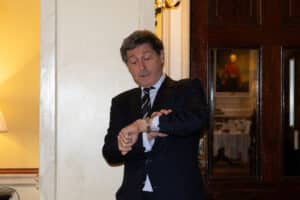
    Jon Sopel book launch in aid of Hospice UK and hosted by Finito at The East India Club, London. 17.9.2024 Photographer Sam Pearce / www.square-image.co.uk


    January 6th is also inscribed on my mind. I’ve been in situations where I’ve faced greater personal danger, when you’re in a warzone and you’ve got a flat-jacket one, and there’s incoming fire. But I’ve never seen a day more shocking than January 6th when the peaceful transfer of power hadn’t happened. I went on the 10 o’clock news and the mob still had control of Congress and Joe Biden’s victory still hadn’t been certified. That’s the starting point for my new book Strangeland: I wonder how safe our democracies are. My experiences in America made me realise that we cannot be complacent in the UK.


    Another thing happened the day after January 6th. The Capitol had been sealed off by razor wire and I went as close as I could, and went live on the 6 O’Clock News. There were lots of Trump supporters around and they heckled me throughout so that the anchor Sophie Raworth had to apologise.

    It soon morphed into a chant: “You lost, go home! You lost, go home!” I was trying to figure out what that meant. At the end of my live broadcast I said to this guy: “What on earth does this mean?” He poked me in the chest and said: “1776.” I thought: ‘Do I explain that my family was in a Polish shtetl at that stage?”


    Peter Hennessey, the great chronicler of government in the UK, talks of the good chap theory of government – you rely on people to do the right thing otherwise the system falls apart. I came back to the UK at the beginning of 2022 after eight years in America. The first election I voted in was 1979. For the next three years I knew three prime ministers: Margaret Thatcher, John Major and Tony Blair. In 2023 we had three in one year – that’s a reminder of the volatility of the times we live in. In many ways in 2016 – with Brexit and with Trump – the world jumped into the unknown.


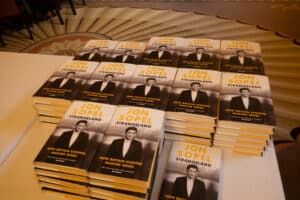
    Jon Sopel book launch in aid of Hospice UK and hosted by Finito at The East India Club, London. 17.9.2024 Photographer Sam Pearce / www.square-image.co.uk


    It’s always seemed to me that the Labour Party finds power a really inconvenient thing to happen. They much prefer it when they’re forming Shadow Cabinets and discussing the National Executive. Then you’d get pesky people like Tony Blair who come along and remind them it is about power. The Conservative Party was always the ruthless machine of government: there is an element in which the Conservative Party is in danger of going down the Labour Party route. It was the Conservative Party membership, for instance, who gave us Liz Truss, the patron saint of our podcast The News Agents. We launched in the week she became Prime Minister – and my God, she was good for business.


    What would Britain look like if there were 10 years of Starmer? He’s done the doom and gloom, and how everything is the Conservatives’ fault. That’s fine – but so far, he’s not set out what the future is going to look like under him. Is it Rachel Reeves’ vision of the growth economy? Or is it Rayner’s vision of increasing workers’ rights. I think Starmer is an incrementalist and simply doesn’t know. If he has any sense at all he will look at the centre of political gravity in the electorate and go for growth because that’s what the country needs.


    Jon Sopel book launch in aid of Hospice UK and hosted by Finito at The East India Club, London. 17.9.2024 Photographer Sam Pearce / www.square-image.co.uk


    Hospice UK do the most amazing work. The book I’ve written Strangeland deals with the challenges facing Britain at the moment. Hospice UK do the most amazing work. Strangeland deals with some of the huge challenges facing the . Hospice care is one area where something urgent needs to be done.


    Jon Sopel was talking at a Finito event given in aid of Hospice UK. To donate, go to this link: https://www.hospiceuk.org/support-us/donate