Category: Opinion

  • Wolseley founder Jeremy King: “The British are really poor when they don’t know where they are”

    Wolseley founder Jeremy King: “The British are really poor when they don’t know where they are”

    by Jeremy King

    In many ways, the UK is now suffering from what I call a morbid culture, and there’s no doubt the pandemic has potentially drained the fun and positivity out of interaction. Despite all that, I also continue to feel we will return to an approximation of what happened before in the 50s – that whole sort of Mad Men having two or three martini lunches. We’ll congregate again.

    I’d argue that there’s a big difference between moaning and complaining. Complaining is a good thing within reason, whereas moaning is a negative and the British propensity to moan is very strong. 

    The human capacity to adapt is massive. I was talking recently to a large group of people about Brexit, a policy which I’ve been vehemently opposed to. I remember it well: it was all doom and gloom from the audience but I found myself saying that we’ll find a way through it. The British are really poor when they don’t know where they are, and that’s really been the issue with Brexit. If we don’t know what we’re up against, we as a country tend to descend into a morose state of moaning. I’d argue that there’s a big difference between moaning and complaining. Complaining is a good thing within reason, whereas moaning is a negative and the British propensity to moan is very strong. 

    Where we’re really good is when we know what we have to deal with – that whole Blitz spirit people talk about when we adapt quickly and innovate and reorganise, as with the vaccination programme. Everyone was saying at this talk that Brexit is going to be a disaster and I said to this large group, “No, we’ll get used to it.” 

    So if you’re at a hotel in London today, and there’s this massive blast half a mile away, or closer, and the windows rattle and possibly break – clearly there would be pandemonium. People would be screaming, shouting, panicking, rushing for the door. But go back 70 or 80 years in London during the war and we would all have looked out of the window, and turned to one another and said, “That was close. Let’s carry on.” You’d’ve adapted and made the most of it. 

    Pre-Covid, there was a danger we had become complacent in the restaurant business

    My mother said that to a degree the war was the happiest and most fulfilled time of her life. Adversity stimulates, and I suppose, pre-Covid, there was a danger we had become complacent in the restaurant business. But everything that’s happened has made an impact on how we go ahead, and how it is for the staff -but I have a feeling people will adapt.

    Sometimes I think of my regular customers, the amazing people I’ve met. Lucian Freud was an example – he would always dine with us at the Wolseley. Lunches tended to be near his studio at Clark’s. For dinners, he’d frequent other restaurants, or he’d stopped going because people were overfamiliar. For me, he was one of the types I like the most: he didn’t care who you were, he was interested in you as a person, and how people look. Yes, he spent a lot of time with aristocracy but he was also a very natural warm and caring person. 

    He would work of an evening and then come afterwards – often with the person who was sitting for him. As with the most prestigious tables in restaurants, it was easily protectable because you could always tell if anyone was heading towards a high profile person, and keep an eye on him and make sure he was looked after.

    We are fortunate that there is a long list of people who come very regularly to the Wolseley. We’ve had many a person who over the years we’ve seen eat a business lunch five days a week – the reason being people want the security and comfort of knowing what you want, that you’re not going to be troubled, and that things just happen. I always remember talking to Lord Norman Foster about a hotel, and asking him why he particularly liked it. He said: “After the first time I liked it, and I expressed to the staff what I liked about it. And from then on it just happened. There was no fuss, no self congratulatory acknowledgement.” I suppose a lot of us are creatures of habit. Personally, I like ritual, and I like habits. It builds a better contrast when I’m doing something completely different. 

    I feel sorry for Jamie Oliver, because he was doing it from the floor – and then the boardroom took over.

    I often wonder if we did a Venn diagram of our restaurants, how much overlap there would be between customers. The Colbert for example, in Sloane Square, is a very interesting place. It’s quite a particular crowd, and at the hub of that community. When we won the bid for that lease – the most hotly contested there’s ever been in London – we weren’t offering us much money as Richard Caring. We won it on our pitch.

    But I realised making it a sort of Wolseley-lite would be a mistake – it would be almost imperialist. It would be much better if we created a restaurant just for Chelsea. Sometimes I create an invented history for our restaurants. For Colbert, I imagined a Frenchman chased out of Paris because of an indiscretion with the owner’s daughter and setting up. He started with the bar as the first room, where he just served drinks and food. Then when the corner room became available, he took that one over, and then the next one, and did up all the rooms in a different décor. That’s why it feels so authentic. 

    Where restaurateuring goes wrong is when it’s done from a boardroom. I feel sorry for Jamie Oliver, because he was doing it from the floor – and then the boardroom took over. I feel very sorry for Pizza Express and Prezzo too: a lot of the problems they have, have been generated by the investors rather than the people running it: the need for expansion has forced them off a precipice. Pizza Express has been a dearly beloved brand and I think if it hadn’t been caught up in merger and acquisition, it would still be doing well. But then of course, we all have to adapt.

    Photo credit: By Jhsteel – Own work, CC BY-SA 3.0, https://commons.wikimedia.org/w/index.php?curid=35121735

  • Jeff Katz: Letter from an American

    Jeff Katz: Letter from an American

    We at Finito World were all deeply saddened by the sudden death of Jeff Katz in December 2020. Here we publish his last piece, submitted to us only a few days before his death. We shall publish our full tribute to him next week.

    Truth, lies; facts, alternative facts; news, fake news; information, disinformation; reality, conspiracies—how and why did our views of the world get so divided? 

    Joe Biden won the US election, but not without accusations of fraud from Trump and his supporters.  It was mostly likely the coronavirus pandemic that gave the Democrats the edge, but not by as much as they expected.  Trump’s effort, in the words of New York Times journalist Will Wilkinson, to sweep “a medium-sized city’s worth of dead Americans under the rug turned out to be too tall an order.”   

    When facts and truth become casualties of deliberately created social and political confusion, we all suffer.  And that extends to our day-to-day dealings with each other.  As someone once said, you start off by committing murder and end up being late for appointments. 

    One of my abiding lessons about facts occurred during my high school years in New York.  In a school of 5,000 boys I found my niche in the English Department’s journalism class, taught by one of my first mentors, a teacher named Louis Simon. 

    Lou was the advisor for the school newspaper, a broadsheet that came out four times a year.  He also taught the journalism classes.  By my second year I was in the advanced class and was a reporter for the paper. 

    One day Lou asked me to assist him with an experiment for the new intake of the journalism class.  After the class settled, I came in and Lou told me to distribute textbooks.  I dropped the books noisily on the desks.  He first admonished me and, when I ignored him, sharply reprimanded me.  I then muttered something that sounded like “*uck you,” but wasn’t.  He ordered me out of the room.  Then he told the class that he intended to report me for bad behaviour and wanted them to write an account of what happened to back him up. 

    About half the class wrote that they didn’t want to get involved.  A quarter of the class quoted what they thought they heard—but hadn’t.  The final quarter wrote that they weren’t sure what I had said, but that my behaviour had been disagreeable.  

    At that point in my life, the fact that half the students didn’t want to get involved surprised me.  But that the other half either reported the events incorrectly or couldn’t decide what they heard taught me that at best many people will be unsure of the facts.  More importantly, many people will simply be wrong because they hear what they are programmed to hear. 

    Forty years later I was invited to make a presentation to pupils at the City of London School.  This time I was in the teaching role.  I began by making an offer.  Everyone who gave me a £1 coin would get two back at the end of the session.  There was a flurry of activity as pupils who didn’t have a coin borrowed from their mates.  As each person contributed a pound into a bag, they signed their name so there was a record of the transaction. 

    I put the bag of coins and the list of signatures into a briefcase and began explaining to the class how fraudsters work, how con men and women rely on the gullibility of people who want to believe in opportunities that that promise rewards, regardless of how unlikely.   

    After half an hour or more of my explanations and examples of how such things happen, the teacher hosting the event thanked me and there was a nice round of applause.  As I picked up my briefcase and prepared to leave the room there was a murmur among the pupils.  I asked if there was something the matter.  They asked about their investments that were supposed to double at the end of my talk. 

    “Oh that,” I said.  “No,” I told them.  “That was just speculation.  If I manage to double your money, I’ll let you know.”  And I began to leave the room.  Of course, I didn’t.  All the pound coins were returned to their rightful owners, but I suspect that those few minutes at the end taught them more than anything I said during the preceding half hour. 

    “Dishonesty, greed, double-dealing,” wrote Professor Churchwell in The Guardian, “are symptomatic of entrenched maladies.”  The only remedy is education.  And that will take time. 

  • Douglas Murray: the big publishers are becoming ‘weird NGOs’

    Douglas Murray: the big publishers are becoming ‘weird NGOs’

    When it comes to publishing, the problem these days is getting your foot through the door in the first place. You can publish Jordan Peterson now despite the controversy surrounding him because has already broken through. That’s the obvious example. The thing I worry about here is: “How are young people at the very of beginning of their career, allowed to say what they think?”

    I remember when The Strange Death of Europe came out, I was face to face with a very nice lady at a drinks party who said she was in the publishing industry and working for one of the major publishers. She said she’d said to her boss: “Have you seen how well Douglas Murray’s books are selling?” And he said: “Yes.” She said: “Didn’t I tell you we ought to do something in that area?” The area, I suppose, would have been immigration. And apparently her boss said to her: “We wouldn’t those readers.” So I said: “You must tell him at his next shareholders meeting that they are not a for-profit organisation, but rather a sort of weird NGO of some kind.” 

    So the publishing industry – like every industry – is susceptible to this same strange problem of wokeness. I was with an academic recently, who was gay, and had got into terrible trouble because he’d been pro-Brexit. I found myself saying at one point: “Why is it such a terrible sin to be in agreement with the majority of the public?” I don’t want academics to be pro- or anti-Brexit; I just don’t particularly want this kind of conformity which a vociferous minority seems to want. 

    One thing we have to think about seriously as a nation in the years ahead is where the talented people go. I spent a certain amount of time in Silicon Valley in recent years researching The Madness of Crowds so this has been on my mind a lot. Would a smart person today go into politics? Would they seek to be an MP? Would they seek to be an academic? Probably not – and that accounts for the impoverished nature of this moment in both politics and education.

    My friend Christopher Hitchens used to say that he couldn’t write fiction, and he knew why. He knew people who could – like Martin Amis and Salman Rushdie – it was because they were always interested in music. Well, I enjoy music, and I play the piano every day. Sometimes people try to get me to do fiction. First of all, I don’t think you should force it on anyone. Secondly, my view is that for the last 20 years we live in an age of reflection and that has made fiction feel secondary – it’s rather like trying to write the book of the age in heroic couplets. For example, if you wanted to read about the Vietnam War, for instance, would you do better reading a novel about it or a great book like Nothing and So Be It by Orianna Falacci. I would suggest the latter. There’s this feeling that fiction is not where the action is. But it does feel that to me that poetry on the other hand, always has such a small audience that somehow it never becomes irrelevant.

    When prose-writing is exceptionally bad, as with for instance Judith Butler, it can be for one of two reasons. One possibility is that that person simply has nothing to say. But the second thing is rather more alarming – that they know that what they’re writing simply isn’t true. And there’s a lot more of the latter kind of literature around than you might think. 

    What happens in academia is that impenetrable language is used as a screen. You’re meant to think that if it’s unreadable that must be wisdom there somewhere. That’s why you can’t just critique these books, you also have to offer an alternative reading list. In that sense everything begins with Plato – and also with the Judaeo-Christian tradition.

    Photo credit: By AndyCNgo; cropped by Beyond My Ken (talk) 00:23, 8 May 2020 (UTC) – Own work, CC BY-SA 4.0, https://commons.wikimedia.org/w/index.php?curid=89983788

  • Opinion: Why we need to do more for the grey economy

    Opinion: Why we need to do more for the grey economy

    By Finito World

    The recent news that judges will now face mandatory retirement at 75 and not at 70 is welcome. Announcing the move, Lord Chancellor Robert Buckland QC MP said: ‘Our judges, magistrates and coroners are world-renowned for their excellence, expertise and independence. It is right we hold on to them and do not cut off careers unnecessarily.’ 

    When Finito World spoke earlier in the year to the former Court of Appeal judge Sir Rupert Jackson we found an evergreen retiree as alert as a man half his age. Here was a lawyer who had accumulated enormous wisdom over a long career, who now makes his living as an arbitrator and in writing volumes of history.  

    One can understand that the UK system has been designed to avoid the slightly morbid spectacle we’ve seen on a number of occasions with the Supreme Court in the US, whereby the world watches ghoulishly as Supreme Court justices, who really are at retirement age, cling to their seats, often until death deprives them of authority. But there have been mutterings for a long time that in this era of rising life expectancy, 70 is too young an age to leave the bench. 

    This middle ground is to be applauded – but with a President of the United States at the age of 78, it might be wondered whether mandatory retirement itself is outmoded. And it’s not just a problem in the judiciary. We have just been through a pandemic which rightly sought to preserve the lives of our elderly. Insodoing, we implicitly declared their value to us.  

    But we don’t take full advantage of their wisdom. Forced retirement remains a lively issue which has been litigated both at Oxbridge universities, and at the major accountancy firms. As we move forward into the next chapter – the pandemic mercifully in our rear-view mirror – let us not forget what the grey-haired have to teach and offer us. They deserve the dignity of work as much as anyone else.  

  • Opinion: Has the Chancellor Got it Wrong on Self-Employment?

    Opinion: Has the Chancellor Got it Wrong on Self-Employment?

    By Finito World

    As we emerge from this period of crisis, the nature of the political debate has subtly shifted. We’re no longer thinking about how to get through the next days and weeks, but about what we’ve learned during this time of trial. 

    The Covid-19 pandemic has yielded a thousand stories – from the heart-breaking tales of businesses gone to the wall, to the extraordinary heroism of Captain Tom Moore, all the way to the resilience of the tech sector which has shown us glimpses of an accelerating future. 

    But as a vast and imaginative furlough scheme was unfolded – at a pace and with an efficiency which Finito World applauds – there have been those who have fallen through the cracks. That this was inevitable during a time of such upheaval doesn’t make the matter any less urgent. 

    One of these was the self-employed, who have been the sacrificial lambs of Covid-19. Consider, for instance, that you had taken the entrepreneurial step of moving to sole trader status during the tax year 2018-2019. You’d have qualified for no government support, but by a quirk of HMRC’s rules, found yourself liable to pay 150% of tax for the next two years. All that would be payable by 31st January. 

    Now imagine that you’ve done made that move, but you’re also a parent. The services which you’re paying for – chief among them, education – would have been closed for the majority of the year.  

    With kids out of school, the self-employed, lacking the structure of an employment relationship, found themselves especially vulnerable to productivity issues. The incomes of the self-employed rises and falls according to daily output in a way which isn’t true for people in regular jobs.  

    The government has made some of the right noises. In early February Boris Johnson sent a well-meaning letter to all parents, praising their work in picking up the slack. In a time of unparalleled – and justified – government largesse, it was not uncommon in the first part of 2021 to hear parents wonder, only half-jokingly, when their own tax rebate was coming.  

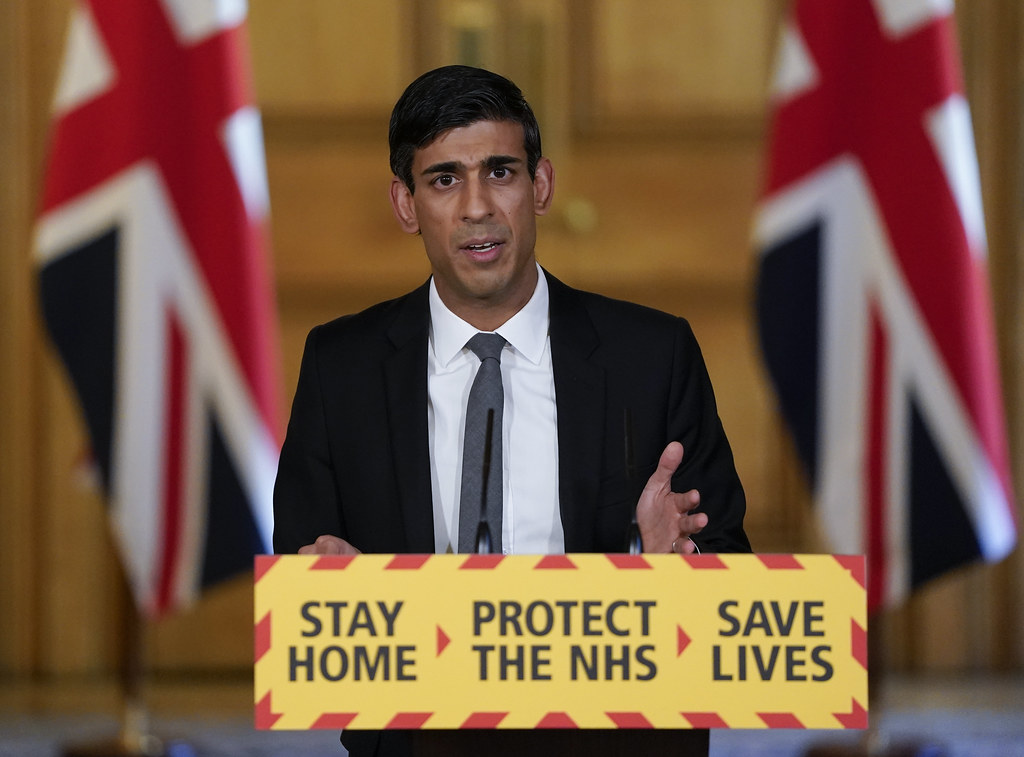
    Noting the anomaly, the Chancellor Rishi Sunak moved to take into account the tax return filings made in 2019-2020 to expand the help offered to the self-employed. This was admirable, but it was accompanied by noises that at some point the self-employed National Insurance contribution would rise from the current 9% to 12% in line with those in employment.  

    This is short-sighted. Without pension contributions, or reliable pay checks, the self-employed take on a greater degree of risk. They’re by nature entrepreneurial – the sort of people the Conservatives are meant to admire. Self-employed parents are believers in the importance of the family unit – another important plank of Conservative thought.  

    This isn’t just about self-employed fathers, but mothers too. The leading charity Pregnant Then Screwed was set up to fight against the discrimination women face during pregnancy and after having children. The organisation recently took the government to court, to challenge the Self-Employment Income Support Scheme.  

    The basis of their argument is that the calculation of the grant does not exempt periods of maternity leave when calculating average earnings, leaving around 69,200 women affected. When questioned, the Chancellor compared taking maternity leave to taking a sabbatical or ill-health. The charity lost their challenge in February 2021 and are seeking grounds for appeal.   

    Rishi Sunak’s style of delivery is always impressive. He is surely right to speak plainly to the electorate about the condition of the public finances. But when the government looks at how the cost of borrowing will be born going forwards it will be important – both politically and morally – for recent history to be understood.  

    The reality is that the complex realities of family life is an area which isn’t being sufficiently explored by the leading think tanks – a fact in itself symptomatic of an issue which has fallen through the cracks.  

    Mark Morrin, Principal Research Consultant at Respublica, says: ‘For years the self-employed have been encouraged to go that way, but when the crisis came they were ignored.’ He adds that this gap speaks to the fact that the Conservatives ‘used to be entrepreneurial under Thatcher,’ but that now ‘the Red Wall Tories don’t look at the world that way. You might not admire Hungary and Poland for obvious reasons, but they have more sophisticated approaches to family policy.’  

    Morrin’s right – the Chancellor needs to look at the nuance of this before saddling the next generation of entrepreneurs with an impossible burden. 

  • Opinion: Boris Johnson made the wrong decision on the nightlife industry

    Opinion: Boris Johnson made the wrong decision on the nightlife industry

    By Garrett Withington

    To those who had been following the dripfeed of information given to the public prior to Boris Johnson’s announcement on the 14th June, the delay to the lifting of restrictions – or ‘freedom day’ as it has become known – came as no surprise. The threat of a new Delta or ‘Indian’ variant plainly alarmed a prime minister who earlier in the month had been lambasted by Dominic Cummings for failing to lock down soon enough. 

    The leaks at least meant that some businesses were able to prepare for the inevitable and learn to operate at reduced capacity with social distancing measures in place for just four more weeks. But spare a thought for a sector which has been seldom discussed: the nightlife industry.

    In fact, many clubs haven’t opened since March 2020. It’s also the sector which has been worst hit by lockdown restrictions and curfews. Even more worryingly, as of July 1st, the government is expecting cash-strapped venues who have had no income for nearly a year and a half to begin contributing into the very furlough scheme which has so far kept the industry standing.

    It’s all extraordinarily frustrating for those in the sector, since the rules can appear inconsistent. For instance, certain parts of the nightlife sector, such as pubs, can carry on with no extra bother – other than the knowledge that it’s much better to stand with a pint than it is to sit with one. But clubs and venues who were making preparations for reopening found their efforts stymied at a mere week’s notice. It’s unacceptable to be thrown back into this state of paralysis: the extra four weeks clearly means more to the sector than the government realises.

    We must remember that the term ‘nightlife industry’ encompasses not just pubs and bars, but also nightclubs and live music events. The latter two have been the most heavily impacted. It’s worth noting that an All-Party Parliamentary Group for the night-time economy produced a report back in January on the impact of Covid-19 on UK nightlife. The report highlights not only the fragility of the nightlife industry in 2021 but also the wider economic contribution which the sector provides to the UK economy. 

    The figures are worrying. The nightlife industry supports 1.3 million jobs and contributes around £66 billion to the UK economy, meaning its collapse would also affect all those tertiary businesses which support the sector – and are themselves reliant on it. Worse still, 81 per cent of workers in the industry have expressed a desire to leave and find more economically stable work. With over half of nightclub staff being made redundant during the pandemic, it will be interesting to see how many return once furlough contributions have stopped.

    That’s not all. Grants given by the government have little impact on the overheads, and this has led to most businesses feeling that the support given is insufficient. Business rates may have frozen but rents have not and if your rents stretch into the tens, or even hundreds, of thousands, then a maximum grant of £9,000 will feel like a kick in the teeth. When nine out of 10 nightclubs have traded for six months or less during the pandemic, and when turnover has been just 20 per cent of the usual there’s only one solution – to open doors again.  

    That’s certainly easier said than done in the current climate. But as Liverpool’s big rave proved, big events can be managed so as to not be on a ‘super-spreader’ level. We also need to bear in mind the cultural importance our nightlife plays in our society. You could argue that since the decline of the Church, it has been the humble pub which has done the most for community spirit. Meanwhile, clubs and music festivals are a steadfast aspect of the cultural identity of youth in Britain, particularly for university students. We hear a lot today about the increase in mental health difficulties, and this is often a product of the social isolation which our nightlife is built to remove.

    Boris Johnson’s justification for extending lockdowns is based on the reasonable fear that rising rates would outpace the vaccination rate. Even so, with the continued low number of deaths and hospitalisations, as well as a huge uptake in the vaccine by over 18s, it’s still arguable that the decision to delay was the wrong one. The suspicion is that this was informed by a need to push back PR-wise after his supposedly cavalier approach to lifting the first two lockdowns.   

    With over half of nightclubs admitting to being in rent arrears back in January, that position surely must have deteriorated: an additional month will be devastating. Further, the sheer cost of running the nightlife industry is not something that can be matched one for one by government spending. In order to preserve what’s left of the nightlife industry, the government should be flexible in bringing the opening date forward if we continue to see successes as a result of the continued vaccination programme. That’s because with every week the nightlife industry remains closed, more doors will shut for good. 

    Garrett Withington is a Finito staff writer

  • Diary of a pandemic job-hunt

    Diary of a pandemic job-hunt

    Georgia Heneage left university in 2020 with the plan to become a journalist but is already widening her horizons 

    Leaving school or university and stepping into the category of the unemployed is daunting at best, terrifying at worst. As a generation born into a consumerist, perhaps even individualist society, we have been engineered to believe that our identities are irrevocably tied up in our career prospects: simply, we are led to believe that what we ‘do’ with our lives is central. 

    To some extent, that’s true. Jenni Russell recently wrote in a Times article: “Work is how society allocates so much of what we seek: money, status, social networks, mental challenges, companionship, prospects, marriageability, hope.” It’s hard to argue with that.  

    “Journalism – and print journalism, in particular – was a volatile and constantly shifting industry even before the pandemic.”

    But placing our work life on a pedestal can be damaging to the process of finding a job in the first place. There is overwhelming pressure on young people to achieve great things early on in their career and to hit upon the ‘perfect’ job straight away. This pressure can be stultifying, and creates an atmosphere of dog-eat-dog competitiveness which can hit hard as you enter the jobs market.  

    This has certainly been my experience as a postgraduate seeking an entry-level job in journalism: even at higher levels, it’s a ruthless and merciless industry, as seasoned journalists remind me all too often. As a graduate, that’s especially so.  

    Journalism – and print journalism, in particular – was a volatile and constantly shifting industry even before the pandemic. Now, newspapers are hardly hiring at all, and the few roles advertised are fiercely competitive.  

    That means that more and more journalists are forced to go freelance and accept a paycheck that is reliant on the next available commission. Much of the advice that I’ve been given has focused on freelancing, a process which can be demoralising and difficult for a little-known journalist finding her feet in the Grub Street world of the press.  

    The best advice that I have received so far has been to relax and remember that most careers are not a linear path to success, and that the concept of a ‘job ladder’ is a myth. 

    The direction of my career has altered slightly as a result, and I am now seeking the safety of a stable job and income. Having taken a moment of self-reflection, I realised that my knack for writing and researching and my interest in the big ideas shaping our world could land me a job which had similar characteristics to journalism, but which didn’t have to be confined to the industry. 

    I have now pooled my skills, values and motivations, and decided to broaden my job search to include the media as a whole and the publishing industry, which has resulted in my first interview with the How To Academy, an organisation which hosts talks and debates from some of the most influential speakers in the world. 

    The best advice that I have received so far has been to relax and remember that most careers are not a linear path to success, and that the concept of a ‘job ladder’ is a myth. Careers are twisting, fickle journeys, with unexpected bumps along the way which, once you’ve traversed them, come to look necessary in retrospect. Imagining my future in this way is liberating. It loosens societal expectations to dive head-first into the ideal job, and opens up the possibility of finding jobs which may not have been immediately appealing. 

    If I look at the data, I realise the scale of my challenge. The Office for Budget Responsibility reckons that unemployment more than doubled in 2020, and that 3.5 million are now affected. For young people entering the jobs market, this is disastrous. High levels of redundancy continue to mean that graduate-level or school-level jobseekers are now competing with a pool of skilled workers with years of experience and expertise under their belts.  

    It’s true that there are silver linings. For instance, the global transition to a remote-working culture and the development of the ‘gig economy’ may be what the future of white-collar working in a post-pandemic world looks like, and may provide more opportunities for those without work. Research has tended to find that working from home can have a significant positive impact on workers’ mental health and well-being, which in itself can improve productivity. A paper published in 2017 in the American Economic Review found that workers were even willing to take an 8 per cent pay cut to work from home.  

    But frankly, I find that cold consolation. The prospect of not going into an office every day strikes me as unnerving. The routine of commuting and mixing regularly with colleagues is attractive to me, and I don’t want to miss out through no fault of my own.  

    It has also been argued that the pandemic, for all its setbacks, presents an opportunity to rewire the world of work. Though this may be true for seasoned white-collar workers, at what cost does this come for those uneasy newcomers entering the workplace for the first time? 

    Georgia Heneage is an Oxford postgraduate and freelance journalist 

  • Sophia Petrides on the problem of job-hopping – and how we tackle it

    Sophia Petrides on the problem of job-hopping – and how we tackle it

    Sophia Petrides outlines how to tackle a hidden problem within our society 

    Where are we with new talent? As we know, 24-39 year-olds have become known as the “hopping generation”, on account of the fact they tend to change jobs frequently. This is causing problems within organisations because of the high cost of employment, which includes high costs for recruitment and training and development. That’s before you even take into account the loss of knowledge within an organisation from high employee turnover. 

    In fact, job-hopping is costing the UK economy an estimated £71 billion and the US economy $30.5 billion annually, according to Gallup. The cost for employing someone new into an organisation is an average of £11,000 per person in the UK and $20,000 in the US.  

    So what accounts for this trend? First, it’s a question of annual remuneration and promotion in an era where middle-ranking jobs are declining. Technology means we don’t need so many middle managers, project managers and administrative jobs. That means there’s often little hope of promotion within organisations.  

    Nowadays, if you want a salary increase or a promotion, you need to leave the company and apply for another job. I experienced this situation first-hand many years ago, when I was leading a business within investment banking. Even though I was in a director role, the excuse I was given for not being promoted was that the organisation had surpassed the number of director promotions for that year and I would have to wait for another year. Following this conversation, I started working on my exit plan. 

    But it’s not just the money. There’s also a clear lack of respect and authentic communication from leaders and management. Today’s organisations often fail to create “safe” environments, where people can openly express their ideas without judgement.  

    In order for leaders to retain and attract new talent, they need to demonstrate empathy and compassion – a vital ingredient when it comes to humanising workplaces. In addition to that, visibility is important: today’s leaders shouldn’t let their workforce face adversity alone. This must go hand in hand with authentic communication, and clear training and development programmes.  

    In 2020, we have seen a surge in businesses collapsing and ongoing redundancies within organisations. All this has pushed global unemployment to record high. The good news is that once the economy starts to bounce back, we are going to see an increase in talent hiring. Even so that still means organisations will lose their talent to other organisations, and experience a drop in productivity in the process. Leaders need to act now, by investing in learning and development, and by deploying the wisdom in the older workforce to nurture talent.  

    Demographic trendlines also need to be taken into account. Birth rates are decreasing over the last quarter century, so much so that we’ve now reached a 20-year low. This means in turn that less talent will come into the future market. It also means we need our middle-aged workforce more than ever to stay in jobs and support the economy by contributing towards taxes for the financial support of the older retired generation. 

    So now is not the time to stop hiring the 50+ age group or to be pushing towards early retirement, as some professional services have the tendency of doing.  

    This issue of organisations failing to hire certain age groups is causing another ripple effect which has led to the increase of mental health difficulties. This is a global problem. Since Covid-19 struck, mental health has taken secondary priority, and it’s costing global economies billions. In the UK, the annual estimate of loss is £34.9 billion and in the US $53 billion. 

    Another group we need to take into consideration for the ongoing growth of our economy is returning to work mothers. They are insufficiently supported by organisations, even though they’re a huge asset. During times of adversity, they’re able to support leaders by staying close to employees and nurture them through the challenging times by putting into practice their agility, adaptability and resilience – traits they’ve learned and enhanced during motherhood.  

    In order to achieve a smooth return of women back into the workplace, organisations need to create appropriate training and development programmes. These need to build trust and respect, develop technological skills and also instigate clear communications around project management and deadlines. 

    There’s a lot to do. But if we’re successful, it will be a recipe to inspire significant growth in the global economy. 

  • Opinion – The government needs to reconsider school funding changes

    Opinion – The government needs to reconsider school funding changes

    Patrick Crowder

    The Department for Education has decided to base pupil premium funding for vulnerable students on old numbers. Rather than counting all eligible students from January 2021, the funding will be based on information from October 2020.

    According to the government website eligible students include those on free school meals, those who are or were looked after by the local authority, and those who have a parent serving in HM Forces or who have a Ministry of Defence pension.

    The Education Recovery Package provided an average of £6,000 to primary schools across the UK to help combat Covid losses. Many schools will lose more from this miscalculation than they received from the package.

    The National Association of Head Teachers (NAHT) has criticised the move, saying almost two thirds of schools that they surveyed would be left with less funding as a result.

    NAHT general secretary Paul Whiteman said that “the government is giving with one hand while knowingly taking away with the other” while speaking at the School Leaders Summit, highlighting the vulnerable position many families have been left in due to Covid-19.

    “These figures suggest that a large number of schools in England have lost more funding due to this date change than they are being given in the government’s so-called education recovery package,” Mr. Whiteman told the conference.

    Mr. Whiteman was speaking of figures obtained by the publication Schools Week through freedom of information act requests. Those figures also show that 102,000 students have become eligible for funding between October 2020 and January 2021. The total loss is projected to be at least £94 million.

    Shadow Education Secretary Kate Green MP also criticized the move, saying that “ministers have failed to protect family finances from the impacts of the pandemic” and accusing the government of “changing the criteria and making it harder for schools to support their pupils.”

    Even if re-evaluating this change means the government must pay more in pupil premium funds this year, investment in education will lead to economic growth in years following. A study by the Knowledge, Evidence, and Learning for Development Programme (K4D) conducted across many regions and economic areas found strong evidence that education investment “provides a clear boost to economic development”. 

    Children’s Minister Vicky Ford said that the change of date is meant to give schools more certainty for the future, removing the element of short notice. As of now, the only thing that many schools are certain of is that they will not receive the funds they need to support their students.

    The decision not to use the most recent information during a time of such instability is shocking. Three months of lockdown is a long time when speaking about the financial situation of children in need, and now is not the time to abandon families affected by the pandemic. 

    Photo credit: By Andy Mabbett – Own work, CC BY-SA 4.0, https://commons.wikimedia.org/w/index.php?curid=90102031

  • Why homeschooling is the answer post-Covid

    Why homeschooling is the answer post-Covid

    Minerva Tutors CEO, Hugh Viney, explains why the government needs to look to a future of learning in the home 

    We’re used to seeing “homeschooling” in the news, but what isn’t commonly known is that compared to most countries around the world, the UK has very relaxed rules about educating your child at home.  

    In America, where it’s hugely popular, you might expect visits from official homeschooling inspectors to check you’re doing it right. Meanwhile, in places like Portugal or Turkey it’s banned altogether. But over here, it’s remarkably easy – you don’t have to enroll your child at school, you can teach them whatever you like, so long as you let your local council know. 

    Now, this doesn’t mean the majority of homeschooling families are throwing the national curriculum in the bin and dressing their kids in hemp. Quite the opposite. Most are in it, like any sensible parent, to ensure their child has the best opportunities in their life ahead. To do this means getting qualified. You need to take GCSEs and A Levels, study just as hard as you would do at school, sit exams as a private candidate – usually at a local “centre” – and pitch for your place at university like all the others. 

    But coronavirus changed things. If home-educating parents had used a professional homeschooling agency this year, then their child would have received their GCSE qualifications after the summer exams were cancelled. Such agencies were able to provide impartial predicted grades, which, like grades predicted by teachers at schools, the government accepted. What happened to the tens of thousands of kids who were being homeschooled by their parents or individual tutors? The government decided parents couldn’t be trusted to rate their own children, and no results were awarded. That’s a colossal shame, and highlights that the government has long had its eyes closed to alternative forms of education. 

    It’s time they woke up. Figures show that 57,132 children were registered as homeschooled children in 2018 in the UK. That’s up from 24,824 in 2013, an increase of a mighty 130%. And the numbers further increased in 2019 by 80% again. Why the increase?  

    Pre-coronavirus, there was a growing feeling among parents that school wasn’t equipping students for the modern world. Common complaints include: lack of encouragement of self-learning; a dearth of communication skills mixed with technical skills; lack of creative problem-solving; and an absence of skills that might actually be useful for the workplace, such as organising your daily to-do list or calendar. 

    Traditional, brick-and-mortar schools are also increasingly unable to meet the flexible lives led by some families who aren’t always able to reside in the same place. And with most schools unable to support children with special educational and emotional needs, it often means homeschooling is the best way to go from a mental health point of view, too. 

    Now, post-Covid, most of the UK has woken up to the fact that not only is homeschooling possible, but in some cases, it might also be preferable. Many children have thrived in lockdown. Despite some tabloid horror stories, so too have parents. Even a glimpse of a new parent-teacher model was enough to prompt 1000s of enquiries to our companies inbox.  

    The story was largely the same. Parents started seeing homeschooling as a viable alternative to school. They loved spending more time with their kids, and they wanted to know if there was a professional, regulated way to do this. Combine this with the UK becoming Zoom-qualified overnight, and our latest venture essentially founded itself. It’s an online school called Minerva’s Virtual Academy, and it teaches children (currently GCSE only) the proper curriculum through an online virtual platform, with minimal requirement for human teachers. Mentors (real humans) keep track of pupils’ progress and our students make friends with other online homeschoolers through group classes and “after-school” clubs. 

    We’re not alone. Other new companies are springing up to meet the demand. Existing solutions, such as Wolsey Hall Oxford, have been quoted as turning away a sharp rise in demand. Even Harrow School joined the party, launching an “online” version of their illustrious school a few years ago.  

    So can the government learn anything from this model? At the moment, online schools like ours are private, which means we charge fees. But this is much cheaper than hiring a personal tutor to teach your children or local councils paying for expensive tutoring companies to support homeschooled kids. It’s also a fraction of the cost of sending your kids to an actual private school.  

    The government is backing the National Tutoring Program, led by the EEF, with £150 million to provide much needed after-school tutoring to hundreds of thousands of pupils across the UK post Covid-19. This is highly commendable. But could online homeschooling also be used to empower some of the lost “Covid Generation” of pupils, taking some of the burden off the schools for the mammoth catch-up task ahead?  

    The government needs to see the bigger picture. With scalable, innovative tech platforms that teach the GCSE and A level syllabus without the need for a teacher, and dedicated one-to-one mentors that support and nurture each child and ensure they don’t fall behind, online homeschooling solutions should have a part to play in the future. If traditional schools and their teachers are going to continue to be stretched, then online homeschooling done in the right way could be a solution. We may be outliers at the moment, but innovation in education is happening. I’m calling on the government to get with the program. 

    Hugh Viney is the founder of Minerva Tutors, whose Virtual Academy designs bespoke homeschooling programs for pupils aged 6-18, either at home or online