Category: Opinion

  • Entelechy Academy CEO David Carter on the Case for Character in Education

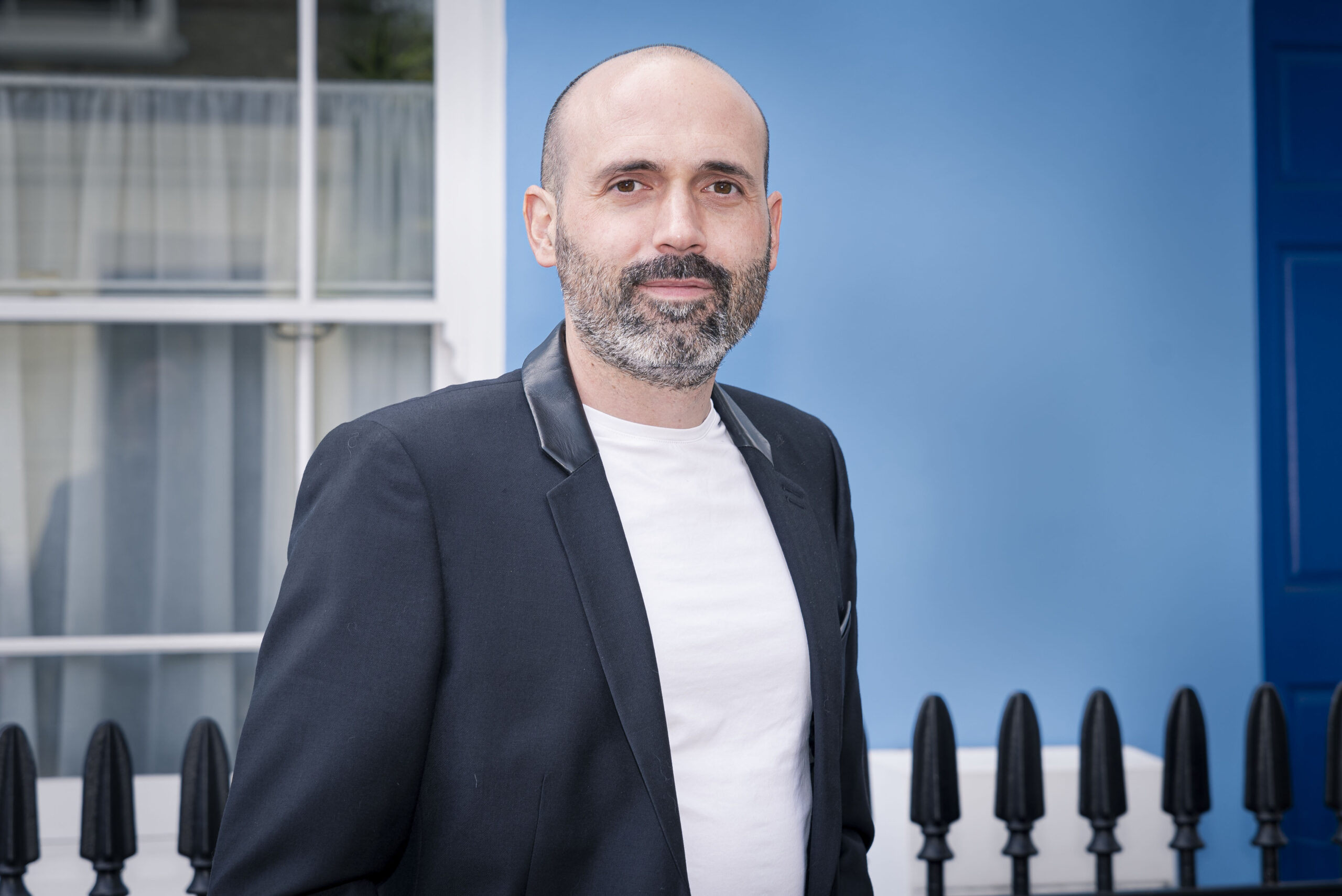
    By David CM Carter

    The UK government’s focus on adult lifelong learning is welcome. Everyone should indeed have the opportunity to actualise their potential, their entelechy.

    However, having slid from #1 to #30 in global league tables of productivity over the last 40 years, the UK needs to quickly wake up and accept Einstein’s wisdom that ‘doing the same thing, over and over again, expecting a different result’ is the definition of insanity.

    The problems of work readiness identified by the CBI are a matter of Character, not skills. Character is the foundation of our success in all areas of life. If we can learn how to be better, we will do better by extension. For that to happen, our innate Character needs to be unlocked.

    The barrier to unleashing this potential is a lack of an appropriate structure to aid educationalists. The Entelechy approach, based on years of research, codifies Character, soft skills, and behaviours for the first time. It is a framework of 54 Character Qualities that define what we need to evolve, to become our best self.

    Entelechy has codified the 77 soft skills demanded by employers as ‘missing’ and mapped the 54 Character Qualities against them, that underpin their development.

    The Entelechy innovation is the teaching of Character Qualities – in their own right.

    The Entelechy disruption is to how they are taught. With Character Qualities, such as kind, adaptable, resilient, accountable, and reliable, the Entelechy heutagogy not only assesses that the learner understands what each one means (which is how they are taught and assessed today) but more importantly assesses that the learner ‘becomes’ more kind, adaptable, resilient, accountable, and reliable – and that these new behaviours are validated by two 3rd party qualified and appropriate assessors.

    What sets ‘the best’ above ‘the rest’?

    Its three simple things:

    1. A Dream – they imagine their future, and make it happen.
    2. Skills – they proactively and consistently take action to improve their skill set
    3. Character – they are self-aware, and consciously choose to evolve who they are as they show up in the world

    The capabilities to achieve our entelechy – the best version of ourselves – is a combination of ‘dreams’, ‘skills’ and ‘character’.

    Some believe that a skill is something you learn, but your character is something you are born with. Moreover, the character that you are born with will result in it being easier (or harder) to learn skills.

    We believe that we all have the same set of innate capabilities to develop ‘skills’ and ‘character’ and its working on both, that sets apart the ‘best’ from ‘the rest’. Character can be learned – just like any skill. Character capability is innate in all of us and it’s easy to unlock and develop.

    When people start thinking about the skills they need for the future, they often miss out on thinking about who they are and need to become.

    Here are some steps to imagining and becoming your desired FUTURE SELF:

    • Imagine who you want to be
    • Journal about who you want to be in 3 years from now and how you want to feel
    • Decide who you want to be
    • Enrol people in your dream
    • Create a daily routine.  Activate your future-self mindset
    • Invest in your future self—courses, skills, mentors, experiences
    • Change your environment to match your future self—including the information, food, people, and experiences you choose to engage with

    Dr. Daniel Gilbert, a Harvard psychologist, found that people don’t do a very good job predicting their future, not because they can’t… but because they don’t! The reason why, from Gilbert’s research, is that very few people spend much time imagining their future selves. They assume that who they are today is who they’ll always be.

    If we asked 1m people to comment on the thesis above, that the 3 simple things that are required to achieve success are a) a dream b) skills and c) character I am sure that 90% would agree. Despite agreeing, 90 per cent would normally do nothing about it. We can help the 90% become like the 10% who resonate with the new information and become lifelong learners. To do things to become a better version of themselves. To develop their entelechy through character.

    David Carter is CEO of Entelechy Academy

  • Lee Elliot Major: Why academic success isn’t ‘the be-all and end-all’

    Lee Elliot Major: Why academic success isn’t ‘the be-all and end-all’

    Lee Elliot Major’s mid-pandemic plea for a focus on social mobility. Originally published January of 2021.

    I was optimistic at the start of Covid-19 that this crisis would somehow affect social mobility in a positive way. But we are still in denial about the long-term economic challenges we face and how these will affect young people’s opportunities: the pandemic has hit the under 25s more than any other group, and this will have far-reaching consequences for social inequality.

    Young people are facing an unprecedented decline in social mobility, and are likely to be much worse off than their parents’ generation. That hasn’t happened since the war: relatively speaking, every generation has done slightly better than the last (in terms of wages and housing).

    This does, of course, affect those from poorer backgrounds the most. Our research found that during the first lockdown, students from private schools were twice as likely to benefit from a full school day (5 hours of learning) than state school pupils.

    My fear is that this will result in a massive gap in school assessment, which means that particularly select universities are going to have to think about how they take context into account. I suspect what it really means is that those from privileged backgrounds will just be better positioned for universities this year.

    So what are the other options? In my view, if we are serious about social mobility, we have to think about half of the young who can’t (or don’t want to) go to university.

    In fact, if you gave me a choice, I’d say we should work much harder on improving the numbers and qualities of apprenticeships. In terms of the links between education and the workplace, we pale in comparison to most other education systems: Australia has, for instance, developed much stronger vocational options and headteachers celebrate the students who get really good apprenticeships as much as those who go to top universities.

    Part of our problem is structural (i.e we don’t have enough apprenticeships in place), but it’s also cultural. Although the government are doing better, we still suffer from a cultural assumption that academic success is somehow the be-all and end-all.

    People need to look hard at what that a degree offers them in terms of future life choices, and whether this is ultimately a better option that an apprenticeship. The problem is that students from underprivileged backgrounds have less guidance in this area.

    Some universities, like Exeter, are offering degree apprenticeships. I’m really pushing for that; it would be great to be able to build bridges between the workplace and the world of academia, and I don’t think that highly selective universities have worked closely enough with businesses. The other great option is a national tutoring service; something I’ve been campaigning for for a long time. The government has already made good headway in this area, but I think it should be ten times the scale it currently is.

    We’ve reached a tipping point in society. Wherever you lean on the political spectrum, my view is that you need to balance the freedom of people to do best for their children (a primal instinct we all have as parents) against the need to ensure that those from disadvantaged backgrounds have a fair chance if they work hard and do well.

    However you look at that equation, I think that we’ve now gone past the tipping point. It’s now near-impossible for young people from poorer backgrounds. The Covid crisis has added yet another weight on that imbalance, and it’s become so one-sided now that we’re all recognizing that we need to do something big – like FDR’s “New Deal” which was enforced after the great Depression.

    What worries me is that we’ve become so polarised in our political debate- and this is much more extreme in America which has become, in my view, a completely dysfunctional system- that anything the government says, the unions will oppose it- irrespective in a way, of the content. Some things the government does should be welcomed and some things should be challenged, but at the moment I feels like debate is so divisive that whatever the prime minister says, he’ll be castigated.

    The trouble is you need some kind of consensus for social mobility to happen. There are some academics who argue that this kind of polarisation of public debate is the inevitable consequence, or end-game, of inequality and capitalism.

    On the brighter side, there’s definitely an appetite for bold ideas. I’m always throwing these to the government, but what we really need is for young people to be empowered and informed, so that they can be motivated to get involved in these kinds of debate and influence policies.

    At the moment, it doesn’t feel like there’s a call to arms. We’ve seen huge progress with the young’s involvement with BLM and the environment; I’d love to see the same momentum around social injustice and social mobility.

    Lee Elliot Major was talking to Georgia Heneage

  • Opinion: Government action on skills should never be enough

    Stuart Thomson

    The Chancellor’s recent Budget provided a very welcome boost for skills and training.  But whatever Government does, it doesn’t replace the personal responsibility we all have as well.

    As the Chancellor stated in his speech, the announcements were designed to deliver an “economy of higher wages, higher skills, and rising productivity”.  All Chancellors and Budgets take skills seriously but for this Government they are not just part of its economic agenda but also fundamental to the success of levelling up.  Skills development is a valuable tool to ensure that economically the whole can grow.

    The Chancellor said that the Budget “invests in the most wide-ranging skills agenda this country has seen in decades” including an increase in skills spending, by £3.8 billion over the lifetime of this Parliament (an increase of 42 per cent), expanded T Levels, building Institutes of Technology, rollout of the lifetime skills guarantee, an upgraded FE college estate, a quadrupling of the number of places on our skills bootcamps, and increased funding for apprenticeships.  Whilst this is all important, others have criticised the paucity of catch-up funding across education.

    But regardless of the work done by Government, the measures introduced, and the level of priority given to skills development, there remains an onus on the individual to consider their own issues as well.

    That is particularly the case for those in work and those entering the workplace.  It can sometimes feel that you are left to flounder or need to work out a path all by yourself.  But help is out there.  Many membership bodies offer advice on continuous professional development (CPD) and often run their own schemes as well.  This means that they have done much of the identification of relevant courses, reading, events etc.

    For those in work or entering work, we must remember that skills development is not just about opportunities in the workplace and training courses.  Skills development come in a whole range of different guises; we don’t just have to think about taught courses even if they too play a valuable role.

    The membership bodies will doubtless run courses, but they will have specialist groups, networking opportunities, and run webinars.  All can help in delivering improved skills.

    Many employers too will run in-house training or support external training.  Again, there it is too easy to be put off by the perception that external training costs lots of money which some employers may be reticent to pay.  There are though free options around as well, especially in these days of ever greater online resources.  So be prepared to do your homework and look around for the opportunities.  Training doesn’t always have to incur costs.

    Be prepared to take advice as well.  Ask colleagues what training they have done and found useful.  Also, ask friends and contacts in similar roles elsewhere. You don’t always have to be a pioneer. 

    There is also a lot to be said for thinking not just about your immediate role but expanding your horizons and thinking about where you want to go as well.  Do you need to know more about leadership, finance, strategy, reputation etc.?

    Training and skills can also be about being seconded as well.  Have a think about exploring those potential options with your employers as well.

    The opportunities are out there but they need to be grasped.

    The writer is the Head of Public Affairs at BDB Pitmans

  • Founder’s Diary

    Ronel Lehmann‘s sharp wit wonders if we have the wrong attitude to swearing, whether we have the whole notion of winners and losers wrong, and worries that the BBC may have offended the Queen

    Leaks

    Our Thames Water bill arrived. It says that we could save on our wastewater fixed charge if all the rainwater from the property drains into a soakaway, stream or river instead of its sewer. Try telling that to residents of properties whose basements flooded recently.

    By Royal Command

    The news that the BBC is reviewing whether to downplay the wall to wall coverage of future deaths in the Royal Family couldn’t come at a worse moment for HM The Queen. The one Head of State who when her time comes deserves the most respectful tribute, should think about withholding her licence fee.

    Sorry! Language Timothy

    I don’t normally read The Guardian. A book review entitled “The Right to Sex” caught my eye. It was littered with the word fuckability. I wondered why it is alright to print repeatedly when on terrestrial television, such use is abhorred. Then I read About F-ing time: bloody loses place as Britain’s top swear word.

    Feeling Blue

    I just had to renew my Passport. Snappy Snaps took the photographs and then lo and behold, I look like a serial killer. When the documents arrived, the graining of my picture behind the bio-metric lessened the impact. I am not so vain, clearly.

    Diversity

    For years, Labour has been championing diversity, inclusion and more women in politics. Finally, UNITE trade union elects a female Sharon Graham to the top job. Maybe instead of being Sir Kier Starmer’s critic, the new General Secretary will seek to topple the incumbent Leader and replace with the Labour Party’s first Leader of the Opposition. Conservatives 2: Labour 0.

    Global milking

    Today I read that in a few years, we will not be drinking cow’s milk anymore. As a child, I can still remember the gold, red and silver top bottles left on our doorstep by the milkman. Now, I will have to look forward to plant- based milk with my porridge. No one has mentioned what will happen for special treats of cream in my festive coffee.

    Hic

    No one likes change. The news that if you want a Gin and Tonic aboard a British Airways flight you are required to pre-order your drinks using an App has caused much offence to long standing passengers. The days of frequent flyer programmes to build loyalty appear to be over. Heaven help if the choice of gin doesn’t include Hendricks with a slice of cucumber.

    Loser

    Throughout our education, we are conditioned that there are winners and losers. You never want to be a loser. Well this is not always true. We were proud of our football team coming second. When at preparatory school, everyone wins a prize, so as not to disadvantage a contemporary, we’re prepared for the idea that winning is everything. Even when attending a birthday party, we now have the the business of giving going away presents ensures that everyone can celebrate, not just for the birthday. The winner doesn’t always take it all – in fact, perhaps they never do.

  • Cop 26: Former Green Party Leader Natalie Bennett on a new kind of thinking

    Natalie Bennett

    What’s happened with Covid is that people now realise that the world can change very, very fast. The Green Party has been saying that we need to get to net zero by 2030 and people would always reply that the world doesn’t change that fast and you just have to be patient, and it takes time for business models to turn around and so forth.

    But coronavirus changed the world overnight – and changed the world of work too. We now know that speed of change can be a matter of weeks, and also that as a society we have this secret resilience we didn’t know we had.

    Of course, on top of that we’re seeing with horrifying weather events all over the world that the climate emergency is here, and that we can’t put our heads in the sand. That’s because we can’t ignore that the way in which we treat the planet is tied to any notions we might have of prosperity: there are no jobs on a dead planet. We’re turning our oceans into a plastic soup, destroying our biodiversity and disrupting the systems which give us life.

    There’s talk in the climate community about how the virus has helped focus our minds. That’s true to an extent. Not travelling frees up time and we save money by not going into the office. All this has benefits for our well-being and we know that cutting down on travel time makes the air smell less of diesel fumes. We’re coming to realise that going green is a win-win policy.

    But we’ve also got to realise that people tend to find change threatening, and we still have got to address the emotions that the climate question raises. People have been through a difficult time, but those who do react to the climate problem, and seize the initiative are the ones who will be successful, and will lead and be adapted to the new circumstances. In any situation like this, you have the early adopters: society never changes with 100 per cent of society suddenly seeing what we need to do.

    Some people still take the approach of what I call ‘business as usual but with added efficiencies’. It’s the idea that we’ll carry on doing things as we did them before, but with a bit more renewable in the mix, and some energy efficiency measures, and some conferences like COP 26.

    But the Green Party is talking about wholesale transformation of our society. Take landfill as an example. If you’re producing huge amounts of disposable material then that’s not a sustainable business model; what we want to see instead is a circular economy without that waste pyramid. It stands to reason that you need to reduce the amount of physical material. It’s another reminder that we can’t change just 10 or 20 per cent; we have to change completely.

    I think that has to begin with education. I’ve been asking this government questions about taking education outside into the natural world, and even about a GCSE in nature. We’ve been championing that kind of approach; we need education to be for life and not just preparation for exams. We need to look at gardening, and we need to look at cooking as being topics which might join the curriculum.

    In respect of the economy, I would regard the Green Party as the natural champion of small independent business. What we want is strong local economies built upon small cooperatives – and I can point to examples up and down the country where Green councillors have helped bring that back.

    What we don’t want is an economy dominated by a handful of giant multinationals or hedge funds who own a bit of all them. That means no competition. I’m a fan for instance of the People’s Supermarket in Camden where I used to be a volunteer. That’s a different model of local food supplies which we can all learn from.

    The other thing we could learn from is the Finnish education system. I remember once I was on a long distance train in Finland, which purely by chance had a children’s playground on it for up to six or seven year olds. It was this amazing thing, with little slides and so on and families were having a lovely time on their train journey. I tweeted the photo and I don’t think I’ve ever had such a big response. That’s the kind of community-led thinking we need. Let’s hope Covid has brought us round to that mindset.

  • COP 26: Mark Campanale on Covid, climate and pensions

    Mark Campanale

    The Covid-19 pandemic has upended the global economy and shaken public faith in the ability of governments to act decisively in the interests of citizens during a crisis.

    Yet the unprecedented, disruptive policy actions taken to lockdown economies and reduce Covid transmission have exposed the unwillingness of politicians to seriously intervene in another looming crisis, from which it is not possible for us to self-isolate. Climate change.

    In the absence of swift policy action by national governments to deliver on the promise of the 2015 Paris Agreement, many business leaders are now asking themselves what they can do to prepare their firms and staff for a future increasingly disrupted by climate change. 

    One of the most powerful levers we have at our disposal to fight global warming is finance. Where we invest today, shapes our future tomorrow – yet most of us currently have little visibility or control over where financial assets like our pension funds are invested. This needs to change. 

    Some 79% of people polled for Good Money Week 2019 agree that we are responsible as individuals to take action to combat climate change, yet 76.5% of us remain unaware that our pension has an impact on the environment at all.

    The disconnect between public attitudes on climate and financial sector investment practice, means consumer pressure is not being applied to decarbonise our pension funds. 

    An analysis by Telegraph Money of the 10 biggest pension providers’ default funds found that pension fund money had been sleepwalking into stocks that were negatively affecting the climate, with only one of the top-10 funds, Nest, having no fossil-fuel producing firms among its largest investments.

    This is one area where business managers can take an active leadership role, creating space for conversations on pension fund investment choices, and ensuring fossil fuel free alternative investment options are made available for staff.

    Where company pensions are invested is a top 10 issue workers would like to discuss with their boss – with Good money week polling finding 12.6% of workers wanted to discuss issues such as pension investments in arms, tobacco and fossil fuels and potential alternatives.

    Research by Royal London has found 40% of people want to be offered fossil free investments ‘as standard’, but with a strong age gradient – 54% of under 35s support this proposition compared with only 34% of over 55s.

    In July 2020, it was announced the Nest pension fund with 9 million UK members would begin divesting from fossil fuels to ensure alignment with the Government Net Zero strategy.

    Reducing fossil fuel investments is no longer viewed as an ethical or moral imperative alone. With the energy sector the worst performing sector over the past decade, money managers have a fiduciary duty to manage the investment risk posed by fossil fuel investment in a rapidly changing world, where energy transition continues apace, and future demand for oil, gas and coal is no longer assured.

  • Stuart Thomson: New Teams, New Opportunities

    Stuart Thomson: New Teams, New Opportunities

    Stuart Thomson

    When a team around you changes, it can feel threatening.  New people coming in can change established dynamics and ways of working.  But instead of worrying, the emphasis should be on grasping the opportunity.

    Worries can often be heightened when the change takes place in more senior leadership positions, especially those directly managing you.  But instead of worrying about yourself and what the change may mean for you, a more constructive approach is to shift from the inward to the outward.  An outward approach considers why the change has happened and what you might, to be frank, be able to gain from it.

    The recent Government reshuffle provided a very practical example of the need to understand why teams may need to change; it can have a number of drivers.

    Change or adaptation? – the core drivers of an organisation could be changed but often it facilitates a refocusing on them, a coming back to basic principles.  For Government, a reshuffle can help refocus on those policies that help get it elected in the first place. Boris Johnson’s government has had to deal with COVID-19 so this latest reshuffle meant it could ‘get back’ to what it really wants to deliver, such as ‘levelling up’.

    Unpopular positions can be conveniently jettisoned – new team members, especially leaders, can look again at the way an issue is dealt with and make their own mind up. In brutal terms, a new person could have the ability to make wholesale changes.  So for Government, a reshuffle means it could dump reforms least liked by their voters. A reshuffle enables the unpopular aspects of policy to be removed just as unpopular ministers can be removed.

    Space for new thinking? – on a much more positive note, a change can open up the space for new ideas. Any new team member wants to make a positive impact and preferably sooner rather than later.

    So, a new appointment should be seen as an opportunity for engagement which should be grasped.  Rather than waiting to be told what the new arrangements mean, look to proactively engage. 

    Adopting a positive attitude recognises that a different learning experience has opened up, that new ways of working could be available and the opportunity now exists for learning from different experiences.

    In the recent reshuffle, Nadhim Zahawi MP was appointed as the new Secretary of State for Education.  There is no doubt that he has many immediate issues to deal with, not least those caused by Covid-19.

    But if we found ourselves working with him, or any other new leader, what should our approach be?

    • Do your homework – find out what you can about them so you make your approach to them relevant.  In the case of the new Minister, he was recently featured in Finito World.  This type of background is extremely useful.
    • Immediate engagement – try to get in first, before others.  Lots of people should want to engage.  The more tailored the engagement, based on your homework, the more likely it is to stand out and be effective.
    • Have something well considered to say – based on your research, knowledge of your role and experience, be constructive rather than taking just problems to them.  Solutions are always going to be received more warmly than just another moan.
    • Be prepared to ask them questions – the engagement should be about listening to them but that does not mean you can’t shape the discussion.  Ask about what their priorities are, what they expect from those around them and it can also be fascinating to find out what their bugbears are so you can avoid them!

    Adopting a positive outlook with proactive engagement will put you in the best position to make the most of what might otherwise be a daunting prospect.

    The writer is the Head of Public Affairs at BDB Pitmans

  • How A-levels lost their meaning

    How A-levels lost their meaning

    Over the summer, as pupils across the UK received their A-level results, many breathed sighs of relief. The algorithm which incorrectly marked down many students in 2020 was abandoned, switching to a teacher-assessed approach. They did not sit exams this year or the last year, with grades instead being determined by in-class tests, essays, and other work throughout the year.

    The pandemic has meant that educational institutions at all levels have taken more lenient approaches to marking. For students this year, it has meant that 44.8% of them have achieved either an A or A*. While this may seem good to students in the short-term, in the future those marks will lose their meaning as nearly half of their peers will be at the same high level.

    This grade dilution means that students will have to do more in order to stand out in the crowd. When grades skyrocket, rapidly-filling universities will need to rely on other metrics to decide who to admit. This could also affect their job prospects as the high number of qualified applicants will make it difficult to be noticed by potential employers.

    Medical schools are among the worst affected, with many more students than usual achieving the required results. Professor Malcolm Reed, Co-Chair of the Medical Schools Council (MSC), describes the issue.

    “This year, we have seen applications to medicine courses rise by 20 per cent, and many more applicants have met the terms of their offers than forecast,” Reed says.

    To combat this issue, the Medical Schools Council is offering £10,000 to any student who must change medical school due to oversubscription. Professor Reed also emphasises the need to continue training large numbers of medical professionals in the UK.

    “Medical schools recognise the need to bolster the future NHS workforce,” Reed said, “and by supporting this brokerage programme have committed to ensuring that expansion considers the need to maintain high quality medical education and training for all future doctors.”

    There is already talk of scrapping A-levels completely, instead switching to a numerical grading system. While he agrees that something must be done to preserve the meaning of A-level marks, Education Secretary Gavin Williamson has said that he is looking at other less drastic options.

    Whatever change is made to the marking system in the future, one thing is clear – the graduating class of 2021 is going to have to get creative to stand out in a sea of excellent marks.

    ————————————————————————————————————————–

    409 words

  • Technology focus: Nicolas Croix on why companies must consolidate business applications

    Technology focus: Nicolas Croix on why companies must consolidate business applications

    Nicolas Croix

    With the massive proliferation of business productivity tools and applications designed to streamline processes and boost productivity, many businesses have a tough time deciding which apps to use. Ironically, in an attempt to make life easier for employees, companies are adding layers of complexity by signing up to several platforms, many of which aren’t integrated and ultimately have the opposite effect.

    The consumerisation of business technology has made access to applications accessible and has taken ownership away from IT departments. For example, Chiefmartec.com’s 2019 Martech 5000 report found that, in marketing technology alone, business applications grew from just 150 to more than 7,000 since 2011.

    In another recent study, Deloitte found that 33% of companies use more than ten individual pieces of HR software. Inevitably, this leads to inefficiencies. Despite how clever each app is in isolation, by adopting different platforms, you create siloes, replacing one long process with many shorter ones and adding zero benefits to the business. 

    According to IDC, over 80% of executives who responded to a recent survey said most of their problems come from a lack of systems integration – meaning their disparate solutions don’t “talk” to each other. In the same study, 43% of workers said they often have to double enter or rekey information, adding time and effort to the process rather than streamlining it.

    We frequently see companies spending time and money moving information from one software to another, investing in the latest, most excellent recruitment, HR and payroll software – but failing to consider integration. In the HR industry, controlling the flow of operations across every platform and channel is critical, and there is no easy way to achieve seamless interaction between tools and applications without a consolidated solution.

    Yet, the same IDC study revealed that executives across 1,500 different sectors and lines of business, including sales, HR, and procurement, estimated that resolving their inefficiency issues would generate 36% increased revenue, 30% lower costs, and 23% reduction in compliance risks.

    The ability to automate core recruitment, HR and payroll have enormous benefits. The earlier companies consolidate, the better equipped they can compete in a fast-moving business environment and become better companies to work for. In very few circumstances, it makes sense to have several applications doing the job of one consolidated solution.

    First, by consolidating HR business tools into a single platform, you can effectively streamline your operation without shifting from one application to the next, inputting the same data repeatedly, or having to check system after system to find the correct information. 

    Second, you can increase productivity by reducing the time and resources required to complete routine processes. At the most basic level, you will save a significant number of hours by using one or two platforms instead of many. 

    Third, it helps eliminate stress from slow, unresponsive systems due to needing too many apps running at once. This is worsened by the requirement to share data sets between platforms, which is not only tiresome and a waste of valuable time but could have serious security repercussions.

    Fourth, there is also the cost of running several applications when one will do. Consolidating platforms can increase your return on labour costs and increase employee satisfaction, with employees spending less time performing mundane tasks and being freed to focus on making a better contribution to the business.

    Finally, business applications should be easy to use and scalable to achieve a high adoption rate by end-users, namely your employees. The more business apps you use and the bigger your business grows, the longer and more complex it becomes to onboard new people and trains them on each of the tools they will need to do their job. There is no doubt that a modern and seamless application stack can drive a better employee experience and increase retention, but a more complicated one can have the opposite effect. 

    Simply put, more apps create more work; less is more; consolidation is key.

    The writer is the CEO of Moonworkers

  • Philip Mould on his early education in art

    Philip Mould

    Mine was a strange upbringing in some respects. We ended up in Wirral because my parents are southerners, but they moved north. My mother contracted polio, and my father had come out of the Marines; it was very difficult to have a disabled wife and travel the world. He inherited from my step-grandfather the running of a printing works in Liverpool – and so rather like the beginnings of a sitcom this southern family relocated.

    As a result, I was brought up in the school system as it was presented to us on the Wirral, which was a number of prep schools – one of which was called Kingsmead, and that was the one I went to. I left when I was 13 and went 250 miles away to Sussex to a Christian monastery called Worth, which is not a school I was particularly happy with.

    But during that period from when I was ten to around 14, I would buy things from antique shops. This was my start. If you’re interested in historical objects as I am, the most glorious opportunity for a young enthusiast – and that’s especially so if there’s someone who can initially guide them – is the understanding of hallmarks. These are like hieroglyphs. One time, I went into an antique shop at the behest of my mother, and there was this woman called Xena Roberts, a retired schoolteacher.

    It changed me. I remember the atmosphere in there, particularly the smell of silver dip and sulphur – the smell of hell in fact. There was also the sweet smell of furniture polish and fags. Xena smoked endless No. 6’s. In a sort of hectoring way, she got me to pick up a spoon, making me forget why I had come in there. I turned it over, as one does, and she asked me what I saw there. With hallmarks, the first thing you sometimes notice is the head of the King or Queen who is on the throne. And then you see the so-called lion passant – that magnificent thing which goes back to Richard the Lionheart.

    That’s not all. Then you’ve got the initials of the person who made it, whose name you can look up – as well as the city where it was smelted. Then there’s usually a letter of the alphabet relating to the year in which it was made. There would be different alphabets as the years went on and combining that with the head of whoever’s on the throne, you could know a lot about that object. It was a glorious set of insights – an education in itself. It was a portal into transforming objects with knowledge, and it was the starting point of me getting interested in art.

    I was terrible at school. I was precocious in as much as I could speak well, and my parents taught me some very nice words, but my exams sort of collapsed on top of me. I went on kids’ TV when I was 15. It was an equivalent of Blue Peter called Magpie, and by that time I had a collection of silver shoe buckles. That day they became my performing seal. After that, I started writing about them and doing a bit of freelance journalism. It was great to be able to wow people with knowledge as a kid and transform things. I felt like a magician.

    East Anglia University gave me time to grow up a bit, meeting people and trying new things. I probably didn’t need to go to university, but what it does give you is an environment where the company you’re in tests you a bit more. It’s a bit like a Grand Tour, going off somewhere. I had a clear idea of what I wanted to do after. I was completely confident holding works of art, looking at them, smelling them – the connoisseur side of things. So university, though it wasn’t essential for me, gave me an opportunity to enrich what I wanted to do. It also gave me confidence and life skills.

    But it was at local auction houses where I got my teeth into things. I’m sad to say I also had my first taste of the dark side of the art world when I was in university. His name was Cyril Paston. He ran a shop which specialised in the works of Sir Alfred Munnings, the horse painter. I befriended him, and he had several Munnings paintings which he said were good quality. I hired a car and took them to London to show a friend of my brother, who knew about these things.

    Once I’d pulled up, he looked through the car window, and I didn’t even have to take them off the back seat before he said “fakes”. As it turns out, Paston was painting the things himself. I then realised that there’s this whole other dark underbelly of the art world that one has to be aware of. The opposite of beauty is deception, I suppose, so when you know you are being deceived the beauty disappears.

    So if I look at my early education I find that I was always learning when I least expected it – in a chance visit to an antiques shop, and even thanks to that scam. That’s how the world is: always teaching you – at educational institutions, yes, but perhaps more importantly, when you’re nowhere near them at all.