Category: Opinion

  • Sir Martin Sorrell: “You have to devote your energies to the essential’

    Sir Martin Sorrell


    Of course, it has been a terrible time. The 2020-2022 pandemic has been a disaster for so many people, especially the disadvantaged – and it’s been disastrous across all nations. Having said that, people don’t always realise the sheer scale of the digital transformation which took place alongside it.

    Consumers are buying healthcare online, and High Street retailers are struggling here in London. Habits have shifted dramatically: in the media, the streamers continue to gain market share, and free-to- air networks are under pressure, as are newspapers and traditional media enterprises.

    In this context, inflation ought not to come as no surprise. Clients will look for price increases to cover commodity increases. The big question is whether inflation is endemic or transient. We clearly have shortages of labour supply, as well as supply chain disruption, and that means that companies will be looking to cover those problems with price increase. That means inflation will be well above trend throughout 2022 and 2023.

    The priority in central bank policy to date has been on employment, and now there is more friction in the labour market. Employees have more power now: the pandemic has encouraged people to think about what they want to do and how they want to do it. That’s made inflation in wages significant. I expect wage inflation to continue throughout the year but that in turn means that employers will look at their cost structures.

    Crucially, it will also bring automation into the picture. If labour is in short supply and increasingly expensive, that will accelerate the technological changes around AI (artificial intelligence) and AR (augmented reality). The metaverse has been thoroughly hyped but listening to Bill Gates and others, it clearly will have a major impact.

    As we look ahead, I think people who underestimated Donald Trump are going to be surprised – and I also wouldn’t personally underestimate Ivanka. Trump’s moves on the media side with Truth Social are interesting.

    We are still talking to one another in our echo chambers. I spoke to a Chief Executive of a leading package company recently; he had just been holidaying in Alabama, Kentucky and Mississippi on a motorbike; there were Trump fans everywhere. Lionel Barber, the editor of the Financial Times, tells the story of the Tuesday before Brexit. He went to see Cameron and right up until the last minute Cameron’s polls told him he would win; Barber told him he was wrong. It is the same with Trump now; everybody underestimates his pull with voters.

    Lately I have been reading Ray Dalio’s book: The Changing World Order: Why Nations Succeed and Fail, and that’s an interesting read which I highly recommend. It contains some fascinating graphs on the rise of inequality; the book explains how there are forces at work there whose power we have a tendency to underestimate. It’s a book which makes you realise the importance of China, where his intellectual focus is.

    But I don’t see much reason to despair. Companies were better run during Covid; it meant that the entre was unable to interfere, and individual employees were given greater responsibility. By the end of 2022, we’ve begun to see some of the downsides, having been initially very positive about it. I’d say a digital fatigue began to set in towards the end of 2021, and so we’ve had to manage that.

    Sometimes, I think back on what we’ve lived through over the past few years. I think in retrospect Kate Bingham was the hero of that hour, and I see she has just realised her memoir The Long Shot: The Inside Story of the Race to Vaccinate Britain.  What she achieved with her procurement team ought to be a continuing source of inspiration. She was more focused on getting the product than the cost. That was crucial – that she realised she wasn’t buying sugar or commodities – but something essential. There are lessons there for business: you have to devote your energies to the essential.


    The writer is the founder and CEO of S4 Capital



  • The Sound of Productivity: Clockwise COO Alexandra Livesey on music in the workplace


    Alexandra Livesey, COO of Clockwise, leading flexible workspace provider across the UK, talks about their experience in using music to create productive spaces across their spaces.


    Post-COVID hybrid working policies are now standard across most industries, and we have seen a steep rise in the need for flexible workspaces. At Clockwise, we give businesses and individuals the opportunity to come together on a flexible basis, in line with this new working model.

    This is how it works. For the days that the team do come together in an office environment, it’s important to have the right spaces to do so. We pride ourselves on creating environments that inspire and generate a sense of community, drawing together people from different industries and market sectors, while also providing spaces without distraction. We consider all senses across key member touch-points; the look and feel, the scent, the temperature and of course the music; which all impact how people experience the space. We then optimise these to support productivity.


    That can mean many things but lately we’ve been focusing on the sounds of our work spaces in particular, for which we have partnered with music specialists Music Concierge, who use science to help with their curation process. They have created bespoke playlists for our buildings that drive productivity, motivate and inspire our members throughout the day.


    We have considered many elements including the changing mood of music across our spaces at different times of the day and different days of the week. We want not only to support our members in their working life, but in their social life too, and create spaces where they can connect and create with fellow Clockwise members, something that is hugely important to us as a host to many entrepreneurs and start-ups. For example, on a Monday morning it’s all about getting your head down and into gear as opposed to a Thursday or Friday afternoon, where music can aid us by stimulating social connection.


    We have also ensured that the mental wellbeing of our members has been considered and prioritised in our work with Music Concierge, and we have investigated ways that we can enhance the mental health of our members throughout the workday through music.


    It’s fantastic to be working with Music Concierge and manipulating music in a way that creates another medium through which we can look after our members and improve their lives.”


    Rob Wood, Creative Director and Founder of Music Concierge, dives deeper into the science behind office music choices.


    “We have been working closely with Clockwise to bring their flexible workspaces to life in a way that focuses, excites, motivates, connects and calms members depending on the time of day. Clockwise offices are multi-dimensional spaces that hold a buzz of activity in so many different forms, and we use music to support this. A working day often promises meetings, solo work, reading, talking on the phone, socialising and so much more.  Spaces, times, days, specific moments and moods all come into play as we curate and streamline one of life’s greatest pleasures, to create an uplifting working environment.


    One of the first things we did when we started working with Clockwise, was to look at their different layouts and zones and how music would mirror their uses in sound format. For example, quiet workspaces require linear music that doesn’t change in pace or tempo too much, doesn’t have hugely prominent vocals, and doesn’t have too many different verses and choruses. This keeps the brain from becoming distracted, and actually stimulates our ability to focus and hone in on a task.


    In contrast, their reception area required welcoming but calming music that makes its members feel at ease as soon as they walk in door, and likely ahead of stepping into a meeting space. Whereas within a meeting room, music must be linear but can be slightly more enthused to forge a creative, collaborative environment amongst colleagues.


    Our work hasn’t just been confined to space but also the time of day is a hugely important factor to consider when curating music for a workspace like Clockwise. From the morning coffee to the afternoon cuppa or occasional glass of wine, our workdays alter in mood and activity, and we work on creating a space where music not only reflects this but supports the flow.


    As Clockwise members stroll in to embark on their day, we fill the communal spaces with invigorating music that brightens and awakens the mind, getting us ready to take on the day. As the day goes on, we fade into productivity stimulating tracks and calming tunes. When five o’clock comes around, and we begin to wind down after a hard day’s work, we start to feed in a more vibrant vibe, allowing members to decompress and let go of stress as they move into their relaxing evenings. For those connecting on a social level in the early evening, we pump connecting upbeat music through the Clockwise social spaces.


    We all know that Fridays are a whole different ball game to Mondays, and we must reflect that in the sounds we channel into the office space. We want to promote that end of the week feeling ahead of the weekend when Thursday or Friday afternoon come around.


    Music brings people together, creating a sense of community and promoting solidarity, friendship and trust. There is nowhere more important to nurture these values than the working environment, as teams work to foster a group dynamic. We ensure to choose music that motivates and connects while dropping in familiar favourites to bring people together.


    Social interaction is hugely important in a job, but it is just as important a creating an environment that stimulates and calms in equal capacities and makes for a mentally and emotionally fulfilling workday. One strategy we implement to promote this is by providing pockets of stimulation throughout the day, by creating meaningful moments. We disperse widely unknown songs throughout playlists, allowing members to discover something new that they enjoy and can revisit. It breaks up heads down work and allows a moment to decompress and step back into the moment.


    Self-care and mental wellness are instrumental to what we aim to do at Music Concierge, as we orchestrate music to work for our clients and their clients alike. This has become a large part of our work with Clockwise with it being a key value of theirs also. Motivating mindsets are a huge part of what we strive to create through our work. We also want to help people to understand ways in which they can tap into inspiring themselves through music. The next time you’re knuckling down for a hard day’s work (whether it be in the office or at home) and need that extra push, our recommendation is to queue some contemporary classical, instrumental electronica and relaxed jazz styles of music for ultimate productivity.


    Clockwise are implementing motivating music across their workspaces up and down the country and they are blazing the trail in the workplace industry, setting the standard for how offices should be run. We hope to see more businesses in the industry follow their practises to promote individual and team wellbeing.”


    Founded in 2017, Clockwise provides contemporary private offices, shared workspace and meeting rooms with flexible membership plans in key business locations across the UK and Europe. They have 13 sites across the UK and recently launched their newest site in Bromley, which is their first mixed-use site alongside a restaurant and hotel offering. Their most recent site in Europe also opened in Brussels which aids their expansion plans as they hope to grow to over half a million square feet of office space in total by next year. For more information, please visit https://work-clockwise.com/.


    For more information about Music Concierge please visit www.musicconcierge.co.uk.


  • Baroness Anne Jenkin on Women2Win, JK Rowling and the ‘Animal Farm of our times’

    Baroness Anne Jenkin


    My prime role in life is as an advocate for getting more women in parliament. But lately I’ve found myself speaking out more and more about the trans question. Ever since the JK Rowling furore, I think the question of gender dysphoria and feminism have become impossible to separate – perhaps they always were.

    I have become interested, for instance, in the case of Sinead Watson, a Scottish ‘detransitioner’, who is a campaigner on this issue. She changed gender but now her argument is that she should never have been allowed to have a double mastectomy and hormone therapy, and she’s taking the Sandyford clinic in Glasgow to court.

    We’ll see the result of that case, but the 5,000% increase in the number of girls presenting with gender dysphoria is highly disturbing. The research seems to point to the fact that it relates in some ways to the amount of time young people spend on their phones. They are driven to consider the matter by influencer sites, and unfortunately it’s not possible to say that the influencer sites have no commercial interests in the fate of these young people. That’s why we have a 25 per cent year on year interest in puberty blockers and cross sex hormones.

    In addition to that we have the widespread availability of violent porn, which until 15 years ago you’d have to reach for from the top shelf of a convenience store – and pornography was in those days tame by comparison to what we see today. Today everybody has access to everything and that is not only screwing up relationships, it’s also making young girls very fearful about sex when they see what’s expected of them.

    It’s traditionally always been a traumatic period, when your body is changing from childhood into womanhood – or childhood into manhood. Traditionally, girls who struggled psychologically and emotionally with that might have become anorexic at that point. But today they have this other option which is to bind their breasts, and be injected with testosterone.

    In a way what we’ve done is to conduct – pretty much by accident – this huge social experiment on children without really having any understanding of what the long term implications are.

    At the centre of all this is the so-called JK Rowling cancellation. If you look at what Rowling said in her original blog, I challenge anybody to find anything remotely controversial in it. People who repeat it and say she’s transphobic, or a hater or anything like that – I don’t think any of them have actually read what she wrote. In fact, most of us are very proud of being women, and though it has its challenges, it’s also a tremendous privilege.

    We’re at the point now where women feel they have been understanding and sympathetic about the question of female single sex spaces for too long. This is especially the case as while they’re being nice, their sex-based rights are being eroded. So you’ve got this concern about safeguarding children on the one hand, and concern around single sex spaces on the other – and single sex spaces are single sex for a reason.

    Some people try and make the comparison that the plight of the LGBTQ community resembles the fight over Section 28 in relation to gay rights. What they don’t understand is that this is a clash of rights. Both women’s right and trans people’s rights are protected characteristics under the Equality Act. It’s not something we can turn away from – we need to sort it out.

    Fortunately, there’s a novelist out there able to satirise this – and insodoing make sense of it a little. This is the brilliant parody The End of the World is Flat written by Simon Edge. It’s the story of small charity which achieves everything it needs to achieve and then has to pivot into campaigning for the – exactly as Stonewall has had to do once it achieved its goals in the field of gay rights. It is the Animal Farm of our times.

    But Edge’s novel ends happily, and I don’t know where this particular story will end – I only know we need to sort it out.


  • Stuart Thomson: Don’t Be Afraid To Ask Questions in the Workplace

    Stuart Thomson


    We all want to learn by receiving feedback on our work but sometimes that just isn’t enough. But rather than simply being grateful for the words of advice, we should challenge more and ask questions.


    Learning from others is how many of us develop skills and progress in our chosen profession. The idea that you are briefed to deliver a piece of work, deliver that work and then receive feedback on it is a cornerstone of the workplace. It is how everyone from interns and trainees upwards get better at their jobs and progress. Even when you reach ‘the top’, the idea that the best leaders still listen and learn from feedback features in any good management or leadership book.


    But that approach often fails to recognise that the person giving the brief or the feedback is any good at doing so. They may never themselves have been given any particular instruction and are instead relying on their similar experiences of 20 or more years before.


    You should always be prepared to ask questions designed to help you deliver better quality work. Questions are completely acceptable at each stage:

    ·      Briefing – think about whether you are receiving the information you need, everything from context through to delivery date.

    ·      Drafting – it is useful to have opportunities to ask questions as your work develops rather than have to wait until the endpoint. The process should be an iterative one.

    ·      Feedback – the days of the red pen used liberally to change words, phrases, sections or scribble indecipherable comments may not be as much a thing of the past as one would hope. When the feedback is not clear then questions are essential.


    Some questions may seem silly to the person you are asking them of. But that is their problem, not yours. You need to ask the questions that help you to learn and understand, not what they think you need to help you.


    The questions should ideally not cover the same sort of ground every time. You should consider different aspects of your work. That approach would be more constructive from your perspective and has the added benefit of not unnecessarily antagonising the person you are working with.


    With questions though should come close attention and good listening on your part. Going over the same ground each time simply because insufficient attention was paid will not be forgiven.


    If, however, you find yourselves revisiting the same territory for most work then that may betray a deeper, underlying problem. Either you are not learning from what you are being told or the explanations provided are of a poor quality. In these sorts of circumstances, it would be beneficial to seek the input of others.


    Personally, I take notes at every stage. It is useful to refer back to feedback received and it is doubtful that you will remember everything discussed. It also means that if you are ever challenged on any aspect of the work then you have a record to fall back on. Recollections of what was asked for can, for instance, easily vary.


    A good workplace should encourage a challenging and questioning approach. An organisation can learn as much as any individual can. If the approach is more ‘command and control’ then I would question its approach and consider whether it was the type of place I wanted to work? Whether it was the type of place that I could really develop myself and my skills?


    So, don’t be afraid to hold back but do remember that asking questions is about people as much as it is direct learning.


  • Opinion: Job-seekers need to embrace this period of change

    Finito World


    It was Ernest Hemingway who said in respect of bankruptcy that it happens ‘bit by bit, then all at once’. Societal change can sometimes seem similar. 2022 has felt like a fast forward button pressed on our lives: everything appears to be occurring helter-skelter, and at breakneck pace.

    The state of play geopolitically has been accelerated by Vladimir Putin’s tragically stupid invasion of Ukraine. This, in turn, has sent the economy spiralling, as inflation has gripped the UK, partly due to the legacy of Covid-19, and partly due to successive administrations’ failure to produce a plausible and independent energy policy.

    The economic turmoil has been exacerbated by an incompetent Bank of England interest rate response, which piled on unnecessary pressure on homeowners. Add in a dicey shift to the Truss administration, and the death of a beloved monarch, and the world looks very different at the finish of 2022 to what it looked like at its start.

    But what period of history is without turbulence? In truth, no age is without its anxieties and shocks, its disasters and its queasiness.

    Besides, political turbulence always has an inner meaning. To take a historical parallel: when Joseph Chamberlain and Winston Churchill were tearing apart the Conservative Party over the question of free trade, in a way which might remind us of the 2022 summer battle between Liz Truss and Rishi Sunak, few could have known that this would lead to the redistributive Asquith pre-war administration, and the beginning of the birth of the welfare state. One order was ceding to another: and that would mean, in time, opportunity for workers previously undreamed of.

    Similarly, as Keir Starmer’s Labour Party seeks to pivot – not always convincingly – to the right, and as sizeable swathes of the Conservative Party argue for higher taxes, and not, as used to be Thatcherite orthodoxy, a smaller state, then it can seem as if some new alignment is struggling to be born. It will have its opportunity alongside the uncertainty.

    That’s because turbulent periods always house creativity – and creativity leads to economic activity. The period in the leadup to the Asquith administration saw an enormous amount of invention from air conditioning (1902), to radar (1904), radio broadcasting (1906) and the electronic washing machine (1907). Even World War One engendered numerous inventions we still use today from daylight saving time to Kleenex, zippers and even sanitary pads.

    Ingenuity and perception sharpens in times of crisis. Most economists agree that technology is inherently deflationary insofar as it saves business costs and reduces labour requirements. It was recently noted by chief executive of Ark Investment Management, Cathie Wood that in 2022 companies are rapidly increasing innovation across a range of areas including adaptive robots, autonomous mobility, blockchain, gene editing, and neural networks. And these technologies, once they are introduced and widely adopted, will either lead to jobs, or free up human capital for further invention.

    The world, especially as it is portrayed by today’s media, might be full of vicissitudes, crises and sudden shifts, there are in reality certain constants which don’t get reported.

    The first is human creativity. Consider this array of geniuses in the 20th century: the Wright Brothers, Amelia Earhart, Albert Einstein, Marie Curie, Charlie Chaplin, Sir Timothy Berners-Lee, TS Eliot, Igor Stravinsky, Pele, and Nelson Mandela. All were undeterred by the grim news of the day, and of course, another list might be compiled at will – and another and another – until it filled up the whole of this explanation simply with the names of high achievers – without even enlarging on the actual content of their exploits.

    Now consider that they all operated in the same centuries as Nazism, Stalinism, Maoism, and numerous genocides and disasters.

    That brings us to the second reason for optimism: opportunity. While opportunity isn’t evenly distributed across society at any one time – an inequality which has led us to create the Finito bursary scheme – its overall quantity is clearly on the increase as education broaden, and as the standard of living rises.

    These considerations ought to buttress job seekers against despair and make us realise that however the economy or the world might look at any one time, the next development is round the corner, and it’s just as likely to be a good one as a bad.

  • A Letter from Cyprus: Sophia Petrides

    Sophia Petrides

    Relocating can be a breath of fresh air, literally and figuratively. After decades of battling through the commute into the City of London, elbowing my way through the crowds of financiers and brokers, I find myself savouring the relaxed mood that blows in with the warm sea breeze here in Cyprus. However, don’t mistake Cyprus for a quiet business destination because nothing could be further from the truth. We just do things differently here. Or at least, we used to. As a coach this is something I love to pass on to my clients – that you don’t have to be stressed and work 24/7 to produce great results. As the economy here booms, we all need to remember that. It could be the key to ongoing success.


    There is a joke you might know about a big shot from Silicon Valley who complains about an Italian restaurant in Rome for opening 5 minutes late. The angry millionaire tells the owner “The USA dominates the world because we always open on time!” and the restaurant owner replies “So what? We Romans used to dominate the world, but then we discovered if you make tomato sauce like mama, the world will come to you… and wait for you to open.” The moral of the story is quality and high performance don’t mean re-creating someone else’s recipe for success. It’s about finding your own path. So, what is the right path for booming Cyprus?


    Finding the right path for Cyprus is more complex than it sounds. The Migration Department reports circa 9,000 relocations from international companies. This is reflected in our economic growth – GDP is forecast to grow by around 3.3% this year. Property prices have risen faster than GDP on average over the last 5 years and students and young executives are finding it hard to afford rent or affordable houses, particularly in the booming area of Limassol. We are resilient people, but now is the time for leadership to reduce the problems other boom countries within the EU have experienced before us.

    Despite a slowdown in property investment since the abolition of the so-called Golden Passport route to citizenship last year, in 2022 the government introduced more favourable tax benefits for foreign companies to set up their headquarters in Cyprus and have also introduced “The Digital Nomad Scheme” enabling people to enjoy our beautiful weather and quality of life, while working for companies operating outside the country. The scheme aims to transform our business ecosystem by attracting talented individuals and entrepreneurs. This is hugely positive but begs the question of Cyprus – the last nation in the EU to set a minimum wage – how do we make sure homegrown talent benefits from the boom? (Because most young Cypriots report they can’t afford the rising rents or a night out with friends in downtown Limassol). If we learn from EU countries that experienced similar recent booms – in Central and Eastern Europe – two things become clear.

    Firstly, company leaders need to focus on talent retention, because there is already a shortage of young local talent in our cities, and that will only get worse as more companies arrive. Holding onto the best new local hires and managing local talent will offer cost benefits over recruiting from outside Cyprus. Training and coaching, reduces staff turnover dramatically (studies show 30-50%) – so coaching for emerging Cypriot professionals should help to encourage them to build careers here, not leave for destinations where rents are cheaper to make their wages go further.

    Secondly, if we want our young people to benefit from these opportunities, we need to invest in mental fitness and resilience. Young workers aged 18 to 30 are perceived to be under almost twice as much pressure as their more senior peers, being more likely to suffer from stress and worries about debt or struggling to pay their bills. If we want to avoid a brain drain of young talent moving to cheaper parts of the EU, leaders need to offer coaching programmes that prioritise wellbeing, resilience, and mental health at work, in addition to talent retention programmes and rewarding loyalty with competitive salaries.

    There has never been a more exciting time to live and work in Cyprus, but leading effectively through rapid growth – and change – means learning from previous EU regional booms to avoid storing up problems for ourselves in the future. That’s how we do things in the more relaxed, older and wiser cultures of the Mediterranean, isn’t it?


    Sophia Petrides is a Finito mentor

  • Diary: Toby Young on journalism, diversity-crats and not oversleeping

    Toby Young


    Journalism is a great career for someone in their twenties and thirties, but it’s a very people are given proper employment contracts by newspapers with pension benefits and healthcare. So once you’re in your forties and you’re married and have a family, and mortgage contributions to make it’s a less attractive profession. Some people combine it with doing other things. Others use it as a springboard into marketing and PR.


    Something I found unsatisfying about being a journalist is that there’s not much sense of progression. If you’re a reporter or a columnist, you’re doing the same thing day in day out for decades at a time. Unlike an architect where you can look back and say: “I built that” with journalism there’s sometimes a lack of a cumulative sense of achievement. If you’re on the editorial track, and you shin up the greasy pole and become editor-in-chief, that can be a different thing though.


    One time I had to interview the film director James Ivory. I overslept and I got woken by the publicist about half an hour after it was meant to have started. The publicist said: “That’s not a good enough excuse to keep him there!” “Well what should I say?” “Car crash!” When I got there he quizzed me in great forensic detail about my car crash. He obviously knew it was a lie. I thought at the end of it he might hire me as a screenwriter so great was my imaginative capacity.


    I’ve always had an entrepreneurial streak. I set up my first magazine in primary school, so when I set up The Modern Review when I was 27 in 1991, I was able to say I’d been in the publishing business for 20 years. I eventually got involved in education and set up four schools, and then more recently The Free Speech Union. Setting up schools and institutions gives you a sense of leaving something behind. You have to think much more commercially if you start things, and if there’s a market for it, and if so, how to reach that market.


    As British universities have admitted more and more students and grown in size, they’ve attracted left-wing academics with a sense of social mission who want to change the world by evangelising and converting them to the cause of social justice. It’s a generational shift. Most academics were radicalised in the 1960s, or those who weren’t have hand-picked their successors. As these resources have grown, more has been spent on diversity-crats. As tuition fees have gone up, students have become more and more demanding that they be looked after by university administrators.


    The Free Speech Union is often contacted by students and academics who have got into trouble for exercising their lawful right to free speech – sometimes quite bad trouble. So a good example is Timothy Luckhurst, who’s the head of South College at Durham, which is the equivalent of an Oxbridge college, for inviting Rod Liddle to speak. He was placed under investigation, and the Free Speech Union had to look after him. Durham is one of the worst offenders, and we’re often contacted from people like Oxford and Cambridge. On the other hand, we don’t get too many inquiries from Birmingham, and only a few from Exeter.

    One of the reasons to be cautious about how quickly the spirit of liberty can be restored is it was revealed to be in a very decrepit state during the last two years. It was surprisingly easy for the government and various public health agencies, civil servants and the BBC to persuade people to exchange their liberty for safety, much more so than it had been in the Asian flu in the 1950s. That was true not just of Britain but of most liberal democracies. Today, when we look at the Draconian lockdowns in China, and people streaming from their windows for help, we think that’s what tyranny like, but two years ago people did the same. That was a sobering moment.


    Toby Young founded the Free Speech Union

  • Professor Andrew Eder on the joys of a career in dentistry

    Professor Andrew Eder on the joys of a career in dentistry

    Professor Andrew Eder

    After 35 years as a dentist in practice and a clinical academic at UCL, Professor Andrew Eder reflects on his personal journey from wanting to be a motorbike policeman to being a dentist and now a Finito mentor

    When reflecting on the Covid-19 experience, it is impossible to do so without saluting all those working in healthcare. Whether clinicians caring for patients on the frontline, public health colleagues determining new pathways or scientists developing vaccines, all have played a key role and we thank each and every one of them for their commitment. Despite the tremendous challenges they may have faced, higher education application data suggests that increasing numbers of young people wish to follow their lead and enter the healthcare professions, with doctors, dentists, nurses and scientists being just some examples of the many career options.

    My journey

    It is at these challenging times that I feel blessed and humbled to have worked alongside so many dedicated colleagues for so many years. Let me briefly share my story. I graduated from King’s College London as a dentist in 1986. I have since worked in NHS, Private and Specialist Practice alongside a parallel career as a clinical academic at the UCL Eastman Dental Institute. 

    But the early journey was bumpy to say the least. At 12 years old, I wanted to be a motorbike policeman – my life was all planned! But by 14, and after two years of pretty intense orthodontic treatment under the care of an inspirational orthodontist, everything changed. I had a complete about-turn and now wanted to be a dentist, this time my life really was sorted and my parents were ecstatic. I had a plan and knew what I needed to do.

    I enjoyed a privileged school education – a preparatory school in North West London followed by a scholarship entry route to St Paul’s. All seemed to be going well with good friends and success at O-levels. However, I soon started to struggle with aspects of the sciences despite working hard. But then, at A-level, my whole world came crashing down. With the simplest of actions, the opening of an envelope, my life-plan seemed to have slipped away with A-levels results far short of my offers for entry to Dental School.

    Off I went with my father to see the Careers Head at St Paul’s to be told that I would never get into Dental School and needed to consider other options. I recall so very clearly my father looking straight into my eyes and asking whether I still wanted to be a dentist. Without hesitation, I responded positively. So, the question was no longer when but how this ambition could be achieved, if at all. 

    My father marched me out of St Paul’s as they could do no more for me and I was enrolled in a crammer sixth form college in Kensington on the very next day. I still wanted to be a dentist and there was no time to lose. I spent a year reinforcing key knowledge and, more importantly, learning how to apply this knowledge by doing hundreds and hundreds of practice questions. Not a fun year by any stretch of the imagination, but a means to an end. A year later, I got three As in my A-levels and even an S-level. My place at Dental School was secured and I have truly enjoyed the past 35 years without ever looking back.

    Careers advice

    The younger generation are our future and I am grateful for the opportunity to give several careers talks each year. It is also a particular pleasure to regularly host work experience students in my practice. My message about dentistry, healthcare, or any other area of career interest for that matter, is simple: explore your interests broadly, always have options, work hard, enjoy life and, most importantly, always live your dream.

    Where now

    As an experienced clinical academic working as a Professor and Consultant at UCL and also as a Specialist in my own practice in central London’s Wimpole Street, my professional life has focused on excellence and innovation in clinical dentistry and dental education. Throughout a career spanning more than three decades, I provide high-quality care for patients with complex oral health needs and contribute to the training of dentists, postgraduates and NHS trainees.

    Working in healthcare

    Working as a clinician is hard but rewarding. And it is not just about the hours or working within a heavily regulated profession but also the emotional drain of clinical situations. But there are so many positives. For me, looking after so many wonderful patients for over three decades has allowed me to see them grow, just as I have grown. Along the way, we may discuss family events and work challenges as well as good and more difficult experiences. If patients are blessed with children and grandchildren, we might share pictures. For some families, I have the pleasure of looking after several generations. 

    Deciding on what to become or what degree course to take, and where, is challenging to say the least. Historically, there were plans to have a single-entry Bachelor of Science degree for medicine, dentistry and veterinary science as one may not always be absolutely certain of a preferred career path, particularly at a young age. After a couple of years at university, and for those who have been the most successful in their studies, a decision on a future direction of travel can be taken. Sadly, this plan never took off and, as a result, teenagers are faced with deciding on a specific professional trajectory at a young age.

    Diversification

    For some, making such a life-determining career decision works well as it did for me. For others, less so and sometimes changes have to be made along the way. However, most interesting is the tremendously broad range of options available within healthcare, even on a part-time basis. For me, I have always enjoyed a parallel clinical and academic career, with each supporting the other. For others, communicating with people may not turn out to be a strength and they may not enjoy patient contact and prefer to be in the laboratory or behind a microscope. Others may enjoy writing and I have found this a superb way to share clinical knowledge and experience with colleagues whilst also being able to educate the general public. 

    Tooth wear

    Within a very diversified career, I have developed a particular interest in one aspect of dentistry. As we live longer and keep our teeth for longer as we learn how to manage tooth decay and gum disease, our teeth wear due perhaps to acidic foods and drinks in our diets or from grinding and clenching at night in response to stress (fig. 1). Having reached out to colleagues across Europe, we have written a multi-authored textbook for all members of the dental team, including dental students. The first edition was released in 2000, updated in 2008 and a completely revised edition is in press. I suppose this is my legacy piece to thank my own teachers and my colleagues for their support, to educate younger dentists and to ultimately benefit patient care.

    What next

    My family have always been my priority with my wife, Rosina, being my best friend who is always there to listen and offer sound and practical advice. After 35 years as a dentist working with patients in practice and students in academia, I have made positive decisions about my future career. Health permitting, I intend to continue caring for patients for the foreseeable future. I have, however, recently retired from my academic role but still continue to teach, examine and supervise research as an Emeritus Professor at UCL. This has intentionally freed up some time across a previously very busy week to instead build a part-time portfolio career, one important part of which will be to support and guide future younger colleagues in my role as a Finito mentor, and to spend a little more quality time with my wife, our children and our grandchildren.

    Professor Andrew Eder has been in Private Practice since qualifying from King’s College London in 1986. He is also Emeritus Professor at the UCL Eastman Dental Institute and formerly Consultant at UCLH and Pro-Vice-Provost at UCL.

  • Sir David Lidington on the importance of relaxing when in a high-pressured job

    Sir David Lidington on the importance of relaxing when in a high-pressured job

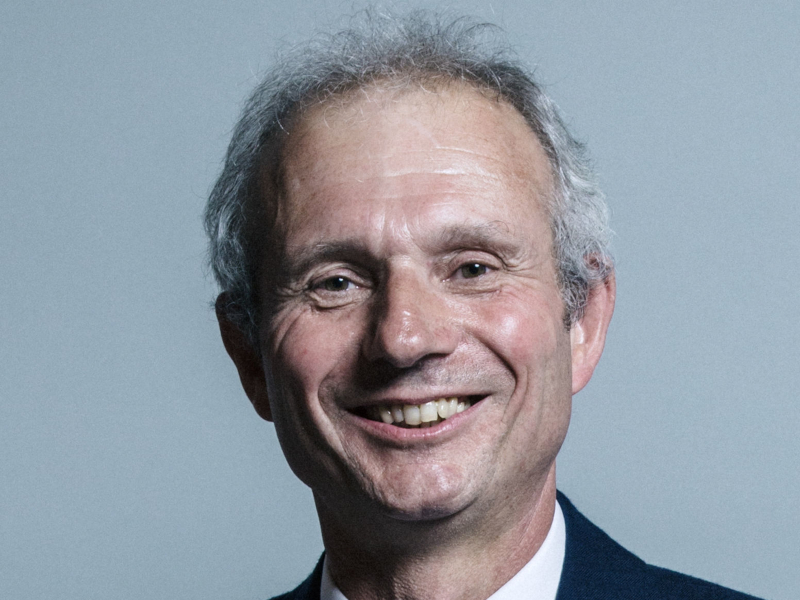
    Sir David Lidington

    I’d say that three things define an aptitude for elected politics. The first is fascination with human beings and what makes them tick, and how power is exercised. It’s difficult to imagine anyone getting far in politics without those interests.

    Secondly, regardless of left, right, centre, almost everyone I’ve met in politics starts with a commitment about changing things for the betterer in their country. The motivation is always there. 

    The third thing which separates the natural politician from the civil servant is a certain zest for the theatre. It’s that willingness to take the risk and stand on the stage and at the end you don’t know you’ll have a standing ovation or a bag of rotten tomatoes slung at you. The natural civil servants shy away from that. What’s interesting, of course, is that you sometimes see a politician who’s really a civil servant – and vice versa, a mandarin who’s really a politician, and the thespian is striving to get out there.

    Asquith complained that you bring to the prime ministership what you know at the time of assuming office, because there’s not enough time once you do to learn anything new. I think it’s hugely interesting that Asquith complained about that in the days when parliaments went into recess for quite a long time in the summer, you didn’t have rolling news media or twitter. In those days, when something embarrassing was going to happen you had all the editors in to say let’s keep this quiet – as in fact happened when Winston Churchill had his stroke.

    The question in high office is how you manage to find space to time and think. Different prime ministers approach that in different ways. Mrs Thatcher was a complete Stakhanovite whereby Dennis would force her to go on holiday and she really would sit there reading the Planning Inspectors’ Report into nuclear power stations. She’d sit up into the small hours mastering the small detail and I don’t think she really recovered any sense of normality outside of No. 10 when she was forced to resign in 1990.

    John Major was different. To John, cricket and sport remains a great solace to him, and it’s a time when he can really switch off and cares fall aside for a time. For Tony Blair it was having a young family – as well as football and music to some extent. Blair, like Cameron with his young family, used Chequers an awful lot. They used to go there most weekends with the family and it provided privacy, as well as easy reach of London in an emergency. It’s that physical space to kick off your shoes and for the children to run around and not feel het up and bored! And Asquith didn’t have Chequers of course – Lloyd George was the first to have that. 

    Gordon Brown, I’d say, was also a bit of a Thatcher – though perhaps he might not like the comparison. David Cameron, though he was mocked by the media for the date nights and chillaxing – that was a way of keeping sane. Theresa May – again, she worked herself incredibly hard, and had a profound sense of public duty. For her home was a sanctuary and her marriage to Philip May was critical in providing that stability and that source of strength and renewal.

    As for Boris, it must be difficult. When you’re in high office, your time is not your own in that you have to fight to block off time . That’s true for any senior ministerial job. It’s backbreakingly busy as everything happen simultaneously. You can’t say as prime minister – well, we’ll fix Brexit this week, then China the next, then after that handle schools. It doesn’t quite work like that! 


    Read about how workplace stress can lead to burnout here

  • Opinion: Patrick Crowder on the HR industry

    Patrick Crowder

    The mere mention of human resources can conjure up all sorts of preconceptions and emotions. Often human resource officers are seen as the cops of the workplace – dictating what employees do and say and sacking them at the first sign of unproductivity. “I think it’s certainly true that it’s become much harder to express yourself freely over the past 10 to 15 years and that’s true at universities and it’s also true in the workplace,” the contrarian thinker Toby Young tells us.

    Human resources is also a complex topic, and these more basic misconceptions can be damaging, both to the HR industry and to employees who may be less likely to seek out help from their HR departments when they need it. At its core, HR is about managing people, resolving conflicts, finding solutions, and optimising businesses to improve efficiency. Not all HR departments are perfect, there is no doubt about that, but complex issues require careful analysis.

    That’s why Finito World has spoken to HR professionals across the industry, learned about the rise of new recruiting practices, and profiled 50 HR professionals from top companies to find out the true value of HR and to see how it can be done better.

    The Chartered Institute of Personnel and Development (CIPD) is the main professional body for HR professionals in the UK. First founded as the Welfare Workers’ Association in 1913, the CIPD now provides resources, support, accreditation, and data about the people profession. Their data shows that Human Resources makes up 1.6 per cent of the UK workforce – that’s around 472,000 individuals working in the industry. HR in the UK has grown 17 per cent overall between 2009 and 2019, and HR Manager and Director roles have increased by 57 per cent.

    There is a perception that the HR industry is paid extremely highly, and while there are certainly a good number of high-paying roles, pay across the industry is quite variable. According to the CIPD, median pay for an HR employee can range from £18,372 to £115,953 per year. Naturally, this will vary based on role. HR Directors have the highest median pay of £91,301 per year, while less senior roles such as HR Assistant will see around £24,712 per year. As with most professions, with seniority comes higher pay, and the opportunity for advancement within HR is one of the major forces which drives interest in the industry.

    A major part of HR is people analytics, which is the practice of using data about a company’s employees to find business solutions. This is where the idea of the HR department spying on employees comes from, and yes, if not conducted ethically, personal data can be used in ways which violate trust, privacy, and even the law. The CIPD recommends transparency, ensuring that the data system does not discriminate against any group, and ensuring that only necessary data is collected and analysed. This is a contentious area because of the ways that it can be misused. Automating a process which directly affects people’s livelihoods is never ethical, so hiring and firing decisions should never be made until a human has examined the data in question. This isn’t always the case, so the use of employee surveillance has gained a bad reputation. When used correctly, people analytics can be used to help employees, tackle pay gaps, improve training, and find the best ways to improve employee wellbeing.

    Middle management was created out of necessity during the Industrial Revolution, when the scale of businesses increased to a point that business owners could no longer oversee all operations of their companies. Since its creation, middle management has been the subject of controversy. Think back to the character of the “straw boss” in early 20th century labour action. In Steinbeck’s novel The Grapes of Wrath, straw-bosses are portrayed as company stooges, existing solely to ensure that labourers worked hard for little pay, while not doing much if any work themselves. While this is an extreme example of middle management, these perceptions can still be seen in views of Human Resources departments today.

    Recently, Douglas Murray published an opinion piece in the Telegraph entitled Young people aspiring to be HR managers are a dire sign of a country in trouble. In it, he argues that HR is unimportant, that youth should not “aspire to be bureaucratic middle-meddlers” and criticises HR’s place as one of the highest paid roles in the country. Murray questions the necessity of HR, stating that “The principal qualifications for this overpaid role in my experience are stupidity, lack of curiosity, misguided self-worth and odious self-importance.” If this is true, then many young people must be dead-set on making careers of needless bureaucracy, because the HR industry is growing fast.

    With all of the different ideas circulating about HR, it is essential to understand what the role of HR is, why someone would want such a role, and how the practice is changing with the introduction of new technologies.