Category: Opinion

  • Building Success: The Importance of Role Models

    Stuart Thomson

    In the ever-evolving world of work, navigating the complexities of one’s career path can often feel like a daunting journey into uncharted territory. However, there exists a guiding light that can illuminate the path and offer invaluable wisdom – look for a workplace role model.

    These role models can be found within your current organisation or beyond its boundaries.

    There may be an obvious person that you can immediately see. Others, you may see more from a distance, learning about them through friends or seeing their activity and presence online.

    A good role model can play a vital role in shaping your professional growth, offering insights, and providing a vision for the future.

    Why Seek a Role Model?

    At the heart of the quest for a role model is the simple truth that we all learn better when we have examples to follow.

    A role model could be useful when looking for a future path but also when seeking help with dealing with a particular challenge. They demonstrate what can be achieved and how.

    You need to seek a role model that allows you to:

    1. Learn from experience: Consider role models that possess a wealth of experience. All the experiences that they have gathered – positive and negative – can offer valuable lessons to you. By considering the choices they made and the consequences that followed, you gain insight that you can consider applying to your own challenges.
    2. Expand skills: Role models can broaden your horizons by introducing new perspectives, approaches, and new skills. You may need specific support in developing these skills through, for instance, training.
    3. Be motivated and inspired: Simply being a witness to the success of others can be a powerful motivator, especially when you can see how they deserve that success. A role model shows you what you can achieve and what new horizons await you.

    Role models can be ‘in person’ or can be ‘silent.’ An ‘in person’ role model would be someone you can engage with. This would be helpful when it comes to building a network. They can introduce you to others in their professional circles. But even a ‘silent’ role model can be of use. This may be someone you follow online, for instance, on LinkedIn to learn from posts, see who they are inspired by, and take note of recommendations they make.

    Where to Find a Role Model

    Identifying a role model can be a challenge in itself. Consider the following steps:

    1. What are your immediate goals? Look for a role model whose career is in line with what you want to achieve. Are you all about a career? Are you looking for balance? Do you have caring or parenting needs? Look for those who have been on a similar path.
    2. What do you stand for? Do you hold specific values? If so, make sure the role model is aligned with them.
    3. Are they available? If you are looking for ‘in-person’ support, then you need to be able to make contact, and they need to have some capacity to offer help and assistance.
    4. Do you need more than one? There is no harm in having more than one role model. It is unlikely that any one person will be able to offer all the help you will need. Those needs can change over time, so the role model/s may need to change as well. You can have multiple role models.

    If you can secure a role model, then just think about the learning benefits and also the confidence it instils, along with a greater sense of self-worth. There may even be emotional support available to you from someone who really understands what you are going through.

    A role model can provide clarity of direction that may otherwise be missing in a workplace or career. The mix of wisdom, guidance, and inspiration offered by a role model will put you on the right path. Seek yours out now.
  • China Restricts, India Attracts

    Dinesh Dhamija

    China’s leaders, faced with an economic slowdown, have gone on the offensive.

    In the latest development, international law firm Dentons, with 10,000 lawyers worldwide, announced that it is dissolving its Chinese business thanks to restrictive new laws on data privacy, cyber security and capital control.

    The global response to these restrictions is growing.

    US president Biden this week announced new measures to limit American investments in China, citing national security concerns, placing new barriers to investment by private equity and venture capital firms in high-tech sectors.

    Similar tensions are developing between India and China, with the Jack Ma-founded Ant Group divesting more than $600 million from India’s Paytm in response to Indian investigations of Chinese companies.

    By contrast, India has taken a series of steps in recent months to attract ever more investment from the West.

    In March, long-anticipated changes to India’s legal framework allowed overseas legal firms to open offices in the country, “giving foreign lawyers a foothold in one of the biggest legal markets in the world,” as the Financial Times reported.

    Legal giants including DLA Piper, Herbert Smith Freehills and Baker McKenzie are all considering opening offices in India, having so far operated out of Singapore and Hong Kong when dealing with Indian-related business. Baker McKenzie says that it already has 300 lawyers in more than 40 countries working on mandates connected with India, helping companies raise investment or advising those wanting to buy businesses in India.

    Once they decide to commit to India, the major firms are likely to open offices in the country’s financial centre Mumbai, its technology centre Bengaluru and its political heartland of Delhi. Managing partner at one of India’s biggest law firms, Cyril Shroff at Cyril Amarchand Mangalas, is in favour of more international legal firms coming in.

    “The status quo has to change,” he says. “I think there will be an initial wave of those who have been waiting for a long time who will open at the first opportunity. I think the others will kind of wait and watch to see how it’s going.” It would be overall a positive development, he believes: “It will align with the India story of more global investment coming to take India to the next level, so there’ll be more quality work. I think fee levels will go up because, at the moment, there is a race to the bottom. I think this will change that dynamic, and there will be a greater focus on more modernisation of law firms.”

    Once international law firms gain a foothold in India, we can expect a further wave of investment into the country, as an ever wider circle of investors – including pension funds, private equity and venture capital – gain reassurance that their money is in safe hands, or at least that they have a strong chance of legal redress in case of difficulties.

    The economic momentum shift from China to India continues apace.

    Dinesh Dhamija founded, built and sold online travel agency ebookers, before serving as a Member of the European Parliament. His latest book, The Indian Century, will be published later this year.


  • Sir Rocco Forte: Rishi Sunak needs to think again on the Tourist Tax

    Sir Rocco Forte


    THE Conservative Party likes to claim to be the party of business – and in the past, when they have demonstrated this, I have supported them as a donor.

    But under Rishi Sunak, the party seems to have completely lost touch with what business leaders and entrepreneurs want to see.

    For a start, the tax burden is far too high – and there is no better demonstration of this than the decision in 2021 to scrap the traditional tax rebate scheme for foreign tourists, which had been in place for 60 years.

    Some of us warned at the time that taking this step when every single country remaining in the EU continues to offer tax-free shopping was bound to end in tears, but we were ignored.

    It is now sadly apparent that the decision taken by Mr Sunak when he was Chancellor has turned into the most appalling economic own goal.

    My hotel group has properties across Europe and tourists are simply not returning in the same numbers to the UK as they are elsewhere. Milan, Paris and Berlin can’t believe their luck.

    When challenged on the issue, Mr Sunak likes to claim that the £2bn a year tax break became unaffordable and only benefited a few luxury outlets in London’s West End.

    This is completely wrong – and hard to understand from a man who grew up seeing his parents build a small pharmaceutical business so should understand how business works. It is completely short-sighted to look narrowly at the cost of the VAT rebate.

    Instead, you should consider the broader economic benefits that tourists bring to our whole economy – their spending in hotels like mine, restaurants, bars, tourist attractions, museums, galleries, theatres, on public transport and so on.

    Analysis we commissioned from the Centre for Economics and Business Research concluded that the tourist tax is costing the UK £10.7 billion in lost GDP and deterring two million extra foreign visitors a year who would otherwise be here spending money throughout the economy. For every £1 refunded in sales tax to foreign tourists, the exchequer would gain £1.56 in other taxes thanks to the dynamic economic effects of tourist expenditure.

    I have organised an open letter to the Chancellor calling for what we have branded ‘the tourist tax’ to be scrapped. So far, 350 business leaders have signed – ranging from Harvey Nichols to Marks & Spencer to Primark. Other signatories include British Airways, Burberry, Heathrow, Gatwick, Glasgow, Edinburgh and Aberdeen Airports, Jigsaw, Victoria Beckham, the Royal Opera House, British Fashion Council, Fenwick, Charlotte Tilbury, UKinbound, Tate, The Really Useful Group, Shakespeare’s Globe, Southbank Centre and Bicester Village. This goes way beyond London and is affecting every high street.

    The chorus of criticism has become deafening – and Mr Sunak cannot responsibly go on ignoring it. If he does, I and other business leaders will conclude that while he occasionally appears interested in the concerns of his hedge fund friends, his understanding of entrepreneurship and how the economy works is sadly lacking.

    If you are a business leader wanting to sign Sir Rocco’s open letter to the Chancellor, please contact jamesc@j-hcommunications.com
     

  • Stop Rishi-bashing over India trade deal

    Dinesh Dhamija

    Reports that Rishi Sunak ‘faces a new conflict of interest row’ ahead of the G20 summit on the grounds that his wife could benefit from a UK-India trade deal are fuelled – I would say – by the realisation that a major trade win for the Conservative government could dent Labour’s election prospects.

    Much of the noise is coming from the Labour benches, who ostensibly support a trade deal, but would much rather not have Sunak claiming the glory and making an economically struggling nation feel better about itself.

    To me, the issue is too similar to some other ‘rows’ over India, including the BBC documentary on Narendra Modi and Suella Braverman’s remark about Indians outstaying their visas. They ignore Britain’s greater self-interest in reaching a historic deal in favour of petty point-scoring, with a vaguely xenophobic undertone.

    A UK-India trade deal would be absolutely fantastic news for the UK economy, for the Indian economy and for all those of us who have worked tirelessly to promote such a deal for many years.

    As a Member of the European Parliament in 2019 and 2020, closer links with India was one of my principal objectives: I chaired the EU India committee. In this role, I had to counter various MEPs asserting that Europe should not do business with India, on grounds of its supposed intolerance or anti-democratic bias. By marshalling the facts and winning over allies, I managed to convince my fellow MEPs that we should pursue deals rather than shun the world’s largest democracy and fastest-growing major economy.

    Rishi Sunak must now do the same, and not be cowed by those who seek to destabilise negotiations. If Akshata Murthy (aka Mrs Sunak) stands to benefit from a trade deal, good for her! So will hundreds of thousands of British workers, whose jobs will be funded by the additional economic activity.

    If Rishi gains politically, well good for him too! His predecessor but one, Boris Johnson, went out on several limbs to achieve a deal and couldn’t get it over the line. If Rishi succeeds where Boris failed, we should applaud his careful diplomacy, his personable style and wise analysis, rather than nit-picking over his wife’s share portfolio.

    Much as I opposed Brexit and all it stood for, I am equally determined to see Britain thrive in the fast-evolving post-Brexit world, where global powers including US and China have become more isolationist in a backlash against the globalisation of the late 20th and early 21st centuries. An India-UK trade deal would be a welcome signal that new partnerships and trade alliances are still possible, especially between countries with such close historic ties.

    I’m sure Rishi Sunak needs no advice from me, but just in case: stick to your guns, Rishi. There’s no need to ‘recuse’ yourself from the negotiations, as papers such as the Observer ridiculously suggest. Go out and sign the deal. We’ll all thank you in the end.

    Dinesh Dhamija founded, built and sold online travel agency ebookers, before serving as a Member of the European Parliament. His latest book, The Indian Century, will be published in the Autumn.


  • Dinesh Dhamija: The CBI’s alarming inward turn

    Dinesh Dhamija

    Evidence that Britain will – post-Brexit – become an outward-facing, confident, international trading nation is in short supply.

    The news that the Confederation of British Industry (CBI) is to close three of its overseas offices, in Washington DC, Beijing and Delhi, in order to save costs made me wonder who on earth will deliver this brave new world.

    The CBI was hit by a sexual harassment and drugs scandal in April this year, leading to the sacking of its Chief Executive and a mass desertion of members.

    Doubtless, money must be saved. But closing the Delhi office seems exceptionally short-sighted. What does this decision tell current and future members about the aspirations of the CBI, turning its back on the world’s fastest-growing major economy, one with a huge wealth of historic economic connections to the UK?

    Britain is potentially on the verge of a game-changing trade agreement with India, through which the UK will gain hundreds of thousands of new jobs and India as many as a million. Are the CBI’s members not interested in these rewards? Do its UK-based Indian members feel adequately represented by its London office?

    After rebuffing the EU – its largest and closest market – Britain is now supposedly free to venture further afield, like a Victorian adventurer scything through virgin jungle to reach untold treasures.

    In the real world, the Indian government and its booming corporations may be more interested in concluding deals in the United States, in Australia or with fellow Asian tigers than with their former colonial master, despite the many cultural links. Closing the CBI’s office will only confirm how uninterested British businesses are in engaging with Indian counterparts.

    There has been a sea change in Indian economic fortunes, which British businesspeople are perhaps insufficiently aware of. While researching my latest book The Indian Century, it struck me again and again that India is no longer a supplicant in international trade, it is a pioneer and a leader.

    The Indian space mission, which sent a craft to the moon this week, is one symbol of this new confidence, as is its role in the BRICS conference taking place in South Africa.

    There are a hundred more such examples, from India’s transformative online payment systems to the plethora of international CEOs and political leaders of Indian heritage.

    If the CBI thinks that the marginal savings from closing its Delhi office are justified, against this backdrop of the world’s most vibrant economy, then its leaders really have been taking the wrong drugs.

    Dinesh Dhamija founded, built and sold online travel agency ebookers, before serving as a Member of the European Parliament. His latest book, The Indian Century, will be published later this year.

  • The Baroness: Frances D’Souza on Sir Keir Starmer, Rishi Sunak and the current deluge of legislation in the House of Lords

    The former Speaker of the House of Lords explains the current deluge of legislation facing a somewhat recalcitrant House of Lords


    I don’t think the next election will be a slam dunk for Sir Keir Starmer. The main reason for that is that I don’t think Starmer is a leader. Of course, Rishi isn’t either, but the Tories won’t do anything about that until the next election, after which they’ll likely get rid of him.

    Having said that, I met Sunak recently, and I found him very nice: he comes across as someone who listens, and he is very smart. He said something which I thought was wonderful: “I believe in doing less but doing it well.” This led onto another conversation about the sheer volume of legislation tumbling down on us. He said: “It was on the books when I came into position.” He was basically saying, “Not my fault, mate.” But it does mean that if Sunak continues – which I doubt he will – he’ll bring in less legislation, which would be a very good thing.

    All in all, it’s been this cataract of legislation. There have been three bills. The Online Safety Legislation Bill has been in the making for about six years, and deals with the uncontroversial idea that there should be some online protection regarding content harmful for children. Molly Russell’s father has been campaigning on this; and Beeban Kidron, a fantastic cross-bencher, has been leading on that, and done a fantastic job.

    I’m always in principle opposed to any legislation which interferes with free speech, because once it’s on the statute books it’s a hostage for fortune. You never know, we might have a fascist government one day; it’s not impossible. It’s a very technical bill, which only a very few people understand. Ultimately, the large companies are going to have to abide by advertising standards, but to get them to do that may require legislation.

    The second bill is the Retained EU Law (Revocation and Reform) Bill whereby the government is seeking to wipe off the statute books around 6000 executive orders which have come from the EU. The minister dealing with that happens to be dealing with that Martin Callanan is quite abrupt and there have been some testy exchanges. That makes life quite interesting – people at least wake up!

    But I’m particularly concerned about the third bill, the Illegal Immigration Bill. This goes against our treaty obligations – as was pointed out in the second reading in the House of Lords.

    As the Bill stands, we have the government-sanctioned entry points, which have special status – essentially if you’re an Afghan or Ukrainian refugee, or if you’re from Hong Kong. But let’s say, for example, that you come from Eritrea: if an asylum application is refused, then you can never return in your lifetime. Furthermore, if you’re an unaccompanied child, you can stay until you’re 18, then you’re sent to Rwanda. It rides roughshod over 1951 Refugee Convention.

    The point the government makes – and it’s clever of them to make it – is that nobody is coming up with an alternate system. What we argue is that if the UK is serious about immigrants and asylum seekers in genuine fear of persecution, then they’ve got to create more safe routes into this country.

    In actual fact, the numbers that comes here are quite low pro rata as compared with Germany, France, Italy, Greece and other European countries. Of course, there is undoubtedly a problem with economic migrants who come here, but there is a mechanism in place to determine people’s claims.

    The question is why does the government not go after the criminal gangs? They’ll never succeed in starving them of revenue with the current proposed legislation. Really they need to infiltrate the criminal gangs. Intelligence ought to know who they are – and if they don’t, they should. It’s certainly worthy of a question in the House. Are the intelligence services on this?

    Incidentally, the current processing of the special programmes is a shambles. The Ukrainian situation has more or less obliterated the work on Afghanistan, due to the melancholy fact that the Foreign Office can’t do two things at the same time. To be registered as a genuine asylum seeker, the offices which issue refugee passes are few and far between, and hugely overburdened with around 350,000 people currently awaiting recognition that their application is bona fide.

    All of which, as Sunak knows, is a lot for the Houe to process. The trouble is we only have about 50 or 60 hard-working peers; they do a fantastic job, but that number is very small – but the question of House of Lords reform is a topic for another article altogether.


  • Diary: Longest-serving foreign secretary of Australia Alexander Downer on Rishi Sunak, Gary Lineker and the hilarity of George W. Bush

    Alexander Downer


    Illegal immigration is an important issue for me. I think there’s a lot of misreporting about Rwanda, and it’s outrageous. How would I describe Kigali, the capital? It’s very tidy – extraordinarily clean city. It has high rates of economic growth, and gives the impression of being a well-run country. In my life, as the longest-serving foreign secretary of Australia, I must have been to over a 100 countries.


    I also like to point out that these asylum seekers are also coming from a country called France, so there’s a choice of France or Rwanda. That’s not inhumane. Gary Lineker is a football ex-player and pundit. I don’t regard him as an expert on immigration issues; he’s reading about people scoring goals and being offside. Of course, it would be inhumane if the policy were to send genuine refugees back to their country, but that’s not the policy. The reality is that people smugglers have found a way to make huge amounts of money, and it’s a racket. It’s also hugely expensive for the government to pick these people up, process and house them.


    Difficult interviews never bothered me. The media’s job is to hold you to account. If you’re powerful and decided on a particular path, you’ve got to be prepared to defend it. The Andrew Neil Show wasn’t a problem for me. I did an interview with Kay Burley on Sky, and she was incredibly against the government’s policy, but that was okay. If you’re so worried about being attacked by journalists, why not put them in charge of the country and see how it goes? Usually, whatever you do is sub-optimal.


    I remember the day I was sworn in in Australia by the Governor-General as a Cabinet Minister. One of my colleagues who’d previously been premier of New South Wales, he was being sworn in as finance minister, and I remember him turning him to me: “This is the best day you’ll have as a minister. I said:  Why’s that? And he said because nobody I left politics in 2008, and still on social media I get attacked for things we did in government and that’s fine.


    Over the years, I’ve met many world leaders. The more conviction they have the better. When John Howard was Prime Minister, we were subject to endless attacks. We used to describe ourselves as the Howard Fascist Dictatorship because they hated us so much. But we knew what we were doing, and felt that what we were doing was for the best. It hurts more when you’re attacked for a slip of the tongue or a gaffe. If you want to be popular, it’s not the job for you. You become famous in your country but at the same time for many people become infamous.


    T
    wenty years on from Iraq, I wonder whether we were right, and I think we were. We didn’t make a huge contribution to the invasion of Iraq, but getting rid of Saddam Hussein was a good thing. However, the Americans handled the post-invasion incredibly badly. We argued with the Americans about that, but it wouldn’t have made any difference if we’d refused to participate. You can’t ask the Americans to underwrite the security of the Indo-Pacific region at huge expense to the American taxpayer, and be a fairweather ally.


    Both Blair and Bush were leaders of conviction. You’d have to say you were impressed by the forcefulness of each. They’re different sorts of people – both very personable. Bush was very funny, full of jokes. The funniest moment relates to my wife, Nicky. It was September 2007, were at the Australian PM’s Sydney residence and at this time he was incredibly unpopular worldwide. Condi Rice was there, and she said to my wife: “Would you like to meet the President?” My wife said: “He’s a bit out of my league. Condi insisted and I don’t know what came over my wife nut my wife said: “Mr. President, what’s it like being the most popular person in the world.” I’m Australia’s leading diplomat and he just laughed and said: “That’s politics. You have to do what you think I’d right. She spoke to him for 15 minutes and came away thinking he was delightful, much underrated by people. He made politically incorrect jokes and at one which I won’t repeat I said: “You mustn’t say that publicly. “No,” he said. “I never would.”


  • Secretary of State Gillian Keegan on Sir Keir Starmer, Rishi Sunak and how Shirley Williams wrecked the education system

    Gillian Keegan


    I spent most of my career in business and am a bit of a Johnny-come-Lately to politics; I got elected at the age 49. I am the first former apprentice to be Education Secretary – and I’m also the only degree level apprentice in the House of Commons.

    25 years ago, growing up on the outskirts of Liverpool in Knowsley, there weren’t that many opportunities. For me, an apprenticeship was a golden ticket; I was so delighted at the time. But it’s been quite a shock at the Department for Education when everyone looks down on you as if you’ve come up with soot on your face.

    I’m sometimes asked who was the person who most destroyed the education system and I’d say Shirley Williams. I was on a trip with a Lib Dem MP, going to St Mungos to visit a homeless shelter; we were on a Public Accounts Committee together. She spent the entire train ride telling me how fantastic Shirley Williams was, and all about the comprehensive system. Having been a beneficiary of this system, where 92 per cent of students were without any qualifications, I was confused by her enthusiasm. Then I found out on the return journey that her education consisted of the International School of Brussels and Roedean; she’d never been anywhere near a comprehensive school.

    That’s the whole point: theory and practice are very different. Rishi Sunak understands that and it’s one of things which makes him a fantastic prime minister. He has the most extraordinary talent; he’s very detailed and strategic and kind. I look at him and think that he’s got that stardust, and a lot of space to grow: I think he will be a world statesman.

    Rishi is very encouraging but also gets things done. Look at the Windsor Framework: when you consider the column inches which were devoted to this, and the question of whether it was any good or not, and whether it was practicable: he got it through. Look at the way he’s handled the health unions and the teaching unions.

    Education will be a big part of the story we tell to the electorate next year, when it comes to our achievements over 13 years. In 2010, we inherited a lot of problems in our education system. The attainment of children wasn’t up compared with other countries; for instance, in the PISA rankings the country had fallen back nine points over the 13 years of the Labour government. That’s quite a lot. We had fewer schools deemed ‘Outstanding’.

    We also did a lot in childcare in our budget earlier this year. In 13 years of Labour government, all Labour introduced was 12 and a half hours for three and four year olds. That was it. Since then we’ve introduced 30 free hours, and now we’re doing nine months to five years, which leaves Labour nowhere to go.

    You’ve also got to look at what Michael Gove and Nick Gibb did in setting up academies; they’ve transformed academic outcomes and opportunities for kids. Having grown up in Knowsley, I know there are large numbers of very bright children who don’t get the chance to go to an outstanding school or to university. Social mobility is not a slogan with me.

    We’ve also done a lot to be proud of when it comes to universities, and in relation to skills. That’s a nice thing about my current role: it’s where I started as a skills and apprenticeships minister. I can now get stuff through which I wanted to do then and which everyone overruled me on at the time.

    One such thing is medical apprenticeships. I started to think: “How do we get parents to want their children to do apprenticeships?” I thought about what parents want for their children: they want their kids to have a good profession and a stellar career. When it comes to medical apprenticeships for 18 year olds, the courses are five years long. That means you can come at 18 and be a doctor in five years. It’s the sort of thing which shows you that this is a government focused on delivery.

    From my seat on the front bench I have a good view of the Leader of the Opposition. The only time Sir Keir Starmer has ever energised a room is by leaving it. It’s quite a good vantage point on the front bench. I think: “You’re making a massive miscalculation. What are you going to say when we deliver all this!” Margaret Thatcher always used to say, if you’re not ten points behind then you’re not doing enough. This is going to be a historic fifth term.


    Gillian Keegan was talking at the In and Out Club 


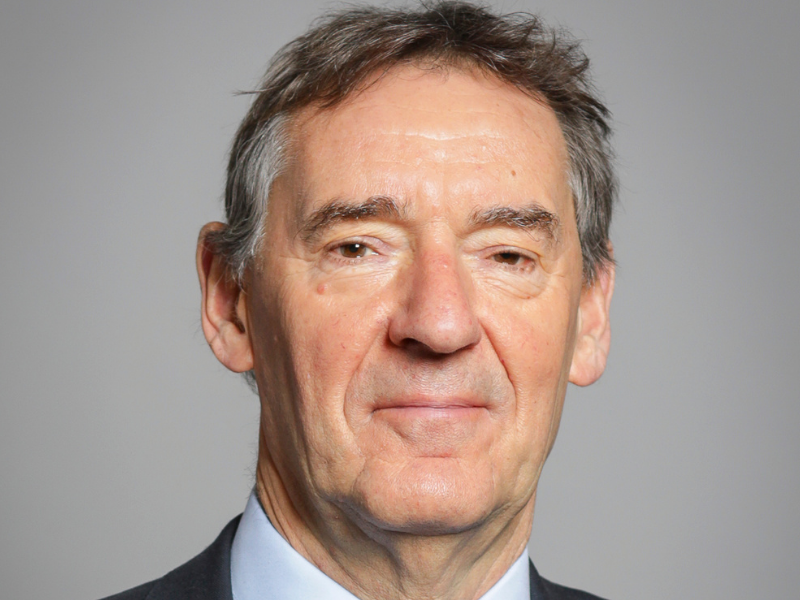
  • Jim O’Neill on 9/11, the BRICs, and Biden’s priorities

    Jim O’Neill on 9/11, the BRICs, and Biden’s priorities


    The former Commercial Secretary to the Treasury and Goldman Sachs chief economist on the 20thanniversary of coining the influential term the BRICs

    In late summer 2001, when I was co-head of economic research at Goldman Sachs with Gavin Davies, it became clear there was a strong probability Gavin would be leaving to become Chairman of the BBC. In Goldman’s inimitable style, their immediate thought was to find another co-head for me.

    And so I became involved in interviewing all sorts of incredibly illustrious economists from around the world – spectacularly well-known names. I had to explore the idea that I would have some credibility as their equal.

    Then, crucially, September 11thhappened. I’d been at the annual Economics Association Conference in the Twin Towers. On the Tuesday, Gavin and I were hosting our monthly video conference with all our MDs around the world. Halfway through, the guys in New York left. We were wrapped up in our little world – we just carried on. Then, around 15 minutes later Gavin left for his final interview for the BBC. He popped back into the room and said: “I think you probably want to be aware that apparently some plane has hit one of the Twin Towers.” My first instinct was to say: “Okay, thanks Gavin. Now, you guys in Asia…”

    But within two days of it happening, I came to the strange conclusion that the underlying message to take away from this tragedy – rightly or wrongly – is that this was the end of American-led globalisation. It was the terrorists lashing out and saying: “We’ve had enough of Americanization.”

    Within six weeks, I published my first piece: ‘The world needs better economic BRICs”. Three things were at the core of it. Firstly, I’d already been mesmerised by China’s role in helping solve the Asian crisis in the late 90s so I was already aware of the relevance of China for the world. Then, of course, we were coming to the end of the first decade of the collapse of the Soviet Union, and the supposed emergence of Russia as some kind of democratic state. The G7 would soon expand to the G8 to accommodate Russia. 

    Thirdly, we’d also seen the launch of the Euro as a single currency. So France, Germany and Italy now shared a single monetary policy, currency and the common framework for fiscal policy, which would still have the same equal representation as all these seeds of global economic governance.

    It was only in 2003 that the acronym became well-known in business, when we published our outline as to what the world could look like by 2050.  We deliberately called that ‘Dreaming with BRICs’. People forget that we wrote about what could happen if ever country fulfilled its potential. Of course, in reality the idea that every country in the world would reach its productivity potential is crazy. The idea that they’d all do it at the same time is completely absurd. 

    In reality, what has happened is that China has become so big that it’s twice the size of the other three put together. So when it comes to discussing the BRICs as an economic or political group, China completely dominates. Because of that, it still means that the various assumptions we made about the BRICS becoming bigger than the G6 in the future, actually could still happen – despite what has been a very disappointing decade for Brazil and Russia. 

    Overall, China and India look as though they’re going along the central path that we assumed. Meanwhile, Brazil and Russia have proved that they suffer from the so-called commodities curse. They can’t seemingly adjust their economies from being excessively dependent on commodity price swings. They keep having these violent economic cycles. In both countries, there’s also significant evidence of misallocation of resources and a lot of blatant corrupt practices that go with these dominant industries. Both countries need to reform and stimulate their private sectors.

    Interestingly, the legal people at Goldman spent a brief amount of time exploring the case for acquiring the rights to the acronym. Whenever anyone mentioned the phrase BRICs, they wanted it to be Goldman Sachs BRICs. I argued against that because then other places wouldn’t have used it. 

    Today I worry that the American democratic system is struggling. The country is having to adjust to the fact that for the past 20 years, US economic growth has been so unequal. There’s been no rise in real wages during that time, which has caused this remarkable split politically. If we don’t see renewed economic growth post-COVID – and alongside it, shared economic growth – then the fragility will only grow more.

  • Dinesh Dhamija: Air India: a Country’s Reputation on the Line

    Dinesh Dhamija


    The news that Air India will buy 250 Airbus aircraft and 220 Boeing jets, worth a total of $70 billion, is excellent news for passengers to India and for the country itself.

    The company has had a torrid time in recent years: Since the early 2000s Air India has suffered from chaotic management and customer service, terrible punctuality and ticketing.

    Some travel agents expressly advise their clients not to use it.

    Most recently, two separate incidents of drunken idiots urinating on fellow passengers created a scandal known as ‘pee-gate’, which Air India compounded by trying to shampoo it under the carpet, so to speak.

    Originally founded in the 1930s by Tata, Air India was nationalised in 1953 then re-privatised in 2022 by its founders.

    Whether public or private, many airlines are proxy embassies in the sky, flying their country’s flag, representing its values, and projecting soft power. If India is going to fulfil its potential as a respected major economy, Air India needs to up its game.

    This giant order for new aircraft is a good start. UK Prime Minister Rishi Sunak, French president Emmanuel Macron and US president Joe Biden have all praised the deals, with thousands of jobs and billions of dollars flowing into the British, French and American economies, earning their gratitude.

    For me, it feels particularly close to home, because airlines have been central to my personal and professional life for decades.

    First, I met a beautiful young woman called Tani who had been selected from thousands to work as a stewardess for Air India in the 1970s – a job of exceptional glamour and prestige.

    We married and had two children.

    Then we started a travel agency specialising in long-haul flights and – as ebookers.com – built it into a multinational business with thousands of employees and offices across Europe. For years, I tried to sign a deal with Air India, to become its preferred UK agent. It never happened (I did a deal with Nepal Airlines instead). The airline represented India in a diplomatic sense, as a reliable, established and secure company with a strong reputation. So, it’s been painful to watch the company’s many struggles and self-inflicted wounds. If a visitor to India has a shockingly bad experience on the national airline, before they’ve even reached the country, what kind of an impression does that create?

    I’m hopeful that this latest infusion of capital and brand-new fleet of the latest aircraft shows that Air India will follow Emirates, Etihad, Qatar Airways and Singapore Airlines into the 21st century world of exceptional customer service, clean, fuel-efficient, comfortable aircraft, reliable punctuality and advanced digital administration.

    It would be great to have an airline to feel proud of, to look up above the West London skies and see its familiar red tailfin with the golden sun motif and look forward to my next flight back to Mumbai or New Delhi.


    Dinesh Dhamija founded, built and sold online travel agency ebookers, before serving as a Member of the European Parliament. His latest book, The Indian Century, will be published later this year.