Small to medium enterprises (SMEs) are facing increasing costs, issues with the supply chain, and staff shortages. A survey of 2,000 UK businesses conducted by MarketFinance shows the ways that SMEs are handling these issues and staying afloat.
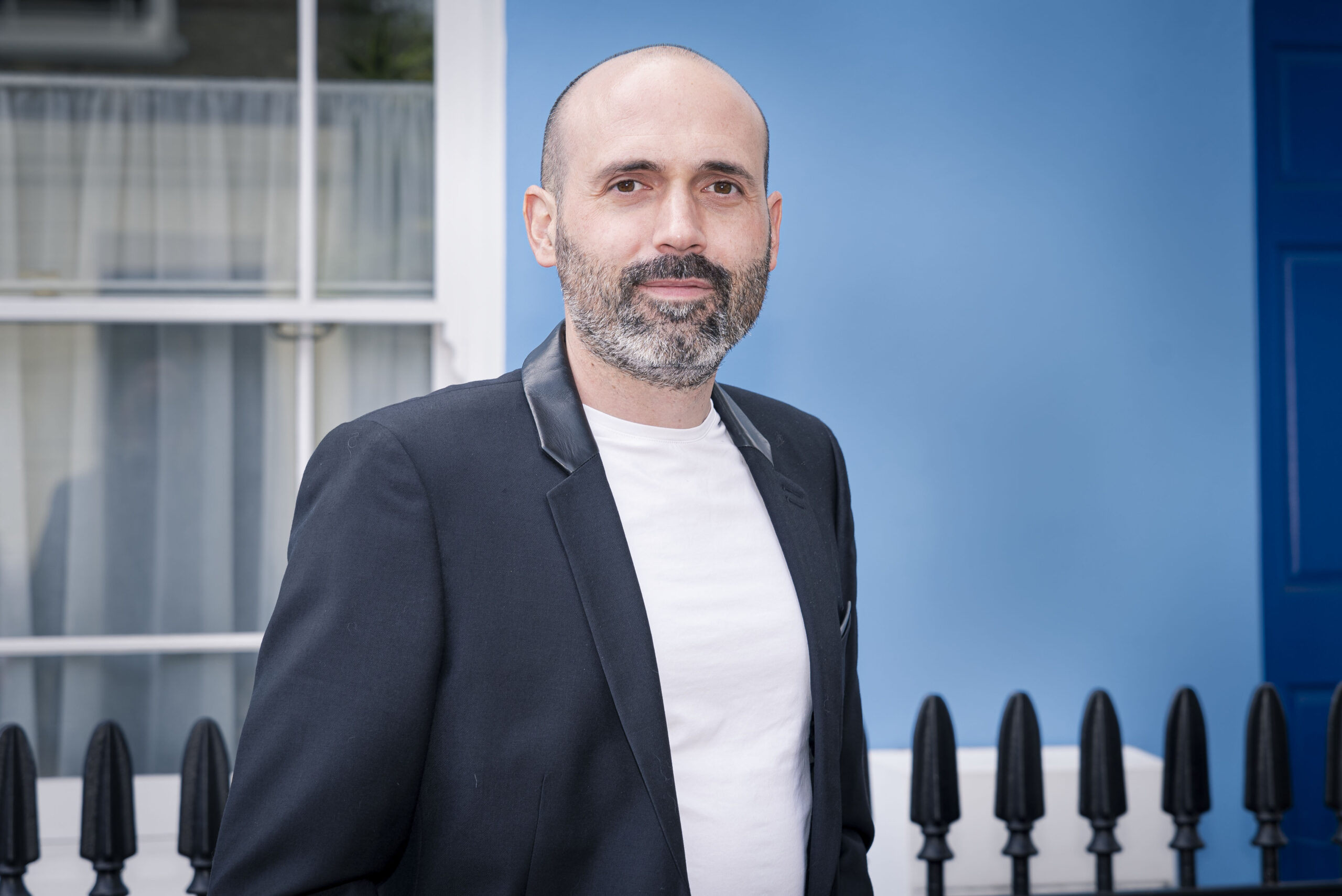
According to the research, 79 per cent of SMEs have seen rising costs from their suppliers over the past six months, with the most affected companies being those in the North West of England. Only 32 per cent of the affected SMEs have been able to avoid passing these increased costs onto customers, with two out of five saying that they could increase prices up to 10 per cent in the period approaching Christmas. MarketFinance CEO Anil Stocker weighs in on the situation.
“The current economic environment with rising costs is presenting some headwinds and headaches for SME owners, but they are proving to be as resilient as ever,” Stocker explains. “The vast majority have been thinking ahead and accounted for the longer term scenario, which will hold them in good stead to do business.”
It’s great to see that SME owners are taking the long view and preserving their customer relationships and managing suppliers by having a finance facility in place to deal with the overhead for now.
The British Business Bank announced in November last year that it will extend its Recovery Loan Scheme to June 2022. This extension will give SMEs easier access to more affordable finance they need to continue running and growing operations in the face of ongoing challenges such as staff shortages and supplier price increases.”
While price rises are obviously not ideal for customers, evidence shows that they are understanding of and knowledgeable about the situation SMEs face. Only 10 per cent of customers surveyed said that they would challenge businesses over increased costs. Despite customers’ apparent understanding of the situation, Anil Stocker believes that avoiding price increases through early planning is essential to maintaining a customer base.
“It’s great to see that SME owners are taking the long view and preserving their customer relationships and managing suppliers by having a finance facility in place to deal with the overhead for now,” Stocker says.
For SMEs which do not have the rainy-day fund needed to cover the increasing costs, there are other measures in place to ensure that they can stay afloat.
“The British Business Bank announced last week that it will extend its Recovery Loan Scheme to June 2022,” Stocker continues. “This extension will give SMEs easier access to the more affordable finance they need to continue running and growing operations in the face of ongoing challenges such as staff shortages and supplier price increases.”
These measures, as well as what appears to be an easing of the pandemic’s effect on the economy, has led to increased confidence from SMEs. The research shows that 48% of SMEs expect their turnover to stabilise or increase over the next year, and 68% expect their businesses to grow over the next three years.
“It’s clear that the business environment has shifted and SMEs are looking ahead with a quietly confident and cautiously optimistic view. UK businesses intend to ramp up growth through domestic and international expansion, digital transformation and even M&A activity,” Stocker says, “But as they reset their post-pandemic goals for a post-pandemic, they’ll need to be confident of their funding base.”
During the height of the pandemic, many businesses froze their investments and went into ‘survival mode’, but now it appears that 70% of SMEs are planning on increasing their investments over the next year, with 25% of them even considering hiring on more staff. This growth will largely be funded through borrowing practices, though 71% of SMEs surveyed do not believe that the best way to borrow is through traditional banking. Stocker believes that the Recovery Loan Scheme will play a major role in helping SMEs invest and thrive.
“We expect to see a large number of SMEs taking advantage of the scheme over the next 6 months as their growth and expansion efforts gain momentum and they invest in ambitious plans for 2022 and beyond,” Stocker says.
Though it appears that we are now past the worst of the pandemic, it is clear that the economic impact is far from over. But for now, SMEs are finding ways to carry on.
Working from home is rapidly becoming more accepted, and for many people it is a good change. However, a 1,000-employee survey conducted by Fellowes Brands suggests that more than half don’t have the equipment they would have in a traditional office.
Of the employees surveyed, 58 per cent said that they do not work from a home office, instead opting to work from the kitchen, living room, or bedroom.
Not having a dedicated home office can lead to problems. Desk chairs are designed ergonomically for long-term use, unlike other chairs around the house which could encourage bad posture and cause back issues down the line. Additionally, lack of an enclosed office space can allow all manner of distractions to creep in causing a loss of productivity. Productivity expert Martin Geiger explained the issue: “Throughout my career working with some of the world’s biggest companies, one thing I’ve come to notice is that the most productive people all seem to have one commonality: satisfaction. To successfully transition to this exciting hybrid working future, employers must implement practical strategies that allow their employees to be satisfied with the setup within the corporate office, as well as within their home working environment.”
While a temporary home set-up may have been suitable as a stopgap measure to ride out the pandemic, more permanent solutions must be found if WFH is going to continue to succeed. Seven out of ten employees believe that their employer is responsible for giving them the tools they need to work from home, and 81 per cent say that the ergonomics that come with a proper home office are essential to productivity.
“The future of work is hybrid. No longer is working solely relegated to the company office; the modern workspace now involves employees splitting a portion of their time working from within the corporate office, and a portion working from the home office,” Geiger continued. “Employees who are well equipped and thus satisfied with their working conditions in both locations will lead to outcomes of higher productivity.”
As the transition to remote working continues, there will surely be issues to iron out. Providing the tools needed to be productive will solve one of these problems, and based on the evidence, it looks like investing in equipment for WFH employees is a small price to pay.
London had the most cases of redundancy per 1,000 people in 2021, according to a study conducted by UtilityBidder. 19,095 people face redundancy in the capital, which is a miniscule increase in numbers of redundancies since 2011, when the study’s data begins. The rest of the UK has seen a decrease in redundancies, including Northern Ireland which has seen a 333% decrease over the last ten years.
The research also examined disparities between industries, showing that administrative and support services were most prone to redundancy. The manufacturing industry also showed a high number of redundancies, with 15,117 cases in 2021. These industries, however, both saw decreases in redundancy overall since 2011.
The only industries which showed an increase in redundancy over a ten-year period were agriculture, fishing, energy, and water, which saw an 80% increase in redundancy. The information and communication industry also saw a 7% increase.
Epidemiologist is one of those words that has unfortunately been thrust into everyday parlance. Along with, ‘furlough’, ‘coronavirus’ and an ‘R number’, in 2019 you would be forgiven for not knowing the respective definitions. Of course, you can’t get away with that now. In fact, many of us have even transformed into epidemiologists from our armchairs. But other than looking concerned on the television, what does being an epidemiologist actually involve and how do actual epidemiologists feel about the public discourse surrounding the virus? We caught up with three epidemiologists – a PhD student, a doctor and a professor – to find out.
Epidemiologists could colloquially be termed ‘disease detectives’ as they investigate public health problems. They will search for the cause of a health issue, identify people who are at risk and then determine how to control the spread or prevent the problem from recurring. But PhD student Florence Walker says that despite the pandemic, many people still don’t understand what an epidemiologist does. “I thought at least now everybody will know what an epidemiologist is and actually it’s still the case that I’ll tell people, ‘Oh I’m an epidemiologist’, thinking they will go ‘oh that’s so cool, that’s amazing,’ and instead I get a ‘What’s one of them then’ or an ‘Oh, I’ve got a problem with my skin, let me tell you about it’.”
After graduating with a Masters in epidemiology from the London School of Hygiene and Tropical medicine, Florence has been looking into the consequences of people not taking medication properly as part of a PhD at the University of Edinburgh. As a student epidemiologist, she admits she finds some of the conversations around lockdowns frustrating. “Some people say the restrictions are ridiculous but you know, we have 75% fewer cases of flu this year which means that the lockdown is working.”
She adds: “It’s been a long time since anybody thought that the miasma theory (the theory that bad air is the main cause of every disease) was correct. We’ve got germ theory. We know that you can’t get infected unless you are able to transfer pathogens.”
Florence Walker: ‘We have 75 per cent fewer cases of flu this year which means lockdown is working’
“People say oh well it’s just like a cold, well it is just like a cold for a lot of people but the problem is the percentage of the population for whom it will not be like a cold, it will be a life threatening if not life taking illness, is enough to overwhelm our national health service. We have to protect the NHS,” she sighs.
Florence herself has had coronavirus and as a consequence, she lost her sense of taste. “I put a spoon into a bottle of Colmans mustard and ate it and it just tasted like powder.” Thankfully it is back now.
For people who are considering getting out of the armchair and doing a PhD in epidemiology, Florence says: “The only bit of advice I could give anybody who wanted to go and do a PhD is “find your supervisor”. “PhDs are really lonely and I know lots of students who speak to their supervisor just twice a year, I have a call with my supervisor three times a week,” she says.
But Florence warns the pandemic has caused a sharp spike in the amount of people looking to do similar PhDs. “When I got mine my supervisor met me at the school and she was just asking everybody ‘do you want to come and do a PhD?’… But this year she advertised for a PhD student and there have been well over 100 applicants. It’s getting fierce.”
Dr Thomas Churcher, who teaches at Imperial College in London, also told us about the spike in interest in studying epidemiology amid the pandemic. “Clearly epidemiology is very fashionable at the moment but that will clearly wane.” He says that an older colleague recalled the wave of interest in epidemiology surrounding the HIV epidemic. “Don’t be attracted to it because you see a lot of epidemiologists on the news. All the hard graft is done between those events,” he says.
Dr Churcher was drawn to epidemiology through an interest in disease after he caught malaria while travelling. He says: “The thing I like about epidemiology is you have to get to a broad understanding of everything that’s going on. It’s the really holistic approach that I find interesting.
Dr. Thomas Churcher explains that epidemiology in involves a holistic approach. “You have more diverse experiences coming in.”
“In the past epidemiologists were very much born from the kind of maths and stats background but as understanding of the discipline has increased you have more diverse experiences coming in which is exactly what it needs. It doesn’t need to be just hardcore mathematicians doing it, it needs to be social scientists, it needs to be everything because it is a society based problem.”
Since the pandemic, Dr Churcher has focussed on the impact COVID is having on malaria, to avoid “a double pandemic”. He says while he is pleased the public has a greater awareness of epidemiology now but is frustrated that there’s still an “awful lot of rubbish being talked by an awful lot of people” when it comes to the virus.
Meanwhile, Professor Sarah Lewis, who is a Professor of Molecular Epidemiology at the University of Bristol, says she worries about the relationship between Twitter and epidemiology.
“I keep getting sucked into Twitter. I should stay away from it really but it’s a very good one for finding out new information because obviously data’s generated so fast at the moment. Normally in epidemiology, it will take us months to write a paper and then it will go out to peer review and that can take several more months and then you’ve got to wait for the publication.
“Because policies are being based on the research, everything is coming out so fast and lots of it hasn’t been peer reviewed and it’s posted up on Twitter and you find the latest information there really or in press releases which is quite different. Some of it has dubious quality but before anyone has had a chance to assess the quality it’s gone round hundreds and thousands of people,” she warns.
Professor Lewis says aside from the obvious frustrations at the moment, working in epidemiology is a very satisfying career path. “If you get involved in epidemiology you can apply the methods across a whole load of different subjects.”
“I normally work on using genes to identify risk factors for cancer but also cleft lip and palate and mental health, as well. So that’s quite diverse already. But then, with the pandemic, a lot of the methods that I’m familiar with apply to analysing data relating to COVID as well,” she explains.
She concludes: ”It’s a fantastic field if you’re broadly interested in health and you want to make a big impact on populations. Obviously a doctor will treat a single patient but an epidemiologist could identify a risk factor which could have an impact on thousands of people.”
Young people and experts on climate change, diversity and arms sales reveal the significance of the new Biden administration for the UK
Georgia Heneage
There has been much hype around what the new Biden administration signifies for a politically divided country infected with issues of social inequality, racial injustice and a deadly virus which has killed over a million of its people.
In his first month in office, Biden seems to have already conducted (or at least promised) a systemic upheaval of many of the unpopular and controversial policies in place during the Trump administration, such as its sceptical approach to climate change, immigration and foreign policy. With Kamala Harris as the first female vice president of colour, there is a new mood around questions of diversity and inequality which were largely ignored under the Republican regime.
But the impact this seismic shift for America will have on the UK is yet to be seen: will it really be that seismic? And, if it is, will the effects be negative or positive?
The view of those working in these key areas in the UK is that the large scale shake-up which Biden is promising should urge us to follow suit, but the likelihood that it will is less than certain.
‘We want to fight for change’: the view of the young
For 21 year-old Connor Brady, Staffordshire University’s Labour Student’s society manager, the “tone” and “conversation” in the UK changed immediately following Biden’s inauguration.
Though he is unsure that “policy-wise” much will change in America for young people, Brady believes that Biden’s environmental policies will play a large part in emphasising the UK’s thin approach to climate: “His new policies highlight the fact that we’re not really having that discussion in the UK. I don’t think that we are going to make the changes necessary to save the planet, whereas in America the thought process is at least there”.
The fault, says Brady, lies with a media system in the UK much less attuned to climate worries than across the pond, and a political culture “defined by indecision”.
“I’d love it to be the sort of example that we’d follow,” says Brady, “and say that we need to take it seriously because they are. But I don’t think we really have a political class that are ever going to really take notice of the way other countries are doing better: we’ve seen it with Covid.”
Staffordshire’s society’s communications officer Jagdeep Jhamat, 20, said Biden and Harris’ appointment was “a sigh of relief; the moment we found out the results we realised that a saga had just ended in American politics, and it was not a good one”.
For Jhamat, though, the appointment of Kamala Harris does not signal a substantial benefit for people of colour in America or the UK. “Just because she has credentials of being the first woman of colour doesn’t excuse the fact that she was a judge who sentenced people of colour to prison with insufficient evidence. It’s not the best representation of minorities in America.”
And Jhamat sees a parallel in this respect with UK politics: “I have nothing in common with ethnically ‘diverse’ MPs like Rishi Sunak or Priti Patel: all I see is them selling out to the interests of a ruling white international capitalist class.”
Despite this, Connor Brady says the Black Lives Matter protests which started in America last year had a hugely positive affect on young people in the UK who are increasingly “politically disenfranchised”.
“The movements that we’ve seen over the past year have shown that young people are ready for change, and they are going to fight for change,” says Brady. “They aren’t going to wait five or ten years. They are willing to stand up and say no: we need change now, and we’re going to take it. That’s what I’m really excited about.”
His worry, though, is that “if Biden and Kamala don’t follow through on their promises, or if their policies aren’t radical enough, then it’s going to increase the disenfranchisement of young people in the UK who look up to them”.
‘Embarrassment is a useful tool’: Natalie Bennett on environmental policy
One of the areas most transformed by the Biden administration to date is his climate policies. After years of climate denialism and environmental destruction under Trump, the White House has now recognised global warming as an “emergency”: they’ve rejoined the Paris accord, promised new opportunities for clean energies and green technologies, and signed an executive order to freeze new oil and gas leases on public lands and double offshore wind production by 2030.
These are just a few of hundreds of ambitious executive decisions established in an effort to position climate change as an essential part of all American foreign and domestic policy going forward.
Biden’s extensive environmental policies show his awareness that beating climate change requires systemic change; a scooping out and refilling of the American economical and political systems rather than a sprinkling on top.
So where does this all leave the UK?
For Natalie Bennett, former leader of the Green Party from 2012-2016, Biden’s appointment signals a golden age for the global fight against climate change.
More importantly, she says it puts a huge amount of pressure on the UK as the chair of COP and highlights what a mess the UK is in. “Embarrassment can be a very useful tool”, says Bennet. “If a country like the USA, which has so many similar problems to us like poverty, inequality and the dominance of giant multinational companies, are doing better than we are, that makes us look really bad.”
Bennett says the US’ Green New Deal is far more sophisticated than the Ten Point Plan for a Green Industrial Revolution announced by the UK government in November last year.
“The Biden administration has come in with a very clear plan of action on whole areas of key policy, whereas our plan looks like something written down on the back of an envelope then hastily sketched up into something. It’s not long-term thinking,” she said.
Bennett sees these issues with making long-term executive decisions in the UK as part and parcel of a binary, first-past-the-post electoral system which means that “we are terrible at decision-making”, and the “last significant change in Westminster was women getting the vote 100 years ago”.
It’s also down to our deeply centralised political system, where power and resources are concentrated in Westminster and local government’s ability to make independent decisions has been “slashed to ribbons, to the point where most local governments have their hands tied”. Bennett says the rhetoric of the Green New Deal is, by its natural structure, locally based: it’s about doing things in communities, whereas “our industrial strategy is about what the top level decides and what companies invest in.”
Despite the UK government’s promise to create 250,000 jobs in the green sector, Bennett says Biden’s new policies are far more rooted in a recognition that climate change should be rooted in the labour movement, technological progress and job creation. His “just transition” policy “suggests change everywhere”, whereas in the UK there’s a sense that everything needs to level up to the status quo set in London.
“What we are talking about here is business as usual with added technology. Biden is talking about transformation,” says Bennett.
Lee Pinkerton on Kamala Harris and diversity
One of the most predominant issues brought to the international stage last year was racial injustice: these were voiced in mass Black Lives Matter protests which started in America, a country for whom racial discrimination is a daily reality for millions and is deeply embedded in the political and justice system.
Biden’s appointment signals a shift in this area, partly because of his pledge to tackle social and racial inequality in America, partly because of the sheer weight lifted by expelling a president who many deem openly racist, and partly because America is now enjoying the first woman of colour as its vice president.
Though some see Kamala Harris as an exciting new change in political black representation for women, Lee Pinkerton, communications officer for ROTA (Race on the Agenda), a leading social mobility think tank, agrees with student Jagdeep Jhamat that Kamala Harris’ appointment will “in truth have very little real effect on people of colour around the world”.
“They had a short feel-good moment, but it will have very little real impact on the quality of black people’s lives in America in terms of things like employment or criminal justice”, says Pinkerton, “especially because Harris wasn’t all that popular among black communities when she was a judge”.
In the UK a similar kind of “superficial” diverse representation can be seen in government. “The Tories are boasting of the most racially diverse cabinet in UK history- which is factually true- but it hasn’t improved things for black people at all. If you look at the back story of MPs like Home Secretary Priti Patel or Chancellor Rishi Sunak, they come from the same privileged, privately-educated backgrounds as their white peers. They are cut from the same cloth, and in terms of diversity of thought- there’s little to none”.
‘Our blind spot’: arms sales to Saudi Arabia
The ethical, political and economic impact of the UKs involvement in the war in Yemen, in part a result of us being the second largest exporter of weapons to Saudi Arabia, has long been a source of controversy.
This week tensions intensified as the new Biden administration announced its intention to freeze all arms sales to Saudi Arabia and work towards a lasting peace agreement to end the war that has now killed around a quarter of a million people and placed at least 4 million on the brink of famine.
When asked its response the day after Biden’s move was announced, the UK government were clear on one thing: they are not going to alter their approach towards selling weapons to Saudis, many of which reportedly end up killing innocent civilians.
The UK’s arms export licensing information reports that licenses worth £5.4 billion for sales to Saudi Arabia have been issued since March 2015, though they also consider this an underestimate. According to the Stockholm International Peace Research Institute, since 2015 Saudi has been the largest importer of arms in the world, with the UK accounting for about 15% of these exports, and the US around 75%. Saudi Arabia represented 40% of the volume of UK arms exports between 2010 and 2019.
So will America’s decision to roll back from its heavy involvement in Yemen have any impact on the UK?
For Dr David Blagden, senior lecturer in International Security and Strategy at the University of Exeter, Biden’s decision will “potentially leave the UKs tacit support in Yemen even less tenable”.
But Blagden says following suit may be unlikely, since the key difference between the UKs involvement and the US’ is that, whilst America “is less and less dependent on gulf hydrocarbons and it doesn’t really need gulf oil anymore,” in the UK we still rely on Middle-Eastern oil and gas and have in fact been “doubling down on gulf commitment over the last few years with the new base in Bahrain and Oman.”
Blagden says the UK previously used the US’ involvement in the Gulf as “cover” and because America was so involved the UK didn’t really stand out. “But the US revising its position on that will, I think, produce some even starker tensions for the UK.”
Blagden suggests that our continued support may be rooted in the fact that the arms sales contributes to so many “highly paid and highly trained jobs” in manufacturing and munitions sales. But according to Oliver Feeley-Sprague, Amnesty International UK’s Military, Security and Police Programme Director “the jobs argument is overstated in terms of the impact. Yes of course big contracts would suffer, but in the overall scale of things, Saudi is only one of many destinations we sell to and we’re not talking about stopping every sale of equipment to the Gulf.”
Feeley-Sprague also doubts the validity of the argument that arms sales contributes so much to our economy: “If you look at the economies of scale, the UK is the second largest arms supplier after the United States. But the US is by far the largest: 75% of all weaponry over last 5 years that Saudi has imported in terms of monetary value has come from the USA.
“Yes we are the second, but the US is by far the largest, so if we flip that argument on its head it’s a much more valuable market for the US than for the UK. If the US have said they’ll stop, that puts the UK in a very isolated position”.
Feeley-Sprague says the biggest impact of the US’ decision for the UK will be felt on individual companies: “In a globalised market the arms trade is intrinsically linked to international supply chains. US restrictions will have practical implications on companies reliant on US defense companies for their own sales.”
This should never be a reason not to take the ethical path, though. “We always say you should never allow strategic, economic, political factors to override the pure principles of international law which is the protection of innocent civilians in armed conflict,” says Feeley-Sprague.
For Paul Tippell, Constituency Coordinator for UNA-UK Yemen, the UKs leading source of analysis on the UN, the biggest issue in the UKs position with regards to Yemen is not arms sales but it’s failure to play a part in the ceasefire of a war which has been called the biggest humanitarian crisis of our time.
“Our job is to set the agenda and come up with resolutions; we have a big responsibility and there’s a real opportunity to work with the new administration in the US to try and secure peace. The UK has been singularly lacking in this respect.”
So why have we been so ‘singularly lacking’? Feeley-Sprague says the UK has had a “blind spot” for Saudi Arabia for decades, and are prepared to tolerate more issues than almost any other “customer”, because they are seen as “a key market for money and a strategic partner in the UK’s foothold into the wider region”.
But Brexit has placed the UK in a precarious position on the international world stage, and we must be careful: “If ever there was a way of announcing on the world stage that we were a major power who considered human rights and the rule of law to be important, now is the time.
“Because the UK hasn’t done that, I think it puts a question mark in the post-Brexit role that the UK wants to play in the world,” says Feeley-Sprague.
Brexit and an indecisive government may place the UK in an isolated or precarious position on the international stage, but the entrance of Biden means the return of America as a neoliberal international economy with one eye always turned outwards. It signals a golden dawn, full of hope, for young people.
Gone are the days of protectionism and reckless international policies which governed America under Trump; the age which a new Biden administration ushers in appears to be one of global consensus, free trade and rigorous attention to the key issues. Let’s hope he achieves what he promises to.
When people ask Zak Johnson why he got into the fashion business, he always tells them that he didn’t. He instead replies: “I got into fixing plastic. I found a problem that I wanted to solve, so I don’t look at what we do as fashion, I look at it as problem solving.”
Johnson, founder and CEO of luxury clothing brand Naeco, is a passionate surfer. Six years ago, whilst working on a contract in Bournemouth, Johnson had ample opportunity to kite surf. Each time he would clear his section of the beach of plastic, putting it in the recycling bin. However, he began to realise that “it felt like I was picking up the same plastic on a weekly basis, I thought at one point, ‘is someone chucking the plastic back in?’, I couldn’t work it out.”
Johnson developed a bugbear and started to look into where plastics go after use. “Six years ago when you started to delve into plastics you’re seen as a little bit strange. It wasn’t as mainstream as it might be now” he explains. In his research Johnson found that 91% of all plastic is incinerated or sent to landfill, and that only 9% is recycled. He was shocked to find that even the plastic that goes into the recycling bin isn’t 100% recycled, it often ends up going into incineration for energy programmes.
Johnson’s decided to come up with a solution that would take waste plastic and reuse it as something in plastic again, “single use is only single use if you use it once” he states. This is where Naeco was born. The name itself, is ocean spelt backwards and represents the sense of reversing the issue.
“I looked at plastic as a commodity, people that are throwing plastic away are looking at it as trash.” says Johnson. The plastic was once manufactured for profit, and bought for a price yet once used is considered to have lost its value. So Johnson went about trying to educate the consumer, that waste plastic still had worth: “it started by looking at it as £10 notes in the ocean rather than looking at it as rubbish.”
Johnson set upon manufacturing sportswear after looking into the process of extrusion, which takes plastic, heats it up and turns it into liquid. From the liquid it can be turned into a pellet, and that’s what virgin plastic looks like. These pellets can then be spun into fibre and yarn, which is where we get polyester. This led Johnson to think “what if I could make a pellet from recycled plastic, and then turn that into fabric?”
In keeping with his new self-confessed, plastics-obsessed eccentric image Johnson set about building an extrusion machine in his spare bedroom. “In the beginning I made tonnes of mistakes because there wasn’t as much research, or at least it wasn’t accessible to the layman at home googling,” but after discovering the need for single waste streams to avoid mixing plastics, the project took off.
Naeco now has industrial machinery that can process 500 kilos of plastic per hour. Once the plastic is recycled into pellets they are sent off to a textile mill and spun into yarn and from there Naeco receives its fabrics.
Making swim shorts was an obvious leap for a fashion business founded in Bournemouth. Johnson envisaged selling them to his friends, who would keep them for around five years, “that then gives a longer lifetime on that plastic and they would value it.” Johnson also recalls how he believed making swimwear would be easy, but not puts this down to naivety. It took 18 months to make fabric, and another year to get to the point of finally making a garment.
Naeco is holistically conscious of its environmental impact, and always seeks to be sustainable in all its practices. Another reason for choosing to design swimwear – and soon outerwear too – was to reduce the microplastics that would return to the ocean through washing. Swimwear and outerwear are among the garments that the consumer will wash the least. Johnson also recommends using a Guppyfriend microfiber bag, to capture micro plastics in the wash. The company also uses natural dyes that are ethical and eco.
“It’s about minimising the washing, and then anything that’s high wash so our jumpers, hoodies, and t-shirts are made from organic cotton or bamboo and they don’t create microplastics.” Naeco takes organic cotton from the cutting room floor of manufacturers who use sustainable fabrics, but Johnson seems most passionate about Bamboo. “It grows super fast, it uses less water, it’s just an efficient powerhouse of a product,” he says “ our t-shirts are so unbelievably soft, nothing feels like bamboo. When you wear a bamboo t-shirt for the first time you don’t want to go back to anything else.”
Naeco started off as a solo venture but now has fourteen employees in the UK, as well as satellite offices in Morocco, the US and Poland with around twenty employees overall. “We’re pretty overworked, which is great” adds Johnson with a laugh, “we’ve definitely grown a lot this year, it’s probably been our biggest growth year.”
This is largely down to Reborn the sustainable corporate workwear arm that Johnson launched two years ago. Reborn creates sustainable workwear for the Jockey Club, Moët Hennessy, Arsenal, Magners and other such brands in that space. The resources for Reborn differ in that “we take plastic from existing waste streams before it enters the ocean” Johnson explains. For example, at the Cheltenham Gold Cup the Jockey Club used a million plastic cups over four days, it was six tonnes of plastic and we converted that plastic back into 30,000 metres of fabric, which created 12,000 garments which actually clothed every single member of staff at Cheltenham Gold Cup.
“That side of our business has exploded this year. I think consumers have become very aware about their sustainability issues.” Johnson puts this down to the lived reality of the current situation: “we’ve seen that what we do to our planet has an impact on our personal lives now. A pandemic like this is just a taster of what we’re in for globally, if we don’t start fixing some of these sustainable areas and tread lightly on the earth.”
This shift in attitude from individuals and corporations has put Naeco in a perfect position for growth. “We don’t add sustainability on to what we do, we truly are sustainable and have been from day one” Johnson explains. Indeed Johnson is now looking to go even further, with the company attempting water recirculation in their factories. Johnson is building new technology to recirculate the water for the manufacturing process, and to reuse the heat from the shredders dissipating it back as energy to reuse in the battery packs. Naeco is its own micro circular economy.
Looking forward, Johnson wants to focus on building more recycling centres. Naeco will have the UK recycling Centre in Buckinghamshire but wants to build one up north and one in the middle of the country. Abroad, the company has an opportunity to expand in Morocco where there are a great deal of textile mills as well as a huge plastic problem.
Johnson is also keen for more collaborations with local authorities and governments. “We’ve seen some states in the US be very receptive to what we’re doing. We’re looking to build recycling centres in the US, where we’re able to take plastic and repurpose 100% of it.”
Despite the relentlessness of plastic production and contamination, Johnson is optimistic about turning the tide. Optimistic is “who we are as a business, if we weren’t I don’t think we’d get out of bed.”I would love us to be in a position where plastic is never, never produced anymore, but ultimately we’re probably going to live in a world for the next 100 years that continues to make plastic. What we need to do is reduce that amount of plastic.
He ends our conversation with a particularly positive prediction “I think in the future all businesses will be sustainable. They won’t just have sustainable principles, they will be entirely sustainable. In 100 years people will say ‘I can’t believe people set up companies that weren’t sustainable from the beginning.’ I think business will evolve and change.”
New data from Reboot SEO Agency has revealed the tube stations across London with the highest and lowest average salaries. By analysing job listings on Indeed, we can see which stations are situated in high and low pay areas.
Unsurprisingly, the highest-ranking station is also the busiest. The area surrounding Waterloo Station, with around 651,000 passengers passing through per day, boasts an annual salary of £32,247 on average. The job sectors around the station include operations administration, retail support and software development.
Reboot’s methodology involved starting with a list of 270 tube stations and then cross-referencing job adverts on Indeed.com within a mile radius of each station. Only Bond Street was emitted from the research due to lack of data. The survey was compiled in August-September 2021.
The close runners up to Waterloo were Mansion House and London Bridge, with average salaries around £32,000 as well. Both these stations are well connected with other lines, experience high footfall and are situated in the City.
The lowest average salary was found at Hainault at £18,568 a year on average. High property prices in the area also mean that it may be difficult to make rent near Hainault, assuming average price to rent a one bed flat and average salary. Other lower-paying stations found included Fairlop and Edgware, with average salaries of £18,929 and £28,000 respectively.
The highest paid sectors from all of the tube stations researched were technology, finance, and legal occupations. Near Hainault, the highest average salaries were found in construction and extraction.
Top 10 Highest Average Salaries Around London’s Tube Stations
Over the summer, as pupils across the UK received their A-level results, many breathed sighs of relief. The algorithm which incorrectly marked down many students in 2020 was abandoned, switching to a teacher-assessed approach. They did not sit exams this year or the last year, with grades instead being determined by in-class tests, essays, and other work throughout the year.
The pandemic has meant that educational institutions at all levels have taken more lenient approaches to marking. For students this year, it has meant that 44.8% of them have achieved either an A or A*. While this may seem good to students in the short-term, in the future those marks will lose their meaning as nearly half of their peers will be at the same high level.
This grade dilution means that students will have to do more in order to stand out in the crowd. When grades skyrocket, rapidly-filling universities will need to rely on other metrics to decide who to admit. This could also affect their job prospects as the high number of qualified applicants will make it difficult to be noticed by potential employers.
Medical schools are among the worst affected, with many more students than usual achieving the required results. Professor Malcolm Reed, Co-Chair of the Medical Schools Council (MSC), describes the issue.
“This year, we have seen applications to medicine courses rise by 20 per cent, and many more applicants have met the terms of their offers than forecast,” Reed says.
To combat this issue, the Medical Schools Council is offering £10,000 to any student who must change medical school due to oversubscription. Professor Reed also emphasises the need to continue training large numbers of medical professionals in the UK.
“Medical schools recognise the need to bolster the future NHS workforce,” Reed said, “and by supporting this brokerage programme have committed to ensuring that expansion considers the need to maintain high quality medical education and training for all future doctors.”
There is already talk of scrapping A-levels completely, instead switching to a numerical grading system. While he agrees that something must be done to preserve the meaning of A-level marks, Education Secretary Gavin Williamson has said that he is looking at other less drastic options.
Whatever change is made to the marking system in the future, one thing is clear – the graduating class of 2021 is going to have to get creative to stand out in a sea of excellent marks.
With the massive proliferation of business productivity tools and applications designed to streamline processes and boost productivity, many businesses have a tough time deciding which apps to use. Ironically, in an attempt to make life easier for employees, companies are adding layers of complexity by signing up to several platforms, many of which aren’t integrated and ultimately have the opposite effect.
The consumerisation of business technology has made access to applications accessible and has taken ownership away from IT departments. For example, Chiefmartec.com’s 2019 Martech 5000 report found that, in marketing technology alone, business applications grew from just 150 to more than 7,000 since 2011.
In another recent study, Deloitte found that 33% of companies use more than ten individual pieces of HR software. Inevitably, this leads to inefficiencies. Despite how clever each app is in isolation, by adopting different platforms, you create siloes, replacing one long process with many shorter ones and adding zero benefits to the business.
According to IDC, over 80% of executives who responded to a recent survey said most of their problems come from a lack of systems integration – meaning their disparate solutions don’t “talk” to each other. In the same study, 43% of workers said they often have to double enter or rekey information, adding time and effort to the process rather than streamlining it.
We frequently see companies spending time and money moving information from one software to another, investing in the latest, most excellent recruitment, HR and payroll software – but failing to consider integration. In the HR industry, controlling the flow of operations across every platform and channel is critical, and there is no easy way to achieve seamless interaction between tools and applications without a consolidated solution.
Yet, the same IDC study revealed that executives across 1,500 different sectors and lines of business, including sales, HR, and procurement, estimated that resolving their inefficiency issues would generate 36% increased revenue, 30% lower costs, and 23% reduction in compliance risks.
The ability to automate core recruitment, HR and payroll have enormous benefits. The earlier companies consolidate, the better equipped they can compete in a fast-moving business environment and become better companies to work for. In very few circumstances, it makes sense to have several applications doing the job of one consolidated solution.
First, by consolidating HR business tools into a single platform, you can effectively streamline your operation without shifting from one application to the next, inputting the same data repeatedly, or having to check system after system to find the correct information.
Second, you can increase productivity by reducing the time and resources required to complete routine processes. At the most basic level, you will save a significant number of hours by using one or two platforms instead of many.
Third, it helps eliminate stress from slow, unresponsive systems due to needing too many apps running at once. This is worsened by the requirement to share data sets between platforms, which is not only tiresome and a waste of valuable time but could have serious security repercussions.
Fourth, there is also the cost of running several applications when one will do. Consolidating platforms can increase your return on labour costs and increase employee satisfaction, with employees spending less time performing mundane tasks and being freed to focus on making a better contribution to the business.
Finally, business applications should be easy to use and scalable to achieve a high adoption rate by end-users, namely your employees. The more business apps you use and the bigger your business grows, the longer and more complex it becomes to onboard new people and trains them on each of the tools they will need to do their job. There is no doubt that a modern and seamless application stack can drive a better employee experience and increase retention, but a more complicated one can have the opposite effect.
Simply put, more apps create more work; less is more; consolidation is key.
Mine was a strange upbringing in some respects. We ended up in Wirral because my parents are southerners, but they moved north. My mother contracted polio, and my father had come out of the Marines; it was very difficult to have a disabled wife and travel the world. He inherited from my step-grandfather the running of a printing works in Liverpool – and so rather like the beginnings of a sitcom this southern family relocated.
As a result, I was brought up in the school system as it was presented to us on the Wirral, which was a number of prep schools – one of which was called Kingsmead, and that was the one I went to. I left when I was 13 and went 250 miles away to Sussex to a Christian monastery called Worth, which is not a school I was particularly happy with.
But during that period from when I was ten to around 14, I would buy things from antique shops. This was my start. If you’re interested in historical objects as I am, the most glorious opportunity for a young enthusiast – and that’s especially so if there’s someone who can initially guide them – is the understanding of hallmarks. These are like hieroglyphs. One time, I went into an antique shop at the behest of my mother, and there was this woman called Xena Roberts, a retired schoolteacher.
It changed me. I remember the atmosphere in there, particularly the smell of silver dip and sulphur – the smell of hell in fact. There was also the sweet smell of furniture polish and fags. Xena smoked endless No. 6’s. In a sort of hectoring way, she got me to pick up a spoon, making me forget why I had come in there. I turned it over, as one does, and she asked me what I saw there. With hallmarks, the first thing you sometimes notice is the head of the King or Queen who is on the throne. And then you see the so-called lion passant – that magnificent thing which goes back to Richard the Lionheart.
That’s not all. Then you’ve got the initials of the person who made it, whose name you can look up – as well as the city where it was smelted. Then there’s usually a letter of the alphabet relating to the year in which it was made. There would be different alphabets as the years went on and combining that with the head of whoever’s on the throne, you could know a lot about that object. It was a glorious set of insights – an education in itself. It was a portal into transforming objects with knowledge, and it was the starting point of me getting interested in art.
I was terrible at school. I was precocious in as much as I could speak well, and my parents taught me some very nice words, but my exams sort of collapsed on top of me. I went on kids’ TV when I was 15. It was an equivalent of Blue Peter called Magpie, and by that time I had a collection of silver shoe buckles. That day they became my performing seal. After that, I started writing about them and doing a bit of freelance journalism. It was great to be able to wow people with knowledge as a kid and transform things. I felt like a magician.
East Anglia University gave me time to grow up a bit, meeting people and trying new things. I probably didn’t need to go to university, but what it does give you is an environment where the company you’re in tests you a bit more. It’s a bit like a Grand Tour, going off somewhere. I had a clear idea of what I wanted to do after. I was completely confident holding works of art, looking at them, smelling them – the connoisseur side of things. So university, though it wasn’t essential for me, gave me an opportunity to enrich what I wanted to do. It also gave me confidence and life skills.
But it was at local auction houses where I got my teeth into things. I’m sad to say I also had my first taste of the dark side of the art world when I was in university. His name was Cyril Paston. He ran a shop which specialised in the works of Sir Alfred Munnings, the horse painter. I befriended him, and he had several Munnings paintings which he said were good quality. I hired a car and took them to London to show a friend of my brother, who knew about these things.
Once I’d pulled up, he looked through the car window, and I didn’t even have to take them off the back seat before he said “fakes”. As it turns out, Paston was painting the things himself. I then realised that there’s this whole other dark underbelly of the art world that one has to be aware of. The opposite of beauty is deception, I suppose, so when you know you are being deceived the beauty disappears.
So if I look at my early education I find that I was always learning when I least expected it – in a chance visit to an antiques shop, and even thanks to that scam. That’s how the world is: always teaching you – at educational institutions, yes, but perhaps more importantly, when you’re nowhere near them at all.