Category: News

  • Should today’s young still hold out for their dream job?

    Should today’s young still hold out for their dream job?


    Wondering whether to shoot for the ideal career or to settle for something you weren’t expecting to do. Emily Prescott has some advice

    Despite living in a small Wiltshire village, my four-year-old best friend had rather lofty and exotic ambitions. There was no doubt about it: she was going to be a lion tamer.

    This exciting notion was encouraged by our teacher Mrs. Turner. Reminiscent of Miss Honey in Roald Dahl’s Matilda, Mrs. Turner would never tell children that no amount of auto tune would fix their singing or that their SATS scores hardly screamed astronaut or that aspiring to be a lion tamer was frankly ludicrous. She was endlessly encouraging.

    Even so, optimism can come at a cost, and indulgence of this kind can have cruel consequences. A concerning report this year revealed that there is a major disconnect between young people’s career aspirations and jobs in the UK. Martin Rogers, who co-authored the report, told Finito World: “It’s striking that the sectors to which young people aspire are basically not where the jobs are now and in the future.”

    The study of more than 7,000 participants found that five times as many 17 and 18-year-olds wanted to work in art, culture, entertainment and sport as there were jobs available. These concerning findings have prompted the report’s authors to call for a significant improvement to career-related learning.

    It is positive that young people are aspirational but if they are not being taught the realities of the job market, it is no wonder so many graduates leave university feeling disheartened.

    We spoke to a number of students about their careers experiences; they replied on the condition we didn’t use their surnames.

    Liam, who studied architecture at the University of Edinburgh, explains: “I wanted to be an architect, before I came to university, it was my dream. Then studying it, discovering the reality of what working in architecture would be like, put me off.” That has created real anxiety. “I do feel slightly lost as I don’t know what I want to do anymore. I’m unsure how to use my degree – if I can at all. It’s strange hunting for jobs now.”

    While Kate, who recently graduated with a shiny English degree from the University of Exeter, also said she was feeling lost and let down. “We are not typically set up to succeed,” she explains. “Teachers help us follow our vague interests or whatever subject we might be good at, with no clear career path to follow. Coddling comes to mind.” Is there anything schools should be doing to improve ultimate student outcomes? “A lot of people do a degree as that is the expected next step in the life of a young person. I think the process of choosing A-levels should have been supplemented with advice on which jobs are attainable with which degrees (if indeed a degree is even needed).”

    This feeling of disappointment is likely going to be exacerbated by Covid-19. A report from the Institute of Fiscal Studies predicts that those who graduate in 2020 will suffer a decade of economic scarring as a consequence of the pandemic.

    Top jobs to which young people aspired included professional gamer and a sportsperson, according to the disconnected report. No one can predict exactly what Covid-19 will do to the job market but it is unlikely to create an enormous demand for footballers.

    Alarming as that all sounds, there is no need to lock up your dreams and throw away the key just yet. Improvements may be needed to career education in schools and universities but by setting themselves deadlines and educating themselves young people can also take steps to ensure they are not destined for disappointment.

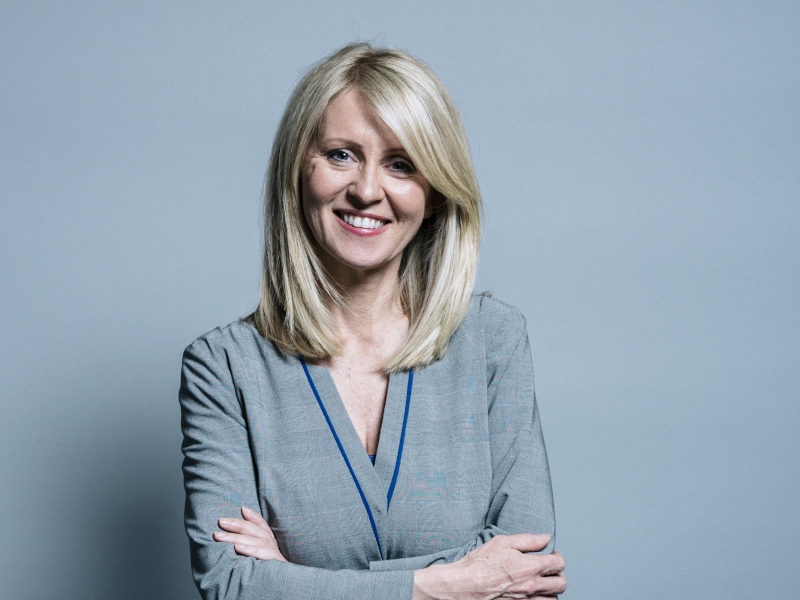
    Whatever you think of her politics, Esther McVey MP, who ran for the Conservative leadership in 2019, is an example of someone who has achieved success in multiple careers despite adversity. Although she grew up in Liverpool in the 1980s amid high levels of unemployment, McVey became the first person in her family to attend university, she became a television presenter and then rose through the ranks to Cabinet level as Secretary of State for Work and Pensions under Theresa May.

    She explained to Finito World that adversity had spurred her on and she achieved success by ensuring her dreams were always founded in reality: “I was growing up to the music of UB40, with the lyric I am the One in Ten, or to the Specials who sang: ‘This town is coming like a ghost town’. I had that in the back of my mind and I guess I used that as a fuel or as an energy. All I knew is these are the statistics and then I don’t want to be a statistic – a reminder of a world that doesn’t care.”

    While McVey was paying her way through a law degree by working as a waitress in Covent Garden, she decided she wanted to go into the media.

    McVey shares the best advice she was given by her father, who thought success would be achieved by – perhaps counterintuitively – limiting dreams. ‘My dad said: “Well, if you want to go into the media, you better put a time limit on it. Don’t be a wannabe or a could be. If you’re going to do it, you’d better give it 100 percent and put a time limit on because then you need to go back to law if these doors or this opportunity doesn’t open up.’ McVey adds: ‘The clock is ticking and there are other things you can do. I think it’s just as important to close an avenue down that isn’t for you,” she added.

    Putting a deadline on dreams also proved successful for David Nicholls. He decided he wanted to be an actor despite the fact that, by his own humble admission, he could “barely act”.

    When we contacted Nicholls, he told us he’s wary of giving advice and that his advice generally “stinks”. But his story is worth considering.

    He spent around five years being an understudy and playing bit parts. “I don’t think I ever spoke more than four lines in a play. I gave myself a deadline which was 29 and if I wasn’t playing slightly larger roles, not huge roles then I would give up,” he told Elizabeth Day’s How to Fail podcast.

    He did give up and he has since written five novels and adapted each for the screen, including One Day, starring Oscar-winning actor Anne Hathaway.

    As well as putting a time limit on dreams, it is wise to do as much research as possible on what the dream actually involves: Can you get work experience? Will it be worth the low pay? Is it really for you?

    Esther McVey said: “I always thought: “Ah, would I want to own my own restaurant chain? And then working as a waitress for three or four years I kind of thought: “Oh no, I’ve enjoyed it but this isn’t an outlet for me.”

    She adds: “Opening up your life is important and now you can do that on the internet, you can do that through research.”

    It may seem like uninspiring advice but giving up on dreams can mean finding career satisfaction in reality. My best friend didn’t become a lion tamer but she has just been offered a job as a farm vet. She says she’s more like a pig tamer. It’s not quite as glamorous but it will pay her bills and she is delighted. Vets are also listed on the Government’s occupation shortage – a good place to go for career advice.

    And I think Mrs. Turner would be pleased too.
  • Definitely Digital: how to improve your online presence

    Definitely Digital: how to improve your online presence

    Clair Marr

    When I was asked to write about this subject back in April, no one had any idea just how big an impact the pandemic would have on our lives.

    Businesses are already looking to redefine digital ways of working as staff continue to work from home. Graduates are naturally concerned that the current circumstances will severely impact career opportunities leading to greater competition in the job market*. How can we help to boost confidence amongst graduates impacted by the loss of opportunity, internships and work placements?

    Effective online reputation management for those starting out on their career path is about building and maintaining trust between you and your potential employer.

    Rachel Botsman, in her Ted talk, explores how the model of trust has changed historically. We began by trusting those in our local communities and that trust could be damaged or built based on our actions and reputation. As settlements grew larger, this model of trust could not scale up; living in a city, it was no longer possible to interact with every single person and our trust evolved into an institution-based model, placing our collective faith in law, government, banks and insurance.

    We now live in a digital age where our lives and decisions are played out online. Institutionalised trust models have become as irrelevant today as local trust models once were. Trust is now atomised, managed and distributed by individuals to a global audience. Wherever we go, we bring our digital presence with us. For some individuals this can be a real asset, while for others it’s a hindrance.

    Covid-19 has given us time to reflect and think about how we can present a trustworthy online profile of ourselves to potential employers. For graduates, this can be an exciting opportunity to develop new online strategies to help ensure that future stakeholders are engaged, impressed and inspired.

    Google Yourself

    The first step is to Google your name. Are you happy with the results that appear on page one? Is there enough information about you? If you have little or no Google presence, you can be vulnerable to commentary from other sources. Google bases its opinion of you from the information fed to it. It is your right to change that perception.


    Put Yourself Out There

    Holding digital assets in the major ranking positions on Google page one improves the likelihood of your personal brand acting as an antidote to any negative commentary. The more positions you hold, the more you consolidate Google’s perception of you.

    Google the names of prominent thought leaders in the industry that you would like to work in. Take a look at what is held in each position; A quick glance at Richard Branson’s Google page one results shows Wikipedia, Virgin website, social media accounts as well as Forbes contributor page. What could you learn from the positioning of a thought leader? Is there an industry publication that you could contribute to? There are many online blogs, websites, magazines and journals that are hungry for content. Boost your visibility by asking them how you can contribute. Build an association with a particular topic area. This indicates to Google the type of information that is relevant about you. Creating content offers you a solid digital footprint and gives you highly relevant or topical information to promote or share on your social media.

    How do I find out what content publishers are looking for?

    When we talk about ‘ranking’ in SEO (search engine optimisation), we refer to the relative position of a website or other web pages in the search engine results pages. For example, a natural rank in position one in Google is most desirable as users are statistically more likely to click on this. Publishers are hungry for content and keen to become the de facto resource for any subject area as high-quality, niche and high-volume output brings consistent traffic to their website. Trending topic areas can help convert new visitors to click on a website which can help to drive revenue for a publisher.

    Keywords and key-phrases refer to the actual words or phrases that you input into Google search.They’re really important as they help Google understand what that content is about. If what it sees is deemed highly relevant and trustworthy then Google will rank it well and often. These keywords should therefore be embedded into the structure of any content you create. Visit the MOZ blog for the beginners guide to SEO. This shows how to integrate these words and phrases into article content to help boost the visibility and relevancy.

    Beware!

    Pay attention to what you feed Google. If this information is not relevant, or shows several student nights out with friends, it can paint a picture of you that does not accurately represent your character. Audit your digital profile and ask those close to you to form a picture of you based on what information they find about you.

    When you think about shaping your narrative, consider whether the information already out there about you is positive, neutral or negative. By developing those positive and neutral points that already exist, Google feels that it is being fed information naturally and organically and will rank those pages favourably. Highlight charity work, host a Just Giving page, create a Facebook event, blog about your volunteering work in the local community. Ensure that there is a clear link between you (this could be for example your name or a link to your LinkedIn profile) and these projects and that it is clearly visible to Google. Tweet or post on LinkedIn, write an article about what you learned from these projects. Show that you have many different facets to your personality.

    Remember, the process of change is a gradual one and authenticity reigns supreme.

    It takes both sustainable effort and time to make an impact. Google can take three months to adequately index content so be patient and build your profile in a natural way. If you are unsure about something you have posted, delete!

    Adopt a joined-up approach across social media and websites. Try not to be everything to everyone. Focus on growing content across multiple related topics and link to each other. Opinions can change quickly on social media so regularly audit your social media presence and remove any content that you do not feel comfortable with. If the information is publicly available, revise content that needs an update in line with evolving conversations.

    Life, as we are now all too well aware, can be unpredictable; make sure that your online profile is as adaptable and flexible as you are.


  • The Finito World guide in How to Zoom

    The Finito World guide in How to Zoom

    How do you get the most out of the new technology? Finito World spoke to business leaders and society etiquette expert Liz Brewer to find out

    If you want to know the essence of an era, look at its new word-coinages. This year, which has been so seismic in every way, saw a wealth of new words enter the vocabulary. These include, of course: Covid-19, corona, lockdown, social distancing and flatten the curve.

    But the word ‘Zoom’ is perhaps the most commonly used of these. Like Covid-19, it is ubiquitous and liable to be used many times a day, as all our meetings accrue. But like social distancing it can be used both as a noun and as a verb: we are ‘on Zoom’ but we also ‘Zoom’.

    Perhaps of all the words in the language it most resembles ‘Google’ in the way a company name has so suddenly entered proverbial usage – and with gratifying results for founder Eric Yuan who has seen his company’s value skyrocket to near the $50 billion mark.

    This new technology isn’t going anywhere. So here in seven easy steps we explain how to make it work for you:

    Get the lighting right

    Liz Brewer is a world-renowned events organiser and expert in social etiquette who has thought long and hard about how to present herself in a call. ‘This is a visual medium so check how you appear on screen and adjust height,’ she says. ‘Position yourself so you’re seen not sitting too close, too far, high or low, with a suitable background.’ This rings true: we’ve all misjudged the lighting once in a while and found ourselves sitting in shadow like James Bond villains – but that’s not a good look for an important meeting or a job interview.

    Don’t be vain or distracted


    Brewer also argues that it’s ‘best to turn off self-view’. Vanity exists in most of us and it’s easy to spend an entire call sneaking views of yourself rather than engaging with the person in front of you. It is best not to give yourself the option of assessing the calamity of your Covid-19 haircut, or that special lockdown exhaustion etched on your features. In the same way, Brewer advocates turning off everything else on your computer: ‘You are on screen and will be observed so it’s important to close or minimise all other distractions, screen windows and silence mobiles,’ she says.

    Embrace the possibilities of the medium…

    Many of us have now seen the interiors of one another’s homes, and thus have a sense of how people live. ‘I enjoy the informality,’ says the MP Robert Halfon, and even encourages the presence of children on a call. For some that can create a sense of camaraderie that can progress an understanding of the person you’re talking with. For many the informality is to be embraced and might even create deeper relationships.

    But realise its limitations…

    When we catch up with the architect Thomas Heatherwick, he argues that the medium is unhelpful in at least one respect: ‘Video conferencing doesn’t create new relationships. You can sustain a connection, but you don’t grow a deep connection.’ And so while it’s important to embrace Zoom now, we should all have an eye to those we connected with during lockdown: make sure you meet face to face with people you felt you had a connection with once it’s safe to do so.

    If you’re a CEO, check in on your team separately

    ‘We’re all so tired with Zoom call after Zoom call,’ says Carol Leonard of the Inzito Partnership, and argues that we need to think beyond Zoom. ‘Think who might be vulnerable in your team. At Inzito, we have little informal social programmes to check in with people, and we do mindfulness virtually twice a week.’ Thomas Heatherwick agrees: ‘It’s amazing how stressful these calls are.’ So don’t think all the company’s HR needs have been taken care of by that one collective Zoom.

    Remember the emotions of your co-Zoomer

    Thomas Heatherwick realised after a while that he was tired of what he calls ‘flat half people’. He adds: ‘If we met people face to face I would never sit facing that person: it would be too confrontational. Instead I’d sit at a slight angle. Even before we’d begun talking, we’d have a sense of each other and the peripheral vision can see how confident a candidate is when they walk in.’ So though it feels like your talking to an avatar, always remember the humanity of the encounter.

    Remember to laugh

    Collective behaviour doesn’t quite happen on Zoom,’ Heatherwick observes. ‘it’s ping pong. You press a button and you’re next in the conversation. You don’t chuckle together or cringe together.’ Brewer says that it is up to the host to make sure this gap is closed. But she also recommends other things like running ‘speed tests to avoid freezing moments’ and ‘bluetooth headphones’ to ensure that the sound quality facilitates the conversation.

    And if all else fails…

    ‘Well then you can always excuse yourself,’ says Brewer. And for many of us that’s the best part of any Zoom call.

  • How will film survive the pandemic?

    How will film survive the pandemic?

    Emily Prescott

    It’s a not uncommon thought during these times: “Is this reality or some awful dream?” As we queue in masked silence, told to keep two metres apart over the tannoys, our lives now feel post-apocalyptic, as if a dystopia fit for the silver screen had migrated somehow into our actual lives.

    But if the pandemic is the stuff of movies, how is it impacting the way films are made and consumed? Finito World has identified the four key hurdles filmmakers are facing over the next few months. Strap yourself into your home cinema seats: it’s going to be a bumpy ride.

    “Just keep swimming”: Keeping the momentum

    Although filming has started again, many productions are still reeling from the psychological and logistical consequences of lockdown.

    Finito World spoke to James Kent whose directing credits include Testament of Youth, starring Kit Harrington, and The Aftermath, starring Keira Knightley.

    If you’re in the middle of a project and it has to be stopped, it’s a pain to remount it,’ he explains. ‘It’s very complicated to get your actors back as many of them will be booked on to other jobs. It’s definitely a bit of a logistical nightmare.”

     But in some ways making movies is always a precarious business, he adds: “Filming is all about momentum. There’s a famous saying in the industry: You’re never sure it’s happening until you’ve got your bacon butty. The bacon butty guarantees the fact that you’re filming and until that moment comes, a film cannot happen.”

    But perhaps it’s not all doom and gloom. Rebecca Johnson, who has directed an array of shows including Call the Midwife as well as her own critically acclaimed feature film, Honeytrap, says viewers might see a rise in indie films since they aren’t so vulnerable to the loss of momentum. “What’s good about indie films is they are usually shot over a short period of time. Usually about four weeks so potentially there will be a rise in these sorts of films. Cost is going to be an issue but if people really did isolate and it was just like a hermetically sealed unit that is fairly safe and easy to maintain.”

    “Houston, we have a problem”: Keeping the crew healthy

    Keeping cast and crew Covid-free presents an ongoing challenge. It was hard not to cringe while watching films in lockdown and noticing how recklessly the characters shake hands and spread their germs all over the set. So, should we expect the latest films to be sanitised and devoid of intimacy?

    Rebecca Johnson says: “For me the most concerning thing is keeping actors apart. I just don’t see how you can do that. It’s too creatively inhibiting. There’s just too much content that you wouldn’t be able to make while keeping actors at a distance.”

    James Kent worries about the costs associated with keeping people safe. He said: “If there’s an outbreak on set then your whole crew is off, there’s a whole issue about insurance and how that’s being covered. If Chris Pratt gets coronavirus when acting in Jurassic Park they won’t be able to shoot.”

    And it looks like productions won’t be getting any financial assistance if coronavirus strikes on set. Kris Barnfather from the creative insurance broker Eggar Forrester Creative is blunt: “Without meaning to sound all doom and gloom, realistically there’s just not a way forward. Insurers are explicitly writing coronavirus cover out of contracts.

    The reality does indeed sound grim. “Some people are worried about being sued if someone catches Covid-19 on set,’ Barnfather continues, ‘so we are suggesting everyone does a coronavirus risk assessment and that they make sure people understand the risks and sign documents to mark this understanding if necessary.”

    Production companies are having to be especially careful. Actor Tyler Perry who owns studios in Atlanta was one of the first people to outline, in great detail, how to start filming amid the Covid-19 outbreak. His 30-page plan titled “Camp Quarantine” reveals the steps individuals should take. It says all luggage has to be disinfected, cast and crew should isolate before filming and they will also be required to take nasal swabs.

    “Well, nobody’s perfect”: Keeping the cast looking good

    Nasal swabs hardly scream movie industry glitz and glamour. Indeed, during lockdown, viewers watched TV presenters’ faces droop from lack of botox and saw their blonde fade to grey. So will coronavirus mark an end of polished stars?

    James Kent explains: “Makeup is a real issue, particularly for period dramas. You can get away with it in a modern drama because you’ve got your own hair but with wigs or anything that involves prosthetics, it’s impossible.”

    Sandra Exelby, who has done makeup on the sets of Doctor Who, Dad’s Army, and Bugsy Malone and now chairs the National Association of Screen Make-up Artists and Hairdressers, has been coming up with solutions to keep the stars looking good.

    She explained: “We are advising all of our artists to wear appropriate PPE. This includes aprons and a visor as well as a mask. Of course, we are saying hand-washing must be regular. We are also suggesting that makeup brushes are left overnight in a UV cabinet.”

    But hairdryers are getting the cut. She explains: “Hairdryers move air around and so they increase the likelihood of infection spreading and therefore we are saying no to hairdryers.”

    “Makeup artists cannot adhere to social distancing. They are essential on set and with the right precautions risk can be minimised,” she says.

    “I’ll be back”: Keeping people in the cinema

    We’ve highlighted the hurdles and shown, for the most part, there are ways to minimise risk. So the shows will go on. But the question is, who will dare to venture to the cinema to watch them?

    Cinemas in the UK have reopened again albeit without singalong screenings and pick’n’mix. Nonetheless, the industry is on track for its worst year since 1996, with box office and advertising revenue set to be down almost £900 million.

    Rebecca Johnson admits: “I’m not sure I’m going to go to the cinema in a hurry, to be honest. Going to the cinema feels like an unnecessary risk. I’m not that scared of getting it but I will avoid it if I can.”

    James Kent is also pessimistic: “The real problem is with film: how does anyone make any money when you can only put half the amount of people in the cinema?”

    “Oscar winning films are generally skewed towards an older demographic and they are going to be the ones least wanting to go back into the cinema. Anybody over 55 is not going to be rushing back to the movie theatre.”

    Which all sounds a bit bleak. So where’s the uplifting riding-off-into-the-sunset ending? Well, University of Exeter film professor James Lyons points out that coronavirus could encourage the film industry to consider its impact on the climate.

    He said: “The film industry is a very resource-intensive enterprise in many respects, and it needs to come to terms much more seriously and urgently with its contribution to climate change.” Looking ahead, Kent is intent on identifying the positives: “This moment is one for us to all reflect on what we have taken for granted, and adapting in the months and years to come must surely involve thinking of more sustainable ways to live and work. The film industry is no exception.”

    So hopefully in the future we will view post-apocalyptic scenes exclusively on the screen.

  • Estelle Morris: ‘The education system is a political tool’

    Estelle Morris: ‘The education system is a political tool’

    Blair’s former education secretary on how lessons from 1997-2007 can be applied to the current moment.

    These are difficult times for education. It didn’t come up much in the election or the leadership campaign.

    I’m not critical of Keir Starmer – he’s done outstandingly well so far. But I’m not entirely happy with where the party is on education at the moment. It needs to get back to the top of our agenda.

    Under Tony Blair, we used to say to teachers: ‘If you want, you can teach when education isn’t a priority of the government.’ It’s true that when education is a focus of government, there’s a lot of pressure, and that perhaps goes away when education ceases to be the main talking point. No one will be on your back; the government won’t be passing laws or monitoring you – but they won’t be giving you money or leadership.

    Under Blair, if teachers were under the cosh, so were ministers: he was monitoring every detail. He was a consummate politician – and human being. He would admit if he didn’t know something. If we had a catch-up meeting and we raised something quite detailed – on literacy, for example – he would turn to Michael Barber (his chief education adviser) and say, ‘Michael, what does that sound like to you?’ And if we had a big initiative, he would make time. He never once said no.

    That kind of leadership matters. It’s sometimes not what the leader does; it’s what the leader gives cause to do that counts. Everyone thinks: ‘This is the bus to be on; this bus is going places.’

    But I was never sure where his motivation on education came from. When I worked for David Blunkett you could see it was all to do with his background. But Tony’s not got that. His socialism was all about social justice because he’d had those advantages. He knew the value of education.

    It comes down to this: there really isn’t an easy route out of poverty besides education. If you have a dictator, what do they do first? They go and fiddle with the education system. It’s the institution by which we lay down our values regarding the society we are, and the sort of world we want to inhabit.

    No one wants to say that the education system is a political tool, but it is. Whatever you dream your society to be, you need to see it worked out in school – otherwise you won’t see that vision of society in the next generation either.

    It’s been a period of great loss – certainly in education. It’s not a bad thing that we’ve not had fumes going into the air; but it’s definitely not a good thing not having kids in school. We need to get it right from here, but I wouldn’t go through this again to learn the lessons we’re learning now: they were learnable before. Once again we’ve been much too slow on the uptake.

    If you go to the health service, you can see relationships changing. One example I’ve heard about involved a nurse on
    a Covid-19 ward. Senior consultants from outside that discipline were filling syringes for nurses. A huge amount of
    goodwill is generated by those sorts of things. But where is that spirit in education? There’s been no sense of the government, the unions, and the local authorities sowing the seeds of a new relationship for the future.

    So education hasn’t had a good crisis. The government has done well to get the Whitehall machinery moving quickly and been imaginative in general, but it dismays me that we haven’t come together more.

    Universities have a responsibility on the quality of provision. If you are at a university or a school in this period of online learning, not all students have had the same high quality. That really bothers me.

    When you have a child of five you’re always trying to catch up on in-built disadvantage. It’s not a party political point.

    Each government has tried to make new initiatives on this, and that’s the reason we’ve closed the gap. But now in the last few months, we’ve built a new gap in terms of social class and deprivation. I hope the virus will push us to do better.

    In terms of Boris Johnson, I don’t see anything in his background that will turn him onto education intellectually. What we don’t want is another argument about academies, and we don’t want 50 years arguing about whether a school should be an academy or local authority.

    A good leader frees up something in society that’s already there. Blair used to do a lot of speeches about sport. He didn’t personally then go and teach sport. But if you were a PE teacher in that room, metaphorically you grew. It’s the power of the office.

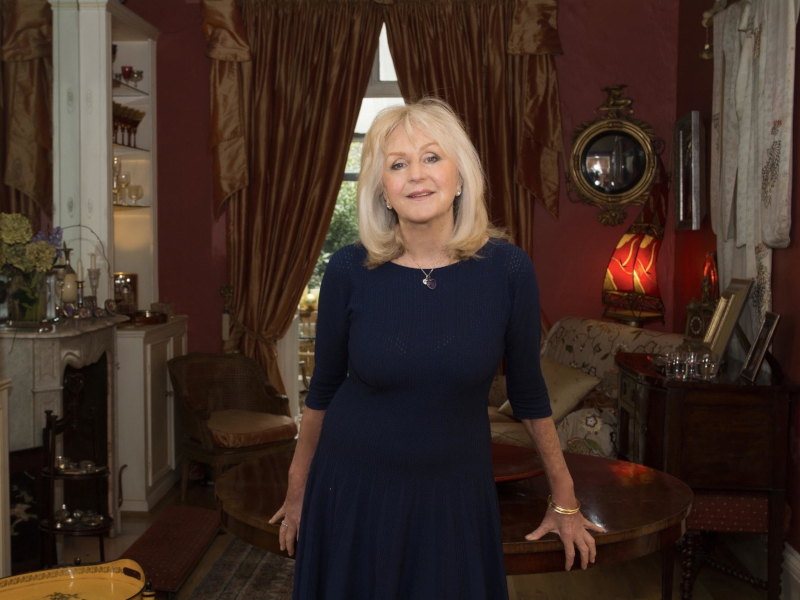
    Estelle Morris was Secretary of State for Education and Skills from 2001-2002.

  • The Chair: Robert Halfon interview

    The Chair: Robert Halfon interview

    The Chair of the Education Select Committee tells us about his latest fight for guaranteed apprenticeships and why universities need to up their game to survive.

    It doesn’t matter how good policy is, unless there’s genuine evangelisation it doesn’t make any difference. When I die – which hopefully will be a long way away – I’d like it on my grave that I was a campaigner.

    The big thing in politics is relentless repetition: it takes about ten years to get people to notice what you’re saying. I liken it to pizza delivery. How many times do you get a Domino’s leaflet through your letterbox? 99 times out of 100, you’ll throw it away. But it’s when you have no food, and you’re knackered, and you have no food in the fridge, that you suddenly remember that pizza leaflet.

    In politics it’s the same. I push my ideas in every forum I can: in committees, in articles, speeches and interviews. I’ll raise things in parliament in questions, debates, and Commons motions, and try and keep what I’m working on at the time in the prime minister’s mind, and in the minds of his advisers.

    This year, it looks like they’ve picked up my pizza leaflet. It’s been an exciting time. In June, I met with Prime Minister Boris Johnson before the Liaison Committee, and I used the phrase ‘apprenticeship guarantee’. A week later, he repeated the whole phrase in a speech. What that signifies is that policy-makers in 10 Downing Street are clearly looking at this, and I hope as Chair of the Education Select Committee, I can move the policy forward. It’s the best offer we can make to young people.

    My hope is that one day 50 percent of students will be doing apprenticeships. So, for instance, if you are doing English you should be working during your degree in a publishing house or alongside an editor – and that should be part of your degree. A history graduate should be working in a museum or alongside an archaeologist. I also think work experience should be compulsory, or at least be encouraged as much as possible by government.

    I had the best time of my life at university. But I’ve always worked doing summer jobs – and that’s the advantage of apprenticeships.

    You do your degree and get academic experience. You go to the student bars, but you also learn about office work and about teamwork. And of course, if you do a career apprenticeship you get paid, so there’s no loan. It’s a no-brainer to me and now’s
    the time for the government to act.

    We’re hopeful we won’t have the usual battle with the Treasury on this. There’s a £3 billion skills fund in the manifesto,
    which has now been confirmed by the Chancellor Rishi Sunak in his most recent budget. But I think at some stage, we’ll need to consider skills credits for businesses. We might structure a policy whereby the more disadvantaged and younger people a business has taken on, the bigger their skills credit.

    I’m sometimes asked how to stop the golf club mentality of people giving jobs to their friends – or more likely their friend’s children. That’s human nature. But businesses will have to change because the world has changed. We’ve got the 4th Industrial Revolution and jobs will be affected by it. That trend has only been exacerbated by coronavirus. We’ll have lots of redundancies, but if people have the right skills and get good qualifications and on-the-job training, it will make a huge difference.

    That’s why I want government incentivising every company in the country to work with universities. I also think grants to universities should be conditional on whether they have a significant number of degree apprenticeships. It depresses me that Oxford has closed its doors to any kind of apprenticeship at all. I think they’re snooty, and seem to think university is about research and nothing else. Meanwhile, Cambridge to their credit at least kept the door open.

    Fortunately, there are amazing universities – Warwick especially springs to mind – doing wonderful work. We look at the whole idea of an elite university the wrong way round: an elite university to me should have a lot of people from  isadvantaged backgrounds, brilliant graduate outcomes, and should embed work experience in the curriculum. Many universities are trading on their marketing.

    It’s a long road, but we have a PM who’s a vision person. The doom-mongers will say it can’t be done but one of my favourite
    quotations is from Sir Nicholas Winton: ‘If it’s not impossible, there must be a way to do it.’

    The Rt Hon Robert Halfon MP for Harlow and political director of Conservative Friends of Israel.

  • Nicky Morgan: ‘We need more agile working’

    Nicky Morgan: ‘We need more agile working’

    We’re in the fortunate position of being in lockdown in Leicestershire so we have countryside and walks. We’re lucky having a garden; our lane has got quite busy but everyone’s social distancing. 

    My last day in Parliament was the 12th March so things weren’t as serious as the following week. Once people started cancelling things in London, it felt the wrong place to be.

    One thing I’m interested in – especially now – is the formation of character. This period may give us lots of examples to draw from in terms of that. People have found themselves in an extraordinary situation. Obviously, there’s the sheer number of people sadly losing their lives; but then there’s the speed at which things changed. Normally, if you’re in a war or a recession, you can see it approaching down the tracks. With the virus, those who were tracking these things may have had an inkling, but even a couple of weeks before, we were watching Italy’s lockdown and not thinking it would happen here. 

    Normal politics has been suspended. What the virus has done is make ministers prioritise. The Department for Culture, Media and Sport will be focused a lot on the question of charities; they’ll be listening to various sectors about what is happening economically. It must be very difficult for those who arrived after the reshuffle with their own agenda – and then within three weeks found that has gone out of the window. 

    And then your boss goes down with the illness himself. That also concentrates minds. I haven’t spoken to the PM, but I sent him a get well message. I got a brief acknowledgement, and we’re all thankful he’s come out the other side. 

    Both David Cameron and Boris Johnson are similar to work for. Both lead from the front and have firm views about what they think on things; both are willing to engage in discussion, but ultimately make their own decisions. That’s why the Cabinet was able to carry on without Boris there – because he will have set them a firm goal as to where they’re going.

    The Department for Education will have its priorities too. They’ll be looking at education of keyworker‘s children; and trying to work out what schools can do to help vulnerable children. There are always going to be tensions between DfE, schools and the teaching unions but everyone threw those tensions aside. But suspending exams was the big decision, of course.

    The financial situation is concerning. When I was chairing the Treasury Select Committee in 2017, we found that there are millions of people in this country with less than £100 in savings. There’ll be people applying for universal credit – especially the self-employed – who never thought they’d have to explore that option. 

    Unfortunately, we can’t help everyone. There could be a crunch at the end of April, when people have to run payroll. If businesses haven’t got the cash in the bank, and the HMRC payments don’t get through, then workers may not be paid. That’s a huge concern: and the lockdown happened so quickly, there was no time to prepare for it. 

    The historic parallels don’t always run. With the Spanish flu, the media was very different. The influenza was mentioned just once in the House of Commons in 1918. Lloyd George got it and returned to Westminster with a respirator. Interestingly, the only public health legislation that went through during the flu was for better ventilation in theatres.

    It’s hard to imagine what the ‘new normal’ will look like for people leaving university. One big thing will be more agile working. There’s no doubt that there are people who’ve wanted to work from home and do hours differently who can now prove to their employers they can get work done without being in an office. It will also be interesting to see if business travel returns. We will need to recalibrate. We’ve been saying for years that climate change is a global emergency. Now we know what a global emergency looks like. The good news is that innovation comes to the fore in times of crisis. 

    Meanwhile, my post-politics employment plan is suspended too. I’m still working out my new role in the House of Lords. At DCMS, I came to realise that data is the new gold. Those who control data are in a commanding position, and we need to think about who we’re handing it over to. So that, alongside the character agenda, is something I’ll be talking about. 

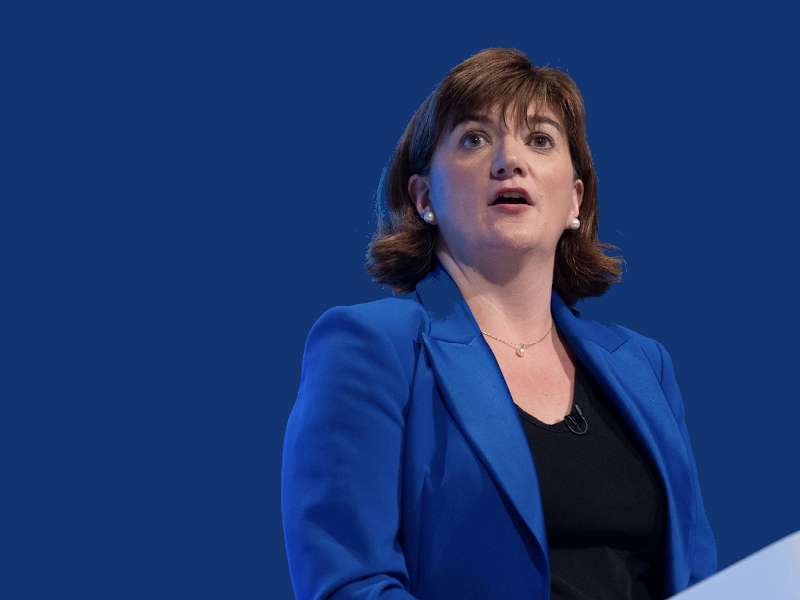
    Baroness Morgan of Cotes is a former Secretary of State for Education from 2014-2016 and Secretary of State for Digital, Culture, Media and Sport form 2019-2020.