Category: News

  • The Battle for the Soul of the Left

    The Battle for the Soul of the Left

    Christopher Jackson asks whether it’s now time for a National Education Service and finds a party unsure of the way forward

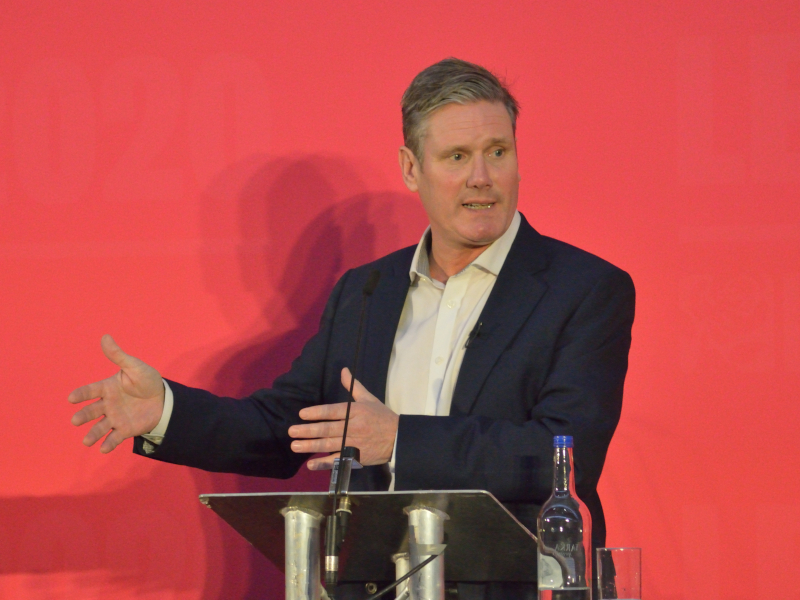
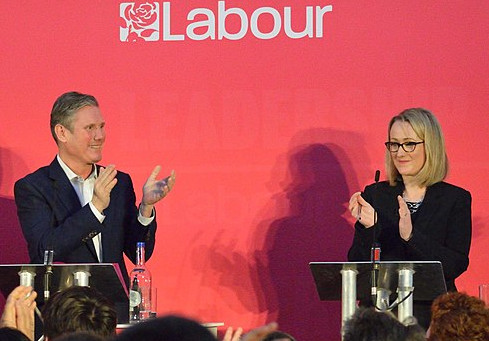
    As Sir Keir Starmer takes the reins of the Labor Party, how can the Party seize the narrative on education and finally connect it to employability?

    As you walk through Camberwell, every other house has a rainbow, proclaiming not just that household’s gratitude to the NHS, but the presence of home-schooled children within. Education is all around us in virus season: it is on our minds in a way it hasn’t been for years.
    But that can sometimes seem the limit of the good news. ‘Education hasn’t had a good crisis,’ as former education secretary Estelle Morris tells us on page 14. Part of this is due to the peculiar nature of the crisis: for the many senior Labor figures we spoke to for this piece, coronavirus was a problem designed to exacerbate existing problems of inequality and, with children taken out of school, always destined to be a different moment than the frontlines camaraderie that has defined the experience of those working in the NHS.

    Of those we spoke with, many lamented the lack of leadership from both the government and from the Labor front bench. During the composition of this piece, Rebecca Long-Bailey was demoted from her role as shadow education secretary due to a retweet of problematic remarks by actress Maxine Peake. She was replaced by Kate Green who at time of going to press was still finding her feet in the job.

    With the schools not yet back, all this contributed to a moment of pause. Under the empty skies, it felt like an intellectual reckoning was possible. After a decade of Conservative-led rule where should the left be on education?

    A Tale of Two Speeches

    Two quotes from two speeches, both given by Labor leaders in Black pool.

    The first: ‘Just think of it – Britain, the skills superpower of the world. Why not? Why can’t we do it? Achievement, aspiration fulfilled for all our people.’

    The second: ‘Tomorrow’s jobs are in green and high-tech industries. We need people to have the skills to take on those jobs, breathing new life into communities.’

    On the face of it, it would be difficult to tell apart the words of Tony Blair in 1996 (the first quotation) and the words of Jeremy Corbyn in 2019 (the second). Both open up onto a cherished idea for the Labor Party: that a commitment to education is an integral part of the party’s offer to the electorate.

    But scratch the surface, and differences proliferate, which still matter and must be resolved by the still relatively new Labor leader Keir Starmer.

    Blair spoke eloquently about investment, and with a can-do spirit about placing education first. But he would likely have seen Jeremy Corbyn’s espousal during the 2019 General Election campaign of a ‘National Education Service (NES)’ which was, like the NHS, ‘free at the point of use’, as a return to the socialist ideas of the past.

    As we all know, the Corbyn program was soundly repudiated by the British electorate in December 2019. But looking back at that election, it is startling – and a little depressing – how little education was discussed.

    As a result, it would be an exaggeration to say that the public rejected Labor’s education policy. Furthermore, we now inhabit different times where the government – even a Conservative one – has entered our lives in ways which would have seemed fanciful six months ago.

    So is the idea still relevant?

    And if it isn’t, where should the Labor Party go instead?

    Meet the Commission

    Among those who advised the government on its life-learning strategy – intended to form part of the NES offer – was the likeable Professor Ewart Keep, who holds a Chair at Oxford University in Education, Training and Skills.

    Brought in to assist with the Party’s Lifelong Learning Commission, Keep never felt particularly wedded to the NES idea: ‘Part of the problem was there was a headline slogan that emerged very suddenly and then there was an attempt to put things underneath that heading. We tried to sketch out what adult lifelong learning would look like in the context of an as yet unspecified National Education Service,’ he explains.

    There is a degree of comedy here which will feel to some very redolent of Cronyism: the very people brought into produce an enquiry skeptical about its overarching aims.

    Internal operatives tell me that things are far slicker under Starmer. Was this an attempt simply to evoke one of Labor’s greatest hits – the NHS – and tether it to an unrelated area? Keep continues: ‘they’re very different activities – particularly when you consider that one of the weaknesses of the NHS is that it doesn’t succeed in preventing illness: you’re treating people who are sick. Education is trying to be a preventative medicine. It felt misleading and not particularly helpful.’

    It is this sort of thing which Starmer will need to avoid in order to dodge amused disparagement from the education intelligentsia. When I speak to Phillip Blond, chair of Respublica, he announces cheerfully, ‘I generally regard the left with absolute contempt so you better to talk to Mark.’

    This turns out to be Mark Morin, also of Respublica, who has seen the NES idea knocked about for years, ‘and it’s never particularly excited anyone.’ He goes on to point out: ‘On the one hand, you can understand it intuitively with the reference to the NHS and the idea it will kind of bring together all aspects of learning education and skills from cradle to grave – that’s intuitively understood. But when you get past this you’re left with a leftist, statist idea and a big monolithic entity like the NHS.’ For Morin, who points to the poor health outcomes in the UK compared to countries like Germany who have a more localized system, the NHS is not only something the education system couldn’t emulate, such emulation would also not be desirable.

    If you talk to Sir Michael Barber (see page 7), Blair’s former chief education advisor, he swiftly disowns himself of anything remotely connected to Cronyism: ‘I would rather just have a conversation about new radical approaches for education.’ For Barber too, the very language of the left opens up onto a grim vista of statism.

    A meeting in St James’ Park

    When I contact Estelle Morris – now Baroness of Yardley – I am pleased, and a bit surprised, when she says she’d like to meet in person. I take myself up to the ghostly center of town, to St James’ Park on a drizzly July day. We walk along the lake on one of those tentative lockdown days we’ve all had when we’re not sure if our favorite coffee shop will be open. It is, and we sip our coffees, grateful for this minor return to normalcy.

    So what exactly is the NES? Like Morin and Barber, Morris is a little baffled. ‘That was my question as well. I thought it was a great idea but there was a real risk it became a slogan and a slogan only. It’s a great concept and I don’t think we filled it out. I’m stuck to have a ten-minute conversation about what we offered about it.’

    So is the NES an immediate nonstarter? That’s where Morris differs slightly. For her, everything depends on Labor’s commitment to detail. ‘The NHS represented a radical change and revolution in healthcare. So don’t claim the title unless you’ve done the work. The title doesn’t come before the work.’

    It is worth adding that when one reads the speech where Corbyn launched the NES idea, it is noticeably less detailed than a typical pre-power speech by Blair, where the party can sometimes seem to be governing even in opposition. This is a mistake unlikely to be repeated by the more details-oriented Starmer.

    So what message does Morris have for Starmer? Now is the time, she says, to launch something truly radical. ‘From 1988 until now, there’s not been a lot of changes in education; the narrative has been the same: national curriculum, national assessment, and external inspection, publication of results, parental choice and focus on standards.’ The tale has been one of back-and-forth between the two major parties and tweaking around the edges. ‘The narrative from 1988 until now has been the same. I don’t think it was wrong to have let that narrative run for as long as we have done. Schools are better now and children get a better deal because of national curriculum accountability. But it’s all come to a natural end.’

    But if Morris espouses an end to all this ‘fiddling’, what comes next? ‘We need a debate about the value of art, the value of sports and the value of community service.’

    In part, what Morris is espousing is a move away from the so-called character agenda which, though espoused by many Education Secretaries, is now particularly associated with Nicky Morgan, who held the secretary ship at education from 2014 until 2016. Morris wants instead a system which teaches ‘citizenship and wisdom’.

    But surely every side of the political spectrum will have a different idea of that? For Boris Johnson, wisdom is Conservatism; for Starmer, it will be socialism. But Morris says this is a debate we urgently need to have. And wisdom she says is difficult to have without some appreciation of the arts.
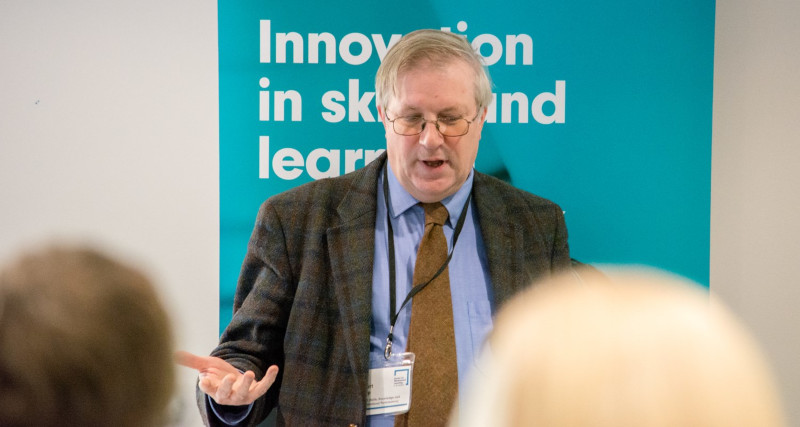
     

    Professor Ewart Keep speaks at PRAXIS 2 in Scotland

    Picture Imperfect

    Perhaps we need to think more about how we promote things we know to be good. The force behind Lee Elliot Major’s proposal of a National Tutoring Service (see page 15) stemmed from the demonstrable value of the one-to-one tutoring experience.

    For Susan Coles, the former president of NSEAD who set up an APPG in Parliament to promote greater coverage of the arts in our education system, the benefits of an arts education are equally clear. She worries that character is talked about as a ‘box you tick’ when, in fact, ‘the arts create resilience’ enabling you to ‘follow your own ideas without being wrong.’

    For Coles, and for Sharon Hodgson MP who chairs her All-Party Parliamentary Groups (APPG) (see page 27), what we have now is a ‘production line of high performing schools which is strangling the creative arts.’ Coles puts her views with the kindly persuasiveness of the truly passionate: she is one of those campaigners who is herself an advert for the sort of change she wants to see. ‘We’re coerced into believing the knowledge based curriculum is best, when in fact the arts enable us to make mistakes and experiment,’ she explains.

    This was one area where Corbyn wasn’t entirely idle in putting forward the detail behind the NES, stating in his Black pool speech: ‘The best is every child being able to learn musical instruments, drama and dance – the things that bring us joy – through our Arts Pupil Premium.’ For Hodgson and Coles this was an exciting moment, scotched only in December 2019 when Johnson was returned to power so thumping.

    So should it be part of the NES? While Coles appreciates the idea, she worries it is too little: ‘The only worry I have is there’s no guarantee it will be in the curriculum.’

    This, too, is where the eternal argument regarding free schools comes in. The schools minister Nick Gibbs would remind Coles and Hodgson that art is on the curriculum, but Coles – and the likes of writer Michael Rosen – would retort that it ought to be a core subject. Even if you resolve that part of the debate, you’re still left with the fact that academies are not obliged to teach it, and since 80 percent of secondary schools are academies and so are a large number of primaries, that’s a problem. Furthermore, there is the exclusion of the arts from the uber Gove Ian and, to Labor, loathed ‘EBacc.

    ’For Coles and Hodgson an opportunity is being missed, and for no decent reason. Coles continues: ‘If you do a teaching qualification, you learn how to teach the arts for around 2-3 hours in a 3-year course. So we have a lot of inexperienced teachers who are struggling to teach the arts curriculum.’

    The great irony in all this is that the arts appears to benefit the economy. ‘They’re valued by the Treasury but not by the education department and DCMS,’ says Hodgson.

    The Bonfire of the Quangos

    This opens up onto another perennial question: that of the structure of the entire system, and indeed the very nature of our civil service and the balance between national and local government.

    When I ask Professor Keep where he would begin in terms of fixing the English education system, he says. ‘The problem in England is that it’s very siloes.

    Even different bits of DfE don’t talk to one another. In education, central government controls so much. They have to deal with such a level of detail: it’s difficult for them to grasp the big picture.’

    So what needs to change? ‘We’ve gradually abolished all the intermediary bodies, which means everything’s an atomized marketplace. This isn’t functional for those who have to run it, and deliver education. I’d want to create relatively independent organizations which can act as a bridge between government and providers and also as a bridge between government and employers.’

    Keep is referring to the Learning and Skills Council (abolished in 2015-16) and the UK Commission for Employment and Skills, which was wound down in March 2017. For Keep, the restitution of these would necessarily exist alongside some devolution of power and decision-making to the regions. The overall goal would be ‘bottom up thinking’ and a move away from a system where everything is ‘controlled by the minister.’

    Mark Morin partially agrees: ‘We had the bonfire of the quangos under the Coalition. Some were well-deserving of that. The Commission for Employment and Skills was one of the most useless, and survived for a long time.’

    Morin argues that any National Education Service would need to be rebranded along devolved lines: ‘It can be packaged in a different way and be marketed in a different way, with devolution at the heart of how this is going to be funded,’ he explains.

    The civil service also needs a rethink, according to Keep. ‘Most civil servants do 18 months tops within a role. Every time I go to a meeting on higher education, it’s a totally different room of people. The last lot have all bloody left.’ This is a view echoed by Sir Michael Barber on page seven of this publication.

    Universal problems

    At the same time, we have a university system that increasingly seems unfit for purpose, and struggling to adapt to the new realities of online learning.

    Keep explains: ‘A lot of universities were in big financial trouble before Covid-19 arrived. After 2009, many went and splurged vast amounts of borrowed money on new nice halls of residence, new nice student bars, and gymnasiums – and of course it’s all borrowed from the banks. £8 billion of borrowing has to be repaid, and the interest rate racks up on that.’ So how bad is it? ‘There were strong rumors there were at least 20 universities in England that were likely to get into significant financial difficulties in the next year and you can increase that number very considerably now.’

    Morin adds: ‘We’ve created something that is too big to fail. Our universities are in trouble. How do we bail them out? One bad decision has been compounding another. We argued in the report we put out an the end of last year that we needed to stop sending so many people to university.

    Does Respublica have any specific proposals? ‘We’ve argued that we need to get rid of tuition fees. It’s a smoke and mirrors thing, it’s just accounting practices: in effect, the government picks up the tab for those who can’t afford it. It’s basically a tax on those who can afford to pay for it because they graduate and earn enough to trigger a repayment. The real issue is we’re sending too many people to university, but to what purpose?’

    That’s a view echoed also by Euan Blair, the tech entrepreneur with the famous father whose business White Hat, which he chairs, is unafraid to proclaim university a waste of time. Talking to Blair is a curious education in the Blair genetics and how they have played out in the next generation. It is as if the same incisiveness and ability to explain complex things in simple language which saw his father dominate British politics for a decade has been handed down a generation into a born tech entrepreneur.

    For Blair, universities have failed to prepare children properly for an AI-dominated labor market. ‘I think that there will always be and should always be a place for purely academic learning in a university environment,’ he admits. ‘The challenge is that the system has become this monopoly on early careers in a really negative way. That’s made universities complacent and it’s created this lack of equal access to opportunity, particularly around careers.’

    Whether Labor chooses to proceed with a National Education Service or with some other label, the Starmer offer will need to address a creaking university system, as well as the question of digital poverty in an age of online learning, and the perennial question of lifelong learning. If this is done meticulously, perhaps something will emerge worthy of the NES brand name

    Will You Still Feed Me?

    Stephen Evans, the CEO of the Learning and Work Institute, sat on the same commission as Keep in the run-up to the 2019 general election. For him, if the National Education Service is to have any meaning then it needs to solve the problem of keeping adults learning throughout life.

    He argues that lifelong learning can come in many forms from an apprenticeship to a change of career, or it can come in the form of informal community classes.

    ‘We need to build a more coherent system,’ he tells me over Zoom. ‘For me the NES was about this idea that we need to do much more learning throughout life.’ What kind of financial structures is he espousing? ‘Clearly you don’t need government to fund some lifelong learning. But for those people who missed out and struggled at school, they might need to be covered by a National Education Service. The question is: ‘How do we create a culture of learning and get more people wanting to go back into learning?’

    So it would be something of a patchwork quilt model? ‘If you’ve already got a degree, you’re more likely to get training at work. And if you’ve got no qualifications, I would say the government should have a role alongside trade unions and others to try and reverse some of those inequalities.’

    Keep agrees: ‘Lots of adults receive no training from their employers. A lot of the adult workforce leave school and college, and then don’t get much training. If you’re in a low paid job, the chances of getting trained are very limited. When you look at England and the UK as a whole, we’re a long way behind many developed countries.’ When does the problem date from? ‘In 2010, funding for it got cut, and the adult education budget has declined by more than 45 percent and there’s a lot less money from the government. Employers are doing less and less.’

    The Shape of Things to Come

    I begin to get a sense of what this might look like. A National Education Service would need to intelligently join up the dots.

     It might involve an acceptance of how we are failing to promote the arts, but also make us think in a more joined up way about the digital side, looking to tackle digital poverty (as outlined by Sir Michael Barber on page 7). It might also incorporate some of Lee Elliot Major’s ideas on tutoring, and build on what has already been agreed to by the Johnson administration (see page 15); the NES could potentially expand them into some form of mentoring service. The project might also involve greater investment in apprenticeships (see Robert Halfon on page 13), and a lifelong learning approach, where the state intervenes strategically to satisfy existing gaps. All this might be capped by Estelle Morris’ commitment to the promotion of wisdom and citizenship in place of – or perhaps in addition to – the Conservative years’ emphasis on character-building.

    All in all, Starmer’s Labor has a complex inheritance on education. It has produced a reasonably compelling idea too soon, without, as Morris says, having done sufficient work. The spectre of Tony Blair cannot now be entirely dismissed after the 2019 general election defeat, but he remains a figure whose toxicity remains surprisingly persistent

    Alongside these internal developments, there is a lot of dissatisfaction with the system and developments under successive Conservative-led governments. If all these points could be joined up, they might make a compelling proposition.

    A final complexity is the precise historical circumstances Starmer finds himself in – or ‘events, dear boy, events’ as Harold Macmillan had it. A coherent education policy must be enacted, and priorities established, at a time when the virus, Black Lives Matter (see our leader on page two), climate change, and the new realities of work in the furlough era must also be solved.


    Keir’s Choice

    The fact remains that Starmer will need to unite the left and the right of his party on one of its core priorities. One way to do this might be to appropriate a slogan from the Corbin era but put some more intricate and thoughtful policies underneath it. Another way would be to admit that the NES is tarnished, and find some new banner under which to build a new platform.

    Much will naturally depend on Starmer himself. So what are the new leader’s instincts on education?

    There is surprisingly little in the public domain on this, and Labour operatives we spoke to talked of a tight-knit disciplined circle where there are few leaks as to what the leadership is thinking.

    Lee Elliot Major recalls meeting the future Labour leader in their shared constituency during the Corbyn years: ‘I met Keir for coffee. He was on top of all the education issues of that day. At that point we were in the world of Corbyn, and at that time you were thinking someone like Starmer wouldn’t get in. Though education wasn’t his brief, he grilled me. He’s not ideologically obsessed: voters will vote for that, generally people like I worry about extremes.’

    As often with Starmer, this sounds promising. But it’s early days, and, wherever the party ends up on this, work has to be done – and everybody who contributed to this piece agrees there’s not a moment to lose.
  • Sharon Hodgson on why we need to renew our focus on the arts in education

    Sharon Hodgson on why we need to renew our focus on the arts in education

    The Shadow Minister for Veterans Sharon Hodgson explains how a broader arts-based curriculum could transform our economy.

    It was Jeremy Corbyn who first came up with the idea of an arts pupil premium that might be used to close the gap for disadvantaged children. Myself and Susan Coles – with whom I set up the All-Party Parliamentary Group on Arts Education – were excited when we heard the announcement. It seemed the right thing to do: if you grow up in households where the arts are appreciated that just happens. Usually it’s poorer households that don’t get that cultural capacity.

    School is meant to be a leveler and an equalizer. Lockdown has shown that when you take school out of the equation it really does lay bare not just the inequality in economics but cultural inequality. A whole generation of people are then going to be the best part of a year behind. Some will have had an amazing lockdown education, but overall the cultural gap will have widened.

    You hear a lot from the Conservatives about character in education, but it’s my belief that the arts are the best teacher of resilience and confidence: in the arts, you tend to try and fail before you get it right. That’s definitely what you need in an employee when they get into a workplace, no matter what work is conducted in that place. If all you’ve got is someone filled with knowledge and the ability to pass exams, then they’ve got no capacity to think outside the box.

    They’ll have no capacity for innovation or freedom of thought; they might only have been told what’s right and what’s wrong. They lack the creative freedom and too often seek instruction from their employer.

    That’s why the Chinese have started looking here for our creative education – and the same is true in Singapore and South Korea. Those countries have tended to churn out people who are good at passing exams. The irony is that just as they’re looking to learn creativity off us, we’re leaving creative learning behind in our state sector.

    What’s really required is a broad and balanced curriculum. In Wales from September 2020 there’s been a new curriculum with arts and well-being taught as a mandatory part of the curriculum. The same is true in Scotland, where the arts are also valued. What we are aiming for is for the arts to be elevated to that extent in England.

    Some people have criticized the idea of the arts pupil premium as being all about ephemeral away days – trips to the theatre and museums, and so on. There’s nothing wrong with away days, but it needn’t be only that. Imaginative teachers could use it for a whole host of things. Under Corbyn, we imagined that if we did have an arts pupil premium we might give guidance to make sure teachers understood the range of things it might be used for: it could be used to buy fantastic art materials, to recruit amazing teacher specialists, or to bring artists into the school setting.

    The argument is clear – and if anything, it’s been brought into sharper focus by the pandemic. More and more children under lockdown are having troubles with their mental health – and we know that art is able to help with that. I’m not saying that Math and English don’t give joy, but our spare time as adults is usually spent around the arts but in school that seems to have been left to one side, by people like Nick Gibb especially.

    The irony is that the creative industries are valued by the Treasury but not so much by the Department of Education. There’s no joined-up thinking across government. We’ve had five education secretaries in ten years, and unfortunately Nick Gibb has been around for a lot longer than I would have liked. I don’t wish him ill – I just wish him into another job. He doesn’t have a background in anything to do with arts and education. He has fully bought into Michael Gove’s ideological stance.

    It’s because of Gove that our APPG was formed. The EBacc has been especially problematic in terms of its unintended consequences for the arts. Gibbs came to our APPG and we told him he needed to acknowledge the effects of the EBacc. We had 80 experts in the room and Gibbs simply stated that he had an ‘alternative set of facts’.

    The trouble with academies is that they create a system of ‘postcode luck’ with regards to whether you have access to the arts. Sometimes the free school system allows schools to be innovative but at others they detract from what should be a standard. We may have to look at governance again and consider getting schools back under local authority control.

  • Euan Blair: ‘Diversity has become existential for companies’

    Euan Blair: ‘Diversity has become existential for companies’

    The tech entrepreneur on White Hat’s new approach to getting young people into work

    As a business looking to build an outstanding alternative to university and create a diverse group of future leaders, the coronavirus has made our offer front of mind for schools and companies. The pandemic has shown the need for digital skills accelerate by two to five years over the last few months. Meanwhile, universities have been in a crisis defined by lack of capability and lack of will: they’ve been unable to deal with this new reality. Some are doing remote courses that are not particularly great and with no social experience, which is one of the main reasons why people go to university.

    Meanwhile, companies have massively growing digital skills needs and an acceptance that they need to get skills from other sources. Through the work of Black Lives Matter, diversity has become existential for them. What we have is an open discussion about racial inequality and structural barriers in society. CEOs are thinking: “Do I have the skills mix to succeed over the coming years? And how do I make sure I’m doing my part on diversity and inclusion and making my organization accessible to people?” Perhaps the final piece in the puzzle is that employers are asking themselves how they keep employees engaged at home.

    All this has made it clear how valuable our apprenticeships program is. We aim to create a frictionless barrier for diverse talent. We’ve been growing really quickly over the past few months. We had to transition everything online almost overnight. There’s a big difference between remote learning, which is taking something you deliver in person and lifting and shifting it online, and actual online learning, which is in a different cadence and requires a different style of instruction. We invested early in making sure our curriculum is suitable for online learning.

    I appreciate the government’s sentiment regarding the recent movement on apprenticeships guarantees. It’s top of the agenda for government worldwide. The Singaporean government is subsidizing 80 percent of apprenticeship wages. In the US, the federal government just announced they’re going to ban the use of college degrees for the hiring process and instead hire people based on skills. This is a gradual global groundswell and there’s a lot to be said for making apprenticeships a priority: it lays the gauntlet down to schools and parents to be seriously exploring these alternatives.

    Having said that, you can’t do this without employers. And the bigger piece is we need employers to think: “We don’t need a graduate because although they might come with a degree, they don’t come with any of the skills I need and I want someone who has the right mindset to learn.” At White Hat, we also understand that over a 50-year career, a shot of learning at the start isn’t going to be sufficient. You’re going to need to keep learning.

    Our programs range across areas. For instance, we did the first ever apprenticeship in legal project management with Clifford Chance. We also do programs with KPMG where we reskill members of their teams in data analytics; this is driven by their clients but also by their internal needs. At Google, they’re training digital marketers and software engineers. We’ve also had a focus on military veterans working with Citi Group and returning to work mothers.

    Reskilling is a major area. There are many individuals within organizations with amazing residual knowledge of that organization and deep loyalty to it. They’ve worked somewhere for a significant period of time, but their role is changing. After doing the same job for five to ten years, they want to do something different and take on a new challenge. We’re about giving those people a route.

    Companies are very aware that Generation Z have a host of skills that they know they need to address. What they’re increasingly realizing is that there is very little difference between the skill level of a graduate and the skill level of someone they can hire as an apprentice. If you’re relying on elite universities to fulfil your hiring needs, you’re going to get very similar people.

    With the virus, all this has become absolutely urgent and critical. As often happens when you have huge shocks to the economy, it brings into sharper focus a lot of things that people had already realized to some extent, but they didn’t necessarily have a burning platform on which to act. Well, now they do.

    Euan Blair is CEO and co-founder of White Hat, a tech startup which seeks to democratize access to the best careers.

  • Thomas Heatherwick: ‘Before Covid, the idea of having a study sounded so Victorian’

    Thomas Heatherwick: ‘Before Covid, the idea of having a study sounded so Victorian’

    by Thomas Heatherwick

    At the Heatherwick Studio, we’re trying to be growers of more human place making: what’s crucial is the experience dimension of the person using the building. That might sound obvious, but I sensed even as a kid that we’re too often led astray by other forces and not by the needs of the person using a structure.

    Some big positives can come out of this strange and tragic situation we’ve all been living through. There’s been a chance to think from new angles. That’s partly because you need to, given the new context. But it’s also welcome: I always thought it would be very hard for me to take a sabbatical, and I envied those around me who could do that. Of course, it was a partial envy – I’m so lucky to have the diverse rollercoaster of impressions I have. My studio is about embracing change and finding ways to adjust. That’s what excites me. The most interesting thing has been reflecting on what the virus means – and how it’s going to change our lives. Before the pandemic, there was more and more sharing – cars, workspaces and living spaces were becoming more efficient because people might live together in different ways. I was saddened at the outset of coronavirus: it felt like a kind of retreat into an understandable self-preservation and selfishness.

    Before all this happened, people didn’t think they needed an office in their home – the idea of having a study sounded so Victorian. Throughout lockdown, people have been cowering in their bedrooms and trying to pretend it’s not their bedroom: so people will be making their homes better in advance of a possible second wave, and investing in any eventuality. Post-Covid homes will be better homes.

    But public togetherness is what motivates me in the different projects we work on. Take our shopping center Coal Drop’s Yard for example. What motivates me isn’t getting people to shop. What’s exciting is that it’s an excuse at a time when governments don’t invest in public place making to create an interesting space. I wish the government would do more: they had their fingers badly burned in the 1960s and 1970s by terrible architecture, and so they retreated and let the private sector come in.

    I’ve always made very tactile buildings and though obviously Covid-19 will change the extent to which we touch things, I think you also touch things with your eyes. The way light falls off a computer screen, for instance, is very dead and simplistic.

    But light falling across more complex detail and texture is something that you absorb. If you’re in the mountains you can’t touch them, but you can still feel their form.

    We’ve got 200 people here, and I’m thankful for being an older organization. Many of us have worked together for a long time, and we can sustain that over digital communication. There are unexpected benefits. The world’s been conspiring for the last two decades to get us to this point. The digital revolution has been setting us up to do this; it’s astonishing how effective we’ve managed to be at home.

    But I don’t think in aggregate its better. There’s no real substitute for being in the studio. Our studio is full of models and memorabilia: it’s our collective memory. It’s important to see your failures, your test pieces, your experiments, and your thought-triggers. We all think we have a flawless memory – but we don’t.

    We’re working with one new organization, rethinking large amounts of workspace. I think people are aware this has long ramifications for everybody. It spreads across everything. We just finished a Maggie’s cancer care center in Leeds. It’s a relatively small project but it’s trying to engage with the issues someone with a cancer diagnosis might face. How do you support that health journey? If you look at hospitals today it’s as if the emotional condition doesn’t impact their physical journey.

    Looking back at the Garden Bridge, it was a manifestation of this urge to try and make everything connect more to people. A bridge doesn’t just need to be getting from one side to the other: the middle of a bridge is one of the most incredible places you can be. Maybe one day the politics will support our intention to create a new garden for Londoners.

    Thomas Heatherwick is the founder of the Heatherwick Studio.

  • Sir Anthony Seldon on why Sir Keir Starmer has blown it already

    Sir Anthony Seldon on why Sir Keir Starmer has blown it already

    by Sir Anthony Seldon

    It’s ten years since David Cameron and Nick Clegg stood in the Downing Street Rose Garden at the beginning of the Coalition.

    But from the perspective of universities, and our wider education system, it was a man who wasn’t at that press conference who would really go on to change our education system.

    Michael Gove arrived in Great Smith Street with a strong agenda. Assisted by Dominic Cummings, he would have an extraordinary impact on how schools conducted themselves: his was a tenure ambitious for all students regardless of background. It’s hard to point to many other education secretaries who have made such a significant difference – Tony Crosland perhaps, who served under Harold Wilson, and launched a campaign for comprehensive schools. Whether he’s at DEFRA or heading up the Cabinet Office as he does today, Gove’s energy remains remarkable: any department that he comes into is very quickly overhauled. In any cabinet, Gove is always one of the most erudite. Peter Mendelsohn held a similar distinction during the Tony Blair years.

    As education secretary, Gove accelerated free schools and continued with academic, building on the Andrew Adonis years. Adonis and Gove are comparable: each had the same ambition for schools, and a similar desire to bring in external energy and remove schools from local authority control. But I would say Gove arguably had a clearer agenda around school standards.

    Cameron deserves some of the credit for the achievements of those years. Margaret Thatcher was probably the last prime minister who didn’t see education as a major part of her job. All prime ministers since Tony Blair have had a major interest in education, and Cameron was no different, though it’s probably true to say he didn’t involve himself greatly.

    One thing Cameron did do was to invite the heads of independent schools into the Cabinet room, and seek to persuade them to start academies. It wasn’t very successful, but he was always supportive of Michael Gove. He knew when to leave someone to it.

    A decade later, there are remarkable continuities. In Keir Starmer, we have a leader with deep roots right down to his Christian name in the left movement, as Brown had. And it hardly needs saying that we have an old Estonian in Number 10.

    A comparison of Brown and Starmer yields intriguing thoughts: both are very bright people, and both have legalistic minds and a superb grasp of detail. But their disparities may in the end prove crucial. Starmer is untested as a leader. Brown, when he came to become prime minister, had been for ten years the longest serving Chancellor of the Exchequer, and had a formidable knowledge of how government operates. Whereas Starmer today is the younger man on the rise; Brown, in 2007-10 was arguably at the peak, or beyond the peak, of his energy.

    As for David Cameron and Boris Johnson, they’re very different. Cameron had a vast appetite for detail, but he was primarily interested in foreign policy, leaving economic and domestic policy to George Osborne. Johnson tends the other way: he’s not interested in foreign policy, but in the domestic side. He has a far shorter attention span, not the same work ethic, and is still relatively new to Westminster politics.

    How it plays out remains to be seen, but I certainly wouldn’t give Labor high marks for their handling of coronavirus so far. Starmer didn’t do enough to stand up to the unions, and the party gave the impression that it was far less interested in children – including the socially disadvantaged and those with mental health challenges – than in their own membership. Accordingly, they have lost moral authority, and shown intellectual weakness. They had an opportunity to seize the high ground but they blew it.

    The quality of the opposition always matters but especially so now. The next years will see real difficulties for universities. I certainly don’t subscribe to the belief some on the right hold, which is to let the poor universities and those that don’t compete internationally go to the wall.

    That position is about as intelligent as saying, ‘Let schools that don’t come top of the league tables collapse.’ In reality, it’s those in the middle and at the bottom that are adding most to the attainment of young people. It’s simply that the quality of the raw material they proceed with is much less high academically. Besides, if you let the universities in the middle or bottom disappear, you will be stripping northern cities, as well as cathedral and rural cities of their economic dynamism and vitality, and doing irreparable damage to the social cohesion of the country.

    So ten years on from the outset of the Coalition, some themes are recurring. But as Heraclitus knew, we never step into the same river twice. The success of this administration will be in identifying what a crucial moment this is and not just for universities but for our entire education system.

    Sir Anthony Seldon is a historian and biographer who recently stepped down as the vice-chancellor of the University of Buckingham

  • Should gardening be on the national curriculum?

    Should gardening be on the national curriculum?

    Never let a casual utterance from a great man go to waste. When Sir David Attenborough expressed an interest in the idea of gardening forming part of the national curriculum, Finito World looked into the matter in more detail

    Sir David Attenborough is obviously a man used to uttering qualifiers. When we put it to him in our interview opposite that gardening ought to be on the national curriculum he expressed excited interest, but also stated that he wished to know more.

    Obedient as always to the wishes of a great man, we conducted some research for him.

    The idea chimed immediately within the gardening profession. Jo Thompson, a former teacher and four-time Gold medal-winner at the RHS Chelsea Flower Show, said: ‘In the past six months, people have started to want to develop their skills again, casting their minds back to retrieve nuggets of information once passed on by parents, grandparents, an enthusiastic teacher, an encouraging neighbor,’ she told us.

    So what good could gardening give children? ‘Coming into contact with the soil makes us feel good,’ Thompson replied. ‘Tending plants makes us feel good. Success in growing plants makes us feel good, failures teach us to learn from others what went wrong and to try again. There is a huge resource, the natural world, which surrounds us, and it’s now our absolute duty to teach others how to look after it.’

    Soon others in the profession had expressed interest in our campaign, including the legendary Piet Oudolf, who designed the gardens at the High Line in New York. But we felt the need to stress-test the idea with someone from the political classes in order to ascertain how it would be perceived by Whitehall and Westminster. Who better to speak to than the former education secretary Nicky Morgan who held the role of Secretary of State to the Department for Education from 2014 to 2016?

    Morgan replied immediately: ‘Interesting point from David Attenborough,’ before admitting: ‘As education secretary, I started keeping a list of all the things people wanted schools to do – on top of teaching the curriculum – and if we’d said yes to all of them – and most were sensible – schools would have to stay open until midnight.’

    Even so, Morgan was receptive to the idea and made the following suggestion: ‘My take on it is that there should be time in the school week to have a period when young people do something other than academic work which develops their character and supports their mental health and that could well include gardening – but would include other activities such as volunteering, enterprise etc.’

    It is noteworthy that gardening feeds into both the character agenda of the right, and ideas more usually associated with the left. The activity teaches us not only resilience and patience – attributes Morgan deems particularly important – but also a sense of citizenship and wisdom espoused by another former education secretary Estelle Morris on page 14.

    And with more teaching going on outside, isn’t this also inevitable? Green party peer Natalie Bennett concurs: ‘I’ve been asking the government questions about taking more education outside and into the natural world. We need not just biological science but contact with nature.’ For her, as for Morgan, it is part of a wider story where we need to teach children to explore ‘their creative side’.

    But isn’t there a problem also whereby urban sites will be less able to teach gardening as, say, a typical private school in Surrey?

    We put this objection to international plants man Piet Oudolf. He had little time for that reasoning: ‘It’s true that most people in cities have no gardens, but I think even in cities you can learn by what’s going on in your street and in your neighborhood. Street gardens can stimulate children and be interesting.’

    Thompson agreed: ‘Even if you haven’t got a garden space, there’s a chance you have a window sill or a front doorstep, and it’s being shown how these spaces can be transformed, bringing not only joy to the person who’s gardening but also to passers-by, engendering conversation and thus combatting loneliness and isolation.’

    Having dispensed with the likely objections, we felt we were now armed with enough to take the matter to Robert Halfon MP, a legendary campaigner in his own right, who sits as Chair of the Education Select Committee. We wrote to him, explaining that the gardening agenda would assist him in his own fight for guaranteed apprenticeships, arguing that a change to the curriculum would ‘create children unafraid of work, and able to understand that education must sit within the context of a sense of one’s wider place in the world.’

    Our next letter to the education secretary Gavin Williamson’s special advisers makes our case fully, arguing that it is the right moment for the government to signal its understanding of the way in which the world has changed since Covid-19, and also urging the government to accept that gardening is an industry with jobs, at a time when we need to seek every employment avenue available.

    Acknowledgements from Mr Halfon’s office, and from the Department for Education were received before we went to press. Mr Halfon wrote: “I really believe that outdoor practical activities are so important. I’d be interested in how it would work in practice.”

    Encouraged by this, we will update readers on progress as and when it comes in.

  • Carol Leonard: ‘Journalism is not a career to retire in’

    Carol Leonard: ‘Journalism is not a career to retire in’

    London’s top headhunter and former Times journalist tells Finito World about the gentle art of career leapfrogging 

    I’d recommend a career in journalism to anyone but it’s not a career many people get to retire in. You do it for a decade – maybe even for two or three – but then you do something else.

    At The Times, when I was leaving in the 1980s, there was a retirement notice posted to the door of one of the longest-serving editors. I remember thinking that it was the first time I’d seen someone at the paper reach retirement age. Of course, there is a career path in journalism – from local newspaper to national newspaper, then on to columnist, or into broadcasting and editor. None of those appealed to me. I’d have paid to do my job, and that’s the trouble with those sorts of jobs – as a consequence you tend not to be paid very much doing that kind of work.

    But if you work in journalism, you acquire important skills, and then you can progress and earn something a bit more livable-with. As the Times City diarist, I was my own boss. As a representative of an august organization, I had a lot of access. I did about 150 profiles of captains of industry over three or four years. It was hugely demanding physically and emotionally; each was a kind of mini novel. I started to wonder whether I had the energy to go around the block again.

    I asked myself what I liked. I liked meeting people, and I knew how the business world interconnected. Then it happened. I had profiled a man in the headhunting world called Roddy Gow. Miles Broadbent – a competitor of his – was incensed that I’d portrayed Gow as being the top of the profession. Miles asked me to come meet him. Even then, I made the effort to meet with people face to face. It’s important to look people in the whites of the eyes.

    Three months after our first meeting, he rang me and said, ‘Can you have lunch with me at the Savoy Grill?’ In the 1980s, that was the power-broking dining room. When we sat down, he said right away: ‘When are you going to become a headhunter?’ I replied that it’s not something I’d ever thought of. No-one grows up thinking of becoming a headhunter!

    He said, ‘Have a think about it. If I haven’t heard from you in three months, I’ll call and ask you again.’ Afterwards, my then father-in-law said: “Why didn’t you bite his hand off? This is the main chance. You only get two or three. Make the most of it.”

    When I began headhunting, I found I’d picked up so many skills at The Times. I’d learned to become self-sufficient, and I’d long since stopped being nervous cold-calling people. When you ring up as a journalist, the person on the other end of the phone can panic; as a headhunter you’re talking about a role and that makes it easier. The wider skillset is also similar to financial journalism. It’s all based on long-term relationships, trust, listening to people, interviewing people, reading between the lines, note-taking – and recording data.

    What fascinates me now in my work is the question of what makes people tick. There’s usually something in childhood that gives the successful that extra piece of drive – an insecurity which makes people work harder than those who didn’t have the kinks. Most people who do very well have sacrificed a lot both personally and health-wise. These people will get Alzheimer’s when they’re older – it all comes at a price.

    Now, with Covid-19 the world has changed all over again. Video interviewing is pretty good actually – perhaps 90 percent as good as face-to-face. Obviously where you have a FTSE 100 CEO down to the final preferred candidate stage then you’ll want to meet, and the offer is unlikely to be on anything other than a draft basis otherwise. But I’ve seen non-exec roles offered and accepted without the parties having met one another. This time is brutal for people out of work, but actually the businesses which do emerge will be stronger, leaner, and fitter.

    To young people looking for a job now I’d say that personal relationships are more important than ever. And I would remember always to be open to new experiences. When I think of my decision to leapfrog careers, I think it came from a confidence given to me by those teachers who believed in me.

    There’s something special in all of us, but you don’t have to limit your career to that special quality: it can be a springboard to believing in yourself more generally, and then someone in a position of power will notice it. That can lead you to different spheres – it can make a headhunter out of a journalist.

    Carol Leonard is the CEO of the Inzito Partnership, an ex-Times journalist and a visiting fellow of the Said Business School

  • Lee Elliot Major: ‘There’s a real volunteering spirit among the young’

    Lee Elliot Major: ‘There’s a real volunteering spirit among the young’

    The UK’s first social mobility professor spoke to Finito world on the eve of securing vital public monies for tutoring 

    I am very careful to be apolitical with my views on social mobility as I think it’s a cross party issue. This might be a naïve belief but my view is that you have to present evidence behind what you’re proposing.

    There are huge questions around why we have a social mobility problem, but what I’ve been trying to do is come up with pragmatic solutions to problems. When I was a trustee at the Education Endowment Foundation, we looked at what works in the classroom in terms of improving learning for disadvantaged pupils. What’s hard is to find approaches that can be consistently scaled up. We’ve done hundreds of trials and reviewed literally thousands of studies on what we think are our best bets for learning. One thing that surfaced was classroom-teacher feedback, the core of all good schooling.

    Alongside that, we found strong evidence of the effectiveness of one-to-one tutoring. I’ve always felt that that was something we could utilize more to help the disadvantaged learn. Tutoring is simple to scale up. The idea is that wherever people live they have access to tutoring support. We found the existence of this patchy; in some areas there are charities – as in some areas of London – but there are other areas where there’s no support at all. Then, when we turned to the question of addressing inequalities during the Covid-19 crisis, we talked about establishing a National Tutoring Service. I began observing a boom in private tutoring – surely now was the time to level up the playing-field.

    It feeds into something else I’ve noticed: there’s a real volunteering spirit among the younger generation. These are people who like to give back and have a strong sense of social justice. It was fantastic when the Johnson administration gave money to the idea.

    There’s also, of course, huge inequality in the workplace. When you look at studies about who gets on in work, you often find that someone senior and experienced champions someone junior in the organization. This tends to happen predominantly to people from privileged backgrounds: if you’ve gone to the same school, or if there’s some sort of familial connection.

    It could be possible to create a more formal mentoring program that could be part of a national service, whereby senior people could champion people from disadvantaged backgrounds. At the moment, they feel lost in the culture of the industry. For instance, I know a lot of people around the creative industries. At the moment, it doesn’t matter how talented you are, you’re struggling to progress in the early career phase. The cultural assumptions can be quite alienating if you’re not a part of that: if you’re outside London, it can be hard to get into London.

    But as ever you come up against the practicalities. The question is, how idealistic do we want to be about this? It would be difficult to deliver a national mentoring program. Another critique would be that a mentoring service would assume that in-built cultures and inequalities in industries would remain. We can so easily get caught between ideologues on left and right. On the one hand, those who say: ‘All we need is to make things equal.’ And on the other, those who say: ‘All we need is economic growth.

    One of the reasons government looks at education even though it’s become a market-led sector, is that in this area you can at least try and do something: the taxpayer is paying a lot for that delivery. Once you look at labor and economy policy you’re suddenly dealing with private companies and the levers that government have are less direct.

    But what’s interesting is that during the coronavirus crisis, that has changed. The government is now paying the salaries of a lot of people. So although this time is tragic, it’s very exciting from the policy perspective. It’s challenged the old stereotypes and preconceptions about what’s left and what’s right. This is the most interventionist government I can remember. And the question for someone like me is: ‘Do some of these things remain in five years’ time? Is it a permanent readjustment about profound social issues? Or do we slip back into the assumptions of neoliberal global politics?’

    I hope it’s the former. I think we can find a better balance and a fairer system. I think we were heading for a reckoning before this crisis. When society doesn’t give people a fair go over several generations then at some point down the pecking order, people will think there’s no way to change society other than by revolt. I don’t know whether we’re there yet, but I hope the government grabs this moment. It’s time for a branded national tutoring service.

    Professor Lee Elliot Major’s new book is What Do We Know and What Should We Do about Social Mobility? Published by SAGE

  • Sir Michael Barber: ‘Most prime ministers don’t care enough about education’

    Sir Michael Barber: ‘Most prime ministers don’t care enough about education’

    The great educationalist on Blair, the Office for National Students and lessons learned in international education

    Secretary of State for the Department for Education Gavin Williamson recently asked me to chair a review on digital poverty. We’ll publish in February and we’ll look at what universities have been doing in this area and we’ll make some recommendations both for the next academic year 2021-2 and for the long term.

    A lot of people think that ‘digital poverty’ means I haven’t got a laptop but there’s a lot more to it than that. It’s also: ‘Have you got the hardware? Have you got appropriate software? Have you got a teacher trained to teach online? Have you got connectivity and reliability and rapid repair if needed? If any one of them isn’t functional, you’ll be losing out digitally’.

    When I was working with Tony Blair, he always used to say about education: ‘This is much more important than anything, even than the Middle East.’ Most prime ministers don’t care enough about education and it was great to know when the spending review came round that the PM would want to increase the education budget. And to be fair to Gordon Brown he was also a big fan of education. It’s not their fault but the new government has been completely overwhelmed by the coronavirus crisis.

    In my most recent role as head of Office for Students, I’m always aware when I’m dealing with universities that these are institutions under immense strain because of the coronavirus situation. But because of what’s been happening with Black Lives Matter, we’ve been very careful to make sure we hold their feet to the fire on making sure the numbers stack up on underprivileged children, especially those from minority backgrounds.

    Pakistan is a country I’ve grown to love. I’ve been there 50-something times. It’s a tough place to work and I’ve grown to love the people. Delivery Associates, the firm I chair, focused on primary elementary school and on getting kids into school and making sure they’re learning. We made some significant progress. There are 100 million people including 13 million children, and we had a wide range of initiatives, including vouchers for lower income families getting their kids into school.

    Travelling around the world I’ve had the opportunity to work with some brilliant people. For instance, Barack Obama had a Secretary of State for Education called Arne Duncan. The US federal government is a relatively minor player in the US, as most is funded at local and state level. But Duncan got a big pot of money as a result of the legislation passed in the aftermath of the financial crisis. Another person might have just shared out the money by state according to population but he didn’t do that. He did a Race to the Top competition whereby any state lifting the cap on the number of charter schools and introducing an individual student level data system could play. The traditional thing would have been for the education department in Washington to pick and choose among state proposals and be lobbied endlessly by senators from states. Duncan got panels of experts to interview state teams. They reported back to him and he placed the interviews between experts and state teams on YouTube. That worked well, as it was a wholly transparent process.

    The turnover in our civil service is too high. When I was working in the Blair administration, I would typically say to the permanent secretary in the education department, on an important issue: ‘This is an important priority of the prime minister. Would you please make sure this person is a) good at their job and b) likely to be in it for a while? Otherwise, I knew nothing would get done.’

    There’s another perhaps deeper issue, which is institutional memory over a long period. People forget the history. Nobody forgets the 70th anniversary of the NHS; in 2018 everyone celebrated. Now we have the 150th anniversary of state education in this country, as a result of the Education Reform Act passed in the first Gladstone administration, and no one knows about it. But in September, after some pressure from me, the Foundation for Education Development [FED] was persuaded put on an event.

    Employability is a big issue universities need to look at.

    Too often the careers department is tucked away in some backwater of the university and nobody knows to go there. We need to take a leaf out of Exeter University’s book where the careers department is this very visible building in the Centre of campus.

    I don’t know truthfully what will happen as a result of coronavirus, but I hope some surprising and positive things will come out of it. One thing will be the use of digital techniques including not just lectures and individual tuition online – all of which happened very rapidly once lockdown occurred – but also things like virtual reality. For instance, if you’re training to be a pilot, you’re not in a plane most of the time; you’re in a simulator. Things like that will be accelerated.

  • Is this a new era of protest in America?

    Is this a new era of protest in America?

    by Jeffrey Katz

    Protest is nothing new. In the US, there were protests against segregation in the 1950s and 60s, protests against the Vietnam War in the 70s, protests against environmental damage in the 80s and 90s and now there are protests against the racism that murdered a black man in Minnesota and against all that the murder represents.

    In the UK there were protests against nuclear weapons in the 60s, protests against the racist regimes in South Africa and Rhodesia in the 70s and in the same decade protests against the murder of Irishmen during the troubles in the north. There were particularly violent protests against the British poll tax in the 80s and protests against the war in Iraq in 90s.

    What is different now is that, whereas most, if not all, the previous protest movements were in some way parochial, today’s protests are not. While we know that every country in the world has some form of ethnic discrimination to its shame, the pretence that it is historical rather than current is a fiction that can no longer be ignored.

    In the course of my lifetime I have watched white Americans shouting at black children because they were trying to enter a school that had been for whites only. I have seen signs in the windows of English boarding houses that read “No blacks no Irish.” And after 70 years of peace in Western Europe, the British people voted by a narrow majority to leave the organisation that united them with the rest of the Continent.

    I have heard Orthodox Jews say that Palestinians don’t belong in Israel because they believe the Bible says the land belongs to the Jews. I have been told by an Iranian in Canada that it is right that women should be jailed for refusing to wear a headscarf. In the great liberal city of New York there have been recent debates about whether there should be a quota for Asian students in specialist schools because too many of them do well on entrance exams.

    Underlying all those examples is ignorance and the fear it breeds. To be clear, there will be people who strongly disagree with my views who are not ignorant. There are people in America, Britain and elsewhere who honestly believe that social welfare mechanisms are wrong because they somehow inhibit personal liberty. Equally, there are people everywhere who believe that, in a civilised 21st century, a universal health care system should be considered a human right.

    On the surface those are irreconcilable positions. Except things change. What changes them are people and events. Sometimes those people are leaders and sometimes they are ordinary citizens— or even victims. Sometimes they are a Franklin Roosevelt who was considered a traitor to his class for introducing what he called a New Deal, subsidising great infrastructure projects and other government programmes to help Americans through the Great Depression of the 1930s. Or a Nelson Mandela who spent half his life in prison until the power structure of South Africa recognised that it could no longer subjugate its black population.

    But here’s the interesting thing: sometimes changes evolve because of an Adolf Hitler who lies and murders his way into office and starts a war that assassinates six million Jews, kills 20 million Russians and destroys much of Western Europe. No sane person who could change history would bring Hitler back. But Hitler created an almost universal consciousness of what horrors the human race can inflict on itself.

    Of course, it hasn’t stopped. Since the Second World War atrocities have been committed in Cambodia, the former Yugoslavia, Rwanda and Syria. Because of television and the internet we have become more aware of the crimes that are perpetrated in the name of whatever power struggle or prejudice is useful to certain people at a particular time and place.

    But every generation has the opportunity to make things better. Trump exploits social and ethnic divisions rather than addressing them constructively. In the course of his presidency he has demonstrated a contempt for others that has unleashed simmering prejudices. They are now the focus of the anger on the streets. There has never been a greater awareness among young people of our need to get up off the necks of the disadvantaged, to create safety in the world so that everyone can make the best of their lives.

    Maybe we need Trump. Maybe he is the catalyst. Not just for Americans, but for Europeans, Africans, Asians—the whole world. I don’t believe that any of us deserve him, not even the people who voted for him. But we have him. We can debate forever how and why that happened. But as one angry black protester in America recently pointed out, it’s more important to decide where we go from here.

    Jeffrey Katz is Chief Executive of Bishop Group, a London-based corporate investigations business.