Category: News

  • ‘It felt like a missed opportunity’: thousands of jobs jammed in slow kickstart scheme

    ‘It felt like a missed opportunity’: thousands of jobs jammed in slow kickstart scheme

    Georgia Heneage

    Four months after the Kickstart initiative was launched in a billion-pound effort to secure hundreds of thousands of jobs for the jobless youth, figures show less than 2,000 jobs have been created.

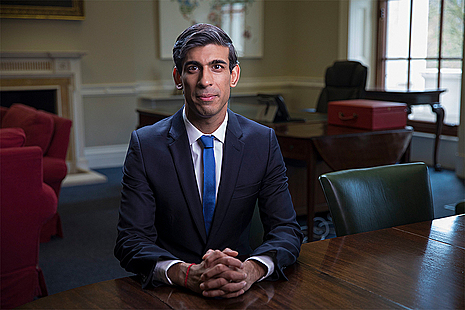
    The latest statistics from the Department of Work Pensions (DWP) revealed that, as of 15 January, 1,868 young people began placements secured under Kickstart. Chancellor Rishi Sunak has attributed this to the second lockdown restrictions, and says he expects the numbers to rise once lockdown eases.

    But small business owners tell a different story. Since the initiative began, many potential placements have been jammed in a slow process which stopped small businesses from applying directly for funding; instead, they’ve had to bunch together and apply via a mediator.

    Earlier this week, the DWP made it possible for small businesses to apply directly for the scheme, but there are still thousands of jobless young people, and the painstaking work of gateway organisations (including colleges and private training providers) to get small businesses access has now been scrapped. It’s a tale of government seesawing and absence of prior preparation we know all too well.

    Ben Taylor, founder of a home working portal called HomeWorkingClub, was keen to give talented young people a chance to learn the ropes of internet marketing when he heard about Kickstart, but was put off from applying altogether.

    “When I actually started to look into it, I saw that you needed 30 people, had to go via job centre plus, and didn’t know who you were going to get. Businesses way bigger than mine have been put off by it,” he said.

    Taylor was propositioned to merge with some other businesses but found the process too time-consuming and complicated. “You only have so many hours a day, it just didn’t seem worth it,” he said. “I thought it was such a shame, though. There’s easily enough work for someone to learn a huge amount about SEO and internet marketing.”

    Taylor says he knows a brilliant 21-year old computer science graduate, for instance, whose degree would have “perfectly” aligned with a placement at Home Working Club. “He’s now working at the local co-op- which is great- but it just feels like a missed opportunity.”

    “A lot of these policies make great headlines, but the devil’s always in the detail,” says Taylor.

    Sanjay Aggarwal, managing director of Spice Kitchen, a food manufacturer, also found the scheme attractive on the surface but practically challenging.

    “The scheme is, in principle, a really clever move by the government,” says Aggarwal, who, having been on the board for Young Enterprise & Young Money in his 20s, started a recruitment company and employed a number of 16-18 year olds at Spice Kitchen, is “passionate” about helping the youth up the job ladder.

    But the reality was much less appealing. “There was no actual information on how the scheme would be delivered,” says Aggarwal. “They were extremely slow getting information out and gateway providers were clueless- it’s taken months just for them to be approved by the DWP.”

    “As usual the government seems to have a good plan but no idea how it will be delivered- they find that out afterwards. It’s a bit of a mess”.

    For some companies, it has taken months just to be connected to a gateway provider- the first step in what is clearly a lengthy process.

    Bay Burdett, founder and CEO of food provider Bay’s Kitchen, experienced a “huge delay” in the process. “We sent our application in October and were told we should hear back in four weeks,” says Burdett. “We heard nothing, and then in December we got a generic email from Adecco, our chosen gateway provider. We’re only just managing to get the ad live this week.”

    Jon Basker, CEO of KickstartGo, says he founded the gateway platform in October for the sole purpose of making the process easier for small businesses such as Bay’s Kitchen or Home Working Club.

    “It was started off the back of trying to apply ourselves to the scheme, as a digital agency. We realised it was a cumbersome process and that other gateways didn’t have a particularly good offer,” says Basker.

    “We realised lots of small and medium-sized business would look at the scheme and figure it was too much of a hassle, so we wanted to make the process super easy and simple,” he said. Today, says Basker, KickstartGo put through 300 roles behalf of 100 employers across the UK.

    Despite the government’s decision to lift the 30-employee rule, Basker says Gateways are still needed to ensure a smooth process. “It will mean more people can access the scheme, of course, but whether that means they can access it more easily is another matter,” he says.

    “Small businesses should be focused on running their business, rather than getting bogged down in the bureaucracy of the DWP, which is the point of gateways.”

    Though its uptake has been slow, Lee Elliot Major, a professor of social mobility at the University of Exeter, says government initiatives like these are still essential in narrowing the inequality gap in employment.

    Major says that an “effective” Kickstart would be a necessity: “our research into the links between unemployment and education show that initiatives like Kickstart are urgently needed; jobs for under 25s are being decimated by the minute, and you need to guarantee jobs to avert long term unemployment.”

  • Food and drink focus: ‘People are fed up with things that aren’t good for you’ – Gabriel Bean

    Food and drink focus: ‘People are fed up with things that aren’t good for you’ – Gabriel Bean

    By Alice Wright

    A record 500,000 people signed up for Veganuary 2021, pledging to only eat plant-based foods for the first month of the year. This is double the figures for 2019 and also the first year that major supermarkets have run adverts promoting the movement. 

    I spoke to Gabriel Bean, founder of Grounded, a company which makes plant-based protein shakes about the movement towards plant-based products and sustainability shifts in the food and drink industry. “For me the move to plant-based kicked off a couple of years ago,” Bean explains. “But it’s taken a few years of test and trial. This probably marks the year that people are really feeling the benefits from it.”  

    Has the Veganuary movement impacted business? “I don’t think Veganuary necessarily changes business for us. We had exceptionally high sales volumes going into January in the November and December period as well. What plays a role is the attitude towards plant-based products. People are fed up with food and drink products that are not good for you and not good for the planet.”

    In the food and drink sector, sustainability was a luxury even a couple of years ago. If you want to package your product sustainably it costs more and it’s harder work. It’s particularly difficult for smaller brands to be sustainable and this is something that will have to change in the future. 

    “Sustainability has always been at the core,” Bean continues. “It was in the top three things to consider as we developed our new products. It was so important that this product be sustainable, not so we could jump on the sustainability hype but so we could scale consciously. I can sleep well at night knowing that the packaging has come from a responsible source and isn’t going to be floating in the seas of the Maldives. I think it’s a requirement now, if you’re not sustainable then you haven’t met the basic criteria for food and drink.” 

    When I think about protein shakes, I associate them with busy people commuting in and out of the office at ungodly hours with no time to cook a nutritious meal. According to Bean, Grounded’s shakes have managed to avoid being pigeon-holed like this. “We launched the product in August after the first lockdown,” he says. “So we were developing our sales plan for what life would be like after the first lockdown. We put a lot of time looking into online direct to customer retail – it’s an exponentially growing space anyway and retail sales are struggling.” 

    The other marketplace change I’m interested to hear about is the closure of gyms, another usual protein-shake hotspot. “Now people are working out from home,” Gabriel explains. “There aren’t the options to go into a post-workout gym store so we’ve angled the whole online custom to a workout from home attitude. It’s worked really well, and we have several campaigns on Instagram getting a lot of traffic.” 

    So what are his prospects for 2021. “There is going to be so much talk on veganism and sustainability this year. I think it’s really important to gauge from businesses what their core beliefs, morals and ethos are. A lot of companies will be jumping on this as a marketing opportunity. We at Grounded don’t see sustainability as a market opportunity but as the future of where food and drink are going.” 

    Picture credit: Tony Webster

  • Does the NUS actually represent students?

    Does the NUS actually represent students?

    by Alice Wright

    The National Union of Students (NUS), founded in 1922, is a confederate organisation of over 600 individual student unions. Overall it purports to represent seven million students. The Union is no stranger to criticism and scandal. In 2018 it faced a disastrous £3 million shortfall and its policies have long been grumbled about by many students. Yet it is the policy decisions it has made during the pandemic that have caused its most vocal criticism and concerted opposition to emerge.

    The NUS’ new leader, Larissa Kennedy, has mobilised the NUS in support of the University and College Union’s (UCU) decision to demand all higher education courses move to completely online teaching. The NUS’ latest ‘Students Deserve Better’ campaign demands “a move to online teaching as default”.  

    While Kennedy purports to represent the collective voice of students, this is not the full story. Of course, there will inevitably be a difficulties when any large organisation seeks to represent a large and diverse constituency like the UK student population. However, many students have voiced concerns in the press. As a student myself, anecdotal experience suggests that students overwhelmingly want to retain as much in-person teaching as possible. 

    But whereas the UCU is an opt-in membership for individual academic employees, the NUS works in a way less likely to enfranchise its membership. Students are represented by their own institutions’ unions, who then feed into the umbrella organisation. Look closer, and even the ‘democratic’ nature of individual student unions is open to question. The NUS website claims that voting in student elections exceeds 250,000 votes annually, but out of the total 7,000,000 students, this is only 3.5%. In spite of these numbers, the NUS is considered the voice of students, consulted by university and government officials and quoted as the leading student opinion by the press. This is misleading and fermenting a disparity between the Union and those it claims to represent.  

    It is clear that periods of time, particularly during this stringent Lockdown 3, will require students to work online, the NUS and the UCU have claimed they are following the advice of SAGE in pushing for all teaching to be moved online. Many students would have preferred to keep in-person teaching, or at least the blended approach that was promised at the beginning of the academic year during the more relaxed tier systems. 

    Not only does this represent better value for money with courses exceeding £9,250 a year, it is also a mental health touchstone. There is no comparison to being taught and engaging with your contemporaries physically present. Break-out rooms on Microsoft Teams and Zoom are painfully awkward and online lectures are less engaging. 

    There are also concerns about the precedence of the NUS’ demand for “online teaching as default” sets. If seminar leaders and lecturers are able to create online powerpoints and recorded lectures once, what is to stop the same subject matter being churned out year on year, while institutions continue to charge full fees? 

    Kennedy, who said in a Guardian interview back in August “A real worry is that we cannot trust universities to put student and staff safety first, because they are too preoccupied with their position in the market. […] They’re committing to in-person teaching, which they haven’t necessarily thought through from a safety perspective because they’re in competition with other institutions.”  

    Since students have been made into consumers, it is only right that they demand the product they have been promised and that institutions do what they can to meet that marketplace demand. 

    Photo credit: Barnyz

  • Barber Institute becomes first ever museum with ‘Nurse in Residence’

    Barber Institute becomes first ever museum with ‘Nurse in Residence’

    by Alice Wright

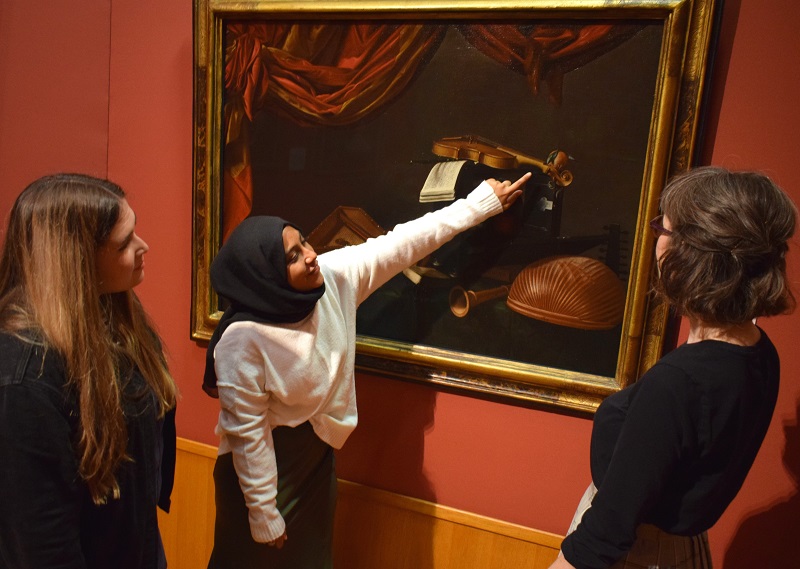
    In an original response to the ongoing coronavirus pandemic the Barber Institute of Fine Arts, founded in 1932 by Lady Barber, is set to become the first ever museum with its own ‘Nurse in Residence’. 

    In a creative twist on the familiar concept of the artist-in-residence the Barber Institute will welcome Jane Nicol, Senior Lecturer at the University of Birmingham’s School of Nursing and a registered nurse who has specialised in palliative and end of life care.  

    With the £40,000 received from the Art Fund’s Respond & Reimagine scheme, the Barber will work with Nicol for twelve months as part of the new initiative, Barber Health. Nicol explains that she will be looking at the Barber’s collection through her unique experience in healthcare “to rethink the role the arts have in the education of our future healthcare professionals and in promoting the sustainable health and wellbeing of our wider community. 

    This ambitious project has four interconnecting strands: a Nurse in Residence, Death and Dying Community Conversations, Care Home Outreach and a Social Prescribing pilot. Students from the University of Birmingham’s College of Medical and Dental Sciences will contribute through volunteering and placements.    

    “We felt we had a responsibility [to] use our collection and our engagement programme to address some of the big issues Covid has created. The Art Fund have given us a unique opportunity to address these questions in real time over the next year” said Jen Ridding, the Barber’s Head of Public Engagement.   

  • Opinion: It’s time for us all to praise the unsung heroes of the pandemic – students

    Opinion: It’s time for us all to praise the unsung heroes of the pandemic – students

    by Diana Blamires

    Students have been blamed for spreading coronavirus and pilloried for having parties during lockdown but there have not been headlines trumpeting the good they’ve been doing in the pandemic.

    Medical students and student nurses from universities across the country have been helping on the frontlines and many have now volunteered to help with the mass vaccination programme.

    Academic staff are also lending a hand. Coventry University Assistant Professor Steph Coles, a paramedic who herself was ill with coronavirus last year, started working at West Midlands Ambulance Service over Christmas as soon as the academic term ended because she wanted to support her healthcare students who had taken on roles helping the NHS.

    In Northern Ireland, medical students and nurses were fast-tracked into roles helping out with the pandemic as soon as their university courses finished. Our healthcare students are among the unsung heroes of this pandemic working long hours to play their part in saving lives.

    This is a far cry from the proliferation of headlines blaming students for spreading coronavirus and censuring those who have been arrested for holding parties. As always, the few spoil it for the many. The vast majority of students are following very strict guidelines. International students who are stranded on campus are strolling or running on their own or with one other student. Shopping trips for food are predominantly alone. The overwhelming majority of students are loyal to the communities in which they live and want to play their part by not spreading the virus.

    Contrary to headlines about isolated students with no university support, some universities have gone to great lengths to focus on the welfare of students during the pandemic. The University of Buckingham is even enabling students to take therapy dogs out for their daily exercise. A student is allowed to go for a walk with one member of the welfare team and the dogs. In normal times the university’s two black therapy cockapoos, Millie and Darcie, are available to help homesick freshers who are missing their pets, and relieve anxiety for stressed students. Walking and cuddling them calms students at exam time. Research indicates a few minutes spent petting animals, especially black dogs, helps to reduce the stress-inducing hormone cortosol.

    Furthermore, most universities are offering virtual sessions simply for students to chat and air concerns. A number of smaller ones are arranging for students to be phoned regularly. Counselling sessions are available online.

    There are the many students who have helped with Oxford University’s world-leading vaccine programme and other such research projects who have quietly played their part while the university grabs the limelight.

    Although headlines are shrieking about students paying rent while living at home a significant number of universities managed to offer face to face sessions on campus right up until the end of last term when the government announced lectures must be online only. Many universities managed one to one or very small group meetings in person. Students at universities with face-to-face and good online provision are not asking for their money back for tuition fees as they feel their university did the best it could in the circumstances.

    The estate departments of universities went to enormous lengths to ensure in-person meetings were in safe environments and cleaners were deployed to guard against the spread of coronavirus as a result of those sessions.

    Student unions also pulled out all the stops to come up with imaginative ways of enabling groups of six to meet outdoors including barbecues and outdoor workouts as well as picnics and organised walks.

    Whilst inevitably in some student cities the virus thrived when students first arrived, in the autumn many stopped the spread in their local communities thanks to huge efforts by staff and students. It is vital that we appreciate our students for the positive and vital role they are playing in this pandemic rather than simply berating them as superspreaders when the vast majority have played by the rules and had a very challenging year at university as a result.

    Photo credit: Micurs

  • A Question of Sport: is the government underestimating the loss of physical education?

    A Question of Sport: is the government underestimating the loss of physical education?

    by Alice Wright

    Many battles were won on the playing fields of Eton, and while we’ve moved past that elitist old lie, the central tenet may still be true: sports is a vital part of education in preparing children for the challenges of future life.  

    School for an entire cohort of children has been irreparably disrupted, and whilst the focus has rightfully been on what is missing in the classroom, the loss of physical education in all its sweaty variety should be cause for concern too. 

    There are many reasons for that. School sport is more than just a government-mandated bleep test, it’s a chance to learn the unquantifiable skills of teamwork, perseverance and problem-solving in a safe environment where the stakes of success and failure are low. 

    Sport is also about developing these skills into coping techniques. Navigating stressful situations in the workplace and the inevitability of friction with colleagues will not be easy for children who have not had the opportunity of honing such skills on muddy playing fields. Generation Z-oom will not always be able to simply mute those that irritate them, and there will be a reckoning for the soft skill deficit we build up with everyday that children are out of schools. 

    As well as being good for physical fitness and mental wellbeing, school sports equip children with the knowledge to take care of themselves physically and mentally in the future through knowledge and by building healthy reward pathways, self-esteem and discipline. 

    With still some way to go, schools were coming on leaps and bounds to make sports inclusive, no matter children’s gender, religion, disability or culture. Such strides will most likely be lost to the progress and attainment abyss of the last twelve months. Ofsted has little interest in sport, and its qualitative benefits do not neatly fit government box-ticking progress sheets – therefore it is being forgotten. 

    Sportsmanship may sound like an archaic principle now but there is something in the gentle aggression of a sportsperson that shows they know more than how hard to hit a ball. Joe Wicks, ‘the nation’s PE teacher’, reaches millions of living rooms across the country in his 9am ‘PE with Joe sessions’ for children and adults. Marcus Rashford, the Manchester United forward and free school meals campaigner, has steered government policy for children over the last year. It is clear both men owe more to sport than just stellar careers. They are both motivated and positive individuals with drive, as well as effective communicators, campaigners and organisers. 

    Wicks and Rashford have both spoken openly about the way in which sport can be the crucial lifeline that engages many at-risk children in school. Without it, drop-out rates could increase. This is already a serious problem. Between lockdowns the amount of children returning to school dropped significantly, with over 50% of those no longer attending ‘vanishing’ without explanation. A holistic approach to education includes sports, and the loss of it must be considered too.  

  • Interview: leading bookmaker Will Woodhams

    Interview: leading bookmaker Will Woodhams

    The CEO of Luxury bookmaker Fitzdares speaks to Georgia Heneage of his career journey, the need to bring the ‘human’ back into business and the secret recipe for success

    Will Woodhams’ journey from Archeology & Anthropology undergraduate to CEO of the world’s leading horseracing bookmaker Fitzdares holds nuggets of wisdom which any young jobseeker can learn from. And this is precisely the direction our conversation takes: even over the phone it’s easy to tell that he’s a natural people person – friendly, funny, and very generous with his advice.

    Woodhams entered the business world with a whole lot of drive and absolutely no experience (or formal training, for that matter). “All I did was flip my skill set on its head to become a corporate beast,” he tells me.

    Zigzagging from company to company, and propelled by his drive to “just get on and do stuff”, Woodhams worked for brands like French Connection (which he says he was “woefully underqualified” for), LVMH (Moët Hennessy Louis Vuitton) and finally Fitzdares. His career, he says, has taken the twists and turns of a “poacher turned gamekeeper”.

    So what is Woodhams’ core advice for anxious jobseekers beginning to brave the corporate world?

    Segment your audience

    Woodhams says that one of the most useful takeaways from his degree at Durham was the ability to “segment” his audience; he’s since learned to tailor his business model towards the right audience, even if that’s a high fashion brand aimed at women.

    “People pigeon-hole themselves into industries,” says Woodhams, “when all you need is to understand what consumers want; which is good customer experience and to be taken seriously.”

    Have a point of view and filter out the ‘bullshit’

    “This is the best advice I could ever give anyone,” says Woodhams. “You can read as many business books as you want but if you’re not actually shaping a particular point of view then you’ll fail.”

    For young people there’s reams of information and advice on the internet. “It’s a bit like the protestors in America,” says Woodhams. “If you’re reading it, you’ll start believing it.”

    “I think that having a really strong bullshit filter is absolutely imperative,” he says. But this is something you have to learn yourself: “No one can teach you that, and if you haven’t got it then you’re not probably going to do all that well.”

    Make decisions quickly, and have the ability to pivot

    In a world governed by tight time deadlines and swift turnovers, the “greatest skill anyone will ever have” is making decisions quickly. “That means hearing everyone’s advice, looking at the data, and then just making a call,” says Woodhams.

    But this isn’t always easy with big corporations, in which management is like “moving a supertanker”. Businesses must “be agile and be able to pivot weekly”, says Woodhams. Using another apt aquatic analogy, he says that once they stop moving they will, like sharks when they stop swimming, die.

    “A good example of this is Coca-Cola. People think they are static because the brand has stayed essentially the same, but they tactically remove products or markets and are brilliantly creative. They were the first brand to do personalization, for instance. So there’s tonnes of stuff happening under the water, even if the surface looks still.”

    How has Covid-19 affected this?

    Our lives in the previous year have been defined by the very sense of immobility which Woodhams warns is the death of all businesses. So how can this be avoided?

    Characteristically cutthroat, Woodhams says Covid-19 has in a sense been the great divider, or test, of business models. “Most businesses which have died haven’t been able to pivot quickly enough,” he says.

    Woodhams’ advice comes from personal experience. Woodhams has used the pandemic to accelerate business and get his clients “excited” about their future relationship with the bookmaking company.

    In September, Fitzdares faced almost certain death. But Woodhams was determined to build from the ground up, and he capitalised on the lockdown.

    Despite being opened and closed “like a fire escape”, they managed to generate huge amounts of marketing publicity which has been hugely beneficial for the business as a whole. They sent daily emails to clients, organised a drive-through in Derby so that clients could watch the race on a big screen, delivered Beef Wellington and encouraged people to post on Instagram, set up a wine club and a pasta club, and are planning to hire a castle for clients as an equivalent to the Cheltenham races in March, where it’s easy to socially-distance.

    “It’s about finding a solution to a problem. Business has been really good this year!” says Woodhams.

    State of Play

    But Covid-19 aside, what is the state of the betting industry as a whole? Because of government regulations over betting, the sector has been in a “tough spot”. But Woodhams is optimistic; “it’s a massive industry in the UK and we’re global leaders in the market”.

    Fitzdares has found a niche within the sector and played on the lack of care for customers shown by larger betting companies, which more often than not results in addiction, mental health issues and alcoholism. “We’re zigging when everyone’s zagging, and it’s working,” says Woodhams.

    This support for his clients is at the core of Woodhams’ business ethos. As big tech hurtles to new heights, Woodhams believes customers increasingly crave the “human side” of business. “The experience economy is coming back,” he says, “and I’ve noticed that customer service has got better again.”

    In Woodhams’ opinion, some companies deemed succesful are hindered by a lack of attention to their customer needs: “British Airways is considered the world’s finest airline but I think they’ve shot themselves in the foot by delivering bad customer experience; it feels like they should be a cheaper product.”

    Topshop, who used to have a “great customer experience” back in the days when their store in Oxford Circus was teeming with pop-up beauty bars the occasional live events is another case in point. “The experience got worse and worse, the business got worse, the product got worse and even the owner became worse.”

    So if tech is “coming in and eating people’s lunches by trying to smooth the consumer journey”, what is the ideal business model in an technical age crying for the return of the human touch? A mix of the two, says Woodhams, is the “axis of amazing customer service”. With that our time is up, and I realise my conversation with him has enriched my understanding of business – and the world.

  • Opinion: Diana Blamires on the need for live learning in the home

    Opinion: Diana Blamires on the need for live learning in the home

    Diana Blamires

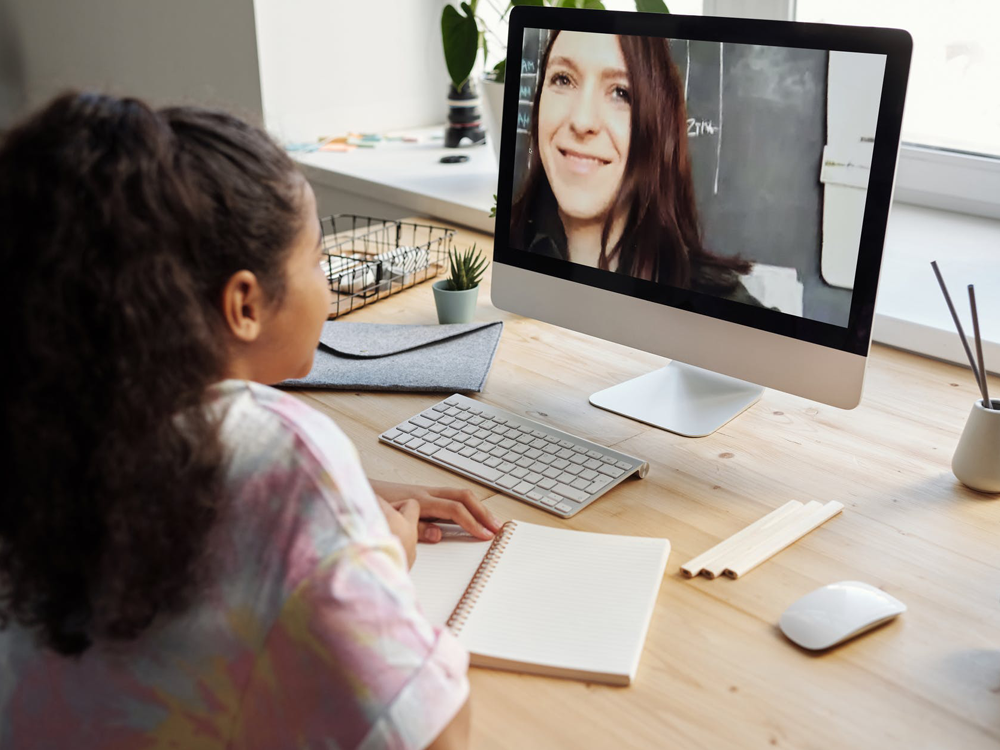
    The recent plummet back into homeschooling has shown that the gulf between setting homework and live classes could not be wider. In some cases, it will mean the difference between passing and failing GCSEs, or worse, a career succeeding or failing.

    Assiduous students will most likely succeed with or without live sessions, but there is a huge swathe who will lose out if there isn’t a full diet of Zoom-style live engagement every day. This is why MP and Chairman of the Education Select Commitee Robert Halfon’s decision to call for the government and Ofsted to urgently come up with detailed guidance for online provision is so well-timed.

    Boys are most vulnerable; peer pressure dictates that set work should be done as fast as possible, not as well as possible, and the rest of the day is usually spent on the playstation. Once we hit the anniversary of the first lockdown, some students will have lost almost a year of their lives to such recreations. They will have shot down their chances of success with too much time spent on the wrong kind of screen.

    What’s more, lazy students forfeit their place on the top table by pretending to do their work when in fact they are inputting random answers just to get the work done. The students whose parents have time to check that Seesaw, an online learning app, hasn’t been swapped for social media will succeed. It’s easy to look like you’re top of the class when you’re on Tik Tok.

    Social media depicts earnest children and parents at the kitchen table with laptops, but don’t be deceived: for those with challenging children the struggle is untenable. When asked to do set work, many children react with defiance. This leads to the offering of sanctions or bribes, and the defiance continues. Some children are immune to sanctions and bribes, and for a significant number of challenging children no work is done. And parents, working from home, are most likely at their wits’ end.

    This scenario is being played out in countless homes by families (or worse, single parents) every day. Some parents resort to violence or the child lashes out, and the situation escalates. Zoom work calls are abandoned and siblings are left traumatised; parents have breakdowns; children struggle with their mental health. Remote homework has the potential to morph into more serious situations and bring about new challenges for exhausted parents.

    Asking a child to attend a live lesson, however, is not often met with the same defiance. Children want to be with their friends in real time as they are desperately missing interaction. After face-to-face interactions, live lessons are the next best thing. And it is not just private schools who get a glowing report. Some state schools are offering a full timetable of live lessons, and those at the top of the class in the state sector have proved it can be done. 

    Some childrens’ futures are being needlessly thrown down the drain. It’s time to act; it doesn’t take a GCSE in computing to provide a week of live lessons, and they will change lives.

    Diana Blamires is an education PR consultant

  • Everything you need to know about Kickstart but were afraid to ask

    Everything you need to know about Kickstart but were afraid to ask

    Georgia Heneage

    Since March last year, a quarter of a million people under the age of 25 have claimed unemployment benefits and companies across different sectors are cutting jobs by the minute.

    In response to the seismic impact the pandemic has had on young people’s career prospects across the UK, the government launched Kickstart, an initiative in which employers can apply for government funding to create job placements for young people struggling to find work.

    Navigating the gov.uk website can be confusing at the best of times, and this confusion seems to multiply when it comes to funding schemes like these. What does Kickstart really entail, and how do you apply? Has it made any real impact on employment figures? Which sectors are using the initiative? We’ve broken it down into the key facts and figures to make it more digestible.

    What is it?

    • Part of Chancellor Rishi Sunak’s Plan for Jobs in July last year, one of the biggest packages for youth unemployment in decades which included financial incentives like awarding employers £2000 for every apprentice hired under the age of 25
    • The scheme runs until December 2021
    • Each job placement created lasts up to 6 months and is fully paid for by the government at national minimum wage (£4.55 for under 18s, £6.45 for 18 to 20-year-olds, and £8.20 for 21 to 24-year-olds)
    • Additional employment support and training is available (including £1500 to cover training and other expenses)

    How do you apply, and who can apply?

    • Brave the government website: https://www.gov.uk/government/collections/kickstart-scheme
    • Open to 16-24 year old’s who are eligible for universal credit (i.e if you’re on a low income or unemployed)
    • Businesses recruiting more than 30 people can apply directly online, and those offering fewer than 30 need to apply via a representative organization

    Which sectors are using it?

    • Construction, media and communications, tech, fitness, retail and many more
    • Companies include: Bloomberg, KFC, Network Rail, Tesco and Ladbible

    What are the numbers so far?

    • According to chancellor Rishi Sunak, in November the scheme had created nearly 20,000 job placements, and they expect tens of thousands more in the coming months
    • The scheme hopes to create more than 250,000 jobs overall
    • As of November, the government received 4.359 applications from employers

    Enough of stats; what have young people made of it?

    • In a BBC article 24 year-old Geddy Stringer spoke of having ‘no hope’ before applying to Kickstart, which has been a ‘godsend’ in finding him a high-quality new job in only a few months

    It’s not all been good

    • The 30 person-limit imposed by the government made applying for funds hard for smaller businesses
    • The government has since opened the scheme to hundreds of mediators and the Federation of Small Businesses is working with the government to become an intermediary for small business who wish to recruit less than 30 people
    • The Department for Work and Pensions has since reported that more than 500 bodies have signed up to act as intermediaries

  • Sign of the times: why the BBC’s online education programme is just the beginning

    Sign of the times: why the BBC’s online education programme is just the beginning

    Georgia Heneage

    On 3rd September 1939, as Great Britain teetered on the precipice of the second world war, the crackling voice of the BBC could be heard across the nation. The great British broadcaster was instrumental in Britain’s fight against fascism, acting (as they put it) as “informant, morale-booster, propaganda weapon”.

    While there are many differences, the past year of pandemic has had its similarities to wartime – a comparison that’s been prompted in part by the tendency to describe our struggle against the virus as a ‘fight’ against an ‘enemy’. Covid-19 has brought about food shortages, the loss of loved ones and infringements on our liberty not seen since the dark days of the 1940s.

    As was the case back then, times like these test the pillars of our democracy: as schoolchildren are plunged into another lockdown and integral years of educational development are compromised yet again, the BBC has stepped up to its role as a trusty national service.

    It’s a good time for it to step up. Last year the validity of the BBC as a national service was called into question by gender pay disputes, issues with the license fee funding model, and grumbles over its political impartiality. Meanwhile, the Department for Education’s handling of the exams fiasco in the summer called into question whether it had young peoples’ futures under control.

    Last week, the BBC promised millions of home-bound children across the country curriculum-based educational videos and resources on TV, online and BBC iPlayer, in what they are calling the “biggest education offer in [the BBC’s] history”. As well as providing essential (and entertaining) education for children in lockdown, the BBC’s decision will also come as a blessing for parents who are struggling to balance remote working with childcare.

    Airing today, these will include content for younger children on CBBC and BBC Live Lesson and popular programmes like Horrible Histories, Celebrity Supply Teacher and Art Ninja for 3 hours every day. BBC Two will support secondary school students through classical drama and Shakespeare adaptations as well as science and history programmes.

    The BBCs Director General Tim Davie said that “ensuring children across the UK have the opportunity to continue to follow the appropriate core parts of their nation’s school curriculum has been a key priority for the BBC throughout this past year.” The move signals the much awaited entrance of the new Director General: lets hope it’s a sign that the BBC is headed for clearer waters.

    The decision to provide thousands of confined children – not to mention exhausted parents – with virtual learning tools remedies part of the damage woven by the government in its handling of school closures and exams. But is it enough? Parents still understandably lament the loss of face-to-face teaching, especially for younger pupils, and many do not welcome the shift to online learning with open arms.

    Is this tech takeover a long term reality for education?

    Like the switch to a remote working culture, however, this transition towards a digital learning environment is inevitable, and the pandemic has merely highlighted this inevitability.

    Technology has begun to infuse most areas of our lives, and education is no exception: before the pandemic struck, age-old principles of education were beginning to change. Many predict that the concept of a physical classroom, whiteboards, and even teachers, will become outmoded as Artificial Intelligence and digital learning landscape play a greater role in education.

    Traditional tools of learning like memorising information, handwriting, spelling and grammar may be irrelevant in the future and replaced by the omnipotent power of the internet. The younger generation will need to harness a whole different set of skills to help them manage new technology, interpret search results and even determine real news from fake news. And, as jobs in tech expand, the need to harness technological skills like coding, ‘Blockchain Technology’ (bitcoin and digital money), Virtual Technology or Data Analysis will be ever greater.

    The digitalisation of education which the BBC has begun is not just a short term solution; it’s the long-term reality of a world governed by technology and online spaces. Just as the war redefined working habits and reformed the education system, the pandemic may be the final push needed for us to recognise the benefits – or, indeed, the inevitability – of an online education.