Category: News

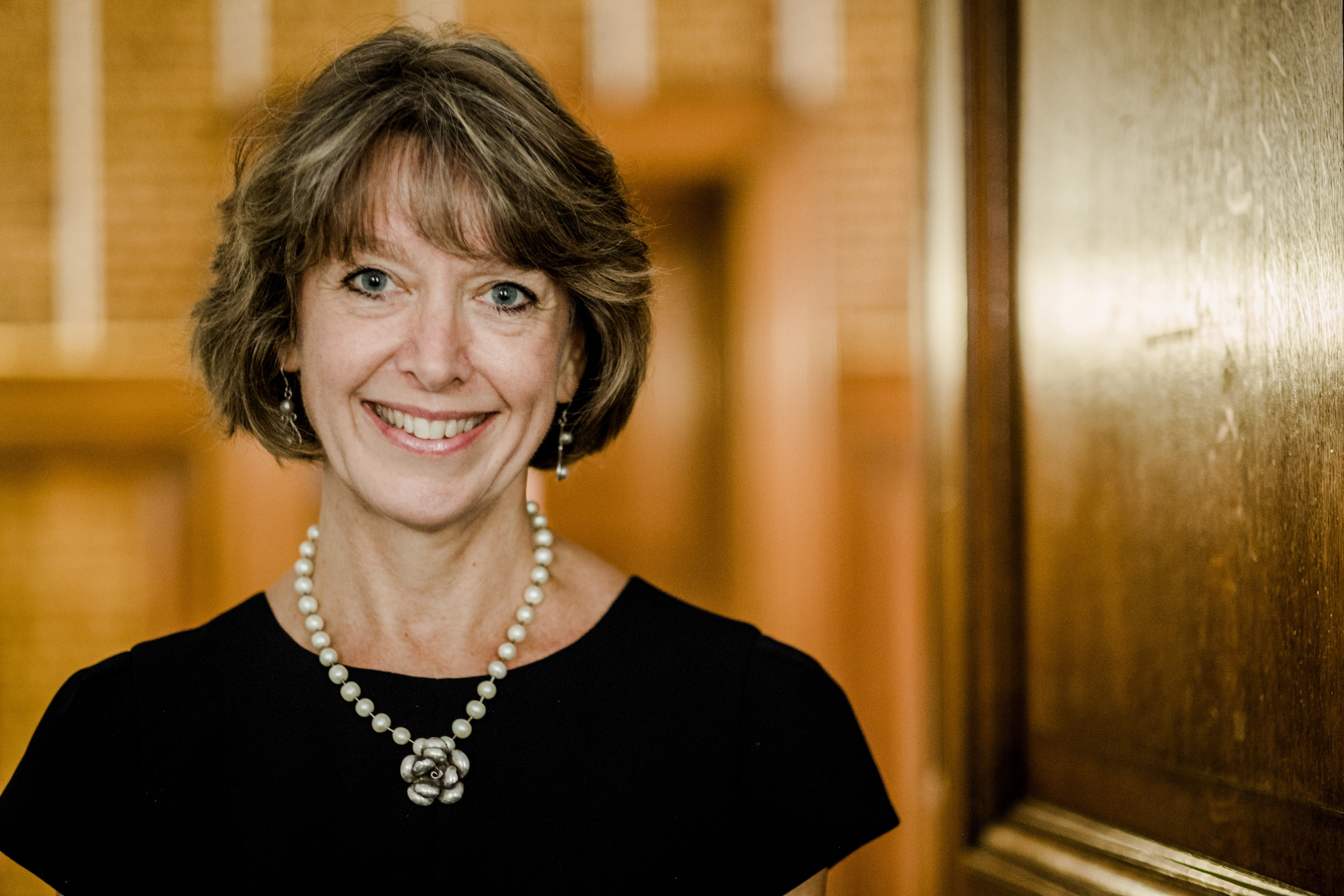
  • Mental Health focus: Dr. Triveni Joshi interview

    Mental Health focus: Dr. Triveni Joshi interview

    Concerns around the implication of prolonged lockdowns for children’s education and development have abounded over the last few months. Having recently spoken to campaign groups and other concerned stakeholders for our feature on self-employed parents, Finito World decided to follow up with Dr Triveni Joshi. 

    Dr Joshi is the Medical Director at Cygnet Joyce Parker Hospital, and a Children and Adolescent Mental Health Services (CAMHS) Consultant. Dr Joshi’s main areas of interest are neurodevelopment disorders and psychosis. She also works with young people suffering from depression anxiety and early childhood trauma. Dr Joshi has extensive experience across the NHS and independent sector, as well as experience working in Specialist ASC schools and Tier 4 service in-patient units.  

    How concerning do you find the lockdown situation for children with them being out of school and having a lack of social contact?

    There is evidence that is available suggesting there were some groups of young people who coped well for some time without much reduction in life satisfaction. However, the overwhelming evidence suggests particular groups of young people such as those with pre-existing mental health conditions, the economically disadvantaged, females and LGBTQ young people have been adversely affected in terms of their mental health and wellbeing.

    Lack of social contact, not having their outlet for continuing to be actively engaged in activities, changes in the way support could be accessed, anxiety about school work and uncertainty about what the future holds, may explain some of the reasons why young people have struggled.

    How does that lack of social stimulation affect their neurological development?

    To be honest this will need further research. I have so far not seen any evidence regarding this but it’s probably too soon to be able to draw any conclusions. 

    There is a publication titled ‘Babies in lockdown’ which was written following a survey between April and June looking at lockdown babies and the impact this may have in the long term. The conclusion from that study was that there could be severe and long-lasting effects on these babies. 

    However, we are seeing a wide range of symptoms of psychological stress due to lockdown with an increased number of young people presenting with low mood, insomnia, stress, anxiety, anger, irritability, emotional exhaustion, depression and post-traumatic stress symptoms.

    As mentioned previously, young people are not socialising as before and there is an increased use of social media which has its pros and cons. The fact that they’re not socialising as usual has an effect and using social media a lot more exposes them to false messages about lockdown and COVID-19, that might have an impact. There is a possibility of exposure to more cyber bullying and other online risks with young people spending more time on social media.

    I think the messages on social media regarding COVID-19 have been very varied and for young people who are probably already anxious, that can create a lot of anxiety, not knowing what it might mean for them or their family.

    For those young people who have anxiety disorders such as OCD, the messages of COVID-19 may have exacerbated their fear of contamination and may have increased symptoms such as hand washing and any other safety behaviours they may have.

    That is interesting you talk about the messaging, because I just read a piece a couple of days ago about how the government has bought a lot of advertising on TikTok to target young people with quite scary new adverts. What do you think about that? Is it maybe a bit harsh on young people or do you think it’s necessary to get them to comply with the rules?

    I cannot see how that will increase compliance because fear is not one of the best motivators for anyone. I think honest, transparent, consistent messaging is far more helpful.

    Scaring someone takes away from the message itself and if it’s too harsh, can have a negative impact on young people. It might increase anxieties that they already have and could disengage young people. I don’t think guilt or fear is best way of engaging young people. 

    You suggested you’re seeing many patients with anxiety around contamination. Have you seen an increase in referrals for OCD and related conditions?

    From my own experience and talking to colleagues at the London Psychiatry Clinic and in the community, there’s been an increase in a wide variety of referrals such as anxiety, low mood, depression, OCD and eating disorders. Referrals are being made from GPs and other professionals as well as schools, anxious parents and carers. 

    How do you think that we as a society, and with our health care, can help children that are suffering mentally now, and those that will continue to feel the impact when we leave lockdown?

    By staying connected. I think all of us need to be aware of the impact of lockdown and loneliness and take small steps to stay connected to young people within our circle. Give someone a call or be available in the variety of platforms that you have at your disposal. 

    If you are a parent or know other parents, be supportive of each other. It is equally important that adults take time for their own breaks and look after themselves so they can better support others. 

    It is difficult and it is stressful but we need to focus on quality time with each other and each day decide if there is a need to plan a fun activity to provide something positive to look forward to.

    If the weather allows, outdoor activities are a good way to get out of the house and get exercise, this always helps.

    As far as healthcare goes, we have to be more flexible in our working. Virtual appointments are readily available, meaning we can reach out more. There are some young people who might struggle with online appointments, so we need to ensure we also offer face-to-face appointments following safety guidelines.

    We also should be offering quality information around COVID-19 and related anxieties. 

    Websites such as Mind, YoungMinds and Children’s Society have some really good information for young people on how to cope during this time. 

    As we know, schools have already adapted their way of working to safely provide education to children. Some identified vulnerable children are also attending schools and getting the support they need.

    We also need to be prepared for when children come out of lockdown as however positive a step this is, we need to be aware that this is a change from what they have been used to which will create its own problems. We need a phased return, to be flexible and to factor in that some children may have increased anxiety returning. 

    Testing will be another thing some children will be scared of. We need to support the schools, parents and children in navigating this without disadvantaging anyone. 

    I read that some neurodivergent children have actually thrived educationally in lockdown because learning remotely really suits them. Do you think that this might actually be a bit of a turning point in understanding that different children will need to learn differently and perhaps some neurodivergent children can maybe adopt a more flexible approach?

    We do need to look at the whole of last year and have some take-aways from it. 

    We have always known that schools can be difficult for some young people and there has been a percentage of young people who have been home schooled previously and are doing well. Maybe it is time to start looking at flexible ways of learning and teaching, utilising the best of both worlds and taking into account different home circumstances. We are used to traditional ways and this may be the time to challenge those traditions and explore new ways and new methods to support young people through education. 

    As you said, when children come back after such a long period of isolation they will need to be cautiously reintroduced, what kind of behavioural symptoms do you think might occur when children go back to school?

    As mentioned previously, some young people will struggle with going back to school and they may struggle with the increase in social demands that they will be exposed to.

    While we have discussed the downsides, reintroduction to a different routine after a while is always going to be hard.

    We may see increased anxiety in facing those demands, as well as increased anxiety about catching the infection and we may see worries about what next and if this could possibly happen again. 

    One of their spokespeople for UsforThem told me last week that they’ve been speaking to school governors and headteachers that are quite worried because there’s been a significant increase in safeguarding referrals, particularly incidents of abusive trauma at home. Are you concerned that there might be a tidal wave of trauma to come from this generation of children that may have been in unstable homes?

    Yes, during lockdown there has been an increase in referrals to safeguarding. Increasing difficulties within the family, stresses around finance, increase in parental mental health problems, children not having their usual contacts or people they could talk to have probably all contributed to difficult situations at home and led to increased referrals. 

    As we come out of lockdown, we need to ensure the mental health and emotional wellbeing of children and young people is high on the agenda. We need to ensure we pre-empt and are prepared to support young people so that the long-lasting negative effects of lockdown are minimised. 

    Dr Triveni Joshi is a leading consultant psychiatrist in London who specialises in child and adolescent psychiatry. She has over 17 years worth of experience in psychiatry and over 14 years working with children and their families. Her areas of expertise include autism, mood disorders, behavioural problems, anxiety, ADHD and OCD.

    For further information:https://londonpsychiatry.clinic
  • More than just immunity: what getting the vaccine means for the young

    More than just immunity: what getting the vaccine means for the young

    Georgia Heneage

    With the spring finally upon us, it feels like there’s much to be optimistic about: the vaccine rollout is heavily underway – nearly a third of adults have already been vaccinated to date – and the arrival of warmer weather seems to have injected an ounce of energy to what has been a lethargic, heavy winter.

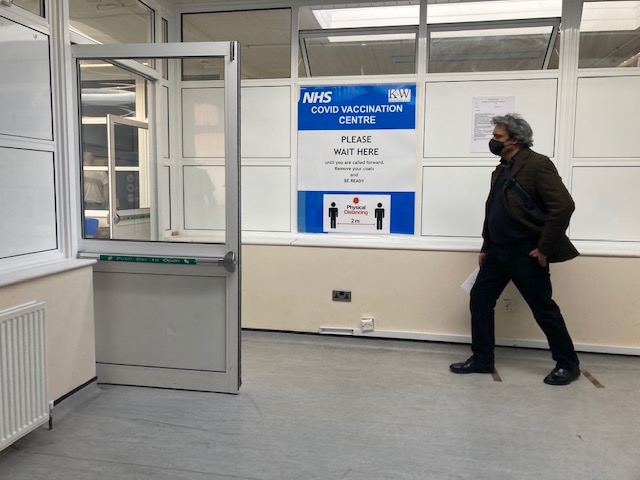
    This was certainly the flavour in the air yesterday, as I queued for a vaccine outside an old converted school in Harlesden. As high-vis staff shepherded us through a maze of empty school classrooms and into small white cubicles, where the deed was done in literally minutes, I’ve never felt more like a character in Contagion. Yet for the first time since this pandemic began, it heralded a glimmer of hope on what has been a bleak horizon.

    Being a 23-year old asthmatic, getting the vaccine so early brought with it a concoction of different emotions- excitement, trepidation, and definitely a bit of guilt. But as someone who has recently started a new job, getting the jab felt like a lot more than just immunity. Working remotely can be incredibly lonely, and most young people – me included – have felt like they’ve missed out on those fundamental face-to-face experiences which are so important in shaping your career at an early age.

    So the jab signalled the start of a new dawn, and a brighter future; it opened up the possibility of going back to the office and returning to some kind of normality – something we’ve all missed as we’ve entered the jobs world for the first time. It also gestured towards a return to some kind of social normalcy and an escape from the state of boredom, inertia and melancholy in which so many young people have found themselves this winter.

    Economists have argued for decades that confidence is a fundamental ingredient in economy growth; as people start to feel more secure in their jobs investment soars and spending increases. As Forbes journalist Tim Worstall puts it, “more economic activity is the definition of economic growth…people wandering down the street and in general thinking “Hey, yeah, I feel good!” means that the economy does in fact grow.”

    The rolling vaccine programme and the arrival of the sunshine may just give our economy the confidence booster it needs to bring us out of this winter depression.

  • Move fast and break things: Australia’s war with Facebook is a marker for the future

    Move fast and break things: Australia’s war with Facebook is a marker for the future

    Georgia Heneage

    Facebook and Google have been entangled in a lengthy battle with the Australian government over paying for news on their platforms, and this week things came to a head as Facebook decided to “re-friend” Australia and restore the stream of accredited news on the social media platform.

    The clash began when the Australian government proposed a new set of laws aimed at making the tech giants pay news organisations for stories shared on their platforms in an attempt, they said, to “level the playing field” for news publishers who’ve been overshadowed by the growing omnipotence of social media platforms.

    Whilst Google backed down and struck deals with news organisations like Murdoch’s News Corps, Facebook instead decided to block every Australian user from accessing articles, even though a third of Australians reportedly use Facebook as their primary news source.

    The move sent shockwaves through the online world; not only did it affect millions of people’s ability to access accredited, fact-checked news sources (and no doubt increased a stream of fake content online) during a pandemic and days before the vaccine rollout, but the collateral damage ensured it blocked pages of innocent public health and fire services.

    If you haven’t begun to recognise tech’s complete monopolisation over the internet then you may have been living in your own echo chamber. But this move seems to signal something far more dangerous. It suggests Facebook is beginning to wield almighty control over the way news is spread and received. In a politically divided world, that amounts to a frightening precedent.

    Was it a mere flex on the part of a the tech giant, to prove how much power it wields over government, the dissemination of news and even truth itself? The power struggle between tech tycoons like Facebook and governments suggest it might have been a calculated risk designed to show just how much control it can demand over the kind of regulations which traditional news channels are subject to. It also showed a complete disregard for the danger of the news misinformation phenomenon.

    Thankfully, the world is reacting: in December the European Commission started to introduce a plethora of regulations against big tech, in a bid to curb its overwhelming dominance. This comes in the form of two proposed new laws – the Digital Services Act and the Digital Markets Act. The first will require companies to hand over information and data to regulators about the way their algorithms work and how their ads target consumers; the second is aimed at providing smaller companies the chance to compete with the big guys.

    The EU is also starting to follow the example of Australia in making big tech pay for news; the lawmakers working on the new proposed bills have said the laws can be changed to includes aspects of Australian reforms, which could include arbitration for licensing agreements and the requirement for tech companies to reveal to publishers any changes on the way news stories are filtered on their sites. Alex Saliba, one of the MEPs working on the new laws, said Australia’s approach to the Silicon Valley giants made an important step towards righting “the acute bargaining power imbalances” between tech and publishers.

    Though Facebook has restored news content for Australians and the new law, which has been enacted by the government, has prompted other countries to follow suit, just how much bargaining influence these laws will have remains to be seen. The laws will take years to come into effect.

    Tech companies seem to operate at a pace far beyond the slow bureaucracy of governments: if the past few decades are anything to go by, they’ll have to move quickly to keep up with the constantly evolving Silicon Valley. And they’ll have to do it fast: the spread of misinformation in a politically polarised world – and even truth itself – is at stake.

  • Sarah Fletcher: our education system is ‘not fit for purpose’

    Sarah Fletcher: our education system is ‘not fit for purpose’

    Sarah Fletcher

    I would like to conjure two images for you.  The first is of an imaginary workplace of the future:  there is space for quiet working and areas for meetings and collaboration too. There are powerful computers that drive new technologies and leverage augmented reality. Technology to break down geographical divisions is on display, with digital, connected whiteboards to share ideas simply and effectively.

    Teams of people, diverse in background and skills, are working together both in person and virtually.  Refreshment is readily available to break up routines, inspire impromptu conversation, seed fresh thoughts, and allow tired brains a rest. There are deadlines to work to, but it is accepted that new ideas can be messy and that there will be risk. It is better to try something and fail early than not to try it at all is the mantra; it helps to avoid unnecessary time waste and cost. There are other rooms too – places of equal importance. They are for those with the technical, computational, or practical expertise to translate ideas into practice, to prototype, and make, iterate and refine. Entrepreneurship is encouraged and valued. Respect is the overriding concern, respect for those you work with and for the wider audience you wish to reach, respect for the environment and for society too. These are the spaces in which problems will be dissected, analysed, and solved and in which the future will be created – where head, hand and heart meet.  

    Now we see an exam room: desks separated, rigidly aligned, front-facing. Collaboration is forbidden, breaks are supervised; notes and research are left at the door. Access to the outside world has been disabled with mobile devices confiscated and turned off, watches removed. Only pens, transparent pencil cases and paper can be seen. Those with dispensation to use computers are confined to another room.  The task is strictly timed to suit a fixed approach. An “off day” is not to be countenanced and there is only one chance to get it right. The questions are the same for everyone and the answers are predetermined too, with the highest reward reserved for those who most nearly hit the mark.

    The contrast is stark. There is, of course, a place for exams. The ability to work under pressure is important. They can act as a powerful motivator and memory is a muscle we need to learn how to flex. But over the past few years, and in the name of rigour, we have added and added again to the things we must learn and assess. Rote learning has taken root, and stress levels have risen inexorably. The need for mass-produced tests and the chimeric search for “reliable” grades has driven out the open-ended questions that might invite deep thinking, support a growth mindset, and encourage fresh ideas.

    We now reward conformity and fixed thinking instead – and at a time when adaptability and initiative are so necessary in the workplace. An algorithm fixes the bell curve of achievement and condemns a third of all students to fail the most basic of requirements in English and maths, a failure that impacts significantly their life chances. The favour given to academic subjects over technical, vocational, creative, and practical skills has disempowered segments of the community and diminished opportunity in precisely those occupations that are so badly needed. The EBacc is much at fault. Its myopic focus on English, maths, science, a language and a humanity has all-but driven out the creative and performing arts, and technology has been another casualty too.

    It is time we looked again at those things we value most, the skills we wish to develop, and the knowledge we want to impart. A slimmer curriculum with more open-ended questions and variety in assessed tasks would broaden opportunity for creative, collaborative enquiry, adventure, exploration, and experimentation, and would encourage students with different skillsets to shine. Technology needs harnessing to break down societal, economic and geographic divisions. Investment needs to prioritise those at risk of falling through the cracks. Partnerships between schools, both independent and maintained, with business and industry should be developed and supported.

    Meanwhile, teacher training should be advanced to meet the new demands and career development. Adaptive testing and AI could personalise learning to support and address classroom differentiation; digital resourcefulness needs embedding as the fourth “R” in the toolbox of essential skills. The classroom of the future could be an exciting place, rigorous and demanding, collaborative, creative, curious, and individually affirming and rewarding too.If employers increasingly disregard GCSEs and even A-levels as measures of future employability, and feel the need to train new employees in the basics of collaborative and complex problem-solving skills, it is in honest recognition that our current assessment is not fit for purpose in a new and changing world.

    The writer is the High Mistress of St Paul’s Girls’ School

  • Global education faces the ‘largest disruption in modern history’

    Global education faces the ‘largest disruption in modern history’

    Johanna Mitchell

    I worked as a career civil servant in Whitehall before moving into education consultancy.  My opposite numbers at the Russian and Chinese embassies liked to speak with me about their children’s education, eager for advice on selecting schools, or universities.  I’d sit in meetings thinking, “We’re supposed to be in a bilateral discussing UK/China science policy.  But here I am explaining the British education system.” After a spell as head of a small private school run by the Lawn Tennis Association, I set up my own company.

    Education consultancy combines a love of people, travel, languages with a desire to share my education expertise.  A careers advisor may not have this as an obvious choice. I have to be a counsellor, psychologist, diplomat and problem-solver all rolled into one. There is also instinct involved. Where would the family be happiest, thrive and achieve their potential?  People need to trust you.  

    Our clients often feel beleaguered, especially during the pandemic, and need help navigating UK and global education systems.  It feels good that we are able to mitigate this stress.  It is fascinating to see what drives another person, the life path they have chosen and what led them to this place – whether it be parental influence, inherited wealth or a childhood which may have been characterised by early hardship. Our experiences are primarily formed by the culture and political situation in which we and our nearest ancestors lived. 

    For instance, I have an enduring memory of a Russian client, now a dear friend, at the Lotte in Moscow saying ‘Johanna, what is it with you British? When you’re in your 20s and 30s, you just want to have a nice life and be happy.  In Russia, we work hard in our 20s and 30s.  And if we’re miserable, so what?  But when we’re 40 and have achieved the pinnacle of financial success, only then can we relax and enjoy it.”

    Covid-19 has changed our view of global mobility. Since my business is so international in flavour, working with families based from London, to New York to Azerbaijan, I’ve had to adapt. We have three distinct client groups: London-based families; families with homes in multiple jurisdictions; and those relocating to the UK for work or education. For the two latter groups, especially, we’ve overcome fresh challenges, negotiating changing travel corridors, specific visas and a combination of online university lectures, schooling and specialist tutors.  

    Despite the pandemic, British education is still in great demand, especially for families who are able to move easily to the UK. For instance, with US schools closed for a long period in 2020, we saw a rise in relocating US families. One family moved to Kensington prior to the US election, with their four young children. As one spouse worked from home as a stock trader, the family could live anywhere with reliable internet. London, with its top schools, was an attractive proposition.  Another US couple have enrolled their daughter in a London school for a year, while they take time to enjoy the city and study for an MA in Art History at UCL. 

    With several families moving from Europe, we also trained one firm’s senior management team to recognise differences in British and French work culture. The company is delighted with their new employee, who keeps them well-stocked with French wines and cheese. Our next challenge is to support a group of families from Hong Kong who will be taking advantage of the British National (Overseas) visa to settle in the UK. They will access UK schools and universities for their children. Pastoral care and access to nature now feature highly on wish lists of relocating families.

    I’ve been consistently impressed by how well the schools and universities with which we work have adapted to organisational and economic challenges. They have embraced EdTech and adjusted to offer an inclusive community – both in person and online – to combat the social isolation experienced by both students and their parents. Parents, more than ever, are looking for a high quality mix of one-to-one tutoring and school-based learning.  

    We are living with the largest disruption to the global education system in modern history.  The pandemic has been a catalyst to education change in the UK. While we are not yet in a position to see exactly where the cards will fall, I am certain that schools and universities will continue to evolve to provide outstanding education opportunities for both UK and international students.  

  • Diary: John Bercow on Joe Wicks, The Crown and ‘fascist’ Donald Trump

    Diary: John Bercow on Joe Wicks, The Crown and ‘fascist’ Donald Trump

    The former Speaker of the House tells Finito World about his life under Covid-19 and reacts to recent political developments

    Since coronavirus struck, millions of words have rightly been written about the damage to children’s education. In particular, commentators have highlighted the stark growth of inequality between students from independent schools and those from the most disadvantaged state school families. Yet precious little has been said about the 11-plus and it is time to shine a light on the subject.

    The test has long been explosively controversial but surely it should be open to the same type of scrutiny as every public exam. This is currently not so. Over 70 different 11-plus exams are taken by over 100,000 pupils every year and the results are not recorded or linked to pupil records. This extraordinary omission in an age of transparency means that we don’t know many pupils take the test every year and how many pass; the gender, ethnic and socio-economic make-up of entrants or the proportions and profiles of pupils who access grammar schools through appeals, taking a 12-plus or succeeding in a 13-plus test.

    Crucially, education researchers cannot evaluate 11-plus results against children’s SATs and GCSE grades and young people’s A levels without study of vital 11-plus data. Inclusion of this data in the National Pupil Database is of national importance and urgently required. That is not merely my view but the view of more than 20 distinguished academics specialising in education research. Led by Dr Nuala Burgess, Chair of Comprehensive Future, they have written to Education Secretary, Gavin Williamson, urging him to publish the information without delay. Come on, Gavin, let’s see your reply and, most importantly, the missing material. After all, as your old boss, David Cameron, once said, sunshine is the best disinfectant!

    If school pupils have suffered, so too have university students. I wear two hats in the sector as Chancellor of my alma mater, Essex University, and a part-time Professor of Politics at Royal Holloway College, London University (to the enormous amusement of our children). Both universities are naturally doing all they can to adapt their teaching and learning models to mitigate the disruption to students’ keenly sought education. Yet the rupture – educational, social and cultural – is obvious and undeniable. I don’t have a solution beyond superfast roll-out of the vaccine but make no mistake: my generation were lucky. I paid no fees, had a full maintenance grant and benefited from outstanding teaching and the multiple opportunities of a great campus university. Today’s students have a raw deal by comparison.

     Since time immemorial a principal British preoccupation has been the weather. Since last March friends have been asking each other ‘how are you surviving lockdown?’ Well, I own up. Until the pandemic hit the UK, I, a disgraceful technophobe, had never heard of Zoom or Microsoft Teams. Now they have become part of my life as most of my commercial and academic work has been done by that means. Sure enough, it is good to see more of one’s own family but the inability to play or watch outdoor sport for long periods I have found severely stultifying.

    Two new routines have helped me no end. First, Joe Wicks has been a lifeline. I have never met him but he is a legend. I have been doing his 20 minute workouts five times a week since 24 March 2020. He is utterly motivational. If it had been 60 minutes or even 40, take-up would have been tiny. Twenty minutes’ exercise, with our three children or sometimes alone, but always coaxed, encouraged, willed on by Joe, has made me a lot fitter. Thanks Joe. You have worked wonders for so many people who need no equipment to follow your lead and you have supported the NHS, the country’s best-loved institution, in the process. Second, since August 2020, having never been a jogger, I have taken to jogging for 45 minutes four times a week. I am now hooked on the routine and the exposure to fresh air is both refreshing and invigorating. Where our eldest child led, I have – yes, more slowly – followed.

    Netflix has over 200 million subscribers world-wide, our household included. Yet I rarely watched any of its series. In the last eleven months, I have watched several, cherishing The Stranger, The Queen’s Gambit and, above all, The Crown. Critics have carped about the latter for historical inaccuracy – it is advertised as drama, for goodness sake – but it is brilliantly acted and a first- rate, graphic and thought-provoking introduction to post-war British history. On top of drama viewing, I have read more books than as Speaker I ever had time to do. Novels, histories and biographies have all captivated me but none has surpassed my favourite political biography, Robert Caro’s four volume biography of Lyndon Johnson, a masterpiece truly jaw-dropping in scope, analysis and page-turning interest from start to finish.

    I shall sign off with reference to a triumph and a trial. The triumph was that of American democracy in evicting the most rancid, racist and repellent occupant of the White House in my lifetime. Donald Trump has been a disgrace to his country and an embarrassment on the world stage. As Speaker, believing that he exhibited fascist tendencies, I signalled vociferous opposition in 2017 to him addressing our Parliament and was condemned by reactionaries and stuffed shirts. Nothing has happened in the last four years to change my mind on the subject but much has happened to reinforce my conviction that he had not earned the honour and should not be invited.

    Joe Biden and Kamala Harris face huge challenges but they are motivated by the spirit of public service, not the service of themselves, and they will enjoy global goodwill. The trial is the misery and privation faced yet again by the people of Burma. After more than half a century of brutal military dictatorship, Aung San Suu Kyi’s National League for Democracy won a landslide election victory in 2015. Daw Suu made big mistakes. She suffered major damage to her reputation. She should learn from the experience. That said, she won overwhelmingly again in the November 2020 election. Her detention, and the theft of the election by the military from the people, is an absolute scandal. It is time for the Biden Administration, eloquently backed by the UK, the European Union and freedom-lovers everywhere, to challenge, expose and isolate the Burmese generals until they face trial. Let them do so, answering for their thuggery to the International Criminal Court.  

    Photo credit: Ieva Ābele, Saeima

  • Uber Supreme Court ruling: Is this the end for the gig economy?

    Uber Supreme Court ruling: Is this the end for the gig economy?

    Alice Wright

    The Supreme Court has today ruled that Uber must class its drivers as workers, not as self-employed. 

    The case – brought by James Farrar and Yaseen Aslam, both former Uber drivers – is a victory for workers’ rights. Although not a surprise ruling, since Uber had already lost three former rounds in the courts, it is a significant one. It means that all drivers working for the firm are now entitled to employment rights such as the minimum wage and holiday pay.  

    In considering his ruling Lord Leggatt looked at how much control Uber has over drivers’ earnings, control of contract terms, and their ability to penalise drivers. This helped him to reach the conclusion that Uber drivers are indeed workers and not self-employed. Lord Leggatt states that the firm must consider drivers an employee from the moment they log on to the app to when they log off, not just when they are driving. 

    Since the ruling is likely to be expensive for Uber, and sets a precedent that will make competing companies nervous, this may be a warning shot to the exploitative practices of the gig economy that keeps labour so cheap and corporate profits so high. 

    Alongside the costs of employment the firm may also be considered eligible to pay VAT as a transport provider rather than simply a booking agent. The gig economy is expected to be worth £140 billion by 2025, and HMRC will be looking at ways to update tax to incorporate such businesses, especially as it is feeling the pressure of the ongoing coronavirus restrictions. 

    This ruling is also not auspicious for Uber at a time when they are also starting their fight against the incoming suit from black cab drivers. London taxi drivers, represented by Mischon de Raya, are suing Uber for unlawful practices surrounding hailing cabs on the street, between 2012 and 2018. 

  • Bulletin from the Pandemic Front Lines

    Bulletin from the Pandemic Front Lines

    Liam Beadman

    My role working for a London Clinical Commissioning Group during 2020 has been dominated by COVID-19. Responding to the first wave of the pandemic we enabled our local GPs to continue to be able to care for their patients by rolling out phone and video consultations and worked with clinicians to make sure that appropriate infection control procedures were in place to ensure that those that needed to be seen face to face, either in the surgery or at home, could be seen safely. The summer saw a shift to ‘recovery’ – trying to catch up with all the people who had not been in touch with their GP during the first lockdown, either through not wanting to be a burden or simply from fear of catching the corona virus.

    From October and into November the anticipation that vaccines would be approved before Christmas started to become a reality and so my days since then have been spent trying to work out how we can administer life-saving vaccines to as many vulnerable people as quickly and safely as possible. I’m fortunate to work with some really brilliant people at all levels within my organisation and also at the local GP surgeries. The oft-maligned ‘NHS management’ has performed its role well in allowing clinicians to convert policy into a clinical model and then doing everything possible to ensure the model could be mobilised. Everyone has pulled together, working over and above already long hours, with a spirit of “we must do this for the good of our patients and the whole country”.

    At the start of December, we were written to by NHS England stating that they would give us 10 days’ notice of our first delivery of vaccine and low and behold on 4th December an email pops up in my mailbox – 975 doses of Pfizer vaccine will be delivered to our first site on Monday 14th December. This was closely followed by an email three days later stating that we would be getting the same delivery to our second site. The small details like taking delivery of a fridge, syringes, needles, computers, sanitiser etc. would be communicated to us in the coming days. Time to start calling staff and patients!

    975. This magic number would consume all of our thoughts for the following weeks. The high tech, mRNA vaccine from Pfizer must be stored at minus 70 degrees centigrade. It is then defrosted en route to the vaccination centre and upon delivery, we have around 3.5 days to get it into the arms of nearly 1,000 octo- and nonagenarians. Speed would be of the essence to ensure good patient ‘flow’ through the premises and enable us to maintain social distancing and infection control procedures to keep these vulnerable people as safe as possible. Many of them hadn’t felt able to leave their homes since March and most would not have been around so many people at one time since then either.

    After the first few clinics had bedded in and we had a better idea of the staffing requirements – use fewer doctors and more pharmacists to do the jabbing; make use of all the local people willing to volunteer – I decided that I would volunteer at the sites as often as my day job would allow. Expecting to do some stewarding, I was immediately thrust into the role of operational lead, which was a bit of a shock, but I took inspiration from the people around me and got stuck in.

    Throughout the sessions I’ve worked I’ve really been struck by the gratitude of all the residents who have attended for their vaccine. There’s a real sense of hope pervading the building accompanied by the occasional, very British, suppressed shout of “YESSS!!” from our particularly outgoing patients. I hear that in New York they have spontaneous applause, tears and whoops of joy, but the quiet gratitude and good humour of all of our patients is enough for me.

    Working at the vaccination hubs is thankfully, generally, uneventful. The early shift normally brings a few patients arriving at 7:15am for their booked appointment at 8am, happy to wait for 45 minutes until we’re ready to start. We have been let down only a couple of times by the National IT system for recording vaccinations, frantically writing down peoples’ details on paper forms to stop the queue outside in the snow from getting too long. The late shift at one of our sites culminates in a race to shut the doors before the local fox decides she wants to spend the night in the building. 

    I found myself doing a stint on the reception desk recently with one of the regular volunteers, Spirit. She had been working in a very sociable shop before the pandemic and had only been able to go back there when restrictions allowed. I could tell that she was really feeding off the energy of all the patients and we confided in each other that that was one of the many reasons for volunteering. In a selfish kind of a way it’s been really good for me too. I’m fortunate to be of an age and in good enough health that COVID-19 is less of a worry for me, but I have been confined to my house and the surrounding parks with my young family for 9 months now. It’s fantastic to be around lots of people again and to be able to have a chat with strangers (remember that?).

    Writing this shortly after the 15thFebruary target has been met to offer the vaccine to the 15 million people over 70 years old and the clinically extremely vulnerable gives me an enormous sense of pride. The government’s handling of the pandemic can only be properly assessed in the fullness of time. There have been elements that they probably could have done better, but the vaccination programme has been a massive success. New data coming out of Israel is giving firm evidence that the decision to delay the second dose of the vaccine to 12 weeks was indeed the correct one, allowing the maximum number of people to get a good level of protection against the virus. There was also very welcome news with the government’s recent announcement that surplus vaccines would be donated to Covax for use in developing countries, showing that the United Kingdom is still a respected leader in the international community.

    Having spent many long hours and expended large amounts of energy on inoculating our most vulnerable with a first dose of the life-saving vaccine, the programme continues. Those aged 65 to 70 years old and adults with underlying health problems are next, along with planning for the second doses for the 15 million vaccinated already. Uptake so far has been really good, but I’d like to finish with a call to action for our friends, colleagues and fellow citizens from black and ethnic minority backgrounds (BAME) to come forward for your vaccinations too. Uptake in these groups, particularly in people with African and Caribbean heritage is much lower than for the rest of the population, whereas they have disproportionately suffered the ill effects of COVID-19. It’s down to all of us to encourage our friends, parents and grandparents to take up the offer of vaccination in order to save lives and end the pandemic.

    Photo credit: CDC on UnSplash

  • Keir Starmer is right to put his foot down about dress codes

    Keir Starmer is right to put his foot down about dress codes

    Alice Wright

    A recent leaked memo from within the Labour Party says “the use of the flag, veterans, dressing smartly at the war memorial etc. gives voters a sense of authentic values alignment.” 

    This new strategy, reportedly led by Keir Starmer himself, has met with a mixed reception and reopened a conversation about the importance – or not – of dress codes. Starmer’s vision, which aims to enact a smartening up of his parliamentary party after the shaggy appearance of the Corbyn years, amounts to much more than just an ephemeral concern about aesthetics. 

    The Leader of the Opposition, irrespective of party, should be seen as a Prime Minister in-waiting. A smart presentation that adheres to an unofficial dress code demonstrates a respect for both the role of opposition, but also the high office they hope to fill. It is about respect for institutions and values that are bigger than anyone who inhabits an office at any given time. 

    Dominic Cummings’ slovenly appearance was a purposeful mark of disdain for the establishment and the institutions that govern us. A dress code around public office is not antiquated; it is a physical symbol of continuity. Politicians, their aides, advisors and civil servants work for the people. They have worked to serve them before, and those that fill the same roles will do so after them. An adherence to the same dress represents this consistency of purpose. 

    I have never found dress codes to stifle creativity or even individuality: they are instead a basis from which to start from and to work around. Instead of being a source of anxiety and stress, they can be a great relief for people nervous about what to wear to a certain event, social gathering or new job. 

    There is no job more important than representing the best interests of a nation, making decisions on how to aid the vulnerable and care for the sick. Our politicians need to lead by sartorial example: it is the least we should expect of them.

    Photo credit: Ruthson Zimmerman on Unsplash

  • ‘The sacrificial lambs of Covid-19’: self-employed parents

    ‘The sacrificial lambs of Covid-19’: self-employed parents

    Alice Wright

    Many parents filed their tax returns on the 31st January. A fun day for no-one, but for many salt in the wound followed when Prime Minister Boris Johnson sent a letter of support through the letterbox the following Monday. The letter was intended to thank parents for their stellar work in filling the education void left by the closure of schools for the second time in twelve months. Some received this with hostility, others with annoyance, many with exhausted ambivalence. 

    Johnson’s well-intentioned letter changed nothing. Parents have been left to pick up the slack left by online provision from schools and yet there has been no direct financial support from the state for their doing so. Some parents have demanding jobs; others struggle to make ends meet while they’re on furlough. Meanwhile the self-employed are hemorraghing productivity in order to care for little ones. One business-owner described sole trader parents to me as ‘the sacrificial lambs of Covid-19’.

    It’s no surprise then that with the half-term slog now in full swing, it’s not uncommon to hear parents wondering – only half-jokingly – when their salary for half a term’s education is coming. But it’s a more serious issue than many realise. There is a strong government that as Rishi Sunak’s budget day approaches, he should be considering a tax rebate – especially for self-employed parents.

    One self-employed writer, Iris, 40, and who has two children, told me: “For the self-employed, productivity is synonymous with income. The self-employed can’t and don’t claim furlough, and are some of the most affected by homeschooling as they have no work support structure when they are unable to cope.” She continued: ‘They’re by nature entrepreneurial people, the sort of people the Conservatives are meant to admire. In addition they have to pay 150% of annual tax in their first year of moving to self-employed status. Individuals that did this in 2019-20, unknowing of what was to come, are particularly hard hit now.” 

    Freelancing support has indeed been poor from the government, but further to this it also has a gender aspect. The leading charity Pregnant Then Screwed was set up to fight against the discrimination women face during pregnancy and after having children. The organisation recently took the government to court, with the help of law firm Leigh Day and Doughty Street Chambers, to challenge the discrimination inherent in the Self-Employment Income Support Scheme.

    The basis of their argument is that the calculation of the grant does not exempt periods of maternity leave when calculating average earnings, leaving around 69,200 women affected. When questioned, the Chancellor compared taking maternity leave to taking a sabbatical or ill-health. The charity lost their challenge yesterday and are considering grounds for an appeal. 

    While all this unfolds, out there the pain is real. One single mother, Susan, who is also self-employed, tells us: “I feel constantly torn, all I want is to do the best for my daughter, whether that be helping her with her studies or staying afloat financially. Whenever I’m working to do that I feel neglectful of her education and future, when I’m helping with homework I’m anxious to get back to work.” 

    Further inconsistencies include the fact that nurseries are open, yet reception is not. This opens the possibility that a business run by a self-employed parent with a child born in August 2016 would be at a competitive disadvantage to a business run by a self-employed parent with a child born in September of that same year. Such cut-offs are perhaps in the nature of this unprecedented situation, but the government hasn’t so far recognised the disparity.

    The Prime Minister’s letter offers a vague commitment to an education recovery programmes which many feel will be too little too late, if they happen at all. The lobby group UsforThem has a membership base of tens of thousands of increasingly concerned parents arguing for the reopening of schools. The group stress that they support the vast majority of precautionary hygiene measures proposed by the Department for Education but that the damage to children and families of closing schools is too great. 

    Molly King, the organisation’s founder and mother of two, told me that the government must “extend the furlough scheme so that parents can concentrate on their children without fear of losing their jobs. There needs to be explicit acknowledgment that it is impossible to do both well and that children need their parents like never before.” 

    Liz Cole, the other co-founder of Pregnant but Screwed, agrees: “Parents are on their knees. Many are telling us that they are barely keeping their heads above water financially and in terms of their own mental health. Combined with the pressures of juggling homeschooling and employment, a growing number of families are now at breaking point. It is deeply concerning.”

    One such parent is Peta Swindall, a puppeteer and executive director of the Little Angel Theatre, who explains: “It has been a challenging time, particularly for freelance workers, and puppetry is no exception. Where possible we have tried to support our freelance family, with well over 100 employment opportunities and paid representation on the industry wide Freelance Taskforce, but the scale of the work has been much reduced, with many of those we work with losing their whole roster of work overnight.”

    Molly King is also desperately worried about the mental health of children not in the classroom, as well as increasing concerns about many children’s physical safety. Indeed, a Prince’s Trust report in January 2021 revealed that one in four young people now say that they are “unable to cope with life” since the start of the pandemic. Something King describes as “shaming.” 

    “We are also starting to hear some very troubling things on the safeguarding front,” King continues. “School governors and heads are telling us they are aware of significant increases in safeguarding referrals. Families really are now at the end of their tether and for the most vulnerable children and families this will be the grim result. From what we are seeing, we believe there’s a tsunami of mental and family breakdown ahead.” 

    Liz Cole agrees: “What parents most need from the government is a commitment to reopen schools and keep them open – allowing us to give our children the certainty and hope they desperately need. The combined impact of these current two status quos amounts to a declaration of war on childhood.” The campaign has received the support of 28 MPs so far, and they insist that number is growing each day. 

    According to Kevin Peachey of BBC News, more than five million people have fallen into a fragile financial position during the pandemic. That’s in addition to an estimated 14.2 million people, who are vulnerable to a financial shock. The Financial Conduct Authority data only covers the impact from February to October last year and they estimate that the impact will now be greater, after a further four months of restrictions, and counting. 

    The government must act now to help struggling parents, for families’ sake and for the sake of the next generation. It is true that the strain of this will lift if the schools return on 8th March. Education spending came in at 92.3 billion in 2019/20. Tax-paying self-employed parents traditionally find consolation in the thought that their payments to their Revenue are part of their contribution to the broader social contract.

    It goes without saying that the Covid-19 pandemic has radically altered that. The Treasury has been helped those affected in many instances, and his is to be applauded. But it is only right that we draw attention to the self-employed parent.

    But how might the situation be remedied? The reality is that this is an area which isn’t being sufficiently explored by the leading think tanks – a fact in itself symptomatic of an issue which has fallen through the cracks.

    Mark Morrin, Principal Research Consultant at Respublica, said: ‘For years the self-employed have been encouraged to go that way, but when the crisis came they were ignored.’ He added that this gap speaks to the fact that the Conservatives ‘used to be entrepreneurial under Thatcher,’ but that now ‘the Red Wall Tories don’t look at the world that way. There is a major piece of research to be done here. You might not admire Hungary and Poland for obvious reasons but they have more sophisticated approaches to family policy. Singapore is also miles ahead in this area.’

    Parents are tired of being called the ‘heroes of this crisis’ without having any recognition from the government about their contribution in stepping in for the state at this difficult time. And if you’re self-employed that lack of recognition may well go hand in hand without any recognition from where it would most help: the Treasury.