Category: News

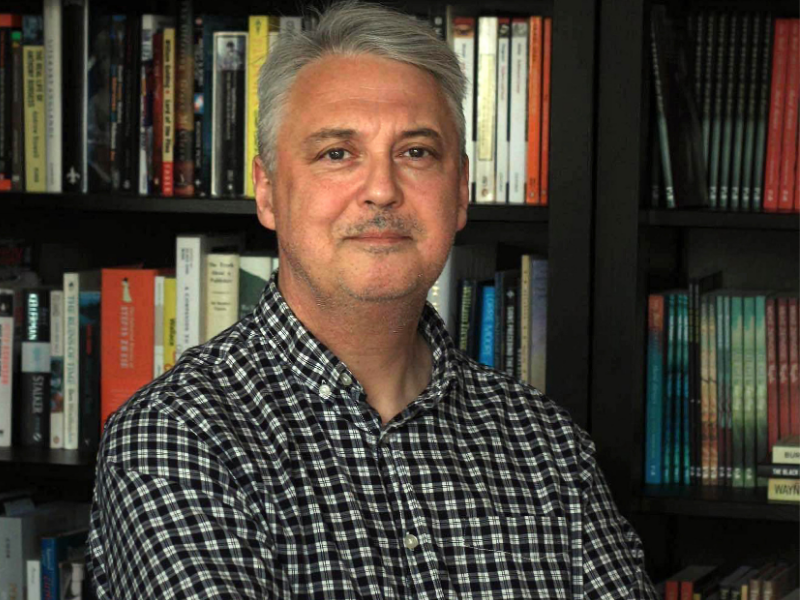
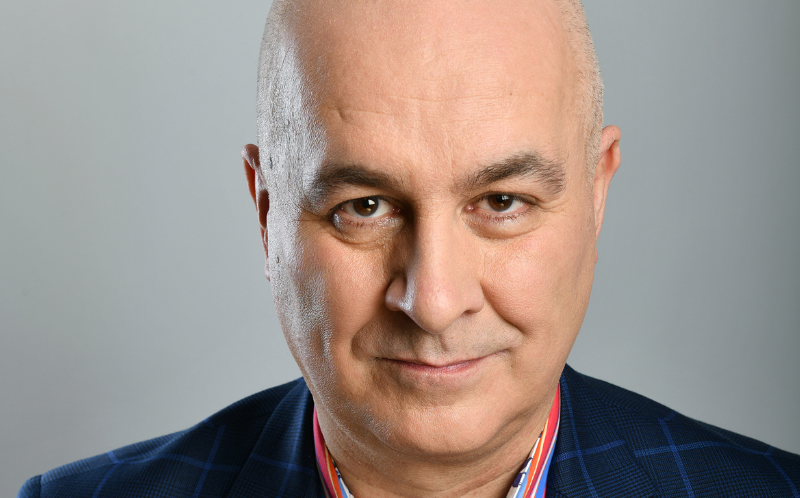
  • Iain Dale: ‘I know what politicians don’t want to be asked’

    Iain Dale: ‘I know what politicians don’t want to be asked’

    The LBC presenter on the art of the interview and his complicated relationship with David Cameron

    If you appear in the media, everyone imagines that you must be a complete extrovert. 

    Of course, even in an interview there is a little bit of ham-acting involved, particularly if you’re in television. But most radio and TV presenters have a shy side to them. Perhaps shy people tend to be a little bit more empathetic.

    Shyness is more common than you might think. I knew somebody who was a conservative parliamentary candidate who would literally throw up before every speech. But I don’t get nervous. Having said that, I recently interviewed former FBI director James Comey, and had little time to prepare. Thankfully, my approach to interviews is normally not to do a lot of preparation because I like to think of them as conversations – and the more preparation you do, the more stilted it is. I never have a list of questions, for example. I try to listen to what the answer is. If you have a list of questions, the temptation is just to go through them one by one and ask them. Well that’s fine, but it’s not very rewarding.

    We are all human beings, and this is what sometimes people forget about people in the media – or more to the point, politicians. We all have the same human reactions as everybody else. If an interviewer starts asking really aggressive questions right from the start., it’s no surprise that the politician puts the shutters up and thinks, “Well if you’re going to be like that, then I’m not going to give you anything.” There has to be a degree of mutual respect. 

    Interviewing prime ministers is interesting. In 2003, I was asked to write an article about who will be the ten people at the top of politics in ten years’ time. I remember writing in that article that David Cameron hadn’t really made a mark on parliament. The week after the article was published I sat next to him at a dinner. When I raised it, he said, “Yes, I did see it. I asked my staff to leave the room and I put my feet up on the table, and I just sat there for five minutes thinking: “He’s right. What have I achieved in two years in Parliament?”’ That was a brilliant way of defusing a potentially awkward social situation. 

    Later, when I was running for parliament he drove up in his Skoda to campaign with me and we had a brilliant day together. And when he was prime minister, I did three interviews with him. I was poacher turned gamekeeper, and understood where he was coming from. This is one of the advantages of having been involved in politics, and then moving into journalism and broadcasting. As an interviewer, I have an advantage over people who haven’t been involved in politics: I know how they think, and what they don’t want to be asked. 

    Boris Johnson wrote the foreword to my latest book. He said yes immediately and then of course COVID happened. I got in touch in July 2020, and told him I’d understand if he couldn’t do it, and that there was no need to write 20 pages or anything like that! And it came on time. 

    But it was interesting to see the reaction. Some people on social media said,  “I wanted to buy this book but I’m not buying it because you’ve got Boris Johnson in it.” I thought: “If Jeremy Corbyn had won the election I would have asked him!” 

    It’s quite difficult to come to a judgement on a prime minister who’s still in office. Boris’ reputation in history will depend on how quickly the country gets back on its feet and how many people are actually out of a job. But most prime ministers are known for one thing in history. He wanted to be known as the Prime Minister who ‘got Brexit done’. He has got it done. But I suspect he’ll be known as the Covid Prime Minister.

    I used to find it very difficult to interview people that I know well. Now I just go in for the kill. Brandon Lewis and David Davis, who are my two closest friends in Parliament, say that they find me the most difficult interviewer. They think it’s because I’m overcompensating for the fact that everybody knows that. I don’t think it is. I just get more out of people by having a conversation with them. 

    Iain Dale’s latest book is The Prime Ministers, £25 from Hodder and Stoughton

    Photo credit: Steve Ullathorne

  • Axel Scheffler: ‘Arts education in schools isn’t priority anymore’

    Axel Scheffler: ‘Arts education in schools isn’t priority anymore’

    The great illustrator talks to Iris Spark about his journey to success

    Fame has its peculiar pockets. The man I’m talking to could walk down any street unmolested and you wouldn’t recognise his voice, which comes in polite and clipped, but surprisingly thick, German. But his name is one of the most ubiquitous on the planet. You’d have to look to a certain former President, and his co-author Julia Donaldson to find someone with comparable name recognition. 

    At 63, Scheffler is best-known as the illustrator of The Gruffalo and its sequel The Gruffalo’s Child. The first alone has sold 13 million copies in 59 editions worldwide, and has been made into a film. It’s a favourite book of Michelle Obama – and just about every parent.

    Did his parents encourage him in his chosen career? At first, there was friction. “They weren’t artistic,” he explains. “My father was a businessman and my mother was a housewife. So yes, my father considered me a hopeless case when it came to anything to do with numbers and business. But they were fine in the end.”

    Did they know before they died how successful he’d been? “They saw the beginning of it, yes. The Gruffalo was beginning to be successful before they went.”

    Scheffler talks to me over Zoom from his studio in the house he shares with his wife and 13 year old daughter. I can see books ranged beyond him, and everything lit by an appealing skylight. 

    He looks the epitome of established success – and is. But Scheffler had to find his own way, independently from what his family expected of him. “I always liked drawing,” he recalls. “I could see I had friends who liked my drawings and made them smile – but it took me a while to see that this was my profession. At arts college I found that illustration was what I could do; I knew that by my late twenties.”

    What distinguishes Scheffler is the memorability of his illustrations. The illustration of the Gruffalo itself is a magnificently weird creation, full of an outlandish comedy which is only hinted at in Donaldson’s poem. The books simply wouldn’t exist as they are without Scheffler’s ability to delineate absurdity. 

    And yet they’re also essentially inclusive, creating the illusion that anyone might have a go. That makes him a wonderful person to come into schools and give talks (“If someone says to draw a cow or a dolphin or whatever, I can do that, I’ve been doing this a long time!”) but there’s a quiet professionalism beneath the humour. 

    How long does it take him to do a double-page spread? “If everything goes well, I will do it in a day and a half or two days but normally I’m not happy! It might depend how much detail I have to do. If there’s a sky or not, or whether I’m using watercolours with colour pencils on top, but a double spread in two days is possible. I hope my publishers won’t read this!”

    For a moment, I’m in his world – briefly aware of the technical skill involved. Is he a great gallery-goer? “I’m sad that there were a few exhibitions I wanted to see when corona came. I wanted them extended but I don’t think there’s a direct link to me.”

    I ask if he sees positives in the NHS art in the windows now. He is immediately enthusiastic: “I think it’s lovely – especially the chalk drawings on the pavement round here in Richmond. It’s very touching, something which has been around for so long – chalk on a pavement or a wall. It’s very nice and retro.”

    There’s a generosity about Scheffler – a love of children. He continues, almost wistfully. “I don’t know whether there are numbers on whether Covid-19 has made children more creative but it would be a good thing if that was the case. Arts education in school isn’t priority in this country anymore, and it’s good if children can create.”

    Scheffler’s seems such a one-off career that it seems hard to imagine how it could ever be repeated. But does he have any advice for the younger generation? “I would say it’s not always the first choice you make which is the right thing for you. The situation has changed for young people compared to what people grew up with in the mid-80s. This concept of a job for life is under question, and in some ways it’s harder now to do what I did. But hopefully there will still be authors and will be illustrators. My advice is to be open and try.”

    Photo credit: Martin Kraft

  • Hilary Leevers: engineering can provide ‘real fulfilment’

    Hilary Leevers: engineering can provide ‘real fulfilment’

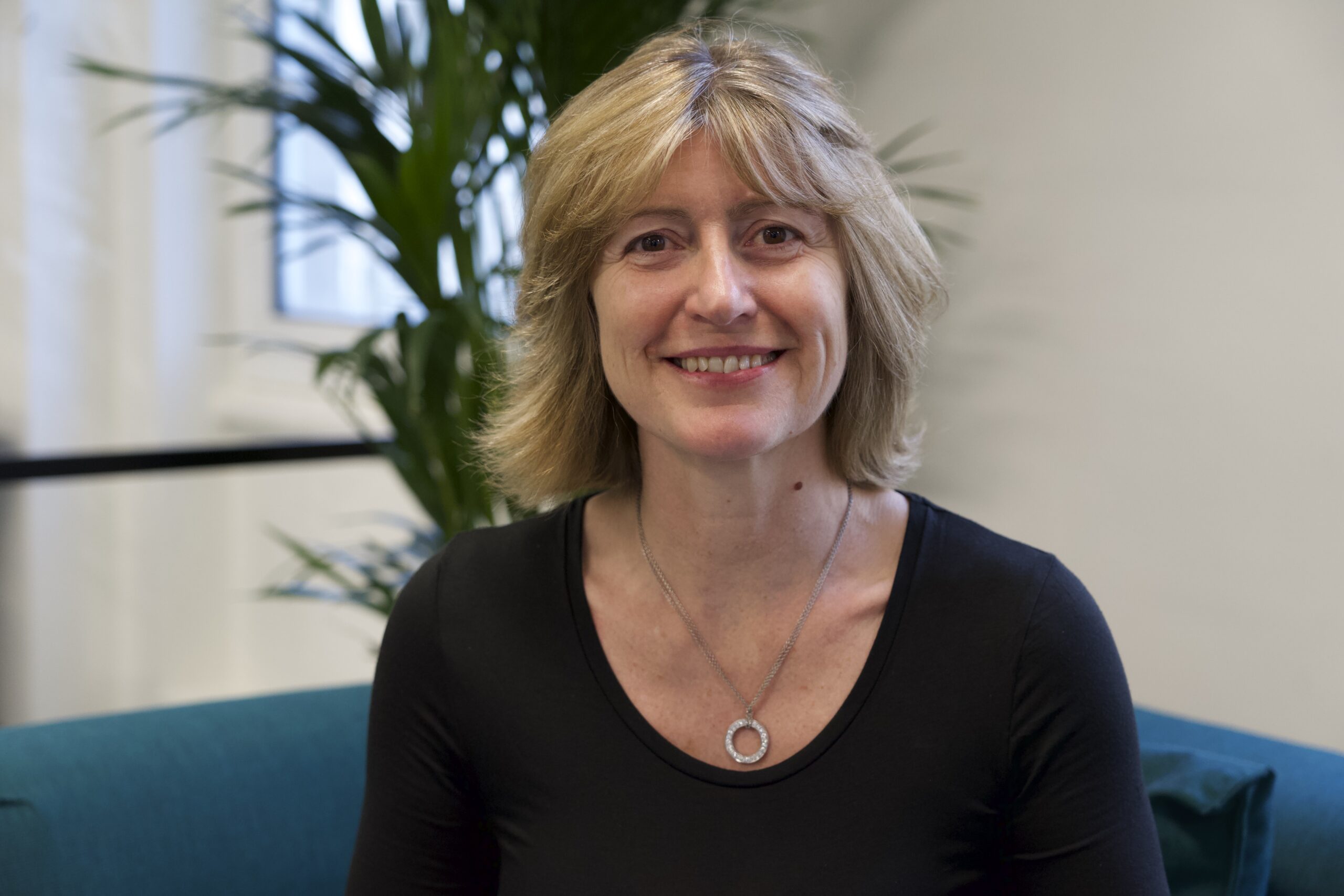
    Hilary Leevers, CEO of EngineeringUK  

    With lockdown and restrictions affecting everything from socialising to exams, there’s no denying that there is much that young people might be worrying about. The future feels uncertain too; a recent survey found that the majority of 11 to 19 year olds feel that the coronavirus pandemic will make finding a job or undertaking higher education more difficult. While it is important that young people remain realistic about the challenges facing them, I want them to feel that their dreams are worth pursuing. There are still amazing career opportunities out there, and ways to bring these aspirations to life.  

    When it comes to young peoples’ aspirations, it is fantastic that so many are focused on choosing careers that make a positive difference to the world. Nine out of ten young people want a career that tackles social issues, from addressing environmental issues to keeping people safe and well. We also know that factors such as job opportunity and security are really important too, especially at this time of change.  

    For many young people, the job security and real fulfilment they seek could be found in engineering. 

    The engineering industry is incredibly diverse, with exciting career opportunities in everything from space and energy to design and food, sport and entertainment to gaming and technology.  Engineers are at the forefront of shaping the world we live in, helping to solve our biggest challenges. From dealing with cyber security and minimising the impact of natural disasters to developing sustainable energy, food, housing and products – engineers help pave the way to a better future for everyone. 

    You can make flying more environmentally friendly as an aerospace engineer or drive the use of renewable energy as an electrical or energy engineer. Biomedical engineers develop life-saving equipment and chemical engineers can stop the spread of disease. While, as a manufacturing engineer you could develop new ways of creating medical products. Mechanical engineering could see you designing prosthetic limbs and you can support international development or disaster recovery as a civil or structural engineer. 

    Recently, the coronavirus crisis has shone a spotlight on the brilliant work of scientists, technicians and engineers responding to the needs of the nation. We’ve seen exceptional examples of engineering across essential services and infrastructure – from the design and delivery of thousands of ventilators to the building of NHS Nightingale field hospitals. In fact, over three quarters of young people said they recognised the importance of engineers to developing new ventilators, keeping people connected through the crisis and turning spaces like exhibitions centres into hospitals.  

    As an engineer it’s possible you can save far more lives than as a medic. This is a powerful message but one that sometimes gets lost in the stereotypes that many people still hold about what an engineer is, and what they do. 

    The beauty of engineering is that it is just so diverse – not just in the range of problems engineers solve but in the types of people and the pathways they take into the industry. You don’t have to be a mathematical genius or chemistry wizard to become an engineer. A good understanding of maths and science (especially physics) will stand you in great stead, but so will skills in computing, D&T, construction, electronics. At its heart, engineering is all about creativity, problem-solving, teamwork and curiosity.  

    Engineers come from all different backgrounds and have achieved success through very different routes into the industry, including through apprenticeships, vocational training and university degrees. Employers and organisations like EngineeringUK have responded to our current crisis by making sure that information, advice, guidance and engineering experiences are now available online and remotely. The industry has really stepped up to support young people to explore their future and potential as engineers, including by pledging to work together to make engineering careers accessible for this generation of young people. If there are upsides of our current coronavirus world, it is that for young people, accessing engineering experiences can be done at any time, from anywhere.  

    Skills that engineers acquire – such as problem-solving, teamwork, project management and numeracy – are sought after by employers in nearly every industry, meaning that engineers are highly employable and can easily transfer their skills to different areas. Even though the pandemic is seeing shifts in the engineering workforce, employers are still reporting skills gaps, so there remains significant demand for engineering skills, with fantastic earning potential at all levels. And with the government’s commitments to investing in infrastructure, construction and decarbornisation, and innovation, now and into the future, hundreds of thousands more engineers will be needed. 

    At a time when young people are unsure about their futures, it is so important that they can explore career options, plan ahead, and be motivated to study. Now’s not the time to give up or feel frustrated. It’s the time to explore, plan and access as much support as possible to lay the path towards a fulfilling and secure career.  

    My message is that, while there are challenges ahead, there are also amazing career opportunities – not least in the world of engineering. I truly believe the future is bright for young people. Their desire to pursue careers that make a difference will bring them fulfilment and continue to help the UK engineering sector soar. 

    Additional information:

    To support schools to access Covid-secure engineering resources and experiences, EngineeringUK recently launched Neon, a digital platform that gives teachers easy access to quality assured online and offline engineering outreach activities. For the first time, Neon brings together the UK’s engineering experiences and career resources in one place, bringing STEM careers to life. With the support of the engineering community, Neon empowers teachers with the tools they need to engage young people in a career in the engineering sector, which makes up nearly 20% of the workforce.  

  • Layla Moran on International Development: ‘It beggars belief that the government isn’t listening’

    Layla Moran on International Development: ‘It beggars belief that the government isn’t listening’

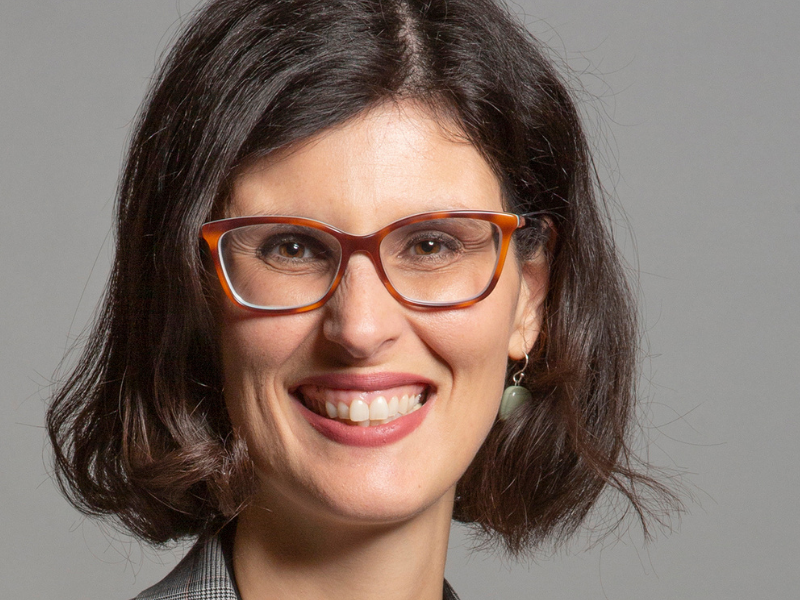
    Georgia Heneage

    When Boris Johnson decided to cut the Department for International Development (DfiD) in June of last year, his reasoning was, unsurprisingly, based on safeguarding British needs over others. He said that UK overseas aid “has been treated like a giant cashpoint in the sky, that arrives without any reference to UK interests”.

    Since Rishi Sunak’s heavy cuts to Yemen aid announced on Wednesday – a near 60% slash – the government’s insular approach towards international world affairs has once again been brought to the fore and prompted heavy criticism from ex PMs such as David Cameron.

    Neither instance of UK isolation are isolated events; they seem to be part of a wider pulling-back of responsibility from tackling the world’s issues. We saw this with the government’s cuts to foreign aid in January from 0.7% to 0.5%, and we’ve seen it with Brexit. On a philosophical plain, the right-wing, Britain-first rhetoric of Brexiteers seems to be in play here: that, over and above all else, our government should prioritise domestic needs over international ones.

    Layla Moran, Lib Dem Spokesman for Foreign Affairs and International Development, sees it differently. “Fundamental to Lib Dem values is that global problems need global solutions; just because someone else is somewhere else in the world doesn’t mean we don’t have a duty of care to them, especially if they are at risk of starvation,” she says. Moran sees the cut to Yemen aid as “an embarrassment” and hopes that the “sharp contrast between what we are doing and what the Americans are doing will serve to remind people of what Boris Johnson’s agenda actually is really about.”

    Moran says that the government’s approach towards international affairs has changed considerably since the time of the conservative coalition, when “there was a real sense at the time that all the parties were pulling together in the same direction”-which explains why three previous PMs have criticised Johnson for his approach to foreign aid. In its place, says Moran, has risen an “enlightened self-interest”, which stops the progression of economic migration and encourages others to bear the brunt of climate issues.

    “The Tories have reneged on their manifesto pledge. More importantly they’ve reneged on their promise to the world’s poorest, and I’m deeply concerned about the consequences of this,” Moran says.

    These narrowing interests have had a huge effect on the charity sector: according to NCVO’s UK Civil Society Almanac report in 2020, the proportion of charity income that comes from government was at its lowest point in a decade ahead of the coronavirus pandemic.

    The pandemic added fuel to the fire: a study last June showed that nearly half of UK charities for developing countries were set to close within 12 months following the first lockdown due to lack of financial support. The catch-22 has been that whilst 72% have seen increased demand due to the pressures of Covid on developing countries, 68% received absolutely no government funding at all.

    “We rely on Save the Children and other smaller charities for a lot of the work that we do,” says Moran. “They are now in a moment of crisis: the proportion of charities potentially going under is enormously high.

    “I’m seriously concerned about that: as soon as an organisation folds you lose that institutional knowledge. We really will struggle to get those links back up and reestablish the important role they play in both civil society in the UK and also abroad”.

    “That could be one of the unintended causalities of coronavirus. If smaller charities start to go under, then I think we’re in real trouble”. One answer, says Moran, may be to alter the charity model post-Covid. “It’s now time for charities to join their voices together; I think we need a coordinated response to raise public awareness”.

    As an MP of Palestinian descent- the very first, in fact- Moran says her background and life experiences have shaped her view of the part we must all play in helping those less lucky than us.

    “It does make you appreciate the world in a different way”, says Moran. “We were taught to appreciate everything we had- as a refugee, my mother had almost nothing growing up and she had to develop enormous resilience.” Moran still has family in Palestine who are living in segregated circumstances, and says it’s “heartbreaking” to hear the stories from back home.

    Her father’s job in the diplomatic service for the EU meant that Moran grew up living in war-torn countries like Ethiopia and Jordan. “Those very early memories were so important”, says Moran. “I remember when I was about five we were living in Ethiopia in the midst of its war with Eritrea. I was exposed to huge levels of poverty- literally on my doorstep- and constant military parades outside our house for months.

    “I remember asking my father why this was happening, and he explained to me that the dictator who ruled at the time wanted to exert his own power and chose to spend money on tanks over feeding starving people. It became a huge driving force on why I care so much about these issues.

    “You can talk about geopolitical shifts and you can speak philosophically and esoterically about world politics, but in the end it all comes down to real people. I keep those individuals in the front of my mind- that’s my motivation and everything else stems from there.”

    I point out to Moran that if an unintended causality of Covid-19 has been reduced attention to world issues, then a welcome one might be that it forces us recognise the importance of thinking laterally rather than locally. But she says the way the UK government has approached the vaccine roll-out has only served to highlight our innately “insular” nature: “We haven’t appreciated that no one is safe until everyone is safe. There are parts of the UK where 50% of people are vaccinated- which is an extraordinary achievement- but there are places in the world where not even a handful of health care workers have had the jab.

    “It’s important that we help to tackle the world’s problems together. It beggars belief that the government isn’t listening.”

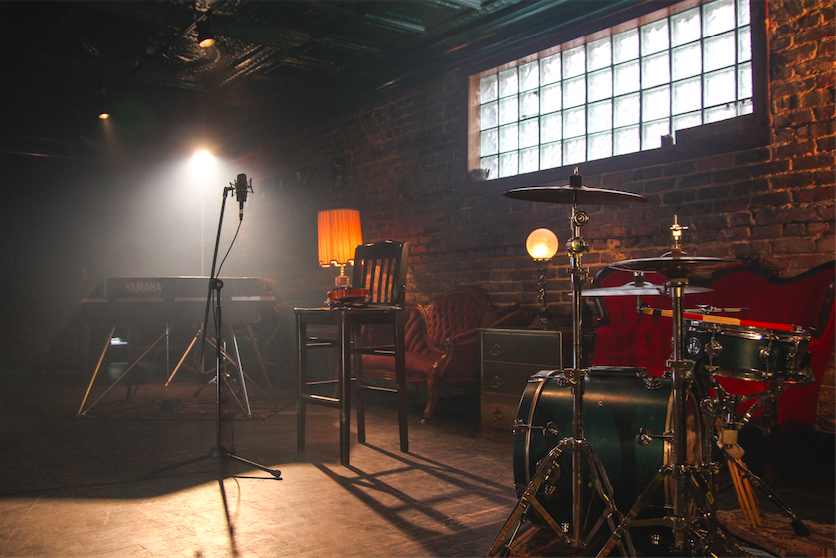
  • ‘A terrible limbo’: the quagmire the music industry is in

    ‘A terrible limbo’: the quagmire the music industry is in

    Georgia Heneage

    With Rishi Sunak’s announcement of the Budget comes a beacon of hope for the struggling arts and culture sector. In what he calls “a historic package”, Sunak has pledged a £400 million bonus to help keep afloat gigs, theatres and galleries and his Covid Recovery Fund, which has so far supported over 3,000 organisations, will be increased to £1.87 billion.

    “This industry is a significant driver of economic activity, employing more than 700,000 people in jobs across the UK”, says Sunak. “I am committed to ensuring the arts are equipped to captivate audiences in the months and years to come.”

    The Chancellor’s words are music to sore ears; an industry which is financially reliant on live events, the music sector has been hard hit by the pandemic. The sector generates £5.2bn a year for the economy, £2.7bn in exports and sustains 210,000 jobs.

    But eight in every ten pounds of the average musician’s income comes from live performances; recording revenues have drastically dwindled in the digital age. Musicians receive next to nothing from Spotify plays, and live gigs and festivals have provided the backbone of their income over the past decade.

    Even before the pandemic, the industry was under close inspection by the government because of the poor financial model used by streaming services like Spotify. A poll by Musicians’ Union last year found that eight out of ten musicians (82%) earn less than £200 each year from online streaming: 92% said streaming made up less than 5% of their yearly salary and half that their income from recorded music had declined over the past decade. Sunak’s financial offering pales in comparison to the huge deficit which faces thousands of struggling musicians, venues and organisations.

    With such a small fraction of money made from streaming and a greater financial emphasis on live performance, it is no wonder that musicians have suffered over the past year. There’s a glint of hope for live performers in the rapid vaccine roll-out but it will take decades for the industry to recover from the covid shock. There’s been little to no activity in the music industry since the first lockdown in March, apart from a select few big names at well-established records labels, like Laura Marling or Dua Lipa.

    As usual, the hardest hit have been the least known. This has halted the emergence of new talent – the veins of the UKs globally-renowned music scene – many of whom are scouted in-person at gigs. In an NME interview, co-founder of indie label Speedy Wunderground said that “it’s a very difficult time to be a musician” because the pandemic has meant that there will be a backlog of talent “blocking the road”, and Brexit will likely impact touring Europe.

    With most live events set to reopen in May and return to full capacity in June, and given financial fuel by Sunak, the future is looking brighter for musicians. Like other art forms, could it have impacted the industry in a positive way? Has it been a catalyst for change?

    Booking Agent Phil Simpson had 200 shows cancelled in 2020

    For Phil Simpson, a Booking Agent who pre-pandemic coordinated the entire live careers for musicians – including booking tours and festival appearances – the pandemic has been “really difficult”.

    “With booking I’m always thinking 12 months ahead, and the way I make money is that I take a commission from what the band earns at a live event. So obviously if the gig doesn’t happen and the band doesn’t get paid, then I don’t get paid,” says Simpson.

    “That’s why this year has been so hard. I had almost 200 shows booked for 2020, and when everything first kicked off we moved the shows to autumn, which was a massive process. As things got worse we had to move them again and again. In some instances we moved shows 3 or 4 times.” Simpson says they’ve been stuck in a “terrible limbo” where old shows haven’t happened, but they’ve done all the work for them, and new shows haven’t been able to happen. Most venues don’t have availability until spring next year.

    Because he was seeing such a shortfall of income, Simpson decided to step away from his company and go back to being an independent agent. “We are seeing that a lot in the industry at the moment,” he says. “All the bigger companies are having to make redundancies and branch off into smaller outlets, just to keep overhead down and be agile.”

    The pandemic, and his frustration, shifted Simpson’s career in other ways: he wrote a book on his experiences being a Booking Agent, started mentoring and teaching music. “We’ve all been doing everything we can to diversify our work lives and keep the trickle of income coming in,” he says.

    Some of his friends in the wider business of professional music have had to go back into other employment and take on part time jobs. “Some”, says Simpson, “have even given up professional music altogether. I’m lucky that most of my clients are quite well established so that they can find other means to make money like selling CDs or merchandise”.

    The effect of the pandemic on musicians has not been exclusively financial. “Musicians are particularly susceptible to mental health issues,” Simpson tells me, “because the highs are high, and the lows are very low”.

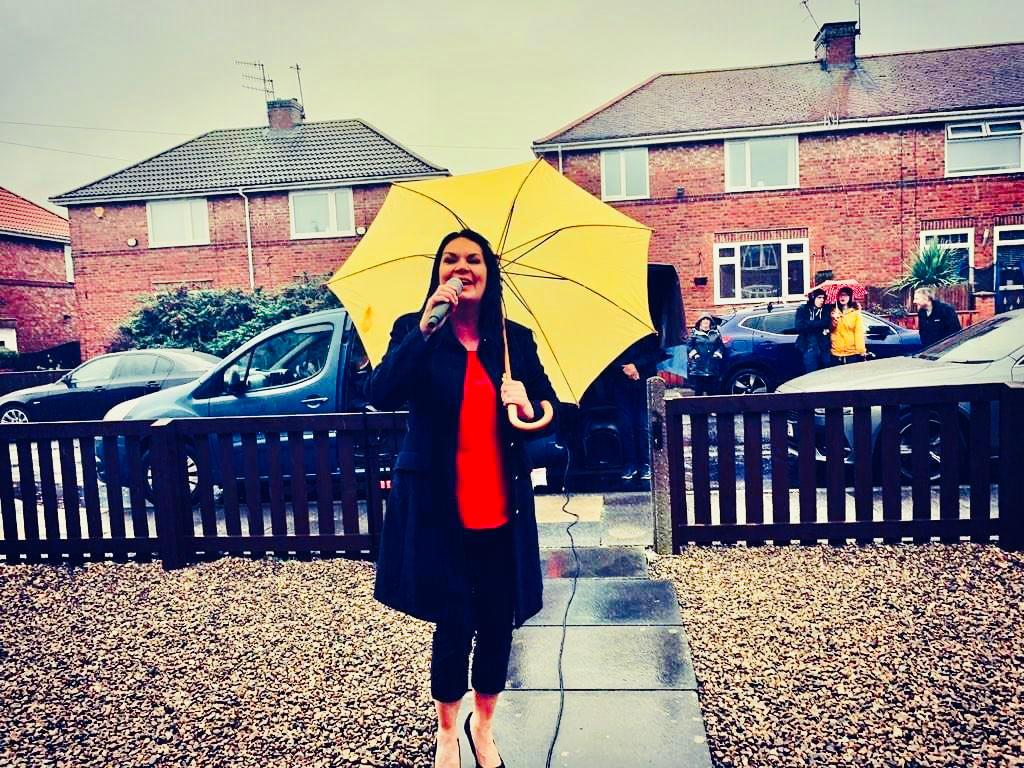
    “It was a really worrying time”: over lockdown, Newcastle musician Anna Reay started doing door-step performances

    And the catch-22 is that the quagmire which the industry is in predominantly effects younger, lesser known artists who are just starting to emerge onto the scene: Simpson says that going forward, the event organisers will be looking for artists who will guarantee them tickets. The unwillingness to take risks will result in younger artists getting less of a chance than their older, better established peers.

    As one of those lesser known artists, the pandemic brought huge challenges for Anna Reay. A singer from Newcastle, before lockdown Reay sang at big weddings and corporate events, and had just got a big contract with a cruise liner.

    “It was a really worrying time”, she says. “Being a single parent my main income is music. The first couple of weeks were just horrific. I cried every day.”

    Once she decided to move back in with her parents and share the homeschooling load, things started to turn around for Reay. “Singing is like a kind of therapy for me, so I started to come up with new ideas just to keep me sane”.

    From this sprung an ingenious idea which became hugely popular and has kept her career going since: virtual singing Anagrams. Reay began recording a song every Thursday to coincide with the clap for carers: kids, adults, artists and businesses began sending in videos and photos every week which documented their lockdown activities, which Reay then turned into videos which she shared on social media. She soon got a following, and started to get requests to sing songs for birthdays, cancelled weddings, cancelled parties and postponed events.

    At the same time, Reay did doorstep performances – her mic powered by a car generator and with Covid-safety checks in place like ‘keep your distance signs’. For her first ever performance Reay sang for a family who’d just lost a young girl to a rare disease.

    “To be honest I’ve never been so busy. I’ve even managed to get a mortgage from it,” says Reay.

    “It all just fell into place for me, I think because I panicked and my creative survival kicked in. Every business has had to diversify. So I thought, ‘If they can do it, why can’t we?’”

    As Reay says, she’s been “lucky” that she’s been able to “pivot” her business and adapt to the pandemic. Others haven’t. “I’ve seen musicians that have decided to hang their microphones up. It really saddens me how much everything has changed.”

  • Laurence Fox on wokeism, education, and running to be London mayor

    Laurence Fox on wokeism, education, and running to be London mayor

    As part of our series focusing on candidates for the London mayoral elections, Emily Prescott speaks to the former actor about his ambitions to change education and jobs in London

    Laurence Fox hates confrontation. This may not be immediately obvious if you’ve seen the footage of the actor metamorphosing into a political brand on Question Time while accusing an audience member of racism after she called him a “white privileged male”. But he tells me although he is morally opposed to wearing “face nappies” to prevent the spread of coronavirus, he occasionally acquiesces — just to avoid arguments on the tube.  Besides, as he is getting a lot of attention for setting up his political party, Reclaim, and running for London mayor, masks make for a good disguise.

    When I walk into Reclaim’s office in London Victoria, Fox is finishing off his lunchtime plate of chips and his son is sitting at a laptop in the corner. Fox apologises, explaining his son isn’t allowed into school as he is supposed to be isolating. 

    Fox, 42, shares an office with one of the few right-wing comedians, Leo Kearse, who helps Reclaim with social media and Stephanie Kowalski, his executive assistant, who he met after she messaged Reclaim’s website. They seem to get on well with Fox, Steph’s only complaint is that he overshares and so people take advantage of him. They are part of a core team of three, which sometimes becomes twelve, making up his new Reclaim party. That’s excluding the people who have already been fired. 

    The internal recruitment hiccups seem unsurprising given the divisive nature of Fox’s work. His party has been characterised as ‘UKIP for culture’. Curiously, on the weekend that former UKIP leader Nigel Farage announced he was stepping back from politics, Fox announced he was stepping up and running for London Mayor. Fox doesn’t entirely reject their similarities but stresses that, unlike Farage he’s not focused on immigration. Fox, who voted for Jeremy Corbyn in 2017, says he would encourage a policy of “assimilation.” “I’m not like out on the Channel with a boat saying ‘go home’. Not my vibe,” he adds. 

    So, what is his vibe? He says he hates the lockdown rules as they stand in opposition to his love of freedom. “They’re ruling us and I don’t want to be f**king ruled,” he tells me like a rebellious adolescent. I start to think of him as the Right’s Russell Brand. The comedian who, while learning about politics in the glare of the public eye in 2015, briefly attempted to start a revolution by suggesting people shouldn’t vote.  But unlike Brand, Fox isn’t just words, he’s extremely proactive — and his message is clearly resonating. More than 30,000 people have already signed up to Reclaim and businessman Jeremy Hosking has donated £5million to the party and is bankrolling Fox’s run for mayor. 

    I wonder then, is he more akin to Boris Johnson who served as London mayor en route to Number 10? But aside from their well-to-do backgrounds and passionate patriotism, they have very little in common. Boris plays the class clown while trying to advance his own career, whereas Fox tries to be a serious politician, to the detriment of his (former) career.  Also, unlike Johnson, Fox doesn’t seem to care for an Oxbridge following. Fox doesn’t infuse sentences with classical allusions and he is quick to tell me about his contempt for cyclists. Critically, Fox is a far more ardent libertarian when it comes to lockdown.  

    Fox is particularly concerned about the impact of lockdown on jobs and the economy and is focusing his mayoral campaign around this issue. He says: “We did polling and found out that 75% of people are worried that local small businesses are going to close.” 

    “It’s costing over £1billion a day which is crap, 50,000 lost jobs on Oxford Street, 700,000 jobs lost nationwide. I think it’s really sad but I think more importantly, people need to get out and be together and have fun again and remember what it’s like to be alive,” he sighs. 

    He also says children should have never been taken out of schools. On education more generally, Fox, who was ultimately expelled from Harrow for having sex at the sixth-form ball, hopes to raise the quality of all state schools across the country and doesn’t think much of private schools. But on this policy area, he is more attitude than detail. “I hate paying private school fees for my children. If it was my choice, I wouldn’t be doing it because I just think it’s a waste of money,” he says of his two sons, from his tumultuous relationship with actor ex-wife Billie Piper. “What’s the point in spending money so you can teach them all to be posh and hang around with other elite parents? Boring.”

     Although he doesn’t know specifically how to improve all state schools, he is happy to delegate to the experts and he says, “I’m just fairly logical. So just go, what’s the logical solution to this problem?”  

    One thing he is sure about is that calls to decolonise the curriculum are problematic. Advocates of decolonisation want to interrogate the historical cannon and include a wider range of perspectives. But Fox says, if anything, we “need to recolonise the curriculum” so there is a greater emphasis on British history. “Rather than being taught to look at history through a lens of race or gender, they should probably be taught to look at history through a lens of identity and home,” he explains.  

    He believes firmly in a culture war and the ultimate aim of Reclaim, he says, is just to shift the “Overton window” — the range of ideas that voters find acceptable. “We live in a kind of two tier system in this country ‘the morally superior’ and the ‘deplorables’,” he says he represents the latter.  I wonder how he takes the temperature of the nation and how he plans on measuring the movement of the window.
     
    He doesn’t have Facebook, which I suggest might be a better way to reach potential followers, but he says: “Twatter feed gets looked at quite frequently.” He knows it’s an “utter sewer of a place” and while he used to get offended by the comments when he first joined the platform in 2009, he insists now they don’t upset him. Ironically, it was fellow Lewis actor Rebecca Front who encouraged him to sign up, though they have since had a very public falling out on the site. 
     
    Fox blames social media for the rise of what he calls “wokeism” and he says he pities the “very serious and pious” generation who are growing up in the digital age. He also says there’s an awful lot of “virtue signalling” on the site. He references actor Ralf Little who denounced Fox on Twitter but was quiet when Fox threatened to expose some “horrendous” stories. He says he has had quite a few “showbiz people” criticise him on Twitter and then privately message an apology saying, “that’s the way the game works”. Indeed, since launching his political career, his acting agent has dropped him.  

    As a member of the “Fox Acting Dynasty” – including agent Robin, his sons Edward, James, Robert, and next generation actors Emilia, Freddie, and Jack – Laurence is not an outlier. He comes from a long line of entertaining and divisive eccentrics. In 2016 for instance, Edward told The Daily Mail: “Manhood is up against it now, because they’re not being asked to be proper men… Men are more animalistic than these metropolitan, so-called ‘civilised’, ‘good’ people.” 

    Laurence Fox tells me he was raised in a matriarchy. “I didn’t even know about the patriarchy until about three years ago. I didn’t even know there was a tyrannical patriarchy,” he shrugs.  He certainly doesn’t think it is something he has benefitted from: ”Yeah, there’s a lot privileges that females get, there’s definitely some male privileges as well. I think overall, we’re equal.” 

    When I dare to ask him the naughtiest thing he’s ever done he cites his respectful attitude towards women: “You know how some of these people get into power and then you suddenly find out that they’re a bit handsy with women. I’m so grateful now I’m working in the political arena that I’ve never been that way inclined.” He suggests the naughtiest thing is probably drugs, although he doesn’t think they are that bad, either that or punching a photographer. 

    Fox is used to being scolded by the media for his rebellious behaviour but setting up Reclaim and launching a bid for mayor has led to a constant onslaught of what he perceives to be unfair criticism. Before we met, he had an interview with The Times’s Andrew Billen. Fox bet me £100 that Billen would paint him as a suicidal divorcee just looking for a reason to live or an Oswald Mosley type.  He also says Billen pointed to the way he disciplined Blaze the Labrador and Sparky the Jack Russell to suggest he might be an angry man. Indeed, Billen writes that while speaking to Fox, images of the facist popped into his head.


    Fox doesn’t seem to be motivated by a thirst for power, rather he is driven by a sense of victimhood and it seems feelings of love rather than feelings of anger. “We live in the free-est most tolerant, progressive society on earth and everybody has renounced that,” he says. His anti-COVID-regulation views come from a place of love. “A mate of mine died in a hospital, choked on her vomit because no one put a f***ing heart rate monitor on her finger.” While he doesn’t blame the NHS for her death, he says there are more important health issues than coronavirus. 
     
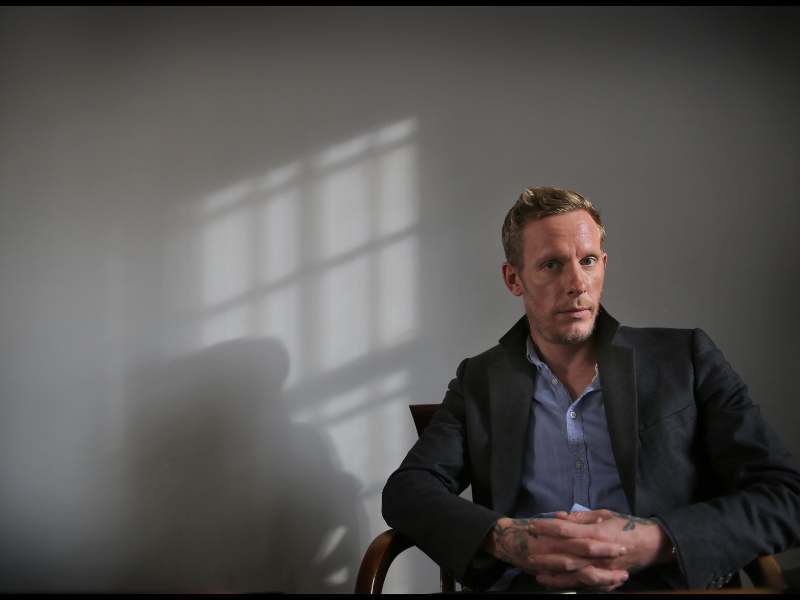
    Indeed, love is inked over his body. On his hand, he has a rose “because I am sometimes quite animated with my hands as you can probably see when I’m waving my hands so it’s to say there is love behind it.” He has a tattoo commemorating his two boys. Throughout the interview he keeps telling the potentially contagious yet very well behaved son that he loves him. Fox also has a cover-up of a wedding tattoo, as well as his mum’s maiden name which was Piper, “awkward”. 

    His mum died in April and he shows me a dove of peace on his arm which symbolises her going to heaven. The words on his hands are an ode to his mum’s favourite expression: “I just want freedom and space”. I felt for his loss. “No, don’t worry about it, it’s not your fault,” he says. 

    It’s been a challenging year for Fox, he’s lost his mum and his acting career and has had so many death threats, he now has a bodyguard. ”Sometimes I wake up and think when is one of these days going to be like, chilled,” he sighs. Entrance into the political arena may be taking its toll and despite his previous protestations, he seems to have an almost masochistic taste for confrontation. 

    The “chilled” days aren’t going to happen particularly soon as the battle for London Mayor is going to be tough. But he tells me he’s not worried about the “other two”. “Sadiq Khan is Boris’s stooge isn’t he? Because he’s with Boris, he’s like, more lockdowns, longer, and I don’t know what the Conservative dude is on about except doing even more controversial Tweets than I do.” What about the Green’s Sian Berry, I ask? “Who’s Sian Berry?” he says.

    I wrap up the interview and he opens the door for me, “I guess this is toxic masculinity,” he says with a friendly wink. He is sardonic and charismatic, and from the perspective of an interviewer, his candour is refreshing. He is a lifelong entertainer and so it is easy to see him as the joke candidate. But Count Binface he is not. 

    His defenders would point to the need for plain-speaking in a society where ‘wokeism’ is on the rise but for many he has crossed a dangerous line, both in the manner of his speech, and in his attitude to public health. Now Fox is really throwing his hat into the political ring, he will rightly face more scrutiny than ever before.

    Photo credit: Martin Pope
  • The Poet at Work III: Christopher Hamilton-Emery

    The Poet at Work III: Christopher Hamilton-Emery

    Continuing our regular series, we spoke to former Salt director Christopher Hamilton-Emery about juggling life as a publisher, with his work as a poet.

    Christopher Hamilton-Emery was born in Manchester in 1963. He studied sculpture, painting and printmaking at Manchester College of Art and Design before taking a degree in graphics at Leeds Polytechnic, graduating in 1986. Emery has published three collections of poetry, as well as a writer’s guide, an anthology of art and poems, and pocket editions of Emily Brontë, Keats and Rossetti. His work has been widely published in magazines and anthologised. He lives in Cromer, North Norfolk, with his wife and children.

    Until recently, Hamilton-Emery was the director of Salt Publishing, and there is a sense in which he has given so much of his time to other authors – Luke Kennard, Xan Brooks and Sian Hughes are among those who much to thank him for – that his own work may be somewhat underestimated. Recently he left his role at Salt to start a new role as Director of Operations at Shrine of Our Lady of Walsingham in Norfolk.

    For Finito World, Hamilton-Emery has written a remarkable poem ‘And Then We’. By telling details we are transported to another time and place – a world of ‘bound flax sail cloth’, ‘would dyed with kermis’ and a ‘tangled feast of eels’. This poem asks us to wonder what deeper meaning our work has and it demands that we imagine our way back into the shared past. It could only have been written by a poet with a profound sense of meaning, and moral duty. It shows a poet at the top of his form, whose strength is to have found a new lease of life in his work.

    As ever, we print an interview with the poet after the poem itself.

    And Then We

    And then we embraced, sprawling on the green deck like scattered gulls.

    And then we knelt under bound flax sail cloth, stinking and making the day.

    And then we carried whom could not stand to the red chapel blithely.

    And then we walked through your pristine marsh without hours or love or trees.

    And then we drew about us buckram cloth and wool dyed with kermes and slept.

    And then we pierced cockleshells and yearned for a tangled feast of eels.

    And then we walked by sordid wolves and boars in corporal torment.

    And then we met with hirsute leather brigands and were lost.

    And then we starved, Lord, and knew concupiscence, gnawing your works.

    And then we heralded salt wind, seal routes and spectres and walked dully on.

    And then we saw your slipper chapel and spread our toes on a mile of stones.

    And then we wept. At the ruin of our bodies we wept. At our just ruin.

    And then we dressed and swayed, all the same, through the unifying street in a love queue.

    And then we bent and entered Nazareth to see her and to know her choice.

    And then we knew a high permanent land, our eyes fixed on accommodating angels.

    And then we fell in stone-sealed Walsingham, with our fiat ringing, unanchored, teeming.

    And then we left to see ice oak burials, flame drift farms, our backwards night talk blazing.

    And then we sailed on, working new bones, each a prayer to the star of the sea.

    Interview

    You’re rare in that you’ve managed to be both a high-functioning poet and businessman – two skills that don’t always go together in the same person! What is the relationship between poetry and work like for you? Is it antagonistic or fruitful?

    At one level work simply pays for my writing life, or at least the space to have a writing life, though this wasn’t always the case. I was an editor at Salt for over twenty years, and that was complex and at times bad for my writing. It left no room; though I didn’t realise this when I started out in 1999. Of course, I came to choose to give up a large part of my life to my authors – thousands of them over the years – but the sacrifice, if we can call it that, came to swallow up almost all of my life. There was a lot of collision between my sense of myself as a writer and my publishing activities, yet I came to be wholly subsumed into the publishing role. The switch back to being employed elsewhere has been liberating, and I’ve been able to separate out my business life from my writing life and, more broadly, my private life. I mean, I actually have a private life now! I’m only eighteen months into this new operational role but going back to being a general manager has been very rewarding. I’m fortunate to have a great boss and wonderful colleagues and the move into the Church has been personally enriching for me. So certainly very fruitful, and not antagonistic at all. In fact, I’ve never written so much. I’ve always believed that I needed to be in the world of business, I didn’t want to teach, I didn’t want to live through grants or patronage, I wanted to do something commercial and, don’t get me wrong, for years I enjoyed my private sector life. But everything comes to an end. All endings are beginnings.

    You decided to step back a bit from Salt in order to work for The Shrine of Our Lady of Walsingham. Can you talk us through your decision to move careers?

    I’ve touched on this earlier. However, the decision to leave Salt and move to work for a Shrine wasn’t prompted by some calculated sense of balancing my writing life. I was going through a profound personal realignment. I’d lived a successful and content secular life for forty years, I had a rather dim view of religion, when suddenly I was dislodged from my own convictions. This was in part a process of disbelief, disbelief in secular satisfactions. I came to doubt the limitations of my own world view. I also realised, and had in my own writings, the limits of science in dealing with human experience, I used to consider how we cannot live in a world without mystery, but I didn’t know quite what this phrase meant. As I was travelling through this accommodation of my past – I’m a cradle Catholic – within a matter of weeks, I was interviewed and employed by the Shrine. I shan’t bore you with the personal narrative and experiences that fed into this, but it was the right decision for me and, after two decades of publishing and running my own business, I decided to serve Christ.

    The government has recently said that poetry should be optional at the GCSE level – a significant demotion in its importance on the curriculum. What is your view on that and what do you feel the impact will be?

    Whether poetry is inherently part of a curriculum or not, it will survive as an art form, so I don’t worry about its relationship to fiction or drama in the framework of syllabus development. I don’t worry about poetry in terms of its share of the education establishment. But there’s a wider context to this and that’s the way kids come into contact with poetry, or orchestral music, or ballet, or opera, or theatre. In this sense, education is the gateway, the space that gives permission to children, and in this context there’s a political and egalitarian component to this debate around poetry. The children of middleclass parents, those enjoying private education, the rich, are afforded more opportunities for this kind of assimilation into culture, and without the rebalancing of access within state education, we end up with a form of cultural apartheid. I hope this makes some kind of sense – it’s not the qualifications or curriculum, it’s the introduction, the initiation to this cultural capital that I find disturbing. I also recognise that poetry is a pain in the arse, yet it’s meant to be awkward, tricksy, resistant to authority, dissonant – things that are hard to teach and accommodate, things that can’t easily be measured or controlled. Poetry provides a critical citizenship and, I think, helps form the unity of the person and offers a living communion today and indeed through history.

    Was there a particular teacher when you were younger who turned you onto poetry?

    If memory serves, Mr Deacon, a supply teacher or trainee English teacher at my grammar school in Manchester, who was so exasperated with the boys not paying attention to some prticular text he threw his book through a window, smashing it. The headmaster promptly turned up and invited him to step out of the classroom for a private word. This singular act made me realise that something could have so much meaning to someone that they would physically act upon it. It was the perfect illustration of genuine literary passion and it set me off on the lifelong task of trying to create beauty and rapture. Or, not getting ahead of myself, at the very least, poignancy. Anyway, I do hope Mr Deacon survived his spell at St Peter’s and went on to do great things in teaching.

    What’s your favourite poem(s) about the workplace?

    Naturally, Larkin springs to mind, though his signal contribution is rather around the comedy of drudgery – and the progress of working life to its eschatological conclusion. Working life needn’t be quite so dreary! Most of us meet our spouses in this space. Most of find friends through work. A few of us find meaning in it. Elizabeth Bishop’s ‘Filling Station’ recovers the tiny spiritual attendances of working life. Plath’s ‘The Applicant’ is a terrific feminist retort to Hughes’ ‘Secretary’. Gary Snyder, Philip Levine great on work.

  • What the Sturgeon-Salmond Affair has to teach

    What the Sturgeon-Salmond Affair has to teach

    Alice Wright

    One of the most remarkable things about the Salmond v Sturgeon split is that these two warring enemies were once close friends. Sturgeon told the Holyrood committee yesterday that “Alex Salmond has been for most of my life — since I was about 20, 21 years old — not just a very close political colleague,” but also “a friend, someone in my younger days who I looked up to and revered.” 

    The duo dominated Scottish politics for over a decade and brought Scottish independence from a fringe movement to the forefront of the devolved parliament. Now their field of gold is strewn with accusations of “conspiracies” and calls for resignation. 

    Yet, after yesterday’s commanding performance it does not seem that Sturgeon will be stepping down. The Scottish Tories also seem to have jumped the gun in calling for a vote of no confidence. This, of course, may change if Sturgeon is found to have directly broken the ministerial code by misleading parliament about when she first learned of the allegations against Salmond. That investigation is still ongoing. 

    Accusations of sexual harassment and bullying in the workplaces of our highest offices and institutions continue to come to the fore. Bullying allegations against the Duchess of Sussex have this week emerged from Kensington Palace, and again, only an inquiry will bring the true story to light.  Meanwhile, infighting has been a regular feature of the Johnson administration.

    Now an entire political movement is becoming defined by a rift in its former and current leadership that shows no signs of healing anytime soon. The questions at the centre of the case are about who, if anybody, has failed in their role as a leader.

    There are lessons in the saga for our own work lives. In the first place, we’re reminded of the great importance of trust in our careers. Here, played out for us in Holyrood, is the sense of grief that attends the breakup of friendship. It is a reminder of how much can be preserved by going into business with the right people – but also how hard it can be to tell who those people are in advance. ‘There is no art/to find the mind’s construction in the face,’ as Shakespeare has it in Macbeth.

    Sturgeon’s dignified appearance too was also a reminder that we must be careful not to rush to conclusions until we have heard all sides of a story. For years now, agree with her or not, Sturgeon has been the best player on the pitch in British politics. There is much to be learned from her presentational style: with the world watching her, she expressed herself relieved to be telling her side of things.

    But we’re also reminded of the secondary nature of gossip. For years there have been questions about how Scottish independence would work economically, and recent economic data – showing that the country has underperformed relative to the rest of the UK – has certainly added to the sense that the Scottish economy would struggle if the country were to strike out on its own.

    The nation’s finances remains worryingly tethered to the world’s oil price, and its growth has been sluggish. In that sense yesterday was a sideshow which didn’t change the fundamental questions the independence movement has to answer.

    Whether or not the vote of no confidence passes, or Sturgeon resigns – neither looking likely at the moment – there may well be a considerable drop in public trust for the country’s leadership and this will likely dent support for independence. A reputation, so the saying goes, can take 20 years to build but can be destroyed in just five minutes. 

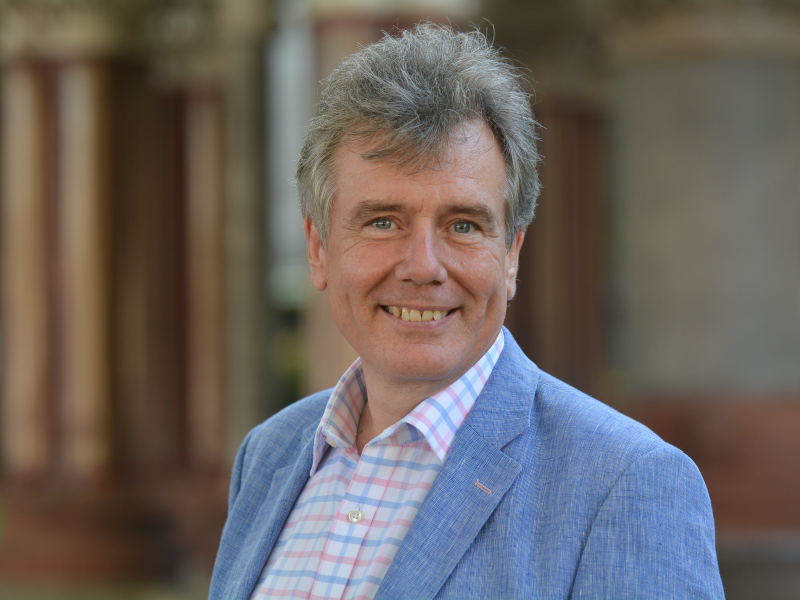
  • Neil Carmichael: now is the time for business to ‘step up’ on behalf of young people

    Neil Carmichael: now is the time for business to ‘step up’ on behalf of young people

    Neil Carmichael


    Sustainable learning is a must have in a world battered by COVID19, where uncertainties are the norm; technology drives exponential change; society and the economy have become increasingly atomised in nature; and, international relationships are, increasingly, tense and mercantile. 

    “Sustainable” is a much-used word, sometimes with values implied or attached, but longevity, durability and resilience all included. For education, it is all about laying foundations, learning to learn, ‘making well-considered choices’, proactive learning, combining knowledge with skills and being responsive to new situations. In short, sustainable learning is a linear process, starting from as early as possible and morphing into lifelong learning with embedded and evolving skills always being at the individual’s disposal. 

    Sustainable learning today must reflect the new world – even if parts of it are inclined to go backwards – because nations are interconnected. Of course, an interconnected world does not mean everybody is connected; in England, the levels of social deprivation in some regions and within many cities are shocking and usually reflect poor economic productivity. True sustainable learning would help to tackle poverty and many of its causes.  

    Another facet of today’s world is the twin need for individuals to be ‘work ready’ and, by extension, adaptable. Business and professional organisations occasionally complain about the lack of work readiness of candidates for employment, often citing the absence of communication skills, limited ability to be creative and low levels of motivation as causes for concern.  

    There is a combination of underlying causes of the disconnect between students leaving education and the job market. The narrowness of the curriculum is often debated within this context with the funnelling down to three or four often comparable ‘A’ Levels being a common source of concern, often exacerbated by the impact of ‘unintended consequences’ as schools, fighting for position in league tables, might encourage the university route rather than vocational and training courses.  

    The lack of work experience or even familiarity with the options available hamper the student when making subject selections. The scarcity of consistent and properly resourced careers advice is notorious and, so far, not adequately addressed. This is where business must step in. 

    This author has visited the Porsche car factory in Lower Saxony. It occupies a site once used for producing huge pump engines for the Soviet Union but today there is an air of efficiency, productivity and modernity. One of the keys to the success of this factory and, indeed, the business, is the relentless focus on the importance of the employee; so much so, schools, colleges and universities are part of the supply chain. This is an example to emulate because it demonstrates the role employers must take in delivering sustainable learning. 

    Sustainable learning helps to provide the individual with the tools to develop his or her career. Knowledge is necessary but it is not sufficient; being able to apply knowledge depends on skills and these are honed both in formal learning settings but also by practice and example. We must do all we can to create the framework for young people to climb towards their goals. 

    Neil Carmichael was Member of Parliament for Stroud (2010-17), serving on the Education Select Committee throughout period and latterly as Chair, and took the Antarctic Act 2013 through Parliament. He was chair of the Pearson UK Commission on Sustainable Learning for Work, Life and a Changing Economy.  

  • Sharon Pindar: Why literacy issues matter more than ever in the age of Covid-19

    Sharon Pindar: Why literacy issues matter more than ever in the age of Covid-19

    Sharon Pindar

    As children prepare to return to school once more, the phrase ‘education recovery’ is high on the agenda. There is no doubt that children have missed out on every dimension of their education, and despite schools’ and parents’ best efforts, home schooling simply can’t replicate the classroom experience. Government is now grappling with the impact of this missed learning in years to come, potentially affecting employability prospects for a generation.

    After the lockdown in 2020, Ofsted reported that primary teachers noted children’s reading skills and confidence were particularly badly affected. However the most alarming findings showed that it was the more disadvantaged pupils, and particularly those with special educational needs and English as an additional language, who had fallen most behind. After years of determined efforts to close the attainment gap, we are now seeing that this progress has been reversed.

    A child who is falling behind with their reading will struggle in every subject at school, and beyond into adult life. England already has one of the lowest literacy rates in the developed world, with an estimated 7.1 million adults struggling with basic reading every day according to the National Literacy Trust. Poor literacy can lead to limited job prospects, with strong evidence linking poor literacy and youth unemployment. It can also lead to poor health, low self-esteem and even reduced life expectancy. Moreover, adults with weak literacy skills won’t be able to support their child’s reading, so that without support, the cycle is perpetuated.

    The reading charity Bookmark was created to address this crisis. I experienced the impact of poor literacy first-hand as a child as MY mother was unable to read, affecting the family in numerous ways. Today, Bookmark works to give children the reading skills and confidence they need for a fair chance in life, through a flexible and innovative volunteer-led programme.

    Research from the Education Endowment Foundation and others has shown the benefits of one-to-one support for children who are struggling with literacy, and Bookmark seeks to give children that support through its pool of trained and vetted volunteers. Initially these volunteers worked face to face with children in schools, but last year Bookmark developed an interactive online programme in response to the pandemic, enabling volunteers to support children from home or work, without compromising school safety measures.

    The programme has been well received by schools and Bookmark has been able to rapidly scale up to offer support nationwide, including supporting vulnerable and key worker children in school during the latest lockdown. Results have been striking; teachers have reported improvements in children’s confidence with reading as well as their attainment, with 90% saying that children enjoyed reading more after the programme. 

    This last point is critical. As the OECD has found: ‘Reading for pleasure is the most important indicator of the future success of a child and is more important than family’s socio-economic status’. Working from this evidence, Bookmark designed its reading programmes to be fun, interactive and engaging, allowing children to choose their own books alongside those set by the school.

    As the world starts to emerge from this devastating pandemic, it is clear that there are huge challenges ahead in helping children – and especially those who are already facing disadvantage – to recover their learning so that they can fulfil their potential in later life. Moreover, as a country, our economy depends on a skilled, healthy, and literate population. It is absolutely crucial that we focus on addressing literacy now, as a key step on the path back to a healthy future.  

    The writer is the founder and chair of Bookmark

    Photo credit: Aaron Burden on Unsplash