Category: Interviews

  • Education interview: University of Buckingham Vice-Chancellor James Tooley

    Education interview: University of Buckingham Vice-Chancellor James Tooley

    by Patrick Crowder

    Professor James Tooley worked in the world of academia for years before becoming Vice Chancellor of Buckingham University. He has strived to raise the standard of education in developing nations through low-cost private schools since 2000. We asked him to share his story and give some insight into the future of education, in the UK and abroad.

    “I’ve been an academic for 25 years in Russell Group Universities. I came to Buckingham two years ago as a great believer in the proudly independent university, and became Vice-Chancellor 10 months ago,” Tooley recalls.

    He did not originally come to Buckingham for the role of Vice Chancellor. Instead, he wished to continue his long-term educational work in developing nations.

    “My work has been about low-cost private education in developing countries. I’ve worked in some of the poorest, most difficult countries in the world – South Sudan, Somalia, Sierra Leone, Liberia, Northern Nigeria, as well as India, Pakistan, Bangladesh, Nepal, and South Asia,” Tooley continues. “Most of my life has been researching and developing from the higher education platform, but working in low-cost primary and secondary schools.”

    Prof. Tooley has been described as the “Indiana Jones of education policy” for his travels. We asked how he decided to make low-cost private education his life’s work.

    “I found that these schools existed – that’s the first thing – so I was in a sense an explorer. And then I found this low-cost private school phenomenon.”

    Once he found that these schools existed, a large part of Tooley’s job involved documenting and researching the education systems in place across many countries and comparing the achievements of low-cost private schools to those of government schools.

    “During my years in academia, I took five years of unpaid leave from the university so that I could actually go and live in these countries and take part in a much bigger way,” Tooley remembers.

    There are 450,000 private schools in India alone, and Tooley has spent years running teacher training programmes to raise the standard of learning in schools like those around the world. He has taken what he’s learned through years of research and experience and allowed that knowledge to inform his approach to university.

    “One of the lessons I’ve learned from my work overseas is the importance of affordability and accessibility. I want education -and education at the University of Buckingham – to be affordable and accessible to as wide a range of people as possible.”

    Tooley adds that he is looking at two ways to facilitate affordability in university education. “We’re looking at the possibility of decreasing fees in certain areas to make it more affordable both domestically and internationally,” he explains. “The second possibility is to look at income share agreements. The university takes some of the risk – perhaps it doesn’t charge a fee to a student arriving – then the fee equivalent is paid by the student once they’re in a job.”

    With more people getting degrees and as additional emphasis is placed on internships and apprenticeships, the role of the university is changing. We asked Tooley about the difference between pure academia and employment-focused learning.

    “Of course employability is important, but some students come to university to develop their minds and understanding for the sake of that, and there’s nothing wrong with that. It’s very clear that in some ways we are only wanting to transmit the best that has been thought and known over the generations, and we do that irrespective of changing fashions and the desires of employers. That said, a lot of what we do is very employment focused. We have vocational courses in medicine, law, business, psychology, computing, AI, and many of our courses are tailored based on what employers want.”

    Professor Tooley’s main objective is to allow people from any background to access quality education. He believes in learning for learning’s sake, while recognising the need for employability programmes in university as well. We asked him for a piece of advice directed at a student who is entering university now.

    “Students should be aware of what they love doing and try to pursue that as much as possible, both in extracurriculars and in terms of their curriculum. They should recognise the dual purpose of university – both for employability and to immerse themselves in the best that has been thought and said across the generations.”

  • How to get hired in a flooded job market

    Kim Streich from Debut talks with Patrick Crowder about applicant numbers, and how to stand out from the crowd

    There are over 1,000,000 job vacancies in the UK, according to the Office for National Statistics, but graduates are still struggling to find employment in a flooded market. Debut is a networking application which focuses on connecting qualified graduates with employers across the UK. Marketing Director Kim Connor Streich spoke to us about the app, the graduate job market, and how to stand out from other candidates as a graduate.

    So what problems to graduates face now? “Recent university graduates are facing strong competition from those among the previous year’s cohort who are still actively looking for jobs,” Streich explains. “Applicants for graduate jobs still outnumber the available graduate positions despite the massive growth in vacancies.”

    The pandemic has led to a two-year pileup of fresh graduates as opportunities dwindled, and many were left directionless. It has also led to hesitancy to work in the industries hit hardest by the pandemic, including hospitality, despite a significant number of vacancies.

    According to Streich, searches for entry-level graduate jobs have increased by 350 per cent since March 2020. So what can applicants do to stand out from the crowd? Streich says that it could simply come down to how and when you apply.

    “When sending out your application, you should aim to be the first in their inbox when the job goes live. Anyone who works on a computer will know the struggle of email overload. You need to avoid the competition by sending your application early in the day – you want it to be the first thing the hiring manager sees.”

    Putting aside time of day, even the time of year can affect the success of a job search. Internal data from Debut suggests that the best month to apply for a job is November, when an average of 14 per cent of a year’s jobs are posted. October and December are the second and third best months, making the end of the year a better time to apply than others. According to Streich, this is because hiring is often not a priority for companies during the Summer.

    “From experience, many companies spend their human resources budgets well before the Summer hits,” Kim said, “Not only does this mean hiring managers and recruiters stop searching during these warmer months, but resources could be lacking and many will spend summer months preparing reports and trends.”

    Debut currently hosts 10,504 graduate roles and saw over 20,000 jobs go live between July and September of this year. For graduates today, the job search is not easy. However, the good news is that there are roles available, and more will continue to become available as we recover from the pandemic.

  • New recruitment platform places diversity at the forefront

    A conversation with ‘Diversifying’ CEO Cynthia Davis about equality, what’s being done, and looking to the future.

    Diversifying is a recruitment platform which places diversity at the forefront of their model. They work with some of the biggest brands including Sky, Aldi, eBay, Metro Bank, and even the Royal Household.

    CEO Cynthia Davis has worked in recruitment for 22 years. She has seen the way that diversity is handled in the jobs market and is unimpressed. She founded Diversifying as a way to go beyond the “tick-box” or tokenistic approach to diversity she has seen over the years, towards a more genuine, holistic approach.

    “When I started my career, diversity and inclusion weren’t really talked about at all, so I wasn’t seeing people like me from an ethnic minority background,” Davis says. “There weren’t women of colour who I could relate to working in the environments that I was working in, and it was really hard being in the minority.”

    Davis describes being passed over for a promotion, then being required to train the less-qualified person who got the job, while she was never considered for the role due to her race and gender. She also mentions the toxic environment in her workplace which she had to face.

    “There was a lot of banter which could be deemed to be inappropriate – racist jokes, misogynist comments, and micro-aggressions as well which I was subjected to,” Davis explains. “And all those things led me to think ‘there’s got to be a better way of working’.”

    Since then, she has strived to create a means to find employers who are committed to workplace equality and diversity. In the past, companies released blanket PR statements against racism, sexism, and homophobia while the internal workings of the company did not reflect those statements. Now, Davis sees how people are no longer satisfied with hollow messaging, instead looking for evidence of real change.

    “Especially in light of the Black Lives Matter movement, people have been calling for change. They’ve realised that we can’t keep going in this vicious circle where there’s so much inequality,” Davis continues. “Some of these are deep-rooted systemic barriers which we need to start dismantling to allow this talent to come through.”

    Davis created Diversifying to bridge the gap between diversity-focused employers and people searching for a workplace with equal-opportunity practices, providing evidence of the way a company is run, what support they offer, and their hiring practices.

    “I wanted to move beyond that outward statement of ‘we’re an equal-opportunity organisation’ to really showcase what’s going on behind the scenes, to see that change, and measure that to hold people to account.”

    Many people feel the need to hide parts of themselves in the application process, be it their names, backgrounds, sexual orientations, or other parts of their identities. Davis realised that the companies which were making real strides towards equality and inclusion didn’t have a platform to find people from these different backgrounds.

    “If you’re going to recruit from us, you know that you’ll be getting people from all walks of life, from all different backgrounds, and we’ll never hide that,” Davis explains. “It’s about flipping the process on its head to say ‘right, for those companies that are genuine, here’s a platform where you can reach people where you know who they are, their names, where they went to school, and you’re hiring that person because they’re the best for the job’.”

    In order to ensure that the companies advertising positions on Diversifying are genuinely committed to the mission, each company must create a profile describing what diversity means to them as an organisation. This also involves showcasing things like employee resource groups, flexible working hours and childcare for parents, mental health and wellbeing policies, and other real changes the company has made towards equality. By making diversity the main focus of the platform, candidates are able to see immediately if a job is doing enough to support them.

    “There are no recruiters on the platform, it’s direct communication between candidates and employers, giving them that access to liaise together,” Davis says. “The first thing that anybody sees when they land on a company is the essential information about culture, benefits, and that’s at the forefront before anybody is applying for a job.”

    With low retention rates and a finite amount of talent in the jobs market, employers must consider things like diversity and inclusion if they want to attract new employees. In this new work environment which can be seen following the pandemic, people are no longer tolerating sub-par practices in the workplace. Davis believes that Diversifying can help facilitate this change.

    “People have found their voice. They’ve learned how to stand up for themselves, and people are demanding action and holding leaders to account,” Davis says. “For me, that’s the beauty of the mission and purpose of what we’re trying to achieve.”

  • Lily Lewis:“I want to be rich, famous and thin – and if I can’t be that I want to help”

    Lily Lewis:“I want to be rich, famous and thin – and if I can’t be that I want to help”

    By Emily Prescott

    Lily Lewis is marching me off to buy a coffee with her pooch, Betty. It’s the kind of small strutting dog that looks as though it’d be most at home in a designer handbag. It suits Lily, the strikingly beautiful, effortlessly glamorous artist daughter of former Groucho Club chair and hotelier, John.  She tells me she rescued the dog from a puppy farm after its owner died during the pandemic. This seems rather typical of Lily too. 

    For instance, Lily used Safe Spaces, her portrait exhibition which featured mistreated Hollywood stars from the 1930s and ‘40s, as a way to raise charity funds.  “I called up Refuge and said, ‘I’m going to help you and there’s nothing you can do about it,’” she tells me in a melodious voice that sounds like cigarettes and money.  And so she did. During a private auction of the portraits attended by the likes of singer Ellie Goulding and her art dealer husband Caspar Jopling, Lily raised around £70,000 for the charity.  “I have a platform and it would be seriously remiss if I had an opening and just had a drinks party for people I already know, who come from a position of privilege,” she says dutifully. 

    I attended this private exhibition a few days prior to our interview where I bumped into actor Claire Forlani who had tears in her eyes while viewing the work. Lily tells me she met Claire during a holiday in Italy which was attended by the likes of director Sir Nicholas Hytner, prime minister Boris Johnson and his then wife Marina Wheeler. While everybody was being “unbelievably grown up” the pair bonded over their inappropriately fervent love of truffle. 

    Lily recalls with a mischievous giggle: “In the evenings we’d have a huge plate of pasta and someone would come around with white truffle and a white glove and expect us to say when. Claire and I got to about four fists of this stuff each and we’d go ‘no, no, keep going’. At the end of the weekend they basically brought a ball between us, and a spoon.”

    In my day job as a Diary reporter I encounter a lot of posh, society girls, who regale me with similarly ludicrously luxurious anecdotes but there’s something different about Lily. She is intelligent and talented and I get the impression, although she is part of London’s elite, she feels like an outsider.   

    As is the case with most interesting people, she didn’t get on with school.“I hated it,” she shudders, “every dog has their day and I’m glad mine wasn’t when I was 16”. She recalls her parents being called into the headmaster’s office as a teacher had started a petition for her and her siblings to be removed from the school. 

    After school, Lily studied textiles at Central St Martins but left after a few weeks as she hated this too. “I thought it was quite pretentious and there were a lot of people who hadn’t been great artists trying to break you because they had been attempted to be broken themselves. I am not a very likeable person to people in positions of authority. I would be terrible in an undemocratic republic. I would definitely have been burned as a witch,” she cackles. Instead, she attended Kings College London where she studied English Literature and then did a masters in Psychoanalysis.

    There’s a cliche that people who study psychology are spurred by an interest in their own atypical brains. Indeed, Lily fulfils the cliche that cliches are often true and tells me about her atypical brain and synaesthesia. “I can sort of see colour and I can smell sound and my senses get mixed up… If someone hits a loud noise I see colour. I am a big fan of opera and that’s one of the reasons why.” She also tells me about the breakdown she suffered in New York. She moved there with a boyfriend  and around Halloween time she told him she was popping back to the UK to pick up her stuff, she left and didn’t speak to him until February. 

    But she doesn’t think any of her emotional struggles have made her a better artist. “I don’t want to perpetuate the image of the artist having to be miserable because I don’t think that’s true. There’s a process of egg laying which is natural and uncomfortable. If there is a project that will end in a product I will get myself into a state where I am deeply uncomfortable in order to be able to produce it. Creative constipation is very different to struggling with mental health,” she insists. 

    Key to her success, she says, were her parents. Not only did they refuse to apologise for her being different, they also raised her and her three siblings in a hotel. They were all encouraged to be interested and interesting. The hotel was frequented by famous characters such as actors Tim Curry and Gary Oldman. She recalls sitting on Bond star Piers Brosnan’s lap as a little girl with him drawing pictures and telling stories.  “Everything is a story. People tend to communicate with children in stories and so I met so many people that everyone had a story for me.” 

    Through her career as an artist and poet, she has continued to share stories.  Perhaps it’s this heightened awareness of narratives that has contributed to her own quirky character. Often she speaks in aphorisms that make her sound like she’s playing a part in an Oscar Wilde play. Though her refusal to reveal her age seems to hold an outward looking awareness of the pressure of narratives rather than a Dorian Gray-esque vanity. “Do you have to put that in there? I don’t want to say,” she squeals when I ask her the question that all journalists have to ask. “I don’t think anyone needs to know it. I often find everyone always asks how old someone is to relativise what they have done in their life. I have never been keen on saying what age I am, it’s just so arbitrary.” 

    But she does think about getting older and of course, she factors in how she can continue to do good in the world. “I fully intend on training to be an art therapist because I have arthritis in my right hand and I am ambidextrous but there probably will be a time in which I am not able to paint any more or maybe not to the level I want to. I also want to help work in prisons.” 

    “My aim is to be rich, famous and thin and if I can’t be that I want to help,” she laughs. 

  • Andrew Cooper interview: Lessons from an entrepreneur

    Andrew Cooper interview: Lessons from an entrepreneur

    Patrick Crowder

    Actor, model, and entrepreneur Andrew Cooper has started a range of businesses, involving fitness, cold-pressed juice, and even pet shop in Notting Hill. Now, he’s taking what he’s learned in the industry and putting it into a new men’s grooming brand called The Fellowship. We talked to Andrew to find out how he’s done it all.

    Andrew got his start in modelling, before he started his first business. He remembers how it happened almost by chance.

    “I originally came to London to be a singer, and while doing that I ended up falling into the fashion world,” Cooper explains. “I got stopped in the centre of London and asked to join an agency.”

    After he entered the fashion industry, Cooper was taking about 200 flights a year travelling the world. In his travels he became inspired by the different ideas and ways of doing things he saw abroad. This sparked his entrepreneurial side, which runs in the family.

    “That side of me has always been there,” Cooper continues. “My dad had a lot of businesses too, mostly around food. My Grandad was a butcher, and he took that business, turned it into frozen foods, and ended up selling it on to Campbells.”

    Cooper started his first business at the age of 21 when he opened up Mutz Nutz Pet Boutique in Notting Hill. He wanted to transform the pet shop from the typical dark, dusty atmosphere into a high-end, clean, modern business. He launched a line of all-natural grooming products for pets, and the business is still thriving today, 19 years later.

    The Fellowship came from Cooper’s personal experience using grooming products in the fashion industry.

    “Being in fashion and film, sitting in a chair putting makeup on and prepping your skin, you begin to understand what works and what doesn’t,” Cooper explains. “I was very specific in how I wanted it to look. I’ve seen many products that are greasy and can lead to bad skin.”

    He also noticed that most of the existing products were offshoots from larger brands marketed towards women, so Andrew wanted to make a line of high-performance beauty products aimed at men.

    “The immediate reception has been brilliant, way better than we thought it would be, because the product has been in development for quite a long time,” Andrew said.

    This is not the first time Andrew has worked with skin and hair care products. His first venture into the sector stemmed from another business of his.

    “I have a juice business called JuiceMan, and I was turning the pulp into various byproducts including body scrubs. That was six years ago. As I explored that with the apothecary that we work with, we started to look at other products as well.”

    Andrew takes inspiration for his businesses from trends around the world. He believes this approach is effective, but he also warns against assuming something that works in one country will work in another.

    “We look at markets like America – and for example New York and LA tend to be ahead. Any time I go to LA and hear something that people in the industry are talking about, I know that I can try that product and I know that we’ll get there in the UK.”

    Despite his success, he also recognises and learns from his mistakes. “I have to say I think I slightly got it wrong with my cold-pressed juice business, because I don’t think the climate and the way we can manufacture over here can compare to how they can do it in LA. But with the skincare for sure – we’re moving at quite a quick pace in the UK at the moment.”

    The Fellowship’s soft launch has been a major success – and that success took planning. One major decision to make when starting a business is deciding on how much stock to produce, and how to best utilise that initial investment. I ask Andrew how he makes that call.

    “I think it’s the hardest part. The problem is that you can’t just flip a switch and turn it around – typically there’s a six-week lead,” Cooper explains. “We were incredibly cautious about whether we’d sell out, so we overbought stock initially. I come from a juice business with a product that goes off in four days, and now we have 18 months, so I’m not too worried.”

    Cooper’s years of experience as a business owner and entrepreneur have given him the skills needed to succeed in new ventures like The Fellowship. We asked him to give some advice to up-and-coming entrepreneurs who are just starting their journeys.

    “I think you always have to love the market and the space, and you have to understand your niche. I like to always be passionate about the project,” Cooper says.

    That passion can sometimes come at a price. According to Cooper, many young entrepreneurs will start businesses which are not viable, and not realise until it’s too late.

    “Never start a business until everyone wants to put money in it. I see a lot of people who find funding to be the hardest part, but if you’re finding funding hard there’s a reason,” Cooper explains. “It’s too easy to start a business idealistically, and that can be the problem with passion.”

    According to Cooper, early warning signs that a business will not succeed come in the financials and business plan. If they are not clean-cut and easy for investors to get behind, a project can hit a roadblock. His closing advice involves setting a direction for the business and ensuring that your expectations are sound.

    “You have to figure out what you want to do,” Cooper says. “If you want to make money, there’s loads of money in coffee. There’s loads of money in pizza. The simple ideas are usually the easy ones – but if you want to bring something original to the market you’ve really got to make sure that your financials are realistic. If they are, people will buy into it.”

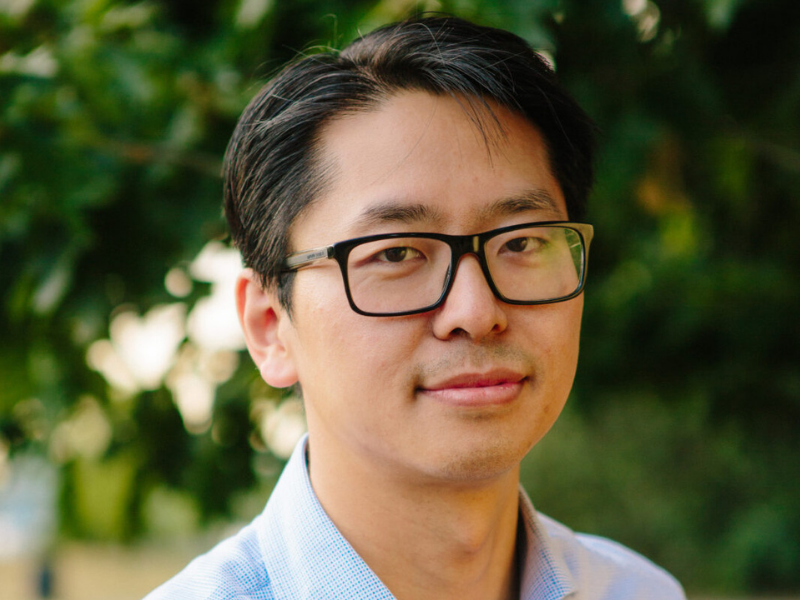
  • Edtech interview: Plum Innovations founder Ji Li

    Edtech interview: Plum Innovations founder Ji Li

    Christopher Jackson interviews the founder of impressive start-up Plum Innovations, a company with the wind in its sails

    The young Edtech company Plum Innovations is one of the success stories of the pandemic. When you talk to its founder Ji Li, you soon feel pleased for him: there’s always room in the world for unassuming and competent leaders.

    Plum’s business is to assist its client base – which consists of an impressive range of 14 primary schools – with their Edtech delivery. 

    Li comes from Shanghai, China and has seen the business which he founded as a sole trader in 2014 in grow by word of mouth: “I was working for a school and the head teacher recommended me by word of mouth.” He had soon incorporated Plum Innovations and has now grown the business to four people.

    So how does the business work? Li works with schools to set up their Google systems and make sure that the teachers are confident with Google Classroom, a system which, Li argues, has many benefits: “It’s really powerful, but it’s also cloud-based, and it’s secure,” he tells me. “In addition, it’s free and teachers can access their files remotely regardless of where they are.” 

    Li points out that his business is especially helpful to teachers now that there has been an expansion in multi-academy trusts which means that teachers have to work in different schools. “That definitely gave a push and means that people realise what benefits they can derive from cloud-based platforms,” Li explains

    Clients were helped through the pandemic by Li and his team. “My wife and kids flew to China in January 2020. Then Chinese schools switched to remote-learning in February,” Li recalls. “The government announced that schools were moving to remote-learning. So I was able to provide my clients with warning and the right infrastructure to cope.”

    Li has a scrupulously polite and efficient manner, but beneath the unassuming demeanour this is also a fierce advocate for making sure teachers are empowered by technology. You get the impression he really wants schools to function better – and knows that Plum Innovations is able to make that happen. 

    “That’s the difference between us and other tech companies,” Li says. “We want to give teachers the power and the ability to use technology themselves.” Li doesn’t want anyone to walk away from these sessions without a greater sense of excitement not just about technology but about teaching generally. “We work closely with computing leaders so teachers can be trained with necessary digital skills as much as possible. In return, we have learned a lot from our teachers too.”

    Li is also animated by a keen social conscience. During our conversation, he repeatedly expresses his concern that those in disadvantaged backgrounds lack access to technology: “Parents don’t have enough knowledge about how to work, and so we have been helping schools deal with parents as well.” 

    Plum Innovations remains a small company – Li even calls it a ‘micro company’, and the firm has no grand sales operation, even though it has won several awards. “We basically just try to do a good job, and then grow organically.”

    When discussing the overall impact of the pandemic, he says: “Remote-learning cannot replace class-learning at all – you need to have in-person interaction from the teacher. We need to move towards blended learning, where you use the time at home to memorise or understand theories – then put them into practice in the classroom.”

    Once you’ve finished talking to him, you realise that Plum’s success isn’t just to do with technical knowledge and smart delivery systems: it’s to do with the fact that Li has a passion for education. 

  • Zavfit founder Anna Freeman on why we need a new approach to spending

    Zavfit founder Anna Freeman on why we need a new approach to spending

    By Patrick Crowder

    Zavfit is a new tool that is designed to help you spend your money in more productive ways. Unlike other money-saving apps, Zavfit is designed not only to discourage excess spending, but to encourage you to reinvest that money in other more beneficial areas. 

    The full version of the app securely connects to your bank with view-only permission in order to monitor spending. Then, the app will ask you to rate your happiness with each purchase on a sliding scale of satisfaction. This data is used to track your wellbeing as well as to set spending and saving targets based on areas which need improvement.

    It’s all the brainchild of founder and CEO Anna Freeman. Through her background in finance, tech, and sport, Freeman found strong links between financial stability and mental and physical wellbeing.

    “I grew up competing in sport, so I’ve always had a passion for health, wellbeing, and fitness which has only grown over the years,” Freeman says. “What I hadn’t realised when I was in the tech and finance industry was that worrying about money is the global leading cause of mental health issues.”

    As mental health awareness increases, largely due to the pandemic, the finance industry has begun to take financial wellbeing into consideration. While this is an improvement, Anna believes that it needs to go a step further.

    “Most of the solutions in place are focused on the wellbeing of your finances, as opposed to actually addressing that stress and anxiety that people feel with their money,” Freeman continues. “I knew that we needed to create a health tool.”

    Zavfit offers a free “MoneyFitness” quiz, which asks the user how happy they are with various aspects of their day-to-day spending. This includes questions about post-purchase regret, satisfaction in work, social spending, charity, and physical fitness. I took the quiz myself and despite my mediocre score, the questions got me thinking about how I prioritise different aspects of my spending and how to reinvest that money on better things.

    “The stereotype of being good with money is ‘saving is good and spending is bad’, but ‘save, save, save’ doesn’t really recognise the present and taking care of yourself,” Freeman adds.

    In my case, I found that I am probably spending a bit too much on nights out and not paying good enough attention to my physical health. Rather than simply staying in and saving cash, the philosophy behind Zavfit would suggest that I invest the money saved on a fitness class.

    Freeman believes that focusing spending on healthy, fulfilling hobbies and interests can have a big impact on both financial and mental wellbeing. Freeman’s outlets are singing and sport, so she decided to put her resources into those areas.

    “I remember walking down the road in the sunshine one day and thinking, ‘I have stopped spending on anything else’,” Anna said, “and that’s because I had found those things which really took me out of my head and lifted me up.”

    The pandemic has given many people a chance to think about their wellbeing and break the cycle of habit. Freeman sees this as an opportunity to step back and make important changes moving forward. “There’s been a massive reset on everything, particularly on spending. There’s an opportunity here to think about things differently and to think ‘Okay, I’ve set out what’s important to me, I’m aware of my mental health and that it needs looking after’.”

    As the link between health and finance continues to be explored, new ideas like ZavFit can help push the conversation forward to find fresh approaches to the age-old problems of money stress and non-beneficial spending. Breaking bad habits is never easy, but ZavFit proves that this is both achievable and essential to personal wellbeing.

  • The Puppeteer’s Tale: Little Angel Theatre head Peta Swindall on a difficult pandemic

    The Puppeteer’s Tale: Little Angel Theatre head Peta Swindall on a difficult pandemic

    It’s been a difficult year in the arts with some having fallen through the cracks of government help. Finito World talked to Peta Swindall about her experiences running London’s premier puppet theatre during the pandemic.

    Finito World: Tell us a little about how you got into puppetry – when did you know this was what you wanted to do?

    Peta Swindall: My background isn’t in puppetry, although I did put on puppet shows to my friends when I was a child with my hand puppet skunk ‘Stinky’! I began working in arts administration at the Barbican Centre finance department when I first left university and was finding my feet. The opportunity to work at the Little Angel Theatre was wonderful timing, getting back into work with a young daughter at home, and I am passionate about theatre for young people, particularly as theatre as a creative outlet had a very strong positive effect on me as a child. Since working at Little Angel though, I have developed a real appreciation for puppetry, it’s a beautiful, magical craft, accessible to so many people – a really powerful tool to boost wellbeing and inspire creativity.   

    FW: What did you study at school and university and how have those experiences impacted on your approach to what you do?

    PS: I was into Maths and Science when I was younger, took Engineering at University, then qualified as an accountant (whilst working at the Barbican Centre). But most days after lessons and lectures you would find me backstage painting a set, sewing a costume or calling a show as a DSM (deputy stage manager). I’ve found the perfect combination of those skills and interests now in the Executive Director role, able to be hands on in a theatre, whilst also using my business and strategy skills to ensure the organisations’ sustainability and resilience.

    FW: You seem a very community-minded theatre and you’ve obviously stepped up during the pandemic – tell us about how you’ve approached this difficult time?

    PS: Since the start of the pandemic in March we have been delivering our digital output ‘Watch, Make, Share’, providing a creative outlet for as many children as possible, as well as supporting teachers and parents juggling jobs, home-schooling and potentially facing financial hardship. Our local community has one of the highest instances of child poverty in the UK, and we have continued to work with our partner schools throughout the pandemic, as well as our wider local schools network. We have also adapted our community programme to connect with our most local community digitally, and whenever we are able to in person (socially distanced of course), aware of the constraints of digital poverty on some families – leading craft sessions and facilitating community connections.

    FW: How many people do you employ?

    PS: 18 people, including 2 design interns. We are committed to develop the current pool of puppeteers and puppetry makers, particularly from under-represented groups

    FW: Did you take advantage of the government furlough scheme? 

    PS: Yes, we have where possible, we went down to 6 staff working in the 1st lockdown. This time round we have used the flexible element of the scheme to bring more people back, but on a reduced hours basis while our activity is restricted.

    FW: Is the government approach satisfactory? I’m worried that puppeteering may have fallen through the cracks somewhat, particularly when it comes to the DCMS monies?

    PS: It has been a challenging time, particularly for freelance workers, and puppetry is no exception. Where possible we have tried to support our freelance family, with well over 100 employment opportunities and paid representation on the industry wide Freelance Taskforce, but the scale of the work has been much reduced, with many of those we work with losing their whole roster of work overnight. We are aware of people contemplating a move away from the industry, which would be incredibly damaging for such a specialist skill, and will impede the recovery of the wider industry. It takes time and experience to train as a puppeteer and puppet maker – and so if highly experienced makers and puppeteers leave the industry, it will struggle to get back on its feet. 

    FW: Has your audience become more global during the pandemic as a result of the online work you do?

    PS: Yes! Our digital content, broadcast on our YouTube channel, has been viewed in 89 countries – we have just achieved the incredible milestone of one million views online. Our digital shows have been reviewed in the New York Times and our professional development courses are being attended by people across the world.

    FW: Have you been to the theatre much? How has your immediate locality changed?

    PS: We have been to the building regularly, initially to check the site, but more recently we have created a covid-safe environment to design and make our digital shows. Over the summer we delivered an outdoor festival for families – Puppet Picnic, which was very well received and we are hoping to build on this in 2021. Our location is remarkably tucked away for a London venue, so in some ways there has been little change, although the theatre itself is missing its young audiences. Heading more towards the high street, we were already seeing the impact of the decline of the traditional retail sector before the pandemic hit, and this crisis has added huge pressures to the situation, with many shops now vacant.

    FW: Are you worried about the mental health of people in the arts? 


    PS: This pandemic has turned this industry on its head and many freelancers have slipped through the net in terms of any government support. We know that freelancers are connecting via informal networks, social media and the freelance task force was a huge help – and we are trying as much as possible to continue to connect with our freelancers – but what we really need is to be able to give them the level of work they and stability they had pre-pandemic. This concern extends to our staff and audiences, particularly the impact of this situation on young people, and the importance of creative outlets in supporting well-being and learning.

    FW: What does the future of puppeteering look like? 

    PS: We are working really hard to ensure that this wonderful, adaptive artform is able to thrive as we emerge from this crisis. We have been able to reach so many people during this time, and shown what a valuable and accessible artform it can be. There are so many exciting artists out there experimenting with the form – and we  intend to continue to support and showcase this great work. 

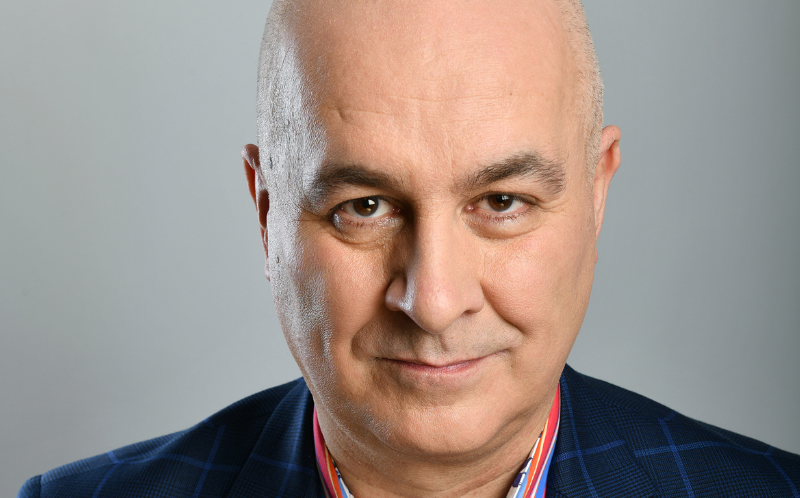
  • Iain Dale’s Advice to Young People Considering a Career in Radio

    Iain Dale’s Advice to Young People Considering a Career in Radio

    Everybody has got to work towards achieving their dreams in life. Most people have ambitions. There are people in this world who are very comfortable doing a nine to five job, and never do any work at home. Their evenings and weekends are for relaxation and family and whatever. 

    Then there’s the other sort of person, which is what I am: somebody who never really switches off. I’ve always had ambitions – and my two ambitions when I was at university, were either to be a member of parliament, or to be a radio presenter. Now I had a good go at being a member of parliament, but there was a bit of electoral pushback so that didn’t happen. 

    But in respect of my second ambition, I would I say one of the lessons is: it’s never too late. I was 48 when I got the gig on LBC – and I thought I’d had it, and that I wasn’t going to achieve that as well. But I just happened to take the initiative at the right time.

    The guy who was running LBC ten years ago saw something in me that others hadn’t. I always knew that I could be a good radio presenter but, of course, you’re always reliant on getting the opportunity. I didn’t get that job because of who I knew. But I got an opportunity to do an audition at LBC, and I thought it had gone terribly but clearly hadn’t. I’d gotten imposter syndrome! I started doing some cover programmes in 2009, and then they offered me a five day a week show in September 2010, and I’ve been there ever since. It’s the best job I’ve ever had.

    So don’t think everybody is automatically ever going to be able to achieve what they want to achieve in life. Life isn’t like: it can throw a lot of hurdles in your way. But application, persistence and patience can get you a long way.

    Of course, radio presenting is a very precarious profession. You’re not employed – except insofar as you’re taken on a fixed contract. That contract can finish at any point and it can come when you least expect it. It has a finish date, and I’ve always assumed that they wouldn’t renew it. I’m 58 now. I’ve had 10 years. If it all finished tomorrow I could have absolutely no complaints. And I’m not going to be one of those radio presenters who flounces off. You know at some point, you will be got rid of. your contract won’t be renewed you haven’t been sacked, they just haven’t been able to contract. At some point, they will decide that they want to put some new blood into the daytime schedule, and one of us will be the unlucky one. Now, it may be me – who knows. I hope to be there for some time to come.

    Of course, there are other career routes within radio, and I’m sometimes asked whether it’s possible to make a living producing radio programmes. That’s now very different to what it was. It’s a lot more difficult to get into now than it was 20 or 30 years ago. You have to have a broadcasters degree, and it’s very rare that you get taken on if you haven’t got a professional qualification. Though there are exceptions to that, they are very rare exceptions. 

    There’s a guy at LBC now who hasn’t got the traditional qualifications, but he literally came in at the age of 18. He just came in, shadowing one day, and somebody saw something in him – and he made himself indispensable. He’s now producing for Nick Ferrari at a very young age and you think, “Well, good on him!” 

    I always remember in about 1994, I took on a politics student – and he had something. I like to talent spot. He said, “I really want to get into political broadcasting.” I said, “Well, Sky News Milbank studios are literally 400 yards down the road. Go, and just turn up a reception. Say you want to see Adam Bolton and tell him that I sent you”. And he ended up effectively making Adam Bolton’s tea for a couple of weeks, and – to cut a long story short – ended up as the editor of Tonight with Trevor McDonald, and This Morning. But this was in 1994 – I don’t think you could do that nowadays. But maybe you could. 

  • The Poet at Work V: Merryn Williams

    The Poet at Work V: Merryn Williams

    Here the poet and critic Merryn Williams recalls her first job at the Open University. As ever, we publish her poem after the interview.

    FW: So what jobs do you recall with particular affection?

    MW: I had a job at the Open University which was temporary, but then I got married and lived in the wilds of Bedfordshire and was fully occupied with bringing up children. That did give me time to write when they were a little older and I found that working from home was what I preferred. I went on teaching OU summer schools for several years, until they changed the curriculum, but I was teaching the nineteenth-century novel, not poetry.

    Do you think poetry is being demoted in our society today?

    It certainly is the case that poetry is being demoted, if children no longer have to do it at GCSE, but I had doubts about the kind of poetry that was being taught, when I occasionally coached my own children or the children of friends. They were forced to study ‘Poetry of the 1930s’, or Sylvia Plath. They found it difficult! I see the use of teaching the work of living poets, and asking these poets into schools, but it’s not usually the best of them who are selected.

    What were your experiences of being taught poetry at school?

    My own experience was very different. I have fond memories of Miss Margaret Smith from Hastings High, who took us to London to see Shakespeare, and I was excited by the poems in our ancient set books. ‘Beeny Cliff’, ‘Summertime in Bredon’, ‘The Wild Swans at Coole’, and all sorts of delightful Georgian pieces about moonlight or ice carts or London snow. So you will see that I have rather traditional tastes! My favourite workplace poem is Charles Causley’s ‘School at Four O’Clock’.

    FIRST JOB

    When the Open University opened, people

    said it could never work, and was a mad

    idea; there were only two real universities anyhow.

    It was my first job and I was terrified.

    I got there, knowing no one.  A field of mud

    surrounded lovely Walton Hall, the ancient church and cedars;

    not far off emerged a new city, Milton Keynes.

    There was much that I had to learn fast.  Then there was summer school,

    teaching the great English and Russian novels to students

    all older than myself.  I stayed awake

    and heard them celebrating through the small hours.

    I agonised at the thought of public speaking.

    I didn’t know how vast it would become, but am grateful

    for all the interesting people I met, the skills that I discovered;

    thankful, above all, that the Open University

    taught me to write so as to be understood.