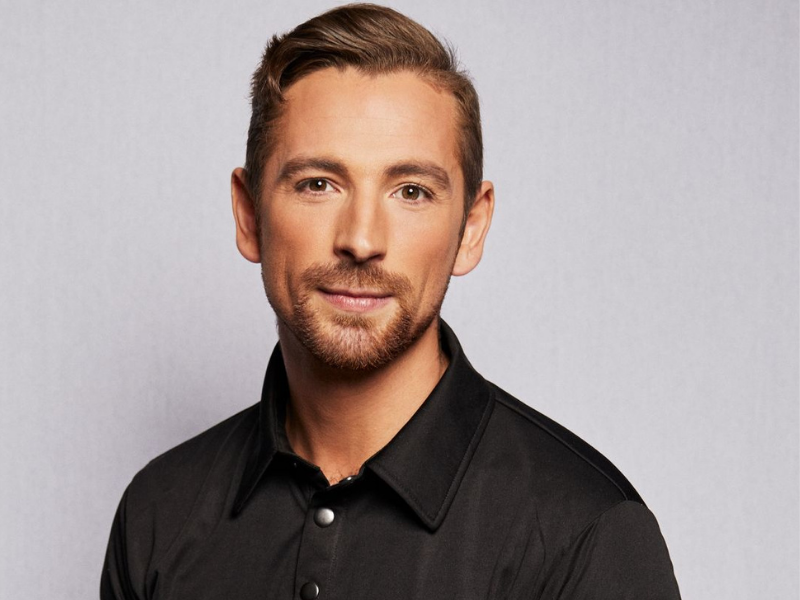
Category: Interviews

  • An interview with James Connor: Millwall F.C. footballer turned wealth manager

    Robert Golding


    James Connor isn’t exactly your traditional idea of a footballer – but then he’s not necessarily what you’d expect from a wealth manager either. But great businesses always have a certain generosity about them – whether that be a generosity of spirit or energy or imagination. But in the case of Connor Broadley, one senses a central kindness which comes back, you suspect, to Connor himself.

    “I come from a working class family,” he tells us. “Dad ran his own heating business and for most of his career was a one-person firm, with mum as his secretary. If the phone went when we were having dinner, it could be a new client and so you’d have to answer the phone.”

    The family business did well enough to send Connor to the Mall in Twickenham. As I get to know Connor I will note how he tends to see the best in situations and in people, and this is the case with his schooling: “I like to think I had the richest upbringing. I did have a really working class family: we used to congregate at my nan’s house every day up until the age of 13, with uncles and aunts and cousins. But Zak Goldsmith was in my class at school, and there were a number of high-profile actresses and actors who had sent their children there. That gave me a sense of self-confidence.”

    As it turns out Connor would have plenty of reasons for self-confidence – but I never get a sense while talking to him that he has a shred of arrogance. Early on, he realised he was good at sports, although initially there was scepticism from his teachers as to whether football – which in time, would be his chosen sport – would ever pay. “I remember being told: ‘James, you’re good at sports but it will never be a career for you’. This was the pre-professional era, and money hadn’t come into football then.”

    In time, Connor would attend Hampton, a former grammar school, where his passion for football deepened. Initially, after unluckily breaking his arm on the night of Republic of Ireland v Romania during Italia 90, Connor thought he had lost the chance to pursue his dream. “But as luck would have it, my nan had moved to Aldershot – which was 92nd in the football league out of 92 clubs. She heard they were doing a last chance saloon trial day, offering seven apprenticeships at the end of it.” Connor secured one, but decided after breaking his arm to do his A-Levels at the same time. When the club folded, Connor again thought a football career might not happen.

    Good fortune struck again however, when his former Aldershot manager called the Connor family while James was interrailing in Europe to say he’d moved to Millwall and he’d like him to join the trial. Connor was on the training pitch 48 hours later. “I saw the career that I could have,” he recalls. “Millwall had one of the best youth academies at the time, and it was well known for building the best youth players and selling them, and there were internationals in the youth team there. That was August. By November I had signed a five year contract, a PFA representative came to see me. Dad encouraged me to buy my first house at 18 which is where my interest in personal finance came from. Only Garth Crooks and Paul Gascoigne at that point in history had been offered a five-year contract.”

    Connor was a quiet player, and the only privately educated player on the team. Mick McCarthy was the manager at that time. “We were doing a drill – and Mick was a very strong person, and reminded everyone that I wouldn’t be shouting for the ball,” Connor recalls. In this, he also draws a parallel with his current role in wealth management: “I’m much better operating one to one, since this job is about intimate conversations and relationships: it’s not a job which involves talking to large numbers of people. I like to go about my business discretely and be respected for being good at what I do.”

    There were other skills which Connor developed at Millwall F.C. “One of the great things about football at all levels is that it attracts a real social mix. And you just love it and embrace it for what it is. Your team mates are all equals. Similarly, entrepreneurs come from all walks of life.”

    These skills meant that Connor was better prepared than he perhaps realised at the time, when his career ended through injury. You sense that this was a challenge even for someone with his innate optimism. “It was the defining point in my life,” he says. “It left me so determined to make it at something else. Football is a brutal industry and there’s no support network for people once you exit the game.”

    But again Connor would be fortunate. The then chairman of Millwall was Peter Mead – the Mead in the UK’s then largest advertising agency Abbot Mead Vickers. He took Connor under his wing. “Difficult as it was not doing what I wanted to do at 21, being thrust into the creative advertising scene was an amazing education in itself,” Connor recalls.

    Gradually, Connor’s career began to evolve. Everything kept coming back to an interest in personal finance, which had been planted in him by his father. “In my twenties, I found myself going to buy the Sunday newspaper to read the personal finance section. By the age of 27, I realised it would play to my strengths. I took a 90 per cent pay cut then but I knew it would suit me and I was prepared to do it.”

    It would turn out to be a masterstroke, and again, Connor draws a comparison with football: “One thing you have to have in sport is a good instinct. I find it eyebrow-raising when I hear people making career moves when they have no natural segue into it.”

    At first Connor was, in his own words, “just a bag carrier”. He loved the work and built an impeccable reputation, but when a fraud scandal occurred in the firm, Connor decided that he had to preserve his hard-won reputation. Though the scandal had had nothing to do with him, he started his own firm to avoid being tainted by it. “A number of people said: ‘Don’t be implicated in any way. Go and set up your own company and we’ll come with you.”

    Again, Connor’s experience in football was formative. “I’d noted as a footballer that when I was approached by financial professionals there was such a lack of integrity – and there is still is in some quarters. We wanted to be respected from day one. We didn’t try and entice previous connections over; we waited for the phone to ring. Our first client fee was £250 and we felt like we’d won the lottery at that point.”

    This commitment to integrity sometimes meant giving advice which was in contradiction of their own personal interests. “Our first enquiry was from a longstanding accountancy connection. She’d lost her husband and there was a tabled investment proposal which she didn’t think was in her interests. We were asked to take a look. We had to explain we were in our first few days of business. I took one look at the lady in question and realised she was in no fit state to make a decision as she’d been through a life-changing event – and I know about life-changing events. We told her to stick the money into a bank account to take stock of her life and to talk to us when things had calmed down. She’s now been a client for 15 years.”

    The approach has worked. Connor Broadley now has an AuM of £500 million – with an expected £100 million increase to come this year alone. But Connor insists it’s not about the numbers: “Growth at Connor Broadley should come as a consequence of looking after clients, giving them advice and underpinning it with a personal service: it has to be the right kind of growth. Word is spreading and we continue to grow: we attract nice people – people that appreciate a longer term relationship genuinely.” That word ‘genuine’ is overused but it certainly applies to Connor.

    So how do you become a client? “The entry point is £1 million of eligible longer term money if we’re going to commit to providing them with an ongoing service.” The firm has a cautious approach. “The way we invest clients’ money is geared to growing purchasing power of our clients’ money by a specified amount above inflation after fees are taken into account across a number of different risk profiles. We don’t purport to be a wealth manager that’s offering double digit returns from one year to the next. We want to look after the wealth people are dependent on to live comfortable lives.”

    This is a firm set to grow in the next years, as it brings – starting at the top – some much-needed integrity into the difficult-to-navigate world of wealth management.




  • The Who’s Roger Daltrey: “Unlike the civil service we got off our butts and did something”


    Rebecca Walker talks to the Who Singer and Teenage Cancer Trust patron about his new craft ale, the music industry and his new solo tour


    RW: So tell us about your new beer?


    RD: It was something that I started with my son-in-laws and my son during lockdown because we were all sitting on our hands and unlike the civil service we got off our butts and did something. Beer is the new wine. There’s so much wine in the world you could bathe in it. Everybody’s doing vineyards but the craft beers they are fantastic and we’ve managed to find a really great brewer. We’re wiping our nose every week. We haven’t made any profit yet but you know, it’s exciting to do it. I never realised how good beer could be when you’re drinking he mass produced stuff it’s not like a craft beer at all. It’s totally different it’s like a really good claret.


    RW: You’ve been quite vocal about the state of the music industry. Do you have sympathy for young musicians.


    RD: Musicians were very poorly treated in lockdown, most of them are self-employed. They couldn’t be furloughed: They were being crucified. I planned to put it together last year and I could smell the way the wind was blowing with a new wave of Covid and our so called scientists and their models which are so inaccurate. If you bought a car with that many faults you would take it back immediately and never buy another car of that model but there you go.


    RW: It seems as though streaming services preclude musicians from earning a proper living?


    RD: They do. It’s a huge problem. The whole record business has been stolen by overseas huge conglomerate record companies and the streaming companies and of course they’re all working on the model that was made when they were taking sensibly or reasonably 75 per cent of the income because they had to produce it they had to distribute it, they had to you know promote it so the artist was quite happy to take a very small cut. The streaming companies pay so little per play that what’s left for the artist is you can have a billion streams and you’ll earn about 200 quid. That ain’t fair. If that’s your yearly take home play you might as well be a welder.


    RW: Is there anything Parliament can do?


    RD: They are examining it but the trouble is they don’t understand about the music business – they’ve never understood it. We’re always a pain in their ass. This country leads the world in popular music and that claim now is not coming to this country, it’s going abroad. Our industry it’s all going abroad.


    RW: What’s your take on social media?


    RD: The younger generation want to be careful of the world they’re creating. All of this micro brain management – I don’t think it’s very good for us. I’ve never been a fan of the internet: I think Twitter and social media has got its good points but it seems to have brought out the worst in sections of society. It feels like it’s the end of civilisation to me.


    RW: You don’t strike me as very impressed with the state of science behind climate change?


    RD: One thing you have to remember: All these scientists doing all this stuff –whether they’re right or wrong I’m not commenting on that – all I’m going to try and say here but all the scientists giving out all of these predictions are the same kind of scientists that gave out the Covid predictions. How wrong were they. Is there enough scrutiny going on?


    RW: Back to music, you’ve been vocal about the government needed to come up with coronavirus insurance schemes?


    RD: We’re not asking the government to pay anything: we’re asking for the standard insurance which we would pay for. We would be covered for the expenses we incur in starting a tour: by the time we go on tour this time we’ll be about a million and a half dollars in debt and if they say we’re locking down again, that’s a huge problem. All we’re asking is that if they closed us down they would cover our costs. I think that’s fair.


    RW: And how are you healthwise?


    RD: I’m as deaf as a post, eyes are going, ears are going but the voice is alright. I haven’t quite gone the full Tommy.


    Daltrey’s tour WHO WAS I starts 20th June 2022

  • Lee Elliot Major: Why academic success isn’t ‘the be-all and end-all’

    Lee Elliot Major: Why academic success isn’t ‘the be-all and end-all’

    Lee Elliot Major’s mid-pandemic plea for a focus on social mobility. Originally published January of 2021.

    I was optimistic at the start of Covid-19 that this crisis would somehow affect social mobility in a positive way. But we are still in denial about the long-term economic challenges we face and how these will affect young people’s opportunities: the pandemic has hit the under 25s more than any other group, and this will have far-reaching consequences for social inequality.

    Young people are facing an unprecedented decline in social mobility, and are likely to be much worse off than their parents’ generation. That hasn’t happened since the war: relatively speaking, every generation has done slightly better than the last (in terms of wages and housing).

    This does, of course, affect those from poorer backgrounds the most. Our research found that during the first lockdown, students from private schools were twice as likely to benefit from a full school day (5 hours of learning) than state school pupils.

    My fear is that this will result in a massive gap in school assessment, which means that particularly select universities are going to have to think about how they take context into account. I suspect what it really means is that those from privileged backgrounds will just be better positioned for universities this year.

    So what are the other options? In my view, if we are serious about social mobility, we have to think about half of the young who can’t (or don’t want to) go to university.

    In fact, if you gave me a choice, I’d say we should work much harder on improving the numbers and qualities of apprenticeships. In terms of the links between education and the workplace, we pale in comparison to most other education systems: Australia has, for instance, developed much stronger vocational options and headteachers celebrate the students who get really good apprenticeships as much as those who go to top universities.

    Part of our problem is structural (i.e we don’t have enough apprenticeships in place), but it’s also cultural. Although the government are doing better, we still suffer from a cultural assumption that academic success is somehow the be-all and end-all.

    People need to look hard at what that a degree offers them in terms of future life choices, and whether this is ultimately a better option that an apprenticeship. The problem is that students from underprivileged backgrounds have less guidance in this area.

    Some universities, like Exeter, are offering degree apprenticeships. I’m really pushing for that; it would be great to be able to build bridges between the workplace and the world of academia, and I don’t think that highly selective universities have worked closely enough with businesses. The other great option is a national tutoring service; something I’ve been campaigning for for a long time. The government has already made good headway in this area, but I think it should be ten times the scale it currently is.

    We’ve reached a tipping point in society. Wherever you lean on the political spectrum, my view is that you need to balance the freedom of people to do best for their children (a primal instinct we all have as parents) against the need to ensure that those from disadvantaged backgrounds have a fair chance if they work hard and do well.

    However you look at that equation, I think that we’ve now gone past the tipping point. It’s now near-impossible for young people from poorer backgrounds. The Covid crisis has added yet another weight on that imbalance, and it’s become so one-sided now that we’re all recognizing that we need to do something big – like FDR’s “New Deal” which was enforced after the great Depression.

    What worries me is that we’ve become so polarised in our political debate- and this is much more extreme in America which has become, in my view, a completely dysfunctional system- that anything the government says, the unions will oppose it- irrespective in a way, of the content. Some things the government does should be welcomed and some things should be challenged, but at the moment I feels like debate is so divisive that whatever the prime minister says, he’ll be castigated.

    The trouble is you need some kind of consensus for social mobility to happen. There are some academics who argue that this kind of polarisation of public debate is the inevitable consequence, or end-game, of inequality and capitalism.

    On the brighter side, there’s definitely an appetite for bold ideas. I’m always throwing these to the government, but what we really need is for young people to be empowered and informed, so that they can be motivated to get involved in these kinds of debate and influence policies.

    At the moment, it doesn’t feel like there’s a call to arms. We’ve seen huge progress with the young’s involvement with BLM and the environment; I’d love to see the same momentum around social injustice and social mobility.

    Lee Elliot Major was talking to Georgia Heneage

  • 2021 highlights: How to be an Epidemiologist

    2021 highlights: How to be an Epidemiologist

    by Emily Prescott

    Epidemiologist is one of those words that has unfortunately been thrust into everyday parlance. Along with, ‘furlough’, ‘coronavirus’ and an ‘R number’, in 2019 you would be forgiven for not knowing the respective definitions. Of course, you can’t get away with that now. In fact, many of us have even transformed into epidemiologists from our armchairs. But other than looking concerned on the television, what does being an epidemiologist actually involve and how do actual epidemiologists feel about the public discourse surrounding the virus? We caught up with three epidemiologists – a PhD student, a doctor and a professor  to find out.

    Epidemiologists could colloquially be termed ‘disease detectives’ as they investigate public health problems. They will search for the cause of a health issue, identify people who are at risk and then determine how to control the spread or prevent the problem from recurring. But PhD student Florence Walker says that despite the pandemic, many people still don’t understand what an epidemiologist does. “I thought at least now everybody will know what an epidemiologist is and actually it’s still the case that I’ll tell people, ‘Oh I’m an epidemiologist’, thinking they will go ‘oh that’s so cool, that’s amazing,’ and instead I get a ‘What’s one of them then’ or an ‘Oh, I’ve got a problem with my skin, let me tell you about it’.”

    After graduating with a Masters in epidemiology from the London School of Hygiene and Tropical medicine, Florence has been looking into the consequences of people not taking medication properly as part of a PhD at the University of Edinburgh. As a student epidemiologist, she admits she finds some of the conversations around lockdowns frustrating. “Some people say the restrictions are ridiculous but you know, we have 75% fewer cases of flu this year which means that the lockdown is working.” 

    She adds: “It’s been a long time since anybody thought that the miasma theory (the theory that bad air is the main cause of every disease) was correct. We’ve got germ theory. We know that you can’t get infected unless you are able to transfer pathogens.” 

    Florence Walker: ‘We have 75 per cent fewer cases of flu this year which means lockdown is working’

    “People say oh well it’s just like a cold, well it is just like a cold for a lot of people but the problem is the percentage of the population for whom it will not be like a cold, it will be a life threatening if not life taking illness, is enough to overwhelm our national health service. We have to protect the NHS,” she sighs.  

    Florence herself has had coronavirus and as a consequence, she lost her sense of taste. “I put a spoon into a bottle of Colmans mustard and ate it and it just tasted like powder.” Thankfully it is back now. 

    For people who are considering getting out of the armchair and doing a PhD in epidemiology, Florence says: “The only bit of advice I could give anybody who wanted to go and do a PhD is “find your supervisor”. “PhDs are really lonely and I know lots of students who speak to their supervisor just twice a year, I have a call with my supervisor three times a week,” she says. 

    But Florence warns the pandemic has caused a sharp spike in the amount of people looking to do similar PhDs. “When I got mine my supervisor met me at the school and she was just asking everybody ‘do you want to come and do a PhD?’… But this year she advertised for a PhD student and there have been well over 100 applicants. It’s getting fierce.”

    Dr Thomas Churcher, who teaches at Imperial College in London, also told us about the spike in interest in studying epidemiology amid the pandemic. “Clearly epidemiology is very fashionable at the moment but that will clearly wane.” He says that an older colleague recalled the wave of interest in epidemiology surrounding the HIV epidemic. “Don’t be attracted to it because you see a lot of epidemiologists on the news. All the hard graft is done between those events,” he says. 

    Dr Churcher was drawn to epidemiology through an interest in disease after he caught malaria while travelling. He says: “The thing I like about epidemiology is you have to get to a broad understanding of everything that’s going on. It’s the really holistic approach that I find interesting. 

    Dr. Thomas Churcher explains that epidemiology in involves a holistic approach. “You have more diverse experiences coming in.”

    “In the past epidemiologists were very much born from the kind of maths and stats background but as understanding of the discipline has increased you have more diverse experiences coming in which is exactly what it needs. It doesn’t need to be just hardcore mathematicians doing it, it needs to be social scientists, it needs to be everything because it is a society based problem.” 

    Since the pandemic, Dr Churcher has focussed on the impact COVID is having on malaria, to avoid “a double pandemic”. He says while he is pleased the public has a greater awareness of epidemiology now but is frustrated that there’s still an “awful lot of rubbish being talked by an awful lot of people” when it comes to the virus.  

    Meanwhile, Professor Sarah Lewis, who is a Professor of Molecular Epidemiology at the University of Bristol, says she worries about the relationship between Twitter and epidemiology. 

    “I keep getting sucked into Twitter. I should stay away from it really but it’s a very good one for finding out new information because obviously data’s generated so fast at the moment. Normally in epidemiology, it will take us months to write a paper and then it will go out to peer review and that can take several more months and then you’ve got to wait for the publication. 

    “Because policies are being based on the research, everything is coming out so fast and lots of it hasn’t been peer reviewed and it’s posted up on Twitter and you find the latest information there really or in press releases which is quite different. Some of it has dubious quality but before anyone has had a chance to assess the quality it’s gone round hundreds and thousands of people,” she warns. 

    Professor Lewis says aside from the obvious frustrations at the moment, working in epidemiology is a very satisfying career path. “If you get involved in epidemiology you can apply the methods across a whole load of different subjects.” 

    “I normally work on using genes to identify risk factors for cancer but also cleft lip and palate and mental health, as well. So that’s quite diverse already. But then, with the pandemic, a lot of the methods that I’m familiar with apply to analysing data relating to COVID as well,” she explains. 

    She concludes: ”It’s a fantastic field if you’re broadly interested in health and you want to make a big impact on populations. Obviously a doctor will treat a single patient but an epidemiologist could identify a risk factor which could have an impact on thousands of people.” 

  • Interview: Violin teacher Georgina Leach on engaging students, new teaching methods

    Patrick Crowder sat down with violin teacher Georgina Leach to discuss the value of musical education, the industry, and new ways of teaching music.

    Georgina Leach teaches violin to secondary school children at All Saints Catholic College and to primary school kids at John Ruskin School. A fiddle player herself, Leach makes every effort to engage all of her students through diverse repertoire, opportunities to play for the class, and a new style of teaching notation which she developed. 

    “For me, it’s about the children who don’t really excel in other areas, and music class can be a place where they really get something from it which helps them find their own voice and meet set goals,” Leach says.

    Music education is often sold as a way to help children excel in other areas in school, and while there are studies which suggest that link, Leach prefers to focus on music as a means of expression and confidence-building.

    “There’s a lot of focus on the STEM subjects, which in some ways I understand, but it’s incredibly sad I think if they’ve never been exposed to the arts and had a go to see if they have a flare for it,” Leach says, also emphasising that music can also help increase confidence. “One kid may not feel comfortable to speak in front of the whole class, but they’re comfortable playing in front of the whole class,” Leach adds.

    Traditionally, music education focuses on Classical music, but many children feel more connected to other genres and familiar songs. That is not to say that Classical music has no place in the classroom, and much work is being done to introduce Classical to a wider, younger audience. Wigmore Hall, for example, offers £5 tickets at selected concerts for anyone under the age of 35. Additionally ,the Youtube comedy duo TwoSet Violin produces funny, light-hearted videos based on their love on Classical music which draws in viewers who might not have experienced the genre before. Leach explains how, in today’s music industry, money often comes from non-Classical sources.

    “I have friends who are in string quartets who are amazing players, and I know that they face the same struggles that my friends in bands face,” Leach says, “Their top-paid gigs may end up being the weddings they play rather than their concert venue performances.”

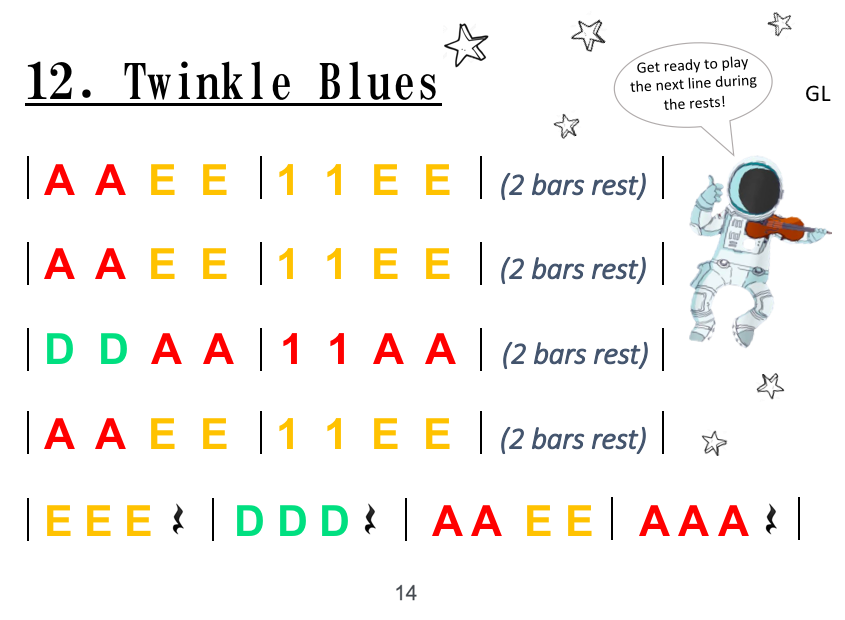
    An excerpt from “Dynamite Strings” showing Leach’s teaching style

    There are a variety of opportunities for practiced musicians to find employment, but Leach’s job is to foster a love for music in the first place. Children can be put off by complicated notation and unfamiliar songs, so Leach has written a book entitled “Dynamite Strings” which is designed to be accessible, fun, and engaging for her students.

    “Generally when I start them off I try and do lots of simple tunes, because the violin is a really technically hard instrument for beginners to master and you have to drill a lot,” Leach says.

    Her new book is designed to make the often-repetitive learning process more digestible and engaging for her students through the use of colour-coding, modified notation, professionally recorded backing tracks, and illustrations by children of the same age group which the book is intended for.

    Another variation of Leach’s new method, associating names of notes with the finger used to play them


    “I’ve gotten my friends to record the backing tracks for all of the songs,” Leach says, “This illustration was done by my friend’s son,” she says, pointing to a colourful drawing, “and these ones were done by kids at school.” Turning to her form of modified music notation, she says, “The younger ones that I teach can be put off by notation, so this method which I call ‘colour tab’ is really helpful to get them playing with musicality as early as possible.”

    Leach’s colour tab uses a colour code system which links a music note to its corresponding letter, then finally to which finger is used to fret that note on the violin. This is similar to the way that guitar players can avoid traditional notation by using tablature, which replaces notes on a staff with fret numbers placed on a representation of the guitar’s strings. The difference is that, with Leach’s system, her students are learning traditional notation as well by making a connection between a note, its name, its sound, and the action required to produce that sound.

    “I’m hoping to cause a little revolution,” Leach says, “I really wanted it to be diverse and fun, so we have everything from reggae to grunge rock, and my friends have smashed the backing tracks.”

    Teachers like Leach keep the love of music alive in students across the world, and the confidence children foster from musical performance can stay with them for a lifetime, even if the music itself fades away with the years. Georgina Leach’s new book “Dynamite Strings” released on December 1st, 2021, and is available for purchase on Amazon here: 

    https://www.amazon.co.uk/Dynamite-Strings-Violin-Book-Violinists/dp/1838309004/ref=mp_s_a_1_1?crid=1QI4EOG66TGJV&keywords=dynamite+strings+violin+book+1&qid=1638528313&sprefix=dynamite+strin%2Caps%2C326&sr=8-1

    www.dynamitestringsmusic.com

  • An interview with divorce lawyer Jeremy Levison about his office art collection

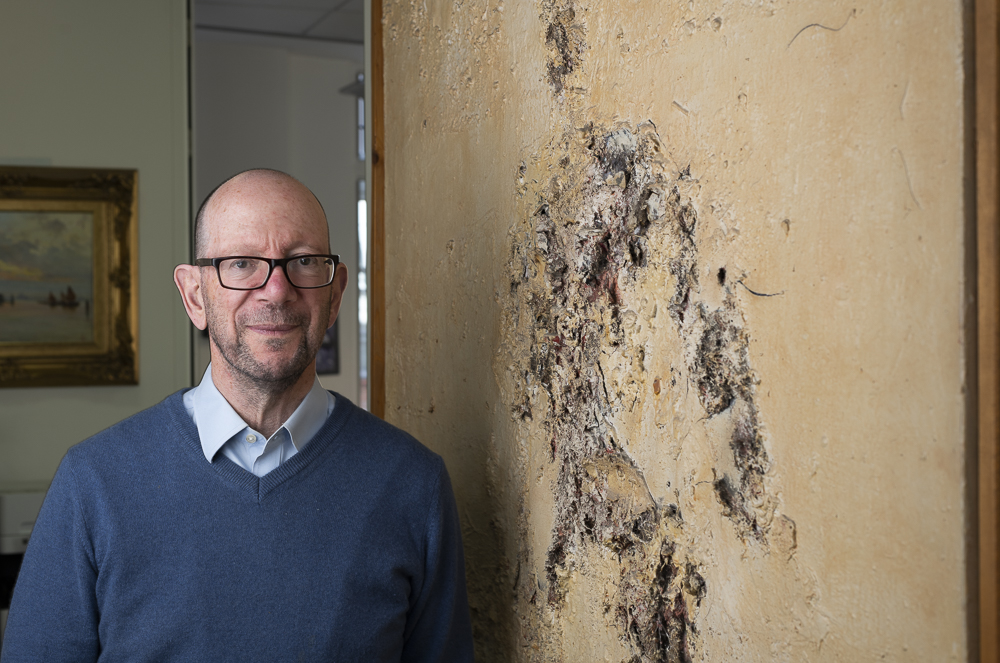
    Christopher Jackson meets divorce lawyer Jeremy Levison, the co-founder of Levison Meltzer Pigott, and finds the art collector on top form

    If I were starting out my legal career again, I’d be a divorce lawyer. But I wouldn’t be doing it specifically for the pay, or for the ringside seat on marital breakdown. I’d be doing it with a more specific intention: I’d be aiming to work in the offices of Levison Meltzer Pigott.

    There again, I’d have a particular reason in mind, other than the quality of the firm. This, incidentally, is beyond question. Jeremy Levison and Simon Pigott (and later Alison Hayes) have been a regular fixture among lists of top family lawyers since founding the firm – their partner Clare Meltzer sadly died in 2003. Even so, I’d be going there for the art.

    Many workplaces have fine art collections. One thinks particularly of Deutsche Bank (‘the art collection probably keeps the bank afloat for liquidity,’ says Levison), and I recall stumbling out of a meeting at UBS once to be standing in front of a sea of Lucian Freud sketches. But Levison’s collection is different.

    For one thing it’s personal. It’s also part of a smaller business and so feels more special. So does he paint himself? “At school, I had no artistic ability whatsoever,” Levison tells me. “A couple of years ago, I went on a two-day oil painting class in Sussex. I absolutely loved it. However, the experience convinced me not to give up the day job.”

    So when did he first start collecting? “It started in the 1970s. I met a chap who was doing prints; he had created a print and I liked it so I bought it. The next major purchase was in 1979. I had a broken heart at the time and there was this beautiful painting of a woman by an artist called ‘Molinari’ in a very ordinary shop window in Rome. That day my worldly wealth was 32 pounds, and this cost me 29 pounds then. I couldn’t resist it, and I still love the work to this day.”

    Over time, art collecting became an aspect of travel. His full success as a solicitor was in the future, and at that time he couldn’t have begun to realise how his collection – which now stands at around 500 pieces – would expand. “Whenever I went away anywhere I would buy a piece of art as the souvenir from that trip,” he recalls. “It just sort of went on from there. I was very fortunate, in that I became friends with someone who came into the office from off the street. He wanted to change his name from Christopher Holloway to Christopher Bledowski. He was not able to pay me, but he gave me a drawing. He was very influential in introducing me to various artists and the infinite creativity of the art world.”

    Bledowski is an intriguing figure in his own right and deserves more attention. Bledowski would kill himself in Switzerland some time later, and Levison maintains that the quality of the work, which he has come to appreciate ever more over the years, might well have led to world fame.

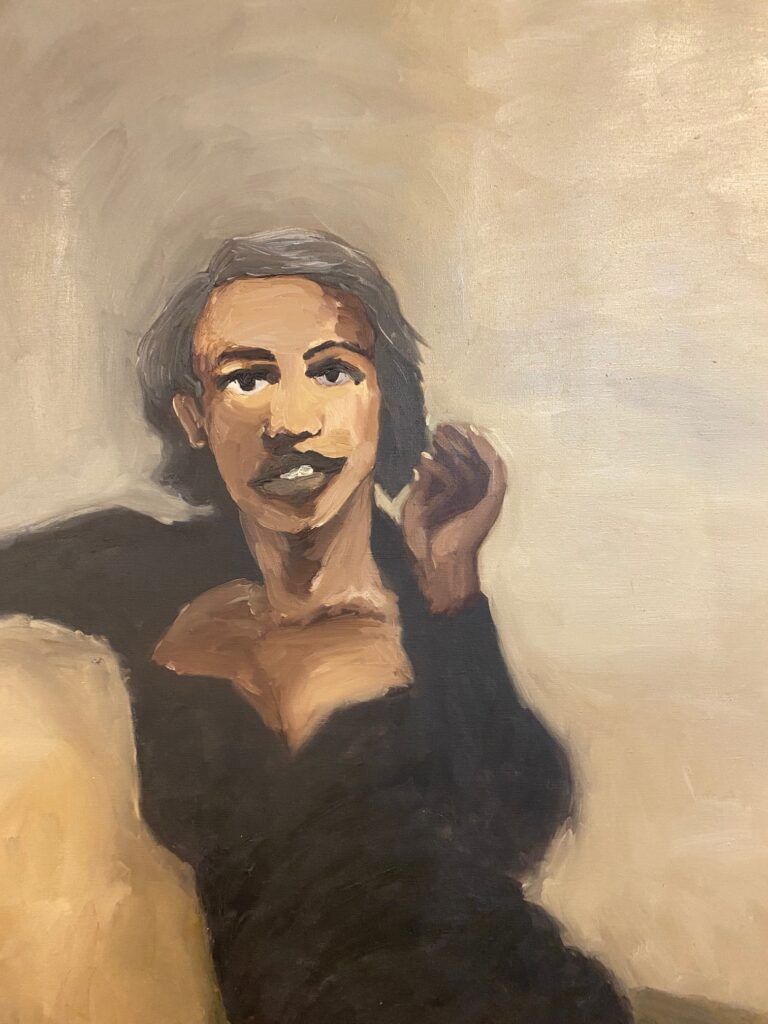
    Lynette Yiadom-Boakye, Case

    But Levison’s art collection is a legacy of sorts for Bledowski. In time, Levison joined the firm Collyer Bristow and his art collecting continued. “We had all these bare walls,” Levison recalls, “and we had lots of artistic clients.  I thought to myself, “Well, why don’t we give the clients an art exhibition on our walls. We did and it was great fun.”’

    The idea of a more formal art gallery at Collyer Bristow was born. This was based on a belief that there is far more talent in existence than the art market – always caught up in the almost random anointing of the ‘next big thing’ – has time to recognise. In fact, Levison regrets the notion of the art market, preferring to talk instead about the art world. “The art world has morphed into the art market,” he explains. “I have a lot of time for the art world, but I don’t worry about the art market.”

    J. Bratby, Still Life

    It’s this essentially generous estimate of the talents of those who aren’t famous – or in some cases, aren’t famous yet – which informs Levison’s approach to buying art. “I love living with art, so it’s never worried me if a piece becomes valuable or not. If it does, that’s an added bonus, but if it doesn’t, it doesn’t matter in the slightest because of the joy of living with it.”

    There is always generosity at work in Levison’s collecting. “At Collyer Bristow, I thought, ‘Well, we’ve got an acre of wall space here, and within 100 miles of London you’ve got probably 5,000 artists of real talent. Let’s do something to put them together.” The resulting space was a great place to work, and it began to alter the lives of clients and employees. “From an initial sort of quixotic curiosity among the members of staff, suddenly they all became more involved and began to look forward to the various shows. For instance, we had this young secretary and she began to take an interest. There came a time when she found herself needing to make a choice between whether to go on holiday for two weeks in southern Spain or whether to buy this little sculpture. She chose the sculpture. That sculpture over the years will have given her so much more joy than those two weeks of Sangria-fuelled sunshine would have done.”

    For Levison, art continues to be a no-brainer. “At some restaurants in London you can go out to dinner with four of you and it’ll easily cost you £1,000 and we all know how that ends up the next day. Or you can go to any number of artists, and buy any number of works for up to £1,000, and enjoy them forever.”

    So has the pandemic altered his approach to collecting? “Well, the one thing I did do was to buy a much larger house in order to have more wall space. The problem with my collection is that as it’s grown so has my ability to display it, so I lend a lot of it out.”

    I mention that my first stop in New York is always the Frick Collection, just as my first stop in Cambridge is always Kettle’s Yard. Would he ever consider a Levison Collection somewhere in the UK? “I mean my collection is very modest compared to those. But I own this building down in Bermondsey and I wonder whether at some point that might become a home for the collection.  I think my collection is an example that quite a lot can be achieved by someone who doesn’t have a great deal of money.”

    It certainly does. I recall my own training at Stevens and Bolton LLP in Guildford – a perfectly decent firm but notable mainly for its blank walls. To some trainees, especially if you’re not sure if you want to be a lawyer, life at a law firm can seem like the end of the world. I say I hope the staff realise how lucky they are. Levison replies: “I think they do. And the clients love it as well. It gets constantly talked about, and a lot of clients ask for tours around the gallery.” Levison also concedes that it can be ‘quite a useful PR exercise because we can do evenings where outside organisations come in, and I can talk about how the collection came about.”

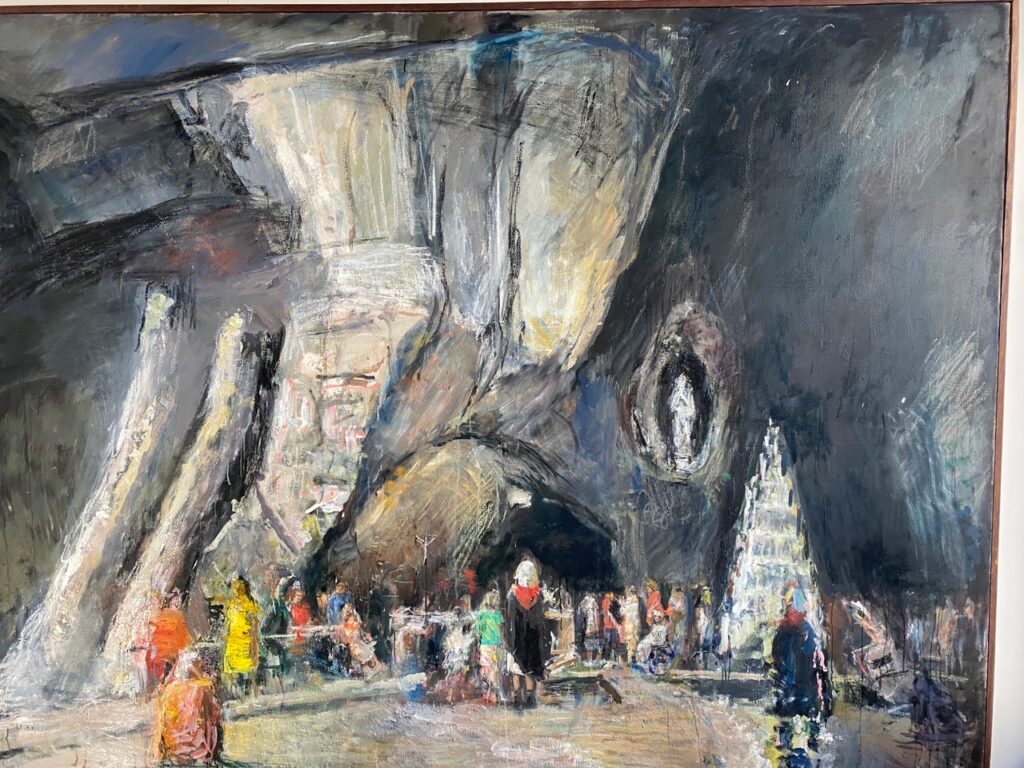
    A. Eyton, The Grotto, Lourdes

    And of course, when you’re getting divorced it must be something to see such a collection on the walls – to know, in effect, that there are other narratives beyond your own, especially if the divorce is contentious.

    Levison laughs. “Yes, I think coming to see your divorce lawyer is ten times worse than going to the dentist. It’s the moment when you’re admitting that your marriage is definitely over. I often think of myself as being, to a certain extent, a doctor. Some just can’t think about anything other than their predicament. But for others, the art collection is a relief – it’s something else to talk about.”

    Conrad Romyn, The Last Supper

    I’ve done the tour many times with Jeremy, but I am always ready to do it again. I happen to know that some of the best works – the Rose Wylies, a Lynette Yiadom-Boakye and a truly wonderful Ollie Epp are now at his new house. But the disappointment of that can easily be met by the fact that what’s here is still remarkable. There’s an Andrew Marr over a photocopier (“I’m not sure how good he really is, but I like it”), a wonderful picture by Anthony Eyton called “Our Lady’s Grotto at Lourdes”, a superb Still Life by John Bratby, various Eileen Coopers, a host of Stanley Spencer drawings, a Last Supper by Conrad Romyn and many, many others.

    With the possible exception of Spencer, Bratby and Cooper, who feature in most surveys of 21st century art, all the artists here deserve more recognition – but each has also met with a superb champion in Levison. As always I return out into the street, not exactly regretting my decision to leave the law, but thinking that things might have turned out differently had I had the good luck to train at Levison Meltzer Pigott.

  • Enness Global founder Islay Robinson on his remarkable career in the UHNW mortgages space

    By Finito World

    The first thing to learn before you talk to Islay Robinson – the brilliant founder of Enness Global, a finance and mortgage brokerage firm with a rarefied client base – is how to pronounce his name. “It’s Isle-a,” he says, generously waving away my faulty pronunciation. “Don’t worry, it happens about a thousand times a day.”

    If Robinson has had any headwinds from his difficult-to-pronounce first name then he hasn’t let them affect him. Enness Global is a remarkably successful business which handles only the very high-end mortgages, for an international client base. I say that I thought the very wealthy mightn’t need mortgages. Robinson smiles: “A lot of people think that, but it’s a misconception. The thing which really drives us is fixing problems for our clients. Often, with the kind of people who come to us, it’s not that they so much want the financial instrument that comes with the house, it’s that the mortgage enables them to do something.”

    So what might that be? Robinson continues: “They might wish to buy a house, start a business, or make some investments, and the mortgage is the thing which allows them to do that.”

    So how did Robinson find his way into the field? He had, he says, an unpromising education. He grew up at first in Islay in the west Hebrides – where he gets his name from – but when his parents separated when Robinson was eight, he was suddenly presented with the reality of a state school education in London. “It was quite a culture shock; I think our school was the first in London to have a metal detector,” he recalls.

    It’s a testament to his resilience and his character that he found a way forward, attending a college in Kingston to do his A-Levels. “University wasn’t a concept which was ever discussed at home.” He subsequently attended Sheffield Hallam (“it was just a general business course which didn’t really have a purpose to it”), and then studied law at the University of London.

    But crucially, although he was doing well, he took a job in Foxtons in Chiswick at the same time. Speaking in the aftermath of not only the Osborne tax hikes during the David Cameron administration, but the hits to London property which have attended both Brexit and Covid, you have to squint to remember what an exciting time it was for the industry. “In those days if you wanted a mortgage you just had to ask for one,” Robinson recalls.

    There was little regulation, and the market was booming. Robinson had happened on his vocation. “I had the option of being a good lawyer in a good firm – or maybe something a bit less exciting like a conveyancer – or this industry which was already exciting and earning me an income.”

    He chose the latter, though the law has been helpful to him since. “The law is hidden to a lot of people, but the law underpinning contract and the relations between people – that’s the framework everything sits on,” he explains.

    To begin with Robinson accrued experience at Foxtons and Alexander Hall in the middle of the market. “It was bankers and professional people getting their first houses in Putney for £600,000.” But over time, Robinson and his business partner Hugh Wade-Jones decided the high end might prove interesting.

    They had their timing right. London was beginning to attract exactly the kind of clients who would require Robinson’s services. “You had complex people coming in – Chinese, Americans, Russians.” These clients needed a different kind of service; Robinson and Wade-Jones saw their opportunity, founding Enness Global on the day Northern Rock went bust.

    Today Enness Global remains an excellent port of call for graduates wanting an interesting experience involving client relations. “Some of our commercial brokers come in as graduates without any experience. We’ve had huge success in hiring people and giving them opportunity.” Robinson understands what young people need in their careers: not the 2am misery of photocopying which often characterises entry-level work at the PwCs and Clifford Chances of this world, but real training, and real interaction with clients.

    So what does he see as the future of the property market? Robinson is betting on London. “Since the borders have reopened after Covid, it’s clear that international people want to buy and live and invest in London, and I can’t see any evidence of that changing,” he explains. “There’s ten buyers for every property,” he adds.

    Christopher Jackson is the News Director at Finito World

  • Interview: Advocate James Cameron on Chernobyl, COP 26, and how we solve the climate crisis

    Matt Thomas interviews the barrister and climate change advocate on COP 26 about his extraordinary career on the front lines of the great fight of our times

    MT: I saw that you first trained as a barrister, how did you end up in the environmental world?

    I went to the University of Western Australia, and I did law there. And then I came back to the UK, really only because my mother was terminally ill and I went to University College London to do my undergraduate law degree.

    And for all sorts of reasons – only part of it was to do with the course or the university – I didn’t connect with undergraduate law at all and I struggled to perform having been used to doing well in the art subjects, particularly in English literature and other subjects, I found English law really pretty dark.

    I just didn’t connect with it so I had a period of time, right at the end of my degree, which was very intense and rather sad, and with the help of friends and then a girlfriend, I somehow managed to get a decent grade. That was largely because in my last year I focused on international law and jurisprudence legal philosophy.

    Suddenly I found a way I could understand – partly perhaps because I had grown up in Lebanon and Singapore and Australia. International law seemed to fit more my understanding. I was interested in the cases of international negotiations and the things that international law seemed to be based upon, and I was attracted to the more obvious moral and political case for law that you see in the legal system that’s still forming itself.

    And it just seemed to work. I got my first proper job I suppose at the Research Centre for International Law, I became director Studies in Law at one of the colleges and the Chernobyl incident had inspired intense academic conversations about the question of what you do when environmental harm so obviously crosses borders.

    The Soviet Union did not inform its neighbours about Chernobyl. They kept it secret, and the world really found out about it because of a private satellite who saw it and followed the clues on the radionuclide cloud. Governments did not bring actions directly against each other in the international court. It seemed to us at the time this was just an example of the legal system not working.

    MT: So, the Chernobyl disaster was the ‘lightbulb moment’ I guess in terms your first link to the environment?

    Yeah, that was it. It was a graphic example of a trans-boundary environmental harm. And the way the law worked – or didn’t – reveal inadequacies of the international legal system. It needed a fresh approach. And then after that, the climate change issue emerged and had similar more substantial problems to resolve. But the obvious place to be is international law because the problem could not be resolved by individual nation states.

    Q: As a ‘friend of COP’ what has been your involvement in the conference?

    It’s a day to day, topical question. All the governments who have this role of president form groups of advisors, and they vary. I’ve done a few, they vary in type, but they’re meant to help the president’s function which is to shepherd everybody towards agreement.

    Equally, all presidencies have some kind of thematic approach to the climate problem, as well as their principal obligation which is to get agreement on whatever the agenda items are for the year.

    The UK Government which obviously has a very substantial and competent civil service doesn’t really need the kind of advisors that other governments have needed. I’ve been a senior advisor to Morocco and to Fiji, where I was really hands on.

    Outside of government, I think it is useful to have another circle of advisors who are independent and can say straightforwardly what they think and are worried about the consequences. Even so, it can be frustrating sometimes when you aren’t adequately listened to and anyway. But we have regular calls, as a group, directing into Alok Sharma who is the president of the process. We also have calls with his senior officials on particular topics. And, you know, there are several themes, and each of those themes have subsets of the group and often I happen to be involved, particularly with the nature theme at the moment because that’s part of a project I’m working on. But I also get involved in the finance and because I’d be an experienced negotiator, I’ll talk to the chief negotiator as well about how they’re running the process.

    Where you’re going to arrive in terms of negotiations is always contingent on things that have nothing to do with climate change or some other geopolitical issue. Some other pressing immediate concern, something that has to do with a relationship that is central to power in the world.

    Success or failure usually turns on the US and China. There are really only 20 other countries that have to come to agreement to make a difference, even though the whole process works by consensus here.

    But if you don’t have India, China, US, the EU aligned or capable of coming to agreement then your event fails.

    MT: I was going to ask later on about what sort of challenges there are but from what you have mentioned it seems topics like geopolitics seem to actually come before addressing climate change?

    They can’t be separated. Every now and again, you see the potential for climate change. As an existential issue, it has the capacity to bind, and it can actually bring people together; it can make people desire cooperation. That remains a hope that I have that at a very elemental level. There is common ground between these big forces in the world who have other reasons for disagreeing. But that might be the idealist in me speaking.’’

    MT: On your website you say that, when addressing issues centred on tackling climate change, you are ‘interested in the space between law, policy, finance and technology’. Can you elaborate on what you mean by this?

    I’ve decided that’s probably my function. So, for example, if you want to deploy capital to solve the climate change problem you want your money either to have very specific obligations to deal with climate, or,  that there is an opportunity for you to compete with incumbent businesses and technologies that may actually be causing the problem but have been there for a while.

    So if you want a marketplace for money and technology and other resources, you have to change the rules. So changing the rules means changing the law or changing the application of the law, or changing the public policy interpretation of the law.

    Clearly, there’s politics and power politics involved with that but there’s also permanent civil servants who have mandates that are already set. They, on the whole, either make or implement policy depending on where they are in the world. Frequently, the language spoken by all parties is so different, they don’t quite understand each other. And they certainly don’t trust. And then, the world of finance has his own ecosystem, all sorts of different types of finance, they have become quite distinct tribes with their own return expectations. They have their own sense of themselves. Believe me, they really do have their own sense of who’s best.

    And sometimes that doesn’t connect with people who create enterprises, entrepreneurs, innovators, people starting out, have no experience of any of these phenomena. They need to be helped, but they also need to have an environment in which they can actually compete where they can thrive.

    I like to keep on top of what’s coming through in the world of innovation I want. I have got some experience to offer but I don’t know the answer, so I’m interested in being something of a carrier of ideas, and a connector of people.

    MT: It seems to me that there is a strong focus on climate change but the interrelated issue of biodiversity loss gets far less attention. Climate change is just one of the factors behind the destruction of habitats and the degradation of the natural world. How can companies, consumers and policy makers elevate understanding of the impact of biodiversity loss on human societies?

    ‘Yeah, and they are completely interrelated, which makes it evermore complex to solve. I spent most of the last year, more focused on nature.

    I’ve worked a lot on wildlife. I did the International Whaling Convention, the Convention of Endangered Species, illegal trafficking with wild birds and other species.

    It’s quite dangerous work too. I work with people who risked their lives trying to reveal what was going on. So this has been there all along but it’s been a relatively minor issue for big politics. It’s an issue for people who care. It’s an issue for people who’ve got a particular concern about a species, and it’s widely felt. People do feel a connection with nature.

    Clearly something happened to us psychologically during COVID, where people started to appreciate nature wherever they lived – maybe, particularly if they lived in a city.

    The climate issue has highlighted aspects of the decline and threat to nature, but not all of them. It has a tendency to deal with climate as a priority that has sometimes led to people thinking too little about the complexity of natural systems. Planting trees is not a solution a guaranteed solution as planting trees means monoculture, and actually, biodiversity loss, which can happen. And as has happened.

    Recently some good research came out of Oxford, on how many 50 degree days there are in a year now. The more you have those a year, the more you suffer economically, but there are things that can be done and relatively quickly to change that and a lot of it is to do with planting trees or creating green surfaces. But we also need to manage rainfall, because we’re getting more intense rainfall which our hard surfaces can’t handle.

    Q: Do you expect these conversations around biodiversity to become more mainstream in upcoming years?

    I do. And I think that language is important. Biodiversity doesn’t reach people. Nature does. So choosing the right language to communicate, choosing the right messengers, obviously we’ve had the legendary David Attenborough to do a lot of the messaging, and he has made the connection between climate and biodiversity pretty clear. But if you want to do something about it in your own place, you probably need to organise at a community level. And that’s really hard to do, but necessary.’

    Q: We touched on it briefly earlier but what do you see as the main barriers to tackling climate change?

    I think one of the main barriers is psychological. It’s a problem that feels too big for me as an individual. If I don’t think I’ve got any levers of power to pull, then I want someone else to do it.

    And meanwhile, I’ve got something that’s immediately pressing on my concerns that I’ve got to feed children or I’ve got to find shelter, I’ve got something that right now I have that I have to care about. This issue looks literally beyond me – beyond my levers – and has a temporal dimension that encourages you to postpone action.

    The other psychological fact is that we all experience is that we all have a kind of status quo bias. I don’t mean that in a political sense I mean, we’d rather not be disruptive.

    And, and also, there’s a generational problem here that the generation that benefited from the tremendous growth in the 20th century that was driven by widespread use of fossil fuels, miraculous, use of fossil fuels, the innovation that went into fossil fuels the number of products, God knows. Look around you. Now, how many things in my room right now have a petroleum base or hydrocarbon base. Yeah, staggering.

    It’s very hard for that generation, to feel like there was anything wrong, you know, good things came from that place, wealth, and security, and material benefit.

    On top of all that, there are cultural connections that are very, very deep. You can see that most clearly in in the kind of mining and mineral cultures of Australia and Canada and the US.

    So, you know someone from the soft city comes along and says, all that, all those minerals and oils are there bad thing, they get dismissed because they come from the soft city and they don’t know how hard it is to win this stuff from the earth and create wealth. Those things are hugely important.

    But in the last few years that the things have shifted quite markedly. Because there has been some government intervention the barriers are different now. They’re to do with how quickly you can make the transition, and how fairly you can make the transition.

    There are several set piece battles, I don’t like to use war language, but what the hell. One of them is that renewables have to beat coal in Asia. And yeah, then you got to ask, “Where’s the money going to come from?” Well, there’s lots of domestic capital in China. Actually, in the end I’m not that worried about China.

    There’s a very confused picture, because they’re the largest renewable energy market in the world but they’re also still doing a lot of coal. But Indonesia is crazy. Why on earth are they building more coal plants?

    MT: How would you rate progress in the UK in comparison to other mature economies around the world?

    ‘Very good in parts. Very good in creating the legal frameworks and very good in concentrating expertise in many disciplines, less good on implementation.

    Unfortunately, we’ve had some quite mediocre government where people who are more interested in politics as played out in the media.

    And that’s not a party political point because it works across the spectrum. It just is the case that too much politics is based on how you appear on a screen and how you are interpreted by the media and not enough with how you govern your department.

    Unfortunately, climate change is one of those issues that you need good government. A nice soundbite doesn’t actually solve the problem.’’

    Who would you say are the best at implementing right now?

    As a structural point, I think it is much easier to implement in smaller states, where there’s a high level of trust in the community. Denmark would be an example of an effective response/

    Periodically, the other Scandinavian countries do well and you see elements of progress in Germany and the Netherlands. I mean elements because it’s not perfect by any stretch. And then you see it also in the highly educated and technocratic cultures like Singapore and Korea. So those places have done well.

    But nobody has all the answers, and nobody can solve the problem on their own. So, unless you get something like 20 to 25 of the major economies of the world, all doing something broadly similar in terms of effort, then nobody, nobody can protect themselves from all consequences.

    People will move. Of course, they will move.  You would, I would. If I’m living in a place where I’ve got no water I am going to go somewhere where there’s water. If I’m living in a place where there are 20 days above 50 degrees in a year, I’m taking my family out of there. I want them to survive.’

    MT: Are there any specific goals that you and your ecosystem have for the next couple years?

    I’m working at the moment on natural capital. I’ve got goals associated with that. And, and they’re largely to do with lining up a big general principle, like, we should value natural capital, and then taking it, drawing that down into the institutions, where they have the power to apply that in practice, and then showing examples of how the principles applied through investment in a real transaction.

    These are the kinds of things that are both short and long term because I think we’ve got some momentum on the topic. But then there are others that are just the same as they always were, really: they’re about trying to get agreement to keep as far as humanly possible under or not too far past the 1.5 degree threshold.

    I’m constantly scanning for enterprises that I think have a solution that could scale. Now I want to find an institutional capacity to do that routinely so it’s not left to a few individuals around the world, whereby we actually have good well-structured, well-motivated, incentivized institutions, to find the solutions that can be accelerated and deployed, because we’re in a race. Alot of these great ideas will emerge organically over time but we actually need to speed the whole process up.’’

    Matthew Thomas. Photographer: Sam Pearce
  • COP 26: Entrepreneur Zak Johnson on his green fashion business

    COP 26: Entrepreneur Zak Johnson on his green fashion business

    Interview by Alice Wright

    When people ask Zak Johnson why he got into the fashion business, he always tells them that he didn’t. He instead replies: “I got into fixing plastic. I found a problem that I wanted to solve, so I don’t look at what we do as fashion, I look at it as problem solving.”  

    Johnson, founder and CEO of luxury clothing brand Naeco, is a passionate surfer. Six years ago, whilst working on a contract in Bournemouth, Johnson had ample opportunity to kite surf. Each time he would clear his section of the beach of plastic, putting it in the recycling bin. However, he began to realise that “it felt like I was picking up the same plastic on a weekly basis, I thought at one point, ‘is someone chucking the plastic back in?’, I couldn’t work it out.” 

    Johnson developed a bugbear and started to look into where plastics go after use. “Six years ago when you started to delve into plastics you’re seen as a little bit strange. It wasn’t as mainstream as it might be now” he explains. In his research Johnson found that 91% of all plastic is incinerated or sent to landfill, and that only 9% is recycled. He was shocked to find that even the plastic that goes into the recycling bin isn’t 100% recycled, it often ends up going into incineration for energy programmes. 

    Johnson’s decided to come up with a solution that would take waste plastic and reuse it as something in plastic again, “single use is only single use if you use it once” he states. This is where Naeco was born. The name itself, is ocean spelt backwards and represents the sense of reversing the issue. 

    “I looked at plastic as a commodity, people that are throwing plastic away are looking at it as trash.” says Johnson. The plastic was once manufactured for profit, and bought for a price yet once used is considered to have lost its value. So Johnson went about trying to educate the consumer, that waste plastic still had worth: “it started by looking at it as £10 notes in the ocean rather than looking at it as rubbish.” 

    Johnson set upon manufacturing sportswear after looking into the process of extrusion, which takes plastic, heats it up and turns it into liquid. From the liquid it can be turned into a pellet, and that’s what virgin plastic looks like. These pellets can then be spun into fibre and yarn, which is where we get polyester. This led Johnson to think “what if I could make a pellet from recycled plastic, and then turn that into fabric?” 

    In keeping with his new self-confessed, plastics-obsessed eccentric image Johnson set about building an extrusion machine in his spare bedroom. “In the beginning I made tonnes of mistakes because there wasn’t as much research, or at least it wasn’t accessible to the layman at home googling,” but after discovering the need for single waste streams to avoid mixing plastics, the project took off. 

    Naeco now has industrial machinery that can process 500 kilos of plastic per hour. Once the plastic is recycled into pellets they are sent off to a textile mill and spun into yarn and from there Naeco receives its fabrics. 

    Making swim shorts was an obvious leap for a fashion business founded in Bournemouth. Johnson envisaged selling them to his friends, who would keep them for around five years, “that then gives a longer lifetime on that plastic and they would value it.” Johnson also recalls how he believed making swimwear would be easy, but not puts this down to naivety. It took 18 months to make fabric, and another year to get to the point of finally making a garment. 

    Naeco is holistically conscious of its environmental impact, and always seeks to be sustainable in all its practices. Another reason for choosing to design swimwear – and soon outerwear too – was to reduce the microplastics that would return to the ocean through washing. Swimwear and outerwear are among the garments that the consumer will wash the least. Johnson also recommends using a Guppyfriend microfiber bag, to capture micro plastics in the wash. The company also uses natural dyes that are ethical and eco.  

    “It’s about minimising the washing, and then anything that’s high wash so our jumpers, hoodies, and t-shirts are made from organic cotton or bamboo and they don’t create microplastics.” Naeco takes organic cotton from the cutting room floor of manufacturers who use sustainable fabrics, but Johnson seems most passionate about Bamboo. “It grows super fast, it uses less water, it’s just an efficient powerhouse of a product,” he says “ our t-shirts are so unbelievably soft, nothing feels like bamboo. When you wear a bamboo t-shirt for the first time you don’t want to go back to anything else.”  

    Naeco started off as a solo venture but now has fourteen employees in the UK, as well as satellite offices in Morocco, the US and Poland with around twenty employees overall. “We’re pretty overworked, which is great” adds Johnson with a laugh, “we’ve definitely grown a lot this year, it’s probably been our biggest growth year.” 

    This is largely down to Reborn the sustainable corporate workwear arm that Johnson launched two years ago. Reborn creates sustainable workwear for the Jockey Club, Moët Hennessy, Arsenal, Magners and other such brands in that space. The resources for Reborn differ in that “we take plastic from existing waste streams before it enters the ocean” Johnson explains. For example, at the Cheltenham Gold Cup the Jockey Club used a million plastic cups over four days, it was six tonnes of plastic and we converted that plastic back into 30,000 metres of fabric, which created 12,000 garments which actually clothed every single member of staff at Cheltenham Gold Cup. 

    “That side of our business has exploded this year. I think consumers have become very aware about their sustainability issues.” Johnson puts this down to the lived reality of the current situation: “we’ve seen that what we do to our planet has an impact on our personal lives now. A pandemic like this is just a taster of what we’re in for globally, if we don’t start fixing some of these sustainable areas and tread lightly on the earth.” 

    This shift in attitude from individuals and corporations has put Naeco in a perfect position for growth. “We don’t add sustainability on to what we do, we truly are sustainable and have been from day one” Johnson explains. Indeed Johnson is now looking to go even further, with the company attempting water recirculation in their factories. Johnson is building new technology to recirculate the water for the manufacturing process, and to reuse the heat from the shredders dissipating it back as energy to reuse in the battery packs. Naeco is its own micro circular economy. 

    Looking forward, Johnson wants to focus on building more recycling centres. Naeco will have the UK recycling Centre in Buckinghamshire but wants to build one up north and one in the middle of the country. Abroad, the company has an opportunity to expand in Morocco where there are a great deal of textile mills as well as a huge plastic problem. 

    Johnson is also keen for more collaborations with local authorities and governments. “We’ve seen some states in the US be very receptive to what we’re doing. We’re looking to build recycling centres in the US, where we’re able to take plastic and repurpose 100% of it.” 

    Despite the relentlessness of plastic production and contamination, Johnson is optimistic about turning the tide. Optimistic is “who we are as a business, if we weren’t I don’t think we’d get out of bed.”I would love us to be in a position where plastic is never, never produced anymore, but ultimately we’re probably going to live in a world for the next 100 years that continues to make plastic. What we need to do is reduce that amount of plastic. 

    He ends our conversation with a particularly positive prediction “I think in the future all businesses will be sustainable. They won’t just have sustainable principles, they will be entirely sustainable. In 100 years people will say ‘I can’t believe people set up companies that weren’t sustainable from the beginning.’ I think business will evolve and change.” 

  • Sophia Thakur: “TS Eliot would’ve loved Instagram poetry”

    Interview by Emily Prescott

    Sophia Thakur spoke alongside the sound of a harp on stage at The Ned hotel. In melodious tones she recited memories of dead friends who sleep with soil in their mouths now. She rhymed about the injustice of how black history is taught on the curriculum.  She talked about self-love too. 

    As the 25-year-old poet performed, she made expressive hand gestures and looked graceful in a Cinderella-style blue tulle dress. Her look was almost ethereal, until you clocked her shoes: Bright pink crocs. 

    Thakur’s outfit that evening captures her poetic style well. She is elegant and polished but undeniably practical and unpretentious. 

    “I’m on the right side of history with these,” she joked to me backstage, pointing at her shoes. “Already on stage you’ve got the nerves and if you’re wearing heels, you can fall. It’s just not worth it for vanity’s sake. About six people can see my feet so I’m completely fine to wear Crocs,” she said. 

    Indeed, her poetry is unpretentious. She relies on YouTube as a medium for self-expression and doesn’t think much of those who think being a poet means being a middle class man stuck in a rigid form – or the 18th century for that matter. 

    “You have your purists who believe poetry is this one thing and has to look like this which is fine and fair – and look, I’m not angry with them for it,” she says. “I think there’s a spectrum and for me it’s so important to identify poetry as just the simple act of communicating.” 


    In Thakur’s case, this act of communicating has been startlingly successful. Thakur has not only graced the stage at Glastonbury but delivered Ted Talks and appeared regularly on mainstream television. Her debut book Somebody Give This Heart a Pen became a global bestseller before it was even released and on the back of her success she has also worked with creative teams at numerous corporates including Nike, Samsung and MTV.

    ​So did she enjoy her education? Thakur says she did enjoy studying poetry in school but felt the “academic” approach wasn’t necessarily the best way to explore poetry. 

    “I fell in love with poetry via spoken word. I think in school we took quite an academic approach to something that’s meant to be so emotive and like feeling charged. I didn’t get an avenue to love it, I just got an avenue to learn it in school,” she tells me. 

    After school Thakur pursued an academic path and did a degree in politics. She’s still very much engaged in political discussions now, particularly when it comes to the national curriculum. 

    Indeed, her new comic-strip style children’s book Superheroes: Inspiring Stories of Secret Strength, was recently published by Stormzy’s imprint Merky Books. It is a response to the fact she only saw black people in history textbooks “in chains”. 

    In her poetry she tries to change the narrative that is taught in schools about black lives and Britain’s past. “If the only time we hear about blackness in school and anything black at all is when we’re thinking about slavery or when we’re thinking about liberation, then the only stories we have are Nelson Mandela’s or Rosa Parks’s or whoever else,” she explains, seeming to tail off.

    Then she continues: ”We then grow up in a world that perpetuates that narrative where the headlines related to black people are quite negative… It’s just really, really upsetting and I think a lot of these ideologies and ideas do stem from the first seed that is planted in us which is black is weak and lesser and white was dominant and is dominant.”

    On people who criticise using modern mediums such as Instagram and YouTube as a way of sharing her poetry and having these kinds of conversations, she says: “It’s really embarrassing because I think art if anything is the truth of the time and the truth of the time is this. This is how we communicate now, this is what poetry is now… oh and TS Elliot would’ve loved Instagram poetry.” And with that, Thakur heads off, Crocs and all, into what I’m sure will be a successful future.