Category: Interviews

  • Joe Hildebrand of Accenture:“We show up with the playfulness we inject into our work”

    Andrew Zelin

    “I’ve always tried to move on when I feel like either I’m not growing and developing, or the environment or culture is not right – rather than waiting so long that I get frustrated and angry with the business that I work for and potentially make the wrong decision”. 

    These are words from the mouth of Joe Hildebrand, European Leadership & Culture Lead at Accenture.  These words tend to characterise a person who has what one might call a “model career” with an impressive flow of creating impact across organisations.  I wanted to find out the secret of Hildebrand’s “early career” success in consultancy and leadership and he kindly agreed to engage me from his home in North London.  As a modest and quietly-spoken individual, his comments were all well-considered and purposeful, and full of common sense.

    Hildebrand graduated from the University of Leeds in 2005, established his career at Accenture and Deloitte, then moved client side to BT, where he eventually became a department head.  He then joined “?What If!” Innovation becoming a Director, seeing it grow in stature sufficient to become the attractive proposition which Accenture wanted to (and did indeed) buy.

    So to what does Hildebrand attribute his success to date?  He states that the thread throughout his career was having “real clarity on the type of work I want to do, the expertise that I wanted to build and develop, and the kind of things that I wanted to do day to day with clients”. 

    Hildebrand knew early on that the leadership culture and organisational psychology space was a fascination for him and that he “not once regretted a move that I’ve made from one organisation to another”.  He believes that he had always made the right decision at the right time.  Indeed, all of his roles have offered him “something different and better at that time”.  His first job as a graduate was, “a challenging job, which really helped build the foundation”.  His time at BT after that, “gave me a view of what it’s like to work client side rather than consulting.  It helped me see the other side of the coin and recognise what’s important for the people that I like to live up to in my consulting role.”  However, the most pivotal point in his career was his move to ?What If! as it “helped me shift from being a bog-standard delivery consultant to being a provocative thought leader and partner to senior clients”.

    What did Hildebrand see as the main attraction which drove Accenture to purchasing ?What If!  This was not so much about what they do, but “more importantly, how we do it.  Organisations including Accenture are recognising that they need to offer more innovative products and services to their clients.  An organisation with 624,000 people like Accenture recognises that they can’t make that shift organically”.  Although he saw ?What If!’s methods and products not being a million times different from everyone else’s, it was “how we use them and partner with clients in a fresh and different way.  We show up with the playfulness that we inject into our work, the humility and provocation.  I would suggest that Accenture aspires to the culture, and that was part of the rationale for that acquisition, although culturally they were very different organisations”.

    As a thought leader, Organisational Transformation is often top of Hildebrand’s mind.  For big companies growing and transforming their organisations, he believes that “change management is not the solution.  It’s outdated and outmoded. It serves to mitigate risk, rather than help people thrive.  If organizations want to grow, they need to focus on attracting the best talent and pay much more attention to their people, their behaviours, their decision making, their empowerment, as they do on the systems and processes that they are much more comfortable spending time on”.

    Although in a very strategic role, Data and Analytics has always been important to him and he sees the Cloud as a really big agenda in the world of data.  “How do we make data analytics be seen not just as the preserve of the IT organisation, but actually something that benefits every individual and business regardless of the role they play?”  Hildebrand fully recognises the importance of bringing it closer to what is done in terms of leadership and culture.  It is “how we make sure that we’re doing the right thing in the right way at the right time then tracking impact, and then pivoting when those analytics show us that we have made a mistake.” 

    Although companies are spending more of their money on analytics than they have done in the past, the question for him has always been “in service of what?” He believes that companies “in most cases are looking for efficiency and productivity, they’re looking to make their lives easier”.  This is very different to using analytics “to help identify the best and most impactful ways of working, with behavioural science at the core”; which is equally as important, but “regrettably not often seen that way”.

    Hildebrand likes to see how analytics can accelerate cultural shifts and growth of benefits to organisations.  However, he warns that it is very easy for analysts “to fall in love with the products and not the problem.  There are circumstances where, had we spent more time really understanding the problem, we would have come up with something that is more usable and useful”.  Re-inventing the wheel can be an issue too.  “There’s different people and groups creating new things that solve the same problem, and so I find it quite difficult sometimes to know which is the best one and which I want to deploy – to the extent where I get frustrated and just don’t deploy.” 

    That said, what he is starting to see in limited places and hopefully more in the future, is “the ability of analytics experts to bring both sides of their brain to the conversation; not just the analytical side, but the creative side as well and to use analytics in support of a human dynamic, as opposed to a tool that someone in the back office played with”.

    Coming back to Hildebrand’s career, “I have found one or two individuals in each and every job that I have aspired to become and wanted to learn from.  I would rarely look at world famous thought leaders such as Simon Sinek or whoever and say: ‘That’s who I wanted to become’ – I don’t know that person.”  He highlights the importance of being authentic to himself and not changing his character and the way that he shows up in order to be like that, but simply taking the best of what he sees people offer.

    For people coming up through the ranks, Hildebrand is primarily impressed by attitude. “Do they come across as a decent human being who cares and wants to do a good job?  And do I feel like I can build a really solid human relationship where they don’t only learn from me but I learn from them?”  Hard work, grit and determination are important too, but not at the expense of recovery, sanity or family life.  “When they set their mind to something, they’ll ask when they need help, but they’ll crack on and do their very best job”, coupled with “the confidence to provoke; not just to be a ‘yes-man’ or ‘yes-woman’ but provoke in the right way, even if it’s based upon gut instinct rather than data.”

    When asked whether there was any particularly important piece of advice that Hildebrand had been given which he still carries with him today, it is that “You have a choice. You can either be a victim or a leader. That doesn’t have to be a leader with a capital L, where you’re managing people, but it’s a mindset shift.  Did you lead yourself with support, outside difficult circumstances, rather than feeling like the victim and get into your downward spiral of difficult thoughts?”

    So for Hildebrand, it appears that there is no magic formula to the success of his career to date.  It is the ability to give your best, understand the bigger picture and what purpose Analytics is serving, that “data is a means to an end rather than an end in itself” and the flexibility to move on when things are looking likely to stagnate.  It is about keeping positive, being a “leader” and injecting a good dose of playfulness and provocation into your work.


  • Max Verstappen: “You have to make mistakes in order to learn”

    Interview by Rory FH Smith

    For Max Verstappen, racing is in the blood. The Belgian-Dutch driver was introduced to the sport by his Dutch father and former Formula One driver, Jos Verstappen. His Belgian mother had also competed in karting before having Max.

    So what first sparked his interest in the sport? “When I grew up, my dad had a go-kart team at the time, and he raced in F1. I always had that around me. At the same time, my mum also raced in go-karting until she had me.”

    Did that confer a sense of obligation, that this was the path his life had to take? “It doesn’t mean that you have to do it. Besides, my parents never pushed me into driving. It was entirely my decision.” When did he first know this was what he wanted to do? “I remember after I went to the go-kart track and I saw a younger kid driving, I called my dad, who was away in Canada with Formula One, and told him I wanted to drive as well. Initially, he said no.” Why was that? “He wanted me to wait two more years, but I started in go-karts six months later, when I was four and a half.”

    It started a lifelong commitment to the sport. Verstappen continues: “Since then, I have enjoyed the ride, especially when you start winning races. It all starts to become more and more professional as you progress, but it was never really my intention at that time to become a Formula One driver.” It was always more basic than that, he tells us. “Back then I just saw four wheels and a go-kart and I wanted to get involved and have fun because I like driving. Then, step by step, my interest in Formula One grew and grew.”

    Of course, starting early is common in racing circles, with drivers starting out in junior karts before progressing to national and international tournaments.

    Did he benefit from his father’s reputation? “It was a little easier for me to get going as my dad had his own team already,” Verstappen recalls. “When I was three years old, I was already driving on quad bikes on our land, so I had some experience before I started go-karting. I was already competitive at that age. It’s something you’re born with.”

    Over the years, Verstappen progressed through the karting ranks, stepping up to international competitions in 2010. Three years later, he got his first taste of formula racing before he graduated to the Formula Three championship, where he finished the season third.

    That result was enough for him to gain the attention of Formula One teams. Soon he landed a place with the Red Bull Junior Team. His trajectory since then has been rapid. In 2014, Verstappen lined up for the first free practice at the 2014 Japanese Grand Prix; he was the youngest driver to take part in a Grand Prix weekend. It was part of his preparation for a full-time place with Scuderia Toro Rosso in 2015.

    At the 2015 Australian Grand Prix, he became the youngest driver to compete in Formula One. He was 17 at the time.

    The following year, now 18, he won the 2016 Spanish Grand Prix on his debut for Red Bull Racing – the youngest driver to win a Formula One Grand Prix.

    “I didn’t think about my age when I started in Formula One,” Verstappen recalls. “I usually drove in categories where I was one of the youngest and I was always racing against guys who were two to three years older, or even more. In my final year in go-karting, I was 16 and I was even racing against 35-year-old guys.”

    So I didn’t feel intimidated? “I didn’t feel out of my comfort zone. I was used to it. I was just very happy to be there and to try to get the best results. I was very inexperienced but I felt ready.”

    So to young people out there, what advice does the driver have about being ready for the big stage? “When you’re 17, you have to make mistakes in order to learn. It’s fine because, I started at Toro Rosso, so it wasn’t like I was fighting for the World Championship at the time – it was good to fight in the midfield and really work for it. That way, you learn a lot of things.”

    He certainly has – and to talk to him is to realise the value of starting early, and putting the work in.

  • Entrepreneur Henry White on building the “Netflix of finance”

    Entrepreneur Henry White on building the “Netflix of finance”

    CEO of Finance Unlocked speaks to Georgia Heneage on his career journey, the world of money and the future of FinTech. Originally published in March 2021.

    When Henry White – now a fully-fledged FinTech founder – first entered the thorny world of money as an eager young intern in London, he found the industry to be like a “black box”: opaque and inaccessible.

    Overcoming these barriers was for White a case of “learning on the job”. White began working his way up the London finance ladder with no experience or training. Soon he was working as a successful hedge fund analyst, his job taking him from Greece to New York and Canada.

    But this method of scaling the industry via trial-and-error seemed to be the privilege of a few, and his company Finance Unlocked – a digital educational platform for those in the finance world which completed its second fund raise in January at £1.75 million – was born out of a recognition that for many young people in finance, the “tools available” to them are few and far between.

    The idea was conceived in part when co-founder Robert Ellison’s position on his firm’s Learning and Development Committee opened his eyes to the limited scope of educational resources available. “We realized that either traditional incumbents were producing classroom-based learning- which wasn’t scaleable and was expensive – or there were generic massive online course providers like LinkedIn Learning.”

    Ellison and White identified a gap in educational resources which taught the fundamental skills of finance. “We felt like ultimately the whole learning experience was broken,” says White. “It became commonplace in the workplace that you would have bad training, and people strangely accepted it.”

    During development, Ellison and White’s customer research revealed that people “wanted to be more knowledgeable” and wanted to be “the best possible versions of themselves”, but that “the tools didn’t match up with the demand”. Their research also surfaced a common theme: that people wanted an educational platform that could coincide with their leisure time. “That was a kind of ‘aha!’ moment for us”, says White.

    “We wanted to build a brand that people could emotionally connect with and care about: we wanted it to be as beautiful and tactile as Netflix.” White says that digital content – particularly video – has grown in popularity during the pandemic. And because their audience demanded a premium product, they decided early on to create the content themselves, rather than outsource.

    As well as attempting to “redefine learning for finance professionals”, Finance Unlocked aims to democratise the world of financial learning for young people. They opened up their platform free to universities during the pandemic: “the feedback was phenomenal”, says White. “96% of the student learners felt more confident applying for a career in finance having had access to this content, and it really improved their employability”.

    And what of the future of FinTech? “The FinTech industry is moving at a lightning pace. Its role as an enabler is obvious when it comes to making frictionless payments, exchanging currencies efficiently or democratising the investment space. But the impacts are much broader than that – and that broad impact now includes financial education.”

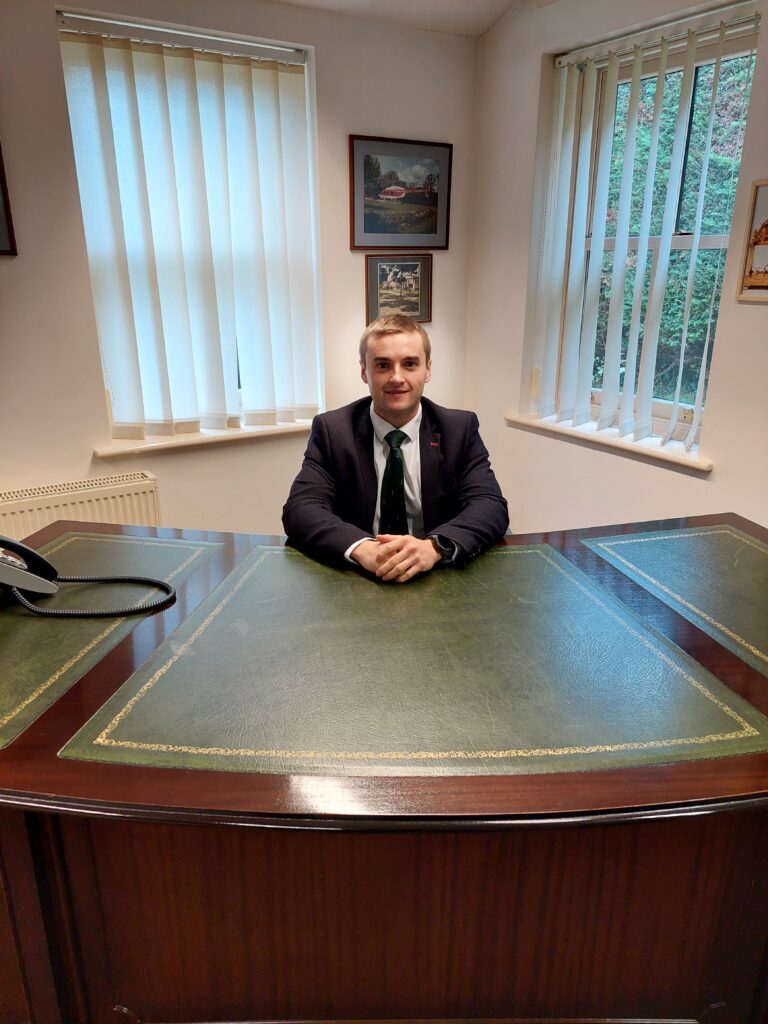
  • An Interview with Oliver Curson of Berkeley Parks

    Christopher Jackson to talks to the impressive Oliver Curson about his career at family company Berkeley Parks

    The dynamics of a family business are always interesting. Berkeley Parks – one of the leading providers of residential parks in the UK – is no exception. Founded by John Berkeley in the 1960s, the firm is now run by David Curson, who married into the family and has run the firm since 2019, having joined in 2001 after a stint in the Fleet Air Arm.

    But there’s a third generation in the mix now, and I catch up with Oliver Curson, an impressive young business leader with responsibility both in the residential side, and in managing the expanding holiday parks side of the business.

    At the moment the firm has 51 residential parks, and two holiday parks. So what kind of clients are attracted by the firm’s offer? Curson explains: “The majority of our parks are for people who are fifty plus. They’re looking to retire and downsize. They want peace and quiet and don’t want too many children around.”

    As the father of two charming but boisterous children, I can immediately sympathise with this desire – and even feel briefly apologetic at what my family may be perpetrating unawares on the local population.

    Readers might also be interested to know that there are other perks to buying a house in a holiday park. As Curson explains: “You don’t pay stamp duty at all so nothing the Chancellor did on that last year affected us or any of our clients. In addition, there’s no requirement to pay solicitors’ fees which can save on costs.”

    Curson clearly has his feet well under the table and enjoys an impressive understanding of the business, talking knowledgeably about everything from the price points and structure of the business, to the needs of the client. But he actually had an unexpected degree. “I studied motorsport engineering,” he says chuckling. “I never did any roles in that field, but at university you do learn a lot of skills – time management among them.”

    Post-university, Curson trained as a marine – “my father also had a military background too so I guess I was scratching that itch” – leaving in 2018. So was it always the plan to join the family firm? “It wasn’t – although I knew the door was always open for me.”

    So what does his role entail? “Day-to-day, I have two main roles. One is managing the holiday side of the business. On the other side, I deal with current residents and that could be anything from residential refurb requests or attending court hearings and tribunals. It’s quite varied what I get to do.”

    So how has the pandemic been for the company? Initially, things were difficult, Curson explains: “All our income from second-hand sales and new sales just stopped overnight. But then when we came out of that period, people began to move and there was that pent-up demand. By the end of the year we found that we were where we would have expected anyhow.”

    That sounds the definition of a resilient business. Even so, there were some headaches on the transactional front. “We were going to open a new Holiday Park in Essex, but that got cancelled because COVID-19 stopped it. We’ve been a bit on the back foot ever since trying to get it reopened.”

    I find myself very impressed by Curson. He’s achieved a lot young, and yet he is modest with it: one might attribute that to the fact that working in a family business can often be grounding. Having said that, it’s by no means a hard-and-fast rule – and for every Curson there’s another heir to a family business dynasty who’s neither so hardworking nor so quietly knowledgeable.

    So what do they look for in employees? “At the moment we have 150 employees, and really all we look for is the drive to do a good job. In terms of business direction, what we want to do is to build the holiday side.”

    That, he says, is a competitive market: “You’re going in at over market value because of the staycation bubble.” Price-wise, Berkeley Parks are in a unique position: “We’re governed by the manufacture costs and if that hasn’t increased we’re not going to increase our price. The manufacturers have been increasing their prices, due to the price increase in wood and metal. We always look at what new builds cost in the same area with an equivalent floor space and aim to come in under those prices.”

    There’s something decent about Curson and about the business. The firm will have much success in the years ahead.

  • Amazon’s next prey: the hairdressing industry

    Amazon’s next prey: the hairdressing industry

    Georgia Heneage

    The ubiquity of the tech giant Amazon has been the melody of the past decade – a thumping tune which industries have had reluctantly to begin playing to. In its infancy, Amazon monopolised the book market, food retailers, clothing stores and homeware shops (or almost anything you can think of which they sell on the website).

    Then the company, founded by Jeff Bezos in 1994, began reaching further afield: by 2005, Amazon Prime has drowned out shipping companies and trodden on Hollywood film studios; meanwhile, Amazon Web Services, founded in the early 2000s, is now used by the likes of Netflix, Slack, Dropbox and Pinterest. The corporation also has its own broadband services, home security and prescription-drug distribution. For good measure, it also designs clothes and manufactures hardware.  

    Amazon has gone far beyond its original vision as an online retailer. It has now become an economic eco-system in its own right, and has in the process made it difficult for smaller companies to have a foothold in their relative markets. It’s a process of business manipulation: independent merchants are forced to sell on Amazon’s platform at competitive prices – competing against Amazon products which are cheap to make and cheap to sell.

    In February, Bezos announced that third-party businesses in the US had sold ¢1bn products through Amazon’s marketplace. They currently have around a 50% share in the US Ecommerce market, 350 million products across its marketplace and an annual net revenue of around $400 billion.

    It’s actually pretty difficult to think of an area which Amazon hasn’t infiltrated. Perhaps it’s those sectors which haven’t yet been touched by the digital world – such as walk-in shops. But even there, Amazon has set its sights in recent months on grocery stores and have opened up a few in London already. Amazon Go convenience stores are the very definition of contactless: the goods you pick from the shelves are billed directly to your Amazon account without even needing to queue for a till.

    But perhaps the most surprising sector which Amazon is edging towards is hairdressing. The tech titan announced the opening of its very first salon in Spitalfields market in east London; at the moment it’s open for use for Amazon employees only, but in the coming weeks customers will be able to enter the tech haven that it promises.

    True to its name and nature, the 1,500 sq ft Amazon Salon is a case in technology experimentation: machine-learning will analyse what products customers would prefer, and augmented reality technology will allow them to see what they would look like with different colours or hair styles before the fatal cut. Sensors on products – “point-and-learn” systems – will be able to detect when someone points at an item, and they’ll show example videos on a screen above the shelf. Like the Amazon Go stores, people will be able to order beauty products via a QR code on their phone. And, during the cut, customers are offered entertainment provided by Amazon Fire tablets. It’s the full Amazon experience, you might say. All that’s missing is an Amazon drone taking birds-eye pictures of your hair-do.

    Amazon Salon strips away the bespoke element of many independent hairdressers:  it’s coupled with Amazon Professional Beauty Store, which gives at “wholesale pricing and invoicing, no minimum order value, fast delivery and more”. Well, we know how that story spins out.

    The amalgamation of technology with hairdressing is a curious mix – but one which was, perhaps, inevitable. Yet hairdressing is one of those industries which thrives off human-to-human contact, and the worry may be that it’s a slippery slope from sensors and screens to fully automated hairdressers, which in turn raises ethical questions over what it will do to the industry and the workers in it at large.

    But taking a few steps back, the current state of play is that Amazon Salon has partnered with a real-life salon and real-life hairdressers, so these fears may be yet misplaced. What do hairdressers on the ground think about these developments?

    Ola Goldsmith, who runs her own salon and hair extension training academy Naked Weave, sees the introduction of the tech giant into the hairdressing space – “which isn’t even their specialist area” – as a “catch-22”.

    “It does feel like they are trying to take over,” says Goldsmith. “The technology is obviously really exciting and we all want the industry to develop, but it would be nice if it developed in a way that was accessible to independent businesses.”

    For Goldsmith the real “worry” would come if Amazon were to open a franchise and swamp smaller salons who can’t afford to get access to the kinds of technology they were adopting.

    Goldsmith is also optimistic, however, that the Amazon Salon won’t spread past being a “tourist attraction” which people visit once (“like the Harry Potter world”) then tick off their bucket-list.

    “Hairdressing is a really personal thing,” says Goldsmith. “It’s all about your relationship with your stylist, not the technology. It feels like Amazon are opening up a museum for hair, and I think people will crave that.”

    Perhaps then, this is the experiment that might finally show Amazon up to be not quite so invincible. But if the past ten years is anything to go by, there are fears that this Covid-wrecked industry is about to be hit again.

  • Interview with founders of polling firm Techne UK: “People started to see our predictions were coming true’

    Patrick Crowder

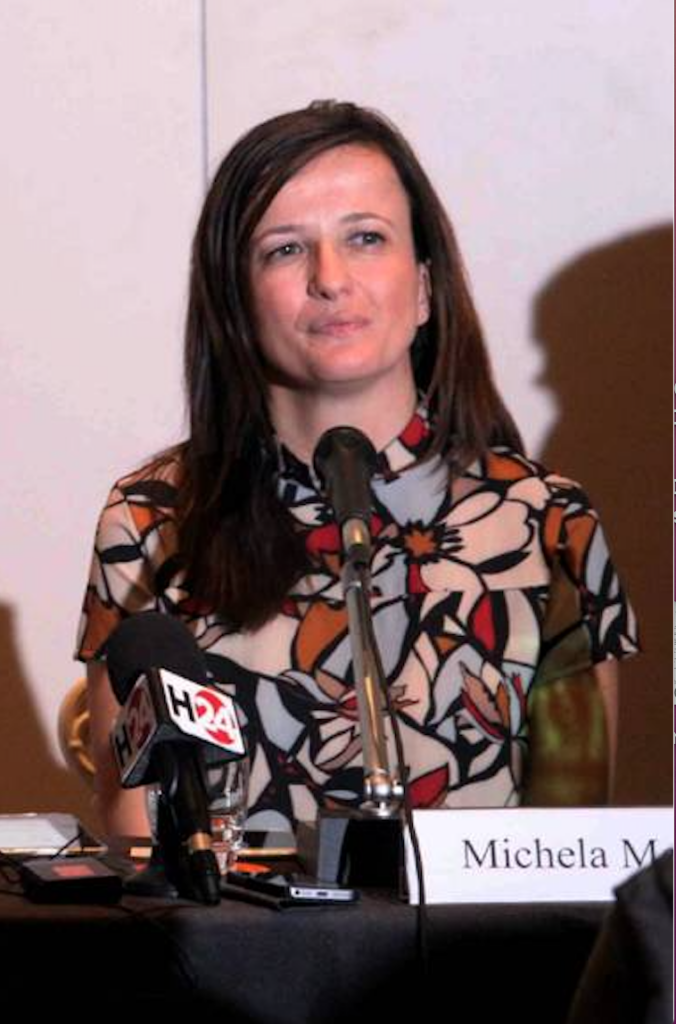
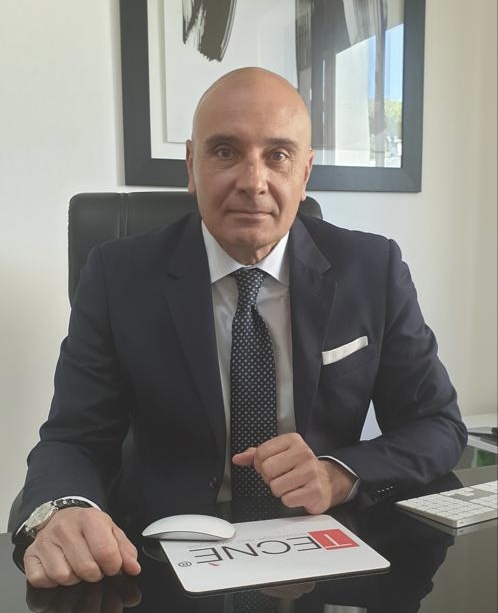
    The Italian data analytics, consulting, and public affairs company Techne has opened a new sister company in London. They have been leaders in their field for over 20 years in Italy, producing reports for major clients, including the Italian trade union Confederazione Generale Italiana del Lavoro and the General Labour Union. To find out more about their new UK venture, I had the pleasure of sitting down with Chief Executive Officer Michela Morizzo and Director Carlo Buttaroni.

    Michela Morizzo, CEO
    Michela Morizzo, CEO

    “Over the years we’ve gained a great reputation, and at the moment we’re leaders of the market in Italy, so this expansion to London is the next big step in our history,” Morizzo explains. So what is it which sets the firm apart? “We try to transform data into opportunities,” she replies. “We analyse what’s happening at the moment – within a political campaign for example – but we don’t focus on the now, we focus on the future and what will change.”

    Predicting that change is the foundation of what Techne does. The company’s basic goal is to make accurate predictions about human behaviour in terms of economics and politics. To accomplish this, the firm is highly expert at combining traditional interviews and surveys with algorithms designed to make sense of the information gained from those surveys. The data is also analysed manually in order to bring in a psychological perspective.

    Morizzo also explains the problem with relying solely on people’s responses when making these sorts of complex predictions: “Conducting classic interviews is not enough for us, because the answers will vary depending on what people are thinking on that day. They may tell us that they will behave a certain way in 12 months, but we want to be sure what will really happen.” That’s what sets Techne apart – the ability to see round corners. Morizzo continues: “So we use statistical methods based on the game theory of John Nash [readers might remember Nash as played by Russell Crowe in the 2001 film A Beautiful Mind] to develop a model in order to elaborate on people’s answers and be sure what they will really do in the future. Over the last 20 years we have analysed millions of data points – but if you don’t know what that data means, it is simply a waste of paper.”

    Carlo Buttaroni, Director

    Meanwhile, Carlo Buttaroni is in charge of ensuring that their data isn’t a waste of paper. Buttaroni is heavily involved in the more technical side of the business, helping to develop the algorithms at the centre of Techne’s data analysis. The game theory that Morizzo mentioned is a study which uses mathematical equations to predict the decisions that individuals within a group of people will take. John Forbes Nash Jr. advanced the science, showing that it could be applied much more widely than originally thought, and also pioneered new theories about behaviour. Buttaroni bases his algorithms on Nash’s interpretations of game theory, and also factors in the ideas set forth by Nobel Prize winning behavioural economist Richard Thaler.

    Buttaroni recalls how he got his start in data analysis. “I started 30 years ago in politics, but politics was not enough so I moved over to the scientific side. I specialised in the statistical approach in France before joining Techne. Now, the Nash models that we use are also the basis for the algorithms which attempt to predict the movements of the international stock market.”

    All of which means that Techne has 20 years of experience and credibility – but in the beginning the company had to rely on the quality of their predictions and their apolitical, objective approach to achieve a good standing in the data analysis field.

    “It was difficult to gain our reputation,” Buttaroni recalls, “but the most important thing was when people started seeing that our predictions were coming true. Now we have a track record, but those early demonstrations of our accuracy were essential to our success. Additionally, research companies are often associated with a political party, but we are outside politics. We can work with parties across the political spectrum because common sense has no flag. Both sides need to have the ability to understand the potential of the analysis we offer.”

    TechneUK did not have an easy time starting their fresh venture in February of 2020, but now it is up and running in its new London-based international centre. Morizzo details the motivations behind the launch of their sister company. “We decided in February 2020, just a week before the Italian lockdown, to create our sister company TechneUK,” she recalls. “We have already worked for years with European companies and people in the United States, but we wanted an international hub, and London is the perfect city.” She adds: “It is a strange name, but it has a meaning; ‘Techne’ comes from an ancient Greek word which means having knowledge and skill at completing tasks well. It is also the root of the word ‘technical’.”

    While Morizzo, Buttaroni and the rest of the team were attempting to launch TechneUK during the pandemic, they were also trying to predict the effects of the virus. While there is precedent for a widespread virus such as Covid-19, when it came down to the data, Techne had to start from square one. They aimed to predict various social and economic responses to the pandemic, including reactions to vaccine mandates and lockdowns.

    “During Covid, we didn’t have any historical data, but we used official data from the statistical institutes of each country – income, social class, professions, and other demographics – to create a picture of the population. We use the data alongside our statistical programmes, then we analyse what comes out to see what considerations there are when making these decisions.”

    With their London sister company successfully launched, Techne hopes to expand their unique approach to data analysis and reach a wider market. Morizzo sums up the goal of TechneUK in a brief mission statement which highlights the widespread ambitions of the company:“Today we think there is a need for a global science which combines the individual person with all the world they live in.” This is a company set to make inroads in the UK, and globally.

    For more information go to:  www.techneuk.com/about

  • Sir Rocco Forte: ‘I’ve never worked so hard in my life’

    Sir Rocco Forte: ‘I’ve never worked so hard in my life’

    Robert Golding speaks to the famous hotelier about his opposition to lockdown and what graduates need to know about the hotel industry 

    For many, it will be outdated to think of Covid-19 as being a Biblical reckoning of sorts, where the last shall be first, and the first last, but there have been some tremendous reversals of fortune.  

    Hoteliers are up there with airline owners and restauranteurs among those who have most had to duck and weave. And there’s no hotelier more famous than Sir Rocco Forte. To talk to him is to suspect that he is the sort of man in whom stress takes the form of indignation, but we should be open-minded about that: Forte has seen his business upended by the pandemic.

    Forte is a lockdown sceptic of the Toby Young and Laurence Fox school, but with the crucial difference that with business interests to protect – and employees to look after – he has attracted less opprobrium.  That’s partly because he is talking from a position of commercial pragmatism rather than whimsical philosophical pushback. This is the voice of business and it’s a powerful thing to hear.

    He begins our interview by recalling the strains of the first lockdown: “Our German hotels stayed open with greatly reduced staffing levels, as we had long-term customers and under law we couldn’t take advantage of their furlough scheme, if we closed. In Russia the hotels remained open as there was no furlough, and therefore there wasn’t much difference in cost between staying open and closed.” 

    New opening, Villa Igiea

    He sighs pre-emptively at the thought of the ensuing recollections: “The reality is most of my hotels depend principally on international business. The Italian city centre hotels [such as the Hotel Savoy in Florence, and the Hotel de Russie in Rome] have six per cent local business; Brown’s of London has nine per cent UK business. With restrictions on international level, they can’t function on a profitable basis.” 

    But Forte is in the league of the hugely successful and one can sense beneath the extraordinary difficulty of the situation his resilience. He will not take reversal lightly – and 2020 did see a few successes. “Most of these hotels will continue to limp along. The two exceptions in August, September and October were our 40-bedroom hotel Masseria Torre Maizza in Puglia, and the Verdura Resort in Sicily which had a reasonable August. But it’s a gloomy scenario.” 

    To put it mildly, Forte is no fan of the Johnson administration, but reserves special ire for government scientists. “The government needs to change its attitude to the pandemic,” he continues. “The very few people who are endangered are old and have underlying health problems. It’s not nice to talk about people dying and it’s sad, but it’s not a disease that affects young people. Scientists you’ve never seen before are now enjoying the limelight: they didn’t have authority before, but can now tell people what to do. Really, we should get back as quickly as possible to a position where we’re all allowed to make up our own minds about the risks we want to take.”

    The Verdura Resort in Sicily enjoyed a profitable summer in 2020

    Forte was talking before the second wave, and the deaths which followed. When I catch up with him again in late April however he questions the government’s narrative about the spike in deaths: ‘I am also upset about the exaggeration of deaths. The reality is that under the age of 60,10,000 people have died, they’re running the economy. 80,000 of the so-called Covid deaths have been in people over 80 and another 30,000 of people between 70 and 80. It’s not a reason to close the economy. The whole thing is to terrify people into submission. I never knew how totalitarian states cowed people into submission. Now I know how they did it.”

    Perhaps it will always be salutary to have someone like Forte arguing during a time like this against the status quo since that asks those in power to check whether the balance is right. “We closed our whole economy and it’s just nonsense, we’ve got to move away from being ultra-cautious and ultra-careful.” 

    In the event of it, the Johnson administration did listen to some extent and in hindsight we all know, after the Winter of Variants, that so far, there has always been cost attached to the decision to open up. Yet we also know that we can’t go on like this indefinitely, and Forte is among the most compelling voices pointing to the cost to business of not opening up.

    Forte, like Goldman Sachs CEO David Solomon, wants his staff back in the office. “I started getting people back in the office in July 2020. Staff were anxious to get back to work. Employers have got to get harder with people. People who have underlying health issues – that’s understandable. It’s the same with the schools: children are not at all at risk of the disease.” 

    Sir Rocco Forte outside Brown’s as part of its Luxury is Local push. Brown’s footfall pre-pandemic was only 9 per cent domestic

    The counter-argument would run that this misses the point and that nobody is particularly arguing that they are: what the government is saying is that they can carry the disease and transmit it to someone who is at risk. Forte pushes back on this: “The government said there would be a spike when the children went back to school in March and there wasn’t.”

    Forte is illuminating on the commercial reality: “The economy is talked about in the abstract. It’s about people’s livelihoods and their families. We’re still not open and free to work.” This is plainly true, but there again one might say that it’s precisely in recognition of this fact that we have the furlough scheme.

    The suspicion remains that confronted with the pressures of SAGE’s advice, and the public health, Forte might have done the same thing as Johnson and Sunak, although perhaps with even greater reluctance. He rejects this: “I keep thinking, ‘What would Mrs. Thatcher have done?’ For one thing, she’d have known the science herself. And she’d’ve have taken a much more pragmatic approach. And why is the government talking about an early election? Because the government is popular and people are at home, being paid and not having to work. We’re not seeing the eventual effect of all this, which will come two years down the road. Their propaganda has made them popular and they don’t want to see adverse effects. There’s a lot of talk internally within the Party about a new election.”

    Forte then is a man at bay, and at odds with the government. If you take the long view, you might say that the brand is strong, and that given his own immense savvy, he will find a way back. But there must be days when it doesn’t feel like that. ‘It’s cost the company around £100 million,’ he tells me in April.

    It’s no surprise to hear his opposition to home-working going forwards. Recalling the first lockdown he says: “For the first six weeks, I’ve never worked harder in my life, but after a while the whole thing pales. Being in an office creates discipline. And if not being in an office is demotivating for me, what’s it doing to the rest of my staff?” 

    And what about the position on tax going forwards? Forte is clear about mooted tax rises: ”We want to get the economy moving, and we’re not going to do that by raising taxes. Servicing the debt will cost half a billion a year which is not significant. Why do we need to start repaying the debt now? We finished off paying our war debt three years ago. We don’t need to rush.”  

    The Balmoral in Edinburgh is another option for the domestic traveller

    As a Conservative Party donor, has he spoken to the prime minister about all this? “I’m afraid I’m not in a position to pick up the phone to him to tell him what I think. The best way to influence those in government is to make your views known very publicly. I have appeared on television which is not something I normally do – desperation.” 

    So will he be looking to hire this year? “Once things normalise, a lot of businesses won’t be around anymore. Ones like mine who can borrow more money will be more indebted with the constraints that puts on business. But we’ll still be looking to hire people.” 

    So what does he look for in potential employees? “We look for an element of enthusiasm for the industry. I would never advise anyone to come into this industry who didn’t enjoy working in it: you should try and do a holiday job for a few months, and see if you like the feel of working in a hotel and what it entails.” What should they be prepared for? “It’s quite hard work,’ he says. “It involves unsociable hours a lot of the time and people in the business enjoy that. You need to have camaraderie and a sense of belonging. Upwards mobility can be very quick. You can start as a waiter and end up in a management position if you have the right attitude and the abilities to do so and these are recognised. If you’re a shrinking violet it’s not the place for you.” 

    So, once the pandemic’s over with, what are his plans? “Well, I have big concentration in Italy as we already have a strong position. But I’m not in Milan. Venice is somewhere we should be. I want to do more in the UK. It’s very difficult outside of London to look at smaller hotels in important tourist destinations where a larger hotel won’t work. Where a fifty or sixty bedroom hotel would be quite successful. As a UK-based company it’s a shame we’re not doing more here.” 

    You get the impression that this is how he’s used to thinking – dynamically and rapidly about future plans. It’s a window into the mindset the pandemic has deprived him of. “Then I’m not in Paris, not in Madrid and Barcelona. I’m in St. Petersburg not Moscow. Then I’d like to be in the States – a big proportion of our business comes from there, so New York and Miami…” 

    At which his voice trails off, seemingly with the realisation that none of this is possible at the moment. But everything about the man makes you realise it will be again – and perhaps sooner than any of us realises.  

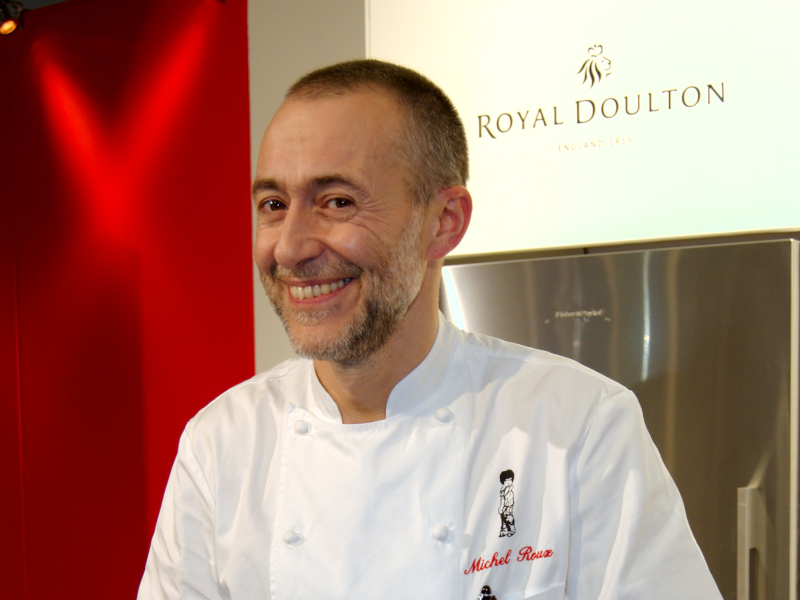
  • Michel Roux Jr: ‘Le Gavroche is more than the food’

    Michel Roux Jr: ‘Le Gavroche is more than the food’


    As part of our regular series examining the impact of family relationships on careers, we spoke to the La Gavroche chef about keeping the family flame.

    If ever you’re lucky enough to eat at Le Gavroche, your good fortune is likely to be compounded once you’ve had the excellent food. It’s Michel Roux Jr.’s habit to do the rounds after lunch, and perform a friendly tour of the room. Roux will pose for photographs and laugh genially as the complements accrue. ‘I love being able to provide a total experience for our guests,’ he tells us. ‘I love meeting out guests, whether regulars or new.’

    As a result of this tactileIf ever you’re lucky enough to eat at Le Gavroche, your good fortune is likely to be compounded once you’ve had your food. approach to the business, you’d think lockdown might have been difficult. Roux strikes a cheerful note. ‘I’ve been incredibly busy during lockdown, not least with the arrival of our first grandchild, which is really wonderful.’

    So another Roux enters the world, no doubt stocked with the genes of a master chef. Roux has followed in the footsteps of not just one but two famous relatives. You might think that his father might have been Michel Roux Sr., who died in March of this year, but you’d be wrong: in fact, his father is Albert Roux, and Michel Jr. was named after his uncle. Le Gavroche – which opened in 1967 – was the first UK restaurant to obtain three Michelin stars, and Michel took it over in 1993. How did it feel to be following in the footsteps of famous relatives? Roux recalls: ‘Of course, it was a massive responsibility when I took over the reins at Le Gavroche, nearly 30 years ago now. But if my father hadn’t thought I was ready, he wouldn’t have handed them to me. There is no question I feel a commitment to maintaining the Roux flame, whether in the restaurants or through our Roux Scholarship competition.’

    One often feels for the children of famous parents: it must be hard to achieve anything in your own right. Martin Amis frequently complains about the Kingsley comparisons, and Euan Blair cannot discuss his own original (and unBlairite) views on education without having ‘education, education, education’ returned to him.

    So did it take a while for Michel Jr. to arrive at his own identity as a chef? Roux explains that he’s moved with the times: ‘Over the years, the food at Le Gavroche has evolved to embrace the requirements of modern diners, so a meal at Le Gavroche will be a lighter one than when the restaurant first opened, but the essence of French classicism is very much there.’

    It’s a good point: we might sometimes strive to differentiate ourselves from our parents’ achievements in the workplace, but usually time will do that for us anyway, and ensure that we inhabit a different moment in history. One example where that’s proven the case with Michel Jr. is in his highly visible TV career.

    So how does he think shooting will be in the post-lockdown era? ‘I was lucky to be involved in the production of ‘Hitched at Home, Our wedding in Lockdown’ for Channel 4, which was definitely TV for lockdown. It was very different to the usual filming set-up.’ How so? ‘It’s going to be incredibly difficult to make the same sorts of shows as before, even with one meter social distancing.’ But Roux adds that he’s ‘seen a lot of creativity: talking heads, and getting family members to film over longer periods using professional equipment at home.’

    Interestingly, the Roux tradition is already being continued in the next generation. Emily Roux and her husband Diego Ferrari have their own restaurant Caractère in Notting Hill. So what would Roux say to young people mulling a hospitality career? ‘Front of house and in the kitchen, hospitality can offer an amazing career. You’re always learning, you have the opportunity to experiment and be creative, and it’s incredibly satisfying to provide good service. But it is hard work, and you need to put in the time to learn the craft.’

    And how has lockdown been for Le Gavroche? ‘The most important thing for me is to make sure our staff are doing as well as they can. It was frustrating waiting for the government to come up with their guidelines for the hospitality industry.’

     Roux chose not to home deliver (‘Le Gavroche is more than the food’) and instead kept in touch with regulars through newsletters ‘to keep everyone engaged.’

    Despite his obvious love of his work, the question persists. One can’t help but wonder whether the family name hampers people like Roux, and whether some other career might have been possible had there not been the need to keep it in the family.

    But Roux doesn’t feel this way. ‘I never considered anything else. Food is in my DNA, and I love working in the industry.’ Parfait and bon appetite.


  • Exclusive Finito World CEO Survey

    Exclusive Finito World CEO Survey

    A look back on Sophia Petrides’ exploration of the problems CEOs faced during the pandemic. Originally published June of 2021.

    By Sophia Petrides

    Over the last three months I have beenspeaking with CEOs, leaders and entrepreneurs about leading through the pandemic and lockdowns of 2020 and 21. It will probably come as no surprise that the results show that the 50 leaders I spoke to all reported new challenges as they explored new ways of working remotely. They had to learn, as if from scratch, how to manage teams, and engage with clients and how to manage the group of CFOs, CTOs and CFOs sometimes know as the C-suite. The leaders I spoke to head up small, mid and large cap organisations across financial services, technology, healthcare, sports, consumer brands and manufacturing. I am grateful that they gave their time during a period when – as you will see – that is a commodity more valuable than ever. 

    Encouragingly, all of them shared an overwhelmingly positive outlook for their organisations and each expects to see a strong global economic recovery once our vaccination programmes are fully in place. At the same time most of these business leaders acknowledged that we are unlikely to return to pre-Covid-19 workplace norms anytime soon, if ever. All these CEOs took part on the understanding that my findings would be reproduced anonymously. 

    When it comes to the specifics of how they approached the lockdowns, it is clear that the direction of travel over the last decade towards a more people-centric employee experience, better communication across organisational hierarchies and more inclusive company culture has been greatly accelerated by the pandemic and the needs of working remotely. As one CEO put it, “The pandemic has a silver lining. It’s an opportunity to do things differently, with the time pressure needed to overcome complacency with the current way of doing things.”

    Digital headaches

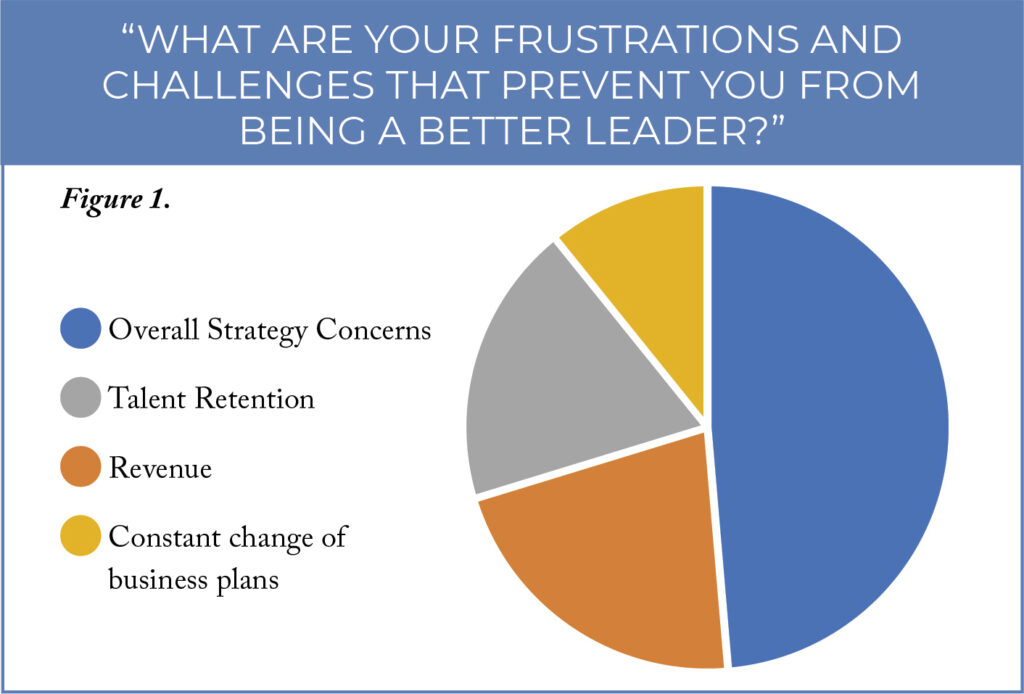
    We asked the question: “What are your frustrations and challenges that prevent you from being a better leader?” and it yielded some interesting answers which show the most important friction points during the pandemic. These will likely also affect us all going forwards too.  The results can be seen in Fig.1 below.

    The fact remains that digital leadership is difficult. A large part of the leadership challenge has always been aligning the company and its stakeholders around a clear vision. However, in the age of virtual meetings such as Google Meet, Zoom, and other online meeting platforms it has become a more significant challenge. In many respects, engaging with teams digitally underpins most of the major frustrations of the CEOs I spoke to – the problem is the loss of those unplanned moments of interaction that are so important to create a sense of momentum and social cohesion behind the leadership team. There’s no office buzz online, and that informal energy is essential to align teams behind the leadership vision.

    Another major headache – around 19% of issues – was retaining new talent in an age when many of the new hires hadn’t been able to meet their management and colleagues in person, or participate in any of the usual social, informal onboarding experiences that are a normal expectation of everyday working life. However virtual meetings were noted as providing positive experiences too, in that they also give a safe space where younger professionals can voice their views with confidence.

    As one CEO put it, “I miss walking around the floor and connecting with people at all levels. You can’t connect on a human level through virtual meetings, there’s no spontaneity, no chit chat, no watercooler moments. People struggle with burn out, home schooling and not being physically together, you need to find a platform to support innovation because it is lost when people are 100% working from home.”

    Also in relation to Figure 1, I found that around 11 per cent of leaders felt that reaction to the pandemic had caused a shift to short-term strategies and away from the big picture plans in place before. There was a sudden need to have a Covid-19 response, and this in turn triggered a slew of new HR policies. 22 per cent blamed the sudden disruption for the loss of normal KPI reporting and measurements, along with the loss of travel and sales activities, for reducing revenues and growth. One leader told me: “You are challenged by balancing staff well-being and HR policies with Return on Investment (ROI) and frustrated because you can’t spend time with clients like you used to.” 

    NO BOARDROOM BLUES

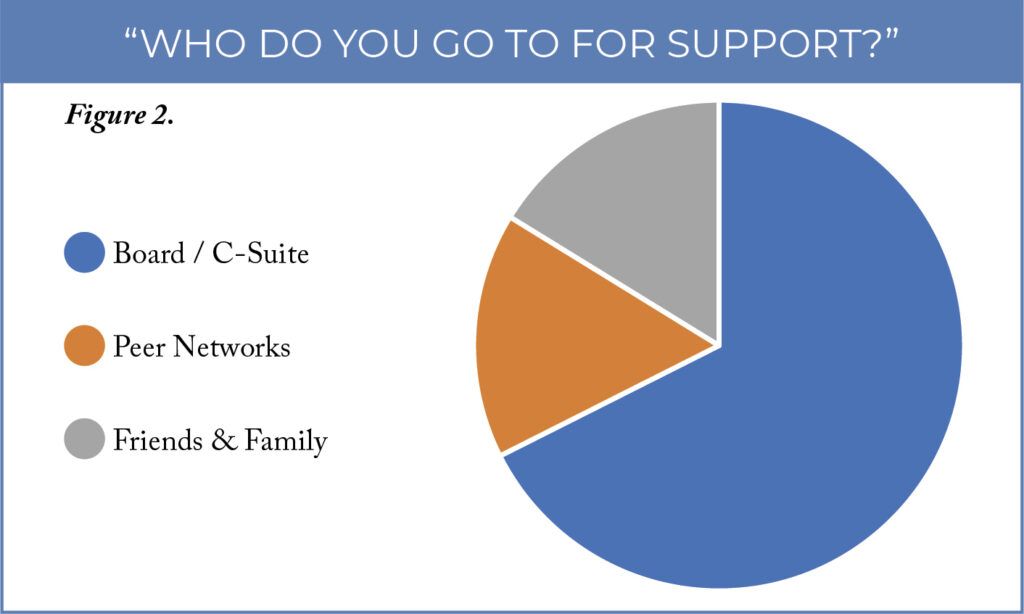
    Secondly, I asked CEOs what support mechanisms they had found themselves seeking out during Covid-19. These results are displayed in Figure 2. One interesting – and unexpected – result of the survey was the overwhelmingly positive response to online board meetings. Over 68 per cent of my survey group immediately said their boards, trustees and non-executive directors were providing an extremely high level of support. This was attributable to the pandemic, as another unexpected silver lining, not just in providing support to CEOs, but offering mentorship and support to the organisation at a higher level than ever before. One leader was particularly enthusiastic about the reaction of their board: “Pre-Covid-19, it was challenging to get the board of trustees visible and engaged with the team. Now there’s 100 per cent visibility and presence through online meetings, which means the board has moved closer to employees.”

    For those without a traditional board structure to fall back on, there was a fairly even split between two other kinds of support network. Firstly, many leaders sought out colleagues at a similar level who they could talk to about the challenges they were facing off the record. Secondly the role of friends – and in particular, family – in their lives became of increasing importance. In many cases, the opportunity to work from home came hand-in-hand with the chance to make a meaningful change to their work-life balance. Spending more time with the family has proven to be a positive way to recoup lost energy and online meeting fatigue. 

    The Human Side

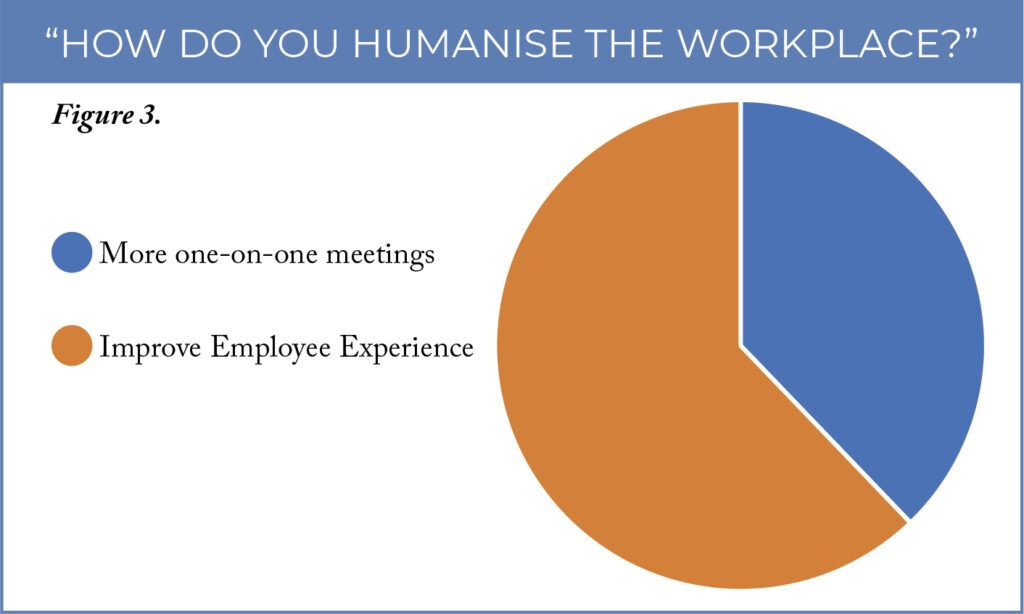
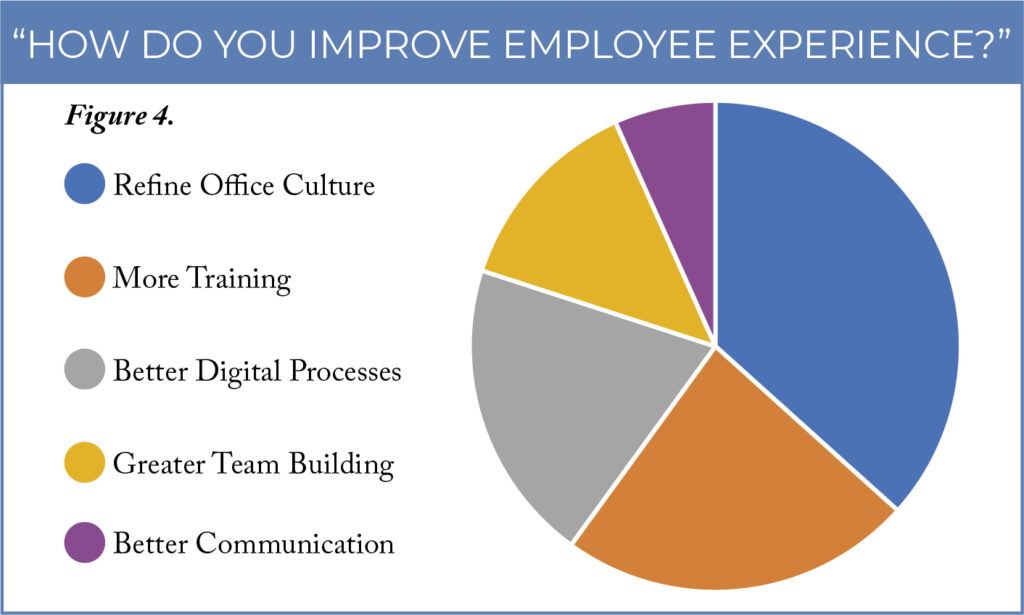
    Thirdly I asked what the CEOs in question had done to humanise their workplace. There was a follow-up in the question whereby I also asked what the surveyed individuals had done to improve the employee experience. These results are collected in Figures 3 and 4. 

    The results were clear. Covid-19 has accelerated the importance of the employee experience. When I asked how to humanise the workplace there was a split between those who felt the emphasis should be on designing a better employee experience (62 per cent) and those who felt that what was required was more effective two-way communication across the traditional company hierarchy (38%). 

    When I delved into what an elevation of the employee experience might look like to these business leaders, many interesting initiatives were listed. These ranged from holding nutrition and exercise sessions for employees by providing free access to online personal trainers through to ensuring each employee took a scheduled 45-minute mindfulness break daily. A number of workplaces also prioritised in-office working options for people who were feeling lonely or isolated working from home. One CEO confided: “We delivered fresh food hampers, gym kit, games for kids and Amazon vouchers.  It was about paying attention to mental and physical needs and connecting with everyone no matter what level.”

    Leaders also emphasised the importance of creating a culture of fun within their teams. Many added that this required more organisation in the virtual meeting world, and included everything from introducing fun icebreakers in meetings to organised weekly virtual events. However, the most significant aspect of all the employee experience initiatives was limiting working hours, not sending emails over the weekend and ensuring staff took breaks throughout the day. Another CEO explained: “Burnout is an issue. There’s a temptation to work longer hours, but it’s not all about hours – it’s about your output, and that suffers if you don’t get the balance right.”

    In addition, many leaders discussed the importance of making themselves accessible to all levels of staff, including scheduling one-to-one sessions weekly with new recruits to ensure they are settling in. This was especially on the mind of one CEO: “I am very conscious to have regular calls with the team. We have to bring all levels of people closer together and be more approachable and available 24/7.”

    The Question of Morale

    There are, of course, many different tools available to leaders for improving employee experience. The primary one was focusing on company culture (37 per cent) and trying to build better bonds between team members through the kinds of employee experiences we see outlined above. It is important to note that there are two other broad categories of tool for improving employee experience. 

    One is Continuing Professional Development (CPD). This is an essential aspect of making sure employees are staying true to their ambitions. This need for training and continuing development for teams represented 23 per cent of answers. As another put it: “Training and development are vital for sustaining a cohesive team and understand how they fit within an organisation.”  There is a clear role for training to make employees feel respected and empowered, and many CEOs related this need to team performance. Another said: “Empowered means people who make better decisions more cohesively, without the need for constant supervision.”

    In addition, 20 per cent of respondents talked about giving people the space to make their own digital processes, chats, support channels and online activities to boost team morale. 13 per cent suggested that the best employee experience was being on a winning team, and being rewarded as part of a growing business. However, there was a general sense that while digital was essential, automation had a negative effect on team experience because it isolated people during previously social activities like training. Another CEO confided: “We invest billions in making computers more human and making humans more automated. Then we spend billions more trying to humanise humans. Person-to-person contact is impossible to replicate.”

    Hinges Off

    It is fascinating to look back at the lockdown year and consider how much we have learned about working digitally. It brings new challenges in terms of burnout and a lack of team dynamism. The workplace spark, the spontaneity, the atmosphere of a team environment has not digitised effectively. However, there are clear benefits – and arguably greater long-term gains to come – not least in the way digital working has refocused leaders on authentic communications, a flatter hierarchy and better employee experiences. 

    It seems fitting to end on a quote from one CEO, who succinctly explained the need for better comms and experiences, as well as the advantages of working together in the same place. These remarks suggesting a new home-work hybrid might offer a renaissance for the modern workplace: “On my first day, I literally took the door to my office off its hinges. I needed to make a statement that everyone is welcome. Everyone deserves time and empathy. It is vital to feel the pulse of the employees, because that’s the pulse of the business.” It is a pleasant thought that, cooped up in our houses as we’ve been, that we might soon inhabit a working world which has become richer as a result of the pandemic. 

    Photo credit: Christina @ wocintechchat.com 

  • Edtech Interview: Plum Innovations founder Ji Li on the rise of remote learning

    Christopher Jackson


    By the time I talk to Ji Li the pandemic has receded enough that I could probably meet with him face to face, but it’s fitting that I don’t. That’s because our conversation is all about the way in which information technology has changed in schools over the last twenty years or so – and the remarkable ramifications that’s had for education in this country.

    Li is the CEO and founder of Plum Innovations which specialises in the provision of education technology to schools, and so is well-placed to give an overview. “It’s a fascinating evolution,” Li says over Zoom. “It helps to look a bit deeper at the statistics to consider the scale of the change. According to the British Education Supplier Association Research, in 1998 there were 820,000 computers in schools in the UK. That amounts to about 31 computers per school.”

    It’s worth briefly concentrating on that statistic, and thinking about what it meant. This was a world without that culture we’re familiar with: a laptop for every table – a computer as a kind of accessory of yourself. And of course that had ramifications for schools. “As a result of that,” Li explains, “most of the schools in the UK were serviced by local authority IT technicians.”

    But then Li produces the latest statistics: “However, in 2019, before the pandemic, there were over three million computers in schools. And you also have to remember that during the pandemic – because of the way that period went – that number has increased dramatically.”

    Those statistics aren’t yet available but are likely to be equally eye-popping when they are released. So what are the ramifications of that seismic change for the IT industry? “The IT landscape has changed absolutely. But what’s most notable is the way in which schools have relatively limited budgets and so technicians have to provide a cost-effective way to manage large quantities of computers – and they have to do that still with very limited time. They might still only visit each school once or twice a week.”

    It’s a radical but also exciting change – although, of course, it places stress on teachers, parents, students and the education technology industry alike. But Li also points out that it’s taken place alongside another development which might be deemed to be as significant in its way. “This trend for remote-learning and remote-working has come along at a time when there has also been a dramatic expansion in the number of multi academy trusts,” he says. “Before these came along, most of the computers were located in one premises – and so the technician’s role would be to attend that site, and whatever problem needed solving would be done there, within that boundary.”

    That might feel like a simple way of servicing schools, but of course it also places a certain strain on the technician involved. “Not only has the quantity of computers increased but the workload has too, and technicians have had to change their schedules in order to meet other requirements. On top of that,” Li continues, “another issue must be navigated: a good education technology company will also need to service the question of working from home and working at school – and that may even include servicing the parents as well. So I think all this has changed the way in which technicians work with schools, and how they can work more closely with providers. It comes down to a question of there being far more devices in circulation in schools – but a perennially limited budget.”

    All that, of course, means that Li, who has a team of four, has to pay extra attention to looking after his staff, as well as making sure that all things run like clockwork in the schools which he services. “The workload my technicians have is something we have to think about – but also we deal with the fact that every day we’re confronting new challenges. That’s part of the joy of working in a changing industry. But it also means that I need to make sure I concentrate on the well-being of my technicians – because that’s important to the schools as well.”

    So how does Ji Li cope with all this? This is where it helps to be a small and nimble business, he says: “As Plum, we’re quite small and more flexible than a large company and can adapt to changing situations. When teachers work remotely, we also work remotely so we don’t have to visit all different physical locations.” It’s details like this which make you realise how Li’s success is partly due to an ability to be in lockstep with his schools. Li continues: “We’ve also been very diligent about setting up a proper infrastructure so that when we have more devices we can manage them in a centralised unified platform and that reduces workloads.”

    The more time you spend with Li, the more you realise that what sets him apart is his passion for education – and his admiration for the teachers he works with. “We also work with teachers who are tech-savvy,” he explains. “And we work with teachers until they feel they’ve become used to the technology we’re all working with. That way everything goes smoother. It’s a challenge for them sometimes on the IT side – so our job is to reduce this stress wherever we can.”

    And how do schools feel about this seismic shift? Li is admiring of the headteachers he works with and their ability to see the bigger picture. “A good leader in schools will know what’s happening in their schools – and the ones I speak to are simply happy that they have more devices to access. The most important thing we can do is create a trusted relationship with schools, and send a positive message about the potential for IT learning.”

    And how are teachers handling the shift? Li is very positive about this. “In one of my schools in Kent, one of the teachers was pinged during the pandemic and told he had to work from home. But there weren’t enough supply teachers. Luckily, we had enough laptops for the class. So the teacher in question was able to be at home and do a Zoom call with his teaching assistant to plan the lesson. He was then able to do the whole class on Zoom, and the assistant was able to be present in the classroom. This was a huge reduction in stress for everyone – without that arrangement, the children would have missed the whole day.”

    What is enjoyable in this story is the sense we get of how much each day matters in a child’s education. Another positive is that the pandemic has accelerated teachers’ familiarity with technology. “Throughout the past two years, teachers are up to speed now. During lockdown, teachers had to use these platforms,” Li explains.

    Talking with Ji Li, I am struck by his passion for education, and his desire to drive things forward: “I’m lucky to work with schools who continue to utilise the equipment they became accustomed to throughout the pandemic. When they can, they want to teach in class, but they also understand the importance of digital skills especially from the top down. Headteachers know that for future generations digital skills are going to be vital.”

    All this makes for considerable job satisfaction for Ji Li, and for those working with him. “It’s a great feeling,” he says. “Before the pandemic and during it, we’ve tried to see how we can be ahead of the curve and that’s what we’ve done.” They certainly have.