For anyone looking to be famous, one possible route seems to be to truncate your name into a snappy word: the strategy has worked for Beyoncé, Banksy, Madonna and plenty of others. Perhaps in a busy world we don’t have time for multiple syllables anymore. Were Warhol alive today he might just be Andy.
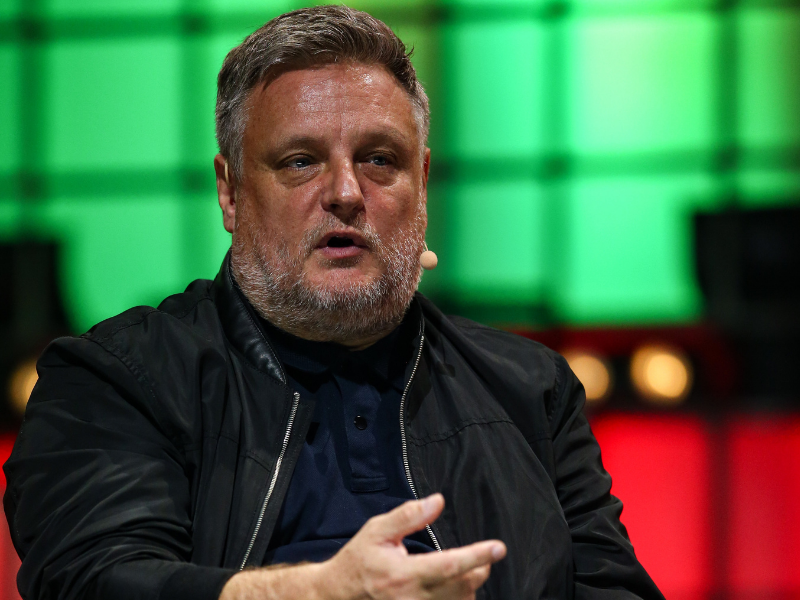
The photographer Rankin is shorthand for John Rankin Waddell: as the founder of Dazed and Confused the globally distributed magazine, photographer of Kate Moss and Her Majesty Queen Elizabeth II, and with long ties to the music industry, the 54-year-old photographer is now at the summit of his profession.
So how did he get started? His early education looks at first inauspicious: Rankin studied accounting at Brighton Polytechnic, before dropping out in order to study photography at Barnfield college in Luton. He subsequently relocated to the London College of Printing. In time, his reputation as a fashion and music photographer grew.
But he really owes his start, he tells us to Icelandic pop star Bjork: ‘Bjork was brilliant. It was literally my first ever shoot for a record label. She’s one of the most era-defining musicians because aesthetically she’s so unique and original, and she’s very in control of her image.”
What did he learn from her? “What I loved about her was that she just let me do my thing. I have to be honest; there was a moment in the shoot where I was trying to do something that was a bit derivative of another photographer, and she gave me the confidence to just not do it. She was like, ‘You don’t need that shot, stick to what you’re doing’.”
So did that make a difference in terms of his subsequent career? “She kind of set me up in a way, because very few people have ever surpassed her collaborative approach.” Collaboration is a leitmotif in Rankin’s career. It was only upon meeting Jefferson Hack at London College of Printing that he felt able to launch Dazed and Confusedin 1992.
Fast forward to 2021, and Rankin is still productive – and still collaborating. His latest book How to Die Wellis produced in partnership with Royal London, the UK’s largest pensions company. So how does he think this book will help people in these death-conscious times? “Death scares people, and that discomfort is the main barrier to talking about it,” he says. “The hardest part is getting started, but once you push through the fear – those conversations become a lot easier.”
This tracks with my own encounters with those who’ve been around death a lot – from nurses and doctors to undertakers and funeral directors, they seem not to have the expected heaviness, but instead a certain lightness of being.
So has compiling the book helped Rankin face his own mortality, and the mortality of his loved ones? “Making this book has definitely helped me to deal with my own grief, as well as confront the idea of dying,” he admits. “And it’s so important that we do, because having these kinds of discussions means that when the time comes, our loved ones are prepared.”
It’s been an extraordinary time. For over a year now, we look at our media and see the death toll writ large.
Have we become a morbid society? “I’m not sure the pandemic has made us, as a society, any better at having these conversations. The shock and size of the grief has been overwhelming,” Rankin says. “I think it’s going to take a long time for people to process what has happened. But it has certainly presented us with the undeniable reality of death.”
And yet How to Die Wellisn’t a serious book by any stretch of the imagination – it’s full of anecdotes, lightness of touch, and charm.
How did he go about compiling the book? “We interviewed a broad selection of people who shared their experiences of grief – and also told us what they’d like their funeral to look like. There were some absolute corkers. From unusual song choices, to outrageous outfits, to hilarious last words. Death is just like life: there are ups, downs, laughs, lots of crying – and more than a few funny bits.”
James Jensen is a renowned tennis coach with years of experience on the court. After competing in the Juniors as well as the professional tour, Jensen began coaching and launched a highly successful series of video tutorials. He is now the in-house coach at Pierpont Racquet Club, located in Ventura, California. He holds the qualification of USTA High Performance Coach and is also a USPTA Certified Elite Professional.
Tell us about your career?
I grew up playing tennis. I started when I was eight years old. From there I started playing the junior tennis tournaments. I was trying to play in college, but ended up playing college football instead. And then I played tennis on the pay to play tour. Tennis is really difficult when you get out and try to make it on the tour. You pay your entry fees, and you’ve got a lot of costs involved just to get to a tournament. And then in a lot of the lower-level tournaments, the open tournaments that are money tournaments, you don’t make any money unless it’s the semis or the finals. You go and pay to play a lot, and you sink all the cost into it upfront. I’ve been at this club now for about almost three years. Before that we spent several years over in Hawaii, I was the director of tennis at the Turtle Bay Resort. Before that, I did instructional videos back when it was going from VHS to DVD. So back in the early 2000s. I did two sets, one set of six, and then another set of six under the pro tennis lessons, and they did really well worldwide actually.
How was the pandemic for tennis?
It was nice here because everything’s outdoors. The pandemic in general helped tennis because that was one of the few things that people could do. It was said that tennis and golf were the two lowest risk things to do and tennis was even lower than golf. A lot of people came out and tried it during the pandemic, and the club did very well.
What is the tennis industry like to work in?
It’s an interesting industry. During college, I was teaching tennis as well making money as I was trying to finish my college up. In the US in order to get into tennis and be a certified professional there are two main certifying bodies. One is the PTR, professional tennis registry. They’re located back East. And then the USPTA, the United States Professional Tennis Association, and that’s the one I’m associated with. They were in Texas, and now they’re kind of between Texas and Florida. In order to be an actual teacher, that’s what you should do is go and get yourself certified. Some people get certified by both, but you really only need one. The other main thing that it does for you is it gives you liability insurance, so if someone gets hurt on your court, you’re covered.
What is your experience with tennis teaching techniques?
For the kids, you’re basically trying to teach them proper technique, proper footwork, all that up front. We want to do that with the adults, but a lot of times adults have built in some pretty bad habits. Depending on how far they want to break back down to build them back up, it kind of depends. I teach anywhere from four years old, up to my oldest I have right now 80. She comes out once a week. It’s something you can do your whole life, you just keep doing it. And that’s the main thing is there’s always something going on for all the different levels. That’s what’s nice. Once someone starts playing, I get them into clinics and they start building some abilities up, and then when they’re ready they start playing some USTA league matches and that kind of stuff, just to get used to the competition site and see if they like it. Some people like it, some people don’t want to really compete, they just want to have their little group and play each week and be good with that. So, but then if they do that, then they start seeing the areas that they need to improve and then move on from there.
What is the pathway to pro for a teenager?
At 17-18 most likely it’s their parents that are paying for it. It’s somewhat still a rich man’s sport. Because of that, the ones that have the ability to pay for lessons, the ability to pay for travel, pay for tournament entries, have a step up. The tennis industry itself and a lot of non-profits are trying to kind of push money towards helping everyone to have that opportunity. But bottom line is that sometimes this comes down to the fact that you need the opportunities to be put in situations to succeed.
How can you tell as a young person if it’s realistic to pursue a rise to the level of someone like Raducanu?
You can tell somewhat based on how they come out and their hand-eye coordination, their athletic abilities. But I mean, Raducanu’s situation was really situational as well. It was during a pandemic, her and Leylah Fernandez, the two that were in the finals that year. They’re still good and up there in the score, but they’re not pushing as far – but that’s part of it too, they got thrown into that fame, Naomi Osaka, same thing. It’s a lot of pressure to put on these young kids. And depending on where they’re from, I mean, they could be the breadwinner for their whole family. And that puts a lot of pressure on the ones that are out there trying to make it as well. So you’re hoping that if they have that ability, that they’re at least tied into the USTA, where they’re helping send out some coaching, helping do some of the different clinics to help them get the ability and get the training that they need, and then give them opportunities, wildcards in the different tournaments. Then it comes down to them making the most of those opportunities. As far as making it as a living, it’s not easy at all. It’s very difficult, the top couple 100 in the world make really good money. Beyond that, you got all these other guys that are out there, just scrimping and scraping and like I said it’s pay to play. It’s not an easy route. But the teaching side of it can be, if you’re not able to make it out there, there’s money to be made in teaching. Plus, it’s very rewarding as well. You’re outside all the time, you’re on the court, you’re outside, you’re not stuck behind a desk, and you build some great relationships. And for kids, you are able to mentor. They look up to you. And so, tennis in general from that standpoint is really good for the kids, because most of the kids that are playing it are from good families, they’re good kids. They’re good in school. So normally grades are real good as well, so you’re putting your kids around other good kids as well. So from that standpoint, it’s a great sport for that as well because it is something you can do your whole life once you play at a somewhat decent level. And then if you’re playing at a high level, if you’re a former junior player that doesn’t make it on the tour, but still a really good player, how many business deals are made out on a tennis court or on a golf course? When you’re good at something, it just gives you that “wow” factor.
Tennis does not require that much expensive equipment at the most basic level. Where does the “rich man’s sport” side of things come in?
The barrier to entry is not much at all. You have a couple balls and a couple rackets, andhere in the US, you have free courts in most cities, so you have an opportunity to get out there, and at least begin. The competition is what requires money, but as far as playing it and enjoying it, my feeling with tennis is that you can find one other person at the same level as you whether you’re just a beginner, or you’re super high level, and you’ll have a great time. It doesn’t have to be that you’re both phenomenal players. You guys can be just starting out but you’re out playing, and we have guys at the club who have just started playing their first club tournaments and they’re hooked. It’s changed their family’s life. The kids now are involved and the parents are both now involved playing tournaments, playing USTA Team Tennis. I’ve watched this one gentleman who has lost 80 plus pounds, just from coming out and playing. Now he’s out hitting on the ball machine all the time, coming to my clinics, he’s out playing with other guys during the week, they play as a family. He’s sent me some texts and things saying “You don’t understand how this sport has changed my family’s life.” So it’s great for that. You really can just grab someone else and get out there and have a great time, hit and giggle.
What makes a good teacher?
I try to keep it as simple as possible. I think sometimes we as pros, one, we’ve played it so much that certain things just happen without us thinking it through. So when you take it back… when I did my instructional videos, this producer was about a 3.0-3.5 level tennis player. And he was able to go back and when we’d be explaining something he’d say, “What about this?” And then I would be able to go back into explaining things as simplified as possible. It’s basically the Magnus force. It’s basic physics that we deal with. Once you understand those and understand how certain things happen to the ball, then you can make little adjustments and it doesn’t have to be changed in a million different things. Keep it to one or two things at a time.
What has tennis done for you?
Controlling emotions is probably one of the greatest things the sport has done for me. In pressure situations you’re able to learn how to really calm yourself down keep as even keeled and in line as possible when situations get tough, and that does translate over into other parts of your life, for sure.
The legendary impresario on his start in the industry, the misguidedness of Nadine Dorries – and his friend Luciano Pavarotti
FW: So what was it like starting out in the performing arts business?
RG: I left school three days before my 16th birthday: my father was a chartered accountant, and he was determined that I would be articled to him. Once I got the basic five O-Levels, that was all I needed – but I absolutely hated it. After that, I got a job in newsreels – that was the week after Kennedy had been assassinated. By good luck my father was doing the accounts for theatrical people, and I managed to get a meeting in Notting Hill Gate with Victor Hochhauser.
And what was that interview like?
RG: He had three questions. ‘Are you Jewish, boy?’ ‘Where did you go to school?’ ‘Can you start on Monday?’ It suited me to a tee. I worked there for 10 months, 28 days and 12 hours and then bold as brass, started out on my own. In retrospect Viktor was running a sort of finishing school for budding promoters.
Which people have had the biggest influence on your career?
It was important when I was introduced to Donald Swann – who was half of Flanders and Swann. The Queen Elizabeth II Theatre gave me dates for an evening of his songs with very little grace, but they gave me the date because Don was involved. We ended up doing over 130 performances a year, and my business just grew and grew.
Has theatre changed out of all recognition since your heyday?
I think I had the glory years – because things have changed now as inevitably they do. I suppose every generation is apt to say the same, but I think it’s become much more difficult. It’s tough. Nowadays the kind of parameters that you work within are in many cases rightfully much trickier than they were when I was a young man.
What would you say to a young writer of musical theatre or opera?
RG: The basic premise hasn’t changed. If you’ve got ideas and you’re creative, and you want to do something – then you have to find a way through. Can you get through to Cameron Mackintosh first up? I doubt it very much, but you can find someone to workshop it for you. It’s a question of persistence and determination and, of course, talent. And everyone needs a bit of luck somewhere along the line.
What’s your view of the debate surrounding theatre subsidy?
RG: The whole point of subsidy is that you enable companies like the Royal Opera House or the Royal Ballet to exist. You certainly couldn’t run these things on a commercial basis. That said, I don’t think they do a very good job of it. I also don’t think Nadine Dorries, when she was Secretary of State, should have interfered with funding allocation. It should be arm’s length from government.
What’s the best night you’ve had at the theatre?
RG: Last year the Albert Hall put on a gala concert to celebrate my long association with them and my family came from all over Europe. I loved that – I think it’s the only time they’ve ever done that for a promoter.
What was Pavarotti like to work with?
RG: I remember he came in to a masterclass once and afterwards we had a reception. We had an apple crumble and cream dessert. There was this man who saw that Pavarotti and came running up to him with his dessert in his left hand because he wanted to shake Pavarotti’s hand with the other. Pavarotti couldn’t resist taking the dessert off him with his free hand! More generally, he was very generous with his time.
What have you learned from the greats?
RG: They’re all different. As a promoter I’ve learned that you have to step back and try not to impinge on celebrities. Don’t get overwhelmed and don’t be too gushy. Just try to be as nice as possible.
Lowering the Tone and Raising the Roof is published by Quiller and priced at £18.99
Christopher Jackson interviews a new star of journalism about life at The Mail on Sunday
When you pick up the newspaper what do you turn to first? For me, it depends on the occasion. After a sound sleep, I can face the enormity of the day’s issues, and brave the front pages. Usually, selfish for the next thing, I prefer the culture pages. But sometimes, especially when tired after a day’s work, I’ll go to the diary section to be pepped up by the human delights of gossip.
When I do so, it’s with appreciation that writing it is the hardest job in journalism; the gossip columnist specialises in the bite-sized indiscretion, the minor cock-up, the eye-popping peculiarity. What’s noteworthy is how little of this there is in today’s PR-burnished world: these stories are hard to find, and needing to be taut and punchy, hard to write.
At 26, Emily Prescott is already one of the best in the business, with a small team already working under her at The Mail on Sunday. Is this a declining sector? Every time I open The Evening Standard, the diary section – where Prescott used to work – seems smaller. Prescott bats this away: “If anything, gossip is booming. The Telegraph recently introduced the Peterborough column and The Times Diary was culled during the financial crisis but returned in 2013. Any shrinking pages are a sign of newspaper decline rather than a waning lack of love for gossip and whimsy I think.”
Prescott’s is a fabulous story. By nature softly-spoken and kind (‘Always be polite, no matter what’), she has shown tenacity to get so far so young. So how did she do it? After a range of almost hilariously non-descript jobs in recruitment and communications (“the pointlessness of those roles weighed very heavily on me”) Prescott decided that only one career would do. “I just really wanted to be a journalist,” she tells me. “So a few years out of university, I messaged Katie Glass on Instagram, saying I liked her features. To my amazement, I emailed her, we met up for a coffee and then she suggested I go to Diary events. I didn’t go to private school; didn’t grow up in London; had zero connections.”
Astonished, half-thinking the gig a joke, Prescott attended her first party. “Weirdly, I did really well; it was beginner’s luck,” she recalls. “It was a weird law event at one of the posh law firms, and Victoria Coren Mitchell had gone to speak. She said she’d been groped when she was a poker player and men would grope her under the table. It was a good news story – but a complete fluke!”
From then on Prescott hit the party circuit (“I found it such a thrill, just collecting lines”), and soon did stints at The Sun (“really useful”), The Express (“really awful, so depressing and bleak and SEO-driven”) and The Sunday Times, as the Saturday reporter (“wonderful”).
After that came a prolonged stint at The Evening Standard, a paper she obviously loves, and which connected her into the worlds of entertainment and politics. “It’s quite easy to get well-connected into Westminster. Now [at The Mail on Sunday], I do showbiz and it’s difficult to get access. But I could get any MP on the phone now, bar Rishi – and even there I could probably get his number.” Prescott isn’t bragging – or the type to brag – she just knows her craft and what it takes.
She recalls getting to know Sir David Amess MP, who was tragically murdered at his constituency surgery in 2021. “He was doing a campaign to get a statue of Vera Lynn. We spoke during lockdown, so maybe it was the thrill of talking to a stranger which caused a bit of a bond to develop. During the pandemic, interviews would be hours long; people were desperate for new voices in their lives. David was kind and thought of me a few weeks later, and called and said: “I have a potential story for you”. I was struck by the fact that the story wasn’t self-motivated. He had just remembered.”
Prescott explains the range of interviewees she’s experienced. “Sometimes – and this especially happens with very experienced interviewees – you feel like you’ve had a good interview and that they’ve told you something, but then you’ll listen back and there’s nothing there, except perhaps an anecdote which they wheel out every time.”
And what about young interviewees? “That can be frustrating – sometimes they’re just nervous. People often don’t understand that I don’t need a massive scandal, I just need something mildly interesting. When they’re so earnest, that’s difficult for a diarist.”
And what about the effect on Prescott as a person from having met so many well-known people? “I have to watch myself not to do too many celebrity mentions. A friend might say: ‘I saw so and so on the tube the other day’. I might reply: ‘Well, I went to their house the other day’.”
Some people are less than delightful to interview, Prescott says. “David Attenborough wasn’t incredibly charming,” she recalls. “When I say I’ve spoken to him, he’s so many people’s hero, but I’m not part of the fan club. He’s had an immensely privileged life, but he’s quite curt, and I have spoken to other people who have said the same. He is in his 90s though, so I forgive him a bit.”
And has she ever had any pleasant surprises? Prescott pauses. “Often the extreme right-wing people can surprise you. Like Nigel Farage – I won’t say he’s lovely but he’s funny and has good manners. I think there is a tendency for Right wing people to have better manners. I’m not quite sure why? Edmund Burke (sometimes hailed as the founder of conservatism) spoke about manners being more important than laws!”
The move to The Mail on Sunday has led to an increase in her visibility. She recalls doing the media law module on the NCTJ course (which she completed alongside her early jobs), but then tells me what it’s really like to wage war each day on the battlefields of UK defamation law. “I’m very protected now,” she explains. “I can message the lawyers and ask the question – and you do get a feel for whether something might be defamatory. But actually, more important than that is having the confidence to say: ‘This is not illegal; this is not a problem’. I’m always getting legal letters telling me to back off – even Prince Harry’s psychic has sent legal letters!”
It’s in the nature of gossip to rile people: “That’s because it’s not PR,” says Prescott, smiling. But now, after Twitter run-ins with Jeremy Clarkson and Gary Lineker, she’s more likely to brush off any furore. Nevertheless, those fandangos – silly and needless as they are – tell you a lot about the job of being a high-profile journalist. Prescott managed to elicit in Clarkson that most 21st century of psychological states – the Twitter ‘meltdown’. This occurred when Prescott wrote a funny – and not especially mean – story about Clarkson’s daughter, who had complained on Instagram about the effect of the Russia-Ukraine war on influencers (‘the great casualty of the Russia-Ukraine war!’ Prescott laughs). But upon publication of her story, Prescott woke – on a hangover as it happened – to a thousand messages, from the dreaded Twitter ‘mob’; specifically, Clarkson’s Twitter mob. The former Top Gear presenter had twice tweeted her (‘he failed to ‘at’ me properly the first time, so did it twice’), lampooning her journalism.
The sainted Lineker meanwhile piled in on her after coverage Prescott had given his two sons – one story about George Lineker’s business, and a second about Tobias Lineker, who had secured a job DJ-ing at Raffles. Having read these pieces, I’d certainly say that worst things happen at sea, and that Lineker, handsomely paid by the BBC – that is, by the taxpayer – would do well to marry his gift for volubility with a balancing tendency towards reticence from time to time.
Prescott recalls: “Lineker tweeted me calling me ‘unnecessarily nasty’, then George Lineker piled in, and wrote that I was ‘useless’. They lack an understanding of the Diary. Does Tobias Lineker want me to say he’s innately gifted and self-made? I appreciate people have to defend their sons, but Gary Lineker can use Twitter in that way knowing it’s not bad for his sons’ businesses, and also knowing that no-one criticises anybody for calling out The Mail. A friend of mine asked me how I felt after that, and initially I couldn’t remember what it had been about so I’ve definitely hardened.”
Nowadays Prescott’s week is constructed around the demands of delivering her copy on time for the Sunday editions. The best time to catch her is undoubtedly a Monday, and her tough days are Thursday and Friday, on which days all right-thinking people shouldn’t contact anyone toiling to produce our Sunday papers.
Prescott’s success is considerable but there is far more to come. A recent feature for The Spectator about Americans buying up stately homes shows how easily she can do long form journalism too. I should add that she can also draw and write superb poetry.
Recently, Prescott was interviewing Michael Gove. When she began introducing herself, Gove interrupted her: “I know who you are, Emily.” Gove – for once, some might say – is ahead of the curve. Soon, everybody else will know her too.
The legendary educator discusses HMS Dasher, teaching and finding a meaningful career
We’re at the 80th anniversary of the sinking of HMS Dasher. What’s next in the quest for answers?
Dasher went down on 27th March 1943. The funeral was 3 days later and 23 bodies were buried, 13 in Ardrossan cemetery. Officially no further bodies or body parts ever came ashore. However a week later on 6 April 1943 Admiral Eccles sent a signal, a copy of which we have, saying that ‘bodies are being washed ashore, identified and buried along the coast.’ We have many testimonies from survivors who say that they helped to identify up to 40 bodies laid out in rows. So we know beyond doubt that more than 23 bodies came ashore.
The hunt for these sailors’ unmarked resting places will go on. But LIDAR and geophysical surveys are needed. I have funded these so far but cannot afford any more. So the next step is to get enough money to fund surveys of the areas which we have been told are possible unmarked graves.
What were your parents like and how did their work and example affect your own life choices?
I hardly remember my father and the work on Dasher is not for him alone. When they were brought ashore the 149 survivors pitifully asked ‘Where are the boys?’ It is The Boys, all 359, we seek.
My mother was left with 2 small children and had to find her first ever job, which she did at the UKAEA. Her resilience, lack of self-pity and her ambitions for her daughters have always inspired me.
Tell us about your first job – what was the interview like and can you remember your first day?
I took my degree and teaching qualification but I wanted to be an officer in the Women’s Royal Army Corps which necessitated 3 days of psychological and practical testing, and interviews. I was amazed to learn that I had passed. On my first day, and many subsequent ones, I was terrified that I would not reach the expected high standards.
What’s the best day’s work you’ve ever had?
The birth of my children. That is an enduring achievement and blessing.
We all have our heroes in life and work – who are yours?
I have had some iconic bosses and learned so much from them: the Commandant in the army; the Chairman at HSBC and the Chaplain when I was a Head. EQ and integrity are keystones.
What is your single greatest achievement and how did it come about?
I have been lucky and throughout my life people have been very generous giving me their advice and guidance.
If there’s one piece of advice you’d give the younger generation what would it be?
All actions have consequences.
What book has most changed your view of education?
‘The Persistence of Faith’ by Chief Rabbi Lord Jonathan Sachs. It brought home to me the fundamental importance of making a school a community in which all feel they belong. In that security, they can thrive.
What would you say to parents whose children are struggling to find a meaningful career?
Reach out for expert help. The workplace has changed and parents and grandparents may not be able to guide and provide opportunities as they once did. I find the online applications in which you have to pass increasing difficult tests, to be unhelpful, particularly when no feedback for either success or failure is given. Get help!
Finito World interviews Dr. Paul Hokemeyer about the Beatles film ‘Get Back’ as a study in workplace toxicity
Psychologically speaking, how do toxic work situations arise and why is it that we find them so difficult to deal with?
Toxic work situations mirror toxic family of origin situations. In them, we and our colleagues consciously and unconsciously play out unresolved patterns from our primary developmental relationships. In my work, I’ve seen this is particularly true in creative industries where there are fewer organizational boundaries to keep people operating with a modicum of decorum. Toxic work relationships arise because people feel threatened. They feel they are not getting what they need to feel safe and secure in the organization. The best way to look at this is through the lens of Maslow’s hierarchy of needs. In this lens, people can only be their highest and best self and produce their best work when their physical and emotional needs are satiated and they operate in a culture of psychological safety.
We struggle to productively deal with toxic work relationships because they affect us on the most primal level of our being. In them, we are constantly feeling the whole of our being is under attack. In this state of being, our limbic system goes on overdrive. It keeps us in a state of hypervigilance and stress. Our central nervous system floods us with stress hormones such as Cortisol and causes our prefrontal cortex, the part of our brain that rules our rational behaviours and enables us to make smart strategic decisions, to go offline. Many times we can see these toxic patterns clearly, but because our neurophysiology is operating through a place of stress and danger, we are paralyzed from making rational decisions and taking reparative actions to change things.
In Get Back, Paul McCartney emerges as a boss figure. He seems in some way a micromanager, particularly of George Harrison. How should we deal with micromanagers and ensure we retain our equilibrium in these situations?
One of the defining features of anxiety disorders is a compulsive need to control what feels out of control. Micromanagers are operating from a place of heightened anxiety. Once we understand the etiology of their behaviours we can create a plan to address them. The best way to do this is to focus first on self and second on the other. Become conscious of what your manager fears most. Look for her triggers. Everyone has hot buttons that send them into states of emotional reactivity. Once you’ve identified these patterns in your manager, consciously strive to go above and beyond in your efforts in these areas. Also, address these issues directly with your manager. Ask her straight out what you can do to improve your service to her and the organization in these areas. The mere fact that you evidence awareness of her triggers and are diligently and intentionally striving to improve in these areas will go far in reducing her anxiety and enable her to put her focus on someone or something else.
To be fair to McCartney he is partly in a position of authority due to a greater talent – his ability to play more instruments than the others for instance means that he invades their space more. How should CEOs and managers deal with extremely gifted individuals to ensure that they don’t alter the balance of a workplace setting?
The construct of psychological safety is every bit as relevant in creative families as it is in traditional organizations. Through it, people feel safe to fail and have a voice that’s outside the norm. Studies show that a culture rich in psychological safety produces exceptionally innovative work and is made up of happy, healthy employees. Managers who are working with extremely gifted employees will be well served to look at the foundations of the construct. At its core, a culture of psychological safety ensures that people will not be humiliated or punished for challenging the cultural norm or speaking up against authority. It requires managers to have healthy egos and to have a mechanism for managing their own issues of narcissism, insecurity and self esteem.
Contrastingly, Ringo Starr in the film seems to carry himself extremely well, and maintain excellent relationships with all people, even in an increasingly toxic situation. How is he able to do this and what might we learn from him?
As in most challenging situations, successful resolution comes not from investing your principal energy in changing the system but rather on focusing on how you can change your reaction to the toxicity that exists in the system in which you are operating. In short, this means coming up with healthy ways to manage the toxicity that surrounds you. The first step in this process is to accept the reality of the situation. Toxic work environments exist. Yes, you might be able to change them but the probability of changing major systems can be quite low and the return on your risk in trying to change them low. Instead focus, like Ringo Starr focused, on that in which there is a high probability of success and a high return on investment. As we see in the film, Ringo had the most balanced life. He had a rich and rewarding personal life and invested his human and relational capital through a diverse intrapersonal and interpersonal portfolio. He manifested resilience, which is the capacity to make meaning from setbacks and grit which is the capacity to tolerate short term discomfort for a long term gain.
Alice Wright meets Simon Giddins – the man you go to if you have a problem the police can’t fix
“Imagine, someone has just destroyed your life in an instant, you’ve been scammed of your life savings, you’re sat there looking at the computer screen with your bank statement. All you feel is that nausea, that shock, your skin is prickling with cold sweat, you don’t know what to say. You phone the police, expecting a police car to come roaring down your driveway with blue-lights and people with notebooks. But nobody is coming to help you.”
Simon Giddins, a personable but mysterious figure, can only be described as having walked off the set of a TV adaptation of Arthur Conan Doyle’s Sherlock Holmes. However, Giddins sees himself more in J.B Priestley’s Inspector Goole, who he says is ‘the bastion for those without hope, which very much goes to our core values. We see people from all levels of society and try to help – we provide solutions to situations, and as a company, fight their corner.’
To meet him in person Giddins, who is the Managing Director of Blackstone Consultancy, a private intelligence and security consultancy is an exciting mix of anecdotes and vaulted secrets. His clients number among the richest and most powerful people from around the world; a little black book no one will ever get their hands on. When I name a handful of famous figures from billionaires to well-known politicians he’s prepared to play a long a little. ‘Yeah, most of those,’ he smiles.
Giddins holds all the expected credentials, an illustrious career in the armed forces, a degree in Terrorism Studies and a former deputy directorship of special projects for Aegis Defence Services.
So how has business been since the world was swallowed by the pandemic? Business is booming, and Blackstone’s agents were given licence to travel since their clients are ‘part of the critical national infrastructure.’ During the lockdown the company has professionally developed now housing two Chartered Security professionals: to put that number into context, there are only 160 such individuals in the world.
Even though official crime statistics stopped being published in March, Blackstone’s estimates that crime has gone up by 47% with cybercrime in particular having gone through the roof. ‘At the start of the lockdown we were seeing a lot of cybercrime using NHS messaging, asking people to buy tests or give personal data’ says Tom Tahany, an operations manager at Blackstone, who joins us for the interview. Giddins adds that ‘there has been a lot of sexploitation.’
‘Economically’, Giddins continues, ‘we are about to hit a wall, especially when furlough ends’. ‘As always we are ambivalent on political matters, but when furlough ends we will see an influx of business. Especially with the police’s attention diverted elsewhere in enforcing restrictions. Further to this, the more demonstrations we have – for example, anti-lockdown protests – police resources are diverted and crime then spikes.’
I’m interested to know what advice Giddins and Tahany would give to sixth formers or undergraduates that may be interested in a career that does not usually feature at the average university careers fair. Giddins emphasises that the perception is that they would want to recruit big guys with military credentials, but the reality is the needs of the industry and his clients are ‘so vast’ and ‘that’s why organisations like ours look for extra curriculars alongside academic achievement. And ask “how are you adapting those skills?”. Tahany, for example, is a qualified rugby referee, where he learnt to deal with big towering units of men in high intensity situations. While the company is interested in those with academic achievement, the particular field of study is unlikely to be the deciding factor on a candidate’s recruitment.
Blackstone’s are also advocates for diversity in the industry, particularly with regards to gender and background. Tahany, who joined as an analyst – but is now an operations manager – is from neither a police nor a military background. Giddins says: ‘For me as the business owner, I don’t subscribe to only recruiting from ex-military or ex-police because then you only have those ex-military or ex-police views.’ ‘The security industry is a bit monolithic,’ he continues ‘populated by fat, old white men who do have gender bias. We, however, don’t gender classify.’
Although this may not sound particularly progressive by the standards of some sectors, in this industry it’s a revolutionary approach. ‘Attitudes towards women in society particularly concern me,’ continues Giddins. ‘One in three women are harassed or stalked in their life. They have unwanted attention or are placed in situations where they feel uncomfortable.’
And when Giddins discusses diversity it’s more than mere talk. The Company is committed to young individuals seeing this as a viable career option. Giddins himself mentors two young individuals around the ages of 18-20 from underprivileged backgrounds each year.
Tahany, a popular figure from Channel 4’s Hunted, has been at Blackstone’s for two and a half years. He credits his practical experience on the show as well as his educational background as having led him to such an exciting profession. Shortly after joining, he found himself running surveillance teams in the Baltic nations. He tells me being an analyst is varied work, including conducting due diligence and background work on an individual globally, conducting data scrapes of an individual’s online footprint and advising them about where they are over-exposed or perhaps looking into the current risk situation of an individual travelling to Singapore or Hong Kong.
So it’s varied work? ‘We are involved in everything’, Giddins agrees, ‘from finding very unique items that are taken, such as unique jewels, to cars. Recently we investigated the theft of a £780,000 car – it was recovered. We also help small businesses, entrepreneurs and family-run companies. With these, we’re seeing a growth of ‘insider’ threats, theft from employers, lots of low-level fraud, even disgruntled household staff posting embarrassing images of client homes, causing reputational damage.’
The insider threat has increased since the first lockdown, as people have been working from home. People working for large organizations in their remote offices are having their information stolen by competitors. ‘But it goes beyond this,’ Giddins warns, ‘to the national level: rogue nation states, the Russians, the Chinese. It’s in their interest for them to sidle into organisations, and commit commercial espionage.’ This is happening in medical research, pharmaceutical organisations, universities and future tech companies. ‘It’s really exposed out there at the minute, and we’re very vulnerable. We have this view that the government will somehow protect us, but they won’t.’
Tahany agrees ‘Everything you’ve ever said, everything you’ve ever done, is becoming more and more exposed.’ The analysts, the more junior members of a team, will explain to second-generation multi-millionaires the risks they take with social media. Although he doesn’t think it’s credible to ask young people to not use social media, he advises that ‘it’s just about being sensible, about being mindful of what you’re posting and where. From a retrospective reputation perspective, but also to protect yourself from malicious actors such as fixated individuals.’
So should we be learning more future-facing skills like coding and data scraping rather than Pythagoras? Giddins isn’t about to take a swipe at the education system, ‘I would be very reticent to comment on what people should teach because it’s part of a very established syllabus.’ For Giddins it is about the act of learning itself, and how you apply knowledge.
—
Simon Giddins is the Managing Director of Blackstone Consultancy, a private intelligence and security consultancy. He read Terrorism Studies at the University of St Andrews, spent 15 years in the British Army and worked as deputy director of special projects for Aegis Defence Services, managing private and government clients internationally. He is a member and advocate of the Security Institute and was awarded the Freedom of the City of London in October 2015.
Tom Tahany studied Modern History at UAE before gaining his Masters in Intelligence and International Security from King’s College London. He has a background in private intelligence and investigations as well as featuring on the Channel 4 programme ‘Hunted’. Tom is also a qualified rugby referee, and continues to referee matches for England Rugby.
Patrick Crowder talks work/life balance, homesickness, mentorship, and education with the champion Australian snooker player.
How do you normally prepare for a match?
Generally I don’t really like eating that much before I play, and it’s always been like that throughout my career. I actually try to eat anything I can really, because the worst thing is when you’re playing and you get hungry because maybe you didn’t eat enough before the match. My go-to is a peanut butter and banana sandwich because I find that really easy to eat, and it kind of fills me up for quite some time. Before I play a night session, like a final, I mean the worst thing you can do is eat a proper full meal and then all of the sudden you’re getting ready to go out and play and you feel like you’re ready to check out for the night, sit on the couch, and just watch some TV. Generally I always try to get down to the venue around 35 minutes before I play, and I think 15 minutes on the practice table is perfect. Some players like getting to the venue 45 minutes before, but then you’re waiting around and using a lot of nervous energy.
What is your proudest moment in snooker?
Probably being the first overseas player to win the Triple Crown – that’s winning the World Championship, the Masters, and the UK Championship. I did that in 2013, and to be the first player to do that is pretty cool. It’s certainly something I never thought was possible when I first came over to this country, not in a million years. Also, I guess I’m proud of how long I’ve been able to be successful, coming over from Australia. A lot of great players who have come from overseas will sort of go pro for ten years and then they’ve had enough and they go back home, whereas I’ve been able to sustain it for 20 years now living over here. I’ve been able to win a tournament every year since 2006, so that’s also right up there, I’m proud of being able to keep that winning streak going.
How did you adjust when you first moved to the UK?
In the 2001-2002 season when I was only 19, I was living in Leicester and I didn’t enjoy living there at all. It was completely different to Melbourne, so I really struggled. It was different back then as well, there wasn’t any sort of internet where I lived so it was difficult to keep in touch with the people back home. It always seemed like I’d have to walk an hour in the rain to get to this one internet café, and I just thought ‘this is depressing really’, so that was when I was questioning if I really wanted to commit to snooker and live in this country. I took a year off the tour, and I came back in 2003 with a few friends from Australia and we moved to Cambridge, which was a completely different world. From then on I settled in really quick.
How do you manage your work/life balance, especially with two young children?
My daughter is turning three tomorrow, and my son is eleven and he’s really into his football, so I tend to pick and choose my tournaments a little bit more these days. I can’t really commit to an absolute full season because if I do that then I’ll hardly see my family. I’ve sort of achieved everything I’ve wanted to achieve in my career ten-fold, so now if there are some smaller events on the calendar I’ll choose to miss a few of those and be home for the week instead. I take my son to all of his football training and his matches, and I get a really big buzz off of that. I think it’s important to strike that balance, and I think what’s led me to have good longevity in the sport is that when I’m playing in tournaments I really want to play. I don’t feel like I’m getting burned out and like ‘oh jeez, I’ve been playing too much’, so when you see me at events you’re seeing me when I’m very determined to do well.
How do you like to unwind when you’re not playing snooker?
Before lockdown I used to play in Warhammer tournaments, but I haven’t really been able to get back into it the same way that I was. Ever since my son has been doing really well in football I’ve not been able to participate in any of the tournaments, so I haven’t really been painting as much either. I do still love it, and I will get back around to it, I mean I used to spend 30 hours on a miniature and do really well in painting competitions. I also chill out a bit with some of my friends playing a bit of World of Warcraft. When you’re in a hotel room it’s nice to have a laptop or something to chill out and unwind. And that probably helped me get through when we were in the bubbles in the hotel. Some of the guys who I know started to lose the plot after three or four days in the hotel room, so it’s always good to have things outside of snooker.
It sounds like you’re really involved in your son’s football, do you find that your experiences in sport allows you to help him better?
I never played when I was younger – back in Australia everyone played cricket or Australian football – so I don’t really coach him as such, but I do analyse a lot and I try to help him out with experiences I’ve had through snooker about improving and being patient with yourself. It can be frustrating when you’re trying to do something and it’s not quite coming off, so he’ll be practicing in the garden and I’ll tell him the importance of learning patience, sticking to it, and putting in the hard work. I just basically try to let him do it himself as well, I don’t want to push him too much, I want to let him enjoy the sport. But I do like to try and implement the things that I know work for me and see if he can take those on board. Throughout your career have you ever had a mentor to help you through? Have you been that mentor for another player?
Yeah, Joe Perry has been fantastic. I think one of the luckiest things that happened to me is that when I moved to Cambridge in 2003, he was changing clubs from where he lived to the club that we were going to. So he put his professional table in there, and we were lucky that we had someone like Joe to learn off. We could watch him every day to see how he goes about things, Joe’s been fantastic about those sorts of things and he’s always been great for advice. If I were to get into coaching it would be as a mentor – maybe to someone who has a lot of potential and plays the way I did when I was younger so that the things I learned to become a winner could help them make that transition as well.
You left school at 15, right? What would you say to someone with a lot of potential trying to choose between further education and following their dreams in sport?
Oh, stay in school! My son and his friends will be talking while playing footie in the garden or something and I’ll hear one of his friends go ‘I hate school, I can’t wait to leave’, and I’ll say ‘Hey, hey, boys, you’ve definitely got to stay in school’, then of course I’ll get the ‘Well yeah, but you left school at fifteen!” So I have to kind of really say “Look, you don’t understand, I’m a one in a billion story, this just doesn’t happen normally”. So I always say, at worst get a good basic education where you can always go back. At least complete your high school and get that done. Because especially with today, you can do courses online and stuff, you have to get a solid education. The chances of making it in sport and getting to the point where you actually earn a proper income is so rare. In the Premiere League it’s something like .002%, and you can’t pin your hopes on that. It was pretty tough on my mom when I left school, because no one from Australia had ever made a living in snooker, and I had to move to the UK, and there was no guarantee that I could do that. So definitely stay in school, there’s always time. You can still do your studies and practice whatever it is you’re passionate about. You don’t need to leave school to be a professional sportsman, it’s just not true.
If you had another job within the snooker industry, what would it be?
I’d be doing studio work (commentary) for sure, I’ve done that quite a few times and the feedback has been fantastic. It’s very easy to do as an ex-player, you’re talking about stuff that you know. So it’s very straightforward and enjoyable, really, getting to see what other players do, so I quite like doing that and it’s probably something that I’ll transition into quite well.
Were there any times of doubt?
Yeah, it’d be when I was 21. I was playing back home and I was off the tour, I wasn’t professional at the time. I didn’t have an education, so it was really hard to get a job, and my brother and I had this tiny flat. I had to go to the job centre, which is where you go to get what’s called the dole in Australia (Jobseeker’s Allowance, or unemployment). It was a dreaded moment to get in the queue for that, because when I went to the UK when I was 15 I figured by 21 I’d never have to do anything like that. In front of me there was a guy who was absolutely kicking off. I think he forged some signatures or whatever and they weren’t going to pay him, and he just started swearing at everyone and it was really awkward. I was just thinking “Oh God, is this my life?” and I went out and started having a real good think about things. I wasn’t really practicing much at the time either, I had kind of lost hope. Then I decided to practice a bit more, and I got a call from Mike Peachey who was the head of the Australian Billiards and Snooker Council. He told me that the world under-21s was going to be held in New Zealand, and that he would help with the expenses. To cut a long story short, I performed really well at the world under-21s and won it, and that got me back on the tour card, and the rest is history. So that was a really massive turning point in my career.
I’d say that three things define an aptitude for elected politics. The first is fascination with human beings and what makes them tick, and how power is exercised. It’s difficult to imagine anyone getting far in politics without those interests.
Secondly, regardless of left, right, centre, almost everyone I’ve met in politics starts with a commitment about changing things for the betterer in their country. The motivation is always there.
The third thing which separates the natural politician from the civil servant is a certain zest for the theatre. It’s that willingness to take the risk and stand on the stage and at the end you don’t know you’ll have a standing ovation or a bag of rotten tomatoes slung at you. The natural civil servants shy away from that. What’s interesting, of course, is that you sometimes see a politician who’s really a civil servant – and vice versa, a mandarin who’s really a politician, and the thespian is striving to get out there.
Asquith complained that you bring to the prime ministership what you know at the time of assuming office, because there’s not enough time once you do to learn anything new. I think it’s hugely interesting that Asquith complained about that in the days when parliaments went into recess for quite a long time in the summer, you didn’t have rolling news media or twitter. In those days, when something embarrassing was going to happen you had all the editors in to say let’s keep this quiet – as in fact happened when Winston Churchill had his stroke.
The question in high office is how you manage to find space to time and think. Different prime ministers approach that in different ways. Mrs Thatcher was a complete Stakhanovite whereby Dennis would force her to go on holiday and she really would sit there reading the Planning Inspectors’ Report into nuclear power stations. She’d sit up into the small hours mastering the small detail and I don’t think she really recovered any sense of normality outside of No. 10 when she was forced to resign in 1990.
John Major was different. To John, cricket and sport remains a great solace to him, and it’s a time when he can really switch off and cares fall aside for a time. For Tony Blair it was having a young family – as well as football and music to some extent. Blair, like Cameron with his young family, used Chequers an awful lot. They used to go there most weekends with the family and it provided privacy, as well as easy reach of London in an emergency. It’s that physical space to kick off your shoes and for the children to run around and not feel het up and bored! And Asquith didn’t have Chequers of course – Lloyd George was the first to have that.
Gordon Brown, I’d say, was also a bit of a Thatcher – though perhaps he might not like the comparison. David Cameron, though he was mocked by the media for the date nights and chillaxing – that was a way of keeping sane. Theresa May – again, she worked herself incredibly hard, and had a profound sense of public duty. For her home was a sanctuary and her marriage to Philip May was critical in providing that stability and that source of strength and renewal.
As for Boris, it must be difficult. When you’re in high office, your time is not your own in that you have to fight to block off time . That’s true for any senior ministerial job. It’s backbreakingly busy as everything happen simultaneously. You can’t say as prime minister – well, we’ll fix Brexit this week, then China the next, then after that handle schools. It doesn’t quite work like that!
Read about how workplace stress can lead to burnout here
Robert Goldingreports on David Cameron’s post-premiership and what it can teach us about the meaning of success
It’s not quite clear if David Cameron is taller than you might expect, or whether you’ve given him extra height just by paying him more attention. It is as if fame has its own laws of perspective.
But the word ‘fame’ doesn’t quite encompass the experience of conversing with a former prime minister. In the first place, power is a very specific subset of fame. A David Cameron or a Tony Blair didn’t rise to our notice through artistic popularity or some kind of scientific or commercial ingenuity. In fact, if we are being mindful of our democratic inheritance, we might feel a certain sense of ownership over the likes of Cameron: after all, we put him there.
That fact makes us feel all sorts of thing we don’t necessarily feel with, say Elton John or Timothy Berners-Lee. It is possible – perhaps it is even quite likely – for a UK prime minister to achieve considerable sway over our lives and at the same time for him not to have done a single thing we cherish. Even Cameron’s achievements – with the possible exception of civil partnerships – aren’t necessarily loved.
But it’s the quirk of democracies that you often find that British people reserve their right to moan about a prime minister behind their back but to be in awe of them when in their company. A prime minister is therefore the recipient of mixed messages which might amount almost to gaslighting: respect and ridicule dovetail through their lives upon assuming the position, and the oddity of it all won’t let up once they’ve left office. It takes a death to exit the weirdness of Cameron’s level of fame.
We caught up with Cameron at a Grapevine event in Oxfordshire where Cameron was discussing his post-premiership priority – Alzheimer’s Research – with Lord Finkelstein. So whatever made him think he’d be a good prime minister? “Very good question. I was elected in 2001. From 1997 to 2000 we’d made virtually no progress at all. We were just in a terrible position. And so I think everyone was asking themselves, what is it the Conservative Party and what does it need to do? I took the more radical end of things and said, ‘Well actually, we’ve got to change a hell of a lot of things’. And the more I looked at the other people who were putting themselves forward, I didn’t think any of them were radical enough in saying what needed to change.”
What he means by this is really cultural change – a shift in the party’s attitude to gay marriage would lead to the Civil Partnerships Act 2004, and Cameron notes that his ‘hug a huskie’ stance on the environment continues to resonate today. “It’s fantastic that we have had COP 26 in Glasgow, and a Conservative Prime Minister who’s seen as one of the world leaders on the environment. That’s a great thing, and it’s because the Conservative Party decided it was a proper topic for us.”
As I listen to Cameron speak, I find myself thinking of the sheer strangeness of the role of prime minister – and then the even greater oddity of being a retired prime minister. The role itself – recently described by Sir Anthony Seldon as The Impossible Office – is unique. Let us toss partisanship to one side for one moment and admit that you have to be intelligent to secure the role in the first place. Once you have done that, an unusual array of interesting experience and information comes your way and you have to develop ways to sift and sort that information.
To hear Cameron talk is not just to be reminded of Tony Blair – as has always been the case, sometimes to the distress of people who would suspect Cameron of not being a true Conservative – but of Gordon Brown and Theresa May too. It’s a sense that they know how the world works and this lends their opinion on anything unusual credence – more so than a former Cabinet minister, or even than a former permanent secretary.
Members of the Royal Family meanwhile, though they might develop lengthier experience at the top, may experience a shielded version of reality which keeps from them the real difficulties which lie at the base of decision-making. Prime ministers are the people who have climbed, in Disraeli’s words, ‘to the top the greasy pole’. Princes – for all the respect they sometimes engender – are merely placed in palaces.
So what sort of skills does a prime minister develop – and how can they be deployed to solve problems once the individual has left Downing Street? Cameron is thoughtful in his reply: “I would say the first is the experience you gain in chairing a Cabinet, when you have quite a lot of people who support you and quite a lot of people who don’t support you, and you’re trying to corral people in the same direction – that is a useful skill.”
These skills, developed at the highest level, are, one suspects, somewhat wasted in chairing the comparatively small operation of a private office once one departs. But Cameron has done much more than that, and is throwing himself particularly now into his role as President of Alzheimer’s Research UK.
Cameron continues: “Furthermore, all the connections that you make, in terms of life sciences, business, philanthropy make a difference. We’ve got Bill Gates now involved in the fight against Alzheimer’s: he’s funding the early detection project. His father had Alzheimer’s, and he’s bringing billions to play into it. So I think all those things bring people together.”
David Cameron, former Prime Minister of the United Kingdom, speaking at City of London Schoo.. 13.2.2020 Photographer Sam Pearce / www.square-image.co.uk
Cameron adds that as Prime Minister, you get used to figuring out ways to actually get things done: “Now, I’m not a scientist myself: I was forbidden from doing physics and chemistry because I wasn’t good enough. But one of the reasons I got interested in this was because when I was in government, I got my science team around the table and asked them what were the most promising avenues for a big breakthrough in terms of science. They pointed me to the 100,000 Genomes Project, which has been hugely important in cracking Covid-19. They also pointed me towards Alzheimer’s because of the costs of the disease on the UK economy. Those sorts of skills – money raising, bashing heads together, getting things done – all help.”
Whatever you think of Cameron’s premiership, or his decision to grant the European referendum which made that premiership unravel with such dramatic swiftness in 2016, this is plainly a formidable set of skills.
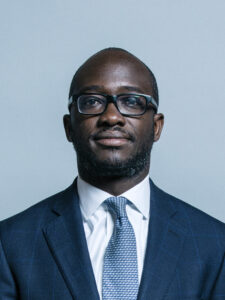
And it turns out I’m not the only one to think they’re not being put to good use. Sam Gyimah held a range of ministerial posts under Cameron, and remains close to the former prime minister. He laments this sense that departing prime ministers are, in effect, put out to pasture: “Very few people have that unique experience and perspective but we don’t use them properly once they leave office,” he tells me.
I remind Gyimah of Bill Clinton’s lament that he felt he was leaving just as he had learned how to do the job. Blair, after 10 years, sometimes gave the same impression. But Gyimah, who now works in the corporate sector in many roles including as a non-executive director at Goldman Sachs International, is philosophical. “My life now is all about turning ideas into reality and I particularly like ideas where there’s a positive social impact. It’s not politics – but some of the things which attracted me to politics still apply. It’s just that I’m dealing with an investment response instead of a government response to problems. If you can unlock capital at scale then it can do wonderful things.”
So there is life after politics – but still, the life after politics for a prime minister can seem strangely limited and truncated. Surrounded by their security teams, with just the past for company, they must sometimes feel a strange mixture of solitude and frustrated irrelevance. It reminds me of a story once told to me by the photographer Graham Flack who remembers going to photograph David Cameron in respect of the famous writing-shed Cameron had installed in his garden at his Oxfordshire home. He and the journalist in question were early and waited for a while in a layby down the road from Cameron’s residence. When they arrived, they mentioned this to Cameron’s protection unit who replied: “Yes, we know, we were watching you.” The photograph itself had to be shot and reshot because one particular tree made the team worry that a viewer of the photograph would be able to locate Cameron’s house.
It doesn’t sound like much of a life – and yet perhaps these limits are a small hardship for the enormous privilege of having been caught up in history. During the on-stage Q&A, Finkelstein asks Cameron whether being Prime Minister has altered his perspective on great historical figures? Cameron relishes the question: “I think it makes you realise how the little decisions you’re making aren’t black and white. It’s not presented every day as “Here’s an important issue Prime Minister, but here’s the right decision and here are two wrong decisions. When are you going to make the right decision?” Cameron continues: “Many of the decisions you make are degrees of bad, and you’re trying to avoid the worst – and some of them you will get wrong. I think you do feel a greater sympathy for people who make the wrong decisions. What that does is give an enormous respect for those prime ministers who have the very biggest decisions to make. When you think of what Churchill did in May 1940, specifically the decision to fight on against Hitler, you’re more aware of the enormity of those really big decisions. Today, we’ll look back and think: “Well, of course we should do that”. But at the time, Churchill was surrounded by people saying, “No, we’ll get destroyed, the British Empire will be lost, we’ll never hold out.””
And yet those people who make the really big choices nowadays leave office with plenty to offer – and yet there seems to be little by way of structure once they do depart. Is the UK missing an opportunity here? Might it be that we should have some kind of Council of Elders, consisting of former prime ministers who might advise the sitting prime minister, as a sort of version of the weekly audience with the Queen?
When Cameron is asked about those weekly meetings with the Queen he is effusive: “One of the best things was going to see the Queen. It was an enormous treat, because you’re literally spending an hour with the world’s greatest public servant. I remember when I was at Eton, the Queen used to come to the carol service. The first year she came, I read the lesson. I got to the podium and forgot to say: “Thanks be to God at the end”. I looked at the podium and at the Queen and said: “Oh shit.” So I had the unique position 30 years’ later to ask the Queen: “Do you remember me saying that?” While I can’t reveal any of that conversation, my head stayed on my shoulders.”
One can easily imagine regular contact with previous prime ministers having a similar effect: surely it is salutary to have contact with your predecessors, as both a source of empathy, but also as a sort of memento mori, that your time in the spotlight shall recede swifter than you expect?
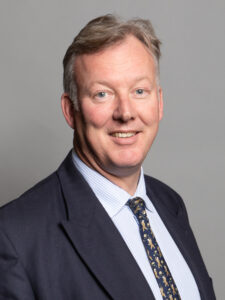
So has Cameron been back since? “Not very often. But we did have a very entertaining dinner for the 2001 intake, where Sir Bill Wiggin and I tripped off to London. It’s interesting going around the office and seeing people who worked with me and people I remember from around the building. And actually the mood was good. You felt like there was someone in the job who really enjoys it – but there’s no point in doing the job if you can’t relish the challenges.”
Cameron also remembers the humour of the job: “I had Nicolas Sarkozy in – actually the first person who visited me at 10 Downing Street. And obviously he brought his beautiful wife Carla Bruni. I remember this particularly well, because my private secretary was with me as they were driving up Downing Street. I said to my private secretary: “I shake his hand. Do I kiss Carla?” He said: “Yes, I think you should kiss Carla, she’s French.” I said: “How many times should I kiss Carla?” My private secretary: “As many times as you can get away with!”
Amused by this, I decide to catch up with Sir Bill Wiggin and ask him about his friendship with Cameron, and what the proper place is for a prime minister after their premiership is over.
“They should all go to the House of Lords,” Wiggin says, without missing a beat. “That is the right place for them and this trend to not go there is really worrying.”
Wiggin also points to the uniqueness of prime ministers: “They’ve all held the nuclear codes. When they talk about nuclear weapons, they’ve thought about it really hard. These guys have a hideous responsibility. They also get exposed to huge amounts of information from the best experts.”
So what’s the history of this? Wiggin explains: “If you’ve been Prime Minister, you are entitled to an earldom, and Clement Atlee was the last to take it. I’d like to see that change.”
Wiggin – who recently received his own knighthood – also links the case of Cameron and others to a wider need for House of Lords reform: “The House of Lords is really important, and we currently have the wrong people in there. We need to stop placing Olympic champions in the Upper Chamber. If you’ve won a gold medal, you’ve already been rewarded and it makes the honours system superfluous. Our system should focus on public service and delivery.”
Of course, there is other provision in place. According to the Public Service Act 2013, a former prime minister is entitled to an annual pension ‘equal to one half of their final salary when they left that office, regardless of age or length of service.’ Cameron actually waived this upon departure from office in 2016, unlike Tony Blair who didn’t.
Of course, this decision – gallant as it appeared at the time – didn’t necessarily end well, as all those who followed the Greensill Capital affair know. This episode, which for many has tarnished Cameron’s legacy, is symptomatic of a broader problem: there is still an abiding sense that prime ministers don’t know what to do with themselves. In fact, the happiest of the living former prime ministers seems to be Theresa May, who retains the parliamentary structures of life by remaining an MP – a job she is manifestly good at.
Is there anything to be learned from the American system? In the first place you have the great fandango surrounding presidential libraries which appears to keep former presidents busy, while also regenerating an area economically. Likewise, the big bucks memoir – though it probably has a Churchillian origin – has a sort of American tint to it these days. Cameron’s For the Record is rather a good one, and better than either Brown’s or Blair’s. May’s we still await.
But there is also another abiding image of former presidents gathering together for photo ops to work on cross-party hurricane relief for the good of the country. This occurred during the Hurricane Katrina in 2006 when the world was informed of the friendship between Bill Clinton and George H.W. Bush.
Is this something the UK should emulate? If Cameron were to be given some kind of government Alzheimer’s portfolio only the most timorous betting man would think he would be unable to achieve results. Cameron explains the problem: “Dementia is caused by diseases of the brain of which Alzheimer’s is the most significant. Just as we’re cracking diseases like cancer or heart disease, we should be focusing on this. When I was premier, I became more and more convinced that this was an area that needed proper government attention for scientific tests, for more research. It was way behind cancer research, so that became quite a priority of mine as prime minister.”
Cameron’s role now as President of Alzheimer’s Research UK includes raising money for the organisation as well as chairing the Board of our Early Detection of Neurodegenerative Diseases Initiative, an ambitious project which seeks to develop a digital tool to help detect the diseases that cause dementia years before the symptoms start.
Even so, Cameron still remembers his time in Number 10 fondly: “One of the great things about being Prime Minister is you can really put your shoulder to the wheel on some sort of slightly second order issue, and you can move things really quickly, really rapidly. The fact that a prime minister decides to make dementia a priority with the G8 really does make a big difference because the rest of the world goes “Oh well, we all want to think about that”.
And yet how frustrating to have had that power, to have achieved the knowledge of how to utilise it, and then, over an unrelated referendum to be deprived of the ability to solve those problems. Of course, this is democracy, but it still feels as though an opportunity is being missed somehow.
So what did Cameron most learn while in Number 10? “When you think of Number 10 you think it must be this enormous power. Actually, I think the greatest surprise about it is not how much power you have – but how little.” How so? Cameron explains: “The other departments you’re dealing with are ten times the size of 10 Downing Street, and they often quite literally don’t do what they’re told. Anyone in business reading this will be familiar with the idea that your finance manager didn’t respond to your command, and that does regularly happen. As a tiny example, I wanted to empty our prisons of Jamaican offenders by using a budget to build a prison in Jamaica. It was agreed we were going to do it, and spend the money. Six months later, I asked “How’s my Jamaican prison?” Literally nothing had happened. So you have to remember that in Number 10 you lead by building a team and making it work with you and for you.”
And, of course, we all need to do that. Prime ministers are unique in having been placed so severely under the microscope. But they teach us about human flaw and potential in equal measure. In particular, studying the lives of former prime ministers has something to tell us all about what we really want, and what success ultimately means for each of us.