Category: Interviews

  • James Daunt: Covid-19 has brought about a ‘permanent elevation’ in the importance of reading

    James Daunt: Covid-19 has brought about a ‘permanent elevation’ in the importance of reading

    Waterstones CEO talks to Georgia Heneage about the threat of Amazon, the pandemic and the future of the high street bookshop

    Despite the number of obstacles which stand in the way of high street bookshops thriving, bookselling giant and CEO of Waterstones James Daunt is infectiously optimistic. His passion for the paperback and belief in the physical experience of standing in a bookstore is compelling, even over Zoom.

    High street retail was stuck in a mire long before the mass closure of shops over the past year. The pandemic has, of course, been the final nail in the coffin for many shops across the country – apart from those like M&S, John Lewis and Next all of which, Daunt points out, have had the resources to pivot online and create “more modern and dynamic” systems. This response has placed further pressure on other businesses reliant on the footfall: “It’s a kind of self-perpetuating domino effect,” Daunt says.

    Bookshops, one might think, have not escaped this vicious cycle. Daunt, 57, points out that they’ve also suffered from the government’s “perverse definition” of what constitutes an ‘essential’ shop, and been in direct competition with those that have been able to stay open and sell books, like WHSmith and supermarkets. Like the majority of other shops, Daunt warned back in January of this year that Waterstones faced closures due to continuously high rent rates.

    But bookshops have also bucked the trend to some extent, both during the pandemic and pre-pandemic in what was sometimes called the slow death of the High Street. Daunt has been highly praised for leading Waterstones during what have been dark days for bookshops. And if the brief periods of reopening in the past year are anything to go by – and Daunt says they’ve been “very busy” during those times – bookstores have a better future than has often been predicted.

    Other kinds of retailers, though, he’s far less optimistic about. “It’s a savage environment,” he says, ever the fierce competitor. “If you’re not on top of your game, then you disappear.”

    Daunt is also keen to point out that this is the unique nature of bookselling. “I think the problem is that other retailers don’t have the same benefits as bookshops. At the end of the day, it’s actually not that much fun to go into a shoe shop or clothes shop. The great thing about a bookshop is that everybody likes being in it, whereas most other shops appeal to a narrow demographic.”

    Despite the looming threat of Amazon on the book world, Waterstones has been “able to prosper” over the past ten years and sales have been gradually increasing. This, says Daunt, is mostly down to the experience created in-store, which remains the main point of differentiation between Waterstones and Amazon, with the latter providing neither customer-facing relations nor a warm “social” environment.

    “Bookshops are nice places,” Daunt continues, “where you can find a book by recommendation or have the serendipity of picking up a book and thinking ‘Oh, I’ll read this’.” And the book you buy is “just better”. “I truly believe that there’s pleasure in walking out of a bookshop with a bag and feeling the weight of the book. You feel kind of virtuous – like you’ve almost read it.”

    If Daunt had to point out the singular most important ingredient of bookshops, it would be the people. If at the start of the 21st century everything was about “cutting costs and getting rid of staff”, the past decade has been marked by reinvesting in the people of the industry. “The personality of your shop is, at the end of the day, embedded in your staff. If you invest in knowledgeable people who care about what they do, you’ll run a much better bookshop: this is what underpins the strength of Waterstones.”

    And of course, this is another differentiator with Amazon, which has, in the past, been criticised for bad customer relations.

    Waterstones dominates a quarter of the book market, and has been able to thrive in recent years. But what of smaller independents, who collectively hold a mere 3 per cent share of the market? “The good ones are actually in a better position than chains like Waterstones,” Daunt says, pointing to the backing such shops receive from their local communities. And again, it’s “survival of the fittest”: “If you’re good enough, and you genuinely create a nice environment, you’ll be fine. The rise of Amazon actually weeded out all the weak ones, and it’s the good ones that remain,” Daunt argues.

    The other tech-oriented threat facing paperbacks is, of course, Ebooks. But if they surged in popularity around 2014, their retreat back into the shadows is testament to the difficulty of actually replicating the feel and texture of a book. “I can’t see how that’s ever going to be replicated in a way that also gives you all the other tangential pleasures that come with owning a book, or having a bookshelf- they are almost a diary of your life,” says Daunt.

    The really powerful new trend permeating the book world is Audiobooks, which has boomed in popularity – especially amongst older readers, with downloads increasing by 42.5 per cent in the first half of 2020 alone. Daunt is now also CEO of Barnes & Noble, which Elliott Advisers bought in 2019 for a reported $683 million, and the firm has started to set its horizons on the medium, with the launch of its Nook 10 HD tablet.

    Even so, Daunt doubts whether Waterstones will be able to follow suit. “The market share is tiny, because at the end of the day Amazon will always undercut. They invest much more, and they’ll always have the advantage of having created the market in the first place. Everybody else is just playing catch up.” He says that unless he can work out some way of “piggy-backing on the Barnes & Noble capability which, with different publishers and associated rights, will be complicated, Waterstones won’t be able to launch an audio subscription service.”

    Despite all this, Daunt remains ever-positive regarding the prospects of the book world. “There’s still the majority of people will prefer reading physical books. I think you just leave Mr Bezos to make all his money, and the rest of us can just prosper at what we do.”

    And if recent book-sale figures during the pandemic are anything to go by, appetite for reading is as voracious as it has been – if not more so. Daunt sees this as a pivotal moment for reading – a bit like the inception of the Harry Potter books, which changed many people’s book habits irrevocably and led to a “permanent elevation” of reading. “It may not stay at this level, but I’m optimistic it won’t fall back to the old level. I think there will be a permanent shift upwards.”

    That the majority of soaring book sales during the pandemic were non-fiction titles points to the fact that people are thirsty to learn about the world around them- a world increasingly beset with existential issues and polarised political debate. People are “energized”, says Daunt, “and books play a massive part in that.”

    Though for many the biggest single threat the world faces is climate change, Daunt says racial issues brought to the fore by the Black Lives Matter protests will be what people WILL remember of this year. How does he know this? “Our bestsellers last year were books essentially about race and inequality. And our market share as a bookseller was dramatically higher (up to 60%) on those issue-led books. People wanted to come into a bookshop and find out what works.”

    Reading – and if we take Daunt for his optimistic word – bookshops, too- are a reflection of the interests, passions and problems of an entire society. Daunt puts it simply and exactly: “Books sit at the heart of what matters.”

  • The Californian teachers who have never taught in the classroom

    The Californian teachers who have never taught in the classroom

    Patrick Crowder

    Schools in Ventura County, California first closed on March 13thof last year. As the pandemic continued, the county extended that shutdown multiple times with no set end in sight. Now, many districts are seeing students return to class. For many new teachers, this will be their first time in front of a class of real life, non-virtual students.

    Melissa Grennan is a 22-year-old history teacher in her first year on the job. It is apparent that she really cares for her pupils, and that she chose this job for the love of it.

    “I’ve always wanted to become a teacher. I’ve liked telling people what to do since I was little,” she jokes.

    Brennan now teaches US History to 16-year-olds in their Junior year at Ventura High School. She has never met any of them. A once exciting prospect, the reality of teaching in 2021 has not fitted with her expectations.

    “I was really excited about the aspect of getting to know my students, which is much harder online,” she says, while sitting in the same home office where she teaches. There are Polaroid photographs hung with clothes pins on her wall, and she keeps her camera angle high to disguise the fact that she is delivering lectures from her childhood bedroom.

    “I thought there was going to be a lot more interactive collaboration, and over Zoom there’s none,” Grennan continues. “We can’t require that the students turn their cameras on… we can’t even require that they attend because of equity issues. I only know what three of my students look like.”

    Ventura High School is public, so the school is not allowed to require parents to spend money on educational tools. Because some families cannot afford internet, attendance cannot be made mandatory.

    Getting students engaged with the material has always been difficult at the best of times. Now, with motivation at an all-time low, teachers often face black screens and muted microphones.

    “I feel so bad for them,” Grennan says. “I’ve had a few students reach out to me to say, ‘I’m sorry that my grades are so low, I just have no motivation right now’, and that’s a heart-breaking email to get from a 16-year-old.”

    She has attempted to make things easier on the students, but relaxed requirements are not enough to keep many of their grades afloat. 

    “My grading policy is pretty lax: there are no late penalties or homework. Everything I assign we do together in class,” Grennan explains. She has resorted to awarding one extra credit point for any comment a student makes in the chatroom – only one student regularly engages.

    “I once was able to bring Kanye West into the conversation,” she says, laughing to herself. “One student commented, ‘I miss the old Kanye’, and I said, ‘You know what? That’s an extra credit point right there, because at least I know that you were listening!’”

    New teachers report to a Cooperating Teacher (CT) who sits in on the class to keep things on track. Normally Grennan and her CT would alternate lesson plans, but with the pandemic, the CT has left her to fend mostly for herself. She has enjoyed this freedom, and often discusses current events in her online classroom. 

    Teaching US History today is in and of itself a challenge. Grennan had her students take a political typography quiz to provide an easier approach to the issue. 

    “On both sides of the spectrum, I had kids tell me that Trump was making the US a better place, and some tell me that AOC is their idol! Every one of them told me that they were going to vote in the first election they could,” she says. “I don’t share my own opinions, I mostly let them share theirs. Sometimes I do worry about turning kids away. When I say the election (of Joe Biden) was legitimate, which is a fact, I wonder how many of them just shut down.”

    While juggling lesson plans and drafting emails to concerned parents, Grennan attends Cal Lutheran University, pursuing her full teaching credential and a Master’s degree. She says that she faces the same feeling of distance and lack of motivation that her students face.

    “I think online learning works for some, but I don’t think it should become the norm. Even at the university level, I hate taking classes online,” Grennan says. “If I have to sit in class for three hours, I’d rather do it in a room full of people!”

    Despite the grim situation, Grennan is able to see the positive side of things. “If I’m able to teach online, imagine how much easier it’ll be in-person,” she says, adding that “so many teachers have quit because of how awful this is… I guess that makes it easier to find a job!”

    Ventura High School is set to re-open in August.

    Picture credit: Thought Catalog on Unsplash

  • Orr Barry: The Israeli chef bringing the world into our homes

    Orr Barry: The Israeli chef bringing the world into our homes

    You may not have heard of the late Jim Haynes, but he was a pioneer in the world of hospitality. His insight was simple: we should get to meet as many people as possible. Haynes died in January 2021 and was known in his obituaries as ‘the man who invited the world over to dinner’.  

    He did just that. Haynes lived in Paris in the 14th arrondisement, and on Sunday evenings would have an open-door policy. Anyone could come. His death during the pandemic, saddening though it was, arguably made a kind of sense – as if a man who all along craved human interaction, should exit the world when that interaction was no longer possible.  

    And what of those of us left behind who might want to honour his spirit? As the Deliveroos mount, and as – to quote the restauranteur Jeremy King – we remain ‘entombed in our homes’ that seems harder and harder. 

    Jim Haynes (1933-21): ‘The Man who Invited the World for Dinner’. (Credit: Commons licence 3.0, attributed to Open Media Ltd.)

    But I would like to present the solution in the shape of a remarkable Israeli chef, Orr Barry, who has become a phenomenon in south-east London during the pandemic.  

    Like all the best things from The Queen’s Gambit to the furlough scheme, Barry has operated by word of mouth. In Dulwich, if you bump into someone friendly at school pick-up or in the park, the conversation might turn to Safta Cook, the name of Barry’s highly personal delivery venture. “Did you try Orr on Friday night?” It was a safe topic of conversation. You could be reasonably sure the person you were speaking with had. 

    I meet Barry outside his spot on Lordship Lane, and ask him why food matters so much to him. “For me, it’s something that takes you into memories and nice moments, certain feelings like you’re trying to kind of recreate something very social.” That’s what makes Barry’s food special – the sense that he is trying to communicate to his customers something almost intangible.   

    Another way to put it is to say he’s cooking with love. That has to do partly with his past. Barry grew up in the centre of Israel about equidistant between Tel Aviv and Jerusalem, but his heritage mixes central European, northern African and the Middle East. That comes across in his food. 

    But Safta Cook was also created out of necessity. Having been furloughed from his job as a new product development chef at Gail’s, Barry realised he had to keep cooking. Moreover, he could still access interesting ingredients: “I realised there was no limitation of supply. I wanted to be open and to tell people who I am through food – it was a way of practising my heritage.”  

    What distinguishes a Barry meal is the eclectic playfulness of his cooking, as well as the care – the handmade menu, the personal delivery – with which it’s presented. This is also healthy food at a time when the temptation – yielded to all too often by some of us – has been to fall back on pizzas and burgers. “You don’t want to go through an entire pandemic on pizzas,” Barry commiserates.  

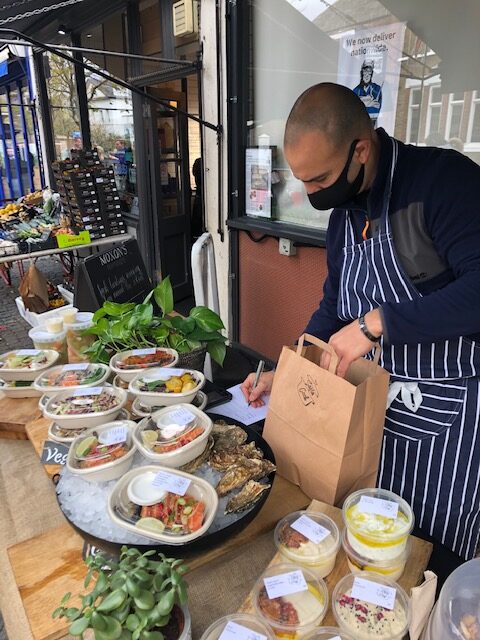
    Orr Barry at his Saturday stall on Lordship Lane

    But really Barry has demonstrated the possibilities of food when it comes to community. “Now when we’re walking down my street, I know all the neighbours,” he says, proudly. His is a very pandemic story – it is an example of how we might still reach one another while separated from one another.  

    There’s another aspect to this. Stuck in our locality, Barry invites the world into your home, just as in his different way Jim Haynes used to do. “I love to take the menu sometimes into the Jewish tradition – but sometimes you’ll find a twist of Asian food, whatever interests me at the time. I try not to repeat myself, because people want the unknown.” 

    We’ve learned that freedom and hope are deeply intertwined: in ordinary times, we feel optimistic about the time ahead, because it’s in our gift to make of it what we will.  That’s what the pandemic has robbed us of: instead of the ramifications of freedom, we see only limits. Barry is in opposition to that.  

    Barry – who used to run the no.1 Trip Advisor-rated restaurant in Tel Aviv – doesn’t want to turn Safta Cook into a restaurant once the restrictions are lifted: “A restaurant is like a military regime,” he says. 

    The following Saturday, I show up at Barry’s Saturday morning stand, and purchase some oysters, a shucker knife, and a mix of salads and vegetables, then back home eat my best meal of the pandemic. As I imagine the food must have tasted at Haynes’ house in Paris, Barry’s tastes of that rare thing nowadays: liberty. 

    Christopher Jackson

  • New property marketing platform gives tenants the power of options

    New property marketing platform gives tenants the power of options

    Patrick Crowder

    The new platform Configure is changing the way office properties are marketed and promises to streamline the process of office customisation. The platform allows landlords to show potential tenants CGI images of options for furniture, flooring, wall décor, and layout, with the rent displayed in real time based on the options they choose.

    Alex Morgan, founder of Configure, says the idea came to him while dreaming of driving a custom Porsche.

    “One night my wife was out and the kids were asleep, and I was playing around on Porsche’s website,” Morgan recalls. “I started changing the wheels, seats, the trim, and as you make these changes the cost of the car is going up and down. And I just thought, ‘That’s what I want to do for our buildings.’”

    The key to Configure, Morgan continues, is the way that it will make a property stand out. “These poor potential occupiers are going from white box to white box. I find that boring, and I develop office buildings, so I can only imagine how boring it must be for the occupiers!” Morgan says. “At the end of the day, how do you remember which is which?”

    Alex Morgan

    Another advantage of Configure is the quick turnaround from the time that a tenant chooses their layout and the delivery of their options. This is accomplished in only eight weeks. For reference, sourcing furniture alone can often take up to 12 weeks.

    “We wanted to be able to say to our potential tenants that they can get into this space quickly,” Alex said, “Traditionally, fit outs can easily take three to four months.”

    The idea has evolved since its original conception. Morgan is also the co-founder of Morgan Capital, and originally Configure was going to be exclusive to that developer. “At the outset, I thought, ‘If you want to use Configure you’ll have to use us (Morgan Capital) as a developer, but we were getting so many phone calls I realised that it deserved to stand on its own and be its own entity.”

    Landlords will pay an upfront cost of £30,000 to £50,000 for the service depending on the space, which includes CGI generation, hosting of the platform, and space-specific design. They will also have the option of having a physical marketing suite, with costs ranging from £100,000 to £400,000.

    For each building that uses Configure, photography, design, and pricing must be worked out to create a custom virtual environment for tenants to view. At any point a potential tenant can download lease documents, and a gauge on the left side of the screen indicates price based on the selected options.

    Ben Vinten is the Head of Platform at Configure. Vinten handles design analysis, ensuring the quick turnaround time and transparent pricing. He recognises that CGI has been used for marketing by landlords before but makes sure to point out the difference in volume of materials and options.

    “A typical marketing brochure may have two or three layouts and three or four CGIs,” Vinten explains. “At one building I’ve got 1,221 potential layouts, a cost plan for every single one, and however many CGIs it takes.”

    Ease of customisation and viewing options is the goal of Configure, so potential tenants will be able to use the program at home in their own time. The platform also has the option enabling clients to view a physical marketing suite to use Configure; you can also see an example of what a finished product will look like.

    “At our marketing suite on Pollen Street we have a wi-fi printer so tenants can walk away with something unique to them,” Vinten continues. “It’s kind of like Build-a-Bear, but it’s more than that.”

    Morgan is optimistic for the future of Configure and has his eye on expanding the model. At the moment, the platform works best in smaller spaces, avoiding an overload of options.

    “There comes a point where you can have so many options that it becomes very difficult to judge what to offer,” Morgan adds, “so that will be a challenge for us over the next period.”

    In future, the team hopes to add a carbon emission gauge to the platform alongside the pre-existing cost display, as well as integrating a “managed element” into their service, which may include a cleaning and building maintenance package.

    “It’s been really well received,” Alex says, “so I hope this will bear fruit not only for us but for the industry as a whole.”

    All picture credits: Copyright Ed Hill / Morgan Capital Partners. 

  • ‘There are not enough apprentices coming through’: the changing face of the vintage clock industry

    ‘There are not enough apprentices coming through’: the changing face of the vintage clock industry

    Patrick Crowder

    Covid-19 has spelled the end for many small businesses around the world. But while the vintage watch and clock market is seeing a major rise, changing times have led to a lack of young apprentices and the death of the traditional storefront.

    The statistics can sometimes seem startling. Vintage watches sold at auction have frequently fetched much higher prices than their book value in recent years. In 2018, a1970s Rolex Oysterdate sold by Hanson’s Auctioneers in Derbyshire went for £51,100 – that’s a 1100% increase from the book value of £3,000-£5,000.

    Paul Kembery has worked in watch and clock sales and repair for the last 30 years. His online business, Kembery Antique Clocks, sells wristwatches, long-case clocks, barometers, and other specialty antique pieces, all meticulously restored.

    “The speciality within the watch and clock industry is one that continues to thrive,” Kembery says, “There is sufficient data to show that vintage watches have gone up considerably in price.”

    Along with the overall upward trend, vintage watch prices have risen steeply since the beginning of lockdown. For example, an Omega Dynamic watch was worth about £516 in March 2020. According to the watch valuation site Chrono24, that same watch is worth £725 today.

    The industry is thriving, but it is also changing with the times.

    “Shops are definitely on a decline,” Kembery continues, “We had a shop in Bath for many years, but the way that the internet took off there really was little need in having a retail shop.”

    Now, the main face-to-face business that Kembery conducts happens at antique fairs. He believes that there is no need to “trek around the country looking in all the antique shops” when it is more efficient to “go to an antique fair and see 200 stands” all at once.

    According to Kembery, a number of things can motivate someone to buy a vintage time piece: “Many people buy them for their birth year. So oftentimes people will look online for a watch that corresponds. A wife or a partner may then buy that watch as a gift.”

    In addition, potential buyers also seek out antique clocks with a personal connection to their family history or hometown. “If there’s an area in Leicestershire where you live, for example, and you find out that the local clockmaker was making clocks there,” Kembery adds, “what a great talking point to have bought a clock online that is from your area 250 years ago.”

    Covid-19 has led to a decrease in the number of repairs Kembery sees on a weekly basis, as people are postponing having their clocks serviced. However, Kembery envisions a major uptick in repairs after the pandemic is over:“Once everything settles back down there will be the same number of people who need their watches and clocks overhauled, and there will be a higher demand for it. It turns out that many shops already have waiting lists, and those waiting lists may continue to grow.”

    As mechanical timepieces have shifted from practical pieces of equipment to optional luxury items, the profession of clock and watchmaking has fallen off the radar of young career-minded people.

    “There are not enough apprentices coming through,” Kembery conceded. “Long term it may be an issue that there aren’t enough youngsters in apprenticeships, or who are interested in clock and watch repairs.”

    The lack of apprentices represents an opportunity for those who are interested in breaking into the industry. The National Careers Service reports that the average wage for a watch or clockmaker ranges from £20,000 to £40,000 a year, based on experience. This varies based on the particular business one works for and may not take into account money made from sales.

    There are a number of ways to enter the industry. The British Horological Institute offers courses which can be taken at home with no prior experience required. Where watch and clock shops still exist, apprenticeships can sometimes be found simply by walking in and taking an interest in the work. 

    According to Kembery, the best apprentices are “mechanically minded” and also “curious about the way that engineering works.”

    The rise of internet retail has caused a decline in the number of watch and clock shops across the country, and vintage timepieces are not as highly desired by young collectors. Despite this, the industry is still – if you’ll forgive the pun – alive and ticking.

    Photo credit: Andrew Seaman on Unsplash

  • The Race for London Mayor: Siân Berry

    The Race for London Mayor: Siân Berry

    In the next in our series focusing on London mayoralty candidates, Georgia Heneage meets the Green Party co-leader

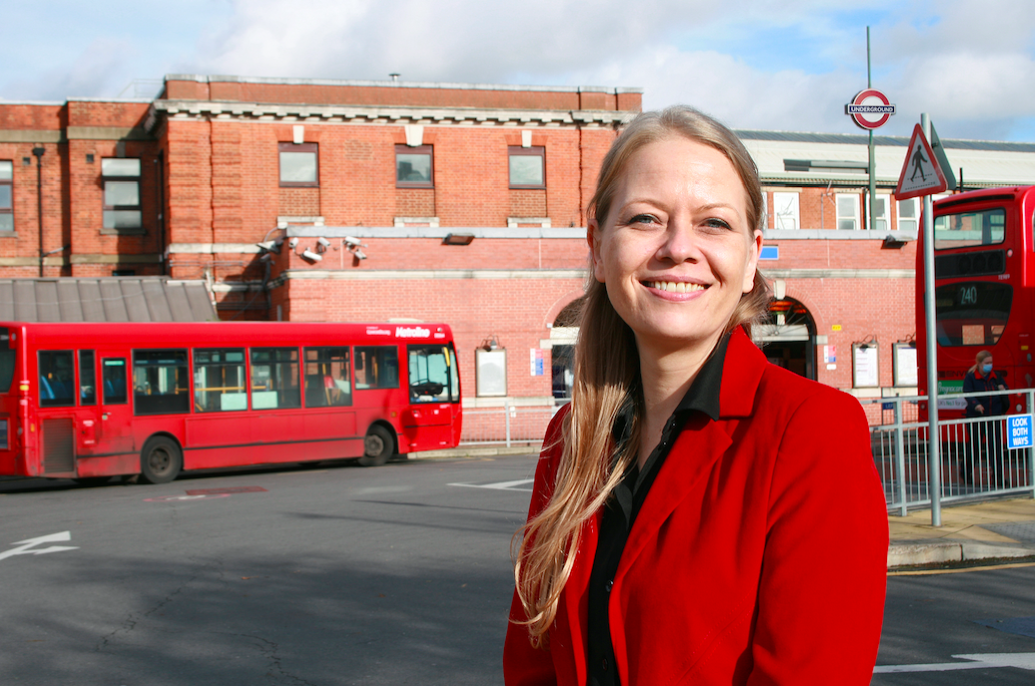
    In her bid for the mayorship, co-leader of the Greens Siân Berry has bold and ambitious plans in mind – plans she believes are necessary in combatting the educational inequalities and rising unemployment tearing through our economy, and in remedying the government’s slow approach to building green industrial jobs.

    “The first thing I’d do as Mayor”, says Berry, “is to bring in a basic income for everybody”. Berry argues that Covid has highlighted some of the “gaps and inequalities” of our welfare system; some jobs are “busier than ever”, and some “have basically just evaporated”. Berry says people have had no control over their situation:“Everybody needs a basic level of material security.”

    And would this post Covid shake-up just give us the necessary space to recognise the importance of building green jobs for the economy and for the climate? “From the very start, we’ve been wanting to put land aside so that we can create green industry centers of innovation and create new jobs in green industries,” says Berry, “and that’s just more important now than ever.”

    “I think London needs to become more self-sufficient,” she continues. “We need to open a dialogue, especially with young people, around building for a green future and transitioning away from jobs that depend on international trade and aviation.”

    That’s a noble ambition but it doesn’t just involve blue-collar jobs: Berry says she’s put together a plan with the Young Greens to make sure that going forwards the creative industries have the funding necessary to ensure the accessibility of diverse talent.

    Called the Creative Autonomy Allowance, the plan is not unlike the Enterprise Allowance introduced by Thatcher’s government in the 1980s, which was integral in kickstarting the careers of quite a few working class artists; the idea is to trial a basic income which would give 1,000 creatives £10,000 a year as a financial security guard. After three years, they’d study the impact that has “on widening opportunities, giving people more security and giving them creative autonomy”.

    Initiatives like these may be crucial in rebuilding a fair and accessible and society. Though ambitious – and presumably expensive – Berry’s plans will likely be popular with those who are concerned about youth employment in progressive areas. “In the recovery period we want to be giving people the ability to come up with new ideas to innovate and think about new ways to be creative. Most important we want to sponsor the young to be the incubator for thinking of a new world,” she says.

    The key question for Berry is to “make use of the pool of talent” to integrate jobs into this new world. She would transition the kinds of towns who are dependent on fossil fuel industries – like those around Gatwick. She is particularly concerned to make sure we produce the transferable skills which would enable workers to switch industries seamlessly.

    Her London mayoral campaign has a national dimension too. “Those conversations need to happen everywhere,” says Berry. “In the oil industries, airports, car manufacturing. We need to build up localized skills training, so that people can become mechanics who can mend electric cars instead of petrol or diesel ones, for instance”.

    At the level of education, many politicians have argued that vocational courses or industry-focused apprenticeships are the answer. But Berry sees it differently, and thinks that specializing too early can be limiting. “We really believe in lifelong learning for its own sake. My advice to young people is always to study what you’re interested in, and then decide what particular area you want to move into later in life.”

    Berry also wants to see a greater emphasis on green-focused courses both at school and university: “Children are a bit hot-housed at the moment into learning for tests and things like that, and there isn’t enough space in the curriculum for people to just learn those kinds of messy lessons that teach you about nature.”

    There also aren’t as many apprenticeships and jobs in green energy as there should be: “People need to be given infinite opportunities to learn: there’s going to be so much work that needs to be done when we eventually rise to the level of investment we’ve talked about in the general election. And we will be having a big skills shortage at that point if we’re not careful.”

    The London mayoral elections will be held on 6th May 2021

  • Q & A: Grange Park Opera CEO Wasfi Kani

    Q & A: Grange Park Opera CEO Wasfi Kani

    Can you tell us about your reaction to the Covid-19 pandemic at Grange Park opera and how you sought to navigate the last year?

    Exactly a year ago (and a week beforethe Government announced a belated lockdown) we cancelled the 2020 Season. When I’d finished faffing around doing refunds, it immediately struck me that people were allowed to go to work, if they couldn’t work from home and why shouldn’t we create new performances . . . but film them. Thus, we created the Found Season involving 108 artists in 15 new events, eight filmed from the stage of the Theatre in the Woods. Other appearances included Bryn Terfel, Roderick Williams performing Schumann, piano virtuoso Pavel Kolesnikov playing Chopin and Beethoven and a pas de deux from English National Ballet.

    Covid-19 has actually given us a unique opportunity to share the magic of great musical experiences – which are original, stimulating and food for the soul – with as many people as possible around the world. After the Found Season, we have created the Interim Season – employing more artists.

    How many people do you employ at Grange Park? 

    During the season we employ 350-400. The core team is only 14. Well, it was 14 until all this happened.

    Did you take advantage of the government furlough scheme?

    Yes

    Did you benefit at all from the DCMS’ funds for charities? 

    No, we didn’t apply for it! This was because I thought smaller charities with less access to London wealth should get the money. Little did I realise that it was a free for all. Some classical music agents applied for money and got it! Yet a singer who has earned £55k pa has no access to any money.

    Overall, do you feel the Government response was satisfactory?

    If you mean the Government response to the pandemic overall, I would say it was catastrophic (a) locking down so late in March (b) not having any checks on arrivals in the UK … there were 15k per day UNTESTED in any shape or form (c) eat out to help out (d) locking down in November . . . opening for two weeks partly . . . then allowing anyone to do anything over Xmas. I could go on and on.

    Questions must be asked why so many people have died in the UK. And it isn’t over.

    Tell us about your work with the Romanoff Foundation.

    This is a new collaboration. Normally there would have been fascinating talks about the two Russian operas in this year’s season (Ivan the Terrible, The Life and Death of Alexander Litvinenko) but uncertainty is limiting what we can do.

    Just how terrible was Ivan the Terrible?

    Well, he loved his son. And he was probably damaged by his own lack of a father figure – his father died when Ivan was 3. I’ve been studying a long history of Russia and it seems that what happened before Ivan was there were bunches of gangs going round Russia proclaiming ownership of territories. Ivan tried to unify the country but at a cost to its people and long-term economy.

    Has your audience become more global during the pandemic?

    Our extensive filmed output has had 120k views. Some are in far-flung corners. However, when they will be able to get on a plane and visit the Theatre in the Woods . . . who knows??

    Owen Wingrave sounds a fascinating project. Do you think you might continue to explore film as an avenue post-pandemic?

    On Saturday 20 March we launched another filmed opera: Ravel’sL’heure Espagnole – filmed in a clock shop in Kensington. I am already planning more for the autumn. It’s a great way to keep close to the Grange Park Opera family.

    What do you think we most miss about the live experience?

    Feelings. Having a collective emotional experience.

    Is there anything about the online music experience that is superior that you’ll want to keep once we’re all fully vaccinated?

    I’ve been listening to a lot of the oldies playing the piano – Michelangeli, Lipatti and so on. 

    People are fed up of looking at screens. They are flat. That says it all.

    It’s fascinating to see that you worked in the City designing computer systems – did you miss music during that time? Is there tension between the businesswoman and the artist in you?

    While I was in the City, I continued to have an active music life, playing the violin in orchestras and chamber music. I used to practice in the lunch break. I know some of my computer colleagues thought I was a bit nuts. 

    Do you have any mental health concerns about people in the arts? In what ways have you reached out to support artists, musicians and those in your sector affected by the pandemic?

    We have an Artist in Need fund and have distributed nearly 200k and our filmed projects are often the only performance work that an artist has been offered for a year. Even someone like Simon Keenlyside whose diary is absolutely full. Empty diary. One cancellation after another. What does it do to your mental health? Artists have to learn to live with rejection so some will be more resilient than others.

    What would be your Desert Island Discs?

    • Michelangeli playing something
    • Brahms string sextet – either of them
    • Rimsky Korsakov Scheherazade
    • Verdi Don Carlo
    • Wagner Tristan

    It’s a secret. I’m waiting for the phone call.

    Goethe, looking back on his life, made a good and bad column. Totting it all up, he decided that music was what made the difference and had made his life worth living. Is there a listening experience that really changed you?

    I love music – it gives my life another dimension. And I have a bond with people who feel similarly. Those that don’t . . . I want to open that door. The greatest gift of my life is being able to play a Mozart string quartet.

    Was there a music teacher who really had an impact on you?

    Probably my first piano teacher Gillian Stacey. She died about a year ago and I saw her in hospital the week before.

    What character traits do you particularly look for in young employees?

    Hard work. I don’t want to see them waiting for 5.30 and rushing out of the door. 

  • NHS nurse Izzy Howes: “It was complete madness”

    NHS nurse Izzy Howes: “It was complete madness”

    Georgia Heneage

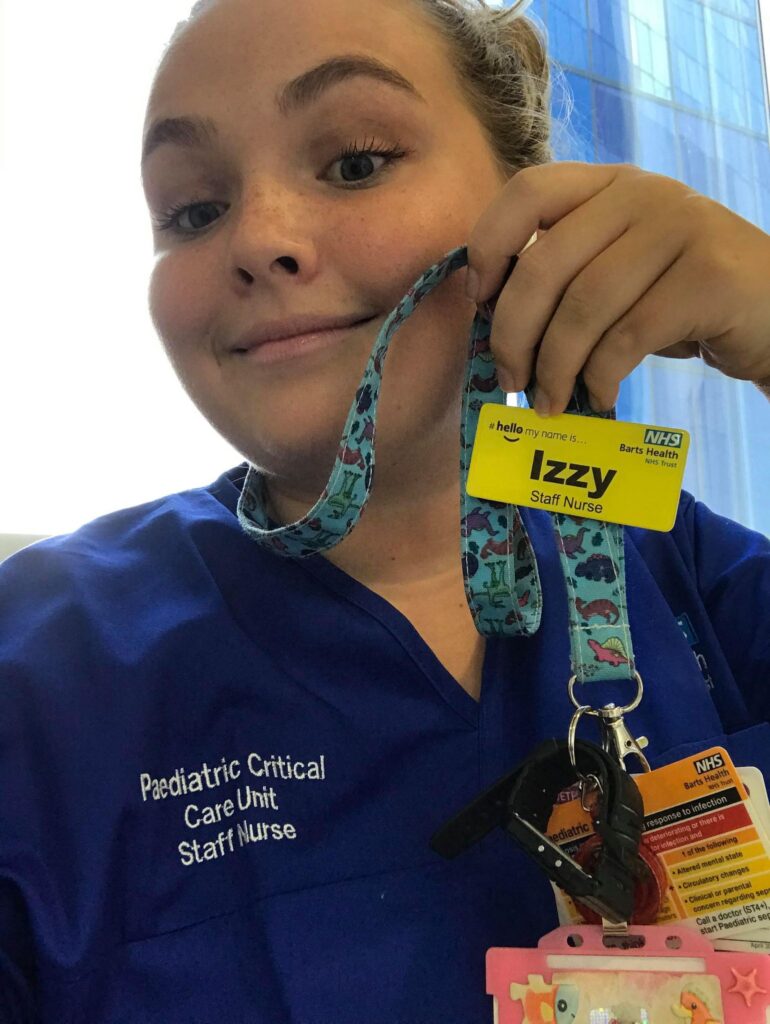
    Izzy Howes, a 23-year-old NHS nurse from London, had been working in a children’s intensive care unit for just six months when she was redeployed to a Covid ward to help tackle the mounting crisis last March. The physical and mental toll it has taken is hard to put into words, but Howes speaks openly and eloquently about the struggles of that turbulent period. Her story is testament to a darker side of the pandemic which few of us experienced, or will ever experience.

    “In my training I’d never looked after adults”, says Howes. “So it was difficult from the get-go. It’s a lot more physically demanding in an adult ward, so most of the time I was just completely exhausted.

    “I remember my first shift I was told I’d have a ‘buddy’ nurse with me, but when I arrived they were really understaffed and I was handed a patient straightaway.” Howes says that getting used to wearing PPE for hours on end was hard, but on that first day she was “grateful” for it. “I was just crying the whole time. I had a lump in my throat – the kind you get when you are completely terrified. I kept thinking: I don’t know what I’m doing. I don’t know what I’m doing.”

    Two weeks into the first lockdown, one of the surgical theatres was converted into an intensive care unit and Howes was one of four nurses tasked with taking care of 20 patients on life-support. “I remember a senior nurse looking at me and saying: forget everything you’ve learnt about nursing. Just keep them alive.

    “It was complete madness,” says Howes. “I remember one shift when they’d run out of gowns but had just enough masks for us to take one break, which meant we couldn’t drink anything or go to the loo for six hours at a time. If you went on a break you were considered as wasting PPE.” Howes recalls one horrifying experience when a senior nurse collapsed on duty: “She was taken to A&E for acute kidney failure because she was so severely dehydrated. Nobody was looking after themselves”.

    Did it get easier with time? “Once people started to accept that they weren’t going to achieve the level of nursing that they were used to, it did get easier; we were constantly telling each other that we could only do what we could do,” says Howes. “But even that was hard to stomach. I kept thinking: what if doing my best costs someone’s life? That bit I really struggled with. Every person is someone’s everything”.

    In those first few grueling months, Howes says everyone was “running on pure adrenaline” and had no time to process the suffering they were faced with day-to-day.

    And in October, when cases started piling up once again, things got harder. Howes volunteered to return to the Covid unit where the numbers were spiralling “out of control”, and her hospital became one of the biggest intensive care units in London, with usual capacity of 70 stretched to almost 200 patients. “It was organised chaos,” she says.

    Howes was better versed in the practicalities of the job this time round. But as the adrenaline wore off she had more time to reflect, and with reflection came the psychological burden of witnessing the daily reality of senseless death. “I’d just look at these patients and absorb the fact that they were dying. I can remember specific patients’ faces and the fear in their eyes when they deteriorated.”

    One of the most “gut-wrenching” parts of the job was speaking to families on the phone every day; “having to tell them that their brother, uncle, father is dying, but that they can’t see them.” Howes suffered immense guilt about her inability to give them “the patience” they deserved. “You’re so overworked and overwhelmed that you don’t have the capacity to virtually hold their hand. Grief does horrible things to your heart and soul, but there were times when family members were abusive over the phone. That was really hard to deal with.”

    A month ago, having reached her own emotional capacity, Howes suffered a nervous breakdown and was given six weeks’ stress leave. “I was supposed to be going to a nightshift, but in my car I just couldn’t move,” Howes recalls. “I was so low, and absolutely exhausted.”

    Challenges aside, have there been positives to such an intense experience? “The friendships that came out of it were incredible. We all had so much admiration for each other and it was beautiful to see so many amazing strangers coming together to support one another,” says Howes. “And it’s made me value things I didn’t before; it’s given me a huge appreciation for life. Now I’m not afraid to tell people that I love them every day.”

    On a practical level, Howes harnessed valuable skills that she’ll carry with her throughout her career: “I learned that I was so much stronger than I realised. I learned to communicate with strangers, build trust and work in a team”. Covid also gave her the opportunity to care for adults, something she wants to use “later on” in her life. And despite what she’s been through, Howes says medicine is an area she’d like to stay working in: “Being in those critical life or death moments is almost addictive. How can I compare that to an ordinary job?” she says.

    When you exist on the periphery of the Covid crisis, as most of us have done, it’s easy to underestimate the psychological toll which the past year has taken on thousands of nurses across the country. Howes’ journey is an important reminder that the traumatic events of the past year will not be forgotten in the minds of those lost in the thick of it.

    It’s also a stark reminder than Johnson’s 1% pay rise, which has provoked huge backlash across the political spectrum, has struck a harsh chord with nurses like Howes. “My anger towards the government’s handling of this crisis was building for a while,” she says. The “hero-complex” which was superimposed onto nurses, and government initiatives such as the  ‘January pay incentive’– where nurses were offered bonuses for working extra shifts – felt either superficial or counterproductive: “It was like leaving breadcrumbs out for nurses to completely overwork themselves. If they paid us properly, we wouldn’t have to do these extra shifts and the burnout would be less,” says Howes.

    So when the meagre pay rise was announced, Howes was “insulted, hurt and angry”, but not surprised: “What I’ve learnt from this year is that marginalised people will just keep being marginalised. I hoped that would have changed, but it doesn’t seem to have done.”

  • Founder of the Blue Pencil Agency Sara Sarre: “Writing is a gift”

    Founder of the Blue Pencil Agency Sara Sarre: “Writing is a gift”

    Editor, writer and founder of the Blue Pencil Agency Sara Sarre speaks to Georgia Heneage about the bureaucracy of the publishing industry, the personal events which led to her first novel and buckets of advice to budding young writers.

    The publishing industry has changed

    An artist is a rule breaker, boundary pusher, and brave commentator on the state of society; art is a dangerous craft which should challenge the status quo. These have been the governing principles of the arts sector for centuries. “Learn the rules like a pro, so you can break them like an artist,” said Pablo Picasso as he transformed traditional portraiture into strange, abstract shapes. Banksy- an artist whose work is almost self-consciously defined against the commercial art world- argues that artists should “think outside the box, collapse the box, and take a f**king sharp knife to it.”

    The fact that the term ‘Creative Industries’ was first coined by New Labour in 1998 shows how even in its inception the industry was born out of economic interests. And the fact that the artists themselves were not beneficiaries of the employment boom which ensued- and led to more jobs in areas like marketing and sales- is even more telling. 

    Despite what Banksy says, the freedom of the artist to work against the commercial, money-oriented mainstream seems to be the luxury of a bygone era. No longer can artists bend the “rules” towards their own craft, as Picasso said. The rules now exist as binding mantras which keep artists under the bureaucratic grip of the industry, and it’s now near impossible for artists to have complete freedom over the direction their art takes.

    This prioritising of profit as the capitalist edge of the arts sector has inflected the publishing industry in the UK. Sara Sarre, whose work as an editor, writer and founder of literary consultancy Blue Pencil Agency has given her an insight into the rotten core of the publishing industry, says the problem is that it has become prescriptive and books now have to have a marketing hook over and above all else.

    “Twenty years ago the publishing industry started to change,” says Sarre. “Editors once nurtured young writers, and it was all about what a writer had to say. Now the sales team have far more power than editorial.

    “Writers are now more concious of the market; a lot of authors are getting out there not because they are brilliant writers but because they have brilliant concepts. You really have to consider your audience and understand that this is a business”.

    It was from this recognition of the power imbalance in relationships between writers and publishers that Blue Pencil Agency was founded: “I set it up really to help writers edit their own work and get to a stage when an agent would then have a look at it”, says Sarre. The agency is focused on bringing back that element of nurture which she believes should be the bedrock of every literary relationship.

    Covid-19:  are we seeing the best of our time?

    It has become somewhat of a post-pandemic truism that great art (in particular great literature, because of its unique medium) is born from worldwide catastrophes- the war, the depression, the bubonic plague. The events of the past year will no doubt be no different.

    But, like post-war literature, it may take decades for works to emerge which reflect quite literally on the pandemic. Sarre says that though BPA have received lots of submissions inspired by the pandemic, “as a literary subject, at the moment everyone’s avoiding it. I don’t think anyone wants to hear or read it because we’re still in the middle of it: it’s hard to reflect on because we don’t really know the outcome yet”.

    Like the book market as a whole, Blue Pencil Agency’s business has soared since Covid. Sarre jokes that agents and editors have developed a regularly-discussed “submission fatigue” because of the sheer amount of material which has been created over lockdown.

    One of the more negative aspects of Covid on the literary world has been that it’s made an already saturated market almost unbearably impenetrable, especially for young writers. According to Sarre, there’s a lot of good writers not getting published just because of the sheer amount of material being generated at the moment.

    The spirit of youth: what advice does Sarre have for emerging writers?

    Despite the overloaded market, Sarre is adamant that now is a “very good time to be a young author”. The phoenix-like literary moment of Sally Rooney’s Normal People was pivotal for young writers, and Sarre says there’s since been a massive wave of fresh young voices.

    So for those budding young authors out there just starting to dip their toes in what can feel like a challenging sector to breach, what are Sarre’s nuggets of wisdom?

    • Learn to write for a readership rather than yourself. “Writers love to write for themselves because it can be a really cathartic process, and writers are specific types of people. There’s almost a masochistic element to it.” But readers are the most important thing: “Go and stand in a bookshop and ask yourself where you want to be in that bookshop. You are writing for a public, not for yourself.”
    • Empathy, tenacity and imagination. “Empathy: you have to be able to put yourself in the shoes of the character. Tenacity: you’re going to be turned down again and again. Imagination: having the ability constantly invent worlds that are not similar to your own (or are).”
    • “Learn to read as a writer; we all read for pleasure, but part of being a writer is understand how particular writers work.”
    • Show not tell: Sarre says that though a lot of journalists make good writers because of their professional ability to tighten language to a wordcount, they are “the worst” in terms of telling a reader something, rather than showing them. ‘Showing’, says Sarre, is letting your characters and the events of the story do the work; if you’re ‘telling’, the writer is doing the work, and therefore the reader is not.
    • “Learn the technical side of writing, such as tone of voice and narrative distance. They are your tools.” Sarre says she found her creative writing MA unhelpful in this respect, but recommends looking at useful online tools or short courses where you can learn the basic skills.
    • Story over style: Sarre says the problem with many first-time writers is the tendency to prioritise descriptive writing over the sheer weight of a good story. “Each paragraph each scene each chapter has to move the story forward. That took me a while to understand.” Though literature in the past had more freedom to subjugate narrative for style, nowadays everything has become focused on the story. This is partly a result of a culture where immediacy is everything: “If it doesn’t hook us straight away, we’re onto the next thing”.

    ‘Writing is a gift- it has to be’

    Last week, Sarre published her novel Mothering Sunday under her pen name Sara James. It tells the story of a young mother who has to give up her child. The reception, she says, has been unexpectedly “fantastic”, and the book has taken on “a life of its own”.

    Did her own principles of writing and her perspective as an editor come into play? “Definitely. Being an editor taught me to write- you learn to avoid all those typical mistakes that every author makes.”

    Sarre’s book, though, seems to have bucked the trend she herself identified: that in tailoring one’s work towards a particular commercial readership, a writer inevitably loses a sense of the autobiographical.

    Mothering Sunday sprung (albeit subconsciously) from deeply personal experiences. “It’s a young woman’s story with an older woman’s perspective”, Sarre ruminates. “My mother abandoned my brother and sister for a short time. The ripple effects of that decision were huge; the whole family never got over it.

    “Everyone one of us, including my mother- who died quite young I think as a result of the stress- suffered.” Then, when Sarre got pregnant as a student, her sister’s response was to give it up for adoption. “Though I didn’t marry the father, I wanted to keep my child and now he’s very much a part of my life.”

    It’s a book for mothers. And though she wrote for her reader, which is clearly why the book has been such a commercial success, the process of writing was indeed “healing” for Sarre, who felt like she was “bringing out into the air” an issue which lay at the core of her wider family.

    Sarre’s next book, however, has nothing to do with her own life. “I’ve learnt to write for the reader, and I now know my audience- or I’ve been told my audience by my publisher- which is women.

    “You take what you know- what you’ve learnt, what you’ve lived- into the work. But one of the biggest steps I’ve made as a writer is understanding that it’s not for you. It’s a gift; it has to be. It’s your responsibility to take your reader on a journey away from the world they know and into another. By doing that, you let go of your own fears.”

  • Iain Dale: ‘I know what politicians don’t want to be asked’

    Iain Dale: ‘I know what politicians don’t want to be asked’

    The LBC presenter on the art of the interview and his complicated relationship with David Cameron

    If you appear in the media, everyone imagines that you must be a complete extrovert. 

    Of course, even in an interview there is a little bit of ham-acting involved, particularly if you’re in television. But most radio and TV presenters have a shy side to them. Perhaps shy people tend to be a little bit more empathetic.

    Shyness is more common than you might think. I knew somebody who was a conservative parliamentary candidate who would literally throw up before every speech. But I don’t get nervous. Having said that, I recently interviewed former FBI director James Comey, and had little time to prepare. Thankfully, my approach to interviews is normally not to do a lot of preparation because I like to think of them as conversations – and the more preparation you do, the more stilted it is. I never have a list of questions, for example. I try to listen to what the answer is. If you have a list of questions, the temptation is just to go through them one by one and ask them. Well that’s fine, but it’s not very rewarding.

    We are all human beings, and this is what sometimes people forget about people in the media – or more to the point, politicians. We all have the same human reactions as everybody else. If an interviewer starts asking really aggressive questions right from the start., it’s no surprise that the politician puts the shutters up and thinks, “Well if you’re going to be like that, then I’m not going to give you anything.” There has to be a degree of mutual respect. 

    Interviewing prime ministers is interesting. In 2003, I was asked to write an article about who will be the ten people at the top of politics in ten years’ time. I remember writing in that article that David Cameron hadn’t really made a mark on parliament. The week after the article was published I sat next to him at a dinner. When I raised it, he said, “Yes, I did see it. I asked my staff to leave the room and I put my feet up on the table, and I just sat there for five minutes thinking: “He’s right. What have I achieved in two years in Parliament?”’ That was a brilliant way of defusing a potentially awkward social situation. 

    Later, when I was running for parliament he drove up in his Skoda to campaign with me and we had a brilliant day together. And when he was prime minister, I did three interviews with him. I was poacher turned gamekeeper, and understood where he was coming from. This is one of the advantages of having been involved in politics, and then moving into journalism and broadcasting. As an interviewer, I have an advantage over people who haven’t been involved in politics: I know how they think, and what they don’t want to be asked. 

    Boris Johnson wrote the foreword to my latest book. He said yes immediately and then of course COVID happened. I got in touch in July 2020, and told him I’d understand if he couldn’t do it, and that there was no need to write 20 pages or anything like that! And it came on time. 

    But it was interesting to see the reaction. Some people on social media said,  “I wanted to buy this book but I’m not buying it because you’ve got Boris Johnson in it.” I thought: “If Jeremy Corbyn had won the election I would have asked him!” 

    It’s quite difficult to come to a judgement on a prime minister who’s still in office. Boris’ reputation in history will depend on how quickly the country gets back on its feet and how many people are actually out of a job. But most prime ministers are known for one thing in history. He wanted to be known as the Prime Minister who ‘got Brexit done’. He has got it done. But I suspect he’ll be known as the Covid Prime Minister.

    I used to find it very difficult to interview people that I know well. Now I just go in for the kill. Brandon Lewis and David Davis, who are my two closest friends in Parliament, say that they find me the most difficult interviewer. They think it’s because I’m overcompensating for the fact that everybody knows that. I don’t think it is. I just get more out of people by having a conversation with them. 

    Iain Dale’s latest book is The Prime Ministers, £25 from Hodder and Stoughton

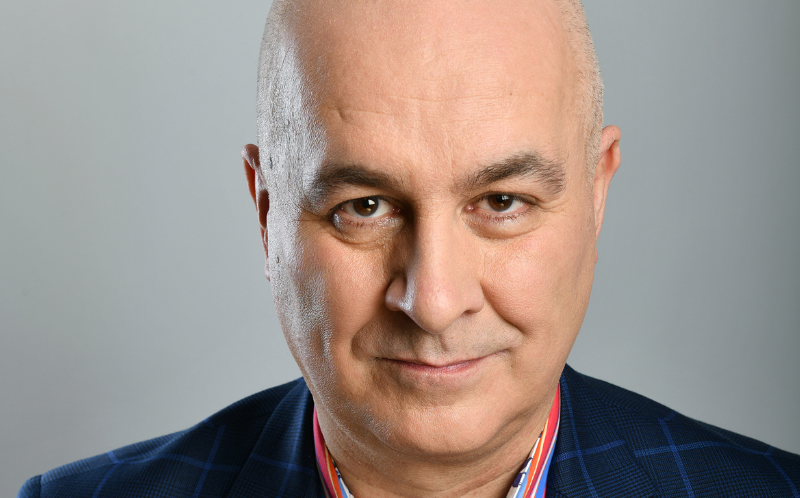
    Photo credit: Steve Ullathorne