Category: Interviews

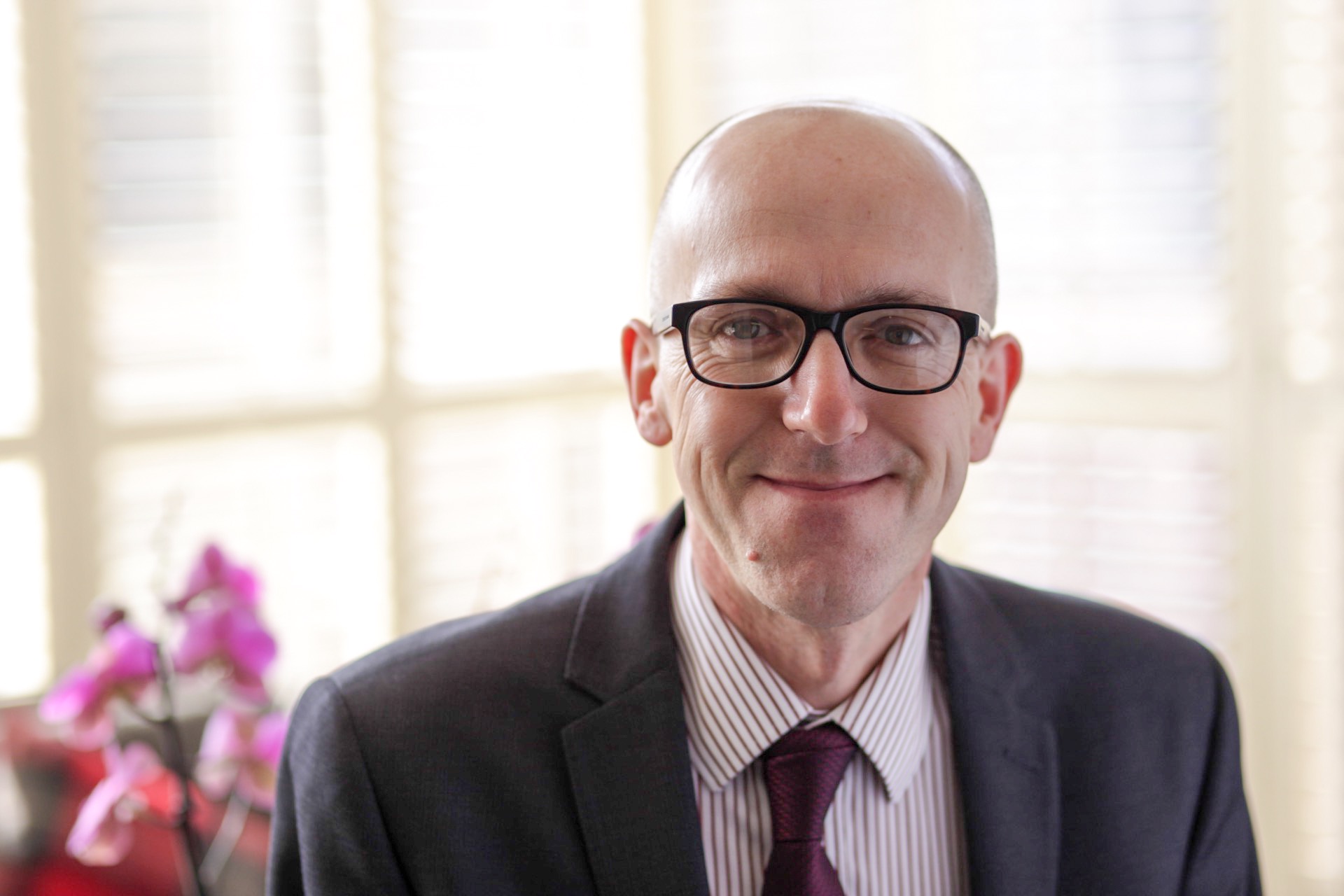
  • The Archbishop of York Stephen Cottrell on Covid, Zoom, and how we alter our work patterns

    The Archbishop of York Stephen Cottrell on Covid, Zoom, and how we alter our work patterns

    I began my ministry during lockdown and compared with the sufferings of the world, having to move at that time is a small thing. Nevertheless, it’s not the way anyone would choose to leave on job and start another.  

    A little maxim which has helped sustain and guide me through my working life has been that good decisions arise out of good relationships. You want people to share your vision, and ask them to help you design it. Zoom has been very good for sustaining existing relationships – and even for transacting business – but it’s not so good for making new relationships. Actually, if you think back to before the pandemic, it’s the things that happen in the car park after the meeting, or over coffee, which are really valuable to oil the wheels. In that sense, it’s been a challenge. 

    The Christian way of ordering the world has got terribly out of sync. We’ve become frantic and evermore busy. Although you know there’s nothing good about COVID, it doesn’t mean some good can’t come out of it. Perhaps it will cause all of us to reflect on the very unhealthy ways in which we were living and working – and not just unhealthy for us, unhealthy for the planet. So my great hope is that as we emerge from this, we won’t just go back to how we were, but we’ll think about patterns of living and working which are much more life-giving. 

    Work is good – we are made for work. Work itself can be an offering to God. So we need to use our time purposefully and creatively, but we need to do it in a way that is healthy. That requires us to see that the first thing we should consider is time for refreshment and prayer. That should be our first consideration, not our last.

    Some people ask what an archbishop does, if I am perhaps the equivalent of a CEO of a business. Well, not really. The business of the Church is the business of the Gospel of Jesus Christ, so an Archbishop is much more like a pastor than a CEO. The Church is fundamentally a community.

    Of course, I have responsibilities for the leadership and oversight of that community because it’s a large community which also needs organisation. And there’s all sorts of infrastructure organisation that goes with it. We employ a lot of people, but we have lay officers who help and support with that. So my day-to-day work is to care for the clergy and to be a voice – and sometimes a face – for the Christian faith, particularly in the Diocese of York, where I serve. As an archbishop, there’s also a national responsibility to guide the vision and hold us to these values. So there are of course parallels with leaders of other organisations – but I don’t see myself in that way.

    Of course, there are hundreds and hundreds of clergy across my diocese, so I can’t meet with them all regularly. On a normal Sunday morning, I will be joining in with the life of a parish or local church. Much of that, of course, in the past year has been online and the church has done amazing things in transferring its life online. But of course, we’re now beginning to meet in person again. Yesterday morning, I was in a place called Loftus which is near Saltburn-on-Sea on the North-East coast with a local church, joining in their life. This evening I’m meeting with a whole group of clergy, and lay leaders, to discuss the life of the church.

    For me the piece of scripture which has spoken to me most in the last year is the story of the woman with the haemorrhages who comes to Jesus. As readers will probably recall, she doesn’t touch him directly – and of course the reason she doesn’t touch him is a kindness. In her understanding of the cleanliness laws, if she as an unclean person touches him a clean person, she makes him unclean. But nevertheless she believes that he has the power to heal. So she touches just the hem of Jesus’ garment. 

    But we’re told Jesus feels the power go out of him. He says to the disciples: “Who touched me?” They say, “You’re having a laugh. You know the great crowd of people around you – everyone’s touching you.” But he notices.

    The reason I found that story so helpful is because we have lived through a year without touch, and without embrace –and without the familiar things of the Church which usually sustain us. Particularly in the Anglican tradition, without being able to receive Holy Communion, which has been the kind of staple diet of Christian worship. All those things have been taken away from us. Does that mean Jesus is not present with us? No, he’s still just as absolutely present. I feel we’ve had a year of touching the hem of His garment.
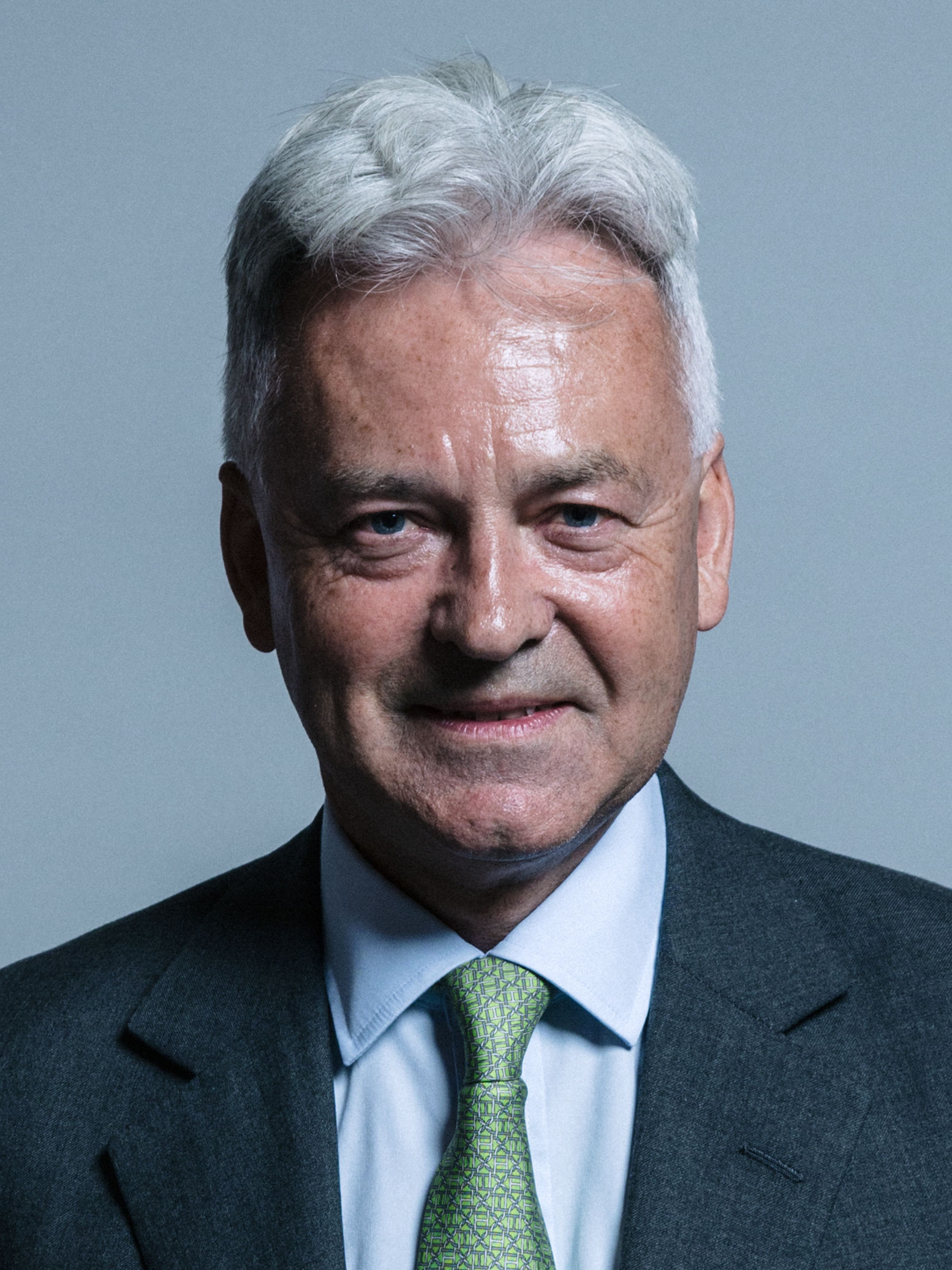
  • Sir Alan Duncan: “Have I Got News For You was absolutely terrifying”

    Sir Alan Duncan: “Have I Got News For You was absolutely terrifying”

    The former foreign office minister tells us about his degree and how it impacted his life in politics

    I studied PPE at Oxford, and when I’m asked what my degree taught me I always think of Harold Macmillan. Macmillan was a former prime minister, who was once Chancellor of Oxford, and he said to our College, which was St. John’s, that what freshers year taught you is when someone is talking rot. That’s always been my lodestar for what a good education means: if you know when someone’s talking rubbish, you know what’s good sense and what is not. 

    But political ambition predated my time at Oxford – I got the bug actually when I was about 12. Whether I regret that or not now is unclear, but everything I did at Oxford, and thereafter, was geared at getting into Parliament. 

    Politics and economics at Oxbridge is quite a well-trodden degree – but it’s often pointed out to me that the current prime minister wields his English language skills and classical education, and that that gives him an advantage. Well there might be truth in that, but there was an element of history in my papers too. My history tutor – who I knew for years afterwards – told me something I’ve never forgotten: “No economist ever makes a good banker. If you want to be a good banker, you have to read history.” I think there’s a lot in that, because it gives you a strategic perspective. It’s not about the numbers, and it’s not just about economic theory nationally. It’s about the ups and downs of life and societal and economic forces – and historians understand those far better than economists. 

    So in terms of my degree, I feel I learned enough – and I also learned a lot from the practical politics of the Oxford Union. This was at a time when the then Labour government under Jim Callaghan was falling to bits, and Thatcher was on the rise. So the 1979 elections slightly ate into my revision for finals – God knows how I got a degree at all. 

    It’s interesting to note that Theresa May studied geography, but I think in the end formal education isn’t what it’s all about. Whether you succeed in politics is more to do with your disposition and what you’ve done in life. The problem is I think a lot of people are going into Parliament now without any particular experience – and definitely too little international experience. 

    I was lucky to gain both in the oil industry. In that industry my best friend was Ian Taylor who died last year – and that friendship, together with the skill I’d acquired in the oil industry, did come in handy in particular when it came to getting rid of Colonel Gaddafi in Libya in 2011. Ian was buying and selling crude oil into Benghazi and we were able to go to the then prime minister David Cameron and explain that if he didn’t follow our strategy, he’d lose the war. Gaddafi was oil, and our approach helped bring him down. 

    If young politicians ask my advice about appearing on television, I say it’s the wrong question. The trouble is most politicians today don’t think about Parliament first and media second. They have it absolutely the wrong way round.

    What I think does matter about being a minister is time management. If you’re not careful, and you don’t administer your day, you can easily be organised by your private office: one of the golden rules of being a minister is always to make sure that you control the diary, rather than let the diary control you. So that means you need to look ahead, particularly for travel and set priorities – and make it clear to your private office that the priorities are as they are, that you will see some people but not others. You also need to explain that you want time to think – or time to call in one of the teams in the foreign office responsible for an area and get into an issue in more depth. So, planning, and not allowing yourself to be just told what to do as a process is the way to do it.

    The media doesn’t help any of this. Believe it or not, I’ve never been on The Andrew Marr Show, but I think Andrew has completely lost its way. The questions have become so staid and obvious, and it’s a programme whose time is up. It’s junk because Andrew keeps asking questions to which there can be no clear answer, doesn’t delve deeper and it’s all about trying to trip up the politician. It’s a dead programme. 

    I did use humour quite a lot in my career – on Have I Got News For You four times in fact. That was absolutely terrifying – they can’t prepare you for that at Oxford! 

    Photo credit: By Chris McAndrew, CC BY 3.0, https://commons.wikimedia.org/w/index.php?curid=61323695

  • Dean Gustar of The Kusnacht Practice on addiction, the UHNW mindset and why the tone of discussion on alcohol needs to change

    Dean Gustar of The Kusnacht Practice on addiction, the UHNW mindset and why the tone of discussion on alcohol needs to change

    Christopher Jackson talks to the addiction specialist about life in the Swiss clinic – and what it tells us about our times

    Given that The Kusnacht Practice is the leading practice in the world for helping people with addiction issues, you encounter its people armed with pre-conceived notions about them. You try to imagine what the high quality of its many specialists will look like in the flesh. But reality has a way of second-guessing this – and in fact is always more interesting than what we’d pencilled in our minds. 

    Of course, the place is brilliantly staffed and well-resourced – as you might expect. But somehow you’re not quite prepared for Dean Gustar, the organisation’s Head of Clinical Operations, who has an earthy compassion and a depth of knowledge that impresses immediately. The sense is of a man who has lived through many experiences – and indeed he tells me that he has had his own struggles with addiction in the past. 

    The more time you spend with him, the more his presence at the clinic makes sense: this is a smart man, who cares deeply about his patients and understands what people are going through when it comes to addiction of all kinds – everything from gaming and alcohol, to drugs and overeating. 

    “Before I worked at The Kusnacht Practice I’ve never really been around wealth,” Gustar explains. “One of the things I’ve learned is that wealth can be very dangerous. It can be a very lonely place. For instance, it’s very hard for wealthy people to trust other people. And if something doesn’t feel right, they’re used to changing it quickly, with a snap of the fingers. That can make the challenge of behavioural change even more difficult for them.” 

    That feels like earned wisdom. Gustar has that look of unstinting compassion which you sometimes find in the healthcare sector – the look of a man who is somehow never exhausted but instead mysteriously energised by his proximity to suffering. 

    He continues: “And of course, their addiction isn’t really going to impact on them financially so that creates less of an incentive to change. Nobody’s going to come and repossess their house.”

    Gustar lives in Zurich, about 15 minutes from The Kusnacht Practice. Born in the West Country, he also used to live in Peckham, and knows that part of the world well – the sense is of a down-to-earth Englishman somehow deposited in upmarket Switzerland.  “I used to live on the Peckham Estate, and when my friends came over I used to walk them back to the station – they were in fear for their lives,” he tells me. 

    So at what stage do clients normally approach The Kusnacht Practice? “When people come to The Kusnacht Practice, generally the consequences are starting to build – often they may be way over their head with consequences. So it’s a very tough place to be where you begin to realise that one of your behaviours is causing damage to yourself or damage to your family or damage to others.” 

    In addition, patients normally come to Gustar because of a longstanding pattern of behaviour which has itself been of use – or seemed to be of use to you. “The very thing that may be causing the damage, by its nature is going to be very difficult to let go of because maybe it’s been a survival strategy for you to take drugs or drink or overeat or gamble – or whatever it might be.”

    The signs are that during the pandemic these addictions have been increasing as a result of the Covid-19 pandemic: “We’ve seen people whose drinking or drug use has increased as a result of feeling isolated, and not being able to partake in life as they used to,” he explains. And why is that? “Maybe some of the things that help regulate their alcohol use – visiting their parents or going on holiday or feeling productive in their work – have been lost, leading to an increase in other behaviours.”

    And, of course, this is the case even when we have all been less exposed to that dangerous thing, the boozy work lunch. “It’s a good point,” says Gustar. “Some of these boozy lunches, there’s this undercurrent of relationship building, where people are engaged in drinking, and where drinking is a kind of obligation.” 

    But that sense of obligation, especially in beery England, can crop up with great regularity in everyday life. So how do you combat that sense of obligation? “You have to develop your own strategies for dealing with these situations. When it comes to people who care about you or people that love you, if you tell them you’re not drinking and if you feel comfortable telling them why, they should care enough about you just to accept it and support you –and maybe even look out for you in that position.”

    And what about those pressure situations – a wedding, or when we see those friends who expect us to drink with them? “I think in those situations, if you’re starting to feel the pressure or people are applying the pressure. you have to come up with a strategy that can support you in that situation – and that could even be an escape plan.”

    Gustar is aware of the difficulty of the task he faces with those suffering with addiction, and so he is keen to perspectivise what it means to give up an addiction. “It’s very difficult to change any behaviour. So if you do manage to change from a state of dependent drinking, why would you risk it for somebody that’s just a passing acquaintance?”

    I’m reminded of Christopher Hitchens – who died of oesophageal cancer after a lifetime of too much whiskey – who remarked that he might not have drunk so much had he not had a strong constitution. He was able to file his pieces on time, and be successful. Does Gustar see high-functioning alcoholics among his CEO client base? “We do see high-functioning alcoholics and it just makes you wonder how well they would function without alcohol. But they pay a price somewhere, so it could be their relationship or their health – and they’re most likely already paying it in some respects.”

    Sometimes the price can be concealed. “As we get older our ability to sustain it decreases – you can’t easily manage a dependency above the age of 55. Alcohol is just a very dangerous substance for the human body.”

    And yet, if you look at the public discourse, Gustar points out, you wouldn’t think drink especially were particularly dangerous. “I mean – it’s just everywhere,” he says. There’s a kindly anger here – a note which only someone who knows the cost of our exaltation of alcohol could strike. “I’ve watched some of the debates in Parliament, and they’ve had these discussions about “When’s the pub opening? When are we going to get to the pub and drink that pint again?” And if you look at our UHNW clients, there is so much temptation in their lives. If I go to the airport, I mooch around and maybe go to a Starbuck’s.  They go into a business lounge, and there’s a big bar full of free champagnes.”

    To go against these trends and unpick negative behaviours plainly takes willpower – but I suggest to Gustar that willpower isn’t something that’s evenly distributed across the population. Some have it; others don’t. Gustar says: “I think it’s a bit like that Indiana Jones film Raiders of the Lost Arkwhere the sun has to be in place and bounce off here and there and then people change. A lot of things have to be aligned at the right time.” He pauses, then confides: “But you even get people who sit in front of the doctor and the doctor says , ‘If you carry on like this you’ve only got six more months.’. And they carry on doing it. Wealth can be a very lonely place, and the wealthy have a very low tolerance for discomfort.”

    Talking to Gustar is a revelation: here is a man who has taken the decision to work towards helping people. And he reminds us also that addiction is a problem more endemic in our society than we might realise – sometimes as much in the tone of parliamentary debate, and our corporate life, as it is in the pub. 

  • How eBay can be more than just a side-hustle

    How eBay can be more than just a side-hustle

    Patrick Crowder

    Many people have started selling items on eBay during the pandemic, offering everything from hand-made crafts to vintage clothing. Statistics from eBay show that the number of self-made millionaires on the platform has risen by 35% over the last year alone.

    For most, eBay is a part time job. For Sam Clifford, it has been his full-time career for five years. 

    Sam began his eBay business when he was 15, selling CDs of tips and tricks for the video game FIFA at £2 each. 

    “I had always done this as a side-hustle, which is the reputation the job has,” Clifford explains. “When I was 23, I got kicked out of my other job and said, ‘Right, I’m going to do this full-time’.”

    From that point on, Sam dedicated his full attention to his online business. He mainly sells smaller wholesale items and bases his product selection on current trends and market research.

    “Ages ago a video of a woman laughing in a carpark wearing a Chewbacca mask went viral. It was just her wearing this kid’s mask, but I knew straight after that everyone would jump on eBay to get that mask,” Clifford continues. “As stupid as it was, I knew there would be a significant, instant demand for it.”

    “I could list my sock on eBay for £30, but that doesn’t mean it’s worth that

    Clifford fluctuates his prices based on demand the same way that airlines change ticket prices. He checks the prices of sold items on eBay to get a basis of what items are selling and what they are selling for. He warns against basing prices on current listings.

    “One mistake people make a lot is they’ll go on eBay and see things listed for higher prices than they’re worth,” Clifford says. “I could list my sock on eBay for £30, but that doesn’t mean it’s worth that.”

    When items are listed on eBay, an algorithm decides which listings will appear first in a search based on the rating of the seller. Clifford says that speed is the key to keeping that rating as close to five stars as possible: “You’ve got to be hot on it. When I first started I was delaying, doing it here and there, and that reflects badly on your account.”

    He also recommends posting items and answering inquiries within a day, as well as offering free first-class postage with every sale.

    Increased demand during the pandemic led to such a surge in new listings that many had to be removed to ensure security and disallow price gouging. Clifford has witnessed these effects of Covid-19 on the market first-hand, but he is not discouraged by the new competition. “The market has gotten a lot bigger, but there are a lot more buyers as well. People are sitting at home bored with nothing to do. There is more competition, but I think there are at least threefold more buyers.”

    “If your mind and your heart are in this job then you’ll succeed

    Making a full-time career through eBay is an attractive prospect, but Sam warns that the dedication it requires is not a good fit for everyone.

    “It’s freelance work. If you haven’t got the drive and motivation to do it, it’ll end up fading out in about six months,” Clifford says. “I’m big on mindset and mentality – the mind controls the body, so if your mind and your heart are in this job then you’ll succeed.”

    Clifford’s success came as a surprise to many people in his life, and he initially faced pushback. He believes that anyone with the right amount of self-motivation and passion can succeed in the job and encourages people to follow their passions.

    “People who get joy out of negativity will put you down and say it’s not a real job, but I’d rather fall on my own sword than anyone else’s,” Clifford says. “People have this stigma that what you enjoy can’t be your career, but that couldn’t be further from the truth.”

    Photo credit – By Cristiano Tomás – Own work, CC BY-SA 4.0, https://commons.wikimedia.org/w/index.php?curid=103669478

  • Lloyd’s of London’s Craig Civil: “Data science is part of our daily lives”

    Lloyd’s of London’s Craig Civil: “Data science is part of our daily lives”

    Andrew Zelin

    The business world is changing all the time. To the layman, and even to many leaders, there can be a bewilderment when it comes to the latest terms: AI, crypto, blockchain. Ignorance can create a reluctance to engage. 

    A case in point is the ubiquity of the word ‘data’. We hear it all day long: ‘big data’, ‘send me the data’, and the idea of an organisation becoming more and more ‘data-centric’.

    So what does this mean? It’s simple, really. It means that organisations have increasingly come to see data as being at the core of forging strategy. Such an approach used to be the domain of the largest corporation, which were the first to employ data teams. Nowadays, as technology evolves, start-up companies build their strategy from scratch – and they do it around data. 

    That means it’s a widespread profession, with its own ‘power list’ of the 100 most influential practitioners. One such award-winner is Craig Civil, Head of Data Innovation, R&D and Analytics at Lloyd’s. Civil joins me for a Zoom call from his home in Suffolk, and is relaxed and friendly throughout. 

    As it turns out, the team Civil oversees is relatively small (‘there’s three people in my team plus me’). This size of team enables Civil to be nimble across Lloyd’s operation. “It’s a deliberately decentralised model,” Civil explains, “ensuring that we collaborate with all the data people across the organisation. We are the conduit that receives the idea. We then find the right people to partner with – whether those we actually employ or people in an external organisation.”

    Civil has had a long and varied career. His first job out of university was with the East Anglia Electricity Board in the archive department. It was an early opportunity to shine. Civil realised that there was an opportunity to move all the paper information stored for local primary care contractors – things like surgery opening times – from paper records to electronic records. By having all that information kept in, to use the data jargon, a “Structured Query Language (SQL) database”, it could be made easily available to the general public. Civil was able to overlay geographical information to illustrate where people’s nearest surgery was within certain driving distances. 

    Here we can glimpse data’s perennial relationship to transparency – and, more simply, to making things easier for people. ‘Doctors, dentists, pharmacists, opticians. They’re very location-focused, obviously,” Civil recalls. “I found myself starting to use Geographical Information Systems (GIS) more and more.”

    That made Civil a natural fit for the healthcare sector. He went on to manage a department in the NHS, before moving to US-based healthcare analytics company Health Dialog, which was seeking to enter the US. Civil recalls that period with affection: ‘There was only a handful of us to start up the organisation in a rented office in Cambridge, and it was really successful. We were doing cutting edge things in terms of how you use data analysis to create a product store for the NHS. But it was always kind of a struggle to make money, because the US model of healthcare with insurance is obviously very different to ours.” 

    In time, Health Dialog was bought by Bupa. Civil was by now very experienced and using state of the art population health algorithms and incorporating these into the world of health insurance. It was this which led him to the specialist insurance market, joining Lloyd’s of London in 2016. 

    How did he make the switch? “I felt like I’d done enough in that industry and wondered whether statistical models could be applied to a different industry,” Civil says. “I thought I’d try something completely fresh and new – and lo and behold, the opportunity at Lloyd’s popped up. I thought ‘Let’s see what happens’.”

    Over the course of Civil’s career, data science has become one of the most sought-after careers, and has changed substantially. What hasn’t changed is the need to gather data, understand what customers actually know and what the end outcome could be. 

    At the beginning of Civil’s career, his work would probably not have been labelled “data science” – it was really just “stats”.  That’s a measure of how much the sector has changed. Citing the example of the current Covid-19 vaccination programme involving the ability to target particular age groups in particular locations, Civil makes a telling remark: “Data science is so much of what we do now. It’s part of our daily lives.”

    So what are the qualities needed to succeed as a data scientist? “You need a blend of skills which complement each other,” he explains. “First you absolutely require pure technical skills such as coding in R or Python, together with an understanding of various statistical models and their pros and cons.”

    But in addition to these skills, you need something more important: “You need the mindset of continuous learning because all these technologies evolve so fast,” Civil continues. “Data scientists innovate, are able to communicate the results and present what is often really complex analysis in a way that engages an audience.” 

    That sounds a lot. Does every data scientist really need all those skills? “You can never expect every data scientist to have all of these skills, as long as the team is built of people who collectively cover all these angles. This comes about more effectively through having diversity of background and thinking within teams to encourage this. We take that aspect very seriously at Lloyd’s when building teams.”

    I get the impression that that’s partly what makes Civil so successful. Craig puts down a great deal of his success to the fact that he has had inspirational people to work with who have become his mentors. He is mindful nevertheless that some organisations are more forward-thinking than others when it comes to the notion of being “data-centric”.  

    So what’s his advice to data scientists who are struggling to gain traction with senior leadership? “It’s important to seek out across your organisation people who do similar work and have similar interests to yourself. You need to nurture them so that they eventually become your champions.” The goal, Civil says, it to build a “data community”, which becomes visible to the whole organisation: “If you do really neat and innovative work in an engaging way, people will think ‘I’d love to be part of that’.” In addition, you need to “bring your analysis to life and be succinct, and show that what you do has a positive impact on the business, such as making operational saving or reducing operational risk.”

    So what might that involve? Civil advocates creating a “data strategy navigator” and tying that to business outcomes. In doing that, it helps to look ahead by three to five years. “My approach is to take each business objective in turn and put a “data lens” over it. It’s a matter of aligning business objectives with data objectives and considering where the best ‘bang for the buck’ lies. As well as covering these operational outcomes, you should also have a longer-term objective to create a “data culture” across the organisation as we’ve done at Lloyd’s.”

    As part of its digital transformation programme, one of Civil’s key achievements at Lloyd’s is his creation of a non-technical data science course for his community and beyond, which has proved very popular across a wide range of people and roles at Lloyd’s. “It’s a non-technical course created with the Southampton Data Science Academy. It has an eight-week curriculum with up to 60 staff being trained per year in three “cohorts”.  The course enables staff to feel more comfortable in technical data conversations, to convey quantitative information in an engaging “data visualisation” and to begin to identify use cases for data science from their own team that they might not have considered previously,” Civil explains. 

    So has it been successful? “We’ve received very positive feedback from Lloyd’s course attendees and we’ve now made the course available to market colleagues as well after requests to enrol.” In addition, Civil has added a more technical data science module involving technical insights and the use of Python for a smaller subset of delegates, together with a new “AI for business” course.

    It all amounts to a vivid example of how a small core team can empower many others within a large corporation at different levels of technical involvement to enable Lloyd’s to progress on a truly “data-centric” journey.  Civil has plainly achieved much by drawing on his early career skills to understand the capabilities of data and building teams within public sector and then commercial environments, from small start-ups to large organisations.  

    It’s also a testament to his success that he has been able successfully to align business objectives to data objectives by looking at issues through a “data lens”, consider the skillset and tools needed to move businesses forward, share and disseminate his knowledge through training, enable data literacy amongst staff and be able to engage like-minded people within to make this all happen.

  • Psychologist Melissa Nobile of The Kusnacht Practice on treating young people during Covid-19

    Psychologist Melissa Nobile of The Kusnacht Practice on treating young people during Covid-19

    To mark Mental Health Week, Melissa Nobile, a Psychologist at The Kusnacht Practice, discusses her experiences of offering care to young people during the pandemic

    Mental health has become such a ubiquitous phrase in our society that it is almost verging on cliché – all the more reason, then, to explore in detail what we really mean when discuss it. The best way to do that is to talk with someone who really understands it, and deals with these issues on a daily basis. 

    Accordingly, I Zoom with Melissa Nobile, a Psychologist at The Kusnacht Practice in Switzerland. Nobile’s academic background is at the University of Geneva and the University of California in Los Angeles; she subsequently acquired additional training and clinical experience in Thailand and Europe.

    Nobile’s role at The Kusnacht Practice is particularly relevant for Finito World readers. Nobile is especially engaged in the practice’s Youth Programme, with most of her work conducted with patients between the ages of 13 and 25. 

    For parents, this has been an anxious time. It is difficult to unpick pandemic-specific behavioural changes from developments that would probably have been scheduled to happen anyway, with or without Covid-19. Does Nobile have any advice on that score? “As a parent, it’s okay to see just a little change in your child – signs might include a bit more frustration,” Nobile explains. “But if you’re getting to the point where there’s a really concerning change, then you should seek help.”

    So how do problems tend to manifest themselves? “We look for areas where day-to-day functioning has altered,” Nobile continues. “It could be that the child is suddenly really scared of going to school. At the beginning of the pandemic particularly, children were scared of losing a parent.”

    More generally, the pandemic has been an onslaught on our sense of pleasure in the world – that’s true for young people too. The death tolls reported daily on our news sources chip away at our ability to be joyful. Is there a danger that we’ve become a morbid society? 

    Nobile says that the impact of that is especially significant on those who were already vulnerable: “In those who are predisposed to struggle with anxiety that’s obviously a problem. But it hasn’t been confined to those people: it’s also something we’ve seen in CEOs and high achievers.” That’s partly due to the uncertain time scales which are at the centre of what’s been so challenging about the pandemic: “It’s stressful for everybody. Nobody likes uncertainty for too long, as we have a sense of loss of control if we’re unable to plan for the future. A lot of people end up turning off the TV as they can’t take that morbidity.”

    The danger, of course, is that a stressed-out CEO, however wealthy, is not going to be stressed out in a bubble – in the family unit, that stress is likely to be catching and affect younger members of the family. The Kusnacht Practice is careful to see the wider picture of what may be causing strain in a young person. “We’re very focussed on the stresses that CEOs are under. It’s the difficulty of having it all on your shoulders. We have to make sure that what the parents are feeling doesn’t spread into the life of the teenager.”

    The Kusnacht Practice is a pioneer in the field of ‘individualised treatment’: “Our approach is tailor-made to each young person coming in,” Nobile explains. “In group settings, the patient comes in and has to adapt to the programme and the setting. It doesn’t work for a lot of people. What we do is listen to the person coming in, and examine their specific problems – whether it be a specific symptom, or pandemic struggles, or something else altogether.”

    Crucially, this individualised approach is matched by an equally individualised family programme. “We’ll get as many people as possible on site whenever possible – siblings, parents, grandparents, even nannies. They’re going to go back home, and back into the family system, so changing someone without changing the rest of that family system usually doesn’t work.”

    Nobile reports an increase in cases where she’s needed to orchestrate a family therapy approach. “I’m doing more and more sessions where I do parental coaching around a situation. This will sound simple in theory but in truth, it’s quite complicated. In some families it’s about going back to really good communication. Uncertainty will give room for people to imagine the worst. What we need is for parents to explain as much as possible – and in words adapted to a child – what is going on. If you don’t do that, a child may construct more catastrophic scenarios than is actually the case.”

    Nobile exhibits a profound understanding of her clients: “Children or teens are antennas,” she says. “Given that, it’s important for parents to say: ‘Listen, this is a difficult time but we’re going to be okay’.”

    So what can we all do to improve our domestic lives? Nobile advises focusing on specific family rituals so that no member of the family in question is isolated. “It’s important to have that time where you still cook or go for a walk together. That will always be beneficial. I’ve had a lot of teenagers lately where they’ve found experiences in the pandemic which are very enriching. Some have come out thinking, ‘Even when things seem terrible, I’m able to cope with it and I can talk to someone’. Some have built that vital resilience.”

    Even so, the long-term picture remains uncertain, and that creates another layer of problems. “There’ll be a minority group for whom difficulties will persevere,” Nobile says. “There’s the young student who maybe acquired a gaming addiction in lockdown – that will take time to treat. Or else there’s those young people whose parents have lost their jobs at this time. In those instances, we’re discussing a more long-term impact.”

    Career issues arise again and again, according to Nobile. “During the pandemic, we had a lot of time on our hands. That creates a lot of existential questioning, perhaps among young people who were already predisposed to that anyhow.”

    Fortunately, The Kusnacht Practice has a remarkable range of resources at its disposal. Business coaches and mentors and psychotherapists are on site, and Nobile makes sure her clients are able to explore their interests with a view to shaping their future. 

    Given The Kusnacht Practice’s rarefied level of treatment, a lot of the young people Nobile sees are dealing with issues related to having successful parents. “If you have a successful parent, what does that mean for you? That’s not always easy to figure out. You might have a lot of resources, and accordingly, a huge number of choices. Paradoxically, that can make you petrified. For every door you’re able to open, you’re going to have to close so many others. That can freeze you in place.”

    So how does Nobile manage that? “That’s what psychotherapy is all about, figuring it out in the context of each person’s life story.”  

    One might think that returning to the family unit after treatment might be difficult. But Nobile gives a nuanced reply. “It’s a minority of the youth we receive who come to us because they want to. Most of the time the parents in question have been very concerned for a while. But by accepting the need to come here, they’re sending a signal: ‘Yes, I have a problem’.  And admitting the need for help is incompatible with the normal developmental process of youth who strive for independence. After a few days they however usually realise that this is quite a nice place! They can set goals, work out problems they are facing and learn new skills – and find their voice.”

    And returning to the family – is that fraught with danger? Nobile doesn’t see it that way. “We like to see it as an opportunity. Ultimately, life is not with us – it has to be back home. But once clients leave us, we provide daily support with virtual sessions with the main therapist and they can always come back for ‘recharge weeks’.”

    It has been a difficult year for many, but it creates optimism to find people like Nobile working on the front lines, committed to the healing which all of us may feel we need after the tribulations of 2020 and 2021. 

    Nobile was to talking to Christopher Jackson. Go to https://kusnachtpractice.com

  • Meggie Foster: “Don’t wait for the phone to ring. Just do it yourself”

    Meggie Foster: “Don’t wait for the phone to ring. Just do it yourself”

    Emily Prescott

    Meggie Foster has had a good pandemic. You may not recognise the name but if you have ever ventured onto Twitter or TikTok, you will know the face.

    When the virus hit, the 27-year-old trained actor was working in an office. She dreamed of performing but because London is so “bliming expensive” and the industry is “crammed full” of talent she was working a 9-5 job hoping a door into the creative industry would somehow open for her.

    Finally, furlough gave her the time to focus on her creative career and she started posting videos online featuring lip-syncs of politicians and celebrities, much to the delight of millions of people in desperate need of some whimsy.  

    One video, which has been viewed more than 1.5 million times, uses the audio clip of the home secretary’s April press briefing announcement, that there had been “300,034,974,000” coronavirus tests on one day. Foster lip-synced Priti Patel’s announcement while swigging from bottles of spirits and smoking throughout, before getting out a roll of clingfilm and attempting to use it as a facemask.  

    In another, which has received nearly 20,000 likes, Meggie lip-syncs an interview between ITV news presenter Tom Bradby and Meghan Markle in which Markle admits she struggles with life as a royal. Meggie’s Bradby plays the violin and Meghan wipes her tears with a £50 note. 

    She is in demand. Foster took a call from Robert Peston’s production company asking if she could come up with a video mocking his biggest blooper. She reenacted the awkward moment Peston appeared to say an expletive when the chancellor asked for his question during a press briefing. 

    Foster playfully presents the ridiculousness of people’s own words with her perfectly timed syncs, exaggerated facial expressions and costumes (which are often borrowed from her Dad’s wardrobe).  

    “I think it’s sort of an eye opener that you can actually do it yourself and not wait for the phone to ring. I was definitely that person to wait and see if anything would happen. I’d never sort of gone out there and done it myself and maybe that was because I was scared, ” Foster tells us.  

    Her apprehension about putting herself online is understandable, but thankfully, she has not encountered too much meanness.

    “I haven’t really got too much negativity. With acting I knew people could be quite vicious about it. Even on your looks and stuff like that, especially for a girl you’ve got a load of pressures on looks and stuff like that. I’m actually really surprised how I haven’t got comments about how I look. I am really shocked about that actually.”

    She speaks with such buoyancy and enthusiasm, it is easy to believe that she would not be too disheartened by a few nasty comments.  

    “I have got quite a thick skin, I’m quite a tough cookie when it comes to stuff like trolls. I think if you don’t want to watch them, if you don’t find them funny then just don’t watch them or don’t follow me, it’s as simple as that. I am not really bothered what people like that think. Obviously if the majority of people were saying that but they’re not. The majority of people have been overwhelmingly positive.” 

    Despite her new-found online stardom, Foster is yet to feel the full force of her fame, she tells us from her family home in Oxfordshire.  

    “A few people sort of recognised me and things like that but because we have been in lockdown I haven’t been out too much and wearing a mask around, no one can see my face anyway.

    “I feel like I am not famous because I have been stuck in my childhood bedroom, with my mum and dad sort of nagging me to pick up my clothes from the floor. So I feel like I’m back at school if anything but we will see. We will see what happens.” 

    When I first reached out to Meggie with an interview request in April, she politely declined. She later said she had taken the advice of her journalist brother and was composing herself before speaking to the media. Since then, the savvy comedian has featured in The Times and on Lorraine. Now she has an agent and is thinking about next steps. 

    “I do worry that it is getting boring. I know lip-syncing is funny but I don’t want to bore people now so I’m trying to spread my wings a bit and see whether there is any more life in other directions. Dreaming big I would love to have the Meggie show.”

    Foster, who is continuing on her upward trajectory, has some advice for budding actors and comedians.  

    “I think my main piece of advice would be: do it yourself. Don’t wait for that phone to ring you know, you can create stuff yourself if the work is not coming to you, especially now when theatres are closed. 

    “If you have got sort of, I don’t want to be cringe, but a dream or a passion or something you want to get to: you can do it. You can create your own luck.” 

  • Lessons from the Etsy Boom

    Lessons from the Etsy Boom

    Patrick Crowder

    While it might not seem like the best time to start a traditional business, smaller non-traditional operations are thriving. Many craft businesses have seen success on websites such as Etsy selling jewellery, wallets, cross-stitches, and of course facemasks.

    Jennifer Brown started her online jewellery business Mezzanine Resin in early February this year. She says the idea came after she was let go from two jobs in 2020.

    “I realised I’d have to rely on myself more for a steady income, rather than a corporation that would drop me at the start of every lockdown,” Brown says. “My mum suggested I start selling my earrings online and it just trickled from there!” 

    Brown’s products – which include small statues, vases, homeware, and all manner of jewellery – are all hand-made from resin one at a time. She says that her designs are “influenced by nature” with “tonnes of stone, forests and minerals” replicated in her products.

    Etsy began seeing major success during the pandemic as artists, hobbyists, sculptors, and seamstresses began selling their handmade goods online. ETSY stock has grown by over 400% since 2020 began, raising from $44 (£31.68) to it’s current price of £188 (£135.35).

    Brown currently sells on Etsy, but she is considering making the switch to Instagram. She already advertises on Instagram and says that her friends and followers have been “intrinsic in helping get the word out” about her brand. She hopes to move into more direct sales once her brand has grown: “I’m waiting for the day that I see someone on the street in my earrings. I hope the business turns from a side hustle to something that I can supply into boutiques.”

    Starting any brand is a daunting task, and Jennifer says that she would not have succeeded without the support she has received.

    “My mum of course inspired it, my grandad pitched in to make me the stands that my pieces hang on in product photos, and my fiancé encouraged me to spend time perfecting my stuff – rather than fretting about money, which was, of course, a luxury not everyone has,” Brown says.

    As lockdowns lift, we will see if the phenomenon of craft-made products lives on. For now, things seem promising.

    Growth in hobby and craft sales are not exclusive to Etsy or Instagram. Hobbycraft, for example, had to close its physical storefronts, but continued to see massive customer demand online. The company saw an 8.9 per cent increase in revenue to £193.6 million, driven by a 19 per cent increase in e-commerce. For Brown, this means increased competition, but she is confident about the future of her business.

    “My friends bought some of my early pieces,” Brown admits. “I’ve told them to hang onto them as they’ll be worth millions in a few years when I’m a big-time designer.”

    Photo credit: Lucielle Jewell on Unsplash

  • The Luthier’s Tale: Inside the Guitar Repair Industry

    The Luthier’s Tale: Inside the Guitar Repair Industry

    Veteran guitar tech John Armitage shares his thoughts about life on tour, professionalism, and getting started in the industry

    The music industry conjures up images of spotlights, adoring fans, and late nights on the tour bus, but behind the scenes there is a world of technicians who keep the show running smoothly.

    John Armitage began repairing guitars in 1978. Since then, the job has taken him all over the world with groups such as Iron Maiden, King Crimson, and the Manic Street Preachers. Now he operates Guitar Hospital, which has workshops in London and Whitstable.

    Armitage got his start in guitar repair at 17 when he saw a problem and took the initiative.

    “I started off as a drum tech for bands, then everyone went to America and didn’t take the drum techs,” Armitage says. “I was playing bass in a band by this point and they said, ‘I’ve got a guitar guy who can’t come’. I said, ‘I can do that’.”

    Armitage also recalls a show in New York where the guitar player requested a new nut – a piece of dense material that the strings rest on at the top of the neck. “I didn’t know what a nut was, but I headed down to Sam Ash (music shop) and said, ‘I need a nut for a Fender Strat’.”

    The man behind the counter asked him, “Do you want pre-cut, bone, carbon, brass, graphite, what gauge do you want it cut to?” Thoroughly confused, Armitage told the guitarist that the store had run out of the part he needed.

    Taking this experience as a sign that he needed to learn more, Armitage took a trip to his local library where his excitement led him to some light crime. 

    “There was this big tome of a book with pictures, a real 70s masterpiece, and I wanted it forever,” Armitage recalls. “So I put it in a garbage bag and threw it out the window. It’s my eternal shame, I stole the best book because I was so eager to learn.”

    Thankfully, there are other ways to enter the world of guitar repair. Schools such as Guildhall and the Totnes School of Guitar Making offer months-long traditional classes, while short workshops are a more cost-effective option.

    Armitage advises people who are interested to “do a short course” to “get a taste” of the work, before committing to a more extensive programme. He also pointed out that business sense is every bit as important as technical skill.

    “Knowing how to repair guitars is 50 per cent of it and knowing how to deal with customers and administrate your business is the other 50 per cent of it,” Armitage says. “I did a business studies course when I was younger which really helped me.”

    Talking about the touring life, Armitage says that it is an incredible opportunity, even if it is not for everyone. “It’s about being constantly relocated, waking up never knowing where you are. It’s more of a young person’s game. It’s brilliant if you can get into it and cope with the constant relocation.”

    A touring guitar technician will have their travel and accommodation paid for and can expect to be paid for every day they are away from home. The demanding, exhausting schedule comes with the benefits of free travel and unforgettable experiences.

    “I have lifelong friends who I met in 1980,” Armitage says. “I met my wife on tour. There’s a whole world out there that you can see for free – but it’s not a vacation.”

    According to Armitage, a good guitar tech on tour with an in-demand group can expect to earn £80,000 to £100,000 a year. If the touring life isn’t for you, base pay starts at about £30,000 a year according to Glassdoor. Armitage says that success in the industry is based on time served and word of mouth.

    A touring technician needs to exude a sense of calm, confident control to be successful, and sometimes even take on the role of a counsellor. “I’ve listened to divorce stories, people going off the rails, you kind of have to be a sounding board,” Armitage says. “Nothing can phase you, no matter how weird the request is. They’ve hired you to take away their stress, not add to it, so you can’t buy into panic.” 

    After years on tour, maintaining and repairing guitars for bands on the go, Armitage decided to open his own repair shop. “I started the Guitar Hospital about 10 or 12 years ago. It was a side hustle then, because I was touring a lot more working for big bands. Gradually I knew I couldn’t do that forever.”

    He describes his current day-to-day work in a peaceful way, saying that now, “It’s just me, a cup of tea, a radio, and a pile of guitars that need attention.” 

    Photo credit: Jonny Swales on Unsplash

  • Sadiq Khan exclusive: ‘My focus is on jobs, jobs, jobs’

    Sadiq Khan exclusive: ‘My focus is on jobs, jobs, jobs’

    In the next in our series on the London mayoral election, Emily Prescott interviews the current mayor Sadiq Khan about education, the economy and his regret at trusting Boris Johnson

    Sadiq Khan has a few regrets. For instance, on the London Mayoral campaign trail a few weeks ago he tried to display his skills by performing bunny hops on a bicycle borrowed from a reporter. “The bike’s too heavy, it’s a nonsense bike,” he sighed as he failed to achieve lift-off. “On reflection, it may have been a mistake,” he concedes now.  

    These lighter moments of Boris-esque buffoonery are rare for Khan, and in reality, his regrets are not so quaint — at times he cries and at times he struggles to sleep.  “Every night when I go to bed, I am always reflective on what could have gone better during the day. I don’t ever think I’ve had a perfect day,”  he tells us via email. 

    Khan, who became London’s mayor after a landslide victory over his Conservative opponent Zac Goldsmith in 2016, has had a particularly tough year.  “A big regret I have is trusting the Prime Minister last March when he said he would follow the science in tackling Covid-19. It quite quickly became clear that this was not the case and unfortunately led to many avoidable deaths,” he says. 

    Indeed, more than 14,000 people have died in London hospitals following a positive COVID test. Khan himself has lost friends to the virus, one of whom was just 53 — three years older than the mayor. 

    Throughout the pandemic, Khan has been open about his emotional struggles. He has also openly expressed frustration at being excluded from key decisions by the Government and not being invited to COBRA meetings. His relationship with the prime minister is far from harmonious and we understand he is now off the prime minister’s Christmas list. “This pandemic should have been an opportunity for the Government to see Mayors across the country as its allies rather than adversaries,” he sighs.  

    If only he had more power.  Covid-19 has meant a vast expansion of Government control and cuts to Khan’s budget. “I think Mayors across the country have far too little power compared to our global counterparts,” Khan says, and adds: “For example, the Mayors of New York and Tokyo can spend 50 percent and 70 percent of tax raised in their cities compared with the seven percent I have as Mayor of London.”

    Although London mayors have few formal powers, they have big profiles and large platforms. And Khan is determined to keep whatever power he does have so he is staring down Shaun Bailey, the Tory candidate in what Khan says is a “two-horse race” on May 6.  

    “The Conservative candidate has shown Londoners time and time again that he will not stand up for our city and that he doesn’t share our values when it comes to openness, inclusion and diversity,” he says.  

    “I respect him as an individual,” he insists, but proceeds to say: “He has said terrible things about women, working class communities and multiculturalism… I find his views divisive and offensive.” Even when he’s talking about his rival, Khan has a respectfulness — while his supporters might say this is evidence of his level-headedness, his critics might say it is evidence of his weakness.

    Those who point to Khan’s weaknesses focus on his planned pedestrianisation of Oxford Street, which was vetoed by the Conservative-run Westminster Council, then of course there’s been the severely delayed opening of Crossrail. Meanwhile, his supporters often point to his introduction of the world’s first ultra-low emission zone. A recent report, which does not include falls in pollution after the first Covid-19 lockdown, found there has been a 94 per cent reduction in the number of people living in areas with illegal levels of nitrogen dioxide since Khan became mayor. 

    But if Khan gets elected again, he has a lot to do to revitalise London post-COVID. “I’ll urgently tackle the increase in unemployment with a relentless focus on jobs, revive tourism in central London and support a safe recovery for our hospitality and creative sectors. I am pursuing a vision for a brighter future for London that will make our capital greener, fairer and safer for all, and I will always stand up for our city against the most anti-London government in living memory,” he writes, rather like a press officer.  

    He adds: “I have a plan for supporting more than 170,000 well paid, future-proof jobs in the green economy as well as generating employment by supporting businesses, helping Londoners retrain and banging the drum for investment in our city from around the world.” 

    “My focus is on jobs, jobs, jobs,” he adds, echoing Blair’s infamous “education, education, education” speech. 

    Although running the schools doesn’t fall under the Mayor’s jurisdiction, Khan has been “working hard to close the digital divide across schools in London, allocating £1.5million towards school children accessing the equipment they need to learn throughout the pandemic and beyond.”  

    “I also back making relationships education for primary pupils and relationships and sex education for secondary pupils compulsory to promote learning about positive, healthy relationships of all shapes and sizes and counter unhealthy attitudes and behaviours which can, if left unchecked, evolve into bigotry, discrimination and even violence,” he tells us. 

    While Laurence Fox told FinitoWorld, rather confusingly, that he wanted to “recolonise the curriculum,” Khan is more articulate about how he thinks history classes should deal Britain’s colonial past. He has campaigned for black history to be part of the national curriculum. He explains: “Education has an important role to play in providing a more complete picture of our history and a better understanding of the historic and institutional reasons for racial inequality in Britain.” 

    Khan still lives in Tooting where he grew up on a housing estate. He was the son of a Pakistani immigrant bus driver and a piecework seamstress. He worked as a human rights lawyer before he was elected to parliament in 2005 and became London’s first Muslim MP. He insists he is there to represent all Londoners and to tackle inequality in the capital.

    “If re-elected, I will continue to lobby the government to make these changes to the National Curriculum and give schools the tools and support they need to empower a new generation of Londoners to strive towards a fairer and more equitable city,” he concludes.

    He may have failed to achieve lift-off on the bike on Hackney Marshes, but will his message land with Londoners this time? Almost definitely, but will he be able to work with the Prime Minister and implement the changes he talks about? Now that will be harder to get off the ground.