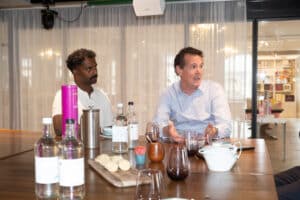
Finito World caught up with Finito Education’s likeable and passionate senior mentor, Tom Pauk
Tell us about your career before you joined Finito.
After studying drama, my efforts to become an actor ended with a whimper rather than a bang, and I retrained as a solicitor. The career that followed was a “game of two halves”, half-time marked by the global financial crisis of 2007-08. In the first half, at City law firm Allen & Overy, then in-house at American bank Citigroup, I’d specialised in large cross-border lending transactions.
In the second, I helped restructure loans borrowers had taken out in more prosperous times but were now struggling to repay. After leaving the bank in 2017, I began mentoring young men in prison, returned to Allen & Overy, now in a role mentoring lawyers in the early stages of their careers, and began writing plays. My professional life, it seems, had come full circle!
Did you feel your education prepared you for the workplace?
A degree in drama could not have prepared me better for the cut and thrust of commercial law, an above-all collaborative endeavour with a diverse cast list of characters, long “rehearsals” with unfeasible deadlines we somehow always managed to meet. At the conclusion of an especially high-profile deal there was the added satisfaction of reading the “reviews” in the financial press.
The practise of law is essentially an exercise in problem-solving. In my case, a love of modern languages and playing the violin had also prepared me for the intellectual rigour of law, and I was even able to use my mother tongue Hungarian in transactions with Hungarian clients. So to anyone reading this wondering whether a knowledge of an obscure language might prove useful one day, the answer is a resounding Yes!
Did you benefit from mentorship during your career?
When I’d started out, mentoring was still very much in its infancy. Fortunately, I was able to benefit from the law firm equivalent, the “seat” system, under which trainee solicitors move from one department (or seat) to another every few months to build up expertise in different areas of a firm’s practise. Each seat is supervised by a senior lawyer — part mentor, supervisor and critical friend — overseeing a trainee’s professional development.
Over the course of my training contract I was exposed to a variety of mentoring styles, which then shaped my own approach when I assumed the role. But I continue to benefit from ongoing, less formal mentoring in the shape of the extraordinary people I encounter and who inspire me with their wisdom. So in actual fact I’ve never really stopped being mentored.
What are the most common misconceptions about a career in the law?
I think there’s a general (mis)perception that law is a dry, bookish occupation, and that lawyers are aloof from the rest of society, be they pin-striped solicitors in their ivory towers or wigged-up barristers bowing obsequiously in courtrooms. In fact lawyers are widely dispersed throughout society, in the public sector (civil service, local authorities, regulatory bodies), in companies and banks, charities and NGOs. If you’re a young person considering a career in law you’ll be able to select from a wide range of specialisations that play to your unique skills and interests.
Mental health is a particular passion of yours. Can you describe how your interest in that area came about?
There were occasions, especially early on in my career, when my mental health was impacted under the pressure of work. Symptoms included poor sleep, high anxiety and irritability, and a compulsion for checking work emails 24/7. Back then, there was a stigma around discussing one’s mental health, let alone seeking help when you needed it. Worse, it was regarded as a sign of weakness, possibly even career-limiting, to self-disclose. So one’s natural instinct was simply to keep quiet and soldier on.
Thankfully, we’ve evolved to a more enlightened view of wellbeing in the workplace, with a plethora of interventions designed to promote a healthy mind as well as body, including mental health first aiders, mindfulness, and discouraging staff from checking work emails after hours. Eight years ago, the memory of my own experience led me to train as a volunteer at a mental health charity. At The Listening Place I’ve seen vividly for myself how poor mental health can quickly escalate into crisis, and how being truly listened to can be life-saving. Literally.
Work-life balance is something you’ve been vocal about. What are the most common pitfalls people fall into there?
Most people understand the importance of achieving a sensible work-life balance, at least intellectually, And it’s hard to argue against. But here’s the challenge: we’re not necessarily aware of the pendulum as it is swinging in the wrong direction. Whether it’s staying ever-later in the office, checking, or worse, responding to emails at weekends (“because it’s already tomorrow in Tokyo”), before we know it life is work and work is life. Of course we tell ourselves that it’s only temporary, that as soon as we’ve broken the back of whatever it is we’ll take our foot off the accelerator.
But it isn’t that simple, for we may unwittingly have recalibrated our benchmark of what a normal working day is. We’ve trapped ourselves into believing our own indispensability (“If I don’t do it no-one else will). We assume that working harder improves performance, demonstrates commitment to our employer and enhances our prospects for promotion. I’d counsel anyone reading this to challenge these assumptions and to listen out closely for the whirring of your inner pendulum!
You obviously have a passion for mentoring. What are the most common challenges you’re seeing among your current crop of mentees?
I’m certainly seeing the longer-term impact of the pandemic. This is the generation whose educations, family and social lives were disrupted by successive lockdowns. And I’m in awe of just how well they’d adapted to remote ways of studying and working. Another challenge is the sheer number of high-calibre applicants vying for limited places on the graduate recruitment schemes of investment banks, accountancy firms and corporations. Training contracts in City law firms are similarly over-subscribed, and with increasing candidates achieving top grades there’s now a far greater reliance on critical reasoning and situational judgement tests, presentations, written assignments and long assessment days.
However I’m also sensing some really positive new trends, with mentees less motivated by achieving huge salaries than they are by finding a fulfilling career. And finally, one positive legacy of the pandemic: Finito mentees are often engaged in volunteering activities, whether it’s repurposing old computers and teaching older people how to use them, mentoring disadvantaged kids, or stacking boxes in foodbanks. Something, finally, to celebrate in challenging times.
Do you vary your process for each mentee, or do you have a particular approach which you use with each candidate?
Mentoring is a transformative tool for supporting the development of a mentee, and because no two mentees are the same the mentoring process does inevitably vary. Having said that, there are common features in my approach. In the first place, it’s not about the mentor. Our prime responsibility as mentors is to listen attentively at all times to our mentees. Listening actively (as distinct from merely hearing) is a skill that one develops with practice.
And it’s crucial we’re responsive to the stated needs of our mentees rather than clinging stubbornly to our own agendas. One unique aspect of mentoring is our willingness to share our own knowledge and experience to support the development of our mentees. A word of caution however, because this has nothing to do with being directive. What we’re aiming to do is empower our mentees to think and act for themselves. Finally, mentoring is a two-way street. At its most fruitful the relationship between mentor and mentee is one in which sharing and learning opportunities arise for both participants. I’m forever learning from my mentees.
What do you know now in your career which you wish you’d known at its start?
Hindsight being a wonderful thing of course, here’s three things I tell my mentees. Firstly, it’s important to pace yourself, especially when starting out in a new role and you’re trying to make a good impression. Keep something of yourself in reserve for when you really need it. Secondly, don’t plot out your entire career from the get-go. Life has a mischievous habit of opening new doors and leading you in new directions. And thirdly, know where you add most value, and focus your energies accordingly.
Do you have any new challenges on the horizon?
I’m excited to have just been appointed to the board of the Joseph Rowntree Charitable Trust, whose endowment supports people tackling the root causes of conflict and injustice. Along with my governance responsibilities, I’ll also be involved in grant-making decisions, an area entirely new to me.
Christopher Jackson meets Finito bursary candidate, a young assistant to a private banker, and, explains why he’s destined for great things
I have sometimes observed that precocity creates its own challenges: being brilliant young creates expectation and pressure. In fact, it turns out that ability without the right temperament places even greater pressure on ability itself. It’s rare for the two to go hand-in-hand because the one can sometimes clash with the other. To be very talented is usually to be told you’re talented: not everyone keeps a level head.
Nick Hennigan, 23, who recently took part in the Finito bursary scheme, has had by any measure a difficult few years. His father took his own life at the start of the pandemic, leading to unthinkable grief and shock. But to talk to him you wouldn’t know it – and in fact he only mentions it towards the end of our conversation. “As much as it is a completely negative impact on anyone’s life – within my family it was a huge blow to us all – I now see myself as my dad’s legacy. I want to go out there and do him proud and do the rest of my family proud,” he will say.
What was his early life like? “I was born in Aberdeen and I’m very proud of my Scottish heritage. I went to a state comprehensive and after finishing secondary school, I went to join EY on a business apprenticeship, which allows young school age children to join a Big Four firm, and train up as a chartered accountant.”
The experience was formative but in ways Hennigan might not have been expecting: it showed him vividly what he didn’t want to do. “I was in the audit division, and I didn’t find it personally or professionally stimulating,” he says simply.
But from there, Hennigan went on to complete his university degree in international business management at the Aberdeen Business School, before heading off to study in Canada’s Mount Royal University . “That was a fantastic experience,” he tells me. “All of this has helped shape me into looking towards a career within a company that has international presence. I suppose it gave me a deep appreciation for multi-national business. ”
Hennigan has always had a broad range of interests, and was strong at school across the curriculum. “I always did quite well in maths subjects but then I also did biology and chemistry, as well as English and geography. I like to look at things intellectually and enjoy studying and working towards qualifications. I would say I am numerate but I am also good with my language and the written word.”
He says this without any air of boasting – he is stating the facts. Has this range of aptitudes made it harder for him to choose a career path? “That was the observation some of the Finito mentors would actually make once I joined the scheme,” he recalls. “They said because I excelled in different areas of business and subject areas, it was difficult to rule things out.”
But Hennigan was already standing out from the crowd and an example of this is his excellent thesis ‘Leading into the post-Covid 19 era’. This astonishingly mature piece of work has a foreword by ITV’s Chief Executive Officer Carolyn McCall DBE, who writes in the paper: “Nick’s research is considered and thought-provoking and very much chimes with what I have long believed, that personal values and purpose play a pivotal role in the type of leader an individual will become.”
This wasn’t the only figure that Hennigan interviewed for the paper: “I would love to one day – hopefully – become a CEO – so that’s why I chose that topic,” Hennigan recalls. “I also interviewed EasyJet’s Johan Lundgren; as well as Simon Roberts of Sainsbury’s, and Paul MacDonald, the CEO of Avon Protection, and Mark Darkworth of Schroders Personal Wealth.”
I cannot imagine the result was ever in doubt, but Hennigan secured a first for his efforts. It is worth noting that Hennigan achieved all this despite scepticism about the ambition of his approach: “My supervisor said to me it wouldn’t be possible when I proposed it and that the CEOs wouldn’t give me the time of day. This spurred me on to go and prove her wrong: that’s part of my DNA – to overcome challenges.”
So how did Hennigan come into contact with Finito? “It happened early in 2023,” he recalls. “I have recently joined the shadow board of UMBRA International Group. Through my work there, I got to know the CEO Kate Bright well and she very kindly introduced me to Ronel Lehmann, the CEO of Finito Education.”
Hennigan’s main point of contact under the Bursary scheme was Claire Messer. “We got on really well, and she was great at preparing me for interviews – as was Merrill Powell who coached me in presentation, and made sure I put each point across succinctly and impactfully. Amanda Brown did my LinkedIn training and Sam Pearce did my headshots. But through all this, I had Ronel who was really my main mentor.”
So what was Lehmann’s advice? “I had breakfast with him at a time when I had just had a few rejections and close calls, where I had got down to the final stages. Ronel told me I needed to think of three areas. So we narrowed it down to PR and recruitment – but we also spoke about private banking.”
Hennigan was initially sceptical about this third possibility: “Given my experience with EY, I was wary about going back into finance, but private banking is very different to audit, even though it’s also underpinned by numbers. It also chimed as I have always said I want to be external-facing and deal with clients.”
Once this strategy was deemed a major possibility, the stars began to align. Hennigan recalls: “Luckily enough, Kate Bright knows the Head of Marketing at a private bank in London and Ronel knew one of the MDs. I was able to meet with both of them on the same day back-to-back.
The meetings weren’t for a particular role but I was able to explain my situation and set out my stall. They followed up afterwards by saying there was a potential role with us in a different team as an assistant banker. Again, I had no experience in banking and I made them very aware of that but they didn’t seem to think that was a problem: I got the job.”
Those are the four words we most enjoy hearing at Finito. When I speak to Hennigan, he has only been in position for two and a half weeks, but his early impressions prove to be overwhelmingly positive: “I am enjoying the set-up that I’ve got,” he tells me. “It’s very fast-paced and I have got a lot to learn. It’s going to be a steep but positive learning curve.
The good thing is I am fully supported by not only the banker that I am assisting but also the team and the other assistants that we have in the bank within the team. I am in the front office and I think it’s an amazing first job. I am not going to take it for granted. I am going to work hard.”
Of course, it is a tragedy that Hennigan’s father isn’t around to see what a remarkable young man his son is – and is still becoming. His will always be one of those stories which, despite his remarkable nature, will contain the wish that events had been otherwise. Never once in our conversation do I see any trace of the self-pity others might feel and which would be perfectly understandable.
Hennigan says: “I suppose it’s formed my outlook on life. It’s through adversity that you end up going on and doing great things. Finito opens doors and it encourages you – but it is down to the candidates themselves to do well. If the candidate doesn’t want to engage in the process then they are not going to get out much. I think there is maybe a misconception with Finito: people say they will just place you into a job. No, they will support you to get yourself into that job.”
That’s something that mentors observe on a daily basis – it’s not often, however, that a mentee speaks so eloquently about the experience of the mentor. What I think Hennigan has therefore – and I expect it to catapult him in time to the front ranks of British and maybe global business – is imaginative empathy. It is an ability to place himself in the shoes of others, and yet to retain his own remarkable steel and determination at the same time. It is the mark of someone already functioning at an extremely high level. It will do no harm that he is charming, and equally skilled at numerical and linguistic tasks.
Usually, in an article like this, we like to thank the Bursary supporters who have helped the candidate in question. In this case, the donor has asked to remain anonymous, but has been happy to offer us these thoughts: “All it took was one brief telephone call from Ronel and I felt compelled to help. He was so emphatic in his enthusiasm for a newly presented applicant in whom he saw enormous potential but who had no possibility of funding.
Ronel gave me the basic details and story, but was careful not to reveal too much. I did not wish for anything in return, simply the expectation of hearing some good news in due course. And indeed there has been. Nick will no doubt have a bright future and successful career, made possible by Finito’s mentoring and guidance. Maybe one serendipitous telephone call really has changed a young life.”
This generosity is an example to us all, and Hennigan expresses to me the extent of his gratitude: “This person changed my life and I hope one day I get to meet and thank this person.” The donor should also know that to have supported Hennigan is to have backed an obvious winner. I would say: “Watch this space” – but my suspicion is you won’t have to look too hard to see the impact Hennigan will go on to make.
Finito World caught up with Dr. Ana Claudia Araujo of the Natural History Museum to ask her about possible careers in the coffee sector
I was really surprised when I went to the exhibition last year to see what a big climate impact the coffee sector makes. Can you explain to our young readers why we need to take coffee seriously if we’re serious about climate change and biodiversity?
I believe the starting point is to understand how plants work and how they interact within the ecosystem (or vegetation) to which they belong and have evolved, alongside other organisms. It is also paramount to bear in mind that living organisms are always evolving!
Plants interact in many ways with other plants, animals, fungi and bacteria. They exchange favours in order to survive. When we extract portions of a natural ecosystem, we are not only putting at risk the future of the species directly affected, we are jeopardizing the system that they have built over millions of years, which works well because it is balanced.
At first, we won’t notice the difference much because nature is resilient, it tries to reinvent itself, cure itself, forms a scar. However, in nature everything is linked, like in an engine, and once we remove one key player the rest may fall apart. Imagine if you built a tower of flats and right in the middle someone decides to make an open space in their flat removing an entire wall? If several people decide to do similar thing then at some point the building will collapse.
Humans clear vast areas of the planet for crops. In doing so it is eliminating the system that regulates the ecological functions of the area. It is not just the ‘green’ that is disappearing, it is everything else that we cannot name because we don’t see or even know it exists or how it functions and affects our ecological ‘engine’.
We know plants purify the air while producing ‘sugars’ (energy), capturing carbon dioxide and returning oxygen. Plants also breathe and transpire. In performing these processes of photosynthesis, respiration and transpiration, plants bring water from the soil to the air, which accumulates, travels and falls as rain elsewhere. But water is becoming scarce. Forests are a mass of plants, of different sizes and shapes, each producing a network of roots that act like a sponge when it is the rainy season.
Branches delay the fall of rain to the soil, roots above the ground trap water and roots below ground help the plant to absorb water efficiently and the excess travels to the water table. Saturated with water, plants transpire and the cycle is maintained. But in the dry season the plants have the reserve of a full water table. In this process plants help regulate the weather over the short term and the climate over the long term. Also important is the nutrient level of the soil, which comes from bark, leaves, flowers and fruits falling to the ground and being decomposed by fungi, worms and bacteria.
Now, coffee like any other crop needs to have natural vegetation cleared to create the space for it to be grown – that is the first issue. Because it is a small tree, like other trees such as avocados and almond, coffee demands large areas of rich soil and regular rainfall. Here the issue gets worse.
The biodiverse area that previously had many species was supplanted by a crop that demands too much of what the area can no longer provide. To start with the coffee grows well, but the more coffee we plant, the poorer the soil becomes, and the poorer the soil is, the greater the need to advance into areas where remnants of forest still stand, and thus more forest is felled. Eventually there will be nowhere suitable to plant coffee.
What are the current obstacles to reform of the coffee sector?
Coffee is the world’s second largest traded commodity by volume after petroleum. But the plant takes about five years to bear its first full crop of beans and will be productive for only fifteen years. Harvest is picking by hand because this is selective. Between collecting and preparing the ground coffee there is a long process: the wet method requires reliable pulping equipment and adequate supply of clean water – that is another issue; the dry method involves freshly harvested fruits being spread on clean drying yards and ridged once every hour, which takes 12–15 days under bright weather conditions – and the weather pattern is changing.
So, the nature of this crop makes it an expensive one. It needs financial investment in certain areas to protect the industry. But the fear is that for the industry this investment will be wrongly read as ‘losing’ money, instead of investing. The price of producing coffee would be higher and will be sent straight to consumers instead of the increase being shared between producers, the industry and consumers. So, in my view, the major obstacle is changing perceptions within the industry. I might be wrong; I hope I am and find there is someone out there trying to make the necessary changes.
What does the coffee sector need to do to change?
Invest in creating and maintaining prime natural vegetation in an untouched state, particularly where the wild species of the genus Coffea (Rubiaceae) are found. Wild varieties can be a source of new cultivars that can produce crops quicker, demanding less resources. I am not advocating that the industry should own natural vegetation for their own advantage but support the maintenance of existent protected areas and advocate for new ones to be created.
Support local communities alongside local scientists to supervise the collection of surplus seeds from natural vegetation and try to re-create or boost natural vegetation in areas that have long been deprived of it. Again, I am not suggesting planting coffee trees in forest remnants but rather to let the forest retake the areas of crop and try to keep both at bay.
Invest in scientific research that focuses on alternatives, and plant conservation work such as the Plants Under Pressure program of the Natural History Museum.
Can you talk about your research, how it came about and how it’s funded and what you hope the end results to be?
I am a plant scientist that has dedicated most of my professional life to teaching and researching taxonomy (the science of what things are) and systematics (how they are related to one another). I worked in universities and organizations keeping an herbarium, so for a long period my taxonomic knowledge was invested curating plants specimens. Currently, I apply this knowledge to identify plants at risk of extinction, where they are, what threatens them and what this means to the vegetation where they are found, to the local community and also the effects of climate change on such losses.
This is to help policy makers know where, how, and when to act. I work on the Plants Under Pressure program, with a team currently comprising 11 people: four members of staff, four volunteers and three Master’s students. This program runs almost entirely on short-term grants, from research-funding bodies or from charities, and three of our four staff members are temporary researchers, including myself.
Part of my time is dedicated to finding new funding opportunities to keep the research programme active. I am forever grateful to our volunteers that give part of their time to our research for free because they believe in what we are doing. Of course, it would be far better if we were a bigger team able to employ scientists for much longer and have more time to dedicate entirely to the work we are trying to do!
The long-term aim of our research is to provide the scientific basis of what plants are more at risk of extinction, where and why, and what can be done to help preserve them. This information helps to inform international agreements such as the UN Convention on Biological Diversity which sets targets to achieve not only a reduction in biodiversity loss but also its restoration, something that also helps society to withstand the impact of future climate change.
What would you advise young people who are interested in going into the coffee sector but also mindful of the environment?
Get involved! Have an open mind. Do your research. Maintain a healthy scepticism: don’t take everything at face value. The 21st century gives the young mind the privilege of global communication, so use it wisely. Also, you may be in the crop production industry or hospitality sector or be a farmer and became a volunteer for a scientific group like ours or become a ranger in a protected area or national park that you know of.
Give yourself the opportunity to hear what the ‘other side’ has to say, try to have empathy, listen to a different opinion – you don’t have to accept it but give yourself the opportunity to improve/boost your knowledge on the subject. Knowledge is power. When you know the different sides of the same truth you are closer to finding a reasonable solution. It is all about knowledge and compromise.
FW: At Finito we were so thrilled to hear about your knighthood. Can you talk a little about what it means to you to be honoured in this way?
JG: It was very moving. I thought of my late father who came from Ireland and worked at Buckingham Palace looking after the guards. When I went to the Palace, it seemed to open up a door to the past: in particular, it meant a lot to me to see the Irish guards and the Royal family too. I felt it as an honour and a privilege – I suppose you could see it capped a lifetime of achievement.
Did you feel awe?
I did – I was actually very taken aback. Did you know that as a kid I used to stand outside Buckingham Palace at the railings? Well here I was in the inner sanctum, as it were, kneeling and receiving the sword. I have always been a great supporter of the Royal Family – they do so much for our nation, putting us on the world stage and yielding a massive profit for the Country- and none more so than the King.
Can you tell us a bit about the day of the investiture itself?
Going into the Palace is a breath-taking experience. Actually, I’m full of Royal connections because I also live in a house designed by John Nash who also designed Buckingham Palace. But the pomp and the tradition is very humbling. I had been there before for a small dinner when Eric Clapton performed with Stevie Wonder – but on the day of my investiture my main memory of the music was the two trumpeteers who gave a magnificent flourish as we came into a celebration lunch.
What do you think your mother and father would say if they knew their son had been made a Knight of the Realm?
They would be so very proud. Other members of my Irish family went to prison. We have got a son at Buckingham Palace!
The citation for the knighthood shows the sheer variety of what you’ve done. What is it that motivates you and keeps you pushing forwards?
The main things which motivate me are helping the next generation and helping to save lives. The work we do at Finito is very important and I’m also incredibly proud of donating £12 million towards building The Griffin Institute at Northwick Park Hospital.
What was the best day’s work you ever did in your life?
I won a six aside football championship and the British Schoolboy boxing championships – those were proud sporting moments. Professionally, I’m most proud of starting Addison Lee – and especially enticing my two sons and our extended family to join the company. It was a right of passage for family members to find their role.
What advice would you give to a young entrepreneur starting out today?
Get up early and work late. Believe in yourself because your best is always enough.
Where do you get your legendary work ethic from?
Both my parents were hard-working people, who instinctively understood that things don’t happen overnight. They believed in me, and I think I was always comforted by that. That definitely helped during the hard times – and if you don’t have hard times as an entrepreneur then you’re not taking enough risks!
How will the knighthood change things for you going forwards? What are your immediate plans?
It won’t come as a surprise that I am thinking about starting another business, but it will be difficult to beat my proudest record of achievement over 38 years at Addison Lee, no driver was found guilty of any offence against a passenger. I am writing my autobiography.
When I was 16, I went camping in Devon, milked a cow and drank the milk. As a result, I got brucellosis, bovine tuberculosis. I was in hospital for two years, and I left school without a single exam pass. I was on long term medication. During my treatment, I met a lot of people who later died. I was quite philosophical that I had not and realised that life was a gift.
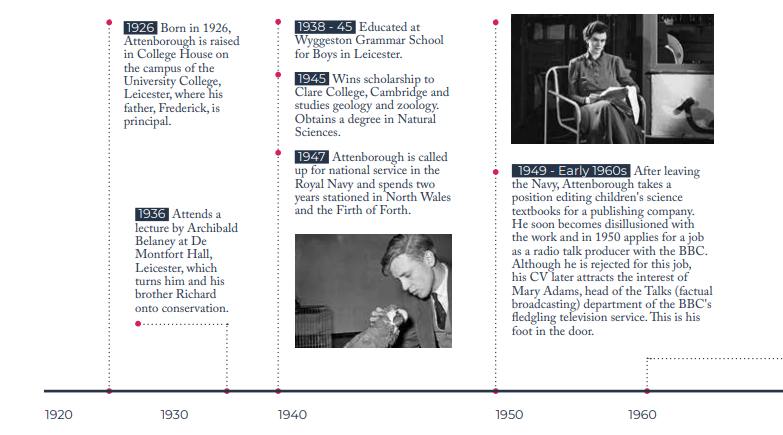
This week Sir David Attenborough’s new series Asia airs. We look back at Robert Golding’s exclusive interview with the great man at the start of the pandemic
‘This is a man who answers his phone,’ a mutual friend has told me, and Sir David Attenborough doesn’t disappoint. He picks up after just one ring.
The voice at the other end of the phone is the one you know. But it’s gravellier and without quite that voiceover theatricality it carries on Blue Planet. Those are performances; this is real life.
This is Attenborough on down time, conserving energy for the next program. His work schedule might seem unexpected at his great age. But Attenborough, 94, exhibits more energy in his nineties than many of us do in our forties. ‘I’ve been in lockdown, and it does mean I’ve been a bit behind on things. But I keep myself busy.’
To interview Attenborough is to come pre-armed with a range of pre-conceived images. Part-benevolent sage, part-prophet of doom, is this not the unimpeachable grandfather of the nation? Perhaps only Nelson Mandela towards the end of his life had comparable standing within his own country.
In 2016, when the Natural Environment Research Council ran a competition to name a research vessel, a very British fiasco ensued whereby the unfunny name Boaty McBoatFace topped the poll. This was plainly unacceptable, and so in time the competition reverted, with an almost wearisome inevitability, to the RRS David Attenborough.
Which is to say they played it safe and chose the most popular person in the country. One therefore has some trepidation in saying that these assumptions don’t survive an encounter with the man. It is not that he is rude or unpleasant; it’s just that he’s not as one might have expected.
‘Yes, this is David. What would you like to ask me?
Perfectly Busy
Though he has agreed to talk to us, the tone is adversarial. But there are strong mitigating circumstances to this. This is a man who is aware of his mortality: our conversation has a not-a-moment-to-lose briskness to it. He could also be forgiven for sounding somewhat tired. He can also be especially forgiven for having long since grown weary of his National Treasuredom. Throughout our call, he will refer to the claims on his time, of which I am one of many. ‘I get around 40 to 50 requests a day,’ he explains, adding that he seeks to hand-write a response to each. ‘I have been shielding during lockdown and am just coming out of that.’
But there’s another reason he’s busy: habit. The stratospherically successful enjoy a pre-established momentum, and continue to achieve just by keeping up with their commitments. So what has he been up to? ‘I decided to take this as a moment to write a book on ecological matters and I continue to make television programs,’ he says, referring to A Life on Our Planet: My Witness Statement, but not in such a way that makes you think he wishes to elaborate on either. He refers to a ‘stressful deadline’ and when I ask for more information about the book, he shuts it down: ‘Just ecological matters.’ There is a hush down the phone where one might have hoped for elaboration.
Nevertheless, Perfect Planet, one of his upcoming programs, is being filmed in his Richmond garden, and it has been reported that he is recording the show’s voiceovers from a room he made soundproof by taping a duvet to the walls.
Generation Game
In his courteous but clipped tone, he asks about Finito World and I explain that it goes out to 100,000 students. ‘I am often heartened when I meet the younger generation,’ he volunteers. ‘Their attitude to the climate crisis is very responsible.’
This is the paradox of Attenborough: a man of considerable years who has found himself aligned with the young. He’s that rare thing: an elderly revolutionary.
Perhaps we underestimate the sheer importance of his presence within the landscape. He is the benevolent sage who its bad form to disagree with, and he’s single-handedly made it harder for anyone in power to pitch the climate change question as a quixotic obsession of the young.
But he’s a revolutionary only in the face of drastic necessity, and refuses to be drawn on the question of our sometimes underwhelming political class. ‘I wouldn’t necessarily say that: we actually have some very good politicians.’ He declines to mention who these might be – but it suggests that Attenborough doesn’t want to ruffle unnecessary feathers. Instead, he wants progress.
Transparent Medium
‘The thing about David is he prefers animals to humans,’ says another person who has worked with Attenborough for years. I ask him if the coronavirus situation will accelerate change. Again, he is careful: ‘I don’t know about that. On the one hand, I can see that our skies are emptier now and that’s very welcome. I suppose the extent to which the aviation sector will return will depend on the price points the airlines come up with.’
I suspect that some of his reluctance to be drawn into detailed discussion is that he doesn’t wish to claim undue expertise on areas outside his competence. There’s an admirable discipline at work, alongside a refusal to please
Bewilderingly honored – Attenborough has a BAFTA fellowship, a knighthood, a Descartes Prize, among many others – he has learned that the only proper response to fame is self-discipline. At his level of celebrity – up there with prime ministers and presidents but with a greater dose of the public’s love than is usually accorded to either – he is continually invited for comment, and has learned when to demur.
‘I am sometimes asked about the well-known people I’ve come across in this life – the presidents and the royalty.
I’ve been lucky enough to meet,’ he says. ‘I say, “Look, if you saw my documentary with Barack Obama then you know him as well as I do.” Television is very intimate like that. My job is to create transparency.’
So instead of what one half-hopes for – backstage anecdotes at the White House or Buckingham Palace – one returns time and again to the climate crisis. This is the prism through which everything is seen, and our failure to follow his example, he says, shall ultimately be to our shame.
He will not be drawn into negative comment on Boris Johnson or Donald Trump. Instead, he says: ‘Overall, I’m optimistic. All I can say is we have to encourage our political leaders to do something urgently about the climate situation. We have to all work hard to do something about this.’
The Fruits of Longevity
For Attenborough everything has been boiled down to raw essentials. And yet his career exhibits flexibility. His success must be attributed to open-mindedness about a young medium which others might have thought it beneath them. It would be too much to call him a visionary. But he was in the vanguard of those who saw TV’s possibilities.
Fascinated by wildlife as a child, he rose to become controller at BBC Two and director of programming at the BBC in the 1960s and 70s. ‘Television didn’t exist when I was a young man, and I have spent my life in a medium I couldn’t have imagined. It has been a wonderful experience,’ he says.
The very successful glimpse the shape of the world to come, seize that possibility and enlarge it into something definite, which they then appropriate and live by. What advice does he have for the young starting out? ‘My working life has taken place in television. I don’t know how we will see that change over the coming years as a result of what’s happened. Communication has proliferated into so many forms. It is very difficult to get the single mass audience, which I had something to do with creating, thirty or forty years ago.’
There is an element of well-deserved pride about this. Attenborough’s original commissions at BBC2 were wide-ranging. The included everything from Match of the Day to Call My Bluff and Monty Python’s Flying Circus. One can almost convince oneself that he was a BBC man first and an ecologist second. ‘The world has become very divided in a way,’ he continues. ‘We prepare for a world when we’re young that’s gone by the time we arrive in it. To that I say, ‘It depends what your life expectancy is!’
But all along it was nature that thrilled and animated him. Attenborough is one of those high achievers who compound success with longevity. His is a voice that speaks to us out of superior experience – he has seen more of the planet than any of us. He speaks with a rare authority at the very edge of doom – his own personal decline, as well as the planet’s.
Urgent Warnings
He says: ‘Whatever young people choose to do with their life they must remember that they’re a part of life on this planet and we have a responsibility to those who will come after us to take care of it.’
I ask him what we should be doing to amend our lives and again he offers a simple thought: ‘We’ve all got to look to our consciences. Inevitably, some will do more than others.’
He sounds at such times very close to washing his hands of the human race. But then everyone in their nineties is inevitably about to do just that.
What Attenborough has achieved seems so considerable that one wishes to ask him how he has managed it. ‘I am sometimes asked about how I manage to do so much, but I don’t particularly think of it like that. I just reply to the requests that come my way: you can accomplish a lot by just doing one thing after the other.’
Again, the simplicity of the answer has a certain bare poetry to it: Attenborough is reminding us that life is as simple as we want to make it. Interviewing him at this stage in his life is like reading a novel by Muriel Spark: no adjectives, no frills, just the plain truth.
In his curtness is a lesson: there is no time for him now for delay, but then nor should there be for us. We must do our bit – and not tomorrow, now.
He is interested in Finito World and very supportive of our new endeavor: ‘This is a time when the circulations of magazines and newspapers appear to be falling. A lot of newspapers are aware of the climate emergency and the way in which we disseminate ideas has diversified.’
A thought occurs to me that stems from my lockdown time with my son, where we have been in our gardens like never before. Should gardening take its place on the national curriculum? ‘It’s obviously very important,’ he says, although he also adds – as he does frequently during our conversation – that he knows little about the topic. (Opposite, we have looked into the matter for him.)
Hello, Goodbye
I will not forget this interview with a man whose voice will always be with us. Part of Attenborough’s power is that he continues to warn us in spite of ourselves. He deems us sufficiently worthwhile to continually renew his energy on our behalf.
I mention that we watch his program with our four-year-old in preference to the usual cartoons on Netflix when possible.
At that point, perhaps due to the mention of my young son, he sounds warm: ‘Thank you very much, sir. It does mean a lot when people say that.’
It’s a mantra in journalism not to meet your heroes. Attenborough in extreme old age is brisk and sometimes even monosyllabic. This in itself tells you something: the world is full of the canonized but in reality saints are rare. Conversely, I have met those whose reputations were fairly low, but who turned out to be generous beyond expectation. We should never be disappointed when the world isn’t as we’d expected. It is an aspect of the richness of experience to meet continually with surprise.
But age will come to us all. If it finds me in half as fine fettle as David Attenborough I shall be lucky indeed. Furthermore, if it finds me on a habitable planet at all that shall also something I’ll owe in part to him. ‘Good luck,’ he says as he puts the phone down. This isn’t the man I had expected to meet. But I can persuade myself that he means it.
‘David prefers animals to humans’. Afterwards, it occurs to me that he saw me not so much as an individual, but a representative of that foolish ape: man. While Attenborough has been acquiring hundreds of millions of viewers, what he really wanted – and urgently required – was listeners.
Finito World interviews Katia Luna Benaï on her Amazigh heritage, her design vision and her plans for the future
Your grandmother was clearly a very important figure for you – can you talk about your upbringing? Was it an aesthetic culture which laid the groundwork for your future career?
My upbringing in Algeria, deeply rooted in my Amazigh heritage, was where my journey as an artist truly began. Living with my grandmother and aunts, I was surrounded by a world where every element of life was infused with vibrant colours, patterns, and stories—each one shaping my essence as an artist. The silver jewellery we crafted was more than just adornment; it was history gleaming in every piece, with stones whispering tales of identity. Our tattoos, symbols etched into flesh, represented a tradition now fading, yet they carried deep significance, a connection to our past. Even I carry one of those tattoos, symbolizing five generations of women.
The architecture of our region, shaped by influences from the Roman and Ottoman Empires, was another source of inspiration, with arches that seemed to embrace the sky and courtyards that echoed with communal songs. Music, dance, and the act of sharing within the community were integral to our way of life, bonding my soul to the instruments of time and land.
As I travelled later in life with my father, experiencing different cultures and their unique traditions, this early immersion in my heritage continued to influence me. It deepened my fascination with the arts and stories that connect us all as humans. These experiences laid the foundation for my work with Luna Benaï, where I strive to create artefacts that not only capture beauty but also tell multi-layered stories rooted in cultural and historical research.
Through Luna Benaï, each piece I create is a tribute to the communities and traditions that inspire it. I am deeply committed to ensuring that our work gives back to these local communities, preserving the very cultures that have shaped my identity and continue to inspire my creative vision.
Your father was a diplomat – has growing up in lots of different places deepened your sense of commitment to the Amazigh culture?
My father was a man of the people, a true polyglot who spoke eight different languages and was an intellectual deeply respected in Algeria. His work with the UN took our family to many places, and each new city or country we visited was embraced with enthusiasm and a deep commitment to understanding the local culture. This passion for learning and cultural exchange was a fundamental part of our family life.
The Amazigh people have historically been diplomatic and open-minded, known for their ability to share cultures and live harmoniously with others throughout the centuries. Although not widely recognized, the Amazigh are indigenous to the Mediterranean region and have played a significant role in history, mythology, and culture, with connections that trace back to ancient Egypt and continue to the present day.
Growing up in diverse environments only deepened my commitment to the Amazigh culture. I see it as part of my mission to represent their essence through the arts, bringing their rich heritage to the forefront and ensuring that their stories and traditions are not forgotten but celebrated and shared with the world.
Were there creative challenges to be surmounted when it came to negotiating any feelings of rootlessness growing up which diplomats’ children often have?
It’s a bittersweet symphony, indeed. Growing up as a diplomat’s child often brings a sense of rootlessness, but with that comes a profound thirst for understanding and a deep compassion for the world around you. The feeling of being displaced at times fuels a desire to connect with others on a more meaningful level, to truly understand the nuances of different cultures and perspectives.
For me, this has been both a challenge and a gift. Art and creativity have become my signature tools for navigating these feelings, allowing me to express the complexities of my experiences and communicate across cultural boundaries. This ever-evolving journey has enriched my work, infusing it with a depth and authenticity that comes from a life lived between worlds.
Have you had a mentor who gave you the confidence to create?
Pursuing my postgraduate studies at the Royal College of Art was a transformative experience that truly pushed my boundaries. The philosophy there of deconstructing everything and then rebuilding it, blending academia, research, and art practice, gave me a profound new perspective on identity and communication. Being at one of the finest art institutions in the world, I found a space where intellectual freedom was not just encouraged but expected. This environment allowed me to explore and redefine my creative voice, giving me the confidence to push the limits of my artistry and to trust in my vision.
I’m fascinated by your process. You have said that you want to think about creating things which stand the test of time. How do you go about sifting your inspirations to make sure that it is likely to produce work which has that sort of longevity?
At Luna Benaï, we take a vertical approach to creation, guided by the belief that “every object has a story,” and those stories must endure through time. To ensure that our work stands the test of time, I collaborate closely with museums, scholars, and architects from the initial concept to the final creation, always prioritizing absolute authenticity.
My process involves immersing myself in artefacts that are often 2,000 to 4,000 years old. I fall in love with these pieces and bring them back to life, blending their ancient essence with modern mediums and technology. Through masterful artisanal craftsmanship, honed by decades of experience, we create objects that not only resonate with historical depth but are also built to endure.
By taking history and completing a full circle—much like our Luna Benaï logo—I strive to ensure that each piece we produce is timeless, capable of supporting its own story across generations.
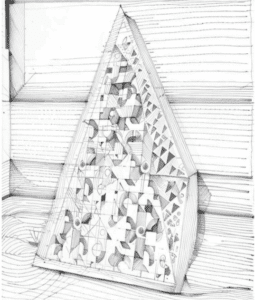
Your collaboration with Sotheby’s was obviously a wonderful moment in your career. How did you come to think in terms of the rhombicuboctahedron and what does that particular shape mean to you?
Geometry is the visible manifestation of math, embodying themes of continuation and infinity. When I was commissioned by Tiffany Dubin, a curator at Sotheby’s, to create a bespoke jewellery box for the “Art as Jewellery as Art” exhibition in New York, I wanted to design something that embodied these timeless concepts. The exhibition aimed to reintroduce jewellery and accessories by famed masters of the 20th century and beyond, placing them in a unique juxtaposition with contemporary visionaries and modern artists.
The specific shape of the Atlas Box, a rhombicuboctahedron, was chosen for its symbolic resonance. The rhombicuboctahedron, with its harmonious blend of triangles and squares, represents balance and unity—qualities that are deeply connected to the myth of Atlas, the Titan who bore the weight of the heavens. Just as Atlas symbolizes strength and endurance, the shape reflects the idea of holding together different forces in perfect harmony.
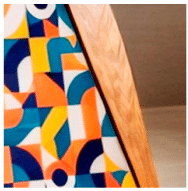
The carvings and metalwork on the Atlas Box are traditional Amazigh designs, merging ancient craftsmanship with a contemporary vision. This fusion of geometry, mythology, and cultural heritage makes the Atlas Box not only a functional object but a piece that tells a story of harmony and timelessness.
I think it’s wonderful that you give 15 per cent of your earnings to charitable projects. Was that something that you resolved to do from the beginning? How do you go about choosing the causes that you give to?
Creating synergy with the local community has always been a core value for me, and it’s something I resolved to do from the very beginning. When we embark on a project, we actively engage with the local communities, seeking out grassroots causes that create visible, tangible impact. It is important to us that these initiatives are ones we can track, interact with, and even participate in directly.
For instance, with our Sotheby’s piece, we chose to support the UK-based charity Hannan School, which has a genuine and significant impact on improving education for remote communities in the Atlas Mountains. This hands-on approach ensures that our contributions not only make a difference but also align closely with the values and needs of the communities we aim to uplift.
What would you say to young people looking to work in the luxury sector? What do you look for in a hire?
Look beyond superficiality. If you pursue what you truly love, you will excel, and don’t be afraid to make mistakes—they are an essential part of the learning process. For young people choosing a career path in the luxury sector, I would advise prioritizing knowledge and experience over superficial gains. Think long-term and focus on building a solid foundation of skills and understanding across different sectors.
If you eventually decide to embark on your own entrepreneurial journey, believe in your vision and stay committed to it. Your vision will be tested repeatedly, but perseverance is key. Over time, you’ll start to see the building blocks come together, and that’s when your dedication will truly pay off.
Luna Benaï are entering the Middle Eastern market. Can you describe that journey and tell us more about the thinking behind it?
The Middle Eastern market is currently undergoing a significant transformation, with new initiatives aimed at diversifying tourism, enhancing arts and culture, and promoting their rich and vibrant heritage. I find this cultural renaissance absolutely captivating, and it’s a landscape I can easily immerse myself in.
As a British, French-Algerian artist, I have a deep understanding of both Western and Middle Eastern worlds, which has uniquely positioned me to contribute to this evolving market. This strategic expansion is an exciting chapter for Luna Benaï, and I’m thrilled to be embarking on this journey with my business partner, Denise Ricci. Denise is my right-hand woman—a former Goldman Sachs professional with an incredible background rooted in Italian culture and the film industry. She’s a polyglot and a true powerhouse, bringing her diverse expertise to our team.
This cultural renaissance in the Middle East aligns perfectly with our vision as a woman-led team, allowing us to make a powerful impact. Together, Denise and I are committed to deepening our engagement with the region through bespoke cultural and artistic commissions. This expansion represents not just a business opportunity, but a chance to bridge cultures and celebrate the region’s rich heritage through the arts.
Which cultural figures most inform your aesthetic? Do you find inspiration in other art forms, whether it be literature, film, music or the visual arts?
I’m a bit of an eccentric, and there isn’t just one figure that drives my inspiration. My aesthetic is informed by a diverse range of cultural figures across history. The artistic legacy of ancient Greek sculptors and the intricate mosaics of Byzantine artisans have always captivated me. In the modern realm, Zaha Hadid’s groundbreaking architectural designs, which challenge conventional forms and spaces, serve as a major inspiration.
I’m also deeply influenced by the Bauhaus movement, which revolutionized design with its emphasis on functionality and simplicity, merging art with everyday life. Sonia Delaunay’s bold use of color and geometric abstraction, Hilma af Klint’s exploration of spiritual abstraction, and Dana Awartani’s meticulous blending of cultural traditions with contemporary expression all resonate deeply with me. These varied influences, spanning ancient to contemporary, each contribute to the unique narrative I aim to express through my work.
What are you working on at the moment?
We’re entering an incredibly exciting phase at Luna Benaï as we expand into a full-fledged atelier and bespoke design studio. We’ve joined forces with our esteemed Italian partners, who bring over four decades of master artisanal experience. This collaboration enhances our ability to work across various mediums, all while preserving the integrity and creative DNA that defines Luna Benaï.
Our first atelier collection, Tessellation, is set to launch this winter. This 11-piece, post-modern inspired collection draws from the rich aesthetics of Middle Eastern and North African design, reimagined through a contemporary monumental lens. Each piece in the collection marries fine art and architecture, making a distinctive statement in the world of interior design and bespoke furniture. Made-to-order, Tessellation seamlessly blends timeless cultural influences with modern innovation. We’re thrilled to introduce this next chapter in our journey, where tradition and cutting-edge design converge.
There used to be a dead tree in Ruskin Park in South-East London, which always struck me as somehow sculptural. The other day I saw that it had fallen. I had grown so fond of this particular tree, it’s optimistic reach towards the skies, that I was bereft when I saw it had collapsed.
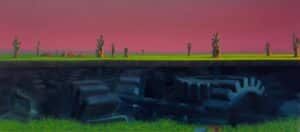
But this probably minor development in the history of my local parklands makes me all the more delighted that this same tree is still standing in the work of a remarkable artist Nadeem Chughtai. Chughtai’s recent exhibition A Liminal Statehas people talking in Peckham, which as everybody knows is also the artistic centre of the universe. Chughtai used the tree as a basis for his picture There’s This Place On The Edge of Town (2020).
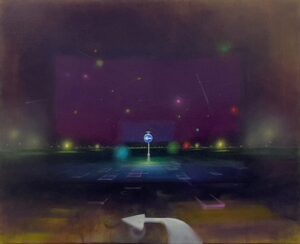
There’s This Place on the Edge of Town
One of the most basic requirements of an artist is power: Chughtai’s images always have an immediacy which nevertheless lets you know that your first impression is only the first part of your journey with that work of art. In this picture we see how we have become mechanised in ourselves, and how this can only lead to stunted growth. But the beauty of the tree, which looks like it almost wants to be an upwards staircase, suggests potential.
It’s a brilliant conception, like all Chughtai’s pictures. So was it always art for him, or did he toy with other careers? “It really was art all the way for me,” Chughtai tells me. “Ever since I was very young I’d draw. Encouraged by my mum and influenced by a beautiful framed pencil drawing my dad made of my mum in the 1960’s. However, I did loads of jobs before going full time with an art publishing contract which set me on my way. Before that I always kept myself in the minimum wage positions for fear of committing myself further down other career paths.”
Chughtai has had some major successes, with some celebrity clients including Roger Federer who chanced upon his work in Wimbledon village one year. Chughtai is particularly well-known for Nowhere Man, his character which he gave up at the start of the pandemic. These pictures, taken together, amount to a vast dystopian opus which tell the viewer unequivocally what we all sense: we are not headed in the right direction as a species.
We never see Nowhere Man’s face. Sometimes there’s more than one of him. It is also possible to say that Nowhere Man is always in a negative setting, beset by the circumstances of modern life: alarming architecture, the trippiness of drug culture, the terrifying ramifications of contemporary uniformity.
I Dream of a World That the Capitalist Philosophy Will Never Make Possible. Oil on three canvases (2017)
I also note that they’re always dramatic force in these pictures, and I related this to the career Chughtai had on film sets, with his work including the Bourne series and Love Actually. Did that experience impact the way he paints now? “Yes, I always mention my scenic art days. I call it my apprenticeship. It was absolutely magical to be working on those film sets at Pinewood and Shepperton Studios,” Chughtai recalls. “I originally went there to try and make films after losing my way with drawing and painting after college, but as soon as I saw the huge painted scenery backdrops surrounding the sets I was sucked back in.
I had hands on experience of painting pictures on giant canvases, off scissor lifts using strings, hooks and chalk to draw our lines. I learnt about so many aspects of painting as well as the cameras eye. The big one was perspective. Learning about that was enlightening for me.”
I ask Chughtai if he has had any artistic mentors, and his answer also dates to this time: “Well, I always mention Steve Mitchell, the scenic artist who I assisted over a five year period from 1999- 2004. He’s still doing it at 70 and we’re still in touch. He’s one of the world’s top scenics. I can’t tell you what I learnt over those scenic years and how it got me back into the art of painting.”
I can tell how passionate Chughtai is about his calling, but the melancholy of these pictures is always there. It seems to cry out for some kind of remedy. Is Chughtai pessimistic about the human race and its future? “I believe we are not only on the path to a dystopian future but within it now. Just look at all the horrific and unnecessary human suffering going on all over the world and right down to our own neighbourhoods. However, I remain an eternal optimist and have every faith that the human race will unite to overcome this and bring about the necessary change required.”
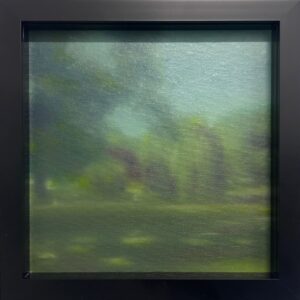
The new pictures, with their liminal greens, seem to be the start of some new potential. Here we see Green Park as it might be seen in a dream, or in the hypnagogic state between sleep and waking. The journey to the centre of town to make these pictures is perhaps indicative of an interior shift in Chughtai. The new pictures also mark a big change away from character towards some other kind of painting which feels like it is yearning for mysticism – maybe even a metanoia away from despair.
Was it hard to give up Nowhere Man? Might he ever experiment with another character? “It was very hard to shed the Nowhere Man. I doubt there would ever be another character. For me it represented humanity. If I ever need a central character again I’m pretty sure I’d call him up.”
Humanity then is for Chughtai somehow passive and faceless – asleep perhaps. This makes the notion of an exploration of the liminal all the more important; it is to do with exploring what Seamus Heaney called ‘the limen world’, that curious borderland of the unconscious. I have a sense that these recent works are a necessary transition period and that it may in time lead to some sort of reconciliation between Chughtai and the damage of the world – a more optimistic vision perhaps.
How did these new paintings come about? “The works exhibited recently at the Liminal State exhibition are exactly that; Liminal, as in kind of between or on the threshold. For me personally, up until just before lockdown in 2020 I was creating paintings with a central anonymous figure – the Nowhere Man. 16 years through the eyes of this character, so, shedding that to allow the next body of work to arrive has taken these last four years, and counting… The title, A Liminal State can also have numerous interpretations and could additionally refer to many other aspects; mentally,, physically, technically, artistically, societally… liminal.”
These then are between states, and that means flux – in Chughtai’s art certainly, and therefore, since artists are their art, in his life. I ask Chughtai about his method of composition. Is it evolving? “It’s evolving and continuing its journey. I’ve changed the approach, technique, materials used and so much more since 2020. In fact, almost everything – but still the work has naturally evolved through different states to where it is now.
It’s a continual fluid journey. I have also been developing an artistic theory and putting that into practice. It involves perspective and the way the eyes see and the brain interprets an image. It’s great testing a science based theory on my artistic practice… and it actually works. My most recent painting entitled, Turn Left. (2024) shows the theory in practice in its most developed stage to date, and I was blown away by the positive reaction it got when exhibited for the first time at the show.
Turn Left, 2024
This again, seems to me like a dream where the dreamer is sometimes given clear but mysterious indications of what to do – strange snatches of disembodied advice. To look at these pictures after immersing oneself in the Nowhere Man corpus is to see a kind of hope peeping through, because the world seems to be acquiring a kind of charge, groping towards some form of meaning. My sense is that this makes the next few years of decisive importance for Chughtai’s art. If we follow that sign, where does it lead?
This new work has also sent Chughtai on a rewarding course of study. “Over the last four years I have really delved deep into studying and expanding my artistic learning. Visiting the London galleries on a weekly basis and getting to understand the philosophies of some of the great painters, while also educating myself about the amazing artists from around the world and their histories.”
So who are his heroes? “I have to mention Van Gogh, I just love. His pencil drawings, they make me wanna scream. I would say that more recently I have been appreciating 20th century Western heavyweights such as Bacon, Klee, and Rothko who’s section 3 of the Seagram murals brought me to tears on more than one occasion. It was during a particularly emotional time for me personally whilst simultaneously looking to move my work along an different path. That painting allowed me to see within it what I wanted to do with my own work.”
Chughtai has been going strong for a long time. So what are his tips for young artists about the business side? “Well, yes, it is a business – if you do it full time for your living. So if you don’t have the luxury of financial security, you will need to sell your work.
This predicament will most likely influence the type of work you produce and therefore could involve compromise. That’s the tightrope. It can work in your favour but can also be a hindrance if not deterrent, which is a real shame because then we miss out on hearing and experiencing the voices from within those walks of life. So, believe in what you’re doing, put the time in and keep on making your art.”
Maxted Morning, 2024
And would Chughtai recommend the art fair route? “I love going to art fairs. It’s where it all started for me. Like our society, the art world is very hierarchical, but whether you’re at the bottom rung or at the very top, when all is said and done they’re markets with their stalls out. It’s great because people can stand in front of the work in the flesh, which is how I feel art works are best experienced… and there is so much under one roof. Art fairs are a great way to spend an afternoon… if you can afford the entrance fee, of course.”
That’s often the problem for young artists at all. Has the conversation around NFTs affected him at all? “I did look into NFT’s a little some years ago but it seems to have gone quiet on that front so am unaware of where it currently stands. The whole digital thing is obviously a direction the art world is going down and there are many possibilities to explore. However, my focus and studies are with oil paint and a canvas because there’s so much more to come from there and that will always be ahead of any artificial intelligence.”
Chughtai is an artist of rare talent, who is doing something very valuable: he is pursuing his vision where it leads. It takes courage to do that. Every artist can learn from somebody who has chosen his path so decisively then pursued his craft with such passion.
Christopher Jackson hears from Malcom McDowell about his career in film
Malcolm McDowell is talking to me from what looks like a spacious octagonal attic, the dark at the window behind him shows no stars. He is wearing splendid Ronnie Barker specs and a black hoodie, his white hair tufted behind a domed forehead.
It’s not that far in the scheme of things from Christmas and he is immediately humorous about the predicament. “My God, I’ve seen enough of those. Here we go again!” Then he lets a pause go by which wouldn’t be out of place in a Harold Pinter play. “But the kids love it, don’t they?”
Here’s happy to discuss his work, and understanding when A Clockwork Orange (1971) immediately comes up: ”I am thrilled to talk to fans – about anything really, but especially that film which I suppose you might say is the jewel in the crown of my career.” He says this without a trace of pomposity, even somewhat humorously: he seems to be one of those rare actors who doesn’t necessarily consider himself the centre of the universe.
In the same vein he continues sincerely: “Without the fans, I wouldn’t have a career: neither would any of us. The fans are very important and I always have time to say hello to fans.”
But it’s A Clockwork Orange which has most endured, partly due to its sheer quality, and also because it’s the work of what we might call mid-period Stanley Kubrick, at a time when his films become scarcer and therefore more precious.
McDowell is exceptionally forthcoming and relaxed about talking about something which he will have been asked about numerous times. He will be no stranger to being asked about the scene where Alex and the droogs kicks the poor tramp. It is the film’s anarchic streak which has endured: its author, the polymathic Anthony Burgess, intuited that the brakes on traditional morality would been an outpouring of violence, which we see on our screens now day in day out.
But did McDowell ever meet Burgess? “After we shot the movie and it opened, I went during the first week of the opening to New York. That was when I met for the first time with Anthony Burgess who wrote the book.”
So he hadn’t ever met him set. McDowell says: “I’d never met him before – I wasn’t allowed to meet him. I guess Stanley didn’t want me to be influenced by the writer. Writers on film are really just complications we could do without.”
This is a lovely detail about Kubrick, who was famously meticulous in the compilation of his movies. What can certainly imagine that a literary titan on set might be one titan too many. It is a window to the hierarchy of the movies which may look topsy-turvy for Burgess fans.
Then McDowell launches into an astonishing anecdote: “I asked burgess in New York about the phrase ‘a clockwork orange’ and he came upon the title.”
I am craned forward, faintly astonished to be hearing this little piece of literary history unbidden. McDowell continues: “He told me he was in an East End pub in London and he was sitting next to a friend of his and they were chatting. Suddenly the door opened and this strange-looking guy comes in and his friend looked at him and said: “He’s as queer as a clockwork orange.’”
Many people think authors should look up in a deep trance from their desks to find inspiration, and perhaps that is sometimes the case. But McDowell’s anecdote reminds us they should also go down the pub.” Burgess said : ‘I just loved the sound of that phrase and I thought it would make a good title for a book some time.’ Which indeed it did.”
That’s some understatement but McDowell isn’t finished yet. He finishes: “So I said to Burgess: ‘Yeah but what does it mean? He said: “I don’t know. I think it just means look at this guy, he’s really strange and odd – as queer as a clockwork orange.”
Having changed my understanding of a small but important nook of 210th century literary history, McDowell finishes. “So there you are, you have it from the chief orange himself.”
It was Henry James who said a writer should be the sort of person who notices things. This can be the case. But young writers should know that what you really need to do is be able to identify a certain charge which useful things have – sometimes things will leap up and say they want to be a name in your novel, a setting, a scene – or perhaps a title to the book you may just get around to writing one day.
World-renowned fashion designer Jimmy Choo came to London in the late eighties from his home in Malaysia. From his first workshop in the East End, Choo created a shoe brand which would be worn by countless celebrities including Princess Diana. Now, he has shifted focus to the next generation of fashion designers through his JCA London Fashion Academy in Hackney. There, students learn the ins and outs of the fashion world with a heavy emphasis on entrepreneurship. He now shares his journey with Finito World readers.
How did you get your start in fashion?
I guess it was meant to be I was born into a shoe-maker family, and that influenced my career path: I decided to follow in Since I was young, I knew I wanted to be a designer, so I moved to London to study at the Cordwainers Technical College and three years later, in the early 80s, I opened my first shop.
Do you have a favourite design?
I feel especially fond of the ‘Fetto’, which is a classic sling-back style that Princess Diana wore in the 90s. She wore her first pair to a performance of Swan Lake at the Royal Albert Hall in June 1997, just a few months before her death.
What was Diana like to work with?
She was always very kind to me – she cared so much about other people. That’s the sign of an admirable person – when they’re good to people when you don’t have to be.
How did your father help start your journey with shoes?
I was immersed in the shoe-making process from a young age, and it came naturally to me to take up my father’s passion. He taught me how to make a shoe and guided me to create my first pair when I was 11, which I know seems young but I was impatient to get started well before then. You have to remember that this was before Internet and mobile phones. We did everything with our hands. I’ve been doing it one way or another ever since. Now at the JCA London Fashion Academy, I want to give back a little of what I’ve learned.
Have you had any other mentors?
My father was my most important mentor, although I have been able to work with some incredible designers over the years who have supported me, and back in the 80s, I was awarded a grant and mentorship from the Prince’s Trust which was very valuable to me – and that’s why I’ve decided to return now to mentoring. I know its value, because I’ve experienced it for myself.
What advice would you give to a young person looking to enter the fashion world today?
My biggest piece of advice would be to never give up: you’ve got to learn how to tackle adversity because that’s definitely coming to you. We all have so much potential to create something extraordinary with our talents – and it’s that knowledge which should
So the future’s bright?
It is if you decide to pursue your vision. If you do that, then there will always be a great future ahead: but you have to take the plunge and decide to be true to yourself, and find the ideas that really belong to you.
In a special Finito World interview, the 2024 Masterchef champion Brin Pirathapan and Fortnum & Mason CEO Tom Athron are brought together on the third floor at the famous Piccadilly store
The real joy of networking isn’t to meet people for oneself: it’s introducing people to one another. When the opportunity came up to interview Brin Pirathapan, the brilliant Tamil Sri Lankan winner of 2024’s MasterChef, we put heads together at Finito, with help from Janine Stow at The Quorum Network, to decide what to do about it.
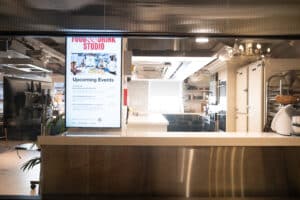
The answer came in a flash of inspiration: Fortnum & Mason is being altered by its brilliant CEO Tom Athron, and the third floor, formerly the menswear floor, is now set up for food experiences. There is a gin bar, and a cooking area where the store hosts masterclasses, as well as the beautiful Fortnum & Mason culinary products.
Once we’d decided that might be a good idea, we thought we’d go one further and interview Brin and Tom together and see whether anything came of it.
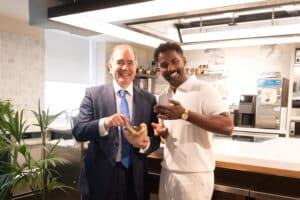
Brin Pirathapan, Masterchef winner, and Tom Athron, CEO of Fortnum & Mason interviewed by Chris Jackson, editor of Finito World in the Food & Drink Studio, Fortnum & Mason.. 19.6.2024 Photographer Sam Pearce
Brin is there as I arrive, looking resplendent in the sort of outfit which Federer used to wear at Wimbledon in his pomp. So I ask Brin if it was always food for him? “I have always loved food. I almost took it for granted because my parents always cooked so well. The table was always full of delicious Tamil Sri Lankan food.”
Perhaps unknowingly a standard had been set. “When I went to university,” Pirathapan continues, “there wasn’t really a conscious decision that I was going to learn to cook: it was just a thing that happened. I wasn’t willing to eat the same bland meal plan every day. But I didn’t have the funding or the finances to be going out for food all the time or to be buying the most expensive ingredients. That situation created the chef that I am today.”
Let’s be clear what this wasn’t: it wasn’t a decision not to have that Deliveroo. It was more financially constrained than that. “I never had to refuse to lazy route. I would cook instead of having a takeaway just because I had to: it was either that or cook boring meals. I never leant towards takeaways. I thought: ‘I can probably do it as nice or nicer myself and learn a new skill’.”
At that time, Brin can have had no way of knowing where it would lead. “Really, I like to eat!” he says simply. “I like nice food and I wanted to do it myself. It was essentially self-reliance and learning a skill. I started cooking for friends, when they came over for dinner. And they’d compliment me. I’d want to do more because it was nice when people said I’d done a good job.”
Brin Pirathapan, Masterchef winner, and Tom Athron, CEO of Fortnum & Mason interviewed by Chris Jackson, editor of Finito World in the Food & Drink Studio, Fortnum & Mason.. 19.6.2024 Photographer Sam Pearce
It seems as though we all need to find that thing in life where we feel there’s no particular ceiling: that we can continue to develop across the whole course of a life. “Something about food makes me want to learn more and more about it. You’d watch people on television or online and the chef has these intricate skills. And I wanted to know how to do that: I was so invested in it. So it probably comes back to just it being a pure passion that I wanted to be good at.”
But even here – he didn’t know how far it would take him; but he had found his passion. “I’d been a veterinary surgeon for a good few years, and I didn’t necessarily think food was ever going to give me a new career. But I think I knew that if I didn’t give MasterChef a go, I would never be able to make it a reality.”
It’s as if you find a thread in life – and it’s not that you’re pulling it, but it pulls on you and leads you on. “It seemed a bit unsafe. I’d been planning on working in veterinary. When you do that, at least by the age of 15 you’re already committing time; you’re committing your holidays to work experience you’re committing your evenings to studying. It’s quite hard when you are within those walls of a structured education and a structured career to dream outside, because it seems really unsafe. And let’s be honest, the food industry isn’t exactly the safest industry to be in. It’s tough – but MasterChef has given me the platform now.”
Brin Pirathapan, Masterchef winner, and Tom Athron, CEO of Fortnum & Mason interviewed by Chris Jackson, editor of Finito World in the Food & Drink Studio, Fortnum & Mason.. 19.6.2024 Photographer Sam Pearce
Brin has long been a fan of MasterChef so it was a huge thing to apply for the show. “I’ve watched it since I was a young age, and it’s made me the chef I am today. When I started the show, I was so worried about being knocked out in the first round. But my fiancé was very firm – she’d seen me moaning about my normal job.”
I say I find it hard to imagine being able to focus on cooking when the cameras are rolling. “It would have been impossible to play to the camera,” he says.
“Every dish I created I pushed myself to the absolute max – so timings were incredibly tight. Obviously within each cook, you need to have an interview with the judges too – other than that, there was no room for error, and I got used to the cameras being there. I needn’t to know there was no time left over for each cook – that there was physically and mentally nothing more that I could have done.”
Reminding myself of the formidable MasterChef judges John Torode and Gregg Wallace, I ask whether their verdict ever affected his concentration. “It’s hard – especially at the start. When they come round, all you’re thinking is: “Do they think I’m doing this wrong?” You start questioning yourself. But as you get to know them, they’re actually very good at calming you down and making sure you’re relaxed.”
I find it hard to imagine Torode or Wallace in calming mode. What stays with Brin is the long silence when the judges give their verdict. “From the first cook to the last, that silence when they are eating, to when they say their first words – that will haunt me. It was an eternity, and it never got easier.” It all came down to the last cook, and I think the way in which Brin approached the most important moment of his life speaks volumes about his character.
“I’d felt so proud to have just gotten to the final and I felt that no matter what, I now had a platform to make a new career in something I love. I wanted to show the judges what my journey in that competition had been – and what the competition had given me. So within every course, you could see multiple elements that reflected a certain dish or a certain opportunity we were given, or a restaurant we went into.”
It is that humility, combined with a willingness to learn which seems to mark out Brin: these traits, when they are combined, place no limits on a person’s potential development. There is throughout our conversation a sheer fascination with cooking – the timings, the sourcing, the service – everything. When we come onto Brin’s famous octopus dish, he is fascinating about the complexities of making the dish work.
“It’s a difficult meat to cook actually. It’s really easy to make an octopus tough and you want a good couple of hours, but in the MasterChef kitchen you only have an hour and a half. So, then you also add in the difficulty of cooking it within a pressure cooker, which can change its texture – and the thing about that is that it’s blind – you can’t see what’s going on inside.” I could listen for hours to anybody talking with passion about the detail of what makes them love it.
Brin continues: “Five extra minutes in a pressure cooker is probably the equivalent of a half an hour of standard cooking. So there’s a lot of margin for error and the texture is one of the main aspects in an octopus. It’s a little bit like a scallop. It’s really easy to get that texture wrong.” You can see why someone who can talk like this will have a long and exciting career: because they’re interested in the task itself, independent of any reward it may bring.
As Brin went through the competition, he kept his head down, until he found himself caught up in that iconic moment when the winner is about to be announced. “Throughout the entire process, I didn’t allow myself to look too far ahead. When I look back, I think one of the reasons [KL6] I did well was because I didn’t give myself the pressure of dreaming about winning. I was simply thinking of the need to execute everything to the best of my ability. So when they did call my name, it was more of a shock than I can ever imagine.”
And, of course, in that moment – even longer in reality than it looks on television, according to Brin – he was crossing over from one world into another, one of considerable opportunity.
Surveying the landscape of options now, Brin is characteristically level-headed and sensible: “I don’t think you have to win MasterChef and open a restaurant immediately. The food industry in 2024 is so much broader than what it was probably 20 years ago, which is so exciting for me because I think in my life I need variety anyway, to keep interested.
Private dining and supper clubs are really interesting to me. They’re the areas where I can show off and kind of going back to when my friends used to come to dinner. I’ve loved all the services that I’ve done throughout the show and any private dining I’ve done afterwards. So I want private dining to be a decent portion of what I do, and I’d also love to write a book.”
There is a sense then in which Brin is going full circle – or rather, moving forwards without forgetting where he came from. “The reason I want to write a book is because, going back to how I started cooking, you can cook amazing food without having to stretch your budget. And it can be very cost-effective. We’re at a time now where people are struggling, because ingredients are so expensive.
I want to bring that through in a book but also, I want to give that to people online because that’s how I learned. I would see these incredible chefs doing amazing dishes – all these techniques I’ve never seen and then I’d go read about it and work it out myself. So if that’s the way I learned I’d like other people to learn that way too. So creating that content online that’s going to be really accessible for people to go and do that themselves is going to have to be a large part of what I do as well.”
Brin Pirathapan, Masterchef winner, and Tom Athron, CEO of Fortnum & Mason interviewed by Chris Jackson, editor of Finito World in the Food & Drink Studio, Fortnum & Mason.. 19.6.2024 Photographer Sam Pearce
By this point Tom Athron has joined, and there is a period where the pair of them are introduced, and huddle together. I have a moment to consider the pair: the latest star in the world of cooking, and the CEO of a business which began in 1707. But I find that the two of them seem to fit in some way: that’s because Brin clearly has such respect for people and is so hungry to learn – and because Athron, as I shall discover when he sits down, is bent on driving Fortnum & Mason forwards towards the future.
Athron is immediately kind about Brin – and explains how right it is that they should be sitting next to one another. “When I joined – and my predecessor actually did the same thing – we’d been asking ourselves as a business some existential questions about what we want to be, what we want to stand for, and who we are. Over the last ten years or so, we’ve become less of a department store, and more of a business which sells extraordinary food and drink.”
For Athron, having Brin here is a moment to reflect on that journey: “Ten years ago, no one would have thought to bring a MasterChef winner into Fortnum’s. And yet now it seems an obvious place to spend a bit of time – whether it’s cooking in the food and drinks studio, or having lunch in our boardroom.” He gestures at the surrounding floor, as if to gauge the extent of the change.
“This whole floor used to be menswear,” Athron says. “But in our quest to become a food business, and to become famous for extraordinary food and drink, our thinking was that that menswear was probably a category of products as a retailer that’s too far out from that particular core. So it’s not that I want everything here to be food, but it needs to be sort of connected within concentric circles. And it just felt to me that menswear was a sort of a circle too far out.”
Once this decision was taken, Athron had 1000 square feet to play with, and had to decide what to do with it. “We had to think not so much as a retailer, but more as a brand-owner and content producer. We needed a space that was going to allow us to showcase our talents – and the talents of chefs around the country. We have 100 chefs who work in this building – but they’re all secreted away behind the walls in the kitchens, and nobody sees the mastery and the craftmanship which goes into making the food.”
So Athron is a MasterChef fan? “It is such a watchable, brilliant show,” he enthuses. “That’s because what you’re seeing is what used to happen behind closed doors. You never really saw the skill that goes into it. So what we wanted to do was create a space that allowed us to show off our mastery a bit and show off our craftsmanship. So again, I was just talking to Brin saying that, that this food and drink studio is glassed off, and that counter over there behind the pillar is actually a chilled top, which is brilliant for pastry work.
The idea is that if you’re a customer walking around in the morning, you probably will see chefs from the tea salon prepping food for that day on that counter. They might be making Scotch eggs or macaroons – and just showing customers a bit of the work that goes on here. a lot of the food that they buy here is actually made in Piccadilly – it’s not just brought in.”
The rise of online shopping, and of Amazon in particular, has taught many shops that they need to be offering experiences which sets them apart. “Our customers are looking for a bit of theatre,” Athron says. “Retailers don’t just exist to sell product. They exist to provide experiences. In here, we have our “Conversations With” series, and we’ll have 50 or so people in here in conversation about, say, Borough Market, and why that started and why tinned fish is the most incredible products that we should be all eating more of. We can do book launches, masterclasses, supper clubs, all sorts of things. It’s just brought the whole floor to life.”
Fortnum & Mason was founded in 1707 when Queen Anne was on the throne – and I wonder what it is she’d recognise about the business if she were permitted to walk through London today? “William Fortnum was a footman to the Queen, and he asked for permission to take the candles that had been melted down in St. James’s Palace, and took the wax away to reconstitute them as new candles – and he sold them on this very spot. And so we still sell candles to this day, largely as a nod to that, even though candles are probably a step away from food although I can actually make quite a strong connection to it.”
I ask Athron about this and he says: “One of the things that we do in the Food and Drinks studio, for example, is a masterclass on how to dress a table for Christmas. I’m interested in those concentric circles that sit around food. We want to make Fortnum’s joyous and I think food really lends itself to that. We are a luxury business, and aim to be at the pinnacle of food and drink – but I don’t think of luxury in the same way as Bond Street thinks about luxury.
We’re not exclusive: we’re warm and welcoming and friendly and inclusive. Quite soon after I joined, we had a chef down from Cumbria whose first course was this chicken wing. And it was a Korean chicken wing, and we had 100 people on the ground floor all eating chicken with their fingers – it was the world’s best chicken wing, but it was also just a chicken wing.”
Many customers at Fortnum & Mason love the packaging but Athron realises that what the packaging contains must make good on the promise of how the brand’s produce is presented: “We’re not a packaging business. We’re a food business and the most important thing to me is that the food justifies the label. And I would never want us to get into a situation where the label justifies the food.
When I joined, we brought in a new commercial director who’s responsible for all our buying and merchandising. I sent him a hamper to say: ‘Welcome to the job’. I thought I was going to get a thank you letter but actually he wrote to me to say the shortbread was overbaked. I remember thinking: ‘That’s exactly why you’re coming’. The food has to stand up to scrutiny.”
This new attitude to the business has enabled Athron to think creatively about where the brand is seen. We’ve got three shops in London in addition to the Piccadilly store: there’s one at Terminal Five at Heathrow, one of St Pancras and one at the Royal Exchange in the city. But we want to give people access to the Fortnum’s brand outside London. The online business is one way of doing that: another way of doing it is to show up in slightly unexpected places. So you might think that you know we should be at Glyndebourne or Ascot – and actually we are at Ascot. But we also like turning up at Glastonbury.”
Last summer, Fortnum & Mason did a pop-up in Watergate Bay in Cornwall. “We had this beautiful beach house, beautifully decked out with lots of things that you can buy – picnic equipment and rugs and all sorts of accessories. But in August, there was a storm and in conjunction with the high tide, it all got washed away.
We thought: ‘What are we going to do? Maybe we should just come back to London?’ But then we thought: ‘No. This is what a British beach holiday is like. What you do is you rebuild and then you sit there in the rain’. And we did. And actually, the weather was so good in September and October that we ended up extending the season. It was the best thing we ever did.”
During Athron’s tenure, the business has pivoted towards 70 per cent on the domestic side – a trend which, Athron says, was already in evidence before he came into the job. “Ten years ago, it was about 70 per cent international customers and 30 per cent domestic, although it depends a bit on the time of year: in the summer we tend to be much more international because it’s a big tourist influx into London, but at Christmas we’re much more domestic.
But we need to appeal to a domestic audience and if you do that, the international customers will come anyway. If I position to foreigners as a tourist brand, no one from Britain will ever want to come here; I want it to be the other way around.”
Brin Pirathapan, Masterchef winner, and Tom Athron, CEO of Fortnum & Mason interviewed by Chris Jackson, editor of Finito World in the Food & Drink Studio, Fortnum & Mason.. 19.6.2024 Photographer Sam Pearce
So what are the career paths for young people, looking to work at Fortnum’s? “You can you start in one of our restaurants or one of our shops. In fact, most people do that. My view is that the very best retailers in the country are typically those people who started stacking shelves. Providing careers to those sorts of people is hugely important. So you can start in the shop, or you can start in our cocktail bar.”
But there are office jobs as well. “There are lots of ways into the industry: buying and merchandising is a really good way and we have a lot of young people who want to get into social media marketing and actually we tend to find young people to do that for us because they are much more savvy about what works and what doesn’t work.”
Athron enjoys walking through the store in order to see how things are working: “We’re a small business and so we’re lucky in that respect. So you can definitely spot talent, and you can sort of move them through move them through the business. There’s a lot of what my dad used to call management by wandering about: in retailing and in restaurants you have to do that. If you do that, you spot mirrors that aren’t straight or shelves that are empty.”
So how does Athron manage his time as CEO? “It’s a constant juggle,” he says. “This is my first role as a CEO though I’ve been on an interim basis before but previously I’ve been a finance director. I was the CFO at Waitrose for many years and, and I knew what I needed to do and what I needed to spend my time on: it was quite defined.
Even though, as a CFO, you have a view across the whole business, my output was defined. The great thing about finance is that it works in a set rhythm, and you know what you need to be doing at any particular time of the year. With the CEO role, it’s different because you can apply yourself in any area, and so I have to make sure I’m giving equal airtime to the whole business, and not just gravitating towards the sparkly fun bits.”
It sounds rather similar to what one sees in politics when the Chancellor of the Exchequer becomes Prime Minister. “I do find that I go from a budget meeting into a meeting about what the summer campaign is going to look like, and into an ice cream tasting. And then back to what we’re going to do with the apprenticeship levy: each day is incredibly varied.”
Coming from the CFO side also means that Athron has to, in his own words, not to be too technocratic: “I’m married to an artist, who is creative and chaotic. So I spend quite a lot of time thinking about not trying to tidy everything up, but trying to give room for people to express themselves: that’s incredibly important in a business like this.”
Would Athron ever participate in MasterChef? “I wouldn’t! I watch it and of course I do what everyone does, which is to become an armchair expert, and say: ‘Well that’s never going to work, is it? Ultimately what Brin does is a creative endeavour, I think. When I cook, I follow a recipe and it’s a logical endeavour. And what will the future hold for Brin? “I’m self-taught and so I’ve still got gaps in my knowledge. I just want to continue to learn in years to come.
I need to make sure I’m I’ve learned enough and mature enough. If I start a restaurant, I want it to be the best. Now’s not the right time.” But happily, it is the right time for lunch – and I am pleased to see Tom and Brin head off for discussions which I suspect will prove fruitful for both of them. They certainly look like they have much to discuss – and more than that perhaps, work to do together.