Category: Front Line

  • India’s Legal Market Opening: A Game-Changer for UK Lawyers – Insights by Dinesh Dhamija

    India’s Legal Market Opening: A Game-Changer for UK Lawyers – Insights by Dinesh Dhamija


    In a sign of the growing openness of the India market, the Bar Council of India has said it expects to allow UK lawyers and law firms to operate in the country from the end of July this year.

    The move comes after some years of discussions and negotiations, including a court case in which the Society of Indian Law Firms tried to block the reforms. Leading Indian lawyers described it as a breakthrough for India’s legal market and he president of the Law Society of England and Wales,

    Lubna Shuja, called it “a significant step forward…[which] will create huge opportunities for solicitors and Indian advocates in both countries.”

    Fellow Law Society head Nick Emmerson, who took part in the negotiations, said: “As both our countries go through historic general elections this year, and the UK-India free trade agreement negotiations continue, our close ties are as important now as they’ve ever been.” It is vitally important for international businesses to be confident of the Indian legal system if they are to conduct the scale of trade that all sides wish to accomplish. For years, there have been gradual reforms of corporate regulations, which have bolstered this confidence, including the 2016 bankruptcy code, which enabled creditors to trigger insolvency proceedings against defaulting companies.

    In March 2023, there were initial efforts to liberalise the Indian legal sector and enable overseas firms to operate, but the action by the Society of Indian Law Firms postponed that until now. While there remains some resistance to reform, leading Indian lawyers such as

    Crrill Shroff at Cyril Amarchand Mangalas are enthusiastic about the prospect of more openness. “It will align with the India story of more global investment coming to take India to the next level, so there’ll be more quality work,” he said. There will be a greater focus on modernisation.”

    With US firms increasingly seeking to divert business away from a hostile China, Indian leaders recognise the urgency to harmonise their legal and commercial systems with international norms, to capitalise on the potential wave of inward investment. A rash of articles have appeared with headlines such as ‘For American Brands Worried About China, Is India the Future?’ based on projections such as Walmart’s plan to source $10 billion worth of goods from India by 2027, up from $3 billion in 2020. European importers are equally bullish. The prospect of a second Trump presidential term could accelerate this trend, pushing American firms further away from China and towards India.

    Indian legal eagles watching India’s legal market are rubbing their hands in expectation.

    Dinesh Dhamija founded, built and sold online travel agency ebookers.com, before serving as a Member of the European Parliament. Since then, he has created the largest solar PV and hydrogen businesses in Romania. Dinesh’s latest book is The Indian Century – buy it from Amazon at https://www.amazon.co.uk/dp/1738441407/


  • Successful Government Transition: What Happens When a New Government Takes Office?

    Understanding Government Transition, Stuart Thomson


    Government transition between one of the two main political parties have rarely happened in recent years. Since the time of Mrs Thatcher in the 1980s the baton has only been passed in 1997 and 2010 and now again in 2024. But what really happens when such shifts take place?

    After any General Election there are always a number of new Members of Parliament (MPs) that are elected. This time around the churn has been much higher. The example is often given that when everyone arrives in Westminster for the first time, it is like a fresher’s week. There are lots of new people making new friends, catching up with old ones, finding their way around, and not really knowing what they are doing!

    Then there are the logistics of being allocated an office, sorting IT, and for many, recruiting an office team as well. They are nowadays provided with some notes on what to expect and a ‘buddy’ system is in place but the government transition process can still be a daunting prospect.

    The results this time around, especially for some Labour MPs, mean that victory will have been unexpected. This means resigning from their existing jobs with immediate effect. There is also then the impact of a very different sort of working day and week. It is not 9-5 which may sound fine in theory but takes time to get used to not least for those around an MP. There can also be issues about where to live as well.

    For the Government itself the key challenge is in getting up and running as quickly as possible. Once the PM has been appointed by the monarch, there will be a speech to deliver on the steps of Downing Street. This sets the tone of everything that will then happen and many literally go down in history.

    Then there is the hard work of governing to get on with, Ministers to appoint, and briefings with civil servants as everyone gets up-to-speed in their new roles. A PM also needs to start ringing world leaders as well as engaging on national security measures.

    One of the over-riding thoughts especially for this Government transition will be the first 100 days. They will already have mapped much of that out so that they can demonstrate a clear plan, deliver some quick wins, and show that they are different from the party which has just been removed from office. There will also be a King’s Speech to finalize, setting out the new government’s legislative agenda, and I would assume a financial statement from Rachel Reeves opening up the books and explaining what a poor state Rishi Sunak and Jeremy Hunt have left them in.

    It might be thought that the size of the majority will make life easier for Starmer but trying to manage such a large number brings its own challenges. Even from the moment he appoints Ministers he has to consider party management and whether he is brewing up potential trouble in the future. Government transition, even in the event of such a successful election campaign can be wrought with dilemna.

    The Ministerial team will be appointing political and media (special) advisers, and Starmer too will be adding to the team already around him. There will be other appointments to be made as well potentially around engagement with business but we do not operate in a US-style system that sweeps out officials and replaces them with new political appointees. The British style of government is one of a smooth and seamless transition of power, rather than a sea change. The independent civil service means that a change from Conservative to Labour can happen, a new approach implemented, and new policies progressed almost as if nothing has really changed.

    Who said starting a new job was easy?

  • Opinion: Are General Elections in the UK still fit for purpose in 2024?

    Opinion: Are General Elections in the UK still fit for purpose?

    Finito World


    ‘Laugh about it/shout about it/when you’ve got to choose/anyway you look at this you lose.’ So sang Simon and Garfunkel in their song ‘Mrs Robinson’, and judging by the sheer number of people who voted for smaller parties and independents in the July 2024 general election, it would seem many feel the same.

    This isn’t about the result of the general election, which was the largest display of collective schadenfreude ever aimed at a UK government, but about process. When Sir Keir Starmer arrived on the steps of 10 Downing Street to announce that the country had voted for change, most people in the country inwardly assented. Indeed many Conservatives had been privately wanting their leadership to change tack for years.

    But then the question followed: what kind of change? Even when Starmer announced at the end of that first address to the nation as Prime Minister that he was heading indoors to get to work there was still a good deal of doubt as to what precise work he might be referring to.

    Would he empty the prisons as his new advisor James Timpson wanted him to? And how would his new Justice Secretary Shabana Mahmood feel about, having said rather different things? Would Starmer raise taxes? And if so, which ones? And to do what?

    Labour’s campaign had been a masterclass in campaigning according to Napoleon’s dictum of never interrupting your opponent while they’re making a mistake.


    The format of our general elections had meant that by and large he hadn’t had to elaborate on his plans. This isn’t good for the electorate – and it’s not ideal for the Labour Party itself which will eventually disappoint partly because people have been projecting their hopes at this vagueness. “I serve as a blank screen on which people of vastly different political stripes project their own views,” as President Obama wrote in The Audacity of Hope.

    At one point in his speech, Starmer said he would be ‘unburdened by doctrine’. This was good to hear, since we are crying out for sensible politics – but it’s difficult to think of a more ideological policy than the end to the VAT exemption for private schools.

    Starmer has said some promising things, but mainly people like the way he has said them, since that’s mostly what they have had to go on. At the tail end of 2024, positions will need to be carved out and crises will need to be responded to. Shakespeare’s Hamlet found out that there is nothing quite like events for forcing you into a display of your character which will smoke out your beliefs whether you like it or not.

    When it comes to employability, the subject of this magazine, the matter hardly came up throughout the six-week campaign – except tangentially in that there was talk of an increase in green jobs due to decarbonisation of the economy. Labour also stated that a ‘back to work plan’ would aim to increase the employment rate from 75 per cent to 80 per cent.

    The new Department for Work and Pensions secretary Liz Kendall spoke during her 2015 leadership campaign of her commitment to the living wage, and expressed support for worker representation on company boards – which Theresa May also at one time espoused. None of this is much to go on.

    In fact, the media must take a larger share of the blame for our lack of knowledge about the nature of the new government. The TV debates were once again ludicrous with the whole of the taxation or healthcare system having to be explained in 45 seconds. The manifesto coverage was slender, as were the manifestos themselves.

    The typical response from the media is that they must whittle the issues down in order to cater to voters’ dwindling attention spans. But what if there is a far greater hunger for detail than they think? One often hears its chief reporters speculating about how a certain matter is ‘only for people in the Westminster bubble’. The depth of emotion around politics at each election cycle makes on think that at 45 seconds into an explanation around tax, the people may not be tuning out – they may just be tuning in. To paraphrase Starmer, it’s time for a change.

  • Taylor Swift course at Basel University: Dr. Andrew Shields (Course Convener)

    Christopher Jackson interviews the course convener of the new Taylor Swift course who tells us how he became a Swiftie – and why the singer is worth studying


    Popularity and cultural importance and not always attributable to the same things. Bob Dylan is plainly popular and culturally important; Queen were popular but not necessarily important in quite the same way. Similarly, a whole range of unpleasant people become culturally significant, from Aleister Crowley to a range of unlovely politicians, without being in the least bit liked.

    The question of Taylor Swift has partly become so gigantic because there is a growing consensus that she seems to be both. Some are in denial about this: there are still people prepared to say that her phenomenon is somehow the product of a gigantic misunderstanding and that her essential talentlessness will reveal itself in time. But they are in opposition to a growing number of devotees who now include Prince William, Sir Paul McCartney and Hugh Grant – and millions of others.

    One thing which happens when you’re culturally important is that the universities begin to take you seriously, as they have long done Dylan, culminating in that Nobel Prize for Literature in 2016. Whether Taylor Swift will one day get the call from Stockholm remains to be seen but the ground is already being prepared. Dr Andrew Shields is the co-convener for a course in Taylor Swift studies at the University of Basel, and has worked at the university for 29 years. He tells me about his journey towards becoming a cerebral Swiftie.

    What is it that makes people sceptical as a lyricist of talent arising out of her particular milieu? “If people are treating her as someone who comes from pop, there’s some sort of history to the idea that popular music doesn’t have much going for it in the way of lyrics. But the actual milieu which Taylor Swift emerged from is country, and that all has to do with storytelling – and storytelling was one of the first things I noticed about her.”

    So when did he first hear Swift? “The first song I noticed was when a friend of mine played a cover of it at a gig in Switzerland in 2012. He played ‘We Are Never Ever Getting Back Together”. I didn’t know it was by her but I saw immediately that it had brisk and vividly sketched characters.”

    A few years passed until Shields’ next encounter with Swift. “Later on, one of my daughters showed me a video of Swift’s song ‘Mean’. Recently I stumbled on how she said that the grain of sand that catalysed the song was a particularly nasty review of her performance at the Country Music Awards. I was bullied at school and so I like an anti-bullying song. Later when I stumbled on ‘Blank Space’, I came to understand that she was writing fiction. Even in songs where you think she may have just sat down and versified her biography, even there, there’s still fictionalisation.”

    I ask him if any specific lyric struck him. “In her song called ‘Mine’ there’s this amazing line: ‘You made a rebel of a careless man’s careful daughter’. Today, when Swifties ask me what my favourite line is, which happens a lot, I say I will tell you the song, and you have to guess: they know immediately which line it is.”

    So how did the course itself come about? “By the time Folklore came out, I was on the way to being a Swiftie – I like the way that album has much more space. There’s room to think and make the music meander. I also noticed there were many more good lines in that album. When I got the email last year as to what I wanted to teach in the spring, I said maybe Taylor Swift, and then the email came back: “Great idea.”

    So did Shields and his co-convener Rachael Moorthy need to advertise the course? “I had to write a course description and that was posted in December in the list of courses.” The interest was immediate. “Some were Swifties who said: ‘This is awesome’. Others came to us and said, ‘I’m not an English student, but can I take it?’ We reached a peak where 180 people had signed up for the course, and we had a room originally for 90.”

    The course itself looks at Swift purely from the literary criticism perspective – it doesn’t cover her exceptional business decisions down the years. “People said to me, ‘You’ll be able to explain why she’s such a megastar!’ Well, she writes good texts and that’s an explanation!” Shields says.

    So how is the course structured? “Throughout the semester, we address one album per week, after an introductory session on Swift’s early song ‘Tim McGrath’. That seminar was about rhetoric and ambition, and Rachael spoke about her song ‘The Lakes’ where she described the relationship between that song and the Romantic poets’.

    In one interesting week, Shields landed on perhaps Swift’s most famous song ‘Cruel Summer’. Shields recalls: “I picked that song because of the line: ‘What doesn’t kill me makes me want you more.’ I ended up talking about aphorism. That’s because Swift is here playing with a Nietzschean aphorism. I then talked about how her texts themselves become aphorisms out of which her fans make new aphorisms by playing with them.”

    For Shields, the way in which these songs have entered our collective consciousness and then been toyed with by us all, is testament to the quality of the work. “The way the Swifties work with the language shows the quality of her texts – and the quality of her writing does play a role in the sheer scope of her success.”

    This scope is indeed extraordinary and at time of writing seems to know no particular bounds. So what will students who take this course go on to do careers-wise? “People who study English in Basel often end up as High School teachers,” says Shields, “but I also have a whole bunch of former students who are journalists.

    Two of the people who interviewed me this term about the course were former students. Others also go on to fill roles in the HR space. We also have a lot of psychology students take the course who now get the chance to see what it’s like to delve into literary texts as literary scholars and push beyond and really leave behind the issue that it must be because people can identify it that’s what makes it good.”

    What is wonderful about talking to Shields is his sheer enthusiasm, which is a lesson in itself about how we learn, and we decide to with our lives. It is one, of course, shared by Swift – and by all those who achieve success in life.


  • Those Are My Principles: Michael Moszynski on Government’s Powerful Role in Fostering Innovation

    Michael Moszynski

    I am not a fan of Government trying to ‘pick winners’ in the economy (remember DeLorean?) but it does seem to me that some help to encourage people to start-up new enterprises is a good thing, especially when our economy was flat-lining in the aftermath of the financial crisis.

    Launching a new global ad agency, LONDON Advertising, two weeks after the collapse of Lehman Brothers in 2008, my partner and I received no financial assistance from the then Labour Government, so we had to risk our post-tax savings to fund our new enterprise.

    So, along with a number of other business people, I lobbied the Government for this to change and in 2012 was delighted to see George Osborne introduce the Seed Enterprise Investment Scheme to encourage investment in start-ups (the most risky stage of any business).  This was the most rewarding incentive for investors to put money into new companies anywhere on the planet.

    Unfortunately, Osbourne’s 2012 budget was overshadowed by the ‘Pasty Tax’ row and the SEIS announcement was not featured in the news.  I rang the Business Editor of the Times to complain and was astonished to find out that even he was not aware of it.  So, on the spot I made a proposal that my start-up firm would put up £100,000 to fund another start-up if the Times would cover the story.

    He got his Editor to agree, who then invited me to speak at The Times CEO Conference. This enabled me to persuade the Prime Minister, David Cameron, to announce it at a business event at No.10. The next day, the front page story of the Times Business Section led with “Clarion call for the next big thing comes all the way from Downing Street” with details of our a prize of £100,000 to fund a new digital agency and how people could apply for our Dragon’s Den-style competition.

    In fact over 1,400 people answered the call from over 60 countries, including Iraq, Moldovia and Vietnam.  The winners were two young UK graduates who had the idea of automatically turning tweets into video messaging, using tags linking specific words to relevant Getty stock footage.  To cut a long story short, our £100,000 SEIS investment helped the company secure £4m of investment to build and launch the product, making it the most funded tech start-up in Europe.

    We named it “Wordeo” and in its first week it secured more users than Snapchat did in its first six months.  Unfortunately, whilst hundreds of thousands of people tried Wordeo, it did not achieve ‘product market fit’ so we did not get the repeat business to fuel our ‘rocket’.

    But our initiative did help promote SEIS and the early stage investors in Wordeo benefited from up to 78% tax rebates on their losses.  Since 2012 over 53,000 new businesses have used the SEIS scheme, generating over £50b of new investment in the UK, many of which have found long-term success.

    So, whilst any dream of becoming a tech billionaire was put on ice, it was fortunate to still have the day job of running the ad agency, which we had built to become a robust business.

    The challenge running a small to medium sized business is how can the Founders be rewarded for all their investment, risk and hard work and reward their staff without selling out to a bigger company?

    Well, in 2014 the Conservative Government introduced Employment Ownership Trusts (EOT), with the objective of helping to create more employee-owned businesses.

    For the owners, it means they can take any unpaid dividends and future profits (to the value of the business) without paying any income or capital gains tax.  Plus they can continue to run the business without working for a new boss.  For the employees, there is absolutely no downside – and they even can access a tax-free bonus whilst the Founders are being paid out of the profits.

    Once the Founders have been paid, the Trust can issue the profits as dividends to the staff. Or, if the company is sold in the future, then the value is shared out between the employees. And for the business, it has a brilliant mechanism to attract and retain great staff, retain its independence and create a true legacy for its founders.

    My partner and I sold 100% of our shares to our own EOT (you can choose the amount with a minimum of 51 per cent) in 2018 and last year completed our five-year earnout period.

    We survived a terrible time under Covid when we lost 80 per cent of our revenue in one month and in our recovery plan set out financial targets which we have met and allowed us to pay all our staff a one month bonus at year end.  As I explained to our team at our end of party, if we achieve the same result over the next three years my partner and I will have had the value of our shares paid off and the value of their bonus in year three will be worth a year’s salary each.  You could describe it as the ultimate win-win.

    The third area which I believe this Government has helped successfully grow is our tech sector, which is now the third largest in the world, with our tech startups valued at £996 billion.  This is the result of the quality of our educational institutions, the ingenuity of our entrepreneurs and underpinned by the SEIS scheme. As we have seen with the recent Microsoft announcement of its £2.5 billion European AI hub in the UK, we are well placed to embrace the benefits of AI.

    I believe Rishi Sunak is correct to identify that the UK can take a leadership role in the technology which will help us grow our productivity.  Only by growing our economy will we be able to fund services to help the less fortunate in society. I am witnessing AI’s impact through my advisory role with one of the world’s most successful AI companies. This business is dramatically changing the financial performance – and significantly reducing the carbon footprint – of many of the world’s most energy-intensive businesses.

    Of note this is a US company that decided to co-locate in London. This is another win-win outcome that can in time be extended to all sorts of business activity and help not just make more profits, allowing for more investment and jobs, but also make the world a greener place.

    So in conclusion, whilst I believe Government should not be a crutch that businesses rely on to support them, I do believe Government can help create a positive environment to help unleash the country’s entrepreneurial potential.


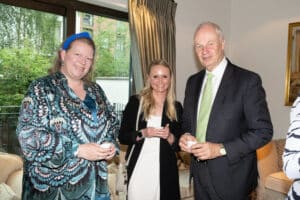
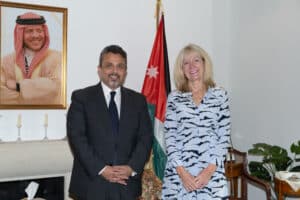
  • Event Report: London’s Luxury Elite at the Residence of the Jordanian Ambassador His Excellency Manar Dabbas – A Powerful Evening of UK-Jordan Cooperation

    Finito World reports on a remarkable evening where new opportunities opened for cooperation between the UK and Jordan


    It was the writer of the book of Hebrews who explained the importance of hospitality: “Be not forgetful to entertain strangers: for thereby some have entertained angels unawares.” This important lesson has not been lost on His Excellency Manar Dabbas, who at an event co-hosted with Finito at his residence in West London, proved himself the perfect host.

    In fact if hosting is an art, then it might be that every night masterpieces are being created at the Jordanian embassy. The event was attended by a group of exceptional individuals from the luxury sector including CEOs and leaders from brands as varied as Fabergé, Trevor Pickett, Kiki McDonough, the Design Centre Chelsea, Almacantar, D.R. Harris, Hirsh London and David Morris Jewels. Rounding off the guest list, there was Guy Martin from Carter-Ruck, Kamal Rahman from Mishcon de Reya, the CEO of Coutts, Mohammed Kamal Syed and revered aviation leader David Scowsill.


    Speaking in his spacious, immaculate home, the Ambassador began with a broad welcome, and made it clear that Jordan is very much open for investment – and eager to receive visitors: “It’s one thing to hear about Jordan while we’re sitting here in London, but it’s quite another to go and see for yourself,” he said, as everybody mentally consulted their diaries.

    However, given all that is going on in Gaza, it was necessary to reference the unfortunate situation in the region: “It is very sad to see what is going on. You have peace when you have people who understand another’s concerns. Wherever there’s a storyline on one side, there’s always a counter-narrative on the other. We used to have leaders who can understand the importance of compromise,” he explained.

    This amounted to a moving call for peace. The Ambassador spoke throughout with a genuine sense of the sadness of the situation, always with the understanding that these matters are extremely complex and require our best efforts to find ways towards resolution.

    For Dabbas, that work is going on in London. “I am focused on promoting Jordan as a business destination for different people – I am talking to Tories and the Labour think tanks, the Muslim groups and the Jewish groups. My chief concern now is that the discourse on the streets of London remains political and doesn’t become religious. Is it easy? Unfortunately it is not – but there’s still a lot we can do. There are challenges out there but also opportunities. But we’ll not see peace in the future unless we see some fundamental change.”

    His Excellency went onto say that Britain faces a stark choice when it comes to the geopolitical conflicts in the Middle-East. “You can work with us and pre-empt and avoid, or wait until it explodes in our face and then react,” he warned.

    Dabbas spoke with infectious love about Jordan, giving real insight into what makes his country so special. He discussed the tourism sector, and also surprised guests by telling us that The Martian, Aladdin and Dune were shot in Jordan – as indeed was the classic Lawrence of Arabia. “There are a lot of opportunities,” he said, as the superb Jordanian food materialised before the guests.

    “What’s missing sometimes is we’re not promoting as much of what we do in Jordan. We don’t have oil, but in a way that’s a blessing. Instead, we have top-notch human capital. When it comes to IT labour, for instance, for a lot of British companies who want to move away from the political complexities in China, Jordan is the best solution.”

    Trevor Pickett asked if Jordan was easy to partner with, and whether the country hosts trade fairs as Turkey famously does. “Craftsmanship is what Jordan is good at – you must come and visit and have fun,” His Excellency replied. “We have fairs which are not as big as the ones you might have in Turkey. Come and see for yourself: you can make your decision according to your business models.”

    The ambassador was also asked what the benefits are of doing business in his country: “Jordan is not just Jordan; it is the gateway to Iraq. If you want to sell to Iraq, you have to come to Jordan. Jordan is the most moderate and forward-thinking country in the region.”

    Mishcon de Reya partner Kemal Raman asked how the country manages to cultivate neutrality, and what can be learned from its extremely positive international reputation. “When you say Jordan, people smile – other countries, people don’t,” she observed. “I couldn’t agree more,” replied the Ambassador. “Others would pay billions of dollars for just one per cent of the respect His Majesty the King has across the world. When he speaks, everyone listens. We pride ourselves on our royal family.”


    And how is it that this reputation is so secure? “Legitimacy is an aspect of this – we don’t have struggles, we have a constitution. We are a principled country. Compared to our neighbours who have huge wealth in oil and gas, we decided our wealth should be our soft power. We have always been true to our foes and to our friends. What we say in private is the same as what we say in public.

    In America if I say I’m from Jordan they think I’m talking about Michael Jordan. If I mention King Abdullah II bin Al-Hussein they say how much they love him! You rarely see a monarch who has such a level of daily engagement with his people. This is what defines us.”

    His Excellency was also asked about the nature of the role he has. “When I first arrived here I realised I had to understand the importance of the parliamentary system. It is quite a big job in itself: you have over 600 MPs and over 800 Lords – the challenge is how do you manage to see each and every one of these? Even if I do meetings on a daily basis, I wouldn’t be able to get through them all!”

    In addition to that His Excellency engages regularly with the government: “It is challenging to be able to reach as many policy-makers as possible and explain why the Middle East is important, let alone Jordan. Then I have to engage with media and think tanks.”

    It is difficult, he says, to plan his diary. “I receive probably 20 invitations per day. That can be a little confusing – sometimes you have to do everything to decide whether it’s something you would go to for the second time or not! You have to be on top of your form to influence policy.”

    So what would His Excellency say to young people considering a career in the civil service? “I have many meetings with university students,” Dabbas explained. “I tell them that I knew I wanted to pursue politics from a very young age. I also tell them to follow their passion – but it’s always possible to have that without the capability. Sometimes it can be the other way round – you need to have both.”

    This was sound advice – and it was issued to a roomful of people who had followed theirs, and who went out into the Kensington night, happy that their own decisions in life had led them into the company of such a remarkable man.


  • Renewable Energy Tipping Point – A Powerful Shift in Investment

    Renewable Energy Investment, Dinesh Dhamija

    The world is witnessing a dramatic surge in solar energy generation, driven by falling costs and a newfound enthusiasm for renewables in China. According to the International Energy Agency (IEA), clean energy investment is expected to double that of fossil fuels in 2024. “For every dollar going to fossil fuels today, almost two dollars are invested in clean energy,” says IEA executive director Fatih Birol. The figures are staggering: $1 trillion for fossil fuels compared to $2 trillion in clean energy, which includes renewables, nuclear power, electric vehicles, power grids, energy storage, low-emission fuels, and energy efficiency improvements.

    Solar Energy Growth and the Renewable Energy Tipping Point
    The cost of solar technology has plummeted by 30 percent over the past two years, leading to a rapid expansion of solar farms across China and the United States. In the first four months of 2024 alone, the US saw nearly 8GW of new solar capacity and an additional 1.8GW from wind energy. The Federal Energy Regulatory Commission reports that more than 99 percent of new US generating capacity during this period came from renewable sources. This impressive growth underscores the Renewable Energy Tipping Point, as the global energy market pivots towards cleaner and more sustainable options.

    As renewable energy costs continue to decline, this trend is expected to accelerate. Despite efforts by the oil, gas, and coal industries to influence policymakers and argue for the continued use of hydrocarbons, the economics of power generation increasingly favor renewables. The question arises: why pay more for an energy source that harms both health and the environment?

    Global Investment and the Future of Renewable Energy
    Global investment in low-carbon electricity is forecasted to reach $900 billion in 2024, ten times higher than the investment in gas and coal power generation. In the United States, renewable energy capacity is projected to surpass natural gas by 2027. This shift will highlight whether countries are committed to outdated fossil fuel generation or are embracing more progressive energy policies that benefit their citizens.

    This transition presents a curious challenge for politicians like Donald Trump, who have historically been anti-renewables. If Trump were to be re-elected in November, he would face a burgeoning boom in clean energy generation, potentially challenging his previous stances. The broader question remains: how will political leaders worldwide respond to this unstoppable trend?

    The Irrepressible Shift Towards Renewable Energy
    The IEA notes that investment in fossil fuels remains higher than desired, with oil and gas companies allocating just 4 percent of their investment budgets to clean energy, despite their claims of being part of the solution. The agency urges governments to adhere to its target of tripling renewable energy generation by 2030. This goal, while ambitious, is crucial for mitigating climate change and ensuring a sustainable future.

    While more can always be done, the undeniable and accelerating flow of funds into renewable energy has indeed reached a tipping point. Soon, it will seem absurd to invest in anything else. This shift not only marks a significant economic change but also signals a broader societal transformation towards sustainability.

    Dinesh Dhamija, who founded and sold the online travel agency ebookers.com before serving as a Member of the European Parliament, has since established the largest solar PV and hydrogen businesses in Romania. Dhamija’s career transition from travel to renewable energy underscores the potential for innovative leaders to drive significant change in emerging industries. His latest book, The Indian Century, is now available to buy on Amazon at The Indian Century.


  • Labour Majority in 2024: Lady May Discusses the Uncertainties, “Politics has become much more volatile”

    Labour majority isn’t a foregone conclusion, Lady Theresa May


    I am stepping down at this election and so I now don’t have the letters MP after my name. I do still think there’s a path to victory for the Conservatives for a number of reasons.

    First of all, I was elected in 1997, and so I can say with certainty that Sir Keir Starmer is not Tony Blair: the impact on the doorsteps is simply not the same. That’s the impression I get in my Maidenhead constituency, and that’s what we’re seeing in what will probably be a marginal new constituency near me.

    It’s worth remembering that Labour still has a huge mountain to climb to take the seats they need to take to get a working majority. They have to secure the largest consistent swing across the country in order to get there. In addition to that, I think politics has become more volatile. You do not get consistent swings across the country any longer; you get much more variation between seats. You might get a seat which you think is in the bag, and another which isn’t – and you might lost the first and gain the second.

    The third reason why a Labour victory isn’t certain is that if you look at General Elections in recent years, they’ve tended to be unexpected results. 2010 was unexpected, so was 2015 – 2017 was definitely unexpected, to my own cost. Even in 2019, the size of the majority was unexpected. If you look closely at 2017, the Conservative Party was over 20 points ahead in the polls and look what happened: we didn’t secure our majority.

    It seems a long time ago now, but I would also point out that the local election results earlier in the year weren’t as good for the Labour Party or the Liberal Democrats as they would have wanted them to be: examine closely the gains of the Labour Party in the local elections, and add up gains by the Greens and the independents, they almost equalled the progress made by the Labour Party.

    The social care policy was a factor in that 2017 election. This is a huge issue which the country has to address. I’ve been Conservative all my life. One of the things I’ve been brought up to believe is that when you’re able you should put something aside for a rainy day. The welfare state, when it was created, was there to support people who weren’t able to do that, and to help people at certain challenging points in their life.

    Somewhere along the line, we’ve got to the point of saying nobody should have to sell their house to pay for their care and that, whatever happens, the government will provide. But if someone is sitting on a significant asset why should the young couple down the road struggling on average earnings to keep their head above water pay for that person’s care? Politicians need to have an open and honest conversation with the public about this.

    We live in much more uncertain and unpredictable times. It’s certainly the case that security has gone up the agenda because of our continuing support for Ukraine, but the number one issue in any election is the economy. I think there’s the need in today’s world to think a little more creatively about defence. People think in terms of big bits of kit for the army; but in Ukraine we have seen that drones have been incredibly effective.

    It’s concerning that Labour has not matched the government’s defence spending plans. What happened in Afghanistan has not made life easier as it’s made that country return to its former state as a place where terrorists can be trained. What’s happening in Gaza is potentially another flash point for those who would do us harm.

    I will miss many of my colleagues – and I will remember the strange things. I remember the occasion when I was PM, when I was in Iraq. I was flying back to have dinner in Saudi Arabia and had to change before the dinner. I was being transported in an RAF Hercules, which is a troop carrier. There are no facilities on such aircraft, let alone for a woman. I said I had to change. The RAF put their heads together and took me up into the cockpit and they sat me down between the pilot and the co-pilot. They got a sheet and some gaffer tape and said: “Here you are, PM, you can change there.”


    The former prime minister was talking on 23rd May 2024, the day after the election was called, at a Finito event at the East India Club

  • Robert Colvile Interview: Insights on Journalism Careers and the Positive Future of Media

    Finito candidate Cameron Kerr sat down with the renowned writer to ask him about his career, why he never expected to run a think tank, and the need for a career backstop for would-be journalists. 


    Cameron Kerr: Was your journalism career a goal you had planned to achieve or a role that you fell into?


    Robert Colvile: It was never something I’d thought about until university, but I volunteered to work on one of the student papers there and absolutely loved it – not just the writing, but every part of putting together a newspaper. I did consider some other options – I applied to the Civil Service, for example – but ultimately it was always the thing I wanted to make a living doing if I could.


    CK: Take us through the early days of your career, from where you first encountered opportunities in journalism, to a point in your journey where you could tell yourself or peers that you worked as a journalist for a living.


    RC: I got started at university, then tried to make as much of that opportunity as possible – for example getting accreditation to the various festivals at Edinburgh over the summer, then covering them for the paper (which also enabled me to build up a stock of interviews with some of the people performing or promoting their films and books). After university I got on to a training scheme at the Observer, so I did work experience there and at the New Statesman, while supporting myself by doing admin work as a temp.

    Then I got some extra work helping produce the paper on Saturday evenings, and uploading the print edition on to the Guardian website, and doing paid supplements on broadband take-up, and just anything I could do to get a foot in the door. But I wasn’t properly, formally a professional journalist until I parlayed all that into a job on the Telegraph’s training scheme, which was looking for sub-editors – the people who sit back in the office editing the articles, checking the facts, putting on the headlines and so on.


    CK: Is the route you took into journalism a pathway which others could follow today, and if not, how does that entry pathway look different in 2024?


    RC: The thing about journalism is that there really aren’t many formal pathways. I was lucky enough to get on to one of the Fleet Street training schemes, but the number of people they take are vanishingly small compared to the size of the sector. One of the big differences today, though, is that there are so many more opportunities to get yourself noticed by writing, tweeting, blogging, starting your own thing and getting noticed. One of the great things about journalism is that ultimately, quality really does shine through – if your writing is good, or you’re a good editor, people absolutely take notice.


    CK: What opportunities in your career do you feel you discovered, pushed for and achieved yourself?


    RC: All of them! Though in retrospect I could have done more to push myself forward while at the Telegraph – I was there for 10 years and ended up in a pretty senior position, but there were quite a few years where I was sitting there quietly chafing, for example at not being able to move full time on to the comment desk. I probably could have been bolder in agitating for a move, or trying to find opportunities elsewhere. But I’m pretty happy with how it turned out.


    CK: What opportunities in your career, if any, do you feel were fortunate enough to be given to you – by bosses, word of mouth, unexpected events of the day to cover etc.


    RC: I’ll always owe a big debt to Liz Hunt, who’s now at the Daily Mail. As Telegraph features editor she plucked me from my sub-editing job and put me in charge of the news review section of the paper – the big, chunky, attention-grabbing Saturday reads – as well as the science page.

    And then I’m pretty grateful to Maurice Saatchi, who was then the chairman of the Centre for Policy Studies, for asking me to be the Director when I was running its CapX website. But the truth about journalism is that few people have a career path plotted out – I certainly didn’t think I was going to end up running a think tank, for example. It’s very organic, about the connections you make and the reputation you build.


    CK: Are there one or two defining moments/opportunities that took your career to a whole new level – they could be expected or a total surprise.


    RC: The move from being a sub-editor to an editor was definitely a step change – after that my career started moving forward much more quickly. Getting to run CapX was similar – I was freelancing as a writer, and had had quite a few discussions with people, but wasn’t really actively looking for a full-time role. And oddly, moving into think tanks really improved my opportunities as a writer – I suddenly had not only a load more relationships in Westminster, but a massive pipeline of policy ideas that I could write about and publicise.


    CK: With all your industry experience and knowledge of the state of journalism today, is it a career you would pursue now if you were starting from scratch?


    RC: Yes, but with the caveat that you really do have to have a backstop these days in a way that you didn’t in the old days. There’s so much competition to get into journalism, and so little profit, that the salaries really aren’t very good, at least not until you get right to the top of it. I’m proud that I never got a penny of support from my parents, and got every single job on merit rather than due to connections.

    But at the same time, I knew that if it didn’t work out, I could always retrain as a lawyer or management consultant or what have you. A lot of people don’t have that safety net. And there are also always people who are prepared to work unpaid until they get hired, which is pretty tough to compete with.


    CK: What does your journalism career look like today? And do you think a regular op-ed in a major newspaper is still the desirable goal to achieve for a journalist looking toward the future of their career… or does it look different now with the presence of social media, podcasts, vlogs and straight-to-web documentaries?


    RC: My main job in journalism is as a political columnist on the Sunday Times – I also oversee the Centre for Policy Studies’ CapX site as editor-in-chief, but that’s a much more limited commitment, as we’ve got a good team who keep it running day-to-day. Having the column is still an incredible platform, and I’m very privileged to have it – but if I didn’t have the day job at the CPS then I would probably doing a lot more on top of that, whether a podcast or a Substack newsletter or what have you. Ultimately, there are all kinds of ways of reaching an audience – you just have to find the one that works for you.


    CK: Looking back at your career, from early steps to the big decisions, is there anything you would have done differently with the gift of hindsight – perhaps even advice you would give to those starting out now?


    RC: There are all kinds of things I should have done differently – mostly having a bit more confidence in myself, and in my value to my employer. But the big things would be things that I hope I got right – always try to do the best possible work, and always try to be someone other people actually want to work with.


    CK: In a world of a multitude of news outlets, podcasts, opinion columns and broadcast shows, how do journalists and the media have to evolve in order to continue their mission to inform the public and hold the powerful accountable?


    RC: In all kinds of ways! It’s pretty obvious that mass market news is breaking down into a host of niches. The audience for the BBC evening news, for example, has fallen off a cliff in the last few years. But the difference between when I was starting out and now is that the shadow of doom has been lifted – we were all convinced that the internet was going to kill newspapers stone dead, whereas today the kind of subscription models that the Times uses, or the revenue people are getting from Substack, shows that there is a future for high-quality journalism. But you always have to keep innovating.