Category: Front Line

  • Opinion: Tony Blair’s Book “On Leadership” misses the critical point

    Tony Blair’s Book “On Leadership” misses the point.

    Finito World


    “The centre cannot hold/mere anarchy is loosed upon the world’. So WB Yeats wrote towards the end of his life. It doesn’t feel entirely irrelevant as a description of Starmer’s Britain.

    The early months of Labour’s time in government has seen some good ideas, the first signs of governmental infighting, some naivety and some poor decisions too.

    None of this ought to come as any surprise – and it would hardly be news at all if there wasn’t a mounting sense that the country needs leadership on a different scale to what we had under the Conservatives. Lord Darzi’s NHS report alone was enough to make people realise the scale of the inheritance Labour has – but that’s not to say there aren’t other problems. From education to housing, to transport and defence, to productivity and growth, the UK’s difficulties appear to be legion.

    But if the leadership we need isn’t yet evident in the Starmer government – and yet to materialise from an opposition still bruised by the recent general election’s thumping defeat – where is it to be found?

    Despite the fact that he left office nearly 15 years ago, there will be many who are still not ready to listen to the pronouncements of Sir Tony Blair. This is understandable when one considers the legacy of his Middle Eastern Wars, his awkwardly gilded post-premiership, not to mention the quangocracy which was certainly not curtailed by 14 years of Conservative-led government.

    And yet in a recent interview with The Observer‘s Andrew Rawnsley, designed to promote On Leadership, he did what Blair has always been good at: making an argument.

    Observing that the civil service is essentially unfixable, and that bureaucracy will have an innate tendency towards being bureaucratic, Blair offered the alternative: leadership from the centre.

    This is a very different thing to having a centralised system which we have come what may. Blair explained: “…unless you’re driving from the top, it [change] won’t happen. It won’t happen for several reasons. It won’t happen because the system won’t have a clear enough direction if it doesn’t get it from the very top. It won’t happen because too many issues require many departments to work together. And you need the centre to do that.”

    This is true, and seems all the more so from watching over a decade of prime ministers who couldn’t control the centre: May was a Remainer asked to enact Brexit; Johnson lacked discipline; Truss was never prime minister material; and Sunak could do the day-to-day, but lacked vision. Starmer is, so far, a sort of blend of May and Sunak.

    But if we accept this argument for strong leadership, it needn’t just apply to Westminster where it seems least likely to be successful. It can form a part of all our working life.

    It is a remarkable fact how little education there is in our society surrounding leadership. There is very little leadership education during our formative years: indeed, it might be argued that a samey curriculum tends to homogenise students – and this process is the opposite of generating the individuality which we associate with leadership.

    Of course, if we accept the need for leadership in our society then we might wonder how best to foster it. As Sir Terry Waite argued in a previous issue of Finito World, the study of history is important, especially if we can look at what made, say, Abraham Lincoln an effective leader and ask students to apply his essential pragmatism and patience to their own lives.

    Furthermore, this magazine applauds the work conducted by the Institution for Engineering and Technology in highlighting the importance of engineering on the curriculum; one attractive aspect of such an approach is that it engenders precisely the kind of problem-solving which makes for inventive leadership.

    In these pages too, Emma Roche has argued that an understanding of the original practical nature of ancient philosophy is of importance too when it comes to creating a generation which knows how to lead.

    But really it’s in mentorship that we are most likely to learn the skills needed: at Finito we believe that mentoring has a unique ability to create the knowledge base for effective leadership.

    The country in fact is in such a state that we are not in a position of being able to simply submit to the powers of some great man or woman – were that person to come along, which seems unlikely. In fact, in the shape of Starmer it might be that we have another underperforming PM.

    Instead, Blair’s book seems to spark off a series of thoughts which its author may not have anticipated. The new centre can’t be located in 10 Downing Street; it needs to be in each one of us.

  • Design Centre Chelsea Harbour CEO Claire German on Stunning Design Directions for Autumn and Winter

    Claire German


    Home to an inspiring mix of luxury design houses, independent companies, flagship showrooms and over 600 international brands, Design Centre, Chelsea Harbour is the largest of its kind in Europe. Its unique sense of community, commitment to creative excellence and specialist expertise make it the first port of call for professional designers and architects sourcing for residential and commercial projects, as well as design enthusiasts seeking design and decoration inspiration for their own homes.


    The Design Centre hosts two ‘must-attend’ events each year to celebrate the new showroom collections. London Design Week takes in March to showcases spring/summer launches, and Focus is held every September to unveil the latest autumn/winter showstoppers. This year, Focus/24 sees a new approach when the well-established design and decoration show (16 – 20 September), will be augmented by Focus/24: The Longer View (23 September – 11 October). Aimed to coincide to a time when the vibrant London scene is buzzing with art and design, it will bring refreshed creativity to the Design Centre, with opportunities for visitors to see more inspirational exhibitors for a longer period.

    Adding another layer to the programme is Future Heritage, an installation showcasing work by contemporary craftmakers. With a track record for spotting the next big thing, curator and design journalist Corinne Julius has carefully selected works from makers including Borja Moranta, Tessa Silva, Nicholas Lees, Ane Christensen, Richard McVetis, Elliott Denny and Esna Su. With interior design placing ever greater value on craftmanship, visitors and collectors can also learn how to commission unique pieces for projects, get the inside track at discussions and demonstrations and discover how materials and finishes have been taken in new, imaginative directions.


    Alongside the new launches and a packed programme, visitors look to Focus/24 to keep one step ahead. Following weeks of investigation and sneak peeks of the new fabric, wallpaper, lighting and furniture collections, the Design Centre’s creative director Arabella McNie and wider team identify common threads such as new patterns, motifs, shapes and colour palettes. A voice of authority within the industry, these design directions showcase the latest standout products and the stories behind them, as well as highlight the incredible creativity, expertise and craftsmanship that is fundamental to the Design Centre’s DNA.


    In the following round-up, Claire German, CEO of Design Centre, Chelsea Harbour, outlines the design directions for autumn/winter 2024 for finito readers, sharing the narrative of each one through specifics wallcoverings, fabrics and objets. From classic contemporary to cutting-edge; new maximalism to chic simplicity; urbane sophisticate to rural retreat, whatever style you seek, at Focus/24 visitors can expect a bounty of new designs to inspire.


    To see these pieces in person, visit Focus/24 between Monday 16 – Friday 20 September where all interior design aficionados are welcome. 


    Return for more inspiration during Focus/24: The Longer View from Monday 23 September – Friday 11 October.


    Pictured: ‘Imari’ plate, Raynaud at SOURCE at Personal Shopping (Second Floor, Design Centre East)


    ‘Vivacious’ Design Direction


    This autumn/winter, design houses are celebrating the artistic, the vibrant and the bold. The aptly titled ‘Vivacious’ design direction is brimming with abstract botanical shapes and lively hues, reminiscent of carnival colours. This is an opportune moment to highlight the ‘Imari’ porcelain plate by Raynaud, available through the Design Centre’s recently launched Source at Personal Shopping service.

    In addition to some 40 china and glass brands, it is a veritable treasure trove for tableware, and showcases exquisite creativity, from traditional, ornate and highly coloured patterns through to sleek and bold modern styles. As well as famous heritage brands, such as Herand, Meissen and Royal Crown Derby, we are also proud to introduce newer names who are making waves in the tableware industry, such as ceramicist Deborah Brett. With its elegant interpretation, the ‘Imari’ plate (pictured here) embodies the ‘Vivacious’ design direction.


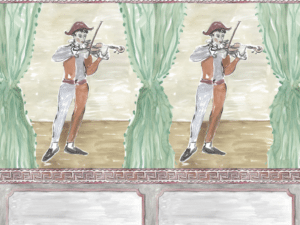
    Pictured: ‘Harlequin with Fiddle’ , Luke Edward Hall x Rubell, Rubelli (Ground Floor, Design Centre East)


    ‘Hooked on Classics’ Design Direction


    Another key design direction for this season is ‘Hooked on Classics’. Theatrical in nature, it is rooted in a classical approach, but there is a modern twist throughout. The colour palette is reminiscent of a country house with an abundance of blues, greens, golds, reds, and pinks. We find a play on the past here, with whimsical upgrades on furniture shapes that still allude to tradition. Rubelli’s upcoming collaboration with English artist and designer Luke Edward Hall really symbolises that.

    From the ‘Baroque Fountain’ which depicts a nautical scene with double dolphins and gushing water, to the ‘Harlequin with Fiddle’ wallcovering (pictured here) which shows a circus performer on stage during the improvised theatre of 16th-century Italy. Rubelli, the Venetian family-run company now in its fifth generation, designs and manufactures furnishing fabrics for residential and contract use. Globally distributed, its portfolio includes Rubelli Venezia, Rubelli Casa and Dominique Kieffer by Rubelli.


    Pictured: ‘Charlotte’ wallcovering, Claire de Quénetain at August + Co (Second Floor, North Dome)


    ‘Cactus Flower’ Design Direction


    The ‘Cactus Flower’ design direction is aptly named because of its refreshing colour palette, featuring aqua, prickly pear pink, spearmint green and sky blue. Epitomising this perfectly, we have ‘Charlotte’ by Claire de Quénetain at August + Co, available as both a wallcovering and a fabric. Known for her uplifting, stylised patterns, de Quénetain is a French surface designer whose fluid, illustrative aesthetic has seen her work chosen by renowned interior designers such as Laura Gonzalez for collaborations.

    She is a perfect brand for August + Co, whose curated space at the Design Centre converges innovation and artistry. From textile artisans to furniture visionaries, the showroom brings together a carefully chosen collective of British and European craftspeople and makers, shaping a dialogue between form and function, beauty and utility.


    Pictured: ‘Drawing Room’ painting by Angela Murray at Quote & Curate (First Floor, Design Centre East)


    ‘Brushstroke’ Design Direction

    Artfully inspired, the Design Centre has identified the ‘Brushstroke’ design direction as a dream-like trend featuring ink splots and impressionist dots that evoke misty landscapes. The artist’s palette comfortably mixes dreamy pastels with nighttime tones of teal, indigo and smoke. Here, we must mention the ‘Drawing Room’ painting by artist Angela Murray of Quote & Curate, a new studio, gallery space and art consultancy at the Design Centre. Visitors to Focus/24 will be able to visit Angela’s showroom in Design Centre East, as well as see her work via a pop-up exhibit in the Design Avenue, in situ for the duration of the show.


    Pictured: The ‘Avalon’ rug, Jeffrey Alan Marks for The Rug Company (Ground Floor, Design Centre North)


    ‘Sgraffito’ Design Direction


    ‘Sgraffito’ is derived from the Italian word ‘to scratch’, so it should be no surprise that the ‘Sgraffito’ design direction is inspired by the technique that involves scratching a motif or image into clay, often revealing a secondary colour below the surface slip. It is a technique that has been around since classical times, with examples adorning walls, ceramics and paintings in grand houses and palaces around the globe from as far back as the 6th century.

    This direction is angular and spirited, and features zigzags, chevrons and triangles, often in a simple two-tone colour combination. Starting with a base of warm neutrals and layered in earthy colours, the palette reflects the pigments that have been used for centuries to decorate ceramics. A standout piece for this direction is the ‘Avalon’ rug by Jeffrey Alan Marks for The Rug Company, which embodies the scratchy, free-spirited nature of ‘Sgraffito.’ Since its inception in 1997, The Rug Company has collaborated with the world’s leading creatives across fashion, art and architecture, while a talented in-house studio pioneers each design with unparalleled expertise. They can be found in Design Centre North showcasing rugs of expert craftsmanship and innovative design.


    Pictured: ‘Cordes Sensibles’, Foliage collection, Veronique de Soultrait at Elitis (First Floor, North Dome)


    ‘Elemental’ Design Direction

    When it comes to the ‘Elemental’ design direction, we are being transported to a place full of rugged cliffs, stony beaches and hidden lagoons. This look is all about dry textures that are reminiscent of erosion. We can see patterns that evoke memories of the movement of water on sand and rock. Here, we must spotlight a wallcovering from the Foliage collection by Veronique de Soultrait, in collaboration with Elitis. The showroom offers beautiful fabrics, wallcovering and home accessories, as well as high-end interior brands from around the world.


    The thrill of discovery is something the Design Centre strives to bring to every visitor, helping people discover great design, and supporting those doing it best. Free to register, secure your place at Focus/24 and see the new collections in-person alongside a packed calendar of workshops, masterclasses and talks: www.dcch.co.uk


  • Lumos Education CEO Johanna Mitchell on her early life and the incredible influence of her parents


    Johanna Mitchell


    I had no idea that I would work as an education consultant, until I was in my mid-30s, running a small school for the Lawn Tennis Association. The education part I got from my father and my sense of optimism from my great aunt, Pat.  My own experiences of education made me want to help other children. When parents ask me to find a ‘leading’ school or university for their children, I always ask what they mean. If it doesn’t cater to the specific emotional and social needs of their children, it’s leading them nowhere.

    My father was an academic.  A North Londoner, he attended Haberdashers, after failing the 11+. Prior to this, he was told by his prep school head that he would amount to nothing.  Like many young men, he started to thrive at aged 13-14 and went on to have a career in food technology. He was said to have developed the recipe for Quavers crisps whilst at Unilever.

    His colleagues described him as the Patrick Moore of the food science world. He was the archetypal mad professor and was often to be seen on stage, trying in vain to put his hands into the pockets of his inside-out lab coat.  His secretary remembers him telephoning her regularly from airports to ask: ‘where am I going?’.

    Whilst my father was secular, my Roman Catholic mother was the major force behind my schooling. My father confided that there were two things that filled him most with trepidation:  one was the nuns and the second was women, of a certain age, telling Peter Jones’ customer services that they were ‘cross’.  The head of my first secondary school, a convent, was the formidable Sister Mary Angela.

    At parents’ evenings, she would send my father into a spin. At Sister Mary Raymond’s funeral, an elderly piano-teaching nun with six fingers on one hand, Sister Mary Angela marched to the altar and slammed her coffin lid shut, exclaiming ‘thank God she’s gone!.’ It was pointless getting on the wrong side on Sister Mary Angela.

    A gentle soul, who didn’t hold with too much authority, my father sneaked a replacement tape player into my boarding house, right under the housemistress’s nose.  My old one had been confiscated for playing Pink Floyd’s The Wall loudly.  Later, at another school, I was expelled, with my friend Isobel, for posting questionable photographs on the head’s door in the middle of my night. My father was summoned and when Father President handed him a manila envelope, containing said photographs, my father took them out, examined them and burst into laughter. I loved him for that. Priests didn’t frighten him as much as nuns.  I’m not sure why. Perhaps it was the added female dimension. Or the veil.

    After this, I had to sit my A levels as an external candidate, at schools which had the same specialist papers.  Oakham School were very kind. My father decreed that I would have to self-fund part of my private tuition by working in a launderette and waitressing. I know how to operate a dry-cleaning machine and am a dab hand at silver service. It was a challenging period. Despite being predicted straight As, I lost all my university offers, and had to take up a clearing place. In my work with Lumos Education, I feel an affinity with children who have experienced ruptures in their education.

    Post university, I went to live in Paris for a few years, teaching English, working as a fille au pair and doing a postgraduate at the Sorbonne. I wanted to be an academic, like my father – maybe in English or French literature. He himself said he would have liked to have been a Bond hero. Or perhaps, a politician.  He saw both as more glamorous. His own father had overseen general election campaigns for Conservative Party central office.  So he had some understanding of politics.  His one and only student job was delivering Conservative Party campaign leaflets throughout Hampstead and Finchley. No launderettes for him!

    Back in London, I joined the civil service.  Sir Humphrey stalked the corridors of my first department. I remember one senior civil servant telling me that I could only handle confidential files if I put on the pair of white gloves which were in the cabinet, with said files.  I didn’t double check invites that had been printed for the Science Minister inviting his guests to the Zuckerman Science Lecture that year, and afterwards to a buffet supper. The letters went out inviting guests to a ‘buffer supper.’ Although this seemed quite appropriate, given some of the audience, the minister was, understandably, not happy.

    In London, I began to spend more time with my great aunt Pat, whom I hadn’t known well as a child.  She divided her time between London and Sydney, was from the Irish/Australian branch of the family and a real bon viveur. Unfailingly cheerful, she lunched most days at Frantoio on the Kings Road.  Three months pregnant with my youngest daughter, I arrived for a pre-lunch drink and she filled a half pint class with brandy .

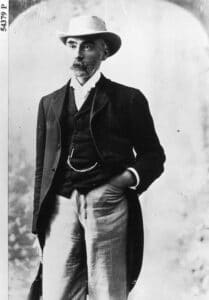
    When I refused the drink:  ‘lily-livered all your generation are!  All vegetarian’, she said.  Once her back was turned, I tipped the brandy into a pot plant (which was conspicuously absent on my next visit).  Both Pat’s sons had pre-deceased her, but she was just incredibly resilient.  Her family history was both entrepreneurial and tragic. Her grandfather, my great, great grandfather, was Charles Yelverton O’Connor, the engineer who constructed Freemantle Harbour.  He rode into the sea and shot himself after being criticised, for his work, in the Times.  There are two statues commemorating him in Freemantle.


    Commemorative statue at Freemantle


    Charles Yelverton O’Connor


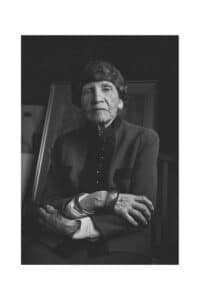
    Her aunt, my great, great aunt, was Charles’ daughter, Kathleen O’Connor, the celebrated Australian impressionist artist who defied the patriarchy surrounding women artists of her time, and lived to her 90s.  Pat had some of her paintings in her Chelsea home. My husband and my daughters enjoy painting.  Pat lived until 100 and, even in her nursing home, she shared a bottle of good red with her fellow residents every night. I learned a lot from her – mainly that your glass should always be half full.

    Credit: Richard Woldendorp


    Some of my dearest friends today are from the civil service, school and university. Interestingly, in my time there, there were a lot of civil servants who had been raised in the Catholic church. Whether or not you continue the religion into adulthood, it does give you a sense of service. I love helping families to navigate global education systems which can seem incredibly complex.  Pastoral care is so much better now and we understand more about the emotional health of the child. There are still key improvements to be made in education, but it’s far cry from my experiences in the 1980s.

    My father and aunt Pat were givers. Dad loved to help others, young academics and children whom he tutored in chess. He sponsored a young girl’s education in India and, despite being an incredibly busy man, he wrote to her regularly.  He didn’t give a fig for money, rank or power.  He always said ‘be kind, for others are fighting a harder battle.’ I didn’t understand exactly what he meant then. I do now. We have a picture of Plato on our kitchen wall, with his quote below. My daughters have stuck a moustache on poor Plato. Having both studied ancient Greek, they should know the importance of this great philosopher.

    My father was also a man of his generation, without much freedom to express his emotions.  He would have had more emotional freedom now.  I remember him crying three times:  when his first marriage fell apart, when he watched a programme on Siege of Leningrad and on the day of the Brexit referendum result.

    I’ve made so many mistakes and continue to do so.  So did my father and my aunt. It’s essential to learn from them.  And to hold ourselves accountable when things go wrong. Staying in one’s integrity, and treating people well is not always easy – but it’s the most important thing. My father understood this.  With challenge comes growth.

    Ancestral lines are not just linear. Their branches grow thick and dense with our colourful ancestors whose loves, hopes and losses were not so very different from ours. When asked, most people can’t remember the names of their great grandparents. How quickly we are forgotten. A reminder to live for now and to do our best work.


  • The civil service is a ‘truly fantastic profession’: Sir Philip Rutnam


    Sir Philip Rutnam


    I worked in the civil service from 1987 until 2020; I began by working in the Treasury and my initial expectation was exceeded in terms of the interest in the work and responsibility that I was given quite early on. There’s this erroneous idea of it being a stuffy place full of hierarchy and restrictions instead I found it was a place where you were given very clear objectives and a lot of responsibility to take them forward.

    The treasury is interesting because it’s right at the centre of government but you also realise that while the Treasury has the power to say no, it doesn’t generally have the power to make things happen: it can could refuse to provide the funding but it can’t actually usually change the system of education or healthcare.

    Did I have mentors in the early days? I had very good people responsible from management giving me direction and mentors who gave me more informal advice. Like any career you do end up having to make your own way but what’s vital is to have exposure to a range of different people who have got advice and give advice and to try to learn the best from each of them.

    When it comes to what the optimal setup is within the civil service, I definitely think you need to have people with a combination of deep specialist expertise with enough capacity as a generalist to get things done within government. In my own career I liked staying in roles for a good few years in order to try to get to grips with what was happening. By the time I was permanent secretary at the transport I feel we got the balance right.  Incidentally, I believe HS2 will get to Euston in the end – and I hope without too much delay.

    The fundamental job of the top of the civil service is to help ministers – and sometimes they will have just arrived in position – to translate their political objectives into practice. It’s a question of helping ministers identify their objectives sufficiently and then work out how they are going to be turned into reality.

    I never found it difficult to be apolitical because that’s a core part of the professional skills set. You are there to serve the democratically elected government so being impartial is a precondition for being there.

    It’s important to understand that there is an enormous variety of different things you can do in the civil service: it has about 500,000 people employed in it.   People tend to think that the civil service is all about working with ministers – somewhere between Yes, Minister and The Thick of It.  There are scientific and technical jobs of huge importance.

    In the Department of Transport working for me, there were people responsible for investigating air accidents or rail accidents; people working in and running really large operational systems like licensing drivers and vehicles at the DVLA – nearly 5000 people the single biggest employer in Swansea.   We also had really large complicated computer systems: so we had IT experts, and experts in programme and project managements.

    In fact, we had everything from policy experts through to statisticians, data scientists, social researchers, economists, lawyers, actuaries, accountants, finance experts, and specialists in estate management. This is a hugely under-appreciated: if we don’t think this message is important we won’t end up with a good civil service.

    There are also lots of different entry routes.   There are apprenticeship entry routes, and other degree entry options.   There is the fast stream with the exam, which is probably one of the smallest entry routes. You can become a specialist in HR, finance, or project and programme management or commercial management.

    The fast steam certainly means that your get more opportunity subject to performance to get promoted earlier: but once you have got to grade 7 there’s no further advantage to being on that track. It is competitive but enormous efforts are made to identity talented people from a wide range of backgrounds. It’s a fantastic profession.


  • Opinion: Energy policy will have a role to play in the 2024 US election result

    Randall Heather


    One reason why Trump’s numbers are looking good is because the Biden-Harris administration is so incredibly stupid regarding energy policy – so much so that every increase in the price of oil will be seen as a creation of the Democratic Party.

    Let’s look at what Biden and Harris have contributed to energy policy. He got rid of the Keystone Pipeline, but that oil is still coming down from Canada on trains and barges and the likelihood of a spill is multiple times that of a pipeline. Nor will they issue any new permits for oil- or gas-drilling on federal land at a time when oil prices have been going up. This means that everyone’s underinvesting in oil because it’s not politically popular.

    All of this means that not only is supply being shut down but that demand is going up and it’s hitting people’s pockets every day. Really, when you come right down to it the best thing we could do as an energy policy is to drill like hell for gas – as there’s so much of it out there. The world is a huge methane creating machine: if you displaced all the coal fire generation with natural gas then the impact on the environment would be substantial. But the green lobby go after natural gas as if it’s oil or coal. But everybody knows you have to have some sort of bridge to build a solar-based energy policy.

    The truth is we don’t have an energy crisis – we have an energy storage crisis. As things stand, we can’t take solar and wind energy and save it at grid level. The technology doesn’t enable us to store it for any length of time whatsoever – and until you solve that problem, you can’t rely on solar or wind.

    Which brings me back to the Keystone Pipeline and the question of why Biden might be struggling in those states like Pennsylvania, Wisconsin and Michigan which he needs to win to retain the presidency, if he’s well enough to contest the election. There are lots of blue collar jobs associated with the natural gas infrastructure, and if you make an intervention like the one Biden did, then any adverse fluctuation in the gas prices can be justifiably placed at your door. Added to that, there’s not much spare capacity globally – expect in states like United Arab Emirates and Saudi Arabia. But you can’t expect to switch off supply without some effect on prices, and therefore political ramifications.

    Biden is discovering this all too late. There’s the perception of a weak President – more than that there’s no real Bidenism that I can see which might amount to a core set of principles. It’s worth comparing him for instance with Bill Clinton. People forget that after Clinton came in in 1992, he immediately got cleaned out in the mid-terms, and had to work with Republicans. But he didn’t stick his head in the sand: instead he brought down the federal deficit and instituted some important welfare reforms. That led to a remarkably prosperous decade where the federal government even ran a surplus.

    That’s where Obama differed with Clinton. Clinton saw how he could make lemonade out of lemons – and it helped him in doing that, to have been the Governor of Arkansas. Obama, by unhappy contrast, had never run anything and it certainly showed. Biden suffers from the same affliction.

    What we’re witnessing with Trump’s resurgence speaks to a gap in America’s institutions: there’s no Leader of the Opposition in America. Trump has effectively been fulfilling that role by default – and you could say Nancy Pelosi did something similar from 2016-2020 during the Trump years. The system is too diffuse and lacks that gladiatorial atmosphere of parliamentary debate we see week in week out in the House of Commons.

    Politicians never debate each other except during elections and all interaction is done through the prism of the media.  No American President is called upon to do PMQs and the Cabinet meanwhile is absolutely invisible to the public. We’re paying the price of all that now – and who knows where it will end.

  • UK Climate Leadership: Government’s Opportunity to Lead on the International Stage in 2024

    Dinesh Dhamija presents the opportunities presented for the new UK Government to take a climate leadership role on the international stage.


    Marking a sharp deviation from the climate scepticism of the outgoing UK Conservative government, which disavowed environmental action, the new Labour administration has released ambitious green targets, with its eye on global leadership.

    This week the energy secretary Ed Miliband announced a £1.5 billion auction of renewable energy projects, sufficient to power 11 million homes, including 90 new solar farms with a capacity of 3.3GW and 20 new onshore windfarms. To attract bidders, the government had to face down opposition from local communities, who had hobbled the Conservatives’ renewable energy plans. Three major new solar farms have already gained approval, all of them in the east of England, in Lincolnshire, Rutland, and the Suffolk-Cambridgeshire borders.

    These projects are an initial step towards the tripling of UK solar power promised by the government, alongside its pledge to double onshore and quadruple offshore wind generating capacity. At the same time, solar-based generation across the UK is rising rapidly: it reached 2 terawatt hours per month for the first time in June 2024 and produced around 25 per cent more electricity this summer than in the same period of 2023. Rather than pandering to the oil lobby or appeasing NIMBYs, the Starmer administration hopes to show global leadership on climate action. Ed Miliband will attend Cop29 in Azerbaijan later this year, then host a 2025 conference with the International Energy Agency.

    Energy activists such as Harjeet Singh of the Fossil Fuel Non-Proliferation Treaty Initiative have urged the government to act decisively by announcing a new ‘nationally determined contribution [NDC]’ – the official term for an emissions reduction plan. “The UK has a critical opportunity to set the bar for climate leadership and equity by announcing a robust NDC,” he said.

    Climate experts point out that, with the United States in the throes of an election, and France and Germany both in political limbo, the UK can step up and demonstrate leadership. “It would be good to see the UK including its fossil fuels phase-out commitment within its NDC,” added Singh. “This would show the way for others to follow.”

    Energy secretary Ed Miliband has already visited Brazil, current president of the G20 group of developed nations and host of Cop30 in 2025. These initiatives are important for the future of renewable energy and the fight against climate change. I’m pleased to see the Labour government grasping the nettle early in its tenure, while it enjoys a large parliamentary majority and can ignore sniping from the sidelines.

    It’s too early to claim any kind of breakthrough or tipping point from this government, but it’s good to see evidence of its direction of travel towards a greater climate leadership role. Long may it continue.


    Dinesh Dhamija founded, built and sold online travel agency ebookers.com, before serving as a Member of the European Parliament. Since then, he has created the largest solar PV and hydrogen businesses in Romania. Dinesh’s latest book is The Indian Century – buy it from Amazon at https://www.amazon.co.uk/dp/1738441407/


  • Hard Truths About Fossil Fuels: Dinesh Dhamija’s Call to Action

    Dinesh Dhamija calls for urgent action at the upcoming UN Summit of the Future to address the devastating impact of fossil fuels on the planet.


    When the world’s political and business leaders gather in New York next month for the UN-sponsored Summit of the Future, they will have to confront an elephant in the room.

    Despite record temperatures around the world, with at least 10 countries registering 50 degrees centigrade, rampant wildfires and a mass bleaching of the Great Barrier Reef,  the Summit’s pre-announced ‘climate pact’ makes no mention of fossil fuels. This omission brought a scathing response from 77 world leaders and Nobel prize-winners: “The extraction and burning of fossil fuels is the primary cause of the climate crisis, fuelling extreme weather, fires, lethal heat, droughts and flooding that are threatening lives and livelihoods around the planet,” they wrote in a letter to the event organisers.

    “Yet this isn’t the end of the carnage – the extraction and burning of fossil fuels undermine all 17 [United Nations] Sustainable Development Goals, including jeopardising public health, fuelling conflict, exacerbating social inequalities and threatening biodiverse ecosystems worldwide.” There is a wilful blindness to the harms of fossil fuels, caused by the mutual dependence of some politicians and big oil and gas companies, and abetted by electorates who are understandably reluctant to pay now for to benefit future generations (even if those beneficiaries include their own grandchildren).

    At a time when international cooperation is at a low ebb, with geopolitical tensions and insularity replacing the globalisation of recent years, the world needs a new rationale for multinationalism. What better than something which threatens all of us, and for which there are already proven solutions: renewable energy in the form of solar, wind and new areas such as tidal power generation.

    “We call on the UN to ensure that the Pact for the Future includes robust commitments to manage and finance a fast and fair global transition away from coal, oil and gas extraction in line with the 1.5 degrees Celsius limit agreed to by nations in the Paris Agreement,” added the signatories. “If the Summit of the Future does not address the threat of fossil fuels, it will not be worthy of its name, risking undermining a once-in-a-century opportunity to restore trust in the power of international cooperation.” As the consequences of fossil fuel use grow increasingly hazardous to human life, while the remedies are increasingly affordable and accessible, we’re surely approaching a tipping point.

    Until then, it’s crucial that voices such as these 77 objectors are heard, heeded and amplified.


    Dinesh Dhamija founded, built and sold online travel agency ebookers.com, before serving as a Member of the European Parliament. Since then, he has created the largest solar PV and hydrogen businesses in Romania. Dinesh’s latest book is The Indian Century – buy it from Amazon at https://www.amazon.co.uk/dp/1738441407/

  • Joseph McDonald on his Inspiring Experience with the Finito Bursary Scheme

    Christopher Jackson updates readers about progress on Finito’s work with a particular student from the Landau Forte Academy


    At Finito, we are sometimes asked why it is that one-to-one mentoring works: one possible answer is that people are complex.

    During our lives – and especially our early lives – experience can often feel bewildering. Things come at us fast, and contradictory impressions are arrived at. Soon the world can seem insoluble.

    There is no better way of tackling all this than the concerned help of a mentor. At Finito we take it a step further and make sure that our candidates have the benefit of numerous mentors: the reality is that it takes time and a degree of luck to establish the right kind of mentor-mentee relationship. This means that students often need to try several mentors before discovering the right one.

    At Finito, not all we do is aimed at those punch-the-air moments: the place secured at a top university, the new job, the promotion. These are rewarding, of course, but they’re very far from the whole story.

    More typically, mentoring is full of small wins – it can open up onto a world of quiet reward, and subtle attainments. Sometimes when you look back at the road travelled, you can be surprised by how far you came by small steps. But it usually happens that in these more mundane things might be contained the seeds of some important revelation.

    All these factors are present in the fascinating story of Joseph McDonald, a Bursary candidate of whom we at Finito World are proud.

    McDonald is one of our mentees on the outstandingly successful Bursary Scheme, which we continue to conduct in partnership with the Landau Forte Academy. Finito mentor Andy Inman, who was instrumental in setting up this arm of the bursary, remembers his first impressions of Joseph when he was introduced to us.

    “Joseph is, by his own admission, not particularly social. He doesn’t like groups and crowds, and has very little home support to speak of. The important thing to realise when you have a candidate like that, is that small tasks become big things.”

    When Joseph joined our programme, he was about to leave to take a computer science degree at Lancaster University; he was already in a state of anxiety about what life would be like for him. “I was nervous about making friends and finding the right friendship group when I first came to university,” he tells us. “This is something that I struggled with in the past at school. It was definitely my number one priority upon arrival.”

    Inman decided that Joseph required a caring, nurturing mentor and he couldn’t have made a better selection in this than Coco Stevenson. “I knew that Coco would look after him,” Inman recalls. “What was required might sound insignificant but they were not to Joseph: we’re talking about things like packing lists, and so forth – all the pre-university tasks which you have to do before the leap to university. Some of these things, of course, a parent should do – but for whatever reason Joseph doesn’t have that.”

    Inman’s remarks are a reminder that as we go on in life, we typically come to know the world and forget what it was like not to be sure about things we later come to regard as obvious. Inman recalls: “It was mentoring at its most granular, in a way – all about the detail. How would Joseph get to university? How would he make applications for student loans? Where would he shop for a duvet and for cutlery?”

    But what Joseph most feared was Fresher’s week. “Most people would love that, but for Joseph it’s really the antithesis of what he enjoys – so he had to be talked through that.”

    Stevenson stepped up and in time developed a profound relationship with Joseph. She tells us she was mindful of the magnitude of Joseph’s achievement in getting to university at all: “Joseph is the first in his family to go to university and we should remember that Lancaster University has one of the best Computer Science courses in the UK,” she tells us.

    But Stevenson also never lost sight of the difficulty for Joseph: “Going to university is a major transition in a young person’s life and is all the more difficult coming out of a pandemic – especially when you are a neuro-diverse person, as the world is not always set up for people who are not neurotypical,” she continues.

    Stevenson gives us her first impressions of Joseph: “My mentee was not especially confident in the months leading up to moving to university and there were a number of worries and concerns.”

    Difficulties of this kind must be tackled head-on, and together, Coco and Joseph began to explore the issues: “Working regularly together, we were able to ‘workshop’ issues, come up with strategies and plan for eventualities,” she recalls. “Planning and strategizing helped enormously in accomplishing tasks and not being derailed by unforeseen things.”

    Stevenson used her experience of university life to begin to create a plan for Joseph. Joseph now recalls this fondly: “We discussed the kind of activities I could get up to, including the structure of academic events and the social events I could engage with outside of my studies. Coco encouraged me to convert my ideas of involvement into a more solid plan that helped me find my grounding as I began living away from home for the first time.”

    Soon the pair of them had alighted on a strategy: “Coco explained that societies are fundamental to finding people with similar interests and a great place to make friends. She advised me on how many societies to attend, and how to approach the problem of deciding which societies I would continue attending. This was how I became part of the Sober Society, and I am so grateful to Coco for this.”

    Gradually, Joseph began to feel confident, oriented in his new location, and in time able to feel at home. Stevenson looks back with satisfaction at the way in which Joseph’s sense of self developed in those early months at Lancaster University: “Each small step led to successes which in turn led to increased confidence and satisfaction. My mentee went from unsure and nervous to confident, assured and assuming various leadership roles, as well as achieving academic and social success.”

    One of the core principles of Finito’s mentoring is that we want to be there for the long haul for our candidates. Coco and Joseph remained in touch as Joseph settled in, and Joseph still talks today of how the checklists and preparation that they made together helped him focus on his lecture content.

    But then, a chance came up, and Joseph joined the Sober Society. Joseph remembers: “The Sober Society isn’t a recovery program and does not require you to never drink alcohol but provides a safe space for non-drinkers to have fun and an alternative for those taking a break from alcohol. I was enjoying participating in the events the Society had put on such as game and film nights.”

    By regular attendance, Joseph soon discovered another opportunity: “It was announced at one of the events that the Society would soon be holding its annual hustings for the executive positions in the society,” he recalls. “As a new society formed only in that October of 2021, there were only two full time members of the executive, so they were looking for more to fulfil other roles. It was suggested by a friend of mine that I should apply for treasurer. I was uncertain of this since I was concerned it would create more work than I would be able to handle at this early stage of my university life.”

    By this point the mentor-mentee relationship was far advanced. “Upon a call to Coco, I was reminded of the advantages of holding such a position. Such positions are seen positively by future employers as it shows leadership, commitment, and initiative. As one of the two candidates up for the position, I won the vote.”

    Joseph’s tenure as Treasurer of the Sober Society was a huge success. He presided over a period of expansion: “By the end of the first term, we had over 150 members. This meant we were already one of the larger societies on campus. Issues surrounding alcohol are close to our hearts within the executive, so we were ecstatic at our success.”

    And this success in turn began to be noticed: “After the end of the 2021-2022 academic year, our president was contacted via our Instagram account by student blog Student Beans. They were interested in the values of our society and studying Sober Societies across the country. This was representative of our success.”

    Joseph began to create plans for the future of the Sober Society and for his own future, even planning a collaboration with other sober societies at Manchester Metropolitan University with trips scheduled to destinations such as Edinburgh. In addition to this he also got a girlfriend.

    But this is where the story shifts: unfortunately towards the end of his first year Joseph got into an incident at the university, an altercation in which a door handle was accidentally snapped, when Joseph reacted to something a fellow student had said about his girlfriend. Joseph wasn’t at fault – indeed had shown admirable judgement – but the situation sadly rattled him and he decided not to intercalcate.

    It was at this point that Finito deepened its involvement still further, as Coco voiced concerns with the Finito management about Joseph’s mental health. Mental health has been a core aspect of Finito World and we sought immediately to have him assessed by Paul Flynn, the brilliant CEO of leading mental health organisation AddCounsel.

    Flynn explains: “When I spoke with Joseph he was on antidepressants, and my sense was that he had better support from Lancaster University than people usually get in these situations.”

    Flynn then relayed his advice to us: “One of the challenges Joseph has is around resiliency: whether that links back to the way he’s wired up or not, it’s something that needs to be looked at. If it isn’t taken care of, then it will resurface. A very good CBT-based therapist should be able to support but so could a coach with expert knowledge of resilience skills.”

    Before setting this up, we asked about Joseph’s desire. “When you get a coach you’ve got to be sure there’s that level of desire, and a wish to sort out a situation. I think that’s there or he wouldn’t have gone on the phone with me. But his plan is to go back home, and there’s no real work plan. He needs structure.”

    Enter Finito mentor Talan Skeels-Piggins, who is ideally-placed to help students in this kind of situation. Skeels-Piggins’ story is unique and makes him an ideal fit for Joseph. Having been a PE teacher Skeels-Piggins suffered a terrible setback when he lost the use of his legs in a car accident. This, however, was the prelude to an astonishing display of fortitude, and he has gone on to be a Paralympian Olympic gold medalist in both motorcycling and skiing. He recently published a book The Little Person Inside which describes his extraordinary life.

    Skeels-Piggins has been able to find meaning in a situation which would have defeated many others, and he seemed an ideal mentor for someone like Joseph struggling with mental health issues.

    This means that Joseph has now embarked on a second mentor-mentee relationship, following on from his continuing association with Coco. Talan has begun to deepen his understanding of what Joseph actually wants, and been able to uncover too that some of the origins of his difficulties came during the pandemic when he spent less time in school than he would have liked.

    In terms of the future Skeels-Piggins’ sense of Joseph’s future has crystallised during their sessions: “He needs to realise that he is enough by being Joseph, and not having to prove himself to be loved. This leads him onto the issue of not knowing what he needs to do for his future as he is only doing the current course because he felt pressure to go to Uni in order to please parents.”

    After a later session, this began to deepen: “Joseph is not interested in the corporate world but wants to do something; tangible, real, that you can see, be proud of, helps others and makes a difference in the world. He admits he is not interested in computers and would not want to get a job related to computers once out of Uni.  When we were talking about litter-picking, pond cleaning projects and other ecology-based activities he had done in the past he began to show interest and smiled whilst reflecting about the events.”

    Joseph therefore has a momentous decision ahead of him: whether to return to university or whether to choose another path altogether and look for a future related to the environment or sustainability.

    When such things are at stake, it’s our experience at Finito that people are will struggle to make a choice when they don’t have enough information at their fingertips. At such crucial moments, it can never be a bad thing – and will almost always be a good thing – to look for more information about what might work best.

    Joseph’s stated interest in the environment and climate change caused us to think about people in our network who might be of use to Joseph and we approached the former Green Party leader Natalie Bennett to ask if she would be prepared to take a call with Joseph to take him through the options. She very generously assented and though the call will take place after this magazine has gone to press it is a measure of how far Joseph has come that the boy who was worried about Fresher’s week is soon to talk to the former leader of a major political party. Joseph should be proud of that.

    Joseph’s story is evolving all the time, but the support so far provided him would have been impossible without the commitment of two Bursary donors in particular, whose generosity has been matched to Joseph’s needs.

    In the first place, we would like to thank, Simon Blagden, CBE, Chair of Building Digital UK and former Chair of Fujitsu UK. Blagden says: “I served the Government’s advisory panel reviewing the future of technical education. During the two year process we met with hundreds of young people all over the country. I am delighted to support the work of Finito. The valuable work which you do strongly resonates with both students and their parents.”

    Secondly we would like thank Dinesh Dhamija, who says: “I have been helping entrepreneurs through coaching and mentoring over the past 17 years. Finito’s focus on young people is admirable and I am proud to join their group in support. My own expertise is in the fast growing online Business to Consumer sector, and the green energy solar and Hydrogen fields.” We hope to use this expertise in future when it comes to Joseph’s story.

    Joseph has already come a long way. The way ahead isn’t clear, but is becoming clearer all the time. What’s certain is that we stand shoulder to shoulder with him as a business, and as a bursary, and are committed to his success.

  • Vet to Scientist: Dr. Vanessa Herder’s Extraordinary Journey in Academia


    The vet who became a scientist explains why academia is a great place to work


    “Kid, do what you like. Choose what you want.” This was the career advice my parents gave me during my last year at school. Ok, then. I want to become a vet. They were delighted and my mum painted pictures in her mind of me being the local vet in a small village somewhere. All neighbours would come and bring their pets to me and she could be involved in the romantic life of the female version of James Harriot. But it turned out to be very different.

    Now as a scientist, my latest research project is studying the differences in the immune response of patients with a Covid-19-induced pneumonia. We investigated in SARS CoV-2-patients which immune response determines the disease severity. This study is a large collaborative project with scientists form the UK, Malawi, Brazil, USA, France and Switzerland and published in the journal Science Translational Medicine. How can a vet be involved in this project?

    During my vet degree I realised quite quickly that my original idea of working with horses would not be happening. During my first lecture of pathology while learning about disease mechanisms in tissues my passion for studying diseases was ignited. On that day, I knew horses will always be a hobby for me. My fascination about understanding how diseases evolve in the body grew from day to day. Studying diseases does mean to understand what health is.

    How a virus infects the host, causes damage and how the body is able to fight this infection successfully is not only interesting, it is dependent on the orchestration of so many factors. It fascinates me. I finished my first PhD studying virus infections in the brain and a second PhD followed to characterise a newly emerging virus infection in animals which caused stillbirth and brain damage in ruminants.

    As a vet, I knew how close we are to our pets or farm animals, and my research always focussed on aspects of the One-Health approach:  Diseases which are transmitted from animals to humans. To strengthen my research I decided to stop doing diagnostic and teaching vet students and started a full time post as a scientist. For years, I was studying which immune reactions determine that some hosts show a severe or lethal outcome in virus infections and why some show a mild course of disease. I developed all the tools to address this question, and worked in the high containment lab with a virus, which can only be handled under these conditions.

    Then the pandemic hit, the government stopped all our virus work. Only SARS CoV-2 from now on. The joint and focussed research activities were used to study the pathogenesis of Covid-19. I applied all the skills I developed before the pandemic, including being trained for the high containment, on the Covid-19 response to contribute as much as I could. Visualising the virus in the lung, which had never been done before, was one of my tasks, and it was a tough one. It took several months. At this time, I realised how valuable it was that the PhDs I made not only taught me science.

    Most importantly, the PhD teaches grit and endurance as well as creativity. The perseverance of starting and finishing a PhD, which lasts 4 years, requires scientific depth and dealing with all the challenges along the way. In short, you need to have a very long breath. This helped me to keep going with the initially unsuccessful virus detection attempts in the tissues. I finally made it and will never forget the sunny afternoon on a Saturday during the hard lockdown, when the virus finally was visible in the lung.

    Like all projects and publications in excellent research, the people involved are key to success. Interdependence of independent people working together is the heart of the work. Only efficient priorisation with well-developed communication and the perfect alignment of different expertise’s make it happen. As in this study: Every Co-author of this manuscript did what she or he could do best and contributed it. The efforts were organised and managed from Brazil to Malawi, Switzerland, USA and France to the UK and required a smart project management system. Science connects people, cultures and experiences and this makes academia a beautiful place.

    During my time in academia I had the pleasure to work with so many driven and smart students, which is a joyful experience and which taught me so many valuable life lessons. I am fortunate to have great mentors pushing me to do the best work, opened doors for others and myself and allowed me to see further with their experience. Thanks to the diversity of my work, I know people in so many countries of the world, who became friends and part of my life.

    Science connects the dots of knowledge and unites people. And it’s the people who drive the research to the next level. The most rewarding aspect of working in academia is to be part of the career path of the younger generation, seeing them succeed and choosing the work they want. Eventually, progressing from a job to a profession leading to a passion. Each student is a special person in my life as they trusted me with being part of their academic career and there is nothing better than meeting these people after years again and reflecting together on our journeys.

    I am not living the romantic life of the female version of James Harriot. I am living the romantic life of a scientist who can travel the world for presentations and conferences, and works with researchers in places like India, Africa, Europe, USA, China and the Middle East.  Basic research is the joy of answering questions in unknown territory combined with an unparalleled work ethic. Understanding diseases is understanding life – in animals and humans alike.


  • Solar Cell Breakthrough

    Dinesh Dhamija


    In the 70 years since the invention of the silicon photovoltaic cell, its efficiency has risen enormously, and its cost plummeted.

    But now, with the arrival of a revolutionary new technology, solar energy is poised to become dramatically more efficient and cheaper. Perovskite solar cells (PSCs) are made from materials such as calcium titanium oxide which share a crystal lattice formation. What’s amazing is how they can be manufactured at low cost, with up to 45 per cent efficiency, compared with silicon cells which are expensive and only hit around 26 per cent efficiency.

    In scientific language, PSCs have a greater variable energy bandgap than silicon PV cells. In other words, they absorb more of the sun’s energy. Perovskite itself was named in 1839 after Lev Perovski, a Russian mineralogist. Yet it was only in 1999 that Japanese researchers first used the material for solar cells. In 2010, a spin-off from Oxford University Physics, Oxford PV, sought to commercialise the technology. “We have raised power conversion efficiency from around 6 per cent to 27 per cent,” said Dr Shuaifeng Hu at Oxford University Physics. “We believe that, over time, this approach could enable the photovoltaic devices to achieve far greater efficiencies, exceeding 45 per cent.”

    Besides cost and efficiency, PSCs are just one micron thick, almost 150 times thinner than a silicon wafer. This means that they can be coated onto buildings, clothes, cars, plastics or almost any surface, which would help to make solar energy by far the most popular and accessible form of renewable energy. It would also reduce the need for solar farms and panels, making solar energy an integral part of our lives.

    Next year, Oxford PV plans to produce silicon-perovskite tandem cells for high-value industries such as aerospace, followed in 2026 by products for the residential housing market, then for utilities in 2027. But first, the company – along with other PSC manufacturers – has to overcome degradation from moisture, oxygen and heat: PSCs are more sensitive than silicon panels, and to ensure that any lead used in their manufacture does not pollute the environment (or else find a way to make them lead-free).

    These are exciting times for solar energy pioneers. When you read about breakthroughs such as this, with the potential to double the power of the technology, slash its cost and potentially apply it to every building in the world, you realise what extraordinary progress could be made in just a few years.

    Dinesh Dhamija founded, built and sold online travel agency ebookers.com, before serving as a Member of the European Parliament. Since then, he has created the largest solar PV and hydrogen businesses in Romania. Dinesh’s latest book is The Indian Century – buy it from Amazon at https://www.amazon.co.uk/dp/1738441407/