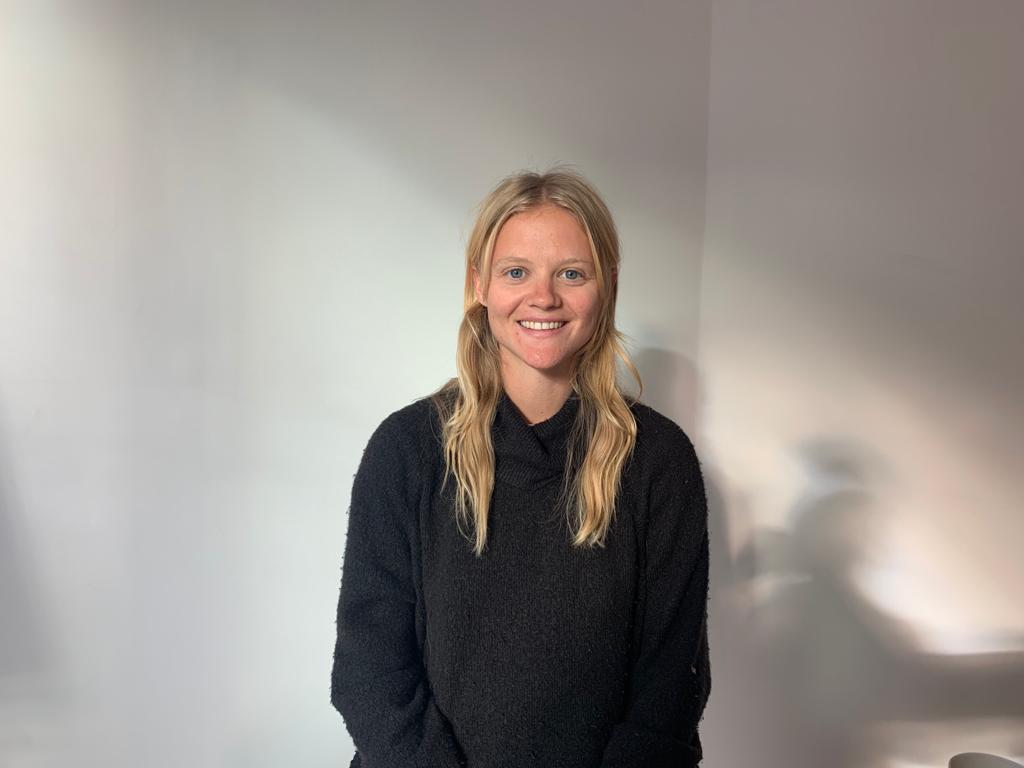
Georgia Heneageleft university in 2020 with the plan to become a journalist but is already widening her horizons
Leaving school or university and stepping into the category of the unemployed is daunting at best, terrifying at worst. As a generation born into a consumerist, perhaps even individualist society, we have been engineered to believe that our identities are irrevocably tied up in our career prospects: simply, we are led to believe that what we ‘do’ with our lives is central.
To some extent, that’s true. Jenni Russell recently wrote in a Times article: “Work is how society allocates so much of what we seek: money, status, social networks, mental challenges, companionship, prospects, marriageability, hope.” It’s hard to argue with that.
“Journalism – and print journalism, in particular – was a volatile and constantly shifting industry even before the pandemic.”
But placing our work life on a pedestal can be damaging to the process of finding a job in the first place. There is overwhelming pressure on young people to achieve great things early on in their career and to hit upon the ‘perfect’ job straight away. This pressure can be stultifying, and creates an atmosphere of dog-eat-dog competitiveness which can hit hard as you enter the jobs market.
This has certainly been my experience as a postgraduate seeking an entry-level job in journalism: even at higher levels, it’s a ruthless and merciless industry, as seasoned journalists remind me all too often. As a graduate, that’s especially so.
Journalism – and print journalism, in particular – was a volatile and constantly shifting industry even before the pandemic. Now, newspapers are hardly hiring at all, and the few roles advertised are fiercely competitive.
That means that more and more journalists are forced to go freelance and accept a paycheck that is reliant on the next available commission. Much of the advice that I’ve been given has focused on freelancing, a process which can be demoralising and difficult for a little-known journalist finding her feet in the Grub Street world of the press.
The best advice that I have received so far has been to relax and remember that most careers are not a linear path to success, and that the concept of a ‘job ladder’ is a myth.
The direction of my career has altered slightly as a result, and I am now seeking the safety of a stable job and income. Having taken a moment of self-reflection, I realised that my knack for writing and researching and my interest in the big ideas shaping our world could land me a job which had similar characteristics to journalism, but which didn’t have to be confined to the industry.
I have now pooled my skills, values and motivations, and decided to broaden my job search to include the media as a whole and the publishing industry, which has resulted in my first interview with the How To Academy, an organisation which hosts talks and debates from some of the most influential speakers in the world.
The best advice that I have received so far has been to relax and remember that most careers are not a linear path to success, and that the concept of a ‘job ladder’ is a myth. Careers are twisting, fickle journeys, with unexpected bumps along the way which, once you’ve traversed them, come to look necessary in retrospect. Imagining my future in this way is liberating. It loosens societal expectations to dive head-first into the ideal job, and opens up the possibility of finding jobs which may not have been immediately appealing.
If I look at the data, I realise the scale of my challenge. The Office for Budget Responsibility reckons that unemployment more than doubled in 2020, and that 3.5 million are now affected. For young people entering the jobs market, this is disastrous. High levels of redundancy continue to mean that graduate-level or school-level jobseekers are now competing with a pool of skilled workers with years of experience and expertise under their belts.
It’s true that there are silver linings. For instance, the global transition to a remote-working culture and the development of the ‘gig economy’ may be what the future of white-collar working in a post-pandemic world looks like, and may provide more opportunities for those without work. Research has tended to find that working from home can have a significant positive impact on workers’ mental health and well-being, which in itself can improve productivity. A paper published in 2017 in the American Economic Review found that workers were even willing to take an 8 per cent pay cut to work from home.
But frankly, I find that cold consolation. The prospect of not going into an office every day strikes me as unnerving. The routine of commuting and mixing regularly with colleagues is attractive to me, and I don’t want to miss out through no fault of my own.
It has also been argued that the pandemic, for all its setbacks, presents an opportunity to rewire the world of work. Though this may be true for seasoned white-collar workers, at what cost does this come for those uneasy newcomers entering the workplace for the first time?
Georgia Heneage is an Oxford postgraduate and freelance journalist
Sophia Petrides outlines how to tackle a hidden problem within our society
Where are we with new talent? As we know, 24-39 year-olds have become known as the “hopping generation”, on account of the fact they tend to change jobs frequently. This is causing problems within organisations because of the high cost of employment, which includes high costs for recruitment and training and development. That’s before you even take into account the loss of knowledge within an organisation from high employee turnover.
In fact, job-hopping is costing the UK economy an estimated £71 billion and the US economy $30.5 billion annually, according to Gallup. The cost for employing someone new into an organisation is an average of £11,000 per person in the UK and $20,000 in the US.
So what accounts for this trend? First, it’s a question of annual remuneration and promotion in an era where middle-ranking jobs are declining. Technology means we don’t need so many middle managers, project managers and administrative jobs. That means there’s often little hope of promotion within organisations.
Nowadays, if you want a salary increase or a promotion, you need to leave the company and apply for another job. I experienced this situation first-hand many years ago, when I was leading a business within investment banking. Even though I was in a director role, the excuse I was given for not being promoted was that the organisation had surpassed the number of director promotions for that year and I would have to wait for another year. Following this conversation, I started working on my exit plan.
But it’s not just the money. There’s also a clear lack of respect and authentic communication from leaders and management. Today’s organisations often fail to create “safe” environments, where people can openly express their ideas without judgement.
In order for leaders to retain and attract new talent, they need to demonstrate empathy and compassion – a vital ingredient when it comes to humanising workplaces. In addition to that, visibility is important: today’s leaders shouldn’t let their workforce face adversity alone. This must go hand in hand with authentic communication, and clear training and development programmes.
In 2020, we have seen a surge in businesses collapsing and ongoing redundancies within organisations. All this has pushed global unemployment to record high. The good news is that once the economy starts to bounce back, we are going to see an increase in talent hiring. Even so that still means organisations will lose their talent to other organisations, and experience a drop in productivity in the process. Leaders need to act now, by investing in learning and development, and by deploying the wisdom in the older workforce to nurture talent.
Demographic trendlines also need to be taken into account. Birth rates are decreasing over the last quarter century, so much so that we’ve now reached a 20-year low. This means in turn that less talent will come into the future market. It also means we need our middle-aged workforce more than ever to stay in jobs and support the economy by contributing towards taxes for the financial support of the older retired generation.
So now is not the time to stop hiring the 50+ age group or to be pushing towards early retirement, as some professional services have the tendency of doing.
This issue of organisations failing to hire certain age groups is causing another ripple effect which has led to the increase of mental health difficulties. This is a global problem. Since Covid-19 struck, mental health has taken secondary priority, and it’s costing global economies billions. In the UK, the annual estimate of loss is £34.9 billion and in the US $53 billion.
Another group we need to take into consideration for the ongoing growth of our economy is returning to work mothers. They are insufficiently supported by organisations, even though they’re a huge asset. During times of adversity, they’re able to support leaders by staying close to employees and nurture them through the challenging times by putting into practice their agility, adaptability and resilience – traits they’ve learned and enhanced during motherhood.
In order to achieve a smooth return of women back into the workplace, organisations need to create appropriate training and development programmes. These need to build trust and respect, develop technological skills and also instigate clear communications around project management and deadlines.
There’s a lot to do. But if we’re successful, it will be a recipe to inspire significant growth in the global economy.
Many people have started selling items on eBay during the pandemic, offering everything from hand-made crafts to vintage clothing. Statistics from eBay show that the number of self-made millionaires on the platform has risen by 35% over the last year alone.
For most, eBay is a part time job. For Sam Clifford, it has been his full-time career for five years.
Sam began his eBay business when he was 15, selling CDs of tips and tricks for the video game FIFA at £2 each.
“I had always done this as a side-hustle, which is the reputation the job has,” Clifford explains. “When I was 23, I got kicked out of my other job and said, ‘Right, I’m going to do this full-time’.”
From that point on, Sam dedicated his full attention to his online business. He mainly sells smaller wholesale items and bases his product selection on current trends and market research.
“Ages ago a video of a woman laughing in a carpark wearing a Chewbacca mask went viral. It was just her wearing this kid’s mask, but I knew straight after that everyone would jump on eBay to get that mask,” Clifford continues. “As stupid as it was, I knew there would be a significant, instant demand for it.”
“I could list my sock on eBay for £30, but that doesn’t mean it’s worth that
Clifford fluctuates his prices based on demand the same way that airlines change ticket prices. He checks the prices of sold items on eBay to get a basis of what items are selling and what they are selling for. He warns against basing prices on current listings.
“One mistake people make a lot is they’ll go on eBay and see things listed for higher prices than they’re worth,” Clifford says. “I could list my sock on eBay for £30, but that doesn’t mean it’s worth that.”
When items are listed on eBay, an algorithm decides which listings will appear first in a search based on the rating of the seller. Clifford says that speed is the key to keeping that rating as close to five stars as possible: “You’ve got to be hot on it. When I first started I was delaying, doing it here and there, and that reflects badly on your account.”
He also recommends posting items and answering inquiries within a day, as well as offering free first-class postage with every sale.
Increased demand during the pandemic led to such a surge in new listings that many had to be removed to ensure security and disallow price gouging. Clifford has witnessed these effects of Covid-19 on the market first-hand, but he is not discouraged by the new competition. “The market has gotten a lot bigger, but there are a lot more buyers as well. People are sitting at home bored with nothing to do. There is more competition, but I think there are at least threefold more buyers.”
“If your mind and your heart are in this job then you’ll succeed
Making a full-time career through eBay is an attractive prospect, but Sam warns that the dedication it requires is not a good fit for everyone.
“It’s freelance work. If you haven’t got the drive and motivation to do it, it’ll end up fading out in about six months,” Clifford says. “I’m big on mindset and mentality – the mind controls the body, so if your mind and your heart are in this job then you’ll succeed.”
Clifford’s success came as a surprise to many people in his life, and he initially faced pushback. He believes that anyone with the right amount of self-motivation and passion can succeed in the job and encourages people to follow their passions.
“People who get joy out of negativity will put you down and say it’s not a real job, but I’d rather fall on my own sword than anyone else’s,” Clifford says. “People have this stigma that what you enjoy can’t be your career, but that couldn’t be further from the truth.”
Photo credit – By Cristiano Tomás – Own work, CC BY-SA 4.0, https://commons.wikimedia.org/w/index.php?curid=103669478
The business world is changing all the time. To the layman, and even to many leaders, there can be a bewilderment when it comes to the latest terms: AI, crypto, blockchain. Ignorance can create a reluctance to engage.
A case in point is the ubiquity of the word ‘data’. We hear it all day long: ‘big data’, ‘send me the data’, and the idea of an organisation becoming more and more ‘data-centric’.
So what does this mean? It’s simple, really. It means that organisations have increasingly come to see data as being at the core of forging strategy. Such an approach used to be the domain of the largest corporation, which were the first to employ data teams. Nowadays, as technology evolves, start-up companies build their strategy from scratch – and they do it around data.
That means it’s a widespread profession, with its own ‘power list’ of the 100 most influential practitioners. One such award-winner is Craig Civil, Head of Data Innovation, R&D and Analytics at Lloyd’s. Civil joins me for a Zoom call from his home in Suffolk, and is relaxed and friendly throughout.
As it turns out, the team Civil oversees is relatively small (‘there’s three people in my team plus me’). This size of team enables Civil to be nimble across Lloyd’s operation. “It’s a deliberately decentralised model,” Civil explains, “ensuring that we collaborate with all the data people across the organisation. We are the conduit that receives the idea. We then find the right people to partner with – whether those we actually employ or people in an external organisation.”
Civil has had a long and varied career. His first job out of university was with the East Anglia Electricity Board in the archive department. It was an early opportunity to shine. Civil realised that there was an opportunity to move all the paper information stored for local primary care contractors – things like surgery opening times – from paper records to electronic records. By having all that information kept in, to use the data jargon, a “Structured Query Language (SQL) database”, it could be made easily available to the general public. Civil was able to overlay geographical information to illustrate where people’s nearest surgery was within certain driving distances.
Here we can glimpse data’s perennial relationship to transparency – and, more simply, to making things easier for people. ‘Doctors, dentists, pharmacists, opticians. They’re very location-focused, obviously,” Civil recalls. “I found myself starting to use Geographical Information Systems (GIS) more and more.”
That made Civil a natural fit for the healthcare sector. He went on to manage a department in the NHS, before moving to US-based healthcare analytics company Health Dialog, which was seeking to enter the US. Civil recalls that period with affection: ‘There was only a handful of us to start up the organisation in a rented office in Cambridge, and it was really successful. We were doing cutting edge things in terms of how you use data analysis to create a product store for the NHS. But it was always kind of a struggle to make money, because the US model of healthcare with insurance is obviously very different to ours.”
In time, Health Dialog was bought by Bupa. Civil was by now very experienced and using state of the art population health algorithms and incorporating these into the world of health insurance. It was this which led him to the specialist insurance market, joining Lloyd’s of London in 2016.
How did he make the switch? “I felt like I’d done enough in that industry and wondered whether statistical models could be applied to a different industry,” Civil says. “I thought I’d try something completely fresh and new – and lo and behold, the opportunity at Lloyd’s popped up. I thought ‘Let’s see what happens’.”
Over the course of Civil’s career, data science has become one of the most sought-after careers, and has changed substantially. What hasn’t changed is the need to gather data, understand what customers actually know and what the end outcome could be.
At the beginning of Civil’s career, his work would probably not have been labelled “data science” – it was really just “stats”. That’s a measure of how much the sector has changed. Citing the example of the current Covid-19 vaccination programme involving the ability to target particular age groups in particular locations, Civil makes a telling remark: “Data science is so much of what we do now. It’s part of our daily lives.”
So what are the qualities needed to succeed as a data scientist? “You need a blend of skills which complement each other,” he explains. “First you absolutely require pure technical skills such as coding in R or Python, together with an understanding of various statistical models and their pros and cons.”
But in addition to these skills, you need something more important: “You need the mindset of continuous learning because all these technologies evolve so fast,” Civil continues. “Data scientists innovate, are able to communicate the results and present what is often really complex analysis in a way that engages an audience.”
That sounds a lot. Does every data scientist really need all those skills? “You can never expect every data scientist to have all of these skills, as long as the team is built of people who collectively cover all these angles. This comes about more effectively through having diversity of background and thinking within teams to encourage this. We take that aspect very seriously at Lloyd’s when building teams.”
I get the impression that that’s partly what makes Civil so successful. Craig puts down a great deal of his success to the fact that he has had inspirational people to work with who have become his mentors. He is mindful nevertheless that some organisations are more forward-thinking than others when it comes to the notion of being “data-centric”.
So what’s his advice to data scientists who are struggling to gain traction with senior leadership? “It’s important to seek out across your organisation people who do similar work and have similar interests to yourself. You need to nurture them so that they eventually become your champions.” The goal, Civil says, it to build a “data community”, which becomes visible to the whole organisation: “If you do really neat and innovative work in an engaging way, people will think ‘I’d love to be part of that’.” In addition, you need to “bring your analysis to life and be succinct, and show that what you do has a positive impact on the business, such as making operational saving or reducing operational risk.”
So what might that involve? Civil advocates creating a “data strategy navigator” and tying that to business outcomes. In doing that, it helps to look ahead by three to five years. “My approach is to take each business objective in turn and put a “data lens” over it. It’s a matter of aligning business objectives with data objectives and considering where the best ‘bang for the buck’ lies. As well as covering these operational outcomes, you should also have a longer-term objective to create a “data culture” across the organisation as we’ve done at Lloyd’s.”
As part of its digital transformation programme, one of Civil’s key achievements at Lloyd’s is his creation of a non-technical data science course for his community and beyond, which has proved very popular across a wide range of people and roles at Lloyd’s. “It’s a non-technical course created with the Southampton Data Science Academy. It has an eight-week curriculum with up to 60 staff being trained per year in three “cohorts”. The course enables staff to feel more comfortable in technical data conversations, to convey quantitative information in an engaging “data visualisation” and to begin to identify use cases for data science from their own team that they might not have considered previously,” Civil explains.
So has it been successful? “We’ve received very positive feedback from Lloyd’s course attendees and we’ve now made the course available to market colleagues as well after requests to enrol.” In addition, Civil has added a more technical data science module involving technical insights and the use of Python for a smaller subset of delegates, together with a new “AI for business” course.
It all amounts to a vivid example of how a small core team can empower many others within a large corporation at different levels of technical involvement to enable Lloyd’s to progress on a truly “data-centric” journey. Civil has plainly achieved much by drawing on his early career skills to understand the capabilities of data and building teams within public sector and then commercial environments, from small start-ups to large organisations.
It’s also a testament to his success that he has been able successfully to align business objectives to data objectives by looking at issues through a “data lens”, consider the skillset and tools needed to move businesses forward, share and disseminate his knowledge through training, enable data literacy amongst staff and be able to engage like-minded people within to make this all happen.
To mark Mental Health Week, Melissa Nobile, a Psychologist at The Kusnacht Practice, discusses her experiences of offering care to young people during the pandemic
Mental health has become such a ubiquitous phrase in our society that it is almost verging on cliché – all the more reason, then, to explore in detail what we really mean when discuss it. The best way to do that is to talk with someone who really understands it, and deals with these issues on a daily basis.
Accordingly, I Zoom with Melissa Nobile, a Psychologist at The Kusnacht Practice in Switzerland. Nobile’s academic background is at the University of Geneva and the University of California in Los Angeles; she subsequently acquired additional training and clinical experience in Thailand and Europe.
Nobile’s role at The Kusnacht Practice is particularly relevant for Finito World readers. Nobile is especially engaged in the practice’s Youth Programme, with most of her work conducted with patients between the ages of 13 and 25.
For parents, this has been an anxious time. It is difficult to unpick pandemic-specific behavioural changes from developments that would probably have been scheduled to happen anyway, with or without Covid-19. Does Nobile have any advice on that score? “As a parent, it’s okay to see just a little change in your child – signs might include a bit more frustration,” Nobile explains. “But if you’re getting to the point where there’s a really concerning change, then you should seek help.”
So how do problems tend to manifest themselves? “We look for areas where day-to-day functioning has altered,” Nobile continues. “It could be that the child is suddenly really scared of going to school. At the beginning of the pandemic particularly, children were scared of losing a parent.”
More generally, the pandemic has been an onslaught on our sense of pleasure in the world – that’s true for young people too. The death tolls reported daily on our news sources chip away at our ability to be joyful. Is there a danger that we’ve become a morbid society?
Nobile says that the impact of that is especially significant on those who were already vulnerable: “In those who are predisposed to struggle with anxiety that’s obviously a problem. But it hasn’t been confined to those people: it’s also something we’ve seen in CEOs and high achievers.” That’s partly due to the uncertain time scales which are at the centre of what’s been so challenging about the pandemic: “It’s stressful for everybody. Nobody likes uncertainty for too long, as we have a sense of loss of control if we’re unable to plan for the future. A lot of people end up turning off the TV as they can’t take that morbidity.”
The danger, of course, is that a stressed-out CEO, however wealthy, is not going to be stressed out in a bubble – in the family unit, that stress is likely to be catching and affect younger members of the family. The Kusnacht Practice is careful to see the wider picture of what may be causing strain in a young person. “We’re very focussed on the stresses that CEOs are under. It’s the difficulty of having it all on your shoulders. We have to make sure that what the parents are feeling doesn’t spread into the life of the teenager.”
The Kusnacht Practice is a pioneer in the field of ‘individualised treatment’: “Our approach is tailor-made to each young person coming in,” Nobile explains. “In group settings, the patient comes in and has to adapt to the programme and the setting. It doesn’t work for a lot of people. What we do is listen to the person coming in, and examine their specific problems – whether it be a specific symptom, or pandemic struggles, or something else altogether.”
Crucially, this individualised approach is matched by an equally individualised family programme. “We’ll get as many people as possible on site whenever possible – siblings, parents, grandparents, even nannies. They’re going to go back home, and back into the family system, so changing someone without changing the rest of that family system usually doesn’t work.”
Nobile reports an increase in cases where she’s needed to orchestrate a family therapy approach. “I’m doing more and more sessions where I do parental coaching around a situation. This will sound simple in theory but in truth, it’s quite complicated. In some families it’s about going back to really good communication. Uncertainty will give room for people to imagine the worst. What we need is for parents to explain as much as possible – and in words adapted to a child – what is going on. If you don’t do that, a child may construct more catastrophic scenarios than is actually the case.”
Nobile exhibits a profound understanding of her clients: “Children or teens are antennas,” she says. “Given that, it’s important for parents to say: ‘Listen, this is a difficult time but we’re going to be okay’.”
So what can we all do to improve our domestic lives? Nobile advises focusing on specific family rituals so that no member of the family in question is isolated. “It’s important to have that time where you still cook or go for a walk together. That will always be beneficial. I’ve had a lot of teenagers lately where they’ve found experiences in the pandemic which are very enriching. Some have come out thinking, ‘Even when things seem terrible, I’m able to cope with it and I can talk to someone’. Some have built that vital resilience.”
Even so, the long-term picture remains uncertain, and that creates another layer of problems. “There’ll be a minority group for whom difficulties will persevere,” Nobile says. “There’s the young student who maybe acquired a gaming addiction in lockdown – that will take time to treat. Or else there’s those young people whose parents have lost their jobs at this time. In those instances, we’re discussing a more long-term impact.”
Career issues arise again and again, according to Nobile. “During the pandemic, we had a lot of time on our hands. That creates a lot of existential questioning, perhaps among young people who were already predisposed to that anyhow.”
Fortunately, The Kusnacht Practice has a remarkable range of resources at its disposal. Business coaches and mentors and psychotherapists are on site, and Nobile makes sure her clients are able to explore their interests with a view to shaping their future.
Given The Kusnacht Practice’s rarefied level of treatment, a lot of the young people Nobile sees are dealing with issues related to having successful parents. “If you have a successful parent, what does that mean for you? That’s not always easy to figure out. You might have a lot of resources, and accordingly, a huge number of choices. Paradoxically, that can make you petrified. For every door you’re able to open, you’re going to have to close so many others. That can freeze you in place.”
So how does Nobile manage that? “That’s what psychotherapy is all about, figuring it out in the context of each person’s life story.”
One might think that returning to the family unit after treatment might be difficult. But Nobile gives a nuanced reply. “It’s a minority of the youth we receive who come to us because they want to. Most of the time the parents in question have been very concerned for a while. But by accepting the need to come here, they’re sending a signal: ‘Yes, I have a problem’. And admitting the need for help is incompatible with the normal developmental process of youth who strive for independence. After a few days they however usually realise that this is quite a nice place! They can set goals, work out problems they are facing and learn new skills – and find their voice.”
And returning to the family – is that fraught with danger? Nobile doesn’t see it that way. “We like to see it as an opportunity. Ultimately, life is not with us – it has to be back home. But once clients leave us, we provide daily support with virtual sessions with the main therapist and they can always come back for ‘recharge weeks’.”
It has been a difficult year for many, but it creates optimism to find people like Nobile working on the front lines, committed to the healing which all of us may feel we need after the tribulations of 2020 and 2021.
Nobile was to talking to Christopher Jackson. Go to https://kusnachtpractice.com
According to the British Horse Council’s Manifesto for the Horse the equestrian industry in the UK provides full-time employment to over 250,000 people and is the second largest rural employer after agriculture. It’s also a growing industry, contributing around £8 billion a year to the economy. Employment opportunities stretch far beyond riding and caring for horses. For example, the industry incorporates marketing, betting, training, retail and veterinary sectors that offer myriad opportunities to work with and for horses.
For those acquainted with the equine world this may appear self-evident, but for those with a budding interest or considering a career change the British Horse Society (BHS) helpfully breaks the various sectors down in their ‘career pathways’: Breeding & Stud; Business Management; Coaching; Tourism; Dental; Farriery; Journalism, PR & Photography; Mounted Forces; Nutritionist; Racing; Saddlery; Sales & Marketing; Trainer and Veterinary Medicine. I spoke to some of the various leaders of these sectors to find out more about the opportunities in their professions and where the industry is headed as restrictions are lifted.
A spokesperson for the British Horse Society (BHS) told me that “like with all industries affected by the pandemic, it will take time for the equine industry to get back to business as usual. With people having more spare time we saw an uptake in the number of individuals taking part in horse riding, prior to the second lockdown. This, along with people embracing the outdoors and new hobbies, is a positive sign that the industry will continue to thrive.”
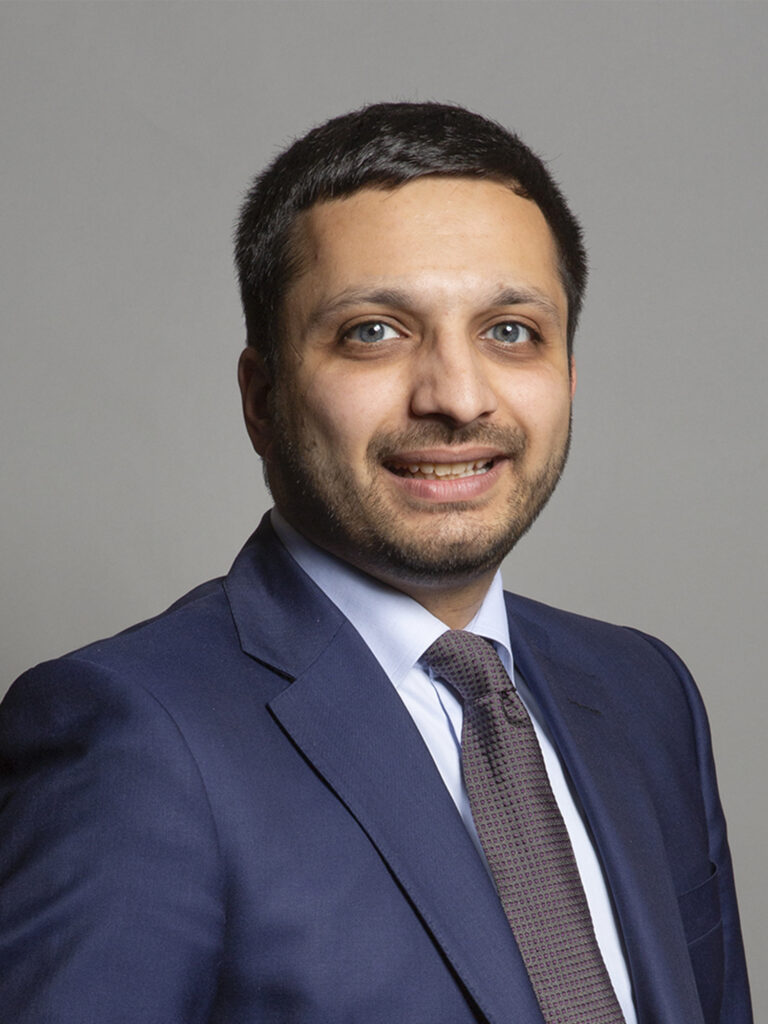
Saqib Bhatti MBE MP is the Chair of the APPG for the Horse that, according to Bhatti acts as “a voice for the horse riding industry in the United Kingdom” to “give a unified voice to ensure industry concerns are heard in Parliament.” He tells me that recently their work has dealt with issues thrown up by the lockdown such as the operation of riding schools during restrictions and the classification of vets as key workers.
Indeed Bhatti’s APPG is now largely focusing on the post-Covid landscape. “We face a myriad of economic challenges and ensuring employment opportunities are available in the equestrian industry will require cooperation between industry and government.”
Saqib Bhatti MP chairs the APPG for Horses in Parliament
Indeed, aspects of the equestrian industry have been hit hard by the pandemic. Last March, the iconic Cheltenham Festival was given the government green light to go ahead despite the escalating coronavirus crisis and has retrospectively been deemed a possible superspreading event. Race meets, sales and other large income generators all over the sector were closed down for months.
Yet, Bobby Jackson, marketing executive at Tattersalls sales in Newmarket claims that bloodstock, sales and marketing has remained relatively stable. “As our side of the industry deals directly with racehorses, COVID-19 hasn’t really affected the day-to-day care of them and therefore employment levels have remained fairly steady” he says, adding that “investment levels at the Tattersalls sales have been positive during the pandemic and would infer that employment levels should remain strong in the long term too.”
Claire Williams, Executive Director of the British Equestrian Trade Association (BETA) agrees, telling me that “to be honest, the trade and retail has come out of COVID quite strong. Certainly my retailers and manufacturers are coming out probably almost with higher turnovers than they were coming in [to the pandemic]. We’ve seen a real boom and equestrian sales over the last year. BETA is recognised as the official representative body for the trade sector of the equestrian industry, representing over 800 companies in retail, wholesale, manufacturing and other service agents.
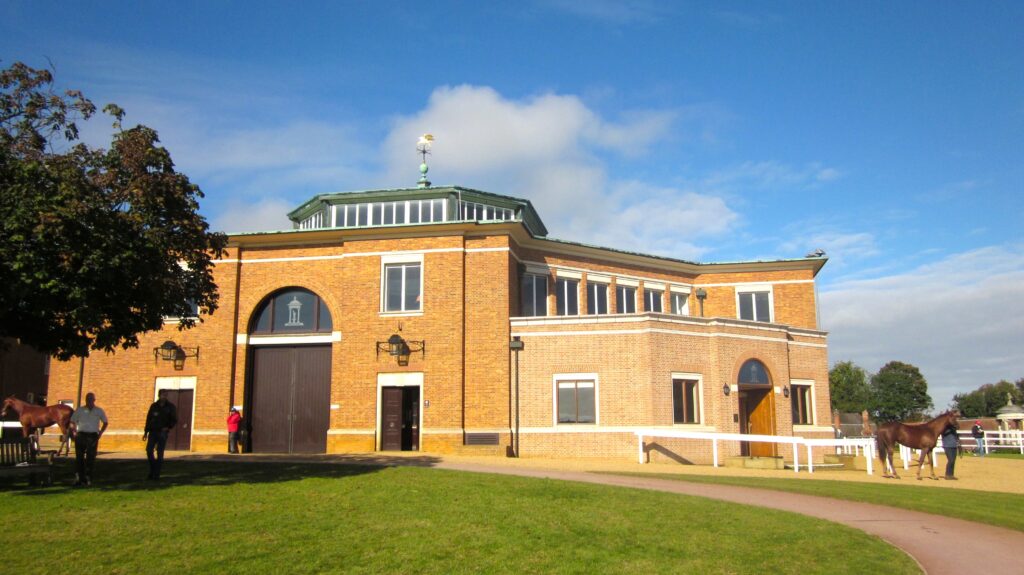
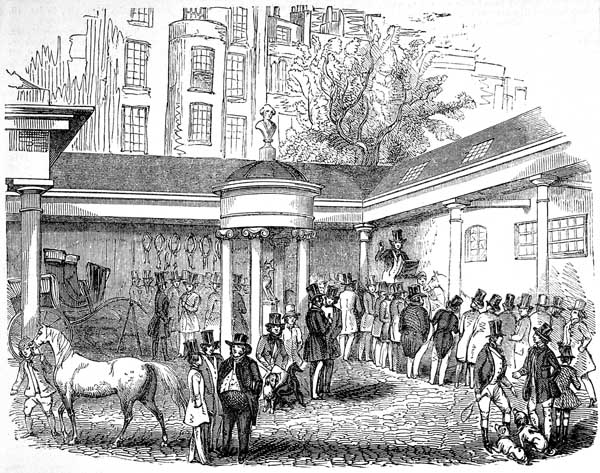
The Tattersalls sales ring at Newmarket (Edumark)
Williams is keen to emphasise just how many opportunities there are across the industry, but particularly in the trade sector. “In terms of the trade side, you’ve got everything from saddlers, to photographers, or working for a large manufacturer. You’ve got the range of nutritionists, assisting in the development of feed or to act as advisors to the customers.” Equine nutrition is constantly responding to developing research so there are academic opportunities as well as client-facing roles.
“Then you’ve got business management type positions and companies, whether that be product development, market development, marketing and sales,” Williams adds. She is also enthusiastic about the creative opportunities available, such as in product design for both horses and riders, from hat silks to winter rugs.
There are also “a lot of PR opportunities” both in-house with large companies and dedicated specialist firms such as Mirror Me PR, as well as “opportunities for more science-oriented people.” The scientific primarily relates to veterinary medicine and pharmaceuticals but Williams also mentions that there are a great deal of R&D (research and development) opportunities with companies, such as those creating supplements.
Further to this there is the management and events aspect of the trade which can be a fruitful career for the self-employed as well as those that want to work at events corporations. However, events businesses have been one of the hardest hit by lockdown and restrictions on gatherings.
BHS’ spokesperson agrees with Williams about the abundance of employment options surrounding horses, saying that working with horses will provide “a strong foundation of skills and knowledge to support any career, or career change, in the industry. It will provide you with many transferable skills such as communication, assertiveness, organisation, time-keeping, resilience and confidence” adding that, “in any career connected to horses, from journalism and graphic design to saddlery or farriery, a foundation knowledge in complete horsemanship is recognised throughout the world as a huge advantage.”
The great AP McCoy riding Straw Bear to victory in 2006. Career opportunities are rife in PR, with dedicated firms such as Mirror Me Pr (Citrus Zest)
Jackson too expresses the variety of opportunity within the marketing and sales sector of the equestrian industry. “In this side of the industry, if you want a hands-on job with horses you can do it, if you want an office job you can do it, or if you want a job combining outdoors and indoors then you can do it! There are roles for all talents.”
Jackson describes how the range of jobs within sales and bloodstock itself is huge. One can work on a stud farm and bring life into the world during the foaling season, or alternatively work at an auction house like Tattersalls and help fulfil people’s dreams when they sell a horse for a life-changing amount of money. “This side of the sport will give you moments that you will never forget,” he tells me.
Yet despite the plethora of opportunities the equine industry carries an unfortunate haze of elitism over it as a profession. It is associated with royalty and high-net worth investors, and while both hold essential roles in the sector, this perception can be an initial barrier to people considering a career in the sector.
The BHS told me that “there is an inaccurate perception that equestrianism is an expensive industry to get into. While it is true that owning a horse can be expensive, you do not have to own one to be able to start your career.” Jackson agrees: “The ‘sport of kings’ brings with it positive and negative connotations.” He tells me, “some people think that you need to have family in horse-racing in order to get a job in it. Incorrect.” He also stresses that his own family background is not connected to racing.
Williams disagrees that the industry is elitist at all. “When we look at our market research, [those with] lower to medium income levels actually comprise over half of the riders in the marketplace. It may be perceived as elitist but really I don’t believe it is otherwise we wouldn’t have 1.8 million regular riders.”
The winners’ enclosure at Cheltenham. Is horse-racing an elitist sport? (Winners’ enclosure; Carine 06)
Jackson also explains that “unlike most industries, travelling the world and doing multiple jobs in your early career in order to get as much experience as possible isn’t seen as a negative in horse racing. So, by working hard, getting your hands dirty and proving your talent anybody can carve a successful career in our industry and absolutely love it.” This is a point of encouragement for those considering a career change or those yet to finalise their career choice after finishing studies.
Schools, colleges and further education institutions don’t tend to include opportunities to work with horses in the usual career days advertising medicine, the law and finance. Yet there are initiatives such as Racing to School which aims to educate school children on the activities and business of running racecourses. Jackson argues that such initiatives could be broadened to the bloodstock and sales side of the industry.
He adds that at Tattersalls, children from Newmarket Academy make an annual visit to Book 1 of the October Yearling Sale and “it would be wonderful if other schools around the country were able to do similar at stud farms, for example.”
An industry with pedigree: Tattersalls was founded in 1766
Bhatti tells me that he agrees that there are challenges to those starting out in the equestrian industry. “The APPG has found that several employers feel that students coming out of education and moving into the sector lack some practical skills or experience and it is important to encourage as much hands-on experience as possible.” One solution he suggests is “working with schools to ensure placements in riding schools and other industry-related institutions become available for students.” A large part of the APPG’s work is with educational organisations such as the BHS to make people aware of opportunities within the industry.
Williams adds that “there are a lot of opportunities for young people such as apprenticeships. For example, we’ve got gateway stages with Kickstarter at the moment. I’ve got something like 40 employers with positions they’re creating specifically for young people.”
The equine industry seems to have remained relatively stable during restrictions, and even those elements such as racing and events that have been adversely affected are set to bounce back. Despite an air or exclusivity there is such a range of job opportunities within this industry and as Williams says “to work in the equestrian trade you don’t necessarily have to be horsey. You don’t have to have an equine degree to get a job in the equestrian trade at all. What we’re looking for is people showing that they’re capable, they can write well, they can analyse and they have the business skills that we need for business.”
The BHS spokesperson offers equal encouragement: “the great news is that you can pick this up at any age or stage in your life – you are never too old to fulfil your passion for horses!” Jackson concludes with enthusiasm “what you will also find is that everyone is doing what they love – something I count myself very lucky to say – and this is a great leveller.”
Veteran guitar tech John Armitage shares his thoughts about life on tour, professionalism, and getting started in the industry
The music industry conjures up images of spotlights, adoring fans, and late nights on the tour bus, but behind the scenes there is a world of technicians who keep the show running smoothly.
John Armitage began repairing guitars in 1978. Since then, the job has taken him all over the world with groups such as Iron Maiden, King Crimson, and the Manic Street Preachers. Now he operates Guitar Hospital, which has workshops in London and Whitstable.
Armitage got his start in guitar repair at 17 when he saw a problem and took the initiative.
“I started off as a drum tech for bands, then everyone went to America and didn’t take the drum techs,” Armitage says. “I was playing bass in a band by this point and they said, ‘I’ve got a guitar guy who can’t come’. I said, ‘I can do that’.”
Armitage also recalls a show in New York where the guitar player requested a new nut – a piece of dense material that the strings rest on at the top of the neck. “I didn’t know what a nut was, but I headed down to Sam Ash (music shop) and said, ‘I need a nut for a Fender Strat’.”
The man behind the counter asked him, “Do you want pre-cut, bone, carbon, brass, graphite, what gauge do you want it cut to?” Thoroughly confused, Armitage told the guitarist that the store had run out of the part he needed.
Taking this experience as a sign that he needed to learn more, Armitage took a trip to his local library where his excitement led him to some light crime.
“There was this big tome of a book with pictures, a real 70s masterpiece, and I wanted it forever,” Armitage recalls. “So I put it in a garbage bag and threw it out the window. It’s my eternal shame, I stole the best book because I was so eager to learn.”
Thankfully, there are other ways to enter the world of guitar repair. Schools such as Guildhall and the Totnes School of Guitar Making offer months-long traditional classes, while short workshops are a more cost-effective option.
Armitage advises people who are interested to “do a short course” to “get a taste” of the work, before committing to a more extensive programme. He also pointed out that business sense is every bit as important as technical skill.
“Knowing how to repair guitars is 50 per cent of it and knowing how to deal with customers and administrate your business is the other 50 per cent of it,” Armitage says. “I did a business studies course when I was younger which really helped me.”
Talking about the touring life, Armitage says that it is an incredible opportunity, even if it is not for everyone. “It’s about being constantly relocated, waking up never knowing where you are. It’s more of a young person’s game. It’s brilliant if you can get into it and cope with the constant relocation.”
A touring guitar technician will have their travel and accommodation paid for and can expect to be paid for every day they are away from home. The demanding, exhausting schedule comes with the benefits of free travel and unforgettable experiences.
“I have lifelong friends who I met in 1980,” Armitage says. “I met my wife on tour. There’s a whole world out there that you can see for free – but it’s not a vacation.”
According to Armitage, a good guitar tech on tour with an in-demand group can expect to earn £80,000 to £100,000 a year. If the touring life isn’t for you, base pay starts at about £30,000 a year according to Glassdoor. Armitage says that success in the industry is based on time served and word of mouth.
A touring technician needs to exude a sense of calm, confident control to be successful, and sometimes even take on the role of a counsellor. “I’ve listened to divorce stories, people going off the rails, you kind of have to be a sounding board,” Armitage says. “Nothing can phase you, no matter how weird the request is. They’ve hired you to take away their stress, not add to it, so you can’t buy into panic.”
After years on tour, maintaining and repairing guitars for bands on the go, Armitage decided to open his own repair shop. “I started the Guitar Hospital about 10 or 12 years ago. It was a side hustle then, because I was touring a lot more working for big bands. Gradually I knew I couldn’t do that forever.”
He describes his current day-to-day work in a peaceful way, saying that now, “It’s just me, a cup of tea, a radio, and a pile of guitars that need attention.”
Waterstones CEO talks to Georgia Heneage about the threat of Amazon, the pandemic and the future of the high street bookshop
Despite the number of obstacles which stand in the way of high street bookshops thriving, bookselling giant and CEO of Waterstones James Daunt is infectiously optimistic. His passion for the paperback and belief in the physical experience of standing in a bookstore is compelling, even over Zoom.
High street retail was stuck in a mire long before the mass closure of shops over the past year. The pandemic has, of course, been the final nail in the coffin for many shops across the country – apart from those like M&S, John Lewis and Next all of which, Daunt points out, have had the resources to pivot online and create “more modern and dynamic” systems. This response has placed further pressure on other businesses reliant on the footfall: “It’s a kind of self-perpetuating domino effect,” Daunt says.
Bookshops, one might think, have not escaped this vicious cycle. Daunt, 57, points out that they’ve also suffered from the government’s “perverse definition” of what constitutes an ‘essential’ shop, and been in direct competition with those that have been able to stay open and sell books, like WHSmith and supermarkets. Like the majority of other shops, Daunt warned back in January of this year that Waterstones faced closures due to continuously high rent rates.
But bookshops have also bucked the trend to some extent, both during the pandemic and pre-pandemic in what was sometimes called the slow death of the High Street. Daunt has been highly praised for leading Waterstones during what have been dark days for bookshops. And if the brief periods of reopening in the past year are anything to go by – and Daunt says they’ve been “very busy” during those times – bookstores have a better future than has often been predicted.
Other kinds of retailers, though, he’s far less optimistic about. “It’s a savage environment,” he says, ever the fierce competitor. “If you’re not on top of your game, then you disappear.”
Daunt is also keen to point out that this is the unique nature of bookselling. “I think the problem is that other retailers don’t have the same benefits as bookshops. At the end of the day, it’s actually not that much fun to go into a shoe shop or clothes shop. The great thing about a bookshop is that everybody likes being in it, whereas most other shops appeal to a narrow demographic.”
Despite the looming threat of Amazon on the book world, Waterstones has been “able to prosper” over the past ten years and sales have been gradually increasing. This, says Daunt, is mostly down to the experience created in-store, which remains the main point of differentiation between Waterstones and Amazon, with the latter providing neither customer-facing relations nor a warm “social” environment.
“Bookshops are nice places,” Daunt continues, “where you can find a book by recommendation or have the serendipity of picking up a book and thinking ‘Oh, I’ll read this’.” And the book you buy is “just better”. “I truly believe that there’s pleasure in walking out of a bookshop with a bag and feeling the weight of the book. You feel kind of virtuous – like you’ve almost read it.”
If Daunt had to point out the singular most important ingredient of bookshops, it would be the people. If at the start of the 21st century everything was about “cutting costs and getting rid of staff”, the past decade has been marked by reinvesting in the people of the industry. “The personality of your shop is, at the end of the day, embedded in your staff. If you invest in knowledgeable people who care about what they do, you’ll run a much better bookshop: this is what underpins the strength of Waterstones.”
And of course, this is another differentiator with Amazon, which has, in the past, been criticised for bad customer relations.
Waterstones dominates a quarter of the book market, and has been able to thrive in recent years. But what of smaller independents, who collectively hold a mere 3 per cent share of the market? “The good ones are actually in a better position than chains like Waterstones,” Daunt says, pointing to the backing such shops receive from their local communities. And again, it’s “survival of the fittest”: “If you’re good enough, and you genuinely create a nice environment, you’ll be fine. The rise of Amazon actually weeded out all the weak ones, and it’s the good ones that remain,” Daunt argues.
The other tech-oriented threat facing paperbacks is, of course, Ebooks. But if they surged in popularity around 2014, their retreat back into the shadows is testament to the difficulty of actually replicating the feel and texture of a book. “I can’t see how that’s ever going to be replicated in a way that also gives you all the other tangential pleasures that come with owning a book, or having a bookshelf- they are almost a diary of your life,” says Daunt.
The really powerful new trend permeating the book world is Audiobooks, which has boomed in popularity – especially amongst older readers, with downloads increasing by 42.5 per cent in the first half of 2020 alone. Daunt is now also CEO of Barnes & Noble, which Elliott Advisers bought in 2019 for a reported $683 million, and the firm has started to set its horizons on the medium, with the launch of its Nook 10 HD tablet.
Even so, Daunt doubts whether Waterstones will be able to follow suit. “The market share is tiny, because at the end of the day Amazon will always undercut. They invest much more, and they’ll always have the advantage of having created the market in the first place. Everybody else is just playing catch up.” He says that unless he can work out some way of “piggy-backing on the Barnes & Noble capability which, with different publishers and associated rights, will be complicated, Waterstones won’t be able to launch an audio subscription service.”
Despite all this, Daunt remains ever-positive regarding the prospects of the book world. “There’s still the majority of people will prefer reading physical books. I think you just leave Mr Bezos to make all his money, and the rest of us can just prosper at what we do.”
And if recent book-sale figures during the pandemic are anything to go by, appetite for reading is as voracious as it has been – if not more so. Daunt sees this as a pivotal moment for reading – a bit like the inception of the Harry Potter books, which changed many people’s book habits irrevocably and led to a “permanent elevation” of reading. “It may not stay at this level, but I’m optimistic it won’t fall back to the old level. I think there will be a permanent shift upwards.”
That the majority of soaring book sales during the pandemic were non-fiction titles points to the fact that people are thirsty to learn about the world around them- a world increasingly beset with existential issues and polarised political debate. People are “energized”, says Daunt, “and books play a massive part in that.”
Though for many the biggest single threat the world faces is climate change, Daunt says racial issues brought to the fore by the Black Lives Matter protests will be what people WILL remember of this year. How does he know this? “Our bestsellers last year were books essentially about race and inequality. And our market share as a bookseller was dramatically higher (up to 60%) on those issue-led books. People wanted to come into a bookshop and find out what works.”
Reading – and if we take Daunt for his optimistic word – bookshops, too- are a reflection of the interests, passions and problems of an entire society. Daunt puts it simply and exactly: “Books sit at the heart of what matters.”
Cryptocurrency is back in the news thanks to a recent jump in the price of Dogecoin – a currency which started as a joke.
In 2013, following the success of Bitcoin, Billy Markus and Jackson Palmer set out to create a new form of cryptocurrency based on a widely circulated internet meme featuring a picture of a Shiba Inu dog. It is now worth $34 billion (£24.6 billion).
Dogecoin owes much of its success to Elon Musk, who has called it his “favourite cryptocurrency”. Yesterday, Musk published a tweet which included a painting of a dog on a mountain at night with the caption “Doge barking at the moon”. This is in reference to the phrase “to the moon”, which is popular on internet trading forums as a way of describing the rapid price increase of a stock.
In the hours following Musk’s tweet, the price of Dogecoin jumped over 100% setting its new highest price ever.
Whether it’s Bitcoin, Litecoin, or DOGE, investors are flocking to cryptocurrency in high numbers. On Wednesday, the San Francisco cryptocurrency platform Coinbase went public, making the sale of Bitcoin and others more easy and mainstream than ever.
But if high-risk investing isn’t your cup of tea, there are other, more stable ways to make money off this phenomenon.
On the job search website Indeed, 230 jobs with the keyword “cryptocurrency” appear in London alone. These jobs come with titles such as Crypto Investment Analyst, Cryptocurrency Digital Marketing Lead, and Crypto Threat Analyst.
There are many ways into the world of crypto based on one’s expertise, but one of the most lucrative ways to break in is to understand blockchain.
A blockchain is a type of database which stores information chronologically and permanently, making it useful as a ledger of transactions which cannot be retroactively altered. Because it is stored across many servers, it is a decentralised database where no single entity holds the power to tamper with the data.
Bitcoin uses blockchain as the basis of its currency. By storing data across multiple networks, a nearly tamper-proof record of every Bitcoin transaction can exist. A modification to one server’s data can be cross-referenced with other servers to ensure accuracy and detect modifications.
According to Glassdoor, a junior blockchain developer earns £50,000 a year on average. With increased responsibility and seniority, this number can go much higher. A United States recruitment firm lists a salary of up to $175,000 (£126,673).
Even if coding isn’t your strong suit, there are jobs available in marketing, management, and communications – all related to cryptocurrency.
Dogecoin may have started as a joke, but now it most certainly isn’t. The low price compared to Bitcoin has broadened the audience of crypto, and the more people care about it, the bigger it will get.
The future of digital currency is uncertain, as are all investments. However, working in the cryptocurrency sector is already lucrative, and if the upward trend continues, its place in the world of finance could grow significantly.
In the first of a series of articles on jobs within the religion sector, Robert Golding delves into how Anglicanism has coped during Covid-19
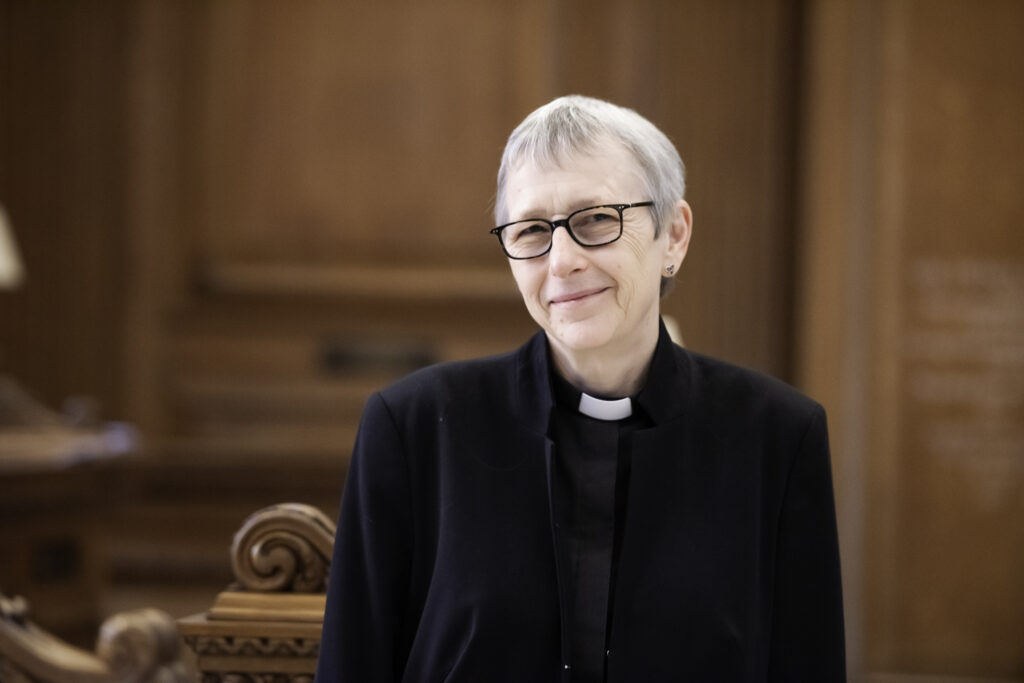
If you visit the Reverend Alison Joyce at the famous Wren church of St Bride’s just off London’s Fleet Street, there’s a decent chance that she’ll take you into the hub looking out onto Salisbury Court.
There you’ll find a stone memorial to a woman called Mary Ann Nichols, who is best known as one of Jack the Ripper’s victims. Bespectacled and intelligent – one of those Oxbridge-educated reverends who is also a theologian – Joyce points it out as I’m leaving. “It’s one of the things I’m most proud of. If you read the history books she’s a victim – but she was a member of this parish and we still owe her a duty of care.”
The plaque is moving. But you have to be here in Wren’s famous space to feel its full force. That’s true also of the memorial to journalists who have lost their lives the world over – among them James Foley and Clive James.
All our services have gone out online. Since March 2020, we’ve never missed a service. We can do that because we have an amazing choral tradition.
The Reverend Alison Joyce
“Covid has impacted on every aspect of our life as a church,” Joyce says. “The most challenging aspect has been the pastoral one. You add the Covid restrictions in a ministry where touch is very important – you need to be able to hold someone’s hand. We are a sacramental church which means things like communion are very important.”
The Biblical phrase which is most applicable to the pandemic is that which is supposed to have been uttered by Jesus upon his resurrection: ‘Noli me tangere’ – do not touch me. It’s still not clear why he says this, whether it is a warning of the physical ramifications of touching him – or as theologians might say, touching his ‘risenness’ – or whether to do so might be to incur some strange and insupportable physical sensation.
Alison Joyce has seen an increase in her international congregation at St Bride’s. Photo credit: Slater King
What’s certain is that the church has had to operate for the last year without touch. Like museums, they’ve been sent online; also like cultural institutions they’ve found a global audience which they might not have expected to encounter.
Joyce explains St Bride’s pivot to online: “All our services have gone out online. Since March 2020, we’ve never missed a service. We can do that because we have an amazing choral tradition. And of course the lovely thing about that is, we’ve got people contributing to those services internationally. There’s one woman who does readings from the States – so actually we’ve got an amazingly global congregation.”
So the Anglican church, which stretches back to the marital woes of Henry VIII, cannot avoid the need to think about tech provision. Last summer I visited St Lawrence’s in Ludlow and found myself immediately accosted by a warden extolling the virtues of the church’s new app. At St. Lawrence’s if you point at the famous misericords with your phone, you’ll see them flicker into interactive life: a medieval woman cooking, a knight galloping towards you.
The East End of St Bride’s
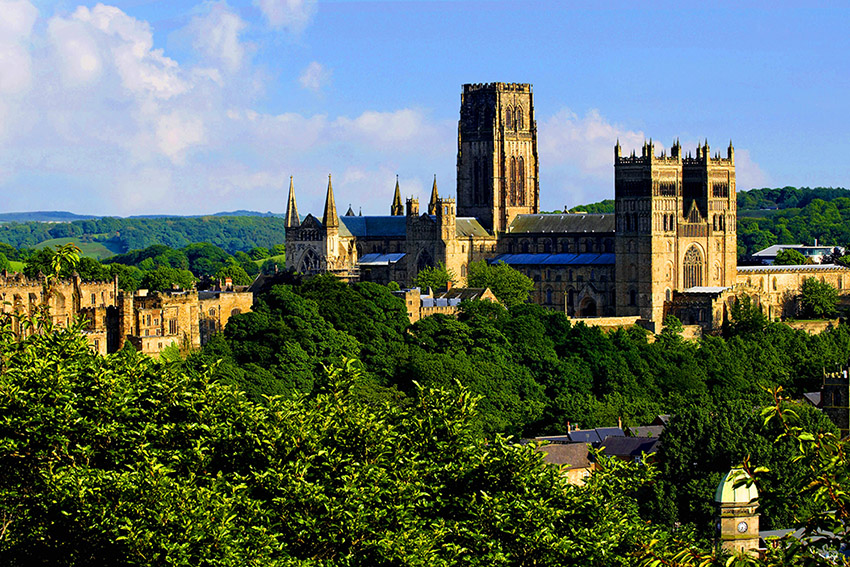
During the pandemic, I’ve often found myself wondering about those medieval structures which I most came to mind about in the days when going to them was part of a typical calendar year. Durham cathedral, my vote for the most beautiful building in Europe, where the remains of St Cuthbert are buried, at time of writing lies numerous Covid tiers away.
Interested to know how they’re doing, I catch up with Charlie Allen, the residentiary canon at the cathedral to find out how things have been. The cathedral also moved to online worship, and now has, according to Allen, “a global community of prayer of 340 members.” (It is a feature of writing about the Anglican church that the numbers discussed can seem heartbreakingly small).
That’s all well and good, but central to Christian experience for thousands of years has been the Eucharist. Allen concedes the problem: “It has been impossible to engage with the subtleties of the Eucharist in this way. The touch of a wafer and the taste of wine cannot be communicated in digital form.”
“The touch of a wafer and the taste of wine cannot be communicated in digital form”
charlie allen, residentiary canon at durham cathedral
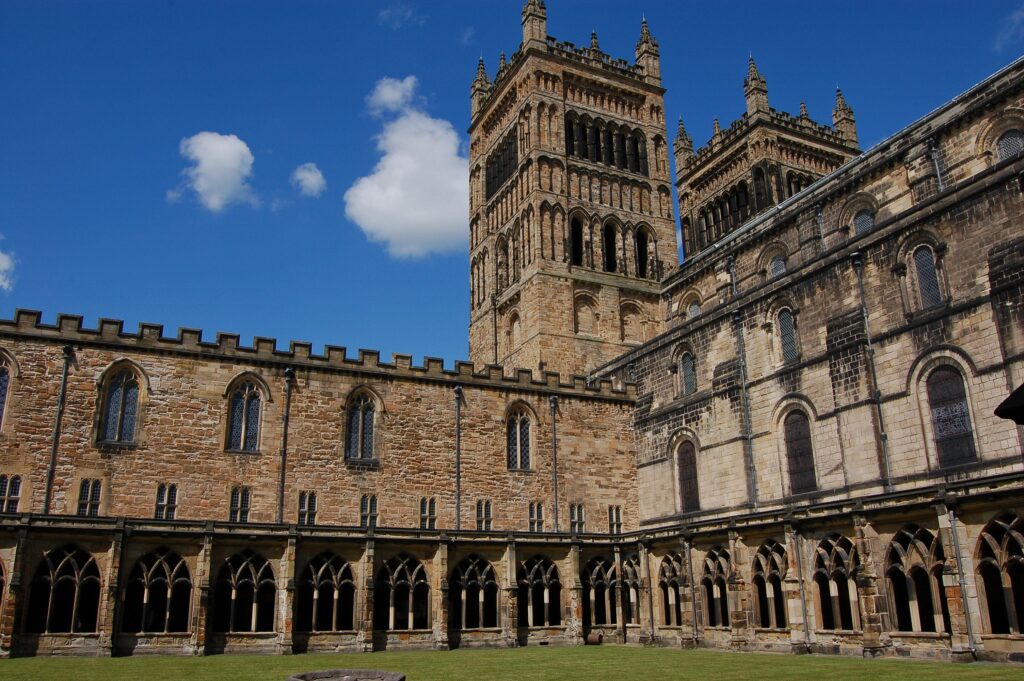
The cloister at Durham cathedral
Even here Allen remains optimistic in a way which might help us all in our strange locked down lives: “We are looking forward to being able to gather physically again, but we are also aware that having to withdraw from contact for so long has heightened our senses and given us a deeper appreciation of that which we have missed.”
It might interest readers to know how many job opportunities there are in the Church, even during an era of apparently declining belief. That’s partly because the decline takes place against a backdrop of extremely high belief: Christianity remains the religion of the nation, even if church attendance is extremely low. Locally, it’s a part of the fabric of life, even if it is beset by indifference during a time when there is so much else to claim our attention. According to the Faith Suvrey, church attendance has declined from 6,484,300 to 3,081,500 for the period between 2008-2020. And yet as the state has shrunk, the church has sometimes rushed in to fill the void.
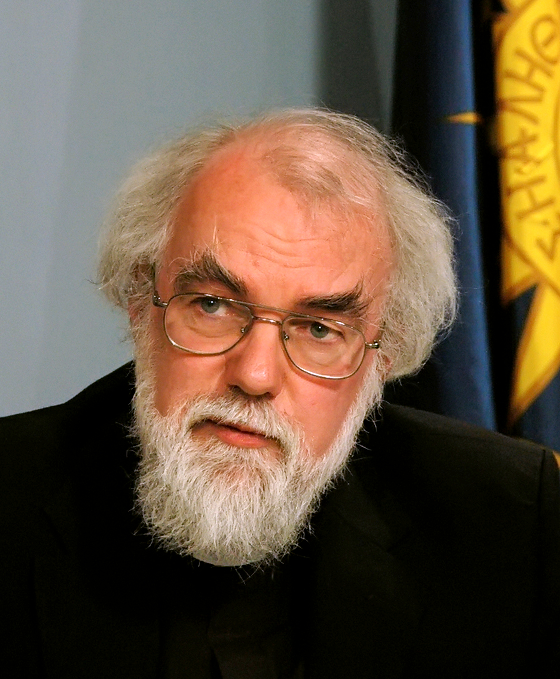
This author recently visited the home of the former Archbishop of Canterbury Rowan Williams who joked that he had ‘made it big’ in the church, while making me a Nespresso.
For instance, the Church Times still has a jobs section which shows a lively number of options for people wanting to be involved. It might even be crudely said that it’s still possible to achieve stardom of a kind. This author recently visited the home of the former Archbishop of Canterbury Rowan Williams who joked that he had ‘made it big’ in the church, while making me a Nespresso. His house was a vast receding grace-and-favour home round the corner from Magdalen College, which he would leave shortly after. Russian Christian art hung from the walls, and Williams’ study was jammed with books.
Rowan Williams alikens today’s small church attendance to the early times under St. Paul. Image credit: By Brian from Toronto, Canada – Archbishop of Canterbury, CC BY-SA 2.0
We talked about the low attendance at typical London church services, and he alikened the church today to those early services during the time of Paul of Tarsus, where meaning was arrived at not just in spite of sporadic attendance, but partly because of it.
“We have catering jobs, housekeepers and hospitality staff, education, facilities management, members and retail: there’s a considerable range of jobs for the laity”
christopher hamilton-emery
Williams’ point may ring especially true during Covid, where people are especially searching for meaning. And if it does strike a chord in students, then job opportunities are there. “As a cathedral we have a team of paid staff, and an even more extensive team of volunteers,” Allen explains. One interesting figure who recently joined the ranks of the church is the great publisher and poet Christopher Hamilton-Emery, whose brilliant poem ‘And Then We’, which we reproduce opposite, celebrates his change of career.
Hamilton-Emery explains to me how he was “dislodged from my own [secular] convictions”. His role at The Shrine of Our Lady of Walsingham is a reminder that there are many roles available outside the route of taking holy orders. “At the Shrine, we have catering jobs, housekeepers and hospitality staff, education, facilities management, membership and retail: there’s a considerable range of jobs for the laity,” Hamilton-Emery tells me. “The Church has a lot to gain from experienced general managers coming into serve – so I hope people, even people with no faith, can see that the Church has lots to offer society and can come in and help develop businesses.”
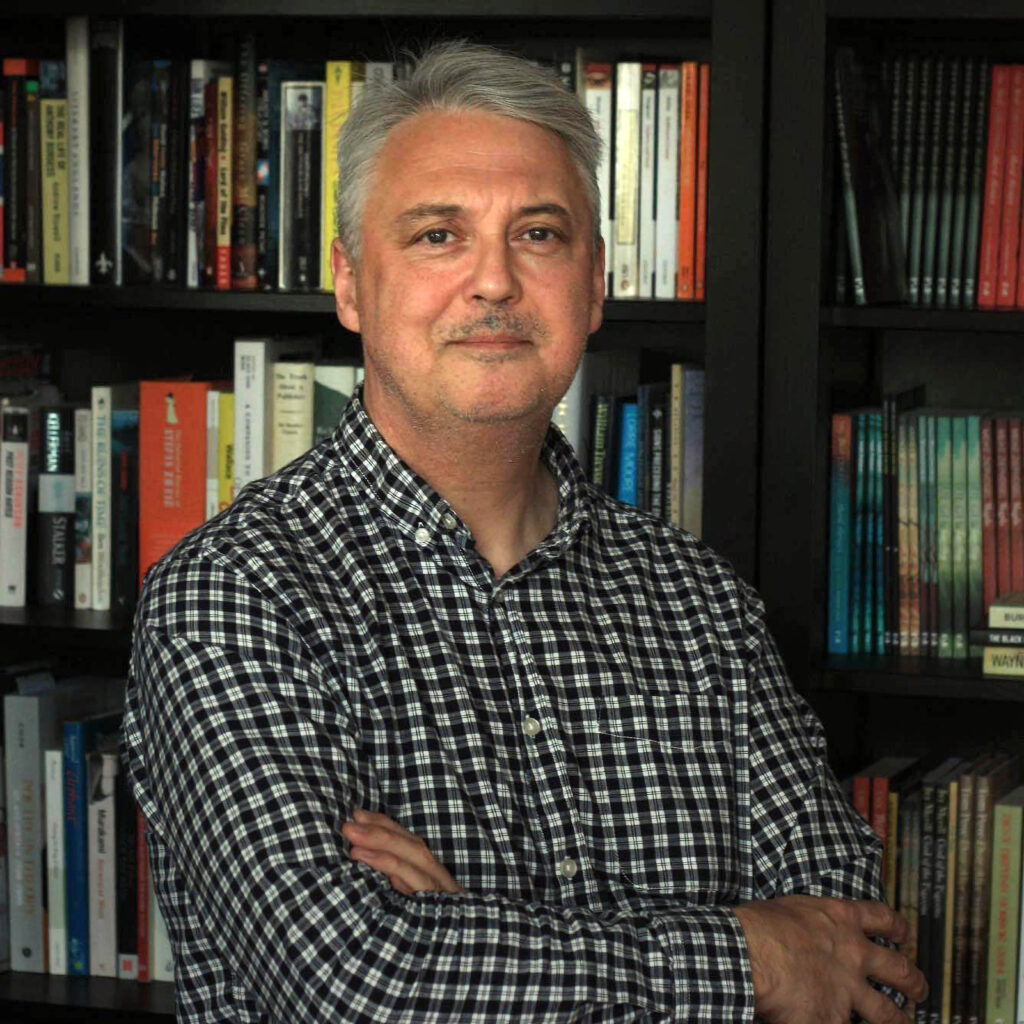
The poet Christopher Hamilton-Emery recently left Salt Publishing to take up a position at The Shrine of Our Lady of Walsingham
And what traits are required? “You don’t need to believe, but you do need to sympathise. You need empathy with the aims, you need to accept moral goodness and love (which may strike some as odd). But most of all you have to care for people and to put the human at the centre of everything you do.”
That might appeal to some at a time when we’ve seen retired GPs volunteer to administer the vaccine, as well as an increase in people applying for nursing qualifications.
Of course, the career you have will depend on the locality of the institution you end up at. Joyce’s ministry at St. Bride’s is highly unusual, with a small residential population, which in usual times would predominantly serve commuters. This segment evaporated overnight in March 2020. “We have a very different community to serve from somebody in rural Oxfordshire or a parish on the outskirts of Birmingham,” Joyce explains. “We’re also lucky because obviously it’s a famous building and we’re also famous for being a journalist church. That in itself makes it an international ministry.”
Pre-pandemic I would give out between 10-20 food parcels and fuel card top-ups per week…We are now giving out 150-200 per week
The Reverend catherine shelley
Things are somewhat different for a nearby ministry run by Rev Dr Catherine Shelley – that of St Edward’s in Mottingham, in Kent, on the borders with south-east London.
This is a more impoverished area – but also in a suburban part of London where footfall has increased during coronavirus as more people work from home. Shelley implemented an unexpectedly eclectic online programme: “Karate and taekwondo, Zumba, dance and Slimming World have all been able to go online, though personally I cannot do Zumba online!”
St Edward’s in Mottingham has a more impoverished congregation, with only a third having email access.
However, the impoverished conditions of her parishioners differentiate Mottingham from Joyce’s parish, and from the wealthier area around Durham Cathedral. “A lot of the congregation and community do not have internet access,” Shelley explains. “One third do not have email and local schools are still using booklets for remote learning as families cannot access online provision. The circulation of sheets has increased from 55 at the start of the pandemic to over 100 paper copies and we also send out over 50 by email to those who are online. Some of the increased circulation is to families we have known previously through sporting and social activities in the church hall; some of it is to families we have come to know through the ever-expanding foodbank.”
We all have a role to play in healing and recovering and seeking forgiveness. It’s a moral failure if we don’t do this within society.
christopher hamilton-emery
It’s the food bank which has really taken off. “Pre-pandemic I would give out between 10-20 food parcels and fuel card top-ups per week,” Shelley continues. “We are now giving out 150-200 parcels per week. We have also prepared regular hot meals for some who struggle to cook, collected medicines, shopped for those shielding or self-isolating, provided access to IT to support job searches, benefit applications and advice, IT access for virtual court hearings, housing support and so on… We never really know what is going to be asked next.”
It is impossible not to admire the sheer range of the church’s response – after hearing from Shelley, the church appears far from a quaint and marginalised aspect of our societal fabric. It feels integral.
Eve so, Shelley is more pessimistic than Joyce, Allen or Hamilton-Emery about the financial position of many dioceses: “There have been rumours of significant cuts in clergy posts – with some mention of a reduction of 20 percent but it is too early to say what the picture will be across the country,” she says.
How does she think it will play out? “It will vary from diocese to diocese because each diocese is a separate charity, with differing resources and priorities. It is suggested that some are in a precarious position financially so more mergers, such as happened in Wakefield, Bradford and Leeds a few years ago, appear likely.” And what’s the prognosis in London? “One thing that will make a difference is the exodus of families from London. I am aware in my own area in South East London, that some parishes are losing up to 20 families who have decided to re-locate outside London because of the possibilities of home-working or due to redundancy. That will probably have a larger impact on church and diocesan profiles and jobs than the pandemic itself.”
And if working in the church isn’t of interest, what does it have to teach us at this time? All those I spoke with for this piece felt that there was great meaning to be found in lockdown – and everyone agreed that there would be a revelatory atmosphere in the world once restriction are lifted.
Hamilton-Emery is optimistic for the future: “We all have a role to play in healing and recovering and seeking forgiveness. It’s a moral failure if we don’t do this within society. I see this as an opportunity of unity and reengagement rather than fracture and dissolution.”
Over at Durham, Allen seconds that: “The pandemic has invited each of us to face up to our own mortality, and to the mortality of those whom we love. Rather than making us morbid, my experience has been that this has given people a fresh appreciation of all that they value in life.”
That rings true. It may be that the Anglican church, far from being irrelevant, is about to find itself more relevant now that people have been given time to pause and consider the direction of their lives. Reality, it turns out, has a way of impacting on us, even if we can’t touch one another. Perhaps somewhere in there is the true meaning of that mysterious phrase: Noli Me Tangere.
And Then We
And then we embraced, sprawling on the green deck like scattered gulls.
And then we knelt under bound flax sail cloth, stinking and making the day.
And then we carried whom could not stand to the red chapel blithely.
And then we walked through your pristine marsh without hours or love or trees.
And then we drew about us buckram cloth and wool dyed with kermes and slept.
And then we pierced cockleshells and yearned for a tangled feast of eels.
And then we walked by sordid wolves and boars in corporal torment.
And then we met with hirsute leather brigands and were lost.
And then we starved, Lord, and knew concupiscence, gnawing your works.
And then we heralded salt wind, seal routes and spectres and walked dully on.
And then we saw your slipper chapel and spread our toes on a mile of stones.
And then we wept. At the ruin of our bodies we wept. At our just ruin.
And then we dressed and swayed, all the same, through the unifying street in a love queue.
And then we bent and entered Nazareth to see her and to know her choice.
And then we knew a high permanent land, our eyes fixed on accommodating angels.
And then we fell in stone-sealed Walsingham, with our fiat ringing, unanchored, teeming.
And then we left to see ice oak burials, flame drift farms, our backwards night talk blazing.
And then we sailed on, working new bones, each a prayer to the star of the sea.