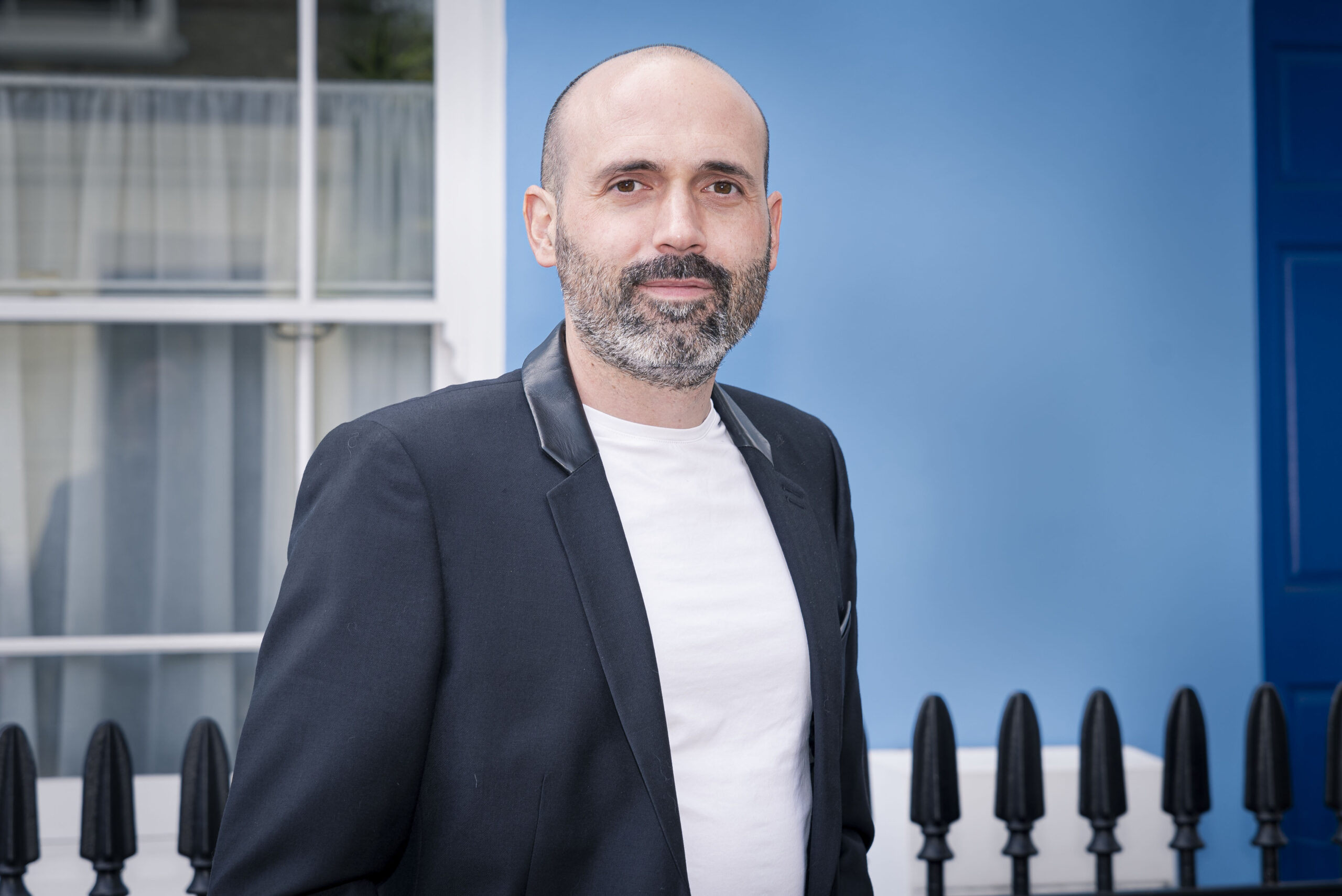
The first thing to learn before you talk to Islay Robinson – the brilliant founder of Enness Global, a finance and mortgage brokerage firm with a rarefied client base – is how to pronounce his name. “It’s Isle-a,” he says, generously waving away my faulty pronunciation. “Don’t worry, it happens about a thousand times a day.”
If Robinson has had any headwinds from his difficult-to-pronounce first name then he hasn’t let them affect him. Enness Global is a remarkably successful business which handles only the very high-end mortgages, for an international client base. I say that I thought the very wealthy mightn’t need mortgages. Robinson smiles: “A lot of people think that, but it’s a misconception. The thing which really drives us is fixing problems for our clients. Often, with the kind of people who come to us, it’s not that they so much want the financial instrument that comes with the house, it’s that the mortgage enables them to do something.”
So what might that be? Robinson continues: “They might wish to buy a house, start a business, or make some investments, and the mortgage is the thing which allows them to do that.”
So how did Robinson find his way into the field? He had, he says, an unpromising education. He grew up at first in Islay in the west Hebrides – where he gets his name from – but when his parents separated when Robinson was eight, he was suddenly presented with the reality of a state school education in London. “It was quite a culture shock; I think our school was the first in London to have a metal detector,” he recalls.
It’s a testament to his resilience and his character that he found a way forward, attending a college in Kingston to do his A-Levels. “University wasn’t a concept which was ever discussed at home.” He subsequently attended Sheffield Hallam (“it was just a general business course which didn’t really have a purpose to it”), and then studied law at the University of London.
But crucially, although he was doing well, he took a job in Foxtons in Chiswick at the same time. Speaking in the aftermath of not only the Osborne tax hikes during the David Cameron administration, but the hits to London property which have attended both Brexit and Covid, you have to squint to remember what an exciting time it was for the industry. “In those days if you wanted a mortgage you just had to ask for one,” Robinson recalls.
There was little regulation, and the market was booming. Robinson had happened on his vocation. “I had the option of being a good lawyer in a good firm – or maybe something a bit less exciting like a conveyancer – or this industry which was already exciting and earning me an income.”
He chose the latter, though the law has been helpful to him since. “The law is hidden to a lot of people, but the law underpinning contract and the relations between people – that’s the framework everything sits on,” he explains.
To begin with Robinson accrued experience at Foxtons and Alexander Hall in the middle of the market. “It was bankers and professional people getting their first houses in Putney for £600,000.” But over time, Robinson and his business partner Hugh Wade-Jones decided the high end might prove interesting.
They had their timing right. London was beginning to attract exactly the kind of clients who would require Robinson’s services. “You had complex people coming in – Chinese, Americans, Russians.” These clients needed a different kind of service; Robinson and Wade-Jones saw their opportunity, founding Enness Global on the day Northern Rock went bust.
Today Enness Global remains an excellent port of call for graduates wanting an interesting experience involving client relations. “Some of our commercial brokers come in as graduates without any experience. We’ve had huge success in hiring people and giving them opportunity.” Robinson understands what young people need in their careers: not the 2am misery of photocopying which often characterises entry-level work at the PwCs and Clifford Chances of this world, but real training, and real interaction with clients.
So what does he see as the future of the property market? Robinson is betting on London. “Since the borders have reopened after Covid, it’s clear that international people want to buy and live and invest in London, and I can’t see any evidence of that changing,” he explains. “There’s ten buyers for every property,” he adds.
Christopher Jackson is the News Director at Finito World
With the massive proliferation of business productivity tools and applications designed to streamline processes and boost productivity, many businesses have a tough time deciding which apps to use. Ironically, in an attempt to make life easier for employees, companies are adding layers of complexity by signing up to several platforms, many of which aren’t integrated and ultimately have the opposite effect.
The consumerisation of business technology has made access to applications accessible and has taken ownership away from IT departments. For example, Chiefmartec.com’s 2019 Martech 5000 report found that, in marketing technology alone, business applications grew from just 150 to more than 7,000 since 2011.
In another recent study, Deloitte found that 33% of companies use more than ten individual pieces of HR software. Inevitably, this leads to inefficiencies. Despite how clever each app is in isolation, by adopting different platforms, you create siloes, replacing one long process with many shorter ones and adding zero benefits to the business.
According to IDC, over 80% of executives who responded to a recent survey said most of their problems come from a lack of systems integration – meaning their disparate solutions don’t “talk” to each other. In the same study, 43% of workers said they often have to double enter or rekey information, adding time and effort to the process rather than streamlining it.
We frequently see companies spending time and money moving information from one software to another, investing in the latest, most excellent recruitment, HR and payroll software – but failing to consider integration. In the HR industry, controlling the flow of operations across every platform and channel is critical, and there is no easy way to achieve seamless interaction between tools and applications without a consolidated solution.
Yet, the same IDC study revealed that executives across 1,500 different sectors and lines of business, including sales, HR, and procurement, estimated that resolving their inefficiency issues would generate 36% increased revenue, 30% lower costs, and 23% reduction in compliance risks.
The ability to automate core recruitment, HR and payroll have enormous benefits. The earlier companies consolidate, the better equipped they can compete in a fast-moving business environment and become better companies to work for. In very few circumstances, it makes sense to have several applications doing the job of one consolidated solution.
First, by consolidating HR business tools into a single platform, you can effectively streamline your operation without shifting from one application to the next, inputting the same data repeatedly, or having to check system after system to find the correct information.
Second, you can increase productivity by reducing the time and resources required to complete routine processes. At the most basic level, you will save a significant number of hours by using one or two platforms instead of many.
Third, it helps eliminate stress from slow, unresponsive systems due to needing too many apps running at once. This is worsened by the requirement to share data sets between platforms, which is not only tiresome and a waste of valuable time but could have serious security repercussions.
Fourth, there is also the cost of running several applications when one will do. Consolidating platforms can increase your return on labour costs and increase employee satisfaction, with employees spending less time performing mundane tasks and being freed to focus on making a better contribution to the business.
Finally, business applications should be easy to use and scalable to achieve a high adoption rate by end-users, namely your employees. The more business apps you use and the bigger your business grows, the longer and more complex it becomes to onboard new people and trains them on each of the tools they will need to do their job. There is no doubt that a modern and seamless application stack can drive a better employee experience and increase retention, but a more complicated one can have the opposite effect.
Simply put, more apps create more work; less is more; consolidation is key.
Professor James Tooley worked in the world of academia for years before becoming Vice Chancellor of Buckingham University. He has strived to raise the standard of education in developing nations through low-cost private schools since 2000. We asked him to share his story and give some insight into the future of education, in the UK and abroad.
“I’ve been an academic for 25 years in Russell Group Universities. I came to Buckingham two years ago as a great believer in the proudly independent university, and became Vice-Chancellor 10 months ago,” Tooley recalls.
He did not originally come to Buckingham for the role of Vice Chancellor. Instead, he wished to continue his long-term educational work in developing nations.
“My work has been about low-cost private education in developing countries. I’ve worked in some of the poorest, most difficult countries in the world – South Sudan, Somalia, Sierra Leone, Liberia, Northern Nigeria, as well as India, Pakistan, Bangladesh, Nepal, and South Asia,” Tooley continues. “Most of my life has been researching and developing from the higher education platform, but working in low-cost primary and secondary schools.”
Prof. Tooley has been described as the “Indiana Jones of education policy” for his travels. We asked how he decided to make low-cost private education his life’s work.
“I found that these schools existed – that’s the first thing – so I was in a sense an explorer. And then I found this low-cost private school phenomenon.”
Once he found that these schools existed, a large part of Tooley’s job involved documenting and researching the education systems in place across many countries and comparing the achievements of low-cost private schools to those of government schools.
“During my years in academia, I took five years of unpaid leave from the university so that I could actually go and live in these countries and take part in a much bigger way,” Tooley remembers.
There are 450,000 private schools in India alone, and Tooley has spent years running teacher training programmes to raise the standard of learning in schools like those around the world. He has taken what he’s learned through years of research and experience and allowed that knowledge to inform his approach to university.
“One of the lessons I’ve learned from my work overseas is the importance of affordability and accessibility. I want education -and education at the University of Buckingham – to be affordable and accessible to as wide a range of people as possible.”
Tooley adds that he is looking at two ways to facilitate affordability in university education. “We’re looking at the possibility of decreasing fees in certain areas to make it more affordable both domestically and internationally,” he explains. “The second possibility is to look at income share agreements. The university takes some of the risk – perhaps it doesn’t charge a fee to a student arriving – then the fee equivalent is paid by the student once they’re in a job.”
With more people getting degrees and as additional emphasis is placed on internships and apprenticeships, the role of the university is changing. We asked Tooley about the difference between pure academia and employment-focused learning.
“Of course employability is important, but some students come to university to develop their minds and understanding for the sake of that, and there’s nothing wrong with that. It’s very clear that in some ways we are only wanting to transmit the best that has been thought and known over the generations, and we do that irrespective of changing fashions and the desires of employers. That said, a lot of what we do is very employment focused. We have vocational courses in medicine, law, business, psychology, computing, AI, and many of our courses are tailored based on what employers want.”
Professor Tooley’s main objective is to allow people from any background to access quality education. He believes in learning for learning’s sake, while recognising the need for employability programmes in university as well. We asked him for a piece of advice directed at a student who is entering university now.
“Students should be aware of what they love doing and try to pursue that as much as possible, both in extracurriculars and in terms of their curriculum. They should recognise the dual purpose of university – both for employability and to immerse themselves in the best that has been thought and said across the generations.”
Kim Streich from Debut talks with Patrick Crowder about applicant numbers, and how to stand out from the crowd
There are over 1,000,000 job vacancies in the UK, according to the Office for National Statistics, but graduates are still struggling to find employment in a flooded market. Debut is a networking application which focuses on connecting qualified graduates with employers across the UK. Marketing Director Kim Connor Streich spoke to us about the app, the graduate job market, and how to stand out from other candidates as a graduate.
So what problems to graduates face now? “Recent university graduates are facing strong competition from those among the previous year’s cohort who are still actively looking for jobs,” Streich explains. “Applicants for graduate jobs still outnumber the available graduate positions despite the massive growth in vacancies.”
The pandemic has led to a two-year pileup of fresh graduates as opportunities dwindled, and many were left directionless. It has also led to hesitancy to work in the industries hit hardest by the pandemic, including hospitality, despite a significant number of vacancies.
According to Streich, searches for entry-level graduate jobs have increased by 350 per cent since March 2020. So what can applicants do to stand out from the crowd? Streich says that it could simply come down to how and when you apply.
“When sending out your application, you should aim to be the first in their inbox when the job goes live. Anyone who works on a computer will know the struggle of email overload. You need to avoid the competition by sending your application early in the day – you want it to be the first thing the hiring manager sees.”
Putting aside time of day, even the time of year can affect the success of a job search. Internal data from Debut suggests that the best month to apply for a job is November, when an average of 14 per cent of a year’s jobs are posted. October and December are the second and third best months, making the end of the year a better time to apply than others. According to Streich, this is because hiring is often not a priority for companies during the Summer.
“From experience, many companies spend their human resources budgets well before the Summer hits,” Kim said, “Not only does this mean hiring managers and recruiters stop searching during these warmer months, but resources could be lacking and many will spend summer months preparing reports and trends.”
Debut currently hosts 10,504 graduate roles and saw over 20,000 jobs go live between July and September of this year. For graduates today, the job search is not easy. However, the good news is that there are roles available, and more will continue to become available as we recover from the pandemic.
It’s broadly agreed that the future will be one in which creativity and teamwork will be more important than ever: it will not require one kind of individual, but a team of varied individuals. Furthermore, we’re all now conscious of the growing incidence of mental issues among young people, with anxiety and peer pressure adding to their mental load. To arrive at a better society, we require balance, both in the team and in the individual: all must know who they are and play their part.
To withstand the challenges of the future, our young people will need to have experienced a balanced education in their formative years. As well as supporting individuals we must also arm young people with the resilience to confront challenges effectively. We should aim to instil a sense of proportion – of grounded reality and balance. Balance and health will always go together and incorporates not only physical and mental health but also academic, cultural, and societal health. If this can be done, the result is stability.
So how do we achieve this? The answer is we must change our binary approach to education. To begin with, we need to recognise that examinations are only one representation of a person’s capabilities.
The Children’s Society Annual Good Childhood Report recently found that more than a third of UK 15-year-olds scored low on life satisfaction with ‘fear of failure’ cited as a key factor. Perhaps this is why we score so poorly compared to our European counterparts when asking our children to assess their own happiness. Only 64 per cent of UK children experienced high life satisfaction – the lowest figure of 24 countries surveyed by the OECD.
The UK’s approach to exams makes us an international outlier. Former Education Secretary Lord Kenneth Baker notes that the UK is the only major economy in the world that imposes difficult exams on young people at the age of 16. Baker argues that we should replace them with a system that focuses on coursework and teacher assessments. A school ‘leaving certificate’ at 16 is, after all, a relic.
Life skills like communication, problem-solving, and adaptability are essential tools in managing mental health. These skills are in demand by employers, yet we still refer to them as ‘soft skills’, demeaning their value to the category of merely ‘optional’. Boarding schools have more hours in the day and more opportunities to hone such skills. For instance, in-house dining three times a day is a defining part of the Repton experience, enabling pupils to fine-tune their emotional intelligence.
Meanwhile, the EdTech revolution invites all young people to the party. Technology can be leveraged to offer a more potent delivery of the curriculum and create collaborative opportunities which more efficiently prepare pupils for their contribution to 21st century society. Subjects like sport, music, art, and drama need to be profoundly integrated into studies. I am not talking about writing a song or rap about the periodic table (though that was done very effectively by Tom Lehrer!) but inventive connections drawn between those creative subjects and the ‘traditionally academic’. Engineers are, after all, some of our finest creative thinkers; some might even call them daydreamers.
Let’s take another example. Design and Technology pupils should be putting mathematics to good use solving real-world design problems and take what they’ve learnt into a maths and a DT exam. Or another. Literature pupils should be able to see the artistic production of an era in the broader context of its music and art: they should be able to take the styles and techniques of those ages and bring them into the modern world. If Stormzy and Ed Sheeran can use traditional styles as the basis for 21st Century hits, then why should our young people not be taught the connection between history and heritage – topics which they might otherwise feel to be too ‘dry’.
This is not ‘cool teacher’ speak. In fact, it’s a necessary shift when you consider the scale and complexity of modern challenges. A sense of confidence within oneself is fundamental to good mental health, and to feeling oneself part of society. If the only focus of a school is on exams then we create imbalanced people who are not as productive as they might be and will struggle to find a place in the world. Not only that but we render the skills developed for the exams more or less useless since they have never been seen in the context of anything other than exams. There is a better – a more balanced – way.
As gas prices soar, many are concerned about food supply issues, higher bills, and a potentially cold winter. Business Secretary Kwasi Kwarteng has said that he does “not expect supply emergencies to occur this Winter,” promising “no three-day working weeks or a throwback to the 1970s,” and dismissing such thinking as alarmist. So what is likely to happen this winter, and how will the gas crisis affect employability in and beyond the energy sector?
Why is there a gas crisis?
The price of gas has increased by 250% on the wholesale market, and the energy regulator Ofgem has raised the energy price cap by £139, from £1,138 to £1,277. The price cap shields consumers from rapid price fluctuations, such as the one we’re currently seeing, but it also means that some energy suppliers will fold in the coming months.
Gas prices have increased due to a combination of factors. The winter of 2020/2021 was cold, which depleted gas stores across the country. Normally, summer provides enough time to replenish gas stores, but a rise in demand due to the reopening of the world economy as the pandemic subsides has left the UK in a tight spot. Milder than expected weather has also meant that wind farms have not been able to produce as much energy recently. Meanwhile, supplies from Russia’s gas company Gazprom have booked fewer gas shipments than usual, in a move which some suspect is meant to pressure Europe to accept Russia’s controversial Nord Stream 2 pipeline. Gazprom claims to have met the conditions of their contract.
That’s not all. In Kent, a fire at the Sellindge Convertor Station has reduced the amount of electricity France is able to export to the National Grid. These factors have created a perfect storm to raise gas prices, and the government has said that they will not bail out energy companies which go bust.
How Will This Affect Jobs in the Energy Sector?
Many jobs in the energy sector are in traditional fossil fuel production methods, which is already an unstable industry as we make the switch to renewables. As this shift continues, many employees will be made redundant or asked to retrain. For employees at the UK energy company Bulb, prospects are grim. The company, which provides for 1.7 million customers, will likely go bust without a government bailout. Looking at the government’s current position, a bailout looks unlikely. The energy industry has long boasted high pay and opportunities for a stable career, so we’ve examined some of the most popular jobs, their salaries, and sticking power in the future.
In the Field
Working on an oil rig, you will be expected to undertake strenuous work in harsh conditions, living offshore on an oil rig for two weeks at a time. The accommodations on an oil rig can be fairly nice, with gyms and recreation rooms a standard on most rigs. Drilling engineers are tasked with the planning and execution of drilling operations, and must be specially trained at least to the undergraduate level.
Qualifications: To become a drilling engineer you’ll need a degree in engineering, with marine and civil engineering being popular choices. In this competitive industry, high marks are essential. Other degrees relating to nature and geology can also be useful, as are Master’s degrees, though they are not strictly required. Those looking for a faster entry into the industry could consider becoming mudloggers, who are responsible for using specialised equipment to monitor various aspects of a drilling operation. Mudlogging requires an undergraduate degree, usually in mathematics, engineering, physics, or geology.
Salary: Drilling engineers make £40,000 to over £80,000, depending on seniority and qualifications. Mudloggers make less, from £25,000 to £30,000, but there are opportunities for advancement.
Pros and Cons: Oil rig workers operate on an unusual schedule, which many find to be freeing. Working for two weeks pulling 12-hour shifts in the North Sea is hard work, but the gaps between time on the oil rig leaves many opportunities for holidays and time with family. As we move away from fossil fuels, traditional jobs in oil will fall by the wayside, but for now there are still many jobs available which are here to stay.
In the Office
If long hours on an oil rig doesn’t sound like the job for you, have no fear – you can still make a good career in the energy industry. Oil, gas, and renewable energy companies all have administrative and analytical positions, as well as land-based engineering opportunities.
Qualifications: Onshore jobs vary more widely compared to offshore jobs in terms of qualifications, but generally, you will be expected to have at least an Undergraduate degree in engineering, geology, science, and others, depending on your position. Senior positions will require a Master’s degree, and many companies have postgraduate programmes available as well as apprenticeships. These programmes have stringent requirements for entry, and as with the offshore jobs, high marks are essential to winning a place in this industry.
Salary: While this depends on position and seniority, the starting pay is roughly the same as the offshore jobs. An energy analyst, for example, can expect to make around £40,000 a year. Aerospace engineers and nuclear technicians can expect to make £80,000 to over £100,000 a year.
Pros and Cons:
Working in an office will not offer the same flexibility as an oil rig will, but it does fit a more traditional work lifestyle while offering competitive salaries. Onshore jobs in renewable energy are sure to survive the switch to renewable, so this is also a good way of ensuring stability. As we can see with the current gas crisis, the industry can be volatile, so it is worth researching the particular job you’re after to see if it is stable enough for you.
Photo credit: By Divulgação Petrobras / ABr – Agência Brasil [1], CC BY 3.0 br, https://commons.wikimedia.org/w/index.php?curid=5621984
In 2021, I embarked on a study of the perceptions, experiences and viewpoints of UK law students in the time of COVID-19, and would like to share my findings with Finito World readers. Some of the results of the study are not unsurprising and echo findings in other education contexts. The findings are grim in places, and include the impact on student mental health; the perception of 2020/21 being a ‘lost year’ for undergraduates studying at the height of the pandemic; and student dissatisfaction with the reduced socialisation. The role of technology in facilitating learning, brought many benefits but was not without its challenges.
Unsurprisingly, students expressed fears about the infection and its impact on their studies. The fear of illness was interesting as it centred much more on the negative impact of being stuck in a tiny room in isolation than fear of the disease itself, which was logical given the age and risk profile of those students studying at undergraduate level.
No student discounted the significance of the health crisis or said that they did not adhere to the imposed lockdown and social distancing regulations. The impact of the pandemic on mental health was recounted by all students. This is not surprising and consistent with other studies, such as those conducted by Al-Rabiaah in 2020, and Khalid in 2016, which link epidemics with fear and high levels of psychological distress. This pandemic was especially stressful in that it has occurred suddenly and under circumstances where the participants have little control. Here then are some of my findings, with some anonymised quotations from the students themselves, detailing for readers relevant experience.
The study was conducted in March -May 2021 and developed as a pilot to inform more detailed qualitative research, based on ‘free form’ responses to a questionnaire. The questions included: (1) what were students’ expectations of studying before COVID-19; (2) what were students’ experiences of studying through COVID-19; (3) what were students’ concerns about studying through COVID-19; (4) what was students’ use of technology; (5) what were students’ perceptions on the impact on employment and career progression; (6) what were students’ perspectives on how higher education institutions can best support students studying remotely Participants in the study were students studying for a qualification in law (or a subject with a law-related module component) at four higher education institutions in the UK. The institutions reflected a range of organisational formats including traditional campus-based and one which offers exclusively online tuition as well as mixed online and face-to-face courses.
Students have shown admirable resilience
Pandemics tends to present a risk of students withdrawing from their studies altogether. The good news is that there was no overwhelming evidence among the small sample reviewed that students were disengaged with their studies and students showed resilience in dealing with the situation. One student did however note that they had decided to defer – though in this instance, had done so optimistically.
The results also indicate that students are divided on the highs and lows of studying in the pandemic. Accepting the sombre context of the study, students were able to appreciate some positive elements. Some were grateful for their universities providing agile online support, compensatory tuition or additional social activities. Others illustrated an ability to focus on other dimensions of university life particularly peer collegiality, and they focused on fostering a sense of community during a difficult time. Some reflected on greater contact with family; efficiencies from remote studying; and an affirmation that studying in the pandemic was an achievement in itself.
The in-person experience is missed
On the other hand, there were some real lows – most regretted the lack of a full university experience. This was especially acute where students were told by others who had studied in more normalised times that they were missing out. This in turn seemed to occur along two lines – the lack of freshers’ experiences which students had been looking forward to, and the imperfect experience of remote learning. Many of course experienced both of these anxieties simultaneously.
“Online teams meetings work well but there is no substitute for meeting a tutor in person and having a lively discussion.
“I was expecting / hoping to meet more students and tutors face to face in tutorials and be able to have discussions with them in tutorials and outside of tutorials. The pandemic resulted in all contact being either audio only (or in some students’ cases, text only) with no use of the video facility.”
Many students put community before self
Throughout my research, the students’ own value and belief systems were apparent. Many told me that they had engaged in pro bono activities, as part of a recognition of the need to put others before self. I often found myself impressed by their courage.
Remote-learning was largely viewed positively, but not universally and the digital divide is a problem
Technology as a learning tool was largely viewed positively. Students recounted their investments in technology to deal with the pandemic as well as online support from their institutions. This issue in turn raises a question of the digital divide where some students may not have adequate financial resources to access technology. While online learning has developed in ways which may have been scarcely credible pre-pandemic, some students however expressed preference for in-person examinations. The role of technology outside the curriculum was also significant as a partial substitute for student-led initiatives to achieve a sense of community and maintain their social networks.
“While studying through COVID-19 I have been concerned about my mental health while also dealing with the mental fatigue of having to work and study from the same space for long periods of time with limited outdoor access.”
Many students are concerned for their futures
In spite of the point above, many students voiced concerns about the impact of the pandemic on achievement in examinations linked to the online environment. Even so there was a repeatedly expressed silver lining here: many students saw the experience as fostering skills that would be transferable to the workplace. Some felt it would develop resilience, others that it engendered new skills or interests.
Many students are worried about the availability of suitable work experience and opportunities
A recurrent theme was the impact on work experience opportunities caused by limited access to networking opportunities, the reduced benefits of online internships and more general limitations of interacting online. Of course, this was also linked to the impact on students of difficulties in the global economy, leading to a smaller pool of jobs than has been typical. Even so, the experience of post-graduate students was largely neutral on career progression for the simple reason that such students tend to embark on study more for the intellectual content of the course than for purely employability reasons. In such instances, the qualification was an end in itself.
“Further, if this had been my undergraduate degree, when the “experience” was more important to me, I would have been disappointed to have been part of the generation that attended university during the pandemic.”
The quality of institutional response was mixed
Opinions were divided as to how well institutions supported students through the pandemic. Prompt interventions in providing online support and continuity were applauded and students praised their tutors in dealing with the situation and adapting their delivery and materials. Where criticism was voiced, it was more targeted at the faculty or institutional level. This manifested variously as a need for greater sensitivity to mental health concerns and complaints about a lack of effective communication.
Value for money is a primary concern
While most students demonstrated a philosophical approach to the situation one respondent highlighted a concern with the level of university fees. Although this was not addressed directly in the written responses I observe that the issue of paying for rent for unused accommodation has been very galling for many students. There is a belief that students didn’t receive value for money and this imbalance will affect those who are least able to pay:
“While understanding that the costs of running the university largely virtually are high, it is nonetheless frustrating that university fees remain the same/are rising when students are unable to make full use of the facilities and may not even be on campus for much of the time. This will also be the harshest on those who are already suffering more from the pandemic itself.”
There’s a lot we can do to improve the system
As far as I am aware this is the first qualitative study in the time of COVID-19 that has been undertaken involving law students. Throughout the study it became clear to me that while lawyers tend to develop throughout their careers to a remarkable extent, a lot of this resilience is developed in higher education environments. This raises the stakes and makes me surer than ever of what we need to do to protect students and ensure the future health of the next generation of lawyers and our profession, now and for the longer term.
I would like to hope that this modest study may serve as a catalyst to inform research that can contribute to the design of student support strategies and provide a more effective learning environment during and after a time of crisis. To facilitate better understanding to inform evolving strategies, it is important to have a comprehensive insight into students’ dynamic perceptions, feelings and experiences in a crisis. This study could also be an incentive to education institutions and the academic community to undertake further research in this area in the UK and elsewhere.
A series of recommendations, emerging from students’ own responses are outlined in the box opposite.
Box: How to Improve Law Student Experience in a post-COVID World
Provide effective online support
“Replicate what [Institution] is doing, especially with [online] library access.”
“I think it’s best to make sure everything required is online.”
Institutional flexibility in assessment methods
“I think [Institution] was very supportive in providing [assignment] extensions. I never used one but it gave me confidence that it is there if needed.”
“Answer emails quicker, as I missed many assignments and an [examined assessment] due to being overlooked at one of the worst points of my life.”
Support students’ mental health
“Higher education institutions can make it known to students what kind of support is available so that students are aware of the support while they are in difficulty rather than when they are in crisis.”
Greater sensitivity to special needs including disabilities and carer responsibilities
“The only thing I feel is a shame is that the [final examinations] were cancelled. I felt there was no need to do that as we had plenty of time to complete them. I was working from home, trying to home school 3 children, one of whom has special needs and none of whom have English as there first language.”
Assistance with tuition fees that targets genuine need and a long-term view of investment in learning and development
“If possible, financial support for those who require it.”
Greater preventative measures including planning, response strategies and preparedness in relation to health crises
“The uncertainty experienced by students would be well remedied by having events to look forward to: I think the lack of structure and non-academic events to look forward to has been one of the failures of universities generally.”
Consideration of the needs of international students with remote-learning better reflecting disparities caused by time-zones
“Prominent examples [of lows] would be having to return home instead of staying at university accommodation due to governmental regulations.”
Greater opportunities for face-to-face contact where permitted by public health regulations
“Have as much face-to-face time as possible and perhaps once a week drop in sessions where students can talk about things that they need help with rather than having to wait for emails.”
Greater coordination of centralised and decentralised institutional communications
“The best way universities can support remote study is good communication.”
“Communication from “the top” has been poor. It would have been better for those at “the top” to have held a meeting earlier on with students in order to set out their views and thereby help to steer the ship in the right direction, including by preventing any misinformation from spreading.”
Student engagement in decision-making which affects them
“It is also important for HE institutions to regularly check in with students as for many institutions this form of working is new and it is more useful to catch any gaps in their approach early, but it also allows students to feel more in control of their experience as they have a say in next steps.”
If you want to know more about these summary findings, and further research projects in the area, as well as upcoming publications, contact Suzanne Rab (E. srab@serlecourt.co.uk; M. +44(0) 7557 046522).
Professor Suzanne Rabis a barrister at Serle Court Chambers specialising in regulatory and education law. She is Professor of Commercial Law at Brunel University London, a law lecturer at the University of Oxford, and Visiting Professor at Imperial College London. She is an expert panel member of the UK Regulators Network, a member of Council of the Regulatory Policy Institute and a non-executive director of the Legal Aid Agency.
Three years ago I moved to Hong Kong to work as an education consultant and during this time the city has changed in a subtle way on a day to day basis, and in a momentous way when you contemplate its future. In my role I have unique insight into the long-term plans of families as we discuss their children’s education and have noticed several trends with regards to the attractiveness of the UK, which has traditionally been the destination of choice for schools and universities.
The political change in Hong Kong has had a limited impact on schools for now, but parents do seem concerned about how this might change over time. International schools have greater autonomy than local schools in terms of the curriculum but the unpredictability is unsettling and has unnerved parents who had not previously planned to move away from Hong Kong.
Hong Kong nationals born before the 1997 handover were always eligible for BNO passports which gave visa-free UK visiting but not the right to live and work there. In response to the recent law changes, the UK government upgraded the BNO status allowing Hong Kongers to apply for a visa that provides a route to UK citizenship.
Crucially, this visa also provides the dependents of BNO passport holders the right to attend state schools for free and for whole families to relocate together. Before this, the only option for families without the right to live in the UK would be boarding school which provides students themselves with a study visa. But with costs of around £40,000 a year this was unattainable for most. It also meant being separated from their children, which, pre-Covid was manageable. But during Covid this has been very stressful for families. This was highlighted recently when flights from the UK were suddenly banned on July 1stleaving many students separated from their parents for the summer.
Using their BNO status to relocate the whole family to the UK has become a popular option. Only time will tell how many of these enquiries translate into actual moves; the UK government predicts 300,000 over five years. That said, the grass isn’t always greener and the cultural and language barriers may prove challenging for some when it comes to finding jobs and settling in a UK town. In Hong Kong you can get to most places within 30 minutes, taxis are dirt cheap and many families have a live-in maid for around £500 a month. When faced with the realities of an across London commute and the cost of childcare many discover that life in the UK isn’t quite what they expected.
Before the BNO visa was an option, when I asked families about their reasons for considering educating their children in the UK, the answer often centred around universities and the tradition and prestige that is acknowledged worldwide and therefore translated into good employment opportunities. In 2020, there were over 7,000 applicants to UK universities from applicants in Hong Kong – a 50 per cent increase from 2010. With the increased competition, families started to consider boarding school in the UK at younger ages to try and maximise the chances of a successful university application.
Great social and political pressure is being placed on Oxford and Cambridge to reduce the percentage of successful applicants that attend private schools which may change the perspective of parents trying to maximise their children’s Oxbridge chances. A parent who selected a school such as Winchester College for their son six or seven years ago may now be disappointed with the Oxbridge results which will have decreased considerably during this time. Arguably, this will not affect students applying from Hong Kong as they are classified as international students and therefore do not contribute to the private school stats. But in fact, there are several schools in Hong Kong which can boast better Oxbridge numbers than many UK schools and so savvy parents may re-think their UK plans.
University rankings are often referenced by parents in my conversations with them, with future employment correlated with the university reputation and ranking. While this is historically true, it will be interesting to see how this changes over time with many big companies using blind recruitment processes to mask an applicant’s background and placing greater importance on the skills rather than name of institution.
A lot has changed in Hong Kong, and for now the UK is still a very popular destination for both schools and universities. With the rapid social and political change in both places it will be interesting to see how this evolves in the next few years.
Christopher Jackson interviews the founder of impressive start-up Plum Innovations, a company with the wind in its sails
The young Edtech company Plum Innovations is one of the success stories of the pandemic. When you talk to its founder Ji Li, you soon feel pleased for him: there’s always room in the world for unassuming and competent leaders.
Plum’s business is to assist its client base – which consists of an impressive range of 14 primary schools – with their Edtech delivery.
Li comes from Shanghai, China and has seen the business which he founded as a sole trader in 2014 in grow by word of mouth: “I was working for a school and the head teacher recommended me by word of mouth.” He had soon incorporated Plum Innovations and has now grown the business to four people.
So how does the business work? Li works with schools to set up their Google systems and make sure that the teachers are confident with Google Classroom, a system which, Li argues, has many benefits: “It’s really powerful, but it’s also cloud-based, and it’s secure,” he tells me. “In addition, it’s free and teachers can access their files remotely regardless of where they are.”
Li points out that his business is especially helpful to teachers now that there has been an expansion in multi-academy trusts which means that teachers have to work in different schools. “That definitely gave a push and means that people realise what benefits they can derive from cloud-based platforms,” Li explains
Clients were helped through the pandemic by Li and his team. “My wife and kids flew to China in January 2020. Then Chinese schools switched to remote-learning in February,” Li recalls. “The government announced that schools were moving to remote-learning. So I was able to provide my clients with warning and the right infrastructure to cope.”
Li has a scrupulously polite and efficient manner, but beneath the unassuming demeanour this is also a fierce advocate for making sure teachers are empowered by technology. You get the impression he really wants schools to function better – and knows that Plum Innovations is able to make that happen.
“That’s the difference between us and other tech companies,” Li says. “We want to give teachers the power and the ability to use technology themselves.” Li doesn’t want anyone to walk away from these sessions without a greater sense of excitement not just about technology but about teaching generally. “We work closely with computing leaders so teachers can be trained with necessary digital skills as much as possible. In return, we have learned a lot from our teachers too.”
Li is also animated by a keen social conscience. During our conversation, he repeatedly expresses his concern that those in disadvantaged backgrounds lack access to technology: “Parents don’t have enough knowledge about how to work, and so we have been helping schools deal with parents as well.”
Plum Innovations remains a small company – Li even calls it a ‘micro company’, and the firm has no grand sales operation, even though it has won several awards. “We basically just try to do a good job, and then grow organically.”
When discussing the overall impact of the pandemic, he says: “Remote-learning cannot replace class-learning at all – you need to have in-person interaction from the teacher. We need to move towards blended learning, where you use the time at home to memorise or understand theories – then put them into practice in the classroom.”
Once you’ve finished talking to him, you realise that Plum’s success isn’t just to do with technical knowledge and smart delivery systems: it’s to do with the fact that Li has a passion for education.
Our regular roundtable this month involved questions about politics, succession planning and a disastrous pandemic. Finito mentorsSophia Petrides, Pervin Shakh, Caroline Roberts, Robin RoseandAndy Inmangave their advice
I’ve always wanted to go into politics. There are a number of good experience routes through the Civil Service, Public Affairs agencies, Think Tanks and working as a Parliamentary Assistant for an MP. How do I determine if I will be suited and where I begin? Damien, 27, Exeter
Robin: Damien, let’s deal with the suitability part of your question first. It’s encouraging that you’re asking whether you would be good for politics, not if the role would be good for you. The best politicians are those who genuinely want to make a difference, if that is you then stick with your ambition.
Caroline: Yes, you clearly have a strong interest in working in the political arena so that’s half the battle won. The civil service and think tanks will have a strong focus on research skills and policy development. If you are in a position to offer some time to an appropriate organisation voluntarily, then that may also be a good starting point.
Robin: I agree with Caroline. You mention some of the traditional gateways into politics and these areas should not be overlooked. However, if this is seriously the sector that excites you, these suggested routes are slow and too dependent on chance. To really make things happen just get involved in causes you believe in. Join groups actively fighting to promote your chosen cause. Hone your human relations and public-speaking skills. Study negotiation and conflict resolution. Do all this and your political career will take off much faster.
My parents don’t want me to join the family paper business. Theyfeel that I need to prove myself elsewhere before joining, which Iunderstand but I’m also proud of the family and want to continue thetradition which goes back several generations. I am all for succession planning, but this is tearing me apart emotionally because there’sreally little else I want to do. Harry, 20, Norwich.
Pervin: Harry, it’s great to hear that you are very keen on being involved in the family business. Your parents’ perspective is understandable too. It might be a wise idea to get some external experience first, maybe in a non-related business, so you can pick up new experiences, develop commercial knowledge and formulate new thoughts and build a network. In the meantime, you can still be involved in the family business informally by looking for ways to improve the existing business, but try not to impose your ideas as an absolute rule, especially never at the dinner table!
Sophia: Your parents should be very proud of their son wanting to support the family business and continue the tradition. However, I agree with Pervin that it is important to broaden your horizons to other experiences to grow your business skills.
Robin: A thriving business has to continuously evolve with the times. It has to be agile, adaptable and resilient. When you are in the thick of daily business life you don’t get much time to try out new ideas or discover new approaches, so use this time to go out there and learn how you could take your family business to the next level for when you hand it over to your own kids. Look at the logistics chain, the suppliers, the customer service aspects, the customer journey and demand influencing factors. Try walking in your customer’s shoes for a bit. You can only achieve this by experiencing many different challenges in your life that push you out of your comfort zone.
Pervin: I’d add that maybe you could use your social and digital media skills to help improve the company’s social media strategy and increase visibility and client engagement. This way, you’ll gain your family’s trust, build credibility, whilst proving that you have what it takes to be involved in an official capacity later on.
Robin: Think of it like this. If you were to start straight away at your age you would immediately encounter difficulties from which your parents are trying to protect you. Other staff are unlikely to give you the respect you will eventually need to become a leader. You would be just thought of as the ignorant kid who is just there for nepotistic reasons. If you were to spend a couple of years elsewhere, think of the potential advantages that would result.
My gap year was a disaster due to the pandemic. I don’t feel ready to start a job nor do I want to study for a Masters. What options are there for someone like me? Lucy, 22, Tunbridge Wells
Caroline: Sorry you didn’t enjoy your gap year but you are clearly ready to move on to the next step. First of all think about what you would like to do. What are the skills you have developed through university and any other activities you have been involved in? Is there an industry that particularly interests you and why? Once you have narrowed that down you can then start to think about how you get there. Many industries now have good apprenticeship schemes which will allow you to earn while you learn, offering a great blend of study and work. The National Apprenticeship Service will have all the details of what’s on offer.
Pervin: It’s natural to feel disheartened, Lucy, especially as the pandemic has been incredibly challenging for those looking for work or trying to get good quality work experience. If you are unsure, don’t rush into the next step. Instead, step back and think about what you’d like to do. Your interests, motivation, and aspirations may have changed because who you were 15 months ago is not who you are today, and not who you will be in the next 15 months. Be flexible with your plans and try different things and see what you like and dislike.
Andy: 2021 has not gone to plan for many. The great thing is that you have so many options available to you. One of those options could be to take a role in the care sector, earn some money to either fund a future gap year or help pay for further education, while developing your people skills and helping those less fortunate. If not that, then are you in a position to do some voluntary work and get similar benefits? Doing something positive will always be better than doing nothing, it will develop you and reflect well on your CV, those that come out of this pandemic ahead will be the ones who have acted in one way or another.
Sophia: Andy’s right. When life throws us a curveball – and it often does – the hardest thing is letting go of your previous plan and thinking up a new one that’s a better fit for your current circumstances. This is also a great time to give something new a chance. Throw your own curveball back at life! Have you considered supporting your local community and giving a helping hand to those less fortunate? Are there any local charities where you can offer support? Volunteering can transform your CV as well as offer real, life-changing help to elderly people who live alone and have never felt lonelier.