Waterstones CEO talks to Georgia Heneage about the threat of Amazon, the pandemic and the future of the high street bookshop
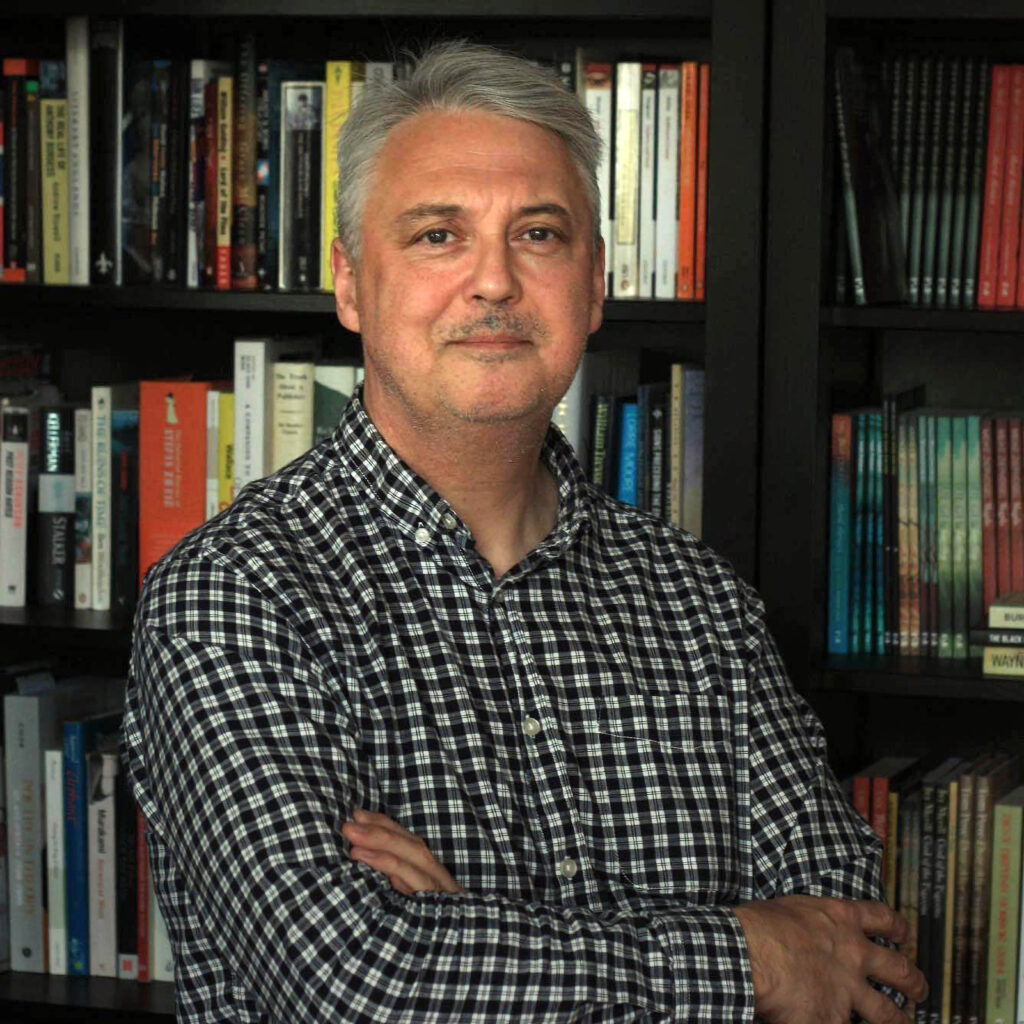
Despite the number of obstacles which stand in the way of high street bookshops thriving, bookselling giant and CEO of Waterstones James Daunt is infectiously optimistic. His passion for the paperback and belief in the physical experience of standing in a bookstore is compelling, even over Zoom.
High street retail was stuck in a mire long before the mass closure of shops over the past year. The pandemic has, of course, been the final nail in the coffin for many shops across the country – apart from those like M&S, John Lewis and Next all of which, Daunt points out, have had the resources to pivot online and create “more modern and dynamic” systems. This response has placed further pressure on other businesses reliant on the footfall: “It’s a kind of self-perpetuating domino effect,” Daunt says.
Bookshops, one might think, have not escaped this vicious cycle. Daunt, 57, points out that they’ve also suffered from the government’s “perverse definition” of what constitutes an ‘essential’ shop, and been in direct competition with those that have been able to stay open and sell books, like WHSmith and supermarkets. Like the majority of other shops, Daunt warned back in January of this year that Waterstones faced closures due to continuously high rent rates.
But bookshops have also bucked the trend to some extent, both during the pandemic and pre-pandemic in what was sometimes called the slow death of the High Street. Daunt has been highly praised for leading Waterstones during what have been dark days for bookshops. And if the brief periods of reopening in the past year are anything to go by – and Daunt says they’ve been “very busy” during those times – bookstores have a better future than has often been predicted.
Other kinds of retailers, though, he’s far less optimistic about. “It’s a savage environment,” he says, ever the fierce competitor. “If you’re not on top of your game, then you disappear.”
Daunt is also keen to point out that this is the unique nature of bookselling. “I think the problem is that other retailers don’t have the same benefits as bookshops. At the end of the day, it’s actually not that much fun to go into a shoe shop or clothes shop. The great thing about a bookshop is that everybody likes being in it, whereas most other shops appeal to a narrow demographic.”
Despite the looming threat of Amazon on the book world, Waterstones has been “able to prosper” over the past ten years and sales have been gradually increasing. This, says Daunt, is mostly down to the experience created in-store, which remains the main point of differentiation between Waterstones and Amazon, with the latter providing neither customer-facing relations nor a warm “social” environment.
“Bookshops are nice places,” Daunt continues, “where you can find a book by recommendation or have the serendipity of picking up a book and thinking ‘Oh, I’ll read this’.” And the book you buy is “just better”. “I truly believe that there’s pleasure in walking out of a bookshop with a bag and feeling the weight of the book. You feel kind of virtuous – like you’ve almost read it.”
If Daunt had to point out the singular most important ingredient of bookshops, it would be the people. If at the start of the 21st century everything was about “cutting costs and getting rid of staff”, the past decade has been marked by reinvesting in the people of the industry. “The personality of your shop is, at the end of the day, embedded in your staff. If you invest in knowledgeable people who care about what they do, you’ll run a much better bookshop: this is what underpins the strength of Waterstones.”
And of course, this is another differentiator with Amazon, which has, in the past, been criticised for bad customer relations.
Waterstones dominates a quarter of the book market, and has been able to thrive in recent years. But what of smaller independents, who collectively hold a mere 3 per cent share of the market? “The good ones are actually in a better position than chains like Waterstones,” Daunt says, pointing to the backing such shops receive from their local communities. And again, it’s “survival of the fittest”: “If you’re good enough, and you genuinely create a nice environment, you’ll be fine. The rise of Amazon actually weeded out all the weak ones, and it’s the good ones that remain,” Daunt argues.
The other tech-oriented threat facing paperbacks is, of course, Ebooks. But if they surged in popularity around 2014, their retreat back into the shadows is testament to the difficulty of actually replicating the feel and texture of a book. “I can’t see how that’s ever going to be replicated in a way that also gives you all the other tangential pleasures that come with owning a book, or having a bookshelf- they are almost a diary of your life,” says Daunt.
The really powerful new trend permeating the book world is Audiobooks, which has boomed in popularity – especially amongst older readers, with downloads increasing by 42.5 per cent in the first half of 2020 alone. Daunt is now also CEO of Barnes & Noble, which Elliott Advisers bought in 2019 for a reported $683 million, and the firm has started to set its horizons on the medium, with the launch of its Nook 10 HD tablet.
Even so, Daunt doubts whether Waterstones will be able to follow suit. “The market share is tiny, because at the end of the day Amazon will always undercut. They invest much more, and they’ll always have the advantage of having created the market in the first place. Everybody else is just playing catch up.” He says that unless he can work out some way of “piggy-backing on the Barnes & Noble capability which, with different publishers and associated rights, will be complicated, Waterstones won’t be able to launch an audio subscription service.”
Despite all this, Daunt remains ever-positive regarding the prospects of the book world. “There’s still the majority of people will prefer reading physical books. I think you just leave Mr Bezos to make all his money, and the rest of us can just prosper at what we do.”
And if recent book-sale figures during the pandemic are anything to go by, appetite for reading is as voracious as it has been – if not more so. Daunt sees this as a pivotal moment for reading – a bit like the inception of the Harry Potter books, which changed many people’s book habits irrevocably and led to a “permanent elevation” of reading. “It may not stay at this level, but I’m optimistic it won’t fall back to the old level. I think there will be a permanent shift upwards.”
That the majority of soaring book sales during the pandemic were non-fiction titles points to the fact that people are thirsty to learn about the world around them- a world increasingly beset with existential issues and polarised political debate. People are “energized”, says Daunt, “and books play a massive part in that.”
Though for many the biggest single threat the world faces is climate change, Daunt says racial issues brought to the fore by the Black Lives Matter protests will be what people WILL remember of this year. How does he know this? “Our bestsellers last year were books essentially about race and inequality. And our market share as a bookseller was dramatically higher (up to 60%) on those issue-led books. People wanted to come into a bookshop and find out what works.”
Reading – and if we take Daunt for his optimistic word – bookshops, too- are a reflection of the interests, passions and problems of an entire society. Daunt puts it simply and exactly: “Books sit at the heart of what matters.”
You may not have heard of him but last week Matt Moulding became Britain’s most generous man.
The son of a road-surfacer, Moulding is self-made: he left school at 16 to work in a local felt factory but returned to finish A-Levels after being tracked down by his economics teacher, who believed that he had great potential. He then worked for various tech firms before setting up The Hut Group, which floated on the stock exchange last September for £4.5 billion. Moulding has decided to give £100 million pounds of it to a domestic abuse charity -100% of which he could have received in rent payments from the business.
Such instances of generous philanthropy are not uncommon in an era in which billionaires are multiplying at a staggering rate – most of them tech oligarchs – at the same time as world poverty is soaring and the climate collapsing. Lord Sainsbury, the UK’s second biggest philanthropist, has donated tens of billions in the past decade to the Liberal Democrats, the arts, education and humanitarian sector, and the British Museum – to name a few.
But as a well-established and well-structured sector, what does charity mean in the modern age?
To answer this question we might revisit the complex and long-standing origins of ‘philanthropy’. It’s earliest form was almsgiving (giving money to the poor) in the medieval period, which was rooted in religious duty. In the 16th century more secular concepts of charity emerged from the schism between Catholic and Protestant (and their competing notions of what charity should be) during the reformation.
Then, at the beginning of the 17th century, Elizabeth I introduced a law making charities more accountable, after which the first legal definition of charities was created. This went on to form the basis of UK charity law.
The sector became much more systematic around the late 18th century, when modern concepts of corporations as standalone legal units began taking shape, and philanthropists pooled resources and combined their efforts.
Then, of course, came the Victorian age, where philanthropy sky-rocketed: the industrial revolution and the ubiquity of manufacturing jobs brought about increased poverty, and this led to more state involvement in welfare issues. With the onset of liberal politics and the Labour movement in the 20th century, philanthropy was brought under the bureaucratic wing of the government.
So where does this leave us now? Today philanthropy is so widespread that quite apart from roles within the charities themselves, ancillary jobs have grown up around the industry. Lawyers might specialise in charities. Bates Wells is arguably preeminent in the area, with Farrer & Co. another revered firm which offers opportunities. Banks and investment firms have professionals dedicated to advising clients on the ‘giving’ aspect of their portfolios. The charities themselves are more and more run like businesses, meaning that they require advice on a whole range of issues from HR and tech, to transactional activity and litigation aspects.
In 2021, the cultural prevalence of identity politics and human rights issues has fostered renewed interest in philanthropy. And Covid-19 has, as ever, made its mark in this sector too: charitable actions during the pandemic – such as the late captain Captain Sir Tom Moore’s charity walk or the countless other marathons people did in their back gardens – may be an indicator of a population shaken into giving back to the community and helping others during a collective crisis.
The figures certainly show this: according to a 2020 report by Charities Aid Foundation (CAF), though less face-to-face interactions during Covid meant physical fundraising declined, large and sustained “cashless” donations and general trust in charities increased.
Between January and June 2020, the public donated a total of £5.4 billion to charity – an increase of £800 million compared to the same period in 2019. And the charity sector may be one of the few positive instances of digitalization; research shows that social media is the biggest inspirer of donations and emails the biggest format of donating.
Yet a cursory glance over the history of philanthropy is enough to see how it has gradually changed from well-meaning charitable acts of well-endowed individuals to an industrialised sector; and how, in some instances, it’s been enveloped by the competitive wing of capitalism.
There has been a worrying number of cases of corruption and misspend funds in the charity sector, which has given rise to nicknaming some large charities “briefcase NGOs”- where the funding system is warped so that money goes directly into the pockets of those who run the organisation. As one Guardian article suggests, many NGOs start out with “noble intentions” – intentions which are soon corrupted by international funding agencies which “dictate” the terms and cause the NGOs to realign their priorities with those of the patrons.
It is proving difficult for charities to maintain integrity in the brittle and competitive world of NGOs; yet as the faultlines between the rich and poor widen, and the environmental crisis we face grows nearer, philanthropy’s role will become ever more necessary. Individual endowments – such as those given by the likes of Moulding, Lord Sainsbury and Bill Gates – are diamonds in the rough. But for ordinary people who want to give back and whose pockets are not so heavy, the path needs to become more transparent.
In the first of a series of articles on jobs within the religion sector, Robert Golding delves into how Anglicanism has coped during Covid-19
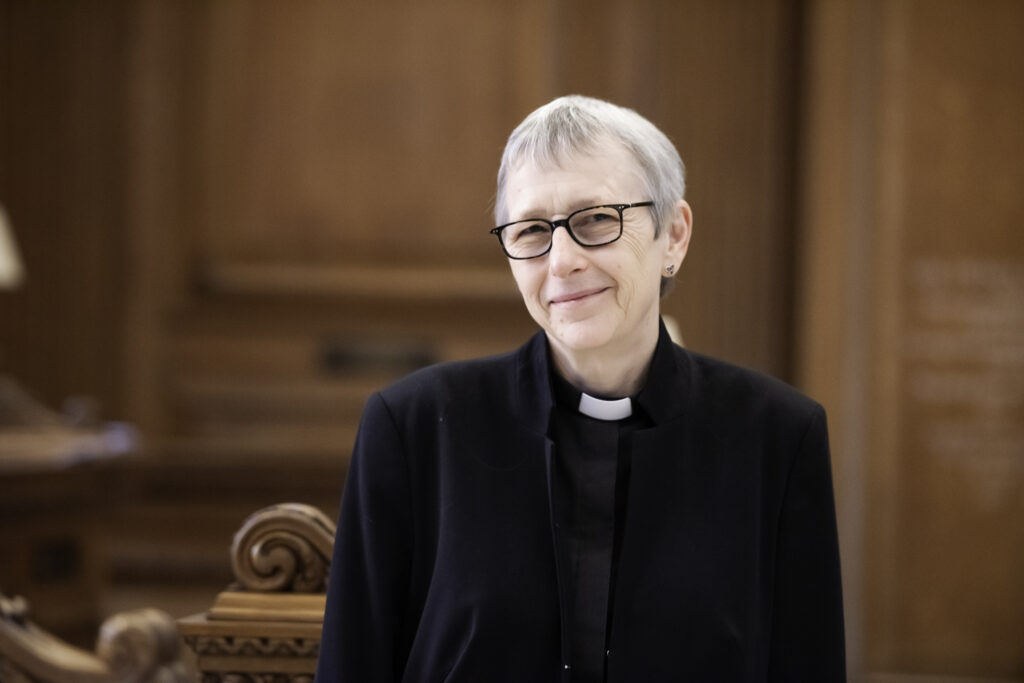
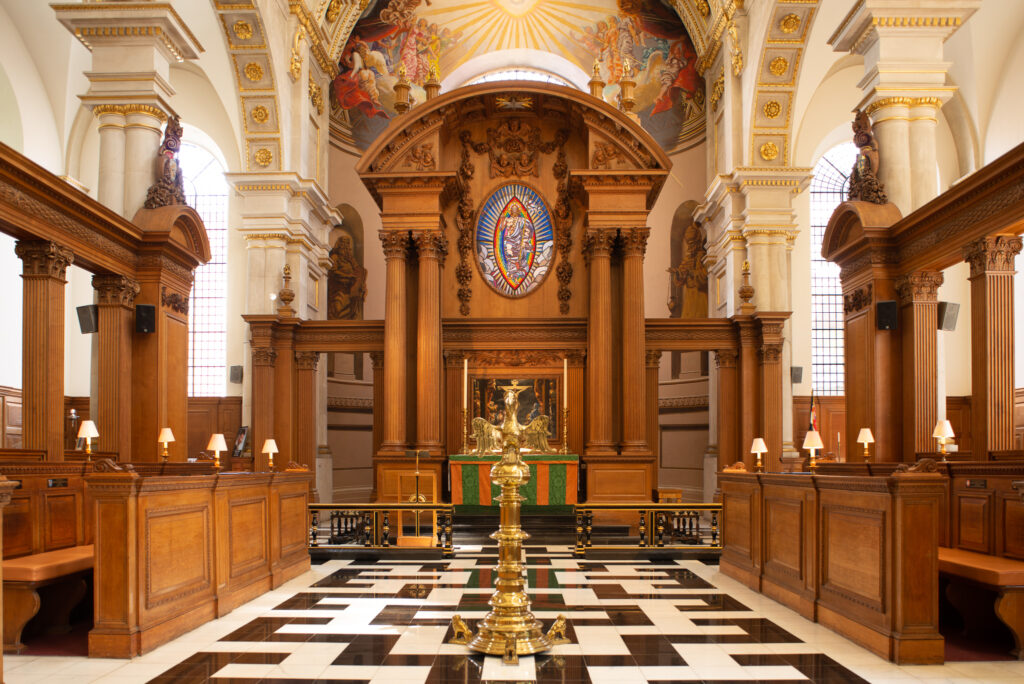
If you visit the Reverend Alison Joyce at the famous Wren church of St Bride’s just off London’s Fleet Street, there’s a decent chance that she’ll take you into the hub looking out onto Salisbury Court.
There you’ll find a stone memorial to a woman called Mary Ann Nichols, who is best known as one of Jack the Ripper’s victims. Bespectacled and intelligent – one of those Oxbridge-educated reverends who is also a theologian – Joyce points it out as I’m leaving. “It’s one of the things I’m most proud of. If you read the history books she’s a victim – but she was a member of this parish and we still owe her a duty of care.”
The plaque is moving. But you have to be here in Wren’s famous space to feel its full force. That’s true also of the memorial to journalists who have lost their lives the world over – among them James Foley and Clive James.
All our services have gone out online. Since March 2020, we’ve never missed a service. We can do that because we have an amazing choral tradition.
The Reverend Alison Joyce
“Covid has impacted on every aspect of our life as a church,” Joyce says. “The most challenging aspect has been the pastoral one. You add the Covid restrictions in a ministry where touch is very important – you need to be able to hold someone’s hand. We are a sacramental church which means things like communion are very important.”
The Biblical phrase which is most applicable to the pandemic is that which is supposed to have been uttered by Jesus upon his resurrection: ‘Noli me tangere’ – do not touch me. It’s still not clear why he says this, whether it is a warning of the physical ramifications of touching him – or as theologians might say, touching his ‘risenness’ – or whether to do so might be to incur some strange and insupportable physical sensation.
Alison Joyce has seen an increase in her international congregation at St Bride’s. Photo credit: Slater King
What’s certain is that the church has had to operate for the last year without touch. Like museums, they’ve been sent online; also like cultural institutions they’ve found a global audience which they might not have expected to encounter.
Joyce explains St Bride’s pivot to online: “All our services have gone out online. Since March 2020, we’ve never missed a service. We can do that because we have an amazing choral tradition. And of course the lovely thing about that is, we’ve got people contributing to those services internationally. There’s one woman who does readings from the States – so actually we’ve got an amazingly global congregation.”
So the Anglican church, which stretches back to the marital woes of Henry VIII, cannot avoid the need to think about tech provision. Last summer I visited St Lawrence’s in Ludlow and found myself immediately accosted by a warden extolling the virtues of the church’s new app. At St. Lawrence’s if you point at the famous misericords with your phone, you’ll see them flicker into interactive life: a medieval woman cooking, a knight galloping towards you.
The East End of St Bride’s
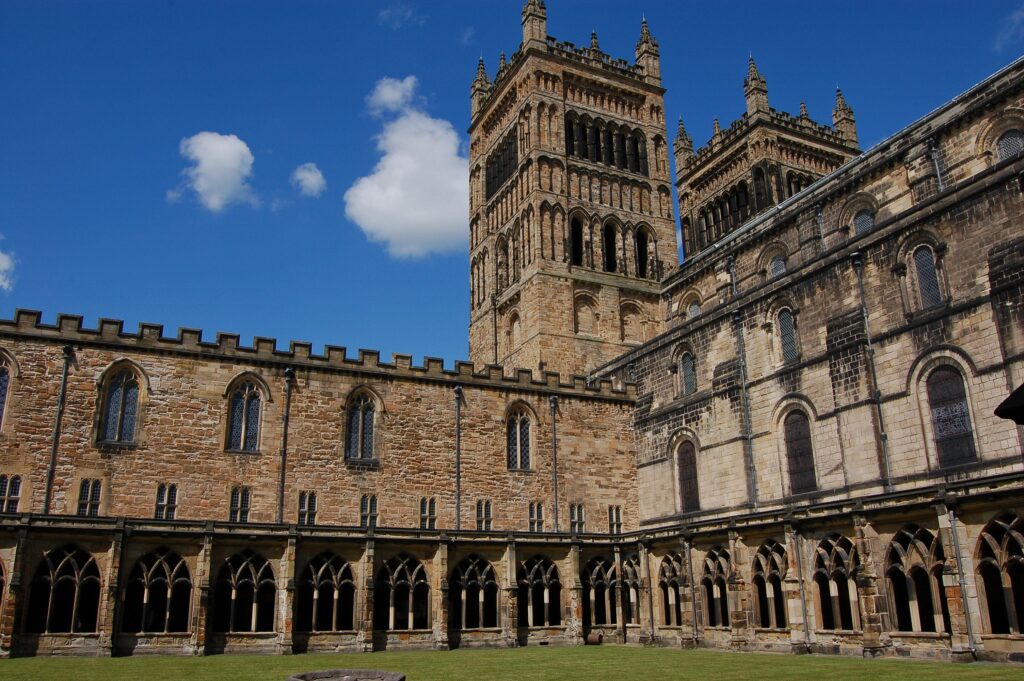
During the pandemic, I’ve often found myself wondering about those medieval structures which I most came to mind about in the days when going to them was part of a typical calendar year. Durham cathedral, my vote for the most beautiful building in Europe, where the remains of St Cuthbert are buried, at time of writing lies numerous Covid tiers away.
Interested to know how they’re doing, I catch up with Charlie Allen, the residentiary canon at the cathedral to find out how things have been. The cathedral also moved to online worship, and now has, according to Allen, “a global community of prayer of 340 members.” (It is a feature of writing about the Anglican church that the numbers discussed can seem heartbreakingly small).
That’s all well and good, but central to Christian experience for thousands of years has been the Eucharist. Allen concedes the problem: “It has been impossible to engage with the subtleties of the Eucharist in this way. The touch of a wafer and the taste of wine cannot be communicated in digital form.”
“The touch of a wafer and the taste of wine cannot be communicated in digital form”
charlie allen, residentiary canon at durham cathedral
The cloister at Durham cathedral
Even here Allen remains optimistic in a way which might help us all in our strange locked down lives: “We are looking forward to being able to gather physically again, but we are also aware that having to withdraw from contact for so long has heightened our senses and given us a deeper appreciation of that which we have missed.”
It might interest readers to know how many job opportunities there are in the Church, even during an era of apparently declining belief. That’s partly because the decline takes place against a backdrop of extremely high belief: Christianity remains the religion of the nation, even if church attendance is extremely low. Locally, it’s a part of the fabric of life, even if it is beset by indifference during a time when there is so much else to claim our attention. According to the Faith Suvrey, church attendance has declined from 6,484,300 to 3,081,500 for the period between 2008-2020. And yet as the state has shrunk, the church has sometimes rushed in to fill the void.
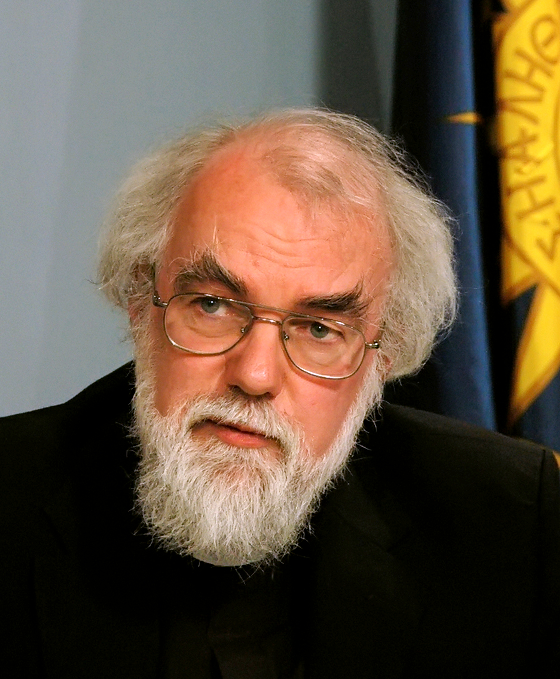
This author recently visited the home of the former Archbishop of Canterbury Rowan Williams who joked that he had ‘made it big’ in the church, while making me a Nespresso.
For instance, the Church Times still has a jobs section which shows a lively number of options for people wanting to be involved. It might even be crudely said that it’s still possible to achieve stardom of a kind. This author recently visited the home of the former Archbishop of Canterbury Rowan Williams who joked that he had ‘made it big’ in the church, while making me a Nespresso. His house was a vast receding grace-and-favour home round the corner from Magdalen College, which he would leave shortly after. Russian Christian art hung from the walls, and Williams’ study was jammed with books.
Rowan Williams alikens today’s small church attendance to the early times under St. Paul. Image credit: By Brian from Toronto, Canada – Archbishop of Canterbury, CC BY-SA 2.0
We talked about the low attendance at typical London church services, and he alikened the church today to those early services during the time of Paul of Tarsus, where meaning was arrived at not just in spite of sporadic attendance, but partly because of it.
“We have catering jobs, housekeepers and hospitality staff, education, facilities management, members and retail: there’s a considerable range of jobs for the laity”
christopher hamilton-emery
Williams’ point may ring especially true during Covid, where people are especially searching for meaning. And if it does strike a chord in students, then job opportunities are there. “As a cathedral we have a team of paid staff, and an even more extensive team of volunteers,” Allen explains. One interesting figure who recently joined the ranks of the church is the great publisher and poet Christopher Hamilton-Emery, whose brilliant poem ‘And Then We’, which we reproduce opposite, celebrates his change of career.
Hamilton-Emery explains to me how he was “dislodged from my own [secular] convictions”. His role at The Shrine of Our Lady of Walsingham is a reminder that there are many roles available outside the route of taking holy orders. “At the Shrine, we have catering jobs, housekeepers and hospitality staff, education, facilities management, membership and retail: there’s a considerable range of jobs for the laity,” Hamilton-Emery tells me. “The Church has a lot to gain from experienced general managers coming into serve – so I hope people, even people with no faith, can see that the Church has lots to offer society and can come in and help develop businesses.”
The poet Christopher Hamilton-Emery recently left Salt Publishing to take up a position at The Shrine of Our Lady of Walsingham
And what traits are required? “You don’t need to believe, but you do need to sympathise. You need empathy with the aims, you need to accept moral goodness and love (which may strike some as odd). But most of all you have to care for people and to put the human at the centre of everything you do.”
That might appeal to some at a time when we’ve seen retired GPs volunteer to administer the vaccine, as well as an increase in people applying for nursing qualifications.
Of course, the career you have will depend on the locality of the institution you end up at. Joyce’s ministry at St. Bride’s is highly unusual, with a small residential population, which in usual times would predominantly serve commuters. This segment evaporated overnight in March 2020. “We have a very different community to serve from somebody in rural Oxfordshire or a parish on the outskirts of Birmingham,” Joyce explains. “We’re also lucky because obviously it’s a famous building and we’re also famous for being a journalist church. That in itself makes it an international ministry.”
Pre-pandemic I would give out between 10-20 food parcels and fuel card top-ups per week…We are now giving out 150-200 per week
The Reverend catherine shelley
Things are somewhat different for a nearby ministry run by Rev Dr Catherine Shelley – that of St Edward’s in Mottingham, in Kent, on the borders with south-east London.
This is a more impoverished area – but also in a suburban part of London where footfall has increased during coronavirus as more people work from home. Shelley implemented an unexpectedly eclectic online programme: “Karate and taekwondo, Zumba, dance and Slimming World have all been able to go online, though personally I cannot do Zumba online!”
St Edward’s in Mottingham has a more impoverished congregation, with only a third having email access.
However, the impoverished conditions of her parishioners differentiate Mottingham from Joyce’s parish, and from the wealthier area around Durham Cathedral. “A lot of the congregation and community do not have internet access,” Shelley explains. “One third do not have email and local schools are still using booklets for remote learning as families cannot access online provision. The circulation of sheets has increased from 55 at the start of the pandemic to over 100 paper copies and we also send out over 50 by email to those who are online. Some of the increased circulation is to families we have known previously through sporting and social activities in the church hall; some of it is to families we have come to know through the ever-expanding foodbank.”
We all have a role to play in healing and recovering and seeking forgiveness. It’s a moral failure if we don’t do this within society.
christopher hamilton-emery
It’s the food bank which has really taken off. “Pre-pandemic I would give out between 10-20 food parcels and fuel card top-ups per week,” Shelley continues. “We are now giving out 150-200 parcels per week. We have also prepared regular hot meals for some who struggle to cook, collected medicines, shopped for those shielding or self-isolating, provided access to IT to support job searches, benefit applications and advice, IT access for virtual court hearings, housing support and so on… We never really know what is going to be asked next.”
It is impossible not to admire the sheer range of the church’s response – after hearing from Shelley, the church appears far from a quaint and marginalised aspect of our societal fabric. It feels integral.
Eve so, Shelley is more pessimistic than Joyce, Allen or Hamilton-Emery about the financial position of many dioceses: “There have been rumours of significant cuts in clergy posts – with some mention of a reduction of 20 percent but it is too early to say what the picture will be across the country,” she says.
How does she think it will play out? “It will vary from diocese to diocese because each diocese is a separate charity, with differing resources and priorities. It is suggested that some are in a precarious position financially so more mergers, such as happened in Wakefield, Bradford and Leeds a few years ago, appear likely.” And what’s the prognosis in London? “One thing that will make a difference is the exodus of families from London. I am aware in my own area in South East London, that some parishes are losing up to 20 families who have decided to re-locate outside London because of the possibilities of home-working or due to redundancy. That will probably have a larger impact on church and diocesan profiles and jobs than the pandemic itself.”
And if working in the church isn’t of interest, what does it have to teach us at this time? All those I spoke with for this piece felt that there was great meaning to be found in lockdown – and everyone agreed that there would be a revelatory atmosphere in the world once restriction are lifted.
Hamilton-Emery is optimistic for the future: “We all have a role to play in healing and recovering and seeking forgiveness. It’s a moral failure if we don’t do this within society. I see this as an opportunity of unity and reengagement rather than fracture and dissolution.”
Over at Durham, Allen seconds that: “The pandemic has invited each of us to face up to our own mortality, and to the mortality of those whom we love. Rather than making us morbid, my experience has been that this has given people a fresh appreciation of all that they value in life.”
That rings true. It may be that the Anglican church, far from being irrelevant, is about to find itself more relevant now that people have been given time to pause and consider the direction of their lives. Reality, it turns out, has a way of impacting on us, even if we can’t touch one another. Perhaps somewhere in there is the true meaning of that mysterious phrase: Noli Me Tangere.
And Then We
And then we embraced, sprawling on the green deck like scattered gulls.
And then we knelt under bound flax sail cloth, stinking and making the day.
And then we carried whom could not stand to the red chapel blithely.
And then we walked through your pristine marsh without hours or love or trees.
And then we drew about us buckram cloth and wool dyed with kermes and slept.
And then we pierced cockleshells and yearned for a tangled feast of eels.
And then we walked by sordid wolves and boars in corporal torment.
And then we met with hirsute leather brigands and were lost.
And then we starved, Lord, and knew concupiscence, gnawing your works.
And then we heralded salt wind, seal routes and spectres and walked dully on.
And then we saw your slipper chapel and spread our toes on a mile of stones.
And then we wept. At the ruin of our bodies we wept. At our just ruin.
And then we dressed and swayed, all the same, through the unifying street in a love queue.
And then we bent and entered Nazareth to see her and to know her choice.
And then we knew a high permanent land, our eyes fixed on accommodating angels.
And then we fell in stone-sealed Walsingham, with our fiat ringing, unanchored, teeming.
And then we left to see ice oak burials, flame drift farms, our backwards night talk blazing.
And then we sailed on, working new bones, each a prayer to the star of the sea.
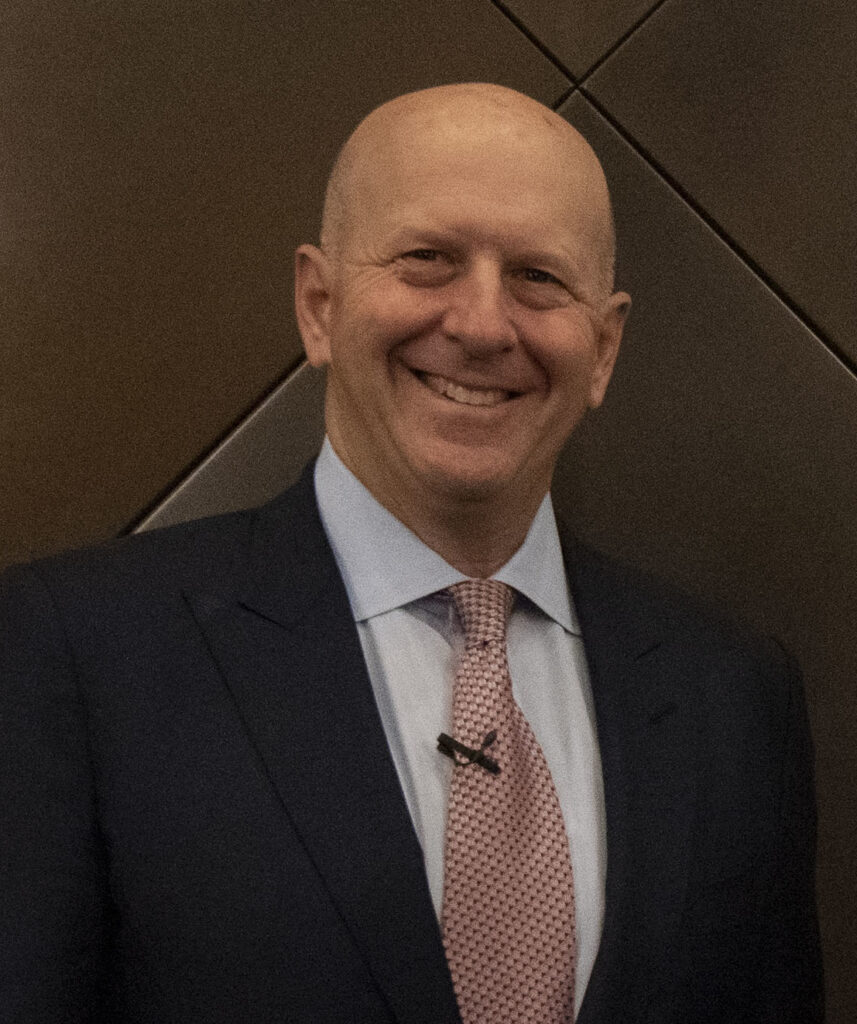
Whenever the CEO of Goldman Sachs David Solomon speaks, markets listen. Two weeks ago, the chief executive declared that working from home will not be the new normal, but instead an “aberration” in these strange times.
Former chief economist at Goldman Sachs, Jim O’Neill was among those who expressed his doubts: “I would have thought virtually every major professional practices firm, whether they be finance or otherwise, is going to have some form of home-working as a result of what we’ve learned during the pandemic.” And is that the case for Goldman Sachs too? “It might be harder to keep that culture so I can see why David said that.”
Now it emerges that there are reports that young staffers at Goldman Sachs have warned that they might quit if work conditions don’t improve. Certain eye-opening statistics emerged as a result of an internal survey among an admittedly small data sample of 13 employees (Goldman employs over 38,000 people). Even so an average working week of 95 hours, with a mere five hours of sleep per night, appears to be an increasingly unpopular status quo.
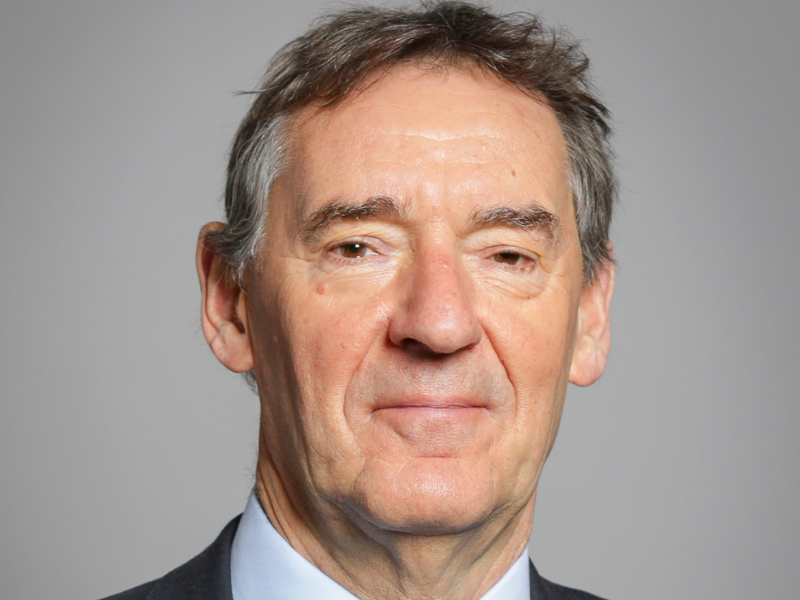
Former Goldman Sachs chief economist, Jim O’Neill
O’Neill continued: “Yes, I can see why David said it, but I cannot imagine Goldman will go back to the same arrangements as before. The idea that everybody has to be in the building for 15 hours a day, five days a week – I can’t see that continuing in a million years.”
It’s worth noting that Solomon’s initial remarks were tethered to the question of the future of young people within the firm: Mr Solomon described the atmosphere at Goldman Sachs as “innovative, collaborative, apprenticeship culture” when explaining why he viewed the bank as ill-suited to home-working.
High-profile lawyer, Mark Stephens, whose clients include James Hewitt, Julian Assange and Mike Tyson, was unimpressed by the remarks. Solomon has been “unfortunately unclear”, he told Finito World, because he did not make it explicit he was talking, “in the context of Goldman Sachs – in particular, the bearpit of traders that needs proximity and collaboration.” Stephens added that it is likely that “other businesses are going to move away from old-fashioned working and will be more flexible.”
Mark Stephens criticised Solomon’s remarks(photo: Neil Gavin)
Others expressed themselves unsurprised by Solomon’s remarks. David Dwek explained that according to a recent survey of 500 respondents carried out by his firm DC Dwek Corporate Finance in collaboration with BLAS and Klapa8, ‘over 70% of senior executives are suffering the effects of Zoom or isolation fatigue related to the current situation and to the working environment.”
It might well be that remote-working arrangements affect CEOs particularly. Marta Ra, CEO of Paracelsus Recovery, has seen an increase of referrals from stressed-out CEOs. “In situations like this, people are looking for fulfilment,” she told us. ‘The typical CEO used to have his team of people. Hierarchy was the religion and now that’s missing.”
David Dawkins, staff writer at Forbes magazine, who has written extensively about the banking sector, was unsurprised by the comments. In his view, Solomon “understands just how valuable Goldman’s culture is. It’s part of a soft power that draws the best graduates and mid-career professionals towards it.”
This was a reminder that Solomon’s remarks – made at a Credit Suisse AG conference – were prompted more by a desire to return to the “culture” of banking rather than any serious practical impediment, since the company operated throughout 2020 with less than 10% of workers in the office. And the financial performance has hardly been worrying. In January 2021, the group reported net revenues of $44.56 billion and net earnings of $9.46 billion for the year ended December 31, 2020.
To put that in context, look at the bank’s performance in 2019. Then the bank reported net revenues of $36.55 billion and net earnings of $8.47 billion for the year ended December 31, 2019. These figures would appear to suggest that the bank is well capable of functioning on a different basis.
In spite of the controversy Solomon has presided over an impressive period of growth for the firm (Photo: (DoD photo by Lisa Ferdinando)
But if the bank didn’t return to the old ways, something would be lost according to Dawkins: “The pedigree of its former staff, the quasi-masonic structure of its partner system, makes Goldmans an incredibly aspirational place to work. But how do they keep that culture going when staffers can’t see and feel it all around them during 12-16 hours of a working day at Goldman?”
But not everyone was piling in on Mr. Solomon. One data analyst, who spoke to us on condition of anonymity, concurred with Solomon’s remarks: “For me, working from home was a one-off venture. I enjoyed the journey but the office environment is a lot better. It’s all about communication; it’s much easier to communicate with your colleagues in the office. At home, you can’t catch your manager for two minutes to ask a quick but important question.”
Solomon’s move is also in direct opposition to many other sectors, such as the tech industry, whose major firms expect working from home to be a central component of work going forwards. Microsoft, for example, is offering its staff working from home options after the pandemic, so long as employees can secure managerial approval. Giants such as Twitter and Facebook have also decided to make remote-working a permanent option.
Mr Solomon’s stance isn’t just about a return for the sake of pure productivity, but in consideration of the incoming graduates, around 3,000 of whom he worries will not have received the face-to face interactions and mentorship they require.
All of this is why Mr Solomon has been one of the most vocal private sector leaders in urging the government to ease restrictions, to allow workers back into offices. He is not alone in the banking world either: Jamie Dimon, the chief executive of Morgan Stanley, has previously stated that working from home has lowered productivity levels.
Working from home has been hailed as revolutionary by works who gain time from dropping the commute. A PWC survey found that around 55% of employers said they expected staff to work at home flexibly in the future after the pandemic.
Yet Goldman Sachs seems unlikely to partake in the revolution anytime soon – particularly, as Dawkins points out, since the firm recently built a new £1 billion pound headquarters that is “so obviously designed around keeping the staff within the GS bubble for as much of the day as possible.” Dawkins imagines “thirsty Goldman Sachs staffers staring at one another – judging, aspiring, ranking themselves alongside their peers.”
But for our insider data analyst the experience of returning to the office is a more benevolent one. He describes it as an educational process of “seeing the pressure” and adds that, being in that environment “puts you in the right mindset.”
That level of animal competition is certainly hard to simulate over Zoom. But for Solomon to succeed in the post-pandemic new normal he’ll need the support of those who work for him.
Heroes only truly reveal themselves when faced with a villain. The world is up against a mighty enemy, Covid-19, and many people have revealed themselves as everyday heroes; from Janet next door making sourdough bread for her shielding neighbour to all the key workers who kept the country running during lockdown. Bill Gates has squared up to coronavirus with huge financial donations. As he has invested more than $350 million to fight COVID-19 will history hail the Microsoft founder as a key heroic figure in the pandemic or is his philanthropy just another sign of a world gone wrong?
Jeremy Hunt, the former secretary of state for Health, says philanthropy should not be met with cynicism: “Philanthropists should be welcomed with open arms and praised to the rafters. I really don’t understand those who criticise the generosity of others.”
While Nick Dearden, director of Global Justice Now, is more sceptical about wealthy individuals being involved in the race for a cure as vaccines should be public goods. “The answer to massive economic, healthcare or environmental problems cannot be left to some of the richest people in the world, as if we were living in the Victorian Age when social harms were seen as matters of charity and benevolence.”
With a net worth of around $120 billion, Gates is only the second richest man in the world. With an estimated net worth of $200 billion, Amazon founder Jeff Bezos comes in at number one. In contrast to Gates, and although he has pledged to invest billions into Covid initiatives, Bezos has been positioned as a coronavirus villain – Super Spreader – after hundreds of Amazon staff took strike action to protest issues around the company’s response to the pandemic, including limited sick pay
In the 1990s, few people would have elevated Gates above Bezos. Gates was fighting a series of legal battles around the monopolistic business practices of Microsoft. Former Microsoft employees described the office as a confrontational environment, with Gates being “demanding”. According to James Wallace’s Hard Drive, more than one “unlucky programmer received an email at 2:00am that began, ‘This is the stupidest piece of code ever written.’”
Then, towards the end of the decade Gates turned his attention to philanthropy. Alongside his wife Melinda, the self-proclaimed “impatient optimists” formed the Bill & Melinda Gates Foundation. It seems he turned over a new leaf but some regard the Foundation as a fig leaf, barely disguising the injustice of Gates earning more in a day than most will earn in a lifetime.
Since its inception the Bill & Melinda Gates Foundation has given more than $50 billion to charities. Its raison d’être is to “reduce inequality” but Gates admitted in an Ask Me Anything Reddit session that he often uses a private jet when reducing inequality. “It does help me do my Foundation work but again it is a very privileged thing to have,” he conceded. But aside from the occasional uncomfortable bit of irony, his philanthropy also gives him an extraordinary amount of power. Put bluntly, Bill Gates chooses who lives and who dies. He influences the success or failure of a vaccine just because people bought his computers.
But Hunt dismissed the idea that positioning philanthropists as heroes risks creating a plutocracy, saying: “A democratic society like ours has sufficient checks and balances to stop undue influence but if someone wants to pledge a fortune or a fiver to make the world a better place they should be thanked and encouraged. I spent a lot of time trying to boost philanthropy to the arts when I was Culture Secretary and was always struck by the difference in attitude between the UK and the US.
“Philanthropists in the US are seen as heroes but here in the UK our first thoughts can be negative. That’s changing but we should do more to embrace the good work that many very generous and inspirational people do.”
Philanthropist and the founder of Addison Lee, John Griffin, shares this sentiment. Finito World can exclusively reveal that Griffin has invested £12 million into building a new wing at Northwick Park hospital to help speed up the race for a cure.
Griffin endowed The Griffin Institute with his £12 million gift to Northwick Park Hospital
Griffin has praise for Bill Gates and his commitment to finding a vaccine. “He’s a good man and he’s the right man to have in charge, he really is, I think that people who manage to achieve success should not ignore that, it’s a gift,” Griffin says.
Indeed, within a few weeks of committing their first $100 million to the fight against Covid-19, the Bill & Melinda Gates Foundation announced a $50 million commitment to fund the new ‘Therapeutics Accelerator’. Alongside MasterCard and the Wellcome Trust they have invested in a variety of treatments, including the University of Oxford and AstraZeneca vaccine which is one of the seven vaccines in the final stage of trials.
Professor Arpana Verma who is a clinical professor of Public Health and Epidemiology at University of Manchester said funding from the Gates Foundation is “key” to finding a vaccine and ensuring it is accessible.
She regards philanthropy as a necessary component in successful public health initiatives. “Public health through the centuries has been based on philanthropists. When we got the industrial revolution, we got the core epidemiologists coming in. In Greater Manchester we had Edwin Chadwick, and in Liverpool we had William Varr, and in London we had John Snow. This was the crux of things happening fast. it gets things moving. Whilst governments and even NGOs might have more of the administrative to get through, philanthropists might not have that burden.
“A lot of philanthropists are well up on the evidence so they know what things to do and can get ahead and do it,” she adds.
The Bill & Melinda Gates Foundation has been focused on combating disease for years and it has made polio eradication one of its top priorities. One of the Foundation’s first big investments was to an organisation called Gavi, the Vaccine Alliance. Since 2000, Gavi and partners have immunised more than 760 million children, saving over 13 million lives.
This knowledge of disease has made Gates a coronavirus Cassandra. In a 2015 Ted Talk he warned: “If anything kills over ten million people in the next few decades, it’s likely to be a highly infectious virus rather than a war. We need preparedness,” he demanded. Clearly, Gates’ value in the fight against Covid is not exclusively due to the amount of money he is throwing into the cause but due to his deep understanding of disease.
Gabi Hakim, founder of VacTrack app
He has inspired other entrepreneurs in the healthcare profession. Gabi Hakim who is the founder of a new VacTrack app which collates vaccine histories and sends reminders for follow up boosters, cites Bill Gates as an influence. “Bill Gates has always stood out as the standard to which we should all aspire. In particular, his work in both biotech and digital health through his Foundation has emphasised the fact that tackling health crises requires intervention at population scale, which aligns with our own mission of accessibility for the masses. I think personally, it’s seeing his ability persist through the bureaucracy and complexities associated with healthcare today that has motivated us.”
WIRED’s editor at large, Steven Levy, who has been conducting interviews with Gates since 1983, points out that Gates has also made a positive impact through his cajoling of other wealthy people.
He says: “I’ve met a lot of billionaires, the field I cover produces billionaires, basically he’s made it a point to stand up and argue for other very wealthy people to devote a huge portion, you know, half or more, of their fortunes to addressing issues like public health. He really is the person who speaks most of it. He’s sort of like a born-again philanthropist.”
Gates may be a born-again philanthropist but he approaches his giving with pragmatic, almost heartless logic. In the documentary, Inside Bill’s Brain: Decoding Bill Gates, Gates recalls the moment he showed his daughter a polio video. “The video ends with the girl who’s got the paralysis limping down the road with a crummy wood crutch. My daughter said to me, ‘well what did you do?’ I said well we’re going to eradicate it. She said, ‘no no, what did you do for her?’”
With a business analogy, he goes on to explain that this emotional attitude is not productive and that he believes in “optimisation”. “The emotional connection is always retail, even though, if you want to make a dent in this thing you better think wholesale, ten to the six, ten to the seven type magnitudes,” he says.
Levy believes that Gates is primarily motivated by the intellectual challenge. “It isn’t ‘I’m doing good for the world’, ‘I’ve got to do good’ it’s like ‘these are fascinating challenges that engage me intellectually and I’ve got something to offer there’. I think he finds a lot of satisfaction in pursuing it and learning about the science and speaking to scientists and adding his brain power to solving this.” In the power, money, knowledge triad, it seems for Gates, knowledge always comes out on top.
In many ways he is the archetypal nerd. He takes ‘think weeks’ where he goes off alone to a cabin in the woods and reads. When he is fascinated about a subject he reads as much as he can about it. His interest in the environment compelled him to read the rather esoteric Japan’s Dietary Transition and Its Impact by Vaclav Smil, for instance.
Levy explains that it was Melinda who forced him to channel his intellectual brilliance into philanthropy. “Really, the big impetus for him getting into philanthropy at that point in his life when he did was his wife. I do feel it was her influence that led him to step back from Microsoft maybe sooner than he thought.” Melinda’s influence has been profound and since the beginning she has inspired Bill to be better and think differently.
Melinda joined Microsoft after graduating with a degree in computer science and economics from Duke University and a master’s in business administration from the Fuqua School of Business. One evening after work, Bill asked her if she wanted to go out for dinner, in two weeks time. She declined telling him she wanted spontaneity and an hour or so later she received a phone call from him asking “is this spontaneous enough for you?”
If Bill is deserving of a hero status, Melinda is too, perhaps even more so. It was Melinda who inspired the Foundation to focus on combating disease when as a new mother she read an article that described how children were still dying from diarrhoea. Now she is using her influence to protect women from the devastation of Covid-19.
But no matter whether Gates’ philanthropy is driven by Melinda or by pure intellectual curiosity, it does not make his actions any less valuable. As Batman says, “It’s not who I am underneath, but what I do that defines me.” Heroes are also defined by their enemies.
Last month, during the week polio was eradicated from Africa, 10,000 conspiracy theorists gathered in Trafalgar Square to protest against lockdowns, masks and vaccinations. In speeches they rallied against Bill Gates.
Of course, unthinking reverence of philanthropists could lead to abuses of power, but as it stands the Foundation is contributing to developing a vaccine that could save the world and we need all the heroes we can get.
The Bill & Melinda Gates Foundation Covid-19 response
The Foundation has committed more than $350 million to support the global response to Covid-19. This includes:
$250 million to improve detection, isolation, and treatment efforts; protect at-risk populations in Africa and South Asia; accelerate the development of vaccines, drugs, and diagnostics; and minimise the social and economic impacts of the pandemic. The Foundation announced $100 million to the global response in February, and then increased this commitment by an additional $150 million in April.
$5 million to support the Covid-19 response in the Greater Seattle Area. This funding supported local public health efforts in Seattle & King County as well as six regional response funds that aim to meet the needs of those disproportionately impacted by Covid-19.
$100 million to Gavi’s new Covid-19 Vaccine Advance Market Commitment, to support its future efforts to deliver Covid-19 vaccines to lower-income countries.
In addition to the more than $350 million committed, the Foundation will also leverage a portion of its Strategic Investment Fund, which addresses market failures and helps make it attractive for private enterprise to develop affordable and accessible health products. For example, the Foundation is collaborating with Gavi and the Serum Institute of India to accelerate the manufacture and delivery of up to 100 million doses of Covid-19 vaccines for low- and middle-income countries. $150 million came from their Strategic Investment Fund.
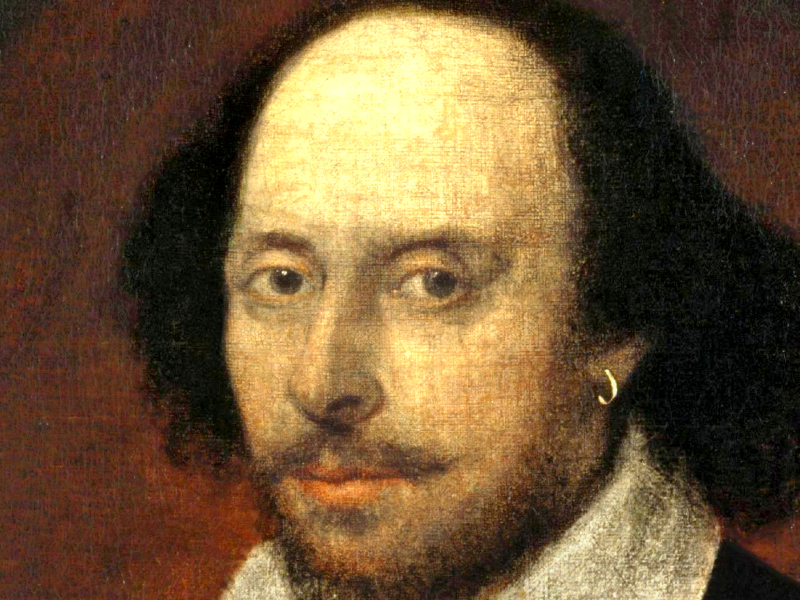
The life of William Shakespeare has lessons for how to make the best of your talents during a time of pandemic, writes Robert Golding
In January 1593, the Privy Council of Elizabeth I issued the following order: ‘Forasmuch as by the certificate of the last week it appeared the infection doth increase…we think it fit that all manner of concourse and public meetings of the people at plays, bear-baiting, bowling’s and other like assemblies for sports be forbidden.’
This was bad news for many, but perhaps especially so for a young playwright who was beginning to come out of the shadow of Christopher Marlowe and forge a place at the forefront of the city’s theatre. At the time of the plague’s outbreak, a certain William Shakespeare had begun to find his voice.
Though plague was a fact of Elizabethan life, it must have come as a setback. His life up until that point had not been without gamble. William – Will, as he appears to have been known to friends – had left his wife and family behind in Stratford-upon-Avon and embarked on a career in the slightly louche world of the contemporary theatre.
The language of the edict with its courtly leisure – ‘it appeared the infection doth increase’ – shouldn’t blind us to the cataclysmic impact on Shakespeare and his contemporaries. Shakespeare’s contemporary John Stow – responsible for so much of our knowledge of Elizabethan London – recorded that 11,000 out of 200,000 died between December 1592 and December 1593.
The Elizabethan plague was, of course, far worse than anything we have experienced in 2020. People died in the street, rendering death an ever-present aspect of daily experience. We might miss, for example, the force of the famous insult in Romeo and Juliet: ‘A plague on both your houses’. What is being wished here is something far more awful than we, even as we live out this unsettling year, can imagine.
It ought to be a certain comfort to us now, to realize that Shakespeare’s life – among the most marvelous that history records – was beset by plague at every turn. And those of us who fear even a vaccine won’t put an end to our woes might remind themselves that plague was both a constant and a mutating reality for Elizabethans.
There was a serious bout of plague in Warwickshire the year of Shakespeare’s birth; the young Will would not have been expected to survive. Whatever talk may have swirled about ‘a merrie meeting’ having precipitated the playwright’s death in 1616 at the age of 52, there is nothing to say it wasn’t the proximate cause of his death. We worry about a second wave of coronavirus – our finest poet existed within an unbaiting wave of mortality.
Yet he continued – and not only that, time and again reinvented himself. The plays and poems which follow on from the big plague years are evidence of a profound pooling of resources and a taking stock. Love’s Labor’s Lost, Midsummer Night’s Dream and Romeo and Juliet follow on from the plague year of 1593. They exhibit a richness, and even an urgency, difficult to discern in the ghoulish Titus Andronicus or the bombastic Henry VI trilogy, written the year before the plague struck.
But William Baker points out in his book William Shakespeare, that between 1603 and 1613, London’s theatre land was closed for 78 months. Though the poet inhabited a society without any social safety net, let alone the largesse of today’s furlough scheme, there are lessons here for today’s young people starting out on their careers.
In 1593, Shakespeare was swift to man oeuvre when the severity of that particular bout of plague became evident. Faced with an income gap due to a sudden pestilence, he was in no different a position to an airline pilot or live events manager today.
So what did he do? He launched himself immediately as a courtly poet. For a country boy, it was an act of tremendous gumption, under the patronage of the Earl of Southampton. We therefore have two epic poems – Venus and Adonis and the Rape of Lucrece – which might be termed plague poems. Each breathes freshness, health and life; they must have been cathartic to those reading them, and indeed these long poems were hits among the student population at the Inns of Court.
For some times, the theory has circulated – and been brilliantly argued on the website The Shakespeare Code – that Shakespeare was using existing connections to forge his career: it is argued that Shakespeare had in fact taught and conducted secretarial work in Titchfield, where the Earls of Southampton lived, prior to the plague. This might have particular resonance for those casting around for contacts during the time of coronavirus: open that contact book. It also shows the willingness of our greatest mind to undertake menial tasks if it meant getting in close proximity to someone with the power to make a difference to his life.
What is clear is that Shakespeare was flexible and imaginative; at the critical point, he was willing to imagine another version of his life. He also remained true to his gifts. There is a strong hint in Sonnet 111 that Shakespeare found playwriting a drudgery: ‘my nature is subsumed/ to what it works in like the dyers hand’. He seems to lament his low birth. But when the moment came, he didn’t attempt the impossible. There is a strong pragmatic streak about Will; he might seem in the stratosphere now but this was no dreamer.
What also might chime with today’s young is that he remained patient and took the long view. He might have been forgiven for thinking in 1593 that the long-term prospects for life in the theatre weren’t good. What was there to stop plague returning and scotching year after year of possible revenue? But he appears to have kept his options open, and retained connections within theatre land even while branching out into poetry. There is a strong hint throughout his career that Shakespeare had a quiet talent both for friendship – contemporaries would refer to him as ‘sweet’ and ‘honey-tongued’ – but also for business relationships. In his last will, he would bequeath memorial rings to the actors John Hemminge’s and Henry Condell; they would repay his memory by editing the First Folio in 1623, seven years after the poet’s death.
This was networking, as it were, from beyond the grave. The hard realities of inhabiting a plague-riddled society appear to have made Shakespeare not just a better poet but a better businessman. This has sometimes been an inconvenient fact to those who would have preferred the Bard to be more Keatsian – more head-in-the-clouds, and klutzy with money. The record shows he was anything but.
Instead, Shakespeare continually found ways to expand not only his poetic capacity and his knowledge of human nature, but also to develop what we now call his career. In 1594, he bought a one of James I would become the King’s Men: Shakespeare saw the main chance and took it. Again, there is a hint – but no real proof – that he was utilizing his connections. It has long been rumored that it was the Earl of Southampton who loaned Shakespeare the capital. If so, we might wonder whether he wisely used his time in lockdown to deepen existing connections.
There is an onwards pressure to Shakespeare’s life which suggests a refusal to become down-hearted from which we might learn. The year’s show him steadily more active both as a property owner in London and Stratford, as a shareholder in his theatre company, and as someone with small businesses on the side in malt dealing, in lending, even going so far as to turn a property he owned in Henley Street into a pub.
As for the plays, it’s true that they don’t always exist within a milieu of work which we recognize, unless that milieu is the court. But once you look past that you find a good deal is implied about loyalty and about the dignity of work, and indeed a certain amount about the kind of adaptability which we can vaguely detect in Shakespeare’s own life.
It has been said that the characters Shakespeare most admires are Horatio in Hamlet, Kent in King Lear; Cassio in Othello, and Enobarbus in Anthony and Cleopatra. These are the characters still standing at the end in the tragedies; those who will be charged with rebuilding the state. This a recurring type: the hard-working, flexible, loyal aide who becomes clearer in his moral purpose as difficulty mounts.
These are plays written by a man thrown back continually on his own resources, and who time again rose to that situation. William Shakespeare found new things within himself – new forms of language, yes, but also new forms of life. His relevance ought not to be surprising. Every period of history has found in Shakespeare a friend and teacher – but it’s fascinating during these unsettling times to see how much his life, and not just his poetry, has to teach us.
There’s nothing quite like a global pandemic to make people across society rethink their priorities writesGeorge Achebe
Simon Ferrar knows exactly where he’ll be buried: he’s ear-marked a plot worth £4,500 under some rather splendid blackberry bushes in Surrey Hills. ‘As in life, it’s location, location, location,’ he jokes, looking at one of the premier positions in the cemetery.
Except this is no conventional cemetery, and Ferrar will also die knowing that he has been responsible for the burial circumstances of some 28,000 around him. He’s the founder of Clandon Wood, a natural burial ground, and a part shareholder in it as well. ‘I created a nature reserve because we were looking to encourage a huge diversity of wildlife here. We wanted to add another little corner of the natural landscape to the Surrey countryside,’ he says.
The funeral business is, of course, recession-proof and has even been helped by the pandemic. Natural burial involves graves made from biodegradable materials; each plot is three-feet deep and involves no vertical memorial. Ferrar explains another difference: ‘What’s unique is that we set up a trust fund. Every single person who purchases a plot here pays a one-off fee of £250 which goes into the trust. By the time we’ve sold all 28,000 plots, that trust fund will be worth in excess of £7 million.’
We drive out in a golf cart into the plots. Some of the graves look like large scratches in the earth. In other instances, one’s memorial is simply a tree, or some wild grass. He gestures at a plot. ‘Over there, there are buried two twins. One killed himself jumping off a building, and the other couldn’t live with it. Three years later his brother killed himself too.’
But the funeral, he says, was meaningful. ‘The mother said they weren’t meant to live long lives.’ He adds: ‘We care for the living here as well as the dead.’
A Morbid Culture
When the pandemic struck, it found a morbid culture. Ours is an odd, almost sanitized plague, so unlike the Renaissance and medieval counterparts: when the deaths rack up, they do so behind closed doors. We don’t see them for ourselves. And this fact has created communal space with which to discuss another crisis: our mental health.
Ferrar views his business as a ‘throwback to a couple of centuries ago where families can take the coffin on a handcart. We’ve been burying people on this island for about 30,000 years. It’s only in the last few hundred years, we’ve got used to the kind of Victorian funerals, the moralization and the grimness of that.’
At a time when our former structures have been removed, and we experience uncertainty as to whether our life shall return to anything like ‘normal’, Ferrar’s project can teach us perspective. As the world quietens, many have found that they had become disconnected from the real cycle of nature.
The £65K Club
It isn’t difficult to understand why some who have lost their jobs, or who have had their weddings placed on hold, or found themselves subject to domestic abuse, might be struggling at the present time.
It’s harder to explain why mental health has become such a problem for FTSE250 CEOs and the superrich. But according to Marta Ra, the founder of Switzerland based clinic Paracelsus, which also has a UK branch and charges £65,000 a week, that’s exactly what has happened. ‘There’s this unconscious bias that the very wealthy are always happy. But actually, they’re often sadder than people with less financial strain,’ she says.
For some this will be a dubious sob story – and yet it tells us something too about who we are.
‘All individuals have their own private fears and problems,’ Ra explains. ‘Perhaps they worry for their employees, or the fate of their companies. And so they start turning to substance abuse. Or maybe they only did social drinking before, but now they start to drink heavily. And locked down with their spouse and children, they’re just as likely as anyone to think: “Who have I married? I can’t handle this.”’
It would seem that at a certain point the noise of life became so great – and what the Victorians called ‘the Battle of Life’ (the title of a Charles Dickens novella) became more intense. Sometimes one senses that the virus has been specifically designed to make us look again at who we are – at where we’re going.
Ra explains: ‘People who are stuck at home have to face themselves for the first time, and really face themselves.’ She adds: ‘Our society wasn’t functioning to be in the present.’
The depths of the forest
But what about those people who are trying to help us with our mental health? Before the crisis, buzz words like ‘mindfulness’ and ‘wellness’ had become ubiquitous, and when I meet Ferrar, I am struck by his laid-back intelligence. His is the sort of spiritual calm which the frenetic Londoners among us tend to envy.
Across from Clandon Wood, tucked away behind postcard-idyllic Shere, is the Forest Bathing Institute [FBI]. In May 2019 Dame Judi Dench became a patron of the organization, but it’s been more broadly on the rise.
I ask Gary Evans, CEO of FBI to explain its origins: ‘”Forest bathing” is actually a translation from the Japanese shinrin-yoku.’ he explains. ‘In Japan in the 1980s, the Japanese government decided they wanted to get people out of big towns and into nature.’ But this wasn’t some hippie whim: it was driven by hard science.
They were researching the health benefits of nature and woodland. When they looked at blood, they found improvements in the immune system. A prolonged exposure to nature caused blood pressure to come down in people who had high pressure, and caused those with low pressure to experience a normalization.’
Intrigued, I head to Surrey to meet with Kate Robinson who takes me into the woods near Newlands Corner.
Over the course of a few hours, I am asked to focus on the shapes of the trees, to explore the smells, to play with leaf litter, to share my thoughts of the forest, and to listen closely to the breeze playing in the upper canopies. The session finishes with a meditation. For a few days afterwards, I find that the wood seems to exist alongside me, in a way which it wouldn’t if I had taken a long walk.
I recall the words of Marta Ra: ‘You can be a billionaire at 23 and still feel fear and loneliness – and the uncertainty of the virus only adds to that fear.’
And perhaps there is something especially apt about all this. Coronavirus, after all, took us by surprise out of the wet markets in Wuhan, where to paraphrase Oscar Wilde, the unspeakable went into pursuit of the uneatable – and duly ate them. As Green peer, and former Green Party leader, Natalie Bennett recently told me: ‘The economy is a subset of an environment. There are no jobs on a dead planet.’ Perhaps part of our duty now is to think again about what surrounds us. And it might after all be that the right job revelation lies just as much on a long walk, as it does on LinkedIn.
Drawing Together
And yet, for some, that will seem too solitary. Others have sought their own reckoning by looking in new and exciting ways at community.
Sally Shaw at First Site gallery in Colchester had been busy in the run-up to Covid-19 with, among other things, a landmark exhibition with Anthony Gormley. Once the virus struck, she realized she had to do something to benefit the local community. ‘The NHS approached me during lockdown. They said: “We’re worried about the virus, yes, but the next thing we’re worried about is the mental health fallout for our staff and also those directly affected by Covid-19”.’
But that assessment proved to be the tip of the iceberg. Shaw lists the challenges: ‘Of course, they were also worried about the stress the pandemic will cause through mass unemployment, emotional pressure and not being able to grieve properly.’
Shaw thought of a way to help. The gallery is part of the Arts Council collection, which consists of 7,000 works collected over 75 years; it’s been built up with the national legacy in mind. Shaw continues: ‘We thought what we might do is invite people to interact with that collection and pick works which represent their experiences and, with a light touch, introduce talking therapies to people’s worlds.’
The gallery introduced a private part of the website where NHS staff in the region and care home workers can submit their stories to the portal. Shaw now plans to find ten distinct stories which will comprise a spectrum of experiences to ‘enable us to create a narrative around the different types of effects on people’s lives.’ The goal, she says, is to create a ‘creative conversation which may be an exhibition at some point.’
That sense of community is also evident at Clandon Wood where Ferrar regularly hosts theatrical performances. ‘We have things like Music in the Meadows where I invite local musicians down, and people bring a picnic. We had four Alan Bennett plays last year, and we had Shakespeare in the Meadow too. Then we have meditation mornings plus all the other events that we have to support grieving families.’
The Forest Bathing Institute too is looking at children’s days, in part designed to help take the burden off local parents, and give children experiences valuable to them going forwards.
It is an image of another life – one that would have felt impossible six months ago. We inhabit for the time being a world slower, quieter and in some ways smaller – but also one with the potential to be richer and deeper than what we had before. It’s a world where time and nature feel like more precious commodities than ever before. It’s also a period when money might matter less because our mortality has been vividly illustrated to us: we all lose our possessions in the end. Ferrar explains to me that a team of archaeologists found evidence of Bronze Age occupation at Clandon Wood. ‘We talk of possession, but the land is only ever held in trust,’ he says, as we pass another unmarked grave.
The curious thing is that this fact, which might make us despair, turns out to be a beginning of happiness. Mental health begins in being rooted in the facts. The virus, awful though it has been, has reminded us how transient we are, but in doing so thrust us back on ourselves, and forced us to renew.
Christopher Jackson asks whether it’s now time for a National Education Service and finds a party unsure of the way forward
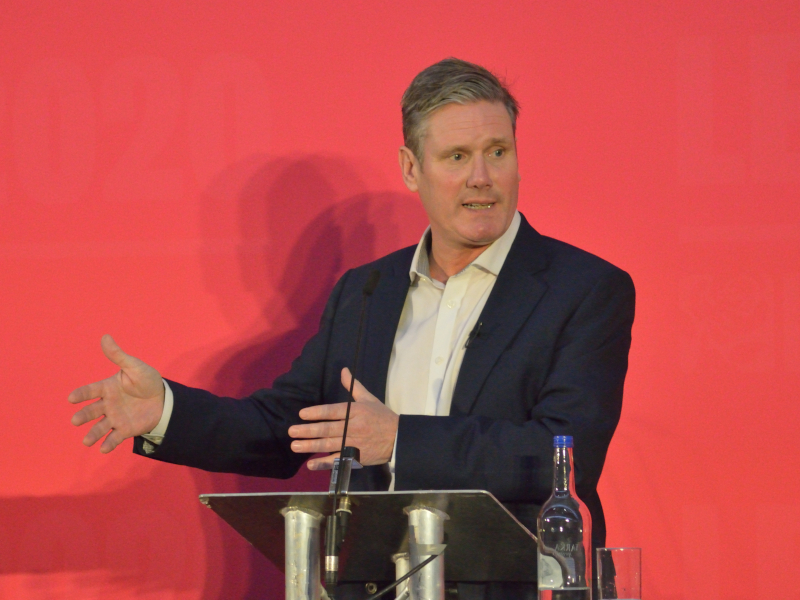
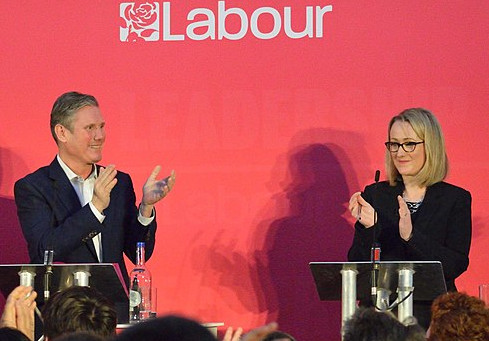
As Sir Keir Starmer takes the reins of the Labor Party, how can the Party seize the narrative on education and finally connect it to employability?
As you walk through Camberwell, every other house has a rainbow, proclaiming not just that household’s gratitude to the NHS, but the presence of home-schooled children within. Education is all around us in virus season: it is on our minds in a way it hasn’t been for years.
But that can sometimes seem the limit of the good news. ‘Education hasn’t had a good crisis,’ as former education secretary Estelle Morris tells us on page 14. Part of this is due to the peculiar nature of the crisis: for the many senior Labor figures we spoke to for this piece, coronavirus was a problem designed to exacerbate existing problems of inequality and, with children taken out of school, always destined to be a different moment than the frontlines camaraderie that has defined the experience of those working in the NHS.
Of those we spoke with, many lamented the lack of leadership from both the government and from the Labor front bench. During the composition of this piece, Rebecca Long-Bailey was demoted from her role as shadow education secretary due to a retweet of problematic remarks by actress Maxine Peake. She was replaced by Kate Green who at time of going to press was still finding her feet in the job.
With the schools not yet back, all this contributed to a moment of pause. Under the empty skies, it felt like an intellectual reckoning was possible. After a decade of Conservative-led rule where should the left be on education?
A Tale of Two Speeches
Two quotes from two speeches, both given by Labor leaders in Black pool.
The first: ‘Just think of it – Britain, the skills superpower of the world. Why not? Why can’t we do it? Achievement, aspiration fulfilled for all our people.’
The second: ‘Tomorrow’s jobs are in green and high-tech industries. We need people to have the skills to take on those jobs, breathing new life into communities.’
On the face of it, it would be difficult to tell apart the words of Tony Blair in 1996 (the first quotation) and the words of Jeremy Corbyn in 2019 (the second). Both open up onto a cherished idea for the Labor Party: that a commitment to education is an integral part of the party’s offer to the electorate.
But scratch the surface, and differences proliferate, which still matter and must be resolved by the still relatively new Labor leader Keir Starmer.
Blair spoke eloquently about investment, and with a can-do spirit about placing education first. But he would likely have seen Jeremy Corbyn’s espousal during the 2019 General Election campaign of a ‘National Education Service (NES)’ which was, like the NHS, ‘free at the point of use’, as a return to the socialist ideas of the past.
As we all know, the Corbyn program was soundly repudiated by the British electorate in December 2019. But looking back at that election, it is startling – and a little depressing – how little education was discussed.
As a result, it would be an exaggeration to say that the public rejected Labor’s education policy. Furthermore, we now inhabit different times where the government – even a Conservative one – has entered our lives in ways which would have seemed fanciful six months ago.
So is the idea still relevant?
And if it isn’t, where should the Labor Party go instead?
Meet the Commission
Among those who advised the government on its life-learning strategy – intended to form part of the NES offer – was the likeable Professor Ewart Keep, who holds a Chair at Oxford University in Education, Training and Skills.
Brought in to assist with the Party’s Lifelong Learning Commission, Keep never felt particularly wedded to the NES idea: ‘Part of the problem was there was a headline slogan that emerged very suddenly and then there was an attempt to put things underneath that heading. We tried to sketch out what adult lifelong learning would look like in the context of an as yet unspecified National Education Service,’ he explains.
There is a degree of comedy here which will feel to some very redolent of Cronyism: the very people brought into produce an enquiry skeptical about its overarching aims.
Internal operatives tell me that things are far slicker under Starmer. Was this an attempt simply to evoke one of Labor’s greatest hits – the NHS – and tether it to an unrelated area? Keep continues: ‘they’re very different activities – particularly when you consider that one of the weaknesses of the NHS is that it doesn’t succeed in preventing illness: you’re treating people who are sick. Education is trying to be a preventative medicine. It felt misleading and not particularly helpful.’
It is this sort of thing which Starmer will need to avoid in order to dodge amused disparagement from the education intelligentsia. When I speak to Phillip Blond, chair of Respublica, he announces cheerfully, ‘I generally regard the left with absolute contempt so you better to talk to Mark.’
This turns out to be Mark Morin, also of Respublica, who has seen the NES idea knocked about for years, ‘and it’s never particularly excited anyone.’ He goes on to point out: ‘On the one hand, you can understand it intuitively with the reference to the NHS and the idea it will kind of bring together all aspects of learning education and skills from cradle to grave – that’s intuitively understood. But when you get past this you’re left with a leftist, statist idea and a big monolithic entity like the NHS.’ For Morin, who points to the poor health outcomes in the UK compared to countries like Germany who have a more localized system, the NHS is not only something the education system couldn’t emulate, such emulation would also not be desirable.
If you talk to Sir Michael Barber (see page 7), Blair’s former chief education advisor, he swiftly disowns himself of anything remotely connected to Cronyism: ‘I would rather just have a conversation about new radical approaches for education.’ For Barber too, the very language of the left opens up onto a grim vista of statism.
A meeting in St James’ Park
When I contact Estelle Morris – now Baroness of Yardley – I am pleased, and a bit surprised, when she says she’d like to meet in person. I take myself up to the ghostly center of town, to St James’ Park on a drizzly July day. We walk along the lake on one of those tentative lockdown days we’ve all had when we’re not sure if our favorite coffee shop will be open. It is, and we sip our coffees, grateful for this minor return to normalcy.
So what exactly is the NES? Like Morin and Barber, Morris is a little baffled. ‘That was my question as well. I thought it was a great idea but there was a real risk it became a slogan and a slogan only. It’s a great concept and I don’t think we filled it out. I’m stuck to have a ten-minute conversation about what we offered about it.’
So is the NES an immediate nonstarter? That’s where Morris differs slightly. For her, everything depends on Labor’s commitment to detail. ‘The NHS represented a radical change and revolution in healthcare. So don’t claim the title unless you’ve done the work. The title doesn’t come before the work.’
It is worth adding that when one reads the speech where Corbyn launched the NES idea, it is noticeably less detailed than a typical pre-power speech by Blair, where the party can sometimes seem to be governing even in opposition. This is a mistake unlikely to be repeated by the more details-oriented Starmer.
So what message does Morris have for Starmer? Now is the time, she says, to launch something truly radical. ‘From 1988 until now, there’s not been a lot of changes in education; the narrative has been the same: national curriculum, national assessment, and external inspection, publication of results, parental choice and focus on standards.’ The tale has been one of back-and-forth between the two major parties and tweaking around the edges. ‘The narrative from 1988 until now has been the same. I don’t think it was wrong to have let that narrative run for as long as we have done. Schools are better now and children get a better deal because of national curriculum accountability. But it’s all come to a natural end.’
But if Morris espouses an end to all this ‘fiddling’, what comes next? ‘We need a debate about the value of art, the value of sports and the value of community service.’
In part, what Morris is espousing is a move away from the so-called character agenda which, though espoused by many Education Secretaries, is now particularly associated with Nicky Morgan, who held the secretary ship at education from 2014 until 2016. Morris wants instead a system which teaches ‘citizenship and wisdom’.
But surely every side of the political spectrum will have a different idea of that? For Boris Johnson, wisdom is Conservatism; for Starmer, it will be socialism. But Morris says this is a debate we urgently need to have. And wisdom she says is difficult to have without some appreciation of the arts.
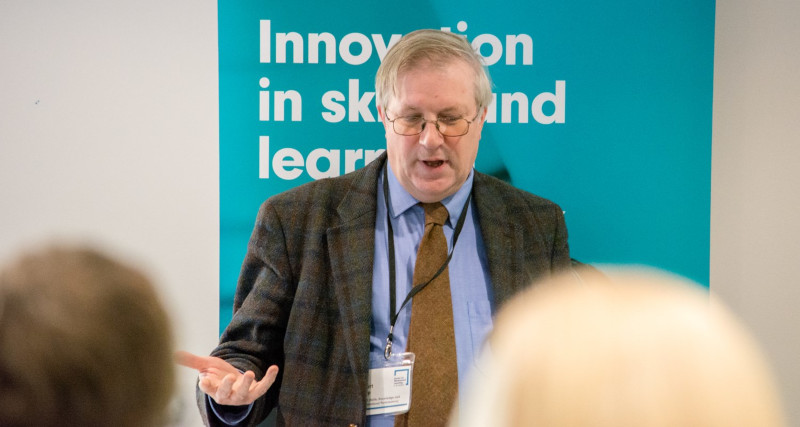
Professor Ewart Keep speaks at PRAXIS 2 in Scotland
Picture Imperfect
Perhaps we need to think more about how we promote things we know to be good. The force behind Lee Elliot Major’s proposal of a National Tutoring Service (see page 15) stemmed from the demonstrable value of the one-to-one tutoring experience.
For Susan Coles, the former president of NSEAD who set up an APPG in Parliament to promote greater coverage of the arts in our education system, the benefits of an arts education are equally clear. She worries that character is talked about as a ‘box you tick’ when, in fact, ‘the arts create resilience’ enabling you to ‘follow your own ideas without being wrong.’
For Coles, and for Sharon Hodgson MP who chairs her All-Party Parliamentary Groups (APPG) (see page 27), what we have now is a ‘production line of high performing schools which is strangling the creative arts.’ Coles puts her views with the kindly persuasiveness of the truly passionate: she is one of those campaigners who is herself an advert for the sort of change she wants to see. ‘We’re coerced into believing the knowledge based curriculum is best, when in fact the arts enable us to make mistakes and experiment,’ she explains.
This was one area where Corbyn wasn’t entirely idle in putting forward the detail behind the NES, stating in his Black pool speech: ‘The best is every child being able to learn musical instruments, drama and dance – the things that bring us joy – through our Arts Pupil Premium.’ For Hodgson and Coles this was an exciting moment, scotched only in December 2019 when Johnson was returned to power so thumping.
So should it be part of the NES? While Coles appreciates the idea, she worries it is too little: ‘The only worry I have is there’s no guarantee it will be in the curriculum.’
This, too, is where the eternal argument regarding free schools comes in. The schools minister Nick Gibbs would remind Coles and Hodgson that art is on the curriculum, but Coles – and the likes of writer Michael Rosen – would retort that it ought to be a core subject. Even if you resolve that part of the debate, you’re still left with the fact that academies are not obliged to teach it, and since 80 percent of secondary schools are academies and so are a large number of primaries, that’s a problem. Furthermore, there is the exclusion of the arts from the uber Gove Ian and, to Labor, loathed ‘EBacc.
’For Coles and Hodgson an opportunity is being missed, and for no decent reason. Coles continues: ‘If you do a teaching qualification, you learn how to teach the arts for around 2-3 hours in a 3-year course. So we have a lot of inexperienced teachers who are struggling to teach the arts curriculum.’
The great irony in all this is that the arts appears to benefit the economy. ‘They’re valued by the Treasury but not by the education department and DCMS,’ says Hodgson.
The Bonfire of the Quangos
This opens up onto another perennial question: that of the structure of the entire system, and indeed the very nature of our civil service and the balance between national and local government.
When I ask Professor Keep where he would begin in terms of fixing the English education system, he says. ‘The problem in England is that it’s very siloes.
Even different bits of DfE don’t talk to one another. In education, central government controls so much. They have to deal with such a level of detail: it’s difficult for them to grasp the big picture.’
So what needs to change? ‘We’ve gradually abolished all the intermediary bodies, which means everything’s an atomized marketplace. This isn’t functional for those who have to run it, and deliver education. I’d want to create relatively independent organizations which can act as a bridge between government and providers and also as a bridge between government and employers.’
Keep is referring to the Learning and Skills Council (abolished in 2015-16) and the UK Commission for Employment and Skills, which was wound down in March 2017. For Keep, the restitution of these would necessarily exist alongside some devolution of power and decision-making to the regions. The overall goal would be ‘bottom up thinking’ and a move away from a system where everything is ‘controlled by the minister.’
Mark Morin partially agrees: ‘We had the bonfire of the quangos under the Coalition. Some were well-deserving of that. The Commission for Employment and Skills was one of the most useless, and survived for a long time.’
Morin argues that any National Education Service would need to be rebranded along devolved lines: ‘It can be packaged in a different way and be marketed in a different way, with devolution at the heart of how this is going to be funded,’ he explains.
The civil service also needs a rethink, according to Keep. ‘Most civil servants do 18 months tops within a role. Every time I go to a meeting on higher education, it’s a totally different room of people. The last lot have all bloody left.’ This is a view echoed by Sir Michael Barber on page seven of this publication.
Universal problems
At the same time, we have a university system that increasingly seems unfit for purpose, and struggling to adapt to the new realities of online learning.
Keep explains: ‘A lot of universities were in big financial trouble before Covid-19 arrived. After 2009, many went and splurged vast amounts of borrowed money on new nice halls of residence, new nice student bars, and gymnasiums – and of course it’s all borrowed from the banks. £8 billion of borrowing has to be repaid, and the interest rate racks up on that.’ So how bad is it? ‘There were strong rumors there were at least 20 universities in England that were likely to get into significant financial difficulties in the next year and you can increase that number very considerably now.’
Morin adds: ‘We’ve created something that is too big to fail. Our universities are in trouble. How do we bail them out? One bad decision has been compounding another. We argued in the report we put out an the end of last year that we needed to stop sending so many people to university.
Does Respublica have any specific proposals? ‘We’ve argued that we need to get rid of tuition fees. It’s a smoke and mirrors thing, it’s just accounting practices: in effect, the government picks up the tab for those who can’t afford it. It’s basically a tax on those who can afford to pay for it because they graduate and earn enough to trigger a repayment. The real issue is we’re sending too many people to university, but to what purpose?’
That’s a view echoed also by Euan Blair, the tech entrepreneur with the famous father whose business White Hat, which he chairs, is unafraid to proclaim university a waste of time. Talking to Blair is a curious education in the Blair genetics and how they have played out in the next generation. It is as if the same incisiveness and ability to explain complex things in simple language which saw his father dominate British politics for a decade has been handed down a generation into a born tech entrepreneur.
For Blair, universities have failed to prepare children properly for an AI-dominated labor market. ‘I think that there will always be and should always be a place for purely academic learning in a university environment,’ he admits. ‘The challenge is that the system has become this monopoly on early careers in a really negative way. That’s made universities complacent and it’s created this lack of equal access to opportunity, particularly around careers.’
Whether Labor chooses to proceed with a National Education Service or with some other label, the Starmer offer will need to address a creaking university system, as well as the question of digital poverty in an age of online learning, and the perennial question of lifelong learning. If this is done meticulously, perhaps something will emerge worthy of the NES brand name
Will You Still Feed Me?
Stephen Evans, the CEO of the Learning and Work Institute, sat on the same commission as Keep in the run-up to the 2019 general election. For him, if the National Education Service is to have any meaning then it needs to solve the problem of keeping adults learning throughout life.
He argues that lifelong learning can come in many forms from an apprenticeship to a change of career, or it can come in the form of informal community classes.
‘We need to build a more coherent system,’ he tells me over Zoom. ‘For me the NES was about this idea that we need to do much more learning throughout life.’ What kind of financial structures is he espousing? ‘Clearly you don’t need government to fund some lifelong learning. But for those people who missed out and struggled at school, they might need to be covered by a National Education Service. The question is: ‘How do we create a culture of learning and get more people wanting to go back into learning?’
So it would be something of a patchwork quilt model? ‘If you’ve already got a degree, you’re more likely to get training at work. And if you’ve got no qualifications, I would say the government should have a role alongside trade unions and others to try and reverse some of those inequalities.’
Keep agrees: ‘Lots of adults receive no training from their employers. A lot of the adult workforce leave school and college, and then don’t get much training. If you’re in a low paid job, the chances of getting trained are very limited. When you look at England and the UK as a whole, we’re a long way behind many developed countries.’ When does the problem date from? ‘In 2010, funding for it got cut, and the adult education budget has declined by more than 45 percent and there’s a lot less money from the government. Employers are doing less and less.’
The Shape of Things to Come
I begin to get a sense of what this might look like. A National Education Service would need to intelligently join up the dots.
It might involve an acceptance of how we are failing to promote the arts, but also make us think in a more joined up way about the digital side, looking to tackle digital poverty (as outlined by Sir Michael Barber on page 7). It might also incorporate some of Lee Elliot Major’s ideas on tutoring, and build on what has already been agreed to by the Johnson administration (see page 15); the NES could potentially expand them into some form of mentoring service. The project might also involve greater investment in apprenticeships (see Robert Halfon on page 13), and a lifelong learning approach, where the state intervenes strategically to satisfy existing gaps. All this might be capped by Estelle Morris’ commitment to the promotion of wisdom and citizenship in place of – or perhaps in addition to – the Conservative years’ emphasis on character-building.
All in all, Starmer’s Labor has a complex inheritance on education. It has produced a reasonably compelling idea too soon, without, as Morris says, having done sufficient work. The spectre of Tony Blair cannot now be entirely dismissed after the 2019 general election defeat, but he remains a figure whose toxicity remains surprisingly persistent
Alongside these internal developments, there is a lot of dissatisfaction with the system and developments under successive Conservative-led governments. If all these points could be joined up, they might make a compelling proposition.
A final complexity is the precise historical circumstances Starmer finds himself in – or ‘events, dear boy, events’ as Harold Macmillan had it. A coherent education policy must be enacted, and priorities established, at a time when the virus, Black Lives Matter (see our leader on page two), climate change, and the new realities of work in the furlough era must also be solved.
Keir’s Choice
The fact remains that Starmer will need to unite the left and the right of his party on one of its core priorities. One way to do this might be to appropriate a slogan from the Corbin era but put some more intricate and thoughtful policies underneath it. Another way would be to admit that the NES is tarnished, and find some new banner under which to build a new platform.
Much will naturally depend on Starmer himself. So what are the new leader’s instincts on education?
There is surprisingly little in the public domain on this, and Labour operatives we spoke to talked of a tight-knit disciplined circle where there are few leaks as to what the leadership is thinking.
Lee Elliot Major recalls meeting the future Labour leader in their shared constituency during the Corbyn years: ‘I met Keir for coffee. He was on top of all the education issues of that day. At that point we were in the world of Corbyn, and at that time you were thinking someone like Starmer wouldn’t get in. Though education wasn’t his brief, he grilled me. He’s not ideologically obsessed: voters will vote for that, generally people like I worry about extremes.’
As often with Starmer, this sounds promising. But it’s early days, and, wherever the party ends up on this, work has to be done – and everybody who contributed to this piece agrees there’s not a moment to lose.
Ian Taylor is a name that may not necessarily be familiar to all Finito World readers, and he would not have minded that. A giant of business and philanthropy, he was nevertheless, for all his success, a quiet and even shy man. Born in Croydon, the son of an Imperial Chemical Industries executive, Taylor would grow up in Manchester. He spent some time as a boy in Tehran where his father conducted some business in Iran before the Ayatollah came to power. This episode of early relocation established one of the leitmotifs of his life: an ease with other cultures, that would put him in good stead in the oil industry.
Taylor’s educational attainments were impressive. He was educated at King’s School Macclesfield from 1968-74 before going on up to Merton College to study Politics, Philosophy and Economics. The politics aspect of his studies prefigured the interest he would take in The Conservative Party later in life; meanwhile, many would later note his philosophical nature.
But it was the economics background which would have an immediate bearing on his life. In 1978, he joined Shell and prospered immediately, exhibiting traits which would be evident throughout his career: an ability to swim within global companies; a tendency to be quietly popular, infectiously kind and accordingly, loved; and a talent for finding oxygen and commercial man oeuvre within vast organizations. All this went hand in hand with an interest in other cultures: this was the man who would later display an expertise in Libyan affairs which would be of help to his future friend David Cameron during his premiership.
Taylor’s success at Shell – he held successful positions in both the Venezuelan and Singaporean arms of the business – was a precursor to his remarkable achievements at Vitol. Taylor was one of those who proceeds steadily into the stratosphere, almost unnoticed – and then doesn’t mind it if he stays that way. In moving to Vitol in 1985, Taylor had happened upon his professional home for the next 33 years.
What followed was a story of continual achievement. Taylor spent seven years in London, but when the firm needed a man to be posted to Singapore as managing director of Vitol Asia, Taylor’s previous experience in the region was decisive. But it was just the beginning: he would go onto set up numerous operations within the company. His rise was built on hard work, good manners, and extensive knowledge of the business.
By 1995, he had risen to become CEO, a position he would hold until 2018. Under his tenure, Vitol had become the world’s biggest independent oil trading company with revenues in 2016 alone of some $152 billion. But as impressive as was his core work for Vitol, the way in which he grew and sustained his outside interests was if anything more so. Taylor became a restaurateur, owning two small restaurants in Wimbledon, and famously shored up Harris Tweed from collapse in 2005. Years later, it is a thriving organization.
One might have said that this gesture was a sign of the philanthropy to come – except that since 2002 Taylor had already been making notable charitable grants through Vitol. By 2006, the company had established the Vitol Foundation, which ‘looks for initiatives with the potential to generate social returns in a sustainable way.’ The effect of that work has been incalculable, with well over 2,000 projects supported – and counting – the charity supported 113 projects in 2019.
These were considerable achievements, but Taylor was only just beginning. In 2007, he established the Taylor Family Foundation, with a specific focus on promoting education and the arts. It is impossible to list the sheer number of projects the foundation has supported but the Royal Opera House, the Tate Foundation, Maggie’s, Great Ormond Street Hospital, Noah’s Ark Children’s Hospice and tens of others would not be in the position they are today but for Taylor’s generosity. Politics continued to be an interest for him, and he became a valued adviser to leaders in both the political and business spheres. He famously turned down a knighthood from David Cameron after the press delved into – and misunderstood – Vitol’s operations in Iraq and Iran. Afterwards, with typical humor, he expressed himself relieved. He had become extraordinary, but the spotlight wasn’t necessary for someone who took meaning from life in proportion to what he could do for others.
But not even the kind and the dedicated escape some form of ending up. Taylor’s battle with cancer was a painful illness which his friends watched unfold with a sadness only mitigated by the fact that Taylor was never seen to complain. Indeed, as the ensuing reminiscences show, he only showed himself a more thoughtful colleague as the disease took hold. It only remains to be said that he is survived by his wife Tina and his four children, and that those we spoke to express the same admiration for them as they did for Ian.
Finito World asked a small selection of friends to recall the man they knew in their own words.
Theresa May, former PM
To me Ian Taylor was primarily a gentleman and a philanthropist. Of course, he was a successful businessman and a political supporter, but what struck me from the first time I met Ian was his deep desire to help others and to improve their lives. He was a passionate believer in the importance of education. He knew that a good education gave young people the best start in life, and he wanted others to be able to be their best, achieve their goals and fulfil their dreams. But perhaps the best example of his concern for others was seen when he received ground-breaking cancer treatment in Switzerland. Being Ian he didn’t just say, “Thank you it’s helped me”. He wanted others to benefit from it as well – hence the money he provided and the work he did to bring the treatment to the UK. He was good company, considerate of others and always a gentleman.
David Cameron, former PM
I first met Ian when I was Conservative Party Leader. He was a brilliant businessman, but also greatly understood politics and political realities. Wise, loyal, discreet; Ian was one of my most valued advisers – and, over the years, we became firm friends. I came to respect Ian’s counsel even more during my time as Prime Minister. Countless times – in particular during the Libyan conflict in 2011 – he acted in a way that helped his country, not his business. Of course, alongside Ian’s business knowledge, was his philanthropy. Since it was set up in 2007, The Taylor Family Foundation has done truly amazing work – supporting vulnerable children and young people, and going a long way to improve Social Inclusion in this country.
Lord Spencer, Founder, NEX Group
Ian Taylor was one of my best friends – a man of humor and generosity and thoughtfulness. But he was far more than that. He was also an ‘achiever’. A prodigious ‘doer’ of things – in business, with the spectacular success of Vitol, the oil trading group he built into a global titan, but also in art, culture and politics. He was a man of real presence who gave so much to his family and friends, his business associates and to politics. Of my contemporaries I hold him in a special place; I have had the greatest respect and admiration for him. It may be a cliché but it is totally true about Ian. He leaves the world a better place but with a great hole behind him. He will be much missed.
Dame Mary Richardson, Finito Advisory Board
I came into contact with Ian Taylor about 16 years ago when he was setting up the Vitol Foundation. As I was Chief Executive of HSBC’s new Foundation, I was approached informally for advice and was later invited onto his Foundation’s Advisory Board.
I was immediately struck by Ian’s kindness in welcoming me warmly and ensuring that I felt at ease. Throughout the many meetings I attended, which he chose not to chair, he was quiet, attentive, respectful of the views, which were sometimes conflicting, of the advisory board members. There was no dominance. He wanted to learn from any expert advice and his uncomplicated single aim was to do well and improve lives wherever possible, without recognition. His approach was flexible even if this meant funding new projects in challenging areas. Possible failure did not deter him if the need was great. He was brave in his approach in this area of his life as he was in his illness.
I eventually left the Vitol Foundation Advisory board after some years. Ian was already ill but typically he did not miss Foundation meetings. At my last meeting he was clearly unwell and in pain and I wondered if he would remember that I was leaving. It was typical of Ian that he not only remembered but had spent time considering how to thank me. He had arranged a valedictory charitable grant, a considerable sum of money to be donated to whichever charity I chose.
Like all great leaders, Ian enriched lives. He enriched mine.
Jeremy Isaacs CBE, Founding Partner JRJ Group
I got to know Ian over the last six years. He had been unwell to varying degrees over that time which underlines both his physical strength and incredibly positive outlook. I had the privilege to develop what was for me an important relationship. I always learned something new after spending time with Ian. Although we did quite a lot of business together, we rarely spoke about work, our conversations were about life, politics and philanthropy. The combination of his high intellect, remarkable generosity and of course his many unbelievable experiences always left me feeling amazed, optimistic and genuinely happier. He will be greatly missed by me but very fondly remembered.
Lord Fink
A man of many talents, it simply isn’t possible to say it all in a few lines. But if I had to sum Ian up in one word, it would be ‘selfless’. That is how I will remember him. I had the pleasure of meeting Ian Taylor and subsequently Tina at a Conservative Party function when David Cameron was our Prime Minister and I was Party Treasurer. I knew Vitol, the large and successful trading company that Ian led, from my former career at Man Group and knew how successful and large the company was, having had a few friends work there or do business with them. I was surprised when I met Ian, by his quiet unassuming manner, the thoughtful way he approached politics and his devotion to his family. Having headed a FTSE 100 company for quite a few years, I knew how hard it was to balance one’s life between business (which could become all-consuming) and family. I had seen so many cases where a CEO chose business over family life or became rather self-obsessed and frankly a little arrogant. Yet in Ian I saw someone who saw material success as just being part of life that earned him freedoms and one of those freedoms was to support his family and show his intense patriotism for our country through loyal devotion to the Conservative party.
At all the meetings and functions he attended, I never saw any case of him trying to use his really powerful status, role and the wealth that goes with it to try to dominate debate or push any agenda for his company. I just saw this remarkably humble guy talk passionately about his party and family and always ask about others. I saw him deal with the early and ongoing setbacks in his long brave battle. My wife Barbara and I saw him attend functions usually with Tina, who was his rock. At a time when we all realized how awful it must have been to go through the pain, discomfort and partial disfigurement of his various treatments, he kept on attending and supporting the party. They would never let their lives be dictated by this cruel illness, nor did I ever see self-pity or bitterness that this gilded life he had built for his family and the colleagues that adored him had been undermined in his prime. He was always optimistic that the disease was being overcome. Then came coronavirus and lockdown. Most of us spent our time following Government instructions limiting our social lives. Our horizons narrowed to our immediate friends, family and neighbors, and so Barbara and I were so sad when we learned of Ian’s passing. We were also saddened by the fact that we had never had the chance to show our respect, liking and affection for this lovely gentleman. Our thoughts are with Tina and the family. The world was a better place as he’d passed through it.
Andrew Law, CEO Caxton-Associates
Ian was a role model to aspire to. Aside from all his documented huge success in business, and his philanthropy, he was very much a citizen of his country and communities. Supporting struggling historic businesses in line with his Scottish heritage, or being active in his London locality, this was all second nature to Ian. In addition, he had one very special gift above all that, personal generosity. By that I mean generous with his time, the greatest gift one so busy can give. Whether it was supporting Speakers for Schools with his personal appearances at state schools, celebrating friends’ important occasions, or visiting great charitable causes, nothing was ever too much. He had an innate ability to multi-task and see opportunity in even the most basic of interests. As a lifelong supporter of Manchester City Football Club Ian saw the team’s renaissance a decade ago as an opportunity for good. He founded the Blue Moon rising group of London-based lifelong long-suffering City fans. Aside from interesting dinners with the club hierarchy and former players, it was designed to support and drive the initiatives of the club’s charitable foundation – City in the Community. The group has had a tremendous impact around Manchester. Ian’s ability to draw people into his circle and coalesce around common causes was legendary. The diverse group of fans who have participated includes a former World Cup-winning England rugby player, England cricketer, rock star, former head of the FSA and numerous others who all shared a common passion. Everyone aspired to be in his wonderful warm circle. In essence he made helping others fun. Accommodating the demands of work, hobbies, friends and so forth alongside his family must have been a constant struggle. From the friend’s perspective, he was the one making sure that we would be back home to sleep wherever we had been in Europe following the trials and tribulations of his beloved football team. He was the one offering wise life counsel to those younger than himself. Ian was simply the most rounded accomplished individual I have had the pleasure of knowing.
Dominic Johnson, CEO, Somerset Capital
Ian Taylor was a very special man who cared deeply about his country and was a passionate Conservative. He built a hugely significant business in a very complex area where sheer determination and guts are the defining feature of those who are successful. He was always unfailingly polite and interested whenever you met him and retained a strong sense of humble optimism right up until the last time I saw him, only a few months before he died – coming out of his office having done another full day’s work. In all seriousness I thought he was a genuinely great man and he will be missed by everyone who knew him, worked with him or who he supported through his incredible and understated generosity.
Sir Michael Hintz
Ian Taylor was always a man of huge integrity. He also had a wealth of understanding of how to work in our much nuanced world. His depth of understanding of the politics in the emerging world, especially Cuba, made for fascinating and also entertaining insights.
Closer to home he always spent the time to provide good counsel and excellent friendship. He gave selflessly to various charities and endeavors. The Conservative party in times of good and bad were always close to his heart. I will sorely miss his friendship and his insight. The world is poorer for his passing.
Peter Cruddas, Founder and CEO, CMC Markets
Ian was a beacon of light, a great businessman and philanthropist. We both shared a similar passion for helping disadvantaged and disengaged youth. Nothing gave us more pleasure than helping young people to be able to get a better start in life. Ian was a magnificent example to the younger generation.
Wondering whether to shoot for the ideal career or to settle for something you weren’t expecting to do. Emily Prescott has some advice
Despite living in a small Wiltshire village, my four-year-old best friend had rather lofty and exotic ambitions. There was no doubt about it: she was going to be a lion tamer.
This exciting notion was encouraged by our teacher Mrs. Turner. Reminiscent of Miss Honey in Roald Dahl’s Matilda, Mrs. Turner would never tell children that no amount of auto tune would fix their singing or that their SATS scores hardly screamed astronaut or that aspiring to be a lion tamer was frankly ludicrous. She was endlessly encouraging.
Even so, optimism can come at a cost, and indulgence of this kind can have cruel consequences. A concerning report this year revealed that there is a major disconnect between young people’s career aspirations and jobs in the UK. Martin Rogers, who co-authored the report, told Finito World: “It’s striking that the sectors to which young people aspire are basically not where the jobs are now and in the future.”
The study of more than 7,000 participants found that five times as many 17 and 18-year-olds wanted to work in art, culture, entertainment and sport as there were jobs available. These concerning findings have prompted the report’s authors to call for a significant improvement to career-related learning.
It is positive that young people are aspirational but if they are not being taught the realities of the job market, it is no wonder so many graduates leave university feeling disheartened.
We spoke to a number of students about their careers experiences; they replied on the condition we didn’t use their surnames.
Liam, who studied architecture at the University of Edinburgh, explains: “I wanted to be an architect, before I came to university, it was my dream. Then studying it, discovering the reality of what working in architecture would be like, put me off.” That has created real anxiety. “I do feel slightly lost as I don’t know what I want to do anymore. I’m unsure how to use my degree – if I can at all. It’s strange hunting for jobs now.”
While Kate, who recently graduated with a shiny English degree from the University of Exeter, also said she was feeling lost and let down. “We are not typically set up to succeed,” she explains. “Teachers help us follow our vague interests or whatever subject we might be good at, with no clear career path to follow. Coddling comes to mind.” Is there anything schools should be doing to improve ultimate student outcomes? “A lot of people do a degree as that is the expected next step in the life of a young person. I think the process of choosing A-levels should have been supplemented with advice on which jobs are attainable with which degrees (if indeed a degree is even needed).”
This feeling of disappointment is likely going to be exacerbated by Covid-19. A report from the Institute of Fiscal Studies predicts that those who graduate in 2020 will suffer a decade of economic scarring as a consequence of the pandemic.
Top jobs to which young people aspired included professional gamer and a sportsperson, according to the disconnected report. No one can predict exactly what Covid-19 will do to the job market but it is unlikely to create an enormous demand for footballers.
Alarming as that all sounds, there is no need to lock up your dreams and throw away the key just yet. Improvements may be needed to career education in schools and universities but by setting themselves deadlines and educating themselves young people can also take steps to ensure they are not destined for disappointment.
Whatever you think of her politics, Esther McVey MP, who ran for the Conservative leadership in 2019, is an example of someone who has achieved success in multiple careers despite adversity. Although she grew up in Liverpool in the 1980s amid high levels of unemployment, McVey became the first person in her family to attend university, she became a television presenter and then rose through the ranks to Cabinet level as Secretary of State for Work and Pensions under Theresa May.
She explained to Finito World that adversity had spurred her on and she achieved success by ensuring her dreams were always founded in reality: “I was growing up to the music of UB40, with the lyric I am the One in Ten, or to the Specials who sang: ‘This town is coming like a ghost town’. I had that in the back of my mind and I guess I used that as a fuel or as an energy. All I knew is these are the statistics and then I don’t want to be a statistic – a reminder of a world that doesn’t care.”
While McVey was paying her way through a law degree by working as a waitress in Covent Garden, she decided she wanted to go into the media.
McVey shares the best advice she was given by her father, who thought success would be achieved by – perhaps counterintuitively – limiting dreams. ‘My dad said: “Well, if you want to go into the media, you better put a time limit on it. Don’t be a wannabe or a could be. If you’re going to do it, you’d better give it 100 percent and put a time limit on because then you need to go back to law if these doors or this opportunity doesn’t open up.’ McVey adds: ‘The clock is ticking and there are other things you can do. I think it’s just as important to close an avenue down that isn’t for you,” she added.
Putting a deadline on dreams also proved successful for David Nicholls. He decided he wanted to be an actor despite the fact that, by his own humble admission, he could “barely act”.
When we contacted Nicholls, he told us he’s wary of giving advice and that his advice generally “stinks”. But his story is worth considering.
He spent around five years being an understudy and playing bit parts. “I don’t think I ever spoke more than four lines in a play. I gave myself a deadline which was 29 and if I wasn’t playing slightly larger roles, not huge roles then I would give up,” he told Elizabeth Day’s How to Fail podcast.
He did give up and he has since written five novels and adapted each for the screen, including One Day, starring Oscar-winning actor Anne Hathaway.
As well as putting a time limit on dreams, it is wise to do as much research as possible on what the dream actually involves: Can you get work experience? Will it be worth the low pay? Is it really for you?
Esther McVey said: “I always thought: “Ah, would I want to own my own restaurant chain? And then working as a waitress for three or four years I kind of thought: “Oh no, I’ve enjoyed it but this isn’t an outlet for me.”
She adds: “Opening up your life is important and now you can do that on the internet, you can do that through research.”
It may seem like uninspiring advice but giving up on dreams can mean finding career satisfaction in reality. My best friend didn’t become a lion tamer but she has just been offered a job as a farm vet. She says she’s more like a pig tamer. It’s not quite as glamorous but it will pay her bills and she is delighted. Vets are also listed on the Government’s occupation shortage – a good place to go for career advice.