Category: Features

  • The Succession Question: why family businesses need to plan ahead

    The Succession Question: why family businesses need to plan ahead

    By David Hawkins, co-founder of Percheron Advisory

    What do we mean by the term ‘succession’? The term is most synonymous with the TV series Succession, which centres on the Roy family, the dysfunctional owners of Waystar RoyCo, a global media and hospitality empire, who end-up in a battle royal for control of the family business amid uncertainty about the health of the family’s patriarch, Logan Roy and his plans for the empire’s future. At his 80thbirthday Logan shocks his family – particularly his son Kendall who was primed to take-over the business reigns – with the news that he will not be stepping-down as planned whilst he also throws at his children the news that he is naming his third wife as successor.

    Who the Logan family are based upon is an open secret – think of an octogenarian Australian media owner and his warring family – but the issues raised here via satire are key to highlighting real world family, business and wealth survival.  What follows during Succession is a series of family and business conflicts, attempted hostile takeovers and family politics that makes Shakespearean narrative seem simple.  

    Fundamentally, a failure of clear family governance leads to family, business, asset and wealth destruction – that old chestnut “from clogs to clogs”: the first generation earns the family money, the second generation manages it and the third generation loses it. This trend turns out to be universal across cultures – think of the Vanderbilts in the West. In the East this was summed-up by Sheikh Rashid Al Maktoum: “My grandfather rode a camel, my father rode a camel, I drive a Mercedes, my son drives a Land Rover, his son will drive a Land Rover, but his son will ride a camel.”

    What are the main risks to a smooth succession and how should the present generation react, respond and accommodate the next generation? How does the next gen become more active in the business and play their role in the family business?   

    1) A lack of clear governance systems and processes across the family, business and wealth management

    Logan Roy’s impromptu tearing up of any coherent succession plan leads to war amongst competing family members, attempts at hostile takeovers, family members resigning and business, regulatory, security and political risks. So having family governance or a family protocol in place which formalises the family’s mission statement, its USP, why the family are in business together and what the long-term objectives are, is as vital for the family as corporate governance is for the business.

    This family protocol becomes enshrined as a family constitution from which policies and processes relating to the family, the business and its wealth are then outlined in detail according to the specific family’s requirements and it is discussed, bottomed-up and amended as a dynamic document during regular meetings of a family council – a council which present generation and next generation participate and lead.  

    This would seem foundational to all families – yet as Smith & Williamson’s Family Business Survey 2020/21 reveals, the percentage of families that have a key piece of family governance – the family constitution – in place, is still only around 38%, of which half thought they would have to review this within two years.  The Roys would have found it instructive to have a family constitution and council – and include input from the business units including non-executive directors who could have been involved with the succession discussion so turning a family decision into a corporate one.  The next generation would also have had the insight into first generation decision-making and a sense of the direction of travel which would have allowed them to avoid being frozen-out so spectacularly. 

    Without changing TV genres abruptly, the Game of Thrones analogy symbolises the challenges faced by India’s Ambani family.  When the patriarch died in 2002 like many Indian families there was no succession plan and no will. Chaos reigned.  Rather than a structured approach as to which assets brothers Mukesh and Anil Ambani would inherit, it was left to their mother to preside over an ‘organised demerger’ in 2005, which gave Mukesh control of oil and gas, petrochemicals, refining and manufacturing while Anil took reign over electricity, telecoms and financial services. As the Economist wrote at the time: “Why do family firms so often fail to make the generational leap? Family firms are frequently more riven with intrigue and visceral hatreds than a medieval court – and for similar reasons.”

    2)  Conflict and disagreement in the family destabilises the family and the business 

    The chief wealth destroyer, and one of the main features that family governance should work to reduce, is the exponential damage that conflict and disagreement can do to a family and its business. 

    When families fight, businesses lose their direction, fail to innovate and are often subsumed by their competition. 

    Whether it’s the ongoing dispute within the Ambani family – which even after the separation of assets was followed by defamation suits, involvement of the Indian prime minister and even Anil publicly blaming his brother for power-cuts that swept across India in 2009.  In Succession, Logan Roy takes his family to the family ranch, Austerlitz, to try to patch things up – yet this sticking plaster is too little, too late.  

    The core of family governance is trust, communication and the prevention of disputes spiralling out of control. In the Ambani case, a Family Council could have allowed managed conversation and dialogue unifying the family around values and mission but also outlining and preparing the brothers for ownership and management of specific business units.  If agreement could not be reached then the brothers could have been bought out.  Disagreement would have a forum for debate so issues that do arise can be dealt with via dispute resolution and mediation processes precluding the revelation that the founder has no will, or shock announcements at the patriarch’s birthday party, or even in an interview with Oprah which seems the de rigueur approach these days for airing grievance.  

    What is instructive is the new family council structure that Mukesh Ambani is working on, whereby his immediate family and three children are granted equal representation to enable succession planning whilst at the same time the children have been taking on increasing responsibility within the family business.

    3) The present generation is avoiding – or dreading retirement – or hanging on due to crises such as COVID-19 whilst the next generation wants to get more involved 

    The endemic issue that the institution of effective family governance and succession runs into is that often the founder doesn’t want to retire or be succeeded.  They may resist efforts to outline a clear succession plan – or if one is introduced may impede it: e.g., one American next gen was given 75% of the family business to run. The only issue was that he didn’t know from day-day which 75% it was. Pedestrian issues such as moving into father’s office or clearing out the old retainers caused emotional eruptions from the patriarch. 

    This issue has been particularly relevant due to the ongoing COVID-19 pandemic. As a Barclays Private Bank family business report on Smarter Succession of October 2020 shows: 57% of the present generation are concerned about trusting the next generation’s ability to manage the business. Drilling into the figures shows a possible reason why: 42% of the over 60s want to preserve the family business across the generations compared to 18% of under 40s.  So, there is a clear pretext as to why the present generation might want to stay on. 

    These figures highlight the lack of family governance.  The next gen should be mentored and grown into the business, socialised to understand the family’s source of wealth, the importance of their involvement in the business and how they can begin to play a role in the management or board team looking at questions such as:  

    • The focus and direction of the business.

    • Business transition and the impact of succession planning on the business.

    • The corporate governance framework – including appointments to the board or any significant changes to board structure.

    • The operational framework.

    • The family’s attitude to ethical and moral issues that may arise in connection with business operations.

    In conclusion, the message for the existing generation and next gen is: develop family governance, sincerely commit wholeheartedly to the succession plans that are developed and ensure that dispute resolution and conflict-mitigation mechanisms are in place.  Sadly Logan Roy did not get the memo. 

    About Percheron Advisory:

    Percheron Advisory works with entrepreneurs, HNW clients and business families with a focus on two key areas:

    • Building resilient and agile operational business frameworks so removing risks, developing robust and integrated systems and supporting new strategic directions, and; 
    • Where appropriate, developing effective family governance structures which encourage open and transparent communication, reduce conflict and integrate the next generation into the family business.  

    90% of family businesses fail by the third generation, 60% of family businesses fail because of disagreement and lack of trust in the family. 

    Regular reviews of the family enterprises, building-up resilience and agility ensuring clear reporting, metrics and efficiencies allows for clear strategic decisions to be taken, whilst looking at family governance – that is a family constitution, family council and conflict resolution, can build a resilient family that helps drive the business and removes threats to the business that can come from conflict and disputes.
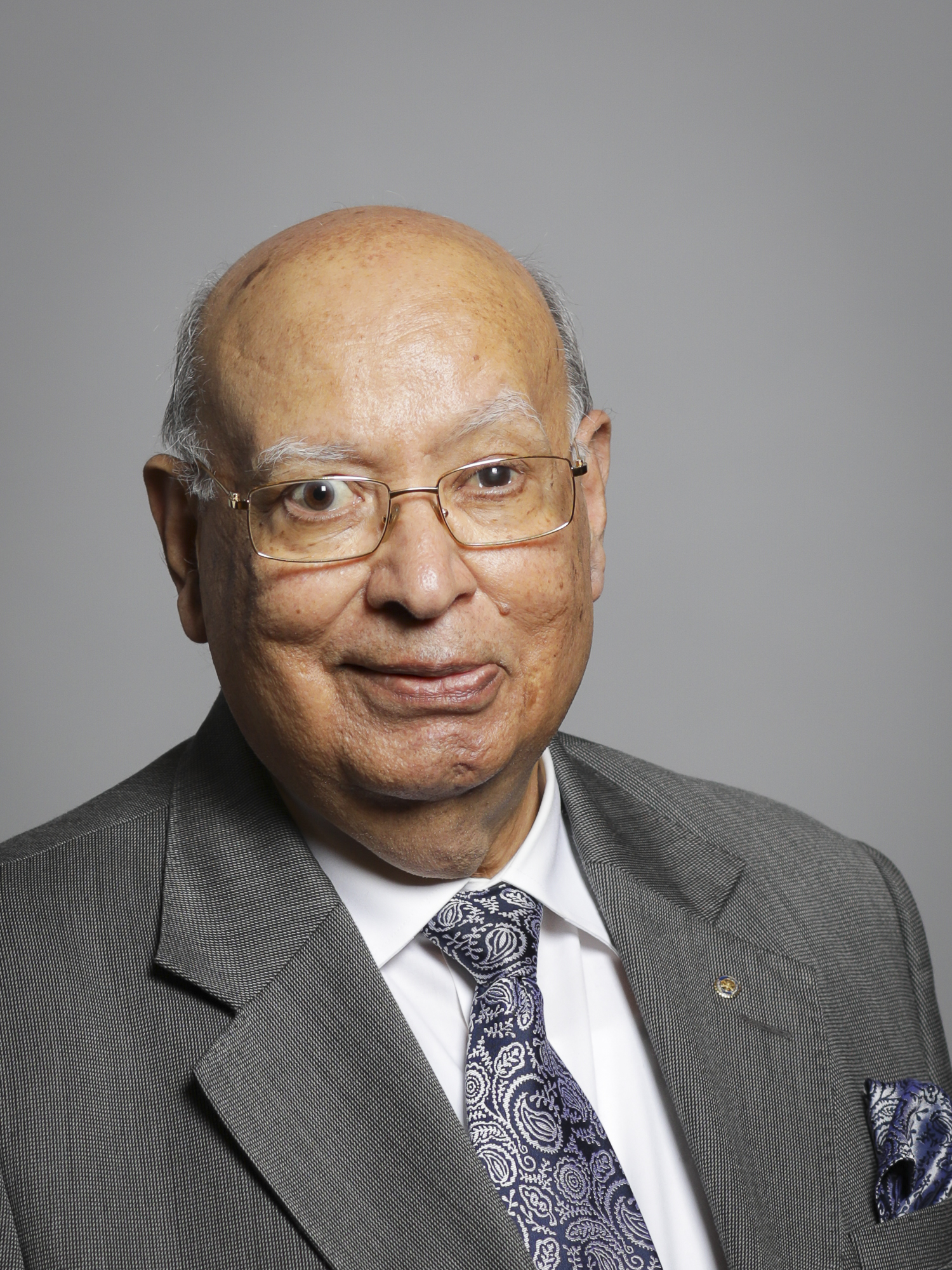

  • Lord Loomba on his long association with Sir Richard Branson

    Lord Loomba on his long association with Sir Richard Branson

    The Patron-in Chief of the Loomba Foundation recalls a transformative meeting with Sir Richard Branson

    I first met Sir Richard Branson at the Indian High Commission in London many years ago. During that meeting Richard asked me what I did for a living. I told him I was a businessman and ran my own charity as well. 

    Richard never asked me what’s my business but enquired about the charity. I told him that my wife and I had set up the Loomba Foundation in memory of my late mother, to support and educate the children of poor widows in India. To my surprise and delight, Richard, told me that he would like to help the charity and I asked him if that was a promise. He said, “Yes”, and we shook hands on it. 

    True to his promise, I received a letter from Richard almost a year later telling me that Virgin Atlantic are starting to fly to India soon. He would like to invite me as his guest on their inaugural flight and promote the Loomba Foundation on the flight. A Loomba Foundation brochure was put on every seat and, in addition, a video was played before landing in Delhi in which Richard, himself, made an appeal to support our charity. Both, the brochure and video were produced by Virgin Atlantic with no cost to the Loomba Foundation. 

    In 2004, Richard agreed to attend and support our charity event in Delhi. The event was also attended by our President, Mrs. Cherie Blair, wife of the British Prime Minister Tony Blair and a delegation of 40 supporters of the Loomba Foundation from the UK. They all travelled to India on Virgin Atlantic with the generosity of Richard.

    At the event, which was also attended by the Indian most senior politicians and business leaders, Richard conducted our auction to raise money for the education of the children of poor widows. In addition, he pledged to educate 500 students in five Indian states for a period of five years. It was a huge support amounting to about £500,000 and I was truly touched by his generous contribution. 

    It was at this moment that I requested Richard to accept my invitation to become the “Patron-in-Chief” of the Loomba Foundation, which he very kindly accepted.

    Over the years, Richard has made an appeal on BBC Radio 4, giving much needed exposure and awareness about the charity. He has always supported our fundraising events by giving items for auction. Virgin Atlantic has raised thousands of Pounds through the “Change for Children” appeals on its flights worldwide. We are the only charity to have such three appeals.

    In 2006, the Loomba Foundation in partnership with Sir Richard Branson’s charity Virgin Unite launched a project to support 1500 HIV orphans in five Townships surrounding Johannesburg, which wasmanaged by a local charity called Great Hearts. It was a super event where my wife and I met Richard’s wife and his lovely parents. An unforgettable encounter.

    Richard is a man with vision, an entrepreneur, a successful businessman and a big-hearted philanthropist. I am hugely grateful for all his efforts, participation and contributions to help and support the work of the Loomba Foundation since 2004. We couldn’t have done it without him.   

    As patron-in-chief he is a great ambassador for the Loomba Foundation.

    Photo credit: Roger Harris

  • It’s a Kind of Magic: ‘We’re still striving to be taken seriously as an art form’

    It’s a Kind of Magic: ‘We’re still striving to be taken seriously as an art form’

    Georgia Heneage

    Reaching out on Twitter to chat to magicians from across the UK, one magician, Billy Reid, tells me he’s “all ears – or eyes, in this case…”.

    It’s a taster, perhaps, of the secret treasures of virtual magic shows. I indulged in one during the second pandemic for a friend’s birthday, and found it was a great substitute for the pleasures of card-tricking, rabbit-bearing magicians I’d briefly stumbled upon at bars or parties. We sat huddled round a TV, surreptitiously sipping cocktails and clad in unnecessarily fancy dresses, while an on-screen magician beamed virtual mysteries beyond our imagining – guessing a random four-digit code I’d thought up, for instance.

    I was prompted to revisit this chilling memory when I saw that the world’s first state-approved degree in magic had arisen in France a few weeks ago.  Double Fond, a theatre in Paris specialising in magic,  has already awarded 13 degrees over the past year and will offer 15 more in the next month. The degree includes performing before a “jury” and writing papers on the history of magic, “self-promotion” and the magic business. It involves 550 hours of lessons and 2,800 hours of homework. Though in the UK you can take courses in magic, there is no such officially-recognised degree in the dark arts – though Double Fond says they are keen to expand across the pond.

    We’ve all witnessed the glittering splendour of magic through films like Now You See Me, or The Prestige. But the idea of magic as a hard-won career, which involves years of practice and trial-and-error, may be an eye-opener for some (in more ways than one).  Even googling magic as a potential career brings up a first result of ‘jobs in the wizarding world’ from the official Harry Potter fandom page.

    Even so, when I speak to professional magicians across the UK, I gain the strong impression that this is a serious and burgeoning career, and one which – if you play your cards right – is a fun and potentially very lucrative industry. It’s also a world which has been forced to undergo serious transformation during the pandemic. Their stories also reveal how little formal training there is available in this country.

    The state of the magic arts in the UK

    Billy Reid, a professional magician from Glasgow, says magic is “not taken seriously enough” as a career: “you say ‘magician’ and people think of rabbits, top hats and balloons. We’re still striving to be taken seriously as an art form.”

    For this reason, Reid was self-taught: “I used to go to Blackpool with my mum and grandparents and visit this magic shop. I’d just spend hours there watching tricks and learning. My brother would even fall asleep on the floor.”

    After practicing day-in-day-out, Reid went pro. But he says he’d still have welcomed a more formally-structured course and the chance to champion “a known certificate to prove your talent”, aside from being a part of the Magic Circle.

    Richard Parsons, a Gloucestershire-based magician who has been practicing for over ten years and a member of the Magic Circle, also got into magic via unorthodox means.

    Parsons already had a business as a therapist, and at one of his annual conferences, a friend (who was also a therapist) did some magic tricks for him. “I was instantly hooked, even though I wasn’t really into it as a kid,” says Parsons.

    His friend didn’t tell him how the tricks were done, but sent a deck of cards and a book of tricks and said to show him next time they met. “Over the next couple of years,” says Parsons, “I did my job and magic as a hobby. I did tricks for people at parties, then started to get booked up for weddings and corporate events.”

    One thing led to another and Parsons made the “business decision” to become a full-time magician. The volume of work built and, “because it’s one of those industries where the more you work the more work you get”, Parsons quickly climbed the ladder and he was soon auditioning for the elite Magic Circle.

    It’s a lengthy and thorough application process: according to Parsons, you have to be nominated by two existing members, have an interview and an audition where you perform eight minutes of magic in front of three professionals. Once in, cards must be kept excruciatingly close to the chest. You can be reported to the ‘council for the magic circle’ and risk ‘expulsion’ if you break the magic code. “We have to sign a bit of paper saying we’re not going to reveal the tricks to Muggles. I don’t even tell my wife how this stuff is done,” he says.

    Because of this Chinese-whispers process, which Parsons says is the very essence of learning magic, he is reticent that a magic degree would be a good idea. “I think it would have to be very carefully run and you’d have to know a bit of magic beforehand.”

    It would also need to encompass the myriad elements of the magic profession. “You’ve got to have negotiation skills and be really good with people. You’ve also got to know how to perform and learn things like stage presence, controlling the audience, microphone technique, speaking skills and scripting skills.”

    In fact, if Parsons has a golden nugget of advice for budding young magicians, it’s to just do it. “I get emails from teenagers all the time asking how to get into magic. I always say it’s great doing TikTok and YouTube in your bedroom, but if you want to do this job you need to learn how to interact with people, and the only way of doing that is to get out there and actually do it.”

    But Parsons is also a huge advocate for taking the leap. Magic, as we’ve seen, is not always viewed with enough respect as a profession. “My main advice to young people entering careers is: if you’ve got a passion outside the norm, go for it. It’s possible to do something that you absolutely love.”

    The changes: women and the virtual space

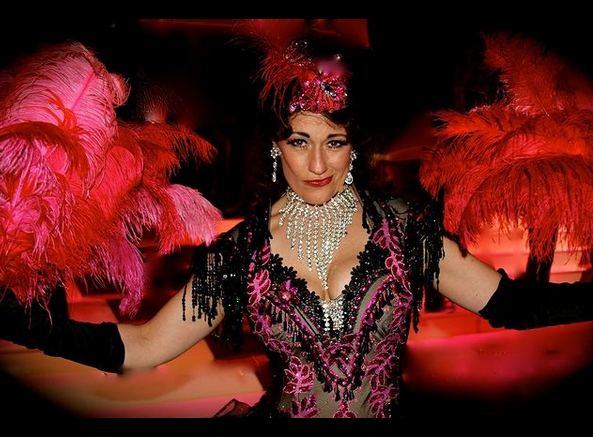
    Romany Romany attributes her success as a magician to ‘persistence’.

    The rise in formal training courses for magic is not the only way in which the industry is changing; a profession seemingly reliant on the face-to-face contact (the coin behind the ear, the rabbit out of a hat), the pandemic has had a massive effect on magicians’ craft.

    Richard Parsons says that if performing magic shows over Zoom was at first strange, he and others soon adapted to the virtual medium, realizing that it even broadened the scope of the tricks available to them. “You can do a lot over Zoom and get away with things that you wouldn’t be able to do in real life,” he says. “The pandemic’s enabled us to develop some new material.”

    Another significant change is the introduction of women to the profession: The Magic Circle only allowed female members in the 1980s, and the industry has always been a male-dominated one. Now women are stepping out of the shadows and from the limiting role as the magician’s beautiful sidekick, and into the limelight: more and more are trying their hand at the dark craft, though like many industries we still have a fairly long way to go before the industry is weighted equally between the genders.

    Like many others, Romany Romany became a magician through sheer love of a hobby. She was working for British Telecom at the same time as attending evening magic classes, and decided one day to give up her well-paid corporate job to follow her dream.

    Through seventeen years of sheer “persistence” (a quality I’m told yet again is crucial to success), Romany went to Las Vegas to learn magic, married a German juggler and was soon touring the world with her shows including the prestigious Penn & Teller show in America. She was the only British woman to win the world magic award in Las Vegas and the Magic Circle Magician of the Year.

    She says that though more young female magicians are rising to prominence, it’s still important to work hard to differentiate yourself from the string of male magicians. “There are so many hurdles to achieving as a woman that you have to be different. I think that’s true for almost every industry: if you want to succeed, you always have to be better.”

    When Romany first became a performer, for instance, she copied the male costume – black suit, top hat- the lot. When she was a stilt walker she copied the pin-striped trousers and waistcoat. “But then I thought: actually, I want to be different.” So Romany began wearing jazzy colourful dresses in the manner of a show-girl which, she says, gave her more “creative opportunity” and marked her out from her black-clad male associates.

    Yet challenges still appear in mysterious forms: when Romany began learning tricks from a book she realized that many were based around male clothing. ‘Ten ways to produce an egg out of nowhere’ was based on producing an egg from a (male) breast-pocket of a jacket. And that same special magic pocket is even “tax deductible”. But this, says Romany, forced her to think of alternative methods.

    Magic connects us

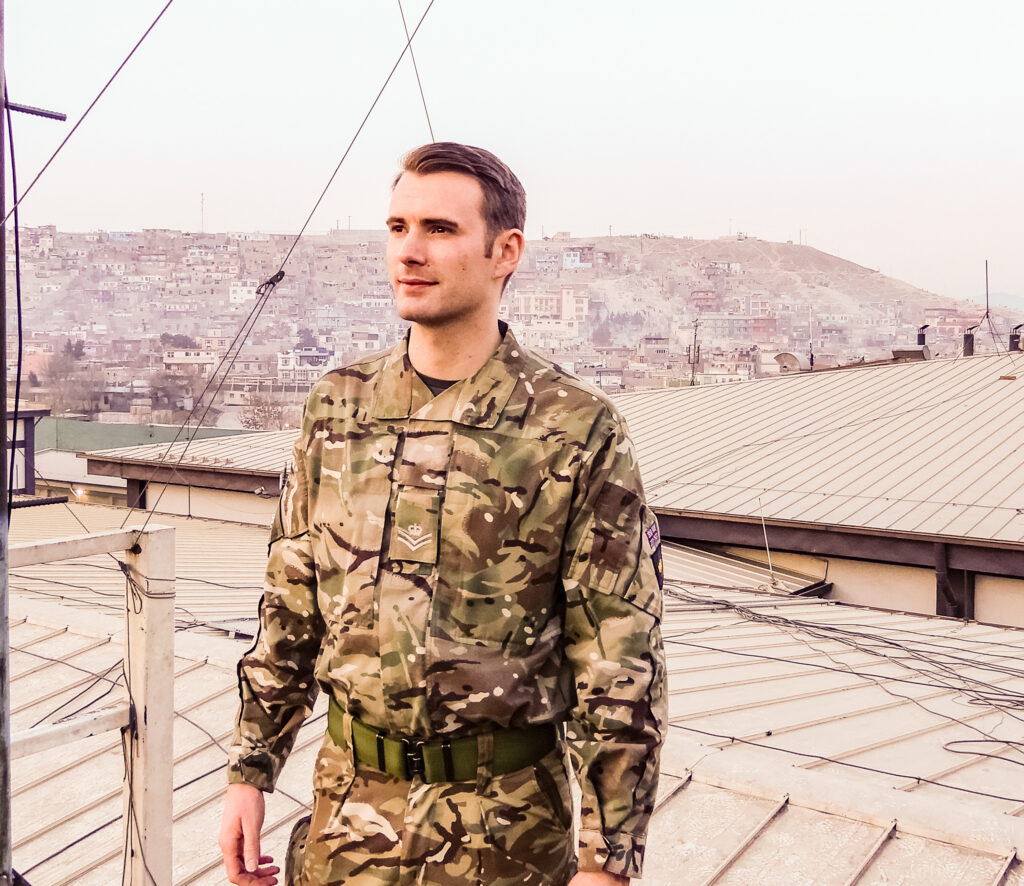
    Richard Jones began his magic career by entertaining associates in the army

    Richard Jones is the only magician to have ever won Britain’s Got Talent in 2016- and his journey, like so many others, began in an unusual setting.

    He joined the army, and in the first few years was travelling all over the world, with lots of time to either “sit and read”, or “learn something new.” His army associates, he says, were the “perfect audience” for him to try new tricks on, because they were honest and quick at catching him out. If he did something that didn’t impress they would come right out and say it.

    “I just got more and more fascinated by the art of deception and illusion,” says Jones, “so I started getting better and better and agreeing to do bigger shows, even though I didn’t have any formal training. But I think that’s why I’m where I am today: I learned the hard way from always being under pressure.”

    The pandemic has been somewhat of a spanner in the magic works for Jones – as for most. But, like Richard Parsons, he did what magicians do best: adapted. He invested in a big tech set-up in his house with cameras and lighting and a sound desk and started virtual shows, which have been immensely popular.

    “And actually, I love it. Originally, I didn’t think there’d be much value in it or that people would feel very involved. But I realized it’s the opposite.”

    And Jones says that the pandemic has, in some ways, been the perfect context to bring people to magic. “What I love about magic is that you are witnessing something impossible, and it takes our attention away from anything else going on in our lives. You can’t watch a magic show without smiling.”

    It’s also a great connector: “Before the lockdown I was used to seeing and meeting lots of people. So I definitely felt the effects and felt a bit isolated.” Doing virtual shows was, for Jones, an integral part of staying tethered to others.

    “Magic is a great way of connecting us all,” says Jones. “What I learned from lockdown was that our generation needed to know what to prioritize in life. The pandemic highlighted that what we value most is the connection that we have with people.”

  • Umbra International CEO Kate Bright on her career in the security industry

    Umbra International CEO Kate Bright on her career in the security industry

    Kate Bright, CEO and founder of UMBRA International, spent the first 15 years of her career working in the private office sphere. During this time she worked for three international families, with varying degrees of needs for security. After rising through the ranks she became Chief of Staff in charge of the families’ operational, lifestyle and security functions, from the supply network through to the recruitment of all members of the household and security staff.     

    Bright decided to do her Close Protection bodyguard training in order to understand the role’s function better. Bright found that she stood out, not just as a woman but also because she did not come from a military background. “I then started to look around, network, and connected with other women in the industry, and the seedling of the idea for the business started,” she tells me.  

    Bright launched the business in 2015 with the goal of “focusing on doing security differently, making it more accessible, more lifestyle-oriented, hence our phrase ‘Secure Lifestyle’ was born.” When I ask about the different roles for women in security, she counters with “everyone can do all aspects of security, man or woman. It’s also not the preserve of rich and famous people. We’re trying to make it accessible to all, to create clear pathways to not just protective services, but corporate security and all the different angles, particularly cybersecurity. I advise young women and people from non military backgrounds that want to get into security to get onto a pathway like the government’s new initiative, the UK National Cyber Task Force for example. It would make me very proud for one of my young nieces and their friends to consider this as a legitimate career path in the future.” 

    There is currently more demand for women in security than there is supply. “I’m always trying to encourage particularly my former PA community to do the training because I think it’s really useful and very important for us all to have a sense of safety and security.” It was from directly experiencing individuals from former professional sporting backgrounds such as rugby in her private office career that UMBRA now has partnerships with Saracens and Harlequins and the Welsh Rugby Players Association to encourage ex-elite sports men and women to move into the security industry. “It’s a great transition coming from a teamwork disciplined structure into a similar environment,” Bright explains. “We’ve had a lot of success in particular with women’s rugby, even despite the pandemic.” 

    Bright’s clients come from various parts of the world, are different ages and from different cultures. “What I noticed when I was working operationally was that ‘invisible security’ is supremely useful, and I was asked to do a TEDx talk about it in 2018.” Invisible security is the idea that protection can be discreet and able to maintain a low profile for clients. Some clients may be the super wealthy, but have no public-facing profile and others are instantly recognisable but do not wish to draw attention to themselves. “As my mother used to say: every lid has a pot. Lady Gaga would need a completely different set up, protocol and team composition to go unnoticed compared to somebody who may feature on a Sunday Times Rich List, but who may not be a household name.” 

    Invisible security also encapsulates digital and cyber safety as well. “The invisible threats that you can encounter online are just as important to counter in a very discreet way,” Bright explains. “UMBRA doesn’t just help clients with their physical safety – we’re also taking into consideration the whole lifestyle online and offline, because one risk will affect the other.”

    UMBRA works in partnership with trusts, law firms and fiduciary advisories, to help families to achieve what Bright describes as a ‘secure lifestyle’. “Clients and their advisors come to us either proactively or reactively with problems, increasingly before they happen, or problems as they’re evolving.” This can include everything from home security upgrades through to protective or intelligence-based projects. “There’s a lot of psychology involved. It’s a lot about the feeling of safety. Insecurities, as well as securities, things that are going on in someone’s life, big litigations or disputes. House and family disruptions can cause a lot of security considerations by causing a rupture in the norm.”

    Indeed, UMBRA also helps clients while they navigate difficult situations such as a private or company court hearing that is in the public interest. This can involve working with reputation lawyers and dealing with press intrusion. “The sudden shining of a light on someone is not something that I would wish on my worst enemy, it has implications that are far reaching.” Another area is divorce: “When a family separates, the two different structures that are created as a result is a big area of work,” Bright explains. 

    Another consideration in Bright’s “blended approach” to creating a secure lifestyle is the idea of hyper-personalised security. As clients return to travel again despite the difficulties of the Covid-19 landscape, UMBRA has received a lot of requests for people to be travelling with either someone that’s security-trained, or just someone to provide an extra pair of hands and set of eyes, such as chaperones, particularly for younger family members. Yet Bright emphasises that she wants to avoid “the ‘gilded cage’ where there is too much protection which she believes “ultimately takes away and disempowers the understanding of what it is to be safe.” 

    I’m interested in the technology angle, particularly the role of social media, having read about sensational heists that have taken place after a traceable social media post. Bright answers that she always keeps abreast of crime trends including burglary tourism, where people post where they’re going on holiday then organised crimes gangs easily locate them. 

    “Particularly in the last five years it’s been a very experimental time, a very interesting time for digital and online risk to be emerging. Certainly clients are more interested and more willing to understand how to protect themselves online.” UMBRA’s approach is to always be proactive. “It’s less stressful, it’s less expensive, much more process-driven, and incorporates protocol. It’s a very good approach, particularly for those that are coming to security for the first time, whether they’ve come into a large amount of money suddenly, eg through the sale of a company, or a valuation such as a Unicorn founder, and therefore come into some sort of fame or profile in a relatively short space of time.”

    Bright also holds a number of prestigious non-executive committee roles such as sitting on the board of the Security Industry Authority, the wider security industry regulator, as well as in the charitable sector as a trustee of the Worshipful Company of Security Professional Charitable Trust. She is a keen military charity supporter, as an Ambassador of both Supporting Wounded Veterans and Veterans Aid. Last year she was invited to join the Gender Advisory Council for the British Army.  “It’s actually really parallel, the security industry and the British Army,” Bright explains. “There is 10% representation across both for women and in both you’re looking at ways to create opportunities for women within their roles, and look at issues they face as well as encouraging the next generation and pipeline for the future, to give young women role models and a career path to aspire to.”

    Bright adds that she’s always looking at“how to create safe spaces, particularly for women, who so often are victims of gender-based violence and crime worldwide, so they can feel safe – for example at night or, travelling around.” This has never been so at the forefront, after the tragic case of Sarah Everard’s abduction and murder. “Women have this duality of at once our invisibility being our strength, but also, we need to speak more about where we need to be counted, and that we are not just small men.” 

    “Both myself personally and the UMBRA business are trying to have positive conversations, and realise I’ve got ‘first’ syndrome, in being the first to do, or vocalise new ways of working and approaching big problems. It can sometimes feel like we’re having conversations that we just shouldn’t be having in 2021. But I’m more than happy to keep having them. If I leave behind a slightly more empowered and safer world, that will be a good job done.”  

  • Margaret Greenwood: “We need to imagine another way of doing things”

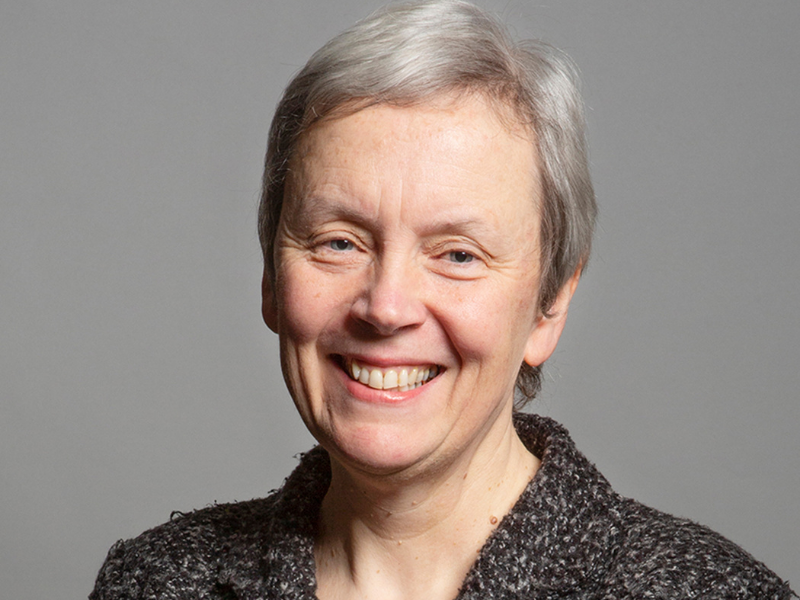
    Margaret Greenwood: “We need to imagine another way of doing things”

    The former shadow schools minister on adult learning and why we need better musical education in the UK

    I’m a great believer in adult education. It’s a fantastic way to open up new ideas – especially in a good adult education centre, which creates a sort of formal environment. When these places are working well, you might see people saying, “I want to do needlework” or “I want to study chemistry”. As we move towards automation as a civilisation, it becomes more and more important that we focus on lifelong learning and that we follow through on the whole reskilling agenda. 

    The problem with this government is I don’t think they understand the untapped potential in our society or the knock-on costs of a huge issue such as child poverty. Take malnutrition – we know the impact this has on the development of the brain, and on the emotional well-being of children, and their ability to learn. Of course, you could highlight the economic impact of that – and that’s something we should do. But I’m more worried about the human impact.

    “We want a population where whatever life might throw at people, they have the agency to change”

    We need to imagine another way of doing things. For instance, imagine if we could sort these kinds of problems out earlier in life: we’d be in a much healthier place as a society. We want a population where whatever life might throw at people, they have agency to change, and to forge their own paths. What happens instead when that’s not done can be heart-breaking; there are people who feel they’ve suffered an irreversible defeat in life. I think we can be better than that.

    I’ve seen the toll at first hand. I remember when I first went door-knocking as a candidate in my constituency of Wirral West. There was a 28-year-old woman with four young children and I asked her how things were. She said: “I don’t mind it when I can’t feed myself, but I hate it when I can’t feed my children.” That’s damning. I also met a primary school teacher in Manchester and she left teaching because she was finding it too upsetting to try and feed the schoolchildren every day. She’d buy loads of bread and jam and give them milk, paying out of her own money. She didn’t mind paying for it but she found it too upsetting. Understandably she felt it was not her job. The government needs to focus on the fundamentals of poverty, hunger, and the emotional well-being of children. 

    Sometimes it can be things you might not think of which are most empowering. Education generally remains undervalued, but take the example of musical education in this country. Our access to that is very patchy indeed. It depends on the type of school you go to whether the local authority still has the money to offer serious exposure to music. 

    It should be a guiding principle in our society that every child has the opportunity to learn a musical instrument. I remember a school in Everton which made a point of making sure that everybody in the school should learn an instrument – and they didn’t just stop at the children. They also made sure that the staff, and the catering staff had access to music; they wanted to encompass the whole place in that opportunity. 

    And why might that be important? I think it’s clear. Learning an instrument develops the attention span, and creates fantastic listening skills – not to mention emotional empathy. In addition to that it encourages working with other people – and no matter what you end up doing in life, that’s going to be of crucial importance. But I think it’s more even than that. It’s about the sheer enjoyment of it, and having something you take forward in life – a kind of buffer. 

    People might also be surprised by how much music can touch you; it’s not this elitist thing. I remember going to a retail outlet to buy a hi fi. I wanted to check the speakers and I put on a Bach violin concerto. Everyone stopped. There were all these people looking at fridge freezers and things, who’d never been exposed to classical music before. This woman came over to me with a baby and a buggy and wrote down the name of the piece of music. 

    That’s what I mean by adult education. Yes, everyone wants a job and to get on in life – but we also know that life is so much more than that. We’ve a long way to go before our education system is matched to that belief. 

    Margaret Greenwood has been the Labour MP for Wirral West since 2015 and has served as shadow schools minister

  • Liam Williams: “Getting up on stage was a real rush – better than any drug”

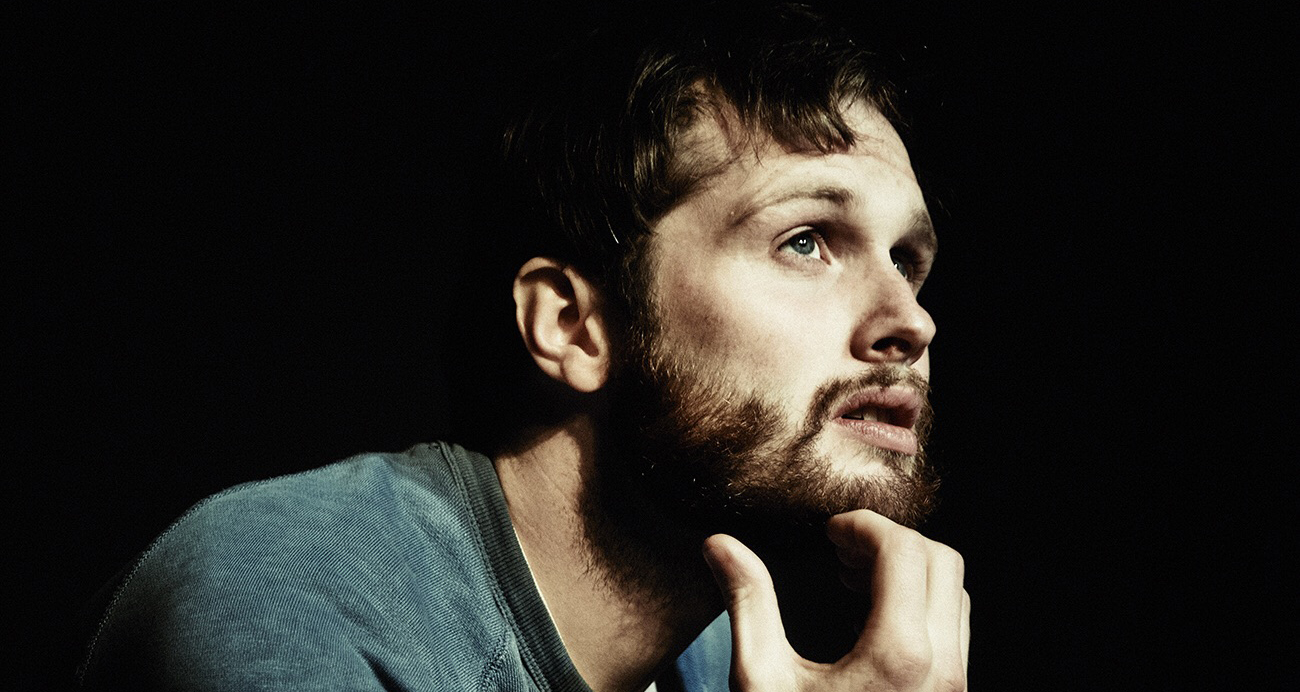
    Liam Williams: “Getting up on stage was a real rush – better than any drug”

    The comedian, actor and writer describes the writing of his first novel

    Looking back at 2020 and early 2021, it’s been an interesting time. I vaguely got into Buddhism and mindfulness in the last year, having been in a retreat at the beginning of lockdown. Then I started drinking and having loud arguments on Zoom about politics for a while, but that passed. 

    The daily logistics of my life haven’t changed all that much – and yet there is a change. What I suppose I liked about solitude previously – and that’s true also of my recent lunges towards the appropriation of Eastern religion – is the idea that life might be going on without you elsewhere. You might be at home, but there’s a world going on beyond you, where things are actually happening. So although not much has changed for me, the psychological backdrop has changed. Solitude is no longer a choice, and that renders your hermitage a bit meaningless. 

    I haven’t really done stand-up for a few years. I managed to contain those tendencies, and now have a fairly conventional social life. There’s a lot of pressure that comes with social life – FOMO, as it’s popularly called. Lockdown has been good for making you realise what’s important.  

    In terms of what motivates me, I guess there is a driving need I haven’t made sense of. But driving needs are a bit like that – they’re slightly inexplicable. It started for me at university – a desire for attention. There was a comedy scene at Cambridge, and I saw people going on stage, and getting that connection with the audience. I liked spending my leisure time in drinking establishments and so I guess I wanted a professionalised version of that. 

    I was lucky too in that the first couple of times I went on stage, it went reasonably well – beginner’s luck. It was a real rush – better than any drug. I think I was beginning to feel stirrings of the need to return to the live comedy scene before lockdown happened. A year and a half later it’s still unclear what’s going to happen on that front. 

    When I first got to Cambridge, I just carried on pursuing the same things – football and drinking, and trying to get women. The I realised I might be able to put my time to better use. In the theatre there were pictures on the wall of those who’d performed there: Peter Cook, Monty Python, Mitchell and Webb, and there was this sketch group called Cowards with Tim Key in it. One of the many privileges the Footlights bestows is you see these ghosts and they have an evolutionary scale to them: it was the comedian equivalent of the hierarchy of a corporate institution. 

    I studied English, so read a lot too – really predictable names for a hipster like me. Sterne. Beckett. Joyce. Ballard. Eliot. All those writers have now become so culturally influential that you can’t pastiche them, or take them off. You’ve got to find your own voice. When I came to do my first novel Homes and Experiences, I realised that you need to experiment with people’s styles to find your own. It’s like learning guitar – you have to practice with other people’s songs. 

    My novel came about because I had gone on a trip similar to the trip the character goes on in the story. I wrote a series of blog posts as a procrastination and put them on Twitter. My literary agent asked what I’d been up to. I told her, and she sent them round to some people. I thought it was a vanity project – good for a few retweets and nothing more. 

    Then just at that point, an editor at Hodder & Stoughton asked us in to go and talk about it, and to my surprise suggested I turn it into a novel, with the structural idea of a story made up of emails. Sometimes it is one simple structural or conceptual tweak than can break the impasse on a creative project. 

    I went on the trip that the material came from in 2017. I guess that was a deliberate post-referendum excursion. I’d never really done any travelling when I was the appropriate age to go round Europe, so it was an overdue thing for me to do. But I suddenly felt particularly romantic about Europe, and the novel deals with the question of gentrification in European cities. 

    So now it’s out – added to the cacophony I suppose. Culture is overwhelming. If it comes to that, the world in general is overwhelming. You look at all the TV and the books and you’re aware of the waste and the disappointment. As Eastern religion teaches us, we can’t have any expectations for anything we do. We have to just put it out there – send it out with faith, love and passion, determination and sense of strident belief in what you’re saying. That’s all you can do. 

    Homes and Experiences is published by Hodder & Stoughton priced £13.99

  • Lord Jonathan Oates: “However hard you try, you can’t change the world on your own.”

    Lord Jonathan Oates: “However hard you try, you can’t change the world on your own.”

    The former advisor to Nick Clegg describes how his upbringing impacts his new memoir

    I decided to write I Never Promised You A Rose Gardenat the end of the Coalition. I went to Ethiopia in 2013 with Nick Clegg, who then was deputy prime minister. That trip brought back for me a lot of memories about running away from home when I was younger. I needed to get it out of my system. 

    I’d decided that the issues around mental health were things that I’d like to share. Growing up, books were my lifeline: they were a way of realising that I wasn’t a completely dysfunctional person. Right from when I was about six or seven, I just consumed stuff. I had a big Dickens phase, a Graham Greene phrase, a Saul Bellow phase. Since my book was published, I’ve had lots of letters and emails from people. Readers say they like the cliff-hangers, and the sort of Dickensian way I have of leaving something hanging at the end of a chapter. 

    I’ve always loved language as well. The King James Bible was something I’d grown up with. My dad was modern in many respects, but when it came to language he saw the King James Bible, alongside Shakespeare, as the standard for beautiful language. 

    I’ve been asked whether my eclectic tastes and interest in language in any way contributed to my liberal political philosophy. I think the more you understand, the more you can be prepared to put the boot on the other foot. That’s why I find the Conservative Party difficult, because so few of them grew up with that understanding.

    My mum was a teacher and taught English at primary school level. She loved English, and loved language. She gave me a great gift once when she said: “There’s no such thing as a bad book. It’s a good book for you.” That helped because there was a lot of snobbishness about Enid Blyton, and the sort of books I was reading when I was six or seven.

    Later, I was in the same halls at Exeter University as Radiohead singer Thom Yorke. We clicked over a bottle of whiskey, perhaps because we were both quite intense. We ended up sharing a house. When I stood – unsuccessfully as it happens – for President of the Student Union, Thom offered to help me and said: “I’ll be your artistic director.” He was a student photographer and he played did some moody images of me which was the best part of my campaign.

    So my book is largely not about politics – it’s about a journey, and running away from home aged 15. It’s about finding that however hard you try, and however much you pray, you can’t change the world on your own by pure force of will. You can change the world, however, by standing together with other people. That means persistently campaigning and fighting and doing lots of really boring stuff: knocking on doors, fundraising and putting leaflets through doors. 

    The other thing which I think is really important, particularly for people in their 20s who are suffering increasingly with mental health problems is that you are far more precious than you’re probably willing to believe. Things can get better. Even when all the obstacles feel really insurmountable, stick with it and let people help you. One of the tendencies when people are suffering with depression or poor mental health is to push people away.

    One time in my early 20s when I was really suffering badly, a friend of mine who I used to share a house with knew I was not in a good way. He also knew that it wasn’t the moment to push me because I wasn’t ready. In the morning when I was on my way to work, I was feeling so down and depressed, and I opened up my briefcase to find he’d put a note in there which said: “Please hold your head up, and be happy. You are a very precious person.” That struck me hard. If he’d tried to tell me that to my face, I couldn’t have dealt with it at that time. That’s my message to people who know someone suffering mental health difficulties. When you feel you’re being pushed away, just find unobtrusive ways to show you’re there. 

    I Never Promised You a Rose Garden is published by Biteback Publishing, priced £20

    Photo credit: By Roger Harris – https://members-api.parliament.uk/api/Members/4549/Portrait?cropType=ThreeFourGallery: https://members.parliament.uk/member/4549/portrait, CC BY 3.0, https://commons.wikimedia.org/w/index.php?curid=86634351

  • How do you spend a Gap Year in a pandemic?

    How do you spend a Gap Year in a pandemic?

    Emily Prescott

    The typical globetrotting gap year has been wrecked by COVID. Even young people who were hoping to take a more modest year away from education saving up money by working in their local pub seem like fantasists at the moment. Despite the difficulties, around 20,000 young people decided to defer their place at university to take time out between 2020-2021. Finito World spoke to a few young people to find out how they are coping. 

    You see people’s journeys, they come in and they’re not able to walk and by the time they’re going home they can walk out the ward, it is incredible

    Lydia pressdee, 19

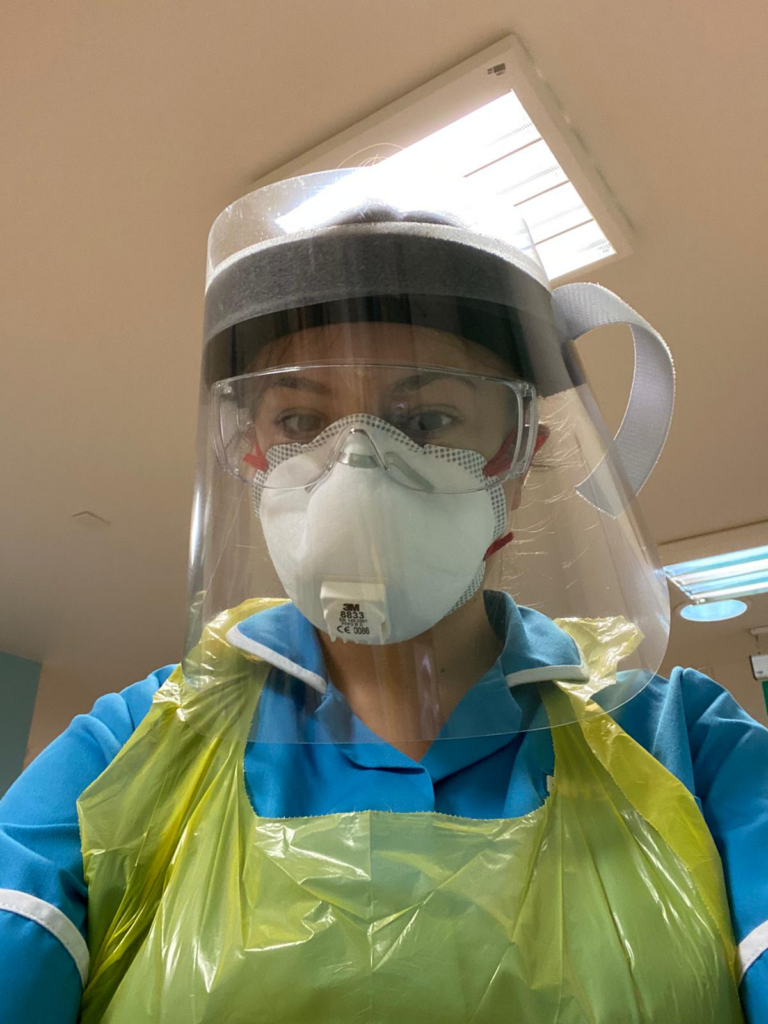
    Lydia Pressdee, 19, should be skiing in France right now but instead she’s working in a COVID ward. She doesn’t lament the situation at all and in fact she tells us: “I’m actually kind of happy it’s happened this way because I’ve gained so much experience. I love what I do every day.” 

    “It’s a rehab ward. You see people’s journeys, they come in and they’re not able to walk and by the time they’re going home they can walk out the ward, it is incredible,” she enthuses.   

    Lydia Pressdee in protective gear

    Once she had finished her A levels, Lydia was hoping to get a job as a waitress in order to save funds for her ski season in France and travel around south east Asia. Afterwards, Lydia wanted to do children’s nursing at Oxford Brookes University. But when the pandemic hit and she finished school in March, Lydia found a job in a Wiltshire community hospital as a health care assistant.

    “I applied when it was a call to action. It’s been quite scary but I’ve learned so much and it makes me really aware of the situation. This time it is definitely a lot worse,” she adds. 

    Through her work on the COVID ward, Lydia has gained clarity and has changed her degree so she can focus on adult nursing. 

    Lydia’s dreams of travelling haven’t been dashed completely, she says. “Hopefully once I’m qualified I’ll maybe be able to take a bit of time out, maybe before I start the actual job.” 

    Anna Scriven, 19, is also using her gap year to help the health services during the pandemic. Anna had accepted a place to study medicine at the University of Liverpool but her expected grades were moved down by the government’s controversial algorithm in the summer. 

    Fortunately, the university deferred her place and now she has passed the exams, she is set to start in 2021. In the meantime she has been volunteering at her local GPs helping to marshal the flu clinic. She is also hoping to au pair for a family in Germany but that’s looking less likely as the COVID situation worsens. 

    I’m hoping that by September life will be back to normal…I know some people who had quite a tough freshers

    anna scriven

    Although the situation is uncertain, she struck an optimistic note. She explains: “I’m hoping when I start uni in September that life’s a bit more normal and I’ll have a better time than I would have if I started this year as I know some people had quite a tough freshers. If I make it to Germany it will also be a fab experience that I wouldn’t have had – as the pandemic made me take a gap year.”  

    James Walker, 18, always planned to have a low key gap year: he wanted to submit his application to study Maths at university and learn to drive and get a temporary job. 

    Reflecting on how it’s panning out he says: “I’ve been lucky enough that a lot of my plans haven’t been seriously affected by Covid-19 and the pandemic (so far – there may be complications in the future). 

    Finding employment may be trickier than planned, given the levels of unemployment

    james walker, 18

    “I had no plans for abroad travel, for example, which could have been disrupted. Finding employment may be trickier than planned however, given the levels of unemployment due to the pandemic,” he adds.  

    Since October he has been volunteering helping GCSE and A levels students with their maths. He too doesn’t lament the pandemic, saying: “Although my plans haven’t been impacted massively, one surprising positive has been that it has made me feel more confident in my decision to take a year out.” 

    Meanwhile Jacinta Haden-Newman, 17, is planning her gap year in these uncertain times. She is studying music tech, biology and maths and is looking forward to taking some time out.  

    “Motivation is generally so low in people my age because there‘s so much going on that study seems almost trivial, and the pandemic has definitely reminded us of the importance of relationships with others and taking care of ourselves. It’s hard to focus on the same old stuff when everything and everyone’s perspectives seem so different.”

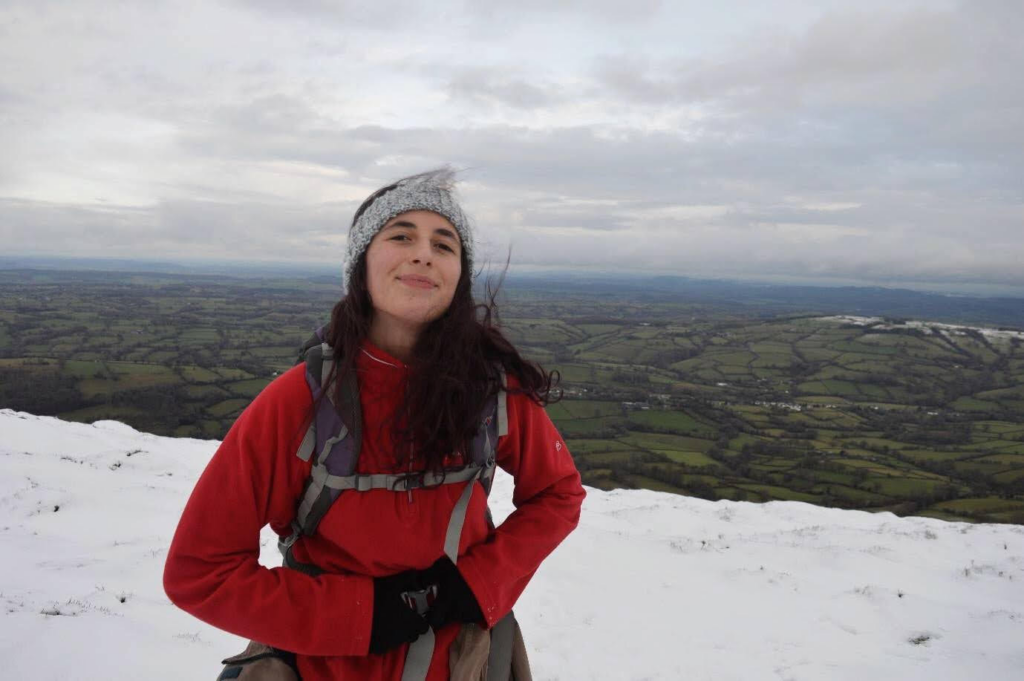
    Jacinta Walker is philosophical about her Gap Year. ‘Any plans have to be made with a pinch of salt’.

    “I am looking forward to taking a gap year, definitely. Any plans have to be made with a pinch of salt, because of course we don’t know what restrictions will look like in 6, 12 or 18 months time.” 

    If the world returns to its pre COVID state, Jacinta will work over summer away from home in the UK to earn money before travelling. In an ideal post-vaccine world, she would like to go interlining in Europe for a month in autumn. In the winter months she hopes to go to Australia. 

    I know that worrying about what’s going to happen months in advance is just not useful to anyone

    jacinta haden-newman, 17

    But she is remaining realistic, adding: “I’m not really worried about the impact of the pandemic on my gap year because I know that worrying about what’s going to happen months in advance is just not useful to anyone, and I’ve made sure there are allowances in my plans so there’s nothing more I could do to change whatever it will be like.

    “I really do hope I can go abroad, of course, and I’m praying for good news about the vaccine, but if I end up having to have a chill year at home with my family, working on creative projects and hiking in Wales instead, that will still be a year well-spent and I don’t think I’d regret it either way.” 

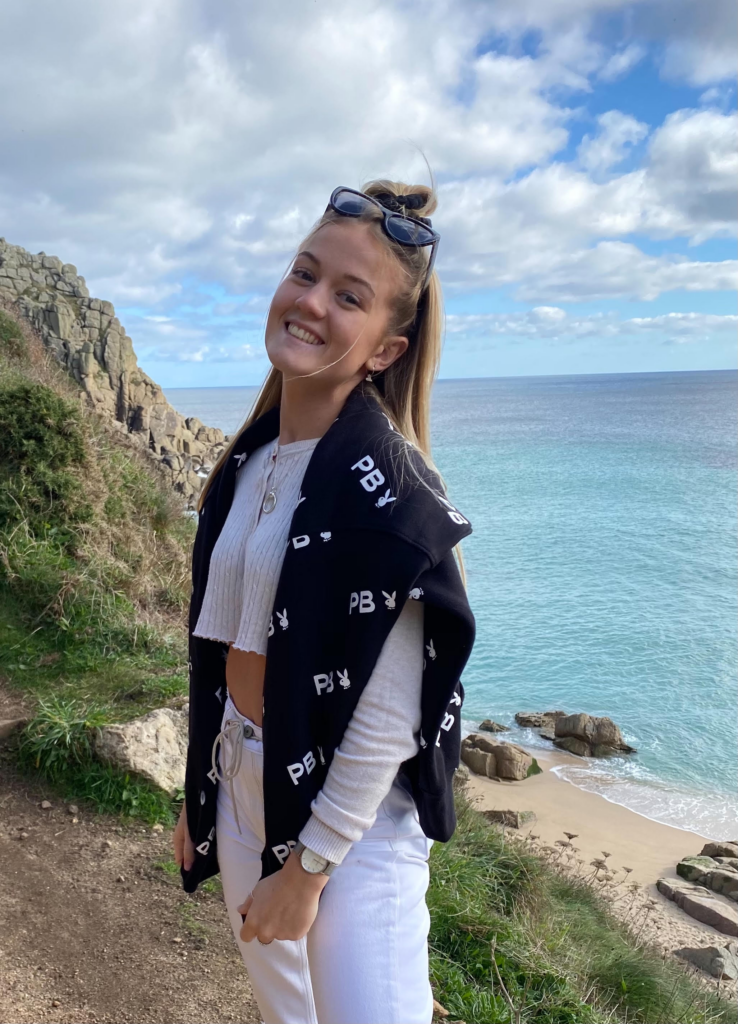
    Katie, 19, also sees the positive side. “It hasn’t been a bad thing because I’ve been saving,” she tells us.

    Finally, we spoke to 19-year-old Katie. She is supposed to be somewhere in Australia or south east Asia but instead, she’s in Kent. But she is trying to focus on the positives. When the tier system allows, she works in a family friend’s independent shop. “It hasn’t been a bad thing because I’ve been saving,” she says. 

    Katie, who has a place to study sport and exercise science at Kent university says : “I think I’ve been making the most of the situation. When I came back after shutting I actually really enjoyed it because I felt like everybody appreciated us more. We’re an independent shop and everybody was shopping local and it was a nice feeling, like the community was coming together again.” 

    Photo credit: Matese Fields on Unsplash

  • Emma Swift: ‘As a musician, you’re essentially a small business’

    Emma Swift: ‘As a musician, you’re essentially a small business’

    These past few years have taken everybody for a spin. In some ways my job’s been easier because I don’t have to try and tour and I’ve mainly done my record Blonde on the Tracks, a collection of Bob Dylan covers, online. I studied English literature at the outset, and then I became a journalist and also worked in a government department. But I quit all that and moved to Nashville, Tennessee to do music. 

    I was always a bookish kid and then grew up into a bookish woman. One of my songs on the new album is a cover of Bob Dylan’s ‘I Contain Multitudes’ – and I think I was responding to the references to Walt Whitman, and to Edgar Allen Poe. I can still recite ‘Annabel Lee’ – so my education gave me the foundation to what I do now. 

    I’m often asked about the direction of the music business. With Blonde on the Tracks I chose not to stream it at the beginning of the release, because we’re in a pandemic year. I play essentially Indie folk, and at my age in the 1960s, I would have been playing the folk clubs – and today for people like me the bulk of our income is made touring. But when touring stopped that has meant mass unemployment in my sector. So I decided to make this an online-only release.

    What I would say to anybody interested in a career in the arts is just to be flexible and be open to change, because the music industry is always revolutionising itself. People will tell you that it’s all streaming now – but it’s not always going to be all streaming forever. It will pivot to something else. The music business does that constantly: 20 years ago the advice would have been that all vinyl is a total waste of time; nowadays vinyls are outselling CDs. The best thing to do as an artist is just to trust your instincts, and realise that you’re essentially a small business. There’s no right or wrong way to run your small business: there’s a multitude of ways that you can operate as a creative person.

    It’s also good to be persistent as a creative person, but also good to be able to take break if you’re feeling burned out by your art – because it can be exhausting. Give yourself permission to take time off. 

    But perhaps the most important thing is just because you do work another job that doesn’t make you any less of an artist. TS Eliot worked in a bank. A lot of people in the music business now have to have other gigs, because that’s the best way to survive and that’s okay.

    Of course, people who are creative are not very good at administration – it can be challenging and deeply boring. I find it very difficult to switch gears and it’s really hard for me to write if I’m also thinking about record distribution and invoices. But it definitely doesn’t hurt to know a little bit about all that – and anyway you’ve got to do it. I’m capable of organisation and chaos – depending on the day of the week.

    The other thing with music is that you have to be so present on social media. You have to really go out there and spend an hour at least. For an artist at my level, had I not been ubiquitous on the internet, the record would have disappeared. The fact that it didn’t is likely due to the fact I spent an enormous amount of time on Twitter.

    I would also advise engaging with other people’s music. If you’re not buying CDs, why would anybody else? I do have some regrets about the latest album. If I did it again I would span a broader cross section of Dylan’s work. I skipped over the 80s and the 90s, but all of these Bob Dylan songs have made me a better songwriter.

    That’s not to say I’ll be doing another album called ‘More Blonde, More Tracks.’ I now realise that what I’ve done is to put myself under an enormous amount of pressure to follow up a Bob Dylan with my own songs. When I look at that now, I think: “Gosh, that’s insane. Why would anybody do that?”

    Emma Swift’s latest album is Blonde on the Tracks

    Image courtesy of Emma Swift

  • Sophia Petrides on the problem of job-hopping – and how we tackle it

    Sophia Petrides on the problem of job-hopping – and how we tackle it

    Sophia Petrides outlines how to tackle a hidden problem within our society 

    Where are we with new talent? As we know, 24-39 year-olds have become known as the “hopping generation”, on account of the fact they tend to change jobs frequently. This is causing problems within organisations because of the high cost of employment, which includes high costs for recruitment and training and development. That’s before you even take into account the loss of knowledge within an organisation from high employee turnover. 

    In fact, job-hopping is costing the UK economy an estimated £71 billion and the US economy $30.5 billion annually, according to Gallup. The cost for employing someone new into an organisation is an average of £11,000 per person in the UK and $20,000 in the US.  

    So what accounts for this trend? First, it’s a question of annual remuneration and promotion in an era where middle-ranking jobs are declining. Technology means we don’t need so many middle managers, project managers and administrative jobs. That means there’s often little hope of promotion within organisations.  

    Nowadays, if you want a salary increase or a promotion, you need to leave the company and apply for another job. I experienced this situation first-hand many years ago, when I was leading a business within investment banking. Even though I was in a director role, the excuse I was given for not being promoted was that the organisation had surpassed the number of director promotions for that year and I would have to wait for another year. Following this conversation, I started working on my exit plan. 

    But it’s not just the money. There’s also a clear lack of respect and authentic communication from leaders and management. Today’s organisations often fail to create “safe” environments, where people can openly express their ideas without judgement.  

    In order for leaders to retain and attract new talent, they need to demonstrate empathy and compassion – a vital ingredient when it comes to humanising workplaces. In addition to that, visibility is important: today’s leaders shouldn’t let their workforce face adversity alone. This must go hand in hand with authentic communication, and clear training and development programmes.  

    In 2020, we have seen a surge in businesses collapsing and ongoing redundancies within organisations. All this has pushed global unemployment to record high. The good news is that once the economy starts to bounce back, we are going to see an increase in talent hiring. Even so that still means organisations will lose their talent to other organisations, and experience a drop in productivity in the process. Leaders need to act now, by investing in learning and development, and by deploying the wisdom in the older workforce to nurture talent.  

    Demographic trendlines also need to be taken into account. Birth rates are decreasing over the last quarter century, so much so that we’ve now reached a 20-year low. This means in turn that less talent will come into the future market. It also means we need our middle-aged workforce more than ever to stay in jobs and support the economy by contributing towards taxes for the financial support of the older retired generation. 

    So now is not the time to stop hiring the 50+ age group or to be pushing towards early retirement, as some professional services have the tendency of doing.  

    This issue of organisations failing to hire certain age groups is causing another ripple effect which has led to the increase of mental health difficulties. This is a global problem. Since Covid-19 struck, mental health has taken secondary priority, and it’s costing global economies billions. In the UK, the annual estimate of loss is £34.9 billion and in the US $53 billion. 

    Another group we need to take into consideration for the ongoing growth of our economy is returning to work mothers. They are insufficiently supported by organisations, even though they’re a huge asset. During times of adversity, they’re able to support leaders by staying close to employees and nurture them through the challenging times by putting into practice their agility, adaptability and resilience – traits they’ve learned and enhanced during motherhood.  

    In order to achieve a smooth return of women back into the workplace, organisations need to create appropriate training and development programmes. These need to build trust and respect, develop technological skills and also instigate clear communications around project management and deadlines. 

    There’s a lot to do. But if we’re successful, it will be a recipe to inspire significant growth in the global economy.