Category: Features

  • Jeff Katz: Letter from an American

    Jeff Katz: Letter from an American

    We at Finito World were all deeply saddened by the sudden death of Jeff Katz in December 2020. Here we publish his last piece, submitted to us only a few days before his death. We shall publish our full tribute to him next week.

    Truth, lies; facts, alternative facts; news, fake news; information, disinformation; reality, conspiracies—how and why did our views of the world get so divided? 

    Joe Biden won the US election, but not without accusations of fraud from Trump and his supporters.  It was mostly likely the coronavirus pandemic that gave the Democrats the edge, but not by as much as they expected.  Trump’s effort, in the words of New York Times journalist Will Wilkinson, to sweep “a medium-sized city’s worth of dead Americans under the rug turned out to be too tall an order.”   

    When facts and truth become casualties of deliberately created social and political confusion, we all suffer.  And that extends to our day-to-day dealings with each other.  As someone once said, you start off by committing murder and end up being late for appointments. 

    One of my abiding lessons about facts occurred during my high school years in New York.  In a school of 5,000 boys I found my niche in the English Department’s journalism class, taught by one of my first mentors, a teacher named Louis Simon. 

    Lou was the advisor for the school newspaper, a broadsheet that came out four times a year.  He also taught the journalism classes.  By my second year I was in the advanced class and was a reporter for the paper. 

    One day Lou asked me to assist him with an experiment for the new intake of the journalism class.  After the class settled, I came in and Lou told me to distribute textbooks.  I dropped the books noisily on the desks.  He first admonished me and, when I ignored him, sharply reprimanded me.  I then muttered something that sounded like “*uck you,” but wasn’t.  He ordered me out of the room.  Then he told the class that he intended to report me for bad behaviour and wanted them to write an account of what happened to back him up. 

    About half the class wrote that they didn’t want to get involved.  A quarter of the class quoted what they thought they heard—but hadn’t.  The final quarter wrote that they weren’t sure what I had said, but that my behaviour had been disagreeable.  

    At that point in my life, the fact that half the students didn’t want to get involved surprised me.  But that the other half either reported the events incorrectly or couldn’t decide what they heard taught me that at best many people will be unsure of the facts.  More importantly, many people will simply be wrong because they hear what they are programmed to hear. 

    Forty years later I was invited to make a presentation to pupils at the City of London School.  This time I was in the teaching role.  I began by making an offer.  Everyone who gave me a £1 coin would get two back at the end of the session.  There was a flurry of activity as pupils who didn’t have a coin borrowed from their mates.  As each person contributed a pound into a bag, they signed their name so there was a record of the transaction. 

    I put the bag of coins and the list of signatures into a briefcase and began explaining to the class how fraudsters work, how con men and women rely on the gullibility of people who want to believe in opportunities that that promise rewards, regardless of how unlikely.   

    After half an hour or more of my explanations and examples of how such things happen, the teacher hosting the event thanked me and there was a nice round of applause.  As I picked up my briefcase and prepared to leave the room there was a murmur among the pupils.  I asked if there was something the matter.  They asked about their investments that were supposed to double at the end of my talk. 

    “Oh that,” I said.  “No,” I told them.  “That was just speculation.  If I manage to double your money, I’ll let you know.”  And I began to leave the room.  Of course, I didn’t.  All the pound coins were returned to their rightful owners, but I suspect that those few minutes at the end taught them more than anything I said during the preceding half hour. 

    “Dishonesty, greed, double-dealing,” wrote Professor Churchwell in The Guardian, “are symptomatic of entrenched maladies.”  The only remedy is education.  And that will take time. 

  • The Archbishop of York Stephen Cottrell on Covid, Zoom, and how we alter our work patterns

    The Archbishop of York Stephen Cottrell on Covid, Zoom, and how we alter our work patterns

    I began my ministry during lockdown and compared with the sufferings of the world, having to move at that time is a small thing. Nevertheless, it’s not the way anyone would choose to leave on job and start another.  

    A little maxim which has helped sustain and guide me through my working life has been that good decisions arise out of good relationships. You want people to share your vision, and ask them to help you design it. Zoom has been very good for sustaining existing relationships – and even for transacting business – but it’s not so good for making new relationships. Actually, if you think back to before the pandemic, it’s the things that happen in the car park after the meeting, or over coffee, which are really valuable to oil the wheels. In that sense, it’s been a challenge. 

    The Christian way of ordering the world has got terribly out of sync. We’ve become frantic and evermore busy. Although you know there’s nothing good about COVID, it doesn’t mean some good can’t come out of it. Perhaps it will cause all of us to reflect on the very unhealthy ways in which we were living and working – and not just unhealthy for us, unhealthy for the planet. So my great hope is that as we emerge from this, we won’t just go back to how we were, but we’ll think about patterns of living and working which are much more life-giving. 

    Work is good – we are made for work. Work itself can be an offering to God. So we need to use our time purposefully and creatively, but we need to do it in a way that is healthy. That requires us to see that the first thing we should consider is time for refreshment and prayer. That should be our first consideration, not our last.

    Some people ask what an archbishop does, if I am perhaps the equivalent of a CEO of a business. Well, not really. The business of the Church is the business of the Gospel of Jesus Christ, so an Archbishop is much more like a pastor than a CEO. The Church is fundamentally a community.

    Of course, I have responsibilities for the leadership and oversight of that community because it’s a large community which also needs organisation. And there’s all sorts of infrastructure organisation that goes with it. We employ a lot of people, but we have lay officers who help and support with that. So my day-to-day work is to care for the clergy and to be a voice – and sometimes a face – for the Christian faith, particularly in the Diocese of York, where I serve. As an archbishop, there’s also a national responsibility to guide the vision and hold us to these values. So there are of course parallels with leaders of other organisations – but I don’t see myself in that way.

    Of course, there are hundreds and hundreds of clergy across my diocese, so I can’t meet with them all regularly. On a normal Sunday morning, I will be joining in with the life of a parish or local church. Much of that, of course, in the past year has been online and the church has done amazing things in transferring its life online. But of course, we’re now beginning to meet in person again. Yesterday morning, I was in a place called Loftus which is near Saltburn-on-Sea on the North-East coast with a local church, joining in their life. This evening I’m meeting with a whole group of clergy, and lay leaders, to discuss the life of the church.

    For me the piece of scripture which has spoken to me most in the last year is the story of the woman with the haemorrhages who comes to Jesus. As readers will probably recall, she doesn’t touch him directly – and of course the reason she doesn’t touch him is a kindness. In her understanding of the cleanliness laws, if she as an unclean person touches him a clean person, she makes him unclean. But nevertheless she believes that he has the power to heal. So she touches just the hem of Jesus’ garment. 

    But we’re told Jesus feels the power go out of him. He says to the disciples: “Who touched me?” They say, “You’re having a laugh. You know the great crowd of people around you – everyone’s touching you.” But he notices.

    The reason I found that story so helpful is because we have lived through a year without touch, and without embrace –and without the familiar things of the Church which usually sustain us. Particularly in the Anglican tradition, without being able to receive Holy Communion, which has been the kind of staple diet of Christian worship. All those things have been taken away from us. Does that mean Jesus is not present with us? No, he’s still just as absolutely present. I feel we’ve had a year of touching the hem of His garment.

  • Douglas Murray: the big publishers are becoming ‘weird NGOs’

    Douglas Murray: the big publishers are becoming ‘weird NGOs’

    When it comes to publishing, the problem these days is getting your foot through the door in the first place. You can publish Jordan Peterson now despite the controversy surrounding him because has already broken through. That’s the obvious example. The thing I worry about here is: “How are young people at the very of beginning of their career, allowed to say what they think?”

    I remember when The Strange Death of Europe came out, I was face to face with a very nice lady at a drinks party who said she was in the publishing industry and working for one of the major publishers. She said she’d said to her boss: “Have you seen how well Douglas Murray’s books are selling?” And he said: “Yes.” She said: “Didn’t I tell you we ought to do something in that area?” The area, I suppose, would have been immigration. And apparently her boss said to her: “We wouldn’t those readers.” So I said: “You must tell him at his next shareholders meeting that they are not a for-profit organisation, but rather a sort of weird NGO of some kind.” 

    So the publishing industry – like every industry – is susceptible to this same strange problem of wokeness. I was with an academic recently, who was gay, and had got into terrible trouble because he’d been pro-Brexit. I found myself saying at one point: “Why is it such a terrible sin to be in agreement with the majority of the public?” I don’t want academics to be pro- or anti-Brexit; I just don’t particularly want this kind of conformity which a vociferous minority seems to want. 

    One thing we have to think about seriously as a nation in the years ahead is where the talented people go. I spent a certain amount of time in Silicon Valley in recent years researching The Madness of Crowds so this has been on my mind a lot. Would a smart person today go into politics? Would they seek to be an MP? Would they seek to be an academic? Probably not – and that accounts for the impoverished nature of this moment in both politics and education.

    My friend Christopher Hitchens used to say that he couldn’t write fiction, and he knew why. He knew people who could – like Martin Amis and Salman Rushdie – it was because they were always interested in music. Well, I enjoy music, and I play the piano every day. Sometimes people try to get me to do fiction. First of all, I don’t think you should force it on anyone. Secondly, my view is that for the last 20 years we live in an age of reflection and that has made fiction feel secondary – it’s rather like trying to write the book of the age in heroic couplets. For example, if you wanted to read about the Vietnam War, for instance, would you do better reading a novel about it or a great book like Nothing and So Be It by Orianna Falacci. I would suggest the latter. There’s this feeling that fiction is not where the action is. But it does feel that to me that poetry on the other hand, always has such a small audience that somehow it never becomes irrelevant.

    When prose-writing is exceptionally bad, as with for instance Judith Butler, it can be for one of two reasons. One possibility is that that person simply has nothing to say. But the second thing is rather more alarming – that they know that what they’re writing simply isn’t true. And there’s a lot more of the latter kind of literature around than you might think. 

    What happens in academia is that impenetrable language is used as a screen. You’re meant to think that if it’s unreadable that must be wisdom there somewhere. That’s why you can’t just critique these books, you also have to offer an alternative reading list. In that sense everything begins with Plato – and also with the Judaeo-Christian tradition.

    Photo credit: By AndyCNgo; cropped by Beyond My Ken (talk) 00:23, 8 May 2020 (UTC) – Own work, CC BY-SA 4.0, https://commons.wikimedia.org/w/index.php?curid=89983788

  • Opinion: Why we need to do more for the grey economy

    Opinion: Why we need to do more for the grey economy

    By Finito World

    The recent news that judges will now face mandatory retirement at 75 and not at 70 is welcome. Announcing the move, Lord Chancellor Robert Buckland QC MP said: ‘Our judges, magistrates and coroners are world-renowned for their excellence, expertise and independence. It is right we hold on to them and do not cut off careers unnecessarily.’ 

    When Finito World spoke earlier in the year to the former Court of Appeal judge Sir Rupert Jackson we found an evergreen retiree as alert as a man half his age. Here was a lawyer who had accumulated enormous wisdom over a long career, who now makes his living as an arbitrator and in writing volumes of history.  

    One can understand that the UK system has been designed to avoid the slightly morbid spectacle we’ve seen on a number of occasions with the Supreme Court in the US, whereby the world watches ghoulishly as Supreme Court justices, who really are at retirement age, cling to their seats, often until death deprives them of authority. But there have been mutterings for a long time that in this era of rising life expectancy, 70 is too young an age to leave the bench. 

    This middle ground is to be applauded – but with a President of the United States at the age of 78, it might be wondered whether mandatory retirement itself is outmoded. And it’s not just a problem in the judiciary. We have just been through a pandemic which rightly sought to preserve the lives of our elderly. Insodoing, we implicitly declared their value to us.  

    But we don’t take full advantage of their wisdom. Forced retirement remains a lively issue which has been litigated both at Oxbridge universities, and at the major accountancy firms. As we move forward into the next chapter – the pandemic mercifully in our rear-view mirror – let us not forget what the grey-haired have to teach and offer us. They deserve the dignity of work as much as anyone else.  

  • Opinion: Has the Chancellor Got it Wrong on Self-Employment?

    Opinion: Has the Chancellor Got it Wrong on Self-Employment?

    By Finito World

    As we emerge from this period of crisis, the nature of the political debate has subtly shifted. We’re no longer thinking about how to get through the next days and weeks, but about what we’ve learned during this time of trial. 

    The Covid-19 pandemic has yielded a thousand stories – from the heart-breaking tales of businesses gone to the wall, to the extraordinary heroism of Captain Tom Moore, all the way to the resilience of the tech sector which has shown us glimpses of an accelerating future. 

    But as a vast and imaginative furlough scheme was unfolded – at a pace and with an efficiency which Finito World applauds – there have been those who have fallen through the cracks. That this was inevitable during a time of such upheaval doesn’t make the matter any less urgent. 

    One of these was the self-employed, who have been the sacrificial lambs of Covid-19. Consider, for instance, that you had taken the entrepreneurial step of moving to sole trader status during the tax year 2018-2019. You’d have qualified for no government support, but by a quirk of HMRC’s rules, found yourself liable to pay 150% of tax for the next two years. All that would be payable by 31st January. 

    Now imagine that you’ve done made that move, but you’re also a parent. The services which you’re paying for – chief among them, education – would have been closed for the majority of the year.  

    With kids out of school, the self-employed, lacking the structure of an employment relationship, found themselves especially vulnerable to productivity issues. The incomes of the self-employed rises and falls according to daily output in a way which isn’t true for people in regular jobs.  

    The government has made some of the right noises. In early February Boris Johnson sent a well-meaning letter to all parents, praising their work in picking up the slack. In a time of unparalleled – and justified – government largesse, it was not uncommon in the first part of 2021 to hear parents wonder, only half-jokingly, when their own tax rebate was coming.  

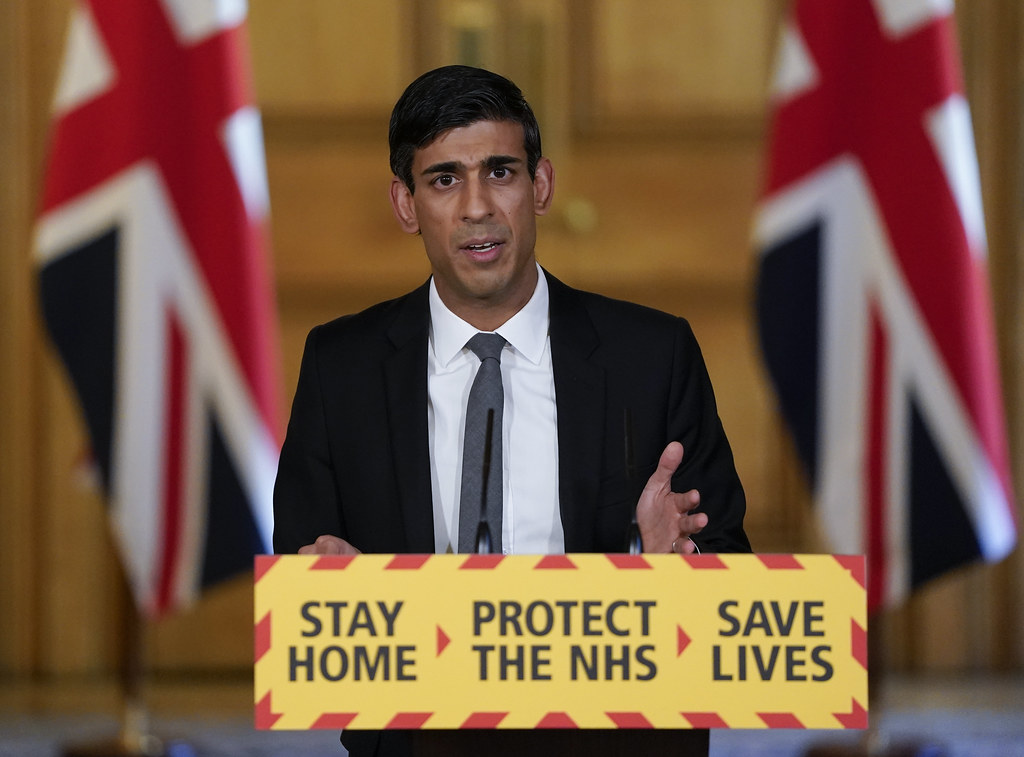
    Noting the anomaly, the Chancellor Rishi Sunak moved to take into account the tax return filings made in 2019-2020 to expand the help offered to the self-employed. This was admirable, but it was accompanied by noises that at some point the self-employed National Insurance contribution would rise from the current 9% to 12% in line with those in employment.  

    This is short-sighted. Without pension contributions, or reliable pay checks, the self-employed take on a greater degree of risk. They’re by nature entrepreneurial – the sort of people the Conservatives are meant to admire. Self-employed parents are believers in the importance of the family unit – another important plank of Conservative thought.  

    This isn’t just about self-employed fathers, but mothers too. The leading charity Pregnant Then Screwed was set up to fight against the discrimination women face during pregnancy and after having children. The organisation recently took the government to court, to challenge the Self-Employment Income Support Scheme.  

    The basis of their argument is that the calculation of the grant does not exempt periods of maternity leave when calculating average earnings, leaving around 69,200 women affected. When questioned, the Chancellor compared taking maternity leave to taking a sabbatical or ill-health. The charity lost their challenge in February 2021 and are seeking grounds for appeal.   

    Rishi Sunak’s style of delivery is always impressive. He is surely right to speak plainly to the electorate about the condition of the public finances. But when the government looks at how the cost of borrowing will be born going forwards it will be important – both politically and morally – for recent history to be understood.  

    The reality is that the complex realities of family life is an area which isn’t being sufficiently explored by the leading think tanks – a fact in itself symptomatic of an issue which has fallen through the cracks.  

    Mark Morrin, Principal Research Consultant at Respublica, says: ‘For years the self-employed have been encouraged to go that way, but when the crisis came they were ignored.’ He adds that this gap speaks to the fact that the Conservatives ‘used to be entrepreneurial under Thatcher,’ but that now ‘the Red Wall Tories don’t look at the world that way. You might not admire Hungary and Poland for obvious reasons, but they have more sophisticated approaches to family policy.’  

    Morrin’s right – the Chancellor needs to look at the nuance of this before saddling the next generation of entrepreneurs with an impossible burden. 

  • Why poetry must not be demoted on the national curriculum

    Why poetry must not be demoted on the national curriculum

    Has poetry been demoted on the national curriculum? If so what does that mean? And do poets really know anything about work? George Achebe did a little digging 

    When Finito World spoke to former shadow schools minister Margaret Greenwood recently, she recalled an episode during the 1970s, before the national curriculum even came in. Greenwood was teaching a particularly difficult class in secondary school. “It was a real challenge, but then I hit on an idea. I was going to give them all poetry books to read to themselves, and I was going to say: ‘This is a quiet reading lesson’.” 

    It was the sort of inspiration which could be permitted to strike in those comparatively targets-free days. What’s more, it worked – though some of her fellow teachers were sceptical. “I remember one teacher looked at me askance and said ‘You’ll never get them to sit still’,” Greenwood continues. “But I went to the library and got all the poetry books and dished them out and explained that this was what we were going to be doing every Tuesday.” 

    The strategy took time to yield results. “It was fascinating. At first, there was a struggle and a bit of resistance. Then they got into it. We need to let teachers be the professionals they are.” 

    It’s a story about teaching, yes, but it’s also a tale about poetry. It posits the idea that poetry is capable of crossing boundaries, of overcoming indifference – and ultimately that a poem – even a line of poetry – can alter the course of a life.  

    And yet if you look at recent government policy, it seems rather to tend in the opposite direction. It began with a storm last year – in the world of poetry, a storm usually amounts to a single article in The Guardian. In this case – a measure of the seriousness of the issue – there were two articles in The Guardian.  

    The cause of the storm? This was to do with Ofqual’s decision to make poetry optional at the GCSE level. The ruling states that for this year students must compulsorily take a paper on Shakespeare, but that they can choose two out of three from the 19th-century novel, a modern drama or novel, and poetry. Poet and teacher Kate Clanchy summed it up: “For the first time, poetry is a choice.” 

    The indignation – in Clanchy’s article, and also evident in a similar piece by poet Kadish Morris – was open to some objections. In the first place, Shakespeare is nothing if not a poet – and has for five hundred years proven a pretty good ambassador for poetry. Meanwhile, much modern drama – especially TS Eliot – deals in verse, and its prose dramatists – one thinks of Pinter and Beckett – tend to be poets as well. So it wasn’t quite the dagger through the poetic heart which it was reported as. 

    Secondly, teachers are, of course, able to teach poetry anyhow regardless of what Ofqual says. When I spoke to a secondary teacher friend, who asked not to be named, she said, “It’s not like my children aren’t exposed to poetry; they are. All this sort of thing does is demoralise teachers.” 

    When Finito World approached Ofqual for an explanation, a spokesperson further explained that the changes are temporary and “designed to free up teaching time and reduce pressure on students”. In other words it’s a specifically pandemic-based change, which should be repealed once we return to normal. Even Clanchy seemed to admit this in her article: “Plenty of teachers will stick with the poems, especially if they’ve already studied them,” she wrote. 

    In addition to this Ofqual pointed out to us in their statement, that exam boards retain the freedom to add to the common core if they wished. Meanwhile, the Department for Education didn’t reply to our request for comment.  

    So is the whole thing a storm in a teacup? Well, not quite. In the first place, Clanchy surely has a point when she draws attention to a double standard: “The content of double science – the popular three-in-one science GCSE – is presumably also, as Ofqual says of poetry, difficult to deliver online, but Ofqual isn’t telling teachers they can pick between chemistry and biology next year providing they stick with the physics.” 

    It’s a reminder that this decision feeds into poetry’s worst fears about itself – about its sliding into irrelevance. This is probably misplaced: when we have a funeral or a wedding – that is, when we really want to say something important to one another – we tend to reach for the music and springiness of poetry ahead of prose. That will probably always be the case.  

    But there wasn’t a similar storm over the optional nature of drama or the Victorian novel to quite the same extent. In the first instance, in an age of theatres closing, drama writers are more concerned about their works being put on again than they are about their texts being studied. And the Victorian novel, regularly adapted for film, seems invulnerable.  

    Poetry is different; it feels fragile. As Alison Brackenbury, one of our greatest living poets told Finito World: “Many people only know – and value – those poems which they encountered at school, especially if they learned them by heart. If they don’t come across poetry which appeals to them in their curriculum, the one chance may be gone.”  

    The Chair of the Education Select Committee Robert Halfon MP also expressed his worries: “In some ways what the government has done is understandable because of Covid. There are worries that with the Fourth Industrial Revolution 28 per cent of jobs might be lost to young people by 2030, and so the curriculum has to adapt and change.”  

    But then Halfon pauses, thinks and delivers his verdict: ”Having said all that, poetry and literature are one and the same. In my view, you can’t promote one over the other.” He is also uncertain over whether it’s really such a temporary thing. “DfE is saying this is a temporary measure, and it’s designed to help take the strain off pupils because poetry is perceived as difficult. But temporary measures can become precedent and poetry trains your mind in a very different way. If this becomes permanent it would be very worrying.” 

    It can seem to some that since the hyperactive tenure of Michael Gove as Secretary of State for Education, aided and abetted by Dominic Cummings that “English has been shrunk, confined and battered into rote learning and stock responses,” to use Clanchy’s phrase. 

    Halfon agrees: “Culture has an absolutely important role, not just in the economy but in our society and shaping our lives. It’s not just good for our learning – it’s good for our mental health, and it’s good for expanding our horizons. We don’t want to be a society of Gradgrinds where all we want is facts.” 

    Halfon is reminding us that just at the moment when we are all looking at our mental health, the government appears to be demoting the branch of human affairs most designed to improve it. 

    Christopher Hamilton-Emery, the poet and former director of the immensely successful Salt Publishing adds that the question of poetry’s status on the curriculum is relevant also to the increasingly discussed area of social mobility: “There’s a wider context to this and that’s the way kids come into contact with poetry, or orchestral music, or ballet, or opera, or theatre. In this sense, education is the gateway, the space that gives permission to children, and in this context there’s a political and egalitarian component to this debate around poetry.” 

    But Hamilton-Emery adds, only half-jokingly: “I also recognise that poetry is a pain in the arse. Yet it’s meant to be awkward, tricksy, resistant to authority, dissonant – things that are hard to teach and accommodate, things that can’t easily be measured or controlled. Poetry provides a critical citizenship and, I think, helps form the unity of the person and offers a living communion today and indeed through history.” 

    This goes to the heart of the matter – the sense that the Conservative party represents authority, and that poetry is somehow being punished for being anti-establishment. Of course, these sorts of generalisations can never be the whole truth – even if there is often some truth in them. You could probably make a case that from Philip Larkin and WB Yeats to TS Eliot and Ezra Pound, there were more ‘great’ right-wing poets in the 20th century than among their left wing counterparts. 

    And yet one wonders whether there is a sense in which in our technology driven, factual lives we have ceased to credit marvels and insodoing come to see poetry as somehow wishy-washy, and even insufficiently grounded in the commercial. Tishani Doshi is a world famous writer and dancer who continues to make poetry the centre of her life. She speaks revealingly of the poetry and the administration sides of her being: I studied business administration and communications before ditching it for poetry, so I can get around economics and accountancy alright, but that’s not to say I thrill in it. I move in waves. Sometimes I’m terribly productive about everything – to-do lists and all. Other times I want to be left alone to watch the flowers.” 

    It is this idea that the government no longer wants us to watch the flowers which riles people so much when this kind of decision is made. But Doshi is adamant that we need a more nuanced conversation: ‘One of my first jobs was to teach an introduction to poetry and fiction class to students at Johns Hopkins University. It was a required class, most of my students were pre-med or engineering. I like to think as a result that in future dentist waiting rooms, there may be a volume of Elizabeth Bishop lying around, or that someone designing a bridge might dip into the poems of Imtiaz Dharker for inspiration.” 

    Halfon agrees: “My reading goes into my subconscious. It helps me when I’m writing articles – I may think of things and quote things and use metaphors. It just infuses my thoughts and the way I think. Something permeates like a beautiful stew that’s been cooking for a long time – and it always tastes much nicer on the second or third day of eating it.” 

    Doshi adds: “I don’t know what the UK government’s motivations for demoting poetry are, but I hope usefulness was not a factor. Everything is connected. I can’t imagine any kind of life that doesn’t need the intuition and imagination of poetry.” 

    WH Auden once wrote that ‘poetry makes nothing happen’, adding that it ‘survives in the valley of its being said, where executives would never want to tamper.” And yet in being so lofty it has made itself vulnerable to demotion.  

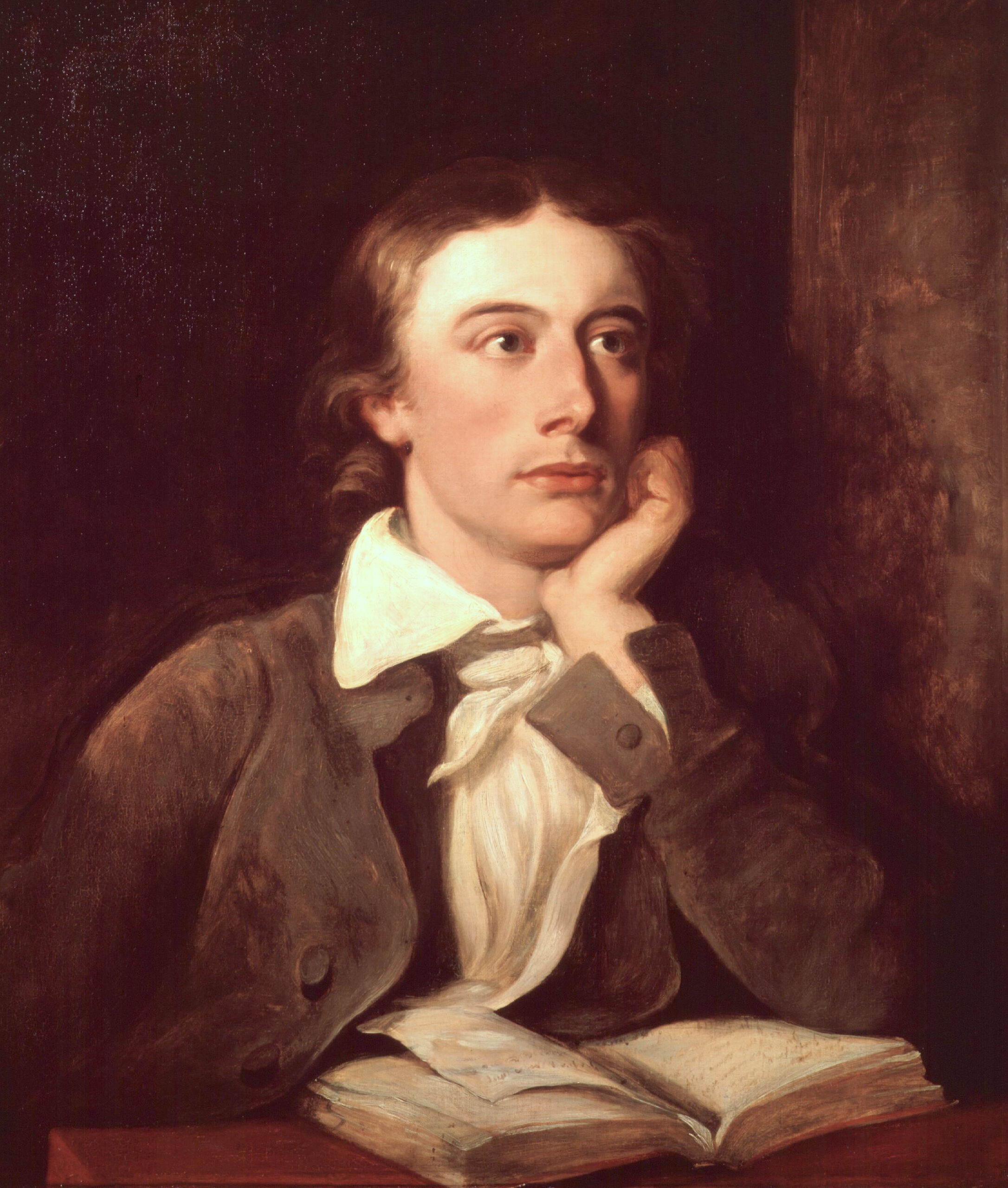
    Yet the poets one meets tend to be tougher than you might think – they cannot afford to be Keatsian and head in the clouds. They have to work. We’ll update on progress in a subsequent issue.  

  • Finito World Reader Roundtable

    Finito World Reader Roundtable

    Our roundtable with readers struggling in the pandemic employment market. With Sophia Petrides, Robin Rose and Andy Inman 

    I work in radiography recruitment. During the pandemic, the firm which I’ve worked at for ten years – and to whom I’ve been very loyal – has taken Covid-19 as a chance to renegotiate my package, cutting my commission from 20% to 15%. I like the company and want to stay there but feel they’ve taken advantage of me. It’s also a niche area. I’m unsure what to do. Kieran, 36, Fulham 

    Sophia:  Kieran, as you know, Covid-19 has created a ripple effect in the economy. Both private healthcare and NHS are prioritising urgent cases due to the restrictions and this is having an unexpected knock-on effect for some specialist recruitment services. I  suggest you have a very open discussion with your firm to get the full picture of the direction of their business. I would suggest a compromise where you ask them to review your package again with a view to restoring your original rate. 

    Robin: Cutting your commission at a time like this, at first glance, looks somewhat unfair. As commission is related to additional business, it appears strange that they should wish to reduce this element of your remuneration. Perhaps they feel you are earning too much related to others in the firm? I can appreciate that you feel your sector experience is niche, but your skills are more easily transferable than you think. You may or may not have exclusion clauses in your contract that limit your approaching rivals. However, your recruitment skills would be of value in any medical sector recruitment area and there’s no shortage of jobs in this sector now.  After ten years it may be time to start looking anyway. 

    Andy: I agree with Sophia and Robin. If you decide to stay, make sure that you’re happy with the reasons for your decision and not just taking the easy option. Being a disgruntled and unhappy employee is not a good option for either side. 

    I was made redundant at the age of 40 during the first pandemic. Eventually I landed a job for a start-up tech company. It’s for less money than I’m used to earning, but the company is noble and looking to tackle climate change. However, I’ve now got through to the final round of a job for a bigger institution which will pay double. I feel it might be unfair on the first company to leave, but the money from the second company would be good, as I have a daughter. What would you advise? Sally, 40, Manchester 

    Andy: Sally, the reward we get from employment is not just the figure that we are paid at the end of each month: being fortunate enough to work in a role and company that resonates with your inner self is rare. That said, you have responsibilities to your family and it’s important that you’re able to fulfil yours their needs. If the extra remuneration is what drives you then see the selection process out to the end, if you’re offered the job think carefully where your priorities lie. Don’t worry about the start-up; I’m sure if you move on, they will employ someone else. If you decide that there is more to work than the pay, then you may already be in the right place. 

    Sophia: Andy’s right. You mentioned your current employer wants to tackle climate change. If this is very important for you, then perhaps consider staying in your new role and have an honest talk with your employer regarding your renumeration and your current earning trajectory with them. Working for start-ups can be a gamble but on the other hand, if they offer performance related bonuses or share options, success can mean great financial rewards for employees.  

    Robin: Sally, if you’re working for less than you are able to earn, you are in effect, making a charitable donation to a start-up. Maybe there is a better way you could support them while still maximising your earning potential. You may also have to negotiate a staggered start time with your new employers. 
      

    It used to be that I did well in interviews – me and my partner used to joke that interviews were my superpower. My first few interviews I got the job. But in 2020, that skill seems to have deserted me. I am told from feedback after interviews that I am too assertive and ambitious. I am new to rejection and finding it difficult. Do you have any advice? Dominic, 34, Leeds 

    Robin: Dominic, your experience is not unusual. Assertiveness and ambition is valued in times of growth but seen as a threat in times of austerity. Companies prefer certainty in these uncertain times. If you give a potential employer the impression that you’re likely to move on if they can’t promote you quickly enough, they’re unlikely to invest in your learning curve. Think about how you might respond to questions like, “Where do you see yourself in three years’ time?” 0r, “Why do you feel this role is right for you?” The fact that you are sufficiently self-aware to identify the problem suggests that it will not be too long before you remedy the situation and regain your superpower in interviews. 

    Sophia:  I’d only add that prior to your next interview, I suggest you roleplay with a trusted friend or find a professional to work with you, like a career coach. We are not always aware how we are perceived by others, in particular during challenging times, where we have a need to survive! 

    2020 has been hard for me. I know every time I apply for a job that there are thousands of other applicants. But now I see that there might be a 90% effective vaccine, and I wonder whether I should just wait it out and hope the economy improves. My parents say this is a lazy approach, but my heart sinks every time I apply for a job, I know deep down I’m not going to get. Do you have any advice? Greta, 22, Guildford

    Andy: Greta, this year has been a shocker for many, the news of a vaccine is a rare and very welcome glimmer of light on the distant horizon! During difficult times some will thrive and others will fall by the wayside. To be amongst the winners we need to put ourselves out there, take the rejections, learn, adapt and keep moving forward. Don’t take a job rejection personally: use it as an opportunity to learn, The Roman philosopher Seneca said “Luck is when opportunity meets preparation”. 

    Sophia: Greta, you are not alone! Even though the future is uncertain, you cannot give up. Keep persevering. It’s easy to lose hope after rejections, but the truth is there are always more jobs and there is no good reason why you shouldn’t get one of them eventually – unless you stop applying. Perhaps seek guidance from a professional CV advisor to support you. 
     
     Robin: Greta, you’re quite correct that sending off hundreds of applications is depressing – and for the most part a waste of time in the current situation. Your parents are also correct, it could well be a couple of years before the economy recovers sufficiently to alter the job/candidate ratio even with a proven successful vaccine. 

    There are jobs out there that need to be filled, however. They get filled by candidates who genuinely understand their skills and experience, know who would value them and know how to market themselves. Jobs get filled by people who know how to get in front of the right people and how to handle themselves in social and interview situations. Possibly you need to identify a mentor who can help you in these difficult times. Look for someone who knows the sector you are targeting and can possibly help you with your self-development and targeted job-hunting activity. 

  • Sir Alan Duncan: “Have I Got News For You was absolutely terrifying”

    Sir Alan Duncan: “Have I Got News For You was absolutely terrifying”

    The former foreign office minister tells us about his degree and how it impacted his life in politics

    I studied PPE at Oxford, and when I’m asked what my degree taught me I always think of Harold Macmillan. Macmillan was a former prime minister, who was once Chancellor of Oxford, and he said to our College, which was St. John’s, that what freshers year taught you is when someone is talking rot. That’s always been my lodestar for what a good education means: if you know when someone’s talking rubbish, you know what’s good sense and what is not. 

    But political ambition predated my time at Oxford – I got the bug actually when I was about 12. Whether I regret that or not now is unclear, but everything I did at Oxford, and thereafter, was geared at getting into Parliament. 

    Politics and economics at Oxbridge is quite a well-trodden degree – but it’s often pointed out to me that the current prime minister wields his English language skills and classical education, and that that gives him an advantage. Well there might be truth in that, but there was an element of history in my papers too. My history tutor – who I knew for years afterwards – told me something I’ve never forgotten: “No economist ever makes a good banker. If you want to be a good banker, you have to read history.” I think there’s a lot in that, because it gives you a strategic perspective. It’s not about the numbers, and it’s not just about economic theory nationally. It’s about the ups and downs of life and societal and economic forces – and historians understand those far better than economists. 

    So in terms of my degree, I feel I learned enough – and I also learned a lot from the practical politics of the Oxford Union. This was at a time when the then Labour government under Jim Callaghan was falling to bits, and Thatcher was on the rise. So the 1979 elections slightly ate into my revision for finals – God knows how I got a degree at all. 

    It’s interesting to note that Theresa May studied geography, but I think in the end formal education isn’t what it’s all about. Whether you succeed in politics is more to do with your disposition and what you’ve done in life. The problem is I think a lot of people are going into Parliament now without any particular experience – and definitely too little international experience. 

    I was lucky to gain both in the oil industry. In that industry my best friend was Ian Taylor who died last year – and that friendship, together with the skill I’d acquired in the oil industry, did come in handy in particular when it came to getting rid of Colonel Gaddafi in Libya in 2011. Ian was buying and selling crude oil into Benghazi and we were able to go to the then prime minister David Cameron and explain that if he didn’t follow our strategy, he’d lose the war. Gaddafi was oil, and our approach helped bring him down. 

    If young politicians ask my advice about appearing on television, I say it’s the wrong question. The trouble is most politicians today don’t think about Parliament first and media second. They have it absolutely the wrong way round.

    What I think does matter about being a minister is time management. If you’re not careful, and you don’t administer your day, you can easily be organised by your private office: one of the golden rules of being a minister is always to make sure that you control the diary, rather than let the diary control you. So that means you need to look ahead, particularly for travel and set priorities – and make it clear to your private office that the priorities are as they are, that you will see some people but not others. You also need to explain that you want time to think – or time to call in one of the teams in the foreign office responsible for an area and get into an issue in more depth. So, planning, and not allowing yourself to be just told what to do as a process is the way to do it.

    The media doesn’t help any of this. Believe it or not, I’ve never been on The Andrew Marr Show, but I think Andrew has completely lost its way. The questions have become so staid and obvious, and it’s a programme whose time is up. It’s junk because Andrew keeps asking questions to which there can be no clear answer, doesn’t delve deeper and it’s all about trying to trip up the politician. It’s a dead programme. 

    I did use humour quite a lot in my career – on Have I Got News For You four times in fact. That was absolutely terrifying – they can’t prepare you for that at Oxford! 

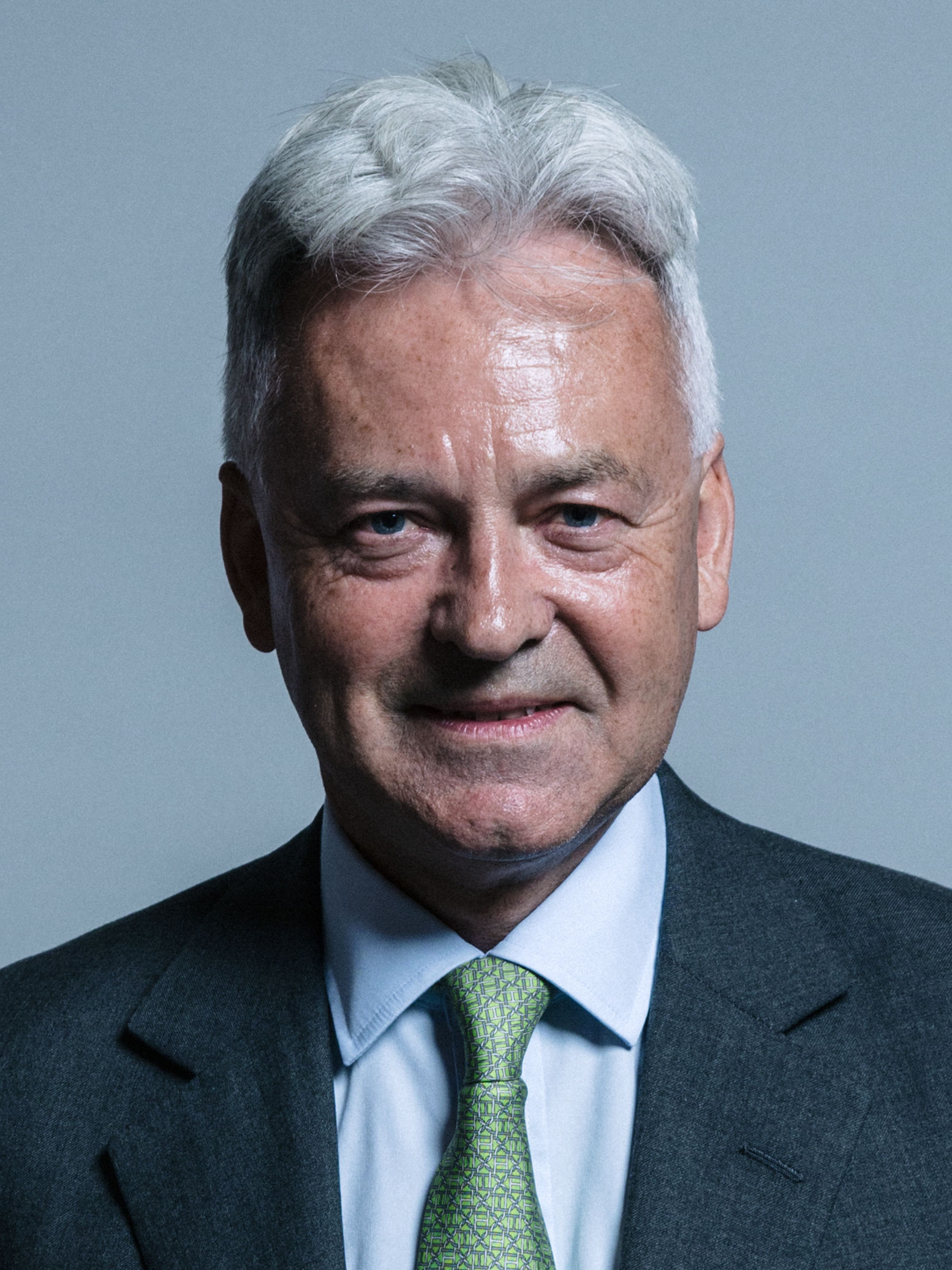
    Photo credit: By Chris McAndrew, CC BY 3.0, https://commons.wikimedia.org/w/index.php?curid=61323695

  • Opinion: Boris Johnson made the wrong decision on the nightlife industry

    Opinion: Boris Johnson made the wrong decision on the nightlife industry

    By Garrett Withington

    To those who had been following the dripfeed of information given to the public prior to Boris Johnson’s announcement on the 14th June, the delay to the lifting of restrictions – or ‘freedom day’ as it has become known – came as no surprise. The threat of a new Delta or ‘Indian’ variant plainly alarmed a prime minister who earlier in the month had been lambasted by Dominic Cummings for failing to lock down soon enough. 

    The leaks at least meant that some businesses were able to prepare for the inevitable and learn to operate at reduced capacity with social distancing measures in place for just four more weeks. But spare a thought for a sector which has been seldom discussed: the nightlife industry.

    In fact, many clubs haven’t opened since March 2020. It’s also the sector which has been worst hit by lockdown restrictions and curfews. Even more worryingly, as of July 1st, the government is expecting cash-strapped venues who have had no income for nearly a year and a half to begin contributing into the very furlough scheme which has so far kept the industry standing.

    It’s all extraordinarily frustrating for those in the sector, since the rules can appear inconsistent. For instance, certain parts of the nightlife sector, such as pubs, can carry on with no extra bother – other than the knowledge that it’s much better to stand with a pint than it is to sit with one. But clubs and venues who were making preparations for reopening found their efforts stymied at a mere week’s notice. It’s unacceptable to be thrown back into this state of paralysis: the extra four weeks clearly means more to the sector than the government realises.

    We must remember that the term ‘nightlife industry’ encompasses not just pubs and bars, but also nightclubs and live music events. The latter two have been the most heavily impacted. It’s worth noting that an All-Party Parliamentary Group for the night-time economy produced a report back in January on the impact of Covid-19 on UK nightlife. The report highlights not only the fragility of the nightlife industry in 2021 but also the wider economic contribution which the sector provides to the UK economy. 

    The figures are worrying. The nightlife industry supports 1.3 million jobs and contributes around £66 billion to the UK economy, meaning its collapse would also affect all those tertiary businesses which support the sector – and are themselves reliant on it. Worse still, 81 per cent of workers in the industry have expressed a desire to leave and find more economically stable work. With over half of nightclub staff being made redundant during the pandemic, it will be interesting to see how many return once furlough contributions have stopped.

    That’s not all. Grants given by the government have little impact on the overheads, and this has led to most businesses feeling that the support given is insufficient. Business rates may have frozen but rents have not and if your rents stretch into the tens, or even hundreds, of thousands, then a maximum grant of £9,000 will feel like a kick in the teeth. When nine out of 10 nightclubs have traded for six months or less during the pandemic, and when turnover has been just 20 per cent of the usual there’s only one solution – to open doors again.  

    That’s certainly easier said than done in the current climate. But as Liverpool’s big rave proved, big events can be managed so as to not be on a ‘super-spreader’ level. We also need to bear in mind the cultural importance our nightlife plays in our society. You could argue that since the decline of the Church, it has been the humble pub which has done the most for community spirit. Meanwhile, clubs and music festivals are a steadfast aspect of the cultural identity of youth in Britain, particularly for university students. We hear a lot today about the increase in mental health difficulties, and this is often a product of the social isolation which our nightlife is built to remove.

    Boris Johnson’s justification for extending lockdowns is based on the reasonable fear that rising rates would outpace the vaccination rate. Even so, with the continued low number of deaths and hospitalisations, as well as a huge uptake in the vaccine by over 18s, it’s still arguable that the decision to delay was the wrong one. The suspicion is that this was informed by a need to push back PR-wise after his supposedly cavalier approach to lifting the first two lockdowns.   

    With over half of nightclubs admitting to being in rent arrears back in January, that position surely must have deteriorated: an additional month will be devastating. Further, the sheer cost of running the nightlife industry is not something that can be matched one for one by government spending. In order to preserve what’s left of the nightlife industry, the government should be flexible in bringing the opening date forward if we continue to see successes as a result of the continued vaccination programme. That’s because with every week the nightlife industry remains closed, more doors will shut for good. 

    Garrett Withington is a Finito staff writer

  • Dean Gustar of The Kusnacht Practice on addiction, the UHNW mindset and why the tone of discussion on alcohol needs to change

    Dean Gustar of The Kusnacht Practice on addiction, the UHNW mindset and why the tone of discussion on alcohol needs to change

    Christopher Jackson talks to the addiction specialist about life in the Swiss clinic – and what it tells us about our times

    Given that The Kusnacht Practice is the leading practice in the world for helping people with addiction issues, you encounter its people armed with pre-conceived notions about them. You try to imagine what the high quality of its many specialists will look like in the flesh. But reality has a way of second-guessing this – and in fact is always more interesting than what we’d pencilled in our minds. 

    Of course, the place is brilliantly staffed and well-resourced – as you might expect. But somehow you’re not quite prepared for Dean Gustar, the organisation’s Head of Clinical Operations, who has an earthy compassion and a depth of knowledge that impresses immediately. The sense is of a man who has lived through many experiences – and indeed he tells me that he has had his own struggles with addiction in the past. 

    The more time you spend with him, the more his presence at the clinic makes sense: this is a smart man, who cares deeply about his patients and understands what people are going through when it comes to addiction of all kinds – everything from gaming and alcohol, to drugs and overeating. 

    “Before I worked at The Kusnacht Practice I’ve never really been around wealth,” Gustar explains. “One of the things I’ve learned is that wealth can be very dangerous. It can be a very lonely place. For instance, it’s very hard for wealthy people to trust other people. And if something doesn’t feel right, they’re used to changing it quickly, with a snap of the fingers. That can make the challenge of behavioural change even more difficult for them.” 

    That feels like earned wisdom. Gustar has that look of unstinting compassion which you sometimes find in the healthcare sector – the look of a man who is somehow never exhausted but instead mysteriously energised by his proximity to suffering. 

    He continues: “And of course, their addiction isn’t really going to impact on them financially so that creates less of an incentive to change. Nobody’s going to come and repossess their house.”

    Gustar lives in Zurich, about 15 minutes from The Kusnacht Practice. Born in the West Country, he also used to live in Peckham, and knows that part of the world well – the sense is of a down-to-earth Englishman somehow deposited in upmarket Switzerland.  “I used to live on the Peckham Estate, and when my friends came over I used to walk them back to the station – they were in fear for their lives,” he tells me. 

    So at what stage do clients normally approach The Kusnacht Practice? “When people come to The Kusnacht Practice, generally the consequences are starting to build – often they may be way over their head with consequences. So it’s a very tough place to be where you begin to realise that one of your behaviours is causing damage to yourself or damage to your family or damage to others.” 

    In addition, patients normally come to Gustar because of a longstanding pattern of behaviour which has itself been of use – or seemed to be of use to you. “The very thing that may be causing the damage, by its nature is going to be very difficult to let go of because maybe it’s been a survival strategy for you to take drugs or drink or overeat or gamble – or whatever it might be.”

    The signs are that during the pandemic these addictions have been increasing as a result of the Covid-19 pandemic: “We’ve seen people whose drinking or drug use has increased as a result of feeling isolated, and not being able to partake in life as they used to,” he explains. And why is that? “Maybe some of the things that help regulate their alcohol use – visiting their parents or going on holiday or feeling productive in their work – have been lost, leading to an increase in other behaviours.”

    And, of course, this is the case even when we have all been less exposed to that dangerous thing, the boozy work lunch. “It’s a good point,” says Gustar. “Some of these boozy lunches, there’s this undercurrent of relationship building, where people are engaged in drinking, and where drinking is a kind of obligation.” 

    But that sense of obligation, especially in beery England, can crop up with great regularity in everyday life. So how do you combat that sense of obligation? “You have to develop your own strategies for dealing with these situations. When it comes to people who care about you or people that love you, if you tell them you’re not drinking and if you feel comfortable telling them why, they should care enough about you just to accept it and support you –and maybe even look out for you in that position.”

    And what about those pressure situations – a wedding, or when we see those friends who expect us to drink with them? “I think in those situations, if you’re starting to feel the pressure or people are applying the pressure. you have to come up with a strategy that can support you in that situation – and that could even be an escape plan.”

    Gustar is aware of the difficulty of the task he faces with those suffering with addiction, and so he is keen to perspectivise what it means to give up an addiction. “It’s very difficult to change any behaviour. So if you do manage to change from a state of dependent drinking, why would you risk it for somebody that’s just a passing acquaintance?”

    I’m reminded of Christopher Hitchens – who died of oesophageal cancer after a lifetime of too much whiskey – who remarked that he might not have drunk so much had he not had a strong constitution. He was able to file his pieces on time, and be successful. Does Gustar see high-functioning alcoholics among his CEO client base? “We do see high-functioning alcoholics and it just makes you wonder how well they would function without alcohol. But they pay a price somewhere, so it could be their relationship or their health – and they’re most likely already paying it in some respects.”

    Sometimes the price can be concealed. “As we get older our ability to sustain it decreases – you can’t easily manage a dependency above the age of 55. Alcohol is just a very dangerous substance for the human body.”

    And yet, if you look at the public discourse, Gustar points out, you wouldn’t think drink especially were particularly dangerous. “I mean – it’s just everywhere,” he says. There’s a kindly anger here – a note which only someone who knows the cost of our exaltation of alcohol could strike. “I’ve watched some of the debates in Parliament, and they’ve had these discussions about “When’s the pub opening? When are we going to get to the pub and drink that pint again?” And if you look at our UHNW clients, there is so much temptation in their lives. If I go to the airport, I mooch around and maybe go to a Starbuck’s.  They go into a business lounge, and there’s a big bar full of free champagnes.”

    To go against these trends and unpick negative behaviours plainly takes willpower – but I suggest to Gustar that willpower isn’t something that’s evenly distributed across the population. Some have it; others don’t. Gustar says: “I think it’s a bit like that Indiana Jones film Raiders of the Lost Arkwhere the sun has to be in place and bounce off here and there and then people change. A lot of things have to be aligned at the right time.” He pauses, then confides: “But you even get people who sit in front of the doctor and the doctor says , ‘If you carry on like this you’ve only got six more months.’. And they carry on doing it. Wealth can be a very lonely place, and the wealthy have a very low tolerance for discomfort.”

    Talking to Gustar is a revelation: here is a man who has taken the decision to work towards helping people. And he reminds us also that addiction is a problem more endemic in our society than we might realise – sometimes as much in the tone of parliamentary debate, and our corporate life, as it is in the pub.