Category: Features

  • Suzanne Rab on how law students coped during the pandemic

    Suzanne Rab on how law students coped during the pandemic

    In 2021, I embarked on a study of the perceptions, experiences and viewpoints of  UK law students in the time of COVID-19, and would like to share my findings with Finito World readers.  Some of the results of the study are not unsurprising and echo findings in other education contexts.  The findings are grim in places, and include the impact on student mental health; the perception of 2020/21 being a ‘lost year’ for undergraduates studying at the height of the pandemic; and student dissatisfaction with the reduced socialisation.  The role of technology in facilitating learning, brought many benefits but was not without its challenges.

    Unsurprisingly, students expressed fears about the infection and its impact on their studies.   The fear of illness was interesting as it centred much more on the negative impact of being stuck in a tiny room in isolation than fear of the disease itself, which was logical given the age and risk profile of those students studying at undergraduate level.

    No student discounted the significance of the health crisis or said that they did not adhere to the imposed lockdown and social distancing regulations.  The impact of the pandemic on mental health was recounted by all students.  This is not surprising and consistent with other studies, such as those conducted by Al-Rabiaah in 2020, and Khalid in 2016, which link epidemics with fear and high levels of psychological distress. This pandemic was especially stressful in that it has occurred suddenly and under circumstances where the participants have little control.  Here then are some of my findings, with some anonymised quotations from the students themselves, detailing for readers relevant experience. 

    The study was conducted in March -May 2021 and developed as a pilot to inform more detailed qualitative research, based on ‘free form’ responses to a questionnaire.  The questions included: (1) what were students’ expectations of studying before COVID-19; (2) what were students’ experiences of studying through COVID-19; (3) what were students’ concerns about studying through COVID-19; (4) what was students’ use of technology; (5) what were students’ perceptions on the impact on employment and career progression; (6) what were students’ perspectives on how higher education institutions can best support students studying remotely  Participants in the study were students studying for a qualification in law (or a subject with a law-related module component) at four higher education institutions in the UK.  The institutions reflected a range of organisational formats including traditional campus-based and one which offers exclusively online tuition as well as mixed online and face-to-face courses.  

    Students have shown admirable resilience

    Pandemics tends to present a risk of students withdrawing from their studies altogether.  The good news is that there was no overwhelming evidence among the small sample reviewed that students were disengaged with their studies and students showed resilience in dealing with the situation.  One student did however note that they had decided to defer – though in this instance, had done so optimistically.

    The results also indicate that students are divided on the highs and lows of studying in the pandemic.  Accepting the sombre context of the study, students were able to appreciate some positive elements.  Some were grateful for their universities providing agile online support, compensatory tuition or additional social activities.  Others illustrated an ability to focus on other dimensions of university life particularly peer collegiality, and they focused on fostering a sense of community during a difficult time.  Some reflected on greater contact with family; efficiencies from remote studying; and an affirmation that studying in the pandemic was an achievement in itself. 

    The in-person experience is missed

    On the other hand, there were some real lows – most regretted the lack of a full university experience. This was especially acute where students were told by others who had studied in more normalised times that they were missing out. This in turn seemed to occur along two lines – the lack of freshers’ experiences which students had been looking forward to, and the imperfect experience of remote learning. Many of course experienced both of these anxieties simultaneously. 

    “Online teams meetings work well but there is no substitute for meeting a tutor in person and having a lively discussion.

    “I was expecting / hoping to meet more students and tutors face to face in tutorials and be able to have discussions with them in tutorials and outside of tutorials.  The pandemic resulted in all contact being either audio only (or in some students’ cases, text only) with no use of the video facility.”

    Many students put community before self

    Throughout my research, the students’ own value and belief systems were apparent.  Many told me that they had engaged in pro bono activities, as part of a recognition of the need to put others before self.  I often found myself impressed by their courage.  

    Remote-learning was largely viewed positively, but not universally and the digital divide is a problem

    Technology as a learning tool was largely viewed positively.  Students recounted their investments in technology to deal with the pandemic as well as online support from their institutions.  This issue in turn raises a question of the digital divide where some students may not have adequate financial resources to access technology.  While online learning has developed in ways which may have been scarcely credible pre-pandemic, some students however expressed preference for in-person examinations.  The role of technology outside the curriculum was also significant as a partial substitute for student-led initiatives to achieve a sense of community and maintain their social networks. 

    “While studying through COVID-19 I have been concerned about my mental health while also dealing with the mental fatigue of having to work and study from the same space for long periods of time with limited outdoor access.”

    Many students are concerned for their futures

    In spite of the point above, many students voiced concerns about the impact of the pandemic on achievement in examinations linked to the online environment.  Even so there was a repeatedly expressed silver lining here: many students saw the experience as fostering skills that would be transferable to the workplace.  Some felt it would develop resilience, others that it engendered new skills or interests. 

    Many students are worried about the availability of suitable work experience and opportunities

    A recurrent theme was the impact on work experience opportunities caused by limited access to networking opportunities, the reduced benefits of online internships and more general limitations of interacting online.  Of course, this was also linked to the impact on students of difficulties in the global economy, leading to a smaller pool of jobs than has been typical.  Even so, the experience of post-graduate students was largely neutral on career progression for the simple reason that such students tend to embark on study more for the intellectual content of the course than for purely employability reasons.  In such instances, the qualification was an end in itself.

    “Further, if this had been my undergraduate degree, when the “experience” was more important to me, I would have been disappointed to have been part of the generation that attended university during the pandemic.”

    The quality of institutional response was mixed 

    Opinions were divided as to how well institutions supported students through the pandemic.  Prompt interventions in providing online support and continuity were applauded and students praised their tutors in dealing with the situation and adapting their delivery and materials.  Where criticism was voiced, it was more targeted at the faculty or institutional level.  This manifested variously as a need for greater sensitivity to mental health concerns and complaints about a lack of effective communication. 

    Value for money is a primary concern

    While most students demonstrated a philosophical approach to the situation one respondent highlighted a concern with the level of university fees.  Although this was not addressed directly in the written responses I observe that the issue of paying for rent for unused accommodation has been very galling for many students.  There is a belief that students didn’t receive value for money and this imbalance will affect those who are least able to pay:

    “While understanding that the costs of running the university largely virtually are high, it is nonetheless frustrating that university fees remain the same/are rising when students are unable to make full use of the facilities and may not even be on campus for much of the time. This will also be the harshest on those who are already suffering more from the pandemic itself.”

    There’s a lot we can do to improve the system

    As far as I am aware this is the first qualitative study in the time of COVID-19 that has been undertaken involving law students.  Throughout the study it became clear to me that while lawyers tend to develop throughout their careers to a remarkable extent, a lot of this resilience is developed in higher education environments.  This raises the stakes and makes me surer than ever of what we need to do to protect students and ensure the future health of the next generation of lawyers and our profession, now and for the longer term.   

    I would like to hope that this modest study may serve as a catalyst to inform research that can contribute to the design of student support strategies and provide a more effective learning environment during and after a time of crisis.  To facilitate better understanding to inform evolving strategies, it is important to have a comprehensive insight into students’ dynamic perceptions, feelings and experiences in a crisis.  This study could also be an incentive to education institutions and the academic community to undertake further research in this area in the UK and elsewhere.

    A series of recommendations, emerging from students’ own responses are outlined in the box opposite.

    Box:  How to Improve Law Student Experience in a post-COVID World

    Provide effective online support

    “Replicate what [Institution] is doing, especially with [online] library access.” 

    “I think it’s best to make sure everything required is online.”

    Institutional flexibility in assessment methods

    “I think [Institution] was very supportive in providing [assignment] extensions. I never used one but it gave me confidence that it is there if needed.”

    “Answer emails quicker, as I missed many assignments and an [examined assessment] due to being overlooked at one of the worst points of my life.”

    Support students’ mental health

    “Higher education institutions can make it known to students what kind of support is available so that students are aware of the support while they are in difficulty rather than when they are in crisis.”

    Greater sensitivity to special needs including disabilities and carer responsibilities

    “The only thing I feel is a shame is that the [final examinations] were cancelled.  I felt there was no need to do that as we had plenty of time to complete them. I was working from home, trying to home school 3 children, one of whom has special needs and none of whom have English as there first language.”

    Assistance with tuition fees that targets genuine need and a long-term view of investment in learning and development

    “If possible, financial support for those who require it.”

    Greater preventative measures including planning, response strategies and preparedness in relation to health crises

    “The uncertainty experienced by students would be well remedied by having events to look forward to: I think the lack of structure and non-academic events to look forward to has been one of the failures of universities generally.”

    Consideration of the needs of international students with remote-learning better reflecting disparities caused by time-zones

    “Prominent examples [of lows] would be having to return home instead of staying at university accommodation due to governmental regulations.”

    Greater opportunities for face-to-face contact where permitted by public health regulations

    “Have as much face-to-face time as possible and perhaps once a week drop in sessions where students can talk about things that they need help with rather than having to wait for emails.”

    Greater coordination of centralised and decentralised institutional communications

    “The best way universities can support remote study is good communication.”

    “Communication from “the top” has been poor.  It would have been better for those at “the top” to have held a meeting earlier on with students in order to set out their views and thereby help to steer the ship in the right direction, including by preventing any misinformation from spreading.”

    Student engagement in decision-making which affects them  

    “It is also important for HE institutions to regularly check in with students as for many institutions this form of working is new and it is more useful to catch any gaps in their approach early, but it also allows students to feel more in control of their experience as they have a say in next steps.”

    If you want to know more about these summary findings, and further research projects in the area, as well as upcoming publications, contact Suzanne Rab (E. srab@serlecourt.co.uk; M. +44(0) 7557 046522).

    Professor Suzanne Rabis a barrister at Serle Court Chambers specialising in regulatory and education law. She is Professor of Commercial Law at Brunel University London, a law lecturer at the University of Oxford, and Visiting Professor at Imperial College London.  She is an expert panel member of the UK Regulators Network, a member of Council of the Regulatory Policy Institute and a non-executive director of the Legal Aid Agency.

  • Letter from Hong Kong: Jenny McGowan, Director of Keystone Tutors in Asia

    Letter from Hong Kong: Jenny McGowan, Director of Keystone Tutors in Asia

    Three years ago I moved to Hong Kong to work as an education consultant and during this time the city has changed in a subtle way on a day to day basis, and in a momentous way when you contemplate its future. In my role I have unique insight into the long-term plans of families as we discuss their children’s education and have noticed several trends with regards to the attractiveness of the UK, which has traditionally been the destination of choice for schools and universities. 

    The political change in Hong Kong has had a limited impact on schools for now, but parents do seem concerned about how this might change over time. International schools have greater autonomy than local schools in terms of the curriculum but the unpredictability is unsettling and has unnerved parents who had not previously planned to move away from Hong Kong.

    Hong Kong nationals born before the 1997 handover were always eligible for BNO passports which gave visa-free UK visiting but not the right to live and work there. In response to the recent law changes, the UK government upgraded the BNO status allowing Hong Kongers to apply for a visa that provides a route to UK citizenship.

    Crucially, this visa also provides the dependents of BNO passport holders the right to attend state schools for free and for whole families to relocate together. Before this, the only option for families without the right to live in the UK would be boarding school which provides students themselves with a study visa. But with costs of around £40,000 a year this was unattainable for most. It also meant being separated from their children, which, pre-Covid was manageable. But during Covid this has been very stressful for families. This was highlighted recently when flights from the UK were suddenly banned on July 1stleaving many students separated from their parents for the summer. 

    Using their BNO status to relocate the whole family to the UK has become a popular option. Only time will tell how many of these enquiries translate into actual moves; the UK government predicts 300,000 over five years. That said, the grass isn’t always greener and the cultural and language barriers may prove challenging for some when it comes to finding jobs and settling in a UK town. In Hong Kong you can get to most places within 30 minutes, taxis are dirt cheap and many families have a live-in maid for around £500 a month. When faced with the realities of an across London commute and the cost of childcare many discover that life in the UK isn’t quite what they expected.

    Before the BNO visa was an option, when I asked families about their reasons for considering educating their children in the UK, the answer often centred around universities and the tradition and prestige that is acknowledged worldwide and therefore translated into good employment opportunities. In 2020, there were over 7,000 applicants to UK universities from applicants in Hong Kong – a 50 per cent increase from 2010. With the increased competition, families started to consider boarding school in the UK at younger ages to try and maximise the chances of a successful university application.

    Great social and political pressure is being placed on Oxford and Cambridge to reduce the percentage of successful applicants that attend private schools which may change the perspective of parents trying to maximise their children’s Oxbridge chances. A parent who selected a school such as Winchester College for their son six or seven years ago may now be disappointed with the Oxbridge results which will have decreased considerably during this time. Arguably, this will not affect students applying from Hong Kong as they are classified as international students and therefore do not contribute to the private school stats. But in fact, there are several schools in Hong Kong which can boast better Oxbridge numbers than many UK schools and so savvy parents may re-think their UK plans.

    University rankings are often referenced by parents in my conversations with them, with future employment correlated with the university reputation and ranking. While this is historically true, it will be interesting to see how this changes over time with many big companies using blind recruitment processes to mask an applicant’s background and placing greater importance on the skills rather than name of institution.

    A lot has changed in Hong Kong, and for now the UK is still a very popular destination for both schools and universities. With the rapid social and political change in both places it will be interesting to see how this evolves in the next few years.

  • Edtech interview: Plum Innovations founder Ji Li

    Edtech interview: Plum Innovations founder Ji Li

    Christopher Jackson interviews the founder of impressive start-up Plum Innovations, a company with the wind in its sails

    The young Edtech company Plum Innovations is one of the success stories of the pandemic. When you talk to its founder Ji Li, you soon feel pleased for him: there’s always room in the world for unassuming and competent leaders.

    Plum’s business is to assist its client base – which consists of an impressive range of 14 primary schools – with their Edtech delivery. 

    Li comes from Shanghai, China and has seen the business which he founded as a sole trader in 2014 in grow by word of mouth: “I was working for a school and the head teacher recommended me by word of mouth.” He had soon incorporated Plum Innovations and has now grown the business to four people.

    So how does the business work? Li works with schools to set up their Google systems and make sure that the teachers are confident with Google Classroom, a system which, Li argues, has many benefits: “It’s really powerful, but it’s also cloud-based, and it’s secure,” he tells me. “In addition, it’s free and teachers can access their files remotely regardless of where they are.” 

    Li points out that his business is especially helpful to teachers now that there has been an expansion in multi-academy trusts which means that teachers have to work in different schools. “That definitely gave a push and means that people realise what benefits they can derive from cloud-based platforms,” Li explains

    Clients were helped through the pandemic by Li and his team. “My wife and kids flew to China in January 2020. Then Chinese schools switched to remote-learning in February,” Li recalls. “The government announced that schools were moving to remote-learning. So I was able to provide my clients with warning and the right infrastructure to cope.”

    Li has a scrupulously polite and efficient manner, but beneath the unassuming demeanour this is also a fierce advocate for making sure teachers are empowered by technology. You get the impression he really wants schools to function better – and knows that Plum Innovations is able to make that happen. 

    “That’s the difference between us and other tech companies,” Li says. “We want to give teachers the power and the ability to use technology themselves.” Li doesn’t want anyone to walk away from these sessions without a greater sense of excitement not just about technology but about teaching generally. “We work closely with computing leaders so teachers can be trained with necessary digital skills as much as possible. In return, we have learned a lot from our teachers too.”

    Li is also animated by a keen social conscience. During our conversation, he repeatedly expresses his concern that those in disadvantaged backgrounds lack access to technology: “Parents don’t have enough knowledge about how to work, and so we have been helping schools deal with parents as well.” 

    Plum Innovations remains a small company – Li even calls it a ‘micro company’, and the firm has no grand sales operation, even though it has won several awards. “We basically just try to do a good job, and then grow organically.”

    When discussing the overall impact of the pandemic, he says: “Remote-learning cannot replace class-learning at all – you need to have in-person interaction from the teacher. We need to move towards blended learning, where you use the time at home to memorise or understand theories – then put them into practice in the classroom.”

    Once you’ve finished talking to him, you realise that Plum’s success isn’t just to do with technical knowledge and smart delivery systems: it’s to do with the fact that Li has a passion for education. 

  • Jeff Katz: 1946 – 2020

    Jeff Katz: 1946 – 2020

    When the investigator Jeff Katz died suddenly in December 2020 it was a shock to all of us at Finito. In this tribute, friends and colleagues remember a classy, kind and remarkable man.

    Jody Freshwater, Director of Corporate Investigations at Bishop Group 

    “Let’s give ‘em a call.”  A common refrain that would emanate from our office, overlooking Pall Mall, when a case had reached a dead end and we needed a new line of enquiry. Who we needed to speak to was dictated by the matter at hand, but for Jeff Katz the late Chief Executive of the investigations firm Bishop International the answer would always be found from a conversation, speaking to someone new and sharing ideas. 

    Having worked in various investigative guises over the last 15 years, in the public and private sector, I have come across a number of different types of investigator.  Jeff definitely fell into the category of an investigator who delivered results and broke cases open through sheer will and determination, coupled with a sharp intellect and his enduring interest in the human condition. 

    Born in the Bronx, New York in 1946, the son of first- and second-generation immigrants Max and Mollie Katz, and older brother to David, Jeff was fiercely proud of the city of his birth and the path he forged which led him to his adoptive home of London.  He spent his childhood and adolescence immersed in the written word, often retreating to his personal oasis of the Cloisters in the Upper West Side of Manhattan, where he found time and space to transport himself to the worlds of Twain, Steinbeck and Beckett.   

    That passion for reading and writing, along with an inherited strong work ethic, meant he was a high academic achiever and quickly found his first love, journalism, at school.  As co-editors of the school magazine, he and his friend would catch the train at night and venture down to the paper’s printers in Greenwich Village, a coming-of-age adventure that opened their eyes to a world that existed beyond the Bronx. 

    It would surely have been beyond Jeff’s expectations at the time to realistically think that his own journey would involve the crossing of continents, meeting characters that could have come out of one of his books and being involved in seminal cases that attracted worldwide attention, all during the emergence of a new industry: corporate investigations. 

    Jeff was drafted into the US Air Force in ‘66, moving into the world of intelligence when he was assigned to RAF Chicksands, near Bedford in England in 1969. Enjoying how far his US dollars, and most likely his US accent, took him in the London of the 1970s, he decided to stay and pursued a career in journalism (interspersed with a first class degree in English Literature), working at the first incarnation of Time Out, followed by a punchy regional paper in Bedfordshire and finally freelancing for Fleet Street up to the mid-1980s.  It was around then he met Frances, the love of his life and his partner of 40 years.  Despite coming from very different backgrounds, they made a formidable team, with a shared love of literature and the theatre. 

    It was in 1987 that Jeff came across his true professional calling, the evolving sector of corporate investigations, and joined Jules Kroll’s eponymous Kroll Associates.  Key to the company’s success in establishing the London office, Jeff was tasked with recruiting a network of investigators and sources across Europe, North Africa and the Middle East to facilitate complex cross border investigations. That legacy remains, with a number of colleagues that Jeff found and nurtured still shaping the industry today in their respective parts of the globe.   

    In 1999, Jeff joined Bishop International as Chief Executive and set about reshaping the company, bringing in investigators from a diverse range of backgrounds including the Serious Fraud Office.  From conducting due diligence for M&A, to obtaining evidence for litigation disputes; from forensic work on homicides, to tracing misappropriated assets, Jeff became known for an ethical approach and moral compass which are now impressed into the company’s DNA. His legacy we will continue – as the following tributes will show.  

    Vivien Leyland, Author and Journalist 

    I first met Jeff in 1979 when we worked together on the provincial newspaper Bedfordshire on Sunday.  The pressure at the paper was intense and it prided itself on old-fashioned scoops. We only published exclusives at that time, between 1979-85, no matter how small the piece. If another local paper ran a story that we’d been working on, we’d spike ours.  

    The paper built a reputation for fighting local government on behalf of individuals; highlighting official inconsistences and exposing hypocrisy and corruption, an experience which took us all into bizarre and occasionally dangerous situations, rarely encountered in local journalism. We won national recognition for the strength of our reporting; we fed numerous stories to Private Eye‘s ‘Rotton Boroughs’ column and it was an unusual week when Fleet Street (as it still was) didn’t run at least one of our pieces the following week. 

    His sympathetic manner and kindness made him the natural and difficult choice for breaking intimate and personal bad news stories

    VIVIEN LAYLAND

    Though we were a weekly Sunday paper, virtually all our news reporting took place on Fridays, when we’d start at 8am and work through till the paper was rolled off the presses at midnight.  This last-minute pressure suited Jeff and also enabled him to concentrate on his own artistic pursuits. 

    There were just four journalists at the time and we all did everything – from proof-reading, headlines and coroners inquests to ad features, though Jeff held fierce control of the paper’s photography and anything to do with the arts (so he got to review the plays, read the books, tour the exhibitions, and interview any visiting literary figures).   

    His sympathetic manner and kindness made him the natural and difficult choice for breaking intimate and personal bad news stories. He was the reporter used for the ‘death knocks’, and though I covered all the county inquests, he was the one sent out for photographs of survivors and victims.    

    Jeff and I lost touch briefly – around 1986 – when I went off to write novels and Jeff took on the editorship of a newspaper in Portsmouth.  But he wasn’t very happy there, and a year or so later, he had moved on to new pastures in corporate investigations.  Working for Kroll Associates in Mayfair, he joined an emerging, exciting new industry and found a calling that he followed for the rest of his life. 

    Graham Robinson

    Jeff and my paths first crossed when I was a junior investigator at Kroll and he was their UK country head.  Although we never met at that time my name must have stuck in his memory because, after I returned to practice as a solicitor, one day he rang me out of the blue and offered me a job.  He said “We have just bought this little IP investigations company on the south coast – would you be interested in working there?”  I started clearing my desk at the law firm before the call ended. 

    We ate with Paul Lever at Rules and Jeff’s first love in life immediately became apparent to me – dessert. 

    GRAHAM ROBINSON

    I then met Jeff in what were to become very familiar circumstances – over lunch.  We ate with Paul Lever at Rules and Jeff’s first love in life immediately became apparent to me – dessert.  With the possible exception of Frances I am not sure Jeff ever looked upon anyone or anything with as much fondness as he did a well-made tarte tatin.  I cannot recall ever attending a client meeting with Jeff before or after which he did not find a local restaurant or café to indulge his passion. 

    Paul Lever, Chairman of the Bishop Group 

    In 1997 I was appointed by the then Home Secretary, Jack Straw, to be his representative on the Boards of the National Criminal Intelligence Service and the National Crime Squad.  With the approval of the Home Office, I subsequently became Chairman of Bishop Group, a business specialising in private investigations.  My first task was to find a Chief Executive and I appointed Jeff Katz who had a wealth of experience in this field both in the UK and the US. Katz revived Bishop by recruiting from the Serious Fraud Office and the Serious Organised Crime Agency, as well as taking on intellectual property experts. We worked together for 20 years in a partnership which became a close friendship. Jeff was a voracious reader, extremely knowledgeable about developments in the US as well as the UK and a talented journalist manqué.  Two of his most remarkable characteristics were that he was both extremely tenacious and loyal.  When his friend Robert Levinson, a former FBI agent and sometime CIA contractor, disappeared off the coast of Iran in 2007, Jeff made many attempts to elicit information from inside Iran on behalf of the family and lobbied at the highest levels in the US to find out what had happened.  Despite these and official US efforts Levinson was never traced.  He greeted the news that the US government stated that it believed Levinson was dead with great sadness. 


    Richard Alden, businessman, and client of Jeff Katz 

    In June 2016, on a date I will never forget, I travelled from Mexico City where I was working to Nairobi, Kenya, where I had previously been working for over three years.   I was on a quick mission to move into a holiday home I had bought there to maintain a connection with a country that had become important to me and my family. I expected an uneventful visit but fate conspired cruelly to change that in a shocking manner.  By midday on the day I arrived a friend of mine was tragically dead from a single gunshot wound in unexplained circumstances and I was quickly imprisoned and charged with her murder.  Any tough business situation I had experienced until that time paled with the challenges I now faced. 

    My friend had died in my house and my gun was involved.  There was no reason to believe she committed suicide so some logic dictated that another person in the house must have killed her despite the fact that there was no forensic evidence to suggest this or any motive.  Apart from myself there were two domestic workers in the house but they did not know my friend.  I had taken her to hospital after finding her.  So suspicion fell on me.  And, despite my grief, I was also baffled as to what had happened.  I had been in another room at the time I heard the gunshot and to complicate matters the gunshot entry point was at an angle that was neither consistent with suicide nor murder.   

    In the anguish and pain that followed I was introduced to Jeff by an old schoolfriend of mine who thought he might be able to help me piece together what had actually happened that fateful day.  On bail for murder I wasn’t permitted to travel so our meetings were telephonic.  My lawyers were not particularly interested in theories as to what had caused the death of my friend, pointing out that it was the job of the state to prove that I had killed her rather than my job to prove what had actually happened.  But the justice system in Kenya is slow and a legal process can be initiated on pure circumstantial evidence.  Even if the accused is eventually found not guilty it can tie them up for years and I knew I was not guilty.  I felt that I had to know what had actually happened that day and Jeff was convinced that he could help me unravel the facts using forensic science. 

    I wasn’t a large corporate client; my fees weren’t relevant for him but he had really gone out of his way to help me in my darkest hours and I think that speaks realms about the person that Jeff was and always will be for me.  

    RICHARD ALDEN

    This is where the remarkable side of Jeff stepped in.  Our conversations were taking place many months after the incident and almost all forensic evidence that could have existed had disappeared. I was actually sceptical as to what we might be able to achieve.  But he was compassionate and unrelenting in his desire to help, probing the few facts that we knew and pushing me when I had my frequent doubts.  Through his wide-ranging contacts, he engaged one of the best ballistics’ experts in the field and thereafter began a voyage of discovery, scientific simulation, measurement and theory testing that I never imagined would be possible.  The result of many months of work led to one scientifically provable hypothesis – that my friend had fired the gun at the ground, probably accidentally, the bullet had ricocheted and entered her body at the strange angle that was noted, sadly killing her instantly.  Jeff and his team had proven forensically that the death was a tragic accident and that no other person had been involved. 

    The meticulous quality of the report that Jeff commissioned persuaded the Kenyan Police to reopen their investigations and they were able to rapidly ascertain that I had not been in the same room (something that was overlooked in the initial haste to charge) and, as a result, the case was withdrawn. It’s a powerful thing to know that Jeff´s efforts directly resolved what was already a terrible situation for me and my family and one that had every possibility of lasting for a very long time with an uncertain outcome. 

    At last at liberty I had the pleasure of a long lunch with Jeff in London.  We spent hours swapping stories.  I was particularly interested in his work around the death of Roberto Calvi, my first work experience having been working on the liquidation of Calvi´s bank following his death.  I was struck by how interesting a career he had but also by his human element.  I wasn’t a large corporate client; my fees weren’t relevant for him but he had really gone out of his way to help me in my darkest hours and I think that speaks realms about the person that Jeff was and always will be for me.  

    Dr Angela Gallop CBE 

    In1992, Jeff contacted me to ask if I would review the original forensic science investigation into the death of Roberto Calvi – the Italian banker who had been found hanging from scaffolding beneath Blackfriars Bridge in London ten years earlier, and conduct any further tests which might help answer the central question of whether Calvi had committed suicide or been murdered. 

    There had been two inquests – the first had recorded a verdict of suicide, and the second, an open verdict. But this was not good enough for Calvi’s family who knew that, as a devout Catholic, the last thing he’d ever think of doing would be to commit suicide. Jeff had been hired by the family to re-investigate Calvi’s death and, by the time I joined his team, he was already a mine of information about the case.  

    I accepted the job immediately as it seemed a very interesting project, but when I realised how little forensic work had been done at the time, and how few items were available for testing, I began to wonder if I’d bitten off more than I could chew. But right from the outset, Jeff was tremendously supportive. 

    It wasn’t long before I’d become thoroughly familiar with the foreshore underneath Blackfriars Bridge, the scaffolding from which Calvi had been suspended, and the rope and stones involved. And, with a forensic chemist colleague, I had established a testing strategy which would hopefully be able to gradually remove possible options, leaving us with an inescapable conclusion. And Jeff helped every step of the way – by arranging a boat trip down the river at night – from Greenwich to Blackfriars, so we could check timings and see what it would have been like under Blackfriars Bridge on the night in question, and what would, and would not have been possible with a boat. We went to Milan so I could inspect the rest of the clothing Calvi had been wearing at the time – it had been returned to Italy along with the other possessions he’d brought to London on the fateful trip. Jeff supplied me with other, similar items of Calvi’s clothing and some gravel from Calvi’s driveway at home, and he got hold of some of the original scaffolding so that I could use all this for my tests, he had me crawling all over a dilapidated boat looking for green paint that matched some on Calvi’s clothes, and all the time he kept updating me on his own researches. 

    Then came the day that I had to pull all my findings together in a report and, with Jeff, present it to Roberto Calvi’s son, Carlo, on behalf of the rest of the family. By this time, there was, as I had hoped, one inescapable conclusion, and that was that Calvi had been murdered and had not committed suicide. This was accepted by the Italian courts and some time afterwards I found myself giving evidence at the terrorist court in Rome about all the tests we had performed and why I was convinced that Calvi had been murdered. This was to help set the scene for the trial of several of the people who had featured in Jeff’s work.  

    This case ensured that I used all of my scientific skills in erecting and testing hypotheses, I shall always be very grateful to him for all of this.  

    Oliver Maude-Roxby, colleague  

    Jeff’s generosity of spirit was evident at every Bishop Group Christmas party. With 20 or more employees usually present, each year he would take the time to choose a book that he thought would be of particular interest to each individual.  Jeff would arrive carrying a couple of carrier bags and, at the end of lunch, hand out each individually labelled present. I know that Jeff appreciated my love for his city of birth, New York, and I recall telling him that one day I would join him there to experience the city through his eyes.  But it was never to be.  

    Jonathan Metliss, friend  

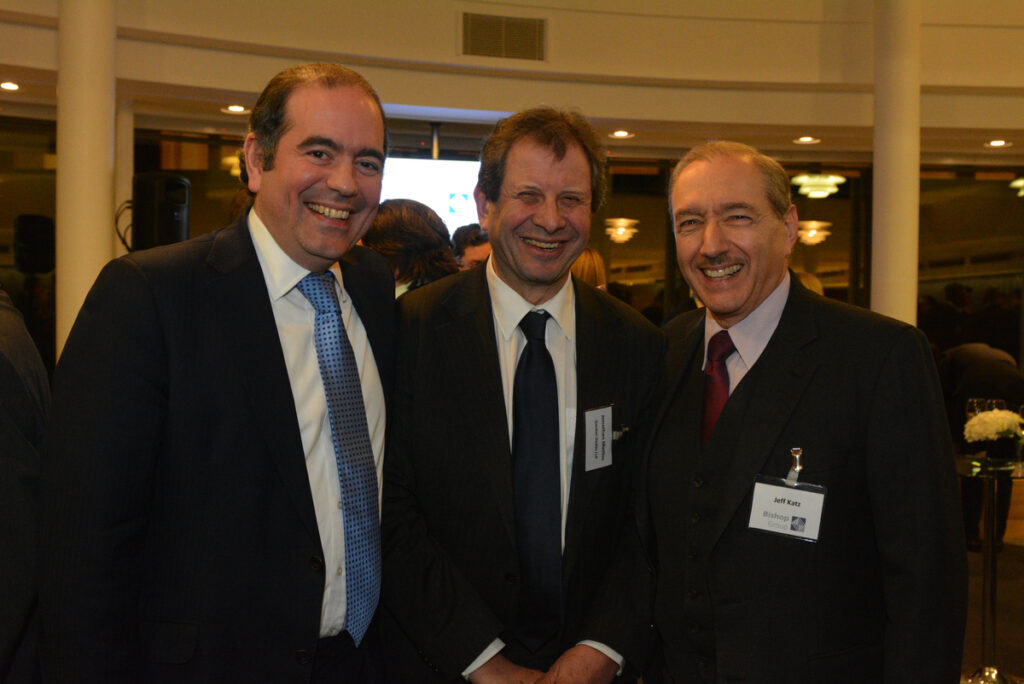
    The British Library, which houses the Business and IP Centre,(Roly Keating, Chief Executive) welcomes Jeff Katz, Chief Executive of The Bishop Group at a reception to celebrate the group’s rebranding and overseas expansion. One of its clients, Unilever Plc (Sarah Orchard, General Counsel) spoke at the event which was attended by Intellectual Property lawyers from UK, USA and Europe. 29.1.15 Photographer Sam Pearce/www.square-image.co.uk

    I would always call Jeff for a second opinion to discuss an idea if I needed any guidance on an issue, or simply to have a chat. He was unfailingly helpful and reliable, and a truly genuine person. I see his mobile phone number in my address book, but sadly realise that if I rang I would now get no answer. 

    David Glasser, friend

    Jeff sometimes asked if I could advise or help on his assignments. On one occasion, he asked whether I would watch a person at a dinner reception to observe who he might converse with. I agreed without hesitation and spent the day in my guise as an interested party. There was panic at 10.15pm when I blinked and he was nowhere in sight. He was not in the toilets. When I asked the cloakroom attendant if ‘my friend’ had just left, he confirmed he had. Thankfully the doorman confirmed where the taxi hailed was directed to go and I went to a famous nightclub in pursuit. I followed and reported back. My reward lunch was almost as enjoyable as my day living my dream. 

    Elena Egawhary, friend, colleague and mentee

    The first time I met Jeff Katz he was in a three-piece suit holding court in front of an audience of enraptured investigative journalists. His slick powerpoint on the corporate investigation industry was famous as one of the highlights of the Centre for Investigative Journalism (CIJ) summer school in London.  Jeff was a regular presenter and every year his session on the corporate investigation industry was standing room only. He walked everyone through the origins of the modern corporate investigation business in the UK. Being a former journalist himself, Jeff understood how investigative journalists and corporate investigators operate in very similar worlds even if they have very different aims. Five years ago I decided to embark on a PhD examining the role the corporate investigation industry plays within society by writing the history of Kroll Associates.

    If he criticised it was because he believed you could do better, that you were better and he told you so.To know Jeff Katz was to be very lucky indeed. 

    ELENA EGAWHARY

    Jeff immediately made time for me. He shared his contacts, and we would speak on an almost bi-weekly basis over the course of the next five years. He was also an honest critic of the best kind: “this sounds like an advert” he once chastised me when I let him read the draft of a paper I was working on. “You can do better”. If he criticised it was because he believed you could do better, that you were better and he told you so.To know Jeff Katz was to be very lucky indeed. 

    Ronel Lehmann, friend
       

    In August last year, I asked Jeff whether he could help find one of my oldest friends from City of London School. Oddly, our Alumni Development Office had no record of him either. I provided Jeff with some scant details and his last known address in Italy. Within 24 hours, he had tracked him down. I rang Davide Malliani to tell him that had taken me appointing a Senior Corporate Investigator for us to be able to finally speak again. 

    I read your restaurant reviews over the weekend and, because I know you and could hear your voice in the writing, I enjoyed reading them.  Having said that, I don’t think Jay Rayner has anything to fear.

    RONEL LEHMANN

    I had myself written some restaurant reviews which were published. Jeff wrote to me: “I read your restaurant reviews over the weekend and, because I know you and could hear your voice in the writing, I enjoyed reading them.  Having said that, I don’t think Jay Rayner has anything to fear.” 

    I proposed Jeff as a possible guest for Desert Island Discs.  I received a reply from Cathy Drysdale, Series Producer, Radio Four “We’re always pleased to receive suggestions and thank you for the enclosed cuttings.  However, as we’re a very small team, you’ll only hear back from us if we wish to issue an invitation – we hope you understand.” 

    Jeff supported many good notable causes. He wrote to me: “As someone who benefited from the days when higher education and career advice was free, I am pleased to donate a Finito bursary in the knowledge that it will give someone an advantage they might not otherwise have.” 

    Jeff was excited about writing for Finito World. When his Letter from an American made the grade in the October issue, he was so encouraged that he submitted a further piece for inclusion in this issue. We received his latest article penned a few days before his death, and include his piece as part of our tribute. 

    Jeff teased me endlessly by saying that he liked me in spite of me being a Tory and I larked about when he proffered alternative strategies in politics, none of which would actually work. 

    The last time we had lunch together was a little Italian restaurant tucked away in the middle of Theatre Land.  It was exquisite, home cooked Italian cuisine at its best. Jeff was so at home with Pino Ragona who lavished service, lasagne, red wine and crème caramel all over me. Jeff salivated over their delicious selection of puddings. The history of the restaurant is mounted and sealed on the walls with an abundance of photographs. I will return to Giovanni’s to ensure that he too is remembered as a loyal customer and for future generations. 

  • What Churchill’s ‘black dog’ can teach us about mental health today

    What Churchill’s ‘black dog’ can teach us about mental health today

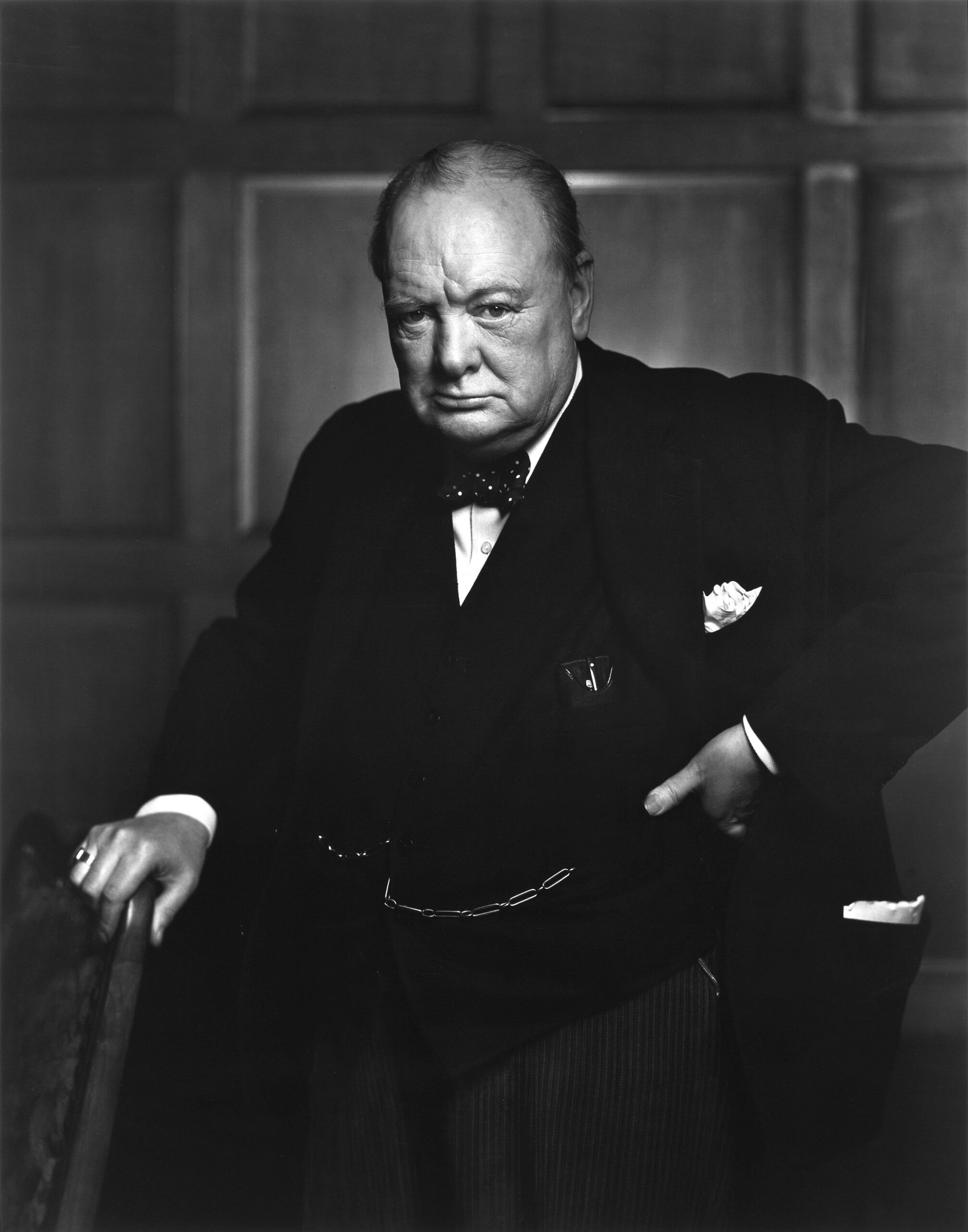
    Sir Winston Churchill’s remarkable life is a yardstick in how we discuss mental health, writes Robert Golding 

    On 11th July 1911, Winston Churchill went to dinner with his cousin Ivor Guest and his wife Alice. Afterwards, he reported back to his wife Clementine: “Alice interested me a great deal in her talk about her doctor in Germany, who completely cured her depression. I think this man might be useful to me if my black dog returns.” 

    My black dog. In time, this phrase would become an aspect of the Churchill myth – even though, as Churchill’s biographer Andrew Roberts points out, it was a term he himself only used on this one occasion. It gives us the Churchill we think we know, who is in turn an aspect of our national story. In this telling, the former prime minister becomes not just a great leader, but one who triumphed against mental difficulty. 

    In the Covid-19 age, where mental health is an increasing concern – indeed, almost a buzz word – Churchill feels like an illuminating yardstick. His is a tale, the story runs, of heroic self-medication. He drank and he painted – above all, he worked. 

    The relevance of Churchill’s predicament continues today. When I talk to Fiona Millar, the wife of Alistair Campbell, she displays a profound understanding of the relationship between power and mental strife. Campbell, who for many years was Tony Blair’s right hand, suffered from depression; Millar now runs a support group for those co-habiting with those with mental illness. 

    When I mention Churchill, she states that there are more mental health problems in top-flight politics than we might think. “If you look at our current politicians, you’ve got to feel that there’s something going on in their backgrounds which makes them want to do it,” she says. 

    This might remind us that Churchill is not the only drinker to make it to 10 Downing Street. Alistair Campbell’s old boss Tony Blair admitted in his memoirs to drinking wine during stressful periods in office. And everybody remembers the argument and associated wine spillage in the Boris Johnson household just before the current Prime Minister assumed power.

    What does Millar think engenders pressure for the likes of Churchill, Blair and Johnson? “I think it’s just very high-pressured. It’s very competitive and it’s quite lonely. Almost certainly, there are more problems than we know about; I have Labour MP friends who have had serious problems.” 

    Do we talk about it enough? “I think we’re beginning to – but Estelle Morris was a long time ago. Estelle just said: “I can’t do it and it’s not for me.” But Millar also points to double standards, mentioning the recent case of James Brokenshire MP, who left Cabinet on account of his cancer having spread. “That’s interesting, isn’t it?” says Millar. “That it’s okay to say that – but not to say you’re giving up because you’re not functioning well mentally is deemed less acceptable.”

    Of course, Churchill lurks in the background here – the bulldog expression, the look of the fighter. Inwoven in his image is that you can fight back against depression. I mention to Millar Johnson’s regular referencing of Churchill. Millar replies: “I expect he [Johnson] probably thinks it  [mental health] is all a big girls’ game – or however he likes to phrase it.”

    But of course, Churchill was living at a time where work stress was to be handled with private stoicism. Today, we are beginning to understand the enormity of the problem. 

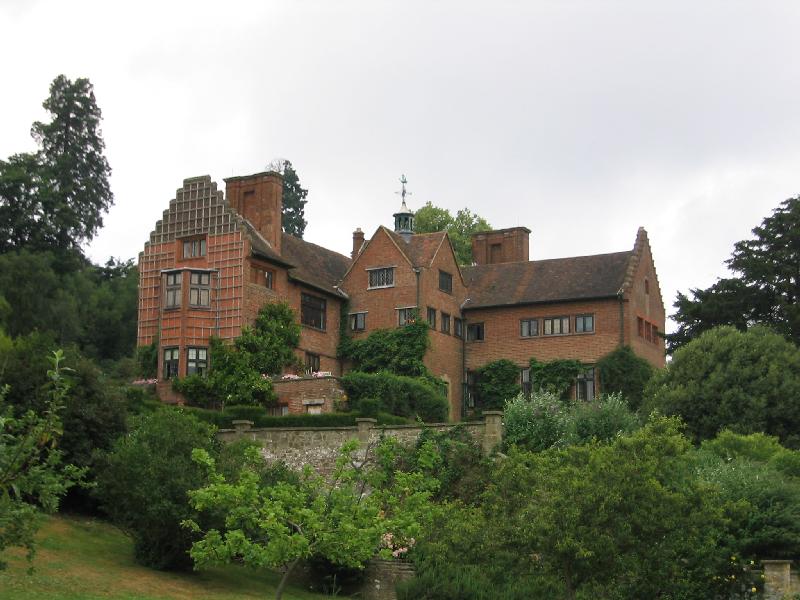
    Chartwell in Kent, where Churchill would often retreat to paint his ‘daubs’

    Dr. Konrad Hitz is a medical director at The Kusnacht Practice in Switzerland. He thinks that the pressures Churchill faced are relevant in all leadership roles. “CEOs and business leaders have many similar pressures to those in political power,” he tells me. “Making big decisions that affect many people’s lives can present an individual with huge challenges and stresses – and I think that has been magnified during the pandemic with many business closures and job losses.”

    Hitz also points to a recent study by the National Institute of Mental Health which found that 72 per cent of executives and entrepreneurs are directly or indirectly affected by mental health issues compared to just 48 per cent of non-entrepreneurs. “A psychological pandemic has been unleashed by the virus,” he argues. 

    So what can we learn from Winston about tackling this pandemic? In the first place, his biography displays strategies of coping which might seem to us less sensible than they did to Churchill’s contemporaries. 

    One of these was drinking, and everybody knows about the obligatory Pol Roger and the bottles of wine at breakfast. Sometimes, we glimpse that this took its toll on his leadership. For instance, on the 6th July 1944, Churchill got very drunk before a Defence Committee meeting. You can feel that Anthony Eden, the then foreign secretary and future prime minister, was underplaying the affair somewhat when he recalled that ‘really ghastly Defence Committee meeting nominally on Far Eastern strategy. Winston hadn’t read the paper and was perhaps rather tight…Altogether a deplorable evening.”

    Hitz thinks this is one area where we need to eschew Churchill’s example: “Individuals are now better educated about the dangers associated with heavy drinking than they were 80 years ago.” But in Hitz’s opinion we’re not out of the woods yet. “Clearly there are still challenges around alcohol,” he continues. “A recent survey in the US indicated that alcohol abuse has risen during the pandemic, with approximately 17 million over-18-year-olds now having an alcohol use disorder, with 10 per cent of children living in a home with a parent who has a drinking problem.” 

    Even so, historians are now beginning to argue that Churchill’s alcoholism may have been exaggerated – not least by him. Everybody knows the famous gag that he had always taken more out of alcohol than it had taken out of him. Andrew Roberts’ verdict feels like a corrective of the myth: “The overwhelming evidence is that Churchill loved alcohol, drank steadily by sipping, had a hardy constitution and was only rarely affected by it.”

    Either way, drink wasn’t Churchill’s only way of coping. Today, there is mounting appreciation for Churchill’s achievement as an artist, and there can be little doubt that his ‘daubs’ as he modestly called them, represented a profound alleviation of stress. 

    Susan M. Coles is an arts educator, who has long been arguing through her APPG for Art, Craft and Design in Education which she runs with Labour MP Sharon Hodgson that the arts should have broader representation on the National Curriculum. She emphasises the good that painting did the wartime leader: “For Churchill it was also an escape,” she says. “Making art is where we step off life’s conveyor belt and have contemplative moments. We use our hands as well as our mind and it’s invaluable to busy people.” This, she argues was the case for Churchill too. “His role was so pivotal in politics that the escape hatch was to making art, and as he mainly worked with landscapes, he re-engaged with nature, which is also empowering in lifting the human spirit.” 

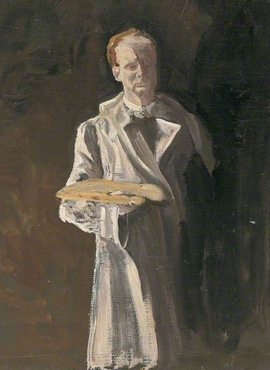
    An early self-portrait by Churchill, thought to have been painted when he was still depressed after the failure of the Dardanelles expedition. Photo credit: By Source, Fair use, https://en.wikipedia.org/w/index.php?curid=66326956

    Over at The Kusnacht Practice, Hitz agrees with Coles’ assessment, although he also points to the many other options, less applicable to Churchill, available at the clinic: “At The Kusnacht Practice, we encourage many patients to be creative and to explore a hobby or pastime that helps them to relax, slow down and remove stresses from their lives. Exercise, reading, cookery, music and art therapy activities such as painting and sculpture can be highly beneficial when employed alongside other therapies. If a patient can find a passion point like painting, that can be a useful tool in recovery.” 

    But through all this, the impression remains that Churchill’s principal remedy was work. Whatever else he crammed into his 90 years, a back-breaking schedule was the dominant fact of his life. Even in the 1930s, which we think of as his period in the wilderness, his work rate was phenomenal. Roberts reports: “In 1930 he gave sixty-one major speeches, then forty-eight in 1931, twenty-eight in 1932, forty-one in 1933, thirty-nine in 1934, fifty-four in 1935, twenty-three in 1936, fifty-five in 1937, thirty-nine in 1938, and thirty-six in 1939, not including hundreds of lesser interventions in Westminster and scores of articles.” Reading this, it’s possible to see how Winston steamrollered his way to the premiership by sheer force of will.

    Sir Winston Churchill, Distant View of the Pyramids, 1921

    For Alastair Campbell, work was also an escape. Millar tells me that she was always amazed at how charming and amusing her husband could be at work, reserving his low moods for her in the domestic setting. Before taking up his Downing Street role, Campbell informed Blair of his condition. “He said to Blair, ‘You just need to be aware that this has happened,” Millar recalls. “And Blair said, ‘That’s fine, I’m totally aware of it’.” Millar continues: “For Alistair, work was the way he dealt with his mental health and he did work phenomenally hard – and was very, very productive. It was a positive in that sense for the government, who were his employers, but it was never good for his family.”

    All of which makes one recall that it was Clementine Churchill all along who bore the burden of Churchill’s exceptional life. When I speak with another high-achieving sufferer Lord Dennis Stevenson, the former chair of HBOS, and co-author of a report ‘Thriving at Work’ which was warmly welcomed by the May administration, he states that he had a similar approach to Campbell: “There are some people who can cope. In my case, I’ve run large companies, and major not-for-profit things, and no one was the wiser. But it’s like walking through glue.” 

    Hitz is familiar with the condition of the workaholic: “We see a number of workaholic cases at The Kusnacht Practice, many of them entwined with other behaviours and dependencies. During the pandemic, work-life balances have been challenged and, with our leadership treatment programmes, we try to reset this balance, encouraging routines and defining clear lines between work and free time.” 

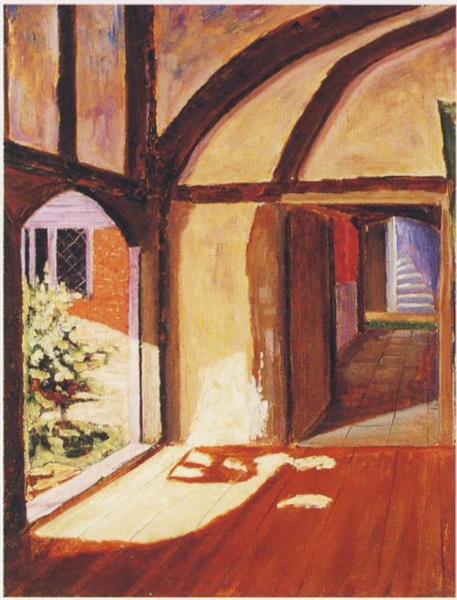
    Sir Winston Churchill, Interior at Breccles, Date uncertain

    The conversation around Churchill then, feels like a measure of how far we have come in the question of mental health. Roberts makes it clear that the the image of Churchill as a depressive has been exaggerated. It might be that this in itself should guard us against inaccurate labelling in this field where definitions are still in their infancy. 

    Even so, he undoubtedly had his low moments. And to study Churchill is to encounter someone highly resourceful, intelligent and gifted who needed to discover his own path forward whenever the Black Dog struck.

    So what conclusions can we draw about Churchill’s life? Hitz quotes Churchill himself: “Success is not final, failure is not fatal, it is the courage to continue that counts. If you’re going through hell, keep going.” Hitz adds that this mantra “is equally applicable now as we start to come out of this generation’s global crisis.” Millar, meanwhile, argues strongly for the need to create networks of support in communities, in line with her own online group which helps the partners of those suffering with poor mental health. Dennis Stevenson agrees, saying that mental health ‘doesn’t need the politicians anymore’, pointing to the momentum already established on the question. 

    But he also has some sound advice: “At first I was very bad at externalising issues and problems – and not just mental health problems. But as I got older, I got better at articulating it.”

    Stevenson’s words remind me of an early scene in Macbeth, when the hero first meets the witches in the Scottish wilderness. He asks them what they are up to, and they reply: “A thing without a name.” 

    It occurs to me that this power of naming is very strong, and that Churchill, the greatest wordsmith ever to assume the prime ministership, showed to a high degree the importance of that when he spoke of his black dog. Now that we too are embarked on that same project to address this issue, there’s much we can learn from his struggles.  

  • Long Read: How to Appear on TV

    Long Read: How to Appear on TV

    By Christopher Jackson

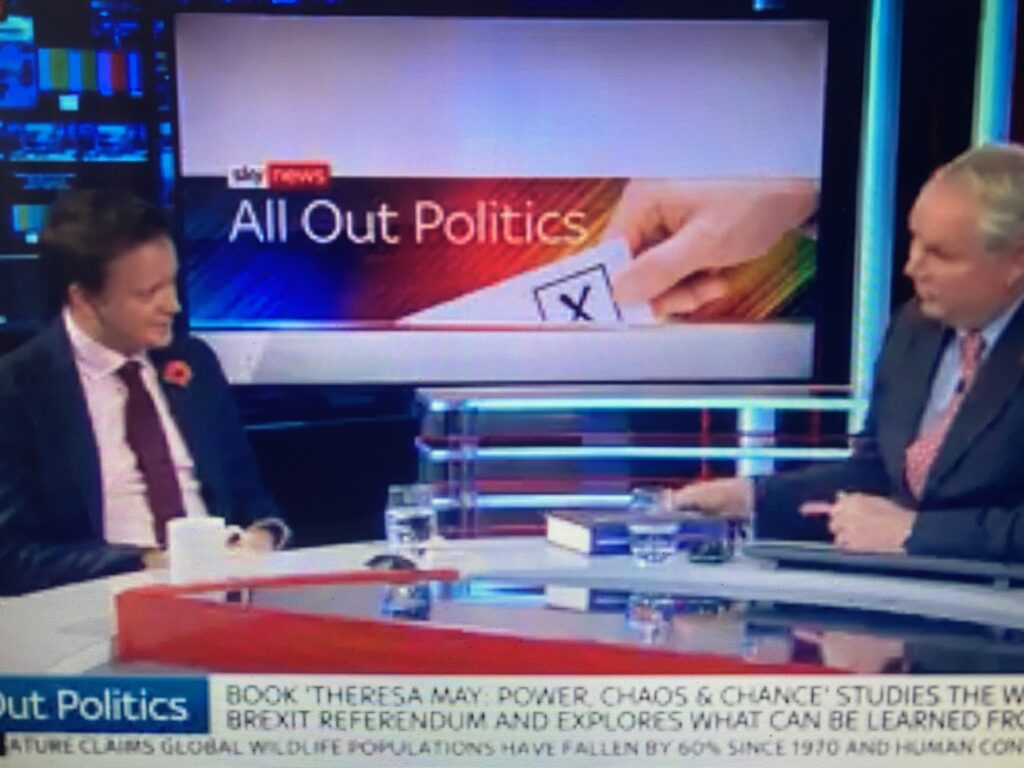
    Three years ago, invitations began trickling into my inbox to appear on television. At that time, I was the author of one of the only books about the then Prime Minister Theresa May. The first time a request came in, I happened to be in Zanzibar, on holiday with family. The email came via my publisher from a researcher with a Sky Newsemail address asking me on All Out Politics, presented by Adam Boulton. 

    The memory transports me back to the mixture of emotions I felt at the time: flattery, excitement – and of course, fear. It was the television and restaurant critic AA Gill who recalled on the occasion of his first appearance on live television the makeup artist saying: ‘Just act normal!” Gill recalled himself thinking: “But this is the least normal thing I’ve ever done.”

    That remains true, of course. On the Zanzibar occasion, I had my excuses. If my plan was not to appear on television, I had positioned myself perfectly. Before the trip, I had intentionally not packed my laptop in a bid to switch off properly. Stone Town, the nearest outpost of civilisation to my hotel, wasn’t stocked with 5 star hotels which might have wanted to set up a live video link for a tourist who had walked in off the street babbling about Adam Boulton and Theresa May.

    So on that occasion I declined – but with a certain guilt, knowing that while it hadn’t actually been possible, part of me hadn’t wanted to do so. Even so, a seed had been planted, and I began to suspect that if one person might invite me on TV then so might others – and I might not always have the protective shield of a holiday in Zanzibar to bat the problem away. There might come a time when I might have to say yes. 

    Whether to say yes or not is therefore the first question that is likely to affect you when the flattering but somewhat-to-be-dreaded call comes. Some will feel immediately inclined to say yes but others will be more doubtful.

    When I speak with Lord Dennis Stevenson, the former chair of HBOS, he recalls a similar approach. “I happened to be very successful very young and – at risk of letting readers know how old I am – in those days there were only two television channels – and both wanted to do big documentaries on me.” Stevenson faced a definite fork in the road, and turned to a valued mentor for advice. “I went to David Astor, who was the son of Nancy Astor the famous politician. David was one of my heroes. He said, “If you tell any of my journalists this, I will kill you, but if there’s ever a request for you to appear, don’t do it unless it will help promote a cause you believe in.”

    For Stevenson, the negatives outweighed the benefits: “David went on to say: “At the moment any programme you do will make your mother feel very proud, but it’s an unnatural thing to do. Besides there may come a time when things aren’t going so well and then you’ll be much better dealt with on the way down if you’ve not been on television.”

    In my own instance it would have been an unfairness on the publisher, who had shouldered the costs of the book, not to proceed. But others should be wary. Dominic Mohan, the founder of Dominic Mohan Media and former editor of The Sun, tells me: “I will deter a client from an appearance as a pundit or commentator if they are not entirely comfortable with the subject areas – I don’t want them to be outside their comfort zone.”

    Of course, if you say yes, there is a confidence boost of a not necessarily trustworthy kind around the corner. In a television-dominated society, there’s a sense in which you’re not really successful unless you have appeared on television. Of course, there are some who buck this trend. In literature, there are successful recluses like JD Salinger or Thomas Pynchon whose myth is partly linked to their having ducked out of the pubic discussion of their works. There remain many successful businessmen like Stevenson, who spend a sizeable chunk of their income keeping out of the media. Most people are probably television agnostic – they deal with the matter when it comes up. 

    That means that many of us are caught unprepared. The following week I was asked again to appear on All Out Politics, and found myself saying yes. Beforehand when I asked Zoe Brennan of Portland Communications for advice on going on television she said, pointing at a blue and white striped shirt I’d just bought from Pink,: ‘Don’t wear that shirt’. 

    Armed with the limited knowledge that a white shirt is best on television, and lacking PR representation of any kind, I found myself going up to Sky News’ studios for my slot – which again, was with Adam Boulton. 

    I didn’t view the occasion with unmitigated glee – and in this I suspect I was reasonably typical. Others relish these occasions, and if you can get yourself into that mentality, it will certainly do you good on camera. When I speak to celebrity lawyer, Nick Freeman – otherwise known as Mr Loophole – he radiates enthusiasm: “I love being on TV. The adrenalin flows. Yes, you’re going to be nervous, but I’ve done hundreds of interviews and I find the adrenalin helps you to perform. It’s your chance to flourish.”

    So how does he manage to feel confident before the big occasion? Freeman is infectiously helpful. “You can’t just say, ‘I’m going to be fine’ and leave it at that. Preparation is king. Knowledge is king. Know your subject.” Freeman also alikens the process of going on television to an actual job interview: “You wouldn’t go to a job interview without having carefully researched the business – so don’t go on TV without careful preparation.”

    There are limits to this, of course, because overpreparation can also be a danger. Mohan tells me: “I will obviously ensure I speak to the journalist or producer ahead of the interview to see what they’re thinking and where the interview is likely to head. However, as a former interviewer myself, I am conscious not to over-media train some clients as I want their true personality, views, language and style to come across.”

    Most media experts flag that the danger of deciding too carefully what you’re going to say is that you don’t listen to the answer. Iain Dale, the LBC broadcaster and author, points out that this is something to consider on the interviewer’s side as well: “What I’ve found on the rare occasions when I have had producers give me a brief of the areas I’m meant to cover, and told me what the questions are, is that you’re so busy concentrating which one of these you should do next that you’re not listening to what the person is saying.” This accounts, says Dale, for some odd moments you sometimes hear on the radio. “Whenever you think an interviewer asks what you think is a random question it’s because they haven’t been listening to the previous answer.”

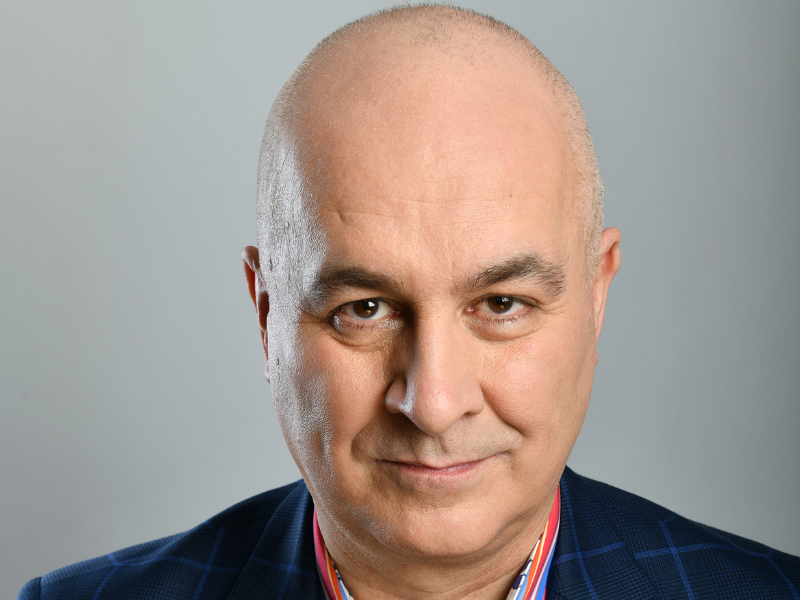
    Experienced presenter Iain Dale explains that it’s important not to overprepare when it comes to TV interviews.

    On the way up to Sky News, I doubt that Freeman’s advice to know my subject would have been entirely helpful. As the biographer of Theresa May, my subject in theory encompassed not just the whole of Brexit, but the whole gamut of policy. That meant that, as hard as I’d worked on the book, it was wholly impossible to be the complete master of what I had been called on to discuss. 

    In the event of it, I turned up at Millbank on the back of a seven mile run, a course of action I’d recommend to anyone about to endure the stresses of live television. I’ve often wondered in retrospect whether I was too physically tired to be particularly nervous. 

    Even so, the reality of walking into a television studio is very strange: one feels as though one must be trespassing. This sense of portentousness also seems at odds with the mundanity of a typical TV studio. Sky’s Westminster studio, for instance, feels somewhat unloved – much as Parliament does once you’re inside. There is the sense that this building must very recently have had some other purpose – either as a middling solicitor’s office, or as the rundown domain of a recently deceased think tank. And yet in spite of this, you also know that this building is about to beam you to a million people.

    The author in the studio with Adam Bolton

    That’s where television gets its core strangeness from. Try imagining a million people and your imagination balks a bit – and obviously this will lead to some people freezing or panicking. But the sheer enormity of the occasion can also be a help: once the mind is stymied in trying to imagine such a large audience you end up putting it to one side, increasing your chances of a coherent performance. 

    Up in the Sky studio, there’s a small reception desk, and a little side room for makeup. The people on before you all look as though they belong in the studio and if you’re not careful you can worry that you alone among all the other fleeting guests lack some essential TV-readiness. It feels a bit like an awkward dinner-party. Rather oddly, waiting for a make-up chair to become vacant, I am directed to a kitchenette, overlooking the Thames, where I make myself a cup of instant coffee. 

    After make-up, I am ushered down a corridor. To your right as you walk, you can see Adam Boulton in his layer, handling what will turn out to be a forgettable roundtable discussion. It occurs to me that this is precisely the goal for most people of appearing on television: to produce a segment of entirely forgettable television. In this era of YouTube sensations, the creation of memorable television is almost always not what you want. 

    There then follows a strange bit of small talk with an usher. I am asked to conduct small talk all the while aware that I am about to do something extraordinarily stressful. This brief moment beforehand will turn out to be the hardest part of the experience. Time bends a bit. You are conscious that you’re hurtling towards a now unavoidable ordeal, but also that that ordeal seems to be taking a long time to come about. 

    In the event of it the conversation goes well.  Inherent in the nature of television is that questions rarely tend to any depth, and the presenters themselves are so busy that it’s not to be expected that Adam Boulton, if he is interviewing you about his book, has actually read it; it’s more likely that one of his researchers has skimmed it.

    The conversation was divided into two segments of roughly five minutes each. In the ad break, Boulton smiled to himself and looking down at my book said with perhaps a certain pity: “So when did you write this, then?” 

    I told him and he smiled to himself as if at the enormity of my folly, and then looked into a glass case at an iPad. This he began scrolling, retweeting a few articles, radiating the run of the mill nature of the occasion from his own perspective. Then it was back into the conversation, which unfurled without too many mishaps. 

    Afterwards, a car is there to take you where you need to go – the most VIP aspect of the whole occasion. News International has obviously decided to expend budget on getting its guests from A to B. As I weave through the crowds of Parliament Square towards a day of quotidian work, I see many people definitely not thinking about the fact that I’ve just been on Sky: television seems to occur in a secret bit of our collective mind. 

    Of course part of the fear of television these days is that it has become so much more polarised as a medium. Especially if you’re on to talk about politics, part of the reason you’re nervous is the uncertain emotion you suspect to be roiling in the country at large. 

    When I speak to Douglas Murray, the author and commentator, he recalls the nature of the appearances he’d made in the past: “When The Madness of Crowds came out, I was in a radio discussion – actually a rather badly imagined programme – where you bring together two people from different sides of the political spectrum, and then negotiate some sort of agreement.”


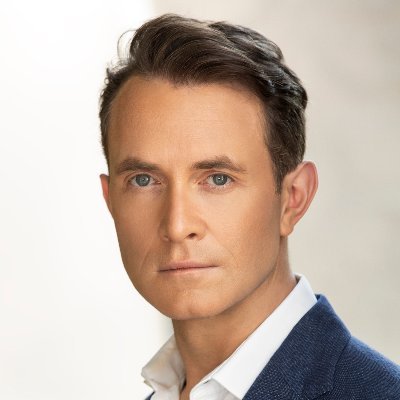
    Douglas Murray warns against adversarial television where one side of the political divide is pitted against the other

    When I ask Murray how he prepared for the occasion, he smiles: “I was on with somebody from The Guardian, who’d had a book out some weeks previously. I’d gone to Waterstones of my own volition and brought it with my own money – I even got the staff to get it off the stock in the back of the shop, where I’m happy to say it was residing. My enemy had been remaindered. I read it and it wasn’t good, although I found a review of it in The Guardian describing it as the work of a great historian and one of the titans of the age and so forth.” 

    And when Murray got to the studio? “I realised immediately that not only had she not read my book, but she’d made no effort to read it, and had read none of my previous books either. At the end of the show the presenter asked if she’d learned anything, and she said: “Well, I know what Douglas thinks already.” That’s very telling of the intellectual divide in this country.”

    Of course that feels initially more of a problem for those of us who happen to comment on politics. Some people I speak with have their own private rules. Dennis Stevenson tells me: “I won’t go on the Today programme as I’ve found them to be very irresponsible. Though I don’t think much of the News International empire, I’ve found Sky to be infinitely more responsible.” 

    Especially after Brexit and Covid-19, politics today appears to be so contentious that it can even affect a hotelier who happens to be on television. When I speak to Sir Rocco Forte he recalls for me an appearance on Question Time with David Dimbleby. “I think there was a rape case or something like that. I said: ‘Of course, I was brought up to treat women with respect, as they are the weaker sex,’ and one of the left wing panellists said: ‘You should arm-wrestle my daughter’.”

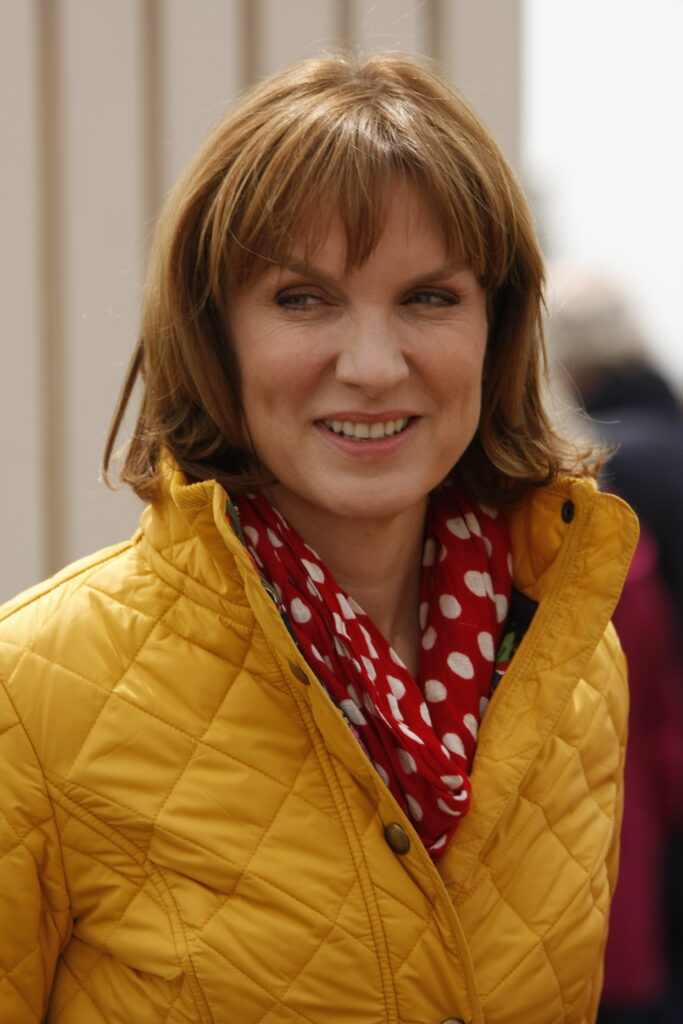
    Fiona Bruce is the current chair of Question Time. Photo credit: By Andrew Campbell – Fiona Bruce, CC BY 2.0, https://commons.wikimedia.org/w/index.php?curid=90080879

    Sat in Browns, one of many hotels he owns, and with his confident, patrician voice, you initially imagine television would hold little anxiety for him. But he disagrees: “You always get nervous because you’re worried about making a fool of yourself!” So how did he cope? Forte echoes Freeman. “You have to have a clear idea of what you want to say and then it depends on the kind of programme you’re on. I was on Question Time on another occasion and I got an unexpected question on the Arab-Israeli situation, and I had to think about my Arab and Israeli clients as I was talking, and so I must admit I gave a very wishy-washy answer.” 

    So would he advise our business readership to do TV? “Businessmen shouldn’t do these things because they’re always going to feel political and you’re going to offend some element of your customer base. As it happens, because I have very personalised hotels, I think a large majority of my customers would probably agree with what I have to say.”

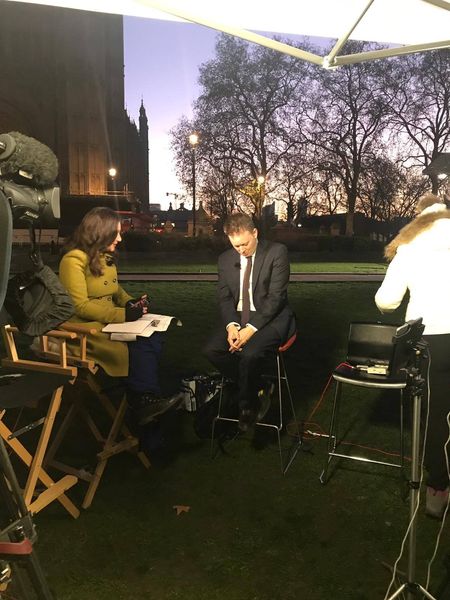
    My second appearance on television for Bloomberg occurred on an extraordinarily cold morning in December, very early in the dark. For this occasion, I was prepped by the excellent Malika Shermatova of Minerva PR, who was kindly up at the same ungodly hour – about 5am – to accompany me in the pitch black to College Green. I suspect we both had that strange form of tiredness you get when catching an early flight.

    This occasion was a reminder that once you’ve said yes to television, you are in the channel’s hands as to what happens next. On this occasion, it transpired that the news anchor, whose name I have never been able to discover, was angry at not being in the warmth of a studio. An acolyte was charged with rushing between takes to place a blanket on her knee and she was visibly irritated throughout by her predicament. The presence of me on the chair opposite her didn’t seem in any way to mitigate those emotions. 

    The author up very early preparing himself for an early morning Bloomberg interview

    Again, it was clear that she hadn’t read the book, and on this occasion I was asked some unexpected procedural questions about what was going on in parliament on that day. Unexpectedly, I found myself putting my finger and thumb together, as Tony Blair used to do, in a series of jabbing points designed to project confidence. This tactic, arrived at spontaneously, made me all at once sympathetic to politicians who do this on a daily basis. 

    When I catch up with Sir Alan Duncan who, though a Marmite figure, was always good on television, I ask him how to be good on TV. “I wish,” he sighs acerbically, “you had asked another question about what parliamentarians should do in Parliament!” 

    Retrospectively irritated, as often seems the case with Alan Duncan, that he was never prime minister, he continues: “The trouble is that the people there only think about the media and not parliament which is their job.”

    I press him on the question a bit. “Well, the answer to your question is to forget the script and just be normal. Talk as if you’re talking to a teddy bear on a chair five feet away – that’s the sort of intimacy you should aim for.”

    And what about the sheer unpredictability of the occasion, such as I encountered at Bloomberg?  “Yes, that’s why you must stay relaxed – because they could cut you or make you a minute long, or also give you a difficult question, and if you don’t stay relaxed it could get out of your control.”

    After a while, the interest in May increased to such an extent that I was being asked on television most weeks, and often by foreign media who were covering Brexit with increasing bemusement. These proved to be extremely enjoyable, because they were usually pre-records which are far more in-depth and less stressful. I began to fit these in around other things, and even to make a few demands about when and where to speak. 

    I would advise anyone asked to appear on television to try and dictate terms, and see if a pre-record is an option. There was a half hour chat with Clive Bull on LBC recorded on Christmas Eve, which was broadcast in full on New Year’s Day. There was also a Polish TV interview conducted at work meaning I didn’t have to travel anywhere. On another occasion, an on-camera interview next to the playground at Dulwich was filmed while my son played about fifty metres away. Perhaps most fondly, I recall a chat with the magnificent Kim Bildsoe-Lassen, Denmark’s Andrew Marr, who once conducted a famously tough interview with George W. Bush, and who interviewed me in the Four Seasons and then insisted we have breakfast on another occasion afterwards. 

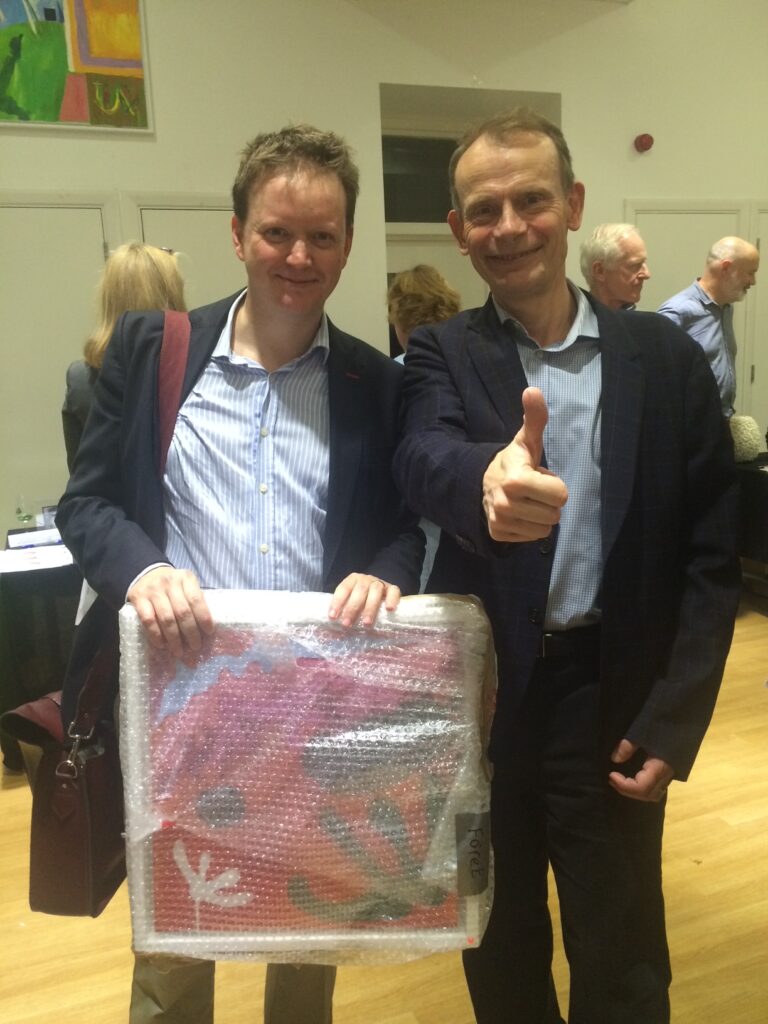
    The real Andrew Marr turns out to be very agreeable in person – though frailer than one might have imagined. I meet him at an exhibition of his paintings, and am able to tell him that I bought one of his pictures just before our encounter. “Oh, a book on Theresa May – you must send it to me,” he says, before locking eyes with me reassuringly: “I will read it, you know.” 

    Andrew Marr retains perspective on TV – what he’s really interested in is art.

    But it seems fitting that most of our conversation isn’t about TV at all, but about painting, which is his principal interest now. I’ve rarely seen a person’s face light up as much as it does when Marr sees fellow painter and collaborator Adrian Hemming among the crowds. When he leaves at the end, he is relaxed about the work awaiting the following morning: “I must go – interviewing the PM in the morning.”

    Television and radio were never normal for me, as they are for Marr or for Boulton. If Marr ever read my Theresa May book he decided it didn’t qualify me to review the newspapers on his show – and I must confess that I felt some relief about that, though I suspect I would have had to say yes if he had done. A part of me would still endorse Dennis Stevenson’s verdict on television: “I don’t like it. I don’t like it at all.”

    Towards the end of the book promotion cycle I found myself saying no – especially to very early appearances in Sky’s studio in Osterley. Today the problems of travelling to the studio have receded somewhat due to the pandemic, but that opens up questions regarding your domestic setup.

    Dominic Mohan recalls one unhappy experience: “Early on in my journalistic career and then a father of young children, I did a broadcast interview from home with Alan Brazil on TalkSport. I was alone with my three year old son who I thought was happily playing in the other room. As the chat began, he battered down the door of my office and began to grab my leg, weep and scream at me throughout it. Needless to say, the exchange was cut short and I was never asked back.”

    For my part, I remember my three-year-old biting my leg during a discussion on LBC which itself seems to have curtailed my relationship with that organisation. 

    But overall, the experience isn’t something I’d take back. It can be fortifying, and can lead to making new friends, and new connections. And David Astor is right that if you do find a cause in the future which you believe in, television is still among the best ways of promoting it. Your contacts may come in useful at some later point.

    As for me, over time, new books will come out with my name on the spine and cover, and perhaps the whole rigmarole will begin again. I’ve sometimes vaguely asked myself how I’ll feel about it. As soon as I do that, I feel that jolt of adrenalin which makes me know I’d say yes – but that, as AA Gill knew, it will never be normal. 

  • Fiona Millar on our hidden mental health crisis in the workplace

    Fiona Millar on our hidden mental health crisis in the workplace

    It’s really hard living with someone with mental health issues. I remember days when I would sit at my desk and think: “I just can’t do this.” But looking back now, it’s one of the things that made me resilient: I know that I can put one foot in front of the other no matter what. 

    One of the things I’ve always thought about Alistair’s mental health is that once he stopped drinking, he transferred his dependency, and his self-medication became work: he threw himself into that to stop himself addressing the deeper problems. He could perform at a very high level in the workplace – but then he’d come home and struggle and I would bear the brunt of that. 

    It was astonishing. We worked together at Downing Street during the Blair administration and I’d see him be amusing, engaging and charismatic with people – but then at home, he’d be good with the kids, but with me he’d crash. I’ve now started doing meetings with other people who live with those suffering mental health problems and it’s very common: people live with fear of what their friends will say, or else they feel responsible as if the problem originates with them.

    In fact, 99.9 per cent of the time it’s nothing to do with you at all. People who are mentally ill can be quite manipulative, and gaslighting is very common. Initially, I just thought Alistair was quite a difficult personality and it wasn’t until he was formally diagnosed that I was really able to say he had mental health issues. 

    Of course, during lockdown people’s working situations have been very unusual – and some people haven’t had any work because they’re self-employed in creative industries. But in general I’d say that people tend to use work as a way to take themselves out of a situation, because if your partner has mental health problems, you have to find things for yourself, otherwise you can get consumed by the other person’s illness. Work is quite a solace – although for the person actually suffering from mental health, often they can’t cope with going to work.

    Alistair was very lucky to be able to work 28 years, even though he was seriously ill, and Tony Blair was always very accommodating. Not all employers are, and there are some toxic workplaces out there. For employers who want to make the workplace a friendly environment, they need to ask themselves not only how they actually do it – but more, how do they do it on a consistent basis?

    That has to begin in an organisation’s leadership – to treat other people as you wish to be treated yourself. You’ve got to do more than talk the talk. If an employee comes to you with a family problem or a mental health concern you have to do all you can to accommodate it.

    It’s too early to say whether there’s any mental health washing in companies, as mental health has only really been a hot topic during the pandemic. What’s concerned me during Covid-19 is the way in which managers closed their office as a cost-cutting device. That was fine in the beginning – people thought it was fantastic to be working from home. But I’ve noticed of late that a lot of younger people aren’t living in particularly convenient circumstances and the novelty has worn off. Working all day in your bedroom isn’t great. It’s not healthy to have a remote relationship with your employer who, after all, is meant to be responsible for your well-being: that means there’s currently a lot of hidden mental health problems in the workplace. 

    I’m all in favour of flexible work – especially for families – but we need to get people back to some sort of physical relationship with the people they work with, otherwise we’ll see casualties from this. People started off not wanting to come to the office and now they kind of want to come back. Managing that is going to be very important, and we’re probably at the crunch point now.

    But by creating this online support group, we’ve hit on a very simple model. There’s no real cost involved, and we’ve got people coming from across the country to our group. At the moment, we’ve limited our numbers to ten or 12, and we’d like to expand it into local communities. This could be tacked onto existing organisations, and I’m hopeful we can do that. 

    To discuss mental health issues with Fiona Millar, tweet her on the Twitter handle @schooltruth

  • Opinion: Got a bright idea? Now’s the time for generation entrepreneur

    Opinion: Got a bright idea? Now’s the time for generation entrepreneur

    By Finito World

    The American novelist John Updike once wrote: ‘When you’re young you prepare yourself for a world which is gone by the time you get there.’ The life we dreamed of growing up, turns out to be not so much unobtainable as irrelevant: the world is always moving too fast, and it’s our job not to let it outmanoeuvre us. 

    Now and then, the world changes so markedly that a generation will enter the workplace amid a greater than usual sense of uncertainty. 2020 saw two major changes – in addition to the usual welter of mini-crises, some real and others media-driven. The pandemic shrank the economy by a quarter, causing untold anxiety to all, and confining us indoors. Meanwhile, the shocking murder of George Floyd on 25th May in Minneapolis sent many out onto the streets to protest racial inequality.  

    At times of societal upheaval, it is right that we look for attitudes and examples to console and instruct. It was Martin Luther King – in a line often quoted by former President Barack Obama – who referred to ‘the fierce urgency of now’.  

    In 2021, this is the only respectable form of ferocity. Young people now have an opportunity to learn things they would otherwise not have learned. They can also take the kind of risks which would previously have been unthinkable, and do so in an environment that will be sympathetic to failure, and especially admiring of success. 

    The mood is clear. Well-known businesses – from British Airways to Prêt-à-Manger – are making swingeing cuts to stuff. Training programmes at the traditional blue chip firms now seem in doubt, and where they are not in doubt it is sometimes difficult to imagine how they will be as fulfilling and as international as they once were. Why not use this as a moment to start out on your own? 

    This shift is already to some extent ratified by the Treasury. The Future Fund will see the government issue convertible loans between £125,000 and £5 million to innovative companies. It’s true that the conditions won’t make every young person a shoo-in for eligibility – especially the requirement to have raised £250,000 from third-party investors in the last five years – but this, together with the moves the government has made on the social mobility agenda, signals a change. This is a legislative environment that will increasingly benefit the entrepreneurial spirit. 

    This optimistic can-do approach should also animate our education sector. The virus halted our schooling, yes, but it has sped up our thinking about virtual learning. It has also made students, at home and abroad, question the value of university courses in ways which may ultimately help their careers – in addition to accelerating the national conversation around the curriculum, tutoring and apprenticeships.  

    And what about Black Lives Matter? There is no question that this has already made commercial and education institutions re-examine the story of minorities in this country. Corporations can no longer afford to be flat-footed on the question.  

    Soon after Floyd’s murder, the head of the City of London School Alan Bird wrote to parents to express himself shocked: ‘Events of the last two weeks have demanded that institutions…consider what they really mean.’ 

    Universities reacted similarly. Over at the University of Buckingham, Sir Anthony Seldon, the organisation’s outgoing Vice-Chancellor, issued a comparable bulletin: ‘We want to nurture an environment where every person has an opportunity to speak out about issues impacting them.’ 

    In neither instance was this mere talk. Bird explained that the school was consulting with its pupil-led Afro-Caribbean Society. He added that he had established a Diversity Group within the staff bodies, and was promoting BAME authors in library displays. Seldon meanwhile announced the appointment of two new Equity and Inclusion Officers.  

    These examples show that the murder of Floyd has created in those in power a laudable desire to help. This is to the good, but does it sit uneasily alongside what employers are now saying they want?  

    This, as is made clear from the findings of our inaugural employability survey on page 77, is resourcefulness, adaptability, flexibility and self-reliance. From those we surveyed there was little talk of diversity or the need for a more socially diverse workforce.  

    The next years will likely see a difficult dance between voices calling for equality and reform, and the weary complaints of cash-strapped business leaders who have less wiggle-room to assist than at any point since the Great Depression. It is this which has given an air of unreality to the Johnson government’s well-meaning talk of ‘guaranteed apprenticeships’. Some businesses will feel that their priorities are geared not towards reform but survival. 

    We can talk forever about the delicate line between the offer of assistance to minorities and the creation of unjust quota systems. Or we can become mired all over again in the traditional right-left debate about the importance of character versus the importance of citizenship, when clearly both are essential.  

    Instead, the real divide in education and business – and it’s a line found at the level of the employee and job-seeker too – is between the dynamic and the flat-footed.  

    This raises two questions of equal importance. Firstly, how do we create young people able to prosper within this new Covid-19 environment? Secondly, how do we make sure these young people are a fair reflection of the diversity of upbringings people experience in this country? In truth, these questions should never have been separated out.  

    Interestingly, the ideas which seem particularly attractive don’t fit easily into traditional political boxes.  

    From one-to-one tutoring, to the apprenticeships question, the issue of broadening our curriculum to include better representation for financial education, the arts and gardening (see our campaign on page 36), and the sudden importance of digital poverty, it isn’t clear where these ideas belong on the political spectrum.  

    That’s normally the sign of a good idea. It’s time to promote nuanced thinking since it is only this which promotes the resilience needed in young people to be of value to businesses. This call for nuance mustn’t be a reason for delay; it must sit alongside urgency.  

    But starting a business is a route open to anyone with a good idea, and the drive to implement it. Perhaps the most important lesson of all is that you don’t need to sit at home waiting for the response to that 200th job application; you can start a business yourself, and watch the applications roll in to you.  

  • Finito World Summer Roundtable

    Finito World Summer Roundtable

    Our regular roundtable this month involved questions about politics, succession planning and a disastrous pandemic. Finito mentors Sophia Petrides, Pervin Shakh, Caroline Roberts, Robin Rose and Andy Inman gave their advice

    I’ve always wanted to go into politics. There are a number of good experience routes through the Civil Service, Public Affairs agencies, Think Tanks and working as a Parliamentary Assistant for an MP. How do I determine if I will be suited and where I begin? Damien, 27, Exeter

    Robin: Damien, let’s deal with the suitability part of your question first. It’s encouraging that you’re asking whether you would be good for politics, not if the role would be good for you. The best politicians are those who genuinely want to make a difference, if that is you then stick with your ambition.

    Caroline: Yes, you clearly have a strong interest in working in the political arena so that’s half the battle won. The civil service and think tanks will have a strong focus on research skills and policy development. If you are in a position to offer some time to an appropriate organisation voluntarily, then that may also be a good starting point.

    Robin: I agree with Caroline. You mention some of the traditional gateways into politics and these areas should not be overlooked. However, if this is seriously the sector that excites you, these suggested routes are slow and too dependent on chance. To really make things happen just get involved in causes you believe in. Join groups actively fighting to promote your chosen cause. Hone your human relations and public-speaking skills. Study negotiation and conflict resolution. Do all this and your political career will take off much faster.

    My parents don’t want me to join the family paper business. They feel that I need to prove myself elsewhere before joining, which I understand but I’m also proud of the family and want to continue the tradition which goes back several generations. I am all for succession planning, but this is tearing me apart emotionally because there’s really little else I want to do. Harry, 20, Norwich.

    Pervin: Harry, it’s great to hear that you are very keen on being involved in the family business. Your parents’ perspective is understandable too. It might be a wise idea to get some external experience first, maybe in a non-related business, so you can pick up new experiences, develop commercial knowledge and formulate new thoughts and build a network. In the meantime, you can still be involved in the family business informally by looking for ways to improve the existing business, but try not to impose your ideas as an absolute rule, especially never at the dinner table! 

    Sophia: Your parents should be very proud of their son wanting to support the family business and continue the tradition. However, I agree with Pervin that it is important to broaden your horizons to other experiences to grow your business skills. 

    Robin: A thriving business has to continuously evolve with the times. It has to be agile, adaptable and resilient. When you are in the thick of daily business life you don’t get much time to try out new ideas or discover new approaches, so use this time to go out there and learn how you could take your family business to the next level for when you hand it over to your own kids. Look at the logistics chain, the suppliers, the customer service aspects, the customer journey and demand influencing factors. Try walking in your customer’s shoes for a bit. You can only achieve this by experiencing many different challenges in your life that push you out of your comfort zone. 

    Pervin: I’d add that maybe you could use your social and digital media skills to help improve the company’s social media strategy and increase visibility and client engagement. This way, you’ll gain your family’s trust, build credibility, whilst proving that you have what it takes to be involved in an official capacity later on. 

    Robin: Think of it like this. If you were to start straight away at your age you would immediately encounter difficulties from which your parents are trying to protect you. Other staff are unlikely to give you the respect you will eventually need to become a leader. You would be just thought of as the ignorant kid who is just there for nepotistic reasons. If you were to spend a couple of years elsewhere, think of the potential advantages that would result.

    My gap year was a disaster due to the pandemic. I don’t feel ready to start a job nor do I want to study for a Masters. What options are there for someone like me? Lucy, 22, Tunbridge Wells

    Caroline: Sorry you didn’t enjoy your gap year but you are clearly ready to move on to the next step. First of all think about what you would like to do. What are the skills you have developed through university and any other activities you have been involved in? Is there an industry that particularly interests you and why? Once you have narrowed that down you can then start to think about how you get there. Many industries now have good apprenticeship schemes which will allow you to earn while you learn, offering a great blend of study and work. The National Apprenticeship Service will have all the details of what’s on offer. 

    Pervin: It’s natural to feel disheartened, Lucy, especially as the pandemic has been incredibly challenging for those looking for work or trying to get good quality work experience. If you are unsure, don’t rush into the next step. Instead, step back and think about what you’d like to do. Your interests, motivation, and aspirations may have changed because who you were 15 months ago is not who you are today, and not who you will be in the next 15 months. Be flexible with your plans and try different things and see what you like and dislike.  

    Andy: 2021 has not gone to plan for many. The great thing is that you have so many options available to you. One of those options could be to take a role in the care sector, earn some money to either fund a future gap year or help pay for further education, while developing your people skills and helping those less fortunate. If not that, then are you in a position to do some voluntary work and get similar benefits? Doing something positive will always be better than doing nothing, it will develop you and reflect well on your CV, those that come out of this pandemic ahead will be the ones who have acted in one way or another.

    Sophia: Andy’s right. When life throws us a curveball – and it often does – the hardest thing is letting go of your previous plan and thinking up a new one that’s a better fit for your current circumstances. This is also a great time to give something new a chance. Throw your own curveball back at life! Have you considered supporting your local community and giving a helping hand to those less fortunate? Are there any local charities where you can offer support? Volunteering can transform your CV as well as offer real, life-changing help to elderly people who live alone and have never felt lonelier. 

  • Opinion: The debate over the four-day week misses the point

    Opinion: The debate over the four-day week misses the point

    by Finito World

    The Ancient Greek poetess Sappho isn’t always considered an important voice in the realm of employability, but she has her moments. “Some say an army of horsemen, some of footsoldiers, some of ships, is the fairest thing on the black earth, but I say it is what one loves.”

    At Finito, that’s what we care about – not that candidates find their way into what they quite like, but into what they love. That journey is harder for some of us than others. Some degrees, such as medicine, law and architecture, are highly vocational; others less so. Students with degrees in the humanities often leave university as unsure at its end about what they want to do in life as they were in Fresher’s week.

    This all feels relevant to another question which reared its head during the pandemic. Back in May, Nicola Sturgeon promised a four-day working week for Scotland if the Scottish National Party was re-elected – as it was. The SNP manifesto stated that “Covid-19 changed the way we work almost overnight,” and that the party wants “to do more to support people (to) achieve a healthy work-life balance.”

    But the argument typically meets the bifurcation so common in politics – with Conservatives understandably sceptical of the cost (in this case around £3 billion a year), especially at a time when borrowing has been so high, and productivity so low. Boris Johnson batted the matter away as a non-starter.

    One recalls the old saw of the capitalist responding to the communist: “Your arguments are so old I’ve forgotten the answers to them.” Many of our working structures are an inheritance from the Industrial Revolution. Up until the 1920s, workers would labour for 70 hours a week. Henry Ford is usually credited with reducing the working week to 4o hours, as it suited his factory timetable to do so. Just as we now inhabit a world moving away from Ford’s cars, the argument runs, why keep to his schedule?

    Then there’s the occasional research pointing to increased productivity for companies which turn to a four-day week. A 2013 Stanford study showed that productivity at a Chinese travel agency rose by 13 per cent when employees were allowed to work from home at least one day a week. 

    Another set of argument feeds into our anxieties surrounding global competitiveness. For instance, Spain recently became the latest country to trial the four-day working week. Companies taking part will operate on 32 hours a week and receive funding from the government to avoid lowering employees’ wages. The country will spend about £44 million on the program. Similarly, the SNP promises to “establish a £10 million fund to allow companies to pilot and explore the benefits of a four-day working week.” It could be argued that this is a relatively small amount of money to carry out a relevant social experiment. 

    Of course, the shift towards a four-day working week differs from the “compressed” work schedule already offered by some employers across the UK. Rather than decrease hours with no pay cut, a compressed schedule redistributes normal hours across fewer days. Criticisms of the compressed schedule include increased stress and rushed work. 

    The foundation of our working schedule has remained essentially stagnant for 100 years. As times change with automation, faster computing, and the ability to work from home, it might be that it’s time to establish a new standard of work which will benefit both employer and employee.

    But of course, whichever side of the argument one comes down on, this is only a small part of the problem. Productivity issues and stress are only a factor in jobs which we do not enjoy; similarly when it comes to the arguments surrounding international competition, Spain might indeed find itself more productive if its pilot scheme is successful – but if the entire population were mired in jobs they didn’t enjoy the increase would fail to register. 

    As machines become more effective at doing the jobs we don’t enjoy, that should free up human capital for more creative and fulfilling work, and at Finito we want our candidates to be a part of that narrative. Actually, if that happens, and you find something you love, you tend to work a seven-day week voluntarily – because you’re happy. In other words, we need to think of work not as a burden but as a joy. ‘Work is so much more fun than fun,’ as Noel Coward put it. Sappho would have agreed.