Category: Features

  • The gas crisis and employability – what you need to know

    Patrick Crowder

    As gas prices soar, many are concerned about food supply issues, higher bills, and a potentially cold winter. Business Secretary Kwasi Kwarteng has said that he does “not expect supply emergencies to occur this Winter,” promising “no three-day working weeks or a throwback to the 1970s,” and dismissing such thinking as alarmist. So what is likely to happen this winter, and how will the gas crisis affect employability in and beyond the energy sector?

    Why is there a gas crisis?

    The price of gas has increased by 250% on the wholesale market, and the energy regulator Ofgem has raised the energy price cap by £139, from £1,138 to £1,277. The price cap shields consumers from rapid price fluctuations, such as the one we’re currently seeing, but it also means that some energy suppliers will fold in the coming months.

    Gas prices have increased due to a combination of factors. The winter of 2020/2021 was cold, which depleted gas stores across the country. Normally, summer provides enough time to replenish gas stores, but a rise in demand due to the reopening of the world economy as the pandemic subsides has left the UK in a tight spot. Milder than expected weather has also meant that wind farms have not been able to produce as much energy recently. Meanwhile, supplies from Russia’s gas company Gazprom have booked fewer gas shipments than usual, in a move which some suspect is meant to pressure Europe to accept Russia’s controversial Nord Stream 2 pipeline. Gazprom claims to have met the conditions of their contract.

    That’s not all. In Kent, a fire at the Sellindge Convertor Station has reduced the amount of electricity France is able to export to the National Grid. These factors have created a perfect storm to raise gas prices, and the government has said that they will not bail out energy companies which go bust.

    How Will This Affect Jobs in the Energy Sector?

    Many jobs in the energy sector are in traditional fossil fuel production methods, which is already an unstable industry as we make the switch to renewables. As this shift continues, many employees will be made redundant or asked to retrain. For employees at the UK energy company Bulb, prospects are grim. The company, which provides for 1.7 million customers, will likely go bust without a government bailout. Looking at the government’s current position, a bailout looks unlikely. The energy industry has long boasted high pay and opportunities for a stable career, so we’ve examined some of the most popular jobs, their salaries, and sticking power in the future.

    In the Field

    Working on an oil rig, you will be expected to undertake strenuous work in harsh conditions, living offshore on an oil rig for two weeks at a time. The accommodations on an oil rig can be fairly nice, with gyms and recreation rooms a standard on most rigs. Drilling engineers are tasked with the planning and execution of drilling operations, and must be specially trained at least to the undergraduate level.

    Qualifications: To become a drilling engineer you’ll need a degree in engineering, with marine and civil engineering being popular choices. In this competitive industry, high marks are essential. Other degrees relating to nature and geology can also be useful, as are Master’s degrees, though they are not strictly required. Those looking for a faster entry into the industry could consider becoming mudloggers, who are responsible for using specialised equipment to monitor various aspects of a drilling operation. Mudlogging requires an undergraduate degree, usually in mathematics, engineering, physics, or geology.

    Salary: Drilling engineers make £40,000 to over £80,000, depending on seniority and qualifications. Mudloggers make less, from £25,000 to £30,000, but there are opportunities for advancement.

    Pros and Cons: Oil rig workers operate on an unusual schedule, which many find to be freeing. Working for two weeks pulling 12-hour shifts in the North Sea is hard work, but the gaps between time on the oil rig leaves many opportunities for holidays and time with family. As we move away from fossil fuels, traditional jobs in oil will fall by the wayside, but for now there are still many jobs available which are here to stay.

    In the Office

    If long hours on an oil rig doesn’t sound like the job for you, have no fear – you can still make a good career in the energy industry. Oil, gas, and renewable energy companies all have administrative and analytical positions, as well as land-based engineering opportunities.

    Qualifications: Onshore jobs vary more widely compared to offshore jobs in terms of qualifications, but generally, you will be expected to have at least an Undergraduate degree in engineering, geology, science, and others, depending on your position. Senior positions will require a Master’s degree, and many companies have postgraduate programmes available as well as apprenticeships. These programmes have stringent requirements for entry, and as with the offshore jobs, high marks are essential to winning a place in this industry.

    Salary: While this depends on position and seniority, the starting pay is roughly the same as the offshore jobs. An energy analyst, for example, can expect to make around £40,000 a year. Aerospace engineers and nuclear technicians can expect to make £80,000 to over £100,000 a year.

    Pros and Cons:

    Working in an office will not offer the same flexibility as an oil rig will, but it does fit a more traditional work lifestyle while offering competitive salaries. Onshore jobs in renewable energy are sure to survive the switch to renewable, so this is also a good way of ensuring stability. As we can see with the current gas crisis, the industry can be volatile, so it is worth researching the particular job you’re after to see if it is stable enough for you.

    Photo credit: By Divulgação Petrobras / ABr – Agência Brasil [1], CC BY 3.0 br, https://commons.wikimedia.org/w/index.php?curid=5621984

  • What does Keir Starmer think on work and education?

    The Labour leader has outlined his policies in a 31-page essay, Patrick Crowder doubles down on the employability aspects

    Labour leader Sir Kier Starmer has released an essay entitled “The Road Ahead”, setting out his beliefs and goals ahead of the 2021 Labour conference.

    In his essay, Starmer writes of a nation “at a crossroads” between returning to the “same old Tory approach to economy and society” which he says is a con, and a Labour government in which “everyone has the chance to fulfil their potential and their ambition”, and everyone’s contributions to “a healthy society, safe communities and a strong economy (are) properly rewarded”. He separated the essay into “past”, “present”, and “future” sections, addressing climate change, public health and the pandemic, public safety, and the economy. These issues will surely lead to hot debate, but today we’re focusing on his plans surrounding education and employability.

    In a section entitled “The best start in life for every child”, Starmer addressed issues at the primary and secondary school level. He pointed out that the UK had the “largest primary school classes in the developed world for the first time ever” in 2019 and promised to decrease inequalities between richer and poorer students. He also believes in modernising education, referencing data which states that fewer than 50% of British employers believe that full-time students leaving school have sufficient digital skills.

    Starmer believes that vocational training is essential to developing relevant skills in school and university, but he is quick to point out that he has “no time for those who say that when it comes to poorer children, we should stick to the hard, vocational skills.” Starmer stated that all children should have the same access to extracurricular activities that those in independent schools do, with the belief that the ‘soft skills’ developed through these activities can greatly benefit children’s confidence, self-worth, and communication skills.

    He outlined a desire to make sure that vocational training is not merely practical, but exciting, creating a system for young people “that is as ambitious as they are”. Starmer also lamented the “wasted potential” he sees in the current system, stating that children from all backgrounds must be given the tools needed to succeed in order to “remake the nation” following the pandemic and the failings he sees in the current educational system.

    Turning to jobs, Starmer promised a “new deal for business and working people”. Addressing the relationship between government and businesses, he says that a Labour government will follow an approach “in which (they) don’t treat the economy as a battle for supremacy between public sector and private sector, but a joint effort”.

    The main points of Starmer’s new deal include raising the minimum wage, ensuring that workers receive the rights they are entitled to by strengthening unions and closing current loopholes, and replacing universal credit with a social security system in which “work pays”.

    Starmer says that he sees the shift towards sustainability and addressing climate change as an opportunity to create jobs. By building more offshore wind turbines, increasing clean steel manufacturing, and making Britain the leading producer of electric vehicles, Starmer hopes to create jobs for working people while reducing industry’s effects on the planet. He also announced targets to remove “the vast majority” of carbon emissions by 2030.

    Starmer stated that the approach to the relationship between the government and the private sector must be a “partnership”, outlining expectations for businesses and promises from the government. Businesses must “play by the rules, respect their workforce, and contribute to their communities,” Starmer said, in order to enjoy the benefits of “a level playing field, a skilled workforce, and modern infrastructure from transport to public services” which he says a Labour government would provide.

    On taxes, Starmer stated that the government officials should spend taxpayer money as if it were coming out of their own pockets, and accused the Conservative government of using the pandemic to “hand billions of pounds of taxpayer money to their mates and to flaunt the rules they expected everyone else to live by.” He also called for an end of “the shambolic experience of public procurement” and promised to “fix holes in the shoddy Brexit deal”.

    In the past, Starmer has been accused of not being vocal enough about his views, and not making it clear to voters what he stands for. Some believe that this essay is his way of silencing critics before the Labour conference begins. He will speak at the conference in Brighton, which runs from Saturday the 25th to Wednesday the 29th of September.

    Photo credit: By Rwendland – Own work, CC BY-SA 4.0, https://commons.wikimedia.org/w/index.php?curid=87235934

  • A Personal Story: How my 16-year-old son’s anger issues changed my career

    Diana Matthews

    Watching your barely 16-year-old son being handcuffed, arrested and driven off in a police car while the cul-de-sac curtains twitch is not how I imagined parenting would be.

    I’ve been close to calling police before. This was much more than a single punch and he’d deliberately smashed my only laptop which I need for work as I work freelance from home. It was a line I thought he’d never cross. I had no idea if there was worse to come.

    Society frowns on middle class professionals like us who are not expected to have problems dealing with a child with anger issues. Surely we can throw money at the problem and it will go away. It feels shameful to have a child, (adopted) who smashes through the boundaries of normal behaviour. The media is full of adults hitting children. Children beating their parents is a taboo. When there is an awkward moment in public the yummy mummies look away. Unless you live with a child with severe anger issues or a particular condition, in our case Development Trauma, craving attention and not coping if he doesn’t get it, it’s impossible to know what life is like for us.

    Weekends are spent filling holes, or getting him to, or painting walls, buying second hand play station controllers, phones, laptops. Facebook Marketplace using his Birthday or Christmas money because he doesn’t deserve a brand new one to replace the expensive one which has fallen victim to his anger. 

    Your social life dwindles. You stop inviting people to your house because you don’t know whether he’ll put his hand through a window pane while people are there. You’re ashamed of the kick marks. You pull up the drawbridge.

    The impact on your career of having an angry child cannot be underestimated. I was on the career ladder to a top job. But if your child is thrown out of after-school club, sacked by childminders and every nanny you employ gives up in desperation having a career job seems out of reach. I had to give up my London work and find work locally so I could be at the school gates at 3.30. The number of, mainly women, with a similar story to tell is depressing. After school care isn’t the only problem. When he went through a bad patch I felt I had no choice but to go part-time even though it didn’t help his behaviour. All the meetings with school and social services were eating into work time. 

    After he kicked in the windscreen as we were driving which resulted in us only narrowly avoiding a head-on collision we were both traumatised. He wasn’t in any fit state to go to school. I spent the morning crying and sorting out a new windscreen and had to cancel all meetings. You live with the unpredictability of never knowing if an angry outburst will scupper an important work event. I’ve had to miss a London book launch and celebrity office visit because he’d been so angry that by the time I’d calmed him down and got him to school I had no energy left. I just had to sit for an hour or so before I could turn my attention to anything at all, let alone work.

    After turning up to work with cuts (I hadn’t realised I was still bleeding) on one occasion my boss told me to “go home and don’t come back until you’re ready.” I was extremely fortunate but know from talking to others who have less understanding colleagues working in a high-powered job if you have an angry child is virtually impossible.

    That leaves your relationship. Unlike some other couples we know who are in a similar situation, we’re still together. But the rows we have are largely about him – you shouldn’t have said that, you shouldn’t have done that. The stress of living with an angry child who you spend every moment trying to keep calm takes its toll on marriage. 

    Phoning the police was instinctive, unplanned, borne of fear. It might have helped. He was cautioned but police made it very clear he will be charged if there is another assault. He arrived home sheepish. In spite of all he throws at us, quite literally, we love him and we want to help him overcome his anger and be happy. Calling the police wasn’t a betrayal. It was a last ditch attempt to save him.

    For many like us coronavirus will have made an already difficult family situation impossible for the child and for their family. He can’t handle being round the house all the time but his school finished for the summer break a week early and went back later than most. Just as he was about to begin term he got coronavirus and although asymptomatic couldn’t cope with self-isolation straight after a particularly long and unusually boring summer break. The final straw was arriving back for the new term straight into mock exams. He may just have snapped. He’s having anger sessions. We are living on eggshells in order to try to keep him on an even keel.

    We have sought help from social services and he’s getting one to one sessions. But it is a double- edged sword. Many have had a similar experience to us and found there is an emphasis on assuming parents are doing things wrong. There’s no handbook for our sons’ idiosyncratic behaviour. We sometimes get it wrong. But when social services are dealing with parents and children who already have low self-esteem the last thing the family needs is an approach aimed at laying the fault at the parents’ door. A better way would be commending them in the face of adversity but gently making practical suggestions. That approach would encourage far more in need to take that courageous first step and call social services rather than being too frightened to because they fear they will be blamed rather than being helped.

    After more than a decade of angry outbursts – we adopted him as a pre-schooler – and failed counselling sessions we have become less hopeful than we would like to be about the future. I will be hit again. He will kick another hole in the wall. He will throw more objects at my husband. But we are middle class. We can afford therapists, counsellors, polyfiller, paint, phones. We are the lucky ones.

    Photo credit: By Eric Ward – originally posted to Flickr as Family PortraitOriginal uploader for wikimedia was AQ at de.wikipedia, CC BY-SA 2.0, https://commons.wikimedia.org/w/index.php?curid=10101463

  • Metro Bank partners with BAME Recruitment

    Metro Bank partners with BAME Recruitment

    Patrick Crowder

    Metro Bank has partnered with the consultancy firm BAME Recruitment in order to promote diversity and inclusion in their company. According to BAME Recruitment, they are “working on ways to better attract and retain staff from Black, Asian and minority ethnic, LGBTQ+, Female Leaders, people living with a disability and other diverse backgrounds.”

    Workplace diversity is essential because it encourages people from different backgrounds to work together and combine their experiences in a productive way. It also ensures that groups of people are not excluded from certain sectors based on race, ethnicity, religion, sexual orientation, gender, or background.

    Aside from the societal benefits of a diverse workplace, evidence shows that diversity can help grow a business. A study conducted by management consultants McKinsey and Company shows that companies with a higher level of representation than the national average can outperform other less diverse companies by up to 36 per cent.

    As of 2019, 50 per cent of Metro Bank’s Executive Leadership Team were women, and the company as a whole was about 40% white. BAME Recruitment promises to build a “truly inclusive working environment” where “everybody can be their authentic selves” and be proud of who they are.

    Simi Dubb, Director of Colleague Experience and Inclusion, has said that they are “proud to partner with BAME Recruitment as they focus on social change and will support us on our priorities towards being the UK’s best community bank,” adding that “Both (Metro Bank and BAME Recruitment) have a shared vision, putting people at the heart of everything we do.”

    Metro Bank is the most recent company on a long list of clients. BAME Recruitment is already recruiting for many major organisations, including Aldi, Capitol One, Bank of England, Oxford and Cambridge Universities, and more.

  • Andrew Cooper interview: Lessons from an entrepreneur

    Andrew Cooper interview: Lessons from an entrepreneur

    Patrick Crowder

    Actor, model, and entrepreneur Andrew Cooper has started a range of businesses, involving fitness, cold-pressed juice, and even pet shop in Notting Hill. Now, he’s taking what he’s learned in the industry and putting it into a new men’s grooming brand called The Fellowship. We talked to Andrew to find out how he’s done it all.

    Andrew got his start in modelling, before he started his first business. He remembers how it happened almost by chance.

    “I originally came to London to be a singer, and while doing that I ended up falling into the fashion world,” Cooper explains. “I got stopped in the centre of London and asked to join an agency.”

    After he entered the fashion industry, Cooper was taking about 200 flights a year travelling the world. In his travels he became inspired by the different ideas and ways of doing things he saw abroad. This sparked his entrepreneurial side, which runs in the family.

    “That side of me has always been there,” Cooper continues. “My dad had a lot of businesses too, mostly around food. My Grandad was a butcher, and he took that business, turned it into frozen foods, and ended up selling it on to Campbells.”

    Cooper started his first business at the age of 21 when he opened up Mutz Nutz Pet Boutique in Notting Hill. He wanted to transform the pet shop from the typical dark, dusty atmosphere into a high-end, clean, modern business. He launched a line of all-natural grooming products for pets, and the business is still thriving today, 19 years later.

    The Fellowship came from Cooper’s personal experience using grooming products in the fashion industry.

    “Being in fashion and film, sitting in a chair putting makeup on and prepping your skin, you begin to understand what works and what doesn’t,” Cooper explains. “I was very specific in how I wanted it to look. I’ve seen many products that are greasy and can lead to bad skin.”

    He also noticed that most of the existing products were offshoots from larger brands marketed towards women, so Andrew wanted to make a line of high-performance beauty products aimed at men.

    “The immediate reception has been brilliant, way better than we thought it would be, because the product has been in development for quite a long time,” Andrew said.

    This is not the first time Andrew has worked with skin and hair care products. His first venture into the sector stemmed from another business of his.

    “I have a juice business called JuiceMan, and I was turning the pulp into various byproducts including body scrubs. That was six years ago. As I explored that with the apothecary that we work with, we started to look at other products as well.”

    Andrew takes inspiration for his businesses from trends around the world. He believes this approach is effective, but he also warns against assuming something that works in one country will work in another.

    “We look at markets like America – and for example New York and LA tend to be ahead. Any time I go to LA and hear something that people in the industry are talking about, I know that I can try that product and I know that we’ll get there in the UK.”

    Despite his success, he also recognises and learns from his mistakes. “I have to say I think I slightly got it wrong with my cold-pressed juice business, because I don’t think the climate and the way we can manufacture over here can compare to how they can do it in LA. But with the skincare for sure – we’re moving at quite a quick pace in the UK at the moment.”

    The Fellowship’s soft launch has been a major success – and that success took planning. One major decision to make when starting a business is deciding on how much stock to produce, and how to best utilise that initial investment. I ask Andrew how he makes that call.

    “I think it’s the hardest part. The problem is that you can’t just flip a switch and turn it around – typically there’s a six-week lead,” Cooper explains. “We were incredibly cautious about whether we’d sell out, so we overbought stock initially. I come from a juice business with a product that goes off in four days, and now we have 18 months, so I’m not too worried.”

    Cooper’s years of experience as a business owner and entrepreneur have given him the skills needed to succeed in new ventures like The Fellowship. We asked him to give some advice to up-and-coming entrepreneurs who are just starting their journeys.

    “I think you always have to love the market and the space, and you have to understand your niche. I like to always be passionate about the project,” Cooper says.

    That passion can sometimes come at a price. According to Cooper, many young entrepreneurs will start businesses which are not viable, and not realise until it’s too late.

    “Never start a business until everyone wants to put money in it. I see a lot of people who find funding to be the hardest part, but if you’re finding funding hard there’s a reason,” Cooper explains. “It’s too easy to start a business idealistically, and that can be the problem with passion.”

    According to Cooper, early warning signs that a business will not succeed come in the financials and business plan. If they are not clean-cut and easy for investors to get behind, a project can hit a roadblock. His closing advice involves setting a direction for the business and ensuring that your expectations are sound.

    “You have to figure out what you want to do,” Cooper says. “If you want to make money, there’s loads of money in coffee. There’s loads of money in pizza. The simple ideas are usually the easy ones – but if you want to bring something original to the market you’ve really got to make sure that your financials are realistic. If they are, people will buy into it.”

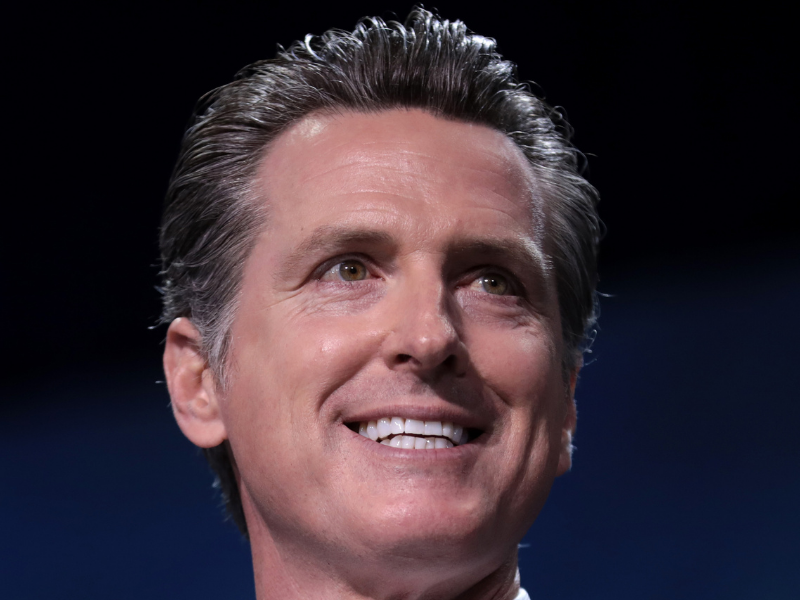
  • What does Gavin Newsom’s Recall Election win mean for Californians?

    What does Gavin Newsom’s Recall Election win mean for Californians?

    By Patrick Crowder

    California Governor Gavin Newsom survived the recall election on September 14th which could have caused a great shift of power in the state – but how did it come to this, and what does this mean for Californians?

    California heavily favours Democratic candidates, and Governor Newsom is a progressive who is much hated by the GOP. However, groups across California managed to gather over 1.5 million signatures to successfully petition for a recall election.

    For working Californians, Newsom retaining power means that they will keep their $14 an hour minimum wage and strict gun control. For Republicans in the state, it means that they will continue to lobby for reduced minimum wage and gun control, which are likely to be points of debate in the next gubernatorial election.

    Who wanted Newsom gone?

    The California Patriot Coalition was a major source of signatures on the petition. They said that Governor Newsom “failed Californians”, and called him a “Little Tyrant”. The CPC is led by Orrin Heatlie, a retired sheriff who has been vocal against Newsom. The petition did not initially gather enough signatures within the 160-day deadline, but a Sacramento Superior Court judge made the decision to extend the deadline by 120 days due to the pandemic.

    The campaign did not gain traction until the pandemic took full effect. A major driving force behind the recall campaign was Newsom’s shifting position on how best to handle Covid. This amounted to a strong lockdown in the beginning, an easing of restrictions, then more lockdowns. The inconsistency in the approach frustrated many Californians. Newsom was also caught at a Napa Valley restaurant maskless with friends during the height of a lockdown. This breaking of his own rules angered voters who then boosted the petition signature numbers greatly.

    Who could have replaced him?

    The frontrunner to replace Newsom in the event of a recall was Larry Elder. He is a Conservative talk show host who opposes the current Covid regulations and does not agree with Newsom’s policies which include police reform and minimum wage. If elected, Elder would have become California’s first black governor. He was the victim of a seemingly racially motivated attack last week, when a woman wearing a gorilla mask yelled and threw eggs at him. There have been reports that racial slurs were used during the attack. He has railed against the media, saying that “If (he) were a Democrat, obviously, this would be called systemic racism, they’d be calling it a hate crime.” Elder was accused of domestic violence by his ex-fiancee in 2015, which he has denied.

    John Cox is a businessman who is best known for campaigning around California with a live bear. He promised to bring “beastly change”, which included tax cuts, increased police funding, and the end of Covid restrictions thereby opening schools.

    Caitlyn Jenner also ran, though she did not debate any other candidates. She is a Republican who ran on a platform consistent with conservative views, which caused controversy in the transgender community over the way that Republicans have failed to protect their rights. It is not clear how seriously she took her campaign, but she was never a likely candidate to replace Newsom.

    What Does This Mean for Californians?

    California will keep its governor and, for the most part, return to normal. However, Newsom will only remain in office until January 2nd, 2023, and this recall election could be seen as a preview of the coming election.

    Minimum wage has been a major point of contention in this recall election, with Larry Elder saying that the “ideal minimum wage is zero”. Critics of the minimum wage say that it drives up the price of consumer goods and causes a loss of jobs. With Newsom in power, Republicans will continue to fight against minimum wage, and address this issue in the next election.

    Elder’s views on gun control were not aligned with those of most of the state, and Newsom’s continued governance will mean that California’s famously strict gun laws are not going anywhere. This debate will continue, as it always does, and will also figure prominently in the next election.

    Overall, Newsom represents a continuing policy of minimum wage, gun control, and welfare in California, largely sticking to the status quo which has stood for many years. California, for now, remains a liberal state, and even the rise of the right which can still be seen directly following the Trump presidency was not enough to change that. At least until the 2023 election, California will continue on its current path.

  • New Secretary of State for Education Nadhim Zahawi on coming to the UK, the vaccine programme, and why Theresa May is misunderstood

    My parents came to these shores in 1978. I was 11 years old and I couldn’t speak a word of English – or very few words. I was a very proud young man in the sense that I didn’t want to make mistakes in class in school with my English, so I sat in the back of a class trying to string words together to make a sentence to join in the class. Of course by the time I made the sentence in my head, the subject matter had moved on!

    So the teacher called my parents and said, “Look, we think that he has a learning disability because he is really not contributing at all.” And within six months of course I’d picked up the language, and very quickly worked out that this is an amazing country where there are many people are prepared to help a young man like myself.

    There were lots of mentors who have helped me in my career. I went to University College London, where I read chemical engineering. Very fortuitously in many ways, I founded YouGov which has now become one of the United Kingdom’s unicorns, and is now worth over a billion dollars. I left that 10 years ago after taking it public. I am particularly proud now to be the Member of Parliament for Stratford-upon-Avon in the heart of England, which is the birthplace and the resting place of William Shakespeare.

    All this means that every morning, I wake up and pinch myself  to think that the boy from Baghdad, born to Kurdish parents, has achieved this. I attribute it to the extraordinary nature of this country which offers two gifts. One is freedom, and the other is opportunity. These two things embody everything which is great about the family of nations that makes up the United Kingdom.

    I am sometimes asked how I relax in my high-pressure roles. One thing I love doing – and which everyone should do – is to walk, as it’s very good for the mind. During 2021, walking has kept me sane. I actually listened to a programme on Radio 4, and there was an advert for mental illness describing how the best way to combat that condition is to walk. If you ask me the best way to unwind is put on trainers and walk to work. We’ve been in a pressure cooker this past 18 months and I think it’s good for the soul.

    The other thing I do is watch box sets late at night. By far the best we’ve watched so far has been Larry David’s Curb Your Enthusiasm, which simply can’t be outdone.

    I’m asked sometimes which politician is the most misunderstood – I’d say definitely Theresa May. She can be amazingly passionate about a cause, especially on behalf of her constituents. I saw this in action recently. She came up to me in the House of Commons and said, “Nadhim, I really need to talk to you”. And I thought, ‘Wow, where is all this energy coming from?’.”

    When I think back on what we did in the vaccines programme it was extraordinary. It was a truly impressive coming together of institutions, with the NHS at the centre of the core delivery mechanism, but people don’t know how absolutely embedded our Armed Forces were in that whole process. I particularly salute Brigadier Phil Prosser, who is the commander of the 101 Logistics brigade and is brilliant at delivering things to remote terrains and geographies around the world, in Iraq and Afghanistan.

    I should add that the private sector has played an equally important role, with Boots and Superdrug at the back end of the chain. At the front end DHL has done a great job delivering the vaccines to the primary care networks. It was a real coming together of the private and public sectors. That’s before you count the 80,000 vaccinators that have gone through the training programme – or the 200,000 volunteers that have come forward to be marshals and receptionists.

    Brigadier Prosser described it best. He said: “Minister, we’re building a supermarket chain in about a month, and we’re going to grow it about 20 per cent every week.” And I said: “That’s right, Brigadier, that’s exactly what we’re doing.”

    I’ve never been a great policy man, or a think tanker. I love operational challenges, and I was grateful to the prime minister for picking up the phone in mid November, and saying, “Nadhim, I want you to do this job for your country.” It was a great privilege to do.

    Of course, the press can sometimes make top-flight politics stressful. But the media have a job to do. This is a democracy. I will take an aggressive free press any day over a dictator. You only have to look at what’s happening to Russia, or the Uyghur people in China. A free press is what makes this country truly great. Is it challenging? No doubt. Can it be frustrating? Absolutely. But I value that freedom far more than I lament the challenges that come with it.

    Nadhim Zahawi was talking to Emily Prescott and Robert Golding

  • The Importance of Principle: lessons from a brutal reshuffle

    The Importance of Principle: lessons from a brutal reshuffle

    by Finito World

    There is nothing, you might think, particularly edifying about a reshuffle like the one Prime Minister Boris Johnson conducted yesterday. We experience all the hoohah and fandango of politics, knowing that this episode too shall soon be in the past. Who in a few months time will be able to recall how Dominic Raab made way for Liz Truss as foreign secretary (though not before securing the dubious bauble of Deputy Prime Minister)? Who but a few scarred parents will remember how Gavin Williamson was moved for Nadhim Zahawi?

    It was an image of the here-today-gone-tomorrow nature of British politics. Writing for the BBC, political editor Laura Kuenssberg remarked: “With no one strong ideology other than a desire to win, it begs the question of what it’s all really for.” Of course, success always has a certain sense of being for its own sake. It must be admitted that there is a kind of confusion at the edge of life, as to what any of it means.

    And yet Kuenssberg has a point. There is something befuddling about the British system. Zahawi had spent 2021 delivering a successful vaccine rollout programme and acquiring knowledge in that area; overnight he is asked to master the complexities of the British education system – but more than that, to run it. Likewise, Steve Barclay, Chief Secretary to the Treasury, and on the eve of the autumn Spending Review, was moved to be Chancellor of the Duchy of Lancaster. Will he maintain a hand in the process he has presumably spent some time planning? His new duties are likely too onerous for that.

    The necessity of the political moment can be exciting; it has the flavour of Shakespearean drama. Many pundits, swept along by the excitement of watching it unfold at close quarters, add to the giddiness by reaching for the most theatrical language imaginable. We hear of a Night of the Long Knives, and a ‘purge of the wets’, when what we are witnessing is more mundane than our news media would allow us to admit.

    But as much as there is thrill here, it also opens up onto a problem which reaches into the heart of policy-making. Limited staying power is also in evidence at the civil service. Ewart Keep, a Professor at Oxford University, explains a problem at the Department for Education: “Every time you turn up there for a meeting it’s a room full of people who can’t remember the last meeting,” he tells us. It’s this lack of long-term thinking which is worrying. Compare this to the single-minded focus required to succeed in business and it’s clear why we sometimes find ourselves lamenting our inability to plan for the future.

    And if you ever attend a fund-raising dinner you’ll see these different mindsets dramatised. Donors who have seen many prime ministers come and go sit back, knowing that they’ll attend the next dinner no matter who the prime minister is. Meanwhile ministers and advisors move around the room with an energy which feels temporary. They might own this moment, but will they even experience this room next year? And if that’s the case, are they really so powerful in the present as they seem to think?

    Who’d be in politics? A successful business achieves lasting change in a way which is getting harder and harder to come by in Westminster. At Finito, we have many students whom we are happy to help in their political careers, but we would always hope that this route is embarked on with a commitment to principle. “Those are my principles and if you don’t like them – I have others,” as Groucho Marx once joked. In fact, a firm commitment to bettering the lives of others is the only thing which makes the uncertainty of top politics bearable.

    So yesterday’s reshuffle is a reminder of the hurdy-gurdy nature of politics. This is theatre, and as Sir David Lidington once told us, there’s a possibility you’ll be ‘pelted with tomatoes’ at the end of it, as Robert Jenrick , Robert Buckland, Raab and Williamson all were yesterday.

    If you’re thinking of politics, be sure you don’t want to do something else. Certainly, there is world of difference between success which is meaningfully tethered to some good, and success which opens up only onto itself. If you pursue the former you can’t fail; if you pursue the latter, failure is inevitable, because it will all have been for nothing in the end anyway. That was the lesson of Johnson’s reshuffle, and it wasn’t a pretty one.

  • The Race to $1 trillion – which companies are on track?

    The Race to $1 trillion – which companies are on track?

    Patrick Crowder

    New research from approve.com has examined the growth of companies, showing which are on track to reach a valuation of 1 trillion dollars.

    Currently, only five companies have reached the benchmark (Apple, Microsoft, Saudi Aramco, Amazon, and Alphabet), but more companies are set to surpass $1 trillion by the end of the year.

    Tesla has shown a very high growth rate, averaging an increase of 124% per year. Tesla is currently valued at $584bn, but they are on track to surpass 1 trillion by the end of the year according to the study.

    Facebook and Chinese tech company Tencent are also on their ways up, with growth rates of 40% and 97%, respectively. Facebook’s growth rate is not as great as Tesla or Tencent, but as Facebook is already valued at $947 billion, they don’t have far to go.

    Researchers also looked at what the fastest growing sectors are based on the same annual growth data. They’ve found that telecommunications is in the lead, with the automotive and entertainment industries following close behind.

    One driving force behind the growth in telecommunications is Comcast, with a growth rate of 187%. Tesla’s success has led to growth in the automotive industry as well, despite the recent hit that industry has taken due to the pandemic.

    The pandemic has also driven up internet traffic and led to the growth of streaming services, so entertainment companies such as Disney and Netflix are also growing fast. Netflix, with a growth rate of 74% annually, has greatly benefitted from the rise in home movie streaming.

    Approve.com’s projection puts Comcast on track to reach $1 Trillion by 2023, while Netflix will have to wait until 2024. Disney, currently valued at $322bn, is projected to reach the mark by 2030.

  • Dentistry focus: Don’t let Covid-19 mask mouth cancer

    Dentistry focus: Don’t let Covid-19 mask mouth cancer

    By Professor Andrew Eder

    We are most certainly living in unprecedented times and many will have read in the national press about medical conditions being left undiagnosed or treatments being delayed as a direct result of Covid-19. This is especially true of mouth cancers and it is, therefore, entirely appropriate that we promote mouth cancer awareness alongside the highly regarded Oral Health Foundation (www.dentalhealth.org).

    According to the Foundation, 8,722 people in the United Kingdom were diagnosed with mouth cancer last year. Equivalent to someone being diagnosed every hour of every day, this puts mouth cancer as the 15th most common cancer in the UK with the majority of these cancers being associated with the lips, tongue or soft tissues inside the mouth. Two-thirds of all new cases are seen in men with over three quarters being in those over the age of 55.

    Interestingly, lifestyle factors are key to the development of mouth cancers with long-term tobacco use and high levels of alcohol consumption being amongst the most likely causes. Alongside this, there is a strong research focus into the sexually transmitted human-papilloma virus as being another major causative factor. Some also make reference to a poor diet or rough teeth being linked to mouth cancer but the evidence is weaker and genetics or a suppressed immune system may have a stronger role.

    In contrast to so many other medical conditions, we tend to approach our doctors with a problem and ask for their opinion or advice. The same may be true for mouth cancers where we are aware of a change in our mouth and we consult our doctor or dentist. However, it can be so very different for most mouth cancers in that we may not be aware of a change and see our dentist for a check-up every six or 12 months and a key feature of this regular check-up is that it should also include a mouth cancer check. 

    As part of this regular check-up, and having looked at your teeth, any restorations and your gums to check that all is fine, your dentist may then turn their attention to checking your lips, tongue and all the soft tissues inside your mouth for any changes such as an ulcer that has not healed, a new lump or swelling, or a red or white patch. Should such a problem be identified, this might be reviewed for a few days or referral to a specialist colleague may be suggested for possible imaging and, sometimes, even a biopsy to take a more detailed look at the soft tissues. 

    More often than not, it is absolutely nothing and all heals well. However, on the rare occasion where a problem is identified, the earlier a diagnosis is made the better and subsequent treatment might involve a number of specialists in different fields and one or more of chemotherapy, radiotherapy and surgery may be required. If any teeth are involved and need to be removed, these may need to be replaced to re-establish one’s appearance on smiling and the ability to chew. If you, a family member or someone you know has mouth cancer, specialised counsellors and therapists are available to help and support the whole family.

    The take home message from this article is a really strong but reassuring one: visit your dentist regularly, it’s about so much more than just your teeth and gums – and with an early mouth cancer diagnosis, treatment can be very effective with little in the way of long-term health problems. To put things into perspective, over thirty years in clinical practice, I have identified three such mouth cancers early at routine check-up and all three patients are doing absolutely fine many years on. Your dentist and your dental practice are safe – do not let Covid-19 interfere with your general health and well-being!

    Professor Andrew Eder is a Finito mentor. He is Emeritus Professor and Consultant in Restorative Dentistry at the UCL Eastman Dental Institute. Professor Eder is also a Specialist in Restorative Dentistry and Prosthodontics and Clinical Director of Specialist Dental Care, a specialist referral practice in central London. For more information, please visit www.restorative-dentistry.co.uk, email andreweder@restorative-dentistry.co.ukor call 020 7486 7180.

    Also, please put the following into a box to highlight the advice in the article:

    Text Box: Be Mouthaware (with kind permission of the Oral Health Foundation)

1.	As mouth cancer can affect the lips, tongue or soft tissues inside the mouth, it is extremely important that we all know what to look out for.

2.	Early detection could save your life. If you notice any changes in your mouth, please speak to your dentist or doctor immediately.

For more information or to get involved, please visit www.mouthcancer.org