Category: Features

  • New recruitment platform places diversity at the forefront

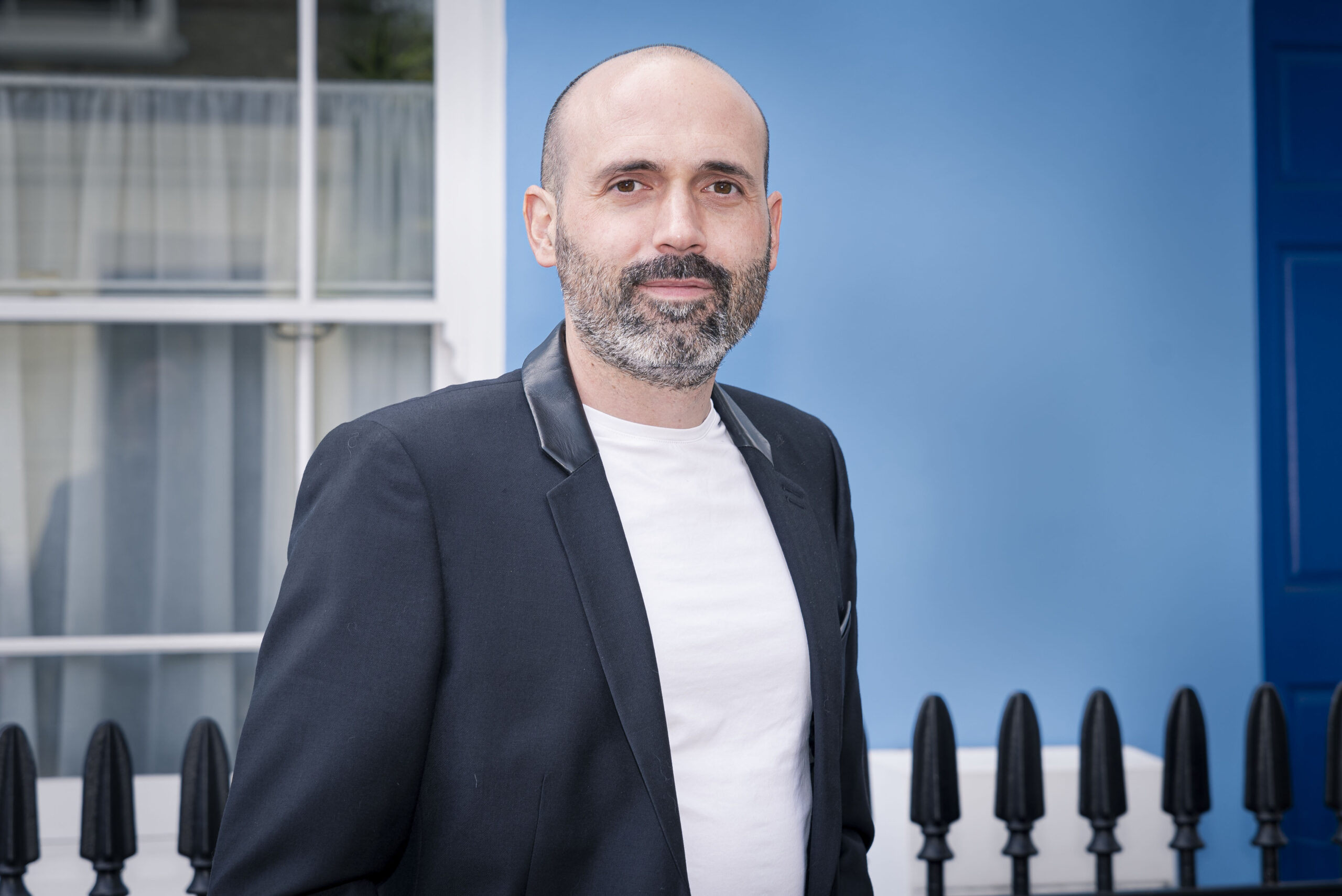
    A conversation with ‘Diversifying’ CEO Cynthia Davis about equality, what’s being done, and looking to the future.

    Diversifying is a recruitment platform which places diversity at the forefront of their model. They work with some of the biggest brands including Sky, Aldi, eBay, Metro Bank, and even the Royal Household.

    CEO Cynthia Davis has worked in recruitment for 22 years. She has seen the way that diversity is handled in the jobs market and is unimpressed. She founded Diversifying as a way to go beyond the “tick-box” or tokenistic approach to diversity she has seen over the years, towards a more genuine, holistic approach.

    “When I started my career, diversity and inclusion weren’t really talked about at all, so I wasn’t seeing people like me from an ethnic minority background,” Davis says. “There weren’t women of colour who I could relate to working in the environments that I was working in, and it was really hard being in the minority.”

    Davis describes being passed over for a promotion, then being required to train the less-qualified person who got the job, while she was never considered for the role due to her race and gender. She also mentions the toxic environment in her workplace which she had to face.

    “There was a lot of banter which could be deemed to be inappropriate – racist jokes, misogynist comments, and micro-aggressions as well which I was subjected to,” Davis explains. “And all those things led me to think ‘there’s got to be a better way of working’.”

    Since then, she has strived to create a means to find employers who are committed to workplace equality and diversity. In the past, companies released blanket PR statements against racism, sexism, and homophobia while the internal workings of the company did not reflect those statements. Now, Davis sees how people are no longer satisfied with hollow messaging, instead looking for evidence of real change.

    “Especially in light of the Black Lives Matter movement, people have been calling for change. They’ve realised that we can’t keep going in this vicious circle where there’s so much inequality,” Davis continues. “Some of these are deep-rooted systemic barriers which we need to start dismantling to allow this talent to come through.”

    Davis created Diversifying to bridge the gap between diversity-focused employers and people searching for a workplace with equal-opportunity practices, providing evidence of the way a company is run, what support they offer, and their hiring practices.

    “I wanted to move beyond that outward statement of ‘we’re an equal-opportunity organisation’ to really showcase what’s going on behind the scenes, to see that change, and measure that to hold people to account.”

    Many people feel the need to hide parts of themselves in the application process, be it their names, backgrounds, sexual orientations, or other parts of their identities. Davis realised that the companies which were making real strides towards equality and inclusion didn’t have a platform to find people from these different backgrounds.

    “If you’re going to recruit from us, you know that you’ll be getting people from all walks of life, from all different backgrounds, and we’ll never hide that,” Davis explains. “It’s about flipping the process on its head to say ‘right, for those companies that are genuine, here’s a platform where you can reach people where you know who they are, their names, where they went to school, and you’re hiring that person because they’re the best for the job’.”

    In order to ensure that the companies advertising positions on Diversifying are genuinely committed to the mission, each company must create a profile describing what diversity means to them as an organisation. This also involves showcasing things like employee resource groups, flexible working hours and childcare for parents, mental health and wellbeing policies, and other real changes the company has made towards equality. By making diversity the main focus of the platform, candidates are able to see immediately if a job is doing enough to support them.

    “There are no recruiters on the platform, it’s direct communication between candidates and employers, giving them that access to liaise together,” Davis says. “The first thing that anybody sees when they land on a company is the essential information about culture, benefits, and that’s at the forefront before anybody is applying for a job.”

    With low retention rates and a finite amount of talent in the jobs market, employers must consider things like diversity and inclusion if they want to attract new employees. In this new work environment which can be seen following the pandemic, people are no longer tolerating sub-par practices in the workplace. Davis believes that Diversifying can help facilitate this change.

    “People have found their voice. They’ve learned how to stand up for themselves, and people are demanding action and holding leaders to account,” Davis says. “For me, that’s the beauty of the mission and purpose of what we’re trying to achieve.”

  • Gina Miller: ‘We need a fourth school term devoted to non-academic aspects of education’

    Gina Miller: ‘We need a fourth school term devoted to non-academic aspects of education’

    Before Covid-19, education was being neglected but I think the pandemic has really shone a light on our underfunded education system. It’s a hard truth, but we haven’t really thought enough about how we’re going to educate our kids in the future.

    The biggest conversation now is about catch up – but it’s about catching up to back to where we before. What we’re not doing is thinking of this as an opportunity to really rethink. We need not just to modernise education, but to rethink the curriculum, rethink our schools architecture, and look again at teacher training. What’s needed is a commission to look at the entire system. If I look at where we are now as a country, we’re a long way away from where we were when I was growing up in Guyana. In those days, British education was the gold standard everywhere in the Commonwealth. I was brought up by English nuns in a convent in British Guyana and we all understood that education is the most precious thing you could give your children. That was because whatever happened in life, they would have the skills, resilience, heart and brain to deal with what came next.

    My fear is we’ve lost that thinking about education as being about building mental and physical agility and resilience. Instead we’ve become obsessed with assessment.

    And of course this series of missteps has had ramifications. If you look at us now on the global index, we’re nowhere near the top – we’re actually in the bottom, and our reading skills have dropped dramatically. This is especially astonishing when you consider that economically we’re a country that’s doing well. Added to that, we’ve got problems with our approach to teaching which seems to be based on the notion that the future will be much like the past. But the world isn’t where it was, and we’ve got to look at the warning signs.

    One thing we have to focus on is the Fourth Revolution, and what’s happening with digital technology. We know that this has its mental health aspects. Sadly, it’s especially prevalent among teenage children that too much exposure to technology creates this sense of depression and sadness. There are emotional consequences to learning remotely which have been accelerated through Covid. There’s an analogy with work here – where we’ve learned that we’re social animals, and that some tasks are far better conducted face to face. Likewise, we need to realise that there’s a sensory aspect to learning – you’ve got to engage the five senses.

    And if we’re to keep all our senses healthy what does that mean? It means art, music and literature – it can’t all be about the academic curriculum so I think we have an opportunity here if we can find the courage and imagination to think radically. For instance, we have three terms in the UK at the moment – and that’s based on the rather outdated notion that kids used to need to go and bring in the harvest in summer. That’s what the long summer holiday is based on – and it hasn’t happened for hundreds of years!

    I would propose that part of the review is to look at the possibility of a fourth term. I would dedicate that term to things that are not necessarily academically led, but which have an academic element: the environment, gardening, cooking, community service, sports. It would be a term where children aren’t in the classroom, but they’re in the community and they’re learning a different skill set, which would keep them in good stead for the future.

    That would be good not just for mental health and mental agility but for coping against adversity in a world which we know will be radically different to what we know now. Look at some of the up and coming countries and how they’re coping with education, and there’s a huge amount for us to chew on there. It’s really quite remarkable the subjects they’re teaching. In Singapore, or in Rwanda or in Ghana, they’re focused on handing down entrepreneurial skills to the coming generations. They’re learning about their environment and the challenges facing their countries.

    So we’ve not yet made that leap into understanding that we need to invest in our education – that it’s the best investment we can make. I’d argue it’s one we need to make now.

  • Why personality now plays more of a role in the workplace than ever

    Why personality now plays more of a role in the workplace than ever

    Patrick Crowder

    When we go to work, we are putting on a front. Oftentimes we strive to appear professional and alter our persona to convey that impression. It can be subconscious or deliberate, and research from the team behind the job networking app Debut suggests that it’s probably not a bad thing.

    The team at Debut consulted with occupational psychologists to find out what these workplace personas are and to see how managers can alter their strategies with the different personas in mind.

    Dr. Meredith Belbin suggests nine different team roles. Each one has a set of attributes assigned to it, such as “introverted”, “high-standards”, “focused”, “creative”, and so on. These personalities work together in different ways. One employee may be skilled at seeing projects through to the end, while another may thrive in the formulation of the initial idea or concept for the project. Ensuring that people are the right fit for the company is a concern for hiring managers, which has led to the use of personality tests in the workplace.

    Jessica Alderson has experience with compatibility based on personality types through her dating app Sosyncd, which finds matches based on Myers-Briggs test results. She suggests that compatibility considerations in the workplace should go beyond personality tests alone.

    “It can help for managers to know the personality types of their team, whether that’s using Myers-Briggs, DISC, Enneagram or other personality type frameworks. They can then consciously tailor their communication style to individuals,” Alderson explains. “Personality frameworks are a great starting point but you also need to observe and listen to your staff. Take a step back and think, ‘Is this communication style working for this person?’ Managers can also simply ask their team members what’s working for them and what isn’t.”

    Everyone works differently. Some prefer the WFH life, and some can’t wait to get back to the office. Even so, many people have some ritual, known to them or not, which helps put them in “the zone” to work. This shift can happen during their commute, when they step through the office door, or even just after that first cup of coffee. The pandemic has seen many of those rituals interrupted or altered, which can contribute to a loss of productivity and foster disdain for a once-loved job.

    Debut’s Marketing Manager Avantika Vaishnav believes that the effects of remote working will require employers to look at the personality types of their employees to ease the transition back to traditional work.

    “Working from home has really changed everyone. Whether you are an introvert or an extrovert, it has shifted our perspective of working and most importantly our priorities,” Avantika explains. “It’s been a tough year and the transition back to office life and working around others may be the toughest part for many. Back-to-office anxiety is real and many people will suffer, so be sure to know your employees’ personality traits and how you can make this change as comfortable as possible.”

    The pandemic has shown employers the need to view their employees as unique individuals with specific needs. Now more than ever, an understanding of personality traits and how they work together is crucial to maintaining a healthy, productive workplace.

  • New survey: 66 per cent of workers require more mental health support

    New survey: 66 per cent of workers require more mental health support

    Patrick Crowder

    Over half of the UK is nervous about returning to work, according to a study by Westfield Health. Some sectors are experiencing more anxiety than others, and overall, employees are asking for more wellbeing support and a clear plan from their employers about the future.

    Westfield Health surveyed 1,500 people in the UK about what the return to work following the pandemic will mean for them. 89 per cent of employees surveyed said that they were happy with their proposed future work plans, but in the government, transport and logistics sectors, there is a large amount of uncertainty and dissatisfaction.

    The pandemic has caused some companies to look more closely at the mental health and wellbeing of their employees. However, it is not the case that all companies are doing a good job of this. According to Westfield Health, 66 per cent of employees surveyed said that they desired more wellbeing support from their employers, with 26 per cent saying that their company is currently missing “key wellbeing initiatives”.

    In transport and logistics, 69 per cent of employees stated that they were nervous about returning to work, and 15 per cent are unhappy with the level of communication they have received from their employers regarding future work plans. As the world tries to figure out what the future of work is going to look like, some employees are being left behind by employers who have not yet clarified what the “new normal” will look like for them.

    In terms of Covid restrictions, the transport sector is now in a strange limbo. Masks are still required on TfL services, for example, but all it takes is a ride on the tube to see that these rules are not widely enforced. This could add anxiety for transport employees who must work in-person, particularly for those who are concerned about catching Covid due to health issues.

    Government jobs had the highest level of uncertainty, with 25 per cent of employees reporting that they are unhappy about proposed future working plans. Furloughed workers are also lacking information, leaving only 28 per cent of them satisfied with their employers’ levels of communication.

    Coming out of the pandemic, people will need a strong sense of direction and certainty from their employers. It is, of course, difficult to predict what the future holds. However, continuing without the clearest roadmap possible in terms of the future of work, employees will be left to struggle with uncertainty and anxiety.

    404 words

  • Nicolas Croix on how tech can improve our social care system

    Nicolas Croix on how tech can improve our social care system

    By Nicolas Croix

    The biggest challenge for UK care homes has been a shortage of skilled care workers in senior roles in the past ten years. There are several reasons for this, the most significant being the perceived unattractiveness and low status of care work, relating to low pay levels and job security. In addition, a lack of specialist HR managers can result in long-term vacancies, with the industry already battling a shortage of registered nurses and care home managers.

    However, since the outbreak of COVID-19, safeguarding employees’ mental health has overtaken the skills shortage as the biggest challenge for HR leaders in health and social care. Recently, my team surveyed 158 senior professionals from the industry; 54 per cent of the respondents reported employee mental health support as the biggest challenge, followed by staff development (41 per cent), shortage of labour (39 per cent), lack of skilled workers (37 per cent), and increasing paperwork (33 per cent).

    The only way to operate any care organisation with minimal HR issues is to employ and reward the best staff: skilled professionals who are passionate about their work, know they’re in the right job, and care both about residents and the business’s goals. To achieve this, organisations need careful recruitment practices, with a watertight hiring and onboarding process to deliver only the best candidates. This requires investment in three core areas: HR, social outreach, and technology.

    The Care Quality Commission (CQC) estimates that around 11.5 per cent of care homes do not have a registered manager in place. HR roles are just as important as skilled care work, with the best HR people most qualified to negate challenges around recruitment and people management – and care organisations should never stop recruiting. Taking on the right people goes back to some basics of good personnel practice:

    • creating standardised interview procedures
    • using sensible and consistent scoring of candidates
    • testing for behaviour rather than competence
    • scrupulously monitoring recruitment performance

    It also involves building and maintaining relationships with local job centres and sector-based work academies, offering visits to the home, and even ‘taster shifts’ to potential applicants.

    Investment in social outreach helps take your brand to a bigger audience, widening your talent pool and access to potential applicants. Recruiting via the internet is no longer a nice-to-have but critical in opening up worldwide possibilities. Paradoxically, most recruitment to care assistant roles are typically from a care home’s immediate neighbourhood, so cultivating positive coverage in local media is valuable in attracting staff and residents.

    Investment in technology ensures that care organisations can maintain a better connection with remote care workers who can feel isolated, reducing job satisfaction. Automation of routine tasks also significantly reduces the monotony of repetitive and time-consuming paperwork for all care workers whilst helping implement new strategies to improve work-life balance and sustain motivation, such as flexible working and other workplace initiatives.

    Gateshead-based care home company Helen McArdle Care is family-run and says ‘caring for staff with a personal touch’ enables it to retain staff and rehire workers who had left for alternative employment. The business hosts an annual family fun day, where staff are invited to bring their relatives to work. Helen McArdle Care also empowers its managers hearing of a staff member suffering hardship or other personal problems to offer the appropriate support – though this is a policy all care homes should adopt.

    To attract the best staff, care organisations must be able to find them in the first place. Another challenge the industry faces is a lack of sector-based academies providing good enough qualifications, allowing staff to earn better pay, whilst only half of those surveyed (53%) said the Government’s national recruitment campaign helps them attract social care workers.

    More needs to be done to attract higher volumes of people into health and social care. Only by improving the quality of training and pay rates and adopting innovative approaches to care home management will the sector become more attractive and start to plug the skills gap against a backdrop of continued disruption due to Brexit and the COVID-19 pandemic.

    The writer is the founder and CEO of Moonworkers

  • Jane Evans’ Letter from South Africa

    Jane Evans’ Letter from South Africa

    By Jane Evans

    When the new, democratic South Africa was born in 1994 the euphoria and excitement which came with the promise of a better life for all was soon diluted with the realities of the crippling socio-economic legacy of apartheid.

    Amongst the many challenges facing the new government was the mammoth, but unequivocal need to turn a deeply unequal education system into something good, one that would reach all South African children, particularly black children who were systematically denied the same advantages and access to education as white children.

    Although there have been improvements in the South African education system over the past 27 years, notably government’s acknowledgement and efforts at prioritising early childhood learning, the state of education in South Africa, specifically for children in the poorer areas of the country – effectively the majority of school aged children – was still in a precarious position pre- the onset of Covid-19. There were insufficient numbers of well-educated teachers, insufficient school buildings, a lack of text books, schools with no water, electricity or toilets and the most dire despite a government feeding scheme: thousands of hungry and vulnerable children.

    The global pandemic which deepened an already high rate of unemployment and increased poverty has all but sent South African education over the edge, but not quite.

    Whilst the systems for primary and secondary education in 1994 were severely flawed, the very foundations of learning – early childhood development (ECD), particularly for children in disadvantaged communities – had fallen almost exclusively to the domain of non-government organisations (NGO), and the communities they worked with.

    Although the reach was limited, in the areas where the NGOs worked there was structure: there were recognised training programmes for uneducated women; there was onsite support for teachers in the burgeoning early learning sector; there was often food for the children and there was hope. It was the NGO sector that all but handed a well-functioning early learning system to the new government.

    Today the importance of early learning is a recognised level of education in South Africa. An extra year of schooling called Grade R or the Reception year for 5 to 6 year-old children was added to the education system in 2001 (formal schooling starts at 6 to 7 years-old). There is also talk of adding a pre-Grade R year for four year-olds.

    There are solid policies for early learning in place. The responsibility for all education in the early years is currently being moved from the Department of Social Development to the Department of Education. The field of early learning is being professionalised with degree courses for Early Learning coming on stream.

    This is promising but it is happening against a background of despair in the broader South African field of ECD. The vast majority of ECD centres and playgroups are privately owned and run. Scant salaries come from diminishing fees paid by parents and in some instances subsidies provided by the Department of Social Development. Covid-19 has severely knocked the sector.

    Along with the rest of schools in South Africa all early learning centres closed during the most virulent early waves of the pandemic. Thousands of parents lost their jobs and income, parents could not afford the ECD centre fees when they re-opened and as a result many of the centres and non-centre-based playgroups have not re-opened.        

    South Africans are a hardy people and when all else fails civil society steps in. During the worst of the pandemic NGOs worked hand in hand with private individuals, churches, the corporate sector, private trusts, foundations and government to distribute food through their networks to but a fraction of the thousands of families literally starving because of the economic turmoil and increased unemployment under Covid-enforced lockdowns. Many of the ECD NGOs which are still responsible for much of the vocational training offered to early learning teachers have themselves been hard hit by the redirection of private and corporate sector funds on which they rely for their income. But the NGOs have risen to the challenge.

    Training programmes have been digitised. Data for online learning has been made available to trainees in disadvantaged communities. ECD centres have received hands-on help in re-opening and meeting Covid protection requirements.

    There are always questions about the long term role of NGOs in the field of early childhood development. But NGOs were there during apartheid and in my opinion, they will continue to serve an essential service to early learning in disadvantaged communities of South Arica for many years to come. 

    About the author

    Jane Evans’s memoir, A Path Unexpected,** tells the real-life story of how she, together with a group of women from a rural South African farming town, helped to make early learning a reality for some of that country’s most isolated and disadvantaged black children.

    Jane is the founder of a non-government organisation called Ntataise, a Sotho word meaning “to lead a young child by the hand”. Since inception in 1980, Ntataise pioneered the introduction of early learning for children of farm workers, amongst the poorest members of South African society. It works today – over 40 years later – in seven of South Africa’s nine provinces and has reached hundreds of thousands of women and children across the country.

    **A Path Unexpected was published by Jonathan Ball publishers in June 2021.

  • Is the music industry out of the woods yet?

    Is the music industry out of the woods yet?

    By Patrick Crowder

    It’s common knowledge that Covid-19 has hit the music industry hard. Now, there’s a light at the end of the tunnel, with festivals such as All Points East and live music in general up and running again. Throughout the pandemic, young people hoping to make their careers in music have faced a lack of access to equipment, few performance prospects, and a rapidly changing industry.

    Daniel Hagan is a senior lecturer at the University of West London, serving as Head of Subject for Music Technology, Music Management, and Popular Music Performance. He holds a Master’s degree from the University of Brighton, and he has done a lot of research into the music industry and what makes it tick. We asked him how the industry has changed over the years, and how the pandemic has affected the prospects of his students.

    “The need for courses like this has grown over the years,” Hagan explains. “When I started as a musician it was sink or swim – if you wanted to learn about the industry you had to get out there, give it a go, fall over, and get back up again.”

    Now, courses like the ones Hagan delivers can help young artists and future managers find direction in their careers, and allow them to build the necessary contacts and experience to make it in music. Hagan argues that the skills learned on the course can be applied in many different ways.

    “By the time you finish the degree you should understand publishing, recording, the live industry, how they interact, and the changes between those that go on every year. The essence of the industry is the interaction between those elements. At the end you can specialise in one aspect of it or take it more holistically in an entrepreneurial way and start something new.”

    The pandemic has changed the music industry greatly, as performances were stopped and there was a shift towards online platforms. Hagan explains that this isn’t the first time he’s seen the industry turn on a dime, remembering the rise of the subscription-based music site Napster.

    “When Napster came along the whole industry changed overnight, and we saw a big shift from recorded music to the live industry. It took a number of years for that to settle in, but you saw that swing from the traditional way where everything was about recorded music and live music was promotional, to live music being the focus and you would release recorded music to promote your live shows,” Hagan recalls.

    With the rise of online platforms such as Soundcloud, Spotify, and Apple Music, recorded music is making a comeback. But as opportunities to play live are returning, Hagan can see that some artists are not as keen to take to the stage.

    “Now we’re beginning to see that a lot of people can run their businesses through these digital platforms, and the live element is something they don’t necessarily have to engage with,” Hagan adds. “If you can make your name off of one track, then you don’t really have a set list to play live. As we come out of the pandemic the live industry is going to have to work together with the recorded industry to make sure both parts are equally healthy going forward.”

    The pandemic gave rise to online music projects, livestreamed concerts, and even virtual choir practices, but how much sticking power these new ways of making and enjoying music will have depends on the way people have adapted to them. Hagan believes that there’s no substitute for the real thing.

    “We saw an awful lot of attempts to get people collaborating remotely, but I think ultimately there’s nothing better than being in a studio with an actual human being to do this stuff live,” Hagan says. “I went to a small festival myself for the weekend, and seeing people enjoying themselves with live music, I don’t think anything will ever replace it.”

    Hagan’s students face new challenges and an uncertain future in the music industry. Now, it is less about looking for that one big record deal, and more about building a reputation and continuously releasing quality content. Hagan tells us that young musicians also have to do more of the managerial work by themselves now.

    “Managers aren’t going to come in at an early stage anymore, so you have to look out for yourself a lot longer than you used to,’ Hagan continues. “The more you know about performing your art and managing your career as a business the better, rather than waiting for some A&R (artists and repertoire) person to come along and steer you to the top. It’s even more important to protect yourself and understand how it all works.”

    A solid knowledge of contracts and the ins and outs of copyright laws is important for a musician to have, now more than ever. We asked Danny to give some advice to musicians who are just getting a foot in the industry’s door.

    “I think the secret is networks. One of the big challenges is that these networks have been reduced or severed during the pandemic, that’s been the hardest thing. So it’s about looking around, seeing who’s doing similar things, and building meaningful relationships.”

    Networking and an understanding of the industry can take an artist far, but Hagan reminds young artists to focus on what’s really important. “I always say to concentrate on the music. If you get the music right, everything else tends to fall in place after that.”

  • Lily Lewis:“I want to be rich, famous and thin – and if I can’t be that I want to help”

    Lily Lewis:“I want to be rich, famous and thin – and if I can’t be that I want to help”

    By Emily Prescott

    Lily Lewis is marching me off to buy a coffee with her pooch, Betty. It’s the kind of small strutting dog that looks as though it’d be most at home in a designer handbag. It suits Lily, the strikingly beautiful, effortlessly glamorous artist daughter of former Groucho Club chair and hotelier, John.  She tells me she rescued the dog from a puppy farm after its owner died during the pandemic. This seems rather typical of Lily too. 

    For instance, Lily used Safe Spaces, her portrait exhibition which featured mistreated Hollywood stars from the 1930s and ‘40s, as a way to raise charity funds.  “I called up Refuge and said, ‘I’m going to help you and there’s nothing you can do about it,’” she tells me in a melodious voice that sounds like cigarettes and money.  And so she did. During a private auction of the portraits attended by the likes of singer Ellie Goulding and her art dealer husband Caspar Jopling, Lily raised around £70,000 for the charity.  “I have a platform and it would be seriously remiss if I had an opening and just had a drinks party for people I already know, who come from a position of privilege,” she says dutifully. 

    I attended this private exhibition a few days prior to our interview where I bumped into actor Claire Forlani who had tears in her eyes while viewing the work. Lily tells me she met Claire during a holiday in Italy which was attended by the likes of director Sir Nicholas Hytner, prime minister Boris Johnson and his then wife Marina Wheeler. While everybody was being “unbelievably grown up” the pair bonded over their inappropriately fervent love of truffle. 

    Lily recalls with a mischievous giggle: “In the evenings we’d have a huge plate of pasta and someone would come around with white truffle and a white glove and expect us to say when. Claire and I got to about four fists of this stuff each and we’d go ‘no, no, keep going’. At the end of the weekend they basically brought a ball between us, and a spoon.”

    In my day job as a Diary reporter I encounter a lot of posh, society girls, who regale me with similarly ludicrously luxurious anecdotes but there’s something different about Lily. She is intelligent and talented and I get the impression, although she is part of London’s elite, she feels like an outsider.   

    As is the case with most interesting people, she didn’t get on with school.“I hated it,” she shudders, “every dog has their day and I’m glad mine wasn’t when I was 16”. She recalls her parents being called into the headmaster’s office as a teacher had started a petition for her and her siblings to be removed from the school. 

    After school, Lily studied textiles at Central St Martins but left after a few weeks as she hated this too. “I thought it was quite pretentious and there were a lot of people who hadn’t been great artists trying to break you because they had been attempted to be broken themselves. I am not a very likeable person to people in positions of authority. I would be terrible in an undemocratic republic. I would definitely have been burned as a witch,” she cackles. Instead, she attended Kings College London where she studied English Literature and then did a masters in Psychoanalysis.

    There’s a cliche that people who study psychology are spurred by an interest in their own atypical brains. Indeed, Lily fulfils the cliche that cliches are often true and tells me about her atypical brain and synaesthesia. “I can sort of see colour and I can smell sound and my senses get mixed up… If someone hits a loud noise I see colour. I am a big fan of opera and that’s one of the reasons why.” She also tells me about the breakdown she suffered in New York. She moved there with a boyfriend  and around Halloween time she told him she was popping back to the UK to pick up her stuff, she left and didn’t speak to him until February. 

    But she doesn’t think any of her emotional struggles have made her a better artist. “I don’t want to perpetuate the image of the artist having to be miserable because I don’t think that’s true. There’s a process of egg laying which is natural and uncomfortable. If there is a project that will end in a product I will get myself into a state where I am deeply uncomfortable in order to be able to produce it. Creative constipation is very different to struggling with mental health,” she insists. 

    Key to her success, she says, were her parents. Not only did they refuse to apologise for her being different, they also raised her and her three siblings in a hotel. They were all encouraged to be interested and interesting. The hotel was frequented by famous characters such as actors Tim Curry and Gary Oldman. She recalls sitting on Bond star Piers Brosnan’s lap as a little girl with him drawing pictures and telling stories.  “Everything is a story. People tend to communicate with children in stories and so I met so many people that everyone had a story for me.” 

    Through her career as an artist and poet, she has continued to share stories.  Perhaps it’s this heightened awareness of narratives that has contributed to her own quirky character. Often she speaks in aphorisms that make her sound like she’s playing a part in an Oscar Wilde play. Though her refusal to reveal her age seems to hold an outward looking awareness of the pressure of narratives rather than a Dorian Gray-esque vanity. “Do you have to put that in there? I don’t want to say,” she squeals when I ask her the question that all journalists have to ask. “I don’t think anyone needs to know it. I often find everyone always asks how old someone is to relativise what they have done in their life. I have never been keen on saying what age I am, it’s just so arbitrary.” 

    But she does think about getting older and of course, she factors in how she can continue to do good in the world. “I fully intend on training to be an art therapist because I have arthritis in my right hand and I am ambidextrous but there probably will be a time in which I am not able to paint any more or maybe not to the level I want to. I also want to help work in prisons.” 

    “My aim is to be rich, famous and thin and if I can’t be that I want to help,” she laughs. 

  • Repton headmaster Mark Semmence on the importance of a balanced education

    Repton headmaster Mark Semmence on the importance of a balanced education

    by Mark Semmence

    It’s broadly agreed that the future will be one in which creativity and teamwork will be more important than ever: it will not require one kind of individual, but a team of varied individuals. Furthermore, we’re all now conscious of the growing incidence of mental issues among young people, with anxiety and peer pressure adding to their mental load. To arrive at a better society, we require balance, both in the team and in the individual: all must know who they are and play their part.

    To withstand the challenges of the future, our young people will need to have experienced a balanced education in their formative years. As well as supporting individuals we must also arm young people with the resilience to confront challenges effectively. We should aim to instil a sense of proportion – of grounded reality and balance. Balance and health will always go together and incorporates not only physical and mental health but also academic, cultural, and societal health. If this can be done, the result is stability. 

    So how do we achieve this? The answer is we must change our binary approach to education. To begin with, we need to recognise that examinations are only one representation of a person’s capabilities.    

    The Children’s Society Annual Good Childhood Report recently found that more than a third of UK 15-year-olds scored low on life satisfaction with ‘fear of failure’ cited as a key factor. Perhaps this is why we score so poorly compared to our European counterparts when asking our children to assess their own happiness. Only 64 per cent of UK children experienced high life satisfaction – the lowest figure of 24 countries surveyed by the OECD.   

    The UK’s approach to exams makes us an international outlier. Former Education Secretary Lord Kenneth Baker notes that the UK is the only major economy in the world that imposes difficult exams on young people at the age of 16. Baker argues that we should replace them with a system that focuses on coursework and teacher assessments.  A school ‘leaving certificate’ at 16 is,  after all,  a relic.        

    Life skills like communication, problem-solving, and adaptability are essential tools in managing mental health. These skills are in demand by employers, yet we still refer to them as ‘soft skills’, demeaning their value to the category of merely ‘optional’.  Boarding schools have more hours in the day and more opportunities to hone such skills. For instance, in-house dining three times a day is a defining part of the Repton experience, enabling pupils to fine-tune their emotional intelligence.

    Meanwhile, the EdTech revolution invites all young people to the party.  Technology can be leveraged to offer a more potent delivery of the curriculum and create collaborative opportunities which more efficiently prepare pupils for their contribution to 21st century society. Subjects like sport, music, art, and drama need to be profoundly integrated into studies. I am not talking about writing a song or rap about the periodic table (though that was done very effectively by Tom Lehrer!) but inventive connections drawn between those creative subjects and the ‘traditionally academic’. Engineers are, after all, some of our finest creative thinkers; some might even call them daydreamers.    

    Let’s take another example. Design and Technology pupils should be putting mathematics to good use solving real-world design problems and take what they’ve learnt into a maths and a DT exam. Or another. Literature pupils should be able to see the artistic production of an era in the broader context of its music and art: they should be able to take the styles and techniques of those ages and bring them into the modern world. If Stormzy and Ed Sheeran can use traditional styles as the basis for  21st Century hits, then why should our young people not be taught the connection between history and heritage – topics which they might otherwise feel to be too ‘dry’.    

    This is not ‘cool teacher’ speak. In fact, it’s a necessary shift when you consider the scale and complexity of modern challenges. A sense of confidence within oneself is fundamental to good mental health, and to feeling oneself part of society. If the only focus of a school is on exams then we create imbalanced people who are not as productive as they might be and will struggle to find a place in the world. Not only that but we render the skills developed for the exams more or less useless since they have never been seen in the context of anything other than exams. There is a better – a more balanced – way.  

  • Opinion: Want to solve the shortage crisis? Pay drivers more

    Opinion: Want to solve the shortage crisis? Pay drivers more

    by Garrett Withington

    Brexit still infuses everything. For instance, in the papers, a person’s conclusion about the HGV driver shortage is seemingly an extension of how they voted in the 2016 referendum. Remainers blame the lack of European drivers coming from the continent, whereas Brexiters chalk it up to Covid-19’s interruption of the international supply chain. Unusually, however, this time they are both right.

    Many headlines seemingly place the blame at the feet of Brexit, or emphasise it as the leading cause, but a quick look at driver vacancy numbers suggest the decision to leave the European Union isn’t wholly to blame. Reports show that there are around 100,000 vacancies for HGV drivers, yet only 14,000 European drivers have left the country and relocated to the UK permanently. That still means a deficit of 86,000 drivers. Few have sought to further question whether drivers are refusing to return due to the pandemic and the UK’s association with the Delta variant, instead conflating assumptions as answers.

    Seldom mentioned is that shortages have not been localised to the U.K; in fact, it’s a global phenomenon. America has reported huge shortages and the EU may face its own HGV crisis with the potential shortfall of 400,000 drivers across the block. It’s not just Nando’s that’s running out of chicken.

    In reality, the pandemic has caused chaos to the global supply chain with port closures across the world reducing shipping. Within the chaos and lockdown there has been an inability to train new drivers, with 40,000 tests having reportedly been missed. This has then been exacerbated by the exodus of European drivers who went home, either because of Brexit or because of the pandemic.

    But of course there is a third aspect to this. The driver shortage is an issue a decade old, with the discussion over what is to blame simply covering up the repeated failures of the government to find a solution. Previous concerns led to a government inquiry in 2015. That same year, there was an estimated shortage of 60,000 drivers with a possible 150,000 shortfall by 2020 if immediate action wasn’t implemented. Government action did slow the pace but ultimately a shortfall has always remained. What is less discussed has been the issues that led to the shortage which has been compounded by recent events. That issue: wages.

    To some degree, those who insisted that EU immigration depressed incomes have been vindicated. Wages have been a longstanding issue in driver retention, and many drivers point to EU immigration and their willingness to work for less as key in driving down pay. With a median gross hourly pay of £11.03 in 2016, it is easy to see why drivers do not associate the extremely unsociable working hours with fair pay, especially those who need to support a family. Enticement through better wages has been the short-term solution of some major retailers, with Tesco offering a £1,000 signing bonus and Dixons offering £1,500. Hopefully this attitude could be applied to other low paying sectors such as hospitality, who in paying a respectable wage may obtain more dedicated staff.

    The effects are beginning to be felt. Supermarkets are reducing their variety of strawberries from three to one. Meanwhile McDonalds has removed the milkshake from their stores in many locations. Instead of companies themselves looking to solve the issue, they are lobbying the government to relax immigration rules once again so they can hire cheap labour. If drivers are to be hired from outside then it should only be seen as a temporary, but the danger is that this lobbying will be successful and a short-term measure will come to be seen as a permanent solution – especially as foreign drivers are put on a shortage occupation list waving visa restrictions.

    It is this solution that Unite, the U.K’s largest union, has rallied against instead demanding higher pay for fair work. Currently HGV licence holders have power in their negotiations due to demand for drivers, but opening up the job market to foreign competition may once again reduce their bargaining power. The question going forward should be: what value do we place on jobs that are critical to our domestic life, that run in the background, and are often looked down upon as unskilled and working class? Is it not time that these jobs demand higher wages? The issue should not just be about what has impacted consumer convenience, but instead a debate about what a fair wage should be in a post-Brexit and post-Covid Britain.

    Encouraging words from the Secretary of State for Business, Kwasi Kwarteng, have encouraged firms to ‘hire British’ but future actions may make these words empty gestures. Streamlining the test to get an HGV licence will hopefully solve the structural issues that have plagued the industry for years, but as Christmas looms, shortages on shelves may look politically untenable. Whether the government will buckle, only time will tell.