‘It is a truth universally acknowledged, that every single man or woman in possession of a good fortune or no fortune at all, must at some point be in want of visiting Greece…’
The lure is eternal, as is the sun, the sea, the good food and the wine. In the past decade it has been more important than ever to focus on the positive and keep our eyes towards better days in the near future.
Sadly, the positive near future that we thought would follow the initial shock of the economic downfall, was plagued by nearly all possible disasters one can think of, from natural disasters to social upheavals, to the highest unemployment rate in Europe and the devastating pressure of a global pandemic. And now, we have the terrifying global uncertainty of witnessing the devastating war in Ukraine.
At the current state of the world, it is difficult to get one’s self motivated to write anything too positive or upbeat. But what we might have learned over the past couple of years, is that we can live with bad news day in and day out, and adapt. We went from counting the daily Covid-19 infections to counting airstrikes and tanks seemingly overnight. A mysterious disease followed by all these accounts of unnecessary evil all happening on a planet that seems to be on its last breath, might just be what we all needed to shed our old skins and re-adapt.
Greek life is very different today than it was a decade ago, going through changes both good and bad. While the tourist sector is primed to make a full recovery this year, it remains to be seen if this will be enough to carry the country through. It is a fact that tourism income can lead to economic growth – especially in a country where tourism and agriculture wonderfully blend together and offer unparalleled agritouristic experiences. Even so, Greek agriculture now faces a manpower problem. The age of the average farmer is close to 50 and it is very challenging to recruit new blood at a time when larger cities and the life they promise hold a greater appeal. The pandemic changed this for the better but only to some extent and it’s not clear how long those changes will last.
The two first years of the pandemic saw the starkest drop in yearly visitors since World War II. It was detrimental for the islands, the smaller ones in particular, who eagerly await for the summer to generate enough income to last them for the rest of the year. The smaller islands of the Aegean are the ones which feel the greatest strain and who are not as privy to investment and help as mainland Greece and a handful of heavily frequented island destinations.
The Attica region in Athens saw over 40 hotels pop up in 2021 alone with another seven set to open this year in central Athens. These are providing fresh opportunities for local contemporary artists, by offering up the hotel walls for murals, exhibitions and installations. They are destined to become hubs of the local art scene. During the pandemic many of the galleries turned their eyes towards to the intentional art scene, hoping to reach the international audience themselves rather them waiting for them to visit locally. But now, things seem to have take a home-bound turn. A lot of effort has gone into bringing the contemporary and emerging Greek art scene to the forefront. Athens is an old city, with world-famous buildings and ruins, and simultaneously a cradle of incredibly talented new artists. They need to co-exist while not overshadowing each other. This is not the easiest task.
At the same time, the startup scene has flourished compared to previous years. All start ups require an entrepreneurial spirit, and Greece offers that in abundance. Even during the height of the economic crisis and the skyrocketing unemployment rate, Greece had the largest number of self employed people in Europe. This being said, only 36 per cent of Greek startups appear to be receiving international funding, mostly below €50,000. This remains problematic, since it means many young businesses miss the opportunity to expand. The average number of new hires in Greece remains five, which is low compared to other countries. It is expected that over the next years the Greek startup ecosystem will be injected with up to €400 million, but for that to happen the focus needs to be in identifying promising young talent and well oiling the underdeveloped collaborative networks. This will also help attract international recruits and employees.
One can draw up a very long list as to why someone should visit Greece, but people should also think of moving there. You can be very successful, and still live a slower-paced life. You can afford yourself certain everyday luxuries at a relatively affordable price. You can rent a flat with a magnificent view for a fraction of what it would cost in London or Paris. Lastly, and most importantly: you can live out the rest of your days, in the satisfying knowledge that you will never have to settle for average food or a mediocre cup of coffee. In Greece, we know no such thing.
Angelina Giovani is the co-founder of Flynn Giovani Art Provenance Research. Go to flynngiovani.com.
It is an aspect of the absurdity unleashed by the pandemic that work sectors experienced contraction, stability, or even expansion, according to their relationship to human touch and proximity. It is as if someone had madly gone through society punishing only people over six feet six, or those with red hair.
But though it was a pretty safe bet being an air pilot or an events manager before Covid-19 had its way with the world, I still think the reversal experienced by the hotel sector counts as the most symbolic. Most of us never saw an empty aeroplane – we saw empty skies. And events moved online.
But we all cancelled our holidays, and many of us can easily imagine an empty hotel. We were also all too familiar with the interiors of our own homes. Hotels are in fact symbols of power, and nothing quite so brought home the strangeness of coronavirus than their sudden lapse into emptiness, and the surrealness of furlough.
They had a particularly powerful advocate for staying open in the shape of Sir Rocco Forte, who has been vocal in Finito World and elsewhere about government policy which he views as far too restrictive. The mask has had no greater foe, and social distancing no greater cynic than Forte. But then most people would be cynical of any government regulation which cost them £100 million overnight as this one did.
Once the pandemic began to lessen a little, I realised it would be a missed opportunity not to return to Italy, the heart of the Forte empire, to see how his two great hotels – the Hotel de Russie and the Hotel Savoy – had fared in the interim. There was more than curiosity at work here: I’ve always loved these hotels and sometimes feel I am simply marking time in London, waiting to go back to them.
Rome is, in its way, one of the most powerful nouns on the planet. It seems almost to have the same force as those large abstractions: love, peace, truth, goodness. It connects back to a former time – or a series of former times – which seem to contain people who were better and wiser then than we are now.
Perhaps that’s never felt more the case than to return there now after the pandemic. Our forebears lived daily with the thought of death; it can sometimes seem as if we have sanitised it. It has also to be said that nowhere I’ve been in the world has quite such a passion for regulation as Italy. Whether this is an inheritance of Catholicism, or a more mysteriously national appetite for rules, I’ve never been able to decipher. But it’s definitely the case that if in Italy you walk into a sandwich shop and forget your mask for even a moment you run the risk of being accosted not by an owner but by a customer. This is a noticeable difference in cultural mores which no doubt must vex Forte himself.
To look at Italy politically there is a sense that it has fallen on hard times, with debt levels not far off Greece’s, and significant poverty especially in the South, where a shadow economy may or may not be making life more supportable for young people, depending on which economist you speak to. I sometimes think that the beauty and the significance of Italy’s history somehow excuses it from doing anything in the crucial realm of the present. But I forgive it this as everything else: I’ve never been unaware in Italy that this is a country which has fallen on somewhat unhappy times since the time of Michelangelo; but then I’ve never minded much because I’m in the country of Michelangelo.
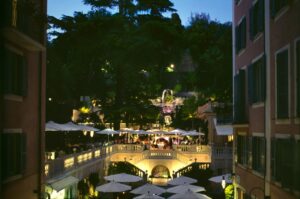
The Hotel de Russie is right under the Borghese Gardens, next to Piazza del Popolo. That makes it reasonably near the Spanish Steps and about a half hour walk from the Coliseum and the Forum ruins. It’s a hotel so good it makes you delay your sight-seeing a little – and that’s the case even in a city where you know you’re ridiculously up against the clock on a long weekend, since there is more to see here than can be seen in a lifetime.
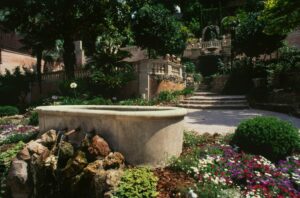
The Hotel de Russie’s Secret Garden sweeps upwards in attractive tiers, almost as far as the Borghese. It is a place of white climbing roses, yews and palm trees. Water fountains trickle on each tier, meaning that breakfast is a calm affair. Several years ago, they used to serve delicious honeycomb as part of the buffet, but that has now been jettisoned due to the pandemic, a sad legacy.
The hotel has a star-studded history. It was here that Pablo Picasso and Jean Cocteau stayed when collaborating on Palade, the first of the so-called Ballets Ruses, a production which counts as the first Cubist ballet. The hotel is justifiably proud of this heritage, and has a Stravinsky bar, and a Picasso suite. On the top floor there is a vast apartment with a sauna in it where the cast of Ocean’s 11 reportedly stayed.
On our first day, exhausted by EasyJet’s tendency to demand farmers’ hours of its clientele, we were jolted into wakefulness by the magnificence of the Coliseum. Vaccine passports were on use in that attraction – and in all the others we went to – and seemed to work well.
Inside, you feel dwarfed by the scale and ambition of what you find, and overwhelmed by the evidence of a civilisation with more intellectual force than ours. It is a strange thing that our society for all its ingeniousness seems to lack some quality which theirs had. Perhaps the Roman confidence can only come once to a species, but that doesn’t mean we can’t learn from it, and enjoy a touch of nostalgia along the way. Of course, in the process we must be careful not to turn a blind eye to the brutality of gladiatorial combat and slavery. But the fact remains: there is something about being in Rome which makes you want to do something big with your life, and why not begin that today?
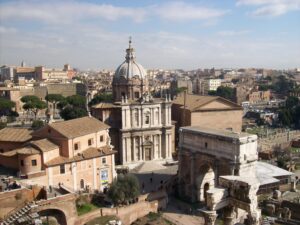
The ruins of the forum will forever remain one of the sites of the world, especially at sundown, when they are filled with a melancholy light which knows all about the rise and fall of civilisations. It is futile, by the way, to search here for the place of Julius Caesar’s assassination since that took place around a half kilometre away in the Largo di Torre Argentina.
What are we searching for among these ruins? It seems to relate to some lack in ourselves which is betrayed by our glass architecture, our world of consumption, our frenetic pace. It is said by John Buchan that the peoples of the past were all storm and sunshine – that is they lived next to the bad in life and so experienced a heightened sense of the good. Anyone who even glances at the Pantheon knows that it may as well have been created by aliens: nobody alive, and least of all our modern architects, seems to know how to do this.
If Rome makes us feel as though we have become somehow pale, then this is the case too when we compare ourselves to the Renaissance. Rome isn’t necessarily the best place to understand the Renaissance, partly because Raphael and Michelangelo dominated all the commissions. Besides, much of what they did is squirrelled away in the Vatican, either in rooms the public can’t access, or in places the public accesses too much. Even the Sistine Chapel feels like the expression of one man’s slightly cantankerous achievement.
Instead, to understand the Renaissance in its breadth and depth, you have to go to Florence, and fortunately the Rocco Forte chain have created the excellent Hotel Savoy there, this time just off the Piazza del Repubblica.
The suites here have been enlarged and the number of them reduced since I was last here in 2017, meaning that the customer has a roomier experience. The Presidential Suite in particular is one of the finest hotel rooms in the world with excellent views of Brunelleschi’s Duomo and Giotto’s Campanile.
Giotto didn’t live to see his bell-tower completed, but Italy is a reminder that the work we do, if it’s any good, will be taken on by others. The Renaissance is a relay-race: we think of it as a time of great individuals when really it was a team effort. This is perhaps best encapsulated by a young Leonardo da Vinci’s role in raising the great gold ball on a pulley system to cap Brunelleschi’s lantern on the cathedral. Years later, whenever he needed to summon up courage for the next big task he would recall that day: it’s for others to show us what is possible, and for us to enact that on our own terms.
Italy asks that we summon up courage in our own lives. By hosting both the Roman Empire and the Renaissance it reminds us that a country can be great more than once – and it does so even in its present condition when so much else has atrophied.
The great joy of Florence is in its churches. It is vital not to miss Donatello’s pulpits in San Lorenzo, and while you’re there not to forget to see the Laurentian Library whose steps were designed by Michelangelo. Tourists should also know that these are on separate tickets and by separate entrances, and not always open on the same day. If you go to Santa Croce make sure to visit the Pazzi chapel and its adjoining courtyard: they are places of rare peace and tranquillity.
The city has suffered during Covid, as is to be expected when the country bore the brunt of the earliest part of the pandemic in Europe. In particular, a favourite restaurant Il Menagere had not yet reopened when we were there. Meanwhile, the Orsanmichele was permanently closed when we were there at the end of 2021 and still operates reduced opening hours at time of publication.
But world historical cities like Florence have in-built resilience which stems from their perennial desirability. Boccaccio begins his book The Decameron with a description of the Black Death and how it affected his contemporaries. You can still visit today the Santa Maria Novella where that scene is set, and I hope people will still be able to do so hundreds of years from now.
Inside the church you can see Giotto’s Crucifixion, and Masaccio’s Trinity which more or less single-handedly started a revolution in art which still governs the way we see today. When the Black Death came, few would have imagined that the world was on the cusp of two hundred years of unprecedented achievement across every area of human endeavour.
Perhaps this is ultimately what Italy has to say to us now: that any civilisation worth its salt is in it for the long haul. And although the Rocco Forte chain has had a difficult pandemic, one senses that these magnificent hotels will bounce back also. The good things in life always do because ultimately that’s what people want.
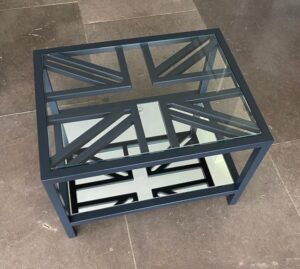
Eddie Vincent built a 22-year career in finance after studying at Newcastle University. Now, he has left that job behind to make metal furniture in his village of Hambledon. We spoke to Vincent to find out how and why he made the switch, and how a career making physical things differs from office life. According to Vincent, the catalyst for the change was he and his wife’s separation.
“Before this, I was doing asset management and finance as a fund manager. I’d been doing that for 22 years. I worked at Goldman Sachs for 10 years, and then then in a smaller company. At the start of the pandemic, my wife told me that she wanted to separate. So long story short, about eight months later, I moved out,” Vincent says, “I ended up with a workshop here, which I didn’t have before, so I bought a welder. I was doing some little hobby jobs and stuff like that, but when the lockdowns came in around Christmas I started making fire pits. I probably sold around about 12 fire pits, which is not a huge amount, but this is when I was first starting out.”
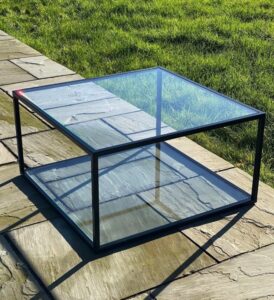
In the beginning Vincent viewed his newfound skill as a hobby, but he quickly saw that there was a market for his work and started posting his projects on Instagram. Facing competition from large companies such as Amazon, he has branched out from fire pits and now makes custom furniture which cannot be bought elsewhere online. His current speciality is making fender seats, which are the upholstered rails which go around the sides of a fireplace.
“I realised quickly that fire pits weren’t really the thing that I wanted to do because you can buy them on Amazon, and trying to compete with Amazon is virtually impossible of course. All these companies have huge economies of scale. So I sort of started thinking ‘I need to do something that’s a little bit more niche and a bit more bespoke’, and I’m still kind of there at the moment,” Vincent says, “This week I made a big upholstery table for someone who makes curtains, and you can’t buy that online. I mean, it’s a huge table, it’s over three metres wide when it’s fully extended, and it was a big learning process to try to get that right. But really where I’m going at the moment is making fender seats. There aren’t many people who make them. You can buy them online, but every fireplace has totally different measurements so you need to get them custom made.”
By producing metal goods which either need to be custom made or which are not mass manufactured, Vincent has been able to find niche markets for his work. Having no prior experience in the field, Vincent has learned many of his skills on YouTube, including how to price his work. Because he is currently a one-man operation, Vincent has to factor in not only his time and cost of materials, but also the cost of powdercoating, upholstery, and delivering his pieces.
“Trying to work out how to charge for things you can’t really find online is actually quite tricky. You can work out what your shop rate is, and I tend to look at a lot of YouTube videos that are really helpful for that kind of stuff. I don’t have any overheads apart from my utility bills, because my workshop is at home, so from that perspective, apart from buying tools and things like that, I don’t have any other sundries that I have to pay. I’ve ended up doing a lot more driving than I thought I would, so that’s one thing which I’m starting to factor in,” Vincent says, “I’m still kind of undecided about which way the business is going to go. I love making the fender seats. I basically like doing anything that combines materials, whether it’s with metal, wood, or glass. These are things where I feel that you can charge a design fee on top of it, whereas if you’re doing something like fixing someone’s vents or doing some railings, it’s very easy to try to get competitive on that, and I don’t really have any interest in doing that. Most people seem to always say yes to my prices, which probably means they’re a little bit low. And that’s another part of the learning curve. I think, in a way, you want to have a few people say no to your quotes, rather than everyone saying yes, because it probably means you’re being a little bit cheap on yourself.”
Many people dream of leaving the office life behind for more tangible work, and the pandemic has made many of those dreamers take the leap. For Vincent, the choice to make a change has proved to be the right one, and he says that the satisfaction he gets from his new job makes up for the pay cut he had to take to start his new venture.
“I think the catch of it is that I’ve taken a massive pay cut at the moment, and I don’t imagine I’m ever going to get up to what I was earning before. I found that in my old job you had thousands of people doing the same thing, whereas with this, yes I’ve taken a pay cut, but when I dropped that table off the other week the client’s face lit up and they said ‘Oh, I just love this, this is amazing!’ and that’s a huge thing,” Vincent says, “I commuted for eleven years three or four times a week, so I was getting up at 0530 and not getting home until 1930 at night. And I’ve seen all these people well into their 60s still doing that, and I knew that’s not what I wanted to do.”
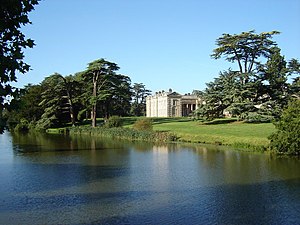
Nestled cosily and luxuriously in a cleft within the gently undulating Warwickshire countryside, surrounded by farmland and not much else, Compton Verney is an interesting choice of location for a premier art gallery. On public transport, it requires a 45-minute taxi ride from the nearest train station at Banbury. So, whilst accessibility is not its USP, it boasts an array of permanent works and temporary exhibitions the equal of many of its more metropolitan cousins. It’s well worth the trip, especially as the collection includes to my particular delight a fabulous collection of Chinese works in bronze dating back to 1200 B.C, amongst a broader Chinese collection spanning 3000 years.
The home of the Verney family for some 200 years until hard times led to its sale and later on its descent into disrepair, it was bought in 1993 by the Peter Moores foundation and transformed with a vision of it as a home for great art. Abigail Viner, the Head of Exhibitions, Creative Programme & Audience Engagement, speaks passionately and knowledgeably about this vision, and the mission of the gallery: “It’s all about the audience, and how we work with artists and collections to engage with an audience and provide a high quality yet accessible experience. It’s about the intersection of art, nature, creativity and science.”
In terms of the nature angle, its remote location affords Compton Verney large surrounding grounds to play with. And the composition of this nature – the physical building, the gentle slopes down from it to the picturesque lake and the soaring Cedar trees the eye encounters on its way there – can seem as carefully curated as the art inside.
As I listen to Abigail speak, I crane my neck to look at a portrait of a young Verney scion high on the wall above me. Captured indulging in what was the standard – if much more exclusive – Instagrammy careful-image-curation of its day, the teenager features a solemn expression of gravitas whilst gently resting a noble hand on a wooden globe: a worldly teenager with international concerns. Of course he was. We’ve come a long way since then, yet not so far at all perhaps.
Anyway, it’s easy to be distracted by art at Compton Verney, but I’m here to see a retrospective of Sky Arts’ Portrait Artist of the Year, curated by Kathleen Soriano (who also happens to be one of the show’s three judges), and to hear about the effect the programme has had on the art scene and budding artist behaviour in the UK.
Art, like fashion and music, is notoriously hard to make a living from. “Most artists I know have to work, often teaching in art school,” says Kathleen. A compelling element of PAOTY is its ability to launch the career of a complete unknown. In this way it has become an important fixture in parts of the art community.
Many of the painters are already seasoned professionals, but as many are not, and there are several examples of amateur “contestants” who have successfully bridged the gap into the professional world. Nic Lord, the first ever winner, was working in the family business of model railways when he entered the show, painting the trains. Now he’s a commissioned portrait artist. Likewise, Tom Meades, who was just out of art school, has managed to make that step. And there are others. Kathleen acknowledges that the exposure of the program no doubt helped their careers, but TV exposure is by no means enough.
She emphasises that as with much in life, to make a career in art you have to work as hard to sell yourself and your art as you work on making it. “There’s no point making something unless you’re ready to shout about it. Art needs to be seen. Networking in the art community and the social side are critical. If you’re going to sit in your garret and make pictures and show them to no one else, maybe you’ll be discovered in 200 years! But if you want to be known in your lifetime you have to get out there and work it.”
And yes, Instagrammy careful-image-curation is key, all the more so during the pandemic. “Artists these days have to be really good at social media. Instagram is where it’s at. They work really hard at their Instagram accounts and getting their images out there.”
For a portrait painter it also pays to be personable, give a great customer service and get to know your subjects, to tease out their hidden narratives. Kathleen tells of how, to achieve the intimacy of his commissioned portrait of Graham Norton, previous winner Gareth Reid spent two weeks with him in West Cork, apparently making excellent use of the local pubs to develop a relationship with the subject, and even discovering that they were distantly related! This may or may not be unusual for that particular neck of the woods but certainly didn’t harm the chemistry or the output it led to.
Clearly though it’s not all about off-canvas talent. Kathleen stresses that it is equally important to be contributing to the development of art and pushing art forwards. “Be inspired, but don’t copy. Emotionally the viewer wants the same impact. Making us notice your work and feel something. Tantalise us about what you’re trying to tell us. But use innovation in the style you use to achieve this”. This is a mission that PAOTY tries to reward, and which a viewer of this exhibition will benefit from.
So as you might expect given PAOTY’s potential for an artist, and its stated intentions to reward innovative art, there is something of an Observer Effect in action, where the existence of PAOTY has changed the approach and styles of many budding artists who watch it, as they attempt to crack into the show and boost their career. There are websites that give advice on what type of paint to use and how to handle time constraints. For what it is worth Kathleen’s summarised advice for getting on is threefold: “do something standout (here she points to Phil Tyler’s painting of himself in a toilet, done soon after his father’s death), have a powerful narrative, or just paint a good, solid head”.
Interestingly, she explains how the most recent winner Calum Stevenson (whose glorious final commission of the violin prodigy Nicola Benedetti is sadly not here, though his beautifully observed, pastel-shaded portrayal of his girlfriend – which foreshadowed his precocious talent for the suggestion of light – is) altered his painting style in order to suit the shows constraints. Lord knows how precise and painstaking his work must have been beforehand (his submission apparently took 80 hours).
So, whether you like it or not (and I happen to), PAOTY now occupies a central role in the UK art scene. Now in its eighth year, it attracts a weekly audience of around 1.5 million and is repeated endlessly (such is the fate of all the finest or most popular shows nowadays). Each year amateurs and professionals from an entry pool of a thousand or more vie for the prize of a paid commission for a national art institution and a chance at national recognition.
It’s also notable for the fame of its sitters. And walking through the exhibition, the celebrity-infused presence of some of them is palpable, yet often not in the way that you expect. In the Graham Norton portrait Reid manages to capture a calmer, contemplative side to the Irishman known to millions as the genial chatterbox of his eponymous BBC, here at rest amongst the green fields of his homeland. Inhabiting a quieter power than the pure social energy he is famous for. You walk away from it minded that you know Norton a little better.
This kind of fresh take on a persona you felt you knew, similarly seen in portraits of Tom Jones, Kim Catrell, and many others, makes one realise that a benefit of using celebrities as sitters is how the televised painting process and outcome often acts to deconstruct the carefully curated public images of these people and, with only few exceptions (Nile Rogers remains indisputably Nile Rogers) show us something new of them. The power of the painter-subject dynamic – and no doubt the forgivable egotistical pleasure of being painted – can lower defences, and through the resulting artistic alchemy they can be humanised and at the same time elevated.
So yes, the exhibition is good. On an individual basis there is much to admire, and sometimes you can see where PAOTY’s mission to reward innovation in style – to “push the boundaries of what portraiture can do” – succeeds. Those who see Samira Addo’s take on Dame Zandra Rhodes will see bold, highly suggestive and powerful use of colour, teetering gloriously on the edge of abstraction.
The show is chock full of portraiture, and so whilst the quality of portrayal, clarity of narrative or distinctiveness of style doesn’t always hit the highest notes, that’s not really the point. The main triumph is to be found in experiencing it as a depiction of the sheer variety of expression possible. Like the TV show itself, it is a celebration of the discipline of portraiture, the humanity of its subjects, and of the unique voices that the artists, and ultimately all of us, have. An accessible moral, and a USP worth travelling for.
This column hasn’t so far made a habit of reviewing children’s books, but it mustn’t ever be said we don’t celebrate the achievements of our mentors and so an exception has been made here. Besides, this short book by Talan Skeels-Piggins is a pleasure to read and is also splendidly illustrated by Natascha Taylor.
The books takes the form of a potted autobiography and Skeels-Piggins really does have an extraordinary story to tell: it contains lessons about resilience and creativity which apply as much to the adult reader as to children. The book resembles the hit series Big People, Little Dreams – except that it is a book about Skeels-Piggins written by Skeels-Piggins himself.
His story is heartbreaking and heartwarming all in one go. Talan has been many things but he began as a teacher, not knowing at that stage that his life would be all about the wider lessons he has learned to impart. He writes: “He was always happy to teach others how to play. And so, he joined a big school and became the PE Teacher.” This need to impart knowledge would stand him in good stead, when the terrible tragedy of his life hit. Skeels-Piggins was the victim of a car accident, and the experience of this is described in simple terms for the young reader: “Talan was very sad. He thought he would never play again. This made him cry.”
What makes Skeels-Piggins remarkable isn’t just that he did find a way to play again – becoming both a Paralympic skier, and famous motorcycle racer, but also learning that his own story doesn’t have to exist in isolation. Especially during the pandemic, it can connect to all stories – and shed a light on situations utterly unlike his.
This book therefore celebrates two things – firstly it celebrates resilience, and insodoing implies that life is a thing infinitely worth being resilient about. By telling the story at all, it also celebrates our interconnectedness. As one page has it: ‘Sometimes we all feel lost.’
This has never been truer than in our bewildering post-pandemic world and it’s this which makes the book so relevant to all of us.
Skeels-Piggins gives his readers here what he also gives Finito candidates: that affirmation that difficult times are where we really find out who we are – and that they might have a surreptitious value secreted in them. Perhaps, we may even arrive at the astonishing position of being almost glad of the hardship we suffered, as it was only by experiencing adversity that we learned what we had in ourselves to traverse it.
Rebecca Walker talks to the Who Singer and Teenage Cancer Trust patron about his new craft ale, the music industry and his new solo tour
RW: So tell us about your new beer?
RD: It was something that I started with my son-in-laws and my son during lockdown because we were all sitting on our hands and unlike the civil service we got off our butts and did something. Beer is the new wine. There’s so much wine in the world you could bathe in it. Everybody’s doing vineyards but the craft beers they are fantastic and we’ve managed to find a really great brewer. We’re wiping our nose every week. We haven’t made any profit yet but you know, it’s exciting to do it. I never realised how good beer could be when you’re drinking he mass produced stuff it’s not like a craft beer at all. It’s totally different it’s like a really good claret.
RW: You’ve been quite vocal about the state of the music industry. Do you have sympathy for young musicians.
RD: Musicians were very poorly treated in lockdown, most of them are self-employed. They couldn’t be furloughed: They were being crucified. I planned to put it together last year and I could smell the way the wind was blowing with a new wave of Covid and our so called scientists and their models which are so inaccurate. If you bought a car with that many faults you would take it back immediately and never buy another car of that model but there you go.
RW: It seems as though streaming services preclude musicians from earning a proper living?
RD: They do. It’s a huge problem. The whole record business has been stolen by overseas huge conglomerate record companies and the streaming companies and of course they’re all working on the model that was made when they were taking sensibly or reasonably 75 per cent of the income because they had to produce it they had to distribute it, they had to you know promote it so the artist was quite happy to take a very small cut. The streaming companies pay so little per play that what’s left for the artist is you can have a billion streams and you’ll earn about 200 quid. That ain’t fair. If that’s your yearly take home play you might as well be a welder.
RW: Is there anything Parliament can do?
RD: They are examining it but the trouble is they don’t understand about the music business – they’ve never understood it. We’re always a pain in their ass. This country leads the world in popular music and that claim now is not coming to this country, it’s going abroad. Our industry it’s all going abroad.
RW: What’s your take on social media?
RD: The younger generation want to be careful of the world they’re creating. All of this micro brain management – I don’t think it’s very good for us. I’ve never been a fan of the internet: I think Twitter and social media has got its good points but it seems to have brought out the worst in sections of society. It feels like it’s the end of civilisation to me.
RW: You don’t strike me as very impressed with the state of science behind climate change?
RD: One thing you have to remember: All these scientists doing all this stuff –whether they’re right or wrong I’m not commenting on that – all I’m going to try and say here but all the scientists giving out all of these predictions are the same kind of scientists that gave out the Covid predictions. How wrong were they. Is there enough scrutiny going on?
RW: Back to music, you’ve been vocal about the government needed to come up with coronavirus insurance schemes?
RD: We’re not asking the government to pay anything: we’re asking for the standard insurance which we would pay for. We would be covered for the expenses we incur in starting a tour: by the time we go on tour this time we’ll be about a million and a half dollars in debt and if they say we’re locking down again, that’s a huge problem. All we’re asking is that if they closed us down they would cover our costs. I think that’s fair.
RW: And how are you healthwise?
RD: I’m as deaf as a post, eyes are going, ears are going but the voice is alright. I haven’t quite gone the full Tommy.
As Costeau was hunkered down on lockdown eating another sushi Deliveroo, it suddenly came unbidden that the marvellous documentary Jiro Dreams of Sushi is now 10 years old.
This proves a useful excuse to discuss what is not only the greatest movie about sushi, but perhaps one of the great movies about work. The film follows Jiro Ono, an Itamae (or sushi masterchef), in his quest to make the perfect sushi: it is a tale of waking obsession about how to get better at something. Insodoing it documents a rare work ethic, and shows us the complex business of running a great restaurant. It is a film which would be as much value to an HR manager as to a budding chef: the film shows not just how to work hard yourself but how to instil those habits in those around you.
Interestingly, Jiro is in the Guinness Book of Records as the oldest chef to win three Michelin stars. Part of what the film shows is the importance of bedding in for the long haul. Even an apparently small corner of life like sushi turns out to be endlessly intriguing if you only look at it with the right degree of curiosity. As Jiro says at the beginning of the film: ‘Once you decide on your occupation, you must immerse yourself in your work.’
In one sense, this feels like a peculiarly Japanese lesson. It was the Japanese painter Hokusai who said: “At 90, I will enter into the secret of things. At 110, everything – every dot and dash – will live.” Jiro is like this with sushi. Jiro is 85 in this film, has since made sushi for President Barack Obama, and is 96 at the time of writing.
Behind every great career, there is clarity of thinking: to make a good choice, and then come in behind that choice with years of graft. This film also reminds us that at the start of our lives, we face a simple choice about whether to seek excellence or to coast. As Jiro points out, to change the world, you need to have talent. And then it’s just a question of whether you work hard.
This film shows not just Jiro’s work ethic, but the effect of that ethic on his sons, who must struggle to follow in his footsteps. Each admits that in the beginning, they hated their apprenticeship, since their father took such a hard line, in the belief that graft is ultimately meaningful, even in its way liberating. There is the occasional hint of generational disparity as young Japanese people fail to take on the heritage that Jiro has created.
There are amusing moments. Jiro says young people want a lot of spare time and they want a lot of money. But for Jiro, this is not the way to live: he has stated that he dislikes holidays because it makes him itch to get back to work. Some of the apprentices in the film have reportedly left Jiro’s tutelage after a very short period – sometimes after only one day.
We are left in no doubt that it would have been better for them to stay. In one marvellous moment, we hear from Jiro’s apprentice as he learns how to whip tamago (egg sushi) after four months of continually getting it wrong. Finally, Jiro tastes his latest effort and says approvingly: “Now, that’s how it’s done,” causing the apprentice to burst into tears. The master-apprentice relationship works only if it is respected by the apprentice: it is an anecdote which shows that equality in the workplace can sometimes be profitably balanced with hierarchy.
This is a film with much to tell us as we resume life after the pandemic, having enjoyed or endured a period of pause. Costeau is aware of a certain pent-up energy within all of us. Sometimes we don’t know quite what we should strive towards with it. This film tells you. It’s called excellence and it’s in each of us.
As the Astronomer-Royal, I would argue that it’s a great luxury to look at the stars – but then the cosmos is part of our environment. It is the unique part of it which has been observed and wondered at by all human beings everywhere in the world’s large history. They’ve all gazed up at the same vault of heaven.
To be more technical, every atom in our bodies was made in a star which lived and died some 5,000 years ago. I think the public is fascinated by this, just as they are about dinosaurs – which I suppose some people might say are irrelevant now. So I’m not apologetic for trying to understand space.
Besides, space technology is used for practical purposes. By observing things in the cosmos we can study the laws of nature under far more extreme conditions than you could ever simulate on earth: more intense radiation, and longer gravity and so forth, so that one can understand more deeply the laws of nature.
If people ask if there any other special perspectives which astronomy allows me to bring to everyday affairs, it is perhaps the awareness of a long future. Most people who accept Darwinian evolution, they’re aware that we’re the outcome of nearly four billion years of evolution, but I think many think that we humans are the culmination of all that and the top of the tree. No astronomer can believe that, because earth is less than halfway through its life – the sun has six billion years to go until it dies. And the universe may have an infinite future head of it. I might quote Woody Allen who said: “Infinity is very long, especially towards the end.” We are perhaps nearer the beginning than the end of more and more wonderful complexity, and although that’s a vastly longer time scale than one can easily imagine, it gives a different perspective.
We should share the mystery and wonder of the universe, but we should accept that our brains may not understand the depths of it, just as a monkey can’t understand quantum theory.
Astronomy also engenders humility. Most students find it pretty hard to understand even a single atom. Therefore I’m very sceptical of anyone who claims to have more than a very incomplete and metaphorical understanding of any deep aspect of reality. It’s why I’m suspicious of doctrinal religion, though I do support the social function of religion as a way of bringing people together.
Religion is part of our culture. I was brought up traditionally in the Anglican church, and hugely value the accretions of architecture and musicianship. But if I were born in Iran, I’d feel the same way about Islam, and in the same spirit.
As a writer, I’m very much on a computer. I have friends who write books, who start with a sheet of paper, begin at the beginning and go on. I’m not like that – I write bits and it gradually comes into focus. The books I’ve written have all grown out of having written articles and lecture notes. I would never sit down with a fresh topic and write a book out of the blue.
Most jobs involve some aspect of mathematics and some sort of skill with computers. Science should be regarded as part of our culture. Small kids are fascinated by space and dinosaurs. The tragedy is that as they get older they lose interest in that rather than broadening it to embrace the rest of science and this is partly due to the lack of inspirational teachers in secondary schools.
Everyone needs to have some feel for science. We need to know how the world works and where our food comes from. It’s sad that there are young people who’ve never seen a dark sky or a birds’ nest or never been on a farm – or couldn’t say where their liver is in relation to their stomach. One feels everyone ought to know a bit about basic numeracy too, so they can’t be bamboozled by statistics. It’s also important for responsible citizens, due to the implications in relation to climate and environment. If you want the debate to rise above the level of Daily Mail slogans, everyone needs a basic understanding of science. For science to be optimised, we need to have a public who understands it well enough to be part of democratic discussion.
Lord Rees is the Astronomer-Royal and the author of numerous books, most recently On the Future (Princeton University Press)
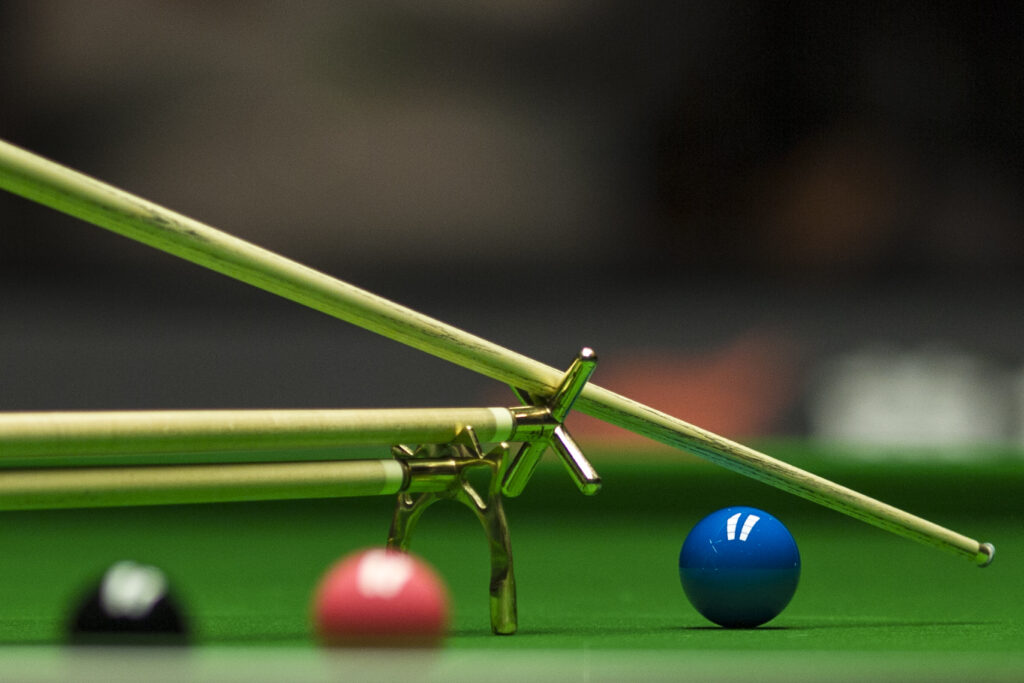
It’s a special year for snooker. Not only are crowds returning to Sheffield’s famous Crucible Theatre to see the action, but the game itself is celebrating a one-of-a-kind birthday. The cue sport which has captivated fans all over the world was first played in India in 1875, making this year snooker’s 147th anniversary.
That number (147) is important to players and fans because it represents the maximum number of points which can be scored in a single snooker frame. This incredible feat was first performed on television in 1982 by Steve Davis; many fans will also remember Cliff Thorburn’s 147 in 1983, the first time any player pulled it off at the World Championships. Since then, many players have made maximum breaks, but none faster than Ronnie O’Sullivan who cleared the table in just five minutes and twenty seconds during the 1997 World Championship.
To celebrate the long-standing tradition of snooker, we’re taking a look at the whole industry from amateur leagues to the top levels to see what lies ahead for the sport.
Local clubs – the heart of snooker
If you’ve ever played a casual frame of snooker, you’ve probably done so at a snooker hall. Though snooker halls are not as packed as they were during the height of their popularity in the 1980s and 90s, there are still many places to play dotted around the country.
The backbone of snooker today does not come from massive television viewership or pro players’ star power, but rather from amateur players who form a community of people who love the sport.
One such player is Pete Przednowek. Przednowek frequents London snooker halls playing matches with his friends while bringing new players such as myself into the group as well. For him, snooker has been a lifelong passion.
“My dad bought me a little table-top four foot table when I was around eight years old, and it was the best thing to ever come my way,” Przednowek says, “I was hooked from the start, and as soon as I was old and tall enough I started playing on full size tables in clubs.”
For most amateur players, snooker is a way to compete with friends in a friendly environment with the only goal being to have a bit of fun. For Przednowek, that’s what his relationship with the game started out as, but he soon found himself wanting to take things to the next level by entering competitions.
“I had my first experience playing in snooker tournaments at my local club in Croydon around the age of 16,” Przednowek says, “I got my ass whooped most of the time but I loved it all the same, and it made me realise that there is no better way to improve in sport than putting yourself out there and playing against random opponents who are better than you a lot of the time.”
He continued to play through his days in university where he developed an appetite for American pool. After a few years of casually playing 9-ball, he decided to return to his first love.
“I started playing snooker again more regularly not long before the pandemic struck. Then once the lockdowns were lifted, around April 2021, me and a few of my mates started playing more and more,” Przednowek says, “There were around six of us who had “caught the snooker bug”, so I decided to organise a little league between us all, with weekly matches, where we all play each other once over the course of a mini-season.”
Dedicated amateur players keep snooker halls alive, and the fine folks at Cousin’s Professional Snooker in Seven Sisters rely on players like Przednowek for business.
Cousin’s is a family business and takes a slightly different approach than other clubs. At Cousin’s, respect for other players and staff is paramount. There are the typical notices posted reminding members to keep quiet and respect other people, yes, but it is an atmosphere which fosters such a welcoming community environment.
People who come to Cousin’s feel no pressure to immediately rent a table or buy a drink. Instead, the owners view it as more of a community centre for members to come, relax, watch whatever cue sport is on the television, and feel like a part of a larger group with a shared interest. In another departure from snooker hall norms, their £30 membership lasts for life. I spoke with Paul O’Neill, who has worked on and off at Cousin’s for over 30 years, to ask him what makes Cousin’s a different sort of club.
“Cousin’s is a family-run business, which I think makes a big difference. We’ve only got two clubs in London, so it’s different from some of the chains,” O’Neill says, “It was established back in 2002 as a members club, and both of our locations are totally multicultural, we’re all different colours and creeds here. Snooker clubs have had a bad reputation traditionally as smoke-filled dens of iniquity, but we at Cousin’s had a vision to change peoples’ perspective. Our aim is to attract snooker and pool lovers of all ages and to be a meeting point for good characters from all walks of life. We’ve got fathers and mothers bringing their children here in the afternoon to play because it’s a relaxed, friendly, peaceful club.”
During the pandemic, many billiards halls struggled, and some even had to shut down. Cousin’s had to follow the same restrictions as any other place where people gather, but O’Neill says that the clientele at Cousin’s were eager to support the club and get back on the tables again.
“The last time that we reopened was a Monday, and we were full up. We had a waiting list for people to get on the tables on that day, everyone was so eager to play because it’s a very addictive sport if you like. They were missing it because they couldn’t go anywhere to play a game of pool, not even to a pub, so it was just completely off the list. So when we opened up on Monday it was absolutely packed in there – it was the busiest Monday we’ve ever had,” O’Neill says.
Not only are clubs like Cousin’s a safe, friendly environment to have a game, but they’re also places to meet people from all walks of life. In my experience, Cousin’s is more than a snooker club, it’s a way to meet people with similar interests and connect. Snooker provides the common ground, so you can always talk about what’s happening on the table, but quickly a few frames with someone you met that day can turn into a lifelong friendship. O’Neill explains how Cousin’s helps all kinds of people connect.
“There aren’t a lot of places now, in fact I don’t know any, that have so many different colours and creeds under one roof. All of the community centres have been closed down over the years, so people don’t get together anymore. But at least at Cousin’s we have all different nationalities mixing, they all meet at the club and become friends,” O’Neill says, “It really does bring people together, and that’s all we were hoping to do. There is still a lot of racism that goes on in this country, and this makes people open their eyes up and see that we all have the same personalities. Thank God for sport, it’s a great way for people to meet and understand each other.”
As a family-run and family-oriented club, Cousin’s provides a place for young people to meet in a safe environment. O’Neill has seen personally the way that having a healthy way to enjoy yourself can have a great effect on your life.
“There are a lot of youngsters who have gone the right way because of the club. They spend a couple of hours here after school and they go home instead of staying out on the streets and getting into trouble,” O’Neill says, “Without snooker I have no idea what would have happened to me because I grew up around all sorts of different people and influences, but I was in the club playing snooker instead of getting involved in anything else.”
Lessons with the pros
If you’ve never played snooker before, believe me, it’s harder than it looks. On a good day, the pros can make it look like the balls have a natural desire to find the pockets, and fly in willingly, with a good amount of pace. For a player like me, a good day is potting a few in a row, and even then, they’re rattling their way in, looking for any opportunity to bounce out. Thankfully, I’m not the only one with this problem, and coaches like John Woods are here to help.
Woods has been a snooker coach since 2010, when he passed the World Snooker Grade A coaching course in Sheffield, but he has been a snooker player for nearly his entire life. Just after leaving school, he found a job at his local snooker hall – a smart move for a young player looking to pay to enter tournaments, not to mention that snooker hall employees can normally play for free. Since then, his working life has been centred around snooker.
“I was playing in the qualifiers in the lower tier of the game – I was never full time, I went to work to fund myself,” Woods says, “It’s difficult in any sport to fund yourself I think, and it reached a point where it was just too much. There was personal stuff going on at home, so I couldn’t fully commit to it. So I went into coaching.”
He set up his business, Gone2Pot Snooker, and started finding students. Now, he is the main coach for all of Central London, providing instruction to players at more than five snooker halls. He coaches plenty of adults like me who hope to improve their game, but he also runs a kid’s club at the Hurricane Room in King’s Cross. There, he teaches total beginners, and helps them grow in both technical and mental skill, whatever their end goal may be.
“With the kid’s club we usually start off keeping it pretty fun, and you can see the ones who want to take it more seriously. We’ve got kids at the club who just want to play for fun – some kids go to football on a Saturday, some go to the cinema, and some like a game of snooker or pool on a Saturday morning, and it’s just a bit of fun and games. But obviously, you’ll get the ones who go: ‘Hold on, I think I like this’. Then, Mum and Dad will go: ‘Alright, how do we move forward with this?’ Then we work out coaching for them and see where it goes from there,” Woods says. “We’ve got a massive academy going on – players competing in National events, players close to turning pro, and they all started off at the kid’s club.”
When Woods earned his Grade A coaching badge, it was the highest qualification offered by the World Professional Billiards and Snooker Association (WPBSA). Since then, they have changed the ranking system to three levels.
“The level three is very intensive, the level two is fairly intensive, and the level one is essentially a guaranteed pass. You don’t have to be a great player to be a level one coach, you’ve just got to have a knowledge of the game, and a passion about growing the game. You can get a level one badge fairly easily as a snooker enthusiast.”
In my session with Woods, he focused on the fundamentals first before moving on to practice routines. It turns out that, subconsciously, I had been holding the cue with an odd grip which was throwing me off the line of the shot. Once corrected, I had to get used to the adjustment, but eventually it felt as natural as the way I had been playing before.
Keen to tap into the natural inclination most snooker players have to keep score of themselves, Woods showed me a practice routine which would measure my progression as I continued with it. By completing a series of exercises designed to test my potting angles, straight cuing, and technique, I was able to set a baseline score for myself based on the number of exercises I completed successfully. We found lots of room for improvement, so you’ll probably find me down at the snooker hall when I’m not writing articles for Finito World…
The big leagues
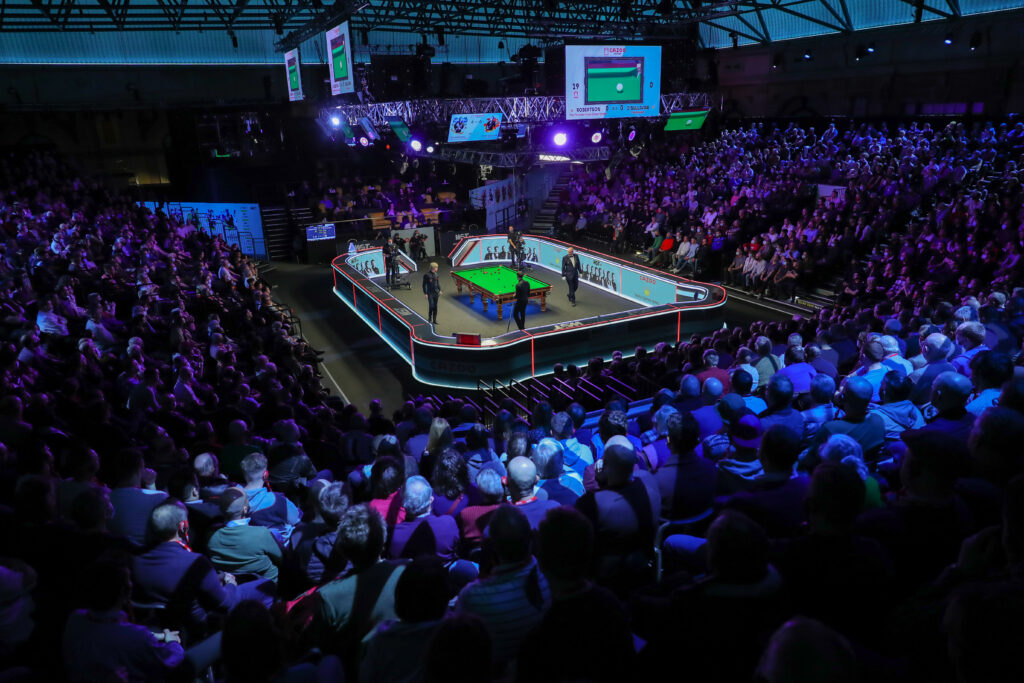
We’ve seen how people are creating careers and lives in snooker without going pro as players, but I was keen to get a look at snooker at the top levels as well. I went down to the 2022 Betvictor European Masters in Milton Keynes to see the action.
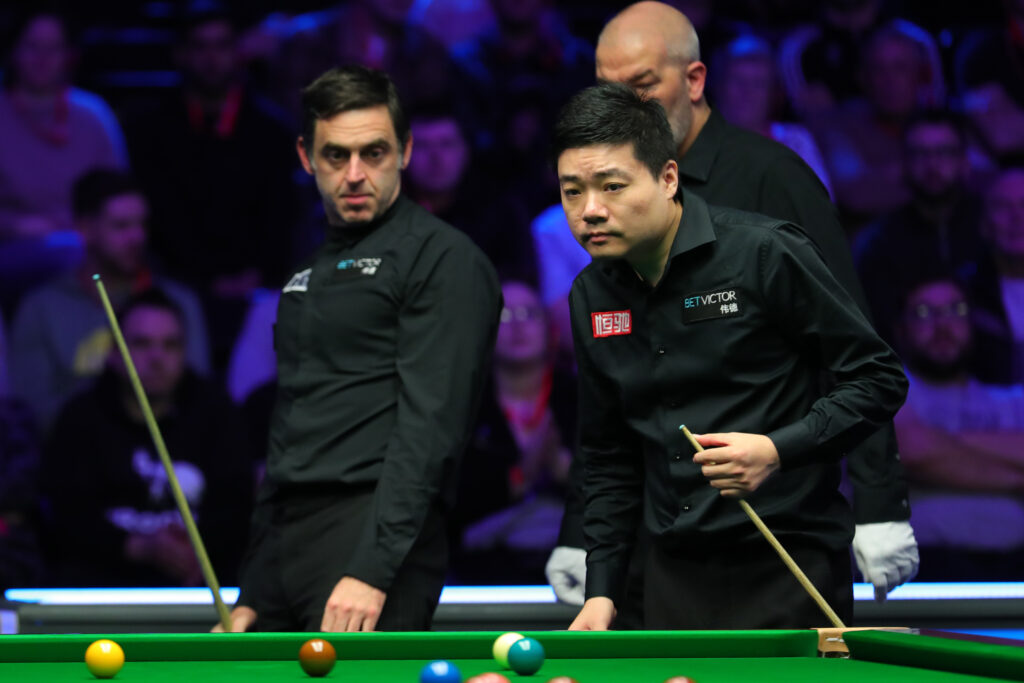
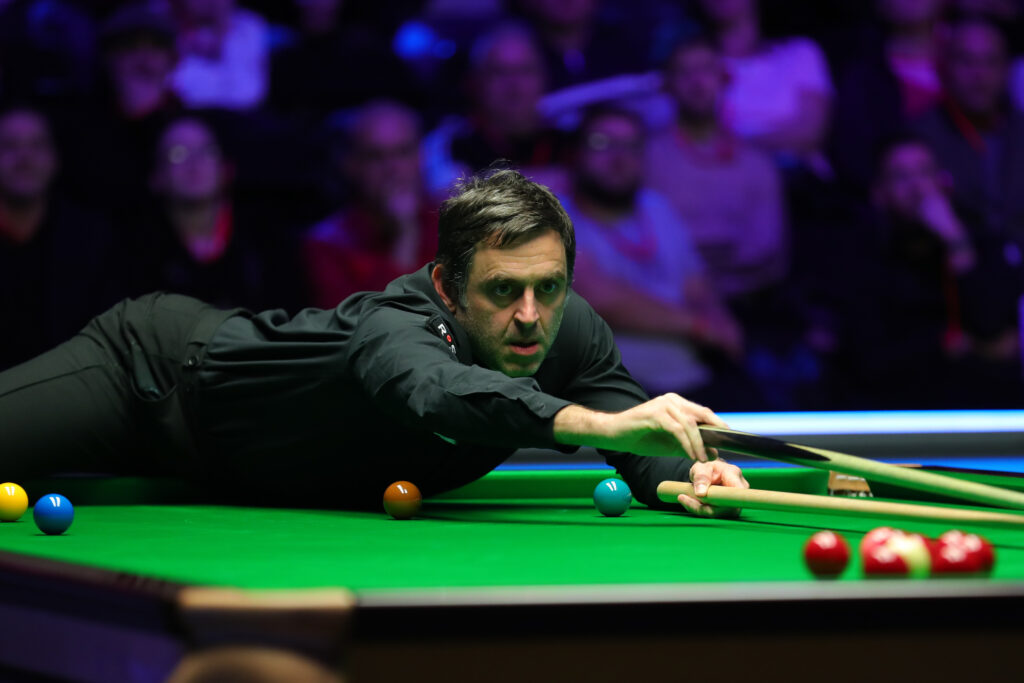
Top players faced off at the event, including veteran Graeme Dott going up against Ryan Day, Fan Zhengyi versus David Gilbert, and Liang Wenbo facing off against Scottish favourite Anthony McGill. But the main draw of the event was Ronnie O’Sullivan taking on Tom Ford. During that match, the crowd was notably more energised than they were in previous pairings, and O’Sullivan was on top form. In the first frame of the match, O’Sullivan scored a century break with apparent ease to a crowd of cheering fans – a feat which he repeated later that night.
In between the action, I was also able to get a glimpse behind the scenes. I talked to Ivan Hirschowitz, who is the Head of Media for WST, to find out about his role in growing and promoting the game around the world.
“I suppose our biggest ambition is to grow snooker as much as we can throughout the world, so from a media perspective we’re always trying to reach new people through our different platforms. And one of our biggest challenges is promoting our players – they’re the role models. We want to bring lots of young people into the sport, and people will look up to the Judd Trumps and Ronnie O’Sullivans, so one of our big priorities is to show our players’ personalities through our social media and video content,” Hirschowitz says.
The only way for snooker to continue to grow is for young children to have the opportunity to play and take to the sport, but older perceptions of snooker can damage the chances that a parent will choose snooker for their child over something like football or cricket. One of the main issues has to do with the seeming lack of physicality in snooker – parents want their children running around, exercising, and breathing fresh air, and as Hirschowitz explains, that’s not the image which often comes to mind when talking about snooker.
“I think one of our hangovers from the 80s is that perception of the smoky snooker hall, and that’s one of the things we’ve got to try to move away from and give snooker a younger, fresher feel to it. Any time there’s a snooker player who’s into fitness we’re all over it, and we’ll go and do a story about it. If we can promote the idea of snooker as a physical sport then we jump at the chance to do that,” Hirschowitz says, “The other good thing about snooker is the mathematical element, so it is quite good for kids to learn their maths and we’ve done some school programmes surrounding that. So I think we do get the fact that some people might not perceive it as a sport which has a lot of benefits for kids, but actually it does. There’s a guy named Rohit Sagoo who wrote a really good thesis on the benefits for mental health in snooker, like the fact that when you’re there potting the balls on the table it can be quite therapeutic. It’s something that you can do on your own which is quite enjoyable. To me, the other great thing about snooker is the inclusivity of who can play. It doesn’t matter your age, nationality, gender, or anything like that – anybody can play against anybody.”
As well as Hirschowitz, I also got the chance to talk with Sam Fletcher. He’s a snooker player himself, and an author for WST. He remembers the change from his early years in the typical sorts of snooker halls often portrayed in media to the futuristic training facilities such as the Ding JunHui academy today. They trade the smoky practice room for well-lit, white walled training facilities which look towards the future of the sport, not the past. Fletcher also pointed out an often overlooked draw of snooker – the game’s natural beauty.
“I think that’s one thing about snooker, with the attire, is that it can be quite an immaculate environment. You go out there and, if you’ve never been there before, it’s sort of like going to a ball or something. The tables are beautiful things in and of themselves, and I think that’s important,” Fletcher says, “It was so funny to go from a club with dodgy tables to this incredible facility, suddenly I think my mom and dad saw it as a much cleaner pursuit.”
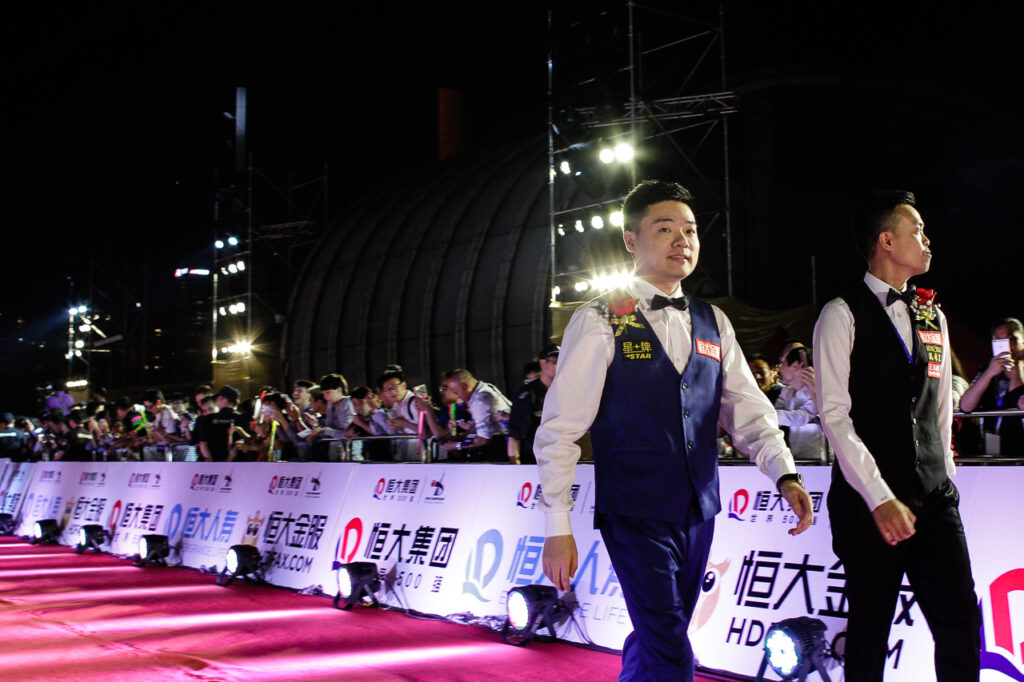
Snooker has come into the modern age in terms of training facilities, but most of the big competitions have retained the traditional dress code, which includes a button-down shirt and waistcoat. China’s influence on snooker has also greatly increased, and part of the appeal in China comes from the traditional dress code. Jason Ferguson started his career in snooker as a player, and now he is the chairman of the WPBSA and Director of WST. He gave me his view on why some things should remain traditional.
“In China the sport is seen as very high end – it’s dress suits, it’s immaculate, it’s smart, it’s aspirational, and it’s very well respected as a high level sport. And what that has done is it’s driven a much younger audience. So the audience is very young. Snooker is in schools, it’s in universities, you will find young people in clubs, and you will find clubs that are set up for a family environment rather than just billiard halls,” Ferguson says, “I think it would be a huge mistake to drop dress code in Asia, generally. The dress code is aspirational. It’s looked up to and it’s something that people aspire to wear and be part of the sport. We know that the kids are not going to go down their local club in a dress suit every day, but if you’re playing competitive, high-level events, that’s the level that we’re looking for. I think there are some things that need to be preserved.”
In addition to keeping long-time fans of the game, Ferguson also has a major interest in introducing young people to snooker. He explains how engagement with young people can change the way they see the game and inspire passion.
“I think every sport in the world is fighting to get people off of Xboxes and computer games and iPads and things. What we’ve got to do is use technology to drive participation as well, so we’re looking at various ways we can do that. We’ve got things like CueZone programmes in schools, this involves small folding tables which we designed ourselves for this purpose. If you imagine a table tennis table, you go into a school, you can put ten tables up in ten minutes, and you can create a snooker hall in the hall of the school,” Ferguson says, “They’re great fun days as well. So the audience is getting younger, and that’s very encouraging. And what comes with that is probably an audience with more disposable income, and so on, and that in turn will bring new partners, new sponsors, and new commercial partners to work with.”
Ronnie “The Rocket” O’Sullivan
After his decisive victory winning 5-1 over Tom Ford, Ronnie walked into the media room and I got a chance to talk with him. It wasn’t a long conversation, so here it is in full:
“After a great match like that, what are you doing to celebrate?” I asked.
“Just going to eat some scones,” he said, before clarifying, “You’re from America?”
“Yes I am.”
“So you’ve heard of scones, clotted cream, and jam?”
I reassured him that I knew what he was talking about, and he continued.
“Oh you have! Well that’s what I’m going to be doing tonight, I’ve got them outside. They’ve got to be good ones though, I get mine from Marksies. When you get them and they’re not great it’s just… I can’t do it, they’re one of my favourite things, you know? If my last meal could be something it’d probably be that.”
“In terms of the future of snooker, are there any young players you see coming through who impress you?”
“I don’t have opinions on anything to do with snooker, other than I wish all the guys the best of luck. It’s a great game, great sport, I hope they all get whatever they desire from it. I’m a snooker man through and through, so yeah – whatever they get, times it by twenty and I’ll be happy for them.”
“Can you tell me what makes a match enjoyable for you?”
“It’s really difficult to say, I’m not sure if I really get enjoyment out of it, it’s just sort of like – it’s just a challenge, you know, I just enjoy sort of putting myself through a test I suppose, that’s about it really. It asks questions of me, and I just try to stay on top of it which is a success in itself, you know?”
“How much of it would you say you do for the fans?”
“I’ve never really done it for the fans, but as I get a bit older in my age… you look back and get a bit more nostalgic and a bit more, probably, appreciative of stuff, and you can kind of mirror yourself with other sportsmen who have done other stuff similar to you and you can see how people react to them and think, well I have the same with the snooker fans. So listen, you know, I’ve got a great relationship with the fans and hopefully they’ve been entertained over the years.”
O’Sullivan’s attitude towards questions about snooker here is fairly typical of how he’s been answering recently, and maybe there’s a good lesson in that. His general mantra these days is that he’s not too bothered about winning or losing, he doesn’t want to get into discussions about the future of snooker, and he is playing for his own enjoyment. Especially in a sport like snooker where the mental side of the game is so important, a certain level of detachment seems like a good strategy after being in the spotlight for nearly 30 years.
Let me make one thing clear: Ronnie O’Sullivan still cares about his level of play, and he still takes snooker very seriously. No matter what he says in interviews, you can see his dedication manifest on the table when he plays. So what if we applied O’Sullivan’s mental approach to our own lives? Let’s say you’re a fresh graduate whose applications seem to be getting lost in the crowd when applying to your dream companies, as so often seems to be the struggle. Don’t stop caring, of course, but try not taking every rollercoaster ride. Just like snooker, the game of success is largely mental, and it’s easy to get bogged down with self-doubt and disappointment when something you’ve worked so hard for isn’t coming to fruition the way you’d hoped. Be like Ronnie: Keep on pushing, keep your standards high, but there’s no need to engage with every setback or stress about things beyond the scope of what you’re trying to accomplish. When O’Sullivan comes to play snooker, he plays snooker. Nothing else matters in that moment, and the best way to avoid turning mistakes into larger issues is to let anger and disappointment fall like water off a duck’s back.
There is a lot of opportunity in snooker. There is the opportunity to play at a high level and go pro, definitely, but more than that there is the opportunity to be a part of a community, to teach others, to concentrate on improving your own game and maybe even learn something about yourself in the process. Snooker has a long history, and thanks to the people who I talked to in this piece, and all others who have a deep passion for the sport, it looks like snooker has a long future ahead.